Two Poems by Nnadi Samuel

Hottentot Venus – Sarah Baartman

“Nature is a temple, where the living pillars sometimes
utter indistinguishable words. Man passes through these
forests of symbols which regard him with familiar looks.”
                                           —from Baudelaire’s poem “Correspondence”

There is a leash plagued with fancy, enough to dog a Negro round the continent. this one comes to England of her own naked will—
& did so, bent like a cartwheel, crawling half the journey.

body, wreaked by the weight of steatopygia.
the excess suddenness of fat, collecting on a heap of days that unfolds in gallops.

a trader bargains for custody, dangles a large bag of coins,
& she inks a lifetime signature on his contract: to display the meat of her skin in a stable, like a show-horse in a cage, leaping at the barking orders of her animal trainer.
the caesura of her feet, dragging a line on stage till it breaks, mid-tempo.

she thumps her chest with the rustic blows of a female bushman, enacting the once savage dance of Africa.
the audience is invited to touch the jiggle of her flesh, but from a slight distance. as though, the thin line between reality and performance is consent enough.

there is a state of mind in art that takes pleasure in being moved—
in ways that makes one complicit to humiliation, mistaking a punishment for pleasure.

I, too, am in the theatre of my own objectification, fondled into rage, being touched by the same white hands, tape-measuring my passport in the way they reached for the privacy of Sarah Baartman’s bosom, till she grabbed a Briton by the balls
& stormed out naked on the street that covered her in dark umbra.

the men sneak her body to distant towns, selling out shows & STIs* the 18th century style. once she goes down on all four, the queens take turns in making a caricature of her back. they rode her to death, smoke belting out of her fallen lungs.

in the black quiet of night, she is sold in shrouds to sculptors who limed her in liquid resin, cast her frame in bronze
& placed it in a museum for the highest bidder.

aren’t you in shock like me, dear reader,
that even in death, an image still returns more money than the country’s revenue
& they do it, fatigued & breathless still.

the government sends back her remains to Cape Town, on Mandela’s demand. I am in negotiation for my own body’s return to my homeland.
what is the cost value of an immigrant’s stay here, say, after tax?
what lunatics me, if not this literature that bends my back in reverse sportsmanship.

I refuse on smoke & whiskey to live past this ache.
the incense of my being, spirals on the ground until I’m baked into a swoon.

in a dream, clay pours on the edge of my lying body, dries on the spot & I stood up to use—leaving a monument for the ethereal world.
my presence, hung there on display like an over-worn jacket. sand stacked like cuboid, resting on both of my breasts.

I wonder if I’m inciting yet another metaphor for being trespassed without consent, considering my nakedness here.

I walk the corners of a house wearing a silence stripped of its own silk. the sun rearranging my insteps, to invent a box of light.

a girl passes by and disregards me with unfamiliar hatred:
you/ actor by pretense. you/ animal in a cage, exposing yourself, being touched.

             * STI means sexually transmitted infection

I Write My Rebellion in Disappearing Language

I—snipers away, was once capable of detonation.
now, I’m reduced to this thing, teething brightly on wires & microwave sensor: wailing devices that yee-haws intruder to scampering—
the way sound straightens the tip of my body into alertness.

I awake, full of shouting.
estate walls flattened to a neat collapse.

the mugshot holds a crime that keeps a moustache. its racial stink traced to my lineage.

what if it were a negro is not investigate enough.
my lips, wonder-ridded of names that fits the roll call. our black license placed for the highest bidder:
this country that is all border & nothing else.

I approach a phone booth & rifle light surrounds me. I make for Accident lane.

see what a town is named after: perfect excuse to fill a body with so much accidental discharge—it yawns into tributaries: a motionless debate.
a gang of berets, pistol-loaded, squares up to us.

when a finger snaps, the sergeant attempts asphyxiation on our throats, & we reward him with black temper.
one body eats fire, & the rest flattens to the ground.

     • • •

isn’t it a myth, how I still own a loin to write you this verse?
the constitution probes my effrontery to name a sonnet after its victim. says, harm hasn’t known me yet,
so, the hypocrisy in scripting their agony in first person pronoun.

same me who was chased by a pistol-mouth down Allen Avenue. a thousand evidences brought to my hearing,
while sordid hands ransack my manuscript—
not knowing I write my rebellion in disappearing language.

I lack subtle ways to put this:
living is one delicate chore I could do all month, without returning Ma’s voicemail.
I am in search of newer methods to body her in my thoughts, the way negro speak of bodies.

the way Floyd flagged down a cop for small talk, only to be tucked into his grave.
as we write his demise in disappearing language,
while the cops spiral bind what’s left to have him shipped down home soil.

I reckon, nothing shoulders a body past water, if it’s not family. not the vassal, or the vessel, or the viscous tide.
I desire to happen as a metaphor in one of one of Danez Smith’s sonnets. but I was born defenseless, without wonder.

of what use is a fence anyway, if the body is standing? I wake up to an open field, no

walls guiding our bodies.
whatever terror walks in our direction, would have return home well-fed.
each evening, my loin straightens into alertness.
I fist the rib of my imagination to achieve a black pulse.


Nnadi Samuel (he/him/his)holds a B.A in English and literature from the University of Benin. His works have been published or are forthcoming in Suburban Review, Seventh Wave Magazine, North Dakota Quarterly, Quarterly West, PRISM, Ex-Puritan, PORTER HOUSE Review, Plenitude Magazine, Common Wealth Writers, Jaggery, Foglifter, The Capilano Review, Poetry Ireland and elsewhere. He is a three-time Best of the Net, eight-time Pushcart Nominee, and author of Nature Knows a Little About Slave Trade selected by Tate. N. Oquendo (Sundress Publication, 2023). His third micro-chapbook “Biblical Invasion, BC” was published by Bywords (Ottawa, CA) in 2024.


A note from Writers Resist
Thank you for reading! If you appreciate creative resistance and would like to support it, you can make a small, medium or large donation to Writers Resist on our Give a Sawbuck page.

Skin

By Frances Koziar

Skin colour
does not dictate culture—

I could tell you all the ways
that this is true, speak of abandonments
and adoptions that sink deeper
than flesh, of homes and not-homes,
of the erratic mixing
of bloodlines; instead
I want to say that being white
but not White
puts you in a unique
kind of danger.

We are attacked
by our own and our allies, attacked
for expressing what we love
in the name of appropriating our own
cultures, our identities
disbelieved because all they can see
is the spiky shell of the lychee, not
the sweet fruit encased
inside.

I want to tell you that wearing
an amulet of protection draws crosshairs
of attention when all I want is to bare
my identity, to love a homeland
that is as much a part of me as the privilege
of my colour, to reveal some
of the tender sacred parts of myself that I yearn
to share as I reach out to others

But I also
understand—I too
have seen first-hand how some
beliefs are disagreed with, while others
are just laughed at. I

know the pain of mockery
for believing in animism or the magics
found across so many cultures,
have seen the glassy stares and the
this-is-a-joke-right? smiles
when my eyes are filled with feeling,
have felt the twisting in my gut when I
am silenced one way
or the other, watching
other whites wear what they want
without a second thought to having
their people ridiculed by those choices
or their ancestors
silenced.

            They are lions
who’ve never had to shave the precious
gold of their fur
for safety; have never watched
each beautiful strand fall like wishes
that will never come true, never
known how it feels to hide
the gifts of their identities like stolen
property lest they be mis-
understood, until the very ground
beneath them has become soft
with their lies.


FRANCES KOZIAR has published poetry in over 45 different literary magazines, including The New Quarterly, Acta Victoriana, and Vallum. She is a young (disabled) retiree, a painter, a gamer, and a social justice activist living in Kingston, Ontario, Canada. Visit her website.

Photo by Philbo 🇺🇦 on Unsplash.


A note from Writers Resist
Thank you for reading! If you appreciate creative resistance and would like to support it, you can make a small, medium or large donation to Writers Resist on our Give a Sawbuck page.
Bone China

By Robert L. Reece

She saw him coming. She always saw them coming.

As he trudged through the musty swamp to the small shack in the distance, he began to realize why no one had bothered to interview this woman before, and he was beginning to wonder if the meager check was worth the effort. Maybe the stories of these ex-slave Negros were worth collecting, but surely his bosses didn’t expect him to be standing knee deep in alligator piss.

“This better be worth my time,” he whispered to himself as he raised his knapsack above his head to prevent his papers from getting wet. But the air was almost thick as the water.

When he reached the door, he pondered at the dusty white door knocker. He’d never seen anything like it. It was vaguely “s” shaped, not “u” shaped like a typical knocker. He touched it and recoiled at the unfamiliar texture. It felt grainy but smooth. Steeling his nerves with a deep breath, he shuddered as he reached out again and rubbed his fingers along the length of the piece, lost in the unfamiliarity of it.

He didn’t notice the small woman sidle up next to him.

“I made it myself,” she said, in a voice that sounded like course sandpaper, testifying to her many years on this Earth.

He snatched his hand back and his middle finger caught the knocker, pulling it from its perch on the door. It shattered against the wood frame, revealing porous insides.

“Don’t worry,” she said, “I can make more. Come in.”

He followed the woman inside but wondered why she seemed so permissive with a strange white man. Typically, he offered a lengthy explanation of who he was and why he was there. Negros were typically skeptical of white folks showing up at their houses, but this woman skipped the brash “Who are you’s” of braver Negros and the timid “Can I help you’s” of the more fearful.

The inside of the shack was sparsely furnished, sporting only a few rickety chairs. No table.

“Sit, sit.” She pointed him at what seemed to be the sturdiest chair.

He sat down to take in his surroundings as she busied herself preparing him a drink across the room.

This wasn’t his first life history interview, and he’d learned that he could glean important information from looking around. Dusty photographs could lead to questions about family. A worn Bible could prompt questions about literacy. A well-maintained rifle might mean military service. A haphazardly placed child’s toy may speak of children gone too soon.

But here, there was none of that, just these chairs.

At first, he thought they were spruce, maybe withered and weathered but spruce. The wood was light, almost white. Damaged, cracked in spots but smooth in others. Not very straight, a bit curved. And none of the same length; even his own chair wobbled. It wobbled, but it was sturdy; he didn’t fear it would collapse under his weight.

Again lost in the strangeness of this woman, he didn’t notice the old woman cross the room until she was close enough that the steam from hot tea warmed his face. He instinctively took the mug she offered him and took a sip as slight scent of almonds tickled his nose.

“So, you’re here for my stories,” she half-asked, half-confirmed, as she sat across from him.

Silence.

“You’re here for my stories, sir?”

“Oh! Yes!” he blurted. “I am from a government program—”

“You want to hear about the slavery days?”

He nodded.

“Slavery was bad. Real bad. Worse than you can imagine.” She stood. “Them white men. They would beat us until the ground was soaked red with our blood.”

“Then what?” he whispered.

“Then they beat us some more. They beat us until we fell asleep. They beat us until we forgot we were being beat, and we saw the light of God shining on us!”

The mug shattered.

“Their friends gathered ’round. They looked on. They cheered. We begged for help. We begged for mercy, but none would come. No help, no mercy would come from their hands. One man owned us, but we had many masters.”

He collapsed out of his chair. His chest heaved as he clutched at his heart. He looked as if he was trying to gulp the air around him.

She produced a long knife from underneath her apron and wiped the blade on her dress as she kneeled next to his reddening face.

She rolled up her sleeves, revealing strong arms blanketed in scars, and put her face so close to his that she seemed to suck the oxygen directly from his lungs.

“And they say that anything a slave does to her master is self-defense. Sir, I have done a lot of self-defense in my day.”


Robert L. Reece is an associate professor of sociology at The University of Texas at Austin, where his research examines colorism, slavery, race, and body size discrimination. He left his home in Leland, Mississippi to obtain his PhD in sociology from Duke University. His first book, The Shades of Black Folk: Colorism Past, Present, and Future is scheduled for release on February 8, 2026.

Photo by *jarr* via a Creative Commons license.


A note from Writers Resist
Thank you for reading! If you appreciate creative resistance and would like to support it, you can make a small, medium or large donation to Writers Resist on our Give a Sawbuck page.
Louder than Silence

By Rabia Akhtar

I was raised in patriarchy.
Not an idea—
a weight.
It sat on my shoulders,
pressed into my lungs.
Silence was law.
Obedience—oxygen.

I cracked it open.
Spoke when I wasn’t meant to.
Walked where I wasn’t welcome.
Burned their script,
page by page.

Crossed borders,
thought the fight would end.
It didn’t.
It just got dressed up—
new clothes, better manners.

Racism at the table.
Sexism in a grin.
Bias wrapped in clean grammar.
Walls made of glass.
Chains you can’t see.

Intersectionality means this:
not one thing or another—
but the collision of all I am.
A name that signals faith I no longer claim,
a passport that shuts doors before I arrive,
brown skin at boardroom tables,
a woman’s voice in rooms built for men.

Each identity a thread,
woven tight,
patterns of exclusion
hidden in plain sight.
Carrying double the weight,
earning half the credit.
Always too much.
Never enough.

But listen.
I am not fragile.
Not a guest.
Not a mistake.

I am the crack in their system.
The fire they can’t contain.
The voice they wanted hushed—
still rising.
Still louder.
Louder than silence.


Rabia Akhtar is a human rights defender focusing on gender and identities in contexts of conflict and war, currently based in Singapore. Her poetry explores themes of identity, gender-based crimes, and resilience, drawing on her experiences as a woman of color navigating complex forms of belonging and exclusion while championing others’ rights. Her work seeks to give voice to stories often left untold.

Photo by Joe Yates on Unsplash.


A note from Writers Resist
Thank you for reading! If you appreciate creative resistance and would like to support it, you can make a small, medium or large donation to Writers Resist on our Give a Sawbuck page.
kaala; kala

By Ria Raj

my mother traces her fingers along my mahogany-skin
and calls me kaala,
hindi for black.

my mother traces her fingers along a film photograph of her homeland,
and calls it kala,
hindi for art.

i find it particularly lovely
that art
is intrinsic
to Blackness
in the hindi language

ka(a)la

the ubiquity of the
english language
is contingent


upon Black destruction

and as the
english language
continues to

dismember Black bodies,

i wonder if my hindi might illuminate a semblance of Blackness,
keeping it from

its premature death.


Ria Raj is a queer, South-Asian-American writer. She is deeply interested in the intersectional constructions of brownness, queerness, and womanhood in the literary archive, and how her work might fit into this constellation. She has upcoming publications in Eunoia Review, Moonbow Magazine, The Greyhound Journal, Zhagaram Literary Magazine, and Fleeting Daze Magazine.

Photo by Debbie Hall, poet, photographer and Writers Resist poetry editor.


A note from Writers Resist

Thank you for reading! If you appreciate creative resistance and would like to support it, you can make a small, medium or large donation to Writers Resist from our Give a Sawbuck page.

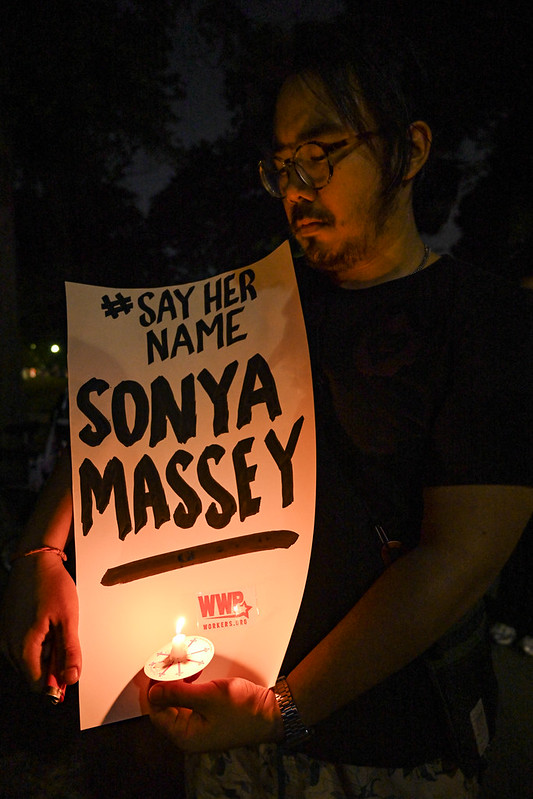
Upon Learning, in a Report on the Footage of a Sheriff’s Deputy Shooting Sonya Massey to Death in Her Kitchen, of Massey’s First Words to the Deputy

By Jennifer L. Freed

I, too, have felt myself to be prey.            
What woman has not?  

But I live
in a white body.

If ever I
dialed 911, afraid

of a man
prowling

around my home,
I would not need to say,

when the officers came
to my door—

no—let me rephrase: it would never
occur

to me
that my very first words

would be
Please don’t hurt me.


Jennifer L. Freed’s collection, When Light Shifts (2022 finalist, Sheila Margaret Motton Book Prize), explores the aftermath of her mother’s stroke and the altered relationships that emerge in a family health crisis. Her poems have been nominated for Best of the Net, The Pushcart Prize, and the Orison Anthology. Awards include the 2022 Frank O’Hara Prize, the 2020 Samuel Washington Allen Prize, and Honorable Mention for the 2022 Connecticut Poetry Award. She teaches adult education programs from Massachusetts, USA. Please visit jfreed.weebly.com.

Poet’s note: The news story that mentions Sonya Massey’s first words is here.

Photograph by Joe Piette via a Creative Commons license.


A note from Writers Resist

Thank you for reading! If you appreciate creative resistance and would like to support it, you can make a small, medium or large donation to Writers Resist from our Give a Sawbuck page.

Who We Are, More or Less

By Rasmenia Massoud

There’s no telling how long his 15 minutes are gonna last.

His raincloud-gray eyes stare out from thumbnails and video clips in news feeds. They’re surrounded by white impact font, memeified versions of him coming in from the left and the right. There he is. The conservative news hero du jour. The vigilante. The patriot. The murderer. Eddie.

Fucking Eddie. His back ramrod straight, his nods stiff and rigid as though that shiny blue necktie is the only thing keeping his bald head attached to his thick neck. The chyron at the bottom of the screen below his grin says he’s Edward now. All grown up. All business. All American flag pin stabbed into his lapel.

Anyone who knows how to look can see the skinny kid with a mullet and weak attempt at a moustache cowering beneath the surface. Anyone who grew up in our little Idaho town that no one else ever heard of. Anyone who was drinking Mickey’s Big Mouth around a bonfire at the reservoir when our soundtrack flipped from Mötley Crüe to Alice in Chains.

Another moment that didn’t seem relevant until it was gone.

The news personality leans in to show sympathy for Edward’s harrowing ordeal. Not a hair out of place in her crispy platinum mane. The defender of his neighborhood, Edward talks about his pride in the Minneapolis suburb where he grew up. Except he didn’t. Well, Eddie didn’t anyway. There are brief flashes where he seems like a different person, but as I lean on the table to close the distance between my eyes and laptop screen, I see that there’s just more of him now. The added flesh around the neck and eyes, the meaty arms and torso. Life and time have added layers, pushing that kid I once knew farther down.

I rub the thick scar tissue on my chest, a habit I developed after the double mastectomy. A transparent reflection of my face is a ghost hovering over Edward’s on the laptop screen. My hair is cropped short, the warm blonde morphed to shimmering strands of silver. Edward’s been piling on protective layers, becoming more visible. Stacking them up until he fills a TV screen. Me, I’m shedding them, cutting things away, fading to colorless invisibility. Distilling down to the essence of a person.

The blonde woman behind the desk blinks her heavily painted eyes. False lashes fluttering and pencilled brows furrowing to show the audience how serious, how life-and-death Edward’s experience was. Edward recounts the series of events. He talks about his neighborhood, his family, his unwavering belief that America is still the best country in the world, despite how bad things have gotten.

What he doesn’t say is the name Marcelo Chavez. Neither Edward nor the sculpted on-air personality mention that Marcelo was only 15 years old. It never comes up, how the kid was walking home from a babysitting gig when he dropped his phone on the sidewalk, at the foot of a driveway. Edward’s driveway, where he parked his precious SUV. What Edward tells the woman, and the rest of the viewing audience, is that the boy appeared to be messing around with his vehicle. Maybe vandalizing, slashing tires, siphoning gas, or worse. Who can tell these days? When Edward stepped out of his house, aiming toward the trespasser, Marcelo made the mistake of raising his hands while holding his phone and having skin a shade too dark for that particular corner of the city.

Edward at fifteen had been as awkward and gangly as Marcelo Chavez. At sixteen and seventeen, he started to grow into himself, taller and thicker, a brush of brown-blond hair beginning to appear above his upper lip. No matter how deep I plunge into the murky depths of my memory, I can’t recall when he’d begun sticking to the edges of our friend group. He was a few years younger than me, not someone I paid much attention to. But Eddie made his presence known. Younger and goofy, sure, but he had more confidence than he’d had a right to.

The skunky smell of weed mingled with the pine smoke. A crackling bonfire, popping wood, whooping, and chattering from all the shaggy-haired kids clad in denim and threadbare band shirts. Strawberry blonde down to my waist, c-cups beneath my Guns n’ Roses Use Your Illusion t-shirt, dancing and singing along with Tesla about signs, signs, everywhere the signs with my bottle of Mickey’s when that kid hovering in my periphery was right in front of me. Right in my face.

“Dude. No. I have a boyfriend,” I said. My boyfriend, what’s his name, who was old enough to drive and buy beer. Also, old enough to hang out at strip bars while I drank cheap malt liquor with the rest of my underage friends at the reservoir.

Eddie stepped closer until we were nose to nose, smirking. “Yeah?” He looked around. “Where is he?”

That confidence was five sizes too big for Eddie, but he wore it like a second skin and that was enough. That’s all it took. A few days later, we’re rolling around naked and sweaty in a bedroom that belonged to neither one of us. That’s when his protective armor left him, when I saw beneath and looked into the eyes of an insecure young man who desperately did not want to be seen.

“Were you a virgin?”

He glared at me. “Of course not. Why? Was it not okay?”

“It was fine.”

“No really. If it wasn’t okay, tell me. I can take it.”

I knew better. He couldn’t take it.

“It was fine. Really,” I said.

“Just fine?”

Now, on my laptop screen, that insecure kid is in there somewhere. Like a matryoshka doll, the years of doubt, decisions and bad habits all wrapped around and around until Eddie is concealed forever.

Somewhere behind me, Lupita tells our son to brush his teeth before bed. I inhale the smell of dish soap and eucalyptus as she sits at the table next to me, leans in and turns my face to hers. She kisses the tip of my nose. Her big dark eyes glistening like they always do, hair tucked up in her silk scarf so that I can see her entire face. The dimple on her left cheek, and the freckles dotting her nose. Somehow, she glows brighter more and more with every passing year.

Then my wife closes the laptop.

“You need to stop watching this.”

“I know. But I’m stuck on the fact that we came from the same time. The same place.”

“He’s not the person you used to know. You’re not the person he knew. People change. It happens to all of us. That time and place is gone.”

I want to tell her people don’t change. They evolve and erode. They become more or less of who they are. I don’t say any of this. Instead, I push my chair away from the table and take her hand. “C’mon,” I say. “Let’s go tuck him in.”

A daily, mundane thing, the bedtime ritual of telling our son goodnight. A tiny thing that might not seem relevant until it’s gone.


Rasmenia Massoud is the author of three short story collections and several stories published in places like The Sunlight Press, XRAY Lit, and Reflex Press. Her work has been nominated for The Best of the Net, and her novella Circuits End, published by Running Wild Press, was nominated for a Pushcart Prize in 2019. A second novella, Tied Within, was published by One More Hour Publishing in 2020. You can visit her at www.rasmenia.com.

Photo credit: Joe Wolf via a Creative Commons license.


A note from Writers Resist
Thank you for reading! If you appreciate creative resistance and would like to support it, you can make a small, medium or large donation to Writers Resist from our Give a Sawbuck page.
When I hear ‘migration,’ I think of ships

By Christian Hanz Lozada

chopping through tides and promise.
My coworker says, “I mean, I’m white, 
so, implicit bias much? We have no story,” 
referring to her kid’s project asking
about how the family’s migration
was affected by World War 2 and the Cold War.

She says, “I understand I can’t say anything,
but we’ve been American since the 18th century,
so there’s been no migration.”
In my head I have solutions: Has your family moved
from state to state, like the Japanese Americans pulled
from their homes or the African Americans moving

to fill a Japanese American-sized void to work factories
and shipyards? Has your family migrated from economy
to economy, like the migration from planting and picking
to packing and making? Has your family never had to run,
never had that nothing-holding-us-here, never had that

nothing-to-stake-a-future-on, always the absence
of the absence? Maybe write about your migration,
after the ship, when you carried the sword and the gun,
the whip and the blankets. Maybe write about the bow-wave
your presence creates, even when the ship doesn’t move.
Maybe write about the unintended migrations that happen
as your presence displaces everything around it.


Christian Hanz Lozada aspires to be like a cat, a creature that doesn’t care about the subtleties of others and who will, given time and circumstance, eat their owner. He authored the poetry collection He’s a Color, Until He’s Not and co-authored Leave with More Than You Came With. His Pushcart Prize nominated poetry has appeared in journals from California to Australia with stops in Hawaii, Korea, and the United Kingdom. Christian has featured at the Autry Museum and Beyond Baroque. He lives in San Pedro, CA and uses his MFA to teach his neighbors and their kids at Los Angeles Harbor College.

Photo credit: Dennis Jarvis via a Creative Commons license.


A note from Writers Resist
Thank you for reading! If you appreciate creative resistance and would like to support it, you can make a small, medium or large donation to Writers Resist from our Give a Sawbuck page.

Birthday Wishes

By Phoenix Ning


Sixteen-year-old person of color desires escape from this inferno
where dark-skinned individuals burn, and alabaster spectators
cheer from the sidelines, popping confetti guns and feeding
oil to ancient flames while claiming to be long-awaited saviors.

Eighteen-year-old student desires world history classes with curriculums
that celebrate African kingdoms, Indigenous empires, and South Asian cultures;
textbooks that condemn armor-clad imperialists stripping gowns of freedom;
articles that honor revolutionaries whose empty pockets did not silence their shouting.

Twenty-three-year-old woman desires to shatter the chains created
by men who think all girls are moons trapped by their gravity,
males who believe themselves to be suns instilling life into
fragile females who must offer their bodies as tokens of gratitude.

Twenty-year-old lesbian desires to taste the sweet wine of love
and cavort in inebriated glory with the woman whose gentle touch
sparks wildfires in her heart frozen by acerbic remarks fired by toxic relatives
when she turns her head away from men and smiles at her rough-hewn ladylove.


Phoenix Ning is a twenty-year-old Chinese writer of sapphic antiheroines and queer found families. She is currently a senior studying human-computer interaction. When not writing, she can be found watching C-Dramas and penning raps. A fierce advocate of diversity in media, she hopes that her audience will feel empowered after reading her words or listening to her songs. Learn more at ladyphoenixning.com.

Image credit: Jennifer Rakoczy via a Creative Common license.


A note from Writers Resist

Thank you for reading! If you appreciate creative resistance and would like to support it, you can make a small, medium or large donation to Writers Resist from our Give a Sawbuck page.
Twin Pandemics, Twin Cities

By AJ Donley


They warn you about the dangers
that you’ll be feverish
that your throat will hurt
that it’s contagious
that you won’t be able to breathe

they try to scare you away from action
with the risk of symptoms
that have always been there

because COVID is new
but racism is not

I wear a mask to protect my loved ones
from the pandemic that affects them
my white friends and family
worry about what goes into their lungs
when people of color are breathing in
the soot from communities we’ve burned
to the ground then blamed on riots
we doused them in gasoline and got mad
when they lit a match to keep warm
no wonder they can’t breathe

Now I’m feverishly marching
my throat hurts from screaming
anger is contagious—but so is justice—
let it infect you
lest it kills you


AJ graduated from the University of Minnesota, Morris with a BA in psychology and English. She also has her MA in forensic psychology from the University of North Dakota. Currently working in the sexual violence field, she seeks to explore the human psyche and illustrates what she sees with poetry. AJ plays with form, language, and imagery in an attempt to interpret what she experiences. She seeks decadence and authenticity and piercing honesty. Poetry is a practice and is never complete; just as the mind is subjective and dynamic, so too is her writing.

Photo credit: Dominic Dominic Jacques-Bernard via a Creative Commons license.


A note from Writers Resist

Thank you for reading! If you appreciate creative resistance and would like to support it, you can make a small, medium or large donation to Writers Resist from our Give a Sawbuck page.
When You Swim Out into the Ocean

By Claudia Wair


You float on your back, your face barely above water. There’s nothing but the silence of the ocean in your ears. In the saltwater’s embrace, you drift, weightless. You stare at the clouds above, trying to empty your mind. You’re away from the beach. Not so far that the lifeguard blows her whistle, just far enough from the splashers and the screamers.

The ocean is peace.

Here, you’re a gently bobbing body, not a stupid nigger, like the man on the boardwalk said when he bumped into you. The water doesn’t care that your skin is dark brown or that your hair curls tight. You’re a small human in a vast ocean.

The rage subsides to a dull ache. Your muscles finally relax. You roll over and swim back to shore. Stroke, stroke, breathe. Stroke, stroke, breathe. Then you feel gravity again, feel the sand, feel the breeze. You find your white friends and sit on your towel. No one asks how you are.

And you pretend you are fine.


Claudia Wair is a writer and editor from Virginia. Her work has appeared in JMWW, The Wondrous Real Magazine, Typehouse Literary Magazine, Corvid Queen, and elsewhere. You can read more at claudiawair.com, or find her on Twitter @CWTellsTales.

Photo credit: “At Sunset” by Giuseppe Milo via a Creative Commons license.


A note from Writers Resist

Thank you for reading! If you appreciate creative resistance and would like to support it, you can make a small, medium or large donation to Writers Resist from our Give a Sawbuck page.

Two Poems by Renee McClellan

Black Listopia

I feel like an idiom that drips from Baldwin’s pen
“that” angry Black woman negotiating sin
I AM NOT YOUR NEGRO! A thing to be had
Thick lips, curvaceous hips, or a fashion fad
You can’t set me like diamonds
Or string me like pearls
Pick on my afro, then appropriate my curls

I AM A BLACK WOMAN
Black, Brown, and Yella, too
Why are you fucking with me? I don’t fuck with you.

I feel like a literary assault by Langston Hughes
An angry Black woman and her Weary Blues
I, TOO, SING AMERICA, a pejorative dream
Ghosts of my ancestors flow in my blood stream
That white picket fence and that sweet apple pie
That dream wasn’t mine, that nightmare’s a lie
Like a Raisin in the sun, do I fester, do I run
What happens to a dream Deferred, you’re looking at it
You haven’t heard?

I AM A BLACK WOMAN
Black, Brown, and Yella, too
Stop fucking with me and I won’t fuck with you

I feel like a mythical logophile, words linger & prod
Like Zora Neale Hurston
MY EYES ARE WATCHING GOD
Truth be told, Every tongue must Confess
Like Dust on the Road, I’m God’s perfect mess
Perfectly flawed and divinely conceived
All of Africa holds the mystery that is me
Ripped from my familiar, felt the soul of my seed
My daughters are raped and my sons can’t breathe
I’m a paradigm of potency, a leather-bound force,
An African fused American on a reparation course

I AM A BLACK WOMAN
Black, Brown, and Yella, too
I will NOT apologize for this trauma, FUCK YOU!

Angelou knew and her encouragement wise
Like a phoenix from its ashes – Still I rise
A PHENOMENAL WOMAN, phenomenally
I’m a Queen like Sheba with the bones of Lucy
With all that was taken on that infamous boat ride
My womb for stock and trade for my babies genocide
I should be angry, it’s justifiably so,
You auction the fruit of my womb then call me a ho
You ripped from mother African, the Proverbs of her son
And refused to Honor her for the work that she has done
Her children will RISE like the sun bathed in blue
Ebony warriors and the daughters of Shaka Zulu
I AM A BLACK WOMAN & I’m angry as fuck
But forgiveness in this moment, bitch, Good Luck!
I’m not the PEACE you seek, I wont lay down and die,
I wont turn the other cheek, I want an eye-for-a-mother-fucking-eye

I AM A BLACK WOMAN
This is the America I Sing
But you keep fucking with me,
HERE!
Hold my mother-fucking earrings!


That Tree

Strange fruit hanging from that tree
The crown shudders with each crosswind
Leaves of humanity blow like flecks of dust on the sea
Seeds sprinkled on top of soil
The roots spiral deep and strong,
The branches sway,
reaching for the sun limbs refusing to break
Spiny twigs like fingers closed around a tight fist
The trunk solid taking shape
Searching for a place to exist
Branches reaching toward the warmth of the sun
But meeting the coldness of too much shade
flailing in mercy

No sustenance to nurture its existence

Life dangles from that tree
Dangling shapeless
caught in the ambiguity of the whistling wind
the fruit falls from the tree
pulled to the ground by desire
thick tentacles of hope
Strange fruit growing on that tree


Renee McClellan, a Chicago native and writer of the EMMY award winning PSA, Pick Me! – Toy Loan, began her career performing with elite theater groups in Chicago. As a film and television actor, she performed in such productions as Brewster’s Place, Seinfield, and Deep Impact. She continued on to writing, directing and producing various film and television projects. A graduate of Chapman University with a BFA in Film Production, she also has an MFA in Screenwriting from The American Film Institute (AFI). A Long Beach resident, Renee has produced many award-winning productions often using Long Beach as the backdrop of her artistic expression. She is currently a professor at Pepperdine University, a best-selling author, and an award-winning filmmaker.

Photo credit: Lynne Hand via a Creative Commons license.


A note from Writers Resist

Thank you for reading! If you appreciate creative resistance and would like to support it, you can make a small, medium or large donation to Writers Resist from our Give a Sawbuck page.


Two Poems by Ron Dowell

We Are What We Shine

after J. Venters and M. Barajas


Bright as a jewel, we are what we shine.
A gang’s red-blue color-coded word clash
Compton’s graffitied not-so “Welcome” sign.

Compton Court obliterates the blue skyline,
Angeles Abbey minarets, brown grass,
like burnished silver, we are what we shine.

We suffer potholed streets silent decline
show taxes limit terms make thunder crash
Compton’s graffitied not so “Welcome” sign.

Change old habits & shade the asinine
who pour concrete slabs over weeping ash
as a begrimed city loses its shine.

Compton Creek crawdads, waters unwind
spawn Dr. Dre, Coste-Lewis, Niecy Nash.
Compton’s artists unveil the “Welcome” sign

Our shimmering gold—Venus, Kendrick’s rhymes
Venters, Barajas, their COVID backlash
bright as a jewel, we are what we shine.

Compton rolls out our “Welcome” sign.

 •     •     •    •     •     • 


Ebonics

My native tongue felt perfectly normal
until they labeled it Ebonics in the 70s.
School disparaged my native tongue

like jazz, denigrated and disrespected.
The principal paddled me with the holey oak.
The new whip burned my ass, lashing and tentacled.

He tried to beat out vernacular for sleeping
through American heroes like Jefferson Davis
Father Serra, Charles Lindbergh. For his doctorate

a man discovered the new Negro language.
Even today, I violate grammar rules, unconscious
even today, I slip forward, or back, into natural speech

even today, I sing coded enslaved spirituals
Wade in the water, cause God’s gonna trouble the water
hounds don’t follow when we wade in the water.

Ah ‘on know what homie be doin. He be runnin’
They say a child’s personality forms by age five
–knowing two languages, he knows two worlds.

I learned a new language, but the new world hides.
I’m burdened, weighted, an imposter in a world
that squeezes me like a piece of coal.

Under pressure, like a black diamond, I sparkle dark
and hard                                   I chew steel.


Ron L. Dowell holds two Master’s degrees from California State University Long Beach. In June 2017, he received the UCLA Certificate in Fiction Writing. His poetry resides in Penumbra, Writers Resist, Oyster Rivers Pages, The Wax Paper, Kallisto Gaia Press, The Penmen Review, Packingtown Review Journal, and The Poeming Pigeon. He’s a 2018 PEN America Emerging Voices Fellow. Visit his website at crookedoutofcompton.com.

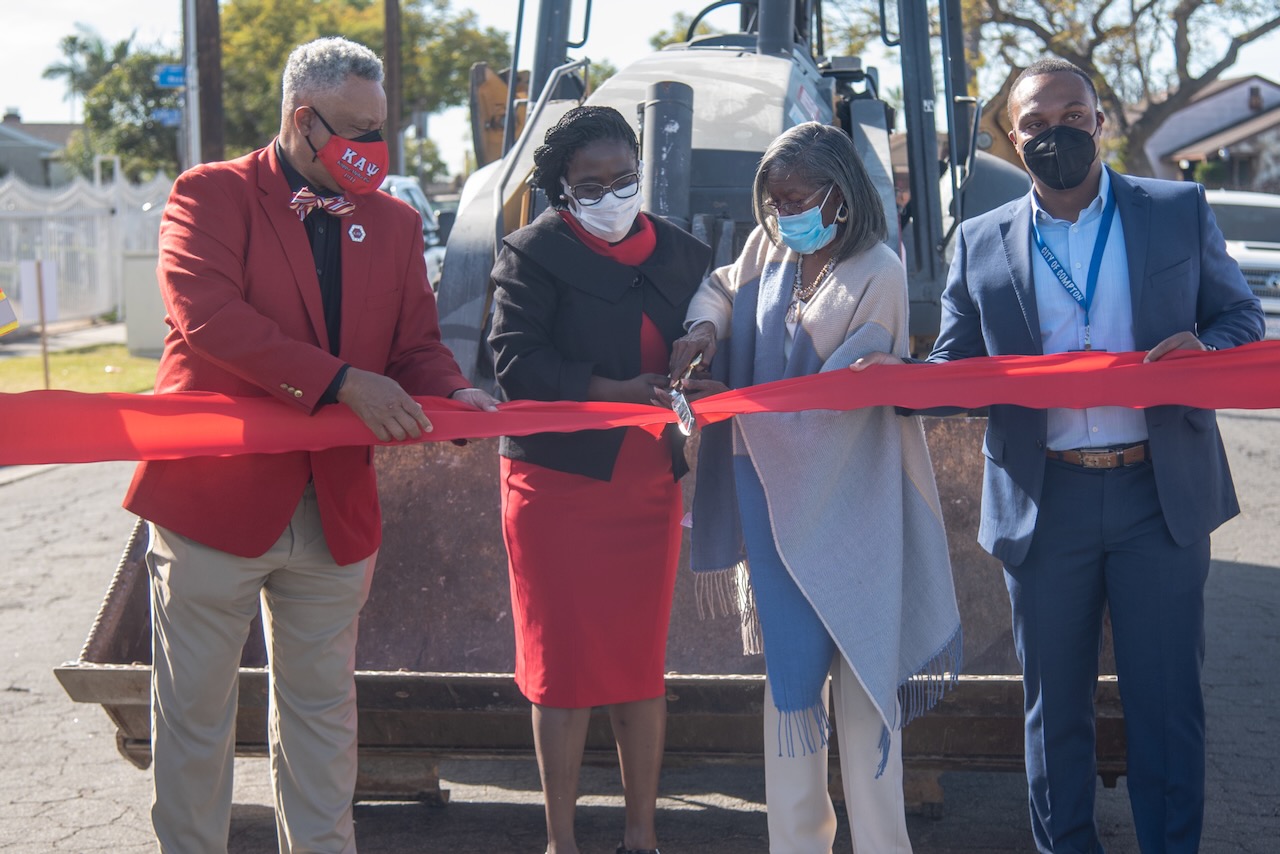
Photograph, City of Compton.


A note from Writers Resist:

Thank you for reading! If you appreciate creative resistance and would like to support it, you can make a small, medium or large donation to Writers Resist from our Give a Sawbuck page.

And They Lived Happily Ever After

By Myna Chang


Myna Chang writes flash fiction and short stories. Recent work has been featured in Flash Flood Journal, Atlas & Alice, Reflex Fiction, Writers Resist, and Daily Science Fiction. Anthologies featuring her stories include the Grace & Gravity collection Furious Gravity IX; and the forthcoming This is What America Looks Like anthology by Washington Writers’ Publishing House. Myna lives in Maryland with her husband and teenage son. The family has no patience for racist bullshit. Read more at MynaChang.com or on Twitter at @MynaChang.

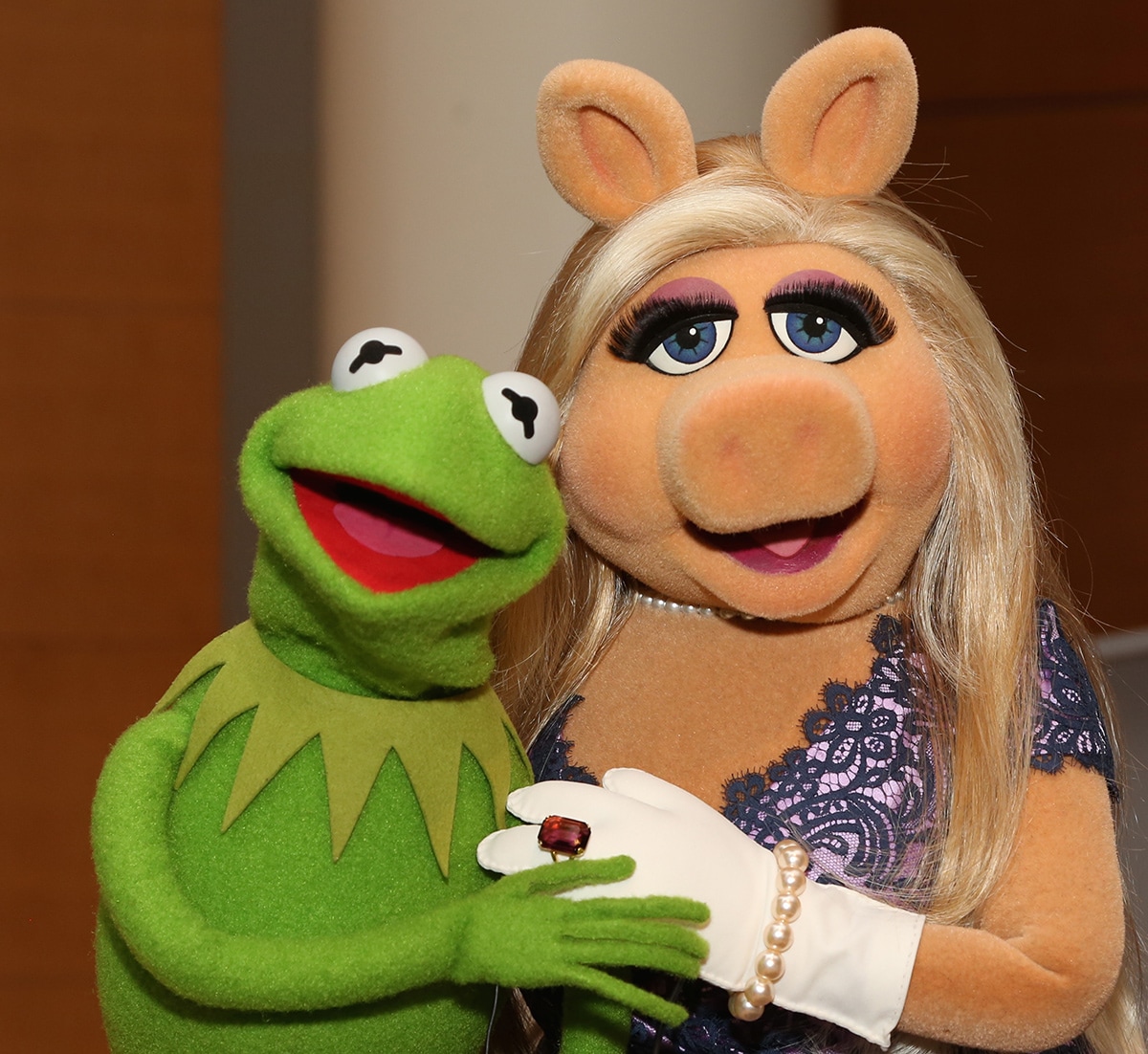
Image from the Muppet Wiki.


An Accounting

By Dianne Wright

“What is poetry which does not save nations or people” – Czeslaw Milosz


of the knowns:

25 years, the age of Ahmaud Arbery, gunned down by
2 white men.
1 white man filmed the assault.
2 prosecutors recused themselves.
1 recused prosecutor recommended no charges.
0 charges brought against the shooters for 2 months.
0 people who came to his assistance as he ran for his
1 life.
0 weapons found on his innocent, dead body.
2 times I have walked uninvited in an unconstructed house with no consequences.

of the unknowns:

How many yards did Ahmaud run to escape the killers?
How many heard LeBron James say
“We’re literally hunted every day”?
Where is the violence? On the streets? In the hearts of white men and women?
What are the right questions to ask and who should be asking them?

How many white people will open their eyes to this mortal wound?
Rise up against it?
What’s the story going to be this time?
Am I doing enough showing? Or too much telling?
What would a poem look like that exhorts white people to action?

In the moral wilderness I see people running for
their lives while streetlights reflect the shiny
triggers of guns in pale hands and I
raise my cup to drink a glass of sparkling metaphors
but the bubbles blast my eyes, blind me to my own

culpability and failure to do the right thing.
If the function of freedom is to free someone else*
how many poems will it take
to take down white supremacy?
Is that poem a blunt instrument or a song?


Dianne Wright is a disabled poet and social justice activist who lives in the High Desert with her 2 cats.

Photo credit: Victoria Pickering via a Creative Commons license.

* From Toni Morrison’s 1979 Barnard Commencement Speech, “I Am Alarmed by the Willingness of Women to Enslave Other Women.”

Here in the Future

By Keith Welch

The Future Ain’t What it Used to Be. –Yogi Berra


We were promised flying cars,
and condos on the moon, even
racial equality: all those great sci-fi gags.

Those were the glory days,
the Future. Everything polished
smooth and covered in chrome.

In the fifties, we had the scent
of unlimited progress in our
exceptional American nostrils—

the Future marched forward,
smelling of plutonium and plastic,
with just a hint of napalm. The Future
chanted loudly as it came on.

Then the sixties were assassinated
and we got the hard word,
written in blood: that much
optimism might be overly optimistic.

Welcome to the future, where flying
cars remain scarce, the moon remains
distant, and we have all the equality
our police will allow.


Keith Welch lives in Bloomington, Indiana where he works at the Indiana University Herman B Wells library. He has no MFA. He has poems published in The Tipton Poetry Journal, Open: Journal of Arts & Letters, Dime Show Review, and Literary Orphans, among others. He enjoys complicated board games, baking, talking to his cat, Alice C. Toklas, and meeting other poets. His website is keithwelchpoetry.com. On Twitter: @TheBloomington1.

Image Credit, “Modern Kitchen” by Mike Licht.

The Right Hat

By Luke Walters


The little girl’s teal hat is what caught my eye. She and a woman were hugging the bottom of a gravel drainage ditch, hidden from sight—except to me, perched high in my rig.

I’d just passed dozens more like them sitting cross-legged along the highway next to green-striped border patrol trucks. Their hike across the desert from the Mexican border at an end.

Having headed the back way to Phoenix to avoid the zoomers and the Department of Public Safety, I’d left Tucson early to pick up a trailer of fresh chilis at a farm west of Casa Grande. With the sun rising behind me and miles of highway in front of me, I’d been sleep-driving 75-mph down I-8, a four-lane, flat-straight black-ribbon of asphalt cut through the rough Sonoran Desert. After skating on and off the white edge line for maybe twenty miles, I decided I wanted to live for another day, turned off, and wrestled my 18-wheeler into the parking lot of the rest stop—nothing more than paved-over desert with a half-dozen picnic tables. That’s when I spotted them.

Now, parked lengthwise in the empty lot, I scooted on over to the passenger’s side, pushed past my stack of crossword puzzle books, opened the door, and let my legs dangle out. A can of Monster in one hand and an unfiltered Camel in the other, I relaxed, taking in the monotone landscape. My old favorites, Waylon and Dolly, brought back too many memories and the regrets that came with them, so I listened now to Mozart.

The woman and the girl raised their heads to stare at me. I paid them no mind. After a quick jolt of caffeine and a hit of nicotine, I planned to be back on the road. The pair of fence jumpers weren’t any of my concern.

At least that’s what I thought, until the green-striped SUV of the border patrol passed through the lot.

After scanning the desert behind the picnic tables, the driver, a woman in an olive green uniform, stopped next to me and opened her window. She had the same burnt-brown skin and coal-black hair as the pair in the drainage ditch.

“Howdy, officer,” I said, shutting off the music. “Beautiful morning for catching beaners,  ain’t it?”

Not answering, she gave me her cop smile while studying me. Too much Burger King and too many bottles of Bud showed on my face and my ass. Pretty, I wasn’t.

“Sir, is there anything you’d like to tell me?”

I blew out a smoke ring. “Yeah, there is.”

She watched me, tapping her steering wheel, as I crushed out my butt on the heel of my boot.

I raised my eyes to her.

The woman pulled the little girl close.

“Well, what is it?” the officer asked.

Taking off my Make America Great Again ball cap, I held it out, turning it for her to see. “Just got this. Looks nice, don’t it? Some big-smiling guy who wanted me to vote was passing them out at the garage. I liked my old John Deere better, but it was grungy—all sweat stained and greasy.”

Squaring my new red cap on my head, I said, “Not sure what it is, but somehow, there’s something about this one that just doesn’t feel right.”

The agent waited for me to say more. When I said nothing, she asked, “Is that all?”

“Yeah, that’s all.”

“Okay, sir,” she said, rolling her eyes like she’d been talking to someone simple, and she zipped out onto the highway.

I glanced toward the ditch. The little girl and woman smiled at me. Those were the first genuine smiles I’d gotten in ages. They lasted with me all the way to Phoenix, where I dropped them off.


Ed Radwanski, aka Luke Walters, resides in Arizona. His flash fiction has appeared in Yellow Mama, Mash Stories, Post Card Shorts, and in Envision – Future Fiction, an anthology by Kathy Steinemann, published on Amazon.

Photo by Ryan Riggins on Unsplash.


Lynched

By Julie Weiss

Editor’s warning: violence, racism


For Robert Fuller


There’s a body hanging from a branch
outside City Hall & nobody is talking.

The sky cowers under its predawn cloak.
The tree holds its breath.

This is not a Discovery Channel documentary
set in the Antebellum South

or an antique postcard from the 1920s,
sold as a souvenir to grinning spectators.

Did they jostle each other for a spot
at the front, inches from the man

being hoisted to his death?
There’s a body hanging from a branch

in a 21st century California suburb.
The tree is full, leaves glistening,

much like the one we lean against
while picnicking with our children,

white & unafraid, oblivious
to the nooses that have squeezed

the breath out of Black families
for centuries.

Whoever claimed time marches onwards
lied. Decades struck backwards

under the lash of the past
as the morning newscast fades

to black & white.
Suicide, they’ll say. A coincidence:

all these unbalanced, pandemic-stricken
Black men hanging themselves

in the thick of a revolution.
His body, now slumped on the ground,

blazes in the colors of sunrise
& nobody is talking.


Julie Weiss found her way back to poetry in 2018 after slipping into a nearly two-decade creative void. In 2019, she was a Best of the Net nominee. In 2020, she was a finalist in Alexandria Quarterly´s first line poetry contest series and a finalist for The Magnolia Review´s Ink Award. Recent work appears in Praxis Magazine, Anti-Heroin Chic, Kissing Dynamite Poetry, and others, and she has poems in a handful of anthologies, as well. Originally from California, she teaches English in Spain, where she lives with her wife and two young children. You can find her on Twitter @colourofpoetry or on her website at julieweiss2001.wordpress.com.

Photo credit: Marilyn Peddle via a Creative Commons license.

Contingency Plans

By Sara Marchant


My husband recently retired. His anxiety had increased over the last four years (whose hasn’t, right?) and a few months ago he was having a bad day at work, when he abruptly stood up, announced, “I retire,” and walked out the door.

It’s been an adjustment.

At first, he didn’t know what to do with his day. As I was unemployed by the pandemic, not even teaching from home, I was available for him to ask for direction or inspiration. I was available all day, every day. He questioned me like a kindergartener on a long road trip; the situation soon was fraught. This changed when I received a phone call from friends down South making contingency plans for the post-election end times. They were worried; they were scared; they didn’t know where to plan on going if they should have to flee. They know my husband has survivalist tendencies.

We live in a southern red zone of the blue state of California, but we own our acreage, have an artesian well and electrified fencing, and are prone to paranoia. We keep our house well provisioned in case of emergency. It’s known that we like to plan ahead. My friends had called to ask our advice.

Now my husband no longer asks me for direction in the morning. Instead, he gets up every day and prepares to take in refugees from red states. I won’t go into too much detail here. We are all safer that way.

My fingers are crossed for a peaceful, smooth, safe transition of power—power once more in sane heads and hands—and my husband claims he wants and prays (he’s the believer in the family) for that too, but just in case. … Then he goes back to fortifying the property. He wants to be a good host, you see.

• • •

When I was a little girl and we’d go to look at open houses for weekend fun, my mother always told us, “Find the hiding space!” She didn’t say this in front of the realtor or the homeowner; she taught us it was a private game. The hiding space would only safe if we were the only one’s who knew it existed. “Every house should have a space to hide when they come for you,” my mother said. When, not if.

Other games we learned were equally different from our friends’ family pastimes. Our mother taught us to seek out all exits when you enter a building, keep your back to the wall when eating in public, always carry something sharp in your pocket and “aim for the cojones.” Other children played lava floor and we did too, but we also played count your steps with your eyes closed, in case we ever had to escape in the dark.

My siblings and I are surprisingly well-adjusted, considering.

• • •

Shortly after November 9, 2016, my mother made me drive her to the post office to renew our passports. My husband refused. He’s Native American. He belongs to the land, he said. He’ll never leave.

“That’s nice, but short-sighted,” Mom told him. “We’re Jews. We’ve been through this shit before. Always have an exit strategy.”

When the pandemic caused all borders to close to United States citizens, my mother wept. She was born in 1940, but in Denver’s Little Italy; my mother is not a Holocaust survivor. However, her parents didn’t believe in censorship, so her siblings took her to the movies and no one thought to cover her five-year-old eyes when the newsreels showed the camps being liberated.

Now, when reading about the camps at our southern border, the concentration camps committing crimes against humanity in our name, my mother doesn’t weep. She’s too angry. It’s gone on too long, been allowed to perpetuate, descended into genocide. Now my mother curses the perpetrators. Each morning as she pricks her finger to check her blood sugar levels, my mother damns every member of this administration, every enabler, every supporter—even those of us standing by watching helplessly in horror. “We’ve damned ourselves,” she tells me.

“We’ve no longer the right to weep tears of anything other than shame.”

• • •

Four years ago, I didn’t believe it could happen—and that’s shame on me. I was a history major; I’m married to a Native. This country was founded on violence, conquest, cultural genocide, germ warfare; we’ve been ripping children from their mother’s arms from the time the first boats arrived—and kept arriving full of stolen men, women and children. Why wouldn’t I believe it could happen again—only this time live-streaming? How dare we become complacent?

None of us knows what will happen the first week of November 2020, but I don’t believe any of us are still complacent—that’s been burned away. This household’s ballots have been mailed and counted, the pantry is stocked, the fence is fortified, space has been made for our friends.

My fingers are crossed, my husband is praying, and my mom is practicing blood curses with her back to the wall. My most fervent desire is that soon we’ll all be dancing in the space we’ve created for ourselves, but if not … I’ve got a plan. I hope you do, too.


Sara Marchant received her Masters of Fine Arts from the University of California, Riverside/Palm Desert. She is the author of The Driveway Has Two Sides, published by Fairlight Books. Her memoir, Proof of Loss, was published by Otis Books. She is a founding editor of Writers Resist. Her website is TheSaraMarchant.com.

Photo credit: Mitchell Haindfield via a Creative Commons license.

These Poems Don’t Come Out Right

By Bunkong Tuon


The virus breathes like fire over city streets
and farmland, across oceans and mountains,
over YouTube, Instagram, and Twitter.

The president suggests injecting the body
with disinfectant to kill it. Maybe
he could go first; it’s his idea after all.

I’ve become a hack, ranting as if the world
will heed my words and stop spreading
violence through fear, hate, and ignorance.

Mix misinformation with racism, greed, and ego,
and you get 2020, a reality show you didn’t know
you were a part of until it is too late. Oh,

These poems don’t come out right and
my poor wife is asleep, hands clutching
the crib where the baby was fussy all night.

I cut slices of cucumbers and strawberries,
spread apple wedges on a plate for my daughter.
Our beautiful baby is crying again.

I fetch my coffee and a baby bottle,
run up the stairs, cradle our newborn in my arms,
watching his desperate eyes look up at me for comfort.

But I have no words for him, and this ending
is not right, but I don’t know what is anymore.


Bunkong Tuon is a Cambodian-American writer and critic. He is the author of Gruel and And So I Was Blessed (both published by NYQ Books), The Doctor Will Fix It (Shabda Press), and Dead Tongue (a chapbook with Joanna C. Valente, Yes Poetry). He teaches at Union College, in Schenectady, New York. He tweets @BunkongTuon.

Photo credit: m anmia via a Creative Commons license.