CASE FILE #1776: The Murder of Lady Liberty
By Daniel P. Douglas
New York Police Department – Homicide Division
Detective Joseph “Joe” Law, Badge #1886
October 2025
The call came in at 3:47 AM on a Tuesday that felt like the end of the world’s longest hangover. Rain pounded Manhattan, each drop a reminder that even heaven had given up trying to wash this place clean.
“We got a body,” the dispatcher said, voice deader than yesterday’s coffee. “Big one.”
“How big?”
“Liberty Island big.”
I crushed my Lucky Strike into an ashtray I hadn’t emptied since Bloomberg was mayor and grabbed my coat. In thirty years working NYPD Homicide, I’d fished bodies out of the East River, scraped them off subway tracks, found them stuffed in dumpsters behind bodegas. But this was different. This was America’s dame, face-down in New York Harbor.
VICTIM IDENTIFICATION
Name: Liberty Enlightening the World, aka “Lady Liberty,” “Statue of Liberty”
DOB: October 28, 1886
Height: 305 feet (151 feet without the pedestal)
Weight: The burden of 330 million promises
Last Known Address: Liberty Island, New York Harbor
Occupation: Symbol, Promise-Keeper, Mother of Exiles
The crime scene was Liberty Island, but the blood spatter reached from Battery Park to Ellis Island. Yellow tape couldn’t contain it. The Staten Island Ferry captains were calling in sick rather than sail past her corpse.
INITIAL OBSERVATIONS
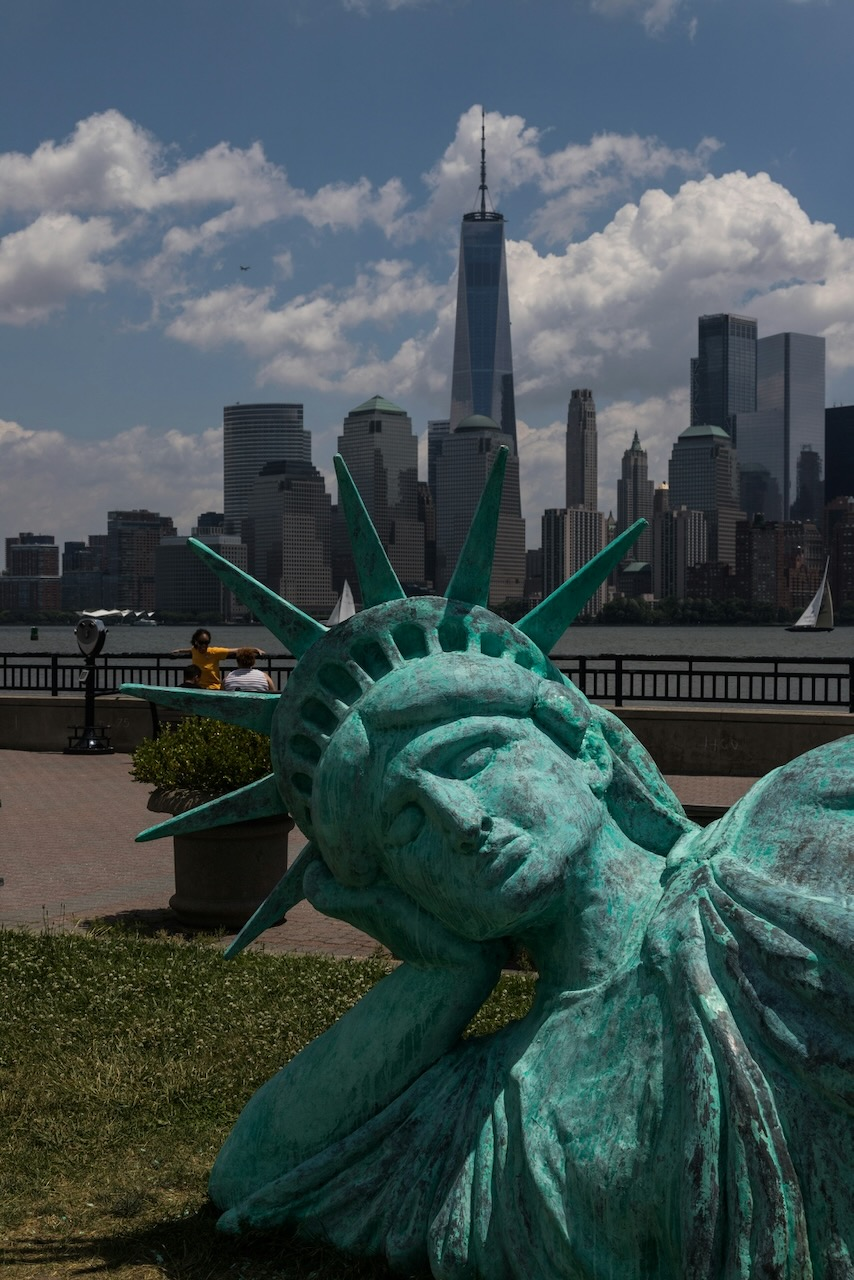
She was still warm when I took the police boat over, which told me the murder was fresh as this morning’s bagel. The killer wanted us to find her like this, toppled forward off her pedestal, torch extinguished in the harbor water, tablet cracked down the middle. The inscription remained readable through the break: “Give me your tired, your poor…” But someone had tagged it with red spray paint: “OFFER EXPIRED.”
I lit another cigarette and walked the scene. Her crown’s seven spikes stood bent and twisted. In the water around the island, I found children’s backpacks bobbing in the harbor. Spider-Man, Frozen, Pokémon, the kind kids clutch when masked and uniformed strangers thugs break down doors at dawn.
WITNESS STATEMENTS
David Steinberg, Journalist: “I recorded every broken promise, every shattered law, every deleted regulation. They tried to shut me up, deport my sources, kill my stories. But someone had to keep the record. Someone had to remember what she looked like before they took the knife to her.”
Anonymous Federal Worker: “The shutdown wasn’t chaos—it was surgery. Precise. Calculated. They knew which departments to gut first, which services would scream loudest. Like watching someone dissect a living patient.”
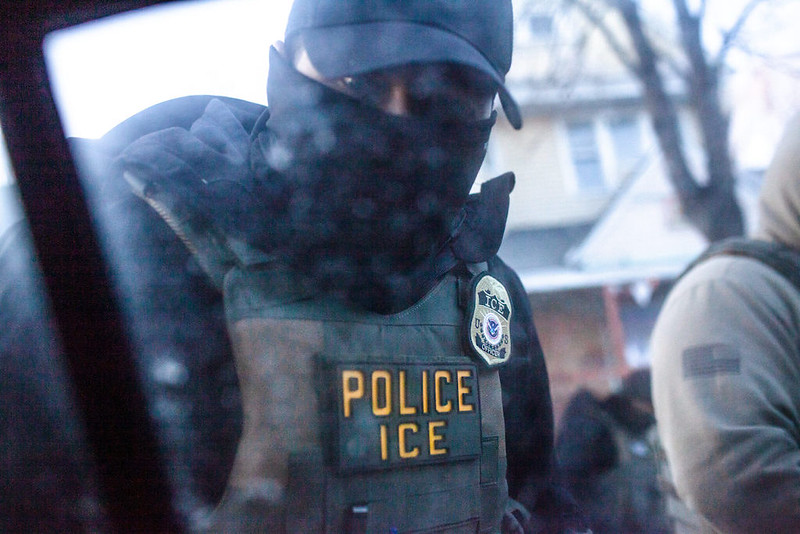
Carmen Rodriguez, Bronx Mother: “They came at 4 AM. ICE, a few of them said, but most said nothing. Took my babies while they were still in their pajamas. My neighbor, she tried to film it. They took her phone. They took her too. And their eyes . . . their ICE eyes looked empty. They’d killed something inside themselves first.”
Mike O’Brien, Con Edison Supervisor: “They cut power to the whole South Bronx last week. Said it was maintenance. But I saw the orders. They came from high up. Real high. They’re turning off the lights, neighborhood by neighborhood, erasing parts of the city.”
AUTOPSY FINDINGS
The coroner was Dr. Ruth Goldstein, been cutting up New York’s dead since Giuliani’s first term. Her hands held steady, but her voice cracked, ice in warm whiskey.
Cause of Death: Multiple contributing factors
- Acute Constitutional Hemorrhaging
- Systematic Organ Failure (Justice Department, State Department, EPA)
- Blunt Force Trauma to Democratic Processes
- Poisoning via Disinformation (blood toxicity off the charts)
- Strangulation of Free Press
“Forty years I’ve been doing this,” Goldstein said, peeling off latex gloves. “Seen nothing like it. It’s overkill, Detective. Someone didn’t just want her dead. They wanted to make an example of her.”
SUSPECT PROFILE
The killer operated in broad daylight, Fifth Avenue penthouse type who treated laws as suggestions and democracy like a hostile takeover. This wasn’t a crime of passion. It was a business transaction, hostile acquisition of a 249-year-old corporation.
Physical Description: Spray-tan complexion, architectural hair, suits that cost more than a cop’s annual salary
Known Associates: A rotating cast of oligarchs, fixers, and true believers
Modus Operandi: Gaslight, Obstruct, Project, Intimidate, Lie, etc.
Previous Crimes: See filing cabinets 45 and 47
But here’s what chilled me to the bone: the accessories after the fact. The reps and senators who held her down. The judges who sharpened the blade. The millions who live-streamed the murder and hit “like.”
THE INVESTIGATION
I started where every New York cop starts. I followed the money. It led me through Wall Street towers and offshore shells, through Moscow laundromats and Saudi investment funds. Every thread pulled revealed two more until I had a conspiracy that made the Five Families look like a church bake sale.
The immigration raids. The infrastructure blackmail. The journalist deportations. The power cuts. All connected, all coordinated, all designed to kill not just the body but the very idea of what she stood for.
I interviewed kids from the raids when their lawyers could sneak me past the guards. One girl, maybe seven, drew me a picture with crayons some church lady had smuggled in: Lady Liberty on the ground, her torch being used to burn apartment buildings.
“Is she dead?” I asked.
“Mama says she’s just sleeping,” she whispered. “Says she’ll wake up when enough people remember the dream.”
Three weeks into the investigation, working out of a precinct that felt emptier every day as cops got reassigned to ‘federal support duties,’ I noticed something.
Lawyers working pro bono out of Brooklyn basements. Teachers holding classes in churches when their schools got shut down. New York Times reporters publishing from undisclosed locations after their building got raided. Bodegas feeding families whose food stamps got cut. The city that never sleeps refusing to close its eyes to what was happening.
I took the ferry out to Liberty Island at dawn. The statue remained down, still dead. But in the pre-dawn darkness, I saw them. Thousands of lights. Phones, candles, flashlights from boats. Each one a tiny flame, together bright enough to outline her fallen form.
That’s when I knew what wouldn’t make it into the official report.
FINAL DETERMINATION
Case Status: Homicide confirmed. Victim DOA.
Additional Findings: Unusual post-mortem activity observed. While subject shows no vital signs, grassroots nervous system remains active. Cellular regeneration noted at community level.
Lady Liberty was dead as Hoover. The America that survived the Depression, won the World Wars, faced down the Soviets—that dame had sung her last song.
But here’s what thirty years of homicide taught me: Some victims don’t stay dead. Some ghosts are too stubborn, too angry, too damn New York to stay down.
DETECTIVE’S PERSONAL NOTE
I’ve worked enough murder scenes to know dead when I smell it. But I’ve also lived in New York long enough to know that this city’s got more lives than an alley cat.
The killer’s still walking free, still posting from his penthouse, still signing executive orders with her blood. The accomplices are still on cable news, explaining why she had it coming.
But in the Bronx, mothers are organizing. In Brooklyn, communities are building their own support networks. In Queens, immigrants are documenting everything. In Manhattan, even some Wall Street types are whispering about resistance. In Staten Island . . . well, Staten Island’s complicated, but even there, some folks remember what that torch used to mean.
Lady Liberty is dead. Long live Lady Liberty.
I’m filing this case closed, but I ain’t closing the book. Because every good cop knows that sometimes you solve a murder by making sure the victim comes back to haunt the killer.
The rain’s stopped. Dawn’s breaking gray over the harbor. Somewhere, a kid in P.S. 92 is pledging allegiance to a flag that doesn’t mean what it used to. But maybe—just maybe—it’ll mean something again.
I light my last Lucky of the night and watch the sun rise over the city.
If Liberty’s gonna rise from the dead, it’ll start here, in the boroughs, in the projects, in the spaces between what was and what might be again.
Case closed. Investigation ongoing.
Detective Joseph Law
Badge #1886
NYPD Homicide Division
October 2025
P.S. They can kill the body, but the ghost? The ghost is gonna haunt them till judgment day. And brother, judgment’s coming.
Daniel P. Douglas is the pen name for identical twins Phil and Paul Garver. Daniel P. Douglas has been named a Foreword Reviews 2014 INDIEFAB Book of the Year Awards Science Fiction Finalist and is a Readers’ Favorite Award winner. His first novel, Truth Insurrected: The Saint Mary Project, centered on a decades-old government coverup of contact with extraterrestrial life. The Richter’s War series blends sci-fi with hard-boiled intrigue in Los Angeles during World War II. Douglas’s first nonfiction endeavor, Six-Shooters and Starships: A Comprehensive Guide to Crafting Space Western Stories, explores the rich history of the Space Western genre in fiction and entertainment media. In 2025, the first two books of the space Western series, Wild Frontier Chronicles, were released along with other expanded universe projects. Please visit the “Intelligence Bulletin from Author Daniel P. Douglas” on Substack for more information.
Photo credit: Chris F via a Creative Commons license.
A Note from Writers Resist
Thank you for reading! If you appreciate creative resistance and would like to support it, you can make a small, medium or large donation to Writers Resist on our Give a Sawbuck page.