Welcome to Writers Resist Spring 2026 Issue

Welcome to the vibrant words and images of spring, celebrating the memory of Marsha P. Johnson, beloved and befamed transgender LGBTQ rights activist and Stonewall Inn heroine.

If you’d like the link to the virtual reading for this issue, 18 April at 5:00 pm PACIFIC, please email us at writersresist@gmail.com.

Now, join us and our contributing resisters, while we flip the flaming bird at the antis and revere all that proclaims our identities.

Why does a tranny cross a yellow brick road? by Mx. Asher

To David Lehman by Waverly Vernon

Run by JL Smither

Ahead of the Storm by Laura Ann Reed

Absent Hills by Johanna Haas

This Is the Way Our Words End— by Dennis Humphrey

Doomscrolling isn’t solidarity by Maxochitl Cortez

Warning by John L. Holgerson

Two Poems by Robin Michel

Trashy by M.R. Mandell

Duality of Dogma by Nardien Sadik

No Vacation by Raymond A. Mazurek

On the Road to Samarra by Marissa Glover

planning the ballroom by Alexis Rhodes

Pledge by Dion O’Reilly

When Should We Senior Women Not? by Ann Grogan

Choices by Alice Benson

Why does a tranny cross a yellow brick road?

By Mx. Asher

Everything ends.
My five minutes behind a microphone.
The vileness of Presidential pedophiles.
The bad habit of saying I love you from a youthful after-sex brain.
Red hats and alligator crowns.
Our tears after cuddling dogs. . .
the cuddles end, too.

Everything ends,
our joy, our pain, our harm, our hope,

our lives.

But death only plays after lungs open by screaming.
A long-life greets us in the form of frail bones and a failing heart.
A phoenix meets rebirth by journeying through its own dust.
Ideas of liberation fly
when a Black trans sex worker’s
fed-up fingertips caress a brick
ripped from the foundation
of a communal stone wall.

We’re in this space together.
To get to you,
I spent a decade starving
to build the queer history
that’s about to be obliterated.

I’d be pissed but,
I’m
    choosing
         deep
             breaths,
because everything,
ends.

I wrote it all down-
wage theft,
rejection,
heartbreak.
I shared it as pain,
yelling at open mics.
But the performance ended,
and someone pointed out “there’s hope in your anger.”
I traded spewing for songs.

Who I am feels wet on my fingertips now,
like holding a rotating globe pushed through a waterfall,
threads of blood 
broken by droplets grinding
coal into beauty,
diamonds into ash,
rubies into fields of grass.

When this poem ends,
I’d like to saunter
amongst the kisses of your calluses,
the odor of daylilies
littered throughout the origin story
of how you came to be
here with me.

But please-
don’t flip to your last page yet.
I want to touch the hesitation of dashes-
admiring your semicolons;
those red-herring ending of lines. . .
on mountaintops of graceful motions.

Don’t skip to an unsatisfying end
either/
Write love notes in the margins
so those who burn books
are haunted by a charred soul
alchemized into the gentle giggle
of a trans child.
She’ll get to scratch syllables,
her earnest innocence
dedicating her work
“to my dead cat.”
Rest in peace, Rufus.

Don’t get me wrong.
My character isn’t afraid of conclusions.

I fear your impact,
laughter, grace, smile.
Our connection
reveals fear as grief.
I already miss
not being here
in community
with you.

So let’s take our time;
to lovingly cradle the dead conscience of relatives,
pour lakes from our community urns into the infinite free hugs of oceans,
host dance parties on graves,
steal-the-blanket, sashay, pontificate, fuck, hyperfocus, flip tarot cards, rest,
spill our guts out writing and repeat,

and before it all ends:

Why not
scream at some dictators,
expose the frailty of failing hearts,
burn it down,
throw bricks,
and feel the hope
in what it means to be
trans and alive.


Mx. Asher (they/them) is a trans and neurodivergent spoken word artist, poet, memoirist, sexual assault survivor, and former sex worker. Having worked professionally in government, advocacy, and elections for the past twenty years, they focus on vulnerable storytelling and personal experience to transform current events into emotionally resonant work. They have performed at numerous events and are a teaching artist at LitArts RI, the leading support network for the community of Rhode Island writers.

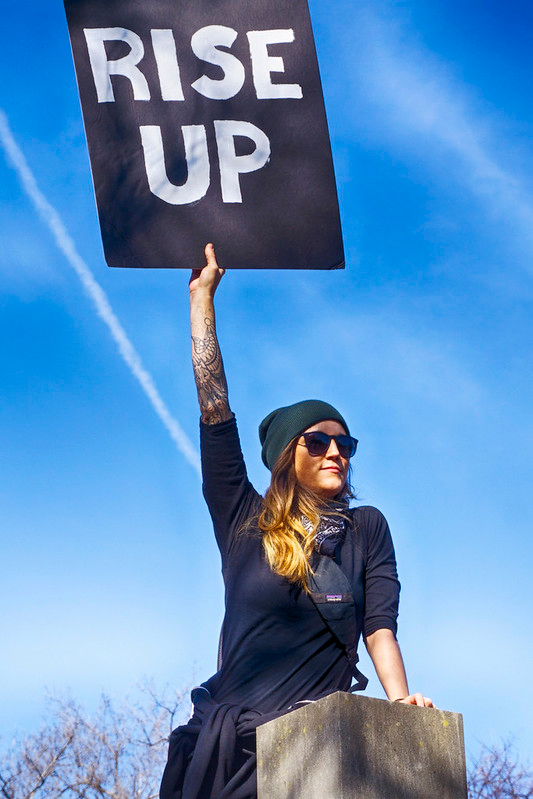
Photo credit: Photo by Karly Jones on Unsplash.


A note from Writers Resist
Thank you for reading! If you appreciate creative resistance and would like to support it, you can make a small, medium or large donation to Writers Resist on our Give a Sawbuck page.

To David Lehman

By Waverly Vernon

David,
you say poetry is not political,
as if Gaza is a metaphor
and not a place where children
fold themselves into rubble.

On my television,
the anchors call it a war.
I count the seconds between bombs.
Your voice is nowhere in the smoke.
You are busy arranging flowers.

I want to be like those poets
who care about the moon.
But every time I look up,

                                                      I hear sirens
                          through someone else’s ceiling.

David,
you call it complicated.
The screen shows
a father
carrying half his son.
Complicated    is your word for silence.
Complicated    is how you hide your hands.

I know I am American because
I can mute the channel
and make the massacre vanish.
When I turn off the TV
someone still dies.

Metaphors about peace
are for poets who mistake
neutrality
for virtue.
                          —I do not write peace.

I write children
throwing stones at tanks,
seconds before
they become numbers
you will never name.

       David

                                          the flowers you love
                                          are growing in Gaza.
                                          They grow in craters.
                                          They will not forgive you.


Waverly Vernon (they/them) is a writer and interdisciplinary artist studying at the School of the Art Institute of Chicago, focusing on writing and ceramics. Their work explores femininity, sexuality, resilience, religious deprogramming, and trauma, transforming personal experience into connection and dialogue. Their poetry appears in Moonstone Arts Center, WIA Magazine, Wildscape Literary Journal, Assignment Literary Magazine, Creation Magazine, and Arcana Poetry Press.

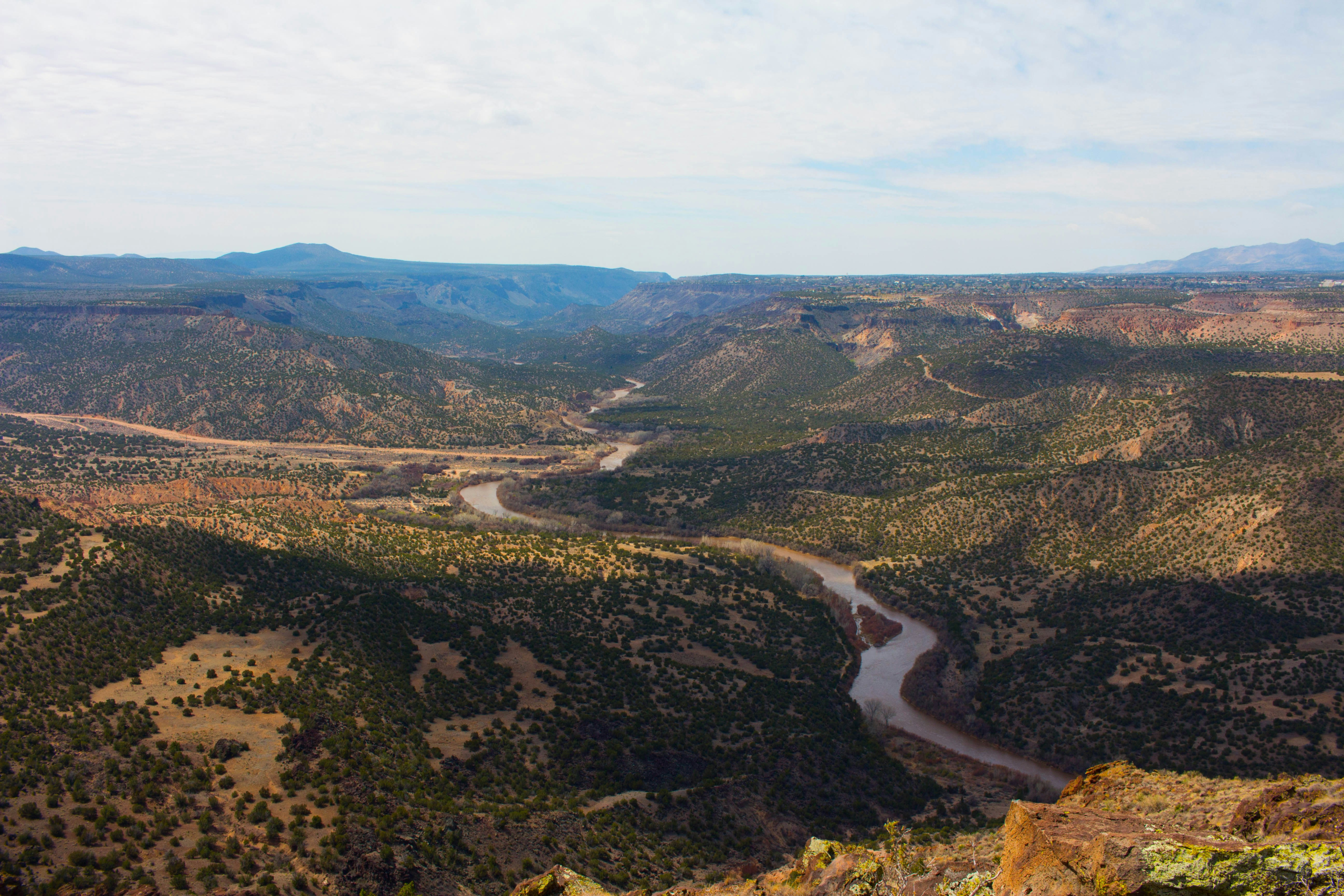
Photo by Mohammed Ibrahim on Unsplash.


A Note from Writers Resist
Thank you for reading! If you appreciate creative resistance and would like to support it, you can make a small, medium or large donation to Writers Resist on our Give a Sawbuck page.
Ahead of the Storm

By Laura Ann Reed

                                  after Osip Mandelstam

In the aluminum light pooling
on the juniper
the tendrils appear to compress
and contract, the blue-green needles to flatten
as though made by dread alone
into a beaten weight.
At the same time, no one can believe
the expansive passion of the roots.
It takes a tractor to extract them.
We think it’s theirs: such fear,
such love.
But in the temple of our dreams
there it is in ourselves.
There it is.


Laura Ann Reed is the author of the chapbook Homage to Kafka (Poetry Box, 2025). Her work has been nominated for the Pushcart Prize and has appeared in ten anthologies, including Poetry of Presence (Grayson Books, 2023) and The Wonder of Small Things (Storey Publishing, 2023). Visit her website.

Photo credit: Konrad Glogowski via a Creative Commons License.


A note from Writers Resist
Thank you for reading! If you appreciate creative resistance and would like to support it, you can make a small, medium or large donation to Writers Resist on our Give a Sawbuck page.
Absent Hills

By Johanna Haas

In 1980, West Virginia had green hills of magic.
The sky was small and the land wide.
Others saw only coal.
Others saw black diamonds.
Fireflies lit dark July skies,
A child could chase them forever.
My place of Hillbillies.
My place without luxury.
People say little girls should be quiet,
Fed upon sugarplums and restraint.
I cannot stay silent.
I cannot return home.
They blasted away what I knew.
I will raise my voice about our silences.
Silent rock, sitting open.
Silent women, keeping peace.
I will shout the things that matter,
Even if I’m the only one who hears.
Shouting, stop removing the mountains.
Shouting, stop removing us, too.


Johanna Haas lives in the middle of the U.S., in a cottage with four lions. She writes fiction, nonfiction, and poetry, focussing on speculative work. She is neurospicy, disabled, a former professor, and the publisher of Cicada Song Press. Her work has appeared in Bewildering Stories, Young Raven’s Literary Review*82 Review, and Star*Line. Her poem “Absent Hills” won first place in the Wilda Morris Award from the Illinois State Poetry Society, and you can find her playing with plants and animals or tying a long string into many knots. Visit her website and read more of her writing at her Substack.

Photo credit: David Hoffman via a Creative Commons license.


A note from Writers Resist
Thank you for reading! If you appreciate creative resistance and would like to support it, you can make a small, medium or large donation to Writers Resist on our Give a Sawbuck page.

Doomscrolling isn’t solidarity

By Maxochitl Cortez

I too doomscroll
scroll a screen of California fires
Texas floods
protests for black and brown kin
the news it flows too easy on the screen

I see
police brutality 
LA resisting protecting people 
picked up
piece

by       

piece

off
the     

streets
our streets

stories seep out of me
my language is documentation
not the kind of documents they want 
to see

how do you document a people 
carved from this land
back when my tiabuela’s cheekbones spoke 
of revolution

she reveals to me the stories 
in banned books
banned // barred // black // brown // bars  
our stories must be told

written down carved even 
                       into our skin 
like they have been carved 
                       into our DNA

our people are not trends 
hash tagging their #names 
is not enough
what is the liberation they 
yearned for
burned for

SAY THEIR NAME
repeat           

#repeat         

REPEAT
repeat           

#repeat         


          #LONGLIVETORTUGUITA

say her name 
your abuela, your tiabuela, your vis abuela. . .

what stories do they have stored 
                                                          frozen
                                                                      cold
                                                                                old
will the pages sit 
                        in your freezer too?
preserved to serve
or lay severed in the scorching sun 
that demands our salty sweat 


Maxochitl Cortez is Chichimekah and Coahuiltecan from the lands of Aridoamerica. They are a two spirit Indigenous Resistance Artist, Educator, and Community Organizer—using storytelling as a pathway for collective liberation. They are a host with every.Word poetry, a Black and Indigenous led spoken word organization in so called Austin, Texas. The seeds of their storytelling ask what liberation means, what we will do to get there for all people, and what narratives we honor during our path to healing. Find them on instagram @raya.maxochitl.

Photo credit: Felton Davis via a Creative Commons license.


A Note from Writers Resist
Thank you for reading! If you appreciate creative resistance and would like to support it, you can make a small, medium or large donation to Writers Resist on our Give a Sawbuck page.
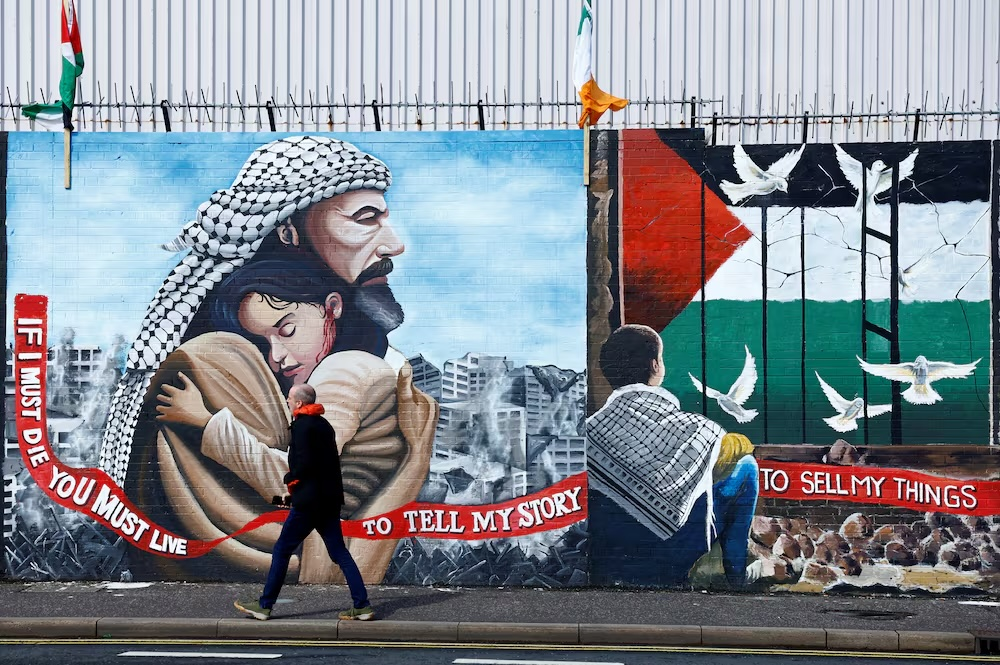
Warning

By John L. Holgerson

                                            after the poem Warning by Leonard Cohen

If your neighbor disappears
Oh if your neighbor disappears

The Hispanic man from Venezuela
who helped you paint your house
or the young woman who babysat
your children while dressed proudly
in that rainbow-colored blouse

If your neighbor disappears
Oh if your neighbor disappears

Don’t ask what happened
to the multi-tatted Black man
who lived on your block
or the foreign college student 
with whom you liked to talk

Beware of the men wearing balaclavas
who cruise our streets each day
They have plans you can’t ignore
or else there’ll come a tapping,
rapping, pounding on your door

When your neighbor disappears
Oh when your neighbor disappears.


John L. Holgerson is the author of three books of poetry, Convictions of the Heart (In Case of Emergency Press 2021), Unnecessary Tattoo and Other Stains on a Stainless Steel Heart (Finishing Line Press 2016) and Broken Borders (Wasteland Press 2012). He has published poems in small literary journals, both in print and online. He is listed in the Poets & Writers’ Directory of Poets and Writers; is one of three MassPoetry representatives for Bristol County, Massachusetts; and is co-host of For the Love of Words, airing on Easton Community Access Television in North Easton, Massachusetts. The monthly program showcases performances of local, regional, national and international poets and musicians. For more than three decades, he was a criminal defense attorney with The Massachusetts Defenders Committee. Visit his website.

Photo credit: Prachatai via a Creative Commons license.


A Note from Writers Resist
Thank you for reading! If you appreciate creative resistance and would like to support it, you can make a small, medium or large donation to Writers Resist on our Give a Sawbuck page.
Two Poems by Robin Michel

The Grand Staircase Railing is Rotted

The frayed red carpet a trip hazard.
Proceed with caution.

Inside the oval office, no light.
The thick coat of grime on bay windows
heavier than drapes.

Drapes now replaced with lace curtains.
On closer inspection, the lace is sticky.
Tatted cobwebs. Dead flies. Busted sills.

Gold sconces above the white mantel
where unlit tallow candles droop, ashamed
of their betrayals.

On the fireplace hearth cold as an icebox,
abandoned poker & tongs.
Ashes scattered like snow.

Two built-in bookcases recessed
in the western wall emptied of books
banned long ago.

Doors warped & splintered,
rusted hinges. One opens out
to what was a rose garden.

Now a concrete slab.

The once stately partners desk,
the Resolute, carved from reclaimed
oak timbers. A gift from former allies.

On its scratched & boogered surface,
plastic sunflowers in a cracked vase.
A blank journal. A broken pencil.

A pen emptied of ink.

Your Breath Moves Like a Bellows in Your Ribcage

                                              After Kimberly Satterfield

Some days, no matter how bright the sun,
the sun’s rays will not ease the chill—as if
tranquil California is transmuting into
Russia’s frozen Siberia.

You read the news              until you can’t
Doom scroll                        until you can’t
Hide under the covers        until you can’t

And so you seek refuge in a friend’s poem:
             feel how your own breath
                          moves in your body
             like a bellows
                          in the cage of your ribs

You remember another beloved friend
who died one week before
the 2017 Presidential Inauguration.
How, when you had a stressful situation,
she would put the tea kettle on
and listen to whistles of your rant.
“Breathe in anger,” she counseled.
“Then blow it out.”  

Your friend played harmonica and sang.
She knew about breath and how best to use it.
You think about last week’s Emergency Town Hall
where someone said, “What our resistance needs is a song.”

You breathe in, feel your own breath gather fire in your belly.


Note: Italicized lines from “It Takes Only Moments” by Kimberly Satterfield and used with permission.


Robin Michel (she, her, hers)  is a former educator, an activist, poet, and writer whose work has appeared in Cloudbank, Gordon Square Review, Boudin, Sport Literate, Twin Bill, Naugatuck River Review, Wordpeace and elsewhere. She is the author of Beneath a Strawberry Night Sky (Raven & Wren Press, 2023) and Things Will Be Better in Bountiful (Comstock Review, 2024). She lives, writes, and resists in San Francisco.

Photo Credit: Sebastian Schuster on Unsplash.


A Note from Writers Resist
Thank you for reading! If you appreciate creative resistance and would like to support it, you can make a small, medium or large donation to Writers Resist on our Give a Sawbuck page.
Duality of Dogma

By Nardien Sadik

In the church of lights,
where the nuns pray faithfully each morning,
beating even the sun in rising.
There is undeniable spirituality in every crevice,
every knee bowed a testimony to our God’s authority
and a defiant expression of faith in a country that would rather see
a Copt shot dead than alive and evangelize.

The invasion was only the beginning of a lifetime of tribulations,
but the blood of the Coptic people never ran dry,
despite many an attempt at erasure.

Presently, in anaphora,
a symphony of hymns sung by simple saints,
interrupted by the stubborn reminders of our captors
every day.

In a language forced down our throats, or having a tongue cut out completely,
we swallowed blood
and spat out Arabic coercively.

The sisters, unbothered by this they continue their melodies with a smile.
The act of defiance is small but powerful.

I learn what it means to fight peacefully,
turning the other cheek to
sing our next psalmody.


Nardien Sadik is a Coptic American spoken word poet and Georgetown Law student living in Washington, D.C. She has been writing since she was fourteen, weaving together themes of identity, justice, and belonging.

Photo credit: PF Anderson via a Creative Commons license.


A Note from Writers Resist
Thank you for reading! If you appreciate creative resistance and would like to support it, you can make a small, medium or large donation to Writers Resist on our Give a Sawbuck page.
No Vacation

By Raymond A. Mazurek

I. Remembering

Towers of brown concrete and steel
line the beach and reflect the morning sun,
each with a balcony that is private,
a capitalist’s dream of peace.

Thinking how you, father, would have loved this Vacasa,
the vacation you could never afford.
But every summer you took us to the beach
on day trips, and you would stand at the water’s edge,
smiling and gazing out to sea
while my sister and I frolicked in the waves.

I knew nothing
of what sixty-hour weeks in the factory meant,
with two weeks off each July when the mill was shut.

The ocean does not know poverty or wealth,
and is free to those with the time and means.
Money and time, which no poor man takes for granted,
for nothing is free.

II. The Present

I walk with delight at the water’s edge,
surrounded by happy groups of children.
The father pauses, two small girls clinging,
they run together, fall into the waves,
suspended laughing in the long arms of love.

All this will end, the climate will reverse,
oceans will live when humans are no more,
and spit out other life and start again.
The ocean knows, and waits.

III. No Vacation from the News

I was once poor, but there are those
who have less than nothing.
The visible ribs of children starved in Gaza,
in the arms of desperate fathers.
The men kept alive in cages in Florida,
dehumanized for the crime of wanting work
and dignity, to find better lives for children.
This is not the United States
of the imagination.
This is reality,
brutal beyond words.


Raymond A. Mazurek grew up in a working-class neighborhood in Lawrence, Massachusetts, and attended Colby College with various forms of financial aid. He wrote poetry extensively as a young man, but more or less stopped in graduate school. In the past year, he has returned to writing poetry after a long hiatus. His poems have been published in The Blue Collar Review and The Eunoia Review. He has also published many essays on literature and on working-class studies, and has taught at Purdue, Southern Illinois, Penn State, and Alvernia.

Photo credit: James Thornett via a Creative Commons license.


A Note from Writers Resist
Thank you for reading! If you appreciate creative resistance and would like to support it, you can make a small, medium or large donation to Writers Resist on our Give a Sawbuck page.
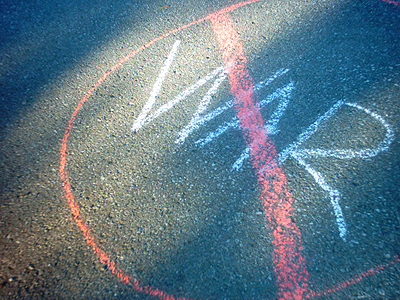
On the Road to Samarra

By Marissa Glover

                “I shall ride like the wind to Samarra . . . and Death will not find me there.”
                                                  —from the ancient fable The Appointment in Samarra

I met a man in Utah
with a bullet in his neck,
shot from a rooftop —
a coward’s distance
not like the lady in Minnesota,
killed up close by a gun
by the finger that pulled the trigger
by a person who didn’t know her:
dog lover, Girl Scout leader,
part-time worker in her dad’s
auto parts store

shot from a rooftop— 
a coward’s distance
like the D.C. sniper
like a desert drone drop
like the Devil of Ramadi
long-range equipment
with records over 10,000 feet
still no match for Boeing 767s
or 757s striking from the sky:
25,000 feet in a power dive

I met 3,000 people in New York,
20 children in Connecticut,
14 teenagers in Parkland, Florida
I met a man in Utah who died
never knowing he’d been hit,
and I met a man in Memphis
briefly conscious of it
I saw the dead already dead
riding in a convertible in Dallas
back in 1963—all travelers
in this one mad world, just people
on the road to Samarra,
same as you, same as me


Marissa Glover lives in Florida, where she’s busy swatting bugs and dodging storms. Her work has been featured in journals and anthologies around the world. Marissa’s poetry collections are published by Mercer University Press: Let Go of the Hands You Hold (2021) and Box Office Gospel (2023). Her third book of poetry, Some Intangible Mercy, will be released by MUP in early 2027. Follow Marissa on Instagram.

Photo credit: Wasfi Akab via a Creative Commons license.


A Note from Writers Resist
Thank you for reading! If you appreciate creative resistance and would like to support it, you can make a small, medium or large donation to Writers Resist on our Give a Sawbuck page.

planning the ballroom

By Alexis Rhodes

i watched him stroll the roof:
Queen of Hearts with a croquet mallet
surveying his kingdom.
placing
six hundred and fifty seats
in a ballroom yet to be built.

twirling ladies and
caviar truffle burgers danced
across his pupils
as he tossed cake to the crowd below.
Eat Me
it read.

a cheer, a crown
a light game of croquet on the
lawn he’ll cover in
gold tile.

servers poured a spiked Kool Aid cocktail
Drink Me
into the gaping maws of the thirsty throng
as he sipped Diet Coke.

and from his perch
he smiled.
did not hear the drums.

the crowd had come
to celebrate
Bastille Day.


Alexis Rhodes (she/her) is a queer, polyamorous poet, playwright, performer, and strategist based in North Carolina. Her poetry has been described as raw and confessional, with just enough humor to lighten the mood. Alexis has been published with Drip Lit Magazine, Orange Rose Literary Magazine, The Words Faire, Blood+Honey, and Wayfarer Magazine, and has forthcoming publications with Action, Spectacle, Ghost Light Lit, Phylum Press, and Half and One. She has completed five anthologies: Notes on a Narcissist, LONGING, Goddess, Spiked Crowns, and lex, your poetry’s grotesque, and is submitting to pressesAlexis lives with her husband, two kids, and a hedgehog named Hedge. Follow her on Instagram.

Photo Credit: Dennis Jarvis via a Creative Commons license.


A Note from Writers Resist
Thank you for reading! If you appreciate creative resistance and would like to support it, you can make a small, medium or large donation to Writers Resist on our Give a Sawbuck page.

Pledge

By Dion O’Reilly

At Mountain School, the white-faced,
clock clicked eight. I stood, right hand to left breast,
recited rhythm, felt safety in meter,
felt—like a door flown open—the final
for all, which I took

to mean four-legged beasts, bugs, clouds,
geese, moons, planets, billions of suns.
For all meant us—pinafored girls in cotton socks
& patent leather, hemlines to knee,
legs pimpled with cold, meant kids with pinworms
and drippy nostrils, meant Barbara who bought
the best clothes, who’d one day get a Beemer and a new nose.

For all, we said in unison, then sat like little robots
in wooden chairs, began our numbers,
our Dick and Janes, our in-line art,
while under my chalky thoughts, as I hopscotched
and foursquared, I savored . . . for all, for all . . .

Time crashed. Kennedy was picked off in a Lincoln,
next the Reverend, the second Kennedy, Malcolm X;
a war ate our brothers, the president was a crook.

Nearly old enough to vote, we refused
to drone the old words, stood silent,
hand over heart, pale defiance on our faces.

The teachers didn’t care,
but I, for one, missed for all, heard it
in the whispered undersides of leaves, the lit-flame
of a single wick, the creak of crows.

Not under God, not for which it stands, not the accurate,
misspoken invisible—not the flag, its stripes
like strips of wounded bandages,
just for all. Final trochee:
Two words—a universe inside them.


Dion O’Reilly’s ​third book, Limerence, was finalist for The Floating Bridge Press John Pierce Chapbook Competition ​for Washington State Poets. ​S​he is the author of Sadness of the Apex Predator (Cornerstone Press 2024) and Ghost Dogs (Terrapin 2020). Her work appears in Tar Poetry Review, Chicago Quarterly Review, Alaska Quarterly Review, The Sun, and Rattle. She is a podcaster at The Hive Poetry Collective, leads private poetry workshops, and is co-editor of En•Trance Journal. She splits her time between a ranch in the Santa Cruz Mountains and a residence in Bellingham, Washington.

Photo credit: Arthur Reis on Unsplash.


A Note from Writers Resist
Thank you for reading! If you appreciate creative resistance and would like to support it, you can make a small, medium or large donation to Writers Resist on our Give a Sawbuck page.

When Should We Senior Women Not?

By Ann Grogan

                                after former First Lady Michelle Obama at a Kamala Harris for President rally at                                 Kalamazoo, MI on October 27, 2024

“You look amazing” Michelle Obama said
to a lady sitting front and center.
When should we senior women not look good?
What is amazing about a woman age one hundred?

Inherent in what Obama said, a sense of injustice:
should this lady a zombie be
of skeleton bones and bloody rags of dragging skin?
Should she limp along, cane in hand at a rally

of ghoulish gals who sally forth
through ragged fields of grass to protest?
Should men be locked and loaded
one man/one gun against the hoards of

vixen vermin descending for our Final Supper?
Should I preserve my leftovers in Tupper Wear?
Plait draggle-strands of hair—what’s left of it,
and with bloody handprints on the railing of the stairs,

drag myself to bed? Should one care how words are used,
like “she’s still pretty” or “she still has sex”—
as if I should be dead at eighty?
Should we do what they expect?

Should I give up lipstick, lie down midst daisies
in the field, beyond my expiration date?
Retire at 50 or perhaps next year before
my life runs out, to be no more?

Who set the age (against which I rage)
for giving up? Who held that clue,
or as a piano teacher said, at 80 I should be
proud to be playing as well as you do.

How terribly should I play at “my age”?
What’s surprising if love and skill break through
at my stage, not ready for my final rest—
and by some miracle, I play my best?


Ann Grogan is a joyful octogenarian, retired lawyer, and emerging poet who lives in San Francisco, CA. Her writing promotes the unequivocal permission to pursue one’s passions at any age. Her poems have appeared in QuerenciaAmeythst ReviewShot Glass JournalLittle Old LadyThe Prairie ReviewDissent VoiceNew Verse News,  Oddball JournalVistas & Byways, and the University of Vermont’s Continuing Education Newsletter. She’s the author of two volumes of poetry, Poetic Musings on Pianos, Music & Life. Her music and poetry website is rhapsodydmb.com.

Photo credit: Photoscarce via a Creative Commons license.


A Note from Writers Resist
Thank you for reading! If you appreciate creative resistance and would like to support it, you can make a small, medium or large donation to Writers Resist on our Give a Sawbuck page.
Welcome to Writers Resist Winter 2025-26 Issue

It’s been, hmm . . . a year.

Enough said. Let’s read some creative resistance instead. To get you all started, we’re excited to announce publications by two of our editors.

Poetry Editor Candice Louisa Daquin’s novel, The Cruelty, was released by Flowersong Press in November 2025.

Cover The Cruelty

The Cruelty focuses on the legacy of abuse. What learned behaviors from extreme abuse and mental illness can set individuals up to be controlled and manipulated to unimaginable levels. Daquin’s debut novel highlights connections between sexual abuse, sadism, extreme pornography and domestic violence. This fictional story posits the question: What if you lost everything and someone controlled your entire existence, how would you survive?

Available from the publisher, Bookshop.org, your independent bookseller, and the evil one.

Poetry Editor Debbie Hall’s collection of poems, Mixtape: Marginal State, was released by The Poetry Box in December 2025.

Cover art of Mixtape: Marginal States

The poems in Mixtape: Marginal States bear witness to members of our human family who exist just outside the mainstream of society. In these portrayals, we see individuals struggling with homelessness, those uprooted from their native countries, asylum seekers, and others dealing with altered or challenging psychological states—states that anyone of us might occupy at some time in our lives. The hope of bearing witness is to foster compassion and inclusion, human needs shared by all.

Available from the publisher, Bookshop.org, your independent bookseller, and the evil one.


Now, we are delighted to present the following writers and artists’ representations of resistance—join them for a virtual reading of this issue on Saturday 31 January 2026 at 5:00 pm PACIFIC. Email WritersResist@gmail.com for the link.

Self-Congratulation by M. M. Adjarian

A One-Way Correspondence with Fruit by Christine Strickland

Two Poems by Nnadi Samuel

Anarchists Unite by Kirsty Nottage

Skin by Frances Koziar

Bone China by Robert L. Reece

Graffiti Artists by Andrea L. Fry

Photograph and essay by Nina Pak

I visited Gaza in my sleep by Sophia Carroll

What Did You Wish For? by Myna Chang

Secret Light by Marianne Xenos

I’m Not Happy, the Therapy Client Says by Suzanne O’Connell

Don’t Talk About It by J.L. Scott

Incubator by Bethany Bruno

The Price of Standing Still by Melissa Moschitto

Louder then Silence by Rabia Akhtar

Burn This Book by Odette Kelada


Photograph by K-B Gressitt ©2025


Self-Congratulation

By M. M. Adjarian

Texas women love and curse with fatal bless your hearts. Sun burned plains enclose them, their multi-colored bodies corralled in

branded jeans. Tender cuts on man-sized platters piled high to heaven with heaping sides of disrespect, they live to be consumed and then discarded

like Porsha Ngumezi. Doctors wouldn’t scrape her womb and she bled out, screaming, young and black. No charity for her, she left this world in Houston

just like Josseli Barnica, who died while Catholic and brown. The green card in her purse meant life but not liberty because heartbeats from a dying fetus mean a one-way

trip to glory. Nevaeh Crain, pretty white girl with a butterfly tattoo in a sundown town could tell you that if sepsis hadn’t starved the pink from all her organs.

Meanwhile hypocrites under Hippocratic Oath cull women’s bones to pick their teeth in self-congratulation because in Texas, praise Jesus, the right to life abides.


M. M. Adjarian has been published in such journals as the Baltimore Review, Verdad, South 85, Grub Street, The Ekphrastic Review, Eclectica, Crack the Spine, Across the Margin, The Courtship of Winds and North Dakota Quarterly. She is currently working on a collection of semi-autobiographical poems based in the Major Arcana of the tarot, and she lives in Austin.

Photo by Matt Brown via a Creative Commons license.


A note from Writers Resist
Thank you for reading! If you appreciate creative resistance and would like to support it, you can make a small, medium or large donation to Writers Resist on our Give a Sawbuck page.
Two Poems by Nnadi Samuel

Hottentot Venus – Sarah Baartman

“Nature is a temple, where the living pillars sometimes
utter indistinguishable words. Man passes through these
forests of symbols which regard him with familiar looks.”
                                           —from Baudelaire’s poem “Correspondence”

There is a leash plagued with fancy, enough to dog a Negro round the continent. this one comes to England of her own naked will—
& did so, bent like a cartwheel, crawling half the journey.

body, wreaked by the weight of steatopygia.
the excess suddenness of fat, collecting on a heap of days that unfolds in gallops.

a trader bargains for custody, dangles a large bag of coins,
& she inks a lifetime signature on his contract: to display the meat of her skin in a stable, like a show-horse in a cage, leaping at the barking orders of her animal trainer.
the caesura of her feet, dragging a line on stage till it breaks, mid-tempo.

she thumps her chest with the rustic blows of a female bushman, enacting the once savage dance of Africa.
the audience is invited to touch the jiggle of her flesh, but from a slight distance. as though, the thin line between reality and performance is consent enough.

there is a state of mind in art that takes pleasure in being moved—
in ways that makes one complicit to humiliation, mistaking a punishment for pleasure.

I, too, am in the theatre of my own objectification, fondled into rage, being touched by the same white hands, tape-measuring my passport in the way they reached for the privacy of Sarah Baartman’s bosom, till she grabbed a Briton by the balls
& stormed out naked on the street that covered her in dark umbra.

the men sneak her body to distant towns, selling out shows & STIs* the 18th century style. once she goes down on all four, the queens take turns in making a caricature of her back. they rode her to death, smoke belting out of her fallen lungs.

in the black quiet of night, she is sold in shrouds to sculptors who limed her in liquid resin, cast her frame in bronze
& placed it in a museum for the highest bidder.

aren’t you in shock like me, dear reader,
that even in death, an image still returns more money than the country’s revenue
& they do it, fatigued & breathless still.

the government sends back her remains to Cape Town, on Mandela’s demand. I am in negotiation for my own body’s return to my homeland.
what is the cost value of an immigrant’s stay here, say, after tax?
what lunatics me, if not this literature that bends my back in reverse sportsmanship.

I refuse on smoke & whiskey to live past this ache.
the incense of my being, spirals on the ground until I’m baked into a swoon.

in a dream, clay pours on the edge of my lying body, dries on the spot & I stood up to use—leaving a monument for the ethereal world.
my presence, hung there on display like an over-worn jacket. sand stacked like cuboid, resting on both of my breasts.

I wonder if I’m inciting yet another metaphor for being trespassed without consent, considering my nakedness here.

I walk the corners of a house wearing a silence stripped of its own silk. the sun rearranging my insteps, to invent a box of light.

a girl passes by and disregards me with unfamiliar hatred:
you/ actor by pretense. you/ animal in a cage, exposing yourself, being touched.

             * STI means sexually transmitted infection

I Write My Rebellion in Disappearing Language

I—snipers away, was once capable of detonation.
now, I’m reduced to this thing, teething brightly on wires & microwave sensor: wailing devices that yee-haws intruder to scampering—
the way sound straightens the tip of my body into alertness.

I awake, full of shouting.
estate walls flattened to a neat collapse.

the mugshot holds a crime that keeps a moustache. its racial stink traced to my lineage.

what if it were a negro is not investigate enough.
my lips, wonder-ridded of names that fits the roll call. our black license placed for the highest bidder:
this country that is all border & nothing else.

I approach a phone booth & rifle light surrounds me. I make for Accident lane.

see what a town is named after: perfect excuse to fill a body with so much accidental discharge—it yawns into tributaries: a motionless debate.
a gang of berets, pistol-loaded, squares up to us.

when a finger snaps, the sergeant attempts asphyxiation on our throats, & we reward him with black temper.
one body eats fire, & the rest flattens to the ground.

     • • •

isn’t it a myth, how I still own a loin to write you this verse?
the constitution probes my effrontery to name a sonnet after its victim. says, harm hasn’t known me yet,
so, the hypocrisy in scripting their agony in first person pronoun.

same me who was chased by a pistol-mouth down Allen Avenue. a thousand evidences brought to my hearing,
while sordid hands ransack my manuscript—
not knowing I write my rebellion in disappearing language.

I lack subtle ways to put this:
living is one delicate chore I could do all month, without returning Ma’s voicemail.
I am in search of newer methods to body her in my thoughts, the way negro speak of bodies.

the way Floyd flagged down a cop for small talk, only to be tucked into his grave.
as we write his demise in disappearing language,
while the cops spiral bind what’s left to have him shipped down home soil.

I reckon, nothing shoulders a body past water, if it’s not family. not the vassal, or the vessel, or the viscous tide.
I desire to happen as a metaphor in one of one of Danez Smith’s sonnets. but I was born defenseless, without wonder.

of what use is a fence anyway, if the body is standing? I wake up to an open field, no

walls guiding our bodies.
whatever terror walks in our direction, would have return home well-fed.
each evening, my loin straightens into alertness.
I fist the rib of my imagination to achieve a black pulse.


Nnadi Samuel (he/him/his)holds a B.A in English and literature from the University of Benin. His works have been published or are forthcoming in Suburban Review, Seventh Wave Magazine, North Dakota Quarterly, Quarterly West, PRISM, Ex-Puritan, PORTER HOUSE Review, Plenitude Magazine, Common Wealth Writers, Jaggery, Foglifter, The Capilano Review, Poetry Ireland and elsewhere. He is a three-time Best of the Net, eight-time Pushcart Nominee, and author of Nature Knows a Little About Slave Trade selected by Tate. N. Oquendo (Sundress Publication, 2023). His third micro-chapbook “Biblical Invasion, BC” was published by Bywords (Ottawa, CA) in 2024.


A note from Writers Resist
Thank you for reading! If you appreciate creative resistance and would like to support it, you can make a small, medium or large donation to Writers Resist on our Give a Sawbuck page.
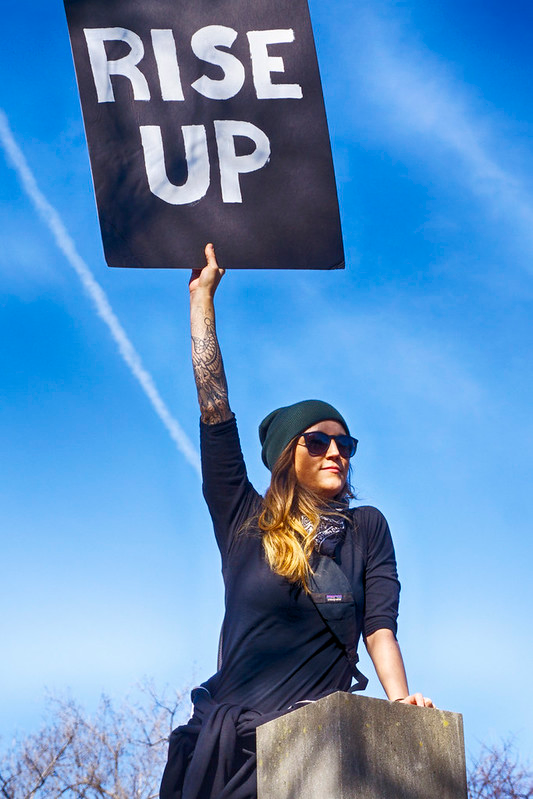
Skin

By Frances Koziar

Skin colour
does not dictate culture—

I could tell you all the ways
that this is true, speak of abandonments
and adoptions that sink deeper
than flesh, of homes and not-homes,
of the erratic mixing
of bloodlines; instead
I want to say that being white
but not White
puts you in a unique
kind of danger.

We are attacked
by our own and our allies, attacked
for expressing what we love
in the name of appropriating our own
cultures, our identities
disbelieved because all they can see
is the spiky shell of the lychee, not
the sweet fruit encased
inside.

I want to tell you that wearing
an amulet of protection draws crosshairs
of attention when all I want is to bare
my identity, to love a homeland
that is as much a part of me as the privilege
of my colour, to reveal some
of the tender sacred parts of myself that I yearn
to share as I reach out to others

But I also
understand—I too
have seen first-hand how some
beliefs are disagreed with, while others
are just laughed at. I

know the pain of mockery
for believing in animism or the magics
found across so many cultures,
have seen the glassy stares and the
this-is-a-joke-right? smiles
when my eyes are filled with feeling,
have felt the twisting in my gut when I
am silenced one way
or the other, watching
other whites wear what they want
without a second thought to having
their people ridiculed by those choices
or their ancestors
silenced.

            They are lions
who’ve never had to shave the precious
gold of their fur
for safety; have never watched
each beautiful strand fall like wishes
that will never come true, never
known how it feels to hide
the gifts of their identities like stolen
property lest they be mis-
understood, until the very ground
beneath them has become soft
with their lies.


FRANCES KOZIAR has published poetry in over 45 different literary magazines, including The New Quarterly, Acta Victoriana, and Vallum. She is a young (disabled) retiree, a painter, a gamer, and a social justice activist living in Kingston, Ontario, Canada. Visit her website.

Photo by Philbo 🇺🇦 on Unsplash.


A note from Writers Resist
Thank you for reading! If you appreciate creative resistance and would like to support it, you can make a small, medium or large donation to Writers Resist on our Give a Sawbuck page.
Graffiti Artists

By Andrea L. Fry

The authorities will start with shame—the lecture on personal property
as if it would reform. But not even close—the claim of ownership is as alien
to ghost writers, as the acceptance of defacement is to those who own.  

But how persistent, how alive the calling card! Yesterday, the overpass
was grey and mournful in the sleet. Today it’s neon orange, bedazzled
in fun fonts, spiky electric blue shapes like speech bubbles in comics.


It’s hard not to smile at exuberance. That treacherous cliff behind
Friendly’s? They washed it in purple, then sent a red zigzag down
the rockface, chubby letters cartwheeling into a vermillion pool of LOVE.

But who are these stealthy anarchists? How do they shimmy up with cans,
spray billows of perfect clouds while dangling like spiders from a thread?
I can only dream of such courage. I’ve spent my life trying to get a mortgage.

If I ever do, I wonder if I’ll join the owners, put up a fence of cypress trees,
install a rumbling garage door capable of decapitating trespassers?
When “Stoney Creek Road” was changed to “Stoned Creek Road,”

my father used it as a teaching moment on vandalism—he must have heard
us chuckling in the back. I can’t help but root for these mischief artists.
And how injurious is their havoc, when governments dispense with lives

as casually as these sprayers paint a rock? They say King Charles III
owns 1/6 the surface area of the planet. Imagine waking up in a London
fog to a golden dispatch stretched across Westminster Bridge: 

Text reading Who sez? Who sez? Who sez?


Andrea Fry has published two collections of poetry, The Bottle Diggers, in 2017 (Turning Point Press) and Poisons & Antidotes (Deerbrook Editions) in 2021. Her poems have appeared or will appear in journals such as Alaska Quarterly ReviewAnnals of Internal Medicine,Barrow StreetCimarron Review, Spoon River Poetry Review, Stanford Literary ReviewThe Sun, and Women’s Review of Books among others. She has been nominated three times for the Pushcart Prize. Andrea is freshly retired from her career as an oncology nurse practitioner and lives in Brookline, MA with her husband and two comical felines. Visit her website at andrealfry.com.

Photo quisnovus via a Creative Commons license.


A note from Writers Resist
Thank you for reading! If you appreciate creative resistance and would like to support it, you can make a small, medium or large donation to Writers Resist on our Give a Sawbuck page.
I visited Gaza in my sleep

By Sophia Carroll

I worked in a medical tent. Do they still have medical tents? I’m not a doctor but in my dream, I could tell who we could save by touching them. Some people burned from infection. I knew we didn’t have medicine. I heard mothers scream, that sound that predates language. I hugged a boy of fourteen. He had no one. I wanted to take him home but that is impossible. Are we still free? He said he was coming back to fight, to avenge his family. I meant to birth a baby. Went to wash my hands and was suddenly in the kitchen of the house I grew up in, as if I could go back and forth like my money. As if I could wash my hands. They’re still dirty.


Sophia Carroll (she/they) is an analytical chemist and writer. Her work appears in wildnessSmokeLong QuarterlyRust & Moth, and elsewhere. She is also the co-founder of M E N A C E, a magazine for the literary weird. Find her on Substack at Torpor Chamber and on Bluesky @torpor-chamber.bsky.social.

Photo by Damien Walmsley via a Creative Commons license.


A note from Writers Resist
Thank you for reading! If you appreciate creative resistance and would like to support it, you can make a small, medium or large donation to Writers Resist on our Give a Sawbuck page.