Standard Safety Recommendations: Revised, 2025

By Ryan McCarty

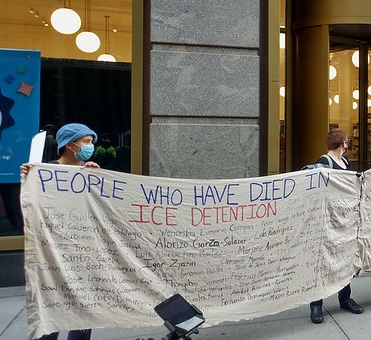
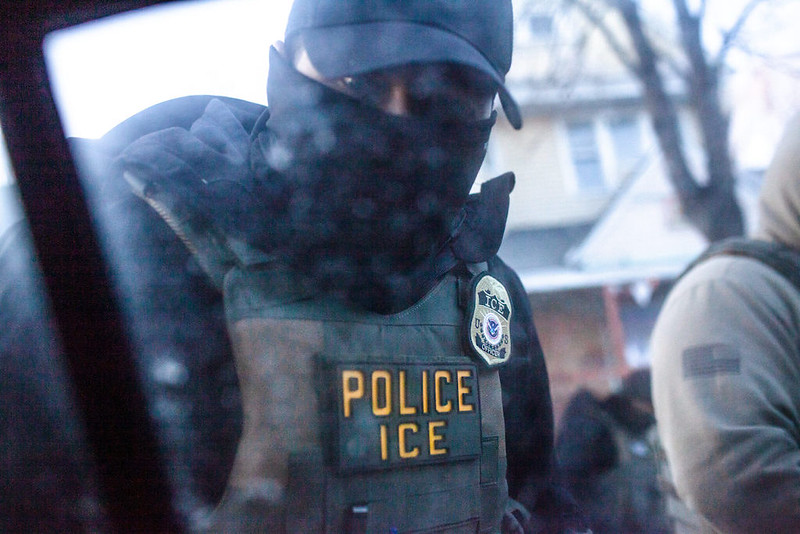
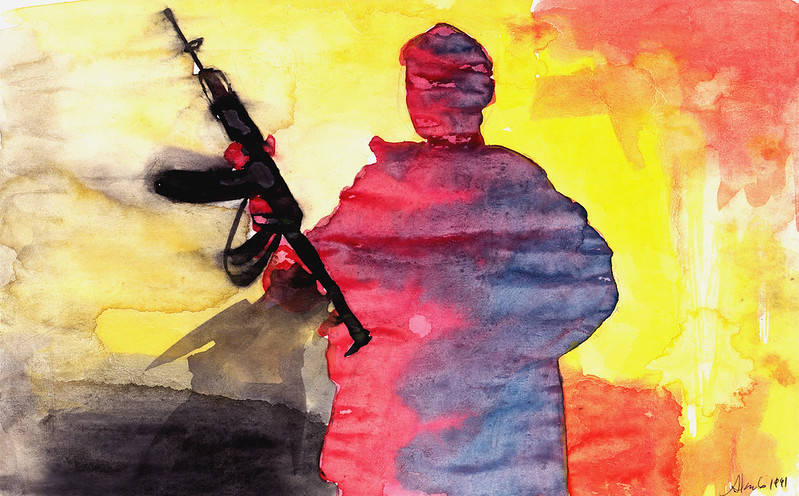
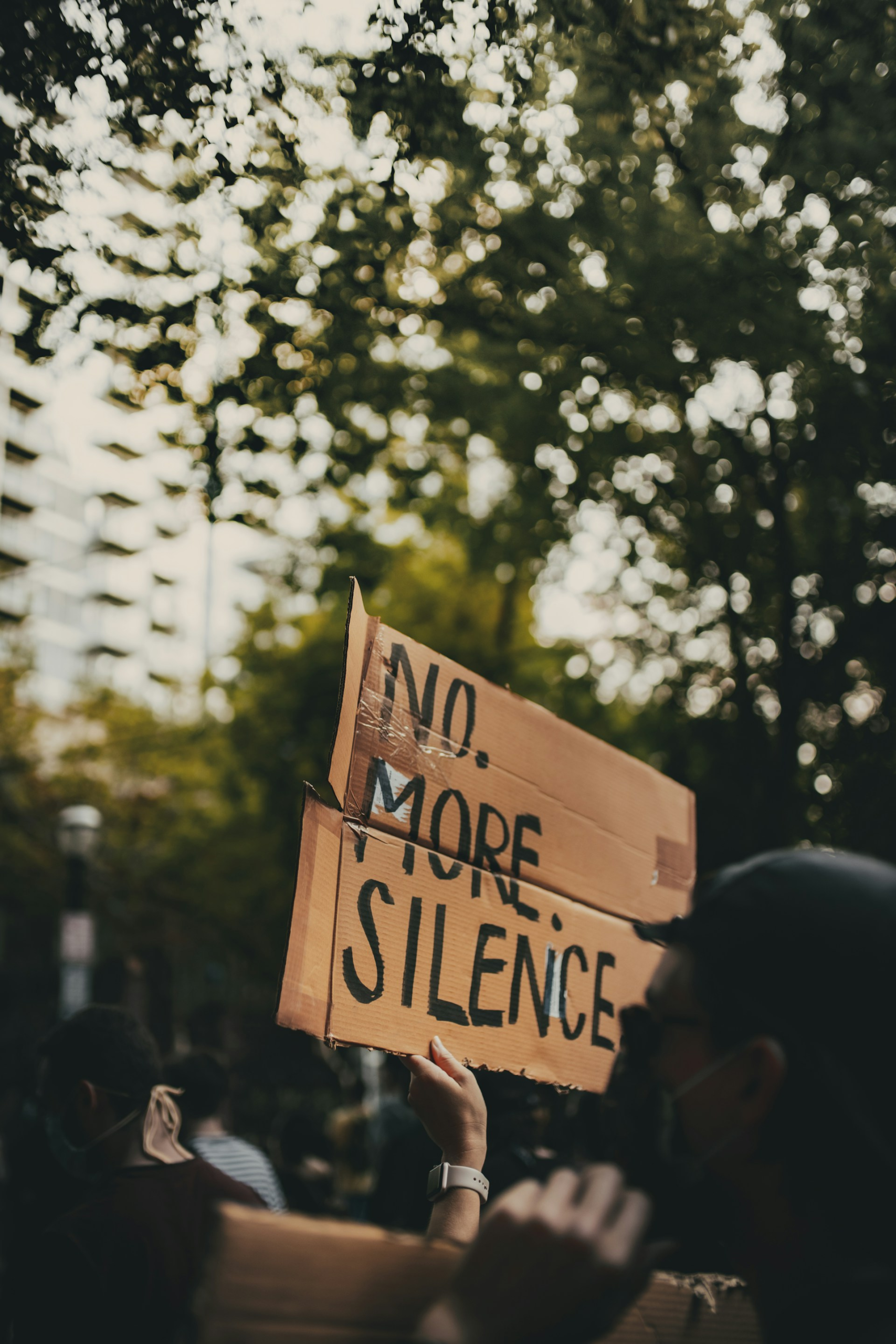
Honesty may no longer be the best
policy, depending on who’s asking.
And sometimes accepting a ride
from strangers is the safest way home.
Do not secure your own mask
before helping children or others. 
Listen to your body, though.
Carrying heavy weight at arm’s length
can stagger you. Bent knees alone
will not be enough to do all the lifting.
Hold what needs to be picked up
close to your chest. Share warmth
with people who are in the cold.
If you smell smoke, do not wedge
a wet towel under the door. Listen
for coughing and the scuff of bodies
looking for fresh air. Always let them in. 
It is still better to be safe than sorry,
because jails and mass graves 
will never be emptied by apologies. 


Ryan McCarty is a writer and teacher, living in Ypsilanti, Michigan, where the poems walk around talking to each other and doing the good work, even though it seems like there’s more to do every day. His writing has appeared recently in places like Abandoned Mine, Blue Collar Review, Door is a Jar, Left Voice, Michigan Quarterly Online, Rattle Poets Respond, and Trailer Park Quarterly. He also writes at ryanmccarty.substack.com.

Photo credit: Wordshore via a Creative Commons licsense.


A note from Writers Resist
Thank you for reading! If you appreciate creative resistance and would like to support it, you can make a small, medium or large donation to Writers Resist from our Give a Sawbuck page.

Stars and Stripes: Registering Voters in the Travis County Jail

By Lauren Oertel

We see stars in their eyes—the legal technicality
allows them to imagine voting for the first time.

Then the stars fade
like the overwashed
thick stripes on their shirts.

Heavy doors buzz, razor wire-topped pathways
snake between buildings.

Guards mutter Make America Great Again
when they see our clipboards and registration forms.

It’s the shower shoes—thin, terracotta-colored,
plastic sandals, barely protected feet.

We might expect old glory to save us.
Save us from this man with scars on his face
that run not as deep as the ones on his heart.

Save us from that man whose injured hand
shakes as he signs his name.

Are they not here in the name of my protection?

Back out to face the wall, arms up, legs spread,
brace for the unwelcome hands. Back into cells.


Lauren Oertel is a community organizer and passionate supporter of authors, books, writing communities, and local bookstores. Her work has been published in The Ravens Perch, Evening Street Review, Steam Ticket, The Bluebird Word, The Sun Magazine, and more. She lives in Austin, Texas, with her partner Orlando and their tuxedo cat Apollonia.

Photo credit DonkeyHotey via a Creative Commons license.


A note from Writers Resist
Thank you for reading! If you appreciate creative resistance and would like to support it, you can make a small, medium or large donation to Writers Resist from our Give a Sawbuck page.
Inauguration Day

By Linda Parsons

                    I’m bleeding
                              I’m bleeding
          on the sheet and pillow    not
my monthlies        so many moons    gone.
          On the sheet   a red thread
                     unraveled
in sleep    stain hardened    to rub and soap.
                              I bleed
like a girl   the coldest winter    I’ve known
          splits    skin       streaks
my pillow   sheet    pulled to my chin.
                    I’m bleeding
for my daughters    and granddaughters
                    soft bodies
          sold in the marketplace
                              the coldest coin
          I’ve known.   All of us 
                    dying
                              in moons to come  
sheets pulled    to our chins    bloodied  red.  
          Won’t someone    breathe
                    soft    on our skin
          lift stains    from winter’s cold
                    bed?   I cannot bear 
               the weight   my skin    sacrificial
          torn loose   these longest    of nights.
                    Daughters, granddaughters,
bear this    dark day.    Rage    rage    curse
          the draining   of light.
                              I bleed
          for this blue and red
                    gash of country, for the drums   
                              beating past
     Lincoln’s feet.   Let the streets    run
with   girls   still believing   let
                    their birthright
          burn    white heat.
                    Only bright day
will wash   our bodies    past broken
          belief    blood    in its mercy
rubbed clean.    Only then   will we    break
          this cold bargain,
                              until then
                    you will see   
          how I bleed.


Poet, playwright, essayist, and editor, Linda Parsons is the poetry editor for Madville Publishing and the copy editor for Chapter 16, the literary website of Humanities Tennessee. She is published in such journals as The Georgia ReviewIowa ReviewPrairie SchoonerSouthern Poetry Review, Terrain, The Chattahoochee Review, Shenandoah, and many others. Her sixth collection is Valediction: Poems and Prose. Five of her plays have been produced by Flying Anvil Theatre in Knoxville, Tennessee. 

Photo by Haberdoedas on Unsplash.


A note from Writers Resist
Thank you for reading! If you appreciate creative resistance and would like to support it, you can make a small, medium or large donation to Writers Resist from our Give a Sawbuck page.
The Bishop

By Lao Rubert

                 –for the Right Reverends Mariann Budde, Anne Hodges-Copple and Scott Benhase

Before dawn she packs her briefcase
swivels its four gliding, revolving wheels
and marches through the door
in puffy down, long underwear
beneath her slacks. Garment bag
slung over her shoulder. Snow boots
grip black ice as she clicks
the car door open, slides in.
She arrives early, in time for the thick
El Salvadoran coffee Ana brews.
She has a speech to make.

Inside the drafty cathedral she dares
to lay a single word upon a silver tray.
Perhaps it is the audacity that offends
as she declares Mercy, and then again,
Have mercy, draping the phrase
like a string of pearls around his neck.
Disgraceful, insulting, fear-mongering,
he yelps, his power pricked.
Supplicants jeer, the street’s upended.
He stays up late, combats the words,
demands a mea culpa be extended.                                                                   

There have been death threats, she smiles.
They’d like to see me dead.
No apologies. Instead, she packs her robes,
rochet and chimere, white and scarlet,
alongside her embroidered black tippet.
Outside, the traffic roars and wails.
Beggars make their afternoon requests
and the Bishop counts the miles that she must go
as tributes mix with calls for her demise.
Some say she’s blessed.


Lao Rubert lives in Durham, North Carolina. Her poems have appeared – or will appear – in Atlanta Review, Barzakh, Collateral, Mantis, Mom Egg Review, Muleskinner, Poetry East, The Avenue, The Marbled Sigh, Wordpeace, Writers Resist and elsewhere. Rubert has spent a career working to reform the criminal justice system.

Photo Credit: Steve Robbins via a Creative Commons license.


A note from Writers Resist
Thank you for reading! If you appreciate creative resistance and would like to support it, you can make a small, medium or large donation to Writers Resist from our Give a Sawbuck page.

Saved

By Phyllis Wax

This time
will it be an ark
or a spaceship
when God decides
to cleanse the earth?

When rising oceans
submerge the coasts                    
and fire, flood and wind
ravage the rest,

when wars and wickedness
are rampant, when compassion
collides with greed

who will gather their loved ones
to climb aboard—

the righteous                   
or the rich?


Phyllis Wax writes on a bluff overlooking Lake Michigan in Milwaukee, WI. She grew up in the Washington, D.C., area, and is distressed by what is going on there these days. Her poetry has appeared in many publications, including Writers Resist, Jerry Jazz Musician, Rise Up Review, Spillway, Peacock Journal, Gyroscope Review, Wordpeace, New Verse News, Mobius, Your Daily Poem.

Photo credit: jaci XIII via a Creative Commons license.


A note from Writers Resist
Thank you for reading! If you appreciate creative resistance and would like to support it, you can make a small, medium or large donation to Writers Resist from our Give a Sawbuck page.

you’re all for autism acceptance ’til

By Lauren Withrow


Lauren Withrow is an autistic disability advocate, mother of two autistic children, diverse writer, TikTok creator (@thegirlbehindthe_mask_), and Lead Registered Behavior Technician. Her poetic writing explores themes of autism, identity, love, and justice drawn from personal and professional experience.


A note from Writers Resist
Thank you for reading! If you appreciate creative resistance and would like to support it, you can make a small, medium or large donation to Writers Resist from our Give a Sawbuck page.
Two Poems by Steph Sundermann-Zinger

What if instead of the inauguration, I wrote about birds?

The rabble of small brown ones
beneath the feeder — the ones we can never
tell apart? Or the chickadees,
sacking away sunflower hearts against
a long, bleak season? Even now, the woodpecker
beats a concussive staccato, war drum
for the bruise-blue crows mobbing
to protect their nests, while the hawk preens
his tawny feathers on the garden wall,
indifferent. The mourning dove offers
a dogged lament, every day the same
bewildered grief. And always the cardinal,
blood-bright, black-masked, attacking
his own reflection in every shining thing.


Living Queer in the Days After the Election

The barn swallows are tucked into night’s shallow pockets,
morning song already brewing in their throats. Their familiar chorus
will start again tomorrow, nothing changing, even as the males
slaughter their neighbor’s nestlings, shoving their flightless bodies
to the ground. When frightened, octopuses close themselves
into coconut shells. They practice, I tell my wife after the votes  
have been counted, when she’s too afraid to sleep. I show her a video,
an octopus dragging crude armor beneath its tender belly, contracting
into it again and again, dress rehearsal for disaster. My daughter hides
under her teacher’s desk during blackout drills. It’s probably the safest place, 
she says, but there’s only room for one. A lot of kids just pile up
in the corners.
 I think about asking her to make space for another child,
but don’t. Survival is my body’s private anthem now, breath’s wild melody,
stubborn drum of my heart clenching and unclenching, like a fist. 


Steph Sundermann-Zinger (they/she) is a queer poet living and writing in the Baltimore area. Their work explores themes of identity, relationship, and connection with the natural world, and has appeared or is forthcoming in The Avenue, Blue Unicorn, Little Patuxent Review, Lines + Stars, Literary Mama, Split Rock Review, and other journals. She is a graduate of the University of Baltimore’s MFA program and the 2023 recipient of the Ellen Conroy Kennedy Poetry Prize. They were a fall 2024 Writer in Residence for Yellow Arrow Publishing. Find her online at stephwritespoems.com

Photo credit: “Evening Mourning Doves” by briandjan607 via a Creative Commons license.


A note from Writers Resist
Thank you for reading! If you appreciate creative resistance and would like to support it, you can make a small, medium or large donation to Writers Resist from our Give a Sawbuck page.
Finger Banging Slutty Young Woman

By Caiti Quatmann

This poem contains themes and explicit descriptions of trauma,
including sexual violence, misogyny, and systemic oppression.
Readers are encouraged to approach with care.

When you’re the first girl in third grade
that has to wear a bra (the same year
that spice girls release their first album),
the boys will start calling you “Slutty Spice.”

& the next year, when you get your first period
(well before the health teacher comes in
to even tell you what it is, so your mom finds
you crying in the bathroom with blood
on your hands, as you ask her, am I dying?)
your name will just become “Slut.”

& by fifth grade (as you cry each night
in the bath from growing pains) when
you’re towering over every boy who won’t
start growing ‘til seventh grade,
the world will call you a young woman.

& it will tell you:
You look so grown up.
You should be a model.

& men will whisper as you walk past
the restaurant bar, following the hostess
& your family through a maze of tables
& chairs, “Look at the tits on that one.”

& your Mother, during
appetizers, will tell you,
“I would have killed
for boobs like that.”

& in the summer before sixth grade,
you’ll ride bikes with your childhood friend
to the playground at school. It’s Saturday,
so no one is there, until her older
boyfriend appears with his friend.

& when she rides off with her boyfriend,
while you’re crawling through the tubes,
his friend will slide in next to you.

& as he slobbers on your lips
& shoves his hand down your shorts,
you’ll stiffen & think about
the texture of plastic, & how the blue
is faded where the sun has bleached it.

& after labor day, when you
start middle school, you will learn
this boy has a sister in eighth grade
who told everyone to call you “finger bang.”

& in seventh grade when your friend tells you
how the math teacher (who is also your volleyball coach)
seems to call on you all the time & asks you
to walk up to the chalkboard,

& that he won’t stop looking
at your chest the whole time—
you don’t notice.

& because you’ve become so familiar with
the discomfort of men’s (& boy’s) attention,
you can’t even point to it as the reason
for the omnipresent tightness in your chest

& lump in your throat that grows bigger
& bigger each day. You’ve been desensitized
to the male gaze, learned that your body
is always available for viewing & comment.

& when you go to practice that evening,
you wear three extra sports bras
to make yourself smaller.

& in eighth grade when your friend
asks you what a blowjob tastes like
you don’t wonder why she would ask you,
why she would think you know
(you don’t actually know).

& because you’re “a Finger
Banging Slutty Young Woman,”
you explain it the best way you can.

And you tell her it tastes sweet
(because Ask Jeeves told you that
semen contains a high amount of fructose).


Caiti Quatmann (she/her) is a disabled poet, writer, author of the chapbook Yoke (MyrtleHaus) and Editor-in-Chief for HNDL Mag. Her poetry and personal essays have been published by manywor(l)ds, Samfiftyfive, Thread LitMag and others. Caiti lives and works in St. Louis, Missouri. Find her online @CaitiTalks.

Photo credit: “MacArthur Park” by Amy the Nurse via a Creative Commons license.


A note from Writers Resist
Thank you for reading! If you appreciate creative resistance and would like to support it, you can make a small, medium or large donation to Writers Resist from our Give a Sawbuck page.
The Sea Gazelle

By Bänoo Zan

                           For Ahoo Daryaei1


My body—my voice—

Time is out of joint
in this sea of forced hijabs

I wear a hoodie sweater to campus
To force me to wear a hijab
the Sharia militiamen rip it to shreds

I show you whose body this is—I roar—
Now that my torso is exposed—
I get out of my pants, too—

I announce independence—
walk down the street—tall as cypress—
My body is not my shame—

My arrest is a bloody scream
Plainclothes men beat me up—
bang my head against a car
and throw me inside—
The tires leave a trail of red

I am detained in a “psychiatric” ward
The only people with visitation rights  
are the Brigadier General of the Disciplinary Force2
Intelligence agents,

and pretend doctors who administer drugs
to drive me to insanity, confession,
and the insanity of confession

Waves besiege my protest
Pain pierces me as rape

I am restrained after attempts to escape—

I am a tempest in
a sea of subjugated resolves—

No ceasefire—between tyranny and freedom—

My body—is my weapon—

I am leaping out of waves


Bänoo Zan is a poet, translator, essayist, and poetry curator, with over 300 published pieces and three books including Songs of Exile and Letters to My Father. She is the founder of Shab-e She’r (Poetry Night), Canada’s most diverse and brave poetry open mic series (inception 2012). It is a brave space that bridges the gap between communities of poets from different ethnicities, nationalities, religions (or lack thereof), ages, genders, sexual orientations, abilities, poetic styles, voices, and visions. Bänoo, along with Cy Strom, is the co-editor of the anthology: Woman Life Freedom: Poems for the Iranian Revolution. 

Photo credit: Photoholgic on Unsplash.


A note from Writers Resist
Thank you for reading! If you appreciate creative resistance and would like to support it, you can make a small, medium or large donation to Writers Resist from our Give a Sawbuck page.

  1. Ahoo Daryaei, nicknamed “the science-research girl,” is a PhD student in French Literature at the Islamic Azad (Free) University, Science and Research Branch, Tehran, Iran. On November 2, 2024, security forces tore her clothes to teach her that she should dress modestly. She then stripped to her underwear and was arrested by plainclothes forces and detained and held against her will at a “psychiatric” hospital. “The sea gazelle” is a translation of her name: “ahoo” is gazelle and “darya” is the sea in Persian. ↩︎
  2. FARAJA, acronym for the Disciplinary Force of the Islamic Republic of Iran ↩︎

Ode to America, November 6, 2024

By Joanne Durham

Oh America, I desperately want
to praise you, but even this poem
has begun wrong, like you began
wrong. How easily you claimed
the name of two continents,
the lands of other peoples. Here
you are, states untied, no belt
of decency holding them together,
all the rot of unentitled claims
shredding your fraying fabric.

Lying in bed before dawn, I fight
that rot creeping through my lungs.
I do not want to suffocate,
least of all from my own faltering
breath. So I walk out onto the deck
of this ocean-facing place
I call home. The stars are still the same,
Orion’s belt shines on, so close
to the Equator everyone on earth
can see it. Some woman like me
will stand beneath it as the sun shadows
away from her, in China, Ghana,
Greece, and marvel
at the three giant stars that hold
this belt secure. In ancient myths
those heavenly bodies make a bridge
to the world of souls. Few of us know
their names, but we know connection,
perhaps that is all we need to know—

The fog thickens as the sun rises,
even the sky doesn’t want to witness
the mayhem below. We are left
to navigate by our own constellations,
what shines true in our fragile lives.
I walk down to the beach, search
for a shark tooth, a reminder
of how old this earth is, how much
it has weathered.


Joanne Durham is the author of To Drink from a Wider Bowl, winner of the Sinclair Poetry Prize (Evening Street Press 2022) and the chapbook, On Shifting Shoals (Kelsay Books 2023). Her poetry appears in Poetry South, Vox Populi, CALYX, NC Literary Review and numerous other journals and anthologies. She lives on the North Carolina coast, with the ocean as her backyard and muse. Visist her website at www.joannedurham.com.

Photo credit: Yuriy Totopin via a Creative Commons license.


A note from Writers Resist
Thank you for reading! If you appreciate creative resistance and would like to support it, you can make a small, medium or large donation to Writers Resist from our Give a Sawbuck page.

The Social Contract

By Kelly Fordon

I’ve been thinking about Irish wakes—
what my aunt’s must have been like—
19—killed by her drunk boyfriend
who slammed into a light pole.
For years afterward, my grandfather
ran into the boy around town.
My grandparents believed he would pay—
if not in this lifetime, in the next.
But I heard it nearly drove
my grandfather mad to see his face.
Those were the days before we all decided
drinking and driving is dumb,
a collective decision after so much loss.
What we had tolerated before,
we could no longer abide.
Irish wakes always took place
in the deceased’s home.
Back in those days
they covered the mirrors
so the soul wouldn’t float off
into the nether world instead
of zooming straight up to heaven.
The vigil lasted all night.
The men lit their cigarettes
to ward off the evil spirits.
That’s another thing
we used to sanction—
several of my family members
went up in smoke.
It takes a village, they say.
What I happen to believe
matters little without you
on board. Otherwise, how
would we even set the speed limit?
I was working one day
behind the circulation desk
and a man walked in
with a Glock strapped to his chest.
Who he was,
what he intended to do,
we had no idea.
He was exercising
his rights, and it made me think
about my aunt flying through the windshield,
my uncle hacking up a lung,
bombed-out hospitals,
preemies huddled together
in shoe boxes,
kids who were just having fun
at a music festival,
my son cowering
in his MSU apartment,
a killer on the loose.
His grade school friend, who
didn’t make it through that night.
Back when I was in high school
we didn’t know boys were supposed
to stop when we said stop.
If we’d banded together,
if we’d called out the bystanders,
if we’d agreed that we deserved better,
that what was happening
was really, really shitty, maybe
we could have shut it down.
Maybe we could have changed
everything.


Kelly Fordon’s latest short story collection, I Have the Answer (Wayne State University Press, 2020), was chosen as a Midwest Book Award Finalist and an Eric Hoffer Finalist. Her 2016 Michigan Notable Book, Garden for the Blind (WSUP), was an INDIEFAB Finalist, a Midwest Book Award Finalist, an Eric Hoffer Finalist, and an IPPY Awards Bronze Medalist. Her first full-length poetry collection, Goodbye Toothless House (Kattywompus Press, 2019), was an Eyelands International Prize Finalist and an Eric Hoffer Finalist. It was later adapted into a play by Robin Martin and published in The Kenyon Review Online. Her new poetry collection, What Trammels the Heart, will be published by SFASUPress in 2025. She is the author of three award-winning poetry chapbooks and has received a Best of the Net Award and Pushcart Prize nominations in three different genres. She teaches at Springfed Arts in Detroit and online, where she runs a fiction podcast called “Let’s Deconstruct a Story.”

Photo credit: Marc Nozell via a Creative Commons license.


A note from Writers Resist
Thank you for reading! If you appreciate creative resistance and would like to support it, you can make a small, medium or large donation to Writers Resist from our Give a Sawbuck page.

Welcome to Writers Resist the Winter 2025 Issue

Whether you’re still in recovery or planning your resistance against the incoming regime, there’s plenty of common ground in this the Winter 2025 issue of Writers Resist. Enjoy the art, poetry and prose and then join us for our virtual Writers Resist Reads, Saturday 15 February 2025, at 5:00 p.m. Pacific. Just email for the Zoom link: writersresist@gmail.com.

In this issue:

Mary Brancaccio “This little piece of heaven

Salena Casha “In This Version, Cancer Is a Woman

Karen Crawford “You Don’t Run

Jennifer Freed “Upon Learning, in a Report on the Footage of a Sheriff’s Deputy Shooting Sonya Massey to Death in Her Kitchen, of Massey’s First Words to the Deputy

Jennifer Karp “Postcards from the Valley of the Moon

Flavian Mark Lupinetti “Trigger Warning

M.R. Mandell “Gen X Girls Ghazal

Melissa McEver Huckabay “Why I Fight for Texas Even Though Everyone Says We Should Move

Livia Meneghin “What should be free

Ria Raj “kaala; kala

Ash Reynolds “Uprooted/Planted

Sheree Shatsky “Judged

Beulah Vega “About Those Census Checkboxes

Laura Grace Weldon “Election Day Facebook Exchange

Amritha York “mmiwg


Photo by K-B Gressitt

Why I Fight for Texas Even Though Everyone Says We Should Move

By Melissa McEver Huckabay

Sapphire flowers on the roadside.
Mountain laurels that smell like grapes.
Yellow sulphurs that flit among blooms.
Breakfast tacos and tiny salsa cups.
Muddy bayous that swallow your feet.
Pine trees that touch the sun.
Whataburger lines circling the block.
Dr. Pepper. Shiner. Blue Bell.
Sticky shirt by 8 a.m. Sunburn by 10.
Summers hiding in air conditioning.
Wearing shorts on Halloween.
Orange-lighted towers and cowboy hats.
Ferris wheels in front of the livestock show.
Two-stepping and scuffling boots.
Walks on Town Lake when it was Town Lake.
Oak-tree canopy on Rice Boulevard.
Peacocks squealing in Mayfield Park.
Coconut shrimp on South Padre Island.
Charro Days in Brownsville.
Marching bands and Friday night lights.
Stands selling strawberries, peaches.
Neighbors who took us for pony rides.
Picking dewberries on the side of the road.
My hometown before the Trump signs.
Believing hearts can change.
My mother, my grandfather,
my grandmother, my great-grandmother.
My father, even though he left.
My stepfather, who never left.
The blood that calls me here.                    Even though. Even though.


Melissa McEver Huckabay has an MFA in poetry from Texas State University and teaches writing at University of Houston-Downtown. Her poetry has appeared in SWWIM, Poetry South, Phoebe Journal, Thimble Literary Magazine, Sweet: A Literary Confection, and elsewhere, and is forthcoming in Minnesota Review. Her short fiction has won the Spider’s Web Flash Fiction Prize from Spider Road Press. She was a 2023 Contributor to the Bread Loaf Writers’ Conference and was recently nominated for a Pushcart Prize.

Photograph by RobinJP via a CreativeCommons license.


A note from Writers Resist

Thank you for reading! If you appreciate creative resistance and would like to support it, you can make a small, medium or large donation to Writers Resist from our Give a Sawbuck page.

Trigger Warning

By Flavian Mark Lupinetti

Never before has my hospital seen
such dismembered torsos and pulverized brains,
results of a shooting with an AR-15.

The speed of a bullet from an AR-15
creates cavitation through muscles and veins.
A shot to the shoulder can rupture the spleen.

All of our doctors and nurses convene,
yet it’s futile to treat what are really remains,
these gobbets of protoplasm rendered obscene.

It distresses us we cannot follow routine—
bring a halt to the hemorrhage, alleviate pains—
but to rush to the OR dishonest. I mean,

there’s nothing to save after seeing this scene.
Kids of a country where the gun owner reigns,
doomed never forever to reach age thirteen.

Of the lethalmost species of killing machine—
bazookas, gas, napalm, presidential campaigns—
accessorized with a 55-round magazine,
nothing compares to the AR-15.


Flavian Mark Lupinetti, a poet, fiction writer, and cardiac surgeon, received his MFA from the Vermont College of Fine Arts. His poems and stories have appeared in Bellevue Literary Review, Cutthroat, december, Redivider, and ZYZZYVA. Mark’s chapbook, The Pronunciation Part, will be published by The Poetry Box in 2025. Mark lives in New Mexico.

Photograph by clappstar via a Creative Commons license.


A note from Writers Resist

Thank you for reading! If you appreciate creative resistance and would like to support it, you can make a small, medium or large donation to Writers Resist from our Give a Sawbuck page.

Uprooted/Planted

By Ash Reynolds

Today I learned the word “ecocide”
murder of the environment
Intentional destruction of the soil, air
of olive trees, strawberry fields
Mourn for all that is lost
the homeless animals, the rootless trees
Don’t cry over spilled oil
or plastic crowding the ocean
Colonizers raping an open wound
hands stained copper-tongue carmine
Dear planet, look what they’ve done to you

Today I planted my garden
birth of nourishment
Intentional tending of green zebra tomatoes
of hot & spicy oregano, mini-me cucumbers
Celebrate all that is growing
the native flowers, the bumblebees
Don’t cry over dry soil
or squirrels snacking
Tenderly dug holes in fecund earth
garden gloves stained abundant brown
Dear planet, look what you’ve given me


Ash Reynolds (they/them) is a nonbinary, queer, ace poet living in College Park, Maryland, USA, with their rescue dog and 41 houseplants. They are published in new words {press} and have a poem forthcoming in The Bitchin’ Kitsch.

Photograph by Gabriel Jimenez on Unsplash.


A note from Writers Resist

Thank you for reading! If you appreciate creative resistance and would like to support it, you can make a small, medium or large donation to Writers Resist from our Give a Sawbuck page.

About Those Census Checkboxes

By Beulah Vega

To those who do not look
she looks nothing like me
but we share that look

the slow ashen gaze that says I’m tired

of these forms that push messy spheres
into uniform squares.

She/ I/ we are tired. Tired
in the marrow of our bones
that share color and structure

but not marrow matches

tired of doctors blaming our blood
for illness.

I/we/she are tired. Tired
in lungs that share the same
air-poisoned and fear-filled

voices and pleas ignored

by pink hats who only really march
for pink skin.

We/she/I are tired. Tired
of learning two of every-
word. But never learning

one that means compassion.

Tired of monolingual and bilingual, both meaning
“outsider” “forastera.”

We/she/I/Half Caste/Mestizo/Indio
/Half breeds/Mulatto are all tired
of these boxes you’ve built

 to bury us in.


Beulah Vega (she/her) is a Latine writer, poet, and theatrical artist living and working in California’s Bay Area. Her poetry has been published in The Literary Nest, Sage Cigarettes, Walled Women, and Blood & Bourbon, among others. Her first book of poetry, A Saga for the Unrequited, was published in August of 2021 by Fae Corp Publishing. She is still amazed when people refer to her as a writer, every time. To follow her lunacy (artistic and otherwise) find her on Facebook @BFVegaauthor and Instagram/Twitter @Byronwhoknew.


A note from Writers Resist

Thank you for reading! If you appreciate creative resistance and would like to support it, you can make a small, medium or large donation to Writers Resist from our Give a Sawbuck page.

mmiwg

By Amritha York


for now the red maple in the cloth flag remains the stain of a history attempting to come undone,
but

the other day i said bye to my friend and wasn’t sure if i’d ever see her again.
the other day, a waste management person told me they were scared of what they’d find at work.

red 
isn’t just a dress.
mmiwg isn’t just a hashtag. 

it’s a mother’s spirit spilling out her mouth every time she’s questioned, 
and flowing out when they stop asking. 
watching the red in the flag flapping in the wind, 
the red flapping in the empty dress that replaces her daughter. 
red in the rcmp uniform, 
red in the strawberry jello cake i made for canada day off the box.

never knowing who those red-dressed women were. 
$122, 728,283 spent over 54 years can’t replace 4000+ women. 
go back and find my girls, 
my women, 
that were born of this earth, 
that we hold in our hearts. 
every july, we road trip past unmarked graves and lost mothers’ souls.
red planted over with orange lilies and lady slippers stepping through our way.

keeping them company
until they find their way home.


Learn more about Missing and Murdered Indigenous Women and Girls at https://www.mmiwg-ffada.ca/  and https://www.humanrightsresearch.org/post/the-disappearance-of-native-american-women-in-the-u-s 


Amritha York (she/her/they/them) is a Torontonian queer, Indian, RN, new mother and gender-fluid woman. Amritha writes from her own life experiences of traumas, loss, poverty, and race and the resiliency in overcoming these. She hopes to push how we use storytelling out of stuffy exclusivity into generationally healing words of comfort. She has previously written for the Legion at a provincial and regional level and more recently participated in social action projects with Gardiner Ceramic Museum, for International Day of Violence Against Women, and part of a social action project for vulnerable and un-housed persons in Toronto, distributed by the YWCA.

Amritha hopes to make poetry and writing more accessible and digestible for BIPOC persons, and individuals who are in vulnerable spaces of mental health, addictions, trauma work and recovery. She has been published in Anti-Heroin Chic, Libre Lit, and Fruitslice, and you can find snippets of her work on Instagram @first.breath.release.

Photograph by yooperann via a creative commons license.


A note from Writers Resist

Thank you for reading! If you appreciate creative resistance and would like to support it, you can make a small, medium or large donation to Writers Resist from our Give a Sawbuck page.

Gen X Girls Ghazal

By M.R. Mandell

            after Patricia Smith

We woke ourselves up, brushed our own hair, cooked our own dinners, tucked
our sisters into bed. We were thirty at the age of thirteen. We needed nobody.

Vogued to Madonna. Leather jackets, tattooed midriffs, clove cigarettes slipping
off our lips, kissing girls under neon, electrifying every part of our bodies.

Boys drooled over our breasts, slid fingers up our lace miniskirts. Our curves made
them squirm. Our bodies owned their minds, but they said we owed them our bodies.

When we didn’t give in, they dropped roofies in our cups. Raped us, left us for dead,
blamed our bare skin and pulsing hips. We guilty bodies.

They’re old boys now, terrified of who we are, what we have become, what we have won. Governor of Michigan. Vice President of the United States. Badass brains. Badass bodies.

Oh, Rebecca, step down from your self-built pedestal. Stop talkin’ ‘bout the past.
Get off your ass. Gen X girls, this is our calling. We fight. We vote. Cue bodies!


M.R. Mandell (she/her) is a poet based in Los Angeles. You can find her words in The McNeese Review, Weekly Humorist, Maudlin House, Writers Resist, Stanchion, HAD, and others. She is the author of the chapbook, Don’t Worry About Me, (Bottlecap Press) and Lost Girls, forthcoming September 2025 (Finishing Line Press).

Photo credit: Lorie Shaull via a Creative Commons License.


A note from Writers Resist

Thank you for reading! If you appreciate creative resistance and would like to support it, you can make a small, medium or large donation to Writers Resist from our Give a Sawbuck page.

kaala; kala

By Ria Raj

my mother traces her fingers along my mahogany-skin
and calls me kaala,
hindi for black.

my mother traces her fingers along a film photograph of her homeland,
and calls it kala,
hindi for art.

i find it particularly lovely
that art
is intrinsic
to Blackness
in the hindi language

ka(a)la

the ubiquity of the
english language
is contingent


upon Black destruction

and as the
english language
continues to

dismember Black bodies,

i wonder if my hindi might illuminate a semblance of Blackness,
keeping it from

its premature death.


Ria Raj is a queer, South-Asian-American writer. She is deeply interested in the intersectional constructions of brownness, queerness, and womanhood in the literary archive, and how her work might fit into this constellation. She has upcoming publications in Eunoia Review, Moonbow Magazine, The Greyhound Journal, Zhagaram Literary Magazine, and Fleeting Daze Magazine.

Photo by Debbie Hall, poet, photographer and Writers Resist poetry editor.


A note from Writers Resist

Thank you for reading! If you appreciate creative resistance and would like to support it, you can make a small, medium or large donation to Writers Resist from our Give a Sawbuck page.

Upon Learning, in a Report on the Footage of a Sheriff’s Deputy Shooting Sonya Massey to Death in Her Kitchen, of Massey’s First Words to the Deputy

By Jennifer L. Freed

I, too, have felt myself to be prey.            
What woman has not?  

But I live
in a white body.

If ever I
dialed 911, afraid

of a man
prowling

around my home,
I would not need to say,

when the officers came
to my door—

no—let me rephrase: it would never
occur

to me
that my very first words

would be
Please don’t hurt me.


Jennifer L. Freed’s collection, When Light Shifts (2022 finalist, Sheila Margaret Motton Book Prize), explores the aftermath of her mother’s stroke and the altered relationships that emerge in a family health crisis. Her poems have been nominated for Best of the Net, The Pushcart Prize, and the Orison Anthology. Awards include the 2022 Frank O’Hara Prize, the 2020 Samuel Washington Allen Prize, and Honorable Mention for the 2022 Connecticut Poetry Award. She teaches adult education programs from Massachusetts, USA. Please visit jfreed.weebly.com.

Poet’s note: The news story that mentions Sonya Massey’s first words is here.

Photograph by Joe Piette via a Creative Commons license.


A note from Writers Resist

Thank you for reading! If you appreciate creative resistance and would like to support it, you can make a small, medium or large donation to Writers Resist from our Give a Sawbuck page.