Election Day Facebook Exchange 

By Laura Grace Weldon

I post a thank you to the four pound bag of garbanzo flour
which threw itself off a high shelf. It burst open in a spectacular
display of organic bean dust, coating my face and sweater.
I’d been festering with worries about which way
the vote might go, but explain that snort-laughing helps.

To whatever Facebook friends are awake at five-thirty a.m.—
those who are lunching in Finland, suppering in India,
going to bed in New Zealand—I suggest we invite 
silly mistakes to course-correct us back to good humor.
By the time I’ve cleaned the mess, friends are weighing in.

Kunzang says I’m thinking of adding snort laughter
to my tonglen practice and I affirm, That’s next level
Tamara says, Four pounds is a lot and I tell her
my husband insists benevolent kitchen gods
were saving him from meals made with it.

Joanne says I need a dose of bean dust, because I’m a wreck
and I offer to appear as Bean Dust Fairy. Wearing glittery wings,
I’d scatter flour over her worried head, but only after
she signed a disclaimer acknowledging no known magic
makes politicians work for the good of all. Kimerly says,

Winged garbanzo flour. What a magical sight. I thank her
for seeing the magic. Tell her it was, briefly, beautiful.
Donna reframes my mistake with, You know how
to make the most of amazing moments. Truth is,
I’m just uncoordinated, but she’s onto a larger truth.

I type back, Everything is, essentially, amazing.


Laura Grace Weldon lives in a township too tiny for traffic lights where she works as a book editor, teaches writing workshops, serves as Braided Way editor, and chronically maxes out her library card. Laura was Ohio’s 2019 Poet of the Year and is the author of four books.

Photography by David Becker on Unsplash.


A note from Writers Resist

Thank you for reading! If you appreciate creative resistance and would like to support it, you can make a small, medium or large donation to Writers Resist from our Give a Sawbuck page.

Postcards from the Valley of the Moon

By Jennifer Karp

The car shows 94 degrees after our dry desert hike. I write political postcards to Swing States while you drive. Dust in our boots, our clothes, the cracks around our eyes. They’re called crow’s feet, but you call them smile lines. I don’t know crows from blackbirds from ravens. Volcan Mountain, Iron Mountain, Cowles Mountain, everything is and has been open, you say. I’m not a fan of walking on sand—I do agree it’s cushioned and offers great resistance, but I’ll walk on rocks all day before sand. We pull off the highway to watch the Vice-Presidential debate again on YouTube. Dirt hangs in the air. This is becoming too big of a metaphor, you say. I’ve got a blister on my toe but I don’t tell you. We climb up a nearby boulder, you with ear pods, me with postcards and a black pen, hoping each line makes a difference.


Jennifer Karp began her love of writing at the age of eight. She earned recognition as a finalist in the 2023-24 Steve Kowit Poetry Prize and as a winner of the San Diego Reader Poetry Contest. Jennifer’s work appears in numerous journals, anthologies, and international magazines, touching hearts and minds around the world.

Photograph by Master Steve Rapport via a Creative Commons license.


A note from Writers Resist

Thank you for reading! If you appreciate creative resistance and would like to support it, you can make a small, medium or large donation to Writers Resist from our Give a Sawbuck page.

This little piece of heaven

By Mary Brancaccio

                        after William Stafford

has flown from Himalayan heights
to breed in Bialowieza, one of the last
primeval forests in Europe. He perches,
high in the branches of a leafy maple
and chirps out his rosefinch song as if
everything in the world depends on it.
It does — Earth needs more melody,
more calls to joy and desire, calls for
lands fit for another clutch of hope —
more trust in the future, in serenity
to raise the young, in attentiveness
to life in all its fragility and resilience.
Ah, to be a rosefinch, crossing borders
without papers, without worry of
misunderstanding, trusting in
the meadow’s bounty, in the wind’s
gift, in the endless sky and its glorious
light. In everything that makes possible
mate, nest and egg. His song is prayer
of thanks, one beautiful, full-throated

hallelujah.


Mary Brancaccio’s first poetry collection, Fierce Geometry (Get Fresh Books Publishing, 2022),was recommended by the American Academy of Poets. Her work has appeared in Naugatuck River Review, Minerva Rising, Edison Literary Review, among others. She is included in several anthologies of poetry, including The Black River: Death Poems; Farewell to Nuclear, Welcome to Renewable Energy (a response to the Fukushima nuclear disaster) and Veils, Halos and Shackles: International Poetry on the Oppression and Empowerment of Women. Her website is ghostgirlpoet.com.

Photograph by vil.sandi via a Creative Commons license.


A note from Writers Resist

Thank you for reading! If you appreciate creative resistance and would like to support it, you can make a small, medium or large donation to Writers Resist from our Give a Sawbuck page.

What should be free

By Livia Meneghin

            
Archived recordings of Ainu, Aleut, Lushootseed, Quechua, Boon, Saami, Somray,
Warluwarra, and other critically endangered languages.
All traditional items stolen for foreign museums.
Water.
Parking at a hospital.
(Parking at) the university you attend.
To knock on your neighbor’s door asking for sugar or to borrow a drill or if they can
water your plants while you visit family out of state. And to offer freshly made raisin bread or
help stringing outdoor Christmas lights or first dibs on an outgrown crib before donating it.
Submitting to literary magazines.
Cheese, when you’re depressed.
You, from depressive thoughts.
You, to feel down at times because sadness is necessary.
Children under rubble. Children from famine.
Water.
Leg hair. Also, the choice to shave if your body feels better that way.
Women who want to be slutty.
Women who must take care of their parents and their children at the same time.
Anyone making below a livable wage.
Ants: including the over 12,000 named species, as well as the unnamed species, who
matter equally.
Bakery items at the end of the day from being thrown out.
Glaciers from stampedes of tourists warming their surfaces.
Cows and chickens and pigs from slaughter.
Sinuses from infections.
Water.
Salmon runs.
Wild grasses.


Livia Meneghin (she/her) is the Sundress Publications Reads Editor and author of chapbook, Honey in My Hair. She’s earned recognition and awards from the Academy of American Poets, the Writers’ Room of Boston, Breakwater Review‘s Peseroff Prize, the Room Poetry Contest. Her writing has found homes in Gasher, So to Speak, Thrush, Whale Road Review, and elsewhere.After earning her MFA in Boston, she now teaches writing and literature at the collegiate level. She is a cancer survivor.

Public Domain photograph by Alan Levine.


A note from Writers Resist

Thank you for reading! If you appreciate creative resistance and would like to support it, you can make a small, medium or large donation to Writers Resist from our Give a Sawbuck page.

Welcome to Writers Resist the Fall 2024 Issue

The collage by Kristin Fouquet is an apt introduction to this issue, launched in the final throes of the chaotic, often hateful presidential campaigning. How wonderful it would be if the joyful prospect of electing the first woman president of the United States could be just that.

Perhaps we can make it so by encouraging all our sisters and other beloveds to use our hard-won right to vote. As Kristin’s artwork warns us, “Suffrage or Suffer.”

But first, a very fond farewell to one of our founding editors, Sara Marchant, who has a few words to share:

In the last days of the late 1900s, I woke up underneath a beanbag chair on the bamboo floor of a thrashed house not my own, missing a shoe, cake-frosting in my hair, and with full awareness that hijinks had ensued. My first thought was: That was an excellent party.

Today, while reading this issue of Writers Resist, please picture me in my pajamas, bedhead resplendent, toasting you, dear readers, contributors and editors, with my second cup of coffee.

Writers Resist was born from worried dread about our future and righteous anger over our present reality, and there is still much work to be done, but I know I leave her in capable hands . . . and it has been an excellent party.

Now, this issue has a notable dose of dystopias, but—or because of that—you should find some kindred souls in the works of our contributing writers and artists—and if you’d like to join them for our virtual Writers Resist Reads, on Saturday 16 November at 5:00 p.m. PACIFIC, please request the Zoom link via WritersResist@gmail.com.

D. Arifah, “Watching Over the Horizon

Linda Bamber, “Endless War

Robyn Bashaw, “Beware the Homo Sapiens

Cheryl Caesar, “Grass

Chiara Di Lello, “Abecedarian for Billionaires

Matthew Donovan, “I Believe Her

Kristin Fouquet, “Suffrage or Suffer

Ellen Girardeau Kempler, “Poem in Response to Mass Shooting Number 130 in the United States 2023

Michael Henson, “The Dream Children of Addison Mitchell McConnell III

Jacqueline Jules, “How I Feel About the 2024 Election

Craig Kirchner, “The Coming

Christian Hanz Lozada, “When I hear ‘migration,’ I think of ships

Rasmenia Massoud, “Who We Are, More or Less

Ryan Owen, “Breathe

Kate Rogers, “Sisters

Elizabeth Shack, “tree : forest :: ad : internet

Angela Townsend, “French Kissed

Rachel Turney, “Respect

Diane Vogel Ferri, “Election Day

How I Feel About the 2024 Election

By Jacqueline Jules

Woke this morning
with self-immolation on my mind,
not planning it, just incredulous
that anyone setting themselves on fire
would expect others to pay attention
in this world of “alternative facts”
where the size of an inauguration
can be disputed by the White House
along with whether or not men
scaling the walls of Congress
can be considered an insurrection.

It feels like everyone is burning
a flag these days, metaphorically
at least. If you’re wondering,
it’s not a constitutional crime,
and displaying the stars and stripes
on your underwear is okay, too.
Just check Amazon.

What will convince the voters
in Iowa that wildfires in California
threaten their climate, too,
before the smoke rises so high
it chokes us all?


Jacqueline Jules is the author of Manna in the Morning (Kelsay Books, 2021), Itzhak Perlman’s Broken String, winner of the 2016 Helen Kay Chapbook Prize from Evening Street Press, and Smoke at the Pentagon: Poems to Remember (Bushel & Peck, 2023). Her poetry has appeared in more than 100 publications. Visit her website at www.jacquelinejules.com.

Photo by Malachi Brooks on Unsplash.


A note from Writers Resist
Thank you for reading! If you appreciate creative resistance and would like to support it, you can make a small, medium or large donation to Writers Resist from our Give a Sawbuck page.

Abecedarian for Billionaires

By Chiara Di Lello

Amazing year for rich people says the headline announcing
billionaires like the latest bumper
crop. Congratulations to the proud capital
daddies drooling over their offspring, as liable to
eat their own in next year’s acquisitions as to
feed their cornflower blue-collared shaven throats.
Go on, clap for them while we dance like bears for
healthcare and an hourly fifteen.
I’m sure TSwift needs it more, and trickle down is
just a matter of time. If only we
knew how to trade stocks
like U.S. senators, beating the
market at every turn, a Congress of
net worths five times the median
of us average Joes
poor saps.
Question: Was it also a good year for
RSV? Pinkeye?
Strep? Malaria? Aren’t they also
tumors on society?
Unlikely. As we know,
viruses only breed themselves, til every other organism is
wiped out of their niche. How many of us will they
X out, come next year? Who knows. Maybe
zillions.


Chiara Di Lello is a writer and educator who loves coffee, art, and bees, and unequivocally supports the movement for Palestinian liberation. Her poems have appeared in Ninth Letter, Okay Donkey, Stanchion Zine, and more. Her works have been nominated for the Pushcart Prize and Best of the Net. Visit her website at necessarymess.wordpress.com and follow her on social media: X @thetinydynamo, Instagram @whereskiwi, and Bluesky @chiaradilello.bsky.social.

Photo credit: Richie Diesterheft via a Creative Commons license.


A note from Writers Resist
Thank you for reading! If you appreciate creative resistance and would like to support it, you can make a small, medium or large donation to Writers Resist from our Give a Sawbuck page.

Grass

By Cheryl Caesar

“I don’t know—I don’t care. Somehow you will fail
Something will defeat you. Life will defeat you.’’
– Winston Smith, 1984

“I am the grass.
Let me work.”
– Carl Sandburg

And there he sits,
or tilts like an officious grasshopper
over the wooden podium.

Face sprayed orange to fake the sun.
Hair shellacked to cheat the wind.

Railing against Marxists and the Green New Deal.
And all the while his mutinous lungs,
refusing to hoard their molecular billions,

are taking in oxygen according to their needs,
and returning carbon dioxide to the best
of their ability, to every blade of grass:
golf course and garbage heap, indifferently.


Cheryl Caesar is a writer, teacher of writing, and a visual artist living in Lansing. She is an associate professor at Michigan State University, and does research and advocacy for culturally-responsive pedagogy. Her chapbook of protest poetry Flatman (Thurston Howl Publications) is available from Amazon. Her collage memoir Snakes and Stones is nearing completion and is looking for a publisher. Cheryl serves as president of the Michigan College English Association and secretary of the Lansing Poetry Club.

Photo by Bradley Feller on Unsplash.


A note from Writers Resist
Thank you for reading! If you appreciate creative resistance and would like to support it, you can make a small, medium or large donation to Writers Resist from our Give a Sawbuck page.

tree : forest :: ad : internet

By Elizabeth Shack

This tiny house boasts sustainability:
energy-efficient electric appliances,
shaded southern windows for leafy sun,
a wood stove for cozy northern nights.

This tiny house is a Facebook ad,
a leaf in an AI-generated photo forest
where an algorithm squirrels seeds of my attention.

I’ve spent more time looking
for DIY backyard forests, urban orchards,
and how to help wild woods migrate north.
This tiny house algorithm ignores my searches.

Its data center used to be a forest.
The algorithm can only compute
trees as objects to build with or to burn.


Elizabeth Shack lives in Central Illinois with her spouse, cat, and an expanding collection of art supplies and gardening tools. Her poetry and fiction have appeared in Writers Resist, Daily Science Fiction, The MacGuffin, Drifting Sands, cattails, and other venues. She attended the Kenyon Review Writers Workshop in 2022 and 2023.

Image is from AI Image Generator under “Fair Use” for commentary.


A note from Writers Resist
Thank you for reading! If you appreciate creative resistance and would like to support it, you can make a small, medium or large donation to Writers Resist from our Give a Sawbuck page.

I Believe Her

By Matthew Donovan

I believe her because
her story gains her nothing.
Some of those she tells
say she’s seeking attention. 
They say she’s ruining
his reputation. 

I believe her because
it happens each day.
And because it’s in me 
to do what she says 
was done.

I believe her because she,
not I—lived it. Those that
cling to power deny it, or
say it’s forgivable
boys’ behavior.

I believe her because
we have it easy—crossing
alleyways and parking
garages; traveling alone
to the restroom. We cover
one another’s lies, even
as doing so ruins lives. 

I believe her because
the wolves inside me
are only sleeping. 


Matthew Donovan (he/him) is a retired, professional firefighter currently working for a local government. He was born and raised in the Bronx, and now lives in Connecticut with his wife Stephanie and their daughters. His poetry has been published in Permafrost, BarBar, Southern Quill, The Seraphic Review, and others.

Photo by Lucy Maude Ellis via a Creative Commons license.


A note from Writers Resist
Thank you for reading! If you appreciate creative resistance and would like to support it, you can make a small, medium or large donation to Writers Resist from our Give a Sawbuck page.

Sisters

By Kate Rogers

            – After Marta Ziemelis                                                                    

My friend, in Canada 12 years,
a citizen now, fled Iran
to let her shining dark curls, fragrant
with coconut oil, flow free
of the restraining cowl
imposed by men unwilling
to incarcerate their own desire.
Her locks tumbling loose
over her shoulders, she chose exile,
yearning to love whomever she wants.

Mahsa Amini, red-lipped,
only a few strands straying
from under her hijab,
skull fractured like an eggshell
by the morality police, blood seeping
from her ears, those velvet doves—
will never be older than 22.

Armita Geravand, her tresses flying
streamers in the subway wind,
a train, Martyr’s Square Metro station, Tehran,
was shoved to the floor out of range
of the security camera. At age 16—
too beautiful and confident to be allowed
to escape beating. A brain-dead coma.

At a poetry reading, my friend introduces
her sister here on a Visitor’s Visa. For now.
She huddles into a heavy winter coat, her uncovered
hair lush as the plumage of the Hoopoe, that bird-guide
from Attar’s poem* who showed the way
to all the avian pilgrims, eager to meet God,
wings unclipped.

* “The Conference of the Birds”


Kate Rogers’ latest poetry collection is The Meaning of Leaving. She won first place in the subTerrain magazine 2023 Lush Triumphant Contest for her suite of poems, “My Mother’s House.” Kate’s poetry also recently appeared in Where Else? An International Hong Kong Poetry Anthology. She has been published in such notable journals as World Literature Today; Cha: An Asian Literary Journal and The Windsor Review. She is a co-director of Art Bar, Toronto’s oldest poetry reading series.

Image credit: Sandra Strait via a Creative Commons license.


A note from Writers Resist
Thank you for reading! If you appreciate creative resistance and would like to support it, you can make a small, medium or large donation to Writers Resist from our Give a Sawbuck page.

Endless War

By Linda Bamber

Cassandra swore there was no Gulf of Tonkin
but of course
no one believed her.
She knew the Trojan Horse was loaded with death
and that there were no WMD’s in Iraq

and if Paris, her brother, stole Helen
Troy would fall
and all its people be enslaved.
Then the Pentagon Papers came out.
Didn’t I . . . ? said Cassandra when people were shocked.

Now infanticide
hostage-taking
retaliation beyond imagination.
Genocide. Starvation. 

Cassandra tears her hair.
Since Balfour’s birth
(frantic, disbelieved)

she’s tried to tell us this
is what would be
from the river to the sea.


Poet’s Note
In classical texts, Cassandra was admired by the god Apollo, who gave her the gift of prophecy. In a different mood, he added the curse that no one would believe her.
The Balfour Declaration of 1917 is generally referenced as the moment when Britain decided it would suit its geo-political interests to establish a Jewish Protectorate in the Middle East.


Linda Bamber is a poet and a Professor of English at Tufts University. Both her poetry collection, Metropolitan Tang, and her fiction collection, Taking What I Like, were published by David R. Godine, Publisher. Widely excerpted and anthologized, her critical book on Shakespeare, Comic Women, Tragic Men: Gender and Genre in Shakespeare, was published by Stanford University Press. Bamber has published in periodicals such as The Harvard Review, The Nation, Ploughshares, The New York Times Book Review, The Kenyon Review, The Florida Review, and The Missouri Review. She is currently writing a novella based on the cross-country expedition of Lewis and Clark. 

Photo credit: “Trojan Horse” by Terra Incognita! via a Creative Commons license.


A note from Writers Resist

Thank you for reading! If you appreciate creative resistance and would like to support it, you can make a small, medium or large donation to Writers Resist from our Give a Sawbuck page.

The Coming

By Craig Kirchner

His wife rushed in looking like she couldn’t breathe.
They’re coming, the man at the gate told me.
They call ahead so he is not an issue. We have an hour.

He printed out all the poems and put them in a box,
buried them in the woods behind the condo,
gave his wife the key and a scribbled map.

When they come, they’ll take the laptop,
so I deleted and scrubbed the best I could.
Don’t lock the door, they’ll just beat it down.

Tell the grandchildren I was just trying to be me.
It wasn’t meant to be disrespectful or unpatriotic,
and that I love them.

If I return and things ever get back to normal,
we’ll dig them up and be careful who we share them with.
I’ll burn the ones about the camps and the purge.

If I don’t come back, and no one has yet,
you know I have loved you, as much as it is possible to love,
and never meant to ruin your life with my words.


Craig loves storytelling and the aesthetics of the paper and pen. He has had two poems nominated for the Pushcart Prize, and has a published book of poetry, Roomful of Navels. After a hiatus, he was recently published in Decadent Review, Yellow Mama, Chiron Review, The Main Street Rag, and several dozen other journals.

Photo credit: Ralf Steinberger via a Creative Commons license.


A note from Writers Resist
Thank you for reading! If you appreciate creative resistance and would like to support it, you can make a small, medium or large donation to Writers Resist from our Give a Sawbuck page.

Poem in Response to Mass Shooting Number 130 in the United States of America 2023

By Ellen Girardeau Kempler

This poem is a scaffolding
built of assault weapons
& high-capacity magazines
for recurring questions I have,
a terrible structure for hanging
reloadable horrors in bright daylight.

What questions?
you might ask. I’m dumbfounded.
I can’t even

answer, can only instruct you
to remain perfectly quiet & listen—
maybe hide behind/under a desk,
evaluate your escape routes,
hug your friends, text your family,
dial 911, take out your ear buds,
stop talking, notice the sound
of your heart throbbing in time
with the blood still mercifully
coursing through your body.

My questions arise again & again
in sudden gasps, forever-startled
intakes of breath, metallic taste of
bile in my mouth, unanswerable,
mute.


Ellen Girardeau Kempler’s poems have appeared in the DewdropWild Roof JournalTiny Seed Literary JournalNarrative Northeast and many other small presses and anthologies. In 2016, she won Ireland’s Blackwater International Poetry Prize and honorable mention in Winning Writers’ Tom Howard/Margaret Reid Poetry Contest. Called “a timely and powerful selection of climate poetics,” her chapbook, Thirty Views of a Changing World: Haiku + Photos, was published in December 2017 by Finishing Line Press. Her next chapbook,  Fire in my Head, Flame in My Heart: Poems of the Pyrocene, is forthcoming from Kelsay Books in 2025.

Photo credit: Stephen Melkisethian via a Creative Commons license.


A note from Writers Resist
Thank you for reading! If you appreciate creative resistance and would like to support it, you can make a small, medium or large donation to Writers Resist from our Give a Sawbuck page.

When I hear ‘migration,’ I think of ships

By Christian Hanz Lozada

chopping through tides and promise.
My coworker says, “I mean, I’m white, 
so, implicit bias much? We have no story,” 
referring to her kid’s project asking
about how the family’s migration
was affected by World War 2 and the Cold War.

She says, “I understand I can’t say anything,
but we’ve been American since the 18th century,
so there’s been no migration.”
In my head I have solutions: Has your family moved
from state to state, like the Japanese Americans pulled
from their homes or the African Americans moving

to fill a Japanese American-sized void to work factories
and shipyards? Has your family migrated from economy
to economy, like the migration from planting and picking
to packing and making? Has your family never had to run,
never had that nothing-holding-us-here, never had that

nothing-to-stake-a-future-on, always the absence
of the absence? Maybe write about your migration,
after the ship, when you carried the sword and the gun,
the whip and the blankets. Maybe write about the bow-wave
your presence creates, even when the ship doesn’t move.
Maybe write about the unintended migrations that happen
as your presence displaces everything around it.


Christian Hanz Lozada aspires to be like a cat, a creature that doesn’t care about the subtleties of others and who will, given time and circumstance, eat their owner. He authored the poetry collection He’s a Color, Until He’s Not and co-authored Leave with More Than You Came With. His Pushcart Prize nominated poetry has appeared in journals from California to Australia with stops in Hawaii, Korea, and the United Kingdom. Christian has featured at the Autry Museum and Beyond Baroque. He lives in San Pedro, CA and uses his MFA to teach his neighbors and their kids at Los Angeles Harbor College.

Photo credit: Dennis Jarvis via a Creative Commons license.


A note from Writers Resist
Thank you for reading! If you appreciate creative resistance and would like to support it, you can make a small, medium or large donation to Writers Resist from our Give a Sawbuck page.

The Dream Children of Addison Mitchell McConnell III

By Michael Henson

What are the dreams
That await the sleep of Mitch McConnell?
Do children enter with their hungers?
Do they sit at the side of the road of dream
with their empty bowls
and their wide curious eyes?
I believe they wait each day in their hidden places
along the congressional corridors,
hidden in the pedestals of the heroic torsos
or in the pages of the latest allocation.
They listen closely
as he takes counsel
with donors, with lobbyists,
and with the men who line their pockets
with congressional silver.
And when at last he reaches the end of his workday,
and his heels click along the marble floors,
the dream children follow him home
to the commodious house where he takes his rest.
They watch and they wait until,
after all the calls to more donors, more lobbyists,
he lays his wearied head, at last,
onto his expensive pillow.
There, they gather each night.
I fear they might stumble
into his commodious jowls
and be smothered under his multiple chins.
But they are adept.
They enter, like miners,
through the drift mouth of his ears
or down the haunted portals of his nostrils.
And there they begin to explore.
Their tiny encandled skulls
flicker in the catacombic corridors
and all along the calcified neurons of his cerebellum.
They tiptoe carefully to avoid
the pockets of methane and legislative obstruction
as they explore each lobe, from stem to cerebellum:
Frontal, temporal, parietal, and occipital,
through the fraught closets of the hypothalamus,
careful not to stumble
into the stagnant, trauma-riddled pools of his amygdala,
wherein lie the fraught tangles of its medial, basolateral
and fearfully anterior subnuclei
and into the committee rooms of the medulla oblongata.
There they observe the nodes of prevarication and avarice,
the glands of duplicity, the ganglia of manipulation
and those synapses
in which are sparked the neural signals
for insult and vituperation.
They continue in their nightlong forensic investigations,
to search, hopelessly,
amid the odor of carbide and conspiracy,
for any hint,
any flickering shard
of the dismal wreckage of a soul.


Michael Henson is author of six books of fiction and four collections of poetry. His most recent is the satirical novella, The Triumphal Descent of Donald J. Trump into Hell by Donald J. Trump as recounted to The Archangel Gabriel, from a Manuscript Discovered, Edited, and Translated from the Original Aramaic into Modern English by Michael Henson. He is a member of the Southern Appalachian Writers Cooperative and sings lead for the Carter Bridge, a Cincinnati-based bluegrass band.

Photo credit: Douglas Graham via the U.S. Library of Congress


A note from Writers Resist
Thank you for reading! If you appreciate creative resistance and would like to support it, you can make a small, medium or large donation to Writers Resist from our Give a Sawbuck page.

Welcome to Writers Resist the Summer 2024 Issue

It’s summer and all kinds of things are in bloom—beautiful and ugly—but we’re happy you’re here.

We’re moved by the courage of those who give voice to their righteous struggles.

We’re determined to continue to be able to challenge the inequitable and untenable.

We’re hopeful climate leaders will be followed.

We’re particularly grateful to Dorothy and Rebecca for their extraordinary, generous support—thank you!

And, we’re delighted to give thanks to this issue’s contributing authors and artists:

Kayla Blau, “God in Hiding

Anna Lucia Deloia, “In Florida

Dameien Nathaniel, “Trans Joy: A Selfie in Five Parts

Ell Cee, “Make a Splash

Laura Grace Weldon, “Miss Suzie Had a Baby, She Named Him Tiny Tim

Zhihua Wang, “2020

Myna Change, “Suburban Survival

Elizabeth Birch, “Come Mourn with Me

Eduardo Ramos, “Shukran

Micaela Kaibni Raen, “Death Equals Silence

Michal Rubin, “Numbers

Shieva Salehnia, “Baptism

Dick Westheimer, “Inside the Serotonin Industrial Complex

If you’d like to join them for our virtual Writers Resist Reads, on Saturday 27 July at 5:00 p.m. PACIFIC, please request the Zoom link via WritersResist@gmail.com.


A note from Writers Resist

You, too, can join the Dorothy and Rebecca donor club: Make a small, medium or large donation to Writers Resist on our Give a Sawbuck page.


Photo credit: K-B Gressitt

Share this via your favorite social media.

God in Hiding

By Kayla Blau


Our five-year-old fingers plucked mancala beads,
wove white flower crowns,
blew dandelion seed wishes.
Our Barbies knew no god.
Our families spoke nothing of politics.
Sleepovers at hers were cardamom and allspice,
steaming lamb nestled under mounds of rice, fried eggplant, labneh and cucumber.
Sleepovers at mine, sustained by cardboard box macaroni and cheese,
spoons slick with I Can’t Believe it’s Not Butter.
In middle school, her AIM screen name read jordanianprincess91.
Later, she told me her parents fibbed, spun stories of Jordanian roots
rather than risk the reclamation of “Palestinian” in our majority-white suburb.
My ancestors hid the same, cut the “stein” from our last name,
the trade-offs the hunted make for survival, for safety.
Later still, ICE agents forced Leila’s parents’ hand,
plucked her family from U.S suburbia back to East Jerusalem.
When I visited her,
Holy Land revealed
metal cages, Jews-only streets,
protestors spouting “Death to Arabs” in the same language my ancestors prayed in.
What of apartheid is holy?
What god reigns here?


Kayla Blau (she/her) is a queer writer and facilitator based in Seattle, WA. Her work can be found in The Seventh Wave, The Stranger, Crosscut, and South Seattle Emerald, among others. Her poetry and personal essays are included in anthologies such as Emerald Reflections, Writing for Peace: Resistance Issue, and Wanderlust. More of her work can be found at www.keepgoing.press.

Photo credit: Kashfi Halford via a Creative Commons license.


A note from Writers Resist

Thank you for reading! If you appreciate creative resistance and would like to support it, you can make a small, medium or large donation to Writers Resist from our Give a Sawbuck page.
 

In Florida

By Anna Lucia Deloia


a school principal confiscates
the dictionary. When a student tries to look up
the meaning of ontology (n.), she is informed
that she doesn’t exist. In Massachusetts,
the police storm a classroom to apprehend
a graphic novel. They bury it in it the woods
behind the station, because ideas aren’t allowed
in prison either – but that’s a different poem.
Every time a book is banned, a child falls
down an elevator shaft in their dream
of a future universe. Every time
a book is banned, we blow up a word
that could have meant conceivable,
if not attainable. In the United States,
we define sexual content (n.) as whatever is generative,
whatever makes us squirm, makes us learn,
makes us all. So, maybe it isn’t a different poem.
Maybe it’s a shovel. Maybe somewhere, there’s a big, hot pit of boiling
knowledge we have criminalized, and maybe a dictionary is being formed
in the core of the earth, the entry for disposable (adj.) reading
nothing, nothing, nothing,
no one, ever again.  


Anna Lucia Deloia (she/her) is a queer, Italian-American social science researcher, educator, and writer based in Massachusetts. Her poetry is published or forthcoming in Rattle, Midway Journal, and Paterson Literary Review. Learn more at annaluciakirby.com.

Photo credit: Timothy Neesam via a Creative Commons license.


A note from Writers Resist

Thank you for reading! If you appreciate creative resistance and would like to support it, you can make a small, medium or large donation to Writers Resist from our Give a Sawbuck page.

 

Trans Joy: A Selfie in Five Parts

By Dameien Nathaniel


1.
2007 and I have gotten my first flip phone.
We are hanging out after the after school
art club, and Alyssa has just informed me
that this cell phone can take photos.
You just have to open it, access the camera,
hold the phone at arm’s length, and do your best,
since you can’t see yourself on the screen.
My hair is dirty blond, my clothes
are ripped hand-me-downs from my sisters,
and my arms are covered by sleeves that cover
wristbands so no one can see the Band-Aids.

2.
2011 and I’m a little late to the smartphone game.
I bought it just so I could talk to my new crush.
I haven’t yet figured out how to send him photos,
but taking them is the same as before,
it’s just made a little easier with mirrors.
So bathroom selfie, posed and using
the reflection to see if I look good. Just enough
clothing to hide my thighs, arms still needing
to be covered for the same reason, a little bit
of cleavage, and the currently popular duck face.

3.
2013 and my new phone has a forward-facing camera.
My hair is the shortest it has ever been,
but that doesn’t scare boys away, somehow it interests
the girls though. I have just downloaded SnapChat
and I appreciate that no one gets to see
these photos for more than three seconds. Pose
in front of the dorm bathroom mirror, pose at the
dorm welcome desk while working, pose lying
in my dorm bed, every one with a peace sign
blocking my face. My friends ask me for wya photos.
Strangers find me and ask for nudes.

4.
2018 and this phone has hit the ground so many times,
I’m amazed it still works with all the cracks.
One photo in the hotel room, smiling, hiding
that I’m shaking. The second in hospital gown
with an IV in my arm, sent to SnapChat with the caption
see you all in a few hours. The third taken
in my mother’s car on the drive home.
I’m posing in sunglasses, an exaggerated pout,
and using my free hand to pull my shirt down
just enough to show off the surgical binder. I caption this
Well, that’s a huge weight off my chest.

5.
2023 and I don’t know why this phone needs
four cameras, but it was the cheapest option.
I haven’t been blond since 2008, and I haven’t
covered cuts with Band-Aids since 2013. I tried
the selfie-a-day challenge and never stopped,
but most of them stay in my private albums.
A smile at the zoo with friends, a cute outfit
in the mirror before work, a bubble bath with
wine and music, a funny hat on a Tuesday,
a picture of myself standing in front of a cliff–
and a memory where I no longer want to jump.


Poet’s note: An accompaniment to this piece, titled “Unalive Yourself” was published by Mobius: The Journal of Social Change in May of 2024.


Dameien Nathaniel is a queer, trans, autistic poet from the Northeast United States. They are currently pursuing their MFA in poetry from Arcadia University, with their work centering around themes of trauma, loss, mental health, and queer identity. Dameien can be found performing at open mics and slams throughout New England.

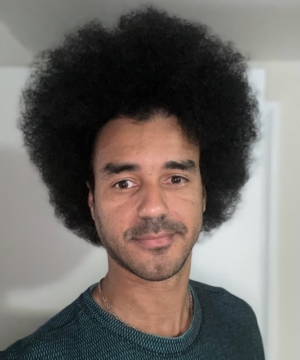
Photo courtesy of Dameien Nathaniel.


A note from Writers Resist

Thank you for reading! If you appreciate creative resistance and would like to support it, you can make a small, medium or large donation to Writers Resist from our Give a Sawbuck page.