In the Unlikely Event

By Rebecca Watkins

  1. “I need to buy a bat and a tourniquet,” I say to my husband as I set my bag and keys down.

    “What?” he asks frowning.

    I’ve just come home from a conference day, which in the education system means a day when students stay home, and teachers attend professional development. Normally, I am not a fan. Normally, PD involves learning more acronyms and the latest jargon. Today, however, it felt worthwhile.

    “Oh, we had a shooter training. One of the police officers said we should buy a baseball bat for protection and a tourniquet too because most people die from bleeding out,” I explain.

    I don’t realize at first that my husband is horrified. Then I see anger flash across his face; his eyes narrow as he asks, “Is the school going to buy you a bat and first aid kit for your classroom?”

    “Of course not,” I laugh, “I’ll buy it.”
  2. According to The Washington Post, since Columbine in 1999, there have been 435 school shootings in the United States, and 398,000 students have experienced some form of gun violence at school. You could fill Madison Square Garden to capacity twenty times with that number.
  3. The school is empty of students and quiet except for the sound of teachers filing out of the auditorium. We have just watched an FBI video reenactment of a shooter in a restaurant. I noticed there weren’t any children in this video. They didn’t want to traumatize us, I think later. But as I watched it, my stomach was in knots and my hands clenched hard at my sides. The dead bodies weren’t real, but the taste of fear in my mouth is.
  4. We’ve divided into groups of twenty; my group is on the first floor in the Science Department. Unlike the first few years of school shootings, we are seasoned and know you don’t just hide. You have choices: the Active Shooter Protocol is now Run, Hide, or Fight.

    Don’t panic, a handsome young officer is saying. If you freeze, push through, and take action. It is unlikely an active shooter situation will happen. But you must be prepared if it does.

    Do you know where the exits are?

    We all nod our heads and point to them.

    Learn them all and practice leaving by different ones.
  5. It is unlikely this will happen.

    Any given day at any school, there are 2 to 3 security guards and then hallways full of classrooms with open doors. The officer is telling us once we lock our doors, a shooter isn’t going to try to break them down. But just in case, look around for how we might barricade the door, look around for what we might be able to use as a weapon should a shooter get in. We begin listing the items: books, trophies, chairs.

    It’s ideal to have a bat and go for the head. Don’t hesitate, the young officer is now telling us.Get a good first aid kit with a tourniquet and learn how to use it. If you don’t have one, use a belt.
  6. The AR-15 semi-automatic is dubbed America’s rifle by the NRA and can fire 30 to 100 bullets in rapid succession. The police officer tells us, It’s about body count. That’s why mass shooters will use semi-automatic rifles.
  7. An AR 15 style rifle was used at Marjory Stoneman Douglas High School in Parkland, Florida in 2018. At the time, I taught at an urban high school. We were reading a modern telling of Hamlet, and those who were paying attention and reading along felt a kinship with the young protagonist. He had come back home to death and betrayal. Life didn’t turn out how he expected, and these teens understood this better than most. 

    I looked at the clock. My students would be walking out soon. A 17-minute nation-wide protest for the seventeen people, fourteen students and three staff, killed a month ago. I had been instructed to continue teaching, so I stood on the scuffed linoleum floor and watched my students, the majority Black and Latino, stand up and walk out. Most of them already knew what it was like to fight for their lives. This was just the first time they got to acknowledge it publicly.
  8. In May of 2022, nineteen students and two teachers were massacred at Robb Elementary School in Uvalde, Texas, in the deadliest school shooting since Sandy Hook in 2012 when twenty children and six staff were killed. Uvalde, another place like Parkland or Sandy Hook whose name will become synonymous with children being murdered.
  9. A few days after the shooting in Uvalde, I watched on the news as they showed a recording from that day at Robb Elementary of police officers hiding in a hallway. Some even ran away while children were being gunned down in the classrooms. I felt more rage and grief than my body could hold. Without speaking to my husband, I walked out into the rain, barefoot, waiting for my heartbeat to slow down, waiting for tears that never came. I stifled a scream, one that still burns my throat. As a teacher, it is expected that I will put my body in front of my students when the bullets come. And I will, but on that video, the trained officers ran.
  10. After our active shooter training, I shop online for first aid kits. I spend hours reading the reviews. That night, I don’t have dreams, or if I do, I don’t remember them. Maybe I am clutching a wooden bat, the texture unfamiliar in my hand, as I swing at an intruder. Maybe I’m messing up a tourniquet. Maybe someone’s bleeding out on my classroom floor.
  11. As I write this the most recent school shooting in the United States was thirteen days ago.

Rebecca Watkins holds an MFA in poetry and an MSed from the City University of New York. Her creative nonfiction and poetry have appeared or are forthcoming in Ginosko Literary Journal, the Quartet Journal, Hole in the Head Review, the Amethyst Review and the Amaranth Journal among other literary journals. Her creative nonfiction has been shortlisted for The Malahat Review’s Open Season Awards. She is the author of Field Guide to Forgiveness (Finishing Line Press 2023) and Sometimes, in These Places (Unsolicited Press 2017). More of her work can be found at rebeccawatkinswriter.com

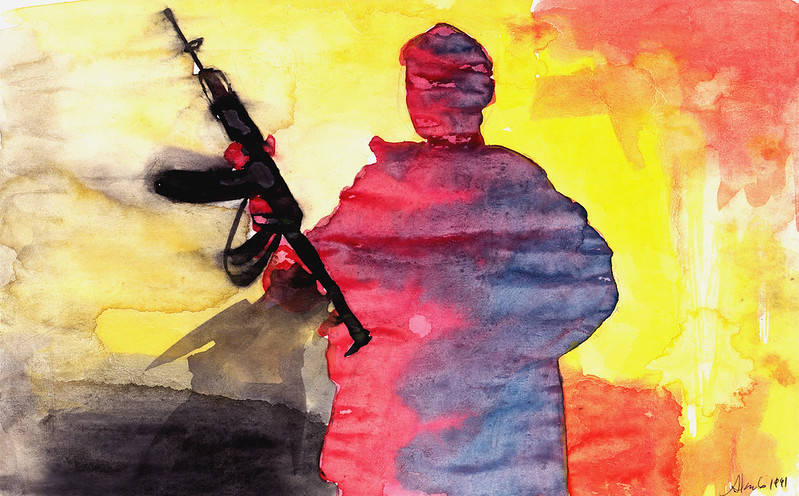
Photo credit: John Gateley via a Creative Commons license.


A Note from Writers Resist
Thank you for reading! If you appreciate creative resistance and would like to support it, you can make a small, medium or large donation to Writers Resist on our Give a Sawbuck page.
On the Road to Samarra

By Marissa Glover

                “I shall ride like the wind to Samarra . . . and Death will not find me there.”
                                                  —from the ancient fable The Appointment in Samarra

I met a man in Utah
with a bullet in his neck,
shot from a rooftop —
a coward’s distance
not like the lady in Minnesota,
killed up close by a gun
by the finger that pulled the trigger
by a person who didn’t know her:
dog lover, Girl Scout leader,
part-time worker in her dad’s
auto parts store

shot from a rooftop— 
a coward’s distance
like the D.C. sniper
like a desert drone drop
like the Devil of Ramadi
long-range equipment
with records over 10,000 feet
still no match for Boeing 767s
or 757s striking from the sky:
25,000 feet in a power dive

I met 3,000 people in New York,
20 children in Connecticut,
14 teenagers in Parkland, Florida
I met a man in Utah who died
never knowing he’d been hit,
and I met a man in Memphis
briefly conscious of it
I saw the dead already dead
riding in a convertible in Dallas
back in 1963—all travelers
in this one mad world, just people
on the road to Samarra,
same as you, same as me


Marissa Glover lives in Florida, where she’s busy swatting bugs and dodging storms. Her work has been featured in journals and anthologies around the world. Marissa’s poetry collections are published by Mercer University Press: Let Go of the Hands You Hold (2021) and Box Office Gospel (2023). Her third book of poetry, Some Intangible Mercy, will be released by MUP in early 2027. Follow Marissa on Instagram.

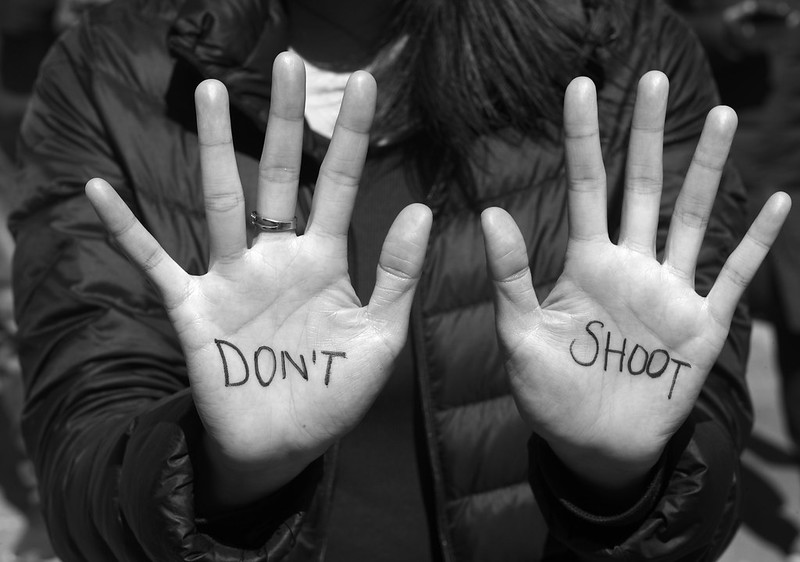
Photo credit: Wasfi Akab via a Creative Commons license.


A Note from Writers Resist
Thank you for reading! If you appreciate creative resistance and would like to support it, you can make a small, medium or large donation to Writers Resist on our Give a Sawbuck page.
Poem in Response to Mass Shooting Number 130 in the United States of America 2023

By Ellen Girardeau Kempler

This poem is a scaffolding
built of assault weapons
& high-capacity magazines
for recurring questions I have,
a terrible structure for hanging
reloadable horrors in bright daylight.

What questions?
you might ask. I’m dumbfounded.
I can’t even

answer, can only instruct you
to remain perfectly quiet & listen—
maybe hide behind/under a desk,
evaluate your escape routes,
hug your friends, text your family,
dial 911, take out your ear buds,
stop talking, notice the sound
of your heart throbbing in time
with the blood still mercifully
coursing through your body.

My questions arise again & again
in sudden gasps, forever-startled
intakes of breath, metallic taste of
bile in my mouth, unanswerable,
mute.


Ellen Girardeau Kempler’s poems have appeared in the DewdropWild Roof JournalTiny Seed Literary JournalNarrative Northeast and many other small presses and anthologies. In 2016, she won Ireland’s Blackwater International Poetry Prize and honorable mention in Winning Writers’ Tom Howard/Margaret Reid Poetry Contest. Called “a timely and powerful selection of climate poetics,” her chapbook, Thirty Views of a Changing World: Haiku + Photos, was published in December 2017 by Finishing Line Press. Her next chapbook,  Fire in my Head, Flame in My Heart: Poems of the Pyrocene, is forthcoming from Kelsay Books in 2025.

Photo credit: Stephen Melkisethian via a Creative Commons license.


A note from Writers Resist
Thank you for reading! If you appreciate creative resistance and would like to support it, you can make a small, medium or large donation to Writers Resist from our Give a Sawbuck page.

A Sunday in October

By Ariel M. Goldenthal


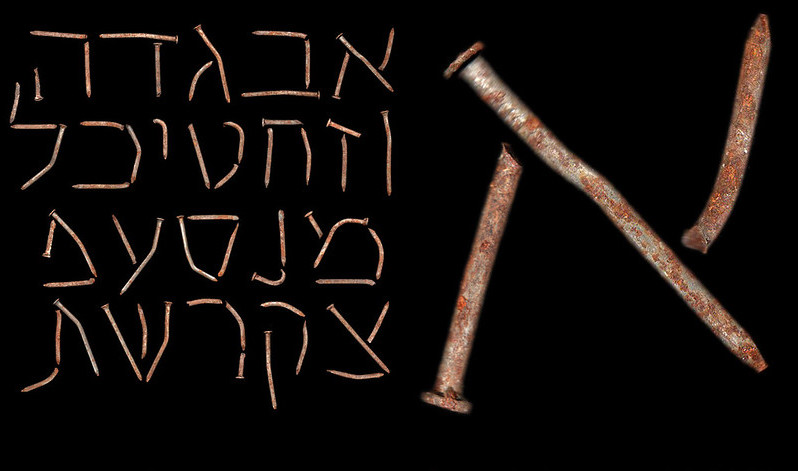
The day after the Tree of Life synagogue shooting, I lied to my second-grade students: You are safe at Hebrew school. You will love learning the Aleph-Bet this year. Yes, you can open the windows and feel the early fall air ripple through the gaps between your outstretched fingers. You can have recess outside next week. Your teachers don’t need to be trained to apply a tourniquet. There’s nothing wrong with our classroom’s tall glass windows that look right into the front garden. I’m closing the blinds because it’s so sunny out. Let’s start with our usual morning activity. Today we’re learning about praying to God, which isn’t related at all to the reason your mom’s eyes looked red this morning and your dad whispered, “Maybe he should stay home today.” This happened in a synagogue very far away—not like where we live at all. No, this isn’t something that happens often.

I don’t tell them how the education director called all the teachers on Shabbat, a day when work is forbidden and rest is required, to tell us that despite, or perhaps because of, the horrific loss that day, religious school would still take place the next day; how the doors to synagogue, usually propped open on Sunday mornings to accommodate the flood of parents holding half-eaten bagels and their children’s hands, were locked; how we had to show our photo I.D.s to the officers in the main lobby who told us that we would collect our students and bring them to the classroom—parents wouldn’t be permitted inside; how Rabbis passed around handouts hastily adapted from the ones secular teachers received after the first school shooting this year, but didn’t need because they, like us, are used to the terror by now.


Ariel M. Goldenthal is an associate professor of English at George Mason University. Her work has appeared in The Citron ReviewFlash FrontierMoonPark Review, and others. Read more at www.arielmgoldenthal.com.

Photo credit: Sharon Pazner via a Creative Commons license.


A note from Writers Resist

Thank you for reading! If you appreciate creative resistance and would like to support it, you can make a small, medium or large donation to Writers Resist from our Give a Sawbuck page.

Ho’oponopono

By Kelsey D. Mahaffey

“In the book of the earth, it is written:
nothing can die.”  – Mary Oliver


The morning after it happens
again—weary with all
the thoughtless use of prayer,
I return to the Native path—

for solace,
for remembrance,
for release—

But grief is a heavy hold.

Last night, I lay awake
searching each shooting
star—the moon a wound
the sky refused to heal.

And today, as usual, the sun
woke from bended knees—
rising to break
the long hush of night.

So many have left
to hunt for arms—
answers or anger,
who can say? All around,

there are islands of dew
gathering the spring fields,
birds busy with work—
children still to feed.

Forgive us.

Somehow, a worn cradle of
moon still rocks—heaving waves
upon the shore. A ground dust dances
in the merciful arms of wind.

Dearest Mother,
if we ever choose to weep,
let it be tuned to the depths
of your whale’s forgotten song.


Kelsey D. Mahaffey rests her head in Nashville, TN, but keeps half her heart in New Orleans. She needs music and nature like breath and water, and walks the earth barefoot beside three humans and a bow-legged cat. Her work can be seen or is forthcoming in: Eunoia Review, Cumberland River Review, The Sunlight Press, and “The Keeping Room” at Minerva Rising Press.

Photo credit: Debbie Hall, photographer and author, and Writers Resist poetry editor.


A note from Writers Resist

Thank you for reading! If you appreciate creative resistance and would like to support it, you can make a small, medium or large donation to Writers Resist from our Give a Sawbuck page.

Ring-a-Round the Rosie 2019

By Heidi J. Lobecker


Ring-a-round the playground

A backpack full of bullets

Pop! Pop! Pop!

We all fall down.


Heidi J. Lobecker has lots of fun writing. If it‘s not fun, she finds something better to do, for example: reading, sailing, camping, and eating s’mores.

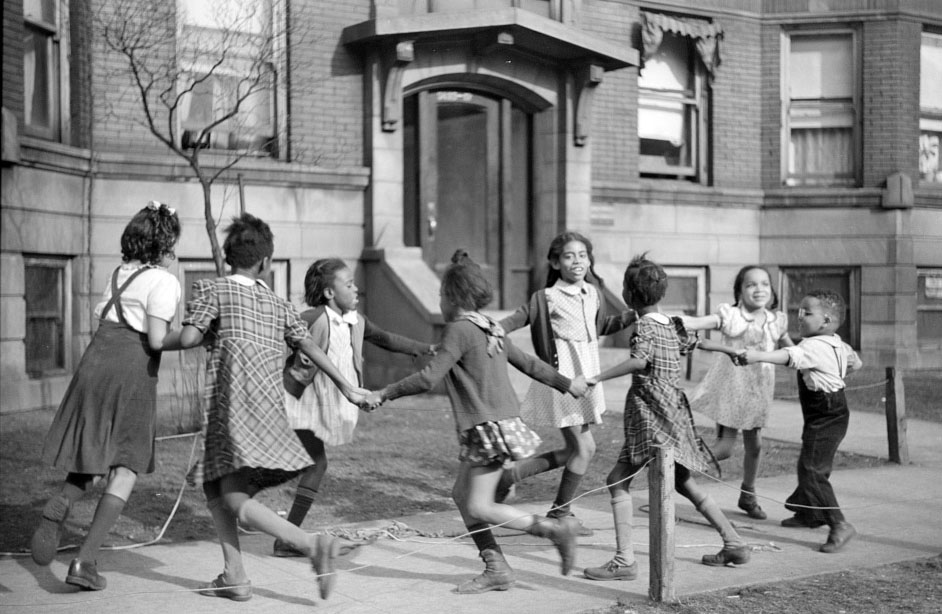
Photo credit: Edwin Rosskam, Chicago, Illinois, 1941, via the U.S. Library of Congress

Thoughts & Prayers

By Jane Rosenberg LaForge


They are offered in rote
as if the supply is bottomless;
like abstractions, inaction
and aesthetics; they could
be meaningless or mean
anything, so long as they
are not so sustaining as
steak & lobster for the
impoverished; more like
succotash & wilted lettuce.

Maybe they’re a law firm
the kind advertised on television
with a jingle and 1-800 number
children can’t help learning
before their alphabet; so much so
they’ve become a part of the literacy process!
A tentative, baby step toward
discerning cliché from idiom
because language: it’s a young
person’s business now, if they can
survive being a soft target.

Or perhaps it’s becoming part
of the international ergot, like a traffic sign
or the symbol for “no,” or a name
we give to conglomerates selling
mattresses or men’s clothing:
instant recognition for the product
and everyone knows just where to go
to find the best discounts.

For this year, I was thinking
they might make a particularly
poignant salutation for the season,
what with the war on Christmas
always burgeoning, so coming to you
on a greeting card soon, from a raft
of similar partnerships: O.F. Mossberg
& Sons, Heckler & Koch,
and Clint Eastwood’s truly evergreen
friends, Smith & Wesson.

Or they might be best employed
as a broadcast sign-off;
not so much like Walter Cronkite’s
“& that’s the way it is,” if he were
working on a Wednesday, the 14th of February, 2018;
but as his successor attempted
for five days no one remembers
except for the derision and embarrassment:
“Courage,” was all he said
as if looking into the future,
because we’re going to need a lot more of it.


Jane Rosenberg LaForge is the author of Daphne and Her Discontents, a full-length collection of poems from Ravenna Press; and the forthcoming novel, The Hawkman: A Fairy Tale of the Great War, from Amberjack Publishing. For more information, visit jane-rosenberg-laforge.com. and follow her on Twitter, @JaneRLaForge.

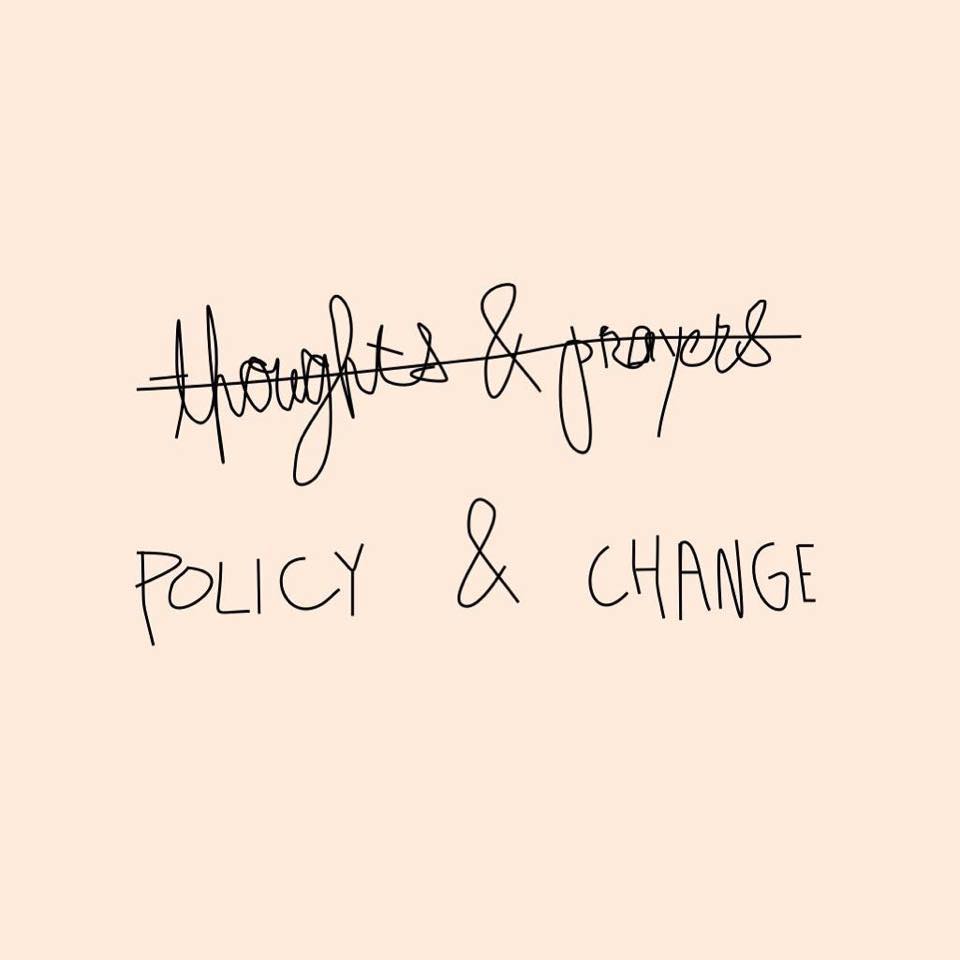
Image credit: An anonymous internet find.