
The Shirt

By Elizabeth B. Morse

When the others wore white shirts, Diana wore a black one.

The black button-down shirt meant rebellion. One that was tiny, to be sure, but a rebellion just the same. She’d bought it at Brooks Brothers on sale.

Nobody said anything at the office, even though she and her co-workers sat right next to each other around a table. She sat between two people who often made remarks about other people’s clothing. Your coat wasn’t suited for the weather because it was either too heavy or too light. Your high heels sounded like a horse clopping. Your dress was too flashy; you should have worn something more subdued. To Diana’s relief, the black shirt garnered no comments.

With it, she wore a bra that had the explicit purpose of holding her in so the buttons didn’t gap. She was tired of being perfectly modest, but that level of I don’t care hadn’t happened, at least not yet.

She’d worn the shirt when doing a presentation in one of the conference rooms. The only comments were about the charts and graphs she had drawn on a set of PowerPoint slides. Astute, people said. Accurate for the foreseeable future. Nobody complained about the bright colors in the donut charts.

She was good at her job and earned a good salary. These were accomplishments to be proud of. However, in college, she’d taken studio art and longed for a gallery show of her paintings and sculptures. But making a living took precedence. She had to be practical. She had to pay the rent and utilities, not to mention her phone. But she still kept a sketchbook and drew faces she passed each day. A small rebellion.

At work, she rebelled by taking a lunch hour. After all, the workday was twelve hours long. Once, when she got back, the boss was standing by her desk. He had on a white shirt with the buttons gapping over his stomach. “We’ve got deadlines!” he barked. “No time to go out. Why don’t you just grab a sandwich like the rest of us?”

Her most fierce rebellion was the protests she went to, and she was terrified both times. She did want to fight for economic justice and against racism, but at first, she’d stood on the sidewalk petrified. It took her some time to actually join each march. She’d worn sunglasses so that no one would recognize her, even though one protest was at night.

This time, however, Diana was really going out. Out out. Not just to lunch. It was time to be bold. It was okay to be scared, but it didn’t matter. She had to do what she had to do.

Slowly, she stood up from her swivel chair and put on the puffer coat the boss had laughed at. “How come you’re wearing that?” he’d scoffed. “How can you be cold? It’s spring!”

Finally, his opinion made no difference anymore.

Diana looked around at her co-workers. All of them had eyes on their laptop screens. One was eating what looked like stew and rice out of a glass container.

“I have to leave,” she said. “I have to leave right now.”

They all  looked up, some with raised eyebrows. Nobody said a word.

She opened a glass door and made her way to the elevators. Hungry, she imagined the lunch she would have, complete with soup and dessert. After that, she’d decide what movie she was going to see.


Elizabeth B. Morse’s work has appeared in literary magazines, such as Kestrel and Ginosko, and anthologies, such as Help Yourself. Her work has been nominated for a Pushcart Prize, and she he won first prize for flash fiction in Cardinal Sins. Her full-length poetry collection, Unreasonable Weather, (Kelsey Books, 2025) was an international Book Award 2026 finalist. She has an MFA from Brooklyn College, and is the poetry editor of BigCityLit and a co-editor of Brownstone Poets Anthology. Visit her website at www.elizabethmorsestories.com.

Photo credit:


A Note from Writers Resist
Thank you for reading! If you appreciate creative resistance and would like to support it, you can make a small, medium or large donation to Writers Resist on our Give a Sawbuck page.
Flying Free

By Marc Audet

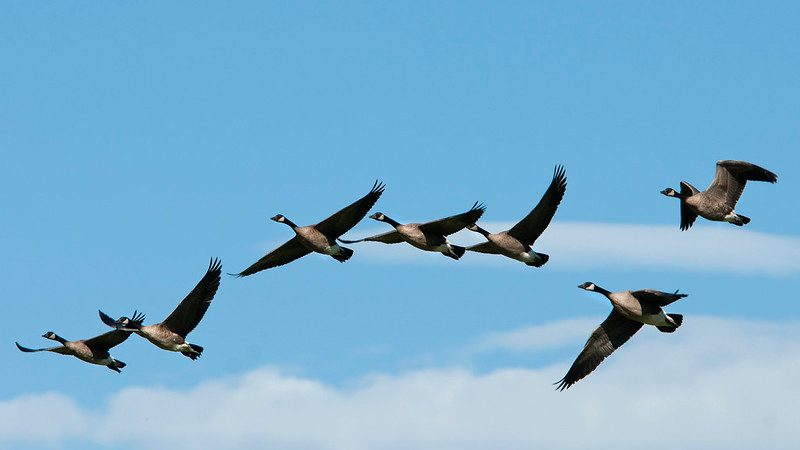
Lake Whitney shivers as the winter wind descends upon us from the Canadian Arctic. I pause my walk and search for the Canada Geese that visit these waters. They are back this morning, floating some distance away in composed tranquility, hardly noticing me. To think that they dare to cross our northern frontier in contempt of our politics, mocking our insolence to even suggest that we could tell them what to do. They care not for borders, more concerned about that sheet of ice that formed overnight, nudging them to seek shelter in the warmer waters nearer shore, by the clustered rushes where last spring, I saw a mating pair of swans nesting. On this frigid morning, I rest my spirit from the over repeated news cycle and take solace in the calmness of the lakeview before me. The geese are content to wait in the shallows for the seasons to turn. We are creatures less patient, our collective angst seething. We ache to scream, to be heard over sound bites of prevarication, to spread wings and be free again.


Marc Audet lives near New Haven, Connecticut, where he is self-employed as a web application developer. He has traveled and lived in Canada, England, France, and Ireland. His short stories, creative nonfiction, and poetry have appeared in Across the Margin, Flash Fiction Magazine, Uppagus, Rappahannock Review, The Prose Poem, The Gilded Weathervane, and elsewhere.

Photo credit: Tim Rains via a Creative Commons license.


A Note from Writers Resist
Thank you for reading! If you appreciate creative resistance and would like to support it, you can make a small, medium or large donation to Writers Resist on our Give a Sawbuck page.

The Janus of Freedom

By D. Edgar Cook

We rallied for freedom:
Freedom to speak, freedom to worship,
Freedom to read, freedom to assemble.
Let the bell ring! Let freedom ring!
Clang the gong banging for freedom!

We rallied for freedom:
Freedom to print the truth to power.
Freedom from unreasonable seizure.
Let the bell ring! Let freedom ring!
Clang the gong banging for freedom!

A nation was born.  
An election was held.

They rally for freedom:
Freedom to squelch individual liberty,
Freedom to assign truth to captivity.
Let the bell ring! Let freedom ring!
Clang the gong banging for freedom!

They rally for freedom:
Freedom to down the forest green,
Freedom to drill in the wilderness pristine.
Let the bell ring! Let freedom ring!
Clang the gong banging for freedom!

They rally for freedom:
Freedom to govern by decree,
Freedom the governed to ignore.
Let the bell ring! Let freedom ring!
Clang the gong banging for freedom!

They rally for freedom:
Freedom to sludge the rivers clear.
Freedom to foul our breathing air.
Let the bell ring! Let freedom ring!
Clang the gong banging for freedom!

They rally for freedom:
Freedom to let the unqualified rule.
Freedom to the immigrants be cruel.
Let the bell ring! Let freedom ring!
Clang the gong banging for freedom!

For what freedoms must we rally?
For what freedoms will the bell ring?
As a nation we began in search of freedoms.
As a nation will we die by new freedoms found?
Let the bell ring! Let freedom ring!
Clang the gong banging for freedom!


D. Edgar Cook is an occasional writer of poems and short fiction who tends to probe the present and future from unexpected perspectives. His work appears in recent editions of the Central Oregon Writers Guild Literary Collection.

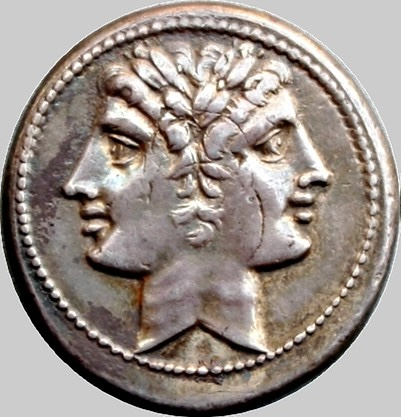
Photo credit: Roman Janus coin by Andrew McCabe via a Creative Commons license.


A Note from Writers Resist
Thank you for reading! If you appreciate creative resistance and would like to support it, you can make a small, medium or large donation to Writers Resist on our Give a Sawbuck page.

Graffiti Artists

By Andrea L. Fry

The authorities will start with shame—the lecture on personal property
as if it would reform. But not even close—the claim of ownership is as alien
to ghost writers, as the acceptance of defacement is to those who own.  

But how persistent, how alive the calling card! Yesterday, the overpass
was grey and mournful in the sleet. Today it’s neon orange, bedazzled
in fun fonts, spiky electric blue shapes like speech bubbles in comics.


It’s hard not to smile at exuberance. That treacherous cliff behind
Friendly’s? They washed it in purple, then sent a red zigzag down
the rockface, chubby letters cartwheeling into a vermillion pool of LOVE.

But who are these stealthy anarchists? How do they shimmy up with cans,
spray billows of perfect clouds while dangling like spiders from a thread?
I can only dream of such courage. I’ve spent my life trying to get a mortgage.

If I ever do, I wonder if I’ll join the owners, put up a fence of cypress trees,
install a rumbling garage door capable of decapitating trespassers?
When “Stoney Creek Road” was changed to “Stoned Creek Road,”

my father used it as a teaching moment on vandalism—he must have heard
us chuckling in the back. I can’t help but root for these mischief artists.
And how injurious is their havoc, when governments dispense with lives

as casually as these sprayers paint a rock? They say King Charles III
owns 1/6 the surface area of the planet. Imagine waking up in a London
fog to a golden dispatch stretched across Westminster Bridge: 

Text reading Who sez? Who sez? Who sez?


Andrea Fry has published two collections of poetry, The Bottle Diggers, in 2017 (Turning Point Press) and Poisons & Antidotes (Deerbrook Editions) in 2021. Her poems have appeared or will appear in journals such as Alaska Quarterly Review, Annals of Internal Medicine,Barrow Street, Cimarron Review, Spoon River Poetry Review, Stanford Literary Review, The Sun, and Women’s Review of Books among others. She has been nominated three times for the Pushcart Prize. Andrea is freshly retired from her career as an oncology nurse practitioner and lives in Brookline, MA with her husband and two comical felines. Visit her website at andrealfry.com.

Photo quisnovus via a Creative Commons license.


A note from Writers Resist
Thank you for reading! If you appreciate creative resistance and would like to support it, you can make a small, medium or large donation to Writers Resist on our Give a Sawbuck page.

Birthday Wishes

By Phoenix Ning


Sixteen-year-old person of color desires escape from this inferno
where dark-skinned individuals burn, and alabaster spectators
cheer from the sidelines, popping confetti guns and feeding
oil to ancient flames while claiming to be long-awaited saviors.

Eighteen-year-old student desires world history classes with curriculums
that celebrate African kingdoms, Indigenous empires, and South Asian cultures;
textbooks that condemn armor-clad imperialists stripping gowns of freedom;
articles that honor revolutionaries whose empty pockets did not silence their shouting.

Twenty-three-year-old woman desires to shatter the chains created
by men who think all girls are moons trapped by their gravity,
males who believe themselves to be suns instilling life into
fragile females who must offer their bodies as tokens of gratitude.

Twenty-year-old lesbian desires to taste the sweet wine of love
and cavort in inebriated glory with the woman whose gentle touch
sparks wildfires in her heart frozen by acerbic remarks fired by toxic relatives
when she turns her head away from men and smiles at her rough-hewn ladylove.


Phoenix Ning is a twenty-year-old Chinese writer of sapphic antiheroines and queer found families. She is currently a senior studying human-computer interaction. When not writing, she can be found watching C-Dramas and penning raps. A fierce advocate of diversity in media, she hopes that her audience will feel empowered after reading her words or listening to her songs. Learn more at ladyphoenixning.com.

Image credit: Jennifer Rakoczy via a Creative Common license.


A note from Writers Resist

Thank you for reading! If you appreciate creative resistance and would like to support it, you can make a small, medium or large donation to Writers Resist from our Give a Sawbuck page.