

The Shirt

By Elizabeth B. Morse

When the others wore white shirts, Diana wore a black one.

The black button-down shirt meant rebellion. One that was tiny, to be sure, but a rebellion just the same. She’d bought it at Brooks Brothers on sale.

Nobody said anything at the office, even though she and her co-workers sat right next to each other around a table. She sat between two people who often made remarks about other people’s clothing. Your coat wasn’t suited for the weather because it was either too heavy or too light. Your high heels sounded like a horse clopping. Your dress was too flashy; you should have worn something more subdued. To Diana’s relief, the black shirt garnered no comments.

With it, she wore a bra that had the explicit purpose of holding her in so the buttons didn’t gap. She was tired of being perfectly modest, but that level of I don’t care hadn’t happened, at least not yet.

She’d worn the shirt when doing a presentation in one of the conference rooms. The only comments were about the charts and graphs she had drawn on a set of PowerPoint slides. Astute, people said. Accurate for the foreseeable future. Nobody complained about the bright colors in the donut charts.

She was good at her job and earned a good salary. These were accomplishments to be proud of. However, in college, she’d taken studio art and longed for a gallery show of her paintings and sculptures. But making a living took precedence. She had to be practical. She had to pay the rent and utilities, not to mention her phone. But she still kept a sketchbook and drew faces she passed each day. A small rebellion.

At work, she rebelled by taking a lunch hour. After all, the workday was twelve hours long. Once, when she got back, the boss was standing by her desk. He had on a white shirt with the buttons gapping over his stomach. “We’ve got deadlines!” he barked. “No time to go out. Why don’t you just grab a sandwich like the rest of us?”

Her most fierce rebellion was the protests she went to, and she was terrified both times. She did want to fight for economic justice and against racism, but at first, she’d stood on the sidewalk petrified. It took her some time to actually join each march. She’d worn sunglasses so that no one would recognize her, even though one protest was at night.

This time, however, Diana was really going out. Out out. Not just to lunch. It was time to be bold. It was okay to be scared, but it didn’t matter. She had to do what she had to do.

Slowly, she stood up from her swivel chair and put on the puffer coat the boss had laughed at. “How come you’re wearing that?” he’d scoffed. “How can you be cold? It’s spring!”

Finally, his opinion made no difference anymore.

Diana looked around at her co-workers. All of them had eyes on their laptop screens. One was eating what looked like stew and rice out of a glass container.

“I have to leave,” she said. “I have to leave right now.”

They all  looked up, some with raised eyebrows. Nobody said a word.

She opened a glass door and made her way to the elevators. Hungry, she imagined the lunch she would have, complete with soup and dessert. After that, she’d decide what movie she was going to see.


Elizabeth B. Morse’s work has appeared in literary magazines, such as Kestrel and Ginosko, and anthologies, such as Help Yourself. Her work has been nominated for a Pushcart Prize, and she he won first prize for flash fiction in Cardinal Sins. Her full-length poetry collection, Unreasonable Weather, (Kelsey Books, 2025) was an international Book Award 2026 finalist. She has an MFA from Brooklyn College, and is the poetry editor of BigCityLit and a co-editor of Brownstone Poets Anthology. Visit her website at www.elizabethmorsestories.com.

Photo credit:


A Note from Writers Resist
Thank you for reading! If you appreciate creative resistance and would like to support it, you can make a small, medium or large donation to Writers Resist on our Give a Sawbuck page.
Aunt Annie’s Recipe for the Resistance

By Jane Frances Gilles

Dear nieces and nephews,

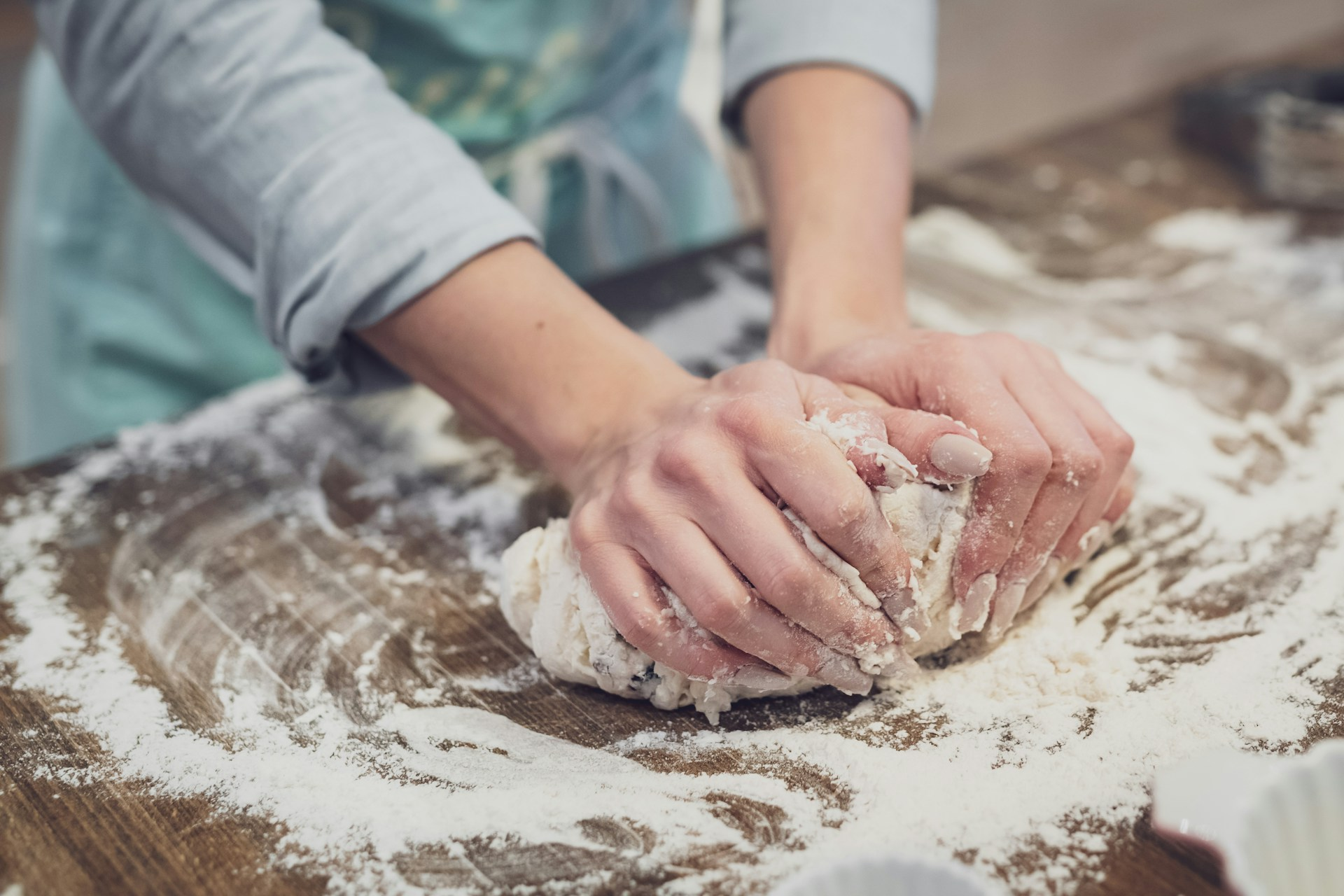
You call me “The Resistance Maven.” It’s kind of funny, and I know you mean it as a compliment. But I don’t think you get what’s required to resist. So, here’s my recipe. By the way, there are tons of people who are more active than I, and there are other recipes. This is mine.

Aunt Annie’s Recipe for the Resistance

Number of servings:
One serving to thousands, maybe millions. (If you keep at it, your efforts will produce a yield far greater than you can imagine, and you will never know how many people you’ve served.)

Preparation time:
Five minutes to a few hours. (The shorter the better. Always be ready.)

Cooking time:
One hour to months. (As long as it takes. Which can be a damn long time.)

Total time:
There’s no end to the work. (It continues. Always.)

Ingredients:

Dry ingredients (These provide the structure and foundation for the recipe)

Fear and Courage: In equal measure

Anger: 1 cup (for intense frustration) to 1 lb. (for screaming outrage)

Humility: 2 lbs.

Curiosity: Start with what you have on hand and keep adding

Love: 1 dozen bushel baskets

Salt: To taste (Like Grandpa always said, “Aim to be the salt of the earth.”)
Wet ingredients (These activate the dry ingredients, making resistance possible)

Time and Inconvenience: Enough to cover dry ingredients

Voice: Equal parts spoken and written

Feet: As needed (for marching and standing up for your neighbors)

Hands: As needed (roll up your sleeves; there’s real work to do)

Your people: ½ dozen to hundreds

Supplies: Variable

Directions:

Gather the dry ingredients. Make sure you take time to consider each of them. Most are self-explanatory. I’ll elaborate on a few.

  1. Fear: You need to understand right up front that resistance requires risk, and risk produces fear. Fear is good; it helps keep you safe. The risks are real, so don’t deny your fear. (When a rubber bullet was used against your great-uncle Fred during a Vietnam protest, he lost an eye. But he’s still out there protesting injustice every chance he gets. Yeah, I know Grandma Gladdie liked to say it was a work injury. That was a lie, God bless her.)
  2. Humility: Humility takes many forms. At this stage in your lives, the key aspect is awareness of your privilege. All of you, dear ones, are privileged. You’re white. You were born in the U.S. Most of you are cisgender and heterosexual. (If you need a lesson on how that contributes to your privilege, ask your Aunt Kate. She has stories. And wounds you can’t see.) You’re able-bodied. Never have you had to worry about getting enough to eat. I could go on and on. Bottom line: Most people don’t have the same advantages as you.
  3. Curiosity: Be curious about your neighbors. Get to know them. Listen to them. (In this family, we’re blessed with the gift of gab—but talking non-stop is no way to learn about others.) Be curious about the world beyond the cocoon you’re living in. I’m not talking about following the news. Yeah, you should pay attention to current events. That’s basic. But to develop empathy for others, get your nose out of your phone and explore the arts, volunteer, travel, read about lives and cultures different from your own. This is a lifelong endeavor. Get on it.

Mix dry ingredients.
Make sure you have enough of each dry ingredient throughout every resistance effort. If you’re running low on any of them, stop and gather more. And watch the portions of each. (I’ve had weeks where I didn’t add enough love and put in way too much anger. Let’s just say it wasn’t good.)

Gather wet ingredients.
These are your tools. Depending on the effort, some are more critical than others, but you need all of them every time. A couple of explanations:

  1. Your People: Some you know today. Some you’ll meet tomorrow. Connect with organizations you believe in and respond to their asks. (Trust me, you’ll be inspired by the people you meet when you resist.)
  2. Supplies: Good shoes for marching, or groceries for your neighbors, or your keyboard for contacting legislators. You might need posterboard or a whistle (who knew whistles would be a thing?) or a new app on your phone or protective gear or a candle (because Grandpa also said, “Never be afraid to let your light shine.”) Sometimes it’s money. Give what you can and be ready to sacrifice.

Fold together dry and wet ingredients. Mix well.

Bake or freeze. (On hot pavement in summer or on icy streets in winter or wherever whenever.)

  1. Seek opportunities to resist. Don’t wait for a crisis staring you in the face.
  2. Stay in conversation with your people. You need each other.
  3. Do at least one thing every day to resist. That said, know that when you need a break, others are doing the work.
  4. Be aware of the feeling—the taste—of resisting. (Sometimes sweet, sometimes spicy, always satisfying.) It feels lousy to doom scroll. It feels lousy to complain without lifting a finger to help. It feels lousy to watch the same horrifying video over and over. So, get in the fight. Stay humble, yet know you are taking actions that place you on the right side of history.

Someday, when I’m gone and you have your own children or nieces and nephews or godchildren or neighbor kids who see you as family, tell them how delicious it is to resist. And share this recipe with them.

Love,
Aunt Annie


Jane Frances Gilles is a writer, former educator, and proud Minnesotan. She holds bachelor’s and master’s degrees in English education and a Ph.D. in education policy. Her fiction has been published in The Writing Disorder and MoonPark Review.

Photo credit: Photo by Theme Photos on Unsplash.


A Note from Writers Resist
Thank you for reading! If you appreciate creative resistance and would like to support it, you can make a small, medium or large donation to Writers Resist on our Give a Sawbuck page.