Cherry Blossoms

By Beck O’Leary

                                         (CW: Contains significant transphobia and gun violence in a school setting)

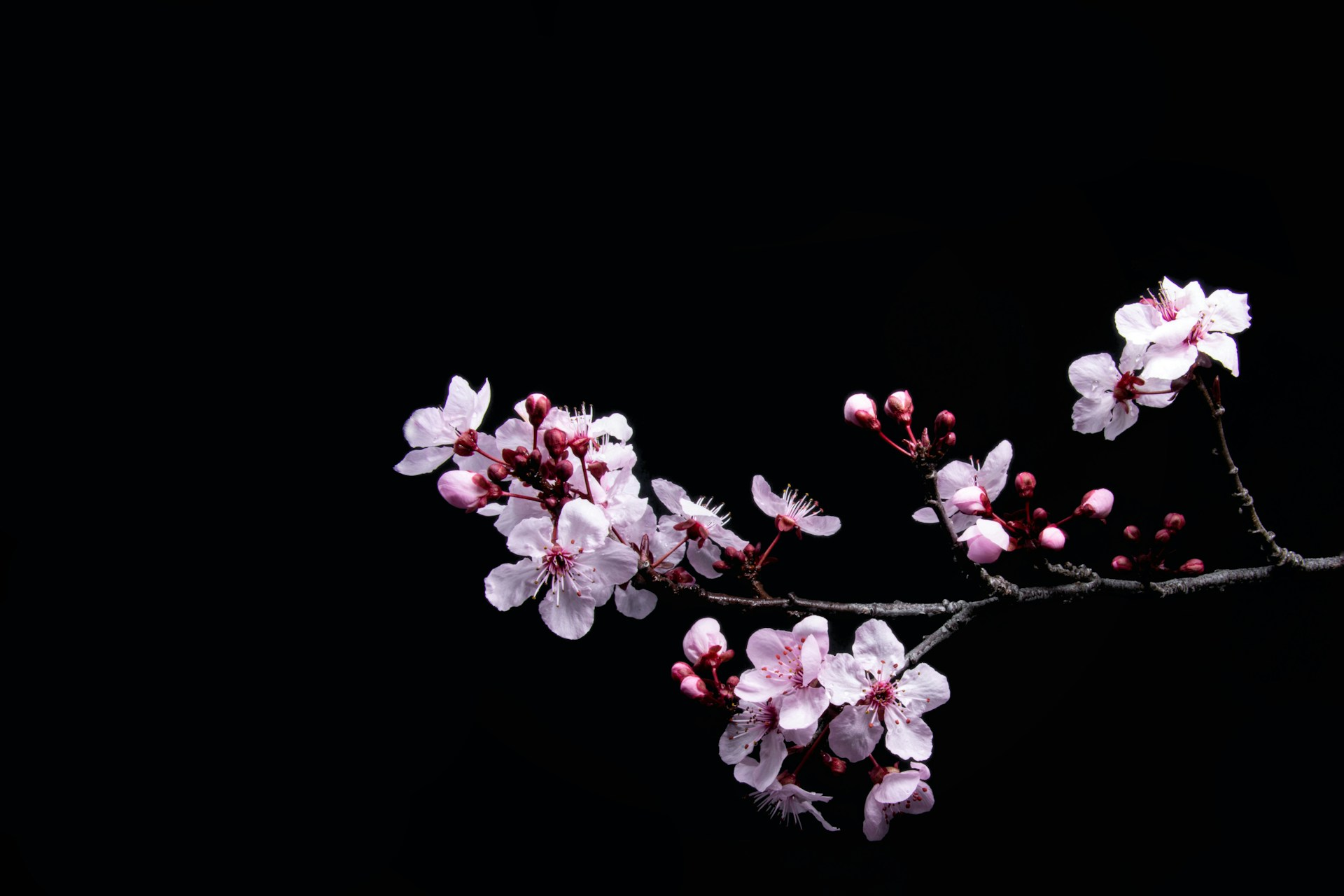
The dress had a sweetheart neckline and delicate satiny sleeves that rested just off the mannequin’s shoulders. The bodice was white and fitted, and the skirt was padded by at least two layers of ruffled lining. Little pink flowers decorated the skirt, sparse at the waist, then more and more crowded until the last few inches above the hem were entirely saturated with pink. Cherry blossoms.

Andie couldn’t stop staring. Her fingers itched to reach out and feel the silky fabric between her fingertips. What would it feel like against her skin? Would the gauzy lining itch against her bare legs or would it be gentle as a whisper? How would she—

Bzzt.

She flinched. Reached up to touch her temple. The chip embedded in her skin tingled with the aftereffect of the shock. It had been a small one. A warning.

“Andrew?”

Even without looking, Andie could hear the forced smile in her mother’s voice. She shoved her hands deep into the pockets of her jeans and adopted her best scowl as she turned around. “What?”

“What are you doing in the women’s section, honey?” Her mom’s eyes flicked over Andie’s shoulder, no doubt to see what she’d been admiring.

Shopping with her mom had never been Andie’s favorite pastime, but it had been absolute hell ever since she’d gotten her chip. Before, she’d been able to pass off her interest in women’s clothes as an interest in fashion. Plenty of men went into fashion. She’d even asked to be signed up for art classes at the community center and started keeping a sketchbook full of color palates and design ideas. But then came the “anonymous” report (it had been Vice Principal Atkins, she would stake her life on it), and then the chip. And now her mom got freaked if she wandered even three feet from the men’s section.

“For Christ’s sake,” Andie groaned with a practiced roll of her eyes. “I told you, Cassia’s been looking for something pink and flouncy, I was gonna take a picture for her.” Cassia had found her dress three weeks before, but her mom didn’t need to know that.

Her mom’s expression softened into something resembling relief, and she nodded. “That’s very sweet of you, dear.”

“Yeah, I’m a fucking prince,” Andie muttered. She dug her phone out of her pocket and snapped a photo of the dress. “Can we go now?”

“Almost, I still need to stop in housewares.” A pause, then the forced cheer was back. “Come with me! You can help me pick out our new bath towels.”

Yeah, better get the freak away from the dresses, or else he might start thinking he’s a girl again.

Bzzt.

The tie was like a noose around Andie’s neck. A silken noose. Pale purple, to match Cassia’s dress. The boutonniere was purple too, pinned to the lapel of the jet-black suit she’d borrowed from her older brother. He’d worn it to his prom three years before. Andie wondered if he’d felt like he was choking too.

She tied her hair back from her face and combed it into something sufficiently neat. Her mom had tried to force her to get it cut, but Andie had pointed out that it was still within the permissible range of length for a high school boy, and when that didn’t work, she’d threatened not to go to prom at all. Her mother had begrudgingly backed down.

Tradition dictated that they gather on the front lawn of Vonnegut High School before heading inside, so parents could coo and take pictures and gossip about how they couldn’t believe that so-and-so’s mother had allowed her to leave the house wearing so little. Andie and Cassia arranged themselves into a variety of poses, and after enduring the requisite number of photos and weepy declarations about how handsome and beautiful they each were, they fell into line outside the gymnasium. Cassia adjusted the flowers in Andie’s boutonniere while they waited.

“You look very pretty,” she whispered.

Bzzt. They both winced.

“Sorry,” she said.

Andie took Cassia’s hand and pressed a kiss to her knuckles. “Don’t be.” She glanced down the length of the line. “Have you seen Harrison yet?”

Cassia shook her head. “Did he ever say whether he was coming?”

“Nope,” Andie said. In fact, her best friend had grown quiet every time the subject of prom was mentioned. She wouldn’t be surprised if he’d decided to opt out of the whole charade, and she couldn’t say she blamed him. He had a chip too, though he’d never told her what it was for. She supposed it was none of her business.

Vice Principal Atkins stood outside the doors to the gym, her steel grey eyes poised to catch any sign of wrongdoing amongst the students as they filed inside. Each student paused to scan their fingerprints before they were allowed in, to make sure their attire matched that of the gender listed in their file. Dates from other schools had to show ID, or else be escorted to the bathroom for a physical inspection. Armed security guards stood at the ready, hands resting atop their holsters. To protect the students, they’d been told.

Vice Principal Atkins offered Andie a smug smile as she and Cassia scanned their fingerprints. She had lipstick on her teeth.

“Good evening, Andrew,” she said. “My, don’t you look handsome.”

Andie clenched her jaw, and Cassia squeezed her hand. They both nodded to Vice Principal Atkins as they walked into the gym.

Vonnegut High couldn’t afford to host their prom at a hotel or aquarium like some of the fancier schools in the area, but the prom committee had done their best to transform the gym into an enchanted ballroom complete with streamers, string lights, and gallons of floral air freshener to mask the lingering odor of stale sweat. The DJ was already onstage, trying to coax students to the dance floor with sanitized remixes of every overplayed pop song from the last five years. Most kids crowded around the makeshift bar, where an easel boasted a number of soft drinks and juices available free of charge.

“Well, isn’t this cozy?” Cassia said.

“Every little girl’s dream,” Andie said. She thought of the dress.

Bzzt.

They got drinks and stood against the wall, sipping lemonade and watching the room grow increasingly crowded. A few girls paused to compliment Cassia’s dress and hair, and Andie’s gut swirled with guilt at the realization that she’d said very little about her girlfriend’s appearance thus far.

This was unfair, because Cassia looked beautiful. Her lavender dress was strapless and hugged her curves in a way that was downright sinful, and her golden curls were twisted into an elaborate updo that must have taken hours. But instead of paying attention to Cassia, Andie was busy moping.  

“I bet all of them wish they looked as gorgeous as you tonight,” Andie said as the gaggle of girls wandered off. She snaked an arm around Cassia’s waist and pulled her close. “I know I do.”

Cassia beamed. “Don’t get all sappy on me now,” she teased, though she clearly enjoyed the attention. She drained the rest of her lemonade and set the cup down, then took Andie’s hands. “Come on, we’re dancing.”

The dance floor had filled out some in the time they’d spent sipping their drinks. The mass of sweaty bodies had rendered the air freshener completely useless, but the music was loud enough that it seemed to dull the other senses. Andie let Cassia tug her into the crowd and spun her around before falling into an uncoordinated, flailing sort of dance that had her girlfriend howling with laughter. They passed three songs that way, focused entirely on each other and the movement of their bodies.

And then the music stopped.

The students groaned and looked around in confusion, until their collective attention was drawn to a commotion by the doors. Vice Principal Atkins’ voice, shrill and furious, rang out above the din. Murmurs spread through the crowd.

“Can you see anything?” Cassia was up on her tip toes, a hand on Andie’s shoulder for balance.

Andie opened her mouth to say no, she couldn’t see a thing, but then she did see something. A flurry of movement as a woman clambered up onto a table.  

She was wearing the dress.

Heat flooded Andie’s cheeks as awe and envy washed over her in equal measure. She pushed through the crowd to get a closer look.

The woman’s hair was short, held back from her face with a pink headband dotted with pearls. A matching pearl necklace sat against her collarbone. And when she turned to face the crowd, everyone gasped to see blood staining the side of her intricately made-up face. Crimson dripped from her chin onto the gleaming white bodice.

It was Harrison.

Except, it wasn’t. Harrison had never stood so tall, had never smiled with such radiance. This was someone entirely new, and he was beautiful. She was beautiful.

And she had ripped the chip right out of her head.

“My name is Winona,” she declared. “And I am a woman.”

Bzzt. Bzzt. Bzzt. A dozen students winced in unison, Andie included.

Chaperones sprinted toward the table, and cherry blossoms swirled around Winona’s feet as she leapt onto another, and then another. She was heading for the stage.

Andie moved with her. Cassia’s hands were a vice on her arm, but she still surged forward, her eyes never leaving Winona.

“My name is Winona!” Winona landed on the next table with impossible grace. Her feet were bare. “And I have always been a woman!”

“Get him down!” Vice Principal Atkins shrieked.

Winona jumped onto the stage and seized the microphone from the DJ. She caught Andie’s eye in the crowd, and she gave her a brilliant, beaming smile.

“My name is Winona!” she cried, thrusting a fist into the air. “And I am your prom queen!”

Silence. Part of Andie wanted to applaud. Part of her wanted to cry. Instead, she stood with the rest of the students in stunned silence. No one moved or cheered or said a single word. And then—

BZZZZZZZT.

Sharp, searing pain, like someone drilling into her head with an electrified screw gun. That same dozen students doubled over and gripped their heads in agony. Andie’s knees buckled and she fell to the floor. Tears burned in her eyes, but even as Cassia pulled her close and tried to press Andie’s face against her stomach, she didn’t look away. Couldn’t look away. Her gaze remained locked on Winona.

The gunshot pierced through the haze of pain. Winona crumpled. She was dead before the last echoes of the shot faded from the gym.

The pain stopped. A dull throb was all that remained. The dozen students gasped and panted as they regained their composure. Someone stifled a sob. Andie remained on her knees, wrapped in Cassia’s shaking arms.

Vice Principal Atkins scurried onto the stage, accompanied by the two security guards. She picked up the microphone and held it at arm’s length, her nose wrinkled with disgust as she eyed the blood dripping from the handle. The DJ pulled a rag from his pocket. He took the microphone, wiped it clean, and handed it back to her.

“Oh, thank you,” Vice Principal Atkins said. “Boys and girls, we are terribly sorry for the disturbance. But we’ll have this cleaned up in just a moment. In the meantime, don’t forget to sign up for the raffle! This year’s prize is an iPhone 23. How exciting! All proceeds will go to support the prom committee to thank them for these beautiful decorations and ensure they can go on to make next year’s prom even better!”

There was a tepid round of applause.

Behind her, the two security guards grabbed Winona under her arms and dragged her off the stage. A few teachers ran up onto the stage and piled towels onto the puddle of blood. Andie rose to her feet and watched Winona, her bodice more red than white, as she was pulled through the doors and out of sight.  

“Well, that’s better, isn’t it?” Vice Principal Atkins laughed. “Now, let’s get back to dancing! Have a wonderful night, everyone!”

She handed the microphone back to the DJ and left the stage, her high heels clacking against the shiny wood floor as she followed the security guards and Winona out the door.

“After all that excitement, let’s say we slow it down,” the DJ said. He clicked something on his laptop, and an old love song started playing.

The crowd grumbled back to life. Couples came together and began to sway in each other’s arms. Others filed off the dance floor and headed for the juice bar or raffle table.

Andie and Cassia stood frozen, still clinging to each other, at the edge of the dance floor. Andie’s heart was so high in her throat she feared she might choke on it.

She wanted to scream. She wanted to storm up onto the stage and seize the microphone and scream until the speakers exploded. She wanted to demand that they do something. That they care.

She breathed in deep through her nose. Cherry blossoms, overly sweet and artificial, with notes of sweat and blood. She adjusted her hold on Cassia and began to sway in time with the music. Cassia’s arms slid up to wrap around her neck.

And as they danced, Andie thought about bloodstained pearls and scarlet drops against white silk. She thought of the dress. Her dress.

Winona’s dress.

Bzzt.

Andie flinched, and Cassia’s arms tightened around her.

They kept dancing.


Beck O’Leary is an American writer living in Edinburgh. They have an MA in Creative Writing from Edinburgh Napier University and an MFA in Writing Popular Fiction from Seton Hill University. They are passionate about queer storytelling and creating worlds where lesbians and trans kids get to be heroes too. When not writing the kinds of books they would have liked to read as a teenager, Beck can be found playing Dungeons & Dragons and snuggling with their idiot cat-son, Fitzroy.

Photo credit: Cherry blossoms by David Brooke Martin on Unsplash.


A Note from Writers Resist
Thank you for reading! If you appreciate creative resistance and would like to support it, you can make a small, medium or large donation to Writers Resist on our Give a Sawbuck page.

Dear Colleague:

By Shannon Frost Greenstein

Educational institutions have toxically indoctrinated students with the false premise that the United States is built upon “systemic and structural racism” and advanced discriminatory policies and practices. – U.S. Department of Education, Dear Colleague Letter: Title VI of the Civil Rights Act in Light of Students for Fair Admissions v Harvard (Feb. 14, 2025).

What we mean when we start with “Dear Colleague,”
has nothing whatsoever to do with respect; 
what we mean when we start with “Dear Colleague”
is that some shit is about to go down.

“Dear Colleague” is how we impugn women and blame survivors;
(U.S. Dept. of Education, ‘Dear Colleague Letter on Sexual Violence,’) (April 4, 2011)
“Dear Colleague” is how we sacrifice our young at the altar of capitalism.
(U.S. Dept. of Education, ‘Dear Colleague Letter: National Student Loan Data System (NSLDS) in Title IV Aid Programs’) (March 1, 1995)

“Dear Colleague” is how we orchestrate perpetual recidivism;
(U.S. Dept. of Education, ‘Dear Colleague Letter: Eligibility of Confined or Incarcerated Individuals to Receive Pell Grants’) (March 29. 2023)
“Dear Colleague” is how we exert control over the most vulnerable.
(U.S. Dept. of Education, ‘Dear Colleague Letter: Updated waivers and modifications of statutory and regulatory provisions governing the FSA Programs’) (Sept. 27, 2012)

“Dear Colleague” is what you hear before we start stripping away your rights;
“Dear Colleague” is the façade of civility under the quiet veil of fascism.
“Dear Colleague” is intended to sound like we are all equals;
But “Dear Colleague” is just another way to say you must follow orders.

Now “Dear Colleague” is instructing us all
to forget the fundamental racism
that vivisects our nation like a blade;
to ignore that capitalism started on the plantation,
and that all Americans do not share the same civil rights.

“Dear Colleague” is a map
along this slippery slope to dystopia,
a world removed from its humanity
and unmoored from objective truth.

And whenever the government strays from its ethical duty
to cultivate an informed, compassionate populace,
you can bet your ass a “Dear Colleague” letter
preceded that shift like a soothsayer.

But at least the U.S. Dept. of Education
has not yet attempted to interfere
with the dangerous technology
that steals from our artists and replaces our art;
at least they are leaving counterculture alone.

What’s that?

The U.S. Dept. of Education, ‘Dear Colleague Letter: Request for Information on Researcher and Educator Use Cases for the National Artificial Intelligence Research Resource (Nov. 15, 2024)?

Well, shit.


Shannon Frost Greenstein (She/They) resides near Philadelphia with her family and cats. She is the author of Through the Lens of Time (2026), a fiction collection with Thirty West Publishing, and These Are a Few of My Least Favorite Things (2022), a book of poetry from Really Serious Lit. Shannon is a former Ph.D. candidate in Continental Philosophy and a multi-time Pushcart Prize nominee. Her work has appeared in McSweeney’s, Pithead Chapel, Nimrod Journal, and elsewhere. Shannon’s passions include Friedrich Nietzsche, anti-racism, the Seven Summits, the Hamilton Soundtrack, and acquiring more cats. Find her at shannonfrostgreenstein.com. Follow her on Bluesky @shannonfrostgre and Instagram @zarathustra_speaks.

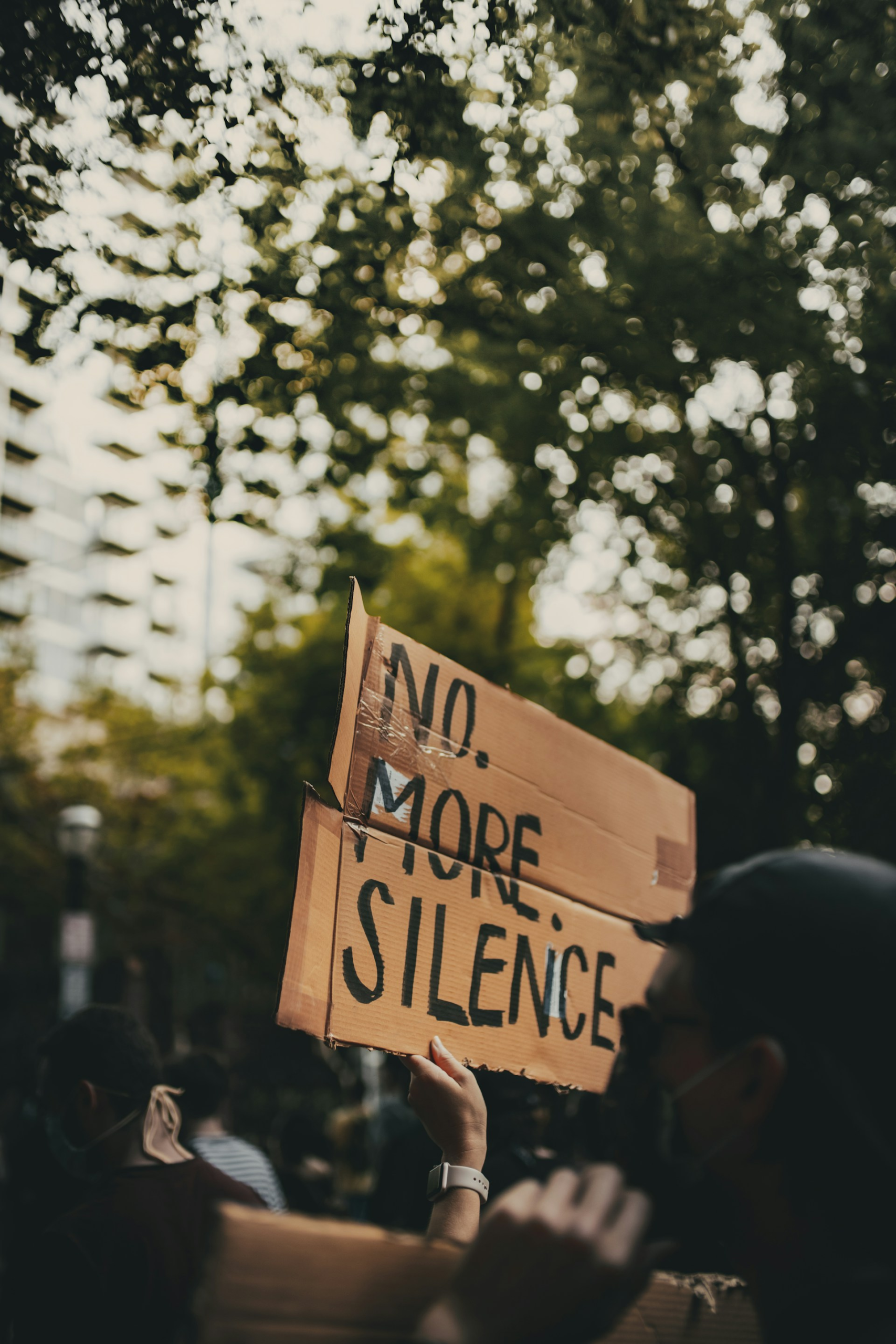
Photo Credit: Mizuno K via a Creative Commons license.


A Note from Writers Resist
Thank you for reading! If you appreciate creative resistance and would like to support it, you can make a small, medium or large donation to Writers Resist on our Give a Sawbuck page.
Louder than Silence

By Rabia Akhtar

I was raised in patriarchy.
Not an idea—
a weight.
It sat on my shoulders,
pressed into my lungs.
Silence was law.
Obedience—oxygen.

I cracked it open.
Spoke when I wasn’t meant to.
Walked where I wasn’t welcome.
Burned their script,
page by page.

Crossed borders,
thought the fight would end.
It didn’t.
It just got dressed up—
new clothes, better manners.

Racism at the table.
Sexism in a grin.
Bias wrapped in clean grammar.
Walls made of glass.
Chains you can’t see.

Intersectionality means this:
not one thing or another—
but the collision of all I am.
A name that signals faith I no longer claim,
a passport that shuts doors before I arrive,
brown skin at boardroom tables,
a woman’s voice in rooms built for men.

Each identity a thread,
woven tight,
patterns of exclusion
hidden in plain sight.
Carrying double the weight,
earning half the credit.
Always too much.
Never enough.

But listen.
I am not fragile.
Not a guest.
Not a mistake.

I am the crack in their system.
The fire they can’t contain.
The voice they wanted hushed—
still rising.
Still louder.
Louder than silence.


Rabia Akhtar is a human rights defender focusing on gender and identities in contexts of conflict and war, currently based in Singapore. Her poetry explores themes of identity, gender-based crimes, and resilience, drawing on her experiences as a woman of color navigating complex forms of belonging and exclusion while championing others’ rights. Her work seeks to give voice to stories often left untold.

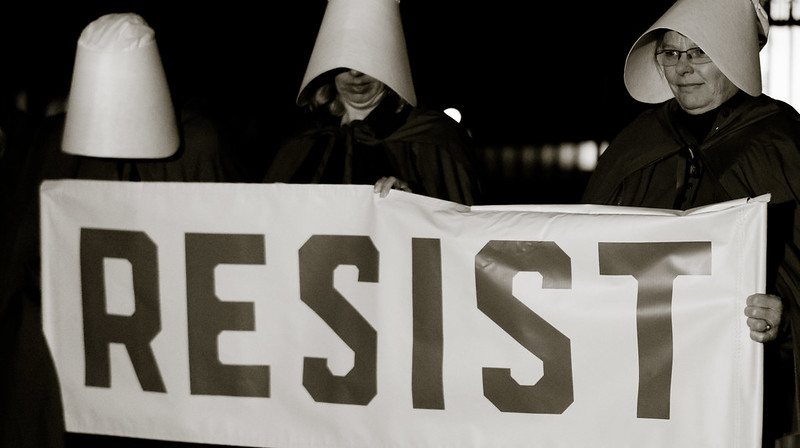
Photo by Joe Yates on Unsplash.


A note from Writers Resist
Thank you for reading! If you appreciate creative resistance and would like to support it, you can make a small, medium or large donation to Writers Resist on our Give a Sawbuck page.
A Simple Act

By Erin Edwards


It is a simple act to stand in the middle of the road. Simple, but effective. A car either has to stop and wait or run you down—and it just wouldn’t do for a hearse carrying the body of a former government official to accelerate towards a woman in the middle of the street.

Making a scene wasn’t something I’d planned. I hadn’t even been paying attention when they’d announced the route for Eric Marshall’s funeral procession on the news. Events simply collided, leaving me the perfect moment. The universe implored me to do something.

The route intersected my walk to work. Barriers prohibiting pedestrian access to the road lined the pavement, except at the crossing. There, two police officers simply held up a rope, keeping us all back. We were expected to stand in silence. Once the cars passed, they’d let us through, they assured us. But Eric Marshall had never let us rest for one moment once he stepped into office. What right did he have to a peaceful forever?

I didn’t want to wait until the cars had passed.

I looked around at the people bowing their heads, waiting respectfully for the procession to drive by. But Eric Marshall had done nothing to earn my respect.

The police officer guarding the crossing looked the other way, and there was my chance. I ducked under the rope and bolted for the middle of the road.

The procession was forced to stop. The car of a prominent government official, even a dead one, hitting a woman in front of dozens of cameras was unthinkable. The funeral was being streamed to the nation, but it wasn’t Eric Marshall’s show anymore. I looked around and saw the policemen frantically discussing my presence. Tackling a woman to the ground on live television wasn’t an option either, but I knew it would only be a few moments before they had the cameras turned off so they could haul me away. I needed to make it more difficult for them, so I sat down and laid back, tucking my arms underneath me to make myself harder to grab.

The tarmac was warm, cooking in the sun. I rested my head, feeling the uneven surface through my hair, and ignored the commotion around me. No one raised their voice—this was a funeral, after all—but there was plenty of debate. It would probably only be minutes before I was dragged away.

If I’d planned it better, I would have worn a long red cloak and a white bonnet, just so my stance on Eric Marshall’s politics was clear. He had stood in the way of so many women and their health, their right to choose. He’d convinced everyone that criminalising abortion had saved the lives of hundreds of thousands of children, but no one thought to mention the women who died as a result of the bill. Some were lost to backstreet abortions. Some took concoctions the internet promised them would end a pregnancy but wound up ending their lives. And some women just couldn’t take it.

I had heard stories of women placed under house arrest, under twenty-four-hour suicide watch, because they were deemed a risk to the foetuses they carried. Eric Marshall would turn us all into handmaids, if he had the chance. It was only right that someone stand between him and eternal rest.

The sky was cloudless and far-reaching above my head. I wondered how long it would be before I got to see it again—I knew I’d be heading to a police station rather than work when they moved me. I was contemplating whether they’d give me a chance to contact my flatmate and explain my absence at home, when I heard a yell.

“Another one!”

Before I had time to register where the shout had come from, someone skidded across the ground and stopped beside me.

“Sorry,” they said with a giggle. “I didn’t think that through.”

I turned to see another woman. She was far closer than I’d normally be comfortable with, but I appreciated the show of solidarity. From my limited vantage point, she was dressed for work, in a pencil skirt and floaty shirt with billowing sleeves. I wondered if she’d shredded them during her shaky landing. Despite any damage she might have done to her clothes or herself, she was grinning.

“Hi.” I laughed, a little manic. “You know they’ll arrest us for this?”

“Yeah, I figured. But if there’s two of us, it’s harder for them,” the woman said, shrugging. “I’m Daphne.”

“Allyson,” I introduced myself. “Thank you.”

We were at rather an awkward angle to shake hands, but instead Daphne threaded her arm through mine and linked us together. If they tried to drag one of us away, they’d have to take us both.

I didn’t ask Daphne why she hated Eric Marshall. She could have just hated the way he had knocked over the first domino—there was already talk of having women of childbearing age assigned to a guardian, whether that be a family member or partner, to ensure she “acted responsibly.” It was only getting worse. There was always the chance her hatred was personal. She could have lost a friend, a family member or a loved one. It wasn’t the kind of thing you asked someone when you’d just met and you were lying on the burning tarmac in the middle of the road in front of a funeral procession.

They must have shut off the cameras, because a police officer came to stand over us. The sun shone behind his head, backlighting him so all of his features were sunk in shadow.

“All right, ladies, you’ve had your fun. Show some respect, get moving,” he ordered, waving his hands like he could waft us away like a bad smell.

“This is a protest,” Daphne said, her voice stronger than mine would have been.

“This is a funeral,” the officer replied.

“You see a funeral; we see a celebration of the loss of our human rights,” Daphne shot back.

She tightened her grip around my arm. Despite the sun, I stared right up at the officer’s face, jaw clenched. Leaving quietly wasn’t an option.

The officer huffed and walked away. The debate on how best to pitch us out of the road was growing loud. I could hear shouting and radios, as they called for backup and argued over strategy. They didn’t want to make martyrs of us, but every second we were left there was another moment that Eric Marshall was rotting in his coffin.

I turned to look at the hearse, only feet from me. The black paint was glossy enough that I could see my face in it. There was me, there was Daphne, and there was what seemed like miles of empty road. If I had planned any of this, I would have brought handcuffs to lock myself to the grill. We likely had mere moments before we were picked up and tossed into the back of a police car.

“It was nice to meet you, Daphne, I said. “Thanks for doing something stupid with me.”

“Oh, I don’t think it’s over,” she said.

I could hear a grin in her voice and when I turned to see what she could possibly be smiling about, I found her looking the other way. At the crossing where I’d originally snuck through, there was a whole group of women. There had to be twenty or thirty of them, all pushing forward against a row of police. The officers had abandoned the rope they’d been holding up and were trying to create a wall of riot shields.

Our anger had been building for so long. Layer upon layer of it, another spark added to the fire each time we felt the restraints of Eric Marshall’s policies: the men-only bars and restaurants we were banned from for our own safety, the TV adverts begging us to take care of our health to ensure thriving offspring, the poster campaign that screamed “A WOMAN’S PLACE IS IN THE HOME!” It was enough to drive anyone to rage. They say that a woman can display superhuman strength to save a child, but no one ever realised that she could do it to save herself, too. She just had to be pushed far enough.

I watched, sideways and half-blocked by Daphne, as the group of women burst through the line of police. Once one had breached the blockade, they all piled through the gap before it could be closed again. Shouts of victory and glee rang out as they ran towards us. Suddenly the empty road was a sea of bodies, clustering together and grabbing on to each other so no one was left vulnerable.

Information was shared through the crowd as quickly as people could speak the words. The official broadcast had been shut down, but social media livestreams had almost immediately started up in its place, shared by onlookers from nearby buildings. The world was watching.

Any lack of a plan on my behalf was immediately rectified by the women around me. They shared the number of a protest support line, reminders to go limp if someone tried to lift you, orders not to give personal information even if arrested. No one had any doubt that we would all be taken into custody, that Eric Marshall’s funeral procession would eventually continue, and he would be laid to rest. But first, we would make our stand.


Erin Edwards is a dedicated Londoner and compulsive writer, most often found in an archive or at the theatre. She is committed to providing the world with more queer content and is currently working on far too many different projects to do just that. You can find her Twitter at @EEdwardsWrites.

Photograph by Victoria Pickering via a Creative Commons license.


A note from Writers Resist:

Thank you for reading! If you appreciate creative resistance and would like to support it, you can make a small, medium or large donation to Writers Resist from our Give a Sawbuck page.

We Must Resist

By Laura Martinez


Everything has changed

Nothing has changed

He is gone

Does that mean we no longer resist?

It “takes time” to undo what he has done

Does that mean we no longer resist?

As long as elected officials state “America is not a racist country”

We must resist

As long as there is voter suppression

We must resist

As long as my grandson lives in fear of driving while black

We must resist

As long as women and LGBTQ communities risk losing everything they have gained

We must resist

As long as those fleeing oppression and poverty are turned away at the Southern border

We must resist

As long as elected officials live in fear of he who is not really gone

We must resist.

As long as fear and conspiracy theories abound

We must resist.

No matter who is in the White House

WE MUST RESIST


Laura Martinez is a retired social worker. She has been involved in active resistance for more than fifty years and knows we must resist injustice no matter who is in the White House.