Welcome to Writers Resist Winter 2025-26 Issue

It’s been, hmm . . . a year.

Enough said. Let’s read some creative resistance instead. To get you all started, we’re excited to announce publications by two of our editors.

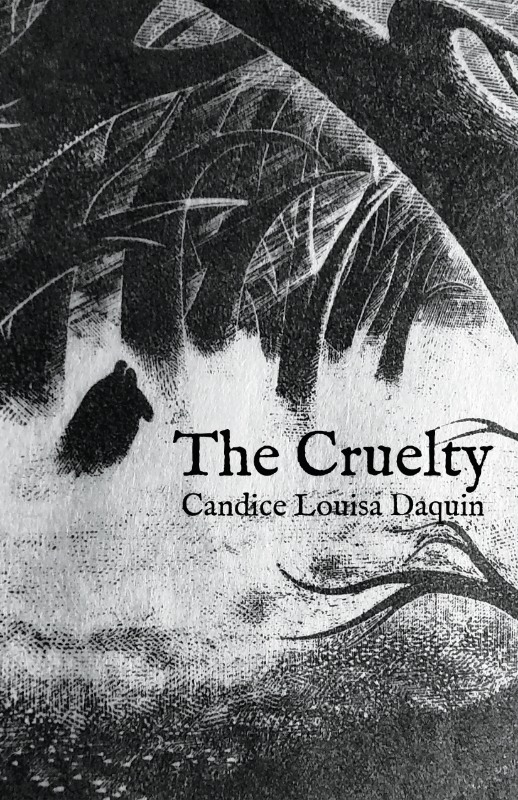
Poetry Editor Candice Louisa Daquin’s novel, The Cruelty, was released by Flowersong Press in November 2025.

Cover The Cruelty

The Cruelty focuses on the legacy of abuse. What learned behaviors from extreme abuse and mental illness can set individuals up to be controlled and manipulated to unimaginable levels. Daquin’s debut novel highlights connections between sexual abuse, sadism, extreme pornography and domestic violence. This fictional story posits the question: What if you lost everything and someone controlled your entire existence, how would you survive?

Available from the publisher, Bookshop.org, your independent bookseller, and the evil one.

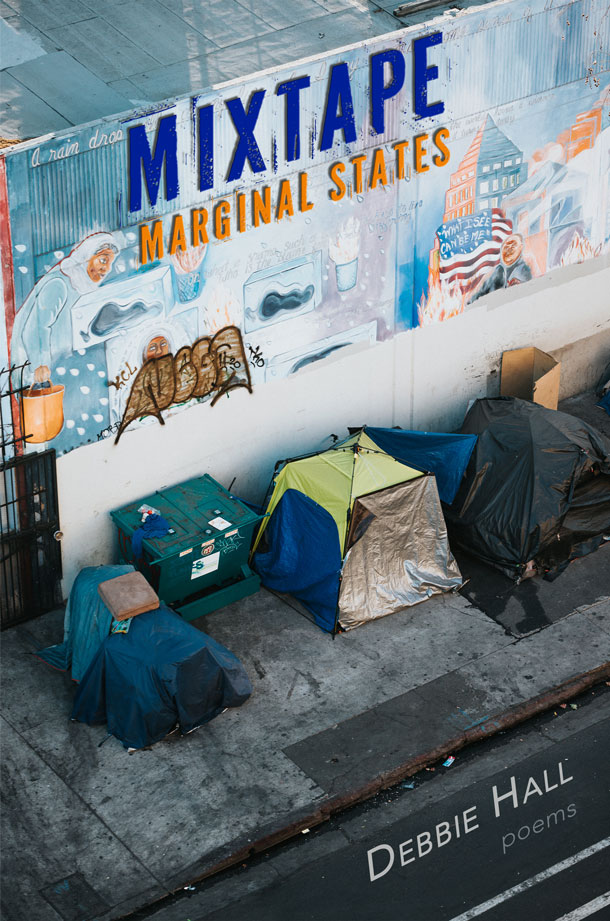
Poetry Editor Debbie Hall’s collection of poems, Mixtape: Marginal State, was released by The Poetry Box in December 2025.

Cover art of Mixtape: Marginal States

The poems in Mixtape: Marginal States bear witness to members of our human family who exist just outside the mainstream of society. In these portrayals, we see individuals struggling with homelessness, those uprooted from their native countries, asylum seekers, and others dealing with altered or challenging psychological states—states that anyone of us might occupy at some time in our lives. The hope of bearing witness is to foster compassion and inclusion, human needs shared by all.

Available from the publisher, Bookshop.org, your independent bookseller, and the evil one.


Now, we are delighted to present the following writers and artists’ representations of resistance—join them for a virtual reading of this issue on Saturday 31 January 2026 at 5:00 pm PACIFIC. Email WritersResist@gmail.com for the link.

Self-Congratulation by M. M. Adjarian

A One-Way Correspondence with Fruit by Christine Strickland

Two Poems by Nnadi Samuel

Anarchists Unite by Kirsty Nottage

Skin by Frances Koziar

Bone China by Robert L. Reece

Graffiti Artists by Andrea L. Fry

Photograph and essay by Nina Pak

I visited Gaza in my sleep by Sophia Carroll

What Did You Wish For? by Myna Chang

Secret Light by Marianne Xenos

I’m Not Happy, the Therapy Client Says by Suzanne O’Connell

Don’t Talk About It by J.L. Scott

Incubator by Bethany Bruno

The Price of Standing Still by Melissa Moschitto

Louder then Silence by Rabia Akhtar

Burn This Book by Odette Kelada


Photograph by K-B Gressitt ©2025


Self-Congratulation

By M. M. Adjarian

Texas women love and curse with fatal bless your hearts. Sun burned plains enclose them, their multi-colored bodies corralled in

branded jeans. Tender cuts on man-sized platters piled high to heaven with heaping sides of disrespect, they live to be consumed and then discarded

like Porsha Ngumezi. Doctors wouldn’t scrape her womb and she bled out, screaming, young and black. No charity for her, she left this world in Houston

just like Josseli Barnica, who died while Catholic and brown. The green card in her purse meant life but not liberty because heartbeats from a dying fetus mean a one-way

trip to glory. Nevaeh Crain, pretty white girl with a butterfly tattoo in a sundown town could tell you that if sepsis hadn’t starved the pink from all her organs.

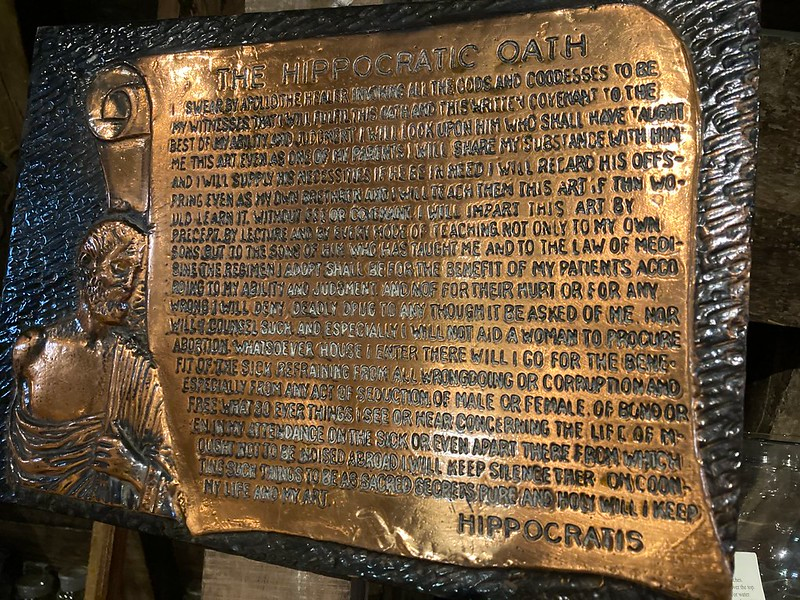
Meanwhile hypocrites under Hippocratic Oath cull women’s bones to pick their teeth in self-congratulation because in Texas, praise Jesus, the right to life abides.


M. M. Adjarian has been published in such journals as the Baltimore Review, Verdad, South 85, Grub Street, The Ekphrastic Review, Eclectica, Crack the Spine, Across the Margin, The Courtship of Winds and North Dakota Quarterly. She is currently working on a collection of semi-autobiographical poems based in the Major Arcana of the tarot, and she lives in Austin.

Photo by Matt Brown via a Creative Commons license.


A note from Writers Resist
Thank you for reading! If you appreciate creative resistance and would like to support it, you can make a small, medium or large donation to Writers Resist on our Give a Sawbuck page.

Two Poems by Nnadi Samuel

Hottentot Venus – Sarah Baartman

“Nature is a temple, where the living pillars sometimes
utter indistinguishable words. Man passes through these
forests of symbols which regard him with familiar looks.”
                                           —from Baudelaire’s poem “Correspondence”

There is a leash plagued with fancy, enough to dog a Negro round the continent. this one comes to England of her own naked will—
& did so, bent like a cartwheel, crawling half the journey.

body, wreaked by the weight of steatopygia.
the excess suddenness of fat, collecting on a heap of days that unfolds in gallops.

a trader bargains for custody, dangles a large bag of coins,
& she inks a lifetime signature on his contract: to display the meat of her skin in a stable, like a show-horse in a cage, leaping at the barking orders of her animal trainer.
the caesura of her feet, dragging a line on stage till it breaks, mid-tempo.

she thumps her chest with the rustic blows of a female bushman, enacting the once savage dance of Africa.
the audience is invited to touch the jiggle of her flesh, but from a slight distance. as though, the thin line between reality and performance is consent enough.

there is a state of mind in art that takes pleasure in being moved—
in ways that makes one complicit to humiliation, mistaking a punishment for pleasure.

I, too, am in the theatre of my own objectification, fondled into rage, being touched by the same white hands, tape-measuring my passport in the way they reached for the privacy of Sarah Baartman’s bosom, till she grabbed a Briton by the balls
& stormed out naked on the street that covered her in dark umbra.

the men sneak her body to distant towns, selling out shows & STIs* the 18th century style. once she goes down on all four, the queens take turns in making a caricature of her back. they rode her to death, smoke belting out of her fallen lungs.

in the black quiet of night, she is sold in shrouds to sculptors who limed her in liquid resin, cast her frame in bronze
& placed it in a museum for the highest bidder.

aren’t you in shock like me, dear reader,
that even in death, an image still returns more money than the country’s revenue
& they do it, fatigued & breathless still.

the government sends back her remains to Cape Town, on Mandela’s demand. I am in negotiation for my own body’s return to my homeland.
what is the cost value of an immigrant’s stay here, say, after tax?
what lunatics me, if not this literature that bends my back in reverse sportsmanship.

I refuse on smoke & whiskey to live past this ache.
the incense of my being, spirals on the ground until I’m baked into a swoon.

in a dream, clay pours on the edge of my lying body, dries on the spot & I stood up to use—leaving a monument for the ethereal world.
my presence, hung there on display like an over-worn jacket. sand stacked like cuboid, resting on both of my breasts.

I wonder if I’m inciting yet another metaphor for being trespassed without consent, considering my nakedness here.

I walk the corners of a house wearing a silence stripped of its own silk. the sun rearranging my insteps, to invent a box of light.

a girl passes by and disregards me with unfamiliar hatred:
you/ actor by pretense. you/ animal in a cage, exposing yourself, being touched.

             * STI means sexually transmitted infection

I Write My Rebellion in Disappearing Language

I—snipers away, was once capable of detonation.
now, I’m reduced to this thing, teething brightly on wires & microwave sensor: wailing devices that yee-haws intruder to scampering—
the way sound straightens the tip of my body into alertness.

I awake, full of shouting.
estate walls flattened to a neat collapse.

the mugshot holds a crime that keeps a moustache. its racial stink traced to my lineage.

what if it were a negro is not investigate enough.
my lips, wonder-ridded of names that fits the roll call. our black license placed for the highest bidder:
this country that is all border & nothing else.

I approach a phone booth & rifle light surrounds me. I make for Accident lane.

see what a town is named after: perfect excuse to fill a body with so much accidental discharge—it yawns into tributaries: a motionless debate.
a gang of berets, pistol-loaded, squares up to us.

when a finger snaps, the sergeant attempts asphyxiation on our throats, & we reward him with black temper.
one body eats fire, & the rest flattens to the ground.

     • • •

isn’t it a myth, how I still own a loin to write you this verse?
the constitution probes my effrontery to name a sonnet after its victim. says, harm hasn’t known me yet,
so, the hypocrisy in scripting their agony in first person pronoun.

same me who was chased by a pistol-mouth down Allen Avenue. a thousand evidences brought to my hearing,
while sordid hands ransack my manuscript—
not knowing I write my rebellion in disappearing language.

I lack subtle ways to put this:
living is one delicate chore I could do all month, without returning Ma’s voicemail.
I am in search of newer methods to body her in my thoughts, the way negro speak of bodies.

the way Floyd flagged down a cop for small talk, only to be tucked into his grave.
as we write his demise in disappearing language,
while the cops spiral bind what’s left to have him shipped down home soil.

I reckon, nothing shoulders a body past water, if it’s not family. not the vassal, or the vessel, or the viscous tide.
I desire to happen as a metaphor in one of one of Danez Smith’s sonnets. but I was born defenseless, without wonder.

of what use is a fence anyway, if the body is standing? I wake up to an open field, no

walls guiding our bodies.
whatever terror walks in our direction, would have return home well-fed.
each evening, my loin straightens into alertness.
I fist the rib of my imagination to achieve a black pulse.


Nnadi Samuel (he/him/his)holds a B.A in English and literature from the University of Benin. His works have been published or are forthcoming in Suburban Review, Seventh Wave Magazine, North Dakota Quarterly, Quarterly West, PRISM, Ex-Puritan, PORTER HOUSE Review, Plenitude Magazine, Common Wealth Writers, Jaggery, Foglifter, The Capilano Review, Poetry Ireland and elsewhere. He is a three-time Best of the Net, eight-time Pushcart Nominee, and author of Nature Knows a Little About Slave Trade selected by Tate. N. Oquendo (Sundress Publication, 2023). His third micro-chapbook “Biblical Invasion, BC” was published by Bywords (Ottawa, CA) in 2024.


A note from Writers Resist
Thank you for reading! If you appreciate creative resistance and would like to support it, you can make a small, medium or large donation to Writers Resist on our Give a Sawbuck page.

Skin

By Frances Koziar

Skin colour
does not dictate culture—

I could tell you all the ways
that this is true, speak of abandonments
and adoptions that sink deeper
than flesh, of homes and not-homes,
of the erratic mixing
of bloodlines; instead
I want to say that being white
but not White
puts you in a unique
kind of danger.

We are attacked
by our own and our allies, attacked
for expressing what we love
in the name of appropriating our own
cultures, our identities
disbelieved because all they can see
is the spiky shell of the lychee, not
the sweet fruit encased
inside.

I want to tell you that wearing
an amulet of protection draws crosshairs
of attention when all I want is to bare
my identity, to love a homeland
that is as much a part of me as the privilege
of my colour, to reveal some
of the tender sacred parts of myself that I yearn
to share as I reach out to others

But I also
understand—I too
have seen first-hand how some
beliefs are disagreed with, while others
are just laughed at. I

know the pain of mockery
for believing in animism or the magics
found across so many cultures,
have seen the glassy stares and the
this-is-a-joke-right? smiles
when my eyes are filled with feeling,
have felt the twisting in my gut when I
am silenced one way
or the other, watching
other whites wear what they want
without a second thought to having
their people ridiculed by those choices
or their ancestors
silenced.

            They are lions
who’ve never had to shave the precious
gold of their fur
for safety; have never watched
each beautiful strand fall like wishes
that will never come true, never
known how it feels to hide
the gifts of their identities like stolen
property lest they be mis-
understood, until the very ground
beneath them has become soft
with their lies.


FRANCES KOZIAR has published poetry in over 45 different literary magazines, including The New Quarterly, Acta Victoriana, and Vallum. She is a young (disabled) retiree, a painter, a gamer, and a social justice activist living in Kingston, Ontario, Canada. Visit her website.

Photo by Philbo 🇺🇦 on Unsplash.


A note from Writers Resist
Thank you for reading! If you appreciate creative resistance and would like to support it, you can make a small, medium or large donation to Writers Resist on our Give a Sawbuck page.

Graffiti Artists

By Andrea L. Fry

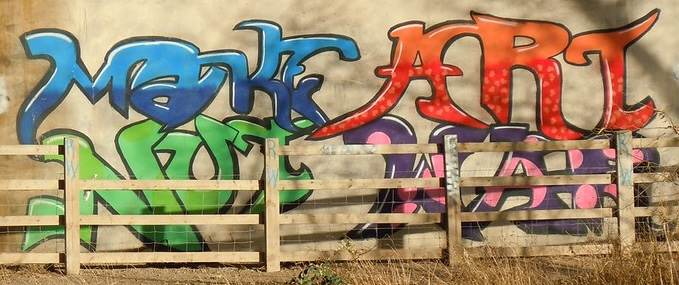
The authorities will start with shame—the lecture on personal property
as if it would reform. But not even close—the claim of ownership is as alien
to ghost writers, as the acceptance of defacement is to those who own.  

But how persistent, how alive the calling card! Yesterday, the overpass
was grey and mournful in the sleet. Today it’s neon orange, bedazzled
in fun fonts, spiky electric blue shapes like speech bubbles in comics.


It’s hard not to smile at exuberance. That treacherous cliff behind
Friendly’s? They washed it in purple, then sent a red zigzag down
the rockface, chubby letters cartwheeling into a vermillion pool of LOVE.

But who are these stealthy anarchists? How do they shimmy up with cans,
spray billows of perfect clouds while dangling like spiders from a thread?
I can only dream of such courage. I’ve spent my life trying to get a mortgage.

If I ever do, I wonder if I’ll join the owners, put up a fence of cypress trees,
install a rumbling garage door capable of decapitating trespassers?
When “Stoney Creek Road” was changed to “Stoned Creek Road,”

my father used it as a teaching moment on vandalism—he must have heard
us chuckling in the back. I can’t help but root for these mischief artists.
And how injurious is their havoc, when governments dispense with lives

as casually as these sprayers paint a rock? They say King Charles III
owns 1/6 the surface area of the planet. Imagine waking up in a London
fog to a golden dispatch stretched across Westminster Bridge: 

Text reading Who sez? Who sez? Who sez?


Andrea Fry has published two collections of poetry, The Bottle Diggers, in 2017 (Turning Point Press) and Poisons & Antidotes (Deerbrook Editions) in 2021. Her poems have appeared or will appear in journals such as Alaska Quarterly ReviewAnnals of Internal Medicine,Barrow StreetCimarron Review, Spoon River Poetry Review, Stanford Literary ReviewThe Sun, and Women’s Review of Books among others. She has been nominated three times for the Pushcart Prize. Andrea is freshly retired from her career as an oncology nurse practitioner and lives in Brookline, MA with her husband and two comical felines. Visit her website at andrealfry.com.

Photo quisnovus via a Creative Commons license.


A note from Writers Resist
Thank you for reading! If you appreciate creative resistance and would like to support it, you can make a small, medium or large donation to Writers Resist on our Give a Sawbuck page.

I visited Gaza in my sleep

By Sophia Carroll

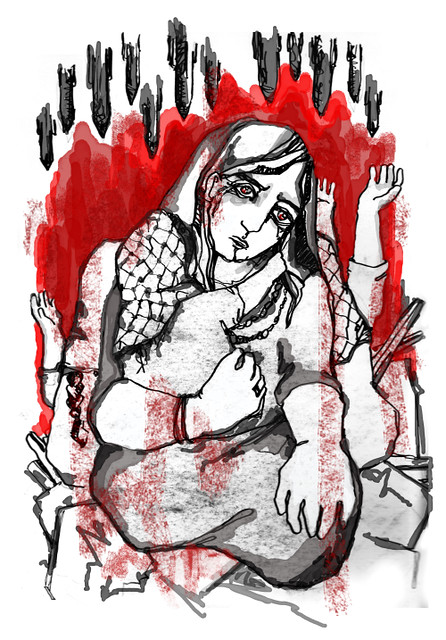
I worked in a medical tent. Do they still have medical tents? I’m not a doctor but in my dream, I could tell who we could save by touching them. Some people burned from infection. I knew we didn’t have medicine. I heard mothers scream, that sound that predates language. I hugged a boy of fourteen. He had no one. I wanted to take him home but that is impossible. Are we still free? He said he was coming back to fight, to avenge his family. I meant to birth a baby. Went to wash my hands and was suddenly in the kitchen of the house I grew up in, as if I could go back and forth like my money. As if I could wash my hands. They’re still dirty.


Sophia Carroll (she/they) is an analytical chemist and writer. Her work appears in wildnessSmokeLong QuarterlyRust & Moth, and elsewhere. She is also the co-founder of M E N A C E, a magazine for the literary weird. Find her on Substack at Torpor Chamber and on Bluesky @torpor-chamber.bsky.social.

Photo by Damien Walmsley via a Creative Commons license.


A note from Writers Resist
Thank you for reading! If you appreciate creative resistance and would like to support it, you can make a small, medium or large donation to Writers Resist on our Give a Sawbuck page.

I’m Not Happy, the Therapy Client Says

By Suzanne O’Connell

“I’m not happy,” the therapy client says.
“Tell me about it,” I say.
She tells of a broken marriage,
a husband, who when he does come home,
is drunk and abusive.
“He tells me I’m ugly,” she says,
“I’m afraid all the time.”
“It’s hard for me to imagine how
you could find happiness
in such an unhappy situation,” I say.
She looks surprised. Disappointed.
“I thought you would have suggestions,” she says.
“Imagine you were in the midst of war,” I say,
“would you expect yourself to be filled with joy?”

Nowadays, gurus tell us to find happiness in life.
They never say how.
I feel like a failure because I can’t.
Every day there are new cruelties,
more chaos, more things that threaten.
I try to focus on the small things.
I notice the smell of a pink rose,
I taste the chocolate gelato,
I talk to someone I love.
But if we survive this,
I want the future to know
that we have survived a war,
a struggle in the darkness,
a time when happiness was hard to find.


Suzanne O’Connell’s work can be found in Poet Lore, North American Review, Drunk Monkeys, Paterson Literary Review, Chiron Review, Beach Chair Press, and Atlanta Review among others. Suzanne was a finalist in the Steve Kowit Poetry Prize, 2024. Her two poetry collections, A Prayer for Torn Stockings and What Luck, were published by Garden Oak Press. Her website is suzanneoconnell-poet.net.

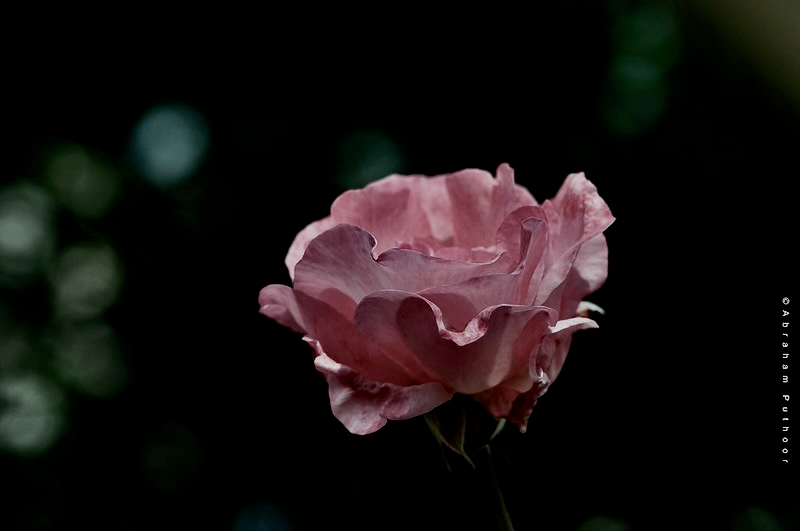
Photo by Abraham Puthoor via a Creative Commons license.


A note from Writers Resist
Thank you for reading! If you appreciate creative resistance and would like to support it, you can make a small, medium or large donation to Writers Resist on our Give a Sawbuck page.

Incubator

By Bethany Bruno

You were twenty-four
when your brain went silent.
No dreams.
No waking.

But still they kept you warm
beneath the weight of wires,
your skin bathed in fluorescent blue,
your breath machine-fed.

Not for you.
For the small, curled possibility inside.
They called it life,
but what they meant was labor.

They turned your body
into a hushed room
without windows,
without voice.

A vessel.
A holding cell.
Your name was Adriana.
Say it aloud.
Adriana Smith.

Not “the mother.”
Not “the miracle.”
Not “the body.”

A woman.
A daughter.
Gone.

One pound, they said.
A child barely bigger than a fist,
lungs like damp paper,
skin still translucent.

And yet they carved her out of you
as if hope could be harvested
from a still-warm grave.

Only a flatline,
a hum in the room,
the smell of bleach and latex
masking what was taken.

This is what they do.
They drape it in reverence.
Call it holy.

But watch how they hollow you.
Make a mother
from a body
already gone,
then dress it up
as a gift.

To the women watching,
this is the cost.

They are counting your worth
in ounces,
in gestational time,
in how long your heart can be coaxed to beat
after you have stopped being.

Stay alive long enough
and you, too,
can be used.


Bethany Bruno is a Floridian author whose writing echoes the language, history, and quiet beauty of her home state. Born in Hollywood and raised in Port St. Lucie, she earned a BA in English from Flagler College and an MA from the University of North Florida. Her work has been featured in over sixty literary journals and magazines, including The SunThe MacGuffin, and The Louisville Review. When she’s not writing or chasing down forgotten corners of history, Bethany enjoys laughter-filled moments with her husband and silly daughters. Visit www.bethanybrunowriter.com for more.

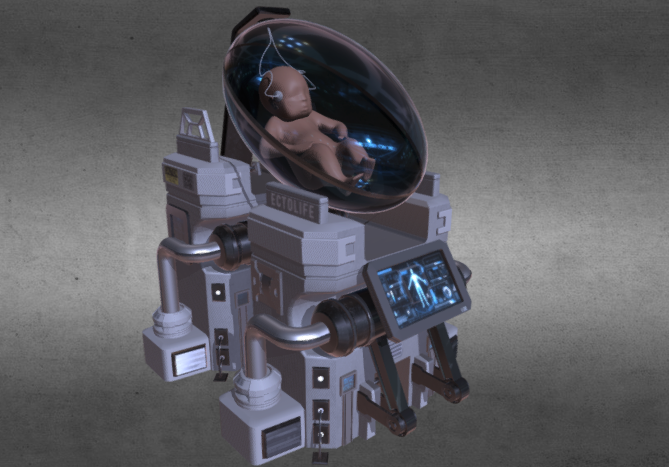
Photo of a baby incubator created by Tampa Joey via a Creative Commons license.


A note from Writers Resist
Thank you for reading! If you appreciate creative resistance and would like to support it, you can make a small, medium or large donation to Writers Resist on our Give a Sawbuck page.

Louder than Silence

By Rabia Akhtar

I was raised in patriarchy.
Not an idea—
a weight.
It sat on my shoulders,
pressed into my lungs.
Silence was law.
Obedience—oxygen.

I cracked it open.
Spoke when I wasn’t meant to.
Walked where I wasn’t welcome.
Burned their script,
page by page.

Crossed borders,
thought the fight would end.
It didn’t.
It just got dressed up—
new clothes, better manners.

Racism at the table.
Sexism in a grin.
Bias wrapped in clean grammar.
Walls made of glass.
Chains you can’t see.

Intersectionality means this:
not one thing or another—
but the collision of all I am.
A name that signals faith I no longer claim,
a passport that shuts doors before I arrive,
brown skin at boardroom tables,
a woman’s voice in rooms built for men.

Each identity a thread,
woven tight,
patterns of exclusion
hidden in plain sight.
Carrying double the weight,
earning half the credit.
Always too much.
Never enough.

But listen.
I am not fragile.
Not a guest.
Not a mistake.

I am the crack in their system.
The fire they can’t contain.
The voice they wanted hushed—
still rising.
Still louder.
Louder than silence.


Rabia Akhtar is a human rights defender focusing on gender and identities in contexts of conflict and war, currently based in Singapore. Her poetry explores themes of identity, gender-based crimes, and resilience, drawing on her experiences as a woman of color navigating complex forms of belonging and exclusion while championing others’ rights. Her work seeks to give voice to stories often left untold.

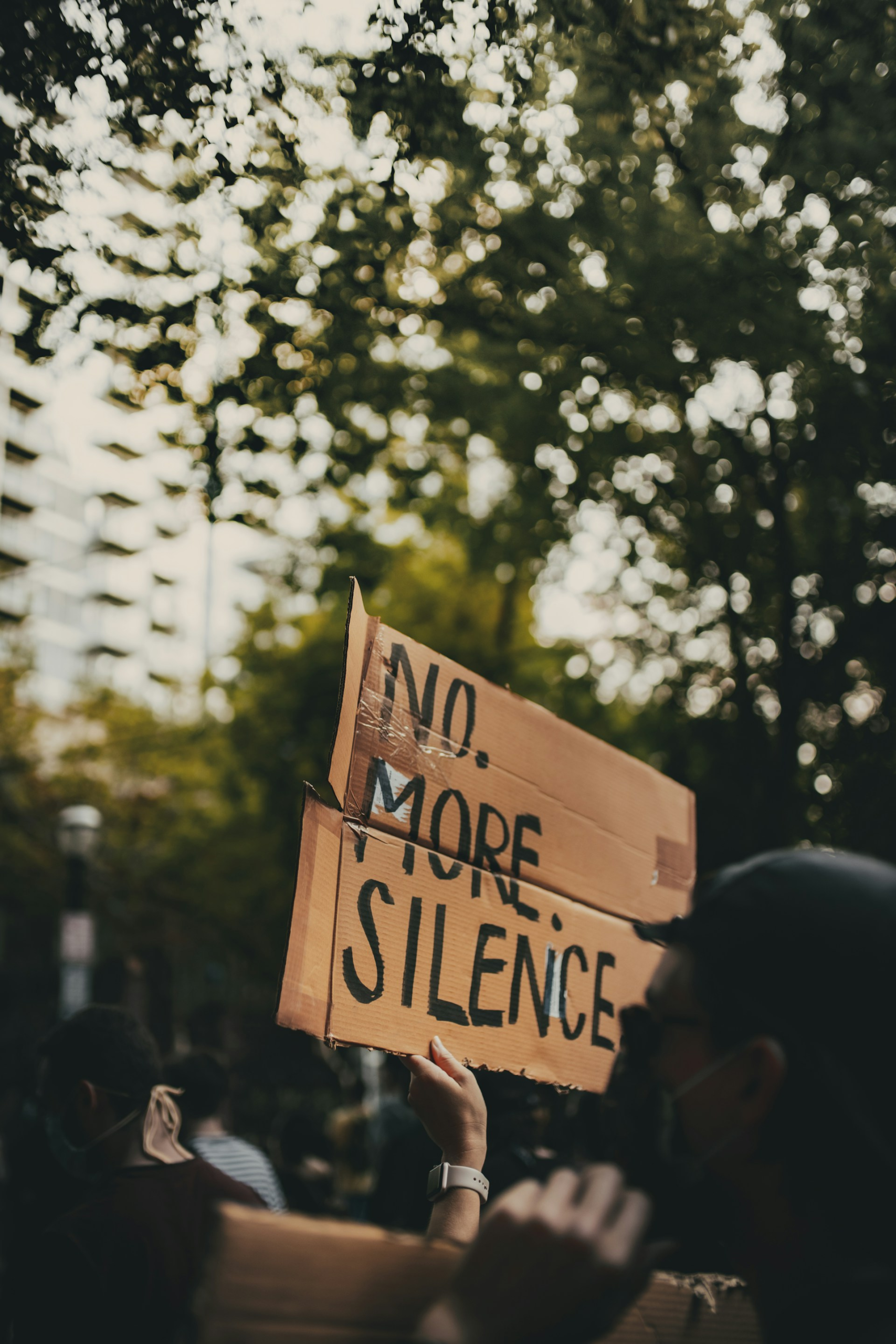
Photo by Joe Yates on Unsplash.


A note from Writers Resist
Thank you for reading! If you appreciate creative resistance and would like to support it, you can make a small, medium or large donation to Writers Resist on our Give a Sawbuck page.

Two Poems by Margaret Bleichman

A Fresh Take on Historic Integrity

Boone Hall Plantation and partnering architects
are proud to share that the Cotton Gin House

built in the 1850s for cotton processing

will keep its original brick exterior
to maintain its historic integrity

but will be completely renovated inside


The remodeled Cotton Gin House features
a new visitor center, gift shop, event space

a museum highlighting centuries of history
The finished product will add

to the continued history of Boone Hall

Boone Hall Historic Gin House
newly restored, a fresh take on history
provides any event a timeless backdrop

With views overlooking award-winning gardens

The Gin House, perfectly perched

in the center of the action of Boone Hall

Perfect for a party of 80 with sit down

up to 100 standing

We require an insurance policy

$1,000,000 worth of general liability

Take the Boone Hall experience to the next level

Or: How to White-Wash History

the corporate descendants of Boone Hall enslavers
where enslaved labor toiled to enrich Charleston County
with thousands of bricks made by unpaid enslaved hands
as we are the original experts of polite façade
according to our unassailable definition of integrity
we’ve removed inconvenient and unpleasant reminders

ghosts of kidnapped Africans and their children
to earn a generous profit on our “Lost Cause” mythology
designed for the comfort of the white visitor
daily and continuing violations to centuries of harm
and ensure the continued erasure of Black history

a house of deprivation, starvation and violence
as the actual history is too much of a downer
perfect for revisionist “Tara” fantasies

where barefoot children picked cotton dawn to dusk
like spiked iron collars placed upon enslaved shoulders
that was slapping, kicking, punching and whipping

on newly polished floors covering blood-stained ground
for a true fake experience, stand 14 hours without break
much as our forebears insured their human property
tho’ we accept no accountability for our past brutality
help us help you put as many levels as possible

between Boone Hall and its true history

Note: The left column contains direct quotes from local news and Boone Hall Plantation websites.


Etymology of the Erased

with deep respect to the Nipmuc Nation

Nipmuc: nippe– ‘fresh water’, amaug– ‘fish taken by the hook’   ̶  Algonquian
            Fresh water people flourish
            call Nippenet home for twelve thousand years
            cherish the lion, black birch and white pine

            thank Manitoo for abundant waters
            for largemouth bass and rainbow trout
            and pray for all living creatures

reservare: ‘to keep back’   ̶  Latin
            Wash ashores seep inland, ghostly,
            convert forest to property
            extinguish the lion

            convert Nipmuc people to Christian
            ‘Praying Indians’ (pray or die)
            then enslave or slaughter them, anyway

            and imprison the rest on Deer Island, Boston
            no water, no food, no shelter, in winter
            Few survive, some escape

Quaben: ‘place where many waters meet’   ̶  Nipmuc
            Snow-melt rivers tumble down
            a ring of mountainsides, sustain
            a fertile valley, fill a modest lake

            Boston dwellers thirst for more, claim the basin
            as their own, dam the rivers, flood and drown
            settler farms and four whole towns a hundred miles away

Qunnonoo: ‘mountain lion’  ̶  Nipmuc
            Fresh qunnonoo scat confirms
            Dakota lion’s eastward trek
            from Black Hills to the Quabbin rim

Waban: ‘the wind, the spirit’; a Nipmuc elder of the 1600’s; a suburb of Boston  ̶  Nipmuc
            Mystery figure glides long and low
            through Waban yards, and lopes
            past bikes and sand toys, sleek and muscled

            its three-foot black-tipped tail
            distinctive in the pre-dawn mist
            cub or prey dangling from its jaws


Margaret Bleichman is an emerging poet, queer activist and educator with writing in, or forthcoming in, Gyroscope Review, Poets Reading the News, Kitchen Table Quarterly, Fifth Wheel, Fauxmoir, The Dewdrop, and Between Us. Their poetry has won awards in two Joe Gouveia Outermost Poetry contests. A software engineer and professor, they helped establish LGBTQ+ health benefits and STEM programs to engage underrepresented students.

“Erased” by Rob Williams via a Creative Commons license.


A note from Writers Resist
Thank you for reading! If you appreciate creative resistance and would like to support it, you can make a small, medium or large donation to Writers Resist on our Give a Sawbuck page.


Refugees

By Leah Mueller

                         for Basel Adra

Each morning, he awakens
to the same gunfire, the same pain.

He sees the enemy’s
implacable face: square body
bundled into a gray flak vest,
weapon clutched inside an outstretched glove.
His home once more reduced to rubble.

He moves his possessions
to a different structure,
and then to another, each
more remedial than the last.

Water is scarce, food almost nonexistent.
Loaf of bread, spoonful of white rice.
Sometimes, a few vegetables.

The young eat first.
Parents devour whatever remains.

Elders know when airstrikes are coming,
sense the impact deep within their bones.
Still, they laugh. They nap. They play with the children.
They cover their wounds with strips of cloth.

Each afternoon, he hits the road:
trudging through dust, demanding freedom
that he may never live to see.
Townspeople cluster around him, chanting
as they clutch handmade signs.

Their slogans dream of a home
where Palestinians belong at last—
a land that lies right in front of them,
and yet seems as distant as sleep.


Leah Mueller’s work is published in Rattle, NonBinary Review, Brilliant Flash Fiction, Citron Review, New Flash Fiction Review, Does It Have Pockets, Outlook Springs, Your Impossible Voice, etc. She has received several nominations for Pushcart and Best of the Net. One of her short stories appears in the 2022 edition of Best Small Fictions. Her fourteenth book, Stealing Buddha was published by Anxiety Press in 2024. Website: www.leahmueller.org.

Photograph by Dale Spencer via a Creative Commons license.


A note from Writers Resist
Thank you for reading! If you appreciate creative resistance and would like to support it, you can make a small, medium or large donation to Writers Resist on our Give a Sawbuck page.

Divertissement

By Candice M. Kelsey

                        I run the country and the world. –Donald Trump

Not only able to make guards bend
to her will, she also brings Creon slow madness
with one swoop of her wand. A seduction
at the end of Act IV from Charpentier’s opera,
triumphant scene from Eurpides’ Medea
where royal henchmen fall to a woman, powerful
and no longer pleading. Creon’s loyal guards
transformed into female dancers seizing the king, Médée
premiered in Paris as trials for witchcraft
raged across the Atlantic. On stage, the actress
makes a costume change, slips off her gown and stands
in Sorceress black, hair and make-up primed
for vengeance. More enchantment than distraction.
A banished woman never loses everything,
but dark waters of the Styx always betray a king.


Candice M. Kelsey (she/her) is a poet and educator living in both L.A. and Georgia. She’s developed a taste for life’s absurd glow, long skirts, and juicy opera podcasts. She roasts vegetables like it’s a sacred ritual and wears mostly black because her late father-in-law said it’s not her color. Somehow her work has received Pushcart and Best-of-the-Net nominations, and she woke up one day as the author of eight books. Please acknowledge her existence @Feed_Me_Poetry or www.candicemkelseypoet.com.

Photo by Chema via a Creative Commons license.


A note from Writers Resist
Thank you for reading! If you appreciate creative resistance and would like to support it, you can make a small, medium or large donation to Writers Resist on our Give a Sawbuck page.

The Ministry of Truth

By Tara Campbell

The Ministry says it’s no joke: today
I broke the law. I was too woke today.

They claim I denigrated our great land.
Its sacred trust is what I broke today.

They feel it would be harmful to allow
my words to reach the common folk today.

They say I poked too roughly at our nation’s
history, fragile as a yolk today.

My only crime was pointing out the flames:
the Constitution’s up in smoke today.


Tara Campbell (www.taracampbell.com) is a writer, teacher, Kimbilio Fellow, and fiction co-editor at Barrelhouse. She teaches flash and speculative fiction, and is the author of two novels, two hybrid collections, and two short story collections. Her sixth book, City of Dancing Gargoyles (SFWP), was a finalist for the 2025 Philip K. Dick Award, and listed in Reactor Magazine’s “Best Books of 2024” and Locus and SFWA’s Recommended Reading.

Photo credit: Thomas Hawk via a Creative Commons license.


A note from Writers Resist
Thank you for reading! If you appreciate creative resistance and would like to support it, you can make a small, medium or large donation to Writers Resist on our Give a Sawbuck page.

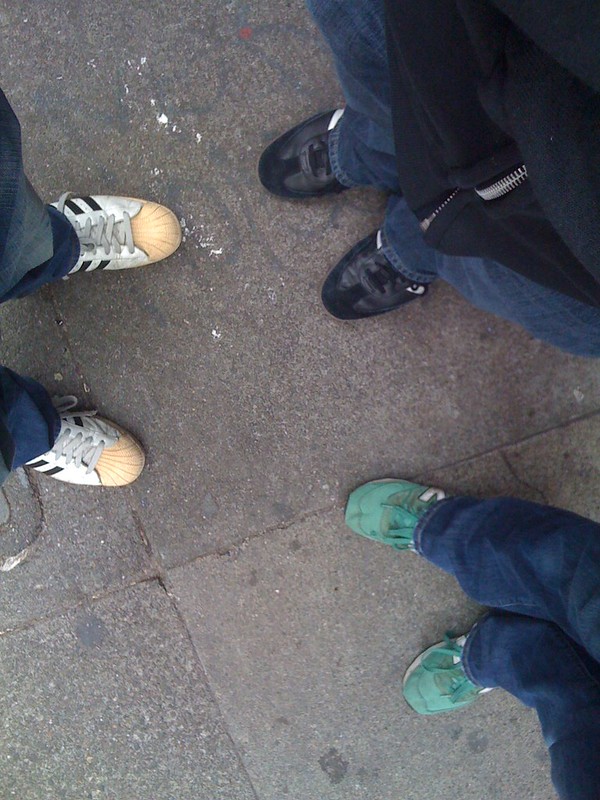
The Revolution Will Wear Sneakers

By Sabyasachi Roy

they said revolution
would thunder in cavalry boots—
epic, unmissable, majestic.

we’ll come instead in well-worn sneakers,
laces neon against cracked pavement,
soles worn skinny from marching
every forgotten block.

our plans won’t fit in tidy briefs—
they’ll be scrawled on café napkins,
between kombucha sips and sideways glances,
doodles of fists, flowers, flame.

we’ll scent the barricades with jasmine,
our battle-cries a rising laughter
that shatters the sleep of tyrants.

they’ll wait for cannon fire—
we’ll greet them with tomorrow’s dawn
in shoes built for the long haul,
ready to outwalk their fear.

this is how we win:
one bold step, one shared grin,
one sneaker-stamp echo
that outlasts their thunder.


Sabyasachi Roy is an academic writer, poet, artist, and photographer. His poetry has appeared in The Broken Spine, Stand, Poetry Salzburg Review, Dicey Brown, The Potomac, and more. He contributes craft essays to Authors Publish and has a cover image in Sanctuary Asia. His oil paintings have been published in The Hooghly Review. You can follow his writing on Matador here and his photography and paintings here.

Photo credit: Jason Tester via a Creative Common license


A note from Writers Resist
Thank you for reading! If you appreciate creative resistance and would like to support it, you can make a small, medium or large donation to Writers Resist on our Give a Sawbuck page.
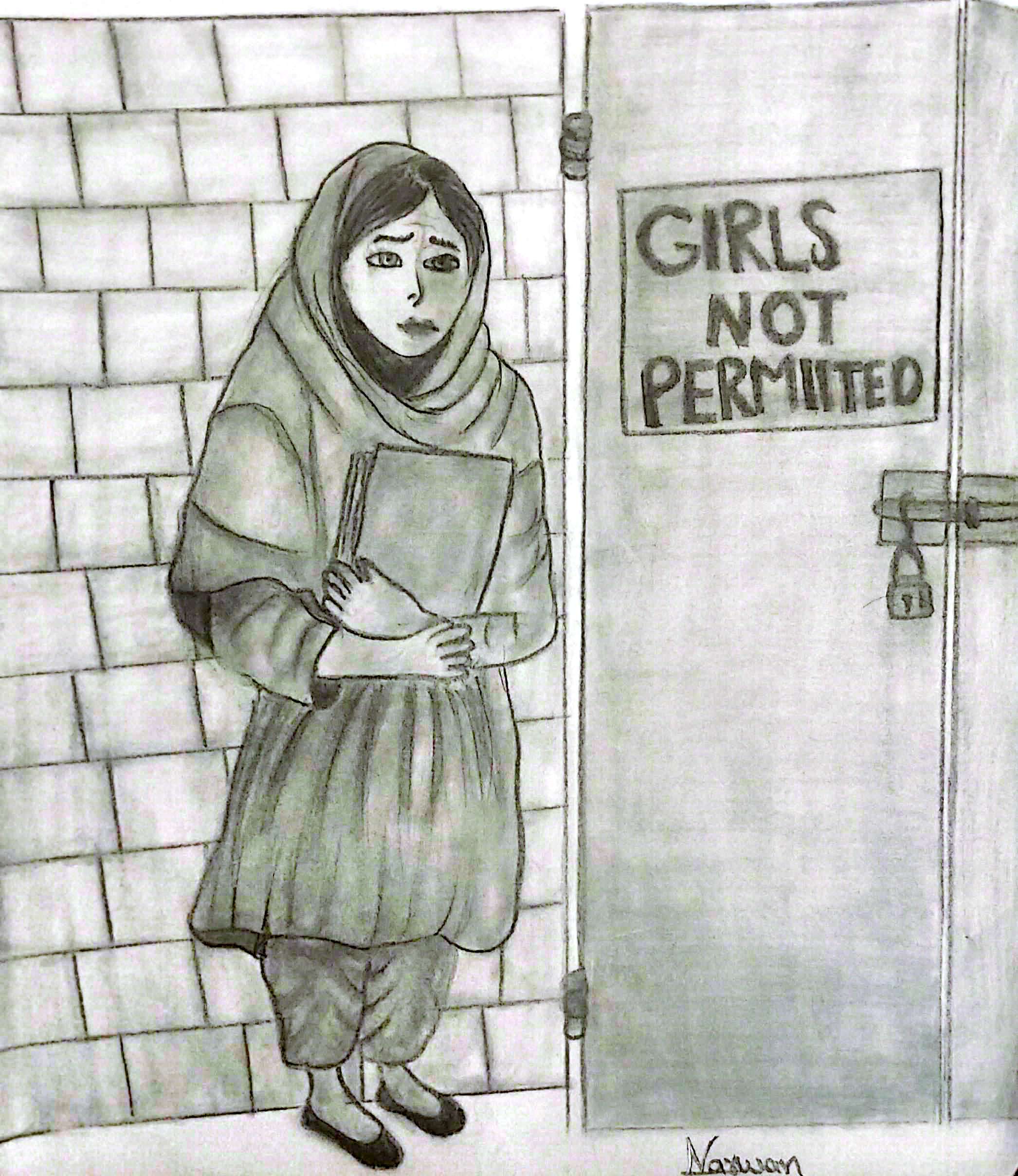
Two Poems by Maryam, Illustrated by Narwan

More Than a Thousand Days Without School

For the last time,I heard my school’s ring,
the melody that runs us toward growth.
For the last time, I sat in its chair,
the chair that helps me achieve my goals.
For the last time, I travelled by my teacher’s teaching
to discover the wonders of the earth and the sky.
For the last time, I sang on its stage,
for freedom and peace.

Since then, I’ve been caged in four walls of my home,
for more than a thousand days.
I gaze at my school’s uniform
hanging on my bed,
not putting it in the closet,
hoping one day I could go to school.
I remember the last day
at my school.
Everyone congratulated me for upgrading to 7th grade.
My scores shone on my result sheet,
but my eyes had blood crying.
Instead of being happy and celebrating my upgrade,
I mourned for it, wished to be failed,
so, one more time, I could go to the dream world.
The monsters had banned the dreams
for girls beyond the sixth grade.

They could close the doors of dreams,
but not those of my mind.
They are frightened of my pen,
because it’s stronger than their guns.
My pen is my weapon
against their guns.

Dear World, Dear Humans, Why Are You Silent?

We are collapsing in the unfairness of their ignorance.
We are locked in the cage of their selfishness.
They bury us while we are alive.
We are dying under the stone of their torture.
Our wings are clipped, our pens are broken,
our freedom is lost, our dreams are burnt. . .
In the quiet stillness, the world watches our gradual death.

Dear world, could you hear our plea?
Could you tell me where human rights are?
Or are we the exceptions to that?
Dear world, is it too much we ask for?
Our classroom symbolized our hope,
the blackboard, the chalk that whispers our dreams
Our uniform: black dress and white scarf that express our piety.
Dear humans, is it too much we ask for?
To not clip our wings, not break our pens?
To not bury, to live; is it too much we ask for?
Dear world, dear humans, why are you silent?


Maryam is a young Afghan poet and writer who weaves words into resistance. Her voice rises from a land where silence is survival, yet she dares to speak of lost childhoods, of girls without schools, of the unheard. Through her poetry, Maryam carries grief and hope, and creates light where darkness insists.

Narwan, creator of “Girls Not Permitted,” is a 13-year-old Afghan artist who speaks through her pencil what many cannot say out loud. Her drawing reflects hidden pains, quiet strength, resilience, and unshakable dreams of girls in a world that silences them. With simple lines, she tells powerful stories.

They Tell Us

By Dawn Tasaka Steffler

I

Wait until buyer’s remorse sets in
Wait until it hurts the farmers
Until it hurts the veterans
Until the social security checks stop coming
Until they take away birthright citizenship
Until they take away freedom of speech
Until they take away the vote from women
Until another pandemic rears its head and hundreds of thousands die again

Whispers circulate
But what if we don’t want to wait?
Where are the protests?
What are we so afraid of?

Actually we are very afraid
We only act brave

II

They tell us we are the sleeping bear
And you know what they say
You don’t want to poke a sleeping bear

And one of us asks in a clear young voice
Why don’t we want to poke the bear?
If we wake the sleeping bear won’t the nightmare end?
Everyone nods their heads in agreement

They tell us
No, we’re going to roll over and play dead

Wait, are we a sleeping bear or a dead bear?

III

They tell us wait until the midterms
If they want to hang themselves give them plenty of rope
Don’t stand in the way of the process

Perplexed we look to our left and our right
to the person standing next to us

One of us whispers
I don’t think they know what they’re doing
This has never happened before

Ah- but it has
another one of us whispers
Just not here


Dawn Tasaka Steffler (she/her) is an Asian-American writer from Hawaii who lives in the San Francisco Bay Area. She was a Smokelong Quarterly Emerging Writer Fellow, winner of the Bath Flash Fiction Award, and was selected for both the 2024 Wigleaf Top 50 long list and 2025 Best Small Fictions. Her stories appear in Pithead Chapel, Fractured Lit, Moon City Review, The Forge, JMWW, and more. She is working on a novella-in-flash that explores the challenges and joys of parenting queer kids. Find her online at dawntasakasteffler.com and on X, BlueSky and Instagram @dawnsteffler.

Photo credit: Ged Carroll via a Creative Commons license.


A note from Writers Resist
Thank you for reading! If you appreciate creative resistance and would like to support it, you can make a small, medium or large donation to Writers Resist on our Give a Sawbuck page.
NOPE

By Alina Zollfrank

I’m an app balker. Proof?
            You can do this on your cell phone,
eager salespeople soothe
                        and I, I refuse –
            Just check in on your screen,
the medical clinic suggests
            and I, I walk right in and demand
                        the eye contact that’s owed –
            It’s easy to transfer funds this way,
pesters my credit union,
            and I, I stash wadded cash
            to the tune of no one –
                        But that’s how we do attendance,
school staff bristle
            and I ink-scribble my autograph –

                        My rebel smile so wide
            I can taste the earwax.

The willful ocean wave has one job to do
and so do I. An orca in a clownfish-
schooled sea. An app balker in this,
this land of feigned connect – I forge
communion. Drummed lone morse code
washes away the unnecessary –

            My smacking flukes d/i/s/r/u/p/t


Alina Zollfrank dreams trilingually in the Pacific Northwest. She believes artists and writers are humanity’s true pulse, social media might just kill our essence, and produce should be shared with neighbors. Her work has been nominated for Best of the Net and The Pushcart Prize and recently appeared in Orchards Poetry Journal, Heimat Review, SAND, Eastern Iowa Review, Sierra Nevada Review, Tipton Poetry Journal, Comstock Review, The Braided Way, and others. Alina is a grateful recipient of the 2024 Washington Artist Trust Grant and committed disability advocate.

Photo credit: Amit Gupta via a Creative Commons license.


A note from Writers Resist
Thank you for reading! If you appreciate creative resistance and would like to support it, you can make a small, medium or large donation to Writers Resist on our Give a Sawbuck page.

The Moment

By Zoey Knowlton

I followed you to your car
            he says
To tell you that I think you’re hot
beautiful
            he corrects

A stammer of thanks

Inside, I am
            beaming
            validated female
            affirmed trans woman

Later, the what if
            creeps,
      slinking through
                        the euphoria

What if
            he hurt
            he grabbed
            he         persisted

I tell my story to
            a room full of
                        women
They nod, understanding
            too well

Welcome to us
            to the sisterhood
            to femininity
            to existence


Zoey Knowlton (she/her) is a transgender author who lives amidst the redwoods in the Pacific Northwest. By day, she is a Health Educator who works with at-risk teenagers and young adults. By night, she reads, she writes, and she spends time with her wife and children. As a woman in recovery and transitioning, Zoey enjoys exploring the themes of change, progress, and uncertainty in her writing.

Photo credit: Photo by Nicolas Spehler on Unsplash.


A note from Writers Resist
Thank you for reading! If you appreciate creative resistance and would like to support it, you can make a small, medium or large donation to Writers Resist on our Give a Sawbuck page.

Mad Libs Drinking Game

By Anna Kiggins

Game rules: replace nouns with alcoholic beverages in Trump’s infamous January 6th speech à la the classic children’s game.

Media will not show the magnitude
of this Kentucky bourbon. Even I
when I turned today, I looked, and I
saw thousands of Kentucky bourbons
here. But you don’t see hundreds of thousands
of Kentucky bourbons behind you because
they don’t want to show that!

All of us here today do not want to see
our moonshine stolen by emboldened radical left
Democrats, which is what they’re doing.
And stolen by the fake news media. That’s what they’ve done
and what they’re doing. We will never give up, we will never
concede. It doesn’t happen. You don’t concede
when there’s moonshine involved.

We will not let them silence
your old fashioned. We’re not
going to let it happen, I’m
not going to let it happen.
(Audience chants: “fight for old fashioned!”)

We’re gathered together in the heart
of our nation’s capital for one very, very basic
and simple reason: to save our Moscow mules.
We want to go back and we want to get this right
because we’re going to have somebody in there
that should not be in there and our Moscow mules
will be destroyed and we’re not going to stand for that!

The weak whiskey, and that’s it. I really believe it.
I think I’m going to use the term, the weak whiskey.
You’ve got a lot of them. And you got a lot of great ones.
But you got a lot of weak ones.

And then late in the evening
or early in the morning, boom
these explosions of hot toddies!
And all of a sudden,
all of a sudden it started
to happen.
(Audience chants: “hot toddies!”)

And you know what else?
We don’t have a free and fair gimlet.
Our gimlet is not free,
it’s not fair. It suppresses thought, it suppresses speech
and it’s become the enemy of the people.
It’s the biggest problem we have in this country.

And after this, we’re going to walk down,
and I’ll be there with you,
we’re going to walk down,
we’re going to walk down

because you’ll never take back our White Russians
with weakness. You have to show strength,
and you have to be strong.

I’d fight, they’d fight. Pop pop. You’d believe me,
you’d believe them. Margaritas come out.
You know, margaritas had their point of view,
I had my point of view, but you’d have
an argument.

I now realize how good it was
if you go back ten years, I realized
how good, even though I didn’t necessarily love
them, I realized how good.
It was like a cleansing shot of Everclear, right?

You will have an illegitimate screwdriver.
That’s what you’ll have. And we can’t let that happen.

With your help over the last four years,
we built the greatest mint julep in the history
of our country and nobody even challenges that.            

And again, most people would stand there
at 9 o’clock in the evening and say
I want to thank you very much,
and they go off
to some other life.
But I said something’s wrong here,
something is really wrong,

and we fight—we fight like hell.
And if you don’t fight like hell,
you’re not going to have tequila sunrises anymore.

I want to thank you all. God bless you and God bless
sex on the beach.


Anna Kiggins writes poems, essays, and hybrid works. She recently earned an MFA in creative writing from Hollins University. Her poetry can be found in Puerto del Sol, The Basilisk Tree, AvantAppalachia, and The Brussels Review. Her reviews can be found in The Hollins Critic. She lives in Tulsa, Oklahoma, and works in behavioral health.

Photo credit: Steven Miller via a Creative Commons license.


A note from Writers Resist
Thank you for reading! If you appreciate creative resistance and would like to support it, you can make a small, medium or large donation to Writers Resist on our Give a Sawbuck page.
Equality: In Memoriam

By Joani Reese

Five decades stunned, gone mute with disbelief.
Fixed rules destroyed; religion bares its teeth.
Six judges’ force unwanted, fetal crowns
through pro tempore vaginas, MAGA-owned.
Five men conspired to sully settled law,
one last false flag claimed Roe too hot to touch
claimed lawful norms were stone, inviolate.
Judge Amy lied, fired Roe v. down to ash.

New words govern pudenda, ultrasound.
Impregnate everyone! Sinners, repent!
Ectopic pregnancies are heaven-sent,
and off forked tongues agitprop overflows.
We’re here to save the children, bless their souls.
It’s not about control of women’s wombs!
We’ll birth a million babes, a few may come
from incest or a rape that’s forced to term.

Have patience, mom, you’ll be alone again
in five short years,
grade school,
white male
a gun.


Joani Reese is a poet and writer living in Texas.  Reese has been a poetry editor for THIS Magazine, Senior Poetry Editor for Connotation Press, and General Editor of MadHat Lit. Reese has won awards for her poetry and flash fiction. Her hybrid book Night Chorus was published by LitFest Press in 2015.

Photo credit: Richard Harvey via a Creative Commons license.


A note from Writers Resist
Thank you for reading! If you appreciate creative resistance and would like to support it, you can make a small, medium or large donation to Writers Resist on our Give a Sawbuck page.