Welcome to Writers Resist Winter 2025-26 Issue

It’s been, hmm . . . a year.

Enough said. Let’s read some creative resistance instead. To get you all started, we’re excited to announce publications by two of our editors.

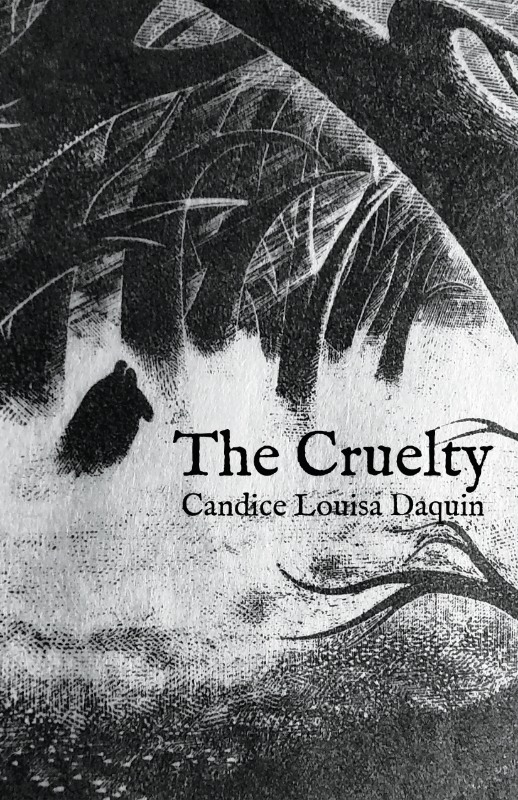
Poetry Editor Candice Louisa Daquin’s novel, The Cruelty, was released by Flowersong Press in November 2025.

Cover The Cruelty

The Cruelty focuses on the legacy of abuse. What learned behaviors from extreme abuse and mental illness can set individuals up to be controlled and manipulated to unimaginable levels. Daquin’s debut novel highlights connections between sexual abuse, sadism, extreme pornography and domestic violence. This fictional story posits the question: What if you lost everything and someone controlled your entire existence, how would you survive?

Available from the publisher, Bookshop.org, your independent bookseller, and the evil one.

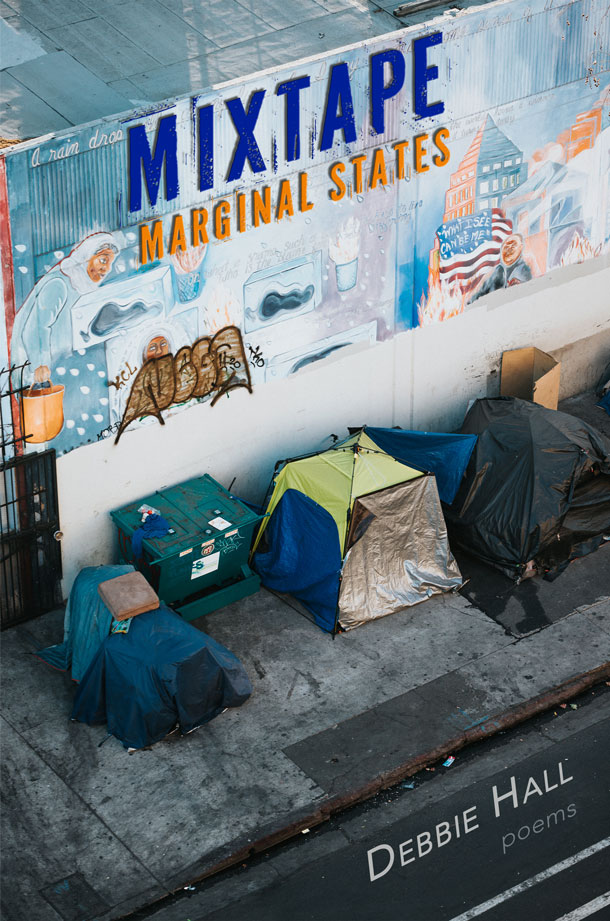
Poetry Editor Debbie Hall’s collection of poems, Mixtape: Marginal State, was released by The Poetry Box in December 2025.

Cover art of Mixtape: Marginal States

The poems in Mixtape: Marginal States bear witness to members of our human family who exist just outside the mainstream of society. In these portrayals, we see individuals struggling with homelessness, those uprooted from their native countries, asylum seekers, and others dealing with altered or challenging psychological states—states that anyone of us might occupy at some time in our lives. The hope of bearing witness is to foster compassion and inclusion, human needs shared by all.

Available from the publisher, Bookshop.org, your independent bookseller, and the evil one.


Now, we are delighted to present the following writers and artists’ representations of resistance—join them for a virtual reading of this issue on Saturday 31 January 2026 at 5:00 pm PACIFIC. Email WritersResist@gmail.com for the link.

Self-Congratulation by M. M. Adjarian

A One-Way Correspondence with Fruit by Christine Strickland

Two Poems by Nnadi Samuel

Anarchists Unite by Kirsty Nottage

Skin by Frances Koziar

Bone China by Robert L. Reece

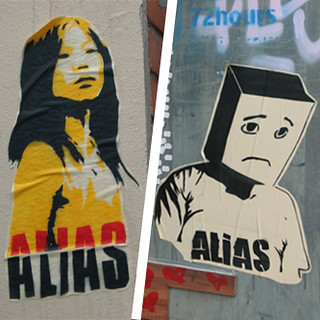
Graffiti Artists by Andrea L. Fry

Photograph and essay by Nina Pak

I visited Gaza in my sleep by Sophia Carroll

What Did You Wish For? by Myna Chang

Secret Light by Marianne Xenos

I’m Not Happy, the Therapy Client Says by Suzanne O’Connell

Don’t Talk About It by J.L. Scott

Incubator by Bethany Bruno

The Price of Standing Still by Melissa Moschitto

Louder then Silence by Rabia Akhtar

Burn This Book by Odette Kelada


Photograph by K-B Gressitt ©2025


A One-Way Correspondence with Fruit

By Christine Strickland

January 15, 2020

Dear Pineapple,

I’m tired of thinking of how to explain this to you. I’ve been trying since you were a blueberry, remember? What to say to you when the day comes when you ask me: Did they really throw kids into cages? Did you all really let them?

I’m tired of learning of new inexplicable realities I know I won’t have an answer for. While you are growing in this warm cocoon and the only bars (I hope) you’ll ever look out from are the ones on the crib your dad put together, kids are in cages. And I know this is happening. We all do. There is no way to explain this.

So I won’t attempt to explain. No clever explanations or lies for you, my sweet budding fruit. I know; we all know.

I don’t think it will make it sound any better to tell you that I’m trying. That I’ve gone to court and jail and legal appointments and stood next to these kids and their parents. That I’ve called these men in power who are doing this bad thing. That I’ve written letters. As though a letter could absolve me of the fact that I know this is happening and I keep on living because I don’t know what else to do.

Like I’ve told you before, I’m sorry. I’m tired of learning new things that I have to apologize to you for, but I’m not tired of apologizing. Because I mean it: I’m sorry.

I’m sorry you have to come out while this is happening. I’m sorry I won’t be able to fix this before you get here, or ever, for that matter.

I’m trying, I’m just one person. I’m your mother.

Pineapple, I hope you never grow tired of doing all you can to set those around you free. I pray there are no kids in cages by the time you’re learning what Freedom is, but I fear there will still be those encaged by this same force at work today. The powerful will keep creating new prisons to fence people in and out.

But before you do that, it’s important that you know you must free yourself. Don’t let them put you in a prison of complacency or apathy, locked up by notions like “that’s just the way things are.” Don’t let them enclose your ideas in a box of what’s possible or what’s right. You must fight to stay free, otherwise you won’t be able to free anyone. Sometimes to free each other, we have to climb inside the cage they’ve put someone else in. It’s complicated, I know: I’m sorry.

Soon, in just six weeks, I’ll have to set you free. I worry about the world I’m letting you out into. But I know that even with all the pain and hate and evil that keeps appearing, you’ll be free to experience the rest: all the wonder, the joy, the beauty this crazy world still has to offer.

Love,
Your Mama

•   •   •

November 30, 2021

Dear Cantaloupe,

Well, I found out today you are measuring on the wee side. So you may not even have reached the size of a cantaloupe quite yet.

Whichever fruit you are at the moment, I can tell already you are a wild one, or at least a fighting one. You punch and kick in a way I don’t remember your brother doing, though maybe he did and I’m just forgetting. There will be plenty to make you want to kick and scream out here, too.

I haven’t marched or cried out like I should, like I used to. Since your brother came, more lies have burned through our country. Fires have seared through parts of it, like ours. Last summer, I cried silent, frustrated tears while I smelled the smoke as our city burned two blocks away from our house. I cried for George Floyd. I cried for Justice, for Peace, for Mercy, for Humanity—big words that you’ll learn someday, that maybe I’ll understand someday—but mostly, I cried because I didn’t know how to protect your brother’s lungs from the fumes of smoke.

And so I’m fighting to keep you safe now. You, my little fighter, who will continue to fight the good fight for and with people like George. You’ll have to fight for all of those big, beautiful words I cried for before. Just be sure not to fight people. Fear is the enemy you’ll have to fight, not other people—or my liver, for that matter, so you can quit kicking it.

The fact that you are a little small means your first days might be harder, just like your brother’s were. But I know you are strong; you’ve proven that! And my Love will surround you, protect you, probably overwhelm you. It is the same Love I’ve been loved with, that we’re all loved with. It is the Love that moves us to fight in the first place. And never has a cantaloupe been loved more than you are. Never forget that.

So, even as you box against my organs, stay inside for as long as you can. I’m sorry in advance if we have to pull you out sooner. We’ll see how my blood pressure cooperates.

I love you. Daddy and I can’t wait to meet you.

Love,
Your Mama

•   •   •

January 26, 2024

Dear Honeydew,

My, I’m writing this letter to you late! Thank God you’re still inside growing, as you should be. Who knows just how much longer you’ll be in here. I do hope to make it another four weeks with you growing inside, but you will come when you are ripe and ready.

Someday, you’ll read in textbooks about the ugly war that broke out a few months ago on the other side of the globe. You’ll read how terrorists took hostages and soldiers blitzed civilians. Maybe you’ll see the photographs of hospitals hollowed out, of families fleeing their homes. I’ve seen them already. So much blood, so much pain, Honeydew. It makes me wince to write about even in vagaries.

But blood has spilled over onto my hands, too. Taxes from my paycheck are buying these bullets and bombs destined for women, children, people in their homes. My work in a clinic on a poor corner in a city far away from this war—where I strive, at least, from nine to five to help the few people I can—is funding genocide. One day, I fear, you might ask: So what did you do about it? And I’ll have to answer you truthfully: Nothing. Or close to it.

Through much of this pregnancy, I’ve kept my eyes down on my belly and not looked up much. I feel too much joy at your coming to want to feel sad. I recognize how horrible this reads. I’m wincing again as I write this, though this time, out of shame. No mother in Gaza could forgive this.

In earlier times of my life, not too long ago, I would have been out there with my friends protesting, persuading, writing letters, whatever it took. Instead, now in the evenings, I come home from work, struggle to get your brothers to eat more of their vegetables from their overflowing bowls, bathe them with water safe enough to drink, clean my house that has not been struck by any bomb, and rub my growing belly—you—with a smile on my face. Most nights, I don’t bother checking the news. I know I will read about more mothers who have lost their children, who don’t have any food to feed them, who don’t have clean water to pour for them, whose houses have been flattened by bombs, who don’t even have a hospital where they can birth their babies. And what can I do about it anyway? I don’t know, so I don’t try. I rub my growing Honeydew instead.

Hopefully you’ll believe me when I tell you I’m a good person, or I want to be one, anyway. I’m still hoping I can believe that, too. Whether we believe me on this point or not, believe me when I say I have realized I cannot go on like this. We must open our eyes and hearts to the pain of others, even when it hurts to look, even when it feels we can do nothing to help. So I will try to look, I will try to do what I can to help. How I will do this with (what are soon to be) three young children, I do not yet know.

But my prayer for you, dear Honeydew, is that you learn from my mistakes and that you learn to be good in ways that I only hope to be. The truth is, you already are. You are Love itself, a Love that must be shared with the world by your very nature. You remind me of something I’ve forgotten in myself. You are already making this place better.

Daddy and I are so excited to meet you. Keep growing. Soon, I’ll be holding you in my arms.

Love,
Your Mama

•   •   •

August 1, 2025

Dear next Blueberry, if you ever come,

I’ll try. I promise.


Christine Strickland is a family nurse practitioner who has worked in a variety of cities, countries, and healthcare settings. She currently serves as medical director at a health center in the Kensington neighborhood of Philadelphia. She lives in West Philadelphia with her husband and three young children. You can find her at christinestricklandwriter.com.

Photo by Pulihora via a Creative Commons license.


A note from Writers Resist
Thank you for reading! If you appreciate creative resistance and would like to support it, you can make a small, medium or large donation to Writers Resist on our Give a Sawbuck page.

The Price of Standing Still

By Melissa Moschitto

Marianne went out for a walk in a smart men’s suit of houndstooth print, so they arrested her. A woman must not look too masculine, too modern, too severe. The arrest was meant to deter us, but it only tantalized. It was 1850 and there were those of us who wanted to wrench ourselves free of the corset and hoop skirt, those of us who were tired of being constrained by clothing and opinion. We had started wearing bloomers under our skirts. We merely wanted to ride bicycles without getting caught in the spokes, we said. Hemlines were raised by an inch or two. Half man, half woman! the men cried out after us in the streets, to those of us who dared to wear pantaloons. With our legs wrapped in voluminous fabric, we were indecent. You belong to neither sex! the men in the streets accused and they invented new names for us: inverts, she-males, hybrid species, public women.

A woman wandering in public without a predetermined path was not permitted. A woman wandering the streets was immoral. We were tired of the crunch of the corset, the sweat under the stays, the breath trapped in the chest, the permanent choke. At covert meetings, some of us used dolls to demonstrate how to wear modern underwear, helping women dress for freedom. “We must own ourselves under the law first,” said Frances Gage, and we believed her. We invented new names for ourselves: suffragists and women’s rights activists. Even if some of us weren’t brave enough to use those names, the fire had been lit.

It was 1872 and a woman had run for president. Ms. Victoria Woodhull’s defeat was bitterly recounted. Although some women insisted on forgetting, her loss followed us like vinegar. Most men laughed it off while dusting their hands on pant knees; they were privately worried, but publicly cavalier. They reminded themselves, relieved, that women could not vote. 

It was 1874 and a woman took off on foot from Kansas City straight through to Sacramento, California, looking for her husband. With no other income but his, she was tracking him down, an act of pure need. Why not take the railroad, it being naturally faster? asked the reporters. I’m not stupid, she replied. Being cornered into the back seat of a car, a mouth smothered with a hand smelling of tobacco—those things happened on a train. We understood. Mrs. Elizabeth Cady Stanton asserted that if women wore trousers, that would surely thwart criminal attacks. Let us walk, we insisted.

We were determined to be freed from the drawing room and the kitchen, the nursery and the wash. If we could not move with leisure, perhaps we could move as sport? A new breed emerged: the pedestrienne! Women started walking competitively around sawdust rings in stadiums. A track was the perfect solution: an endless loop to contain a woman! But we knew better. To walk on a track unencumbered by our daily burdens was not boring nor repetitive; rather, without insistent voices interrupting us with mundane queries, our thoughts belonged to ourselves. When it was suggested that we could not handle the physical toll of such exertion, we politely reminded them that we were well-accustomed to lugging baskets of food and buckets of water, balancing packages and carrying children, all against the constant ricochet of the hoop skirt. In fact, we had already walked the equivalent of Earth to Moon. 

It was 1875 and Mademoiselle Lola arrived in New York City, sleek as a cat. Twisting across the sky, the trapeze artist dropped to the ground to walk in P.T. Barnum’s grand Roman Hippodrome. Under its vast tented ceiling and before rows upon rows of seats, Mademoiselle Lola was to race a man. Stretching by the side of the sawdust ring in blue breeches that cut off at the knee, her calves encased in blue striped stockings, she was quite aware of all the eyes set upon her. She nodded to us in her saucy little cap and flicked a riding whip as she prepared to compete. We smiled back, astonished and enamored. We imagined ourselves to be so confident. Despite starting thirty-one minutes after Mr. William E. Harding, it was Lola who crossed the finish line first. 

It was 1876 and Chicago was the first city brave enough to host a six-day walking competition for women. Bertha Von Hillern and Mary Marshall were going to compete for a prize of five hundred dollars—more than a year’s salary. Now that was something worth walking for. The race was held at the Second Regiment Armory Building around an oval ten laps to the mile. Tickets were set at twenty-five cents. Organizers kept the price low, to ensure that the public would not be twice scandalized—once by the cost and again by the shock of women walking. But everyone from lawyers to mechanics were buying tickets. And everyone was placing bets. On January 31st, the petticoated pedestrians were off, kicking up sawdust as spectators gasped and gagged. By day two, blisters had appeared and the two women were numb from the cold. On Day three, the papers reported their breakfasts to breathless readers: rare steak, raw eggs, freshly squeezed lemon juice. On day four, with only twelve hours to go, the crowds grew to fill all three thousand seats, engulfing the stadium with a deafening roar. Endurance made it exciting and what else do women possess but endurance! Bertha and Mary vaulted ahead of each other, one mile at a time, looping in and out of ties. The crowds elbowed each other for a view, the police struggled to keep spectators off the track. After one hundred and thirty-two hours, Mary Marshall, in her costume of red, white, and blue, had won. 

Several newspapers asserted that as soon as women were permitted to walk, the next thing we’d do was try to vote, a prediction which only made us walk faster. New York City considered an ordinance banning women walkers outright, lest we would have walked from the ring all the way to the ballot box. It failed. Sadie, Theresa, Flora and Ellen signed up straightaway, walking in Toledo, Cincinnati, Detroit, and Milwaukee. Let them watch us, we thought, our feet pounding the dirt track, raising dust and hell. 

It was 1879 and twenty-year old Exilda La Chapelle went to Madison Square Garden determined to win. At thirteen, she had begun her career as nighttime entertainment, sauntering through taverns and theaters. At fifteen, she took the only other choice available to her: marriage. By seventeen she was a mother; a year later was bereft, her son having died in infancy. All this she endured. But at the garden, after two hundred and seven miles, she suddenly stopped. It was not the pain that stilled her, nor the exhaustion, nor even the blisters on her feet which needed to be lanced and drained. What she could not abide was her husband, drunk in the stands and flirting with women spectators. What she could not abide were the insults, slurs, and abuse that he shouted. How much was a woman supposed to endure? 

It was 1895 and we were going to walk right into the next century and get things started. The hard leather of our shoes cut into our feet, but we walked anyway. Anything to feel like we were going forward, progressing instead of retreating. Police commissioner Theodore Roosevelt permitted a woman to ride on horseback in Central Park! This must be proof, we thought, that something more was available to us.

It was 1912 and we left the sawdust circles to march up Fifth Avenue in white dresses, as if going to a picnic. Ten thousand of us had taken to the streets, demanding the vote. At the front was Mabel Lee astride a sinewy white horse. Mabel, who had moved from China to Chinatown at age nine, where she bloomed. Now at sixteen she wore the white stripe of the Suffragist sash, emblazoned with “Votes for Women!” Later that year, in the chill of autumn, we marched at night so that we could walk with the factory girls, maids and messengers, the working girls and tax-paying women. Linking arms, we lifted five thousand paper lanterns to dispel the darkness, fueling our steps with the insults, slurs, and abuse shouted from the sidelines.

It was 1917 and Fifth Avenue was filled only with the sound of feet on pavement, the sound of a slow-moving current of Black men and women walking in silence, bearing banners against brutality. Ten thousand heartbeats pounding against lynching. 

It was 1920 and the newspapers were ablaze: the vote for women had been won! Not for all, but many. Imperfectly, we sought to unbind ourselves.

It was 1956 and in the early September sun, Sallie Edwards and Esther Wise and Lurline White dabbed the sweat from their foreheads with handkerchiefs. In nicely pressed skirts that came to the knee, they held their signs high, urging their brothers and sisters to Please, register to vote! Sallie and Esther and Lurline were well aware of which eyes would be on them. By not moving, by standing still, they spoke volumes.

It was 1972 and a woman had again run for president. Shirley Chisholm fought to unbind herself from womanhood’s expectations, only to be betrayed by those who claimed the same. Her loss hit us, sour and sharp like vinegar. 

It was the end of the 20th century; we were elasticized and allowed to stretch. We held meetings, sitting in secret circles disguised as Tupperware parties and knitting clubs, schemes to set us free. We were thinking of what it would mean to own our own selves. But the old laws still corseted us to the past.

It is the 21st century and women are running their races across the nation, attired in menswear. They have tired of hearing that they should not appear too masculine, too modern, too severe. We join them in the streets, unconstrained and righteous, and when they lose, can you blame us for our fury? And when the century turns one quarter old, it is as if the track underneath us has turned from sawdust to quicksand. We are in a perpetual loop, yet we keep walking, keep enduring—anything to keep moving, forward.


Melissa Moschitto (she/her) is a fiction writer and an investigative theatre maker, lifting up feminist narratives to catalyze conversation and change. Her fiction has appeared in Bright Flash Literary Review, Macrame Literary Journal, and The Avalon Literary Review. She is the author of two published plays: Artemisia’s Intent and Give Us Bread. The mother of two dramatic children, she resides with her family in New York City. Visit her website at www.melissamoschitto.com.

Photograph of Lurline White, Sallie Edwards, Lulu Carter, Illa Buckner, Beulah Staton, Eddye Keaton Williams, Margaret Buford, Cathryn Williams, Esther Wise, Dola Miller II, and Frances M. Albrier of the San Francisco Chapter of the National Council of Negro Women, 1956, courtesy of The Smithsonian.


A note from Writers Resist
Thank you for reading! If you appreciate creative resistance and would like to support it, you can make a small, medium or large donation to Writers Resist on our Give a Sawbuck page.

Burn This Book

By Odette Kelada

When I first saw them outside our little suburban library, I thought it must be a festival or civic event. There was noise, movement, and chanting. It was only when they came closer to the windows, and I saw their faces. A man with a cap too small for his large forehead, eyes cramped under a high furrowed brow. Spittle came out of the stretched mouth of a woman next to him. The morphing of their expressions as they came into focus had the quality of a dream state. Slowly realising something is ugly. Not a festival after all.

A child was standing beneath the woman’s flailing fists, trying to avoid being knocked by the knees of the crowd. Knee height is vulnerable for kids in careless crowds of this kind. Despite all the care for children. This kid wore a navy striped dress and had the most blank expression I had seen on someone so young. She appeared totally detached, even from the woman who was likely her mother if one was to surmise from the shape of their chins and matching blonde razor cut bangs. Then I saw the child gaze through the glass, and I was sure she was looking straight at me. But there were so many books on the shelves that it was unlikely she would single me out. She was likely taking in the reflection of the flags and fury mirrored in the windows. Or perhaps, was watching somewhere else entirely. She looked a little familiar, perhaps one of those romping around the beanbags in the costume of a wood elf? That might be it.

The crowd bloated with more bodies as it travelled the path to our doors.  We were locked today for some reason but that did not appear to stop them. They had almost come to the steps, and it dawned on me that locked doors might not stop them after all.

A short compact woman cut across the lawn and spliced in front of the crowd. She walked up the steps and stood facing out. Blocking the pathway to our library entrance, she adjusted her silver framed glasses and put her faux leather handbag down at her shoes. It appeared she was prepared to stay a while. To be honest, I had not noticed her much before this day. She tended to blend in her shades of grey and olive. A wall flower as they would dismissively describe such a woman. I suspect she usually made an art out of disappearing. An invisibility cloak of a sort, this ability to camouflage, ensuring eyes skim through and over one’s body. A handy trick. I did not expect this part-time librarian to be the one to stand up to much of anything. But here she was. One small boned and cardigan wrapped protector.

The crowd seemed bemused. This singular person was unexpected. To those that had bothered to notice her existence, she was a shy unassuming sort. They waited for her to speak. She said nothing while clearly obstructing their path. The abuse began. It started mildly enough.

“What do you think you’re doing Mzzz Parks?” Long drawn out hissing of MS to make the point she was an unmarried woman. Alone in this world. Unwanted apparently. Undefended.

“How much do we pay you to corrupt our children?”

“Filth and trash, that’s what you teach them now days.”

“No shame, no shame have you?”

“Who gave you the right. I’m their parent. I tell them what to think.”

As she stayed silent, the tone degraded with remarks on her character, to insulting her intelligence and then her figure. Soon she went from librarian to sinful whore. That slippery slope never takes much time to descend when cursing a woman. Highly unoriginal. Her calm was uncanny, no flinching, no wavering of her steady gaze through the thin lens of her spectacles.

It was infuriating to the crowd, the temerity—a taunt, a tease, a traitor.

In truth, they could have pushed past her with ease. She was hardly an obstacle of any significance. It was odd how they didn’t. How something in the way she stood, her complete ease and stillness so concrete and somehow infinite, stopped them.

As I began to fear for her safety, one by one the children came out from the crowd. The first was the navy striped girl. No longer detached but looking up at the librarian.

“Hello, Ms Parks.” As she came forward, her mother gasped and reached to grab her child’s elbow. Navy stripe slipped out of her grasp, elegant as an eel. Practiced in avoiding adults.

Then a boy with flushed cheeks, no older than ten squeezed out from the nest of knees to join them.

“Johnny, you come back here.” A hand grabbed air as Johnny weaved his way through the flanks.

And one by one, more children started to wriggle free. Not all succeeded, some were clamped shut under a sweaty palm on their heads. Others didn’t attempt to move but watched on like miniature mirrors of the righteous bigger version of themselves at their side.

“We’ll get you fired Parks,” Navy’s mother spat out. “Look what you’ve done to our kids.”

 Chants of ‘shame’ began but soon died away. Something had shifted. Legs shuffled and they started to avert their eyes from the steady gaze of Ms Parks. To have their own offspring turn on them. Who predicted it had gone so far? It was a surprise manoeuvre they did not foresee. Now they knew without doubt, she had poisoned their tiny sacred minds.

“We’ll be back tomorrow.” Man with the small cap pointed his finger at Ms Parks. “And we’re bringing the school board.”

He had no child with him but that didn’t appear to dampen his fervour to save the children. “Tomorrow.”

Navy was at last caught by her mother who gave Ms Parks one final spray of invective. Humiliated as she was by her own flesh’n blood.

            •

I had survived today but the future was grim if counting on the School Board. Strategic, hostile takeovers had left them stacked with Mothers for God, National Patriots and Friends of Freedom. Such beautiful names they had, stuffed with warmth and comfort.

As the crowd backed away from the steps and dissolved into the streets and chamomile lawns, the librarian picked up her handbag. She unlocked the library door, adjusted the “Everyone is Welcome Here” sign hanging directly facing the entrance, and walked across to the reading area festooned with rainbow posters. She sat for a long while, letting the colours wash over her.

            •

The next day they returned.  There was a meeting called in the school auditorium. The Board of Mothers, Patriots and Friends were a tight sorority, adept at killing dissent with their newly tweeted policies. The innocence of Johnnys and Navy Stripes gave licence to those searching for their god in an age of godlessness. They stalked one by one in front of the lectern as if their fantasies of life as an apex predator were now realised. Their time to shine.

            •

Who knows who lit the fire? It was not an official book burning as one might imagine. No masses lobbing us into the flames. It was a discreet act of arson, as befitted this nice neighbourhood. But even as fire alarms screamed from the ceilings pockmarked with tape from the torn down rainbows, no one appeared to rush to our rescue. No fast response time. All I saw through the smoke was that small-boned figure. Witness to our banning and burning. A middle-aged part-time librarian. She was by nature a highly organised creature. After the crowd had left the day before, the printer churned out lists of our names and makers. Before her staff card was declined, she had combed our shelves and made sure every one of us was noted. Promising us in that quiet voice of a library, we were not so easy to destroy.

            •

Now the heat simmers around me and the smell of wet smoking wood is getting stronger. Not much time left. Soon it will reach me and given how combustible I am, it will be over very quickly. What does it take to burn a book? What does a book have to do to get burned? How many people have I offended simply by existing?

The times when we books are the culprits are the times to fear the most. That is what books tell you. If you read us to learn something that is. But fear is not much into reading. Though fear does love a good tale to tell. And each time the tale gets taller. Libraries, the refuge for loners and introverts, are now the loci of evil. I had thought if I was innocuous enough, perhaps I might stay out of harm’s way. Eventually though, as the saying goes, they would come for me.

Would you want to hand me to your child? Well, that all depends on what you want your child to know and whose child we are talking about. And as happens in these moments, it becomes all about the children. Even from people who never gave a thought to a child, who can’t stand a child screaming in a café or blocking the isles in an epic tantrum as you reach for your multigrain seven seeds. Nothing fires up a conversation or a war like talking about the babies. If there is doubt or dissent, just repeat again and again the homespun recipe. Nothing so sweet, vulnerable and in need as our children. Not theirs so much. But definitely ours.

It is telling what makes humans scared. Anything that might transform and change. The alchemy of curiosity is the target. Anything that can open the mind into new spaces. This is the first time I personally have faced an angry mob. But as I have full access to the archives (as all books do), I know how many of us have burned before. The scenes cut into our collective memories. We float across language and time. We are far more powerful than even those who might love us realise. That is why even as I linger now on the line between paper and ashes, there is still a little hope. The stories of those that survived and fought, do not die silently. Our pile of burning letters is loud.

Southeast Elementary Inferno. Who would have thought this library would be so interesting? Usually, there are huddles on bean bags for story time. Sometimes with puppets. No cake though. No crumbs in the library. But there are board games, puzzles and crosswords. For those, too young or too tired for anything like literature. The choose your own adventures are having a resurgence. The current batch of kids like options. And having some agency in the stories they are told. Perhaps that is where this library went a little too far. Reading marathons and glittering gatherings to dress up as whatever character you might want to be. Windows of possibility. So much colour. A little too much colour…

This town was a neat town. Wide tree lined streets. Statues to great white men who conquered the place towering over our public spaces. Water fountains at handy distances. Considerate. Even drinking bowls for dogs placed outside wholefood cafes. I had travelled through a few libraries, and this was the most ordered and clipped lawn place I had seen. Maybe that should have been the clue that this was a place with so much to defend and protect. Nice places made for a certain kind of comfort are the ones to watch. The families swinging on the orange plastic recycled swings in the park, the ‘save the greyhounds’ stalls at the local farmers market, the lord’s prayer hung in a banner across the town hall. These are the signs to note when assessing what is real and what is buried in any place. This calm had that oceanic impermanence to it. Carefully curated and resting on so many bones. Polite society at its most fearsome. These are the thoughts that came up in the days before the fires began. Sweet scents of magnolia and star jasmine as the humid spring made everything steam. Floral tones to the smoke and cinder falling through the air.

I did not expect that in this age of internet, we would still be seen as having such importance. For a long time, I heard books are dead. It is the end of our era. Time over. But here we are. As dangerous as ever. Even as the heat starts to creep up my spine, there is a surprising satisfaction that we still apparently matter so much. So much human energy. Attention.


Author’s Note: This short fiction is inspired by the rising numbers of book bannings including a children’s story of Rosa Parks’ life, marginalised voices telling truths on critical facts such as race history, colonisation, and LGBTQI+ voices. A documentary, “The ABC’s of Book Banning,” in which children share their perspectives on these book bannings, and the censure of a teacher who refused to take down an “Everyone is Welcome Here” poster were also sources of inspiration. Emulating the U.S, this is now happening in Australia. We are infected by divisive politics, seeing riots at book shops and protests at schools and libraries, and storytelling events closing down, silencing those that have only recently been able to have a voice.

Dr. Odette Kelada is a Lecturer in Creative Writing and also teaches in Race Studies at the University of Melbourne. She has a PhD in literature on researching the lives of Australian women writers and the politics of nationhood. She facilitates racial literacy workshops for community and government organisations and has hosted numerous panels and presented conference papers on themes of feminism, the racial imaginary and creative activism. Her research and writing focuses on marginalised voices, gender and anti-racism, and has appeared in numerous publications including Overland, The Australian Cultural History Journal, Outskirts feminism journal, Postcolonial Studies, Hecate, Intercultural Studies and the Journal of the Association for the Study of Australian Literature. Her novel, Drawing Sybylla: the real and imagined lives of Australian women writers, won the Dorothy Hewett Award in 2017. It spans a century and imagines women fighting oppressive forces to have their voices heard.

Photo by Phil Venditti, via a Creative Commons license, of a political cartoon by Clay Bennet


A note from Writers Resist
Thank you for reading! If you appreciate creative resistance and would like to support it, you can make a small, medium or large donation to Writers Resist on our Give a Sawbuck page.

Welcome to Writers Resist the 2025 Summer of Resistance Issue

Wouldn’t it be dandy if this season were a 21st century version of the Summer of Love, but more inclined toward the civil rights movement? An uprising of all ages—of every identity!—leading a powerful return to our generations-long quest for liberty and justice for all; for diversity, equity and inclusion; for a moral commitment to our three branches of government, our pursuit of a true democracy, our vision of what we might be?

Yes, that would be dandy.

This issue launches after the 14 June protests, and we saw you all were on streets across the nation, with oh-so-clever signage, lots of peace and love, and being absolutely dandy.

Thank you—don’t stop!

But first, we’ll take a moment to offer our fondest farewell to René Marzuk, editor extraordinaire and exceptional human being. We’ve been grateful for his presence on the Writers Resist team. We will miss him sorely and lovingly.

A note from René—

In August of 2022 (more than two and a half years ago!), the editors of Writers Resist welcomed me as one of their own. Since then, I’ve had the privilege of reading and considering (mostly) poetry submissions from all over the world. Working closely with Debbie, I read pieces carefully and consistently, trying to find expressions of resistance that took full advantage of the resources available to poetry. As I get ready to step down from my role, I look back with joy to all of the instances in which I found not only what I thought I was looking for, but much, much more.

Early on, I learned that Writers Resist offers a platform for resistance and community that is in turn supported by the generosity and love of those who keep it running. Thank you so much for creating and maintaining this space, K-B, and thank you all for allowing me to be one of you during the last couple of years.

Keep writing the resistance, friends!

Saludos,
René

And now, in between protests, please enjoy the rich contents of our Summer 2025 issue—and join us for Writers Resist Reads, a virtual celebration of this issue, on Saturday 16 August, at 5:00 p.m. PACIFIC. Email WritersResist@gmail.com for the Zoom link.

CONTENTS

Work Trip by Alyssa Curcio

Manure by Robert Delilah

The Neighbor’s Goldfish by Ashley Dryden

Freedom Calls (Commemorating Harriett Tubman’s Promotion to Brigadier General in the State of Maryland) by Ellen Girardeau Kempler

s k i n by Rebecca Havens

Awaiting Harris’ Concession Speech November 6, 2024 by Dotty LeMieux

Standard Safety Recommendations: Revised, 2025 by Ryan McCarty

Stars and Stripes: Registering Voters in the Travis County Jail by Lauren Oertel

Inauguration Day by Linda Parsons

The Age of Unreason by Matthew Sam Prendergast

The Bishop by Lao Rubert

Marked by Fendy Satria Tulodo

Saved by Phyllis Wax

you’re all for autism awareness ’til by Lauren Withrow


Photo credit: K-B Gressitt, taken at Greenwood Rising, a Tulsa, Oklahoma, museum that will “educate Oklahomans and Americans about the [1921] Race Massacre and its impact on the state and Nation, remember its victims and survivors, and create an environment conducive to fostering sustainable entrepreneurship and heritage tourism within the Greenwood District specifically, and North Tulsa generally.”

Marked

By Fendy Satria Tulodo

I was twelve when I figured out the world had already decided what to call me. Not the name Ma whispered soft as a prayer when I was born. Not the one my teachers read off the roll sheet. Not even the one my little brother mumbled when he had bad dreams.

It was something else. Heavier. Something that wrapped itself around me like a second skin, tight and unshakable, no matter how carefully I moved, no matter how many times I tried to stand taller.

It started with a look.

Not the kind people give when they’re just curious, when they’re trying to remember if they’ve seen you before. No—this one stuck. Followed me. Slipped into rooms behind me. Hung around in places where I should’ve been invisible.

But I wasn’t.

The Store

The first time I knew I was marked, it was a Wednesday. Just another day. The air smelled like fried food and gasoline, thick and familiar near the station. I had a few bills in my pocket, enough for a drink. Maybe some candy if I picked right.

The shop was the kind with a rattling fan in the corner and shelves full of things that never seemed to sell. Dusty bottles of soy sauce. Batteries in faded packaging.

I walked in, hands in my pockets.

The man behind the counter looked up. His gaze landed on me—and stayed there.

At first, I ignored it. People stared. That was nothing new.

But then I took a step toward the fridge. And he stepped out from behind the counter.

“Need somethin’?” His voice was sharp, cutting the space between us.

I nodded. “Yeah.”

I reached for the door handle.

“Which one?”

I blinked. “What?”

“Which drink you want?”

I frowned. “I dunno yet.”

His jaw tightened. “Then hurry up.”

The way he said it—like I didn’t belong there, like I was some kind of problem just for existing—made my hands tighten at my sides.

I reached for the blue bottle, the same one I always picked. I already knew I was short on change. Didn’t matter.

The second my fingers brushed the glass, he shifted.

Not fast, not loud. But definite.

A shift in his stance. A glance toward the counter. A weight in his right hand.

I dropped the bottle.

Didn’t even hear it hit the tile.

“Out.”

He didn’t have to say it twice.

The Walk Home

The street felt different after that.

It wasn’t the first time I’d been told to leave a place. But it was the first time I felt like I wasn’t just leaving a store. I was leaving something bigger.

I walked fast. Past the laundromat where the old ladies sat with baskets full of stories. Past the barber shop where Mr. Joko always gave me a nod like I was somebody. Past the cracked sidewalk where my little brother liked to draw lopsided stars.

At home, Ma was folding clothes. The air smelled like detergent and warm fabric.

She didn’t look up when I walked in. “You get your drink?”

I shook my head.

“Why not?”

I swallowed. “Didn’t have enough.”

She kept folding. Her hands were steady, smoothing out wrinkles, tucking in sleeves.

She didn’t ask anything else.

But that night, when she thought I was asleep, I heard her on the phone.

Voice low.

Sharp.

Angry.

“How do I tell him this is just the start?”

The Return

The next day, I went back.

Not because I wanted to. Not because I was thirsty.

But because I had to.

I needed to know if it was real. If it was just that day, just that moment. Or if it was something deeper. Something permanent.

I stepped into the store.

The bell jingled.

The fan rattled.

And the man behind the counter looked up.

His eyes landed on me.

And just like that, I knew.

It wasn’t about the drink. It wasn’t about the coins in my pocket.

It was about me.

I walked slow. Let him see.

I stopped in front of the fridge.

Opened it.

Took my time.

The air from the fridge was cold against my face. My fingers curled around the same blue bottle.

I turned.

Met his eyes.

And I dared him to stop me.

The Line You Can’t See

The counter felt . . . off. Like it had backed away just a little. Maybe it was in my head. The bottle was wet, slipping slightly as I held on tighter. A thought whispered—leave it, just go, see if he even reacts. But I wasn’t a thief. I was doing nothing wrong.

I stepped closer.

His stare locked on me. He didn’t budge, but his fingers twitched, just barely. Like he was gearing up for something. Like he saw a line in front of me that I didn’t even know was there.

I set the bottle down. Shoved the money forward.

He didn’t take it.

His eyes flicked to the security cam, then back at me. No words. Didn’t need any. I got the message.

He was measuring me. Deciding.

The air between us was heavy.

Then, slowly, he reached for the money.

The register beeped. A drawer clicked open. A moment passed, then a crumpled note landed on the counter. Change.

I picked up my drink. Turned.

I made it halfway to the door before he spoke.

“Don’t linger.”

The words weren’t loud, but they hit like a slap.

I stepped outside.

The bell jingled behind me, sharp and final.

More Than a Store

I stood on the sidewalk, bottle gripped tight, the pavement burning through my soles. People moved past—some fast, some slow—but none of them noticed.

None of them saw the line I had just stepped over.

The world kept moving like nothing had happened.

Like I hadn’t just been marked.

But I knew.

I turned the bottle in my hands, watching droplets slip down the plastic, vanishing into nothing. Such a small thing. Simple. But the store didn’t feel small anymore.

It wasn’t just a place to buy a drink.

It was a gate.

A test.

A reminder.

You don’t belong here.

You can leave, but you’ll still be carrying this with you.

I opened the bottle, took a long sip, and let the cold settle in my chest.

It didn’t change anything.

But it was mine.

The Lesson Ma Knew

That night, Ma was quiet. Not in the way she usually was, when she was tired after work. This was different.

She was waiting.

She knew I had gone back.

I set the half-drunk bottle down on the kitchen counter.

She looked at it, quiet for a second, like the words were stuck somewhere before they finally came out.

“Did he say anything?”

I hesitated. “Just told me not to linger.”

Her fingers tightened around the dish towel she was holding.

Then she exhaled, slow.

“Good.”

I frowned. “Good?”

She turned to me, eyes steady. “Means you didn’t let him push you out.”

I wanted to tell her it didn’t feel like I’d won anything. That it still felt like I was standing outside that store, even now.

But she already knew that.

She patted my cheek, her fingers rough but warm. “Now you know.”

“Know what?”

Her smile was sad. “That this isn’t about you.”

I didn’t understand what she meant.

Not yet.

But I would.

Marked, But Moving

Days passed. Then weeks.

I walked past that store almost every day. Sometimes I went in. Sometimes I didn’t.

The man never said anything more than what was necessary.

But the look stayed.

That weight. That mark.

It never left.

And yet—

Neither did I.

I stepped into other places, other rooms, other streets where that same look followed me. And every time, I carried that first lesson with me.

This isn’t about you.

But it still touches you.

Still lingers on your skin, in your shadow.

I could let it push me down.

Or I could keep walking.

I knew which one Ma would want.

And so, I walked.

End.


Fendy, a writer, musician, and creative mind from Malang, Indonesia, explores fiction, nonfiction, and business theory. His works have found homes in literary magazines and academic circles, reflecting his diverse storytelling and analytical depth. When he’s not writing, he explores storytelling through music under the name “Nep Kid.”

Photo credit: Photo by Robinson Greig on Unsplash.


A note from Writers Resist
Thank you for reading! If you appreciate creative resistance and would like to
support it, you can make a small, medium or large donation to Writers Resist from our Give a Sawbuck page.

The Age of Unreason

                    “He who destroys a good book kills reason itself.”   – Milton

By Matthew Sam Prendergast

                    Read to a creative writing class on August 29, 2024:

As you all obviously know, I teach creative writing. But I also teach those pesky Gen Ed composition classes you have to take. I have recently been instructed by the legislature of Indiana that if I “subject” you to ideologies outside of the boundaries of my discipline, such behavior can, and probably to their mind should, be grounds to deny me promotion and tenure. The law also encourages you to file a complaint if I trespass on ideologies.

I should note that I am part of the growing army of contingent faculty, a year-to-year contract worker, so I could stop here and say this subject is irrelevant to me. But the situation could be worse. The university could fire me even more easily. In simpler times, like 1973 Chile or 1939 Spain, we would have been spared any of this by just putting me against a barracks wall.

But these types of laws are how it is done today in a supposed democracy with ostensibly free speech. They are deliberately vague so as to chill speech. As a hypothetical high school teacher in Florida, were I to say that “racism is bad and something should be done at the structural level to redress it,” I don’t consider it implausible that a school board could use state legislation to fire me. It wasn’t enough for them to just ban AP African American Studies, citing the fact that it has “no educational value.”

Furthermore, let’s say I was married to a man, rather than just wanting to be. If I had a picture of my husband on my desk in a third-grade classroom and a student asked who he was and my reply was “That’s my husband,” it’s possible that such a reference to gender and sexuality could be used as grounds for dismissal. The law is so vague in referencing age-appropriate discussions of such matters that, if a parent complained that I had this subversive discussion with a high school senior, I could be fired.

Christopher Rufo, the man most responsible for making Critical Race Theory into the ultimate boogey man of the rightwing, claims that my concerns are hysterical and hyperbolic. That I should even have reason to conduct the thought experiment is enough to make me despair for our democracy and its ideals.

Returning to the specifics of my situation, what is within the boundaries of my discipline as a teacher of composition, a teacher who has an undergraduate degree in philosophy, MA in English, and an MFA in writing? I suppose it could plausibly be argued that everything that has ever been composed is within my discipline.

Let’s play this game some more.

Suppose one of you asked if they could use the bathroom. Now suppose I answered “You do not need to ask for my permission. You are an adult and should be able to come and go as you please.” Have I not “subjected” you to an ideological position that’s not within my discipline? And if I try to explain to you why this Indiana law exists, I have again “subjected” you to a discussion of ideology not in my discipline.

If I insert any discussion of some of the interesting subjects in our current “One book, One University” text, as I am strongly encouraged to do, I risk “subjecting” you to ideologies that fall outside the boundaries of my discipline: It’s about AI. What if I ask you what it means to be truly human? What a world without work could or should look like? If AI should be used in war? Have I not trespassed on ideology?

Clearly the folks who wrote Indiana’s law have but the most elementary understanding of what is even meant by ideology. They have “radical woke gender ideology” or “Cultural Marxism” on their fevered brains as they foam at the mouth and decry the virulent spread of the “woke mind virus.” It’s a law to solve no problem, like someone in a statehouse proposing a resolution to ban Sharia law or forbid first graders from using litter boxes.

You may have seen in your history books pictures of Nazi book burnings. Perhaps you were not instructed that one of the more famous pictures is that of the nascent Nazis burning the library of The Institute of Sexology, whose founder consistently argued for gay rights, for instance when he advocated for the repeal of Paragraph 175 of the penal code which criminalized sexual acts between men. The Jewish writer Heinrich Heine said in 1821, “Where they burn books, they will ultimately burn people too.” Certainly, he has been vindicated.

Today, we see viral pictures of library books from Florida’s New College being thrown into a dumpster, many about gender, sexuality, and race. Now I’m not such an alarmist as to think that I will be deposited in the dumpster. Not yet anyway. I think they’ll be content if I lose my job or am denied promotion and tenure. I think they’ll be content if I can’t marry whom I choose. Perhaps they won’t go further than that.

However, I’ve also been ordered by the legislation to include “intellectual diversity” in the classroom, the language more often cited in these discussions. That would credibly mean defending book burning if my intellectual and ideological position is that book burning is wrong. What might I say? It effectively kept them warm? And of New College, what might I say? I might say at least the state and the right-wingers who took over the school are conceivably sincere in their stated aim to protect twenty-year-olds from the woke mob and its authoritarian efforts to control the scope of what we as a culture deem appropriate thought and ideology. Then, I don’t teach psychology, and it may be dangerous for me if I step out of my lane and explain projection to any of my students, even in my efforts to insert “intellectual diversity.”

I don’t think it will ever come to pass that geologists or anthropologists will be forced to explore, let alone defend, the belief that the earth is flat and six thousand years old and thus that humans have been on the planet for that long. That a biologist will have to teach creationism if they teach evolution. I am certain that those who wrote this law never considered the fact that any economics teacher could conceivably be enjoined to insert Marxist political economy into their classes if in that same class they have a discussion of free markets. But I will say it again and continue to say it, the mere fact that I have to consider any of this is frightening enough.

So, let’s play some more in this dystopian playpen masquerading as a developed democracy in the twenty-first century. I could teach the debate over whether it is still necessary to avoid ending a sentence in a preposition perhaps. But then I am not a linguist and could not have a discussion of the divide between descriptive and prescriptive linguistics as an ideological discussion in that discipline. Do I need to teach students the importance of writing poorly for the sake of intellectual diversity? To explore the arguments for why plagiarism is just fine? That we should abandon the project of writing altogether and leave it to AI? Have a lively debate about whether APA or MLA is the superior documentation style? That paragraphs and thesis statements are unnecessary hindrances? That their goal should be obscurity and verbosity rather than clarity and concision? I suppose these are the ideological debates I may “subject” students to if I am to stay within the boundaries of my discipline.

In our creative classroom, perhaps it is not yet too risky to read Brecht’s “The Burning of the Books.”

I woke up at two in the morning to write this. Why? I was nervous for this reason: Given the lack of communication from the university about navigating this law, I wrote to someone active in the university senate about plans to address these ambiguities. He passed my thoughts on to the executive committee of the senate. I don’t know why he thought a friendly email between colleagues warranted such an action. He was probably just trying to be helpful.

I am a coward, really. I would not have been willing to go to Spain and take a bullet through the throat like Orwell or contribute to the resistance like Camus. I can’t confidently claim that I would even have the courage to hide someone in my attic. But the fact that it could be an act of bravery to share this elegy to reason with this class, or potentially dangerous to show it to a colleague, is enough to leave me unable to sleep.


Matthew Sam Prendergast, graduate of Vermont College of Fine Arts, is a Continuing Lecturer of English Composition at an Indiana university where he maintains a steady output of critical thinkers who learn to question the status quo and avoid the “naked this” and other promiscuous pronoun usage. His debut novel, Affinity, is slated for a Fall 2025 release. He lives in Chicago with his dog and his cat.

Photo credit: Darren Smith via a Creative Commons license.


A note from Writers Resist
Thank you for reading! If you appreciate creative resistance and would like to support it, you can make a small, medium or large donation to Writers Resist from our Give a Sawbuck page.
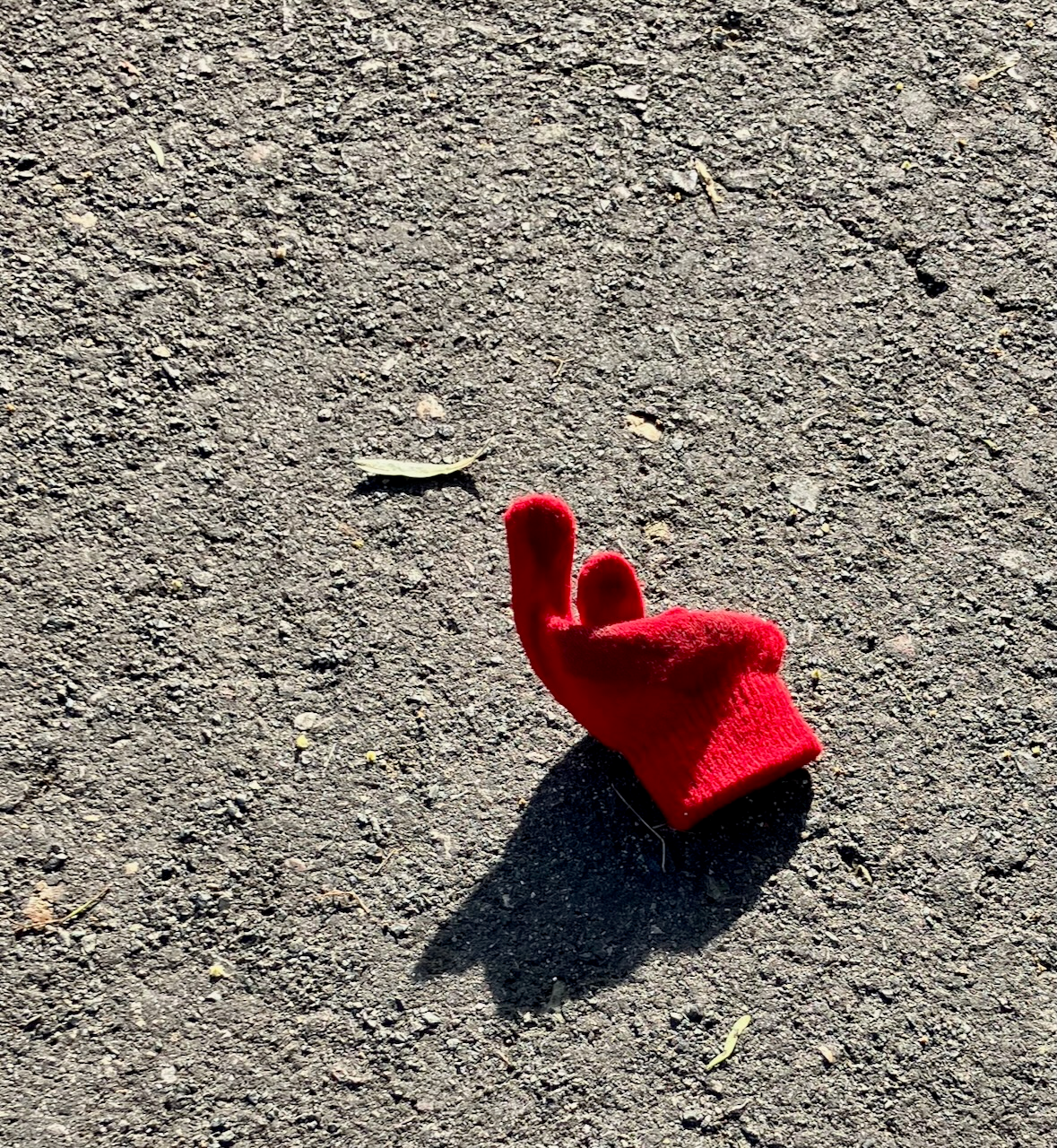
Assigned at Birth

By Ellen D.B. Riggle

I needed only search a few minutes to find the aging heavy cardstock piece of paper labeled in block letters across the top, “BIRTH CERTIFICATE.” I scanned a copy of this original document into a PowerPoint slide for a talk I was scheduled to give on so-called “bathroom laws”—legislation restricting who can use which public restroom. To illustrate how my restroom destiny was determined at birth, I clicked on the virtual highlighter button and looked at the picture on the screen searching for my “sex.” Within the faded decorative border is my name, parents’ names, date, time, and location of my birth, and the signature of the hospital’s “duly authorized officer.” In the lower left corner is my tiny baby footprint. However, nowhere is my “sex”—not a prompt nor a blank line. Nothing to highlight.

I checked the original document, thinking maybe this vital information did not scan properly. No, it simply was not there.

In 2016, North Carolina became the first state to pass a bathroom law, House Bill 2 (HB2), restricting access to public restrooms based on “biological sex,” defined as “the physical condition of being male or female, which is stated on a person’s birth certificate.” Although North Carolina was pressured by a coalition of activists and companies to effectively repeal HB2, by early 2025 fifteen states had legislation restricting restroom use based on sex or gender assigned at birth, including two states that have criminal penalties for anyone who runs afoul of the law. Several other states have legislation pending, and current presidential executive orders attempt to regulate access to sex-specific restrooms.

Confused, given the certainty of the legislators in North Carolina and other states that one only need consult the birth certificate to ascertain their sex, I began searching for more information. First, I checked with my brother, born in the same state as I, but in a different year and hospital. His birth certificate decisively declares “male.” Online, I found various images from my home state and others across time, almost all of which included “sex”—although interestingly, not all did.

The birth certificate is far more complex than most people would suspect. In the United States, birth certificates are issued by a variety of sources. Hospitals give new parents, like mine, a fancy piece of paper, sometimes referred to as “ceremonial” or tritely as a “souvenir.” It is not a government document. However, it is (using legal terms) primary, original, direct evidence of the actual birth. This piece of paper is what most people consider to be their birth certificates—especially when that is the title at the top of the document.

A different form, named something like “Registration of Live Birth,” is how a hospital reports to the appropriate county or state agency that a child was delivered alive, and records the date, time, and location (obviously for later astrological consultations), the baby’s name, parents’ names, and maybe other information such as sex and race. The resulting document is issued with an official embossed seal for proving citizenship. I checked the county’s “birth certificate” that I used to obtain a passport in the early 80s, and again found no report of my sex.

Intrigued, I continued searching for my restroom destiny.

Data about births are collected by states and reported to the federal government annually as mandated by the Vital Statistics Act. The federal government agency questionnaire of over 60 items for each birth is a relatively recent invention, and none of the information is mandatory. With no standard national form for birth certificates or registrations of birth, states and localities include different information in their files and create their own documents. Consequently, the National Center for Health Statistics estimates there are over 14,000 different variations of the birth certificate currently found in the United States.

I began to question the implications of this lack of decree of my sex. For example, what would I do the next time I flew through an airport in a state with a so-called bathroom law? What restroom would I be entitled to use? Would I be entitled to use the restroom at all? Would I use the “family restroom” even though I am not a family? Maybe I’ll fly only through airports located in states without such laws?

The legal sex on my driver’s license is listed as F. Seemingly, the DMV accepted my word for it when I turned 16, and it has been so ever since. X has never been an option where I live. Recently I paid for a new copy of what, in my county of origin, is now called a Certificate of Birth. It’s unclear when the certificate form was updated, but on the current version, my sex is listed as “female,” a designation not on prior documents and with no indication of when or how this was determined. In my mind, this is not my birth certificate; it is, at best, a sketchy administrative document of nebulous origin and uncertain validity.

Some legislators seem to have caught on to the birth certificate sex void, because several recent iterations of bathroom bills do not refer specifically to birth certificates but more generally to “sex assigned at birth.” Most legislatures have gone with that vague wording, but Montana lawmakers are quite graphic in their attempt to define sex. “Female” is a human with XX chromosomes and “produces or would produce relatively large, relatively immobile gametes, or eggs, during her life cycle.” “Male” is a human with XY chromosomes and “produces or would produce small, mobile gametes, or sperm, during his life cycle.” This wording ties sexing a baby to an event more than a decade in the future (puberty). Also, I personally find it disturbingly creepy that legislators are talking about human babies the way they do cattle. Perhaps they have forgotten that in the cattle farm economy, producers of small, mobile gametes have little value beyond ending up as a hamburger on someone’s grill.

Where I come from, long before kindergarten we learned it’s not polite to look up girls’ dresses or down boys’ pants. We simply took people at their word they were a girl, boy, astronaut, cute barking puppy, or a scary monster. And somewhere along the way, we learned that adults can be scary monsters, even if they don’t call themselves that.

I called my mother. She reported that in the delivery room the doctor made the classic announcement, “Congratulations, you have a baby girl!” She had never noticed this declaration was not on my birth certificate and was rather amused. I am certain she will not turn state’s evidence if I am arrested for violating a restroom law. Given there is no record of a gene map, nor hormone and hormone receptor test results, and my primary birth document is silent on the subject, I argue my sex is still a mystery.

Other states avoid “sex” by referencing “gender assigned at birth” in their legislation, ironically writing gender ideology into statutory code.

What gender was I assigned at birth? My mother often refers to me as her “awesome daughter.” But her heart and mind are big enough to know that not all daughters are assigned female at birth.

There is an Olin Mills portrait of my brother and me at ages 4 and 2, respectively, wearing matching blue tartan flannel shirts my mother made. Clearly she was enabling my early embrace of flannel lesbian chic. My gender could easily be called Midwest tomboy.

My father more than once referred to me as “he.” We fixed trucks, shot guns, rode motorcycles, and did all the things he would do with a son. In fact, he does have a son. Maybe sometimes in his mind he has two.

Perhaps my gender assigned at birth was never fully ascertained or reliably implemented.

I find a sense of freedom in my discovery that the document labeled BIRTH CERTIFICATE does not declare my sex. I know sex is not determined by a word on a piece of paper, and the simple sex binary is doomed by nature. Gender, often conflated with sex, seems even more complex. However, if we open our hearts and minds a little wider, it’s not so complicated.

One summer day, while standing in the yard talking to my neighbor, her four-year-old grandson looked at me and asked, “Do you have a penis?”

She and I were both caught off guard and smiled. I asked him, truly curious, “Why does that matter?”

He replied impatiently with another question, “Are you a boy or a girl?”

This is a question I had been asked several times before by children his age, usually to the horror of a nearby parent who was obviously afraid of my answer.

“Why does it matter?” I inquired.

“If you’re a boy we can play together,” he declared, obviously hopeful this was the case.

I left it to his grandmother to figure out the specifics of where he learned this rule and conduct a teachable moment.

“I’m neither. Sometimes both. We can play if you want.”

The answer satisfied him. We engaged in a very competitive imaginary car race around the yard, followed by a game of tag, ending with me on my back, balancing him in the air on my feet so he could spread his arms and make airplane sounds.

After a soft landing, he rolled over and put his feet up in the air, offering to lift me up so I could fly too.


Ellen D.B. Riggle is an award-winning educator and author, currently based in Kentucky. They hold a day job as a professor to support a semi-serious hiking habit. Their poems have been published in Rise Up Review, Pegasus, ADVANCE Journal, and Earth’s Daughters, and they are Executive Producer of “Becoming Myself: Positive Trans & Nonbinary Identities” (available free on YouTube).

Photo credit: Joy Gant via a Creative Commons license.


A note from Writers Resist
Thank you for reading! If you appreciate creative resistance and would like to support it, you can make a small, medium or large donation to Writers Resist from our Give a Sawbuck page.
Second Flags

By Annette L. Brown

I was slicing tomatoes from the garden, their rich juice nearly overwhelming the grooves in the cutting board, when I heard the story of Lauri Ann Carleton’s murder. I stopped to make sure I heard correctly, my knife hovering mid cut. Yes, Lauri Ann Carleton, 66 years old, died August 18, 2023 in Lake Arrowhead, California. Story details could not escape my ears when CNN broke for commercial: The Mag.Pi clothing store . . . a confrontation over a Pride flag . . . a man with a gun.

My husband, my dinner-prep partner, reached for me, rested his warm hand on my lower back as we stared at the TV. I remember wondering, What is happening to us? Sometimes, when I watch the news, I do not recognize my own country—the people I’ve imagined us to be.

Though not a member herself, Lauri Ann Carleton raised a Pride flag in honor of the LGBTQ+ community—a community defined by diversity and acceptance. She had been asked by various townsfolk to remove her flag. She refused. I imagined her pulling her Rainbow from its sleepy quarters each morning, placing it in its storefront holder, watching it catch the breeze. It fluttered there, a symbol of peace, defying those unable or unwilling to recognize its meaning.

                                                                        •

In war, people fight for flags, or at least for what they symbolize. I remember visiting the Marine Corp War Memorial in Washington D.C.—the sculptured image of six men pushing into place the second flag to be raised on Mt. Suribachi during the WWII battle at Iwo Jima. The first was not large enough to be seen across the island, not large enough to render the response to the second—gunshots of celebration and cries of joy from soldiers fighting on land and sailors in ships just offshore.

                                                                        •

The cries over Lauri Ann Carleton’s loss lacked celebration. The gunman killed a wife-mother-friend-community advocate, then fled the scene. Police followed. Now he’s dead. I wonder what fear terrorized the shooter’s heart, what war waged within, so horrific he had to kill over that flag. Community members mourned Lauri Ann Carleton by crowding her storefront with flowers, sidewalk-chalk messages, and Pride flags—the display, a greater rainbow than could ever be contained by a single flag. I studied the image of her shop until the explosion of color, ironically initiated by the gunmen, grew into a vice constricting my breath.

                                                                        •

The day I visited the Marine Corp War Memorial was hot and humid. I remember at one point a gust of wind wrapped loosely around the inside of my collar, lifting the hair from my neck. When I closed my eyes to receive that cooling restorative, I could almost hear the snap of the war memorial’s flag whipping in the chilled February wind of 1945; I could imagine how battling soldiers were lifted by the tendrils of hope streaming from the stars and stripes, though the battle waged on for weeks.

                                                                        •

When her family left Lauri Ann Carleton’s body at the hospital, a new flag, secure in its delivery packaging, awaited them on the porch. She died over a flag she had planned to replace, the colors the gunman despised, too faded for her commitment.

                                                                        •

Sometimes watching the news stings my eyes, hitches my breath. Still, I don’t seem to look away. Scientists who study these things report people respond more intensely to negative stories than to positive as measured by changes in heart rate and the electrical conductivity of skin. But some things have no accurate ruler. They cling to memory in immeasurable ways.

I didn’t go to Lake Arrowhead, didn’t see individuals placing rainbow gifts at the Mag.Pi storefront. I couldn’t tell if there were any gusts of wind. Yet I cannot forget. I wonder if Lauri Ann Carleton’s new flag is still nestled in the dark of its packaging. I suppose it doesn’t matter. That second flag doesn’t need to flutter from a pole for its tendrils to stretch hope toward us.


Annette L. Brown is a personal essayist and creative nonfiction writer who has pieces reflecting her love of nature, family, beauty, and humor in several publications including Flash Fiction Magazine, Every Day Fiction, several volumes of the Personal Story Publishing Project (Randell Jones) and in Bad Day Book, Parenting. Annette is grateful for the support and friendship of her writing group, the Taste Life Twice Writers. 

Photo credits: Pride flag by Cecilie Bomstad on Unsplash.


A note from Writers Resist
Thank you for reading! If you appreciate creative resistance and would like to support it, you can make a small, medium or large donation to Writers Resist from our Give a Sawbuck page.
Ya-Ting (Iris)

By Ya-Ting Yu

“Iris sounds like a grandma name,” Samuel said, frowning. His large rugby hands sank into his sweatpants when he saw my face. “You’re no fun. It’s just a joke. And, I mean, it’s true.” He stuck his tongue out and shrugged, the Fly Emirates logo stretching across his chest.

His nonchalance made it worse, as if it were common sense, and I was too sensitive for the humour.

“I didn’t know,” I mumbled, heading to the kitchen for a glass of water, not thirsty, just wanting to drop the topic. When we met, he’d been eager to share his background, his faith, bridging our religious differences. But language? That never crossed his mind; he’d only known one. Four years as his girlfriend, my hair still bristled like quills at any reminder of my ESL status.

I’d researched “Iris” during undergrad, oblivious to its cultural nuances, proud of my foresight in choosing a name tied to a flower and visual anatomy, perfect for a photography student hoping to break into the industry. My earlier, teenage naivety had surely amused Samuel and Valerie.

“So you named yourself Iris?” Valerie’s sharp voice snapped me back to my studio apartment, where an IKEA bookshelf and a three-seater grey couch framed the room. Lavender Febreze lingered, a poor attempt to mask the bitterness of Chinese herbal tea, an aroma I’d hoped would fade before they arrived.

Valerie stretched her legs under my Hudson’s Bay blanket, pedicured toes peeking out. “That’s pretty cool. I wish I could’ve named myself. Hey—give me a Mandarin name!”

“Y-yeah, definitely. I can look up some names, but, you know, in Taiwan and maybe other countries, we give ourselves English names starting from a young age. My Korean and Chinese friends do too. It’s just something we—”

“Really? Why?” Valerie’s brows pinched into an uneven M, mirroring her brother’s exasperated face.

I opened my mouth, but no words came. Despite a decade in an English-speaking country, I still lacked the vocabulary to explain my urge to assimilate. It wasn’t about Samuel. No, it had begun long before his offhand comment—the summer I registered for a Canadian public school, my first time moving to a foreign country. The summer I turned fifteen.

“Have you picked an English name?” my aunt asked in Mandarin, twisting from the passenger seat. Next to her, my uncle fiddled with the radio dial while my parents turned to me. In the back, my cousin and little sister listened to what I assumed were traffic reports crackling through the speakers.

Through the SUV’s windshield, I watched the horizon split into a cloudless sky and endless highway lanes. The Toronto skyline loomed, intimidating yet wistful, like a crush I’d only dared glimpse from the back of a classroom.

“Iris,” I said, biting my lip, surprised at my daring.

The name had circled in my head like the low hum of an overhead vent since our plane left Taiwan. Fifteen hours offered plenty of time to contemplate a new name between naps and in-flight movies. We arrived in Toronto in mid-summer to settle in and finalize my registration. When September came, my parents and sister would leave me to start my new life on a continent where no one spoke my language.

“Good. Then you’ll introduce yourself as Iris,” my aunt announced with an approving nod. “Remember, prepare a self-introduction. You’re here to improve your English. So don’t go making friends with other Mandarin speakers.”

Hao,” I responded like an obedient student, the word less a reply than a promise. I vowed to learn Canadian ways, speak their slang, and make my international tuition a worthwhile investment. I’d seen enough North American high school series to know how to blend in.

Yet, a new life needed a new name. Iris was a girl I admired at my cram school in Taipei. Although we attended the same English class twice a week all year, we weren’t friends, just classmates. I’d watch her from the corner, envying her dancer’s figure, perfect egg-shaped face, and wavy black hair, sometimes tied in a ponytail, sometimes braids. When she passed by, I’d sniff the air to identify her shampoo brand.

At cram school, I was Jenny, a name given by my elementary school teacher. I hadn’t objected; it felt special to have a foreign name. Only later did I realize how many Taiwanese girls were named Jenny, like guava in the grocery store, too common to catch anyone’s interest. It wouldn’t do. For my new school, I needed a less generic name, one that broke with my thick glasses and pudgy face. Iris was my new skin—a revised version, a 2.0.

Then, on that first day in the Canadian school, I wanted to hide in the washroom. I didn’t understand a word of the group activity. While my rehearsed introduction had gone without my throwing up, I hadn’t anticipated the teachers’ accents, quick pace, or the singing of the national anthem. My eyes darted as I tried to mimic the sounds on their lips. But no amount of High School Musicals and Taiwanese cram schools could’ve prepared me for this.

At least adopting an English name had made me my first friend, a non-Mandarin-speaking Iranian girl, with a tingling laugh and clear speech. She had accepted Iris as my name without question.

Now, Zahra’s hijab-wrapped smile stayed with me as I surveyed my studio. Would she understand? To me, it was as instinctive as picking up food with chopsticks, a survival strategy to take on a name others could read, say, and accept.

Across the floor, Samuel unfolded his legs, stood, and padded to the fourteenth-story balcony. He tsked, squinting at the pouring rain. To me, the rhythmic pusha pusha was oddly soothing. Silhouetted against the eerie brown sky, he turned to me.

“I don’t understand. Ya-Ting is an easy enough name to say.”

I parted my lips but didn’t correct his intonation. Samuel had practiced my Mandarin name when we first started dating, but it never sounded quite right. His initial interest faded into irritation. Over the years, other non-Mandarin-speaking friends had tried, but the tones in Ya and Ting dipped, then rose, unlike the syllabic stress of English. Saying my name meant speaking another language: Forget your norms, flex your tongues, and repeat after me.

“Ya-Ting Yu?”

I’d cringed at the sound of my full name through my Canadian teachers’ lips. Before preferred names became a concept, I’d written Iris in brackets on the attendance sheet, a hint for future references. The teachers seemed to sigh in relief, shoulders sinking imperceptibly, spared the challenge of pronouncing it. A non-English-sounding name felt isolating, like being singled out because your lunch was a pork bun instead of an avocado sandwich. My dark eyes, yellow skin, and fobby clothes brought from home couldn’t be helped, but my name was an identity I could reshape at will.

“Is it Yu or Ya? Which is your last name?”

I didn’t blame the teachers or, later on, the bank tellers and driver’s license officers. In Mandarin, family names come first. My name appeared as Yu Ya-Ting on my passport, spelled out below the Mandarin characters, a reminder of the group-over-individual mindset I grew up with. Serve the family before satisfying personal wishes. We before me. Had it started here, my desperate need to belong to the Canadian community? So ready was I to shed my Taiwanese label that I even considered changing my passport name to Iris. At least then, I wouldn’t have to answer those awkward questions at government offices.

Pusha pusha. The steady sound of water filling the Brita was comforting. In the kitchen, Samuel thudded over and slung an arm around my shoulders. “When we’re married, you’ll have a new last name—my last name.” My face warmed. I snuggled closer to his chest, the Fly from his jersey logo sticking to my cheek.

Though surname adoption in Taiwan was already a thing of the past, I’d always dreamed of taking his name, a way to cement my reinvented identity and secure my place in his white family. They seemed superior in every way, from physical stature to social standing. I never argued when they dismissed my tradition of ancestral worship or questioned their applause when I was baptized as Christian. So why hesitate to take their name?

From the couch, Valerie groaned about excessive PDA. I sprang back, brushing off a lingering unease, the kind you chalked up to overthinking, reminiscent of that first barbecue invitation from his family.

It was the Labour Day weekend after I’d graduated, my introduction to his congregation of relatives. His parents, siblings, aunts, and cousins clustered around in patio chairs, the air thick with laughter, smoke, and the aroma of sizzling chicken. Samuel’s uncles rotated shifts at the barbecue, catching the tail end of grilling season. Behind them, a forest of half-turned maple trees framed Lake Ontario, a time for family gatherings, though mine were an ocean away.

“Iris’s real name is Ya-Ting,” Samuel threw out casually after we’d all said grace, waving a skewer between mouthfuls.

“Don’t tell them,” I whispered, nudging him to stop. The only Asian at the table, I prayed to blend in like weathered patio furniture, not stand out like a neon bottle opener left on the table.

Ya-Ting?” his mom echoed, confusion tightening her gaze as a spoonful of mashed potatoes halted mid-air.

Before other relatives jumped in with more questions, I waved my hand like wafting at an unpleasant odour. “Ignore him. Just Iris. By the way, this mash is so creamy. Did you put milk in it?”

His mom gave me a knowing look and leaned in, grinning while she revealed her sour cream recipe. I feigned interest, nodding and wowing on cue, but the hair on my neck rose, an instinct against his endless, innocent jokes. Perhaps I’d curled up too long, afraid of any prickle. Knocks came, but shame fixed me in place, my sharp spines a safe barrier against any curiosities, genuine or otherwise. No escape. I’d already swallowed the keys to the exit.

The sound of the overflowing Brita jolted me, though my mind felt dazed, still in the shadowy corner of my brain. I rubbed my temple, tuning out Samuel and Valerie in the apartment while I rummaged through the fridge.

A chill spread. My fingers landed on a buried, expired avocado, its scabby skin dark and soft under my thumb. I pulled it out, massaging the peel away. Inside, no part was redeemable.

“What’s that smell?” Samuel and Valerie called.

I bristled, wiggled my nose, and watched my shadow on the tiled wall grow quills. The reeking scent. My mouth. The taste was no different from a fresh avocado, creamy and melted on my tongue. At the back of my throat, their approval and my self-betrayal bubbled. I gulped some water and forced it down, determined to be every bit Iris, rotten or not. Skin to seed, my fantasy had become—I’d become.

Years later, people were too polite to ask, but they whispered behind my back, surprised, even outraged, that I’d ended my eight-year relationship with Samuel. I surprised myself too, at how I’d done it, by cheating. But I’d been living a lie for years: a false name, a misguided belonging. With each laugh alongside his family, the corners of my mouth grew stiff, like a poster girl trained to please. In the end, I forsook Samuel the same way I had myself, not out of malice or disregard, but as a last act to reclaim what I’d lost.

I remember his parting words: “Goodbye, Ya-Ting. That’s your real name. At last, something real about you.”

Those words haunt me, like his familiar hand on my shoulders, heavy, insistent. Shushing me, shoving me back into my self-inflicted prison, “liar, cheater” stamped on the walls. His fingers, once a loving gesture beneath my hair, now dig into my collarbones, an aching reminder of my sins, no matter the aliases I carry.

Today, if you ask, I have a complicated relationship with that hyphen. Sometimes, I write it as Yating and wonder how long I can keep up the pretence. This morning, however, I feel as though I’m uncurling, gently nudged by a friend whose smile recalls Zahra’s from high school, open and steady.

My best friend since moving to Edinburgh, Greta is on a mission to find the best kardemummabullar, a Swedish cardamom bun. We’re seated by the off-white Victorian window frame, watching Bruntsfield’s weekend brunch-goers bask in the start of Scottish warm weather, when she slides her pocket-sized notebook across the cafe table.

“How do you write your Mandarin name?” she asks.

I pick up her pen and ink the two characters, now foreign to my hand. “Ya is written with the tooth character next to this straight spine character. Together, they mean grace or elegance. Ting, here, has a girl and a gazebo. Don’t ask why,” I grimace, and a chuckle escapes. “But together they imply beauty.”

I slide her notebook back, then steal a glance. Greta doesn’t laugh or joke about the implications. She nods, earnest brown eyes glistening, the colour of her half-drunk coffee in the cardamon-scented nook.

“The characters are beautiful. Like paintings, not words,” she murmurs, gliding across them with slender fingers as if feeling the texture, each glossy black stroke etched into the crisp paper. Her touch softens the sharp edges, easing the stiff lines.

I study her and push back my chair, a feeling sticks in my throat. “I’ll . . . just get another bun. You want anything?”

Greta shakes her head, brunette strands falling over her face. I release the breath I’ve been holding and walk to the pastry counter, blinking away the sudden moisture behind my metal frames.

From the queue, her outline swims, bent over the notebook, pen gripped as though tracing my name onto a fresh page. Something mechanical clicks. A lock gives way. The hedgehog unrolls, stretches, and I lift my head to the April sun.


Ya-Ting Yu is a Taiwanese writer based in Taipei with roots in Toronto, Canada, and Edinburgh, Scotland. She recently earned a master’s in counseling from the University of Edinburgh and has since turned her focus to fiction and essays. Her work explores the lives of East Asian expatriates and international students. This is her literary debut.

Photo credit: stilinberlin via a Creative Commons license.


A note from Writers Resist
Thank you for reading! If you appreciate creative resistance and would like to support it, you can make a small, medium or large donation to Writers Resist from our Give a Sawbuck page.
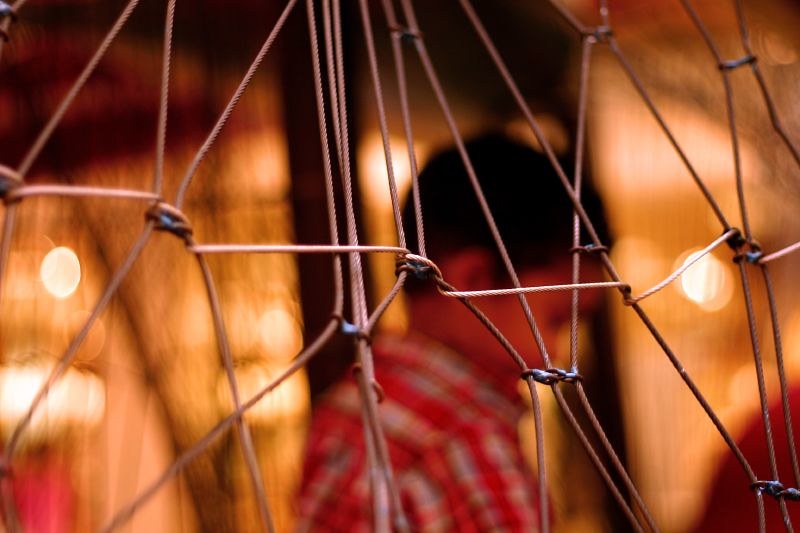
The Sunday After

By DW McKinney

the inauguration of the 47th President of the United States, we gather in the church sanctuary and sing the Black national anthem1. We mourn in unison. A week after the new president resumes his campaign of white (straight, male) supremacy, of “making America great,” of rolling back civil rights and liberties for marginalized people, we step backward in time with him. We borrow the strength of Buffalo Soldiers, Black infantrymen crooning the anthem as they fought on two fronts against fascists and discrimination in World War II. We borrow from our revolutionary leaders who belted the lyrics as they marched through segregated streets. We borrow from our greats and grands who sang for glory as they conducted sit-ins, and integrated schools, and lived and died and endured. Our lungs expel the words in the air around us, but we breathe them back into our souls again and again until our grief becomes a rallying cry.


DW McKinney is an award-winning writer and editor based in Las Vegas, Nevada. A 2024 TORCH Literary Arts Fellow, she is also the recipient of fellowships from PERIPLUS Collective, Writing By Writers, and The Writers’ Colony at Dairy Hollow. Her writing appears in Los Angeles Review of Books, Oxford American, Ecotone, and TriQuarterly. She serves as nonfiction editor at Shenandoah.

Photo credit: Cover of the Hawthorn Books 1970 edition of Lift Every Voice and Sing.


A note from Writers Resist

Thank you for reading! If you appreciate creative resistance and would like to support it, you can make a small, medium or large donation to Writers Resist from our Give a Sawbuck page.
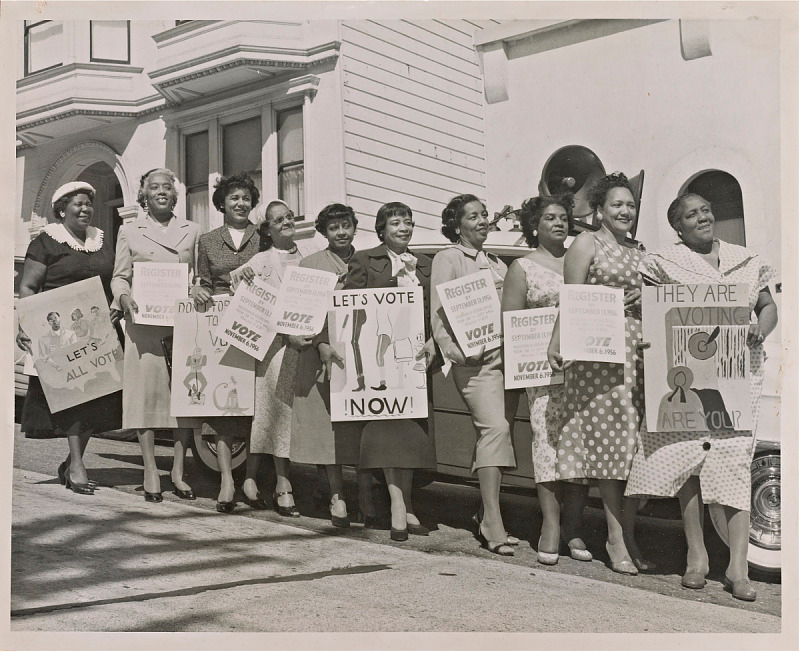

  1. James Weldon Johnson, civil rights activist and a leader of the National Association for the Advancement of Colored People, originally wrote “Lift Every Voice and Sing” as a poem in 1900. It was later composed as a hymn, becoming a powerful refrain throughout the Civil Rights Movement. ↩︎

Welcome to Writers Resist the Winter 2025 Issue

Whether you’re still in recovery or planning your resistance against the incoming regime, there’s plenty of common ground in this the Winter 2025 issue of Writers Resist. Enjoy the art, poetry and prose and then join us for our virtual Writers Resist Reads, Saturday 15 February 2025, at 5:00 p.m. Pacific. Just email for the Zoom link: writersresist@gmail.com.

In this issue:

Mary Brancaccio “This little piece of heaven

Salena Casha “In This Version, Cancer Is a Woman

Karen Crawford “You Don’t Run

Jennifer Freed “Upon Learning, in a Report on the Footage of a Sheriff’s Deputy Shooting Sonya Massey to Death in Her Kitchen, of Massey’s First Words to the Deputy

Jennifer Karp “Postcards from the Valley of the Moon

Flavian Mark Lupinetti “Trigger Warning

M.R. Mandell “Gen X Girls Ghazal

Melissa McEver Huckabay “Why I Fight for Texas Even Though Everyone Says We Should Move

Livia Meneghin “What should be free

Ria Raj “kaala; kala

Ash Reynolds “Uprooted/Planted

Sheree Shatsky “Judged

Beulah Vega “About Those Census Checkboxes

Laura Grace Weldon “Election Day Facebook Exchange

Amritha York “mmiwg


Photo by K-B Gressitt

You Don’t Run

By Karen Crawford

even though you’re late for class, you don’t run because in this neck of the woods running screams fear, so you walk briskly and with purpose, always acting like you know where you’re going even if you don’t and when you get to the subway, you never root around your bag for a token, you always, always have one in your pocket, because in this neck of the woods you keep your bag close, and when the train pulls into the 103rd street station you rush through the doors and grab a pole because the only seats available are next to a junkie nodding off and some homeless dude cursing at no one in particular, and you know to keep your eyes to yourself, because eye contact is a no-no, a WTF are you looking at kind of no-no, and in this neck of the woods someone’s always looking for a confrontation, and at the 86th street station a flurry of people pile in sandwiching you between 9 to 5ers heavy on AquaNet hairspray and Chaps cologne, and now you’re holding your bag, the pole and your breath when at 77th street you think you feel a man bumping behind you, and you think maybe it’s because the train is rattling down the tracks, and you think maybe it’s because he has nothing to hold onto, and you think maybe and maybe and maybe until somewhere past 68th street the train sputters to a stop, and the air conditioning fizzles out and the lights flicker off, and that’s when you feel him, like feel ‘it,’ feel him, and you’re hemmed in, frozen, shame pooling under your armpits even after the air comes back on and the train chugs into the 59th street station, and you inch forward as passengers get off and that’s when his hand cups your cheek and it’s not the one on your face, and it’s not a pinch but a full-on handful kind of GRAB, and you keep moving forward because you want nothing more than to rush off this train, but then your face flames and you think about that time when… and you think about that other time when… and you swing around and see an ivy league looking guy in a tailored blue suit with a gotcha smile and you don’t think—you just SHOVE, and he stumbles backwards with a what did you do that for?, and you scream next time keep your fucking hands to yourself, and in this neck of the woods, you’re glad that everyone is looking.


Karen Crawford is a writer, with Puerto Rican roots, who lives and writes in the City of Angels. Her work has been included in Tiny Sparks Everywhere: National Flash Fiction Day Anthology 2024, 100 Word Story, Okay Donkey, and Five South. You can find her on X @KarenCrawford_ and Bluesky @karenc.bsky.social.

Photograph by Several Seconds via a Creative Commons license.


A note from Writers Resist

Thank you for reading! If you appreciate creative resistance and would like to support it, you can make a small, medium or large donation to Writers Resist from our Give a Sawbuck page.
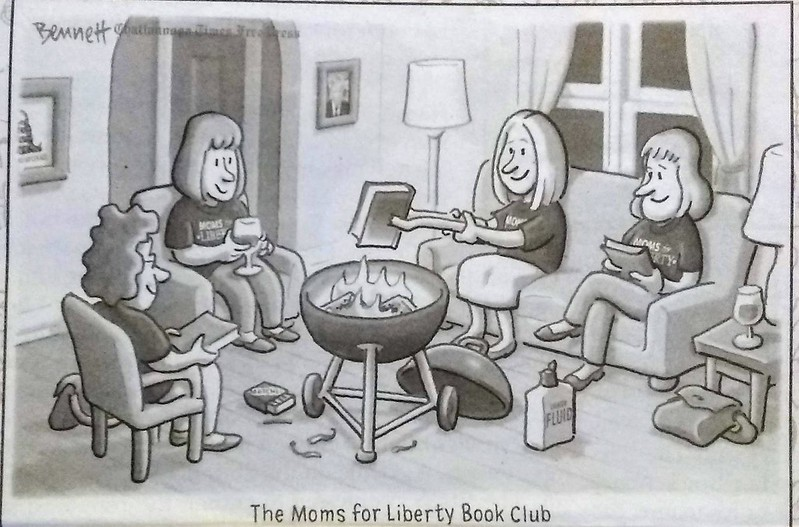
Welcome to Writers Resist the Fall 2024 Issue

The collage by Kristin Fouquet is an apt introduction to this issue, launched in the final throes of the chaotic, often hateful presidential campaigning. How wonderful it would be if the joyful prospect of electing the first woman president of the United States could be just that.

Perhaps we can make it so by encouraging all our sisters and other beloveds to use our hard-won right to vote. As Kristin’s artwork warns us, “Suffrage or Suffer.”

But first, a very fond farewell to one of our founding editors, Sara Marchant, who has a few words to share:

In the last days of the late 1900s, I woke up underneath a beanbag chair on the bamboo floor of a thrashed house not my own, missing a shoe, cake-frosting in my hair, and with full awareness that hijinks had ensued. My first thought was: That was an excellent party.

Today, while reading this issue of Writers Resist, please picture me in my pajamas, bedhead resplendent, toasting you, dear readers, contributors and editors, with my second cup of coffee.

Writers Resist was born from worried dread about our future and righteous anger over our present reality, and there is still much work to be done, but I know I leave her in capable hands . . . and it has been an excellent party.

Now, this issue has a notable dose of dystopias, but—or because of that—you should find some kindred souls in the works of our contributing writers and artists—and if you’d like to join them for our virtual Writers Resist Reads, on Saturday 16 November at 5:00 p.m. PACIFIC, please request the Zoom link via WritersResist@gmail.com.

D. Arifah, “Watching Over the Horizon

Linda Bamber, “Endless War

Robyn Bashaw, “Beware the Homo Sapiens

Cheryl Caesar, “Grass

Chiara Di Lello, “Abecedarian for Billionaires

Matthew Donovan, “I Believe Her

Kristin Fouquet, “Suffrage or Suffer

Ellen Girardeau Kempler, “Poem in Response to Mass Shooting Number 130 in the United States 2023

Michael Henson, “The Dream Children of Addison Mitchell McConnell III

Jacqueline Jules, “How I Feel About the 2024 Election

Craig Kirchner, “The Coming

Christian Hanz Lozada, “When I hear ‘migration,’ I think of ships

Rasmenia Massoud, “Who We Are, More or Less

Ryan Owen, “Breathe

Kate Rogers, “Sisters

Elizabeth Shack, “tree : forest :: ad : internet

Angela Townsend, “French Kissed

Rachel Turney, “Respect

Diane Vogel Ferri, “Election Day

French Kissed

By Angela Townsend

I went back to Frenchtown, but Frenchtown could not come back to me.

Frenchtown is the daintiest of the “river towns,” a flower crown ringing the Delaware. They hold hands across two states. They hold out bread for every stranger. Nothing snide can survive this soil. New Hope remembers its own name whether you are tourist or mayor. Lambertville will sling its arm across your shoulders. Stockton has never met an outsider. Frenchtown is counting the days until you come back.

Quakertown was landlocked, but it was mine. It was a freckle on the county seat, a guaranteed source of squished eyebrows. “Quakertown, Pennsylvania?” “No, Quakertown, New Jersey.” “There is a Quakertown in New Jersey?” “Yes. We can walk there from here.”

As long as we had a post office, we had Quakertown. We did not have much else. My apartment was attached to that post office, in an aging storybook house covered with murals and mistakes. Narrow stairs led to a spackled wall, and an oak trapdoor opened to the sump pump in my kitchen. My landlord, a meek behemoth whose head lifted the ceiling tiles, promised we would be safe. He forgot to pay the heating bill twice a winter, but “if civilization ever goes kablooey, we can hide under the door in the floor.”

I was happy and confused most of the time. I had come to Hunterdon County to practice my preposterous new degree, a Master of Divinity. But the Presbyterians itched with pox when I “talked about the love of God too often” with their youth group. I was likened to both Jezebel and the Sugar Plum Fairy. I was a twenty-five-year-old virgin who thought my job was to make everyone feel incandescent and safe. I took a job writing PR for a cat sanctuary.

I took myself to Frenchtown on Sundays, singing hymns from my childhood and yowling with Bruce Springsteen about God and sex and getting the hell out of New Jersey. I wondered if I might be a Quaker or an anarchist. I promised my mother I would text her when I got home, as she could not unclasp the fear of my death from her wrist.

Frenchtown was ten minutes away, and it took me in. Glamorous, haggard women yarn-bombed the trees all winter, leaving limbs sweatered in magenta. Life-size porcelain horses appeared and vanished in front of the bank and the river, painted with gnomes or narwhals. The man at the book shop hid used arrivals for me, Bonhoeffer and Hauerwas. “You like your God fellas with lots of syllables.” When I stayed late, lights stringed the river like pearls so I could find my way home.

I did not mind being seen in Frenchtown. I wore gingham dresses and Eliza Doolittle hats. A Nikon jangled light around my neck, and I turned myself into a tendril to catch the light on the water and the foreheads. Strangers let me photograph their dachshunds and their plein air in progress. The woman at the Magick Shop called me a “precious little thing” in a way that made me feel larger. I wished her eight more lives. I took generic pictures of the river. I followed an exasperated stray all the way to a widower asleep on a bench. I did not doubt that I was a seer.

On July 14th, Frenchtown set fire to every contract with “cool.” Bastille Day was a chance to be as corny as a child. The town erupted in unauthorized innocence from the river to the lumberyard. Eiffel Towers were $3. Mimes on stilts blew bubbles. I saw a German shepherd dressed as a baguette. I saw God laughing so hard, God cried.

I etched Bastille Day on my calendar, setting annual reminders for the holy day of obligation. I acquired Eiffel Towers in colors not seen since Eden. I blew kisses at children on shoulders and men my grandfather’s age. They were singing hymns in French outside the Methodist Church. “We have been practicing for weeks,” a woman in a name tag whispered when I bought a lemonade. “La Grande Bertha” was wearing a beret so inflated, it resembled the Jiffy Pop popcorn foil. “I’m sure we pronounced everything wrong.”

“I pronounce you the jewel of Bastille Day,” I responded, and blew her a kiss. She kissed me on both cheeks, and we laughed until we nearly fell down.

I wrote a blog post for the cat sanctuary called “Find Your France.” I dressed the cats in stripes to make the point that “Paris” is anywhere you feel safe. I named our next impound “Jean Valjean.” I hid an orange Eiffel Tower in my boss’s lunch box. I was happy and confused.

A man from Philadelphia gave me a box of certainty. We married in two months.

The midpoint between his factory and my cat sanctuary dropped us in Bucks County, too far ashore to touch even New Hope with my fingertips. We found a second-floor condo. I wrote a story to supplement the lack of pictures.

He convinced me I had an excess of Eiffel Towers. If I wore bright garments, everyone would think I wanted them to look at me. I had to be careful with flowery language. He asked when I was going to discontinue my monthly donations to the manatee rescue and the radio station. I had to consider that God did not get involved with cats or weather. I had to stop talking to my mother so much if I wanted to finally grow up. I brought everything pink to work.

I turned forty and greeted him at the door wearing a rose fascinator. He asked if I was finally going to drink some wine. It was getting ridiculous to have never drunk alcohol at this age. I made it five more years.

Bucks County wasn’t Quakertown, but my landlord had died, and my long-haired cats loved the light on the second story. I would stay in Langhorne and send the man on a raft with just enough forgiveness to make it across. My mother arrived with such urgency that syntax collapsed. Her trunk was filled with calico pillows and a rose window sized for Notre Dame. My mother turned Langhorne pink.

I lived happy and confused among the cats in the clean condo. I wrote essays and courted rejection letters. I wore a blinding orange parka with a collar that looked like Elmo’s pelt. My Nikon hibernated as I turned to narrative. My language found homes in journals with names like Mollusk Family and Electric String Cheese. I exposed the image of God in people who send $10 checks to cat sanctuaries. I leaked secrets. A man across the Atlantic published my uncareful praise and asked me to come read aloud.

I told him I wished I could. He told me to picture the Seine giggling with “our community,” sharing “most excellent food and companionship.” I told him I wished I could. He said, “It is a shame, for your presence would illuminate the proceedings.”

I told my mother I was going to get that sentence tattooed on my ankle. She was still recovering from my tattoo of the cats, etched by a man named Big Mike in New Hope. I drove to Frenchtown instead.

I went back to Frenchtown. The teenager in the crystal shop asked if I’d seen the new amethysts. The boy surrounded by Frisbees saw my confusion and soothed, “You’re not crazy. This used to be Ooh La La.”

“What happened to Ooh La La?”

He wasn’t sure. His baseball cap was backwards. “But everyone still asks. It’s been five years.”

I bought a root beer and thanked him. The bookshop was closed, but proud to be “Under New Management!” There was no yarn in the trees. I took a picture of an Australian shepherd with my phone, but he turned his head. The pedestrian lane of the bridge was closed for maintenance.

The Methodist Church marquee said COLLECTING MEN UNDERPANTS FOR HOMELESS THRU 2/15. GOD IS GOOD ALL THE TIME. I drove home and wrote about it. Frenchtown could not come back to me, but we were both safe. I dreamed of lights on rivers and woke laughing aloud.


Angela Townsend (she/her) is the development director at a cat sanctuary. She graduated from Princeton Seminary and Vassar College. Her work appears or is forthcoming in Arts & Letters, Chautauqua, Paris Lit Up, Pleiades, and Terrain, among others. Angie has lived with Type 1 diabetes for 34 years, laughs with her poet mother every morning, and loves life affectionately.

Photo credit: Regan Vercruysse via a Creative Commons license.


A note from Writers Resist
Thank you for reading! If you appreciate creative resistance and would like to support it, you can make a small, medium or large donation to Writers Resist from our Give a Sawbuck page.

From the Editor of Amplified Voices

By DW McKinney


These words—the ones in this note and the ones in this issue—are difficult to write. Do not look away from them. Let them sink into you.

I am writing this editor’s note after I have seen a father carry his son, blown to pieces, in a yellow bag, and I fought (and failed) to keep my obsessive compulsive disorder from replacing the man and his son with me and my daughters in my mind. I am writing this editor’s note after I’ve watched a mother wipe her son’s blood off the tile floor, which I watch again after poet Maira Faisal mentions it in her poem “In Pillars, the Prized City” with a link to the video as reference, as proof, that this atrocity has been done. But Faisal didn’t need to show me proof because she has seen it and I have seen it and we won’t forget the mother’s grief.

I am writing this editor’s note after white phosphorus has clogged Gazan skies. After I have listened to videos of people wailing in panic and fear and anticipation of their own deaths. And when jets from the nearby air force base shook my house while I watched these videos—which ones, I couldn’t tell you, there were so many—I trembled in fear and tried not to be sick. I am writing after I have seen too many murdered babies lying in dust-covered streets, after too many orphans have wandered through obliterated cities in search of murdered family members they will never find, after I have seen a man half-buried in rubble resting his bloodied head against a stack of paper, and I prayed he was alive.

As I watched news reports and recordings from Gaza, one thing that consistently struck me was the way that Israeli soldiers aggressively erased Palestinian history. Bombed libraries, universities, and cemeteries. Erased entire lineages, cultural traditions, and mythologies. The thing is it wasn’t—isn’t—just happening in Gaza. It is (still) happening in Haiti and Sudan and Lebanon and Myanmar and Ukraine and and and. . . . The endlessness of this, its global reach, is why Saheed Sunday laments, “. . . to the heated flame of this hell i call a country” in his poem “In which a country becomes a song that dies on your skin,” and why Lori Yeghiayan Friedman’s mother proclaims that all political leaders are terrorists, in Friedman’s essay “They Are All Terrorists.”

“Amplified Voices,” Writers Resist’s special issue, is an attempt to be an archive for what has been lost and must be remembered. This special issue is an elegy. It is a whispered prayer for those never to be forgotten. It shines a spotlight on horrors occurring in the past, in the present, and likely in the future.

The countries razed and barraged by artillery fire are many. The complicity in terror is grand and far-reaching. Sometimes it seems like we are trying to scoop a flood into a barrel with a spoon.

If you find yourself wondering how to move forward in a world that’s shifting toward silence in the face of ongoing genocide and tragedy, I’d like to share a few recent words from folks on social media that have given me much to consider:

“How must I disrupt my own life to counter the disruptive violence of the world?” – Black American poet Danez Smith (@Danez_Smif) on X/Twitter

“its not as easy as simply believing in decolonization or in a free Palestine. if you live in the west you have to kill the part of you that is western in reflexes, that believes your joy and comfort come before that of those in the global south” – @cutemuslimgrl13 on X/Twitter

“The arts are supposed to lay bare the atrocities of the world, not distract from it.” – South African author Terry-Ann Adams (@TA_4Short) on X/Twitter

I am writing this editor’s note with a lot of grief in my heart, but also a lot of gratitude for those who thought us fit to amplify their voices in the midst of chaos.

Wishing you all peace,
DWM
Guest Editor, Amplifying Voices


DW McKinney is a writer and interviewer who resides in Las Vegas, Nevada. She is a 2024 Virginia Center for the Creative Arts Fellow and has received fellowships from PERIPLUS Collective, Shenandoah, The Writers’ Colony at Dairy Hollow, and Voodoonauts. Her work appears or is forthcoming in Oxford AmericanLos Angeles Review of BooksEcotone, TriQuarterly, and Narratively, among others.

Photo credit: Zaur Ibrahimov on Unsplash.


A note from Writers Resist

Thank you for reading! If you appreciate creative resistance and would like to support it, you can make a small, medium or large donation to Writers Resist from our Give a Sawbuck page.
 

They Are All Terrorists

By Lori Yeghiayan Friedman


is what my (now long-dead) mother used to say to the TV news reports of the bombings, beheadings, settlements, kidnappings, hijackings, imprisonments, killings―the latest eruptions of violence in a region far away, part of a war my mother fled with her family decades earlier.

She said it while sitting in the Barcalounger, relieved to be off her feet (finally!) after a Sunday dinner at my medzmama’s house in East Hollywood, vaguely gazing at the glowing screen of the massive Magnavox wedged into a corner between the behemoth built-in china cabinet and the sizable stone fireplace—that monstrous TV, an immovable object that had no chance of being carried away if, say, the family had to leave in a hurry. It said: Whatever wars, genocides, upheavals or forced evacuations may come, I’m not going anywhere and neither are you.

On screen, the war raged on like a TV show that could never be canceled.

She said it quietly to herself about the leaders on screen while we waited to pick up our party pack of kebab at a restaurant in my medzmama’s neighborhood, in a sad, L-shaped corner mini-mall on Hollywood Blvd., the small TV hanging in an upper corner like in a hospital room. On screen, the powerful nation’s sweet-faced leader (who was a killer) shook hands with the powerless people’s soft-spoken one (a killer), while the rosy-cheeked American president (killer) looked on.

She said it through clenched teeth, face red with effort in the kitchen of our apartment in West Los Angeles, standing on the scuffed linoleum, scrubbing the pans, sticky with burnt bits of roast beef, while the mushrooms sprouting out of the ratty carpet in the dining room silently grew another quarter millimeter. Oof, she added before it, sounding irritated, They are all terrorists, sounding irritated at the terrorists who were responsible for her refugee status, the moldy carpet, the congealed greasy meat clumps that wouldn’t come off no matter how hard she scrubbed with the Brillo.

Whatever, is what I said. Well, I thought it loudly, placing it like a billboard onto my careless face, while I sat somewhere not paying attention to her or the TV, or while I leaned in the kitchen doorway waiting for her to finish so I could ask her for money or the car keys, because I was a young shithead who understood nothing other than what I wanted, which was to go thrifting with my friends to find the most perfectly-ripped-at-the-knees-jeans, about which my mother would later comment, You look like a homeless person.

She said not a word about how it felt to be without a home, or a country, when they packed up for a two-week trip until things cooled down, only to have their land seized, house and business gone; “home” a place she would never know again. She never talked about her parents’ terror at losing everything, the future they’d worked so hard to build, after the same thing had happened to both of their parents in another land decades earlier. She didn’t say a thing about what it was like to move to another country where they were dependent on relatives, a country she hated, where she became sickly, asthmatic, where everything went wrong. She never talked about what it was like to then leave the continent, a refugee tucked into the hold of ship, a charity case allowed in by another country she never wanted to live in, or what it was like to live in a room above a church when she and her family first arrived in Manhattan just as winter set in, and she went to school in the thick of adolescence, crushed by the need to belong, a damn foreigner, when she did belong somewhere, just not here, because the terrorists stole everything and made her this little girl lost, adrift forever on the other side of what might have been.

Maybe those four words were all she had: They are all terrorists,

is what my mother said, but not to me. To me she said, I want you to grow up in one place, have a home and friends you never have to leave. She said, I want you to get an education, have the chance I never had. She wanted me to write.

The war has not changed much and neither has the news. But, I have. I am still that careless shithead, but I know a few things and watch from the safety of my living room in the country where I was born and where I live, the one where we tell ourselves we are free. On my TV, the grim-faced powerful nation’s leader (a killer) looks dead-eyed at the camera with a message for the powerless people’s leaders who are faceless (killers) and live underground, the war newly erupted, renewed for yet another season.

Terror is a tactic used by every leader, from mayors to kings, to attain and maintain power, but the word “terrorist” is reserved for the powerless, the ones who wage war, maim, bomb, steal, blow up, stab, behead, kidnap and imprison in the name of God, of righteousness, of safety, of fairness, of revenge, of greed, but not the powerful who do the same things for the same reasons.

My wise and traumatized mother never got to see what she did right when she made sure I knew all the words. But I want her to know, I want you to know, that when I watch the news I can only think of four of them, set in a neat little row like a passed-down pair of silver candlesticks or an heirloom string of yellowing pearls: They are all terrorists.


Lori Yeghiayan Friedman’s creative nonfiction has twice been nominated for a Pushcart Prize. Her writing has most recently appeared or is forthcoming in Mizna, Stanchion Zine, Pithead Chapel, Hippocampus Magazine, Emerge Literary Journal, Bending Genres, Autofocus Lit, Memoir Land and the Los Angeles Times. Her flash piece, “In the wings, no one can hear you scream,” is included in Already Gone, an anthology edited by Hannah Grieco and published by Alan Squire Publishing. She earned an MFA in Theatre from UC San Diego. Follow her on X and Bluesky: @loriyeg

Photo credit: doodle dubz via a Creative Commons license.


A note from Writers Resist

Thank you for reading! If you appreciate creative resistance and would like to support it, you can make a small, medium or large donation to Writers Resist from our Give a Sawbuck page.
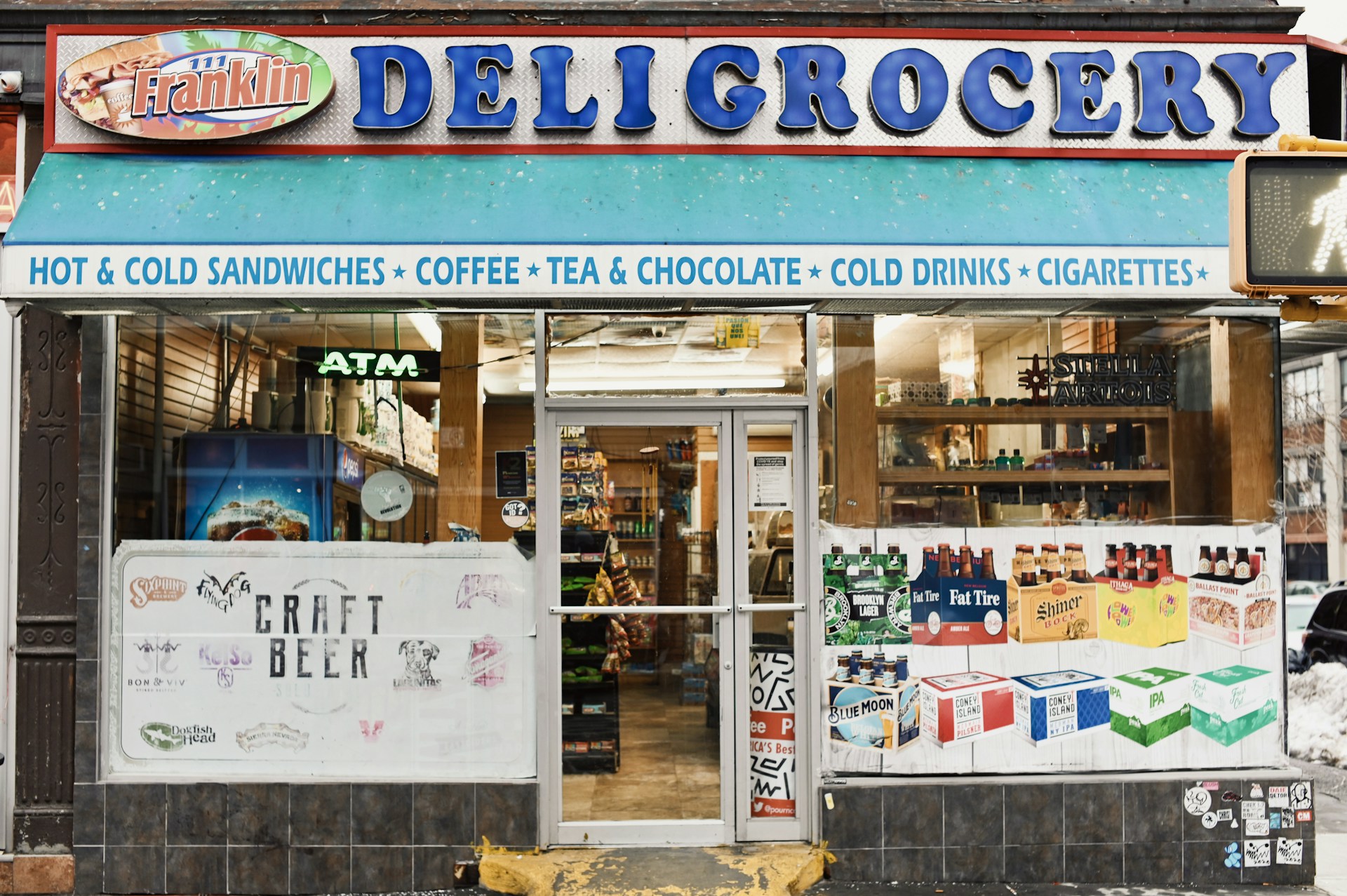
 

Zoo

By N. de Vera


I fidgeted at the line for immigration after arriving at LAX. When it was my turn, I calmly answered the officer’s questions, hoping this was a routine interview that would go smoothly. However, when I saw that look on his face, I knew what I was in for—again.

“Wait here, ma’am,” the officer said. “We need to ask further questions.  Another officer will take you to a private room.”

I shook my head in disbelief. I was aware of the drill by now.

The officer asked me to hand over my passport, but it wouldn’t be long until he confiscated my phone too. I texted one word to my mother, who worried about me every time I flew back to America, and to my partner, who was waiting to pick me up at the airport.

“Zoo,” I sent to both of them.

It was our safe word. It was short enough to type and send within seconds—just enough time to alert them about my whereabouts before I lost access to my phone for hours, or however long it took me to convince the immigration officers that I was a legal resident. When my mother and my partner received my single-word message, they would know I was getting detained once again.

A new officer from Customs and Border Protection signaled me to follow him. So I did. I carried a bulky folio with paperwork that should prove my legal status in the United States of America. This new officer led me to an interrogation room and rushed through a brief list of rules, which  I was already too familiar with.

No talking.
No noise.
No devices.
No food or drinks.
No bathroom breaks, unless permitted.

The officer then left and locked the door. I sat and waited alone.

It was quiet in my room, but I could hear a child crying in the room next to mine. It wasn’t uncommon for mothers with children to get detained too, especially if they were entering America without their husbands. I could hear the faint sounds of an officer’s attempts to get the mother to “shut the baby up,” but to no avail. He yelled louder to “tame it,” as if he were competing with the child’s crying—one noise drowning out the other.

I sat in silence, flipping through my folio. I stretched and stood a couple of times, but I never walked around. I was being watched. A colleague had warned me that pacing might be misconstrued as defensiveness and guilt, so I learned to be careful and limited my movements to prevent further suspicion.

Two full hours went by until the immigration officer finally showed up again at my interrogation room.

“State your full name and date of birth for the record,” he demanded.

“Alexandra Estrella Vazquez. September 28, 1990,” I replied.

“What is your purpose for entering the United States, Ms. Vazquez?”

“I live and work here, sir.”

“Where is ‘here’?”

“Los Angeles, sir.”

“What is your occupation?”

“I’m a data analyst.”

“Pretty girl like you don’t look like a data analyst to me,” the officer said. “Where’s your proof?”

I pulled out my files from my folio. My visa authorization clearly showing my legal status. My signed employment contract. My pay slips from the last three months.

The officer reviewed the documentation, but he wasn’t satisfied.

I showed printouts of sample presentations with analyses that I’ve put together and screenshots of myself conducting data analytics training sessions. These internal company artifacts were confidential, but I needed to have them in case questioning came to this point. It often did.

The officer still was not convinced.

I asked if I could regain access to my phone to show him more evidence accessible online. The officer was silent and looked at me, unblinking. I exhaled when he authorized it.

The officer leaned next to me, too close for comfort, as I trembled holding my phone, showing him my colleague’s recommendations, data analytics certifications, my email exchanges—everything I could possibly think of to convince him that I was who I said I was, no matter how personal or classified.

Finally, he uttered the three words I’d been waiting to hear for hours. “You can leave.”

I hurriedly collected and placed my paperwork back into my folio then thanked the officer. What should I have been thankful for? He had no explanations for what I did wrong. No suggestions for what I could do differently to prevent myself from going through this trauma every time I enter this country. He hadn’t earned my gratitude, but I did it anyway out of obligation.

It was the seventh time I had been detained, but I knew that I ought to feel blessed because others had it worse than I did. Some didn’t even make it past that room and were sent back home.

I stepped out of the interrogation room and rushed to find my way to the baggage claim area, hoping my luggage was still there before it’s taken off the carousel as unclaimed baggage by airport personnel.

As I took the escalator down, I was met by a large sign that read, “Welcome to the United States of America.”

The irony was not lost on me—to be dehumanized, to be caged until I, a 30-something female Colombian data analyst, was no longer perceived as a threat. Yet here was America again, sweeping this incident under the rug, welcoming me back.

I should be happy, I told myself. I should be grateful that I get to live here.

Ignoring the tears falling down my cheek, I closed my eyes and muttered under my breath, “Land of the free. Home of the brave.”

I repeated the phrase to myself over and over again until I deluded myself into believing it to be true.

Land of the free. Home of the brave.


N. de Vera (she / her) is a queer Asian writer based in Los Angeles. Her short stories have appeared or are forthcoming in over twenty literary magazines and journals.

Photo credit: Molly Haggerty via a Creative Commons License.


A note from Writers Resist

Thank you for reading! If you appreciate creative resistance and would like to support it, you can make a small, medium or large donation to Writers Resist from our Give a Sawbuck page.
 

A Sunday in October

By Ariel M. Goldenthal


The day after the Tree of Life synagogue shooting, I lied to my second-grade students: You are safe at Hebrew school. You will love learning the Aleph-Bet this year. Yes, you can open the windows and feel the early fall air ripple through the gaps between your outstretched fingers. You can have recess outside next week. Your teachers don’t need to be trained to apply a tourniquet. There’s nothing wrong with our classroom’s tall glass windows that look right into the front garden. I’m closing the blinds because it’s so sunny out. Let’s start with our usual morning activity. Today we’re learning about praying to God, which isn’t related at all to the reason your mom’s eyes looked red this morning and your dad whispered, “Maybe he should stay home today.” This happened in a synagogue very far away—not like where we live at all. No, this isn’t something that happens often.

I don’t tell them how the education director called all the teachers on Shabbat, a day when work is forbidden and rest is required, to tell us that despite, or perhaps because of, the horrific loss that day, religious school would still take place the next day; how the doors to synagogue, usually propped open on Sunday mornings to accommodate the flood of parents holding half-eaten bagels and their children’s hands, were locked; how we had to show our photo I.D.s to the officers in the main lobby who told us that we would collect our students and bring them to the classroom—parents wouldn’t be permitted inside; how Rabbis passed around handouts hastily adapted from the ones secular teachers received after the first school shooting this year, but didn’t need because they, like us, are used to the terror by now.


Ariel M. Goldenthal is an associate professor of English at George Mason University. Her work has appeared in The Citron ReviewFlash FrontierMoonPark Review, and others. Read more at www.arielmgoldenthal.com.

Photo credit: Sharon Pazner via a Creative Commons license.


A note from Writers Resist

Thank you for reading! If you appreciate creative resistance and would like to support it, you can make a small, medium or large donation to Writers Resist from our Give a Sawbuck page.
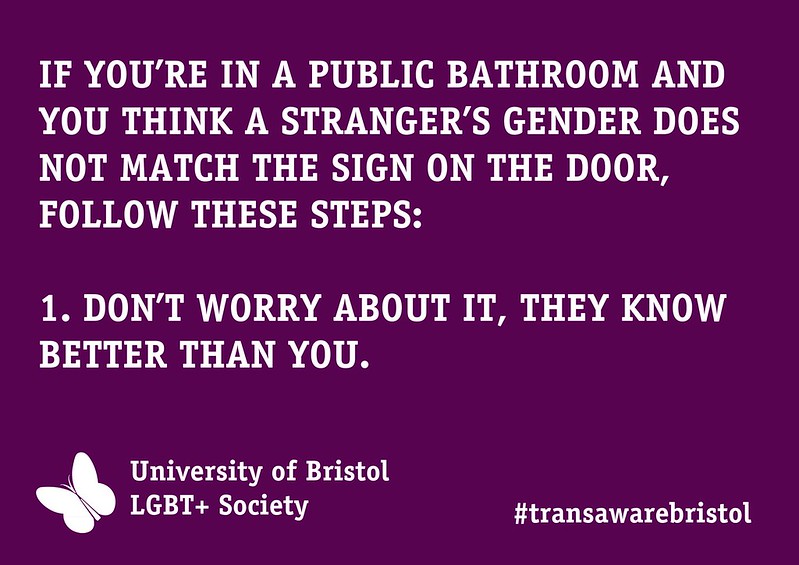
Beowulf

By Irene Cooper


While my glamorous friend Anne underwent her abortion, I sat at a lunch counter and ate a grilled cheese sandwich and a chocolate shake before returning to the abortion clinic in the urban grid of Brooklyn. I sat in the waiting area and read Beowulf, assigned by my high school sophomore English teacher.

It wasn’t hard to imagine eighth-century Northern Europe—in my Irish working-class community there was nothing unfamiliar to me about drinking halls, trash-talking men, and tribal vindication. I took the side of the monsters—swollen outcasts, a vengeful mother and her son, descendent of the fratricidal Cain—although I knew—because I knew—they were doomed, predestined martyrs to the heroic trope. It’s even more difficult, now that I am in late middle age and my children are tender adults, not to wish for a better outcome for Grendel’s mother, incited to violence through her grief over the slaying of her son, but she never had a chance.

Anne, like me, was a little younger than her peers. She was not an outsider, but neither was she popular, per se. In that way, too, we were alike, but that’s where our similarities ended. I was overweight by the standard of the day, and poorly dressed, and therefore did everything I could to deflect attention. Anne’s mother worked in some mysterious capacity for Estee Lauder, and brought home gallon bags of makeup samples, of which Anne made liberal and dramatic use. She was dark and bird-like, an Audrey Hepburn for the 80s. In our freshman year, Anne developed appendicitis and parlayed the event into an entire final quarter off from school, during which she sunbathed in a bikini, studied Glamour and Vogue, and, when I came over, mined Jeremy’s—her mother’s boyfriend’s—secret stash of Penthouse magazines for story ideas I would then type, loudly, on Jeremy’s IBM Selectric.

Because I had no compunction about skipping school to keep Anne company, made no judgments about her hiatus (let alone her clandestine sexual relationship with a peach-faced boy two blocks over and one grade behind us), and was sometimes funny, I was the perfect (and only) candidate to accompany Anne to the clinic. My lack of judgment was not a virtue. It simply didn’t occur to me to have, let alone take, a moral position. I was used to things—bad things—just happening. I was accustomed to trying to make the best of it, afterward.

I finished Beowulf. Anne emerged, visibly relieved and hungry.

We’d stay friends throughout the next year, when she left the peninsula to live in a SoHo loft with her mother and Jeremy. Sometimes when I took the train in, Rachel—Anne never called her mother Mom—would take us to an art show, an occasion that left me bright-eyed, and Anne bored. Mostly, we’d go to Rocky Horror screenings and drink beer, after which I’d lie on the bare loft floor and let my head swim, while Anne vomited our revelries into the toilet. Senior year, I went to Rio de Janeiro as an exchange student. The year after that, she attended a small East Coast college, and I got a retail job in Houston, where my parents had moved in my absence. College was a bore, she said during a visit, but there were some cute guys. We sat in my bedroom smoking Parliaments with a fingernail of cocaine in the hollow tip. We neither of us had any plans. We lived by feel, each wondering if the other didn’t have the better set-up. I felt, at eighteen, that I’d forfeited my chance at college—that I was already too old. Anne enjoyed her visit best, I think, when she was flipping through bridal magazines with my mother at the kitchen table. Switched at birth, we’d joke. We didn’t know it, but everything was still open to us, all our fledgling mistakes and triumphs.

My eldest daughter and her fiancée live in a state where abortion will remain legal, for now, but the unnerving buzz is that this is the first domino—that LGBTQIA+ rights have been set up for a fall all along, as has same-sex marriage and accessible contraception. What will that mean, I worry, for the younger daughter, who’s contraceptive implant will expire in another year?

In the middle of Ron Padgett’s long-ish poem, “How to Be Perfect,” between Cultivate good posture until it becomes natural and Plan your day so you never have to rush is the line, If someone murders your child, get a shotgun and blow his head off. Perhaps Grendel’s mother was perfectly well-behaved, before she wasn’t. I suspect good behavior, or the slavish adherence to it, is another big lie, another promise unfulfilled.

A scene near the end of the 2005 BBC movie, The Girl in the Café, shows Kelly Macdonald’s character in the airport with Bill Nighy’s character, after she’s disgraced him at an international conference by talking about dying children in front of all his colleagues at the banquet table. He’d met her in a café, and in an uncharacteristic moment of spontaneity, asked her to join him for the G8 Summit in Reykjavik. He knows nothing about her (duh) and is surprised and aggrieved to learn she’d been in prison.

“I hurt a man. I hurt a man who hurt a child,” she tells him.

He asks, “Was it your child?”

She answers, “Does it matter?”

In the 2007 movie version of Beowulf, Grendel’s mother takes the form of a beautiful woman to seduce the hero in hopes that he will put a baby in her to replace the slaughtered Grendel. In the eighth-century text, as I remember it, she remains a monster, a hag, unseductive, the corpse of her monster son buried in her hair. In either case, she has only “mother” for a name, not even a kenning such as demon-bearer or seedfurrow or icicle-sheath. No, “mother” is her sole identity and purpose, as far as our heroes are concerned. And then they take that from her, too, and rejoice.

Grrr.

And what of Anne? The deer-path of our friendship forked at the end of adolescence. I cultivated my own glamourous mythologies, and still emerged dripping from the brine of my twenties to shed my scales on the toll-road of mortgage, partner, and 2.5 kids. I never liked weddings—uneasy union of the sentimental and the transactional—but, long after my own, have come to appreciate the precipitous question at the core of the ritual: Will you? It is a moment of consummate agency, bedazzled out of focus by diamonds and pearl-encrusted lace. The whole of the endeavor, however, hangs on the answer, and commitment is a matter of individual will.

Anne, I presumed, would someday say I will to a baby, if she could, after making the choice to say, I won’t.  I don’t presume to know what she’d think of the Supreme Court’s reversal, or how she might remember her own experience. I do know that when we had almost no sense of our own agency, we could take for granted that autonomy which was provided by law. We could—and lawfully—take care of ourselves as if we, and the embattled women we were to become, mattered.


Irene Cooper is the author of Committal, poet-friendly spy-fy about family (V.A. Press) & spare change (FLP), finalist for the Stafford/Hall Award. Writings appear in Denver Quarterly, The Feminist Wire, The Rumpus, streetcake, Witness, Beloit, & elsewhere. Irene supports AIC-directed writing at a regional prison, and lives with her people and Maggie in Oregon.

Photo credit: Phil King via a Creative Commons license


A note from Writers Resist

Thank you for reading! If you appreciate creative resistance and would like to support it, you can make a small, medium or large donation to Writers Resist from our Give a Sawbuck page.