A One-Way Correspondence with Fruit

By Christine Strickland

January 15, 2020

Dear Pineapple,

I’m tired of thinking of how to explain this to you. I’ve been trying since you were a blueberry, remember? What to say to you when the day comes when you ask me: Did they really throw kids into cages? Did you all really let them?

I’m tired of learning of new inexplicable realities I know I won’t have an answer for. While you are growing in this warm cocoon and the only bars (I hope) you’ll ever look out from are the ones on the crib your dad put together, kids are in cages. And I know this is happening. We all do. There is no way to explain this.

So I won’t attempt to explain. No clever explanations or lies for you, my sweet budding fruit. I know; we all know.

I don’t think it will make it sound any better to tell you that I’m trying. That I’ve gone to court and jail and legal appointments and stood next to these kids and their parents. That I’ve called these men in power who are doing this bad thing. That I’ve written letters. As though a letter could absolve me of the fact that I know this is happening and I keep on living because I don’t know what else to do.

Like I’ve told you before, I’m sorry. I’m tired of learning new things that I have to apologize to you for, but I’m not tired of apologizing. Because I mean it: I’m sorry.

I’m sorry you have to come out while this is happening. I’m sorry I won’t be able to fix this before you get here, or ever, for that matter.

I’m trying, I’m just one person. I’m your mother.

Pineapple, I hope you never grow tired of doing all you can to set those around you free. I pray there are no kids in cages by the time you’re learning what Freedom is, but I fear there will still be those encaged by this same force at work today. The powerful will keep creating new prisons to fence people in and out.

But before you do that, it’s important that you know you must free yourself. Don’t let them put you in a prison of complacency or apathy, locked up by notions like “that’s just the way things are.” Don’t let them enclose your ideas in a box of what’s possible or what’s right. You must fight to stay free, otherwise you won’t be able to free anyone. Sometimes to free each other, we have to climb inside the cage they’ve put someone else in. It’s complicated, I know: I’m sorry.

Soon, in just six weeks, I’ll have to set you free. I worry about the world I’m letting you out into. But I know that even with all the pain and hate and evil that keeps appearing, you’ll be free to experience the rest: all the wonder, the joy, the beauty this crazy world still has to offer.

Love,
Your Mama

•   •   •

November 30, 2021

Dear Cantaloupe,

Well, I found out today you are measuring on the wee side. So you may not even have reached the size of a cantaloupe quite yet.

Whichever fruit you are at the moment, I can tell already you are a wild one, or at least a fighting one. You punch and kick in a way I don’t remember your brother doing, though maybe he did and I’m just forgetting. There will be plenty to make you want to kick and scream out here, too.

I haven’t marched or cried out like I should, like I used to. Since your brother came, more lies have burned through our country. Fires have seared through parts of it, like ours. Last summer, I cried silent, frustrated tears while I smelled the smoke as our city burned two blocks away from our house. I cried for George Floyd. I cried for Justice, for Peace, for Mercy, for Humanity—big words that you’ll learn someday, that maybe I’ll understand someday—but mostly, I cried because I didn’t know how to protect your brother’s lungs from the fumes of smoke.

And so I’m fighting to keep you safe now. You, my little fighter, who will continue to fight the good fight for and with people like George. You’ll have to fight for all of those big, beautiful words I cried for before. Just be sure not to fight people. Fear is the enemy you’ll have to fight, not other people—or my liver, for that matter, so you can quit kicking it.

The fact that you are a little small means your first days might be harder, just like your brother’s were. But I know you are strong; you’ve proven that! And my Love will surround you, protect you, probably overwhelm you. It is the same Love I’ve been loved with, that we’re all loved with. It is the Love that moves us to fight in the first place. And never has a cantaloupe been loved more than you are. Never forget that.

So, even as you box against my organs, stay inside for as long as you can. I’m sorry in advance if we have to pull you out sooner. We’ll see how my blood pressure cooperates.

I love you. Daddy and I can’t wait to meet you.

Love,
Your Mama

•   •   •

January 26, 2024

Dear Honeydew,

My, I’m writing this letter to you late! Thank God you’re still inside growing, as you should be. Who knows just how much longer you’ll be in here. I do hope to make it another four weeks with you growing inside, but you will come when you are ripe and ready.

Someday, you’ll read in textbooks about the ugly war that broke out a few months ago on the other side of the globe. You’ll read how terrorists took hostages and soldiers blitzed civilians. Maybe you’ll see the photographs of hospitals hollowed out, of families fleeing their homes. I’ve seen them already. So much blood, so much pain, Honeydew. It makes me wince to write about even in vagaries.

But blood has spilled over onto my hands, too. Taxes from my paycheck are buying these bullets and bombs destined for women, children, people in their homes. My work in a clinic on a poor corner in a city far away from this war—where I strive, at least, from nine to five to help the few people I can—is funding genocide. One day, I fear, you might ask: So what did you do about it? And I’ll have to answer you truthfully: Nothing. Or close to it.

Through much of this pregnancy, I’ve kept my eyes down on my belly and not looked up much. I feel too much joy at your coming to want to feel sad. I recognize how horrible this reads. I’m wincing again as I write this, though this time, out of shame. No mother in Gaza could forgive this.

In earlier times of my life, not too long ago, I would have been out there with my friends protesting, persuading, writing letters, whatever it took. Instead, now in the evenings, I come home from work, struggle to get your brothers to eat more of their vegetables from their overflowing bowls, bathe them with water safe enough to drink, clean my house that has not been struck by any bomb, and rub my growing belly—you—with a smile on my face. Most nights, I don’t bother checking the news. I know I will read about more mothers who have lost their children, who don’t have any food to feed them, who don’t have clean water to pour for them, whose houses have been flattened by bombs, who don’t even have a hospital where they can birth their babies. And what can I do about it anyway? I don’t know, so I don’t try. I rub my growing Honeydew instead.

Hopefully you’ll believe me when I tell you I’m a good person, or I want to be one, anyway. I’m still hoping I can believe that, too. Whether we believe me on this point or not, believe me when I say I have realized I cannot go on like this. We must open our eyes and hearts to the pain of others, even when it hurts to look, even when it feels we can do nothing to help. So I will try to look, I will try to do what I can to help. How I will do this with (what are soon to be) three young children, I do not yet know.

But my prayer for you, dear Honeydew, is that you learn from my mistakes and that you learn to be good in ways that I only hope to be. The truth is, you already are. You are Love itself, a Love that must be shared with the world by your very nature. You remind me of something I’ve forgotten in myself. You are already making this place better.

Daddy and I are so excited to meet you. Keep growing. Soon, I’ll be holding you in my arms.

Love,
Your Mama

•   •   •

August 1, 2025

Dear next Blueberry, if you ever come,

I’ll try. I promise.


Christine Strickland is a family nurse practitioner who has worked in a variety of cities, countries, and healthcare settings. She currently serves as medical director at a health center in the Kensington neighborhood of Philadelphia. She lives in West Philadelphia with her husband and three young children. You can find her at christinestricklandwriter.com.

Photo by Pulihora via a Creative Commons license.


A note from Writers Resist
Thank you for reading! If you appreciate creative resistance and would like to support it, you can make a small, medium or large donation to Writers Resist on our Give a Sawbuck page.

Two Poems by Nnadi Samuel

Hottentot Venus – Sarah Baartman

“Nature is a temple, where the living pillars sometimes
utter indistinguishable words. Man passes through these
forests of symbols which regard him with familiar looks.”
                                           —from Baudelaire’s poem “Correspondence”

There is a leash plagued with fancy, enough to dog a Negro round the continent. this one comes to England of her own naked will—
& did so, bent like a cartwheel, crawling half the journey.

body, wreaked by the weight of steatopygia.
the excess suddenness of fat, collecting on a heap of days that unfolds in gallops.

a trader bargains for custody, dangles a large bag of coins,
& she inks a lifetime signature on his contract: to display the meat of her skin in a stable, like a show-horse in a cage, leaping at the barking orders of her animal trainer.
the caesura of her feet, dragging a line on stage till it breaks, mid-tempo.

she thumps her chest with the rustic blows of a female bushman, enacting the once savage dance of Africa.
the audience is invited to touch the jiggle of her flesh, but from a slight distance. as though, the thin line between reality and performance is consent enough.

there is a state of mind in art that takes pleasure in being moved—
in ways that makes one complicit to humiliation, mistaking a punishment for pleasure.

I, too, am in the theatre of my own objectification, fondled into rage, being touched by the same white hands, tape-measuring my passport in the way they reached for the privacy of Sarah Baartman’s bosom, till she grabbed a Briton by the balls
& stormed out naked on the street that covered her in dark umbra.

the men sneak her body to distant towns, selling out shows & STIs* the 18th century style. once she goes down on all four, the queens take turns in making a caricature of her back. they rode her to death, smoke belting out of her fallen lungs.

in the black quiet of night, she is sold in shrouds to sculptors who limed her in liquid resin, cast her frame in bronze
& placed it in a museum for the highest bidder.

aren’t you in shock like me, dear reader,
that even in death, an image still returns more money than the country’s revenue
& they do it, fatigued & breathless still.

the government sends back her remains to Cape Town, on Mandela’s demand. I am in negotiation for my own body’s return to my homeland.
what is the cost value of an immigrant’s stay here, say, after tax?
what lunatics me, if not this literature that bends my back in reverse sportsmanship.

I refuse on smoke & whiskey to live past this ache.
the incense of my being, spirals on the ground until I’m baked into a swoon.

in a dream, clay pours on the edge of my lying body, dries on the spot & I stood up to use—leaving a monument for the ethereal world.
my presence, hung there on display like an over-worn jacket. sand stacked like cuboid, resting on both of my breasts.

I wonder if I’m inciting yet another metaphor for being trespassed without consent, considering my nakedness here.

I walk the corners of a house wearing a silence stripped of its own silk. the sun rearranging my insteps, to invent a box of light.

a girl passes by and disregards me with unfamiliar hatred:
you/ actor by pretense. you/ animal in a cage, exposing yourself, being touched.

             * STI means sexually transmitted infection

I Write My Rebellion in Disappearing Language

I—snipers away, was once capable of detonation.
now, I’m reduced to this thing, teething brightly on wires & microwave sensor: wailing devices that yee-haws intruder to scampering—
the way sound straightens the tip of my body into alertness.

I awake, full of shouting.
estate walls flattened to a neat collapse.

the mugshot holds a crime that keeps a moustache. its racial stink traced to my lineage.

what if it were a negro is not investigate enough.
my lips, wonder-ridded of names that fits the roll call. our black license placed for the highest bidder:
this country that is all border & nothing else.

I approach a phone booth & rifle light surrounds me. I make for Accident lane.

see what a town is named after: perfect excuse to fill a body with so much accidental discharge—it yawns into tributaries: a motionless debate.
a gang of berets, pistol-loaded, squares up to us.

when a finger snaps, the sergeant attempts asphyxiation on our throats, & we reward him with black temper.
one body eats fire, & the rest flattens to the ground.

     • • •

isn’t it a myth, how I still own a loin to write you this verse?
the constitution probes my effrontery to name a sonnet after its victim. says, harm hasn’t known me yet,
so, the hypocrisy in scripting their agony in first person pronoun.

same me who was chased by a pistol-mouth down Allen Avenue. a thousand evidences brought to my hearing,
while sordid hands ransack my manuscript—
not knowing I write my rebellion in disappearing language.

I lack subtle ways to put this:
living is one delicate chore I could do all month, without returning Ma’s voicemail.
I am in search of newer methods to body her in my thoughts, the way negro speak of bodies.

the way Floyd flagged down a cop for small talk, only to be tucked into his grave.
as we write his demise in disappearing language,
while the cops spiral bind what’s left to have him shipped down home soil.

I reckon, nothing shoulders a body past water, if it’s not family. not the vassal, or the vessel, or the viscous tide.
I desire to happen as a metaphor in one of one of Danez Smith’s sonnets. but I was born defenseless, without wonder.

of what use is a fence anyway, if the body is standing? I wake up to an open field, no

walls guiding our bodies.
whatever terror walks in our direction, would have return home well-fed.
each evening, my loin straightens into alertness.
I fist the rib of my imagination to achieve a black pulse.


Nnadi Samuel (he/him/his)holds a B.A in English and literature from the University of Benin. His works have been published or are forthcoming in Suburban Review, Seventh Wave Magazine, North Dakota Quarterly, Quarterly West, PRISM, Ex-Puritan, PORTER HOUSE Review, Plenitude Magazine, Common Wealth Writers, Jaggery, Foglifter, The Capilano Review, Poetry Ireland and elsewhere. He is a three-time Best of the Net, eight-time Pushcart Nominee, and author of Nature Knows a Little About Slave Trade selected by Tate. N. Oquendo (Sundress Publication, 2023). His third micro-chapbook “Biblical Invasion, BC” was published by Bywords (Ottawa, CA) in 2024.


A note from Writers Resist
Thank you for reading! If you appreciate creative resistance and would like to support it, you can make a small, medium or large donation to Writers Resist on our Give a Sawbuck page.

Anarchists Unite

By Kirsty Nottage

Sandwiched between middle-aged, middle-class people in suits, I feel like a clown. The costume doesn’t help, but it’s more than that.

I know, I know, it’s my own fault. Why would I stand for election as an anarchist? 

“Let’s protest the system,” Matt had suggested. “It’s elitist, corrupt and outdated!”

I’d jumped on the idea. “We can stand for election. Call ourselves Anarchists Unite. Get a bit of publicity. It will be perfect!”

It was supposed to be a stunt. We wanted people to think about what politics stands for—or doesn’t—and to show alternatives. I just didn’t expect it to catch on. 

We started our pre-campaigns in clown costumes. We pied the right-wingers, to make them sweeter. We squirted the lefties with water, to toughen them up. And we tripped up the centrists—to see which side they fell on. 

In a sea of TikTok videos, our antics rode the algorithmic wave. Traffic to our website exploded, and suddenly we were a credible option.The day I set fire to a rose—Labour’s beloved symbol—in front of their leader, cemented us as the alternative vote. Suddenly we had candidates nationwide. So, with no policy except “burn it down and start again,” we began our campaign.

“We need a meeting,” I suggested. “We have to organise, if we’re going to pull this off.”

“Call yourself an anarchist?” Matt laughed. But he came round, organising a non-traditional exchange of ideas, although it was still a meeting to me. 

As the members assembled, I immediately regretted the costumes. The oversized shoes squeaked against the floor, and someone popped a balloon just sitting down. Then came the chair-picking ritual. Trying to avoid hierarchical seats took longer than the meeting itself and only enhanced the feeling we were in a circus. Once we finally got started, things didn’t improve.

“We should turn prisons into escape rooms.” 

I tried not to roll my eyes. “I don’t really think—” 

“Or we can get children to run their own schools.” 

I rubbed my forehead, smudging white makeup over my hands. “That’s not really—”

“Ban all money?” Matt chimed in, unable to hide his grin. He always knew how to wind me up.

“And marriage!” 

“And the police!”

I took a breath, wanting to take control, but without seeming like a bad anarchist—Matt’s previous words still haunted me. “I think we’re proposing too much. If we throw all of this out there, it’ll confuse people. We need to focus on the big picture: our broken political system. Sure, the police need reform, but saying we’ll just get rid of them? That frightens people.”

“People should be frightened,” Matt shouted gleefully.

“But not of us!” 

“That seems unlikely,” he replied, squeezing his nose, making a honking noise. 

Despite our haphazard approach, people loved us. The balloons to demonstrate inflation and whoopee cushions for politicians’ empty promises went viral. Requests for interviews poured in, but I was in over my head. 

When we were invited on breakfast TV, I knew things had gone too far. But I felt powerless to stop the momentum we’d created—and I didn’t want to let Matt down. 

“So, what do you think of the previous government’s approach to immigration?” Leanne Christy asked, her eyebrows furrowed sincerely.

“Well,” Matt said, pulling out his whoopee cushion and sitting on it slowly.

She laughed despite herself before continuing. “But really, how would you do it differently?”

“It shouldn’t be up to us and a handful of MPs to decide.” I pointed at her, “What do you think?”

Leanne blushed, uncharacteristically flustered. 

“See? Everyone has an opinion, even if they think they shouldn’t.”

She gave me a sharp look. “Even if I did, it’s not for me to say.”

“Of course it is,” I said, rolling my eyes. “Our parliamentary system was invented when communities were isolated and needed one person to represent everyone. That’s not the case anymore. We know more about people’s opinions than ever. Why not listen?”

A round of applause rippled through the audience. 

“And why the silly attire,” Leanne asked, gesturing at our costumes.

“In a world where politicians behave like clowns,” Matt said, smiling, “we thought we’d show the truth.”

“A few tweets have come in suggesting you should lead the county!” Leanne said to me with a smile.

I balked. “I don’t want to be in charge—that’s the point. I don’t believe anyone should have that much power.”

The applause got louder.

“That’s exactly why they want you,” Leanne whispered as we went off air. Matt looked thrilled but my stomach sank. I hoped she was wrong. 

Now I’m onstage, sweating under bright lights and layers of face paint. If there’s one lesson to take from this, it’s don’t use elections to make a point. It might not go the way you intended.

“The candidate for Labour received 23,000 votes,” the announcer drones. “The Conservatives received 17,000, Anarchists Unite received 25,000, Liberal Democrats received 10,000…”

I stop listening. I’m not supposed to win. I’m just here to make a statement about politicians—not become one.

As I’m beckoned to the podium, the crowd surges forward, their cheers blending into a cacophony of laughter and chants. Someone tosses confetti while a man in the back blows a kazoo. It’s like I’ve stepped into a surreal nightmare.

I misjudge my steps in the oversized shoes and trip. The crowd roars with laughter, assuming it’s part of the show. I play along, of course. That’s what I’m here for.

I give a quick thank-you speech and tell everybody that this is a huge mandate that we take seriously. Then I burn my notes and laugh.

“What’s next?” a journalist shouts from the sidelines. 

My stomach churns. What is next? The truth is, I have no idea. But admitting that feels worse than this ridiculous costume. 

So instead, I squirt him with water and shout, “Chaos!” As the crowd roars with laughter, I wonder if this joke has really been on me.


Kirsty is a writer passionate about challenging perspectives and reshaping how we perceive the world. With a knack for creating thought-provoking stories, she explores exaggerated versions of reality through satire and dystopian fiction. Her story Reset recently earned her the Elegant Literature award for new writers. When she’s not crafting imaginative worlds, Kirsty enjoys the company of her two literary-inspired dogs, Dickens and Hardy, who are always by her side as she envisions new futures and reimagines the past. Read more about Kirsty at her website, www.kirstynottage.com and on Facebook.

Photo by Peter Riou via a Creative Commons license.


A note from Writers Resist
Thank you for reading! If you appreciate creative resistance and would like to support it, you can make a small, medium or large donation to Writers Resist on our Give a Sawbuck page.

Skin

By Frances Koziar

Skin colour
does not dictate culture—

I could tell you all the ways
that this is true, speak of abandonments
and adoptions that sink deeper
than flesh, of homes and not-homes,
of the erratic mixing
of bloodlines; instead
I want to say that being white
but not White
puts you in a unique
kind of danger.

We are attacked
by our own and our allies, attacked
for expressing what we love
in the name of appropriating our own
cultures, our identities
disbelieved because all they can see
is the spiky shell of the lychee, not
the sweet fruit encased
inside.

I want to tell you that wearing
an amulet of protection draws crosshairs
of attention when all I want is to bare
my identity, to love a homeland
that is as much a part of me as the privilege
of my colour, to reveal some
of the tender sacred parts of myself that I yearn
to share as I reach out to others

But I also
understand—I too
have seen first-hand how some
beliefs are disagreed with, while others
are just laughed at. I

know the pain of mockery
for believing in animism or the magics
found across so many cultures,
have seen the glassy stares and the
this-is-a-joke-right? smiles
when my eyes are filled with feeling,
have felt the twisting in my gut when I
am silenced one way
or the other, watching
other whites wear what they want
without a second thought to having
their people ridiculed by those choices
or their ancestors
silenced.

            They are lions
who’ve never had to shave the precious
gold of their fur
for safety; have never watched
each beautiful strand fall like wishes
that will never come true, never
known how it feels to hide
the gifts of their identities like stolen
property lest they be mis-
understood, until the very ground
beneath them has become soft
with their lies.


FRANCES KOZIAR has published poetry in over 45 different literary magazines, including The New Quarterly, Acta Victoriana, and Vallum. She is a young (disabled) retiree, a painter, a gamer, and a social justice activist living in Kingston, Ontario, Canada. Visit her website.

Photo by Philbo 🇺🇦 on Unsplash.


A note from Writers Resist
Thank you for reading! If you appreciate creative resistance and would like to support it, you can make a small, medium or large donation to Writers Resist on our Give a Sawbuck page.

Bone China

By Robert L. Reece

She saw him coming. She always saw them coming.

As he trudged through the musty swamp to the small shack in the distance, he began to realize why no one had bothered to interview this woman before, and he was beginning to wonder if the meager check was worth the effort. Maybe the stories of these ex-slave Negros were worth collecting, but surely his bosses didn’t expect him to be standing knee deep in alligator piss.

“This better be worth my time,” he whispered to himself as he raised his knapsack above his head to prevent his papers from getting wet. But the air was almost thick as the water.

When he reached the door, he pondered at the dusty white door knocker. He’d never seen anything like it. It was vaguely “s” shaped, not “u” shaped like a typical knocker. He touched it and recoiled at the unfamiliar texture. It felt grainy but smooth. Steeling his nerves with a deep breath, he shuddered as he reached out again and rubbed his fingers along the length of the piece, lost in the unfamiliarity of it.

He didn’t notice the small woman sidle up next to him.

“I made it myself,” she said, in a voice that sounded like course sandpaper, testifying to her many years on this Earth.

He snatched his hand back and his middle finger caught the knocker, pulling it from its perch on the door. It shattered against the wood frame, revealing porous insides.

“Don’t worry,” she said, “I can make more. Come in.”

He followed the woman inside but wondered why she seemed so permissive with a strange white man. Typically, he offered a lengthy explanation of who he was and why he was there. Negros were typically skeptical of white folks showing up at their houses, but this woman skipped the brash “Who are you’s” of braver Negros and the timid “Can I help you’s” of the more fearful.

The inside of the shack was sparsely furnished, sporting only a few rickety chairs. No table.

“Sit, sit.” She pointed him at what seemed to be the sturdiest chair.

He sat down to take in his surroundings as she busied herself preparing him a drink across the room.

This wasn’t his first life history interview, and he’d learned that he could glean important information from looking around. Dusty photographs could lead to questions about family. A worn Bible could prompt questions about literacy. A well-maintained rifle might mean military service. A haphazardly placed child’s toy may speak of children gone too soon.

But here, there was none of that, just these chairs.

At first, he thought they were spruce, maybe withered and weathered but spruce. The wood was light, almost white. Damaged, cracked in spots but smooth in others. Not very straight, a bit curved. And none of the same length; even his own chair wobbled. It wobbled, but it was sturdy; he didn’t fear it would collapse under his weight.

Again lost in the strangeness of this woman, he didn’t notice the old woman cross the room until she was close enough that the steam from hot tea warmed his face. He instinctively took the mug she offered him and took a sip as slight scent of almonds tickled his nose.

“So, you’re here for my stories,” she half-asked, half-confirmed, as she sat across from him.

Silence.

“You’re here for my stories, sir?”

“Oh! Yes!” he blurted. “I am from a government program—”

“You want to hear about the slavery days?”

He nodded.

“Slavery was bad. Real bad. Worse than you can imagine.” She stood. “Them white men. They would beat us until the ground was soaked red with our blood.”

“Then what?” he whispered.

“Then they beat us some more. They beat us until we fell asleep. They beat us until we forgot we were being beat, and we saw the light of God shining on us!”

The mug shattered.

“Their friends gathered ’round. They looked on. They cheered. We begged for help. We begged for mercy, but none would come. No help, no mercy would come from their hands. One man owned us, but we had many masters.”

He collapsed out of his chair. His chest heaved as he clutched at his heart. He looked as if he was trying to gulp the air around him.

She produced a long knife from underneath her apron and wiped the blade on her dress as she kneeled next to his reddening face.

She rolled up her sleeves, revealing strong arms blanketed in scars, and put her face so close to his that she seemed to suck the oxygen directly from his lungs.

“And they say that anything a slave does to her master is self-defense. Sir, I have done a lot of self-defense in my day.”


Robert L. Reece is an associate professor of sociology at The University of Texas at Austin, where his research examines colorism, slavery, race, and body size discrimination. He left his home in Leland, Mississippi to obtain his PhD in sociology from Duke University. His first book, The Shades of Black Folk: Colorism Past, Present, and Future is scheduled for release on February 8, 2026.

Photo by *jarr* via a Creative Commons license.


A note from Writers Resist
Thank you for reading! If you appreciate creative resistance and would like to support it, you can make a small, medium or large donation to Writers Resist on our Give a Sawbuck page.

Graffiti Artists

By Andrea L. Fry

The authorities will start with shame—the lecture on personal property
as if it would reform. But not even close—the claim of ownership is as alien
to ghost writers, as the acceptance of defacement is to those who own.  

But how persistent, how alive the calling card! Yesterday, the overpass
was grey and mournful in the sleet. Today it’s neon orange, bedazzled
in fun fonts, spiky electric blue shapes like speech bubbles in comics.


It’s hard not to smile at exuberance. That treacherous cliff behind
Friendly’s? They washed it in purple, then sent a red zigzag down
the rockface, chubby letters cartwheeling into a vermillion pool of LOVE.

But who are these stealthy anarchists? How do they shimmy up with cans,
spray billows of perfect clouds while dangling like spiders from a thread?
I can only dream of such courage. I’ve spent my life trying to get a mortgage.

If I ever do, I wonder if I’ll join the owners, put up a fence of cypress trees,
install a rumbling garage door capable of decapitating trespassers?
When “Stoney Creek Road” was changed to “Stoned Creek Road,”

my father used it as a teaching moment on vandalism—he must have heard
us chuckling in the back. I can’t help but root for these mischief artists.
And how injurious is their havoc, when governments dispense with lives

as casually as these sprayers paint a rock? They say King Charles III
owns 1/6 the surface area of the planet. Imagine waking up in a London
fog to a golden dispatch stretched across Westminster Bridge: 

Text reading Who sez? Who sez? Who sez?


Andrea Fry has published two collections of poetry, The Bottle Diggers, in 2017 (Turning Point Press) and Poisons & Antidotes (Deerbrook Editions) in 2021. Her poems have appeared or will appear in journals such as Alaska Quarterly ReviewAnnals of Internal Medicine,Barrow StreetCimarron Review, Spoon River Poetry Review, Stanford Literary ReviewThe Sun, and Women’s Review of Books among others. She has been nominated three times for the Pushcart Prize. Andrea is freshly retired from her career as an oncology nurse practitioner and lives in Brookline, MA with her husband and two comical felines. Visit her website at andrealfry.com.

Photo quisnovus via a Creative Commons license.


A note from Writers Resist
Thank you for reading! If you appreciate creative resistance and would like to support it, you can make a small, medium or large donation to Writers Resist on our Give a Sawbuck page.

Photograph and Essay by Nina Pak

Resistance Wears Many Faces

By Nina Pak

Resistance wears many faces. Sometimes it marches in the streets, a cry against injustice that refuses to be ignored. Other times it is quiet, invisible. Nothing more than a refusal to yield, a single word withheld when obedience is demanded. Victory is never guaranteed. You may rise against tyranny and prevail, or fall beneath the weight of an abuser’s power. Yet even in defeat, there is a deeper triumph: the knowledge that you stood for yourself, that you did not abandon your own dignity. Too many women are denied even that. Too many are broken, again and again, until the will to resist is gone.

I know this intimately. Abuse has taken many shapes in my life. From childhood molestation, beatings, rape, and the suffocating grip of sociopathic relationships. I carry those scars as lessons. Resistance, for me, was not about becoming hard or meek. It was a long journey of discovery. I slipped from one cruel hand only to find another waiting; the patterns of harm run deep, and breaking free is not a single act but a process of unraveling.

Through it all, I learned to survive, and chose to serve. I have opened my doors and my heart to women who needed refuge. I have given what was never given to me, shelter, support, belief. I have tried to kindle confidence in those who doubted themselves, to mentor and nurture creativity in the young, and tend to the needs of the elderly. I treasure friendships across generations.

I believe this is our calling as women: to be each other’s salvation. No one else will rewrite the paradigm for us. We must protect one another, raise each other up, sometimes above ourselves. We must learn to step back when it allows another woman to step forward, not with envy, but in solidarity. For centuries, we were trained to support men’s lives, their dreams, their greatness. It is time we give that devotion to one another, without jealousy or regret.

My creative work in photography, art, and writing, have given me confidence and a sense of accomplishment. But my proudest moments are not public and not seen. It’s the way we choose to move through life that matters most. The relationships we build and nurture, the people we give our time and energy to, the small acts of kindness. The willingness to be there when needed.

So, if you ask who I am, who Nina Pak is, I will tell you this: I am the one who will step into crisis at my own risk. The one who will give her time and strength to women I believe in. I am the one who found her voice, was pushed down for it, but never lost the will to speak. Who had fear beaten out of her. Who finally had enough. Who learned against all odds to believe in herself. I am not loud, and I do not threaten. But I will not be silenced, and I will not endure mistreatment to myself or those I care about.

We don’t have to fight to make a difference, but we can’t be silent anymore. 


After studying painting and printmaking at Evergreen State College in Washington State, and then with a master jeweler in Settle, Nina Pak has since shifted through place and time, with creativity and courage, inspiration and service to the communities in which she’s dwelled. Today, she is a digital photographer, wardrobe stylist, set designer, and hair stylist. Her other projects are usually credited under the name Dreamloka. Explore more of her photography at ninapak.com and follow her on Instagram @ninapak.


A note from Writers Resist
Thank you for reading! If you appreciate creative resistance and would like to support it, you can make a small, medium or large donation to Writers Resist on our Give a Sawbuck page.

What Did You Wish For?

By Myna Chang

Maria peered at the items locked inside Trillion Mart’s display case. The packet of birthday candles cost only $25, but the environmental tax was 300 carbits. That would put her way over her monthly carbon footprint allotment.

She sighed and leaned against the cool surface of the display. She’d hoped to give little Gabi a special birthday, like the ones she remembered from her own childhood. Her mom had always made her a pretty cake with fluffy frosting. Friends from school sang the birthday song, then her mom lit the candles, saying “make a wish, sweetheart!”

Maria recalled puffing out her cheeks and blowing as hard as she could, but it often took two tries to extinguish all the candles.

“What did you wish for?” her friends always asked in giggly little-girl voices. Maria knew not to tell, otherwise her wish wouldn’t come true. Sometimes, though, she couldn’t help letting slip her wish for a pink pony or neon markers.

An alarm shrilled, yanking her out of her daydream. The display case launched an anti-theft video—she’d maintained physical contact with it for more than 2.5 seconds without buying anything. She jerked away, but screens flanking the aisle had already erupted with the trillionaire’s face, amplified in all his high-def smarm.

“Now, now,” his recorded message scolded. He wagged a finger. “We wouldn’t take more than our fair share, would we?”

Maria noticed the footprint-shaped logo emblazoned on his crisp white shirt. Her own hand-me-down blouse had been patched and re-patched to avoid the exorbitant carbit tax of new clothing. She smoothed a loose thread as the store attendant approached. He wore the pressed green uniform of all the trillionaire’s minions.

After confirming she hadn’t stolen anything, he pointed at the door. “If you’re not buying, you have to go. Can’t have freeloaders in here, breathing Trillion’s reconditioned air.”

“Sorry,” Maria murmured.

She secured her filtration mask and stepped outside, into the brown haze that had hung in the air ever since the trillionaire took power. Maria secretly thought the pollution had only grown worse with the introduction of his complicated carbon footprint scheme.

His doughy face leered down from electronic billboards lining the street, with his current catch phrase rotating above his head in blocky letters: Engineering A Cleaner Future!

The camera angle zoomed out, showing ten shiny sports cars parked in front of a mansion—all environmentally neutral, as defined by his personalized carbon-offset calculations. The image shifted to a close-up of ten seedling pine trees, and then the camera tilted up to focus on a crystal blue sky.

Maria hadn’t seen a blue sky in ages. The atmosphere had been brown and thick with soot since long before her daughter was born.

The thought of Gabi filled her with warmth. Such a smart little girl. She didn’t ask for silly pink ponies for her birthday. No, Gabi wanted a science kit. She was still innocent enough to think she could save the world when she grew up, that she could be an even better engineer than the rich man in charge.

Maria coughed, particulate matter irritating her throat with each breath. Her Trillion Air Mask was on the fritz again.

She glanced at the time. Gabi’s school didn’t get out for several hours. Maybe Maria couldn’t give her child a perfect blue-sky birthday, but at least she could scrape together the ingredients for a proper cake.

• • •

Maria paused behind a dumpster, trying to calm her nerves. She’d never been to the underground market and was unsure which grimy doorway was the entrance. She scanned the alley ahead, and then she spotted it. Her heart thumped in anticipation—and fear. What if she got caught?

She shook the thought away. Lots of people visited the underground market, especially since the carbon allowance had been cut again. Most folks couldn’t make ends meet if they didn’t cheat a little.

The neighborhood had been crowned with lush cherry trees, once upon a time. Now, electronic billboards sprouted in their place. A new video burst to life with a buzz that set Maria’s teeth on edge. This time, the trillionaire juggled weird-shaped balls. No, not balls. They were . . . feet? The image shifted and Maria realized they were his logo—little plastic footprints, each emblazoned with a source of pollution: fossil fuels, beef, luxury goods.

He explained how each person’s carbon footprint was calculated, including the rate of carbit taxation, and how this was tied to shareholder value and population malleability and the amount of greenhouse gas people emitted when they exhaled.

Maria didn’t understand any of it.

A group of teenagers across the street started throwing rocks at the nearest billboard. They chanted, “No more carbits,” while continuing to hurl stones and pieces of trash from the gutter. Maria had never dared anything so brazen, but she couldn’t help smiling when a crack split the screen.

The damage didn’t stop the video, though; the trillionaire kept juggling and laughing.

Maria’s apprehension washed away, replaced by a wave of disgust at his oily voice and his legion of carbon-neutral billboards. No amount of fancy math could justify those monstrosities.

She squared her shoulders and marched into the underground market.

• • •

The market filled an abandoned neighborhood library. Maria remembered visiting as a child to watch puppet hour and look at picture books. The space was now packed with vendors selling everything from homemade baskets to decades-old music chips.

Maria gaped at a table stacked with vintage exercise shoes; all that plastic and rubber in one place. The shoes looked comfortable, but she remembered how much pollution spewed into the atmosphere when petroleum was refined into plastic and rubber. The lesson had been drilled into her head when she was in school. She trailed a finger along a pair of neon pink and purple sneakers, then walked on.

She finally found a table with cooking supplies. Selection was slim. An older woman with widely spaced teeth smiled warmly at Maria and helped her find most of the ingredients for the cake. Altogether, it cost less than even one item would cost at a Trillion Mart, so she splurged and bought a whole cup of sugar.

“What about the tax?” Maria asked. “You don’t charge carbits?”

The gap-toothed woman shook her head. “No, dear. We don’t play that man’s scam here.”

Maria smiled. She still had a little money left. “Do you have any candles?”

The woman scratched her chin. “I don’t get many requests for combustibles.” She rummaged through a tattered box. “Ah, here we go.” She held up a single birthday candle; pink and white wax braided into a tiny pillar of childhood whimsy.

“Oh,” Maria whispered. The sweet swirl of colors conjured images of her mother, of birthday parties past. She still remembered the sugar-ache of that first bite of cake, and the way her mom beamed when the girls said how they loved her frosting.

Grinning, she reached for the contraband candle. “How much?”

The woman winked. “It’s on the house. I hope your kid’s wish comes true.”

“Thank you,” Maria breathed. The unexpected kindness caught her off-guard. She blinked as she tucked the candle into her bag with the other items. “Thank you,” she repeated softly.

A loud boom shook the walls and screams erupted near the front of the building. Maria staggered, gripping the edge of the table. “What’s happening?”

Tables of goods overturned as panicked people stampeded toward the exits.

“Hurry,” the woman yelled, motioning Maria out a hidden door. “It’s a raid!”

Pulse racing, Maria followed her down a short flight of concrete stairs, through a dilapidated fire door, into an unfamiliar side street.

The sudden miasma of acrid air and billboard buzz hit her like a truck. She paused, disoriented. Which way to go? The old woman had already disappeared. Sirens wailed somewhere on her left, so Maria turned right and sprinted as fast as she could, securing her mask mid-stride.

Two blocks later, she had to stop. Each breath burned her throat, searing into her lungs. The filtration mask was useless. She pulled it off to check the connections and found the filter mechanism loose. Etched into its plastic housing was the green footprint logo, with another product slogan: Trillion Air! From your favorite trillionaire!

Maria slammed the mask on the ground and kicked it away from her.

Ahead, tires squealed on pavement. Hardly anyone drove cars anymore, so Maria knew it must be the trillionaire’s raiders.

She bolted toward a different alley, but a pair of soldiers emerged. They wore body armor with the green footprint logo emblazoned on their chest plates. Each one had a long-barreled gun slung around his shoulder.

“Stop!” one of them yelled.

Frantic, Maria spun, seeking somewhere to hide. A huge green SUV careened down the street and jumped the curb, heading directly at her. She lurched behind the dumpster, tripping over the stupid mask she’d just discarded. She hit the pavement hard, knocking the wind out of her and skinning the heels of her hands.

Stunned and gasping, all she could see was her bag, its contents spilling across the cracked asphalt. Hundreds of tiny sugar crystals bounced, the pure beauty of each grain sparkling for an instant, before melting into the gray sludge ringing the dumpster.

“No,” Maria rasped. She wanted to rise, take her things and run back home. She wanted to hold little Gabi and rock her to sleep, to sink backward, into a better time, where her own mother called her sweetheart and she still believed the world’s problems could be cured with a secret birthday wish.

A green boot slammed down, inches from her face. She flinched away from the thick rubber sole, curling into a ball. “Please,” she whimpered, “I didn’t do anything wrong.”

“Oh, yeah?” the soldier’s voice boomed. “Trading contraband goods at an illegal market isn’t wrong?”

He grabbed her by the arm and hauled her up. Something inside her shoulder joint crackled and she cried out. Vomit rose in her throat. She retched, emptying her stomach onto the ground.

It splashed his boots and he cursed. He shoved her toward a second soldier, who caught her and held her upright, pulling her hands behind her back. She gasped at the jagged bolts of agony that radiated from her shoulder down the length of her arm.

The first man opened her bag. Only a few items remained: her ID and carbit card—and the candle. He sneered at her.

“A black-market combustible, purchased without the required carbit tax,” he said. “This is a Class One offense.”

“But it’s just a little birthday candle,” Maria stammered.

The man stood tall, jutting out his chin. He locked eyes with her and grinned, mashing the candle into his chest plate. It left a pink smear. He flicked what was left of it at Maria. She winced when the ruined wax struck her cheek.

“Wax is a petro product, you dumb bitch. And it makes nasty shit when it burns.”

The soldier holding her arms pulled a zip tie around her wrists, launching fresh waves of pain from her shoulder. White spots filled her vision and her knees buckled.

“Guess what the sentence is for cheating the carbit tax?” He yanked her upright with a tight grip on the back of her neck. “You’re going to carbon re-education camp, sweetheart.”

“No!” she cried. She’d heard rumors of people disappearing into these work camps, but she’d never believed it was true. “I have a daughter! I have to get home to my little girl!”

“Should have thought of your kid before you went on this crime spree.” He laughed and turned to his partner. “Think they’ll let her make wax at the refinery?”

The man with the vomit-stained boots grunted. “I hope they send her to the rubber factory.”

He stomped his feet, dislodging some of the vomit. In her dazed state, she noticed that the soldier’s boots left prints in the same shape as the trillionaire’s logo. All this time she’d believed his carbon footprint referred to the environment. Now, too late, she understood its true meaning.

The soldiers dragged her to a large open-backed cargo truck and shoved her to a seat between two other prisoners. They loosened her zip tie, freeing one hand and securing the other to an overhead rail. She moaned, twisting to relieve the pressure on her tortured shoulder.

Several additional trucks and SUVs were parked near the underground market. She recognized one of the teenagers who had been throwing rocks earlier, as well as vendors she’d encountered inside the market. The kindly old cooking vendor slumped next to her, barely conscious. Grime in the shape of a boot tread was imprinted on the side of her face.

A small vid screen in the cargo area played a message on loop: “Get ready for carbon re-education camp, where you’ll work off your debt to society! All while helping me engineer a cleaner future!” The video glitched and froze, stuck on a close-up of the trillionaire’s face.

Maria realized she was crying. Through blurred vision, she made out the footprint logo on the truck’s metal floorboard. She spat a glob of bloody phlegm at it and wiped her face with her free hand. Mingled with tears and crusted vomit, she found a fleck of pink wax. It must have stuck when the soldier threw it at her.

She squeezed the happy-birthday wax in her fist and closed her eyes, wishing she’d never gone to the market, that she was on her way to Gabi’s school right now. What would happen to her little girl, alone and waiting for a mother who wouldn’t be there? A raw sob tore from Maria’s throat. The candle shard dug into her palm, and she wished she could erase this day, stomp out the brutal raiders, sweep away the trillionaire’s bloated footprints.

More than anything, she wished she could do more than wish.

Outside the truck, a raider banged his hand against the cab. “Take ’em to the smokestacks!” The engine backfired as the truck rocked into motion. Maria’s gaze filled with thick smoke; the whole sky blackened with it.


Myna Chang (she/her) is the author of The Potential of Radio and Rain (CutBank Books). Her writing has been selected for the Locus Recommended Reading List, Best Microfiction, Best Small Fictions, and WW Norton’s Flash Fiction America. Find her at MynaChang.com or on Bluesky at @MynaChang.

Photo by K-B Gressitt 2025


A note from Writers Resist
Thank you for reading! If you appreciate creative resistance and would like to support it, you can make a small, medium or large donation to Writers Resist on our Give a Sawbuck page.

I visited Gaza in my sleep

By Sophia Carroll

I worked in a medical tent. Do they still have medical tents? I’m not a doctor but in my dream, I could tell who we could save by touching them. Some people burned from infection. I knew we didn’t have medicine. I heard mothers scream, that sound that predates language. I hugged a boy of fourteen. He had no one. I wanted to take him home but that is impossible. Are we still free? He said he was coming back to fight, to avenge his family. I meant to birth a baby. Went to wash my hands and was suddenly in the kitchen of the house I grew up in, as if I could go back and forth like my money. As if I could wash my hands. They’re still dirty.


Sophia Carroll (she/they) is an analytical chemist and writer. Her work appears in wildnessSmokeLong QuarterlyRust & Moth, and elsewhere. She is also the co-founder of M E N A C E, a magazine for the literary weird. Find her on Substack at Torpor Chamber and on Bluesky @torpor-chamber.bsky.social.

Photo by Damien Walmsley via a Creative Commons license.


A note from Writers Resist
Thank you for reading! If you appreciate creative resistance and would like to support it, you can make a small, medium or large donation to Writers Resist on our Give a Sawbuck page.

Secret Light

By Marianne Xenos

Sylvia stood at her worktable polishing a crystal diadem with a soft flannel cloth. The handcrafted headpiece was adorned with prisms and thrift-store rhinestones. Afternoon sun slanted through the large bay windows of her makeshift studio, the dining room of her late mother’s Victorian house. Sylvia smiled, remembering her mother with a twist of love and loss. “Who needs a dining room, anyway,” her mother had said a few months before her death, letting Sylvia create a refuge for her art.

The sun warmed the well-organized space, glimmering on Sylvia’s collection of art materials. Shelves held old television tubes, colored glass, and Kodachrome slides, and scattered boxes contained vintage jewelry, miniature mirrors, and antique teacups. Sylvia often made small sculptures, usually fantastical assemblages from found materials, but during the past year she’d begun experimenting with larger works involving prisms and projected light.

Sylvia’s brother Ash worked in the room directly over her head. She heard his guitar as he worked on a composition. They were both in their mid-forties and both currently single. They’d considered themselves too old to live with their mother, but after the political convulsion of the last few years, they needed affordable space, and their mother had needed in-home support before her death from the unnamed flu. Sylvia now had the only “day job,” not as a sculptor, but teaching art in the local high school. Ash found under-the-table gig work, because new restrictions from the Bureau for Biological Truth barred trans people from most jobs.

Sylvia held the diadem in a ray of sun, the crystals breaking the light into a rainbow. Natural light was called white, but a prism revealed light’s secret colors, which danced on the walls as Sylvia turned the object in her hands.

“Be careful. You could be arrested for that.” Ash stood in the doorway and smiled. There was no mistaking them as siblings. They had the same dark curly hair. Ash’s was cropped short and Sylvia tied hers back while she worked. They had their father’s brown eyes and olive complexion, and their mother’s strong nose and chin.

“I know. It’s crazy to spend so much time on work nobody will see.”

Ash nodded. They’d had this conversation many times. When President Andrew “Andy” Leblanc had created the Bureau for Biological Truth, he banned everything from rainbow flags to preferred pronouns. Not only that, over seventy percent of galleries had closed nationally, and those still open wanted only classical or representational work, avoiding anything experimental.

Ash held out an envelope. “Have you checked your mail lately? I got a weird letter today.”

“Just getting a letter is weird. I haven’t seen the mail carrier in weeks.”

Sylvia put the diadem on the table. She’d made five of them for the work-in-progress, an art installation she called “Secret Light.” Of course, the piece was just a fantasy at this point. In the current art scene, the work could never be exhibited.

Ash waved the letter in his hand. “Somebody is offering to fund one of my more experimental compositions. And it looks like you have a letter from the same return address.” He handed the unopened envelope to Sylvia. “And get this—they address me as Mr. Diaz-Malone. Mister.”

Sylvia looked up, surprised. “Well, there’s another thing that could get a person arrested.” Acknowledging transgender identity had been illegal for the past six months. She opened her own letter addressed to Ms. Sylvia Diaz-Malone.

“Huh. Somebody wants to fund my installation work, especially anything inspired by light.”

“Something weird is going on,” Ash said, as he walked over to the window, staring at the house across the street. Their neighbors, who recently found a swastika painted on their front door, were covering their multicolored Victorian house—a perfect three-story “painted lady”—with glossy white paint.

One of LeBlanc’s earliest executive orders mandated classical architecture, reminiscent of Greece and Rome, for government buildings. The order was for federal buildings, but as a symbol of patriotism, some began painting their homes stark white. Some even built pillars framing doorways on everything from McMansions to double-wide trailers.

Sylvia taught art history and knew the original Roman Colosseum had been painted with bright colors, as vivid and showy as the painted lady across the street. But Leblanc’s patriots embraced the misunderstanding of whiteness, even if the columns framing their doors were built from Styrofoam blocks.

“I guess the neighbors are finally giving in to pressure,” Sylvia said. “We at least used off-white paint when we painted ours.”

“Yeah, but we didn’t get a swastika on our front door. Or a drive-by bullet, like at Blaze’s place.” Ash turned from the window and glanced again at the letter in his hand. “Have you ever heard of the ‘Propaganda Assets Inventory’?”

“No, is this some new Leblanc thing?”

“No, it’s historical. Supposedly, after World War II, the CIA—believe it or not—helped fund abstract expressionism. They didn’t want France dominating the world art scene, so they secretly supported American artists.”

“That’s ridiculous. Most of those guys were radicals or at least skeptics. They’d never get cozy with the CIA.”

“Exactly, so the backing was top secret. Maybe this is the same thing. Somebody in the government wants to push against Leblanc’s policies.”

Sylvia scanned her own letter. “Or this could be a joke. And even worse, it could be a trick to bring us out into the open.”

“But what if somebody with influence wants to turn things around? Half the world is laughing at Leblanc. Maybe there’s an agency within an agency, somebody who wants a different kind of American exceptionalism.”

“I’m skeptical.” Sylvia took both letters and brought them out to the mail desk by the front door, with Ash following behind. “Let’s think about it. But today we need to rescue Blaze.”

Ash pulled out his phone. “Have you thought about what we offered? Any change of heart?”

“No, he should be here with us. Things are getting too dangerous.”

Despite the swastika across the street, their neighborhood was still safer than the one where their friend Blaze was camping on somebody’s couch. It was an area where whiteness was becoming a cult, and any whiff of color, such as their friend—a gay Black dancer with dyed purple locks—was a target.

Sylvia stood by while Ash facetimed their friend, and asked if he was ready to move in. Blaze hesitated for a moment, and Ash said, “Blaze, you know my mother loved you. She would want you here.” Blaze, looking relieved, agreed.

Ash asked, “Hey, have you received any letters about your artwork?”

“We don’t all live in a big house on Main Street, honey. I haven’t even seen junk mail in two years.”

“Good point,” Ash said, and told Blaze about the offers.

“You think somebody wants artists to stand up against President Andy Android? I’m convinced that guy is nothing but an AI projection.”

Sylvia leaned towards the phone. “What are you even talking about?”

“Well, has anyone ever seen him in public? Ever seen anything other than his torso above a desk?”

“Maybe he doesn’t want to catch an unnamed flu.”

“Or maybe they’ve created a president who can’t die of an unnamed flu.”

The last two presidents had died within a year of each other, each from “natural causes,” rumored to be a rogue virus, unstudied and unnamed. It was possibly the same unnamed flu that killed their mother. She was a former hippie and outspoken recovering alcoholic and loved slogans. Her favorite was, “You’re only as sick as your secrets,” and then she’d died of a secret illness.

Sylvia leaned towards the phone again. “Ash thinks the letters are from a clandestine government agency, trying to regain American exceptionalism in the arts.”

“Ha! And we’re the best they can work with?”

Ash laughed but said, “Maybe they’re looking for a new flavor of exceptionalism.”

“Too many conspiracy theories!” Sylvia said. “I just want to work—to make something beautiful! Or at least make something. Is that too much to ask?”

Blaze sighed and said, “Let’s look at your piece tonight, sweetie. We’ll just do it. Draw the blinds, set up your gear, and run it.”

“Do you have something white to wear? Maybe something sexy.”

“Sexy? You called the right number, girlfriend.”

“Okay,” she said. “We’re on our way.”

At the door, Sylvia paused to reread her letter, wrinkling her nose as though something smelled bad. Ash had put on his public disguise, a pair of tear-drop earrings, faux gold clip-ons from the bottom of their mother’s jewelry box. The earrings had been too boring for their hippie mother to wear, and maybe they’d been a gift from her kids when they were young enough to want an ordinary mom.

“The teardrops of invisibility,” Ash said, as he clipped them on. Sylvia kissed her brother on the cheek, and they went to pick up Blaze.

•   •   •

As they drove towards Blaze’s neighborhood, Sylvia said, “Wait! What’s going on over there?” On the street, a group of kids pushed a girl to the ground. Ash pulled the car over.

“They’re teenagers,” Sylvia said. “Let me take the lead on this.”

“It’s all yours,” Ash said, and they both rushed out of the car.

Sylvia had learned to fight in middle school, defending both herself and her queer sibling from bullies, and as an adult she’d learned to fight smarter rather than harder. She’d dated both women and men, so she wasn’t exactly straight, but she could pass unless she said what was on her mind. Sometimes, in a pinch, she used that privilege, and she put on her schoolteacher persona.

She took out her phone as she ran up to the group. A teenaged girl lay on the ground, and another girl with heavy boots was pulling back for a kick.

“Hey you! Stop it! I’m calling the cops now.”

“Call the Bio Cops, bitch. She’s a queer.”

“No, I’m calling the real cops. This is assault, and it’s illegal.”

The girl with the heavy boots paused and scowled at Sylvia. She didn’t even glance at Ash who stood behind her, and Sylvia hoped the earrings were doing their magic.

“Who the fuck are you? Another pervert?”

Sylvia used her phone to take a picture. “I’m Miss Diaz-Malone, and I work at the high school. Listen to me—after I call the cops I’m sending this picture to your principal. Do you want your parents to see it?”

“But she’s one of them! Look!” The girl with the boots held up a lavender scarf. “She belongs in Bio Camp.”

Sylvia snapped another picture. “You’re okay with the cops questioning you? Nothing illegal in your pockets? Nothing to hide? I’m ready to dial, but leave now, and I’ll let it go.”

The kids swore and grumbled, tossed the scarf back at the girl, but they left. Ash stepped forward to give the girl a hand. She looked rumpled, but no injuries. Something about her reminded Sylvia of herself at that age. Vulnerable, stubborn and always having to fight.

“I’m Sylvia,” she said, “And this is Ash. Are you okay? Do you need a ride someplace?”

“No, I’m almost home. But….” Sylvia raised an eyebrow in question. “My parents are going to be pissed.”

Ash said, “We live in the center of town. The off-white house on Main Street—number 237. If you ever have trouble, come and find us.”

Sylvia gestured to the lavender scarf. “Pretty scarf, but you better stash it until the craziness passes. Just to be safe.”

The girl stuffed it in her backpack. “Thanks,” she said. “My name is Ruthie.”

They got back in the car and watched the girl as she walked away.

Ash said, “Do you really think the craziness will pass?”

“We have to hope. What would Mom say?”

“Something wise and pithy about the thing with feathers or this too shall pass.”

“She quoted somebody once: ‘Hope doesn’t glimmer; it burns.'”

“That reminds me. Let’s go get Blaze.”

•   •   •

They found Blaze waiting on the front stoop of a five-story apartment building with peeling blue paint. His purple locks were gone, but he walked towards the car looking undiminished, tall and handsome in a black leather jacket. While Ash drove home, they chatted about the letters. Blaze had called his old roommate, who confirmed the post office had stopped delivery to that neighborhood a year ago. No mysterious letters had been slipped under the door.

•   •   •

Ash used the front parlor as a rehearsal space, and currently it was the home of Sylvia’s installation-in-progress. They’d pushed the sofa against one wall and collections of instruments stood in the corners. With a wink towards classical architecture, four white pedestals formed a large square in the center of the room, set about six feet apart. Each pedestal was four feet high, and each held a crystal diadem. Sylvia had mounted eight laser spotlights on the ceiling, and they beamed down like pillars of light.

Blaze had packed something sexy. He wore a white, vintage tuxedo, and was bare-chested underneath, except for a string of white pearls. He stood in the center of the room, arms outstretched, tipping his hand in and out of the bright beams.

“I know you’re a sculptor, honey, but this is just screaming for movement—for a dancer.”

“Well, it might just be screaming for you.”

Ash said, “If we ever do this for real, I could play some glass instruments. Like an armonica. Or there’s something called a chromatic aquarion.”

“Yes, that would be perfect. And I know I need to improve the lights—make the beams tighter and stronger—but for now let’s just try it.”

Sylvia turned off all the lamps, leaving only the eight beams of light, and Ash took his guitar to the sofa. Blaze stood in the center of the pedestals and put the most ornate diadem on his head. While Ash began to play, he and Blaze improvised, following one another’s cues. Blaze experimented with the headpiece, sweeping his head through a beam of light, tossing colors like confetti against the bare walls. He paused to adjust the diadem on his head, and took two more from the pedestals, one for each hand. He glanced at Sylvia for affirmation, and she nodded, making a mental note to create a more secure headpiece for a performer and to consider prismatic wands.

Blaze arched and swept the diadems through the pillars of light, matching his movement to the rhythm of the guitar. Twirling his head and hands, he dipped in and out of the beams, from darkness to light and back, color splashing like water against the drawn shades. Yes! Sylvia felt like shouting, but didn’t want to break the focus. The three of them were in sync, the piece coming together like a landscape. The structure of the installation like stones, music like water, and Blaze’s movement like sunlight flashing on the surface. The room held a fizz of energy, reminding Sylvia of the tang of ozone at the edge of a waterfall.

Sylvia thought, Yes, this is working….

A knock came from the front door, startling them all.

Her heart thumped, but she said, “Don’t move. I’ll see who’s there.”

Looking through the peephole, Sylvia saw Ruthie, the girl from the street. Slouched on the front stoop, hands stuffed in the pockets of her hoodie, the girl had a bulky backpack slung over one shoulder.

Sylvia opened the door and saw Ruthie’s swollen face with a new bruise just forming under her left eye.

“You said if I need anything.”

Sylvia looked up and down the street. “Did those kids do this?”

“No, my dad. He said I was drawing attention, putting everybody in danger. So, I left.”

Sylvia let her in and closed the door, turning all the locks.

“The light glimmering on the window shades was beautiful,” Ruthie said. Then her eyes widened as Blaze came out in his tuxedo and pearls.

Ash stood at the door to the parlor holding his guitar. “Ruthie, you’re welcome here no matter what, but I have to ask—what kind of trouble are we looking at? How old are you?”

“I’m seventeen. Hand to god, dude. I’m now legally old enough to converse with queer folks.”

Ash nodded, and Blaze said. “Okay, but here’s a more important question: Are you now or have you ever been a member of the CIA? Or the Propaganda Assets Inventory?”

Ruthie laughed and shook her head. “No, never.”

“Okay, girlfriend, you pass the test. Now help me put blankets over these windows and I’ll show you how the tiaras work.”

“They’re diadems,” Sylvia said as she picked up the two letters on the mail table, once again wrinkling her nose. Was it an opportunity or a trap? She’d been calm while they were working, a rare feeling of certainty, but now her anxiety had returned—anxiety about the world, the future, and the battered girl in her parlor.

Ash put his arm around her and whispered. “Sometimes hope glimmers before it burns, right? You’re the boss for the moment. Do you want to run it again? You might have just gained an intern.”

Sylvia held the letters over the wicker trash basket their mother always kept next to the mail table. “May I?” she asked. “Hand to god, dude, something stinks about this.”

Ash laughed and nodded. “I trust your instincts.”

Sylvia dropped the letters into the trash. Work would calm her panic. It always did.

“Yes, let’s run it again.”


Marianne Xenos is a writer and artist living in western Massachusetts in the United States. She creates stories about magic, history, and family secrets. Most of her characters occupy positions of “otherness”—some as immigrants, some as LBGTQ+, and some because of magical inclinations. Her stories have been published in magazines and anthologies including The Fantastic OtherThe Underdogs Rise, Writers of the Future #39, Orion’s Belt, and the game anthology, Winding Paths. She was a first-place winner of the Writers of the Future contest in 2022 and a finalist for the Speculative Literature Foundation’s Working Class Writers contest in 2024.

Photograph by sila via a Creative Commons license.

A note from Writers Resist
Thank you for reading! If you appreciate creative resistance and would like to support it, you can make a small, medium or large donation to Writers Resist on our Give a Sawbuck page.

I’m Not Happy, the Therapy Client Says

By Suzanne O’Connell

“I’m not happy,” the therapy client says.
“Tell me about it,” I say.
She tells of a broken marriage,
a husband, who when he does come home,
is drunk and abusive.
“He tells me I’m ugly,” she says,
“I’m afraid all the time.”
“It’s hard for me to imagine how
you could find happiness
in such an unhappy situation,” I say.
She looks surprised. Disappointed.
“I thought you would have suggestions,” she says.
“Imagine you were in the midst of war,” I say,
“would you expect yourself to be filled with joy?”

Nowadays, gurus tell us to find happiness in life.
They never say how.
I feel like a failure because I can’t.
Every day there are new cruelties,
more chaos, more things that threaten.
I try to focus on the small things.
I notice the smell of a pink rose,
I taste the chocolate gelato,
I talk to someone I love.
But if we survive this,
I want the future to know
that we have survived a war,
a struggle in the darkness,
a time when happiness was hard to find.


Suzanne O’Connell’s work can be found in Poet Lore, North American Review, Drunk Monkeys, Paterson Literary Review, Chiron Review, Beach Chair Press, and Atlanta Review among others. Suzanne was a finalist in the Steve Kowit Poetry Prize, 2024. Her two poetry collections, A Prayer for Torn Stockings and What Luck, were published by Garden Oak Press. Her website is suzanneoconnell-poet.net.

Photo by Abraham Puthoor via a Creative Commons license.


A note from Writers Resist
Thank you for reading! If you appreciate creative resistance and would like to support it, you can make a small, medium or large donation to Writers Resist on our Give a Sawbuck page.

Don’t Talk About It   

By J.L. Scott

John Jacob tried to keep his eyelids from falling over his eyes, his chin resting in his left palm. The 7th-graders had to report to school at 7 a.m. now, which meant a bus pickup time of 6:15 and a wake up at 5:30. His mother grumbled about it nearly every morning, about how they didn’t have to be to school until 8 back in her day, and how they got out at 3. Three pm!! With a release time of 5 p.m., John Jacob could barely imagine what it would be like to be released from school so early in the afternoon. He blinked and held back a yawn, completely tuning out Mr. Benson in his attempt to stay awake.

Mr. Benson wasn’t a bad teacher. In fact, he was about the best kind of teacher you could expect at public school these days. He had a real college degree, not just a teaching certificate. He volunteered as the boys’ basketball coach, and none of the girls had a secret code about him. Not that John Jacob knew of anyway. He wasn’t really friends with any girls, but he knew what the codes meant and tried to make sure they never made one up for him.

Mr. Benson taught social sciences, which was a lot about how governments worked and what an economy was. They also learned about stuff like propaganda, and John Jacob was supposed to be working on a project with Emmerson Klank making a commercial for the upcoming election. John Jacob wanted to use the “bandwagon” approach, but Emmerson wanted to use the “glittering generalities” approach and get an AI generator to make a video with that actress Piper Rubio in a bathing suit, so they hadn’t done anything for the project yet.

Today, Mr. Benson was going over ways propaganda had been used in the past and John Jacob found it intensely boring. His best friend, Omari, was out sick with covid, so there was no one to distract him with joke-notes or silly faces. He’d tried looking out the window, but there wasn’t much to see but the blacktop under parked cars and the chain-link fence. The sleepy feeling had started in last period, Mrs. Meyer’s language arts class. Mr. Benson’s room was warm, the sun pouring through the curtained windows, and John Jacob had stuffed a protein bar down his gullet in the hall as he walked the three doors down, so now his stomach was full, too. He felt his mouth start to gape as his resistance finally failed and sleep began to steal over him.

BANG!

John Jacob startled awake hard enough to make his desk squeal against the floor tiles. His mind screamed “shooter!” and his heart answered by thudding hard enough to make his chest hurt. His eyes darted around while his brain registered that the other students seemed calm, though everyone’s attention had snapped to the classroom door.

The door was always locked once class began, inside and out, and only the teacher and the principal had the pass key to open it, so John Jacob wasn’t surprised to see Mr. Culver and his bushy mustache under his tiny button nose. It was surprising, though, to see the three police officers behind him. John Jacob sat up a bit straighter, the sleepiness banished. He could already see from the corner of his eye that a dozen students were livestreaming from their ER watches, and he reached under his desk to activate his own as well. His was only basic, with a tracker, camera, and 911 button, but his mother had sprung for the grey and blue band he’d asked for instead of the red that came standard. All of them could livestream once enough of the watches were activated so that people outside could Witness.

There clearly wasn’t an active shooter, but the livestreaming had kicked on. His mom’s phone, wherever she was at this moment, would be displaying Mr. Benson getting more and more aggravated with Mr. Culver’s whispering, the officers crowding in closer and closer behind him.

“Seriously, Phil?” Mr. Benson finally cried loud enough to startle the students, throwing his hands in the air. “Is this the state of education this country has come to? We can’t discuss confirmed facts anymore? We dare not attempt to prepare our students for their future because it isn’t part of our current understanding?”

Mr. Benson was red in the face. John Jacob was surprised. He’d never seen Mr. Benson angry before, never heard him raise his voice except at basketball games, trying to be heard over the squeaking shoes and thudding of the ball. The outburst seemed to be all the police officers had been waiting for because they shoved Mr. Culver to the side and practically barreled into Mr. Benson. One officer shoved the teacher into the white board, crushing Mr. Benson’s face into the lesson he’d been teaching, the dry erase marker smearing from the wetness of his breath and sweat. While the second officer pulled his arms behind him to cuff him, the third officer delivered a punch to Mr. Benson’s side that had the whole class gasping, including John Jacob. He’d seen plenty of people beat up by the police on the news, but somehow, that single low blow seemed like the most violent thing he’d ever Witnessed.

“Now, c’mon, that isn’t necessary!” Mr. Culver cried, but he didn’t move from the wall he’d been pushed up against.

“Suspect is resisting arrest,” one of the officers declared from behind his plastic mask. “Actions of officer are warranted.”

“What resisting?” Keisha Jefferson said from behind him, and John Jacob nearly turned to give her an impressed smile, but the police were staring the class down as they crushed Mr. Benson into the white board.

After a pause that seemed to stretch into long, long minutes (but that John Jacob’s watch clocked at only four seconds), the officers began hustling Mr. Benson through the door. The sounds of their boots reverberating down the hallway was cut off as the door slammed shut. Quiet returned to the classroom.

Mr. Culver adjusted his tie as he stepped up to the white board and attempted a nervous smile. “All right, now, the . . . event is over. No need to worry your parents any further. You can put those watches away. An announcement will be made by the school board later today.”

•   •   •

John Jacob yawned over his plate of soggy vegetables. The frozen chicken strips and tater tots had disappeared down his throat before they’d even warmed the plate, but the vegetables his mother insisted he eat (asparagus today) sat on the plate until they’d gone cold. It was already 7:30 and if he didn’t shower and get into bed soon, he wouldn’t get a full eight hours. No sports or activities for John Jacob. His mother insisted that sleep was more important.

“There’s no time, J.J.!” his mother would sigh each Fall when he asked again. He was never quite sure if she really meant there was no time or if it was that there was no money. Sports were expensive, he knew. Perhaps it amounted to the same thing.

On the TV behind them, the news channel was showing clips of the livestream from social studies class. From across the room, John Jacob watched again as Mr. Benson and Mr. Culver spoke quietly, and then as Mr. Benson threw his hands in the air and the cops cuffed him. It took so much less time on the video than it had seemed in class.

“Mr. Benson will likely be charged with exposing minors to harmful materials, a charge that falls under child abuse and carries a $500,000 fine or up to ten years in prison,” the reporter said, her blonde hair bobbing just a bit as she spoke. John Jacob frowned.

“Ten years for telling kids something they could’ve seen or heard on any screen or radio outside of school,” his mother exclaimed, tossing her fork down on her plate, her own soggy asparagus abandoned. John Jacob quickly laid his fork across his plate and pushed it away.

“I was kind of confused about what he did that was so bad,” he confessed. He was glad the look of disgust and anger on his mother’s face was not directed at him. He was familiar with that look, the one that meant she was going to Do Something.

“They’re mad about that day y’all talked about what kind of government or religion or economy The Aliens might have.”

“Why?” John Jacob felt his nose and mouth and eyebrows try to scrunch all together. “That lesson was actually fun. Even Emmett Smith talked, and you know how he is.”

“I know,” his mother said, both to his point and to the bit about Emmett Smith. “Didn’t y’all do that economy project because of that?” John Jacob sat up a bit straighter on his stool. It had been the best assignment they’d had all school year. He and Tommy Kennard had spent days researching money systems from all over the world and even in ancient times and then had designed a system they thought The Aliens might use.

“Peanuts, huh?” Mr. Benson had chuckled when they’d done their presentation. Most of the other kids had used a system based on lithium or gold, things that are rare and valuable.

“Well, yeah,” John Jacob had explained. “Cause you said something rare and valuable. But if The Aliens have spaceships, they can find all those metals and stuff in any old asteroid. But they definitely won’t have peanuts.” Mr. Benson had chuckled and told them to sit down.

“We got an A on that assignment,” John Jacob reminded his mother, who was nodding.

“I remember!” It wasn’t hard to remember, probably, because John Jacob didn’t get very many As. It wasn’t that he got bad grades, but they were usually Bs and Cs.

“That was a good assignment,” she went on. “Real-world stuff, got y’all actually engaged.”

“So why are they mad about it?” John Jacob asked. He scooted his stool away from the island and went to the fridge. He wasn’t allowed to drink real soda, like his friends. Too much sugar, his mother said. But she bought him the Olipops, the pro-bio something drinks that came in a can and at least looked like an off-brand Coke. He pulled one out and cracked it open. His mother was snorting in rage again.

“They’re trying to say that The Aliens are part of a belief system and ya ain’t supposed to talk about belief systems at school.” John Jacob let his eyebrows raise as he swigged his drink.

“They don’t believe in The Aliens?”

“Some people don’t.” His mother rolled her eyes. “They think it’s a hoax, a deep fake.”

“Is it?”

His mother stopped and regarded him for a moment, an expression on her face that John Jacob didn’t know. It was . . . thoughtful, maybe? He sipped his soda, waiting for her to say something. She took a deep breath and relaxed her shoulders. A softness entered her eyes like it did sometimes when she came to check if he was asleep and she’d smile and brush her hand across his forehead.

“Nothing is ever for certain until you see it with your own eyes, J.J.” she said calmly. “But I believe the scientists at NASA and SETI are telling the truth. I believe the images they released of satellites circling an Earth-like planet from the Hawking telescope are real. Now, the light being captured is old, I know. Those satellites and the people who made them could be long gone, so it doesn’t mean we’re going to meet them. But it does mean humans aren’t the only species in the Universe to be smart enough to make satellites, and there are a lot of people who don’t wanna believe that.”

John Jacob took a big gulp of his soda to hide his confusion. He could tell his mother was waiting for him to say something, but he wasn’t sure what. For a second, he tried to think of something good, something that would impress Mr. Benson. But the 15-hour day caught up to him in the quiet and his body sagged.

“That’s dumb,” he said. “You can’t just not believe the Truth.” He chugged the last of his soda and chucked the can into the recycle bin.

“Anyway, I’m gonna go take a shower now. Love you, Mom.”

His mother smiled at him, the softness still in her eyes. “Love you, too, J.J.”

He had to go to his room to grab his shower stuff, and an image on his open laptop caught his eye. He dropped his clean pajamas on the floor beside his chair and clicked into the article about what the images from the Alien planet could really mean. That led to a video interview with a set of astronomers and physicists, and that rabbit holed down a long path of articles and videos. John Jacob started sharing on TikTok, which Omari (who was bored at home and jealous of having missed the excitement at school) started reposting with comments linking back to more information he’d hunted down. Soon, their whole class was trading what they’d found about The Aliens.

Three hours later, John Jacob had abandoned the idea of a shower or bed. He stayed on his computer until his mother came in and slapped the screen down. The familiar sleepiness took over instantly when his head burrowed into the pillow, images of small dots of light circling a far off green-and-blue marble playing across the inside of his eyelids.


J.L. Scott writes poetry and fiction from rural Ohio where she teaches composition for the Ashland University Correctional Education program using her two textbooks, First Things First: Foundational Skills for Collegiate Writing and Reading for College. She also teaches creative writing classes for Literary Cleveland, is a Team Leader for Pen Parentis (a non-profit out of NYC for parent-writers), and is an editor at Mom Egg Review. Her poetry and fiction can be found in places like the Black Fork Review, Moonflake Press, and Rising Phoenix Review. She can be found on BlueSky @jscottroller or on her website.

Photo by


A note from Writers Resist
Thank you for reading! If you appreciate creative resistance and would like to support it, you can make a small, medium or large donation to Writers Resist on our Give a Sawbuck page.

Incubator

By Bethany Bruno

You were twenty-four
when your brain went silent.
No dreams.
No waking.

But still they kept you warm
beneath the weight of wires,
your skin bathed in fluorescent blue,
your breath machine-fed.

Not for you.
For the small, curled possibility inside.
They called it life,
but what they meant was labor.

They turned your body
into a hushed room
without windows,
without voice.

A vessel.
A holding cell.
Your name was Adriana.
Say it aloud.
Adriana Smith.

Not “the mother.”
Not “the miracle.”
Not “the body.”

A woman.
A daughter.
Gone.

One pound, they said.
A child barely bigger than a fist,
lungs like damp paper,
skin still translucent.

And yet they carved her out of you
as if hope could be harvested
from a still-warm grave.

Only a flatline,
a hum in the room,
the smell of bleach and latex
masking what was taken.

This is what they do.
They drape it in reverence.
Call it holy.

But watch how they hollow you.
Make a mother
from a body
already gone,
then dress it up
as a gift.

To the women watching,
this is the cost.

They are counting your worth
in ounces,
in gestational time,
in how long your heart can be coaxed to beat
after you have stopped being.

Stay alive long enough
and you, too,
can be used.


Bethany Bruno is a Floridian author whose writing echoes the language, history, and quiet beauty of her home state. Born in Hollywood and raised in Port St. Lucie, she earned a BA in English from Flagler College and an MA from the University of North Florida. Her work has been featured in over sixty literary journals and magazines, including The SunThe MacGuffin, and The Louisville Review. When she’s not writing or chasing down forgotten corners of history, Bethany enjoys laughter-filled moments with her husband and silly daughters. Visit www.bethanybrunowriter.com for more.

Photo of a baby incubator created by Tampa Joey via a Creative Commons license.


A note from Writers Resist
Thank you for reading! If you appreciate creative resistance and would like to support it, you can make a small, medium or large donation to Writers Resist on our Give a Sawbuck page.

The Price of Standing Still

By Melissa Moschitto

Marianne went out for a walk in a smart men’s suit of houndstooth print, so they arrested her. A woman must not look too masculine, too modern, too severe. The arrest was meant to deter us, but it only tantalized. It was 1850 and there were those of us who wanted to wrench ourselves free of the corset and hoop skirt, those of us who were tired of being constrained by clothing and opinion. We had started wearing bloomers under our skirts. We merely wanted to ride bicycles without getting caught in the spokes, we said. Hemlines were raised by an inch or two. Half man, half woman! the men cried out after us in the streets, to those of us who dared to wear pantaloons. With our legs wrapped in voluminous fabric, we were indecent. You belong to neither sex! the men in the streets accused and they invented new names for us: inverts, she-males, hybrid species, public women.

A woman wandering in public without a predetermined path was not permitted. A woman wandering the streets was immoral. We were tired of the crunch of the corset, the sweat under the stays, the breath trapped in the chest, the permanent choke. At covert meetings, some of us used dolls to demonstrate how to wear modern underwear, helping women dress for freedom. “We must own ourselves under the law first,” said Frances Gage, and we believed her. We invented new names for ourselves: suffragists and women’s rights activists. Even if some of us weren’t brave enough to use those names, the fire had been lit.

It was 1872 and a woman had run for president. Ms. Victoria Woodhull’s defeat was bitterly recounted. Although some women insisted on forgetting, her loss followed us like vinegar. Most men laughed it off while dusting their hands on pant knees; they were privately worried, but publicly cavalier. They reminded themselves, relieved, that women could not vote. 

It was 1874 and a woman took off on foot from Kansas City straight through to Sacramento, California, looking for her husband. With no other income but his, she was tracking him down, an act of pure need. Why not take the railroad, it being naturally faster? asked the reporters. I’m not stupid, she replied. Being cornered into the back seat of a car, a mouth smothered with a hand smelling of tobacco—those things happened on a train. We understood. Mrs. Elizabeth Cady Stanton asserted that if women wore trousers, that would surely thwart criminal attacks. Let us walk, we insisted.

We were determined to be freed from the drawing room and the kitchen, the nursery and the wash. If we could not move with leisure, perhaps we could move as sport? A new breed emerged: the pedestrienne! Women started walking competitively around sawdust rings in stadiums. A track was the perfect solution: an endless loop to contain a woman! But we knew better. To walk on a track unencumbered by our daily burdens was not boring nor repetitive; rather, without insistent voices interrupting us with mundane queries, our thoughts belonged to ourselves. When it was suggested that we could not handle the physical toll of such exertion, we politely reminded them that we were well-accustomed to lugging baskets of food and buckets of water, balancing packages and carrying children, all against the constant ricochet of the hoop skirt. In fact, we had already walked the equivalent of Earth to Moon. 

It was 1875 and Mademoiselle Lola arrived in New York City, sleek as a cat. Twisting across the sky, the trapeze artist dropped to the ground to walk in P.T. Barnum’s grand Roman Hippodrome. Under its vast tented ceiling and before rows upon rows of seats, Mademoiselle Lola was to race a man. Stretching by the side of the sawdust ring in blue breeches that cut off at the knee, her calves encased in blue striped stockings, she was quite aware of all the eyes set upon her. She nodded to us in her saucy little cap and flicked a riding whip as she prepared to compete. We smiled back, astonished and enamored. We imagined ourselves to be so confident. Despite starting thirty-one minutes after Mr. William E. Harding, it was Lola who crossed the finish line first. 

It was 1876 and Chicago was the first city brave enough to host a six-day walking competition for women. Bertha Von Hillern and Mary Marshall were going to compete for a prize of five hundred dollars—more than a year’s salary. Now that was something worth walking for. The race was held at the Second Regiment Armory Building around an oval ten laps to the mile. Tickets were set at twenty-five cents. Organizers kept the price low, to ensure that the public would not be twice scandalized—once by the cost and again by the shock of women walking. But everyone from lawyers to mechanics were buying tickets. And everyone was placing bets. On January 31st, the petticoated pedestrians were off, kicking up sawdust as spectators gasped and gagged. By day two, blisters had appeared and the two women were numb from the cold. On Day three, the papers reported their breakfasts to breathless readers: rare steak, raw eggs, freshly squeezed lemon juice. On day four, with only twelve hours to go, the crowds grew to fill all three thousand seats, engulfing the stadium with a deafening roar. Endurance made it exciting and what else do women possess but endurance! Bertha and Mary vaulted ahead of each other, one mile at a time, looping in and out of ties. The crowds elbowed each other for a view, the police struggled to keep spectators off the track. After one hundred and thirty-two hours, Mary Marshall, in her costume of red, white, and blue, had won. 

Several newspapers asserted that as soon as women were permitted to walk, the next thing we’d do was try to vote, a prediction which only made us walk faster. New York City considered an ordinance banning women walkers outright, lest we would have walked from the ring all the way to the ballot box. It failed. Sadie, Theresa, Flora and Ellen signed up straightaway, walking in Toledo, Cincinnati, Detroit, and Milwaukee. Let them watch us, we thought, our feet pounding the dirt track, raising dust and hell. 

It was 1879 and twenty-year old Exilda La Chapelle went to Madison Square Garden determined to win. At thirteen, she had begun her career as nighttime entertainment, sauntering through taverns and theaters. At fifteen, she took the only other choice available to her: marriage. By seventeen she was a mother; a year later was bereft, her son having died in infancy. All this she endured. But at the garden, after two hundred and seven miles, she suddenly stopped. It was not the pain that stilled her, nor the exhaustion, nor even the blisters on her feet which needed to be lanced and drained. What she could not abide was her husband, drunk in the stands and flirting with women spectators. What she could not abide were the insults, slurs, and abuse that he shouted. How much was a woman supposed to endure? 

It was 1895 and we were going to walk right into the next century and get things started. The hard leather of our shoes cut into our feet, but we walked anyway. Anything to feel like we were going forward, progressing instead of retreating. Police commissioner Theodore Roosevelt permitted a woman to ride on horseback in Central Park! This must be proof, we thought, that something more was available to us.

It was 1912 and we left the sawdust circles to march up Fifth Avenue in white dresses, as if going to a picnic. Ten thousand of us had taken to the streets, demanding the vote. At the front was Mabel Lee astride a sinewy white horse. Mabel, who had moved from China to Chinatown at age nine, where she bloomed. Now at sixteen she wore the white stripe of the Suffragist sash, emblazoned with “Votes for Women!” Later that year, in the chill of autumn, we marched at night so that we could walk with the factory girls, maids and messengers, the working girls and tax-paying women. Linking arms, we lifted five thousand paper lanterns to dispel the darkness, fueling our steps with the insults, slurs, and abuse shouted from the sidelines.

It was 1917 and Fifth Avenue was filled only with the sound of feet on pavement, the sound of a slow-moving current of Black men and women walking in silence, bearing banners against brutality. Ten thousand heartbeats pounding against lynching. 

It was 1920 and the newspapers were ablaze: the vote for women had been won! Not for all, but many. Imperfectly, we sought to unbind ourselves.

It was 1956 and in the early September sun, Sallie Edwards and Esther Wise and Lurline White dabbed the sweat from their foreheads with handkerchiefs. In nicely pressed skirts that came to the knee, they held their signs high, urging their brothers and sisters to Please, register to vote! Sallie and Esther and Lurline were well aware of which eyes would be on them. By not moving, by standing still, they spoke volumes.

It was 1972 and a woman had again run for president. Shirley Chisholm fought to unbind herself from womanhood’s expectations, only to be betrayed by those who claimed the same. Her loss hit us, sour and sharp like vinegar. 

It was the end of the 20th century; we were elasticized and allowed to stretch. We held meetings, sitting in secret circles disguised as Tupperware parties and knitting clubs, schemes to set us free. We were thinking of what it would mean to own our own selves. But the old laws still corseted us to the past.

It is the 21st century and women are running their races across the nation, attired in menswear. They have tired of hearing that they should not appear too masculine, too modern, too severe. We join them in the streets, unconstrained and righteous, and when they lose, can you blame us for our fury? And when the century turns one quarter old, it is as if the track underneath us has turned from sawdust to quicksand. We are in a perpetual loop, yet we keep walking, keep enduring—anything to keep moving, forward.


Melissa Moschitto (she/her) is a fiction writer and an investigative theatre maker, lifting up feminist narratives to catalyze conversation and change. Her fiction has appeared in Bright Flash Literary Review, Macrame Literary Journal, and The Avalon Literary Review. She is the author of two published plays: Artemisia’s Intent and Give Us Bread. The mother of two dramatic children, she resides with her family in New York City. Visit her website at www.melissamoschitto.com.

Photograph of Lurline White, Sallie Edwards, Lulu Carter, Illa Buckner, Beulah Staton, Eddye Keaton Williams, Margaret Buford, Cathryn Williams, Esther Wise, Dola Miller II, and Frances M. Albrier of the San Francisco Chapter of the National Council of Negro Women, 1956, courtesy of The Smithsonian.


A note from Writers Resist
Thank you for reading! If you appreciate creative resistance and would like to support it, you can make a small, medium or large donation to Writers Resist on our Give a Sawbuck page.

Louder than Silence

By Rabia Akhtar

I was raised in patriarchy.
Not an idea—
a weight.
It sat on my shoulders,
pressed into my lungs.
Silence was law.
Obedience—oxygen.

I cracked it open.
Spoke when I wasn’t meant to.
Walked where I wasn’t welcome.
Burned their script,
page by page.

Crossed borders,
thought the fight would end.
It didn’t.
It just got dressed up—
new clothes, better manners.

Racism at the table.
Sexism in a grin.
Bias wrapped in clean grammar.
Walls made of glass.
Chains you can’t see.

Intersectionality means this:
not one thing or another—
but the collision of all I am.
A name that signals faith I no longer claim,
a passport that shuts doors before I arrive,
brown skin at boardroom tables,
a woman’s voice in rooms built for men.

Each identity a thread,
woven tight,
patterns of exclusion
hidden in plain sight.
Carrying double the weight,
earning half the credit.
Always too much.
Never enough.

But listen.
I am not fragile.
Not a guest.
Not a mistake.

I am the crack in their system.
The fire they can’t contain.
The voice they wanted hushed—
still rising.
Still louder.
Louder than silence.


Rabia Akhtar is a human rights defender focusing on gender and identities in contexts of conflict and war, currently based in Singapore. Her poetry explores themes of identity, gender-based crimes, and resilience, drawing on her experiences as a woman of color navigating complex forms of belonging and exclusion while championing others’ rights. Her work seeks to give voice to stories often left untold.

Photo by Joe Yates on Unsplash.


A note from Writers Resist
Thank you for reading! If you appreciate creative resistance and would like to support it, you can make a small, medium or large donation to Writers Resist on our Give a Sawbuck page.

Burn This Book

By Odette Kelada

When I first saw them outside our little suburban library, I thought it must be a festival or civic event. There was noise, movement, and chanting. It was only when they came closer to the windows, and I saw their faces. A man with a cap too small for his large forehead, eyes cramped under a high furrowed brow. Spittle came out of the stretched mouth of a woman next to him. The morphing of their expressions as they came into focus had the quality of a dream state. Slowly realising something is ugly. Not a festival after all.

A child was standing beneath the woman’s flailing fists, trying to avoid being knocked by the knees of the crowd. Knee height is vulnerable for kids in careless crowds of this kind. Despite all the care for children. This kid wore a navy striped dress and had the most blank expression I had seen on someone so young. She appeared totally detached, even from the woman who was likely her mother if one was to surmise from the shape of their chins and matching blonde razor cut bangs. Then I saw the child gaze through the glass, and I was sure she was looking straight at me. But there were so many books on the shelves that it was unlikely she would single me out. She was likely taking in the reflection of the flags and fury mirrored in the windows. Or perhaps, was watching somewhere else entirely. She looked a little familiar, perhaps one of those romping around the beanbags in the costume of a wood elf? That might be it.

The crowd bloated with more bodies as it travelled the path to our doors.  We were locked today for some reason but that did not appear to stop them. They had almost come to the steps, and it dawned on me that locked doors might not stop them after all.

A short compact woman cut across the lawn and spliced in front of the crowd. She walked up the steps and stood facing out. Blocking the pathway to our library entrance, she adjusted her silver framed glasses and put her faux leather handbag down at her shoes. It appeared she was prepared to stay a while. To be honest, I had not noticed her much before this day. She tended to blend in her shades of grey and olive. A wall flower as they would dismissively describe such a woman. I suspect she usually made an art out of disappearing. An invisibility cloak of a sort, this ability to camouflage, ensuring eyes skim through and over one’s body. A handy trick. I did not expect this part-time librarian to be the one to stand up to much of anything. But here she was. One small boned and cardigan wrapped protector.

The crowd seemed bemused. This singular person was unexpected. To those that had bothered to notice her existence, she was a shy unassuming sort. They waited for her to speak. She said nothing while clearly obstructing their path. The abuse began. It started mildly enough.

“What do you think you’re doing Mzzz Parks?” Long drawn out hissing of MS to make the point she was an unmarried woman. Alone in this world. Unwanted apparently. Undefended.

“How much do we pay you to corrupt our children?”

“Filth and trash, that’s what you teach them now days.”

“No shame, no shame have you?”

“Who gave you the right. I’m their parent. I tell them what to think.”

As she stayed silent, the tone degraded with remarks on her character, to insulting her intelligence and then her figure. Soon she went from librarian to sinful whore. That slippery slope never takes much time to descend when cursing a woman. Highly unoriginal. Her calm was uncanny, no flinching, no wavering of her steady gaze through the thin lens of her spectacles.

It was infuriating to the crowd, the temerity—a taunt, a tease, a traitor.

In truth, they could have pushed past her with ease. She was hardly an obstacle of any significance. It was odd how they didn’t. How something in the way she stood, her complete ease and stillness so concrete and somehow infinite, stopped them.

As I began to fear for her safety, one by one the children came out from the crowd. The first was the navy striped girl. No longer detached but looking up at the librarian.

“Hello, Ms Parks.” As she came forward, her mother gasped and reached to grab her child’s elbow. Navy stripe slipped out of her grasp, elegant as an eel. Practiced in avoiding adults.

Then a boy with flushed cheeks, no older than ten squeezed out from the nest of knees to join them.

“Johnny, you come back here.” A hand grabbed air as Johnny weaved his way through the flanks.

And one by one, more children started to wriggle free. Not all succeeded, some were clamped shut under a sweaty palm on their heads. Others didn’t attempt to move but watched on like miniature mirrors of the righteous bigger version of themselves at their side.

“We’ll get you fired Parks,” Navy’s mother spat out. “Look what you’ve done to our kids.”

 Chants of ‘shame’ began but soon died away. Something had shifted. Legs shuffled and they started to avert their eyes from the steady gaze of Ms Parks. To have their own offspring turn on them. Who predicted it had gone so far? It was a surprise manoeuvre they did not foresee. Now they knew without doubt, she had poisoned their tiny sacred minds.

“We’ll be back tomorrow.” Man with the small cap pointed his finger at Ms Parks. “And we’re bringing the school board.”

He had no child with him but that didn’t appear to dampen his fervour to save the children. “Tomorrow.”

Navy was at last caught by her mother who gave Ms Parks one final spray of invective. Humiliated as she was by her own flesh’n blood.

            •

I had survived today but the future was grim if counting on the School Board. Strategic, hostile takeovers had left them stacked with Mothers for God, National Patriots and Friends of Freedom. Such beautiful names they had, stuffed with warmth and comfort.

As the crowd backed away from the steps and dissolved into the streets and chamomile lawns, the librarian picked up her handbag. She unlocked the library door, adjusted the “Everyone is Welcome Here” sign hanging directly facing the entrance, and walked across to the reading area festooned with rainbow posters. She sat for a long while, letting the colours wash over her.

            •

The next day they returned.  There was a meeting called in the school auditorium. The Board of Mothers, Patriots and Friends were a tight sorority, adept at killing dissent with their newly tweeted policies. The innocence of Johnnys and Navy Stripes gave licence to those searching for their god in an age of godlessness. They stalked one by one in front of the lectern as if their fantasies of life as an apex predator were now realised. Their time to shine.

            •

Who knows who lit the fire? It was not an official book burning as one might imagine. No masses lobbing us into the flames. It was a discreet act of arson, as befitted this nice neighbourhood. But even as fire alarms screamed from the ceilings pockmarked with tape from the torn down rainbows, no one appeared to rush to our rescue. No fast response time. All I saw through the smoke was that small-boned figure. Witness to our banning and burning. A middle-aged part-time librarian. She was by nature a highly organised creature. After the crowd had left the day before, the printer churned out lists of our names and makers. Before her staff card was declined, she had combed our shelves and made sure every one of us was noted. Promising us in that quiet voice of a library, we were not so easy to destroy.

            •

Now the heat simmers around me and the smell of wet smoking wood is getting stronger. Not much time left. Soon it will reach me and given how combustible I am, it will be over very quickly. What does it take to burn a book? What does a book have to do to get burned? How many people have I offended simply by existing?

The times when we books are the culprits are the times to fear the most. That is what books tell you. If you read us to learn something that is. But fear is not much into reading. Though fear does love a good tale to tell. And each time the tale gets taller. Libraries, the refuge for loners and introverts, are now the loci of evil. I had thought if I was innocuous enough, perhaps I might stay out of harm’s way. Eventually though, as the saying goes, they would come for me.

Would you want to hand me to your child? Well, that all depends on what you want your child to know and whose child we are talking about. And as happens in these moments, it becomes all about the children. Even from people who never gave a thought to a child, who can’t stand a child screaming in a café or blocking the isles in an epic tantrum as you reach for your multigrain seven seeds. Nothing fires up a conversation or a war like talking about the babies. If there is doubt or dissent, just repeat again and again the homespun recipe. Nothing so sweet, vulnerable and in need as our children. Not theirs so much. But definitely ours.

It is telling what makes humans scared. Anything that might transform and change. The alchemy of curiosity is the target. Anything that can open the mind into new spaces. This is the first time I personally have faced an angry mob. But as I have full access to the archives (as all books do), I know how many of us have burned before. The scenes cut into our collective memories. We float across language and time. We are far more powerful than even those who might love us realise. That is why even as I linger now on the line between paper and ashes, there is still a little hope. The stories of those that survived and fought, do not die silently. Our pile of burning letters is loud.

Southeast Elementary Inferno. Who would have thought this library would be so interesting? Usually, there are huddles on bean bags for story time. Sometimes with puppets. No cake though. No crumbs in the library. But there are board games, puzzles and crosswords. For those, too young or too tired for anything like literature. The choose your own adventures are having a resurgence. The current batch of kids like options. And having some agency in the stories they are told. Perhaps that is where this library went a little too far. Reading marathons and glittering gatherings to dress up as whatever character you might want to be. Windows of possibility. So much colour. A little too much colour…

This town was a neat town. Wide tree lined streets. Statues to great white men who conquered the place towering over our public spaces. Water fountains at handy distances. Considerate. Even drinking bowls for dogs placed outside wholefood cafes. I had travelled through a few libraries, and this was the most ordered and clipped lawn place I had seen. Maybe that should have been the clue that this was a place with so much to defend and protect. Nice places made for a certain kind of comfort are the ones to watch. The families swinging on the orange plastic recycled swings in the park, the ‘save the greyhounds’ stalls at the local farmers market, the lord’s prayer hung in a banner across the town hall. These are the signs to note when assessing what is real and what is buried in any place. This calm had that oceanic impermanence to it. Carefully curated and resting on so many bones. Polite society at its most fearsome. These are the thoughts that came up in the days before the fires began. Sweet scents of magnolia and star jasmine as the humid spring made everything steam. Floral tones to the smoke and cinder falling through the air.

I did not expect that in this age of internet, we would still be seen as having such importance. For a long time, I heard books are dead. It is the end of our era. Time over. But here we are. As dangerous as ever. Even as the heat starts to creep up my spine, there is a surprising satisfaction that we still apparently matter so much. So much human energy. Attention.


Author’s Note: This short fiction is inspired by the rising numbers of book bannings including a children’s story of Rosa Parks’ life, marginalised voices telling truths on critical facts such as race history, colonisation, and LGBTQI+ voices. A documentary, “The ABC’s of Book Banning,” in which children share their perspectives on these book bannings, and the censure of a teacher who refused to take down an “Everyone is Welcome Here” poster were also sources of inspiration. Emulating the U.S, this is now happening in Australia. We are infected by divisive politics, seeing riots at book shops and protests at schools and libraries, and storytelling events closing down, silencing those that have only recently been able to have a voice.

Dr. Odette Kelada is a Lecturer in Creative Writing and also teaches in Race Studies at the University of Melbourne. She has a PhD in literature on researching the lives of Australian women writers and the politics of nationhood. She facilitates racial literacy workshops for community and government organisations and has hosted numerous panels and presented conference papers on themes of feminism, the racial imaginary and creative activism. Her research and writing focuses on marginalised voices, gender and anti-racism, and has appeared in numerous publications including Overland, The Australian Cultural History Journal, Outskirts feminism journal, Postcolonial Studies, Hecate, Intercultural Studies and the Journal of the Association for the Study of Australian Literature. Her novel, Drawing Sybylla: the real and imagined lives of Australian women writers, won the Dorothy Hewett Award in 2017. It spans a century and imagines women fighting oppressive forces to have their voices heard.

Photo by Phil Venditti, via a Creative Commons license, of a political cartoon by Clay Bennet


A note from Writers Resist
Thank you for reading! If you appreciate creative resistance and would like to support it, you can make a small, medium or large donation to Writers Resist on our Give a Sawbuck page.

Welcome to Writers Resist the Fall 2025 Issue

With autumn upon us, many have been on the streets peacefully rioting against the man who would be king and keeping the intersections clear, while many others have been waxing wonderful, proclaiming our right to say mean stuff about others and hold board seats in our regional Antifa chapters, treading in the anti-fascist footprints of such heroes as Raoul Wallenberg, Maj. Charity Adams Early, Col. Jose Arturo Castellanos Contreras, Lt. Susan Ahn Cuddy, PFC. Thomas Begay, Col. Oveta Culp Hobby, and many, many more.

Apologies for the long sentence—wanted to get in as many digs and kudos as possible.

More immediate kudos to the writers and artists who’ve contributed their resistance to this issue. We are honored to share their creations with our readers.

But first, a special welcome to our new poetry editor, Candice Louisa Daquin. She brings extraordinary experience, passion and heart to Writers Resist, and we are equally honored to have her join our little tribe.

I am very grateful to Kit-Bacon Gressitt, my co-poetry editor Debbie Hall and all at Writers Resist, for the opportunity to join their team. I have long known Writers Resist as a necessary site of literary activism and resistance, with many of the writers I have worked with over the years being published through Writers Resist, which continues to be a platform for dissension, outrage and truth. My goals in the literary world align closely with those at Writers Resist and my respect for these activists runs deep. I’m honored to contribute anything I can bring to the table, to help support and continue the original mission the organization began with. 

My background working in activism, both personally and professionally, is one of the ways I can be a useful editor to a diverse activist publication. Aside from working as a trauma-therapist in the trenches, including many crisis centers and with immigrants like myself, I have also worked in activism in publishing. When I went back to publishing, I deliberately avoided the experiences I had before, working for blue-chip companies that were often the problem, not the solution. I started at Indie Blu(e) Publishing, a feminist micro-press, whose goal from the outset was activism, spreading awareness and representation of underrepresented minority and erased voices. We published many anthologies and stand-alone-authors on subjects like: #BlackLivesMatter and institutionalized racism and prejudice; #me too, rape culture and the lack of equity for survivors; the disadvantages of uneven wealth distribution and growing up in poverty or experiencing poverty due to racism, sexism or migration; an outcry against the imperialism of politics and the lack of justice for those outside the elite minority who rule; invisible illness; anti-LGBTQIA+ histories, and mental health disparity.

I work to support and promote others in gaining equality and equity. That’s why I love editing. I can promote work people need to experience, to help highlight previously erased or ignored voices, having direct personal experience of how damaging this can be. Writers Resist shines a literary light passionately, and I’m really honored to be part of such a dedicated team. Personally, I can say, I have already learned so much and hope to be a useful addition to an incredible group of people who seek to be part of the ongoing resistance against tyranny.

Thank you,
Candice Louisa Daquin

Now, enjoy our Fall 2025 Issue!

And, join us for the issue’s virtual reading, Saturday 18 October at 5 p.m. Pacific Daylight Time. Email WritersResist@gmail.com for the login.

Two Poems by Margaret Bleichman

Refugees by Leah Mueller

Ancient Alien Tour by Wendy Vidlak

Photography by M.R. Mandell

Divertissement by Candice M. Kelsey

Week One by Christine Junge

The Ministry of Truth by Tara Campbell

The Revolution Will Wear Sneakers by Sabyasachi Roy

Two Poems by Maryam, Illustrated by Narwan

I’m Afraid There’s Something Wrong with Mr. Prescott by Ron Burch

They Tell Us by Dawn Tasaka Steffler

Nope by Alina Zollfrank

Now Your True Life Begins by Claudia Wair

The Moment by Zoey Knowlton

Mad Libs Drinking Game by Anna Kiggins

Mask Gleaners by Donald Patten

The Heron by Sam Rafferty

Equality: In Memoriam by Joani Reese

Worry by Malavika Rajesh

What True Crime Podcasts Have Taught Me by Esha Khimji

Gathering by Maureen Kane


A note from Writers Resist
Thank you for reading! If you appreciate creative resistance and would like to support it, you can make a small, medium or large donation to Writers Resist on our Give a Sawbuck page.


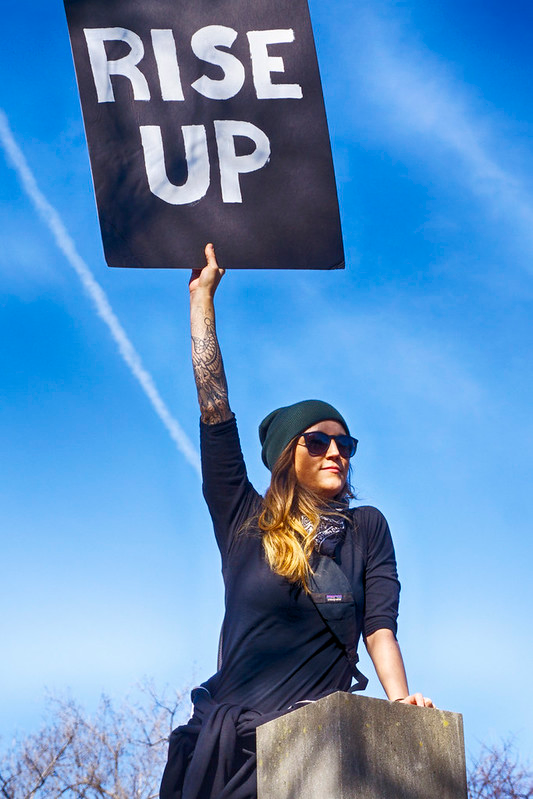
Two Poems by Margaret Bleichman

A Fresh Take on Historic Integrity

Boone Hall Plantation and partnering architects
are proud to share that the Cotton Gin House

built in the 1850s for cotton processing

will keep its original brick exterior
to maintain its historic integrity

but will be completely renovated inside


The remodeled Cotton Gin House features
a new visitor center, gift shop, event space

a museum highlighting centuries of history
The finished product will add

to the continued history of Boone Hall

Boone Hall Historic Gin House
newly restored, a fresh take on history
provides any event a timeless backdrop

With views overlooking award-winning gardens

The Gin House, perfectly perched

in the center of the action of Boone Hall

Perfect for a party of 80 with sit down

up to 100 standing

We require an insurance policy

$1,000,000 worth of general liability

Take the Boone Hall experience to the next level

Or: How to White-Wash History

the corporate descendants of Boone Hall enslavers
where enslaved labor toiled to enrich Charleston County
with thousands of bricks made by unpaid enslaved hands
as we are the original experts of polite façade
according to our unassailable definition of integrity
we’ve removed inconvenient and unpleasant reminders

ghosts of kidnapped Africans and their children
to earn a generous profit on our “Lost Cause” mythology
designed for the comfort of the white visitor
daily and continuing violations to centuries of harm
and ensure the continued erasure of Black history

a house of deprivation, starvation and violence
as the actual history is too much of a downer
perfect for revisionist “Tara” fantasies

where barefoot children picked cotton dawn to dusk
like spiked iron collars placed upon enslaved shoulders
that was slapping, kicking, punching and whipping

on newly polished floors covering blood-stained ground
for a true fake experience, stand 14 hours without break
much as our forebears insured their human property
tho’ we accept no accountability for our past brutality
help us help you put as many levels as possible

between Boone Hall and its true history

Note: The left column contains direct quotes from local news and Boone Hall Plantation websites.


Etymology of the Erased

with deep respect to the Nipmuc Nation

Nipmuc: nippe– ‘fresh water’, amaug– ‘fish taken by the hook’   ̶  Algonquian
            Fresh water people flourish
            call Nippenet home for twelve thousand years
            cherish the lion, black birch and white pine

            thank Manitoo for abundant waters
            for largemouth bass and rainbow trout
            and pray for all living creatures

reservare: ‘to keep back’   ̶  Latin
            Wash ashores seep inland, ghostly,
            convert forest to property
            extinguish the lion

            convert Nipmuc people to Christian
            ‘Praying Indians’ (pray or die)
            then enslave or slaughter them, anyway

            and imprison the rest on Deer Island, Boston
            no water, no food, no shelter, in winter
            Few survive, some escape

Quaben: ‘place where many waters meet’   ̶  Nipmuc
            Snow-melt rivers tumble down
            a ring of mountainsides, sustain
            a fertile valley, fill a modest lake

            Boston dwellers thirst for more, claim the basin
            as their own, dam the rivers, flood and drown
            settler farms and four whole towns a hundred miles away

Qunnonoo: ‘mountain lion’  ̶  Nipmuc
            Fresh qunnonoo scat confirms
            Dakota lion’s eastward trek
            from Black Hills to the Quabbin rim

Waban: ‘the wind, the spirit’; a Nipmuc elder of the 1600’s; a suburb of Boston  ̶  Nipmuc
            Mystery figure glides long and low
            through Waban yards, and lopes
            past bikes and sand toys, sleek and muscled

            its three-foot black-tipped tail
            distinctive in the pre-dawn mist
            cub or prey dangling from its jaws


Margaret Bleichman is an emerging poet, queer activist and educator with writing in, or forthcoming in, Gyroscope Review, Poets Reading the News, Kitchen Table Quarterly, Fifth Wheel, Fauxmoir, The Dewdrop, and Between Us. Their poetry has won awards in two Joe Gouveia Outermost Poetry contests. A software engineer and professor, they helped establish LGBTQ+ health benefits and STEM programs to engage underrepresented students.

“Erased” by Rob Williams via a Creative Commons license.


A note from Writers Resist
Thank you for reading! If you appreciate creative resistance and would like to support it, you can make a small, medium or large donation to Writers Resist on our Give a Sawbuck page.
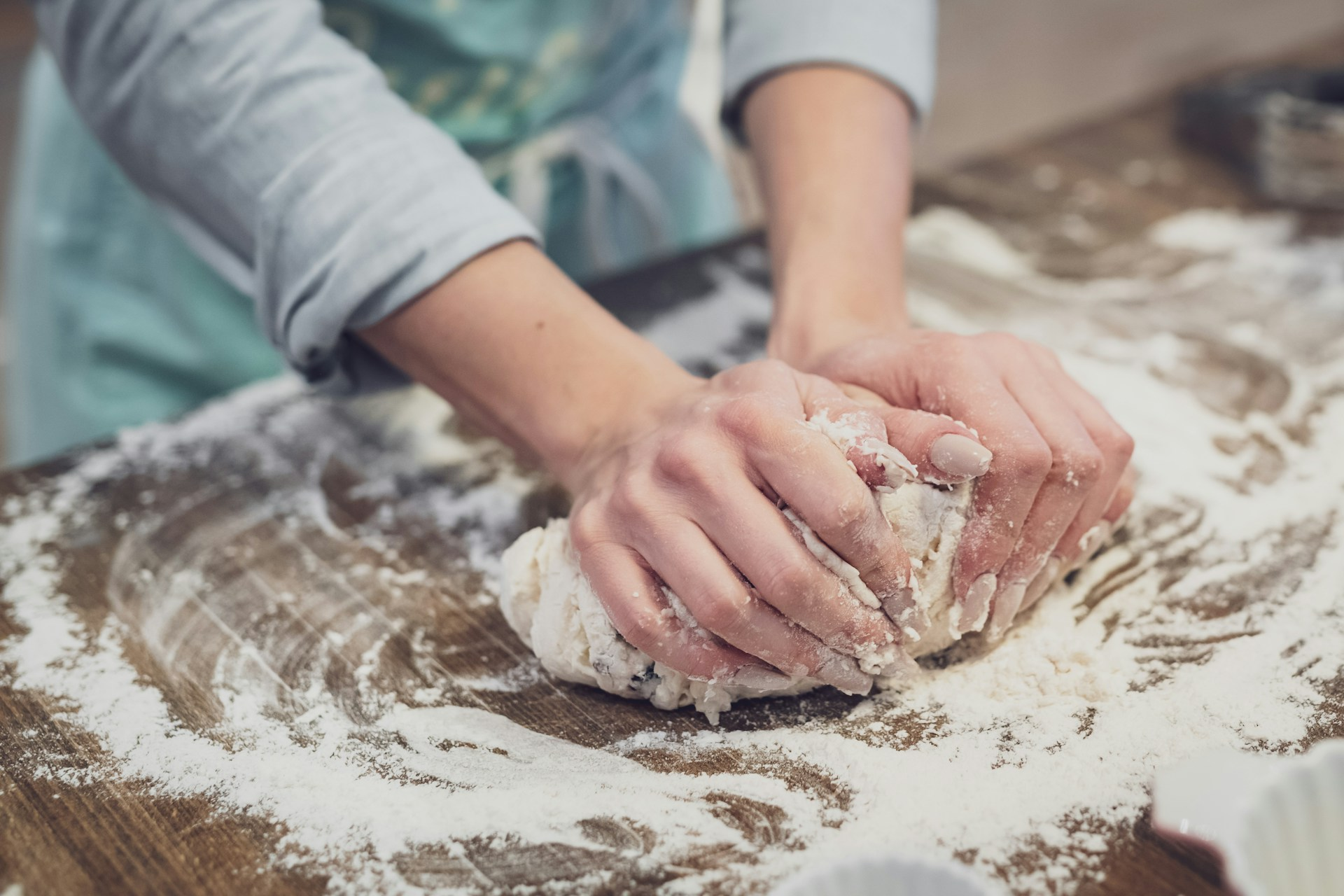

Refugees

By Leah Mueller

                         for Basel Adra

Each morning, he awakens
to the same gunfire, the same pain.

He sees the enemy’s
implacable face: square body
bundled into a gray flak vest,
weapon clutched inside an outstretched glove.
His home once more reduced to rubble.

He moves his possessions
to a different structure,
and then to another, each
more remedial than the last.

Water is scarce, food almost nonexistent.
Loaf of bread, spoonful of white rice.
Sometimes, a few vegetables.

The young eat first.
Parents devour whatever remains.

Elders know when airstrikes are coming,
sense the impact deep within their bones.
Still, they laugh. They nap. They play with the children.
They cover their wounds with strips of cloth.

Each afternoon, he hits the road:
trudging through dust, demanding freedom
that he may never live to see.
Townspeople cluster around him, chanting
as they clutch handmade signs.

Their slogans dream of a home
where Palestinians belong at last—
a land that lies right in front of them,
and yet seems as distant as sleep.


Leah Mueller’s work is published in Rattle, NonBinary Review, Brilliant Flash Fiction, Citron Review, New Flash Fiction Review, Does It Have Pockets, Outlook Springs, Your Impossible Voice, etc. She has received several nominations for Pushcart and Best of the Net. One of her short stories appears in the 2022 edition of Best Small Fictions. Her fourteenth book, Stealing Buddha was published by Anxiety Press in 2024. Website: www.leahmueller.org.

Photograph by Dale Spencer via a Creative Commons license.


A note from Writers Resist
Thank you for reading! If you appreciate creative resistance and would like to support it, you can make a small, medium or large donation to Writers Resist on our Give a Sawbuck page.
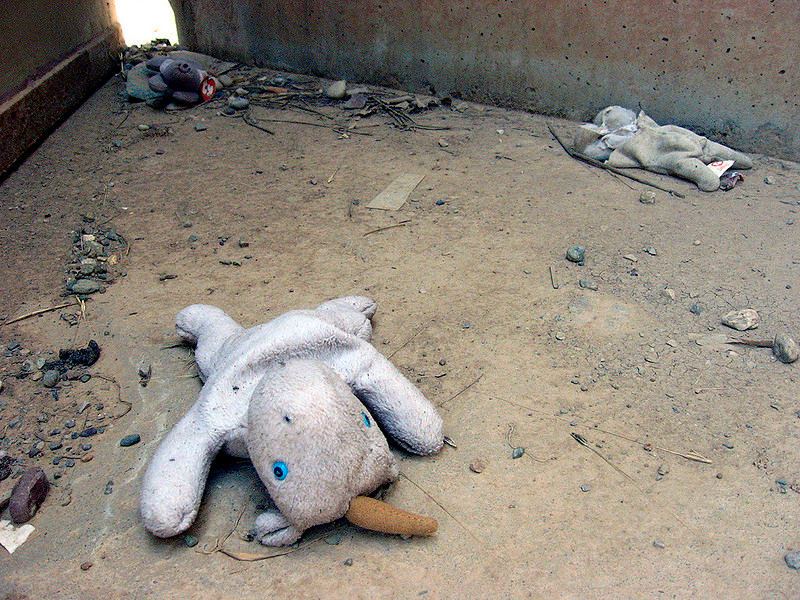

Ancient Alien Tour

By Wendy Vidlak 

The tour guide wears a freshly starched uniform of a popular blue zhongshan. She quickly assembles the group and starts the presentation from outside the building.

“The 10th wonder of the ancient world is a 663-foot tower made of windows and a gold-colored metal. At one time, a giant sign with the name ‘Trump’ sat on top of the building. Found in what used to be the East Coast of the North American continent, is now in the country known as 那些被貪婪征服的人.[1]

“Trump, once known as a god to his people, led with complete authority and deconstructed the government at the time with another fabled archangel named Musk. Together they sought to build a nation separated from the world at large, led by the corporate elite.”

A man in the group shuffles then raises his hand.

“Yes, you have a question?”

A well-dressed man in his late forties asks, “What do you mean by a corporation?”

“Excellent question. In ancient times, instead of robots and computers that do most of the work for us as a community, they had an organization made up of senior officials and many working slaves. There were many corporations that focused on certain areas of development. For example, one type of corporation made food out of chemicals. We have since outlawed many of the items they used to put in food because unfortunately many were carcinogenic. Chemicals combined with the aggressiveness of the humans of the time, led to very short lifespans found around the continent.”

The tourists looked askance at each other not believing what they just heard.

“In this glass case, you will find an ancient pin artifact. The remains of the red, white and blue enamel wore off with time. However, next to the artifact is a replica picture of what we believe it used to look like. Frequently found in the burials from that time, we believe they used to worship this symbol as a physical representation of their god. Providing it in the burial coffin allowed them to seek heaven in the afterlife. They believed in an afterlife where only the chosen few found the reward of monetary riches beyond their dreams.”

A young girl wearing a tradition qipao with amazing embroidery of flowers raises her hand.

“Yes, young lady?”

“What is ‘monetary’?”

 “Ah yes, relating to money. Money was an ancient system based on metal and paper that they would trade for goods. You can find some good replicas down the hall to the left.”

“You mean they had to trade for things? The robots did not give you what you need when you need it?”

“There were only very primitive robots with the most advanced being used by the military for war. The helpful robots we depend on every day were only getting a start at the end of the United States era.”

The tour guide leads the group to a spot on the far wall.

“Over here is a gold encased body. We believe this is the ancient ruler named Trump. We think he wanted to live forever in the afterlife. The myth at the time said covering your body in gold was the easiest way to make it to heaven. There were many others at the time that followed suit. From the ancient texts we have recovered, this religion believed gold was the ultimate resource, followed closely by an artificial contrivance by the name of cryptocurrency. We are not sure what cryptocurrency was, but it occurs a lot in ancient texts surrounding this period. We know some people used it to purchase goods and others simply reacted to it when it went up and down in value. Apparently, it was a tool the supposed god of Trump used to keep people in line and control emotional states.”

The guide points to the wall above the golden body.

“Up above the gold body, you can see a tile mural of the orange man the people worshiped. According to ancient alien theorists, he was not really a god, but an alien. Sent from another planet to infiltrate humanity. Unfortunately, the aliens, being color blind, got his coloring a bit off. The primitive people at the time accepted him as an actual human sent by god, regardless of his skin color. We believe they felt orange was the very best color possible. There were hierarchies based on skin color at the time and people’s place in society was based on that color. Now many conventional archaeologists disagree with this assertion and thought it was just a case of weird cosmetics that were popular back then. I will let you guys decide who was right.”

The young girl pipes up, “How could they not understand skin color of all kinds is beautiful? It makes the world an interesting place to live.”

“They were a primitive people. They viewed oppression as progress.”


[1] Those who are conquered by greed


Wendy Vidlak is a writer from the land of lakes who enjoys exploring the great outdoors and hopes to continue to breathe outside as long as possible. She has previously published in the White Bear Press and has an upcoming short story in the Galactic Mindsea Empire Anthology.

Illustration created by AI.


A note from Writers Resist
Thank you for reading! If you appreciate creative resistance and would like to support it, you can make a small, medium or large donation to Writers Resist on our Give a Sawbuck page.