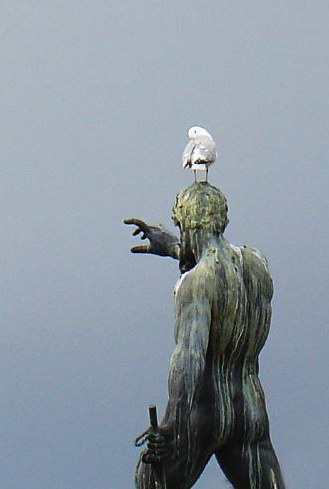
Bird Shit on Leaves

By Mark Grinyer


The white-speckled green
of bird-shit on leaves
painted through weeks
of days without rain
marks favored platforms
under canopies of trees
where hawks cannot spy them
but where they can see
the movements of voters
through wind-gusts and rain
that soak these havens
and wash shit away
fertilizing forests with
generations of sleaze
enduring the protection
of dissembling days
providing the illusion
of unfettered peace
as finches fight sparrows
for disappearing seeds
digesting rough diets,
attempting to breed
here where I’m watching
birds shit on leaves
avoiding the noise
of some politician’s screed.


Mark Grinyer spent most of his childhood and youth following his father, a U.S. Air Force officer, to many different stations in the United States and overseas, before settling in Riverside, California. Mark went to college at the University of California, Riverside, where he began writing and publishing poetry. After being drafted into the Army in 1969, he returned to the University for graduate school. and received a PhD in English and American Literature. He wrote his dissertation on the poetry of William Carlos William and developed a particular interest in the roles of poetry and poets in modern society, and in the use of scientific and natural scenes or images as vehicles for understanding our place in the modern world. He spent the next 25 years working as a technical editor and proposal specialist in the aerospace industry. After retiring in 2006, he returned to teaching for a few years at California State University, Fullerton, where he continued with his poetry.

Photo credit: Everjean via a Creative Commons license.

Group Home Rattle

By Andrés Castro

Dropped and broken,
over and over,
we were dropped broken here—
the labeled Spic and Nigger boys, said
from stupid mothers and ugly fathers, said
marked by wire gashes, gunshots, and sex toys,
waking to crying, screaming, lying, threats.
We were dropped broken here.

Who bothers to look inside the hand
that’s helping? In this cracked community,
in this grey wooden house, three administrators
glide through the rooms where we stay.

On Friday night
explosions take place when
broken heads race when
venting is play when
the shrinks stay away.

Would you listen? Could you listen
to nine broken heads screaming?
“I’m Boss!” “I’m Blade!” “I’m Cold!”
“I’m Lost!” “I’m Slick!” “I’m Blood”
“I’m Cross!” I’m Deep!” I’m Dreamin!”

No! No!
We’re drowning, not touching
bottom, drowning
in a vat of grease, blood, melting needles,
Haldol, Prolixin—
bodies inside out, twisted faces,
anatomical toys, boys
our broken heads split open,
emptying out into the street.

Please, will you tell somebody?
Notify next of kin.


Author’s note: The material for this poem came to me in a nightmare after I began working as a psychiatric group home counselor in 1995. I quit shortly after having to dispense powerful psychotropic drugs to the sweetest teenager who had returned a sedated shell after meeting with his abusive parents for Christmas and consequently having a breakdown and being hospitalized. Short-term therapy, including tranquilizing psychotropics, instead of empowering long-term language and learning based modalities, is still widely accepted, especially in poorer communities.


Andrés Castro, a PEN member, is listed in Poets & Writers Directory and regularly posts work on his personal blog, The Practicing Poet. He lives in Queens, NY.

Photo by Harlie Raethel on Unsplash.

I Was Ranting About

By Pedro Hoffmeister


the school district brought in a tech-expert,
an Apple educator, a dynamic speaker, paid a lot
of money to come speak to us, started by
asking us to name our favorite technologies,
audience members calling out new
apps and video games I’d never heard of.

I yelled, “The toilet” because it is my favorite technology.
I love excrement not sitting in a chamber pot under my bed until
I walk over and dump it out the window onto the street below.
Or – to be more precise – composting toilets are a miracle of
science, the smell of sawdust (and sawdust only)
in a sun-warmed outhouse?

But this speaker wasn’t interested in useful
[or what he called “basic”] technologies. He didn’t
understand the truth that he is actually somewhere
in the middle of all history, and that in only 200 years
this current time-period we’re living in will look cute,
or quaint, and humans will tell stories about all
the stupid things people said or believed
at the beginning of the 21st Century.

Along with an anecdote about light-switches coming
to New York hotels in 1926 (wrong by 40 years)
this tech educator told us that Gutenberg invented
the printing press, as if the printing press and moveable type
were a Western thing first, as if printing presses
hadn’t already existed for almost 600 years in China,
but this expert had no idea that all of his claims were so
American,
so simplified and sadly incorrect.

As people say, we are a nation of anti-intellectualism,
and this man is a product, who – in turn – pushes products.
We don’t teach our children contextual learning because
it takes too much time. So, I imagine this speaker as a child,
staring at his TV in wonder. Is it too harsh to say that we
consume and consume and consume until we die?

But there were Hitler-like speech quotes too,
with the requisite yelling at the end:

“We have evolved beautifully!!!”

“We are living with human efficiency that has never been equaled!!!”

“Most futurians see this as a golden age of change!!!”

I did like that last slant-rhyme he included. It made me think of
all the poems that our revered speaker had never read.

He said he wanted us to “accept the truth, and not think about ethics,”
The Blue Pill, bask in the illusion, to close our eyes
and enter the common room of the cultural cult.

Instead, I think of the Navajo Eusabio in Willa Cather’s
Death Comes for the Arch Bishop, Eusabio speaking
in the late 19th century, when arrogant men also thought
they were at the cutting edge of history. The Navajo replies:
“Men travel faster now, but I do not know if they go to better things.”

Or I think of this – my favorite Arabic proverb:
“When danger approaches, sing to it.”

So here

am I,

singing.


After publishing books with Penguin, Simon & Schuster, and Random House (most recently the novel Too Shattered For Mending), Pedro Hoffmeister just self-published a collection of essays titled Confessions of the Last Man on Earth Without a Cell Phone, so he could say anything he wanted to say: Strong personal opinions, satire, and humor. Basically, resistance. He is now completing a collection of poems.

Photo credit: Liz West via a Creative Commons license.

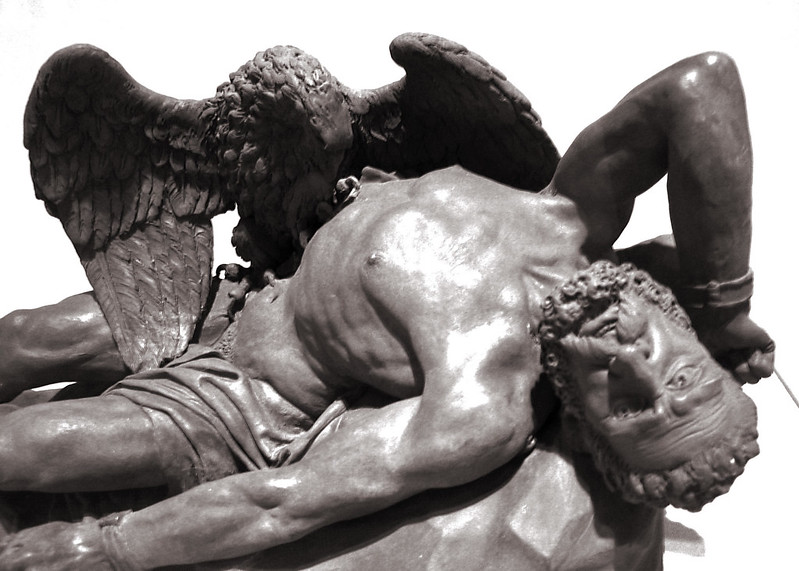
The Chain & The Screens & The Fire

By Jake Phillips

 — after Alexandrea Teague’s “’My Country, ‘Tis of Thee’ (arranged for Brazen Bull)”


Bellows and bolts     and the king     and the king’s rage
at the price of freedom     the fire   the face like fire hot-orange
on your screen     first look at your phones   the fire given
to humankind     hot breath    fogging     hot    and he bellows
at the man in chains     as he has always done     the least racist
person that you’ve ever encountered    may the eagle peck
his liver     the lives chained     first look     look     the tweets may the eagle
peck     the deplorables on this rock     chained     a chain a storm
of characters     filthy language on fire     and you don’t want
to live with them either     the eagle feasts     on freedom
on many sides     on liver, regrowing     feast your eyes     feed    your phone
for the king     who has done more for African Americans     Americans
create their own violence     and the box was opened     all 140
characters and their hashtags     their own violence    released
unchained into the world     then they try to blame others   the violence
on many sides     the Titan the fire     the hero of culture
a really dumb guy     the liver always     and his rock     the disgusting, rat
and rodent infested mess     always returns     and the hope on the bottom
the hope     the birth certificate is a fraud     the faces
lit up with the fire     we hold our hands out     dangerous
for our country     let’s take a closer look     the chains tighten     the liver
returns     can you imagine the furor     the blaze     the pecking eternal
he watches    tweets from    Oval throne     never discriminated
the violence     a terrible thing     the mud of mankind    melting from the fire


Jake Phillips is a first-year poetry MFA candidate at the University of Massachusetts, Boston; a former teacher; and a former librarian. His writing has appeared in Z Poetry’s anthologies Massachusetts’ Best Emerging Poets and America’s Emerging Poets: Northeast Region. He currently works as a publishing assistant for Hanging Loose Press. Find him on Twitter @itsjustJp.

Photo credit: schizoform via a Creative Commons license.
Ring-a-Round the Rosie 2019

By Heidi J. Lobecker


Ring-a-round the playground

A backpack full of bullets

Pop! Pop! Pop!

We all fall down.


Heidi J. Lobecker has lots of fun writing. If it‘s not fun, she finds something better to do, for example: reading, sailing, camping, and eating s’mores.

Photo credit: Edwin Rosskam, Chicago, Illinois, 1941, via the U.S. Library of Congress

Serpent Song

By Candice Kelsey

I

July. A man in Thousand Oaks confronted by wildlife authorities.
The case: Exotic Reptiles
illegally stockpiled.
Neighbors suspect this guy
may not have permits for all 40 venomous snakes.
Above 100 degree heat
kept in crowded conditions
activity level through the roof. More runs to Home Depot
14 hour day.
Curator of Reptiles and Amphibians rests his hand
on the shoulder of Senior Animal Keeper Chris.
Designer snakes bred for specific mutations
mostly albinism some leucism.
Crossbred / inbred /
Screwed up / blind / jumpy.
The zoo moved the gila monsters to make room
for two black-headed pythons and four indigo
snakes.

II

November. Detroit Police warehouse confronted by the Fair Justice Project.
The case: 11,341 unprocessed rape kits
sitting for years.
Authorities determined multiple rapes
could have been prevented with a CODIS match.
Gang rape of a homeless woman
kidnapping and rape of a young girl.
More backlog
kits from 2009 finally tested in 2015.
Wayne County Prosecutor points her finger
at Detroit Police Media Relations Director Mike.
551 page report by the National Institute of Justice
reveals minimal effort corners cut
vaginal wall / cervical / penile slide /
anal / perianal slide /
buccal swab.
Colposcopy for photos of genital injury
and rulers for measuring bruises or lacerations on
women.


Candice Kelsey’s debut book of poetry is Still I Am Pushing (Finishing Line Press, March 2020). Her first nonfiction book explored adolescent identity in the age of social media and was recognized as an Amazon.com Top Ten Parenting Book in 2007. Her poetry has appeared in many journals, including, Poet Lore, The Cortland Review, and North Dakota Quarterly, and she was a finalist for Poetry Quarterly‘s Rebecca Lard Award. Candice’s creative nonfiction was nominated for a 2019 Pushcart Prize. She is an educator of 20 years’ standing, devoted to working with young writers. An Ohio native, she now lives in Los Angeles with her husband and three children.

Image credit: “Eve and the Serpent” by John Dickson Batten, 1895.

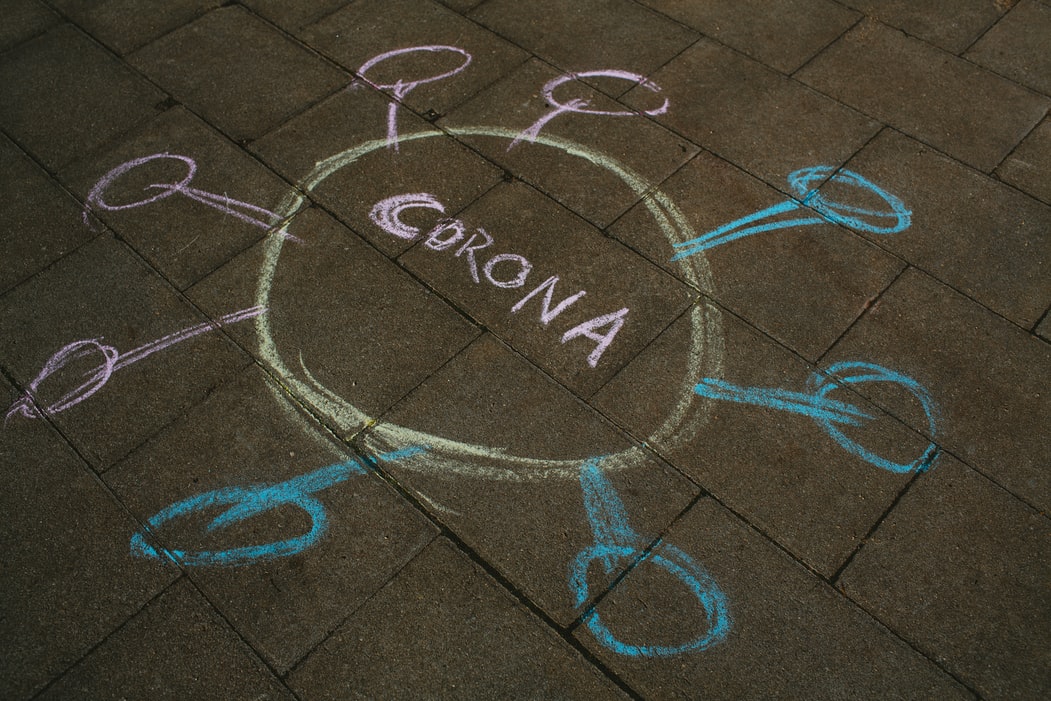
Pandemic

By Summer Awad

what does empire look like
in slow motion

what of nine-to-fives
stripped of their ticking clocks

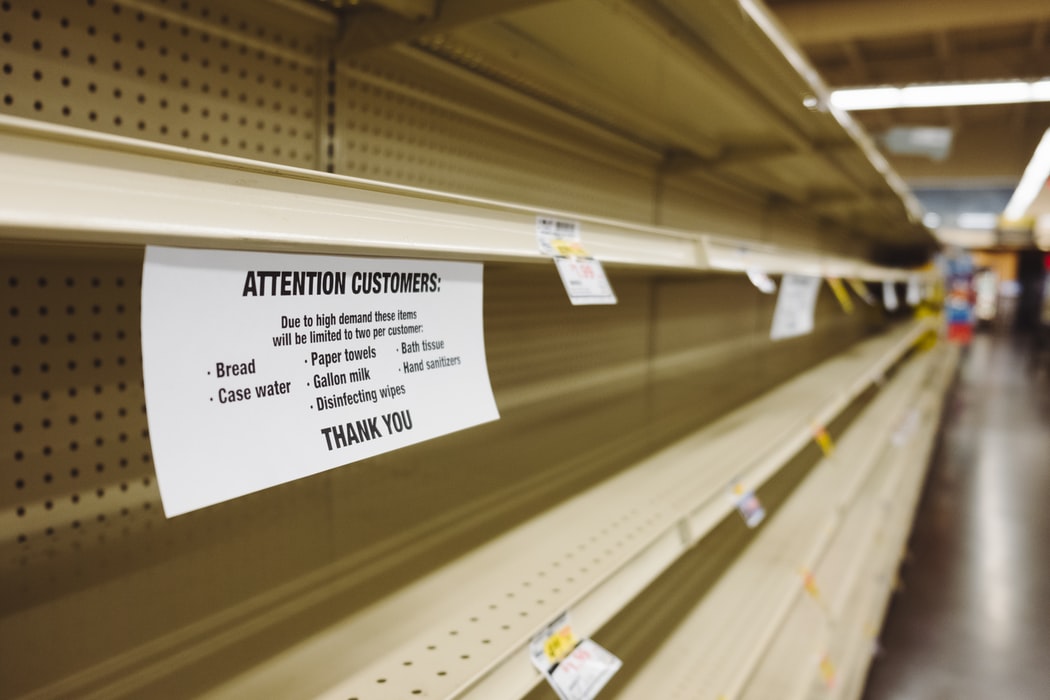
shelves – aching
from stock and restock –
baring us their bones?

what do you make of
shuttered cafes

laptops and coffees
on the couch –
recalibrated reality

the comfortable uncomfortable
but immune – really –
to crisis?

how do you inoculate
a sick society

tell the boss to care
for his worker

the landlord to relieve
his tenant

the politician to protect
her people?

how do you jolt
men awake,

illumine the stepping
stones so precariously
placed?

what does it mean to
be without

insurance, yes
savings, yes
without the privilege
of cozy quarantine,
true

but isn’t it without as in
without the gates – as in
outside – as in without
the demarcations of
worthiness

isn’t it who we swallow
and who we cough up
and spit out?

what do borders look like
drawn around each other –
around ourselves

aren’t we only as good as
what’s inside our circle –
as the company
we’ve chosen to keep

and isn’t it keep as in
provide for the sustenance of –
as in guard and protect – as in
honor and fulfill – as in
keep the Sabbath?

what does this silence
conjure for us

what awakenings lie in wait

what meaning can we glean
from this indefinite and holy
Saturday?


Summer Awad is a poet and playwright from Knoxville, Tennessee. Summer’s poetry has appeared in Little Rose Magazine and Exposition Review. Her play, WALLS: A Play for Palestine, was produced at the 2016 New York International Fringe Festival. Summer is an award-winning, local spoken-word poet. Her work focuses on her Appalachian and Palestinian heritages, as well as feminism and politics.

Photo by Markus Spiske on Unsplash.

A Colossal Crisis

By Shawn Aveningo-Sanders

~ after Emma Lazarus, “The New Colossus”


When brazen towers fell, we wept in disbelief—
our great nation attacked upon her own shore.
We obeyed our leaders who hailed, “Shop More!
That’s how we’ll heal.” And we found some relief
in the stuff we hoarded, albeit the feeling brief.
We shop-till-we-drop, as credit card bills soar
so high, we can’t afford our child’s mortarboard.
Delusional and desperate, we elected the wrong chief—
unfit to save us from an enemy we can’t see.
Mr. Whipple whispers, “Secret stash on Aisle 3.”
The huddled masses, yearning to be free
of their germ-laden asses, in need of more TP,
racing toward wipes and the last shopping cart,
forgetting sage advice to stay six feet apart.


Shawn Aveningo-Sanders is the author of What She Was Wearing, an inspirational book of poetry/prose that reveals her #metoo secret—from survival to empowerment. Shawn’s poetry has appeared globally in over 150 literary journals and anthologies. She’s a Pushcart nominee, Best of the Net nominee, co-founder of The Poetry Box press, and managing editor for The Poeming Pigeon. Shawn is a proud mother of three and shares the creative life with her husband in Portland, Oregon.

Photo by Erik Mclean on Unsplash.

Notes from an Epicenter

By John Linstrom

                Sixteen Oaks Grove, Queens, NY


Sixteen oaks in two rows planted
down an island in the street:

school is closed, kids transplanted,
benches here are empty, clean and neat.

Auto shops still rollicking with laughter,
a boy walks by, dribbles his ball alone.

A bird keeps trilling, and will after;
the traffic, steady still, has slowed.

Sixteen oaks in two rows standing—
walkers pause, and then they quickly go.


John Linstrom’s poems have recently appeared or are forthcoming in North American Review, The New Criterion, Atlanta Review, Vallum, and Cold Mountain Review. His nonfiction has recently appeared or is forthcoming in The Antioch Review and Newfound. He is series editor of The Liberty Hyde Bailey Library for Cornell University Press, making available the works of Progressive-Era environmental philosopher L. H. Bailey. He coedited The Liberty Hyde Bailey Gardener’s Companion: Essential Writings (Comstock-Cornell UP, 2019), and he prepared the centennial edition of Bailey’s ecospheric manifesto The Holy Earth (Counterpoint, 2015), featuring a new foreword by Wendell Berry. He currently lives with his wife and their joyful window garden in Queens, NY, where he is a doctoral candidate in English and American Literature at New York University. He also holds an MFA in Creative Writing and Environment from Iowa State University.

Photo by freestocks on Unsplash.

Heretic Hymn from the Pandemic

By D.A. Gray


One morning the cats who once
Crept up to our doors – stopped.
For a time the bird’s voices grew louder
Then they, too, disappeared.

We prayed on command. We were sure
The symbols would save us.
Leaving the church we made stops
At every store that promised
A cure – the backup spells of old
Superstition – just to be sure.

A man in our town has been chosen
To head the response task force.
Each day he offers a spot of wisdom.
‘The worst you can do,’ he says,
‘is panic.’ He bows before the camera.
His hair is bright white
Like a horseman from an old tale.

Most of us simply carried on.

When the least of these grew ill
We sang solemn hymns
This time to our neighbors, and the dead
We had never met. We were begging
Forgiveness for averting our eyes, away
From them and toward the sky.

I saw my parents begin to shrink, still thinking
Tragedy could be beaten with piety.
The louder they prayed the smaller
They grew. One day my father’s
Eyes jolted open. He was small enough now
He could see it coming.

Keep calm. Be civil. After the funeral we pulled
Out the box of aphorisms
Which was always here waiting our return
In case of emergency.

If we listen we can hear the sounds of hooves,
Really the sounds of breath rasping,
The remaining beastly sounds, bringing the end
Of the tale galloping closer
Like any metaphor – if you believe it too much.


D.A. Gray’s poetry collection, Contested Terrain, was recently released by FutureCycle Press. His previous collection, Overwatch, was published by Grey Sparrow Press in 2011. His work has appeared in The Sewanee Review, Appalachian Heritage, The Good Men Project, Writers Resist, and Literature and the Arts, among many other journals. Gray holds an MFA from The Sewanee School of Letters and an MS from Texas A&M-Central Texas. Retired soldier and veteran, the author writes and lives in Central Texas.

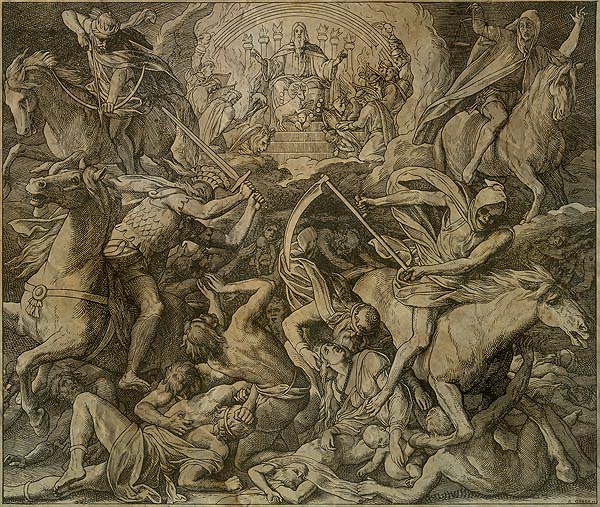
“Four Horsemen” by Julius Schnorr von Carolsfeld, 1860.

Six Feet Is All We Need

By Robert Knox  


Generally speaking, I’m pretty good
at keeping my distance
In fact, for days on end I’m practically
sheltering in place,
possibly even self-quarantining,
though I’m not sure where one of these nonce phrases
leaves off, and the other begins.

I did, however, break solitude to
stroll with my bestie
to the post office, where she may well have
violated her parole,
by engaging with a postal clerk
over required postage for an early draft
of our tax returns,
seeing that our customary live inquisition
was deferred
for all the appropriate public health protocols

And then, totally on my moral dime
for which I assume complete civic responsibility
we stopped at the nearly closed coffee shop,
all its tables lying sidewise against the wall,
where, in all probability,
I most infringed upon the magic circle,
pointing a blue surgically-gloved finger
at the blueberry scone
for which I felt a pounding need

transgressing that six-foot safety zone,
as if, after all these years,
once more
leaving room for the Holy Ghost
on the dance floor whose like I fear
never to know again.
to fox-trot with the pastry of my choice,
having discovered
by the bane, and boon, of enforced separation
from my fellow creatures,
that all we need in life is six feet
of safe and clean and healthy air

and at its end, those six feet under.


Robert Knox is a poet, fiction writer, and Boston Globe correspondent. As a contributing editor for the online poetry journal, Verse-Virtual, his poems appear regularly on that site. They have also appeared in journals such as The American Journal of Poetry, South Florida Poetry Journal, New Verse News, Unlikely Stories, and others. His poetry chapbook Gardeners Do It With Their Hands Dirty, published in 2017, was nominated for a Massachusetts Best Book award. He was recently named the winner of the 2019 Anita McAndrews Poetry Award.

Photo by Scott Nothwehr on Unsplash.

Grace in the Time of the Virus

By Melanie Bell        

Take this time
For yourself.
Everyone around you
Is doing the same,
Snatching the last eggs from air.
You start, you care
A little too much,
Don’t finish the chapter
You intended to write.
Everybody’s chapters
Are unfinished, now,
Some cut off mid-sentence,
The foot suspended midair,
The period still to come.

You are alive.
Remember, every breath,
Hold in the droplets
Lest they infect.
Act as if you are the virus.
It lives inside all of us now,
Eating our cereal, oatmeal,
That bread we were lucky to get.
So does grace.
Remember, it whispers,
Not to touch your face.
This is how best to avoid
A shelter in place.

Grace puppets your body
And motivates your limbs.
Grace closes restaurants and gyms.
Grace in the faces of loved ones on the screen,
Of tweets reaching out,
All those hearts behind the news, news, news,
All those people dancing in their kitchen
And smiling at you.


Melanie Bell holds an MA in Creative Writing from Concordia University and has written for various publications including Autostraddle, Cicada, The Fiddlehead, Every Day Fiction, and CV2. She’s the co-author of a nonfiction book, The Modern Enneagram (Althea Press, 2017). You can visit her website at InspireEnvisioning.com.

Photo by Wesley Tingey on Unsplash.

Whiteness in Bloom

[fusion_builder_container hundred_percent=”no” hundred_percent_height=”no” hundred_percent_height_scroll=”no” hundred_percent_height_center_content=”yes” equal_height_columns=”no” menu_anchor=”” hide_on_mobile=”small-visibility,medium-visibility,large-visibility” class=”” id=”” background_color=”” background_image=”” background_position=”center center” background_repeat=”no-repeat” fade=”no” background_parallax=”none” enable_mobile=”no” parallax_speed=”0.3″ video_mp4=”” video_webm=”” video_ogv=”” video_url=”” video_aspect_ratio=”16:9″ video_loop=”yes” video_mute=”yes” video_preview_image=”” border_size=”” border_color=”” border_style=”solid” margin_top=”” margin_bottom=”” padding_top=”” padding_right=”” padding_bottom=”” padding_left=””][fusion_builder_row][fusion_builder_column type=”1_1″ layout=”1_2″ spacing=”” center_content=”no” link=”” target=”_self” min_height=”” hide_on_mobile=”small-visibility,medium-visibility,large-visibility” class=”” id=”” background_color=”” background_image=”” background_position=”left top” background_repeat=”no-repeat” hover_type=”none” border_size=”0″ border_color=”” border_style=”solid” border_position=”all” padding=”” dimension_margin=”” animation_type=”” animation_direction=”left” animation_speed=”0.3″ animation_offset=”” last=”no”][fusion_text]

By Jill McDonough

Thinking about whiteness, what it is and what
it does, we go to the MFA to see Art
in Bloom. Groups of white suburban women,
garden clubs, look at art, arrange some flowers
to look like the art. Or something. Lilies scattered
over scaffolding: the Rape of the Sabine Women;
a column of callas: the Dead Body of Christ.
Older white women figuring out the flowers always
crack me up. One group looked at a boat of flowers
under a portrait of an Asian guy and was like huh?
So one of the ladies read the description, pointed to it,
said “You can read about him. He’s a tradesman
from China. So kinda. . . that’s a boat.”  I text that
to myself, say it again, delighted. This is the kind
of whiteness I’ve come to see. We go every year, think
it’s hilarious, like seeing parodies of our slightly
older selves, a little richer, continuing to come
here but without irony. There are phrases
from my southern youth about whiteness I remember:
Mightly white of you; Free, white, and 21.
Whiteness was aspirational. Sometimes I wanted more:
more whiteness like more money, the whitest kids
with ski passes from Vail on jacket zippers all winter long.
Invited to be a debutante, join a sorority, I said no,
explained I couldn’t join an all-white group. They have
their own groups, other white people told me, exasperated,
leaving me in confused tears. It’s embarrassing, talking
about whiteness. A hard job, imagining who you want
to be as an adult, barely knowing what it is
you don’t want to have ever done.

[/fusion_text][/fusion_builder_column][/fusion_builder_row][/fusion_builder_container][fusion_builder_container hundred_percent=”no” hundred_percent_height=”no” hundred_percent_height_scroll=”no” hundred_percent_height_center_content=”yes” equal_height_columns=”no” menu_anchor=”” hide_on_mobile=”small-visibility,medium-visibility,large-visibility” class=”” id=”” background_color=”” background_image=”” background_position=”center center” background_repeat=”no-repeat” fade=”no” background_parallax=”none” enable_mobile=”no” parallax_speed=”0.3″ video_mp4=”” video_webm=”” video_ogv=”” video_url=”” video_aspect_ratio=”16:9″ video_loop=”yes” video_mute=”yes” video_preview_image=”” border_size=”” border_color=”” border_style=”solid” margin_top=”” margin_bottom=”” padding_top=”” padding_right=”” padding_bottom=”” padding_left=””][fusion_builder_row][fusion_builder_column type=”1_1″ layout=”1_1″ spacing=”” center_content=”no” link=”” target=”_self” min_height=”” hide_on_mobile=”small-visibility,medium-visibility,large-visibility” class=”” id=”” background_color=”” background_image=”” background_position=”left top” background_repeat=”no-repeat” hover_type=”none” border_size=”0″ border_color=”” border_style=”solid” border_position=”all” padding=”” dimension_margin=”” animation_type=”” animation_direction=”left” animation_speed=”0.3″ animation_offset=”” last=”no”][fusion_text]


Jill McDonough is the author of Habeas Corpus (Salt, 2008), Oh, James! (Seven Kitchens, 2012), Where You Live (Salt, 2012), Reaper (Alice James, 2017), and Here All Night (Alice James, 2019). The recipient of three Pushcart prizes and fellowships from the Lannan Foundation, the National Endowment for the Arts, the Fine Arts Work Center, the New York Public Library, the Library of Congress, and Stanford’s Stegner program, she taught incarcerated college students through Boston University’s Prison Education Program for thirteen years. Her work has appeared in Poetry, Slate, The Nation, The Threepenny Review, and Best American Poetry. She teaches in the MFA program at UMass-Boston and offers College Reading and Writing at a Boston jail. Her website is jillmcdonough.com.

Image credit: Hand-colored photograph by Ogawa Kazumasa, 1896, via Public Domain Review.

[/fusion_text][/fusion_builder_column][/fusion_builder_row][/fusion_builder_container]

Elongation

By Annette Januzzi Wick 


Liz Warren drops from orbit

Venus still lit but out of reach

Back to the old man in the moon

Hope doesn’t float when scorched


Annette Januzzi Wick is a writer, teacher and community connector. She makes her home in Cincinnati’s Over-the-Rhine, with her husband, who calls her the “worst introvert ever.” Visit annettejwick.com to learn more.

Image credit: NASA


Women’s Day

By Cooper Gillespie


Cooper Gillespie is a writer and musician. She was raised in the wettest parts of the Pacific Northwest but escaped to California as soon as she was able and was overjoyed to discover the sun actually exists. She plays bass and sings in LANDROID and is an MFA candidate at UC Riverside-Palm Desert. Presently, she resides in Landers, CA with her husband and their two enchanting hounds. Learn more at coopergillespie.com.

Photo by Victoria Strukovskaya on Unsplash.

This poem

By Rachel Norman


is a product
of our time.
It wakes up,
gasping
after
dreams
where it
drowned
in ice-melt.
It believes
we can still
change.
I saw it
yesterday,
running,
and asked
why it ran.
It had no
words to
answer with,
only a song
it wrote for
a child
who cried
last night.
It heard
and cried
back in
chorus
— like a wolf,
it said, only
sweeter.


Rachel Norman is a high school student. Currently living in Cambodia, she will be attending the University of Pennsylvania next fall. She has been published in Isacoustic and Falling Star Magazine. She is admittedly idealist, but hopes that eventually we will all take the time to listen to one another, to give each other space to speak, and to be willing to walk towards one another rather than away. Beyond that, she doesn’t know very much.

Photo by Annie Spratt on Unsplash.

Teaching Poetry In Prison

By Susan Kelly-DeWitt


I think of him
as a victim
(a veteran)

of war—
every day was
the enemy

in a house-
hold that thought

children should
be punished
with barbed wire,

belts, burns, punches,
pinches, slaps, kicks,

starvation. Where meth
was the vitamin,
sex was the money,

where poverty was
the neighborhood,

poverty was
the country

and nobody ever
called him honey

until high school
freed him to be

part of something
larger than himself,

a gang. They robbed
a convenience
store, someone got

shot, killed—he did not
pull the trigger yet

here he is twenty
years later, life

without parole—
shaking my hand,
smiling at me,

thanking me
for helping him learn

one new word.


Susan Kelly-DeWitt is a former Wallace Stegner Fellow and the author of Gravitational Tug (forthcoming 2020), Spider Season (Cold River Press, 2016), The Fortunate Islands (Marick Press, 2008) and nine previous small press collections and online chapbooks. Her work has appeared in many anthologies, and in print and online journals at home and abroad. She is a member of the National Book Critics Circle and the Northern California Book Reviewers Association. For more information, please visit her website at www.susankelly-dewitt.com.

Photo by Aswin Deth on Unsplash.

I See You

By Laura Martinez


First you are “pollo”
chicken.
Then you are “illegal”
just so much contraband
or “alien”
strange creature from another place
to be feared.
Less than human.

I walk with you
through the streets of Nogales,
sit with you as you prepare
for your journey,
as you pray the rosary.

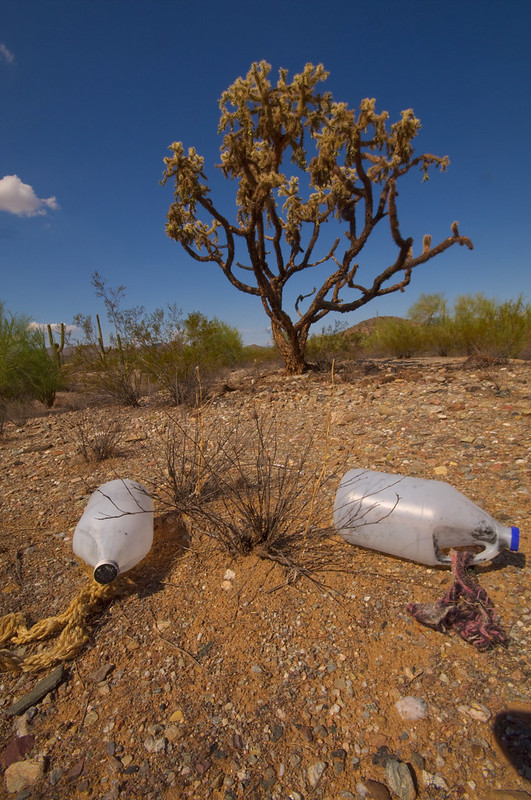
I see you in the desert
exhausted and thirsty,
and I see your haunted eyes
as you are detained, chained and
branded a “criminal.”
The smell of broken dreams
permeates the air.

You are a human being,
someone’s husband, mother,
daughter, son,
who lives, loves,
suffers, endures,
never deterred from the promise
of a better, safer life.


I am a retired social worker and volunteer with a local humanitarian aid group that supplies water to migrants in the desert. I also am with a local group that coordinates nationally to end the criminalization of migration. My poems have been published locally in the Tucson Weekly and Arizona Daily Star. I am a regular contributor to an online magazine, Downtown LA Life.

Photo credit: Jasper Nance via a Creative Commons license.

Poem Where I Mix-Up Fairy Tales

By Courtney LeBlanc


Sometimes the wolf shows up in a suit,
hair neat and tie perfect, teeth tucked
into his mouth to mimic a sly smile.
Sometimes he’s a friend, sometimes
a stranger, sometimes a lover.
Sometimes I crave the beast’s
hands on my skin, sometimes I want
his bite, sometimes I don’t want
to be rescued. I wish this sleep could
last forever, my still body tended
by the forest and the animals, hidden
from the prince’s kiss — why wake
up in a world that constantly kicks
and takes away my rights. I’ll take
the beast to get his library, I’ll take
the spindle to finally catch up
on my sleep, I’ll take the wolf
to avoid future errands. And
that house of sugar? I’ll lick
every windowpane and wait
for the witch. She won’t push me
into the fire, instead we’ll sit
around it, spiked drinks in hand,
munching on cookies, toasting
our luck at finding one another.


Courtney LeBlanc is the author of Beautiful & Full of Monsters (forthcoming from Vegetarian Alcoholic Press), and chapbooks All in the Family (Bottlecap Press) and The Violence Within (Flutter Press). She is a Pushcart Prize nominee and has her MBA from University of Baltimore and her MFA from Queens University of Charlotte. She loves nail polish, wine, and tattoos. Read her publications on her blog: www.wordperv.com. Follow her on Twitter, @wordperv, and Instagram, @wordperv79.

To the Racist in Line for Chinese Food at Safeway

By Ty.Brack


Yes, you are racist.
I know this because of the way you reduced
Estefania and America to colored women.
I know this because Estefania was helping me
and America was helping you.
You and I ordered the Express Special at the same time.
Estefania returned with my container
before America returned with yours,
and Estefania asked, Rice or chow
You cut her off with a grumble, Chow mein,
like you were so sure this was America
and she belonged to you.
When Estefania looked at you with confusion,
you looked at Estefania like she was your America,
and you grumbled again, this time with seething chauvinism,
Chow. Mein.
Estefania’s confusion changed to composure
as she said in her smoothest customer service voice,
Sir, I was actually helping the other gentlemen;
America will be right with you.
I watched the creases in your forehead
flatten into lines of seasoned microaggressions,
revealing your familiar fragile rage
over the blanks between the lines.
So I filled in the blanks for you,
Dude, you’re racist.
But I don’t think I offended you enough.
So now you’re in a poem.


Ty.Brack is a poet and teacher from Portland, Oregon, who believes each word should aid in the dismantling of the white heterosexual, cisgender, male supremacy. He performs his work through Portland Poetry Slam, Slamlandia, and Wordlights, and he doubles as a hip hop recording artist, with several singles available on major digital streaming platforms. Follow him on Instagram: @ty.brack.poetry.

Photo credit: DijutalTim via a Creative Commons license.