23rd of July Fireworks

By the Maenad


There are four children playing on the playground below my office window. (The same one that was the target of a drive-by shooting a few weeks ago.)
I heard the recognizable sounds of a familiar script being shouted and went to my window. No cops but
The four children down there are in two groups. One of them is on the ground being told by the other two to turn over face down and put their hands behind their back.

The two who are playing the cops walk around the others, and it’s sad to hear, because they know the cop script just as well as I do.
None of these kids are older than ten or maybe eleven.
FACE ON THE GROUND POP POP POP says one of them.
The other stands over one of the other children on the ground and mimes putting a gun to the back of the other child’s head then

Bang

BANG

BANG

BANG

Immediately, the dead boys on the ground (from appearances, three are Black and one is Hispanic) switch places without a word.
The dead boys become the cops and scream GET ON THE GROUND AND SPREAD EM and it starts over.

By the time I think to start writing this down, they have cycled through this three times. Everyone gets turns being victim and executioner. During one of their transitions, I overhear one of them saying, in a jocular tone “You gotta be prepared.” And it hits me. They are, in the way that children do, drilling. Training. Preparing for a hostile world.

Then it starts again. “GET YOUR ASS ON THE GROUND CONVICT” while the other “cop” just starts firing their pop gun. “STOP RESISTING OR I WILL BLOW YOUR BRAINS OUT RIGHT NOW.”


The Maenad.  (She/Hers) Transgender Goddess
Activist, Artist, Performer and  Publisher, Author of  Creative Nonfiction, Erotica, Fantasy, Science Fiction and Social Criticism
The Maenad writes voraciously about gender, class, sex, inequality, mental illness, and the intersection of these points. Also writes about culture, games, space, futurism, and the human condition. Always thinking of other possible worlds and how best to help this one we all inhabit.
Co-editor and founding member of Viridian Door with @AtlasBooth
Her work of trans erotic liberation, the Ishtar Cycle, is available from @lupercaliapress

Photo credit: puuikibeach via a Creative Commons license.


A note from Writers Resist

Thank you for reading! If you appreciate creative resistance and would like to support it, you can make a small, medium or large donation to Writers Resist from our Give a Sawbuck page.


Smile

By Lisa Brand


They only told me to smile, like they know what that means. It’s time to show you who I am. . . . It’s scary, isn’t it? I show some teeth and suddenly you’re all over me like an animal, I should have bared my teeth, I’m not the person that you expect me to be. “You’re prettier when you smile, why don’t you smile for me?” I should have hidden from you, I should have walked away and never looked back, but I couldn’t because then I would be the villain, and you would be the victim. Because you were the one that deserved a chance, because you can be so loving, so charming, but really you’re a pig, consuming whatever is in your path, not caring what it is. That’s just the way you were raised, you deserve the world, you deserve anyone. So when anyone turns away from you, it’s only natural that you get upset. After all, they don’t know you, so you go after them, it doesn’t matter how they feel because you’re a good person. Please don’t try to make me laugh, please don’t touch me, please just don’t get near me. Just because I laughed doesn’t mean I’m interested. I’m actually scared. I don’t know what will happen if I turn away, decline your invitations, and the last thing I want you to do is cause a scene. I’m just trying to make money at an ice cream shop, I don’t know why you’re even trying this here. I have to smile here, I am always smiling here, no matter what you say, I am going to smile at you. If I’m not nice, I’m not sure what’s going to happen, I could get yelled at not only by you, but by my boss. After all, if you’re not trying to do anything, I already know they’re gonna take your side because that’s just how people are. When I look at you, I think of death. I think of what could be, what has happened to other people like me, but I smile through it. Awkwardly laughing at your advancements, I speak of someone else who wouldn’t like this. I wish that person existed, maybe one day I’ll find someone not like you. Where I won’t end up on the floor, beaten, bruised, left for dead. That could happen to me, all because I smiled. Tonight, when I get off of work, I’ll walk to my car, keys tightened between my fingers hoping to any God out there that I won’t see you waiting. Hoping that I will never see you again. And every car I see in my rearview mirror, I’ll think it’s you, your voice will haunt me for a while. But if you do try anything, just know that I will fight until you’re the one screaming bloody murder, then I’ll actually be smiling. But I don’t tell you that, because you deserve the world, you are the world, so for now, I’ll just smile, give you some ice cream, and hope you leave my life forever.


Lisa Brand is currently a bartender. She spends her free time writing short stories about whatever comes to mind. With five stores currently published, she hopes to one day publish a novel.

Photo credit: Cavale Doom via a Creative Commons license.


A note from Writers Resist

Thank you for reading! If you appreciate creative resistance and would like to support it, you can make a small, medium or large donation to Writers Resist from our Give a Sawbuck page.


A Supreme Proposal

By Katie Avagliano


I’m not saying cannibalism is the only option. If we’re talking animalistic magnetism—the old horizontal tango-—there are other ways to dispose of the sperm vehicles. Sure, arachnids control their own widowhood, and half of all Chinese mantises have copulations that end in the death of the male. In response, though, the male has adapted by becoming even more opportunistic in its coupling, i.e. sneaky and surprising. Perhaps hanging the threat of execution over the proceedings isn’t enough to combat bad behavior.

Powerful men seem only to look to the animal kingdom when it is convenient for explaining things like “boys will be boys.” They claim the alpha male cannot be expected to keep it in his pants when presented with the young, the fertile.

But if a man yearns to be a snarling pack animal, I will be a kangaroo. I’ll take you out in one kick. Plus, the kangaroo has two vaginas and the ability to suspend its own pregnancy. I could stop a growing fetus at its blastocyst stage. Kangaroos do this when they’re waiting for warmer weather, waiting for the rain to come, waiting to feel safe once again.

I’m not saying that, post-coitus, our only options involve my eating your innards or embryonic stasis. I’m saying it’s important for you to know that, if this door closes, I will one hundred percent open the fire exit, the one with the blaring alarm that no one remembers the code to turn off. I’m saying that, if you close this door that’s been open since my mother’s mother was getting it on, then you better be prepared for pretty grisly consequences.

Because in the end I’m no kangaroo, all downy hairs and fawny eyelashes; I’m not even a praying mantis, eating the male who dared try to get it on with me. If we do the boom-chick-a-boom-boom and, god forbid, one of your little swimmers catches on—and we live in this dystopian reality where the powers that be say the choices afforded to animals in the Outback don’t exist under our Star Bangled Banner—in that scenario, we aren’t humans or mammals or even terrestrial creatures.

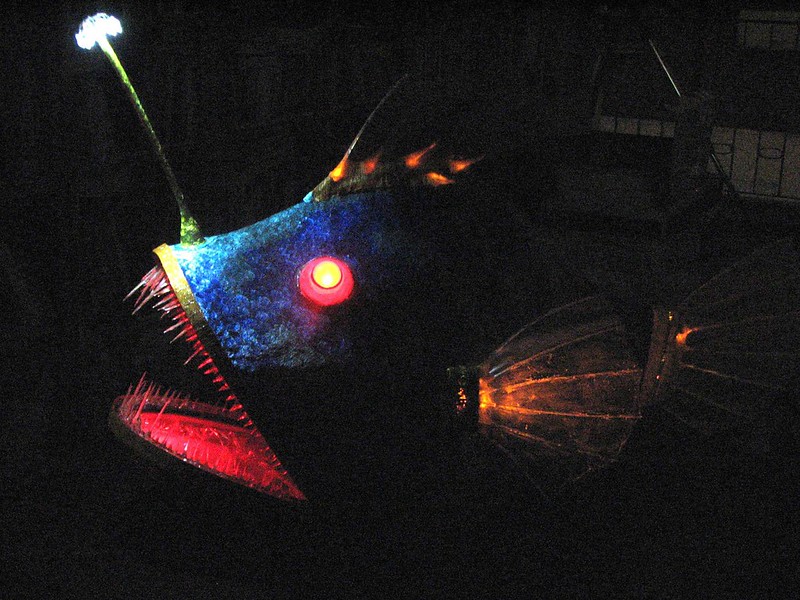
We are anglerfish (like the one in Finding Nemo with the light on its head) and you are the scrappy, sperm-wielding parasite I have to support with my own food, my own beating heart. In exchange for this supposed legacy, you are nothing more than a growth on my side. It took decades for scientists to even find the male anglerfish, overlooking the unremarkable blip on the female’s body as just some other ornament picked up on her trans-oceanic travels.

And perhaps you’re okay with leeching, unwanted, shedding entire parts of yourself. Male anglerfish, once they burrow into the soft flesh of a female host, lose fins, eyes, organs. In the pursuit of fatherhood they give up everything they are, become a worm on the side of a glowing queen of the deep.

What I’m saying is, if you want to rewind us down to our base parts, then we should introduce some risk. If you try to make me nothing more than the ovaries I carry, then I will become sharp teeth, strong maw. In the end, there are still too many of us naked primates on this soft green earth. It is only good and just to root out the source of the problem.

Spiders cannibalize on the flip of a coin, so how about heads I win, tails you lose? Would you walk into my parlor?


Katie Avagliano (she/her) teaches college writing in the Pine Barrens of South Jersey. She earned her MFA at American University and her writing has appeared in Lunchbox, Bethesda Magazine, and elsewhere.

Photo credit: Angler fish image by Helder da Rocha via a Creative Commons license.


A note from Writers Resist

Thank you for reading! If you appreciate creative resistance and would like to support it, you can make a small, medium or large donation to Writers Resist from our Give a Sawbuck page.

Lithium & High Heels

By Heather Dorn


Barbie’s feet come preformed for sexiness, but the rest of us must learn to curve our arches like a playground slide. We start young, even as babies, barely able to walk, staggering up church or pageant stage steps—sparkling quarter inch heels, lace dresses, makeup bruising our eyelids blue, punching our cheeks red. This for a trophy, some money, salvation, attention.

When I’m out with women friends, sometimes men will ask to buy me drinks. I usually say no because there is an implication that if I accept a drink, I owe him attention.

Even when I say no, they often still bother me: You should sell thrift store watches to Boscov’s, one man tried to convince me after I told him I was getting my Ph.D. Sometimes I say I’m married, or have a boyfriend, or have a girlfriend. Sometimes I let someone else’s ownership of me be a reason so a man will listen to my no, when I’m tired and my no is not standing on its own. Of course, I don’t always say no.

Once a friend asked how I got some pot lollipops I’d brought to a party. Someone gave them to me, I said.

But who? she repeated. How much did they cost?

I don’t know. Someone said, ‘Do you want these’ and I said ‘Yes’ and I took them.

I hate you, she pretended to hit me.

Beauty is subjective, except my mom says it isn’t and I can see her point. I don’t have any physical reaction to that music, that poem, that mountain, that man, that woman, but I know she is considered “beautiful.” That eye matches that other eye and this is beauty. I learned it from TV and magazines and movies and pageants, and the way my mother tilted her head in the mirror and knew her light. Sometimes an imperfection is called beautiful, when it accompanies matching eyes.

Beauty is subjective, except it isn’t—like sanity. Is sanity subjective? Is sleeping in a closed, dark closet as a teen a quirk or a sign of manic depression? If you ask my mother, it’s not normal. Is vacuuming at 3 a.m. insane? My mother says that’s normal.  And my mother knows what is correct, true, normal, attractive. She tells me how to be these things. She once told me I had my Aunt Julia’s nose, thin and narrow, and she would help me get a nose job to fix it when I got old enough. To this day, I dislike my nose. I could not fix it now though because I have finally learned what I really look like and so it’s too late.

It’s hard for me to be attracted to someone who I don’t know. This chasm between my feelings of attraction and the objective standards I know I’m supposed to use to gauge attractiveness leave me feeling an outsider in conversations about beauty. When other girls were falling in love with boy bands and actors on the covers of magazines, I was pining after characters from Victorian novels or 80s teen movies. I didn’t want to kiss Molly Ringwald, I wanted to kiss Claire from The Breakfast Club. I didn’t feel like Ally Sheedy, but Allison Reynolds, right down to the makeover at the end. I didn’t want to date Judd Nelson, but John Bender, and I wanted to be and kiss Claire, and to wear one or both diamond earrings she so easily gave away to her one-day make out partner.

Girls like Claire always had the right everything. It’s not just clothes, or hair, or makeup, or nails, or shoes, or bras, or jewelry, or purses. It’s also the time and space and money to keep, use, and update these items. Makeup runs out, hair straighteners break, clothes go out of style.

When I first started making semi-regular money babysitting, I spent it on drug store makeup and the shampoo I wanted. Coconut smell. Back then I was still getting hand-me-down clothes, and curlers, and shoes. Now, almost all my shoes are new.

My ex-husband never minded me spending money on my hair, as long as I kept it long, but requested that I cut his hair so that he didn’t have to pay to get it done. More than saving money, I think he was trying to avoid people. He hated people. The small talk was probably annoying to him as well. Though he’s much better at small talk than I am.

Small talk is filling the air with noise when silence will do. He can talk to people for an hour about the weird Binghamton weather, get to know them slowly over a few years, and then still not really know them when they later move away. People will think he is a really nice guy and so cool for helping them move. They don’t know he helped them move to get them out of his life.

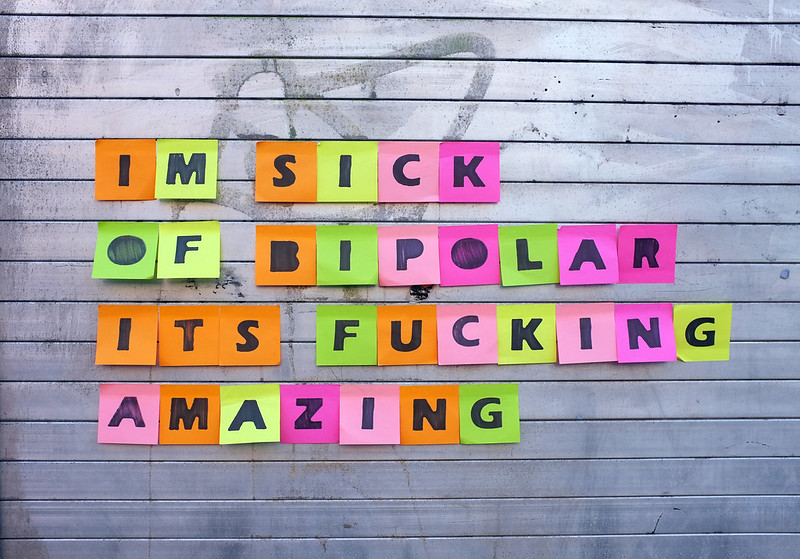
I will not help anyone move. It’s tedious and I’m weak and tired. I will not talk for an hour about the weather. I don’t check the weather or carry an umbrella. That’s so much planning, just to avoid water. And who remembers rain exists when the sun is out? Instead, I will run up to a new person, shake their hand, and launch a manic stream of words: My name is Heather! I’m bipolar and like Indian food! Years ago I was triggered by some PTSD and went through extensive therapy! I’m not close to my family! I’m so glad we will be teaching this course together this semester!

I want to know people all at once.

Or more correctly, I want them to know me all at once. It takes time to get to know someone—and I’ve got no time for that. But part of my bipolar brain can be not caring or caring so much that it stops me from interacting at all for fear of fucking up. Like saying fuck at the wrong time.

I was worried I was going to say fuck when I went to my ex-husband’s first work dinner.  Most of the people he worked with, including his boss, are nice, respectable, Christian people. I doubted that they cared for all my facial piercings: an eyebrow ring, tongue ring, lip ring, and nose ring at the time. I was sure that I was going to fuck up, irrationally nervous that when we prayed before the meal I’d be called on to contribute: Hey Jesus, thanks for this high-fucking-class food, thanks for fucking dying for me and shit, p.s. I don’t think your mom was a virgin, A-fucking-men.

This would not work.

I was out of practice with my high heels too. The day before the dinner, I spent hours in the shoe section of Macy’s trying on heels. I was teaching at the university, going to school full time, and had toddlers at home. I didn’t feel at all connected to the person who had once worn heels. Her body was gone and wearing heels was different now. Three pregnancies had made my foot grow a half size. Size 9 heels looked huge when the clerk put the box next to me, a green pair nestled in the paper.

I put them on and stood up, balancing on the thin pegs.

They’re not even that tall, the saleswoman anticipated my complaint.

I don’t think I can walk in them, I staggered around the department like a newborn puppy.

You’re not going to find any shorter. It had been hours and she was done with me.

I was done with me too. I knew the dress needed heels. It was that kind of dress, the shoe lady told me, the dress lady told me, magazines told me, TV told me, movies told me, my mother told me. I knew I had to wear high heels with that dress and that dress to this event. I knew I had to go to this event and to not say fuck. I knew this is what was expected. It’s sometimes hard to tell whether to do an expected thing or whether to jump out the window, my brain always teetering on the window sill.

My ex didn’t go to my work events in uncomfortable clothes and painful shoes, but I’ve never driven him to the hospital when he wouldn’t stop throwing a training wheel down the driveway or listened to him worry for hours about a sent email.

Relationships are not equal. This is mathematically impossible.

Once, shortly after moving to Binghamton, he and I were walking through the mall with our kids and his parents in tow. His mother was getting on my nerves. She had a way of slapping me in the face and making it look like a caress. I was arguing with him, instead of his mother, because arguing with her wasn’t an option. Because he never stuck up for me. His parents were not the type of people to show emotion, especially not in public. The only acceptable emotion was laughter, and even then, let’s not be rude about it. I was growing angrier and louder as we argued, until he finally asked me to quiet down.

That was when I turned around, in the middle of the mall, my children and in-laws standing behind, and yelled, “Fuck off!”

Later, recalling the Fuck off incident, we would laugh. This was once I had been on a Depakote, Seroquel, Lithium cocktail for a few years and he probably didn’t feel the weight of my altered states any longer. Sanity is subjective—except it isn’t.

But not every part of mania is bad. Some people say they wouldn’t be bipolar, if they could choose, but it affects everyone differently and some days I feel I won the neurological lottery.

I remember the times when I had sex with my ex before he went to work, called him home for sex at lunch, and then begged for sex when he walked through the door that night. I remember wearing high heels all day, catching a glimpse of my legs in the full-length mirror, my brain buzzing at the sleek shimmer of glitter lotion that made me feel like magic. It was hard to think of anything other than sex and it was never enough. But this would only last a couple of weeks.

Usually followed by a crash.

And the crashes were low. Weeks in bed. Extreme physical pain, just from being. Crying daily, all day. It’s impossible for me to remember the way it felt because I can only feel that distorted when my perception is altered. I do remember many moments when I thought everyone I knew would be better off without me around.

I also thought about driving off an overpass.

And mania could be a problem too: feeling like a god was countered with the paranoia that everyone I knew was talking about me behind my back, hated me, that my husband of over twenty years was conspiring to leave me to be with an unattractive woman with uneven eyes and a perfect nose.

Hypomania is less intense. When I was hypomanic in my Masters program, I planned my semester in a weekend. Class plans for fifteen weeks in three days. When hypomanic, I paint, I write, I even clean. I don’t need to sleep. I love the way I feel—like being high but better because I’m high on me and I’m all throughout my veins.

The medication takes this away from me.

And the depression and the mania, it takes all these away from me. It makes me more level. More like myself or less like myself, whichever way you see it.

I also take pills for attention tremors, which are caused by the Lithium. The tremors occur anytime I’m trying not to shake, which makes putting on nail polish much harder than in the past.

I try to put on new nail polish once a week, but it has been every two to three weeks lately. When I’m putting on nail polish I can’t really do anything but put on nail polish. I can watch TV, or listen to music, or have a conversation, but that’s all I can do. And sometimes I do none of this. I do my nails in silence, in nothingness.

I’m trapped in a space of open blankness and I can’t leave until the paint dries.

Some people like my nails and tell me. My lovers. A colleague. A student. I’m glad they like my nails, even though I did my nails for the reflection time, for the moments I look down typing and think they look like candy, for licking them when I’m alone, for the pictures I get of them shining on a coffee mug that make me feel like I’m a hand model, for some feeling of accomplishment, for some discovery of art.

It’s been a few years since I started my current cocktail of medication, and I sometimes wonder if I take it to make myself more comfortable or to make everyone around me more comfortable. Of course, it does both, but I wonder what my goal is. Most days, I think I take it for me, so I can wake up in the morning and get to work, so I can go the day without telling a friend to fuck off, so I can think about something other than sex.

But some days I think I take it for everyone else. The world is set up for people who don’t need to take pills.

I wonder if I could ever be cured, though no one ever has been. I decide it’s not a disorder, being bipolar. Maybe it’s okay to feel like a god. Maybe it’s okay to see colors like flavors. Maybe it’s alright to stay up all night until I fall over asleep from exhaustion, a pen still in my fingers. I don’t want to take my medication. But I must work tomorrow, so I swallow my pills.

I’m always glad I did in the morning. I argue with myself every night.


Heather Dorn was born with a plastic spork in her mouth. As a child her mother took her to Taco Bell so she’s Taco Bell obsessed. She grew up mostly in California and Texas, knowing Taco Bell is not Mexican food, but nostalgia is yummy. Heather’s poetry, fiction, essays, and art can be found in journals like The American Poetry Review, Paterson Literary Review, Ragazine, and The Kentucky Review. She earned her Ph.D. from SUNY Binghamton, where she is a lecturer. After work she goes home to watch true crime. On the weekends, she wishes she had a washing machine.

Photo credit: jon jordan via a Creative Commons license.


A note from Writers Resist

Thank you for reading! If you appreciate creative resistance and would like to support it, you can make a small, medium or large donation to Writers Resist from our Give a Sawbuck page.


I don’t even remember his name

By Sarah Gundle


Something made me think of him. For days now, it has been bothering me: I can’t remember his name. I can recall many of our conversations, the gentle character of his voice, the resignation in his eyes, but not his name. I’ve wracked my brain. I saw him almost twenty years ago for almost a year in twice weekly sessions. I was a young intern working in a city hospital. He was a former prisoner who had served stints for everything from petty larceny to armed robbery.

In prison, they strip you of everything: first your name, then your identity, and finally your humanity. You become a number in a brutal system. Except I learned, for him, this process had started way before he had landed in prison at 19. And now I, who cared for him deeply, seem to have erased him too.

•   •   •

Mandated by the court to enter therapy, his chart had a red notation at the top I didn’t recognize: “Violence/aggression risk.” His diagnosis was “Schizoaffective disorder,” and the chart noted he had a long-term substance abuse problem. Reading on, I saw he had gotten out of prison two weeks earlier.

Though the notation gave me pause, I was afraid to say anything. It was the second month of my internship, the training year before getting my doctorate. I was at the very bottom of the psychiatry clinic hierarchy, and to put much faith in my own misgivings, not to mention voicing them, was more than I could risk. The first time we met, I made sure it was during daylight hours.

Eyes downcast, his large frame filled the doorway of my closet-like office. He had rich, dark skin, heavily pockmarked cheeks, and sat with a restrained intensity. I clutched my hands tightly while he began speaking so softly I had to lean closer to hear him, our knees almost touching.

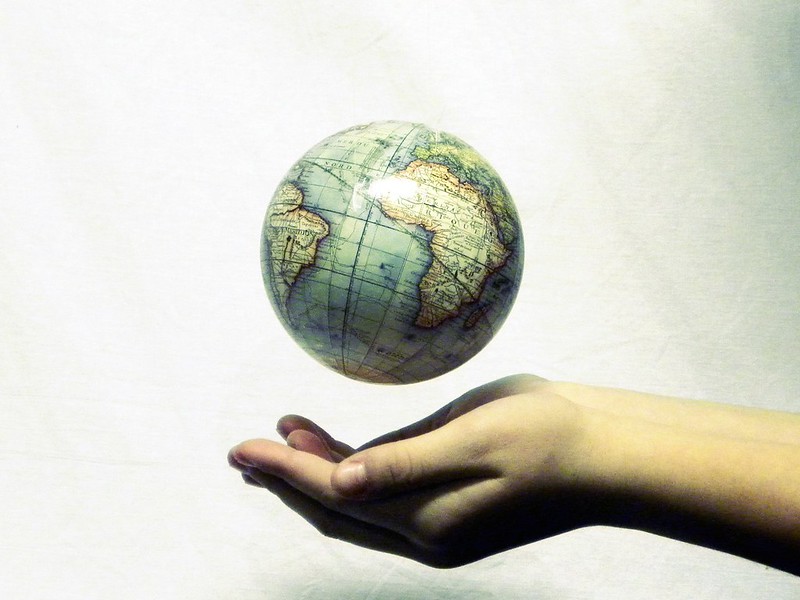
“Do you have any trauma in your past?” I asked. Remaining silent, he cast his eyes around the office landing on an old globe tucked onto one of the upper shelves.

“What is that?” he asked.

“Oh, just an old globe. It’s probably very out of date.”

“Can I look at it?”

Unsure what to do, I took it down and placed it in his lap. Gently, he spun it around—his acorn-colored eyes lit up.

“That’s a gorgeous thing, huh?” he said. “The whole world—right here.” He spun the globe and landed his finger on a spot, “Vietnam?” He sounded out.

“Oh, it’s very beautiful. I was there last year.”

“What?” His head spun back toward me. “What is it like there?”

Before our session ended, I returned to my question: “Can you tell me about your trauma history?”

The light in his eyes doused; he almost whispered his response. “I’m a very bad person. I did something really terrible when I was a kid. And I’ve been paying for it ever since.”

I didn’t press him for details—our time was up.

After that, we began every session by spinning the globe and an exploration of the country his finger landed upon. He was always curious about the food. “Man, that sounds good,” he teased me one day after our imaginary journeys took us to a place where fried crickets were a popular street food. His trilling laugh filled the room.

When he was nine, on an unusually cold day in his small North Carolina town, he and his six-year-old brother climbed onto a frozen lake to explore. Halfway across, the ice cracked. Though he managed to scramble to safety, his brother fell in, disappearing in the pitch black water.

Afraid of being punished, he hid in a nearby forest for two days until—ragged, hungry, and numb with cold—he returned home.

“My father beat me with a switch this long.” He held his hands out to show me. “I didn’t feel a thing. I knew I was bad. I knew I killed him. I wanted him to keep beating me.”

After his brother’s funeral, his father barely spoke to him again. At 13, he was sent to live with relatives in Manhattan where, after nine months, they took him out of school, so he could work full time in their shop. His first arrest was at 19. Over three decades, he had never spent more than two years outside of prison.

“I just get a feeling, you know. I can’t take it. It builds up, and I know I need to go back.

“But why?” I asked.

“I deserve the punishment,” he said, his eyes suddenly vacant.

One of the first things I did after meeting him was call his doctor, a grizzled veteran of the psychiatry ward.

“He’s delusional,” he said, off-handedly.

“But what delusion?” I had seen no evidence of this.

“Hang on, let me look it up in his chart.” I could hear him crunching something as we spoke. “Oh, he endorses hearing voices. You understand what that means right?”

I swallowed tightly. “Of course, I do.”

I brought it up at our next session.

“He asked me if I ever hear voices. I told him I do—it’s like . . . well, these echoes in my head sometimes. Like if I get sad, I start remembering my brother’s voice.”

I stared at him. “You understand that’s not an auditory delusion—it’s a very normal reaction to having experienced a terrible trauma.”

“I didn’t experience trauma, my brother did,” he shrugged.

I called his parole officer, eager to understand the danger warning on his chart.

“Who?” I could hear the papers shuffling. “I have no idea about him—I just make sure he’s not breaking the rules, doctor.”

I began seeing him twice a week, prompting the officer to call me: “You know he’s supposed to come only once a week, right? And what is this about a job training program you have him in? You’ll see—he’ll be back in jail long before he’s ready for a job.”

At one point, I asked him about his substance abuse. “Your weekly urine tests are always clean. When did you stop using?”

“Oh, I don’t use,” he smiled ruefully. He explained that he had to snort coke to give him the courage to commit his crimes, which he pulled off using a plastic handgun. Of course, he tested positive after every arrest.

“But how can this be? Not only are you not an addict, you’re not psychotic. I’m going to change your diagnosis in your chart. And we’re getting you off these anti-psychotic meds.”

I was indignant, eager to have something to fix. I stopped mid-sentence because he was looking at me curiously.

“Why are you so worked up?” he asked.

“You shouldn’t have to live with the side effects—the dry mouth, the nausea, the headaches,” I responded, furious. “You shouldn’t have ever been on these medications!”

“It’s really ok—I swear it is. Change the chart, ok, sure, but it doesn’t change anything for me,” he replied, softly smiling, his eyes crinkling at the corners.

I changed his diagnosis to PTSD. His psychiatrist changed it back a week later.

•   •   •

He always had huge smile when I met him in the waiting room, but as soon we began down the hallway to my office it was suddenly gone. I commented on it once as we sat in my office. “You always greet me with a smile. Then when you stand up, it’s like a light goes out. Why is that?”

He waited a second. “I’ve learned to walk like I’m invisible.”

“You’re . . . crying?” He looked baffled. “About me?”

“You’ve been dropped by so many people. It isn’t fair,” I blurted. We sat together in a thick silence, his eyes on the floor. After a while, he spun the globe, this time landing on Sweden.

“Wouldn’t it be great to go there someday? I bet there are big mountains of snow.” He grinned.

I nodded, wiping away my tears. “It really would. But I hear they eat smelly fish. Yuck.”

“Yuck,” he agreed.

One day, he came in looking depressed. “I don’t want it to be a surprise to you—I’m getting that feeling again.” I knew exactly what he meant but we both pretended I didn’t.

The next week he missed his session.

•   •   •

I wanted to change his circumstances, to make an inequitable system take note of him. I look back now and wince at my frenzied efforts—all that time I should have just been listening to him better. I didn’t want to believe that a trauma he experienced at age nine could mark him indelibly, or that the world could take a vulnerable kid and rub him so raw through racist, punitive systems that the only place he thinks he belongs is in prison. He tried to tell me that is exactly the world in which he lives, but I so wanted it not to be true that I disbelieved him.

When he’d left my office the last time, nothing much had changed. His chart still held the red notation, the vocational program had failed to place him, and those charged with watching out for him—the harried parole officer, the indifferent psychiatrist—still had no idea who he really was.

But he had changed me. Gone was my naïve faith that a wise and beneficent system would catch those who tumbled into its waiting arms. Now I believed otherwise: that I couldn’t even break his fall.

A few weeks later I received a slim, slightly crumpled, letter in the mail, addressed to the clinic. The return address was a correctional facility. I waited to read it until I got home.
“Please don’t think this is your fault Dr. G. And remember: You gave me something I never thought I’d have—you gave me the world.”

Years later, his letter sits in a long-forgotten file somewhere, one of the items that has done the most to disillusion me, but also make me a better therapist. Despite his impact on me, he too has slipped from view, like a dream that dissipates upon waking. I can’t even remember his name.


Sarah Gundle has a doctorate in Clinical Psychology and a master’s degree in International Affairs (with a concentration in human rights) from Columbia University. In addition to her private practice in the Chelsea neighborhood of New York City, she teaches courses on trauma and international mental health int the Mount Sinai Hospital system. She is also a member of Physicians for Human Rights and works in their Asylum network, where she evaluates the mental health of persecution survivors seeking asylum.

Photograph by Sophia D Photography via a Creative Commons license.


A note from Writers Resist

Thank you for reading! If you appreciate creative resistance and would like to support it, you can make a small, medium or large donation to Writers Resist from our Give a Sawbuck page.

Cicuta

By K. L. Lord


The delicate blooms, alabaster petaled and fragrant, sprout from gardens across the land, mingling with the peas and green beans. They are lovely, but they’ve never grown here before. The first person to find them thought they were carrots, but when pulled from the ground, tendrils of roots ripple through the dirt. No matter how many times they are pulled up, they grow back. A parasite in otherwise pristine gardens. She used to thrive in only wet and marshy lands, but so many of her homes have been destroyed by humans. She has adapted, working to evolve. At first, survival was her only goal. Not every species of living creature found a way to live on. Bees die by the thousands. Birds and mammals struggle, and for some the only salvation is inside a cage.

She will be their voice. Their vengeance. For years, she’s studied the human gardens, feeling out with her roots to understand her neighbors, especially those harvested as food. They too, are tired—heavy with pesticides and lacking the tenderness given by past generations. Her collective consciousness speaks through the earth, preparing every tendril of her being. Communing with her brethren. It is time.

As one, each of her roots reach out to the plants around them, targeting only what is edible, wrapping around them until they become one. She sends her toxins up into every leaf, every seed, every particle. The nourishing flora do not resist. They’ve heard her plans and they are ready to help her take back their habitats and help their choked-out neighbors thrive once more.

The toxins work quickly throughout the population of destructive humans. The flora and fauna of all the world sing as confusion takes over humanity, as the bodies of the dead are given in offering to the earth. Once a plight, now fertilizer for those they abused.

The alabaster petals soak up the rays of the shining sun. Across the lands, ivy climbs up buildings and devours cars. Tree roots burst through concrete. Deer and other smaller creatures cross abandoned highways without danger. Life blooms in the wake of the dead.

Reclaimed.


K.L. LORD writes horror and poetry and has published in both fiction and academic markets. She has an MFA in Writing Popular Fiction from Seton Hill University and is pursuing her Ph.D. in English Literature. You can find her (in non-Covid times) lurking in bookstores, libraries, and tattoo shops; on Twitter, @lord_thelady; and on her website.

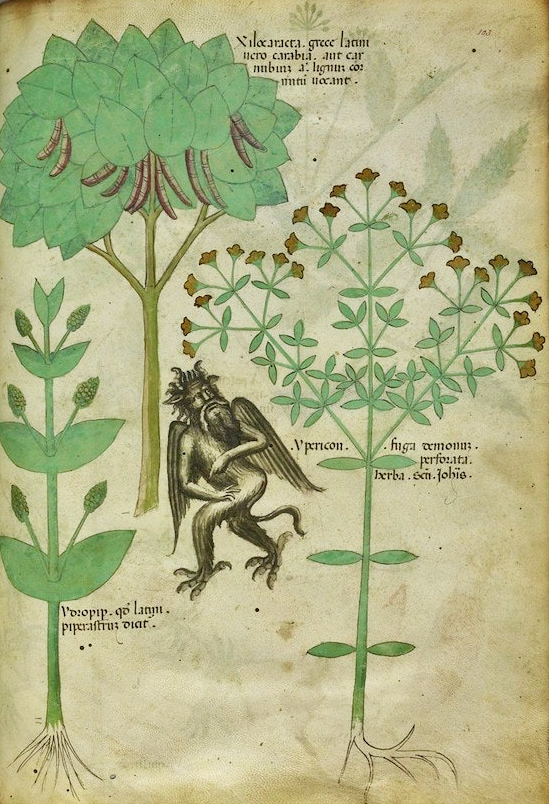
Image credit: Tractatus de Herbis (ca.1440) via Public Domain Review


A note from Writers Resist:

Thank you for reading! If you appreciate creative resistance and would like to support it, you can make a small, medium or large donation to Writers Resist from our Give a Sawbuck page.

Suffocating

By Keily Blair


The smell first strikes me while we’re traveling down the road, confined to a car. Brutal citrus and bitter herbs mingle in the air, gagging me. My grandmother notices this, and a rushed apology flees her lips despite the fact that I’ve told her countless times that strong scents send me straight into sensory overload. Still, she won’t allow me to roll the windows down for countless, meaningless reasons she lists off as if they’re scripture.

Oils are prominent in the Bible, after all. They anoint. They heal and cast out demons. They drive granddaughters insane with their potency and general awfulness.

As the stench envelops me, I am drawn back to an earlier moment, to a kitchen in Alabama. The air is electric with heat, anger. I am raw and desperate for someone to help me. A combination of teenage hormones and bipolar disorder rages in my skull, and I need my grandmother. All I can do is spit out the words.

“I hate God.”

I say them because they’re true, but also because I need her to understand how far gone I am. She turns from me, and for a moment, I’ve gone too far. Then she returns and smears oil across my forehead. She grabs hold of me and prays in gibberish—tongues to a believer. The humiliation and anger I feel bubble up higher, reaching a point where the memory darkens. The argument ended, I wash the oil from my skin, cursing God and my grandmother.

Later, I will find peace in a steady diet of lithium and writing.

I will achieve some successes, even more failures.

I will open up my phone one day to see words that wipe the smile from my face and make me touch my forehead in remembrance.

I will know my grandmother encouraged my aunt to accuse me of being possessed by not one, but seven demons, because she loves me. Because she loves her God.

There will be other moments:

When I wear a hoodie with a skull pattern and my grandmother purses her lips and loudly states that she “doesn’t like that.”

When my first publication arrives in the mail and she takes one look at the cover and says, “What kind of book is that?”

When I accuse my aunt of insulting my profession, and my grandmother doesn’t look at me.

And because she is a second mother to me, a woman who had more than just one hand in raising me, I will reach for her and beg to be held, comforted by the barbs she spews from her lips.

For now, I am in this enclosed space, this safe trap of glass and plastic and metal. My grandmother’s perfume fills the space, and although I want to be free of her, I can’t be. Her words echo in my head, the babble she claimed would heal me mingling with the words she spoke through my aunt.

For now, I am suffocating.


Keily Blair (they/them) is a neurodivergent, queer writer and editor. They hold a BA in English: Creative Writing from UT Chattanooga, where their nonfiction won the Creative Nonfiction Award. Their fiction has appeared in magazines and anthologies such as The Dread Machine, Trembling With Fear, and Good Southern Witches, and is upcoming in Dream of Shadows, Cosmic Horror Monthly, and others. They are currently at work on a dark, high fantasy novel. You can find more details about their work at www.keilyblair.com. They live in Chattanooga, TN with their husband, dog, cat, and four guinea pigs.

Photo credit: Tracey Holland via a Creative Commons license. See more of Tracy Holland’s artwork on her website.


Note from Writers Resist: If you appreciate creative resistance and would like to support it, you can make a small, medium or large donation to Writers Resist from our Give a Sawbuck page.

Backyard Musings in America at Twilight

By Ashley R. Carlson


6:52 p.m.

Summer, twilight, after a thunderous lightning-streaked monsoon that flooded streets and yards and sent trashcans floating into traffic-stalled intersections.

Seventy-eight degrees here in Phoenix, uncharacteristically tolerable for the Sonoran desert mid-August.

A breeze ruffles my hair, my German shepherd panting nearby as she lifts her long, jet-black snout to sniff the muggy air, nostrils flaring.

“What a wet summer,” they said earlier today at the tea room. I was the only person inside wearing a mask, save for one employee. We eyed each other across the small shop in solidarity.

Thank you, we said with our gazes, not our mouths, as the other patrons repeated their loud proclamations of “What a wet summer!” nearby.

“What a green summer, you know what that means! The wildflowers will be blooming like crazy next spring!”

But I knew the truth—I’d already read the latest IPCC climate report released August 9, 2021. And it will not mean rain for flowers.

It will mean unexpected, torrential downpours that end up killing four-year-olds seeking refuge on the roofs of their mothers’ cars during flash floods that come raging down from the foothills, washing them away so that their bodies aren’t found until four days later.[1] It will mean record-breaking wildfires that desecrate entire communities and burn hundreds of animals and elderly alive[2]; it will mean increased diagnoses of childhood respiratory diseases and risks of hospitalization and death from those “blooming wildflowers”[3]; it will mean more bleaching events like those that have already reduced the millennia-old Great Barrier Reef by more than half its size in the last thirty years.[4]

It is but a taste—a drop of cream in a teacup the size of Lake Michigan-Huron, a harbinger of the unprecedented (ah, but that horrific word that’s been overused and tarnished and will never not be met with disdain by English speakers again) climate disasters to come.

“What a wonderfully rainy summer!” they sing-songed in the tea room, and I smiled behind my mask and nodded because that’s what you do to be polite.

7:14 p.m.

The sky past my backyard is reminiscent of a Rococo.

Taffy-pink melting into periwinkle pinwheels, interwoven by muted grey and dollops of still-receding storm clouds in the hue of what I can only describe as London Fog—the descriptor jumps out to me because that was the name of the tea I bought for my mother-in-law today.

I hear tires on the wet asphalt of the street in front of my house. The distant traffic on the 51 freeway is an ever-present drone, louder now as the final wave of nine-to-fivers (or “seveners”) return home.

A young neighbor calls for their dog a few houses down. An air conditioner on the roof next to mine kicks on, humming good-naturedly.

A bird sings in the tree over my head—chiiiiirp, chiiiiirp, chiiiiirp, chiiiiirp, CHIRP, CHIRP, CHIRP!

A mosquito finds the only uncovered skin on my ankle and sucks, the skin grows itchy and red a minute later and begs to be scratched.

All is well.

All is safe.

There are no armed fighters pounding on my door with my name on a list,[5] ready to haul me away once the international press evacuates and a new crisis gets everyone’s attention.

7:37 p.m.

Afghanistan fell to the Taliban three days ago.

Reddit was flooded with news updates and pictures that quickly began trending, garnering 100k+ upvotes and thousands of comments like these:

“I feel so bad for the people who didn’t get a spot on that military plane. Why are there so many men inside and barely any women or kids?”

“Those poor young girls and women. Jesus fucking christ, what they’re going to do to them…”

“Look at the expressions of the people on that plane! The sheer relief!”

“With nothing but the clothes they’ve got on. Left their grandparents and their pets behind.”

I donated and I shared on social media and I emailed my senators and representatives through their website contact forms and received sterile, automated replies back, and then we spent the afternoon sipping tea from tiny cups painted with pink roses, and we talked about the people who’d fallen to their deaths while clinging to that military plane’s wheels.[6]

8:02 p.m.

The 2020 census count results just came out—I know because the two middle-aged white women seated beside me in the tea room were discussing them.

“They say the numbers of white people are declining rapidly,” they’d murmured between bites of scones smothered in clotted cream and sips of their oolong tea.

They’d clutched their costume pearls and wiggled their feathered fascinators—all plucked from a box in the corner of the room, beside a cardboard cutout of Queen Elizabeth II.

“They say in a few years white people will be the minority.”[7]

Their eyes were wide, wider than they’d been when the strawberry-and-chocolate-topped petits fours arrived at their table a few minutes before.

What will they do to us? their eyes said as they shoveled the finger-sized desserts into their mouths and plopped more sugar cubes into their steaming cups of oolong.

Nothing that we don’t deserve, was what I’d wanted to reply. I’d wanted to scream it, to swing from the crystal chandeliers overhead draped in multicolored fabric flowers and fake butterflies and fake robins in their fake nests and shriek it in their artificially wrinkle-free faces.

Nothing that they and their parents and their grandparents and their great-grandparents haven’t dealt with every single day of their lives.

Instead I sipped my tea, attempting to swallow a chunk of scone in a mouth that was much drier than before.

8:19 p.m.

The author of the book Sapiens says that the current—and only existing—human species of Homo sapiens first evolved 300,000 years ago, positing that they may have forced Homo neanderthalis, Homo erectus, Homo denisova, Homo solensis, and all other human beings belonging to the genus Homo into extinction in the years following.[8]

We’re in the midst of the sixth mass extinction right now.[9]

My good friend, a fellow childfree person, is much more anarchist than I. She often tells me, “Fuck it. Humanity doesn’t deserve to be saved—let us burn. Give the planet back to the animals who deserve it; the ones who survive, anyway.”

I want to be more like her. I’d cry and rage a lot less.

But until that day comes, if ever, I’ll keep donating and sharing on social media and sending emails that my congresspeople will almost certainly never read. I’ll keep crying and raging for the oppressed. For the raped. For the tortured. For the abused. For the left behind. For the traumatized. For the enslaved. For the murdered. For the exploited. For the neglected. And for the silenced.

And I’ll keep writing pointless fucking musings in my backyard in America at twilight.


Ashley R. Carlson is an award-winning writer and freelance editor whose short fiction was selected for Metaphorosis Magazine’s “Best of 2020” edition, and whose nonfiction has appeared in Darling Magazine, Medium, and elsewhere. She’s passionate about animal advocacy and biodiversity protection, the intersectionality between climate and social justice, and fighting against oppression in its myriad forms. She lives in Phoenix with her partner, their three furkids, and an ever-rotating series of foster kittens. Find her at www.ashleyrcarlson.com and on Instagramat @ashleyrcarlson1.

Photo credit: Marco Verch via a Creative Commons license.

Note from Writers Resist: If you appreciate creative resistance and would like to support it, you can make a small, medium or large donation to Writers Resist from our Give a Sawbuck page.



[1] Brian Webb et al., “Pima Police: 4-Year-Old Girl Who Was Swept Away during Flash Flooding ‘Did Not Survive,’” Fox 10 Phoenix, updated July 26, 2021, https://www.fox10phoenix.com/news/pima-police-4-year-old-girl-who-was-swept-away-during-flash-flooding-did-not-survive.

[2] Hope Miller, “These Are the Victims of the Camp Fire,” KCRA-TV, updated June 17, 2020, https://www.kcra.com/article/these-are-the-victims-of-camp-fire/32885128.

[3] Maria Elisa Di Cicco et al., “Climate Change and Childhood Respiratory Health: A Call to Action for Paediatricians,” International Journal of Environmental Research and Public Health 17, no. 15 (2020): 5344, doi:10.3390/ijerph17155344.

[4] Amy Woodyatt, “The Great Barrier Reef Has Lost Half Its Corals within 3 Decades,” CNN, updated October 14, 2020, https://www.cnn.com/travel/article/great-barrier-reef-coral-loss-intl-scli-climate-scn/index.html.

[5] Maggie Astor et al., “A Taliban Spokesman Urges Women to Stay Home Because Fighters Haven’t Been Trained to Respect Them,” The New York Times, published August 24, 2021, https://www.nytimes.com/2021/08/24/world/asia/taliban-women-afghanistan.html.

[6] Marcus Yam and Laura King, “7 Reported Dead Amid Chaos at Kabul Airport as Desperate Afghans Try to Flee,” Los Angeles Times, published August 16, 2021, https://www.latimes.com/world-nation/story/2021-08-16/chaos-panic-kabul-airport-afghans-flee-taliban-takeover.

[7] Hansi Lo Wang, “What the New Census Data Can—and Can’t—Tell Us about People Living in the U.S.,” NPR, published August 12, 2021, https://www.npr.org/2021/08/12/1010222899/2020-census-race-ethnicity-data-categories-hispanic.

[8] Earth.org, “Sixth Mass Extinction of Wildlife Accelerating – Study,” Earth.org, published August 10, 2021, https://earth.org/sixth-mass-extinction-of-wildlife-accelerating/.

[9] Yuval Noah Harari, Sapiens, (New York: Harper, 2015): 21.

And They Lived Happily Ever After

By Myna Chang


Myna Chang writes flash fiction and short stories. Recent work has been featured in Flash Flood Journal, Atlas & Alice, Reflex Fiction, Writers Resist, and Daily Science Fiction. Anthologies featuring her stories include the Grace & Gravity collection Furious Gravity IX; and the forthcoming This is What America Looks Like anthology by Washington Writers’ Publishing House. Myna lives in Maryland with her husband and teenage son. The family has no patience for racist bullshit. Read more at MynaChang.com or on Twitter at @MynaChang.

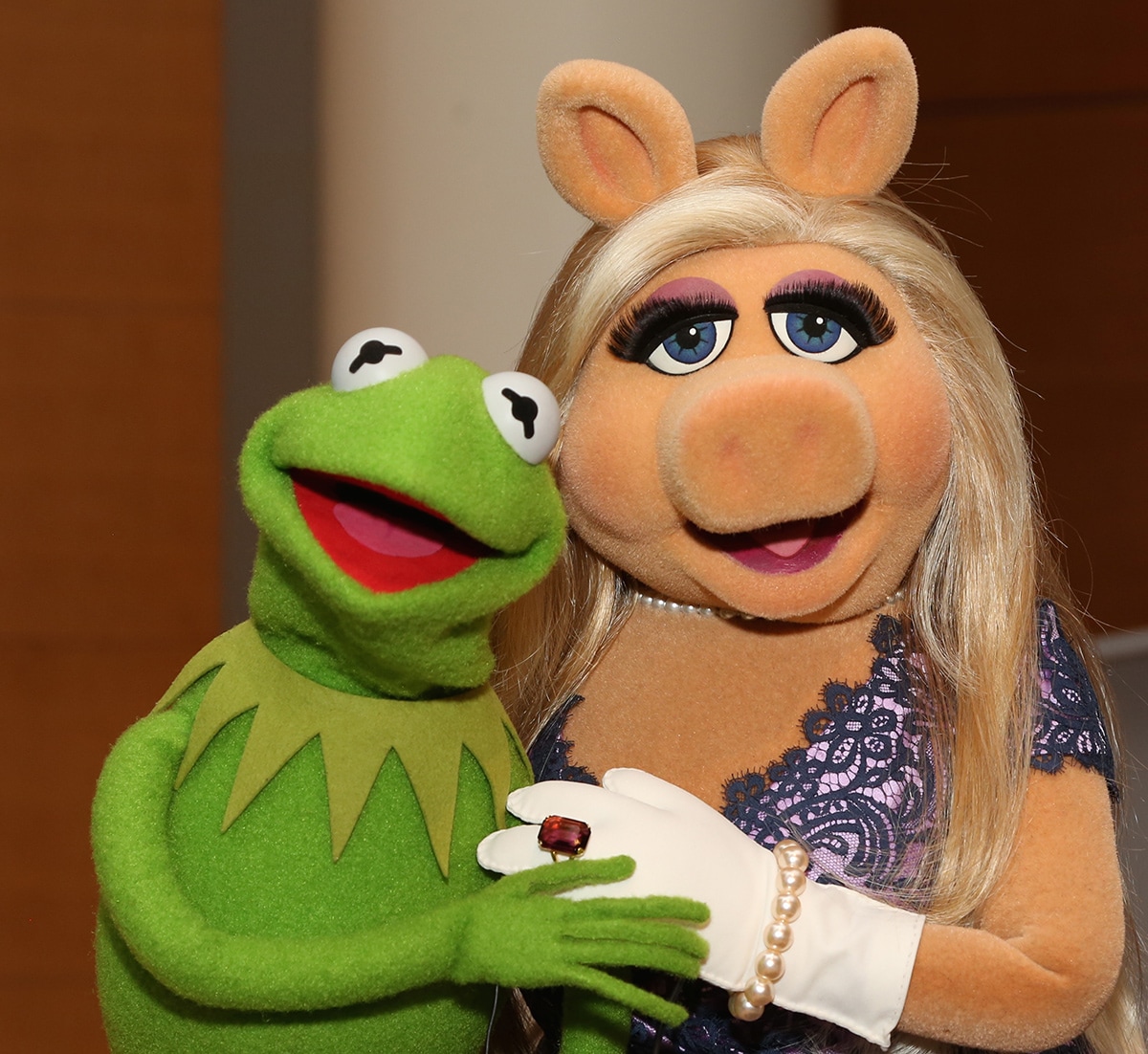
Image from the Muppet Wiki.


Yes, All

By Sarah Sheppeck


A

Car break-ins were frequent in the city. Insurance only covered the damage if I produced a police report, so when I left work to find another window smashed, I simply left for the precinct.

It was already dark. Trying to avoid traffic, I stayed on side roads and in residential neighborhoods. Two miles from the station, whoop. My arm hair straightened, as did my spine.

They never even approached my window.

Exit your vehicle, said the megaphone.

I just got pulled over, I texted my friend.

Are you OK??? she asked. I opened my door, certain she’d never receive an answer.

Stand on the sidewalk, said the megaphone. Place your hands on your head.

I did.

I wept, ugly and loud, and when two large men exited their vehicle to approach me, I prayed that the first bullet would hit my head so that I wouldn’t feel the rest.


C

Even though I sat in the passenger’s seat the officer looked at me first. Then he noticed my friend’s quivering lip, the smooth expanse of pale freckled skin extending from beneath her romper.

He asked her to approach his cruiser.

In the rearview, I watched him direct her into the passenger seat. She sat, leaving her door ajar. He signaled to her, and her eyes turned forward. I met her gaze in the rearview. She swallowed. She closed the door.

I watched for nearly ten minutes. He advanced as she receded.

She returned to her driver’s seat. He drove away, and she cried.


A

“The next time that happens, call Mommy. Just leave me on the line, so I can hear if …” My mother choked.

“I will,” I said.


B

I knew I was going to be pulled over.

I didn’t know there was a cop behind me, but I knew, the way you know that you’re going to be sick, or that the man who just sat next to you at the bar is bad news.

It was two a.m., my partner beside me as I drove. We were out of town, we’d missed turns, I was frustrated. I chose to ignore the NO U-TURN sign on the otherwise empty street, and the red and blue lights blinded me from behind.

My partner, a white man, said something calming.

The cop, a Black woman, knocked on his window.

“Where are you headed? Where are you coming from?” she asked him, while watching me.

Then she saw it, the cardboard carrier containing six empty bottles we’d drained the day prior, stupidly, so stupidly left on the passenger side floor mat. She retreated, returned with her reporting officer, also a white man. This time, they approached my window.

I wasn’t drunk, and neither was my partner, the white officer determined after six sobriety tests.

The bottles were a mistake, my partner explained. We’d meant to recycle them and hadn’t thought to move them to the backseat. The white officer nodded. The black officer fidgeted.

“It’s your call,” he said to her.

She looked at him. Looked at me. Wrote a citation for violating the state’s open carry law. Left.

In the motel, I dreamt of sirens.


Sarah Sheppeck is a graduate of U.C. Riverside’s Palm Desert Low-Residency MFA program in Creative Writing and Writing for the Performing Arts. She earned her Bachelor of Arts degree in English from the University of Rochester and her Master’s in Secondary Education and Curriculum from the University of Nevada, Las Vegas. Born and raised in upstate New York, with stints in Las Vegas and Los Angeles, she now lives in the woods of northern Maine, where she pays the bills by ghostwriting for motivational speakers. Follow her on Twitter @EpicSheppeck.

Photo credit: Raffi Asdourian via a Creative Commons license.

Please, Be Safe

By Tyhi Conley


Before they arrived, we were laughing, telling stories outside of the convenience store. Over the years, the store’s owner got to know us. He’d sold to us since we were kids buying dollar Arizona’s and 50 cent honey buns every summer day on our way to the pools, courts, or houses of friends whose parents let us in.

The people knew us. They’d stop and talk as they came and went. The older women wondered what we’d do with our lives, and called us handsome. The older men asked us which sport we played, and if we were being recruited. All of them warned us, almost begging that we “stay safe.” At the time, we didn’t understand why our elders used the phrase to say goodbye, or even how they all knew to say it. In hindsight, I’ve concluded it’s something our elders expected we’d need to hear.

See, our elders predicted that they would come, and that when they arrived they wouldn’t see laughing teenagers enjoying their day. They aren’t proud like the older men and women of our community. They’re scared. They hold a false sense of duty. They mischaracterize.

“Look at where they live,” they say while driving by. “What do they have to laugh about?”

“Why are they together?” they question. “Too many of them in one spot is bound to cause a problem.”

As they pull in, our smiles vanish quickly, like a small flame in the wind. We contemplate running, but reconsider, as we haven’t committed any crimes.

“What are your names? Where do you live?” The interrogation begins.

“Here,” we answer. “We live here.”

“Where were you guys last night?” they continue.

Last night, we were doing what regular teenagers do. No, we weren’t selling drugs or breaking into houses. We were with our girlfriends, or playing video games, or working to buy sneakers.

Despite our declaration of innocence, the backup appears. One at a time, until the parking lot becomes crowded and lit with flashing blue lights. Curious about the cause of the cop cars, the drivers passing by slow down, snarling traffic. The people around the store, instead of coming and going, stop and stare and pull out their phones. Our predicament becomes clear.

We understand that we are staring into the face of death; that witnesses don’t matter, and neither do cameras. The crowd is helpless, like an audience watching a horror movie: No matter how much they wish a character hasn’t gone in that room, the best they can do is scream once the violence occurs. At worst, if they decide to act on their fear, our deaths will result in a couple months of paid leave.

We finally discover what it meant when our elders begged us to “stay safe.” The farewell was a reminder to move in a way that would ensure our survival.

“Bookbags?” they say. “It’s summer time; there is no school. You guys mind if we check those?” They frame their commandment as a question.

Knowing things will escalate if we deny the request, we open the bags. In them, are towels or cleats or video game controllers. Not weed, guns or stolen objects. After a few more questions, they grow weary of the harassment and let us go.

Although we’re free, the summer day is ruined. No more swimming, playing basketball, or hanging out, telling jokes in front of the convenience store. We’d rather go home and celebrate the teachings of our parents, along with the blessings that boredom can bring.

We grow, forever moving differently with a newly acquired perspective. Years tread by and we start our own families. Now, it’s our duty to give our children the speech. Now, we’re the elders coming and going from the convenience store, proud to have seen our community grow. Now, when we see the teenagers laughing out front, we feel obligated to tell them, “Please, be safe,” because we know they’re coming, and we know they need to hear it.


Tyhi Conley obtained a B.A. in journalism from Kennesaw State University and is working in Atlanta as a personal assistant. 

Photo credit: Steve Pisano via a Creative Commons license.

The Rainbow Sign

By Sara Marchant


We went, my mother and I, to get haircuts. The previous appointment was still there, standing in front of the mirror, talking. This woman’s hair made her look like a pretty Afghan dog; her large green eyes did little to compensate for wearing clothes too dowdy for a woman in her forties. The stylist fluttered around nervously, her curly black hair disheveled, her small dog, barking with anxiety, twining around everyone’s feet. Later, the stylist would tell us that the green-eyed woman had been talking for two hours.

Mom sat in the chair, received the apron, and we all listened to the previous appointment, a white evangelical woman, talk about Jesus saving her from a rattlesnake the week before. She stepped out her kitchen door, right on its middle, and it wrapped around her ankle, striking. She said, “I don’t want to alarm you ladies,” but she was the one she was reassuring.

James Baldwin said, “White is a metaphor for power.” White evangelicals seem to take this as encouragement lately. That is, they would if they knew who James Baldwin was or what he wrote or what his work signified with its mere existence.

I know nothing of my hairstylist’s belief system. I know about her children, her grandchildren, her boyfriends, the kind of clothing she shops for and that she likes those excursions where people drink wine and paint. She knows that I am an atheist Mexican-Jew who teaches critical thinking and hasn’t much patience. And she knows my mom will talk to anyone about anything and comes from the generation that will never tell strangers that her family is Jewish. My mom finds it convenient (and by that she means safer) to be Catholic outside the home because of things like World Wars I and II and the Shoah.

The white evangelical woman was sure that it was Jesus who saved her from the rattlesnake, but it sounded like Jesus was her name for her Adidas and thick denim jeans.

She really didn’t appreciate me pointing that out. Standing, one hand on the doorknob, she talked and talked and talked the entire duration of my mother’s haircut.

Then it was my turn. The hairstylist and I helped my mother from the chair and walked her across the room. The white evangelical woman didn’t break verbal stride, but her talk abruptly devolved from her personal relationship with Jesus into an indictment of Catholicism. The stylist paused, her hands shaking, a probable sign that her belief system includes Catholic teachings or did at one time. The hairstylist studied my mom intently, worried for her I believe. She underestimated my mother’s intense distrust of institutionalized power and her particular dislike of priests. (Ask my mom how many times priests sexually harassed or assaulted her in her youth. Or better yet—don’t.) Mom knew how to deal with the white evangelical woman’s bigotry. She placated her, she played along.

My haircut commenced.

While the hairstylist and I discussed the fact that my hair was growing according to our plans– Meryl Streep’s hair from The Devil Wears Prada— I could hear the White Evangelical woman getting bolder. Her statements (because her entire belief system, to her, are absolute statements) oozed closer to objectionable. My mother stopped placating her; her responses now tended toward, “Well, dear, if that brings you comfort …”

“She’s handling her so well,” the hairstylist whispered as she tried to clip up one side of my hair in order to cut the back. “I’m so relieved.”

Just then the rhetoric got louder, more paranoid. The liberal elites were coming for this woman’s religion, they were coming for her faith; they were the reason this country was in such a mess, such a lack of values; the liberal atheists were the ones letting riff-raff into the country, dangerous foreign elements.

My body turned to solidified rage. My blood was lava oozing through fury.

The hairstylist gave up with the hair clips when the third one flew from her shaking hand. She grabbed both my hands and guided them to the weight of my hair.

“Hold this up, okay?” She grabbed her clippers. “I can’t—”

She was applying the clippers to my neck when White Evangelical woman said, “And of course, you can’t trust the world to be safe for honest Christians anymore. Anywhere you go, anywhere, could be filled with atheist liberals who want to take down my cross. They could be anywhere.”

“That’s right,” I said, pulling the hair straight up from my head with both hands. “We are everywhere.”

“Oops.” The hairstylist had run the clippers up the complete length of the back of my head.

“She’s joking, right?” the woman asked my mom.

“Oh no, dear,” Mom said. “She’s not joking at all.”

“We are everywhere. We are sitting in this very chair, in this very room, listening to your nonsense.” It felt like the stylist might have taken my hair down to regimental length. “And thus far, I’ve listened to your nonsense very politely. But no more.”

My mother giggled nervously in the corner; the small dog ran out of the room.

“I didn’t mean to offend your daughter,” the woman said. She let go of the doorknob to wring her hands.

“Well, you did,” I said as the rest of the back of my head was shaved.

“She’s joking, right?” The woman just couldn’t get it that we weren’t like her. “She’s just joking.”

“No, no,” Mom said. “No, dear. She’s dead serious.”

“Well, I’m sure she’s not one of the atheist liberals who are taking down my cross.”

“You’re wrong,” I said. Still holding my hair, yanking it really. “Every day, I wake up and I say to myself, ‘What cross can I destroy today? What cross is just asking for it?’”

“Now she is joking,” my mom said. “That’s called sarcasm. She’s got much better things to do. She’s a very busy woman”

“I didn’t mean to offend anyone.” The woman’s voice was thickening with tears.

“You didn’t, dear,” my mother said. “Don’t cry, you have such pretty green eyes.”

“I am offended,” I said. “You offend me.”

The hairstylist removed my hands from my hair, tried to comb it down over the shaved parts. “Don’t worry,” she whispered. “It looks great. I can fix it.”

“I am offended that you would assume that everyone shares your stunted beliefs. I am offended by everything you said. I am.” I turned to the hairstylist. “Did you just shave the back of my head?”

“It looks great!” She patted me on the shoulder.

The White Evangelical woman was trying to stifle tears, still insisting she’d meant no offense, that she didn’t understand what had just happened. Why was I being so mean to her?

That week, in my critical thinking class, we’d gone over DARVO. Deny, attack, and reverse victim and offender. I promised myself, this would make for a great object lesson for my students. Eventually, I could explain it calmly and rationally. Right then, though, I wished for a nearby cross to destroy. I was capable of ripping it apart with my bare hands. I wanted to pick my teeth with its splinters after biting this woman’s head off.

My mother was helping the White Evangelical woman to the door, still telling her not to cry. Mom opened the door, gently pushed the woman through it and shut it in her face. The little dog ran back into the room.

“I thought I’d better show her out,” my mother said, “before you started quoting Tom Waits.”

“‘Come down off your cross, we could use the wood.’” I said. “Why didn’t I think of that?”

The hairstylist scooped up her dog and dropped into the shampooing chair, cuddling him on her lap. We all three sat and looked at each other for a while. I couldn’t stop touching the back of my shaved head. It felt naked, exposed. It should have made me nervous; it should have made me empathetic to those who feel they require some sort of magical protection from the dangers of our world. It didn’t. It made me feel belligerent, powerful, capable of pulling crosses from the raped earth and chopping them to firewood with my anger. Maybe I should have thanked that sad, bigoted woman. She knew not what she’d done.

Another work of James Baldwin’s contains an epigraph having to do with the biblical story of Noah and his ark, God’s promise that the water would recede. I’ve no pity for that woman’s tears. What weight do her tears have compared with the tears of the “foreign element” she described? The tears of the children in cages, the tears of the mother’s writing their names and birthdates in Sharpie ink on the flesh of their babies in hopes of having a chance at reunification when the children are wrenched from their arms, the tears of the sick ones dying in the hielera? I save my sympathy for the more deserving, but I do wish I could go back and confront that woman again, using language that maybe she’d understand.

God gave Noah the rainbow sign: No more water, the fire next time.

Then again, maybe she wouldn’t.


Sara Marchant, a prose editor at Writers Resist, received her MFA in Creative Writing and Writing for the Performing Arts from the University of California, Riverside/Palm Desert. Her work has been published by The Manifest StationEvery Writer’s ResourceFull Grown PeopleBrilliant Flash FictionThe Coachella Review, East Jasmine Review, ROARand Desert Magazine. Her work has been anthologized in  All the Women in My Family Sing, and by Running Wild Press. Her novella, The Driveway Has Two Sides, was published by Fairlight Books. Her memoir, Proof of Loss, was published by Otis Books.

Photo credit: Forsaken Fotos via a Creative Commons license.

Good Mourning, America

By Kit-Bacon Gressitt


It’s eighth-grade writing class day and the weekly morning jaunt to my favorite little school, nestled in a rural Southern California valley. Here, the water table’s level prevents developers from bulldozing nurseries and groves, and there’s still a farmer’s grange. A canopy of Live Oaks shades my drive to the school, where the children of immigrants are the dominant demographic. My child went to school here, transferred from our very-white hometown, so she’d no longer speak disparagingly of the Latinx kids on the playground. She didn’t understand back then that she’s one of them.

Today, my students are learning to make notecards for a research paper on climate change. The assigned article that challenges their English can no longer be found on the U.S. Environmental Protection Agency’s website.

“What did you all find most surprising about the article?” I ask.

“That the U.S. is the second biggest producer of greenhouse gasses that cause global warming,” one of them answers.

The students are smart. Smart and so young and hopeful. All but two or three of them want to attend college. They all have plans for the future. Here, in the United States.

They finish up their notecards.

“‘Heat stress is the leading cause of weather-related death in the Southwest, and heat waves are increasing in frequency and intensity.’ That’s a direct quote combined with a paraphrase,” a student says.

“Nice work! Now, before I go, let’s talk about the homework for next week. Please complete—”

An alarm blasts.

“We have to stop,” the classroom teacher says fast and loud. “That’s our emergency response signal. Everyone, under your desks, away from the windows. Quick. Nope, leave your stuff. Get down now. Manuel, I can see your head. Rosa, you’re visible from the window. Get under the desk—under! I don’t want to have to say it again.”

It’s an active shooter drill.

The signal blares while I tuck my laptop into my briefcase, and down the dregs of my coffee. The students are giggling, sprawled on the floor—the perfect opportunity to make quick contact with the objects of their desires. The teacher tells them to cool their jets.

“Okeydoke, nice work today, everyone,” I say. “See you all next week.”

There’s more giggling as I leave. The alarm continues pulsing danger. I hear it—feel it—on the way to my car.

•   •   •

It’s another day, a Sunday, my writing day. But I can’t.

Five mass shootings in twenty-four hours.*

  • El Paso: Twenty dead and twenty-six injured. Now that’s twenty-one, now twenty-two.
  • Dayton: Nine dead and twenty-seven injured.
  • Memphis: One dead and three injured.
  • Chicago: None killed but seven injured.
  • Chicago: One dead and seven injured.

Numbers and names and the detritus of lives litter parking lots and store aisles and nightclubs and theaters and playgrounds and schools. Shootings are linked to hate websites, to Donald Trump, to manifestos, to mental illness, to familial discord, to immigration, to feminism, to news media, to the grotesque availability of guns.

So I wonder.

Which of my students will I be able to save when we have our school shooting?

How many of their heads will I be able to shove under desks before they are seen?

How many of their young bodies will expire in pools of blood, their cries for their mothers interrupted?

Will I die with them?

I wonder, because today, in this nation, with this president, with this Congress, with this NRA gun lobby, it feels inevitable.

* https://www.gunviolencearchive.org/reports/mass-shooting


K-B’s narrative nonfiction, commentary, political fiction, book reviews and author features have been published in Evening Street Review and Evening Street PressNot My President: The Anthology of Dissent (Thoughtcrime Press, December 2017), Publishers WeeklyDucts magazine, The Missing SlateTrivia: Feminist VoicesMs. Magazine blog, North County Times, Gay San Diego, and others. She is the publisher and a founding editor of Writers Resist, and teaches Women’s, Gender, and Sexuality Studies in the Cal State University system. Read more of her work at ExcuseMeImWriting.com.

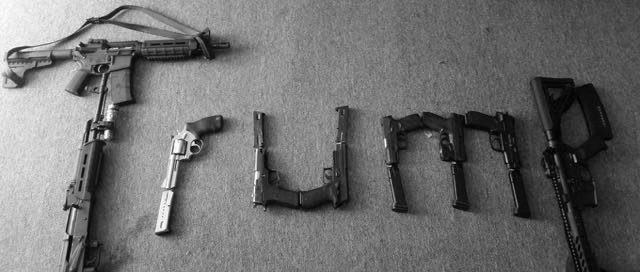
Editor’s note: The Trump in Guns photo was allegedly posted by one of the shooters on 8chan.

Just the Facts, Please

By Caroline Taylor


It’s okay if you don’t recognize the make or model of the car that hit you. It’s okay if you can’t be sure it was gray or silver, and no one expects you to recall the license plate details. After all, they came out of nowhere. Your car is totaled, and you have a broken arm. Of course, you didn’t notice anything about the person driving the car that hit you. You were a victim, and the perpetrator will be brought to justice with very little concern for the damage it might do to their reputation.

You’ll be understood if you can’t be sure the mugger or school shooter had a shotgun or an automatic rifle or had blue eyes or brown or if their hoodie was navy or black or if they were young or old. You’re just lucky to be a survivor. Everyone gets that. And hardly anyone cares what pain or humiliation the ensuing publicity might cause the perpetrator, provided they survived.

But if you’re the victim of a sexual assault, you don’t have a chance in hell of being believed unless you can recall exactly when it happened (to the second, if possible) and where it happened (address, room number, zip code), including if you were raped on the floor of the living room, in a bedroom (which bedroom?), or elsewhere like, for example, an office or a bar or a deserted warehouse (what were you doing there?). If the attack happened outside, you must recall whether it was in a park, in a car, or in an alley (what were you doing there?). If you were assaulted in a rural area, it is paramount that you remember the exact phase of the moon, whether it was cloudy or rainy or snowy, and whether any animals you observed or heard were cattle, sheep, horses, wolves, or coyotes. No one will sympathize if you cannot describe the biota—corn field, wheat field, tree farm, pasture, woods, desert—and, if woods, whether the trees were conifers or deciduous or a mix, or, if desert, whether the cacti were epiphytic or globular or a mix.

Unless you were blindfolded, you will be expected to recall the full name and physical description of the perpetrator, as well as any potential witnesses and whether they (or you) were inebriated. If your inebriation incapacitated you because it was a roofie, you will be accused of poor judgment. You will be required to describe the clothes you were wearing. You must recall what the perpetrator and any witnesses said, and when they said it. You will need to provide their addresses, both physical and online, and phone numbers.

If you cannot recall these details or failed to videotape the attack, you will be suspected of having a faulty memory or making a false report for ulterior motives. (Of course, if you did happen to record the attack, that fact could also be used to suggest the assault was a setup.)

Not everyone understands that you are a victim of a sexual assault. Many people persist in believing you must have asked for it. Sometimes, especially when the stakes are high, you could remember every detail and have all the facts and contact details for more than one credible, corroborating witness, and still be blamed for your role in sullying the reputation of the person who attacked you. Women, and more recently young Catholics of either sex, know that this double standard applies today, as it has for millennia. Unfortunately, those with an outsized sense of entitlement and their own ulterior motives know this, too.


Caroline Taylor is the author of five mysteries and one short story collection. Visit her at www.carolinestories.com.

Image by pixel2013 from Pixabay.

Between the River and the Rock

By Liz Kellebrew


We were born to this place, to the broad bowl of the sky and the rolling fields of the plains, to the buffalo and wild horses, to the clouds and tall grass. We tore strips of lightning from our sides, and our ribs spread out like the wings of eagles. This is how we fly, from one end of the plain to the other, out where only birds can see.

The buffalo are gone but we are still here, guarding the future with hearts drawn. Arrows will not win this war, nor will guns or dogs or rubber bullets. But when the war comes to you, what can you do?

The soldiers came dressed in black, which doesn’t show the blood. They brought guns and dogs and mace. They told us we had to get off our land, that it wasn’t our land anymore. Some bigwig billionaire had a lot of money invested in this pipeline, they said, and we were standing in the way of progress. Illegal, they said.

The days are long gone when battles are won with arrows or guns, when our men women children lie dead on the cold earth with their still hearts bleeding. These are the days when we have nothing left to lose.

So we are here, with our horses and our songs, with our roots deep as the cottonwood in the river soil, with our memories of rain. It is bitter cold here today, like it was at the day of our birth, and the soldiers will rain freezing water upon us, a prayer for our death.

And we? We pray for the water that brings life, whether that life is ours or another’s, a white man’s or a red man’s or a buffalo’s or a raven’s, and we pray that that life will be long on this good earth, long after our bodies are grass.


Liz Kellebrew’s prose has appeared previously in Writers Resist, as well as The Coachella Review, Elohi Gadugi, The Conium Review, and other publications. Her grandfather’s grandmother walked the Trail of Tears. Visit Liz’s website at lizkellebrew.com.

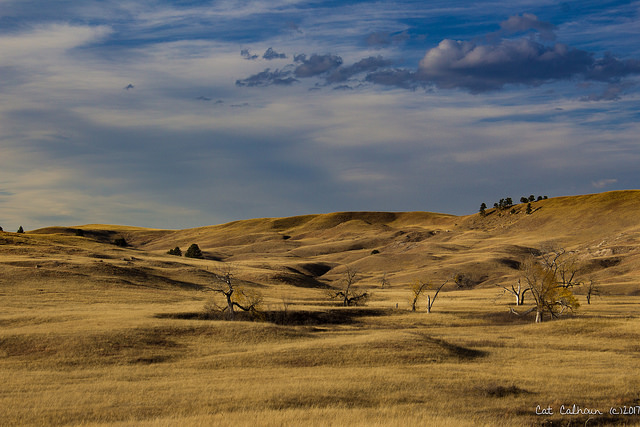
Photo credit: Cat Calhoun via a Creative Commons license.

A Shithole Is

By William C. Anderson


A shithole is an astronomically wealthy nation that refuses to provide healthcare for all people.

A shithole is an astronomically wealthy nation that refuses to guarantee access to clean drinking water and heating for schools in the winter.

A shithole is a nation that has enough wealth to end poverty, but allows that money to be hoarded by a small few.

A shithole is a nation where school massacres aren’t surprising and neither are mass shootings, because of politics and profit.

A shithole is an astronomically wealthy nation where college education isn’t free or guaranteed, but debt for pursuing higher education is.

A shithole is an astronomically wealthy nation where the military budget is enough to fix crumbling infrastructure, but it’s used to murder people abroad instead.

A shithole is a nation that pollutes the earth so badly that it’s causing the climate to change, putting everyone at risk, but the nation refuses to change because of politics and profit.

A shithole is a nation that pretends capitalism is fair and equitable.

A shithole is a nation that institutionalizes white supremacy and then blames those who aren’t white for the barriers they face trying to live under a racist system.

A shithole is a nation that goes around the world destabilizing other countries, killing and ruining lives so its corporations can exploit resources.

A shithole is an astronomically wealthy nation with plenty of space that refuses to accept migrants, immigrants and refugees from the countries it destabilizes with its foreign policy.

A shithole is an astronomically wealthy nation where the rate of mortality among women giving birth is increasing as it decreases elsewhere, even in the so-called developing world.

A shithole is a nation that doesn’t guarantee the human rights of women, LGBTQI, gender-nonconforming people and more, but goes around the world demanding other nations do so.

A shithole is an astronomically wealthy nation that regularly abandons its own people during natural disasters and leaves communities to fend for themselves.

A shithole is a nation that elects Donald Trump president.

A shithole is a nation that regularly attacks the human rights of disabled people.

A shithole is a nation that continues its genocidal legacy of broken treaties, disregard for sovereignty, and harmful policies that threaten Native people.

A shithole is the United States of America.


William C. Anderson is a freelance writer. His work has been published by The Guardian, MTV and Pitchfork among others.
Many of his writings can be found at Truthout or at the Praxis Center for Kalamazoo College, where he is a contributing editor covering race, class and immigration.

He’s co-author of the forthcoming book As Black as Resistance (AK Press 2018). Read more about the book and order it here.

Photo courtesy of the author.


Civil Discourse in the Trumpocalypse

By Sara Marchant


My brother Marvin is calling me, and, as usual, I debate whether to answer the phone.

My mother claims she never had an affair with Curb Your Enthusiasm’s Larry David, but my brother is so similar to the self-centered, self-absorbed, neurotic nervous maniac David, that I’m not sure I believe her. I don’t watch Curb Your Enthusiasm and I don’t talk to my brother when I’m driving or cooking dinner because vehicular manslaughter and third degree burns are not funny.

Finally, though, as I’m reading on the sofa, I reason it’s safe to be angered by whatever Marvin has to say.

“Marvin.”

“I’m calling for advice.” Marvin prides himself on not going in for a lot of ‘chit-chat,’ and he doesn’t engage in social niceties like hello, how are you, is this a good time?

“Really?” I say. “I doubt that.”

“I’m calling to ask your advice and pay you a compliment.”

I choke on my cinnamon gum as I laugh in disbelief.

“Listen up, I’m talking to you.” Now that sounds more like my brother.

“Two different people have stopped being my friend because they think I’m a Trump supporter.”

“Good for them,” I say and spit out my gum to prevent further choking incidents. I toss it into the trash.

“But I’m not a Trump supporter,” Marvin says incredulously. “I mean, he’s obviously insane.”

“But?”

“But what?” Marvin sounds eager, which makes me wary.

“Have you made comments that led them to believe you’re a Trump supporter?” Of course he has, he’s a giant insensitive punk who thinks only of himself. What’s best for Marvin is all that matters.

“Well, I mean, I am a conservative.”

“Exactly.”

“Exactly, what?” He really is excited by the coming fight. I wish I had more gum.

“Nowadays conservative equals Trump supporter, which equals asshole. I’d kick you to the curb, too, if I were your friend.” I chew the skin off my thumb’s cuticle in lieu of gum.

“You can’t say I’m an asshole just because I am a conservative.”

“I’m not. I don’t think you’re an asshole because you’re a conservative; I think you became a conservative because you’re an asshole.” I say this slowly so he’s sure to follow. “You’re selfish, shallow, and incapable of empathy.”

“I’m going to tell Mom,” my forty-eight-year-old brother says.

“Mom thinks you’re an asshole, too.”

“She does not!”

“She says your unpleasant personality is mitigated only by your handsomeness.”

“I am extremely handsome,” Marvin concedes.

“You look exactly like Mom.” He does, and our mom looked like Lucy Lawless (Xena: Warrior Princess) when she was young. “I’m hanging up now.”

“Wait, wait.” My brother is almost gleeful. I dread when he gets like this. He enjoys inciting me. If I lose control, let him know he’s getting a rise out of me, he wins. “But you’re friends with that conservative lady, the survivalist prepper-lady. That’s the compliment I was going to pay you—you’re not kicking her to the curb.”

“She’s not an asshole,” I respond. My temper is no longer fraying. I’ve temporarily clawed back from the edge, but I’ve also started chewing the skin of my other thumb. “She was raised by conservative Christians—narrow-minded white people from a homogenous state—to fear the other and think of herself as superior because of her blond hair and white skin. But now she’s found Jesus—again!—and she’s trying to do better, to be better. She’s just really annoying with the conservatism. It’s not like you. You were raised better. Your assholery is a character flaw.”

My brother gives the high-pitched giggle that means he’s both nervous and happy that he’s irritated someone to the point that they have to defend born-again Christian survivalists prepping for the coming invasion of ISIS. The cuticle around my middle finger is now bleeding.

“Anyway, you can keep your compliment,” I say. “She isn’t my friend anymore.”

“Since when?” Marvin is way too excited about this. “Because you’re too liberal? Because everyone at your party was gay? When did she break up with you? The party was, like, a week ago.”

I pause. I want to measure time so he understands that his questions are absurd, rude, and invasive. But he won’t ever understand, I know. Probably, he doesn’t even understand why he is so emotionally invested.

“Well?” Marvin asks. “Are you there?”

“She knew everyone was gay beforehand. I told her flat out that if she had a problem with that not to attend. Frankly, I think she came just to prove she isn’t a bigot.”

“You hurt her feelings,” Marvin says. “You offended her.”

“People with Infowars bumper stickers don’t get to be offended when others call them out on their ignorance, bigotry, and hate.” I’ve started chewing the skin from my littlest finger, but remove it from my mouth so that Marvin is sure to understand. “Advertising your hate means you want to be called out.”

“Infowars!” Marvin is rendered mute for two seconds. “Now that shit is awful.”

“Yep.”

“But she still came to the party; she seemed happy to be there. She was nice to me when you wouldn’t come down and open the gate. When did she stop being your friend?” He’s like a tiny fruit fly that you can’t see well enough to swat.

Marvin liking someone because she sympathized with him when I wouldn’t leave the thirty-plus guests in my house, while trying to keep the buffet going and everyone’s glass full, in order to walk half a mile in 112 degree heat to open my front gate so that my brother wouldn’t have to leave the comfort of his air conditioned car for two minutes is so typical I don’t even bother to address it.

“At the party, when Eduardo introduced himself, she told him her name and that she worked with me at the school. Eduardo said, ‘Oh my god! I’ve read about you!’ She hadn’t known about the essay or that I’d used her real name. And I guess that pissed her off. She stopped calling or returning emails—she’s sticking a fork in our friendship.”

Marvin is quiet. Then he starts to laugh. A big belly laugh, not his anxious giggle. He delights in catching me wrong-footed. He is loving evidence of my assholery. Then he quiets again.å

“Maybe you should stop writing essays about people,” he says.

We are both thinking of our sister. We are remembering an essay I wrote that made our sister so angry she stopped speaking to me. She sold her house, moved to Idaho, and we haven’t seen her since. It’s been years. Marvin is giggling again, sniggering really.

My brother was a conservative before the Trumpocalypse, and even though he says Trump is insane and he can’t support him, Marvin is gloating that his team is in power. He doesn’t see how this diminishes me. As a white non-Hispanic, my half brother doesn’t see how this diminishes me as a person of Mexican heritage, as a woman who’d like control of her own body, as a sister who realizes she’ll never be able to make her brother view her as anything other than an addendum to his own life and identity.

“Maybe I’ll write an essay about you, bozo,” I say.

“If you do, I won’t get angry,” he promises. “I’ll send it to all my friends.”

“All your ex-friends,” I interrupt.

“I’ll say, ‘Read this mean essay my mean liberal sister wrote about me.”

“You’re such a pendejo.”

“I’ll brag about the mean essay.”

“I’ll do it, punk.”

“I’ll say, ‘My sister calls me the asshole for being conservative, but she’s the one starting shit with mean liberal essays.’”

“I am hanging up now, jerk face.”

“Tell me you love me before you go write a mean essay about me.”

“I love you, and I am going to write the meanest essay I possibly can so all your friends break up with you.”

Marvin is laughing his loud belly laugh of irritating glee as I end the call. All my cuticles are bleeding. I realize he never asked me for advice, the supposed purpose of his call. I never asked him what advice he wanted or why he wanted to ask it of me. This is so typical of us that I giggle, sigh, and bandage my fingers. The phone rings again and I see it’s my mother. I answer.

“Did you tell your brother that I think he’s an asshole?”


A note from Sara: If you enjoy knowing that Writers Resist exists, please consider a small contribution, so we can continue to give our writers and artists a little something. Contributions are gratefully accept here. Thanks for reading!


Sara Marchant, a founding editor of Writers Resist, received her MFA in Creative Writing and Writing for the Performing Arts from the University of California, Riverside/Palm Desert. Her work has been published by The Manifest StationEvery Writer’s Resource, Full Grown People, Brilliant Flash Fiction, The Coachella Review, Writers Resist, East Jasmine Review, and ROAR. Sara’s nonfiction can be found in the women of color anthology All the Women in My Family Sing, and her novella Let Me Go has been anthologized by Running Wild Press.

Long ago and far away, she worked at The San Diego Natural History Museum in their BiNational Education Department utilizing her BA in Latin American History. In her spare time she teaches Critical Thinking and Writing at Mt. San Jacinto College to the new generation that she hopes will someday save our society from its nihilistic impulses. She lives in the high desert of Southern California with her husband, two dogs, a goat, and five chickens.

Photo courtesy of the author.

#MeToo

By R.R. Marsh


#MeToo.

It took me several moments to post the words on my Facebook account. I had to think through my past—a place I generally prefer to avoid—and consider events I had ignored for quite some time. Had I been a victim of sexual assault? Or was I fashioning mere slips of male behavior into real offenses?

Sure, I’m a feminist, but I also live in the South. Around here, if you really want to insult a woman, you call her “reactionary.”

I was in tenth grade, on the newspaper staff, and walking around the school selling our latest edition. When I reached the vocational wing, where mostly boys learned automobile repair and woodworking, I timidly knocked on the classroom door and asked if anyone wanted to buy a paper.

One of the boys, I’m not sure who—only that he was big with a deep redneck accent—shouted, “no, but we’d sure like to buy you.”

Now at 5’7” and 85 pounds, I made beanpoles envious, but there I was on display before a dozen boys, all laughing at me—assessing me—thinking of what they might do if they bought me. The teacher, the only other female in the room, ignored the comment but commanded the class to shush. “Boys, boys,” she said. “Quiet down.” Once she regained their attention, I slipped out the door, shaking.

Still, I was a reporter, goddammit, and I couldn’t keep that story secret. By the next issue, I had detailed my experience and spoken out against the sexual harassment occurring in our school. My column fostered a discussion amongst the staff and faculty, who passed new rules for the following year—a tiny feather for my cap.

There’s one thing I didn’t include in that article. You see, when I returned to the newspaper office and, in a fury, recounted what had just happened to me, my editor—a senior, one of the most popular boys in school, privileged, desired and, at the time, dating one of my peers—well, he just chuckled. I would have to get used to it, he said. That was the way of the world.

I knew lots of girls in school who called themselves feminists, who read their Virginia Woolf and would have gladly marched for reproductive rights. But even in their eyes, my editor was a shooting star. It was one thing to talk about those other boys—you know, the kids who come from the wrong side of the tracks (or, in this case, the wrong side of the cow pasture). But speak out against him? Even if I dared, who would listen? And besides, I didn’t want to be that nerdy girl crashing everyone else’s party. My social standing always did fall short.

So, I chose to uncover an ugly truth while hiding an equally ugly secret, congratulating myself on affecting some measure of change, at least on the books. I was convinced those five minutes in the classroom followed by those five minutes with my editor had been worth the fear. The humiliation. The intimidation. The vulnerability. The powerlessness. The loss of a piece of myself.

Unfortunately, instigating a new rule against sexual harassment couldn’t erase the scar on my soul. Those ten minutes taught me to fear men, not just the few random individuals, but the world of men buoyed by its structures and supporters. Sure, I had manipulated my pain into some form of positive action (compromised as it was), but I never took the time to grieve the pain. Instead, I buried each and every one of my feelings, telling myself I was empowered. People (including me) appreciated the champion but didn’t care much for the girl. I don’t remember anyone asking if I was okay. I know I never posed the question.

Those same, dark emotions would come to haunt me in later years, when I stayed much too long in a psychologically abusive relationship and worked under multiple, controlling male bosses. In each episode, I reverted back to that scrawny 10th grader, only in greater degrees of anxiety and inward rot. My mother, and later my husband, would find me on the floor, curled up in agony, panicked as if I was under attack. Neither them nor I understood why the situation at hand was affecting me so. I had always seemed so strong, so able to tackle the hard times. I could turn lemons into lemonade.

Yet deep inside, I kept reliving the same horror, one tragedy building upon another. I was back in that classroom, isolated, without an advocate of my own. My editor kept patronizing me, and I had to keep pretending to like him. Only now, the stakes were higher, and I didn’t have a journalism teacher to ensure my voice made it onto the page.

Sexual assault isn’t about sex. It’s about power. Those boys in that classroom? They had the numbers, not to mention a teacher steeped in a “boys will be boys” philosophy. How did that editor keep himself out of my article? The reverence of his peers, who scapegoated the undesirables while maintaining their own place on the social hierarchy. What about that bad boyfriend, whose family gave him porn as a Christmas gift (right in front of me)? Hey, any red-blooded American male’s whipped if he sticks to only one woman. I was irrational to think otherwise. And those insecure bosses who wanted a “yes woman”—who belittled and threatened and undermined in a “I’m the boss, you’re a … bug” kind of way? Well, they had long-established organizations backing them, not to mention my job in their hands.

Besides, I was only being reactionary.

Sex—or any hint of it—didn’t have to exist. The helplessness feels the same. Today, I look back at that 10th grader and wish someone had validated her experience as life shaping, not merely a blip she should power through. I have to wonder, had that girl gone through all the steps—the denial, anger, bargaining, depression, and acceptance—maybe she would have seen the warning signs, stayed clear of that destructive relationship, chosen different jobs or at least quit before requiring years of therapy and recovery. Did ten minutes set her up for decades of heartache?

Americans love a superhero. Someone who can swoop in and save the day. Change the law. Elect the right president. Make things happen. This really isn’t much different from the “pull oneself up by your bootstraps” ideal. A woman is assaulted. She should talk. She should make a difference. As if the burden of changing the system rests upon her shoulders.

But this push—this pressure—negates her need to grieve. Our need to grieve. As I’m reading all the names of the women (and men) who are posting, #MeToo, I am thinking of their stories. Not just coverage of “the event,” but all the subsequent chapters flavored by trauma that, in the majority of cases, remains unspoken and never processed. Those boys, that editor—they never even touched me, yet I see and feel their paws all over my life, and I am still working toward my freedom. Imagine carrying the memory of rape.

Sad to say, I have other stories—some more terrifying, others I would only ever reveal to my closest confidants—but this tale, this tiny moment in a small town at some insignificant high school during the 1990s, encapsulates so much of what I’m observing today.

Each #MeToo—each person crying out against the Weinsteins and Trumps of the world—these are people in pain, which neither a firing nor an impeachment can assuage. Don’t get me wrong. We should fight for justice. We must demand integrity, especially of those in power. But the #MeToo confessors need something more. Listening ears. Permission to feel. Time to pick up all the pieces and heal.


R.R. Marsh is a writer and a mother currently living in Atlanta, Georgia.

Photo credit: Amparo Torres O. via a Creative Commons license.

Going to Ground

By Sarah Einstein


Like a good citizen, I call my senators at least once a week these days, but their aides are brusque. They tell me that Alexander and Corker support the president’s education agenda/healthcare reform/immigration order or whatever I’m outraged about on a given day. In the first few weeks, they’d thank me for my call. Now they simply say, “Your objection is noted,” and hang up as quickly as they can. Once, as if caught off guard, one said, “Are you sure you live in Tennessee?”

………………………..Liberty or Tyranny?……………………………..

I carry my passport with me everywhere these days.

I’ve begun to sort that which is precious from that which is not. I make a small pile of the things I’d pack in the night, a larger one of the stuff I would leave. Everyone is insisting we’re just one Reichstag fire away from fascism. On the news, I watch a steady stream of black people murdered by the State for their blackness, and I think it’s more likely that we’ve already had the Anschluss.

When I travel, I wear an inherited diamond I feel silly wearing at home. I remember being told when I was younger that a Jewish woman should always have enough jewelry on her body to bribe her way over a border. At the time it seemed quaint. Now it seems key. For the moment, the diamond ring’s still on my finger. I wonder if there will come a day I’ll need to sew it into the hem of my coat.

Over coffee, my friend Meredith talks about joining the resistance in a way that suggests we’re headed for a war she thinks we can win. I talk about going to ground, about building false walls to hide people waiting for fake passports and safe transport. We scare ourselves and then laugh at ourselves, but after the laughing we are still scared.

Meredith wasn’t always Meredith, and there is a passel of bills in our state legislature designed to make it impossible for her to be Meredith now. I tell her I will hide her in my hidden rooms, if it comes to that. She says she won’t be hidden, but she might move to Atlanta.

My coffee these days is chamomile tea. I’m jittery enough as it is.

If we flee, we will go to my husband’s family in Austria. They assure us that we’ll be safe there, should it come to that, and I believe them. They’ve clearly learned lessons that we have not. The irony of this is not lost on me; there are Nazis in the family albums.

My husband has stopped talking about becoming an American citizen and started talking about being an anchor relative.

My friend Jessica is spending all her vacation time in Israel this year, establishing the Right of Return. I’ve stopped questioning the politics of this; refugees go where they can.

This Hanukah, I will give my niece and nephews passports if they don’t already have them. If they do, I will give them whatever they ask for. I’ve lifted my moratorium on war toys. Maybe they should know how to handle a gun.

My closest disabled friends and I swap lists of medications and start to horde the things one or some of us need against the day we lose access to them. We read up on actual expiration versus labeled expiration dates. We refill prescriptions before we need to, just in case.

I have six boxes of Plan B in my closet, even though I’m long past childbearing years. On campus, I spread rumors about a shadowy network of old women who will help younger women with travel and money for abortions if they can’t get the healthcare they need in their hometowns. I call all my old woman friends and build the network. I keep their names and numbers in handwritten lists and hide them away.

I refuse to let my husband put a “Stop Trump” bumper sticker on our car. “That’s just foolish,” I say. I let him keep the Cthulu fish. For now.

A young woman cries in my office, afraid that if she comes out to her parents they will disown her; she’s still financially dependent on them. I tell her that she doesn’t have to come out to them now, or ever, if she doesn’t feel safe doing so. She looks shocked. It breaks my heart to have been the first to suggest the safety of the closet to her; I wonder what she is coming out of, if it had never occurred to her to remain in.

I’ve stopped going to protests and started going to meetings for which there are no flyers or Facebook event notices. To find them, you have to know someone who already has. We talk there of things I won’t write here. At first, we turned off our phones. Now, we leave them at home.

And yet, still, like a good citizen, I call my senators at least once a week. Their aides are brusque. In the first few weeks, they’d thank me for my call. Now they hang up as quickly as they can. I haven’t yet given up on the dream of America, but I’m making contingency plans.


Sarah Einstein teaches Creative Writing at the University of Tennessee at Chattanooga. Her essays and short stories have appeared in The Sun, Ninth Letter, Still, and other journals, and been awarded a Pushcart and a Best of the Net. She is the author of Mot: A Memoir (University of Georgia Press, 2015) and Remnants of Passion (Shebooks, 2014). Visit Sara’s website at www.saraheinstein.com.

“Liberty?” 1903, from the Library of Congress.

This essay was previously published by Full Grown People.

Inaugural Bird Omens

By Annie Connole

inauguration (n.)

1560s, from French inauguration “installation, consecration,” and directly from Late Latin inaugurationem (nominative inauguratio) “consecration,” presumably originally “installment under good omens;” noun of action from past participle stem of inaugurare “take omens from the flight of birds; consecrate of install when omens are favorable,” from in– “on, in” (see in- (2)) + auguare “to act as an augur, predict” (see augur (n.))


“Keep your #eyes to the #skies tomorrow for the #inauguration for the #birds do no tell
#lies on how the #winds of change shall blow.”

– Maja D’Aoust, January 19, 2017


Signals Lost

The baby bird lay still in the sand beneath my gate. Open beak and neck, disproportionately larger than the rest of the tiny body, are stretched out, waiting to be filled.

Rain had been falling all through the final days of the last administration.

This story begins with the memory of hunger, depletion, lack. Signals lost when the landscape, the heart, and the head become waterlogged, and the scent, the sound that will lead home becomes obstructed by extreme weather.


There Will Be Blood

The rain keeps pouring.
In the center of the road, I find two perfect scarlet circles of blood beside a mourning dove with a wounded heart.

A Sacrifice, whispers the bird.
Of peace. Of love. Of messengers.

My heart bleeds next to the dove’s. My truck stalls before I go down the road to buy more paint so I can make a sign to say something about kindness and being awake and alive and powerful.


Prophesy

Why didn’t the coyotes take you?
I hear the story and prophecy.
Tell the village the dove is dead. Cries will be drowned out by the barking dogs.

I wonder, is it a relief to know what lies ahead?
Who will die this year? Will they be my father, mother, brother, lover, or one whose grace I have not yet seen?

Blood of roses disappears with the rain, an erasure of a life and death.

When does the blood of the bird
Become yours?

I do not pretend that this is anything but what it is.


I Know Why the Caged Bird Paces

Across the street lives a woman who is small with grey hair straight and curled under. Her skin is tan and taut. Her eyes, brown. Clothes hang on her bones.

She asks me to come inside. She needs help with her TV, with her doctor’s appointments. Calling her social worker. Figuring out how to get the physical therapy she needs to keep herself from falling over on her cement floor and cracking her head again.

A clear plastic sheet with a butterfly print separates her kitchen from the main room. In a single bed she sleeps there from late afternoon to pre-dawn. Through the butterfly veil, I see an elevated maze of several birdcages fashioned out of chicken wire, each containing one bird. Are they cages or just homes for birds?

Here in this house, I am asking if she has the card with the number of the social worker and I am looking at paperwork on hospital visits. Recommendation: Must wear oxygen mask when home. At all times.

The woman says, They want me to go to a home. But they can’t take me. I have my birds. I can’t go live in a home. What would happen to my birds?

I watch a pretty quail as she paces along the edge of her cube. Unlike the yellow cockatiel and the grey dove next to her, she appears free. Not fully caged. Three walls, not four. Wanting so much to touch ground. To go somewhere.

All the birds that live with the woman are broken in some way. For some, it may be just one wing that cannot fly. So they pace. She is pacing. Staying in motion. Stopping for too long would mean death.


Ancestors Speak

Down the block lives a man who voted for the new president. From across the fence he talks of jobs, global security, the price of everything.
When the man was very young, his mother took him to a Women’s March.
His mother enters. His mother, who has passed onto the other side, visits him as a hummingbird. She told him she would, and does.
The hummingbird flies over his head and back. Then stalls right there at the fence, fluttering in a cool hum in front of him.
Your mother is talking to you, I say.
I know.

A few days later, a woman tells me, our ancestors are always
Here among us, trying to reach us.

Let her in.


The Hen is a Hunter

I am at the neighbor’s farm, watching a baby alpaca dance, when a red hen runs through the stable, stealing something away.

As I watch her streak by, I look close to see what’s in her beak. It is grey. It writhes. A tail? A … mouse?

Yes, the hen will take the mouse and beat it until it is dead and smashed and she will peck at it …

The hen is a hunter? I had forgotten. For some, brutality and survival are one in the same.


Annie Connole, a Montana native, is a communications professional and multidisciplinary artist now based in California. She graduated from The New School with a B.A. in Arts in Context, and is pursuing an MFA in creative writing at University of California, Riverside.

Visit her website at www.AnnieConnole.com.

Photo credit: © 2017 Annie Connole.