
A One-Way Correspondence with Fruit

By Christine Strickland

January 15, 2020

Dear Pineapple,

I’m tired of thinking of how to explain this to you. I’ve been trying since you were a blueberry, remember? What to say to you when the day comes when you ask me: Did they really throw kids into cages? Did you all really let them?

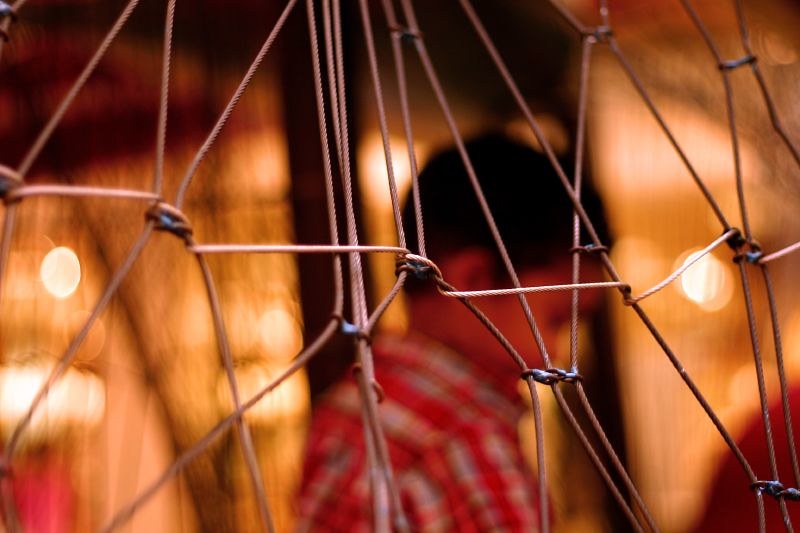
I’m tired of learning of new inexplicable realities I know I won’t have an answer for. While you are growing in this warm cocoon and the only bars (I hope) you’ll ever look out from are the ones on the crib your dad put together, kids are in cages. And I know this is happening. We all do. There is no way to explain this.

So I won’t attempt to explain. No clever explanations or lies for you, my sweet budding fruit. I know; we all know.

I don’t think it will make it sound any better to tell you that I’m trying. That I’ve gone to court and jail and legal appointments and stood next to these kids and their parents. That I’ve called these men in power who are doing this bad thing. That I’ve written letters. As though a letter could absolve me of the fact that I know this is happening and I keep on living because I don’t know what else to do.

Like I’ve told you before, I’m sorry. I’m tired of learning new things that I have to apologize to you for, but I’m not tired of apologizing. Because I mean it: I’m sorry.

I’m sorry you have to come out while this is happening. I’m sorry I won’t be able to fix this before you get here, or ever, for that matter.

I’m trying, I’m just one person. I’m your mother.

Pineapple, I hope you never grow tired of doing all you can to set those around you free. I pray there are no kids in cages by the time you’re learning what Freedom is, but I fear there will still be those encaged by this same force at work today. The powerful will keep creating new prisons to fence people in and out.

But before you do that, it’s important that you know you must free yourself. Don’t let them put you in a prison of complacency or apathy, locked up by notions like “that’s just the way things are.” Don’t let them enclose your ideas in a box of what’s possible or what’s right. You must fight to stay free, otherwise you won’t be able to free anyone. Sometimes to free each other, we have to climb inside the cage they’ve put someone else in. It’s complicated, I know: I’m sorry.

Soon, in just six weeks, I’ll have to set you free. I worry about the world I’m letting you out into. But I know that even with all the pain and hate and evil that keeps appearing, you’ll be free to experience the rest: all the wonder, the joy, the beauty this crazy world still has to offer.

Love,
Your Mama

•   •   •

November 30, 2021

Dear Cantaloupe,

Well, I found out today you are measuring on the wee side. So you may not even have reached the size of a cantaloupe quite yet.

Whichever fruit you are at the moment, I can tell already you are a wild one, or at least a fighting one. You punch and kick in a way I don’t remember your brother doing, though maybe he did and I’m just forgetting. There will be plenty to make you want to kick and scream out here, too.

I haven’t marched or cried out like I should, like I used to. Since your brother came, more lies have burned through our country. Fires have seared through parts of it, like ours. Last summer, I cried silent, frustrated tears while I smelled the smoke as our city burned two blocks away from our house. I cried for George Floyd. I cried for Justice, for Peace, for Mercy, for Humanity—big words that you’ll learn someday, that maybe I’ll understand someday—but mostly, I cried because I didn’t know how to protect your brother’s lungs from the fumes of smoke.

And so I’m fighting to keep you safe now. You, my little fighter, who will continue to fight the good fight for and with people like George. You’ll have to fight for all of those big, beautiful words I cried for before. Just be sure not to fight people. Fear is the enemy you’ll have to fight, not other people—or my liver, for that matter, so you can quit kicking it.

The fact that you are a little small means your first days might be harder, just like your brother’s were. But I know you are strong; you’ve proven that! And my Love will surround you, protect you, probably overwhelm you. It is the same Love I’ve been loved with, that we’re all loved with. It is the Love that moves us to fight in the first place. And never has a cantaloupe been loved more than you are. Never forget that.

So, even as you box against my organs, stay inside for as long as you can. I’m sorry in advance if we have to pull you out sooner. We’ll see how my blood pressure cooperates.

I love you. Daddy and I can’t wait to meet you.

Love,
Your Mama

•   •   •

January 26, 2024

Dear Honeydew,

My, I’m writing this letter to you late! Thank God you’re still inside growing, as you should be. Who knows just how much longer you’ll be in here. I do hope to make it another four weeks with you growing inside, but you will come when you are ripe and ready.

Someday, you’ll read in textbooks about the ugly war that broke out a few months ago on the other side of the globe. You’ll read how terrorists took hostages and soldiers blitzed civilians. Maybe you’ll see the photographs of hospitals hollowed out, of families fleeing their homes. I’ve seen them already. So much blood, so much pain, Honeydew. It makes me wince to write about even in vagaries.

But blood has spilled over onto my hands, too. Taxes from my paycheck are buying these bullets and bombs destined for women, children, people in their homes. My work in a clinic on a poor corner in a city far away from this war—where I strive, at least, from nine to five to help the few people I can—is funding genocide. One day, I fear, you might ask: So what did you do about it? And I’ll have to answer you truthfully: Nothing. Or close to it.

Through much of this pregnancy, I’ve kept my eyes down on my belly and not looked up much. I feel too much joy at your coming to want to feel sad. I recognize how horrible this reads. I’m wincing again as I write this, though this time, out of shame. No mother in Gaza could forgive this.

In earlier times of my life, not too long ago, I would have been out there with my friends protesting, persuading, writing letters, whatever it took. Instead, now in the evenings, I come home from work, struggle to get your brothers to eat more of their vegetables from their overflowing bowls, bathe them with water safe enough to drink, clean my house that has not been struck by any bomb, and rub my growing belly—you—with a smile on my face. Most nights, I don’t bother checking the news. I know I will read about more mothers who have lost their children, who don’t have any food to feed them, who don’t have clean water to pour for them, whose houses have been flattened by bombs, who don’t even have a hospital where they can birth their babies. And what can I do about it anyway? I don’t know, so I don’t try. I rub my growing Honeydew instead.

Hopefully you’ll believe me when I tell you I’m a good person, or I want to be one, anyway. I’m still hoping I can believe that, too. Whether we believe me on this point or not, believe me when I say I have realized I cannot go on like this. We must open our eyes and hearts to the pain of others, even when it hurts to look, even when it feels we can do nothing to help. So I will try to look, I will try to do what I can to help. How I will do this with (what are soon to be) three young children, I do not yet know.

But my prayer for you, dear Honeydew, is that you learn from my mistakes and that you learn to be good in ways that I only hope to be. The truth is, you already are. You are Love itself, a Love that must be shared with the world by your very nature. You remind me of something I’ve forgotten in myself. You are already making this place better.

Daddy and I are so excited to meet you. Keep growing. Soon, I’ll be holding you in my arms.

Love,
Your Mama

•   •   •

August 1, 2025

Dear next Blueberry, if you ever come,

I’ll try. I promise.


Christine Strickland is a family nurse practitioner who has worked in a variety of cities, countries, and healthcare settings. She currently serves as medical director at a health center in the Kensington neighborhood of Philadelphia. She lives in West Philadelphia with her husband and three young children. You can find her at christinestricklandwriter.com.

Photo by Pulihora via a Creative Commons license.


A note from Writers Resist
Thank you for reading! If you appreciate creative resistance and would like to support it, you can make a small, medium or large donation to Writers Resist on our Give a Sawbuck page.
I visited Gaza in my sleep

By Sophia Carroll

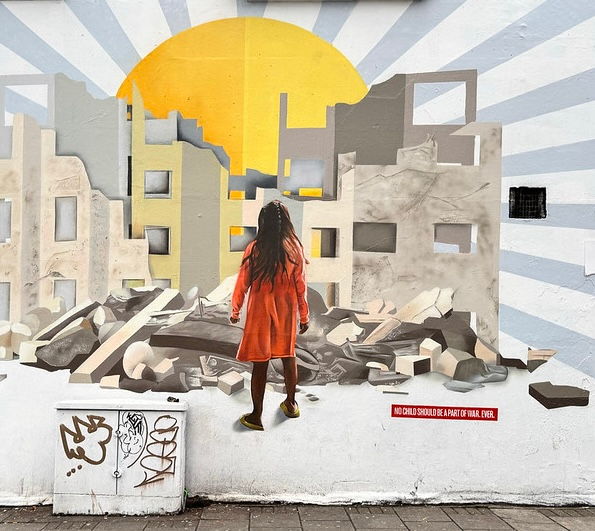
I worked in a medical tent. Do they still have medical tents? I’m not a doctor but in my dream, I could tell who we could save by touching them. Some people burned from infection. I knew we didn’t have medicine. I heard mothers scream, that sound that predates language. I hugged a boy of fourteen. He had no one. I wanted to take him home but that is impossible. Are we still free? He said he was coming back to fight, to avenge his family. I meant to birth a baby. Went to wash my hands and was suddenly in the kitchen of the house I grew up in, as if I could go back and forth like my money. As if I could wash my hands. They’re still dirty.


Sophia Carroll (she/they) is an analytical chemist and writer. Her work appears in wildnessSmokeLong QuarterlyRust & Moth, and elsewhere. She is also the co-founder of M E N A C E, a magazine for the literary weird. Find her on Substack at Torpor Chamber and on Bluesky @torpor-chamber.bsky.social.

Photo by Damien Walmsley via a Creative Commons license.


A note from Writers Resist
Thank you for reading! If you appreciate creative resistance and would like to support it, you can make a small, medium or large donation to Writers Resist on our Give a Sawbuck page.
18 Jennas

By Jenna Mayzouni


A social media influencer had posted that he looked up how many people were killed in Gaza who shared his name. Morbid curiosity seized me, and I searched for mine.

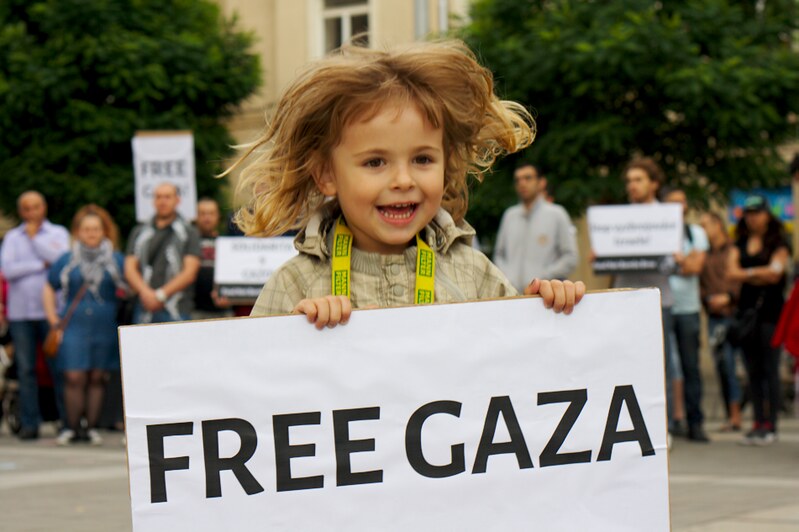
On November 1,[1] there were 18 Jenna/Janas killed in Gaza.

On my birthday every year, my mother recounts the story of my birth. How I was a difficult pregnancy, how she labored for 17 hours, and how I probably should have been a Cesarean. How my name came to her in a moment of thoughtful prayer and reflection. How I was facing upward and almost killed us both. And every year, she ends it on the same note: “But everything was worth it after I saw your face.”

On November 1, there were 18 Jenna/Janas killed in Gaza.

There was a Jenna in Gaza who died before she reached her first birthday. If her parents are still alive, how are they feeling? How does it feel to be that Jenna’s mother? To have protected that Jenna for months as a part of one’s body, only to send that Jenna into the world and lose her? Who will the mother tell the story of Jenna’s birth to now? The dreams of a relationship they will never have will haunt her instead.

On November 1, there were 18 Jenna/Janas killed in Gaza.

الشعر الغجري المجنون
Crazy, curly Romani hair . . .

. . . a line from an Arabic poem my mother loved. My mother said that when I was a child, all my hair was straight except for wisps of curls on the back of my neck. When I was 11, I hit puberty, and the worst transformation of my life began. My hair became wild, untamable, frizzy, thick, and out of my control. When I would scream at it, my mother would laugh and say, “Crazy, curly Romani hair.” A straightener stood no chance against Chicago summers and hijab cotton, creating something of chaos for every holiday and event. It wasn’t until my 20s did I appreciate the glory of curly hair. The wisps of curls on the back of my neck became my title card. The crazy, curly hair became something to love, something that marked me and became a testament to my heritage.

On November 1, there were 18 Jenna/Janas killed in Gaza.

Seven of those Jenna’s were 11 years old. Instead of worrying about their hair, about school, about their futures, they spent their last moments on this earth afraid for their lives. Who were the women those Jennas would become? Would they love their hair? Would they love their bodies? Would they struggle with the transformation and an awkward phase? Did they have mothers who put oils in their hair? Who struggled every morning to give them the perfect braid? Who whispered their love in the early hours of the dawn with every hair they straightened, with every curl they put in place? They will never be those women; their mothers will never fix their hair again. Girls in Gaza are shaving their heads, using tents as menstrual products for their first periods. Maybe it’s easier to imagine these seven Jennas focusing on their hair because it was the least of their problems.

On November 1, there were 18 Jenna/Janas killed in Gaza.

When I was eight, the world felt enormous. I wanted to be an adult so quickly because I wanted to see the world. I was going to travel, fall in love, and have a family one day. The next day I was going to be a pirate queen. The day after that I was going to be an astronaut. The week after, I was going to be an actress. In between, I would practice the faces I would make for my adoring fans. Some nights, I would stay awake because I would worry about dying in my sleep, afraid I would never accomplish my goals. I wanted to be great, to be remembered, to be loved. I wanted the world to see me, and I didn’t want to die before being seen.

On November 1, there were 18 Jenna/Janas killed in Gaza.

As Arabs, our middle names are our father’s names. They are meant to trace our lineage. One Jenna had my first name, and her Baba also shared my Baba’s name. She was eight. My inner world was a galaxy when I was eight years old, and I’m sure Jenna’s was too. But now that galaxy is gone. What were Jenna’s dreams? Were they big? Were they small? Was she steadfast and knew what she wanted? Was she shy and worried about what others might think? Could she even have time to dream, or from a young age did she stop?

On November 1, there were 18 Jenna/Janas killed in Gaza.

I think about 8-year-old Jenna often. I imagine a world where her worst fear was not being able to see her dreams come true, not the war. Maybe there is an alternate universe where that is the case. Where all the Jennas grow up and get to be these beautiful women with their own dreams, hopes, and futures. Where they wake in the morning to the sound of birds, not drones. But in this universe, 8-year-old Jenna is gone. Eighteen Jennas are gone.

On November 1, there were 18 Jenna/Janas killed in Gaza.

This is my record to the world that they were here. Even if for a short amount of time, they were here and they lived. The world will see them, even if they died before being seen.

_________________

[1] in 2023


Jenna Mayzouni is a Palestinian Jordanian American author. She has lived in Illinois, Ohio, Jordan, and Morocco, and currently resides in California, where she works as a freelance reporter with BenitoLink. Her stories focus on the narratives of BIPOC and immigrant communities with a special interest in family dynamics. She went to Denison University and majored in International Studies with a minor in English. She has worked as a Bilingual Domestic Violence Victim’s Advocate, was an Authentic Voices 2022 Fellow with the Women’s National Book Association, and as an intern with the Ladderbird Literary Agency. She has a short story in the Women’s National Book Association Authentic Voices 2023 anthology, Between Pleasure and Pain: An Authentic Voices Anthology (Vol. 2). Her work has also been featured in the Posse Newsletter, and Women’s Republic.

Photo credit: Aurelian Săndulescu via a Creative Commons license.


A note from Writers Resist

Thank you for reading! If you appreciate creative resistance and would like to support it, you can make a small, medium or large donation to Writers Resist from our Give a Sawbuck page.


GAZA

By Kiran Masroor

Gaza did not destruct for us to watch.
The way the word Gaza stays in the back of the throat.
I didn’t know I loved Gaza until it became so small.
Small as a word in a sentence. We fit such enormous things
into our mouths and expect that the meaning still comes through.
You cannot say a country’s name over and over until it is
reduced to the last bitter syllable. You cannot condense a million lives
and strain them and slice them and dice them and season them.
You cannot fit every angle into the words you say.
You cannot hold the beating love story of every citizen
and move the camera to their feet and catch
the smirk when they turn the alleyway onto the main road.
You cannot capture the slap of their soles
or the bend of their ankles as they run. If you could grab
a pitcher full of water but the pitcher was as big and impossible
as the moon and you poured it all onto the page until
the water became an ocean and the faces of every
loved thing resurfaced, maybe then
you could approach the entirety of things—
the young boy splashing his face with water,
standing beside the others as prayer begins,
thinking about the girl he loves,
and the girl in the waiting room of a clinic
tapping her foot against the floor,
and the wind outside, rearranging dust,
carrying footprints to sea.


Kiran Masroor is a rising junior at Yale University where she studies Neuroscience and Evolutionary Biology under the pre-medical track. On campus, she is involved in TEETH Slam Poetry, Timmy Global Health, and Yalies for Pakistan. Her poetry appears in such publications such as the New York Quarterly, the Connecticut Literary Anthology, and the Yale Global Health Review.

Photo credit: Peter Tkac via a Creative Commons license.

Note from Writers Resist: If you appreciate creative resistance and would like to support it, you can make a small, medium or large donation to Writers Resist from our Give a Sawbuck page.