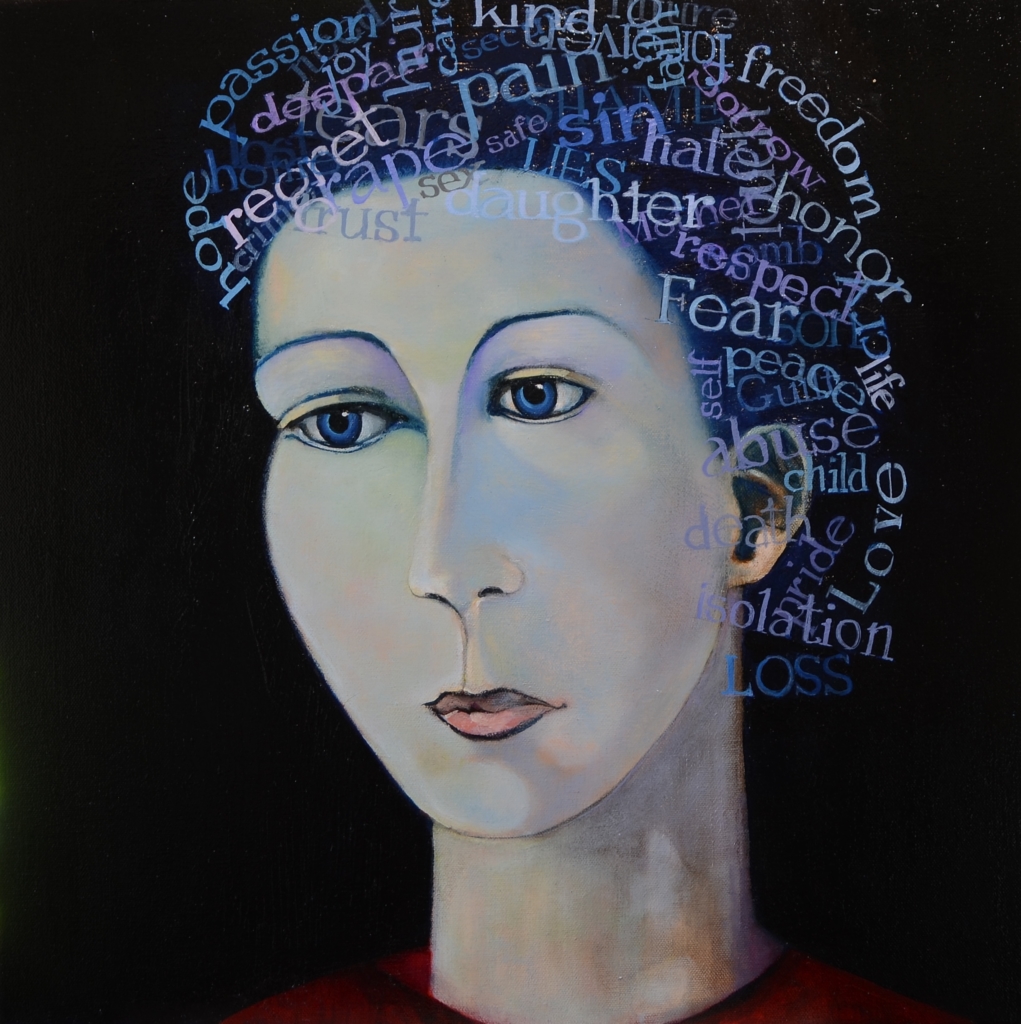
Dear Daughter by Lia Langworthy

Dear daughter,

Your body shook with tears as CNN declared him the winner. Numb and stoic, I held you, the circuits of my mind overloaded, broken, unable to process what I was hearing and seeing. I imploded with treacherous emotions. Comforting words eluded me.

I called your father, for him to deal with your fears and questions as I rubbed your back. I desperately wished I could cry with you but instead I waited for my body to catch up with my runaway emotions.

As you spoke with your father, I watched the television and heard my narcissistic black father in Donald Trump’s rhetoric. I saw my mother’s white privilege in the millions of white women who voted for him. I saw a sexual predator who went unpunished. I saw the ugliness of hate in the millions of racists that call this country home. I saw a system of white supremacy openly reclaiming the seat at the head of the table. I saw but was too frightened to feel. It was not safe, despite sitting safely on the couch beside you. The election results had rocketed my mind and my body to two different planets. When would they land and reunite?

I woke the next day, still having not shed a tear. Pain clenched my stomach and worked its way toward my heart. I was thankful for your Episcopal school, where you had chapel on Wednesdays and your brilliant female headmaster would try her best to make sense of the election outcome in a way I wasn’t yet able. We drove to school in silence. I couldn’t bring myself to turn on the radio. I pushed the hellish nightmare aside and focused on the space in our car and the matter at hand—getting you to school safely. I broke the silence only to remind you to gather your PE clothes. As we pulled up, relief crept into my lungs. You exited the car, and I exhaled deeply for the first time.

*     *     *

I drove my route home, up Wilcox to Franklin to Highland, onto the 101 toward Studio City. Nothing was normal, but everything appeared normal. People chatted on their phones, pumped gas, drank coffee. How could this be? Didn’t they know the world had just turned on its axis and we would all fall off into space? The last time I had this sensation was when my mother died.

*     *     *

She wanted to die at home. After weeks in the hospital, the social workers, doctors and nurses said the end was imminent, so an ambulance took her skeleton of a body back to her mobile home. She lay on the bed in her tiny living room, mouth agape, emitting horrid noises as she struggled to breathe. She held on. While I fed her ice chips, her two cats, Eartha and Kit, curled up and slept next to her head. Dozens sat in my mother’s tiny living room, all eyes on her, waiting for her spirit to leave her body.

I couldn’t stomach the sound of her labored breathing any longer and jumped on my bike for a ride. I rode long and hard. I cried even harder, finally releasing a small portion of my grief.

When I returned, my mother had gone and everything changed. I breathed air, but the air felt different. I ate and drank, but nothing tasted the same. I would never hold her, touch her, talk to her again. A huge monumental shift had happened in my life, but not in anyone else’s.

*     *     *

Driving home that day after the election, I felt the same exaggerated delineation in time, in space, irrevocable and unchangeable. Death had returned in the form of Trump’s victory.

*     *     *

Daughter, without you, alone for the first time since the election results, I felt safe enough to return to my body. As when my mother died, my body desperately needed to release my pent up fear, fury and grief. The release came as a scream. My screams shocked me as much as the passing drivers, who craned their necks to witness the crazy woman in her car. I didn’t care. The screams finally released tears, too frightened to appear before. My stomach hurt so badly I contemplated pulling over my car and taking a shit right there on the 101. Why not? Who would’ve stopped me? Fuck it. Grief fought with fear, but ultimately disgust won.

*     *     *

I drove toward home, crying and wondering how (and why) a highly educated, privileged, experienced white woman couldn’t win the highest office in our country, but a sexist, racist, sexual predator without any experience could. Oh, I knew how and why, but I wasn’t ready to accept the bitter truth.

*     *     *

After the election, I finally fell asleep around 4 a.m. I dreamt of my uncle, my white, racist, alcoholic Uncle Russ. In my dream I was helping him paint a room army green. He stood high on a ladder, where the wall meets the ceiling, and I stood below him, holding his wares. I loved my Uncle Russ, despite his constant racist jokes and insensitive name-calling. His pet name for me, his favorite niece, was his Little Niglett (nigger + piglet). He had a deep need to denigrate me, and my white mother allowed him to do so.

As a child, I always wished my mother would scream obscenities at my uncle or threaten to never speak to him again if he continued to insult me. Instead, she instructed me to ignore him, to take the high road. She claimed powerlessness and accepted my uncle’s sad excuse of “I mean no harm.” But harm me he did. His powerful and hurtful words, demeaning of my humanity, went unchecked. He took no responsibility for his actions and my mother was complicit. She chose to protect his power, to ensure her access to his privilege, however unequally it was shared. She couldn’t dare risk exposing my uncle for the racist, sexist pig he was. White women are collaborators of white male privilege, benefiting in part from their dominance, even if it’s not in their best interest.

*     *     *

As I drove home, thinking of my mother and her choice of white privilege over me, I grew enraged. The fact that millions of white women, like my mother, stood with Trump, not against him, enraged me further. I wanted to scream again, but instead cried as I exited the freeway onto Vineland.

*    *     *

Daughter, white privilege is real, even for an underprivileged, poor and uneducated white woman, like my mother. Raised by others as an unwanted orphan, my mother grew into a woman who demanded little. She accepted harassment as love. I knew my mother loved me, more than herself, but she was unable to stand up for me or herself. However, despite my mother’s difficult childhood, she nonetheless “belonged” as a white woman. When she bought nude nylons, they matched the color of her skin. When she turned on the TV, she saw her face reflected back at her. Being “underprivileged” did not negate all the subtle and unearned privileges her whiteness granted her.

My mother refused to accept she held any such privilege, and I accepted her ignorance, for she had been conditioned to believe such privileges didn’t exist. Yet history has shown, time and time again, white women choose their attachments to white men, the most powerful group in America, over themselves. They did so on Election Day. They chose to vote for a sexual predator ensuring the continuation of abusive white male dominance in this country.

Daughter, as a woman of color you will have many white women claim to be your allies. Be wary. I do not say this to inflict fear, hate or mistrust, but instead to share the truth, rooted in past betrayals. White women want women of color to join their feminist fight while failing to acknowledge their white privilege. Like my mother, many are completely unable to reconcile their powerlessness with their privilege.

During the suffrage movement of the early twentieth century, white women sought the right to vote yet fought blacks who demanded the same right, angrily claiming their inherent superiority over blacks. Historically, white women have abandoned their black sisters when their white privilege is threatened. White women who ignore their race-privilege and focus solely on sexism are blind to their status, power and authority.

Yet we women of color, with less status, power and authority, voted overwhelming for Hillary Clinton. Why could we see what white women could not? We don’t share their privilege. We women of color are of a different ilk. Our oppression is birthed from a different strain of contempt; one much deeper than most white women will ever know.

*     *     *

As I drove home, my frustration with the white women who decisively handed Trump the presidency became eclipsed by my rage for the narcissist himself.

*     *     *

Honey, take note, narcissists are pure evil unmasked, especially malignant ones. Pathological liars, master manipulators, out-right abusers: they believe they are above the law, above others, and don’t have to play by anyone’s rules. They crush all in their path without remorse. They negate others’ feelings yet demand honor, respect and reverence for their own. They refuse to see the error of their ways and instead deny, deflect or blame the innocent. They hate to apologize and admit defeat. They are easily enraged and hostile to anyone who challenges them. They spin lies into truth and truth into lies. Their intense sense of entitlement stems from a delusional belief they have an absolute right to fulfill their every want and lust. They are parasitical predators. They are moral and spiritual thieves, always on the hunt for that which is not theirs to take. I know because I had a narcissistic father.

My father usually got his way. He charmed, cajoled or bribed—whatever it took to ensure victory. Once he took me to a jazz bar and, when the bartender refused to give me a glass of wine, my father tried every trick in his book, but the bartender refused. I was your age—thirteen. He stormed out of the club and smoked all the way home.

My father was also defeated by a Beverly Hills plastic surgeon. My black father hated my nose, and when I was a teenager he took me to a surgeon to remedy the situation, never mind I had no issue with my nose and still don’t. (Ironically my nose looks just like my white mother’s nose, but it was too black for my black father.) He claimed he knew what was best for me and I would thank him for my new and improved nose. He and the doctor talked like long lost frat brothers, ignoring my presence, hatching plans for my new nose. However, the surgeon grew silent after my father suggested the doctor falsely claim I had broken my nose in a swimming accident so insurance would cover the surgery. The surgeon shot me an “Is he for real?” look and requested I leave the room. I wish I could have stayed and witnessed the confrontation that followed. I heard only pieces of an angry conversation. I couldn’t help but smile when my dad busted through the door angry and upset. I knew the doctor had refused his request. I knew because my father was livid and speechless the entire ride home.

It didn’t matter to my father that he was asking the doctor to act illegally and unethically. It didn’t matter I didn’t want a nose job. It didn’t matter I was thirteen and not legally able to drink a glass of wine. All that mattered was my father’s needs.

*     *     *

As I drove home, I looked at my nose in the rearview mirror, glad my mother’s nose was intact, not some doctor’s re-creation. Honestly, I would have happily gone under the knife, if it meant the sexual abuse would stop.

*     *     *

My body was my father’s plaything, existing only for his sick amusement. The closest he came to physical abuse was once during dinner. I was eating spaghetti at the kitchen table when he suddenly appeared behind me and slid his hand down my top. I pulled away, and he threw my plate across the table, splattering spaghetti across the floor and walls. He screamed, “Look at what you’ve done. Look at what you made me do.” He forced me to clean up the mess and, after, made me sit topless at the kitchen table as he sucked on my breasts. I refused to show any emotion. I was stoic. I was not present. I stared at the wood grain tabletop. My refusal was my tiny victory.

Greater victory was mine when my father finally died, but he wouldn’t die easily. His cancer took a toll on me and my stepmom, but we played our roles in his tragic play to perfection. I watched him evaporate into a skeleton, one I couldn’t lift when he collapsed on his bedroom floor on the way to the bathroom. I watched with sick glee as he crawled to the bathroom on all fours, shit rolling down his legs. Beyond vain, my father couldn’t stomach such embarrassment and demanded to end his own life. His doctor gave into his demand.

My stepmother and I gave my father enough morphine to kill two elephants. We said our goodbyes. We cried. It was curtain call.

I went downstairs, believing my father was leaving the earth for good, and fell asleep in his brown Eames chair only to be woken by his skeleton hovering above me. Our goodbyes had been in vain. He stood in front of me, hungry. Minutes later, we ate scrambled eggs at the spaghetti table, in silence, my disappointment tasting bitter. The day my father finally succumbed to death, I was awash with relief.

*     *     *

I could taste that relief as I drove home, and I desperately clung to the euphoric fantasy. I yearned for the same release from this nightmare. I pleaded with the gods to let Trump join my father.

*     *     *

Escape fantasies were a normal part of my childhood, but I am no longer a child. I am your mother and it’s my job to protect and prepare you for the years ahead. My white mother was unable to educate me about the insidious ways of systemic racism. My mother was unwilling to call out my uncle’s racist bullshit or defend my mixed identity or humanity. I overlooked her limitations and inability to own her privilege because I needed to love her more than hate her, to excuse her blindness to my plight, but I will not follow her naïve and misguided advice to ignore racism, misogyny or oppression.

Instead, I will give you what I should have demanded from my mother. I will sit and share your discomfort. I will stand up against ugliness on your behalf. I will do what’s right even when my knees shake. I will not allow Trump’s ugly beliefs, policies or positions to infiltrate our home or your goodness.

I will channel my empathy toward all of those who received a painful and disempowering message when our country codified racism, misogyny, and bigotry. I will value the inherent human dignity of every person no matter what race, religion, age, identity or creed. I will invite Blacks, Muslims, dreamers, immigrants, and refugees to join our family. I will welcome LGBTQ friends and strangers alike to soldier on for love. I will celebrate women and our bodies, which belong to us and only us.

When I finally returned home, I crawled into bed and dreamt of my Uncle Russ. I screamed obscenities in his face, on my behalf and yours.


Lia Langworthy is a mom, writer, feminist, and native of Los Angeles. A published poet and TV writer (The Shield and Soul Food) and winner of the ABC Daytime Diversity Fellowship, FOX Diversity Writers Program and Writers Bootcamp Fellowship, Lia is currently writing a memoir. She holds a B.A. from UC Berkeley and is currently working on her MFA at UC Riverside Low-Residency Writing for the Performing Arts program.

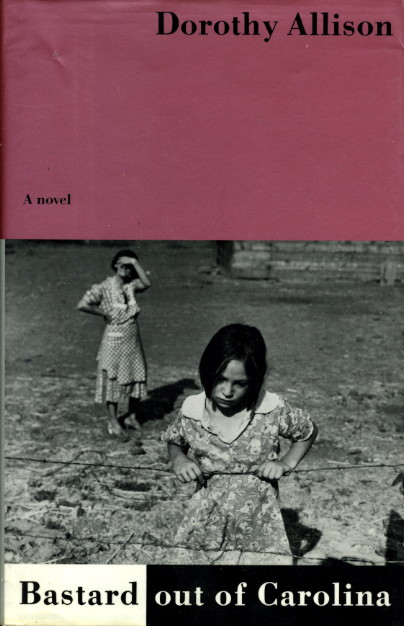
Reading recommendation: Bastard out of Carolina by Dorothy Allison.

 

Sad Homage to Whitman

By Mark J. Mitchell

Fatigued and down-hearted I read the result of the vote.
Wind has been stolen from my sails.
Fellow travelers jump, one by one, off the plank.
over the low gunwale of the ship of state.

Allons!

November 9, 2016


Mark J. Mitchell studied writing at UC Santa Cruz under Raymond Carver and George Hitchcock. His work has appeared in various periodicals over the last thirty-five years, as well as the anthologies Good Poems, American Places, Hunger Enough, Retail Woes and Line Drives. His poems have also been nominated for both Pushcart Prizes and The Best of the Net. Three of his collections and chapbooks—Three Visitors, Lent 1999, and Artifacts and Relics—and a novel, Knight Prisoner, are available through Amazon and Barnes and Noble. He resides in San Francisco with his wife, the documentarian and filmmaker Joan Juster. Visit his Facebook page.

Reading Recommendation: Artifacts & Relics by Mark J. Mitchell.

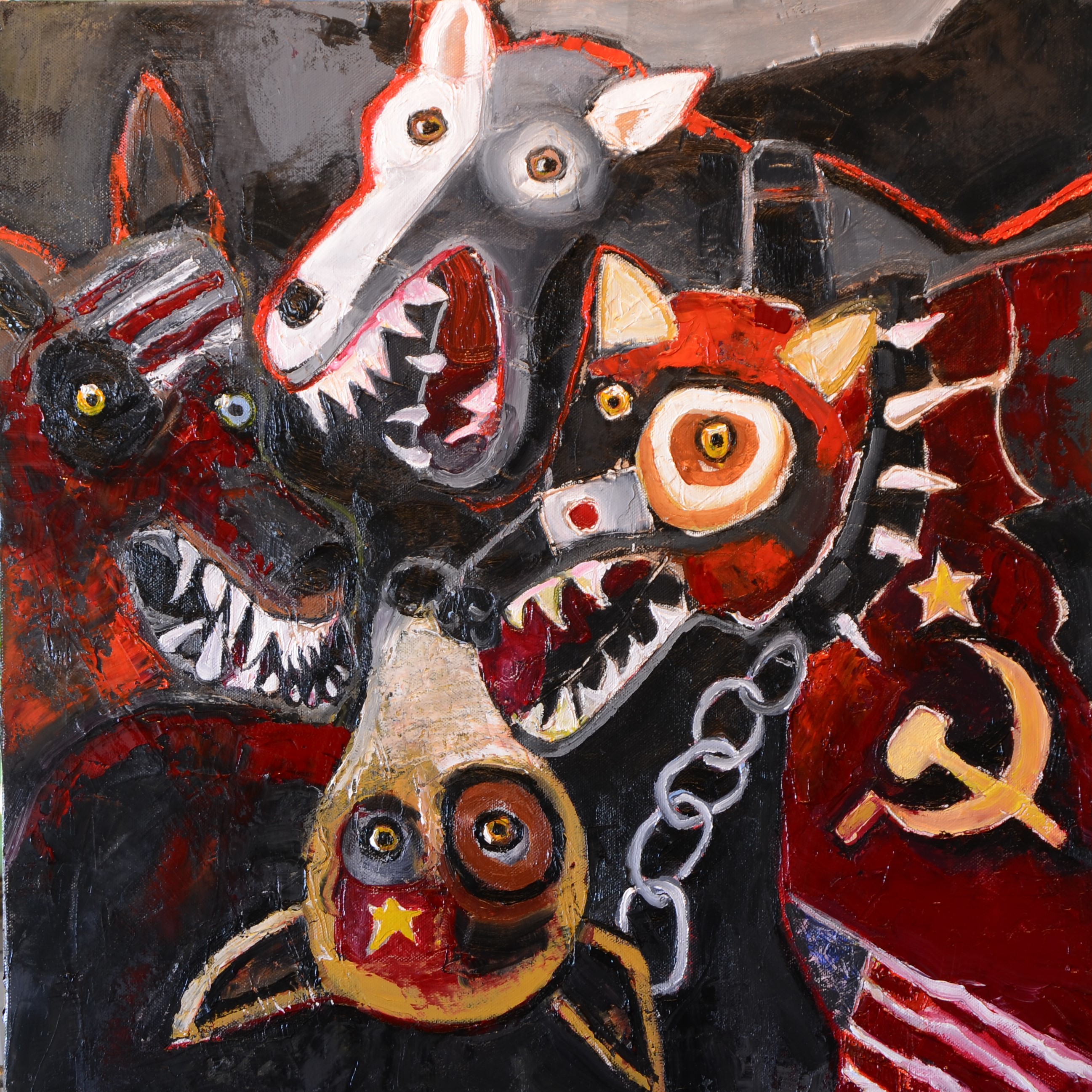
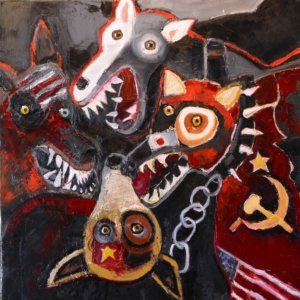
War Dogs #2 by Patrick Brown

A profile of the artist


Patrick Brown artist
Girl in Blue

Artist Patrick Brown is a fairly quiet man—perhaps a bit shy—with a cute laugh, a slight Southern accent, and a gentle sadness that sometimes shades his eyes. It’s a companionable sorrow, though. It reaches into his paintings and says, “It might hurt, but it’s OK to look; you know me.” And while there’s no recognized treatment for his particular sorrow, it is treatment of another sort that brought Patrick to California almost four years ago, from Nashville, Tennessee.

Before he left, he had been seriously ill, Patrick explains over a late breakfast at Swami’s in Escondido. He’d had to sell his home to pay medical bills, and the prospect of Obamacare had forecast relief. But, like many red states, Tennessee rejected the expansion of Medicaid, abandoning Patrick to the middle of the legendary—and life-threatening—healthcare doughnut hole.

“My doctor said that either I had to come up with $2,000 per month or find a place that provided care to people with AIDS.”

So it was, with brushes and canvas and AIDS diagnosis in hand, that Patrick left behind friends and family—including two estranged sons—to obtain healthcare in California, to start a new life, to recover.

A Few Good Men

He found a place to live in Escondido, set up a new studio, and showed his art in regional galleries. He was accepted into juried shows, sold a bit of work, and launched a new series of paintings, Sins of the Father—to process his fractured relationships? It was confusing: He’d come out to his sons well before before his diagnosis; it was only after learning he had AIDS that they rejected him.

“They won’t even tell me why they don’t want me to be a part of their lives,” he says, looks down at his blueberry pancakes, pauses for the moment to pass. “It’s better here, but there’s still so much stigma attached to HIV and AIDS.”

And now, since the presidential election, there’s so much uncertainty and concern, enough to draw even the most introspective artist outward.

Memphis 1968

“Sins of the Father started out as a small personal series directly related to the conflict between my sons and me. It turned into a much larger one, to express other people’s family tensions, and then it evolved into what was happening politically—dark subject matter. The first of the newer ones, when the protests with the Black Lives Matter were more prominent in the news media, were ‘Memphis 1968’ and another one titled ‘Protest.’ And then this whole thing with Trump—that he actually won—and the controversies with the manipulation by Russia and the nuclear thing; that brought on my dead-on political paintings.”

It also brought on the more radical activist, harbored since Patrick’s youth, and a new series of paintings, War Dogs.

“It’s inspired by all of the turmoil against the LGBT community, the Hispanic community, women, what’s happening with youth, with bullying and suicide, with religious differences. And who knows what we’re in for the next four years. There are so many people in the world right now living in fear because of the election, the talk of war. We’ve unleashed a man that is giving people permission to discriminate and bully. It’s sad.”

But is there hope? Beyond the sorrow and fear, is there something better to come?

War Dogs #2

“There may be some hope, but it’s going to take a really big commitment from a lot of people. I don’t know if they have it in them right now. There are some, but you’ve got to mobilize people to take this thing on. That’s what brought on all the stuff with the Vietnam War and Martin Luther King and Black Lives Matter. People were arrested and got back out there. Right now, so many people have been empowered on the negative side, it’s going to take a lot of effort to counter that.”

He pauses again, takes a breath, comes to a conclusion.

“So, yes, my paintings are definitely addressing political things now. Art is a vehicle to make my statement known, my protest. Art’s been a medium of protest for so many for so long—Goya, Picasso, Diego Rivera—it’s a tool. It may not be the best thing to create sales, but it’s important to me to get the message out. It’s not all pretty pictures. I’m going for something that’s making a statement in the best way that I know how. I can’t worry about what other people are going to think about my paintings. One of the greatest things an artist can do is give up painting what they think everyone will like and start painting from the heart. It’s a choice and a responsibility for me.”


Patrick Brown is one of four featured artists in the 4•Up Exhibit at The Studio Door in North Park.

Exhibition dates: January 20 to 29, 2017
Opening reception: Saturday, January 21, from 6 to 8 p.m.
Address: 3050 30th Street, San Diego, California


Patrick Brown
was born in East Saint Louis, Illinois in 1953. His education focused on painting at the University of Memphis, Hendrix College and Jefferson College.

Patrick’s successes include an ongoing relationship with the ABC Television Network, where his paintings are used on the sets. He was included in the 2016 juried exhibit and international publication 50 To Watch, featuring Southern California’s top artists. Among his earlier career achievements were mural work and portraits for the interiors of B. B. King’s Blues Clubs in Hollywood, Nashville and Memphis. His work was also included in Southern California’s Summation Exhibit and book publication the last three years, as well as the 2016 national Edgar Allen Poe exhibit in San Diego, California. He is a member of Visual AIDS, The Frank Moore Archives Project and the Escondido Arts Partnership Municipal Gallery.

Patrick currently lives and works in Escondido, California. Visit his website at www.PatrickNBrown.net.

Originally published by  by Excuse Me, I’m Writing.


Reasons to post a photo of a dead child from Aleppo

By Sergio A. Ortiz

Omran was a Syrian boy: Our son defeated in front of the sea after chasing the dawn, our little brother cleft by the blows of the crab that was death, nothingness, emptiness, a thick river of icy water. Our child like all other innocent children whom they bombed in Aleppo and are no longer: I want nothing more from this world. Everything I dreamed of disappeared. I need to bury my children and sit next to them until I die. Omran survived hunger, thirst and despair, but not the Syrian government, not the world who did not know, or care, how to save him.


Sergio A. Ortiz is a gay Puerto Rican poet and the founding editor of Undertow Tanka Review. He is a two-time Pushcart nominee, a four time Best of the Web nominee, and a 2016 Best of the Net nominee. He is currently working on his first full length collection of poems, Elephant Graveyard.

Reading recommendation: Elle va nue la liberté (Freedom, She Comes Naked) by Syrian poet Maram Al-Masri.

A Century of Chipping at the Ceiling

By Robbie Gamble

When I was seven years old, my parents escorted me into a room in a retirement home in Carmel, CA, to meet an old friend of the family. She was a slight, elderly woman with a friendly face and a clear strong voice, and she knew how to set a fidgety, slightly precocious boy at ease. We talked for a few minutes about what I was doing in school and the books I liked to read. She shook my hand, and we moved on. There was something about her that was memorable; I couldn’t forget her. Her name was Jeannette Rankin.

Years later I learned that she was the first woman ever elected to Congress, in 1916, from the state of Montana, four years before passage of the Nineteenth Amendment, which enshrined universal voting rights for women (Montana was an early state to adopt suffrage). An ardent feminist and pacifist, she voted with a small bloc of representatives against entry into World War I, and subsequently lost her seat. Re-elected to the House in 1940, she was the sole legislator to vote against entry into World War II. In and out of office, she fought for gender equality and civil rights for six decades. She said her proudest achievement was being on the floor of Congress to cast an affirmative vote on the original House resolution for the Nineteenth Amendment as “the only woman who ever voted to give women the right to vote.”

I’m fifty-six now, and it boggles my mind that I had the opportunity, within my short lifespan, to shake hands with the first woman who ever stepped onto the floor of Congress as a legislator, exactly one hundred years ago. I’ve thought a lot about Jeannette Rankin during this recent brutish election cycle, the prejudice and intimidation she must have endured as the first woman in an all-male bastion, the patience and endurance she needed to persevere in the struggle for universal suffrage, for civil rights, for peace. I look at Hillary Clinton’s tortuous campaign, the obstacles and the misogyny that she had to endure, and it seems like this nation, which appeared to be on the verge of electing our first woman to the Presidency, has come a long ways in the last hundred years, and yet hardly any distance at all. I’m proud and sad and disgusted all at once.

When I stepped into the booth on November 8th to mark my ballot, I was thinking about Jeannette Rankin, and all of us, women and men alike, who got to stand on her courageous shoulders, trying to break up that damn glass ceiling. The ceiling is still intact, but the fissures run deep, and I draw inspiration from her example of chipping away and speaking out over the long haul, not losing hope despite the setbacks of two world wars and countless other abominations, believing that justice and peace and equality will prevail if we continue to work for them.

She once said, “If I had to live my life over, I’d do it all again, but this time I’d be nastier.” Let’s keep going, nastily if need be, and with determination.


Robbie Gamble is currently completing an MFA in poetry at Lesley University. He works as a nurse practitioner caring for homeless people in Boston, MA.

Learn more about Jeannette Rankin.

Reading recommendation: The Reader’s Companion to U.S. Women’s History, edited by Wilma Mankiller, Gwendolyn Mink, Marysa Navarro, Barbara Smith, and Gloria Steinem.

3 a.m. November 11, 2016 Turtle Cove Cottage Po’ipu, Kaua’i

By Chris Cummings and David Cummings


*    *    *    *    *    *    *    *    *    *    *    *    *    *    *    *    *    *
D:
Drain the swamp     he brays   the president-elect     from his gold leaf
bedroom     in his gold leaf tower    Drain it he inveighs

*    *    *    *    *    *    *    *    *    *    *    *    *    *    *    *    *    *
C:
Horror-clown they called him     that German newspaper     the Germans
who know from horror-clowns alright

*    *    *    *    *    *    *    *    *    *    *    *    *    *    *    *    *    *
D:
They’ll come first for Dems    border-crossers next     then lives that matter
and those who pray five times a day     then neighbors     then you    then me
C:
They’ll unbury and burn all the oil   behead the Appalachians for coal
eeeeeeeeeeeeeee tunnel the earth    frack out the natural gas
All that and us    pyred and lit    rapacious fire    The black air we’ll breathe
D:
                              A fear governs them, unappeasable
I mean the ones he owns    his bottom-dwellers     murk-blind   uprooting
eeeeeeeeeeeeeee cypress     black gum     red maple              decay miasmal
eeeeeeeee That’s a swamp must smell sweet to him

*    *    *    *    *    *    *    *    *    *    *    *    *    *    *    *    *    *
C:
But a swamp, my love, is an ecosystem: life-giving, life-sustaining, densely
fecund        A place where dinner swims by and all you have to do is make a net
to catch it     Or if you haven’t got a net your strong bare hands will do

*    *    *    *    *    *    *    *    *    *    *    *    *    *    *    *    *    *
D:
Saddam Hussein finished off the Mesopotamian swamps in the mid-nineties
draining them    and thereby killed the livelihood and culture of an ancient
people     and killed the ancient wetland     A long misery
C:
humans     animals     plants     birds of many kinds, all lost     flamingos
pelicans     herons  sacred ibis     Basra reed-warbler     African darter
Mesopotamian crow… Those murders    his atrocity   It must be spoken of

A vulture perches on my heart this night and tears off pieces   Does that
mean I am dying     already dead   or am I hoping for death   now?

*    *    *    *    *    *    *    *    *    *    *    *    *    *    *    *    *    *
C:
Now I sit alone at a table on the lanai of this cottage in the 3 a.m. darkness
ceiling fan turning slowly    almost noiseless     The fan light is dim but
there’s light enough for writing     and I can hear the ocean a block away
The waves    how they break    a ceaseless sound   bound to the moon
But the moon too is leaving us     inches each year     moving forever     away

*    *    *    *    *    *    *    *    *    *    *    *    *    *    *    *    *    *
D:
And she will be so far from us    waves no longer rise and crash     and seas
are drained of vigor     the world’s ocean beaches tame as inland shores
C:

no tides
no tide pools
no clams
no clambakes

just a quiet almost lifeless lapping at our feet

*    *    *    *    *    *    *    *    *    *    *    *    *    *    *    *    *    *
C:
I mourn for you tonight my mother-father earth        But I think in the end
you will survive us     if the miniature suns we’ve so meticulously    construed
so faithfully sheltered    in buried silos like precious grain     if they’re never
lit          their poisons I think would be more   than even you    could repair

*    *    *    *    *    *    *    *    *    *    *    *    *    *    *    *    *    *
D:
But our own species?   Maybe this descent to madness is       you      thinning
our herd      returning us    to the ancient cave     damp and sooty and full
of shadows     Then you could start over   the Wild drained of us     build a
new offspring      if that’s your longing    more merciful than our kind
C:
One able to feel for the souls of all your children       the furred     the
feathered     the scaly ones too              Who will look out again on the stars
reflect on their mystery and be reflected    if     if I could believe     but the
night vulture has not lifted from my breast       has not yet had its fill


Christine and David Cummings live and write together in Menlo Park, California. They’ve both had some poems published here and there, and David’s collection, Tancho, was published by Ashland Poetry Press in 2014. “3 a.m. November 11, 2016” came from a journal entry Chris wrote right after the election, while they were in Hawaii celebrating their 10th anniversary, feeling the opposite of celebratory. They keep working on the poem; this is the most recent version, edited for length. A slightly longer version lives on their blog, which you can read here.

Reading recommendationTancho by David Cummings.

When the New Cabinet Exercises

By Tricia Knoll


They will be back where the snow falls
on camp tents, cookfires and legends
of stars so cold you know they froze
in the middle of a myth of creation
where someone blue lifted up the egg
and old women sang the birth song.

They will be back when snow is so deep
painted horses frost over, their eyelids closed
on the shoulder of a neighbor. When wan sun
cresting over the hill turns pony hoof prints
into iced omegas and they move so slow, nosing
winter grass, that you might not see them move.

They will be back saying the freezing
blizzard is why they hack open the belly
of the earth, mow down mountain ridges,
loose the black snake on the iced river,
and that valley fog that smells of smoke?
It warms the babies, they say when really,
it’s the masks they must wear.

They will be back to promote a white-out
of words that deletes drought, wild land fires,
and whirlwinds clogging the record books,
pages they throw like coal on a bonfire
of lies, ashy remains of picture books
they read to their grandchildren,
that illustrated scorched earth series.


Tricia Knoll is an Oregon poet who has done a great deal of resisting over a long period of time. She is deeply concerned about what will happen soon to the people protecting the water at the DAPL pipeline site. Visit her website.

Reading recommendation: The Manchurian Candidate by Richard Condon, 1959.

Divided We Stand

Divided we stand


By Janice Grinsell

Pastel drawing on paper/ iphoneography composite.

Artist’s statement

“Divided We Stand” was born on election night when the sea of red pushed into a nauseous realization that Trump would be …


Janice Grinsell is a multidisciplinary artist fascinated with the exploration and combination of media. She has a vast portfolio that includes iphoneography, painting, installation, and performance art, focused on the thematic internal journey of the artist and the viewer. She is an artisan with a omni-dimensional perceptual stronghold.

The central theme of her work is a cartographical exploration of her life as it is played out day by day, dream by dream, both conscious and unconscious. Her work reveals vulnerability blurring the distinction between one’s public persona and intimate emotions that reflects fragmented pieces of her emotional status and perceptions, often dark; they are fueled by a deep and intensely introspective nature. Powerful and intense, Janice’s work captures her audience with raw and instinctual iconography, unafraid of portraying the art of being human. Seeking pleasure in cryptic narratives, she invites the viewer to engage with her work, creating a portal to the subconscious.

Visit the artist’s website.


A Prose Poem by Alina Stefanescu

When You Send an Email Asking for Money to Support That Mission Bringing Jesus to Romania

I was born in a land wiped clean from the maps, a place you associate with AIDS-stricken orphans, tucked into Balkans, needing your bibles. Idiots needing salvation. Peasants needing administrations of missionary impulse. Come clear-cut this culture. Plant a flag. Mail a postcard. How you would have loved Ceausescu, his staunch anti-abortion policies. The workplace vaginal exams required by law. To check women for babies. To save baby lives while denying a mother’s. Illegal abortions, automated jail time. Birth control punished as contraband traffick, a violation of the national body. Borders decided the line between import and crime. Only Party members were permitted the honor of empty wombs. Only the Party ensured flesh against fetus. Pro-life is this boot on the neck of a lesser human, a blade you sanctify with statecraft.

I was born in a place where parents listened to shadows inching over concrete. Shadows don’t speak unless you count subtraction—the sound sucked away from nearby objects. A woman’s body is a mine, a natural resource. What’s natural is owned by men. You with bonafide smiles and big ole blessings. You with holy-roller heads & empty hearts. You hear nothing. Count the silence articulated in the portrait’s airbrush to taste the melody of what is missing. A math you cannot imagine. You who are blind. You who don’t see foreshortened folk ambling sidewalks. Take refuge beneath a roof slant. Seek the refuge you won’t grant refugees. You are busy bearing bibles. You are bringing the bible to the people of Romania. You are coming, eager to selfie. Tell the world what you’ve done for Romania. Tell what you’ve done.

I was born in a land that stopped naming its children Nicolae. The dictator’s name curses any child it touches. I am in love with the vacant wist of the local executioner, his grizzled voice, mourning the retirement of Alabama’s Yellow Mama. A mother who kills is a native Kali. An electric chair is the proper American matriarch, penultimate sizzle. Baptists forge petitions to bring Yellow Mama back. My mongrel womb won’t bear your life. I sew lips shut, vagina muzzled, verbs safe inside. My body is forbidden samizdat. Paul Celan is my answer. Please keep your American Jesus at home. Muffle his face with flags. Stars and bars you brand across his back.


From Alina

“[I] wrote it last week after re-reading Svetlana Alexievich and thinking how much the Russian desire for the “strong man” resembles America’s. And how sad.”

Alina Stefanescu was born in Romania, raised in Alabama, and reared by various friendly ghosts. She won the 2015 Ryan R. Gibbs Flash Fiction Award and was a finalist for the 2015 Robert Dana Poetry Award. Her poetry and prose can be found in PoemMemoirStory, Shadowgraph Quarterly, Parcel, Noble Gas Quarterly, Minola Review, and others. Objects In Vases, a poetry chapbook, was published by Anchor & Plume in March 2016. A poem from this chapbook, “Oscar Dees, No Apologetics Please,” has been nominated for a 2016 Pushcart Prize. Alina currently lives in Tuscaloosa with her partner and four friendly mammals. More online at www.alinastefanescu.com or @aliner.

From Alina: “Wrote it last week after re-reading Svetlana Alexievich and thinking how much the Russian desire for the “strong man” resembles America’s. And how sad.”

Reading Recommendation: Objects In Vases by Alina Stefanescu.

The Prescription

By Carolyn Ziel

My friend Jill posted a picture of Steve Bannon on Facebook with his quote, “Birth control makes women unattractive and crazy.” Jill’s comment was “Oh my God! Oh my God! Oh my God!” My response was “hash tag medical marijuana.”

I was kidding when I wrote it. But on Tuesday afternoon at 4:30, as the sun skidded the sky with Caribbean color, I pulled into a strip mall in Wilmington, off Pacific Coast Highway, for an appointment to get my prescription. Five storefronts lined the parking lot. A liquor store and the medical clinic were the only two that weren’t vacant, and a guy with his hands in his pockets loitered in a shadowy corner. I thought about driving away, but I got out of the car, put my purse on my shoulder and walked to a door with white block lettering: PCH Medical Clinic.

The office was cold. The walls were ghost white. My boots clicked on the dark brown parquet floors.

“Hi,” I said to the twenty-something girl sitting at a desk in a small office behind a window. “I called earlier.”

She looked up at me and smiled. “I’ve never done this before,” I said. I’d googled medical marijuana doctors. This place had 5 1/2 stars on Yelp.

The girl gave me some forms to fill out. I checked off the symptoms anxiety, stress and insomnia, and ticked depression and back pain for good measure. I signed several waivers promising not to drive under the influence or operate heavy machinery, and not to sell, redistribute or share my marijuana.

When I gave her my completed paperwork, I noticed an ATM in the corner. “Do you take credit cards?”

“No,” she said. “The appointment is $50 cash, if you have the coupon. It’ll be $65 without it. You’ll need cash for the dispensary, too.” I got $200 from the machine.

I didn’t wait more than five minutes before she called for me. As I followed her into the back I heard the ring of a Skype call. She brought me into an office with an oak desk. On it sat a computer monitor and a mouse.

“He’s not here?” I said.

She wiggled the mouse, connected the call and walked out of the room, closing the door behind her. I sat down and smiled at myself in the small box at the bottom of the screen, pale in my black Equinox t-shirt. My mouth was dry. I put my purse on my lap and folded my hands over it.

“Hello,” said a face on the screen. He was bald, shiny and overexposed. He wore a white lab coat and looked up at me through gold wire-framed glasses. I took him to be in his early 70s. “Can you hear me?” he asked.

“Yes, hello.”

“So.” He looked down at the forms twenty-something girl must have faxed to him. “How long have you had insomnia?”

“On and off for a couple of months.” I lied.

“And you have some back pain?” He was writing.

“My lower back,” I said. That was true, I’d just come from the chiropractor.

“How long have you been depressed?”

One of the definitions for depression is low in spirits. Another is vertically flattened. I felt both. My anxiety was real. But I didn’t want him to think I needed a shrink and meds or I wouldn’t get my weed.

I made the decision to get the prescription after a white delivery truck barreled toward me in traffic that morning. I had to swerve and jump a lane to get out of its trajectory. That’s when I burst. I couldn’t stop crying. The level of the swamp out there is getting high and there’s a riptide pulling me out to sea. I didn’t want to cry here, in front of the Skype Doctor, let my guard down. I needed to be calm. Explain in a mature tone that I just needed a little soft focus.

“Here’s the thing,” I said. “I’m not officially depressed. It’s more like I’m stressed.” I paused. He kept writing. I didn’t want to say the wrong thing. I wanted to be cool. “It’s not like I want to be stoned all the time. I mean I heard that there’s this stuff that just takes the edge off, you know, without being super stoney.” My heart skipped and slipped into my stomach. I felt awkward. I looked at myself on the screen and took a breath. Tried to gather my thoughts. Stay calm.

“The truth is,” I said, “this election, well, the outcome and everything has me really freaked out.” Shit, I didn’t mean to say that. What if he voted for the guy? He could be one of those people that says, “Hey we put up with Obama for eight years and we survived.”

A penny lay on the desk by the monitor. If a penny lands heads up, its good luck. If it’s tails, I flip it over, give someone else a chance to find a little luck. I needed some luck. These days, everyone I care about, that I’m close to, can use a little luck. A little softness. A little kindness. A little ease. Luck that lets you know you’ll be fine. Everything will be okay. Gives solace. The kind of luck that’s light. Light like compassion, peace, hope. I reached for the penny. Tossed it. Tails. I flipped it over.

The doctor stopped writing and looked up at me. I hoped he’d give me my prescription and I could buy some liquid miracle and a vape pen. Some Acapulco gold, purple haze or amnesia. That’s what I needed.

“Tell me about it” he said. “These are some crazy times.” He smiled a soft smile. “You can pick up your prescription at the front desk.”

“That’s it?”

“Yes,” he said, and the call was disconnected. I took a deep breath and exhaled for what felt like the first time in weeks.


Carolyn Ziel is a writer, a workshop leader and a member of Jack Grapes Los Angeles Poets & Writers Collective. Her work has appeared or is forthcoming in such journals as Diverse Voices Quarterly, CRATE Literary Journal, Cultural Weekly, The Los Angeles Review of Los Angeles, Edgar Allen Poet, ONTHEBUS and FR&D. She has studied with Ellen Bass, Dorianne Laux, Joseph Millar, Richard Jones and Pam Huston. Her collection of poetry, as simple as that, is available on Amazon. She is a regular contributor to The Huffington Post and Ariana Huffington’s Thrive Global.

Visit her website at www.carolynziel.com.

Reading recommendation: as simple as that by Carolyn Ziel.


Gentle Bones

By Suzanne O’Connell

I.

Darkness is upon us all.
The old tree kneels
like always
to sip from the water.

Poison pen letters
were returned
for insufficient postage.
Girls wear safety pins
and march in the street.

The house is dark.
The dachshund-shaped lamp,
is steadfast,
sitting in its halo of light.

II.

Darkness is upon us.
Search for the tiny miracles
close enough to touch.
Your ears for example,
those workaday wings.

Hello gentle bones,
hello flexible trumpets
made for listening.
You can touch the silken skin,
move them as in flight.
Their perfect rims
are crimped like pies
for our tarnished Thanksgiving.


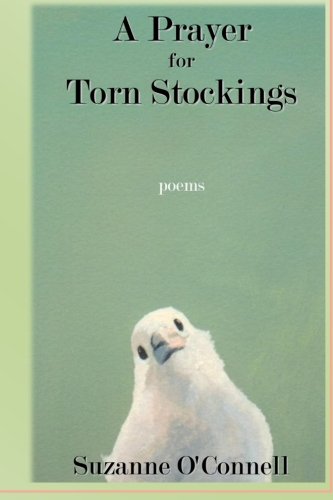
Suzanne O’Connell is a poet and clinical social worker living in Los Angeles. Her recently published work can be found in Poet Lore, Forge, Atlanta Review, Juked, Existere, Crack The Spine, The Louisville Review, and Found Poetry Review. O’Connell was nominated for the Pushcart Prize 2015 and 2016. Her first poetry collection, A Prayer for Torn Stockings, was published by Garden Oak Press. Visit Suzanne’s website.

Reading recommendation: A Prayer for Torn Stockings by Suzanne O’Connell.

President Truman calls on all liberals and progressives

Address in St. Paul at the Municipal Auditorium.
October 13, 1948, worth revisiting today

Mr. Mayor, and fellow Democrats of Minnesota:

Tonight, I pay tribute to the liberal spirit of the people of Minnesota—in the cities, on the farms, in the forests, and in the iron country of this great State.

In this center of practical liberalism, I am proud to salute a fighting liberal—the next Senator from Minnesota, Mayor Humphrey of Minneapolis. I am also glad to greet the next Governor of Minnesota, Charles Halsted.

Through them, I salute the liberal and progressive forces of this whole region—the forces which are once again on the march against special privilege.

Before I say anything else, I want to take this opportunity to recognize the splendid record which was established by labor and management in Minnesota throughout the war years, and nobody knows any more about that than I do, for I made an investigation of it.

Through those long dark months of war never once was a blast furnace kept a single minute, because of lack of ore. Men who mined the ore and those who manned the trains and the ore boats worked day and night, Sundays and holidays, and there was no work stoppage.

This was also true of the thousands of loyal men and women who labored in your mills and on your farms, and in your foundries and in your forests.

On behalf of the Nation, I congratulate the working people of Minnesota on their splendid wartime performance.

In view of that record, it is all the more strange to me that your senior Senator showed such fanatic zeal in helping to push the shameful Taft-Hartley law through the Congress.

I’m afraid the same thing happened to Joe Ball that happens to most Republicans with a streak of liberalism when they get down to Washington. That’s what I call the “Potomac fever.”

The Republican Party either corrupts its liberals or it expels them. It drove out Theodore Roosevelt in 1912. It drove out fighting Bob LaFollette of Wisconsin in 1924.

It was the Democratic Party of Franklin Roosevelt, not the Republican Party, that held out the hand of welcome to Floyd B. Olson, and to that hero of progressive idealism–George Norris of Nebraska.

And those liberals who have not been driven out of the Republican Party have been changed, like Joe Ball, from fighters on the people’s side to champions of reaction.

True liberalism is more than a matter of words. It demands more than sound effects. It cannot hide behind the catch phrases of the Republican candidate for President-catch phrases like “unity” and “efficiency.” Unity for what cause? Efficiency for what Purpose, I wonder ?

The American people, in this critical year, are entitled to a full and open discussion of the issues. They are not getting it from the Republican candidate for President.

Unity on great issues comes only when the voice of the people has been heard so clearly, so strongly, so unmistakably, the no one … can doubt what the people mean.

It is no service to the country to refuse, in the name of unity, to discuss the issues. It is no service to democracy to conceal the difference between the major parties.

Unity in a democracy cannot be produced by mealymouthed political speeches.

Unity on great issues comes only when the voice of the people has been heard so clearly, so strongly, so unmistakably, that no one—not even the second guessers—can doubt what the people mean.

Thomas Jefferson did not seek unity by concealing the real issues between himself and Alexander Hamilton. He made the issues clear, so that the people could reach a decision. And their decision determined that democracy rather than autocracy should prevail in this great country of ours.

Andrew Jackson did not seek unity with the moneymakers in Philadelphia. He made the issues so clear that the people decided to place the control of the money in the Government of the United States, and not in a few private banks.

Abraham Lincoln did not seek unity with Stephen A. Douglas. He made it clear that this Nation could not continue to exist half slave and half free.

Franklin D. Roosevelt, in 1933, did not seek unity with the economic royalists. He proposed the New Deal.

And today, I do not seek unity by concealing the issues between me and the special privilege groups that control the Republican Party.

I never will seek that sort of unity.

Real unity is behind basic principles and concrete programs. Real unity cannot be achieved without a definition of the issues, and a decision by the American people.

Our foreign policy is an example of this.

I had hoped that foreign policy would not become an issue in this campaign. To that end, I have refrained from taking partisan credit in campaign speeches for the policies which were organized by a Democratic administration, and which others are now claiming credit for so loudly today.

But I serve notice here and now that I shall feel at liberty to correct distortions and keep the record straight.

And when I do that, I shall be glad to give full credit for the significant contributions which have been made by some farsighted Republicans.

We have a large measure of unity in foreign policy now. But it was not always that way. We achieved this degree of unity, only after world-shaking events had made it clear that the vast majority of the people of the United States would no longer tolerate isolationism.

Now, we had no unity in foreign policy in the first national election after World War I. The Democratic candidate for President in that year stood clearly for the League of Nations, and for Woodrow Wilson’s idea of international cooperation.

But the Republican candidate, although he misled the people into believing that he stood for unity, was actually opposed to the League of Nations.

So, when the election was over, the people found themselves with a Republican administration and a Republican Congress that were completely unified–but unified in favor of the wrong policies.

And so the world started down the road to World War II.

We did not have unity in foreign policy in 1940. Even then, with half the world in flames, the Republican leaders were mainly isolationists. They were against aid to the democracies, and they called Roosevelt a warmonger.

The man who is now the Republican candidate for President said that the idea of producing 50,000 airplanes a year was fantastic. And we got to ‘produce 100,000. a

Even in 1944, in the midst of a we did not have unity in matters relating to, foreign policy. During the election campaign in that year, the Republican candidate, who is now running once more, charged again and again that it was the administration’s arbitrary desire to keep men in the Army after the war was over. You all remember that.

He had so little foresight about postwar problems that he felt we could completely demobilize our military strength the minute that hostilities ended.

Now, as a matter of hindsight, he says, “me, too” about building up our Armed Forces.

The unity we have achieved in foreign policy required leadership. It was achieved by men—Republicans as well as Democrats—who were willing to fight for principles before these principles became obvious to everyone.

It was not achieved by the people who copied the answers down neatly after the teacher had written them on the blackboard.

Here again, as in so many other cases, the American people should consider the risk of entrusting their destiny to recent converts who now come along and say, “Me, too, but I can do it better.”

In the meantime, there are other issues in this campaign—big issues. All those issues cannot be hidden or brushed away by pretending they don’t exist.

The issue in this election is not unity. It is not efficiency.

Efficiency alone is not enough in government. Maybe the Wall Street Republicans are efficient. We remember that there never was such a gang of efficiency engineers in Washington, as there was under Herbert Hoover. We remember Mr. Hoover himself was a great efficiency expert.

We remember how he selected one of the richest men in America to be his Secretary of the Treasury. But efficiency wasn’t enough 20 years ago, and efficiency isn’t enough today.

There must be life and hope in government. We must achieve and pioneer in the great frontier of human rights and social justice.

Hitler learned that efficiency without justice is a vain thing.

Democracy does not work that way. Democracy is a matter of faith—a faith in the soul of man—a faith in human rights. That is the kind of faith that moves mountains—that’s the kind of faith that hurled the Iron Range at the Axis and shook the world at Hiroshima.

Faith is much more than efficiency. Faith gives value to all things. Without faith, the people perish.

Today the forces of liberalism face a crisis. The people of the United States must make a choice between two ways of living—a decision, which will affect us the rest of our lives and our children and our grandchildren after us:. … The Wall Street way of life and politics. Trust the leader! Let big business take care of prices and profits! Measure all things by money! That is the philosophy of the masters of the Republican Party. [Or] the Democratic way, the way of the Democratic Party. Of course, the Democratic Party is not perfect. Nobody ever said it was. But the Democratic Party believes in the people. It believes in freedom and progress, and it is fighting for its beliefs right now.

Today the forces of liberalism face a crisis. The people of the United States must make a choice between two ways of living—a decision, which will affect us the rest of our lives and our children and our grandchildren after us.

On the other side, there is the Wall Street way of life and politics. Trust the leader! Let big business take care of prices and profits! Measure all things by money! That is the philosophy of the masters of the Republican Party.

Well, I have been studying the Republican Party for over 12 years at close hand in the Capital of the United States. And by this time, I have discovered where the Republicans stand on most of the major issues.

Since they won’t tell you themselves, I am going to tell you.

They approve of the American farmer—but they are willing to help him go broke.

They stand four-square for the American home—but not for housing.

They are strong for labor—but they are stronger for restricting labor’s rights.

They favor a minimum wage—the smaller the minimum the better.

They endorse educational opportunity for all—but they won’t spend money for teachers or for schools.

They think modern medical care and hospitals are fine—for people who can afford them.

They approve of social security benefits—so much so that they took them away from almost a million people.

They believe in international trade—so much so that they crippled our reciprocal trade program, and killed our International Wheat Agreement.

They favor the admission of displaced persons—but only within shameful racial and religious limitations.

They consider electric power a great blessing—but only when the private power companies get their rake-off.

They say TVA [Tennessee Valley Authority] is wonderful—but we ought never to try it again.

They condemn “cruelly high prices”—but fight to the death every effort to bring them down.

They think the American standard of living is a fine thing—so long as it doesn’t spread to all the people.

And they admire the Government of the United States so much that they would like to buy it.

Now, my friends, that is the Wall Street Republican way of life. But there is another way—there is another way—the Democratic way, the way of the Democratic Party.

Of course, the Democratic Party is not perfect. Nobody ever said it was. But the Democratic Party believes in the people. It believes in freedom and progress, and it is fighting for its beliefs right now.

In the Democratic Party, you won’t find the kind of unity where everybody thinks what the boss tells him to think, and nothing else.

But you will find an overriding purpose to work for the good of mankind. And you will find a program—a concrete, realistic, and practical program that is worth believing in and fighting for.

Now, I call on all liberals and progressives to stand up and be counted for democracy in this great battle. I call on the old Farmer-Labor Party, the old Wisconsin Progressives, the Non-Partisan Leaguers, and the New Dealers to stand up and be counted in this fight.

This is one fight you must get in, and get in with every ounce of strength you have. After November 2d, it will be too late. It will do no good to change your mind on November 3d. The decision is right here and flow.

Against us we have the best propaganda campaign that money can buy.

But we are bound to win—and we are going to win, because we are right! I am here to tell you that in this fight, the people are with us.

With a Democratic President and a Democratic Congress, you will have the right kind of unity in this country.

We will be unified once more on the great program of social advance, which the Democratic Party pioneered in 1933.

We will be unified in support of farm cooperatives, rural electrification, and soil conservation.

We will be unified behind a housing program.

We will be unified on the question of the rights of labor and collective bargaining.

We will be unified for the expansion of social security, the improvement of our educational system, and the expansion of medical aid.

Moreover, we will be unified in our efforts to preserve our prosperity and to spread its benefits equally to all groups in the Nation.

Now, my friends, with such unity as this, we can secure the blessings of freedom for ourselves and our children.

With such unity as this, we can fulfill our God-given responsibility in leading the world to a lasting peace.


Note: The President spoke at 9:33 p.m. at the Municipal Auditorium in St. Paul. His opening words “Mr. Mayor” referred to Edward K. Delaney, Mayor of St. Paul. Later he referred to Mayor Hubert H. Humphrey of Minneapolis, Democratic candidate for Senator, Democratic candidate for Governor Charles L. Halstead, Senator Joseph H. Ball, and former Governor Floyd B. Olson, all of Minnesota; former Senator Robert M. LaFollette of Wisconsin; and former Senator George W. Norris of Nebraska.

The address was carried on a nationwide radio broadcast.


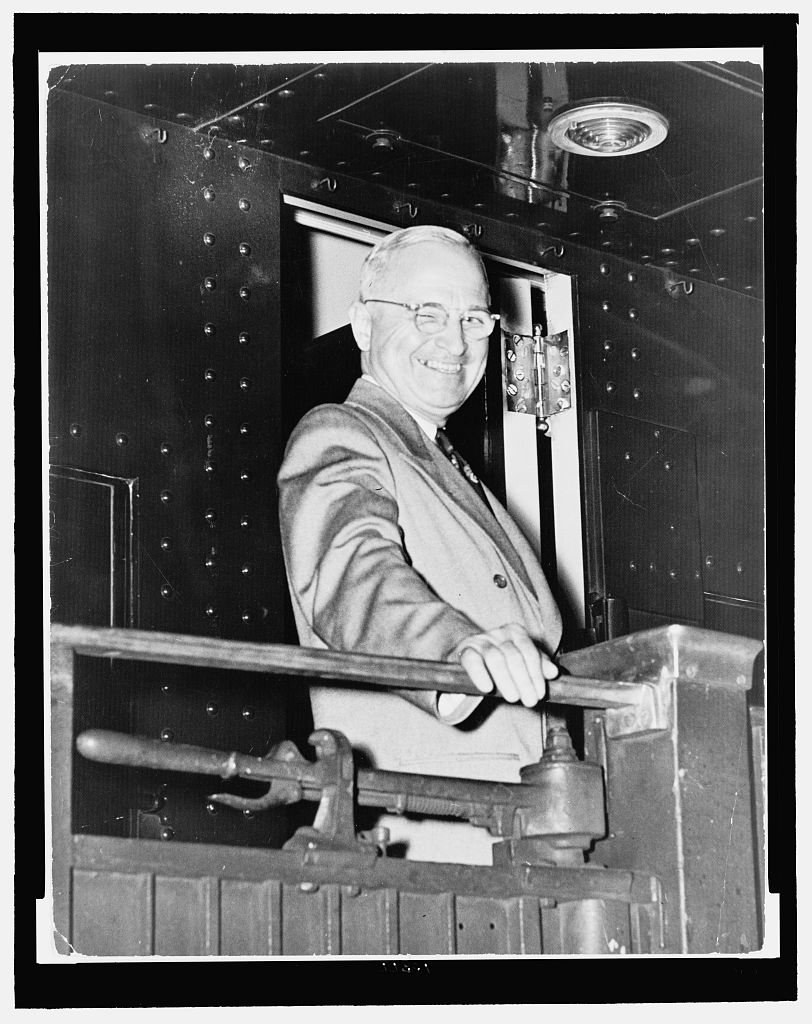
Photo credit: U.S. Library of Congress, President Harry S. Truman campaigning in 1948.

Citation: Harry S. Truman: “Address in St. Paul at the Municipal Auditorium.,” October 13, 1948. Online by Gerhard Peters and John T. Woolley, The American Presidency Project. http://www.presidency.ucsb.edu/ws/?pid=13046.

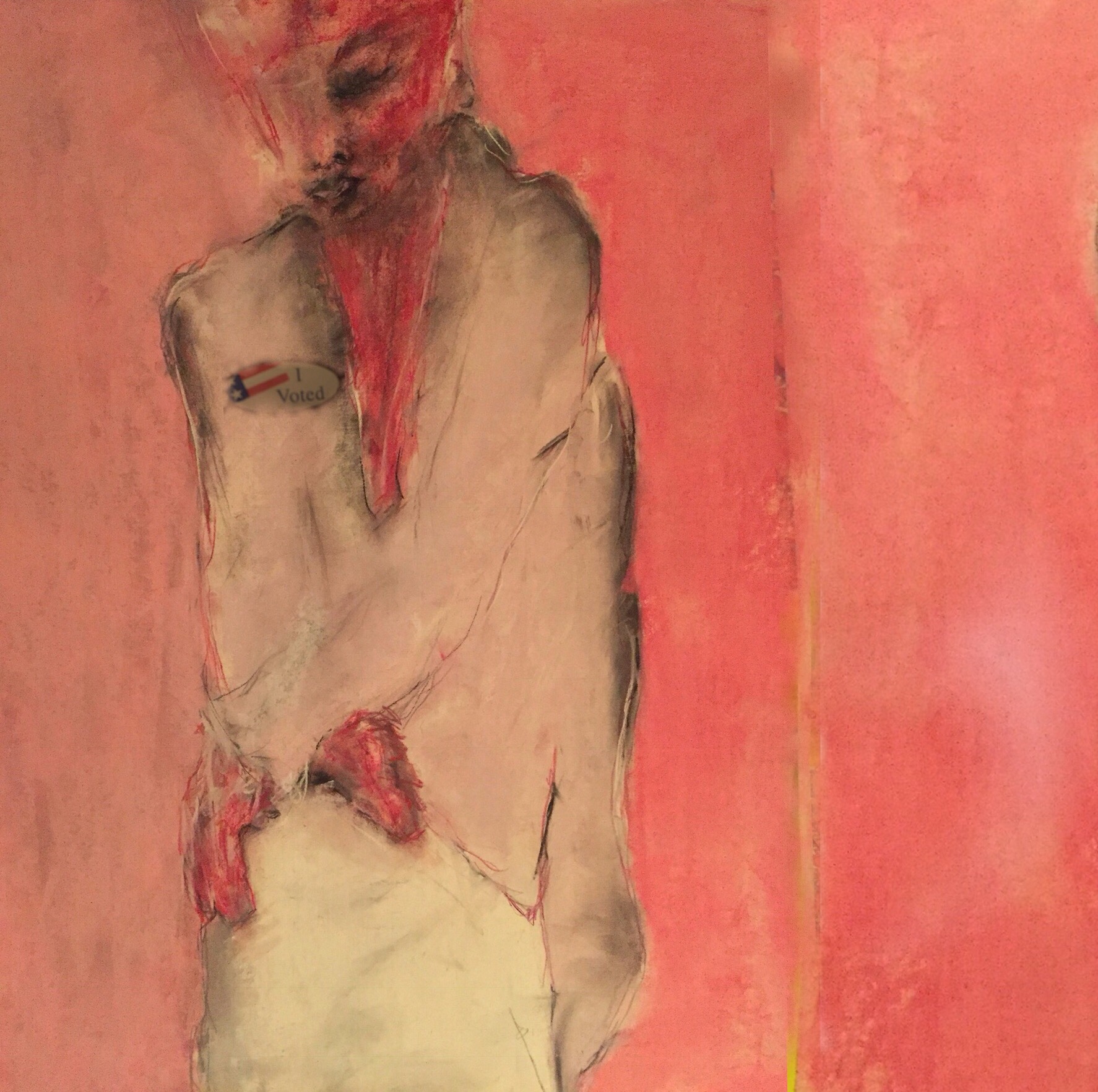
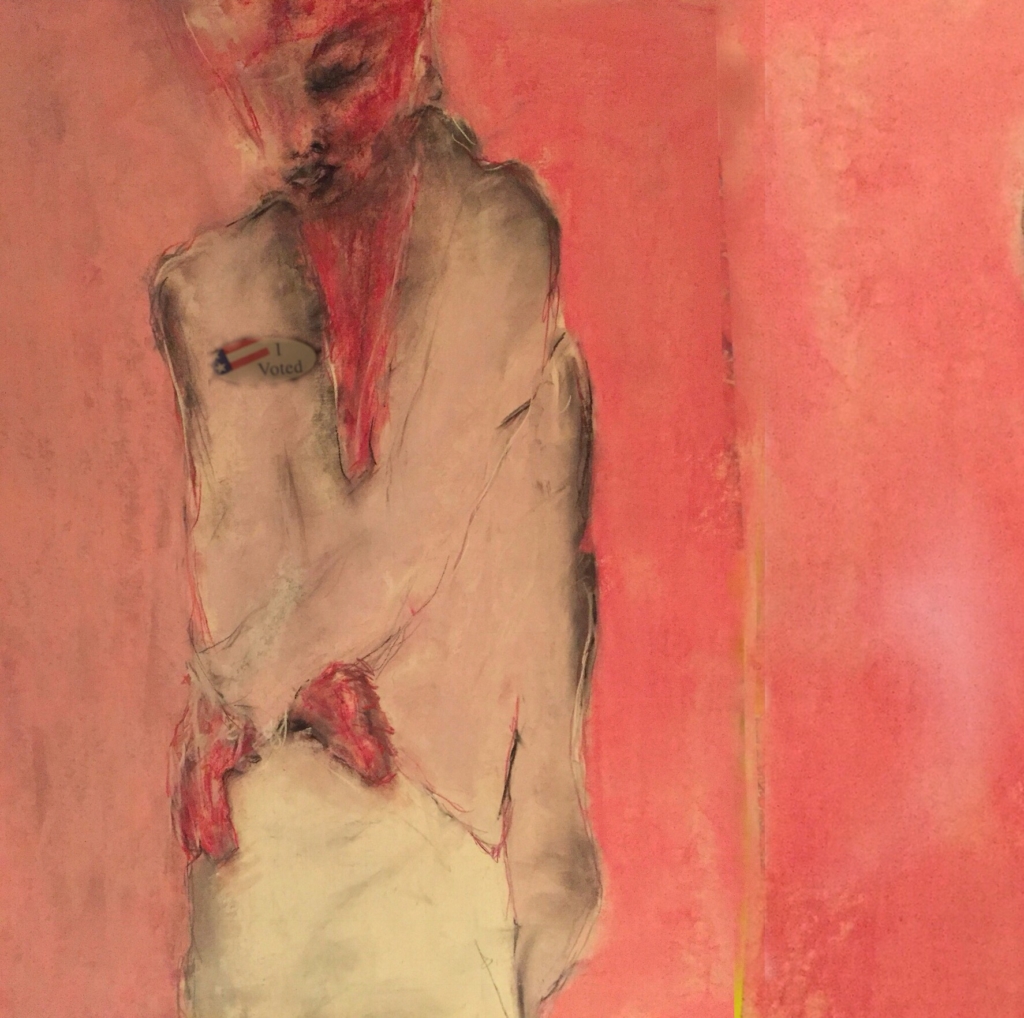
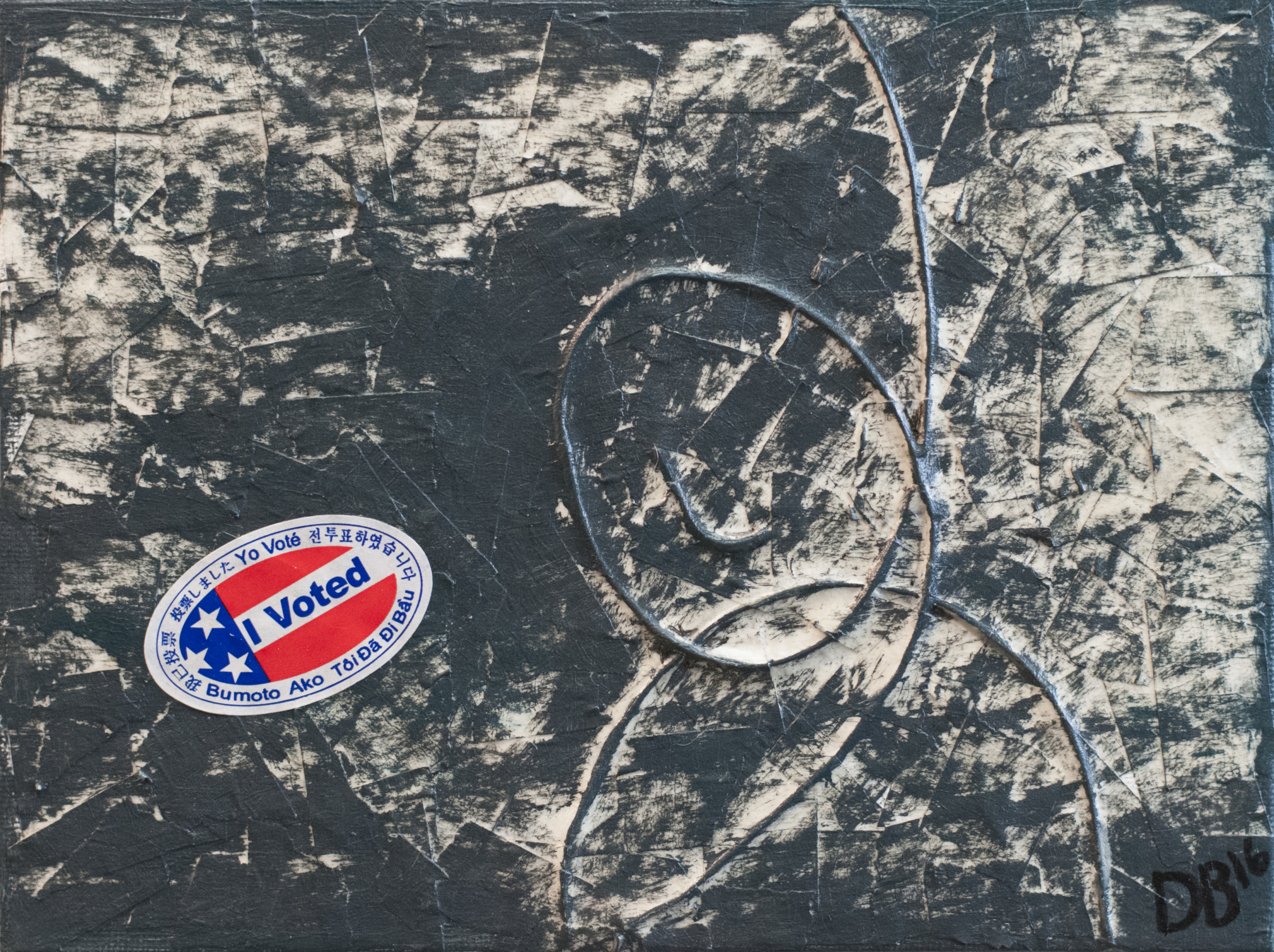
I Voted: 2016

I Voted 2016


By Diego Barrientos

Acrylic, medical tape, aluminum wire, and sticker on canvas board.

Artist’s statement

I created “I Voted: 2016” after voting on November 8. This perfectly illustrates how it felt to participate in a rigged system. I am a Guatemalan-born California resident and an Iraq War veteran who voted for Bernie Sanders, the true Democratic nominee.


First Snow Following the Election

By Shawn Aveningo

There’s a hush—a stillness—

that muffles the groundswell,

as flurries flutter and whiteness

blankets our sleep. We weep

for truth, its heartbreaking loss

akin to a missing dog from our youth.

Our boots etch fractals in fresh powder

and we search our neighbor’s eyes

for a sign—hoping we are still

on the same side.


Shawn Aveningo is a globally published, award-winning poet who can’t stand the taste of coconut, eats pistachios daily and loves shoes … especially red ones! Shawn’s work has appeared in over 100 literary journals and anthologies. She’s a Pushcart nominee, co-founder of The Poetry Box, managing editor for The Poeming Pigeon and journal designer for VoiceCatcher: a journal of women’s voices and visions. Shawn is a proud mother of three and shares the creative life with her husband in the suburbs of Portland, Oregon. Visit her website.

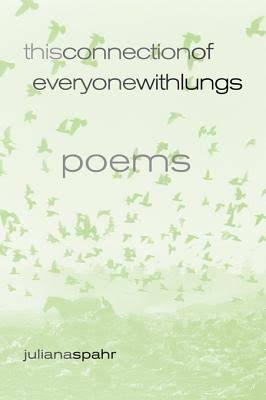
Reading recommendationThis Connection of Everyone with Lungs by Juliana Spahr.


Our Hitler

By Eduardo Santiago

In our house, November 25 is called Markmas because it is exactly a month previous to Christmas, and it is my husband Mark’s birthday. He loves all holidays and adding another one is a tradition the rest of the family and all of our friends support.

What should we call November 25th now that the day has been tainted by the death of the tyrannical Cuban dictator Fidel Castro? His passing is politically irrelevant, yet “mourned” by many in the streets of Havana, whether they want to or not. Nine days of mourning have been ordered, which means anyone caught listening to a radio or watching television or just humming to themselves—even in the privacy of their own homes—will see consequences. So if you were grappling with the terms “tyrannical” and “dictator” this should resolve that conflict.

Simultaneously, in Little Havana, the tiny Cuban heart of Miami, there is joyous celebration. Enormous Cuban flags are paraded down 8th Street alongside the U.S. flag, a commemoration of the country that provided more than a million of us with food, shelter and opportunity.

Although Cubans are known around the world for their music, there wasn’t a musical instrument in sight. Instead, it was the traditional beating of pots and pans, and I was delighted that tradition includes banging on electric rice makers. We are, after all, Americans now.

During television coverage of Little Havana on November 26, an English- speaking Cuban man put down the celebratory pots and pans just long enough to deliver a provocative sound bite: “He was our Hitler.”

The comparison, which gets bandied about quite frequently, has never felt appropriate to me. There is no comparison between the systematic extermination of more than eight million people, with the inconveniences caused by a charismatic and arrogant Latin American dictator. Fidel Castro was not a brilliant man, but he had some remarkable talents, such as talking out of both sides of his mouth, earning the blind trust of millions at mandatory rallies, and making political deals that, above all, lined his own pockets.

If there is to be a comparison between the Cubans and the Jews, it might be their sentient cry of, “Never forget.”

But is not forgetting enough? How has not forgetting served us? As a sinister new administration steps into the White House, the muffled cry in too many hearts appears to be, “Could it happen again?”

For those of you grappling with the word sinister, you need look no further than alt-right leader and Trump’s incoming chief strategist, Steve Bannon. As for the rest, all but two are white, all but two are men, and just one—Elaine Chao, AKA Senate Majority Leader Mitch McConnell’s wife—has run a federal agency before. For George W. Bush, and we all recall how well that went.

So, could it happen again, here? The answer will be clear come next Markmas.


Eduardo Santiago was born in Manzanillo, Cuba and is the author of the novels Tomorrow They Will Kiss and Midnight Rumba. Visit his website.

Reading recommendation: Midnight Rumba by Eduardo Santiago.


A Poem by Lisa DeSiro

Pride Party

the Aging Bisexual insists his ass is still tight and invites everyone to touch it
the Military Gentleman takes off his shirt and explains his tattoo and weeps
the Lesbian Artist describes the found objects used for her installations
the Fabulous Host kisses guests both male and female on the lips
the Funny Guy imitates his mother’s Boston Irish brogue
the Drag Queen hands out cocktails and condoms
the Straight Girl mingles and listens and thinks
no one can tame these lions roaring
laughter spilling drinks filling
bodies dancing music
playing loud and
proud


Lisa DeSiro is a writer and a pianist. Her poems have been set to music by several composers, and have appeared in various print and digital publications. Her chapbook Grief Dreams is forthcoming from White Knuckle Press (June 2017). Along with an MFA in Creative Writing from Lesley University, she has degrees from Binghamton University, Boston Conservatory, and Longy School of Music. She lives in Cambridge, Massachusetts, where she is employed as Production & Editorial Assistant for C.P.E. Bach: The Complete Works. Visit Lisa’s website.

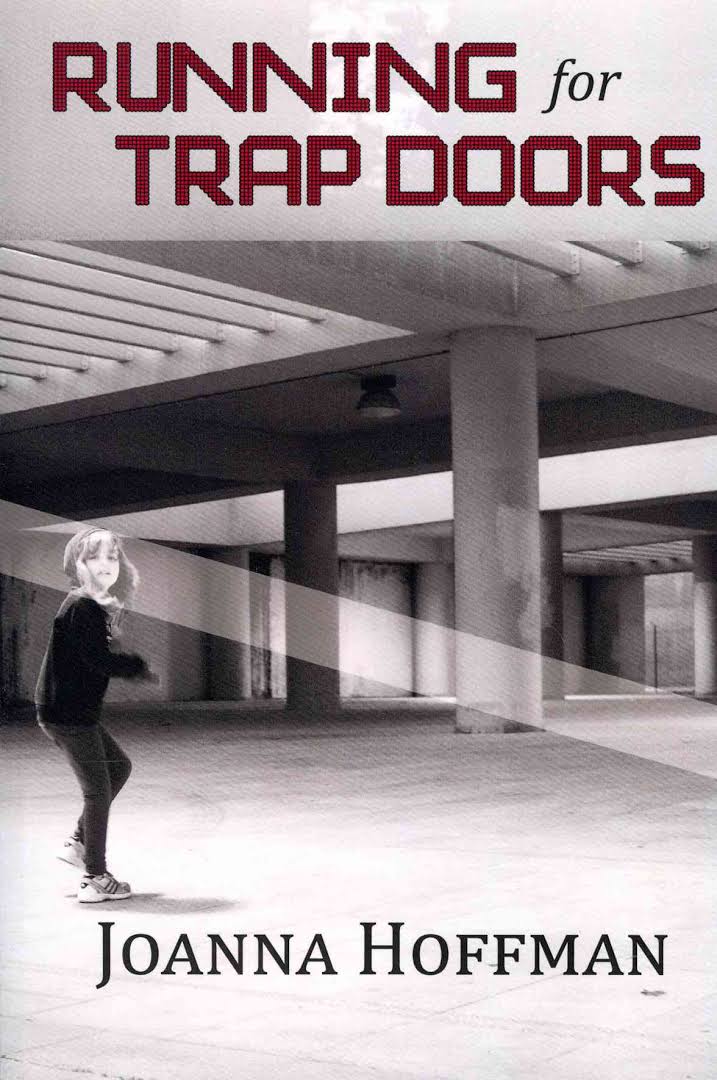
Reading recommendation: Running for Trap Doors by Joanna Hoffman.


Sleeping With the Enemy

By Marcia Meier

I have been sleeping with the enemy for more than two years. Rob is a Republican. But on the morning after the election, he held me close as I sobbed and promised, “It will be okay.”

He promised. But he doesn’t know. And nothing that has happened since that morning has made either of us feel better.

He didn’t vote for the president-elect; having worked with him once, Rob said he’d never vote for a man who had no scruples or conscience. I have accused Rob and his old-school Republican conservatives of abandoning their own principles. Of allowing white men whose only interest is money and power to cede their party to extremists bent on undoing everything we’ve fought for, for more than fifty years. Women’s rights. The right to marry whomever we please. The right for people of color to be free of the tyranny of a police state. (Though we have a way to go on that one.)

Now, we two read the news each morning with incredulity. A Republican and a Democrat united in disbelief. The difference is I see the potential for our country to be forever altered, and not for the better, by a man who is so very obviously unhinged—drunk with power and ego.

Rob sees the possibility of change that might turn out to be good. That people of goodwill and right-thinking will not allow the president-elect and his corrupt cabinet to destroy us. That our constitution and our government can certainly survive four years. How much damage could he do? Rob asks rhetorically.

A lot, I say. More, perhaps, than this country can withstand.

We argue, we debate, we fight, we agree. We make love—it seems the only thing we can do that reminds us of the good. The hope we cling to despite the evidence to the contrary.

It is a time of great uncertainty. When I allow myself to dwell on the events of recent weeks, I weep. I mourn. And Rob is there to hold me and comfort me. Even though I know his optimism will never replace my fears.

I veer from vowing not to read the news to allowing myself to release the grip of terror I feel, to breathing and trusting, to pounding out angry, incoming-administration diatribes calling for resistance and vigilance and marches in the streets. I cheer on Keith Olbermann and obsessively read The New York Times and Washington Post. I listen every day to NPR and cling to every little tidbit that glimmers with hope. And then I realize it is a pipe dream, and I have to consider how I will get through the next four years. Truly, how will we all get through the next four years?

If my sweet Republican lover is right and the president’s power is limited to such an extent that he can’t do any real damage, I wonder, how much damage is okay? A Supreme Court nominee who will shape the next thirty or forty years of jurisprudence, especially with regard to abortion and gay rights? I will be long gone, but the lives of my daughter and her future children will be unalterably affected. I can’t let that go. The reversal of environmental and economic policies that have made our lives and our world better and safer and cleaner? The abolishment of health insurance that for the first time covers most Americans?

So, I write and I call congressional offices and I send letters. And I pray that some of it will somehow matter.


Marcia Meier is an award-winning writer, developmental book editor and writing coach. Her books include Heart on a Fence, (Weeping Willow Books, 2016); Navigating the Rough Waters of Today’s Publishing World, Critical Advice for Writers from Industry Insiders (Quill Driver Books, 2010); and Santa Barbara, Paradise on the Pacific (Longstreet Press, 1996). Her memoir, Face, is forthcoming, as is an anthology, Unmasked, Women Write About Sex and Intimacy After Fifty, co-edited with Kathleen Barry. She is also at work on another book of poetry and photography, titled Ireland, Place Out of Time. Marcia is a member of the Author’s Guild and the Association of Writers and Writing Programs. Visit her website.

Reading recommendation: Zhuangzi Basic Writings  by Master Zhuang Zhou.


To Gerry Mckinley

By Mark A. Murphy

If poetry is not social then it ceases to have a function beyond perfume.

–André Gide

A life time ago in a rage

of mourning, my mind bent on self-doubt

and self-loathing, drudging up

the many injustices of a social system

hell bent on the destruction of life,

         I read a poem

about a child in Soweto

who had been beaten with such malice

his heart gave up, his bare feet still dirty from playing

on a mound of clay after school.


These words were not written

for an astounded world to wrestle with,

nor yet for the rich to sniff at

by that wise poet, Mazisi Kunene,

         but by my old friend, Gerry Mckinley,

an obstinate Irish rebel, a man not unlike Kunene,

a man accustomed to madness,

who dared to tell the truth, imposing on our solitude

forbidden words and abounding optimism—

though a million hearts might break.


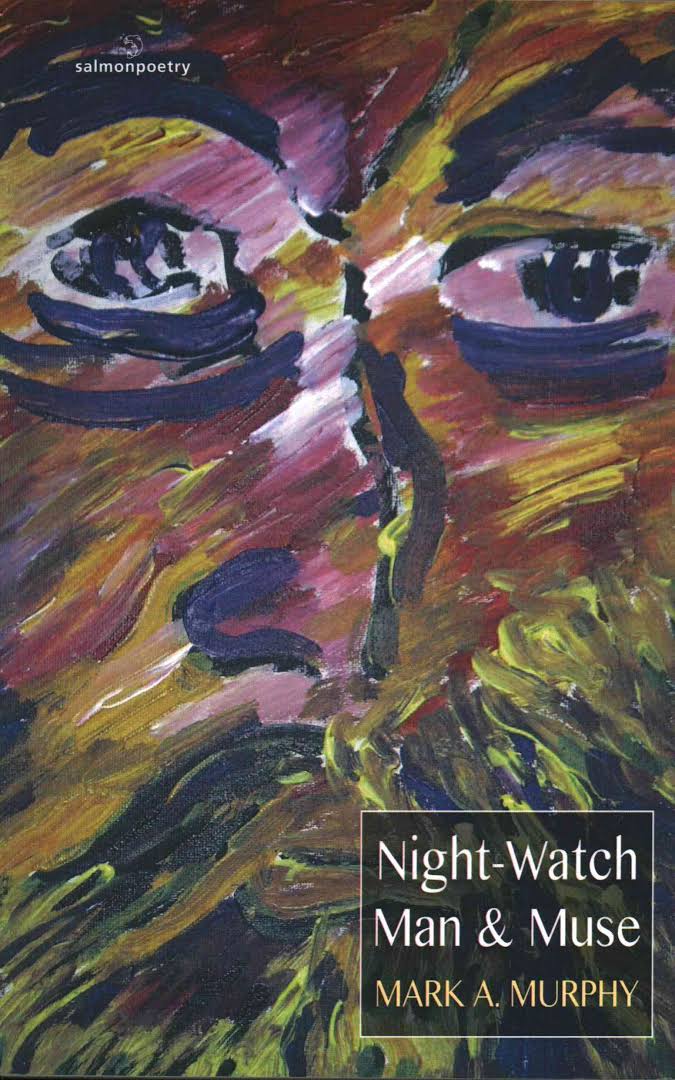
Mark A. Murphy’s first full-length collection, Night-watch Man & Muse was published in 2013 by Salmon Poetry (Eire). His poems have appeared in over 160 magazines worldwide. Lit Fest Press in America will publish his latest manuscript, The Ontological Constant, in early 2018.

Reading recommendationNight-watch Man & Muse by Mark A. Murphy.

“To Gerry Mckinley” was previously published by Dead Drunk Dublin.

Breakfast

By Amanda Gomez

The couple next to me is finishing their breakfast.
Between a bite of grits and eggs, the woman asks:
how do they let in trash like that these days? staring

at the television screen, where clips of protestors
gathered at the Trump Tower flash across.
The news anchor covering the story chuckles

nervously, as an interviewee raises the topic of race.
She blushes as if it’s inappropriate. Maybe
I shouldn’t be talking about politics the lady beside me

continues. When her husband makes no response,
she turns towards me. I keep my mouth shut; put myself
in her place. I wonder what would make her America

great again. I think of my mother, my grandmother
and her sisters: where they were when they realized
they were uninvited guests. As for me,

I was in line for recess. A boy called me spic
in the third grade. I didn’t know what it meant.
If I did I would have called him caulkie* back.

Let him have it; ensure he never used that word
with me again. It’s moments like this still happening,
happening right now, which is why I refuse to respond

when she wants me to engage.
It’s simple: I want her to know
that what she’s searching for, she can’t have.


Amanda Gomez is an MFA candidate in poetry at Old Dominion University. Her work has been published by Eunoia ReviewEkphrastic ReviewManchester ReviewExpound Magazine, San Pedro River Review, and Avalon Literary Review.

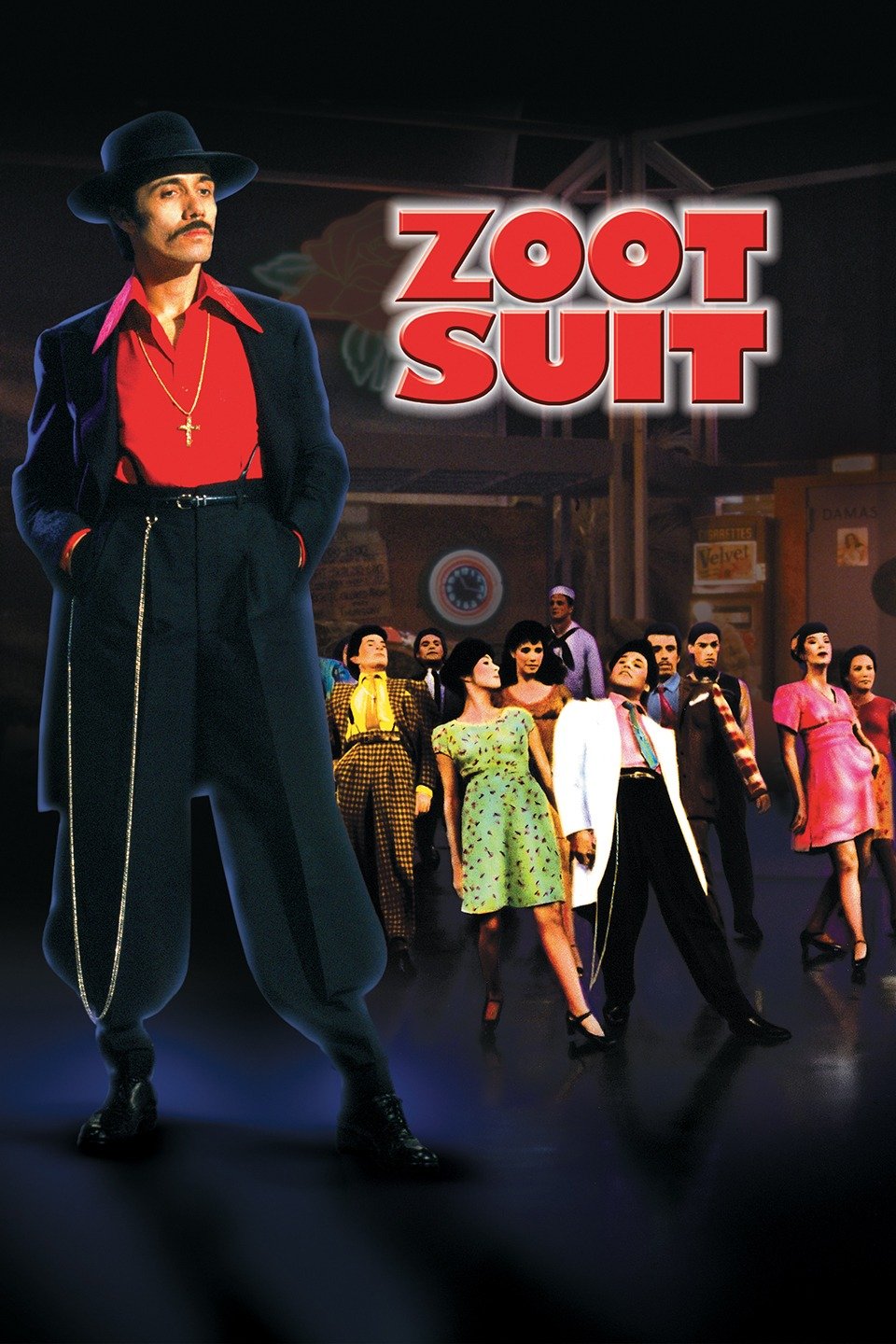
Viewing recommendation: Zoot Suit, starring Daniel Valdez and Edward James Olmos; written and directed by Luis Valdez, 1981.

*Caulkie refers to a person so white, they resemble caulk.