Something More

By Cynthia Romanowski


2017: January. Huntington Beach.

I’m on my couch. Tears rolling down. Obama just thanked Michelle in his farewell and I’ve finally lost it. This is not about politics, at least it doesn’t feel like it, it feels like something more.

In the kitchen my boyfriend opens a package from the mail. It’s the Japanese wet stones he’s been waiting for. He stands at the kitchen counter throughout the entire speech, sharpening every blade in we own.

2001: September. Huntington Beach.

Senior year of high school. I am the associated student body president. My job is to show up an hour early for school to lead a group of drowsy overachievers. Besides picking a cabinet of my peers, it’s not very political. We are glorified event planners. Prom. Pep Rallies. Talent show.

On the morning of Sept. 11, 2001, I’m running late for our pre-dawn meeting. I haven’t made copies of the agenda, and a bunch of kids are crowded around a little TV in our offices. Something has happened, but I don’t know what their deal is. So I corral them away from history to discuss Homecoming.

In my first period English class, the fear is palpable. Even here on the West Coast you can feel it, even in a high school classroom. This is Orange County, California and religious kids are talking about the rapture.

I leave class to meet with the vice principal and we decide to do an ad hoc rally in the outdoor amphitheater between classes.

I deal with the moment the only way I know how: I make posters.

I roll out long sheets of white paper and write out political slogans in red and blue. “Let freedom ring.” “God bless the USA.” I have no words of my own, no context, I have nothing but feelings that are too complicated for my developing brain to process and express.

At the rally, I hold the microphone and do what has worked for me at football games and spirit camp and attempt to lead the entire student body in a cheer.

I yell into the mic: “Who here is proud to be an American?!”

The audience is still stunned by the day. Confused. And they don’t react much when I say it again.

I still cringe just thinking about it … how little I had to say.

2004: October. Manhattan.

Sophomore year of college. I’m at “Success and the City,” a conference for the Public Relations Student Society of America. I am vice president of PRSSA at Long Beach State and I hate all the other girls in the group, especially the sorority girl president (I do not yet know what feminism is, let alone Bad Feminism). Donald Trump is the keynote and they are excited to see him speak and it gives me yet another excuse to separate myself. Even at age 20 I know this is fucking ridiculous. That this reality TV star is not a person to admire. I put on headphones and blast the new Yeah, Yeah, Yeahs album, Fever To Tell, and walk all over the city. Alone.

2016: November. Huntington Beach.

I go to my polling place, which is at a church, and vote for one of the most qualified presidential candidates in history, who happens to be female. I don’t love her and I didn’t vote for her in the primary, so I am surprised at the feeling that swells inside me. A clenching of the throat, swift and strong and unexpected. I laugh it off and post on Facebook:

“Just cast my ballot. Had an emotion.”

I have no idea what the evening holds. How minuscule this feeling will seem as the night beats on.

When my boyfriend gets home, I encourage him to rush to the polls. We know she’s going get California, but he goes anyway, and, as in the primary, he fills in the box next to Hillary.

Later, around 1:00 a.m. I will shake him awake to tell him that Trump has won and he won’t believe me.

2003: March. Sunset Beach.

It’s a Wednesday night at my restaurant job and I’m the only server scheduled. The sky is gray, and the bartender and I know that we are poised to make zero dollars. The only customers are Marsha, our office manger, and Kayak Kenny, who is already in his corner with a Miller Light. On the little TV behind the bar there are bombs exploding all over Iraq. Shock and awe. Within seven hours, over 70 sites are destroyed. And the four of us just sit there watching, feeling completely helpless.

On my college campus, it seems like there are walkouts and protests every week. In seminars, we discuss the Patriot Act and WMD’s and Jihad and liberal bias in the media. I am angry and conflicted and disappointed with the status quo, but I don’t do anything. I just work at the restaurant and try to make my way through school. I declare a double major of political science and journalism.

2016: November. Portland.

The morning after the election, I fly to visit my friend Stephanie and her two-year-old. The past 18 hours have been spent bingeing on Facebook, scrolling through the shell shock. Fear and uncertainty abound. Some people are already talking about coming together as a nation, and I want to tell them to go fuck themselves. I turn off my phone instead.

Steph and I meet up with two other writer friends for a sad ramen lunch. We are deflated and dreary, but we have also been stirred awake.

“Goddamnit. Now we have to become activists,” Stephanie says. It’s a statement drenched with privilege, and we acknowledge this fact, how the years of Obama presidency have lulled us into complacency. I think about Bush and all the ways in which this is the same and all the ways in which this is completely different. We talk about Brexit. Make plans to March in January and eventually we do.

By the end of the week, we’ve logged calls to representatives. We’ve donated money. We’ve promised not to forget this feeling. To stay active.

That night on SNL, Dave Chapell and Chris Rock do a sketch about white people being shocked and disturbed by the election and I see myself in the satire.

2003: September. Long Beach State.

To be a good political science major, I join the intercollegiate Model United Nations team. We carry around heavy binders filled with paperwork from the Geneva Convention and Kyoto Treaties. Policy statements and position papers that we’ve written lie next to CIA Fact Book printouts. My father would probably see this moment as my indoctrination into the liberal bias of the university. Perhaps it is.

It is two years before the release of Thomas Friedman’s The World Is Flat, but our advisor, Dr. Larry Martinez, has already honed in on the varieties of upheaval quaking across the globe. Open societies. Open technologies. Open markets. A perfect storm. Economic liberalism and a swelling of wealth at the top.

The California recall is in full effect. A porn star and the lead singer of T.S.O.L. are trying to replace Governor Gray Davis. My dad is excited about Arnold Schwarzenegger, and the Terminator himself is paying CSULB a visit. I’m standing steps away from the actor as a raw egg hits his shoulder. He doesn’t flinch and casually removes his jacket. Thirteen years from now, Donald Trump will announce his candidacy for president, and I will immediately think of this moment: how a Republican action hero won the plurality in California with 48 percent.

2008: November. Long Beach. 

My college apartment is filled with foreign exchange students and we’re all drunk and celebrating the election of Barrack Obama. My roommate leads an International Student’s Group so several nations are in represented: Chile, Japan, Colombia, Italy, Sri Lanka, Germany … then there of a bunch of middle-class Americans like me.

Our filthy living room is full of future journalists and art directors, international NGO organizers and government representatives, engineers and academics. But right now, we are just college kids drunk at a party, trying to sleep with each other. Elated with history. Blissfully unaware that we are about to graduate into the great recession, not yet cognizant of the sheer grit that will be required of us or how long it will take to become all these things that we’ve set out to be. The storm is reaching it’s peak, but we’re still in the bubble.

The next morning, my roommate Daniela tells me the news: They’re talking about Hillary for secretary of state. My mind races into the future and when my eyes meet D’s we smile with a sense of hope. Anything is possible.

2016: November. Huntington Beach.

After Portland and sad ramen. I will go over to my boss’s home office to help him de-clutter and set up a filing system, knowing full well that the paper will pile up and the mess will accumulate in a matter of days. He is a Trump supporter, but a somewhat reluctant one.

We will talk about Trump, and I’ll attempt to look him in the eyes when I say the words: “Grab them by the pussy.” But then my voice will shake and I’ll keep my eyes down on his mountain of useless documents.

I’ll tell him how devastated my friends are, how I’m worried about the environment and my gay friends and my Muslim friends and my friends who are immigrants. I’ll think back to high school ASB and think of Ryan Jaumann. I’ll think back to Long Beach State and think of Julio Salgado. I’ll think of long afternoons spent drinking coffee and chain smoking with Farooq at the Coffee Bean on campus.

“I don’t think he’s really gonna do any of that. … Do you?” my boss will ask.

As we speak, my boss will have three Mexican workers inside his home, washing his windows, and I will wonder what they think of our conversation.

I will want to mention the recent spike in hate crime. I will want to explain our position of privilege, how it offers us the convenience of dismissing threats of registries and walls. I will try to speak. But in the end, my words will be such a sloppy blur, that I won’t even remember most of them.

He’ll talk about Obama’s spending. Deficits and debt. The rising cost of insurance. And I’ll kick myself for not having answers and rebuttals ready.

I will bring up Bush and expensive wars and deregulation. The housing crisis. The situation that Obama walked into. Technological disruption that stretches far beyond the leadership of a single nation. I’ll speak until my voice quivers again. Then I’ll look down at my hands and realize how I’m just shuffling the papers around and not actually organizing anything.

We will sit together among his mess of paper—decades of obsolete invoices sprawled across the floor. The mess will feel small and pointless and I will want to go home. But I won’t.


Cynthia Romanowski holds an MFA in fiction from UCR’s low res program in Palm Desert. Her monthly book round-up, Shelf Awareness, can be found in Coast Magazine and her fiction has appeared in The Weekly Rumpus, The Nervous Breakdown, MARY: A Journal Of New Writing, Lit Central OC and on the podcast No Extra Words. She has also been featured reader for The New Short Fiction Series, Dirty Laundry Lit and Tongue & Groove. Read more of her work at cynthiaromanowski.com.

Photo credit: Joy via a Creative Commons license.
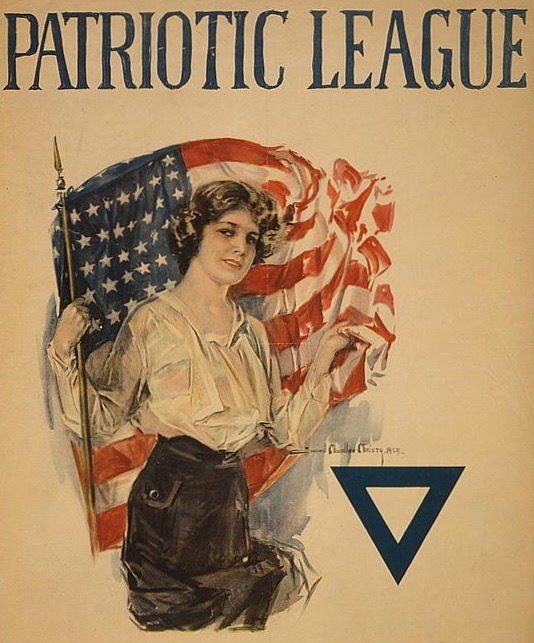
Patriotism Reconsidered

By Lucinda Marshall


My anthem is the serenade of birds,
sung without regard for map lines
delineating human assumption of dominion
over that which cannot be possessed,
and I will not pledge allegiance to,
or defend a flag of illusory freedom.

As the sun greets each day,
I will bravely stand up—against
racism, gendered hate, and xenophobia.

I will join in solidarity
with those who block pipelines
and protest gun violence,
those who feed the hungry
and work to stop the school
to prison pipeline,
and with every person who works
for the common good.

Solemnly I swear not to tolerate
the revision of history to fit
a fraudulent justification for
perpetual war or
wanton destruction of Earth.

This is my oath of citizenship,
because to do anything else is treason.


Lucinda Marshall is a writer, artist and activist. Her recent poetry publications include Sediments, Ground Fresh Thursday, Stepping Stones Magazine, Columbia Journal, Poetica Magazine, and ISLE. Her poem, “The Lilies Were In Bloom,” received an Honorable Mention in Waterline Writers’ Artists as Visionaries Climate Crisis: Solutions. She is the Founder of Feminist Peace Network and the author of numerous published essays and articles, and the blog, Reclaiming Medusa. Lucinda co-facilitates the award-winning Gaithersburg, Maryland Teen Writing Club. She is a member of the Maryland Writers’ Association, and Women, Action, and the Media.

Image credit: “Patriotic League” by Howard Chandler Christy, 1918, from the Library of Congress.


Brother, Can You Spare the Time?

By Kevin Patrick McCarthy


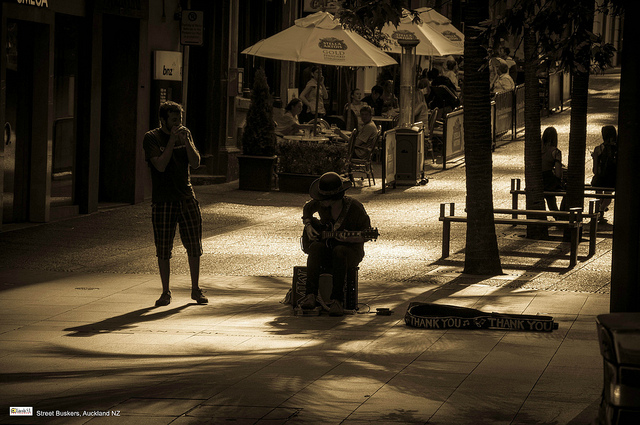
Every day, impoverished buskers lay down a diverse soundtrack on the Pearl Street Mall in Boulder. Even as we studiously avoid their eyes, we’re ensnared in their webs of mood and memory. They count on our collective wondering and remembered joys.

My favorite is a skinny longhair. His white whiskers are choppy, as if he shaves with scissors. He sits upright on a stool in front of Ozo’s Coffee, his guitar ringing as he keeps time with an artificial leg. His thin tenor pushes Dylan’s words a few scant yards.

How many roads must a man walk down,
Before you call him a man?
Yes, ‘n’ how many seas must a white dove sail,
Before she sleeps in the sand?
The answer, my friend, is blowin’ in the wind
The answer is blowin’ in the wind

The old hippy sings it with conviction, reminding us of the essential problems of life. I give what I can. He seldom stops playing, so gratitude comes from the eyes.

About a block away, a newcomer paces a wide arc on the cobblestone. He looks like a surfer who’s seen too much – his downcast face flush beneath blonde bangs. He energetically strums an old Martin, accompanied by bells attached to one foot. He also sings a song from the ‘60s – “Do It Again,” by the Beach Boys.

Well I’ve been thinking ‘bout
All the places we’ve surfed and danced and
All the faces we’ve missed so let’s get
Back together and do it again

It’s a surprising choice for a lone minstrel. The original recording was stuffed with rich harmonies, yet this one scruffy guy takes it on without hesitation. A strong cadence in the lyric drives the tune, and the bummed beach boy carries it off well. By themselves, the words seem vapid, yet when ensconced in a deliberate groove, they conjure strong nostalgia. The simple song taps directly into the universal longing to rekindle old magic.

Eighty years ago, another haunting song symbolized an era:

Once I built a railroad, I made it run, made it race against time.
Once I built a railroad; now it’s done. Brother, can you spare a dime?
Once I built a tower, up to the sun, brick, and rivet, and lime;
Once I built a tower, now it’s done. Brother, can you spare a dime?

Yip Harburg’s lyrics reestablished an essential link between working Americans and the downtrodden. Using code words of intimacy, they reminded us that panhandlers and hobos were the builders and doers of the recent past. There, but for ____, go I.

This time around, even in bleeding-heart Boulder, we’re not yet where old Yip would like us to be. When I expressed disappointment that I hadn’t thought to invite a genial pair of budget travelers in for coffee, our friends were scandalized. When thinly clad characters wander down alleys at dusk, the neighbors assume they’re casing homes for burglary, rather than simply looking for a warm place to sleep.

Make no mistake: However politicians and Wall Street sages want to finesse the narrative, we’re in the midst of an economic depression. Nobel Prize-winning economist Paul Krugman made that clear in his excellent book, End This Depression Now! (W.W. Norton & Company, 2012). Real suffering permeates our culture. Business owners face tough choices, and it shows. Every day I see people driving unsafe cars, riding bailing-wire bicycles, or walking around clearly in need of food, a friend, or a doctor. Last summer, I picked up a hitchhiker deep in the mountains who did not own shoes.

It’s not just those people who are marginalized. It’s friends, relatives, and nearly any one of us who misses a paycheck or two. Yet we’re in denial. We hold street people at arm’s length because we want to believe they just don’t measure up. They’ve failed, somehow, in being Americans. Illogically, the dismissal is child of a larger fear: that this inadequacy, however deserved, is contagious. As a right-wing bumper sticker puts it, we must guard against “trickle-up poverty.”

The programs launched in the 1930s, to mitigate the Great Depression, were predicated on the notion that, in a foundering economy, or when mammoth undertakings are otherwise required, cooperation must supersede competition. Yet the cooperation we need today is unobtainable unless each of us breaks the dehumanizing habit. We’ll simply refuse to put our shoulders to the wheel of cooperative expansion. We’ll quibble over degrees of selfishness.

Now is the time to engage the strength of unity that our parents and grandparents knew. It’s our turn to be the greatest generation. It begins simply—with looking into the eyes of our brothers and sisters on the street. With crossing the bridge, as Martin Buber would say, from “I-it” to “I-thou.” From there it might progress, for example, to remembering better times with the sad surfer. Seeing the achievement and possibility within each ragged squatter. Seeing it within our collective selves.

Yesterday—a fall day drenched in blue and gold— my favorite busker was playing Neil Young’s “Sugar Mountain.”

Oh, to live on Sugar Mountain
With the barkers and the colored balloons
You can’t be twenty on Sugar Mountain
Though you’re thinking that
You’re leaving there too soon

I dropped a bill in his guitar case, but didn’t stop, being Busy And Important. Only later did I realize that I’d actually had time for conversation. We might’ve basked briefly together in sunlight, drinking in the mingled aroma of coffee and rotting leaves. I wanted to tell him that a friend of mine once played the song beautifully, before we were twenty ourselves. I wanted to know how the busker learned it and what it means to him. I wanted to know his name.

The marginalized are casting nets—asking us to remember who we are. Let’s allow ourselves to be caught, if only for a golden moment. It’s not possible or desirable to forfeit our own ambitions and “save” everyone. But we can enrich many lives every day, including our own, by propagating the small kindness of not dismissing one another. This feeds an evolution upon which our long-term survival may depend. As the busker might say, there’s another way to interpret “Blowin’ in the Wind.”


Kevin McCarthy’s essays and poetry have appeared in many literary journals. “Enough Sky” was commended in The Poetry Society’s 2014 National Competition (UK). Kevin is also a fiction writer, teacher, and geologist. Please see locuto.com for funny stories, film recommendations, and Colorado perspectives.

Photo credit: Lincoln SL Photography via a Creative Commons license.

New Madonna

By Celeste Schantz

Visiting a gallery of religious art


I can no longer relate to these dusty
framed virgins and whores. Your Madonnas
are too beautiful; poor, pale, mute dolls
propped against empty cerulean skies.

I want to see some new Madonnas. Of the scars,
of the streets. Our Lady of Goodwill, hunched
at the donated clothes bin. Show me
Madonnas of the long dark night. Our Lady

of Trafficked Saints, protector of school girls
stolen on the cruel road to Damascus.
Render me defenders of girls shot in the head
for being girls. Show me the Malala Madonnas.

Take the apple from Eve’s hand.  She never
asked for that prop in the first place, obvious
as a smoking gun thrust into a pedestrian’s hand
as the robber runs away. Feel free

to put that snake away, too. Eve lives with you
amidst earth’s clatter, sewage, bullets.
Eve is Sarajevo, Sudan, Syria, South Central L.A.
and Appalachia. I could show you

the bleak chiascuro of a sister trudging home
from her second job in night’s dull neon; I’d
shade asymmetry and contrast in her unequal pay.
Color it in napalm, cinder, cement. I’d blend

warm color into her skin…give her some sturdy hips.
Ah, men, you should have shown them as real
women. For this hour, this unjust afternoon,
wags on. Eve and Mary, step down

from that cracked canvas. The distant sun
is lowering behind the trees. Go put on something
bright, happy and yellow. It is time, high time
for these weary sentences to be done.


Celeste Schantz’s work appears in Stone Canoe, One Throne Magazine, Mud Season Review and others. She recently studied in a workshop with the author Kim Addonizio, has studied with the author Marge Piercy, and was a finalist in a worldwide competition co-sponsored by Poetry International, Rotterdam and The Poetry Project, Ireland. She edits The Thornfield Review, which celebrates women authors whose work has often been disenfranchised by the great white male western academic canon. She lives in Upstate New York, with her son Evan, and is currently working on her first book of poetry.

Photo credit: Mother of Syrian Martyr by Lilian Wagdy via a Creative Commons license.

 

The Daylight Underground

By Héctor Tobar


For the last time, we share a moment of sensual repose. My hand in yours. The sweat on our bare skin, a salty moistness in the desert air. My mestiza, Maritza Melanie. And me, your James, your lover for one hour more.

We weren’t supposed to happen. That chance meeting at the political sociology symposium, at the gloriously plain and functional Ramada Inn of Cabrillo, California. If I had turned to the right instead of the left after making my presentation (“The Voting Patterns of Latino Millennials in Suburbia: A Los Angeles Case Study”) we would have never been. I’ll remember that first lunch and the sudden exchange of intimate stories, the dramedy of our family lives: my absent mother, your oddball father. And that first kiss on your couch, and our lustful fingers and palms, and much later the long walks in search of flora and fauna on the trash-strewn hills above Los Angeles, you showing me the routes the Spanish explorers took, the gathering places of the cholos and the homeless.

Now our final decision as a couple. Do we part ways here, and say our goodbyes at this Tucson hotel? Or do you risk coming with me to the collection point a few blocks away? The risk being that some knucklehead federal officer will see us and smirk at us, and steal that one last thing that belongs only to us. Our farewell caress, the last physical expression of our love. That bond with you that has become as much a part of my being as my citizenship once was. Now the object of his uniformed amusement, his official disdain.

I try not to think the worst of people. A basic politeness is all I ask. But all the kindness is draining from the world. We are too frayed, too harried, too angry, too rushed.

“You need to go,” Maritza says.

“Come with me.”

“I can’t. We discussed this.”

“Just walk alongside me.”

“If they see me with you. … They have cameras.”

“We’ll keep a distance.”

My own theory about the Powers That Be is that they’re less precise and all-seeing than we give them credit for. A million deportations requires blunt bureaucratic instruments, the systematic feeding of names into databases. Persistence, not precision. An army of thick-skulled federal agents and underpaid police officers. Not drones or surveillance. Maritza and her merry band of Pinot-swilling pranksters could start making bombs and those buffoons wouldn’t notice. Not that she and her friends are actually planning such a thing. Assorted acts of defiance is all. Spray-painted slogans scribbled on walls at midnight. Messages of resistance delivered artistically, à la Banksy. Surprise shit-pie attacks on the faces of assorted fascist tastemakers, pundits, and politicos: probably a felony, or soon will be. Fecal assault. I worry for Maritza when I hear her talk about these secret actions. And I worry for her now, as I pick up my suitcase and stand next to her.

Before I open the door I present myself to her. My about-to-be-exiled countenance. My belongings: the one bag allowed per regulations, in compliance with the size requirements. Here I am, Maritza. Reach for me, touch me. She reads my thoughts and holds my paler face with her darker hands and kisses me slowly, and our tongues and lips intermingle, and our entire 18-month love affair, beginning to end, is alive in that moment, until salty tears are dripping into our mouths and we step back and wipe off our faces on our sleeves and I open the door.

“I’ll walk ahead of you. Follow me,” she says. “Just a bit behind. And when you get there we can look at each other, at least.”

“I don’t think I’ll be able to bear that. Seeing you and not touching you.”

“We need to be strong. We need to remember everything we can about this day. The injustice of it. It will make us stronger.”

“OK.” And now I kiss her on the cheek. “Goodbye lover.”

“No, not goodbye.”

She steps ahead of me in her vermillion corduroys, and I follow the movement of her hips and thighs, and I feel a twinge of desire, and then a heaviness in my chest, and finally I remember a spinning slot-machine of Maritza moments. Her coffee-table and lecture-hall brilliance, the intelligent eyes I can’t see. What will she become without me? This is all going to get serious. For her, here, in this crumbling country. Suffering from a chronic case of “convulsiveness,” the word Walt Whitman used to describe the U.S.A. before the Civil War. Arguments over slavery that finally ended with fields and fields of dead. “At some point, you’re going to need some hard people to help you,” I told Maritza just last week. “It may come to that.” When history gets truly fucked up, idealists make common cause with street brawlers. In the French Revolution, Danton and his buddies channeled the anger of the unpredictable and violent mobs of Paris. Nelson Mandela was a heavyweight boxer and he started the Spear of the Nation with a few hard-as-nails dudes offering essential assistance. Not that I have any experience in this myself. I’ve just read about it in books.

One million deportations requires blunt bureaucracy. Persistence, not precision.

There are more people on the street walking alongside us now, and none of them look hard. Like me, they’ve acquiesced. We accept a short bus ride into Mexico today, instead of a year in jail making hopeless appeals followed by this same trip to Mexico. It’s easier, just get it over with. My people are like that. We’re all late to our appointment, too. The bus delayed us, the flight delayed us, who gives a fuck? The government is happy to have our unpunctual but deportable bodies. Walking alone, walking in pairs. Carrying suitcases and backpacks. In mine: the embroidered vest I wore when I proposed to Maritza and books. Curiously enough, mostly Latin American authors in English translation. Bolaño, Cortázar, Lispector. And my New Oxford American Dictionary, Fourth Edition. “You’re taking a dictionary with you? Shouldn’t it be a Spanish dictionary at least?” In our hotel room, between our lovemaking sessions, I opened up my Oxford and looked longingly at my favorite words, like a man studying his children’s faces for the last time before they head out to college. Prolix. Praxis. And my Dictionary of American Idioms, “impossible to find in Mexico,” I tell her, with gems like “whitewash” and “the whole kit and caboodle.”

“You’re such a nerd, James,” Maritza said with a laugh from the bed, pulling a sheet up over her. “A word nerd.”

We reach the address listed on my summons. It’s a fenced-off asphalt lot, with a few Tucson police patrols hovering on the perimeter, and a fleet of Customs and Border Protection vans parked nearby, and CBP agents standing by some tables at the entrance to the lot. Maritza, still walking in front of me, makes a slow turn and gives me a sidelong glance with her eyes cast downward. I almost brush against her back as I walk past.

I stand in line and take in the sorrowful tableau. Families gathering to say farewell, lined up on the sidewalk across the street, a few holding medals of Catholic saints. They mourn as if we were dying, and maybe a part of us is. I think I recognize this one guy ahead of me in line. Smart eyes, wrestler’s biceps, tall. Yeah, he’s the manager at my Jiffy Lube. Suddenly everyone around me looks familiar. The dude with the wispy mustache, can’t be older than 30—I’ve seen him skateboarding on Figueroa. All of us here are from the 90042 ZIP code. The undesirable All-Stars of Northeast Los Angeles, bad hombres and sassy señoritas together one last time as we bid our country adieu. The young woman behind me and the erudite message on her T-shirt: “History is a nightmare from which I am trying to awake.” Smart aleck, Occidental College undergrad probably; she makes the rest of us into a piece of performance art illustrating her message. “Marx?” I ask her. “No, Joyce,” she says. Ah, an English major, that’s why I didn’t recognize her. They’re not deporting housekeepers any more, just the troublesome overeducated “anchor babies” like me and this Oxy chick. Actually, no. That lady further back. I remember seeing her walk up the hillsides to the fancier houses, very mexicana, pobrecita, going home now. Don’t take it so hard, señora, you’re not alone. See?

I decide to take a deep, contemplative breath, and consider this undoubtedly bleak historical moment. My professional observation as a political scientist? The obvious: We’re a wounded community. The soon-to-be deported ripped from the people we’re leaving behind. An old tree with deep and twisted branches, now being sawed through, from top to bottom. The severed bonds of mothers, uncles, sisters, cousins, lovers, and soulmates. I feel our shared nobility, the mixed Mesoamerican-Iberian-Afro-Saxon complexity of us, our twisted bilingual tongues and our triple-tangled DNA, our romantic Latino subconscious and our North American Anglo hang-ups. In our daydreams, we worry. Yes, the Mexican food will we better (by definition); but will we find a decent Starbucks over there, on the other side?

Another professional observation: In the valleys beyond Tucson, the flow still runs northward. Our people are coming here, still somehow smuggling their Spanish-speaking selves over walls, through moats and past motion detectors. Risking their lives for jobs grilling burgers and scrubbing bathrooms. Someone has to do it. They will be living harder lives on this side of the border, undocumented laborers laboring in plain sight, deeper in the daylight underground.

“You’ll be back, Matt,” I hear a lady yell across the street. “You’ll be back.”

“I love you Grandma!” Matt yells back.

I reach the front of the line, and the agent inspects my papers.

“Birthplace,” he asks me.

“Pasadena, California. U.S.A.”

The agent is a big white man who looks embarrassed and/or put out beneath his layers of wool and Kevlar. Maybe he’s nostalgic for the Fourteenth Amendment, too. “Your passport?”

“I gave it to the judge.” He nods and inspects my California Driver’s License, my summons, and gives them both back to me as he punches a few buttons into a mobile device. He waves me forward, through an opening in the fence, into a holding pen. They’ve found an appropriately barren and ugly location in this otherwise pleasant desert city in which to rustle us together. A last vacant, weed-filled lot at the end of our American road.

“This is so fucked up,” the Jiffy Lube manager says to me. He lights a cigarette and offers me one. No thanks. Several other people have started to puff away, and their tobacco smoke forms a series of exclamation points over their nicotine-soothed heads until a soft breeze comes through and the smoke serpentines into question marks. I look through the fence, across the street, and I find Maritza’s face. Wearing shades, of course. My spy, undercover in her Ray-Bans. Or is it so I can’t see her tears?

“This is a nonsmoking area!” one of the agents says. Federal regulations, you know.

“What are you gonna do, deport us?” the Jiffy Lube guy says, and everyone keeps smoking.

I look over at the line and my eye is drawn to a tall woman near the front. Black, straight hair falling over her face. She looks up to wipe her tears. Oh shit! No fucking way! It’s Katarina Consuelo Ramirez. Los Angeles City College adjunct, and my fiery, passionate, and deeply disturbed ex. Known as Kat-Con to her many fans and detractors in the small and incestuous circle of untenured Latino political scientists. Kat-Con, my intimidatingly beautiful partner for two years and Maritza’s nemesis since grad school at Berkeley. Kat-Con with her high cheekbones, the tiny exotic bump in her nose, has many eyes falling upon her. She’s not carrying a single piece of luggage. Not even a purse, as if she were here to model Southwestern eco-fashions. I am Kat-Con, a martyred second-generation Honduran immigrant deportee of Los Angeles: Yes, you may take a picture of me, of the glorious, tragic beauty of my stripped citizenship, with this carefully chosen cashmere scarf against the winter desert chill. She looks up from the agent’s desk and walks into the holding pen and she spots me, and hugs me, and she buries her head in my chest.

“Oh, James. Look at us.”

No, look at Maritza, says the voice in my head. So I do. My fiancée has lifted up her shades in shock. From across the street and through the fence she’s mad-dogging me. I see her mouthing words. I’m not a great lip reader, but I’m pretty sure it’s: “How could you?” followed by “You son of a bitch.” As if I’d arranged my deportation so that I could have a tryst with my ex. With Kat-Con still embracing me, I raise my arms and shrug my shoulders as if to say, How could I know?

I see Maritza turning away, leaving the crowd of onlookers, headed back to her car at the hotel parking lot, no doubt. And now the thought hovers over me. That my Maritza will write me off, forget me, assuming me happily reborn into a Mexicanness I’ve never truly known, content and coital on the other side of the border in the arms of Kat-Con. No. This can’t be. I feel the absurdity and an emptiness all at once. In the name of Thomas Jefferson, Clarence Darrow, and Oscar Zeta Acosta, no! This is one crazy and unfair thing too many. So I break free from Kat-Con’s tearful embrace and push through the crowd to the opening in the fence and the desk, and back out into free Tucson, with the CBP agent behind me yelling, “Hey where the fuck are you going?” And for the three seconds it takes me to cross the street everyone around me—my fellow deportees, Kat-Con, the families on the sidewalk, the Tucson police, and the Customs and Border Protection agents—are all frozen in place, and only I am moving toward the departing Maritza, whose back is still facing me.

“Maritza!” I yell, and she turns, looking at me in confusion, and before she can say anything I’ve got my arms around her, and I’m saying “I love you I love you I love you,” and she whispers “I know you do,” and of course we kiss. An illicit, public meeting of our lovers’ lips, with 100 people and unseen cameras watching. The street and sidewalk around us erupt with appreciative sighs and laughter. I hear ranchera whoops, and catcalls, and a “who-who-whoey!” and an “órale!” It’s as if we were back home in a bar on York Boulevard—before the bars got gentrified. But now the desk agent is walking toward us, and he’s got a baton in his hands. I am about to raise my arms in surrender, when I see Kat-Con running behind him. In that instant I remember that she was once a taekwondo instructor in Oakland, and I watch as she grabs the agent by the shoulders from behind and uses her hands, arms, and legs to expertly separate his feet from gravity. He falls heavily and beefily to the asphalt.

Now that’s a tough woman. But is this “political” Kat-Con, in full militant mujer mode, in a final act of defiance against the machinery of hate? Or is this a Kat-Con who once carried a torch for me? Or is it just the impulsive, crazy Kat-Con who got fired from Cal State Dominguez Hills after she screamed at the dean? Or maybe it’s all those Kat-Cons at the same time. As two CBP agents rush toward Kat-Con and their fallen colleague, a few of the deportees in the pen start climbing the flimsy fence holding them in, and the fence falls, and several of them run across it to kiss and hug their lovers and their mothers. Kat-Con breaks free of the confused and distracted agents. She begins running down the street with long strides, and she turns to flip the bird to the agents and their smashed holding pen. Then she is gone around the corner, free.

“It’s a riot,” Maritza says. A riot of kisses, hugging, wrestling, prayers, sirens, and shouts.

I take Maritza by the hand and we start to run, spontaneously, without thinking about it, as if running were a behavior written deep in the code of our being.

“We’re fucked,” Maritza says a block into our sprint.

“But we’re free,” I answer.

We run one or two blocks more. And then we walk. Normally, as if nothing were amiss, as if one or both of us wasn’t a felon. Back into the daylight underground, where we will remain. Waiting for the data miners and the drones to catch up with us. Maybe this afternoon, maybe tomorrow. Maybe never. We turn a corner, taking a zigzagging route toward Maritza’s car even though no one is following us. We reach a big, open lot of sandy ground with a single huge cactus in the center. “Whoa,” Maritza says. “Look at this.” We admire the plant and the weird, prickly, tangled snakes of its many arms. We stand there, in the crisp sunshine of Arizona winter, and take a moment to hold hands in its holy presence. Maritza says it’s probably 100 years old, and as we continue our journey I think about all the decades it’s survived, all the droughts and the floods, growing gnarly limbs, pushing roots into the desert soil.


Héctor Tobar’s most recent books are Deep Down Dark: The Untold Stories of 33 Men Buried in a Chilean Mine and the Miracle That Set Them Free, which was a finalist for the National Book Critics Circle Award, and The Barbarian Nurseries, which won the California Book Award Gold Medal for Fiction.

This short story was originally published by Slate in The Trump Story Project, which asked authors to imagine the future of the United States under Donald Trump’s presidency.

Photo credit: Daniel Oldfield via a Creative Commons license.
Declaration of Defendence

By Conney D. Williams


I save my tears for weddings and presidential elections
while America the beneficent thrusts anthems up our spleens
the pasty ballot of deprecation without representation
please GOD, bless Ol’ Glory with sufficient stars and stripes
to vandalize my person until even bowels lose their allegiance
I am a casualty of domestic terrorism and
the transparency of America’s image casts no reflection
although lynchings are no longer the rage at picnics
state sanctioned genocide statistics suffice
prison systems compete with the Atlantic
for who holds the most slaves on death row
we live in an error of democracy
afflicted dissidents borrow retribution
then blow up U.S. entitlement and self-appreciation
the three blind mice are completely outraged
there is no spare change for self-imposed tragedies
this nation was bankrupt before its depression
misconceived foreign citizens sweated this economy
through the blood and flesh of capitalisms

let me sign, let me sign
please let me sign on that dotted line
let me sign then make my mark
below the signatures of Jefferson and Hancock

silhouettes and profiling require you know your place
so assume the nigga position please
keep your eyes on the national policy
you are getting sleepy and will not see what you really know
clasp your hands behind your head
lift every voice and sing
join in the organ grinder’s tune
because this is America’s favorite sing-a-long
“o’ say can you see by the dawn’s early plight“
new political pimps occupy opaque condominiums
federally funded on Pennsylvania Avenue
they pray like pious prostitutes but don’t use condoms
they train and arm their adversaries to kill their offspring
we are third world soldiers who don’t cry in public
mis-taken identity is what aborts freedom
the national opinion is infected by syphilis of patriotism
preaching the eminent eulogy for just-us
we are the offspring of Emmett Till, and
still breathe the muddy water of his incarnation
the purple color of our tattered existence
is the congealed breath of intended victims

let me sign, let me sign
please let me sign on that dotted line
let me sign then make my mark
below the signatures of Jefferson and Hancock

we are America’s unsolved national homicide
where is the milk carton campaign to locate lost ancestors
their admonition is forget your holocausts
and continue to smile for the camera
while the republic eats its young to support humanitarian efforts
balance the budget for their domestic foreign policies
in order to sacrifice their homegrown aliens
this is the bastard image of U.S. hypocrisy
but things will be different
when we get back to normal
things will be different
when get back to those ideals
of the baby daddies of the constitution
then I remember
that we didn’t have founding fathers
only mother-fuckers

let me sign, let me sign
please let me sign on that dotted line
let me sign then make my mark
below the signatures of Jefferson and Hancock
let me sign on that dotted line


Conney D. Williams is a Los Angeles-based poet, actor and performance artist, originally from Shreveport, Louisiana, where he worked as a radio personality. Conney’s first collection of poetry, Leaves of Spilled Spirit from an Untamed Poet, was published in 2002. His poetry has also been published in various journals and anthologies including Voices from Leimert Park; America: At the End of the Day; and The Drumming Between Us. His collection Blues Red Soul Falsetto was published in December 2012, and he has released two new poetry CDs, Unsettled Water and River&Moan, available on his website. Conney has performed his poetry on television, radio, galleries, universities, grade schools, coffeehouses, and stages around Southern California and across the country, including the Black Arts Festival. He is a talented public speaker with more than thirty years of experience. Read more about Conney at conneywilliams.com.

Photo credit: Adapted from the original by Robert Couse-Baker via a Creative Commons license.
Consoling My Poem

By Rebecca L’Bahy


Imagine him at night, sleepless in his tacky golden bed.
How he tosses, turns, finally rising
at 3 a.m. to check his phone,
its glow a salve to his tiny soul.

What if it were you lighting up his screen,
what would you say?
Think hard, dear poem, be brave.
It’s true you will never be appointed
to his cabinet or asked to be an aide —

you are a simple, humble poem
but forget all that now — we need a hero,
to hunt down the most powerful image,
believe in words as if they matter, break lines
without mercy, and cast a spell so beautiful
it will do nothing less than save the world.


Rebecca L’Bahy is a writer from central Massachusetts. She is an MFA candidate in creative writing at Emerson College, freelance correspondent, and mother of three. She has had previous work published at Brain, Child magazine and elsewhere.

Photo credit: Jon Seidman via a Creative Commons license.
Winning Campaign, a poem by Karthik Purushothaman

I wear 140 characters
as pinstripes and say
what I think

without thinking.
My superpower is fitting
both feet in my mouth

and projectile vomiting
the stuff between my toes.
I save the reporters

from jumping off buildings,
leaping across canyon
-deep cracks and swimming

upstream to the source
where the current is strongest
and I am the current

world record holder
for the tallest bungee-jump
into a smoldering hot

Geisha, doing three and a half
twirls on the way down
3D-printing

Escher knots
with my throw-up,
bringing samurai swords

to gunfights, and writing
the book of moonlight
so vote for me.


Karthik Purushothaman hails from Chennai, India, is currently an MFA candidate at William Paterson University of New Jersey, and reads submissions to Map Literary. His work has recently appeared or will soon appear in SubtropicsRattleThe Common and elsewhere.

The Unofficial Recap of Trump’s Perfectly Normal Post-Election Press Conference

By Amy Porterfield Levy


This will be the first in a new series called “The Unofficial Recaps of Trump Pressers.” If Trump is impeached soon, it will be a very short series. It will also be short if your recapper is murdered by angry men dressed as Pepe the Frog.

So, here it goes. …

Scene 1: An Atrium Next to a Gucci Store

White guys in suits carry out piles of manila file folders and stack them on a table next to a podium that’s been placed in front of 10 American flags because having lots of flags means you have a huge … president.

Guy in blue suit: I’m sort of done here, but I’m going to keep stacking because reporters are trying to peek.

Guy in shirtsleeves: Let’s mess them up a little. They represent Hard Work.

Guy in blue suit: These reporters really want to look at them.

Guy in shirtsleeves: It’s just blank paper inside folders. Get this scary looking guy to guard the table. Also, keep looking busy.

Scary guy: I will scowl and look big so reporters won’t look at all of this blank paper inside of these blank file folders.

Random reporter: I am very excited about these file folders. Maybe these are … THE TAX RETURNS!

Universe: LOLOLOLOL.

Random reporter: Kellyanne Conway said that this press conference is so popular they had to turn away reporters! She always says true things.

Hired extras: *Applaud.*

Reporters: *Look around.* Who is clapping?

Kellyanne Conway: Those are totally not hired extras brought in to make Trump feel popular.

Reporters: That is a perfectly normal thing to do at a press conference.

Scene 2: Chatty Anchors Chat

Chatty anchors chat about how this is the first press conference since Donald made that hilarious joke where he asked Russia to hack the Clinton campaign. What’s so funny is that Russia did!

Then chatty anchors chat about the intelligence dossier released by Buzzfeed.

Anchor 1: I really want to talk about the intelligence dossier so I’m going to say the word ‘unsubstantiated’ 100 times in order to cover my ass.

Anchor 2: Yes. Let’s do back flips while spelling out the word “unsubstantiated” in flaming letters.

Anchor 1: It’s killing me not to talk about pee.

Anchor 2: Same. *Does backbend and sings ‘unsubstantiated’ a capella.*

Scene 3: Power Couple Sighting!

Steve Bannon and Jared Kushner slither into the room.

Steve Bannon: I am a genetically superior white man. This constant state of flop sweat is intentional.

Jared Kushner: You are very sexy with your manly flop sweat. Also, I am going to work for free and make zero dollars because I love my country.

Bannon and Kushner: LOLOLOLOL. *Make out*

Scene 4: Grand Entrance of Future First Family Except for Melania and those Other Kids

Reporter 1: *Whispers.* Where’s Melania?

Reporter 2: Hookers peed on her husband in a totally unsubstantiated way. Leave her alone.

Donald, Sr, wearing his signature red tie and navy coat, looks angry but determined with his fresh blowout and tanning bed goggle mask. The coat is very billowy—probably to hide Steve Bannon’s emergency chicken wings.

Ivanka is there with her brothers, Eric and Donald, Jr. No one, including your recapper, knows which brother is which.

Ivanka: I am absolutely not plotting to poison these three men. At all.

Scene 5: Sean Spicer!

Spicer, rocking the Giuliani haircut, tiptoes to reach the podium and it’s cute, like he’s a little spelling bee finalist. Does anyone call him Scooter? They should. He whines for a bit about mainstream media and fake news, which are squares in Alt-Right Bingo and then he conflates the substantiated CNN story with the Buzzfeed document dump.

Scooter: Freedom of the Press is important but …

Constitution: There’s no “but.”

Scooter says he’s going to introduce a woman whose law firm is responsible for the stacks of file folders with the blank paper. A quick Google search reveals that the firm is so awesome that its Moscow branch won Law Firm of the Year. Yay!

Then Scooter goes on a little tear that should be the signal to journalists that it’s okay to report on the unsubstantiated dossier now.

American People: Maybe check into more of the thing that rhymes with Honey Laundering rather than the one that rhymes with Golden Towers.

Scooter: *Sings.* Fake news and witch hunts, la la la. Don’t you feel better when I sound just like Russia Today?

American People: Not really.

Scooter then introduces the guy next to him. Mike Pence! Scooter glares at the hired extras.

Hired Extras: Shit! Sorry we zoned out while you were talking. Yay!

Scene 6: Mike Pence!

Pence, clad in a perfect suit and purple tie with his white Lego guy hair, looks like he came out of the Romney President Factory.

American People: He does not seem insane or erratic; can we have him instead?

Mike Pence: *Wets lips.* Come sit on my lap and let me tell you about fake news.

American People: *Shudder.* Nah, we’re good.

Close-up shot on Donald, Sr. Whoa. He looks nervous. He stares directly into the pool camera and purses his little lips. It’s chilling.

Pence: Freedom of the Press is important but …

Constitution: Seriously, guys, there’s no “but.”

Scene 7: DJT Shrek-Walks to Podium

Hired extras: *Shriek and clap.*

Reporters: This is not at all like a banana republic.

DJT: *Makes weird facial movements.* We won the election because I got free media coverage every day but then I asked Russia to hack Hillary and everyone got all huffy about that so I had to pout about it for months. Also, my attorney, Michael Cohen, told me to shut the fuck up. Hi Mike!

He goes on and on for hours about fake news and then he causally threatens the intelligence community and freedom of the press.

DJT: I have great respect for news and freedom of the press but …

Constitution: *Clenches fist.* Say “but” one more time, you orange motherfu …

Then he tells the news organizations that didn’t release the unsubstantiated treason dossier that they were “so incredibly professional that I’ve just gone up a notch as to what I think of you, okay?”

Hired extras: *Cheer.*

Reporters: *Whispering.* This is becoming a teensy bit like that time we were in Turkey.

DJT: *Face gymnastics.* I am going to brag about car companies and take credit for things I didn’t do for a minute. Big, big factory. Tremendous.

Hang on. Is this the way he always pronounces words? “We are going to make beeyons of dollars on many, many inDUSTries, especially on aeroplanes.” Maybe he’s just nervous about that whole unsubstantiated report about pee and treason. [Hi, Mike Cohen! Notice the emphasis on the unsubstantiated part?]

DJT: My inauguration is going to have great talent. Tremendous. I don’t care that all of the people with talent hate me.

Reporters: We should write infinity words about how Trump won because people with talent are mean to him. That will make the people who hate us start to love us.

People Who Hate Reporters: LOLOLOLOLOL.

DJT: My inauguration will be so elegant. I am known for elegance. Much gold. Much shiny. *Drools.*

Scene 8: Question time!

Reporter: Did the heads of the intelligence agencies tell you about the gross, unsubstantiated stuff you unsubstantiatedly might have done?

DJT: That is gross fake news by sick, sick people and it never should have entered paper because that is a thing people say.

Reporter: Will you finally admit that Vlad ordered the hacking?

DJT: Eh. I think Russia did it, but China, China, China. Nobody cared about the Yahoo hack. Why is this a big deal? Much hacking. Much hacking. Have I mentioned how much I respect and love Putin? Isn’t that reassuring that I respect and love Putin?

American People: Not that reassured.

DJT: *Slips into dissociative state.* If Putin likes Donald Trump, I consider that an asset, not a liability.

Reporters: *Panicked cartwheels.* Third person, third person, he’s talking about himself in the third person.

Putin: *Bangs head on desk.* Did this dumbass really just say “asset”?

And then … he says it again! Repeats the asset line.

American People: We are simultaneously impressed and terrified by this gang.

Trump Gang: Can we make it any clearer that we do not give a shit how terrified you are?

DJT: Waves little pointer finger around before daintily selecting the next lucky reporter.

Reporter: So, did you do gross stuff with Russian hookers or not?

American People: He went there! Good for him.

DJT: No, but only because I know about the tiny cameras in hotel rooms because I have hotel rooms.

American People: Did he just tell us that he films his hotel guests?

Reporter: About those tax returns …

DJT: LOLOLOLOL. *Munches Doritos.* I’m gonna brag for hours now about my giant business and how we’re going to pretend that my sons over there, What’sHisFace and What’sHisHead, are in charge.

Hey, good news. I’m not going worry about any of those conflicts of interest laws so neither should you. I’m a good guy, though, so I brought an attorney who owns a lot of empty file folders. Talk to Sheri Dillon for a minute while I finish my snack.

Scene 9: Sheri Dillon Says Stuff, Trump and Reporters Check Twitter

Dillon: Rockefeller had a bunch of dough and nobody hassled him about it.

Old Newspapers: Rockefeller Releases Tax Returns Because Nobody Would Stop Hassling Him.

Dillon: I will now bore you with several pretend financial and legal terms. Also, please have your cameras zoom in on these stacks of fake documents because they represent the Hard Work we put into making it look like Trump is not creating a kleptocracy.

Bannon and Kushner: LOLOLOLOL. Best kleptocracy evah! *Tickle fight.*

Hired Extras: *Jazz hands.* Woot!

Scene 10: DJT Burps and Shuffles Back to the Podium

Trump takes a few softballs from friendly outlets, including that hilarious Fox News knockoff, One America News Network, that shows footage of tanks all day long and talks about how gross and dangerous America is. It’s very patriotic. Then a real reporter sneaks in a question, which was probably a mistake.

Real Reporter: *Snickers.* Can I ask a question about your dumb border fence?

DJT: *Turns red and yells.* IT IS NOT A FENCE! Blearghhhh!

Breitbart Reporter: Hey Boss, what reforms do you suggest for stifling the annoying press?

Constitution: *Stands up and pulls gun out of 2nd amendment.*

DJT: Have I mentioned my tremendous moral compass?

Universe: LOLOLOLOLOL.

Hired Extras: *Toss red hats in the air.* MAGA!

American People: Holy Hell, what have we done?

The End

That’s a wrap until the next Perfectly Normal Presser from our Perfectly Normal President.


Amy Porterfield Levy is a Florida-based freelance writer and science advocate. She is a contributor to Huffington Post, The Science Post, American Council on Science and Health, and The Genetic Literacy Project.

Photo credit: Empty file folders by KBG © 2017

Where to turn when the truth burns our retina

By Sarah Bigham


down

down

down

they

fall


face-planted                spread-eagled              side-sprawled              knee-buckled

skull-cracked               gut-shot                       arm-splayed                gaping-mouthed


tears                fall

and hopes                    fall

and families on coffins            fall

and believers on knees                        fall

and children’s dreams of fathers’ pride          fall


but fists rise and knees bend and

arms link and eyes memorize and

voices boom and feet                                                                         M   A   R   C   H

for we have not forgotten how to                                                       M   A   R   C   H

as we chew on the hardtack of history and                                        M   A   R   C   H

as an apology to the children

who bear the inheritance

of this                                                                                      f

a

l

l

i

n

g


Sarah Bigham teaches, paints, and writes in Maryland, where she lives with her kind chemist wife, their three independent cats, and an unwieldy herb garden. Her work appears in Bacopa, Entropy, Fourth & Sycamore, Pulse: Voices from the Heart of Medicine, The Quotable, Rabbit, and elsewhere. Visit her website at www.sgbigham.com.

Photo credit: .tafo. via a Creative Commons license.
Black Lives Matter? Will Our Stories Save Us?

By Amy Abugo Ongiri


Asa Sullivan didn’t want to go back to jail and he shouldn’t have had to. But, on June 6, 2006, neighbors in a rapidly gentrifying area of San Francisco called the police to report what they believed to be suspicious behavior.

Though they did not have a search warrant, police entered an apartment that Sullivan and a friend were cleaning for another friend. Asa Sullivan’s friend quickly surrendered to the police but Sullivan—who had recently been released from jail and was on probation for selling pot—chose to hide rather than risk one more interaction with the San Francisco Police Department.

Unarmed and, by all accounts, terrified, Sullivan became trapped in that attic when police entered through the only exit. Although Sullivan was unarmed, police claim an “exchange” of gunfire caused them to shoot him five times in the face and sixteen times in total, killing him instantly. Police labeled it “a standoff,” but the entire event took less than fifteen minutes to unfold.

Asa Sullivan was a typical son of a San Francisco that was rapidly disappearing. Thanks largely to the technology boom of the 1990s, San Francisco had become the most expensive city in the world in the twenty-five years since Sullivan was born there. Working class and mixed-race, Asa did not fit the profile of what some newly-arrived residents thought their neighbors should look like. Both Asa and his friend had permission to be in the apartment, but, in a rapidly gentrifying San Francisco, who had the right to be where and when often became a police matter.

Asa’s brother, Khalil Sullivan, tells the story in a piece he wrote for the San Francisco Bay View.

I went into that attic myself, just as he had that night, and climbed to the area where he was last alive. I saw my brother’s blood covering the floor and walls. There were holes from bullets everywhere, in the rafters and the walls. … A big hole was in the attic floor over the bedroom, where they must have pulled him down.

I couldn’t help but cry while I was in that place, trying to put myself in his place to find out what happened.

After his murder, Sullivan’s surviving family members began what would turn out to be a protracted and painful attempt to get explanation and retribution for their loss through the court system. The case, which seemed to be a battle of competing narratives, eventually made it so far that an appeal from the city to dismiss the case was turned down by the United States Supreme Court. It raised the question: Can our information really save us? Can we ever tell our story in such a way that someone will hear it differently this time?

Khalil Sullivan’s account of his brother’s murder continues in the tradition of what literary historians call “slave narratives.” Black abolitionists not only organized against slavery, they wrote about it. They took written action to save their lives and the lives of their people. Henry Louis Gates and Charles T. Davis wrote one of the first academic studies of the literature created by African Americans during slavery. The Slave’s Narrative explores the fact that people of African descent in Europe and the Americas created a larger body of written evidence of their enslavement than any other people in human history. Slave narratives existed, according to Davis, “for the slave to write himself into the human community through the action of first-person narration.”

Like African-American abolitionists Frederick Douglas and Harriet Jacobs, and their Afro-British counterparts, Olaudah Equiano and Mary Prince, Khalil Sullivan was writing about despair to literally save his life and the lives of those like him who are trapped in a system that otherwise refused to hear their story.

These abolitionists’ slave narratives were so popular in their lifetimes that they helped turn international opinion against slavery. Mary Prince’s autobiography, published in 1831, sold out three complete runs in its first year alone and Equiano’s autobiography, first published in 1789, has never gone out of print. Equiano was a founding member of the Sons of Africa, an influential British abolitionist group made up of the formerly enslaved, whose activism to outlaw slavery in the UK helped to trigger the end of slavery worldwide. A fundamental part of their activism was to write of their experiences as slaves and what that experience had cost them personally. But their larger concern was with the welfare of those who had not managed to make it out of slavery. When Louis Asa-Asa concluded the story of his enslavement in 1831 he wrote: “I have no friend belonging to me, but God, who will take care of me. I am well off myself, for I am well taken care of, and have good bed and good clothes; but I wish my own people to be as comfortable.” Frederick Douglass argued in 1855 that slave narratives were fundamentally necessary because those who were not enslaved “cannot see things in the same light with the slave, because he does not, and cannot, look from the same point from which the slave does.”

This strategy worked for Douglass, but can it work for Khalil Sullivan or his mother Kathleen Espinosa? They have both written persuasively about Asa Sullivan’s death and their family’s ordeal seeking justice through the courts. The family recently engaged in attempts to raise the $10,000 necessary to get transcriptions in order to prepare for an appeal against the last court verdict that ruled Asa Sullivan had “committed suicide by cop,” as the police department alleged. The family claims that inconsistencies found in the transcriptions will prove otherwise. The fundraiser failed to raise the necessary amount of money to appeal the case.

President Obama responded to the crisis in Ferguson, initiated by the police shooting of unarmed teenager, Michael Brown, with calls for national programs to arm more than 50,000 police officers with body cameras that would ostensibly “tell the truth” about policing and thus create accountability. Images of Eric Garner’s killing at the hands of the police, including his poignant pleas to be allowed to breathe created two narratives: one in the court of public opinion that helped give rise to the #Blacklivesmatter campaign and one in the US courts that said he had, in fact, not been murdered. Despite what the courts may tell us, more evidence doesn’t necessarily mean that these narratives will ever come closer together. Nevertheless, the Sullivan family continues to collect evidence and continues to tell their story in the hopes that somewhere someone will listen.


Amy Abugo Ongiri is Associate Professor and the Jill Beck Director of Film Studies at Lawrence University. Her book Spectacular Blackness: The Cultural Politics of the Black Power Movement and the Search for a Black Aesthetic, explores the cultural politics of the Black Power movement, particularly the Black Arts movement search to define a “Black Aesthetic.” Her work has appeared in Glitterwolf, Black Girl Dangerous, Black Lesbian Love Lab, Mutha Magazine and The Rad Families Anthology.

Photo credit: DFBM via a Creative Commons license.
The Streets

By Raya Yarbrough


My aunt took me down to Harlem, down to Adam Clayton Powell Jr. Blvd.

She talked to me about history, and struggle,

and my head took it in, as the history of struggle.

And my life went on.

Colorless conversations.

Happy white-noise.

Then I woke up, and her words were not history.

Place your hand on the asphalt.

The streets are hot.

They never cooled.


Raya Yarbrough is a singer and composer from Los Angeles. Though she is recognized most notably as the singer in the opening credits of the Outlander TV show, Yarbrough’s original music has also been featured in numerous films and televisions shows. In the last three years, she has performed/collaborated with pianist Billy Childs, and Van Dyke Parks. After three independent albums and countless live performances, including opening for Terence Blanchard at The Jazz Standard in New York City, Yarbrough made her international debut on Telarc (Concord) with her self-titled album, Raya Yarbrough. She is currently in the studio working on an album version of her original musical, North of Sunset West of Vine, a spoken-word influenced stage piece, about growing up on Hollywood Boulevard in the late 1980s. Visit her website at www.RayaYarbrough.com.

Listening recommendation: Raya Yarbrough’s eponymous album.

Photo credit: “Harlem Neighborhood” by Fett via a Creative Commons license.
Blue Plate Special

By Sara Marchant


The little girl in the booth behind me is bouncing on her vinyl seat in excitement, and I stop chewing my crunchy salad in order to better eavesdrop. My back is to her, and her back is towards me, so I can hear her breathy voice over the bouncing creak of the aged diner bench, but I cannot see her.

“Of all the presidents running for president, I like the girl president the best and I am going to vote for her because when I grow up I want to be president, too. When I am president I’m going to tell everyone what to do, except you, Mommy, because you are my mommy. And I’ll let my husband drive the car. Sometimes.”

My husband asks me to taste a suspicious side dish on his plate, and I lose track of my six-year-old neighbor’s future plan for world dominion. Why hasn’t her mother given her the bad news about the election, I wonder? Why is she letting the child go on rooting for the girl president? Can the mother just not bear the thought of the other? Is Mommy in denial?

“That’s creamed corn,” I tell my husband and I am proud of how I keep my irritation at the interruption out of my voice.

“That’s really sweet corn,” he says and takes another bite.

“It’s in a whipped-cream sauce,” I say. “Gross.”

“I like it.” He goes back to his silent eating.

The waitress passes our table, eyes it, and pauses at the little girl’s table when the child hails her.

“My daddy moved to Bakersfield.” The little girl has stopped bouncing. “He has a big dog there.”

“Oh really?” the waitress replies politely.

“Yes, he has a big dog and a new mommy. The new mommy has a baby in her belly and that baby is my half-sister. Daddy used to love my mommy, but now he loves the new mommy. It’s okay, though. He still loves me.”

Now I understand why the mommy is too distracted for election conversation or hasn’t the heart to deliver more sad news.

“Oh my,” the waitress says. “Oh, my. How are you holding up?”

This must be addressed to the old mommy because she answers.

“We’ve only been separated six months,” she says. “It’s an adjustment.”

My husband has finished his fried chicken, mashed potatoes, and overly sweet corn. I pray that he doesn’t wave the waitress over to order dessert and break the conversational magic taking place in the next booth.

“You’ll be okay,” the waitress is saying. “I’ve been there. You’re young enough you can start over if you want or maybe—”

A busboy clears the dishes from under my husband’s elbows and the clatter obscures whatever came after “maybe.” By the time our table is bare the waitress has finished her pep talk.

“Are you ready for an ice cream sundae?” she says.

“Oh, we didn’t order that,” says the old mother.

“It’s my treat,” the waitress says. “Actually, the whole dinner is on me.”

“That isn’t necess—”

“The big dog’s name is Layla,” the little girl interrupts. “I just remembered.”

“Do you like hot fudge sauce?” the waitress asks.

“I don’t know what that is.”

“Thick chocolate sauce.”

“Oh yes, I like that.” The bouncing starts again.

The waitress drops our ticket on the table as she passes on her way to fix the child’s ice cream. We get up to leave, and I risk one quick glance at the tired-looking woman and the now-quiet child. She has stopped bouncing and sits staring at her mother.

“Why are you crying, Mommy?”

Turning quickly, I follow my husband out the door. During the long drive home we don’t exchange a single word, and I use the time to think. I think about the bouncing six year old, our new president, and her tired mommy adjusting to single motherhood. I think about the new mommy with the half-sister baby in her belly, and the big dog named Layla. I think about them relying on a man who left his first fledging family to form a new one. I wonder if the new mommy realizes yet what she has gotten herself into.

As we drive, I count the leftover yard signs on the matchbook-sized lawns of Temecula’s McMansions. I count the signs that were “with her” specifically. Are they still up in protest? Or are we all in denial? Bless your heart, Hillary, I think. I’m with you, too. As we drive out of town, into rural Southern California, the “with her” signs grow sparse. We are leaving the blue safety zone, lines bleed purple, and finally, we are home in our tiny, red town. There are no lawns here, no signs, but there are old, rusted pick-ups with bumper stickers, and the old men driving the trucks wear red baseball caps. We pass these trucks, driven by our neighbors, and I turn my face away. I wonder if any of us ever realize what we have gotten ourselves into until it is far, far too late.


Sara Marchant received her Masters of Fine Arts in Creative Writing and Writing for the Performing Arts from the University of California, Riverside, Palm Desert and her Bachelors of Arts in History from the University of California, San Diego. Her work has been published by The Manifest-Station, Every Writer’s Resource, Full Grown People, and Brilliant Flash Fiction. Her work is forthcoming in the anthology Nothing But the Truth So Help Me God: All the Women in my Family Sing. She lives with her husband in the high desert of Southern California, where she enjoys teaching ESL at a Christian university despite being the only Mexican-American Jew on campus. She is a founding editor of Writers Resist.


Don’t Make America Great Again

By Tawana “Honeycomb” Petty


I got a fever for the flavor of liberation,

a quenching for the thirst of vindication.

A country built on slavery must pay reparations,

or at the very least stop their racial propagation.

Black bodies still suffer from redlining,

and segregation,

then get displaced from safe havens by gentrification.

They poison our water and attack our education,

shut down our schools, then call us uneducated.

“It is our duty to fight for our freedom.

“I believe that we will win,”

but we must resist the racism

calling us to “make America great again.”


Tawana “Honeycomb” Petty is a mother, social justice organizer, youth advocate, poet and author. She was born and raised in Detroit, Michigan and is intricately involved in water rights, digital justice and visionary organizing work in Detroit. Tawana is a past recipient of the Spirit of Detroit Award, the Woman of Substance Award, the Women Creating Caring Communities Award, and the Detroit Awesome Award, and she was recognized as one of Who’s Who in Black Detroit in 2013 and 2015. She is the author of Introducing Honeycomb and Coming Out My Box. Visit her website at honeycombthepoet.com.

Reading recommendation: Tawana “Honeycomb” Petty’s Come Out My Box, in which “Don’t Make America Great Again” was originally published.

Gallop Poll by Grace Jelsnik

A post-election Gallop Poll surveying 20,000 adults between the ages of 28 and 29 revealed the following startling results:

  • 60% of the high-school dropouts who voted for Donald Trump believed he not only won the popular vote but also is the lead singer in the punk band Myopic.
  • 22% of the people who voted for Donald Trump said their tin-foil hats led them to the polls.
  • 37% of the people who didn’t vote for Donald Trump have googled “nuclear fallout shelters” in the last two weeks.
  • 4% of the people who voted for Donald Trump said they’d have voted for anyone else if it hadn’t been for the live bomb strapped to their chests.
  • 23% of the people who voted for Donald Trump said they’d had the munchies and thought they were placing an order.
  • 48% of the respondents said they’d meant to vote but drove away at the sight of the Nazi-flag patches on several black leather jackets.
  • 1% of the people who voted for Donald Trump screamed, “I did what you asked! When do I get my child back?”
  • 12% of the people who voted for Donald Trump asked the pollster what in the hell he or she was talking about.
  • 100% of the people who didn’t vote for Donald Trump didn’t vote for Richard Nixon, either.
  • 100% of the people who voted for Donald Trump wanted to know the race and religion of the pollster before they would take the poll. 42% of them wouldn’t respond unless the pollster could tell them who won the 2015 World Series. 13% wanted to know whether the pollster spoke Spanish.
  • 39% of the people who voted for Donald Trump said the vote was part of an investment strategy in anticipation of a reduced overseas demand for United States grain.
  • 28% of the people who voted for Donald Trump cited business concerns, such as the sales of guns, spray paint, wooden crosses, and bedsheets.
  • 100% of the people who didn’t vote for Donald Trump refused to give their names.


Grace Jelsnik earned her M.A. in English with an emphasis on creative writing at the University of South Dakota. Under the name Grace Jelsnik, she writes novels emphasizing complicated plots, realistic characters, and rural settings. Under the pseudonym Sylvia McKenzie, she writes literary fiction and satire. “Gallop Poll” is from Making America Groan Again, a collection of lampoons.

Photo credit: Steve Snodgrass via a Creative Commons license.
A Drop of Water

By James Schwartz


Land of lapping lakes,
Peninsula
&
Pine.
Alexis de Tocqueville,
Frontiersmen
&
Forefathers.

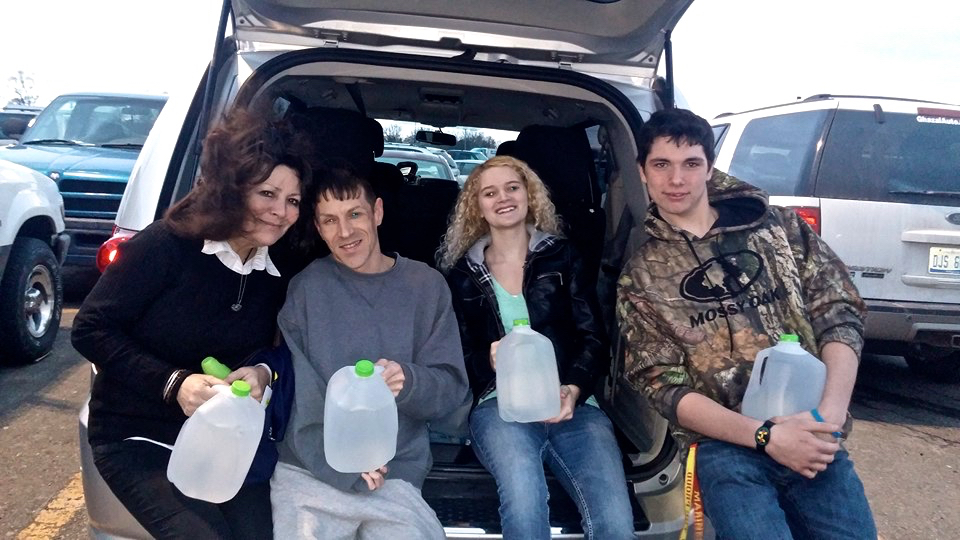
Detroit flood
&
Detroit debt
Our kingdom for a drop of water.


James Schwartz is a gay ex-Amish poet and slam performer. His poetry has been published by various poetry journals including Poetry 24, Babel, The New Verse News, Nostrovia! Poetry, piecejournal, Silver Birch Press blog and Eris Magazine. His book, The Literary Party: Growing Up Gay and Amish in America, was published by inGroup Press in 2011 and his poetry is anthologized in Among the Leaves: Queer Male Poets on the Midwestern Experience (2012), Milk and Honey Siren (2013), The Squire: Page-A-Day Poetry Anthology 2015Writing Knights Press 2014 AnthologyQDA: A Queer Disability Anthology (2015), and various chap books, including Alpine Suite (2013), Poetry 4 Food 2 (2013), Poetry 4 Food 3 (2014), Arrival and Departure (2014), Secular, Satirical & Sacred Meditations (2016), Michigan Meditations (2016). He resides in Michigan. Visit his site at Literaryparty.blogspot.com and follow him on Twitter @queeraspoetry.

Image: Flint Water Drive, courtesy of the author who is second from the left.

Reading recommendationThe Literary Party: Growing Up Gay and Amish in America by James Schwartz.

“A Drop of Water” was previously published in Secular, Satirical & Sacred Meditations.

Double

By Harold Jaffe


The perils are vast, the receptors are slick, seductively small.
The perils are not vast, the receptors are not slick, seductively small.

I see the homeless huddled against the steel-glass wall of the stock exchange.
You do not see the homeless huddled against the steel-glass wall of the stock exchange.

I see for-profit prisons filled with colored poor.
You do not see for-profit prisons filled with colored poor.

The semi-invisible line defining (relative) civility is effaced.
There is no semi-invisible line defining (relative) civility.

The semi-invisible line that kept undisguised cruelty toward the disadvantaged partially in check is effaced.
There was no semi-invisible line that kept undisguised cruelty toward the disadvantaged partially in check.

Once effaced, an epidemic of police violence is unleashed against black young men and women.
There has been no epidemic of police violence unleashed against black young men and women.

I see first-world jets bomb from above the cloud line.
You do not see first-world jets bomb from above the cloud line.

Collateral damage? The pilot consults his monitor and yawns.
There is no collateral damage. The pilot does not consult his monitor and yawn.

When is terror called righteous assault? When first-world ethnociders say it is.
Terror is not called righteous assault. There are no first-world ethnociders.

Ethnocide morphs into entertainment. I see a non-stop circus engendered by lies and money.
Ethnocide does not morph into entertainment. You do not see a non-stop circus engendered by lies and money.

The world as we know it perishes / humans take selfies.
The world as we know it does not perish / no one takes selfies.


Born in New York City in 1942, Harold Jaffe’s writing career spans more than 35 years. His novels and stories have been translated into German, Japanese, Spanish, Italian, French, Turkish, Dutch, Czech, and Serbo-Croatian. He has won two NEA grants in fiction, two Fulbright fellowships, a New York CAPS grant, a California Arts Council fellowship in fiction, a San Diego fellowship (COMBO) in fiction, and three Pushcart Prizes in fiction. Jaffe teaches literature at San Diego State University (San Diego, California) and is editor of Fiction International. Jaffe’s fiction has appeared in such journals as Mississippi ReviewCity Lights ReviewParis ReviewNew Directions in Prose and PoetryChicago ReviewChelseaFiction; Central Park; Witness; Black Ice; Minnesota ReviewBoundary 2; ACM; Black Warrior Review; Cream City Review; Two Girls’Review; and New Novel Review. His fictions have also been anthologized in Pushcart Prize; Best American Stories; Best of American Humor; Storming the Reality Studio; American Made; Avant Pop: Fiction for a Daydreaming Nation; After Yesterday’s Crash: The Avant-Pop Anthology; Bateria and Am Lit (Germany); Borderlands (Mexico); Praz (Italy); Positive (Japan); and elsewhere. Visit his website at haroldjaffe.wordpress.com.

Reading recommendation: Goosestep: Fictions and Docufictions by Harold Jaffe.

To the Man Who Shouted “What does your pussy taste like?!” as I Ran By

By Courtney LeBlanc

It tastes briny,
like the ocean.
It surges, waves pounding
the surf, punishing
the sand simply for always
being there, for always
being present, for never
leaving well enough alone.

I keep running,
ready to drown him
in a sea of my pounding
feet.

Previously published by Rising Phoenix Review.


Courtney LeBlanc is the author of chapbooks Siamese Sisters and All in the Family (Bottlecap Press), and she is an MFA candidate at Queens University of Charlotte. Her poetry is published or forthcoming in Public Pool, Rising Phoenix Review, The Legendary, Germ Magazine, Quail Bell Magazine, Brain Mill Press, and others. She loves nail polish, wine and tattoos. Read her blog at www.wordperv.com, follow her on Twitter or Facebook.

Reading recommendation: All in the Family by Courtney LeBlanc.

March, redoubled: When plans go South by K Walton

Hi, Julie,

Thank you for writing your essay, “March, interrupted: When plans go South” (Writers Resist, February 2, 2017 issue). Thank you for raising your pen in service of the movement and for speaking from a place of awareness and resistance. Thank you for lifting up hope in the face of all the fear and anxiety in which we have been mired. We need more people like you—people who, as you put it, are inexperienced in civic activism, but are moving their voices (whether figuratively or literally) from the page to the street.

As a Southerner and an activist, a person both of great privilege and lack thereof, I would like to offer something for your consideration: The South is not a place which exists in opposition to the resistance. The South is the home of the resistance.

The narrative about the South that exists outside of the South (and, as we internalize it all too often, inside the South as well) is that we are ignorant and, in our ignorance, we are conservative. We are viewed as a people detached from the rest of the country; unmoored from the progressive agenda to which the North is both paladin and avenging angel; our church is our chain; our poverty, the cell to which our ignorance (sadly but justifiably) confines us.

The truth is that we are not so much a people detached as a people divided. The South is the seat of power in the United States. The 13 states of the Old Confederacy house 178 of the 270 electoral votes required to win the presidency, 152 of the 435 members of the House of Representatives, and 26 of the 100 U.S. senators. Almost 38 percent of the U.S. population lives in the South. Our politicians are no strangers to these numbers. The South is also home to half the nation’s Black population, a third of its (known) LGBTQ population, and the highest poverty rates in the United States. And yet, consistently, the South as a political entity behaves in ways that are counter to the interests of Black, LGBTQ and poor people.

There’s an old saying, “As the South goes, so goes the nation.” If this is true (and it is), it becomes suddenly very important to our leaders (almost all of whom are not Black, LGBTQ or poor) to win the South. That is, it becomes important to out leaders to win over a people whose interests are not their interests, whose needs run counter to their own needs. To do this, they taught the South to vote against itself.

Let me say again: We are not a people detached; we are a people divided. They split us up and pitted us against each other. Literacy laws, the “one drop” rule, Jim Crow, voter suppression, gerrymandering, anti-LGBTQ laws, the Southern Strategy, North Carolina’s Amendment 1, and, most recently, HB-2 all serve an important function. Our leaders taught poor whites that black and brown people are a threat to white jobs, white security, white wealth. This is not true. They taught straight people that LGBTQ people are a disease and a menace to their children. This is not true. They taught Christian people that people of other faiths are predators, criminals and terrorists. This is not true. With coded language and the strategic application of resources, they taught us to hate and fear each other. We looked at each other sidelong. We voted against one another in hopes of protecting ourselves from monsters (that did not exist), and, in voting against each other, we voted against ourselves. They stole our power out from under us and so won the governmental seats they desired.

We are not ignorant; we are a closely-guarded federal resource. We are not powerless; we are enchained. So when you write of speaking out, do not write of speaking out even in southwest Georgia—write of speaking out especially in southwest Georgia. Look on your Fox News-watching relatives with compassion; they’re under the same spell as all the rest of us. Don’t hold yourself too far removed from those who are less knowledgeable than you or from those who are less sensitive or less aware. We’ve all been listening to the same propaganda, all drinking from the same poisoned well. What we need now is not to shun those who have swallowed more poison than us, but to extend to them our empathy and compassion. The work to be done now is the work of healing and bridge making. It is the hardest work of all, but it must be done if we are going to win back the power that has been stolen from us, whose origin is in our hearts and our hands and our throats.

I’m glad you’ve come here—we need people like you. Welcome to the South. Welcome home.


K Walton is a writer and activist in Asheville, North Carolina, where she lives in the sticks with her partner and their cat.

Image credit: U.S. Library of Congress, “The End of the United States Rebellion 1865.”

Two poems by two poets

[fusion_builder_container hundred_percent=”no” equal_height_columns=”no” hide_on_mobile=”small-visibility,medium-visibility,large-visibility” background_position=”center center” background_repeat=”no-repeat” fade=”no” background_parallax=”none” enable_mobile=”no” parallax_speed=”0.3″ video_aspect_ratio=”16:9″ video_loop=”yes” video_mute=”yes” overlay_opacity=”0.5″ border_style=”solid” padding_top=”20px” padding_bottom=”20px”][fusion_builder_row][fusion_builder_column type=”1_2″ layout=”1_2″ spacing=”” center_content=”no” hover_type=”none” link=”” min_height=”” hide_on_mobile=”small-visibility,medium-visibility,large-visibility” class=”” id=”” background_color=”” background_image=”” background_position=”left top” undefined=”” background_repeat=”no-repeat” border_size=”0″ border_color=”” border_style=”solid” border_position=”all” padding=”” margin_top=”” margin_bottom=”” animation_type=”” animation_direction=”left” animation_speed=”0.3″ animation_offset=”” last=”no”][fusion_text]

Trump Tower

By Marvin Lurie

I left the truth on the sidewalk
when I went into the tall office building.

It was on wheels but heavy.
I couldn’t take it to an upper floor
even on the freight elevator.
And it might not get past the metal detectors
in the lobby.
I hoped no one would take it.

When I came out,
people were walking around it,
trying not to look.


Marvin Lurie is retired from a career as a trade press editor, president of an association management and consulting firm, and senior executive in an international trade association. He began writing poetry as an undergraduate at the University of Illinois. In 1998, anticipating retirement and with the desire to reinvest time and effort writing poetry, he took several week-long and shorter poetry workshops taught by established poets and started over. He and his wife moved to Portland, Oregon in 2003 where he has been an active member of the local poetry community including service on the board of directors of the Oregon Poetry Association for two terms, as an almost perpetual poetry student at the Attic Institute of Arts and Letters in Portland and as a participant in several critique groups. Visit his website at marvlurie.com.

[/fusion_text][/fusion_builder_column][fusion_builder_column type=”1_2″ layout=”1_2″ spacing=”” center_content=”no” hover_type=”none” link=”” min_height=”” hide_on_mobile=”small-visibility,medium-visibility,large-visibility” class=”” id=”” background_color=”” background_image=”” background_position=”left top” background_repeat=”no-repeat” border_size=”0″ border_color=”” border_style=”solid” border_position=”all” padding=”” dimension_margin=”” animation_type=”” animation_direction=”left” animation_speed=”0.3″ animation_offset=”” last=”no”][fusion_text]

The Demagogue

by Cyrus Parker

he stood atop
the fifty-eight story building,
built on the backs
of the very same people
he had spent sixteen months
scapegoating,

and looked on
as his new America
ripped out the very
foundation
of what had made it great
in the first place.


Cyrus Parker is a New Jersey-based poet, originally from Michigan, where he had spent four years wrestling on the local independent wrestling circuit. On a hiatus from the squared circle, Cyrus is taking the time to pursue his other passion—writing. A creative writing major at Brookdale Community College, Cyrus’ work has been published in the college’s annual literary magazine, Collage, and he is currently revising his first poetry collection, DROPKICKpoetry, which he hopes to release sometime in 2017.

Follow Cyrus on Facebook and Twitter.

[/fusion_text][/fusion_builder_column][/fusion_builder_row][/fusion_builder_container][fusion_builder_container hundred_percent=”no” equal_height_columns=”no” hide_on_mobile=”small-visibility,medium-visibility,large-visibility” background_position=”center center” background_repeat=”no-repeat” fade=”no” background_parallax=”none” enable_mobile=”no” parallax_speed=”0.3″ video_aspect_ratio=”16:9″ video_loop=”yes” video_mute=”yes” overlay_opacity=”0.5″ border_style=”solid” padding_top=”20px” padding_bottom=”20px”][fusion_builder_row][fusion_builder_column type=”1_1″ layout=”1_1″ spacing=”” center_content=”no” hover_type=”none” link=”” min_height=”” hide_on_mobile=”small-visibility,medium-visibility,large-visibility” class=”” id=”” background_color=”” background_image=”” background_position=”left top” background_repeat=”no-repeat” border_size=”0″ border_color=”” border_style=”solid” border_position=”all” padding=”” dimension_margin=”” animation_type=”” animation_direction=”left” animation_speed=”0.3″ animation_offset=”” last=”no”][fusion_text]

Photo credit: Brad via a Creative Commons license.
[/fusion_text][/fusion_builder_column][/fusion_builder_row][/fusion_builder_container]