Porn Government

By Eliza Mimski

One

He undressed the country and grabbed it in his sweaty palms. As the zipper came down, the country split in two. He inserted his finger into the wrath. He inserted his finger into his following but they didn’t notice. He peeled open the law and banged it into the first half. He abraded the tissue. He promised beautiful garments to the second half. He sweet-talked. The country grew grotesque. It took on an absurd shape. It bulged in strange places. His jack-o-lantern smile assured all that everything was just as it was supposed to be.

Two

A cabinet of little boys who hate women.
They dropped my rights down a well.
Men talking about my body. A frat club making rules about my eggs.
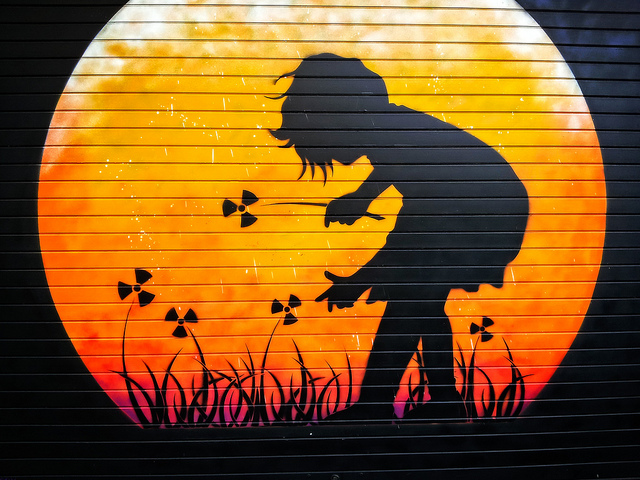
He’s an orange glow – radioactive – and I don’t like him.
A long flight of stairs leads to the past you thought you left behind

Three

The men are nails.
They hold locks in their hands.
They are telling us to go to sleep.
But we are awake.
We rise up.
We are healthier than them.


Eliza Mimski is a retired teacher who lives in San Francisco and writes poetry to help her deal with the election. Right now, it’s her sanity. Her work has appeared in Quiet Lightning’s Sparkle and Blink, Fiction 365, Enclave, Anti-Heroin Chic, Poets Reading the News, New Verse News, and other publications. Visit her website at ElizaMimski.wordpress.com.

Photo credit: “Radioactive Geranium” by Garry Knight via a Creative Commons license.

Scent of Mock Orange

A cento by Marcia Meier


The serpent, that mocker, woke up and pressed against me

In the west the falling light still glows

but here on earth we’ve got a fair supply of everything

If you tasted it, it would first taste bitter

crooning black lullabies in the kitchen,

And now, it is easy to forget

At night, the murmuring calls of chuck-will’s-widows

The moon is a sow

comes home; like he is the Last Emperor

with him in flying collar slim-jim orange

but cops blow him away

Again, brutish necessity wipes its hands

It is like what we imagine knowledge to be:

This loaf’s big with its yeasty rising.

I have reached no conclusions, have erected no boundaries

men drawing lines in the dust.

He called her good and girl. Then she was dead,

I hate them

And the scent of mock orange


(“From the Death of the Fathers” Anne Sexton; “Why is this Age Worse…?” Anna Akhmatova; “Here” Wislawa Szymborska; “At the Fishhouses” Elizabeth Bishop; “Meridian” Amy Clampitt; “Diving into the Wreck” Adrienne Rich; “The Odyssey” Rick Bass; “Song for Ishtar” Denise Levertov; “Spoon River Sadie Louise” Anne Lamott; “The Reception” June Jordan; “DeLiza Spend the Day in the City” June Jordan; “A Far Cry from Africa” Derek Walcott; “At the Fishhouses” Elizabeth Bishop; “Metaphors” Sylvia Plath; “Corsons Inlet” A.R. Ammons; “Tu Do Street” Yusef Yomunyakaa; “Clearances” Seamus Heaney; “Mock Orange” Louise Gluck; “Mock Orange” Louise Gluck)


Marcia Meier is an award-winning writer, developmental book editor and writing coach. Her books include Heart on a Fence (Weeping Willow Books, 2016); Navigating the Rough Waters of Today’s Publishing World, Critical Advice for Writers from Industry Insiders (Quill Driver Books, 2010); and Santa Barbara, Paradise on the Pacific (Longstreet Press, 1996). Her memoir, Face, is forthcoming, as is an anthology, Unmasked, Women Write About Sex and Intimacy After Fifty, co-edited with Kathleen Barry. She is also at work on another book of poetry and photography, titled Ireland, Place Out of Time. Marcia is a member of the Author’s Guild and the Association of Writers and Writing Programs. Visit Marcia’s website at MarciaMeier.com.

A Brief History

A sonnet by I.E. Sommsin

Into the toilet endlessly flushing

leap the great state and vast empire,

fat and swollen, on schedule to expire,

onward toward oblivion rushing.

They got the loud proud words that prove them strong,

and the firm resolve that works on teevee

and the raw courage made for a moovee—

if you look tough enough, you can’t be wrong!

So fade the golden years of aggression,

as all glory molders to regression.

Led by old children—mean, demanding, shrill,

prone to stumble and forget and to kill—

they never know how they are afflicted

by deep and bloody wounds self-inflicted.


I.E. Sommsin, a writer and artist from Kentucky, lives in San Francisco. He describes this piece as a “hard-hitting sonnet,” written some time ago, “whilst in the grip of a creative fit that turned out to be prophetic.” Indeed.

Photo Credit: Golden toilet image by La Ira Graffx via a Creative Commons license.

The Big Top Comes Down: A Consciousness Poem

By Deborah Kahan Kolb


once the elephants left the crowds stopped coming to the circus but look do my eyes deceive me the elephants are back they are blustering along on Capitol Hill with old white-man creases leathering their skin leaving yuge piles of shit in their wake for the humane rights activists to shovel and yes the crowds are back to see the gilded circus with their very own eyes especially the trumpeting elephants imported from Russia but the parks department submits based on alternative facts that it’s not truly a crowd it’s really fake news it’s a scattered gathering of empty bleachers lining the parade mall of the grand old circus the greatest show on earth headlined by the triumphant return of the elephants their legendary memories faulty somehow remember last year how they snorted and swore and yet oh my god here’s the winning new ringleader just promoted and he’s tripping over the ludicrous length of his tie he used to be an ordinary clown y’know all he did was comb-over the orange wig and shift his makeup from white to perma-tan but some clowns are scary and this one likes water for his next trick he wants to pour gallons of it down Ahmed’s gagging gullet oh yes he’s a self-styled high inquisitor turned into a meme this big league circus ringleader oh look there he’s cracking his golden pen now to tame the donkeys braying out of control in an obstinate corner of the congressional ring ladies and gentlemen hell is empty and all the losers are here the circus is not shuttered it’s terrific it’s tremendous just look at those asses their portfolios prancing ringing round the oval kicking up their heels amidst piles of rubles they imagine they’re stallions able to vault a fantastic wall and see up there the amazing gymnastics of the aerialist acrobats wow they can twist themselves into anything huh the people on the pavement ooh and aah and scratch their heads as they witness hope and change swing upside down from filmy vows of lightweight silk and in the center of the platform can you see the monkeys tilting at that crumbling Mexican windmill or maybe it’s Syrian who really knows and guess what my friend the great cats are back the pink pussyhats no more jumping through hoops or performance on demand hear those fierce felines roar they’re swarming the parade route and chasing this circus act right out of town watch the ringleader ex-clown snatch a bellicose bow amid the hue and cry believe it or not a Ripley themed spectacle is playing itself out on the splendid stage of our nation’s capital


Deborah Kahan Kolb was born and raised in Brooklyn, NY and currently lives in the Bronx. Much of her poetry reflects the unique experiences and challenges of growing up in, and ultimately leaving, the insular world of Hasidic Judaism. Her work has appeared or is forthcoming in Poetica, Voices Israel, Veils, Halos & Shackles, New Verse News, Tuck, Literary Mama, 3Elements Review, and Rise Up Review, and her work has been selected as a finalist for the Anna Davidson Rosenberg Poetry Award. Her debut collection, Windows and a Looking Glass, is forthcoming in April 2017 from Finishing Line Press, as a finalist for their 2016 New Women’s Voices Chapbook Competition. You can read more of the author’s work at www.deborahkahankolb.com.

Photo credit: “Circus elephants and performers parade on the grounds of the U.S. Capitol,” U.S. Library of Congress.

Previously published by Poets Reading the News.

The Return of History

By Easton Smith


I was born in 1989, the same year that Francis Fukuyama published his essay, “The End of History?” The Berlin Wall fell that year, collapsing history (such a delicate thing, after all) underneath it. It was final: Liberal democracy and global capitalism were the inevitable tide to raise all boats. My whole life was to be post-historical.

As a young boy, adults talked to me daylong about my future, but never my past. Past was irrelevant at the end of history, and I was a child anyway. I had not lived long enough to have past, it was assumed. I began in the present moment and just osmosed into my long, uncomplicated life to come.

But still, I had these odd memories. I remembered finding my mother sad, head-cocked, staring at the wall with her nasty, ice-cubed orange juice in hand. I remembered bullies saying big words that didn’t feel safe. I remembered hearing about Kosovo. Bomb sounded historical to me. I had learned of the atom bomb that ended World War II. Old history, Grandpa’s dad old, so old that it seemed too far away to touch me at all.

But then, bombs were back one day after those planes hit the towers and everyone somberly adult-agreed that history was here again. “This is history,” they said, and I believed it. War, climate change, oil, dictators, democracy, I counted the history on my fingers. The world was suddenly soiled with history. By the one-year anniversary of the terrorist attack, I was thirteen and firmly historical.

When I was fourteen, my dad sat me down, read me some of the lyrics from the booklet of a punk CD that he had found in my bedroom (“Hey, Dad, fuck you! Hey, Dad, fuck you!” he read in deadpan), and asked me why I was depressed. I wasn’t depressed, I told him, just angry and not sure that anything mattered, especially school. “But what about your future?” he asked. I retorted, “Look at the world!”

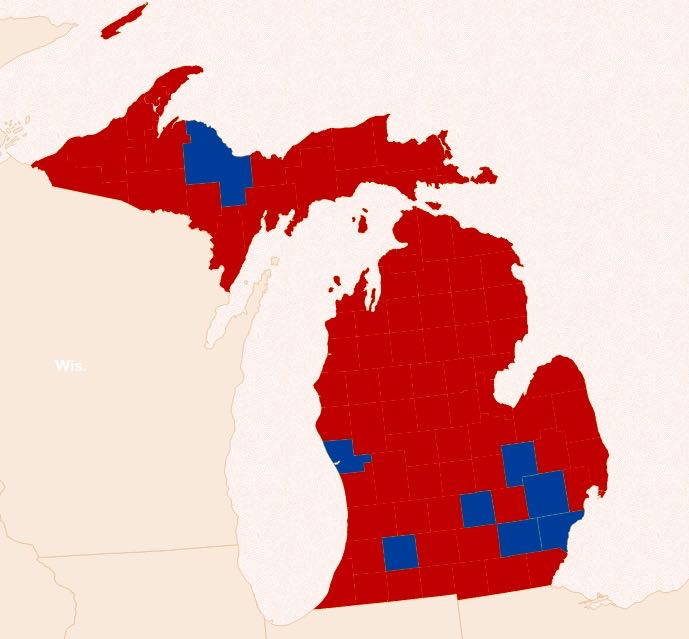
Now, 27 years to the day from the fall of the Berlin Wall, Hillary Clinton conceded the presidency to Donald Trump: “This is painful, and it will be for a long time. … I still believe in America, and I always will. And if you do, then we must accept this result and then look to the future.” But the people have spoken, those who voted and the many more who stayed home. They are tired of having some parent tell them to just believe, to always look ahead. History is here. They are hungry for it, even if it means the death of the future.

In Autobiography of Red, Anne Carson introduces the Greek poet Stesichoros (630-555 BC). According to Carson, before Stesichoros, certain adjectives were innately stuck to their subjects, like periodic numbers to minerals. Oxygen is always 8, just as to the Greek poets blood was always black, kidneys were always white. But Stesichoros wrote to “undo the latches.” For him, “there was nothing to interfere with horses being hollow hooved. Or a river being root silver. Or a child bruiseless.” Stesichoros, Carson writes, “released being. All the substances in the world went floating up.”

Our president-elect is a pre-Stesichorosian poet. He whips up digressive tales of Crooked Hillary and Lyin’ Ted Cruz, flat characters that are shackled to their adjectives. His narrative arcs follow familiar paths: us/them, big/small, winner/loser. He is a storyteller of the oral tradition, meandering, playing to his audience, but always returning to our favorite myth, where the villain’s name can be screamed out in unison by the audience with the adjectival cue, and the good guys (our guys) always win huge. The substances of the world fall back down.

George Lakoff, linguist, suggests that Trump repeats his adjectives to strengthen word association for his audience. If he always puts radical in front of Islam, people will associate the two subconsciously, without evidence. Trump creates a common mythology with his supporters, so that thoughts can go unfinished, even unsaid, and the implication still sits ripe for the taking. If Crooked Hillary “gets to pick her judges, nothing you can do, folks. Although the Second Amendment people, maybe there is, I don’t know.” He doesn’t know, but everyone else does. They know what happens to the Crooked one in this story.

Bruce Lincoln, historian, writes that, “myth [is] that small class of stories that posses both credibility and authority.” Myths aren’t fables, which we enjoy but know to be fantastical. Neither are they history, which we know to be objectively true, but find unmotivating. Myths are nostalgia made actionable.

Trump deals in myths and has become one himself. Trump is Phaethon, Icarus, Tereus (I’m sick of the Greek myths, too, but where else can I find such hubris?). So as not to repeat the most repeated stories, I will summarize the moral of them all: Those mortals who think that they are gods lose. Every time.

“Make America Great Again.” It’s precisely the type of slogan about which the Greek poets wrote their moralizing tales. In Hesiod’s (8th century BC) long poem, “The Works and the Days,” the poet tells of five ages of humans. Hesiod’s era was the human era, the fifth, the Age of Iron, a time of stress and labor, full of hateful people destined to be destroyed by a vengeful Zeus. This Iron Age starkly contrasts with its predecessor, the Heroic Age, the “fourth generation on the noble earth … the generation of hero-men, who are also called half gods, the generation before our own on this vast earth.” The present is bad, but the past was great. It sounds familiar.

But Hesiod does not give us a strongman to strong-arm his way back to the fourth age and make the fifth one great (again). The realm of the past is inaccessible to base humans; it’s a place for the gods and spirits. To try to reach back is to step out of place, to attempt the impossible and the sinful. The poets knew well that nostalgia for a simpler time, when humans were gods, is a tempting and dangerous fire.

When the early Greeks of Hesiod’s time, the pre-Acropolis and pre-dēmokratia Greeks, looked out at the ruins of the great Mycenaean civilization, the collapsed palaces at Tiryns and Pylos, what must they have thought? What could create such structures, and what could kill such giants? These are the questions underneath their mythology.

What fireside myths will we create among the ruins of the American Empire? How will we explain the fields of dead oil rigs and carcassed pipelines, the trash islands, the air thick with smut, the eyes of a wolf, the flight of a California condor, a governmental agency, a climate accord, an electoral college, a Facebook fight? This country was founded upon too proud a mythology, blood too sure. May we find humility in our ruined palaces. May we be creative in our adjectives. What might the word great mean to us in the future?

Mythology withers, and we begin to see it fraying where our remembered past too cleanly contradicts the myth. “Donald Trump is going to be our president. We owe him an open mind and a chance to lead.” Hillary’s myths cannot console anymore. It’s in our bellies: We owe him nothing.

In my belly: We can’t think piece our way out of this one; the rules have changed; I want to hold my people close; we need the stories of the body and the spirit; we need to “release being.”

Stesichoros took risks by deviating from the standard adjectives. The unexpected adjective is a sudden world. Blood can be red rather than the traditional black. A thing that was once huge can become irrelevant, puny, insecure. A president can go from strong to child taunted, disgraced, and even forgotten. The new adjective shakes us from myth, gives the story to the malleable present.

Many who thought our country was diverse and open are awed to find it angry, white, afraid. A myth has been upended. Shocked, people scream and plead for a re-assertion of their mythology of liberal tolerance and compassionate capitalism, for history to end again. But history is our seedy uncle, the underbelly of the myth, and it shows up whether we like it or not. He coughs, snarls into his plate, and tells us slur-ridden stories from a world far beyond the reaches of our Facebook feed that we would rather ignore. It’s a family feud now, the smug against the repulsive, comfortable family myths against the uncomfortable ones.

May I be excused from the table, please?

The day after the election I saw a woman walking her child home from school. In her stern movements I saw a depth of twirling currents underneath her skin, like under mine. Our outer surfaces, unable to express our large fears. Her child, adult-quiet, pulled his weight behind him in heavy little arms. We didn’t speak to each other, just walked our tired walk past each other’s sad eyes. In that moment, I felt alone in a collectively secreted pain, and for the first time since the results came in, I cried. It felt important to cry. I walked down the street in tears to announce to the world that things are not okay and that I don’t know what to do.

I don’t know how to affix an adjective to myself these days (hopeless, motivated, angry, anxious are all insufficient). The stages of grief are all out of order and moving too fast. My relationships strain from out-of-sync mourning. It’s a funeral for the future, and we all grieve the specific death we have individually imagined. I fear that Trump has already inserted a wall between our bodies, as we police each other’s ideas, move past each other’s woe like ships in the night.

Still, a moment of hope: I watch my friend Yaya’s exposed, muscle-shining, black body dance with two others in a choreography of anguish and healing, each movement a desperate push and a constraint at once. They weave through the audience, meeting our eyes, radiating stage from their bodies. Taking up space. I feel their love of self, and it is uncompromising. I feel their love for the rest of us, for my white and masculine body, and it’s more than I deserve. Such gifts, in the wake of these national declarations of scarcity. Amid empty placations and fearful declarations, here dances the past and the future at once.

Church music plays, some choir of old power, and Yaya moves to the red-cushioned throne in the room. Sits in it, a mythology not meant for their body. They perform pain, vulnerability, deconstruction. They walk amongst us, drawing our witnessing inwards, giving us in-sight. This is what’s at stake, I think. The opposite of a wall.


Easton Smith lives in Salt Lake City, land stolen from the Shoshone, Paiute, Goshute and Northern Ute people. He likes to camp, try to play the banjo, sing with his friends, talk about his feelings, and run up big hills. Sometimes Easton organizes with Wasatch Rising Tide and Showing Up for Racial Justice SLC. Sometimes he labors for wages by writing things.

Previously published by Brine Waves.

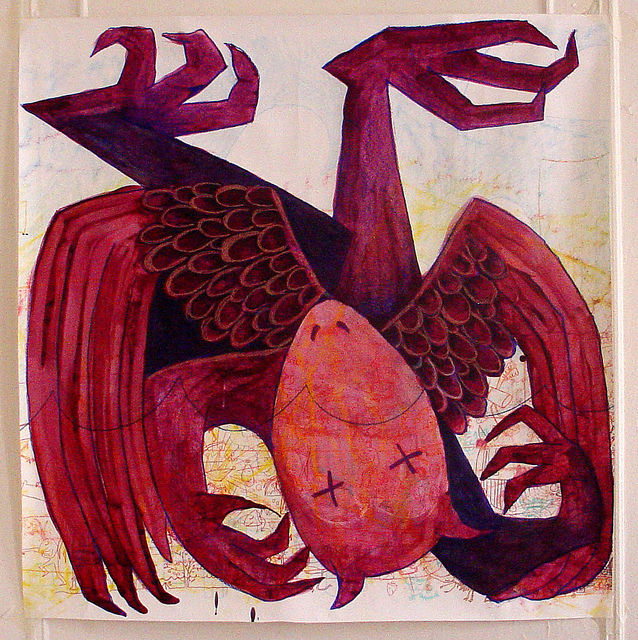
Art credit: “Fallen Angel No.2” by Michael J Bowman via a Creative Commons license.

Typing Class

By Susan Elliott Brown

A black, rectangular shield covers the keyboard and my hands
like a censor hides nipples on TV. I type sample sentences,
hundreds more words to go before the bell. When will
the auditor perform the city audit? The fox and the bear
jumped over the logs. The mayor mailed a letter to his aunt
in Pennsylvania. The TV kicks on at a quarter till and a girl
named Tangela sits in front of a makeshift studio, red
high-school letters emblazoned behind her head. She reads
in a monotone, President Bush and war on terror and a sea
of keyboard clicks swallows it up. The clumsy cow stepped
into the chicken coop. Iraq. Baghdad. Saddam. The state
auditor will return on Tuesday. I look to the keyboard
for a sense of place and the black box stops me. Eyes on
the screen. We think they have weapons of mass destruction.
People still wear “I Heart NY” shirts to school. I think
Tangela said we are at war. War with terror. The crafty
attorneys requested a long recess. The black box hides
the delete key. The quick sprinter—no—the quiet sprinkler.
Delete. When will the judge be back in the building?
Planned, authorized, committed, or aided. In order to
prevent any future acts. All necessary and appropriate force.


Susan Elliott Brown is the author of the chapbook The Singing Is My Favorite Part. Her poetry appears in The Best American Poetry blog, Measure: A Review of Formal Poetry, and Reunion: The Dallas Review, among others. She received her PhD in Creative Writing from the University of Southern Mississippi, and she lives in Birmingham, Ala. and works in advertising.

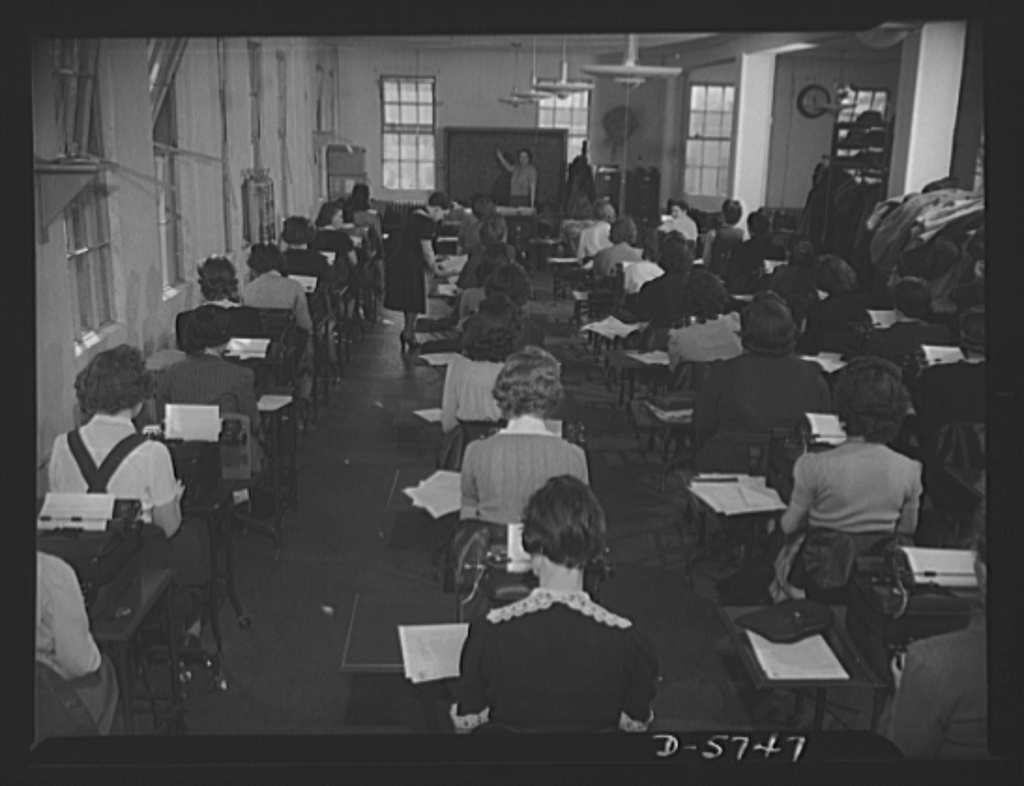
Photo credit: Typists in training at the War Production Board, 1942, U.S. Library of Congress

When the Clock Was Smashed

By Julia Stein

Color Juarez White

I was twenty, alone in Juarez and afraid
in a white-walled clinic wearing a white paper gown.
The illegal abortionist took from the drawer
his metal rods, metal knife, metal spoon.
I laid back on the hard, white table.
The gas mask was put over my head.

It was over. They wanted me. To stand up. Walk.
I wanted to fall asleep on the floor.
Stood up. Walked. Got into the taxi.
Collapsed against the taxi’s back seat.
White street lights. The taxi stopped.
The driver’s voice, “Walk across the street
and catch another taxi back to El Paso.”
At the corner, the other side
looked miles away.
I wanted to fall down.
One foot off the curb.
Both feet.
White headlights.
Cars screeched.
I walked slowly,
step by step.
At the corner
I stood
alone in Juarez.

Hemorrhaging

You’re OK,” the doctor said
in the Los Angeles office.
Three days later I bled out blood clots.
Pain exploded in my stomach.
I called the doctor.
“I don’t remember you,” he said.
I was a boat cracking down the middle.
“Take pills,” he said.
All day, the pain, the pills.
I was a boat going down, down, down
in a storm.

The next morning I woke up
to waves of pain,
one after another after another.
I dragged myself to the phone.
I didn’t understand.
The doctor said I was fine.
“Meet me in the hospital,” he said.
My boyfriend drove me down the freeway.
I moaned, “My stomach hurts.”

At the hospital I’m torn away from him
to lie on a table where I float adrift
in a sea-white room.

The doctor loomed overhead,
“You’re twenty.
We need your parents’ consent.
Money down.”
Later he told my mother
I was running out of blood.

The Hall of Mirrors

Eleven years I have carried that summer on my back
and lived like a cripple, curling in on my myself.
I always wanted to take a chalk eraser,
wipe off the whole summer when time stopped,
the clock smashed, the hands wrenched apart.

Down the years I run through
an endless Hall of Mirrors.
I look for my boyfriend down one tunnel,
up another. I never find him.
All I see in the mirrors is the doctors.
Blood is on the floor.
My dress is smeared with blood.


Julia Stein has published five books of poetry and has also edited two, Walking Through a River of Fire: 100 Years of Triangle Factory Fire Poetry and Every Day Is an Act of Resistance: Selected Poems of Carol Tarlen. Stein’s poetry ranges from love lyrics to explorations of war, peace, women’s lives, and work. She is also co-author of the prose work Shooting Women: Behind the Camera, Around the World (Intellect Press, 2015), and she has been an arts journalist and literary critic for years.

This is sections III, IV, and V of Stein’s poem, “When the Clock Was Smashed,” from her first collection, Under the Ladder to Heaven (1984).

Photo credit: Craig Leontowicz via a Creative Commons license.

Just a Short Note to Say Something You Already Know

By Lawrence Matsuda  

For Donald’s Daughter, Ivanka Trump


Ivanka, in a different time and place,
you and your children are squeezed into
cattle cars destined for Nazi death camps.
Stars pinned to your coats
and numbers tattooed on your arm.
Religion is your crime, something like
the 120,000 Japanese Americans whose race
incarcerates them during World War II.

If you dodge head shaving,
and starvation, maybe a country
would welcome you.

Angel of death is difficult to slip,
unfortunates are turned away,
chased by verbal brickbats and pitchforks.
You smell freedom’s scent
but only glimpse porthole views
of Lady Liberty’s tantalizing torch.

Doors slam and hands
of kindness withdraw.
You are not among privileged
huddled masses.

Today, as a 1% American demographic,
you are safe by an accident of birth.
Others less fortunate, however,
stand on precipices knowing,
“History does not repeat
itself but it rhymes.”*

When Donald promises
a magnificent Great Wall
and spews religious
hatred to cheering crowds,
you must feel a guilty twinge,
knowing if this were 1943 Germany,
a chorus of incendiary voices
would echo and push innocents
off slippery cliffs into eternal darkness.
Black hole so forbidding victims
would never see their children again,
while self-serving politicians levitate
on bandwagons swerving on and off
a broken highway of eight million bones.


* Quote attributed to Mark Twain.


Lawrence Matsuda was born in the Minidoka War Relocation Center, a concentration camp for Japanese and Japanese Americans during WWII. He is a regional Emmy Award-winning writer and an author of two books of poetry, A Cold Wind from Idaho and Glimpses of a Forever Foreigner. Recently, he and Tess Gallagher collaborated on a book of poetry entitled Boogie-Woogie Crisscross, and chapter one of his graphic novel, Fighting for America: Nisei Soldiers, was animated and won a 2016 regional Emmy.

This poem was previously published in Raven Chronicles.

Photo credit: United States Holocaust Memorial Museum.

The Completely Imaginary Trump/Russia Theory that May or May Not Prove To Be True or False

By Amy Porterfield Levy


1987 – The Art of the Deal: Nukes Edition

Trump decides that Moscow needs a Trump hotel and, like every good realtor, he thinks about how good he would be at solving nuclear proliferation issues.

Trump: I have a great idea because real estate deals are just like nuclear arms treaties. The Soviet Union and I should work together and bomb France.

Soviet Union: We’ve never heard of you. Also, dial it down, freak.

1996 – Trump hearts Moscow

Trump: I heart Moscow so much that I want to put an exact copy of Trump Tower there. Also, I am broke.

Russians: *sigh* Fine. We heart you too, weirdo. Why don’t we buy a bunch of condos from you so you won’t be so broke?

2007 – Trump Vodka

Trump: I love Russia so much that I made gold Vodka.

Russia: You are gross. Here is some more money though.

2008 – Donald Trump, Jr. visits Moscow a bunch

Junior: Dad has piles of money pouring in from Russia so maybe he will finally remember which son I am.

Also in 2008 – Russia Rolls on into Georgia (the country)

Georgia: Maybe we should, like, join NATO or the EU?

Russia: Nope.

American People: *yawn*

Press: Something, something. … Here are pictures of tanks.

American People: Cool tanks, bro. Hey, wonder if taking out a home equity loan to buy a Mercedes was a bad move?

2013 – Trump’s Miss Universe Pageant Goes to Moscow

Trump: Oligarchs are everywhere! I love oligarchs! Hey, what does oligarch mean?

Prostitute: It’s where a guy is part of a little group that has all the money and all of the political power in a country

Trump: *jumps up and sings* I wanna be an oligarch!

Prostitute: *yawns* Smile for the camera, dipshit.

That’s an overview of Trump’s little case of Russophilia. It could be perfectly innocent; people do get crushes on countries. He could be like one of those women who drink tea instead of coffee because they’ve read too much Jane Austen.

As for Russia, we all know the Soviet Union collapsed and we sort of thought we were friends and everything was fine. Unfortunately, some things went down in Russia while we were busy worrying about sleeper cells and Adam Lambert. It got a little dictatorish and Putin didn’t appreciate having NATO nearby or that whole European Union thing. He was also afraid Hillary Clinton might push democracy down everyone’s throats, which would be super inconvenient.

2014 – Russia invades Ukraine

Russia: *whistles and looks around* Rolling on into Georgia was pretty cool so we’re just gonna go ahead and take Crimea, okay-thanks-bye!

American People: *yawn*

Press: Something, something. …Putin, natural gas, pipelines.

American Government and the EU: *handwringing* How about some sanctions?

Putin: Your dumb sanctions are fucking with my gazillion-dollar deal with Exxon. That is a problem.

Exxon: Yeah, sanctions are harshing our gazillion-dollar buzz about drilling the shit out of the Black Sea.

American People: Ice Bucket Challenge!

Putin’s New To-Do List

  • Break up NATO
  • Break up the EU
  • Fuck with the Americans
  • Make a gazillion dollars
  • Make the ol’ empire big again

July 2015 – Putin meets with top aides (the ones he hasn’t poisoned yet)

Putin: Where are we on breaking up NATO and the EU?

Aides: Just propping up the anti-globalization whiners. The usual.

Putin: Boring. How’s our ‘Fucking with the Americans’ thing going?

Aides: Terrific! Donald Trump just said he’s going to run for president.

Putin: Who?

Aides: That fat American we filmed doing gross stuff with hookers.

Putin: Yeah, that narrows it down. …

Aides: You know, the broke one with the weird hair. Says you’re buddies.

Putin: Oh, him. What a douchebag.

Aides: He’s the douchiest.

Putin: Welp. I’ve got a gazillion dollars on the line and an empire to build so go make life suck for Hillary.

This turned out to be a pretty easy project. Sean Hannity and the rest of White Power radio had become extra-deranged after years of Obama so they happily worked alongside the Macedonian trolls and Internet bots on Facebook and Twitter to amplify the irrational Hillary hate that they’d been fomenting for over two decades.

Pop Quiz: Why do you hate Hillary Clinton

Americans: We don’t. Most of us voted for her.

Trump Voters: Because … pant suits? Emails? WE DON’T KNOW WHY SHUT UP.

Stirring up animosity toward Hillary Clinton and taking advantage of Trump’s natural tendency to be an authoritarian asshole didn’t take much effort and it was also probably a breeze to gain access to the Trump inner circle in order to plant pro-Russian sentiments. After all, who doesn’t have associates who work for Russian mobsters and moonlight as FBI informants? Trump buildings are infested with that kind of sleaze. Just kidding. This is a parody.

July 2016 – Putin meets with top aides (the ones who are still alive)

Aides: Sir, Republicans actually nominated that idiot. Now what?

Putin: *mouth twitches*

Aides: *scared* Did your face muscles move?

Putin: That was me laughing. Go shoot yourself in the back of the head, but call Assange and Kislyak first.

The Russian ambassador, Sergey Kislyak, was evidently skulking around Trump world, probably working some silver-tongued magic on these guys. He’s probably one of those people who gets you to confide in him because he makes you feel like you’re his best friend and possibly the most interesting person he’s ever met. He’s like your sweet, drunk Grandpa except that sweet, drunk Grandpa is a badass motherfucking spy. Trump and his friends probably didn’t even notice they were getting involved in high crimes and whatnot. They’re like those pot smokers who don’t notice they’ve become drug dealers.

Pot Smoker: Hi dude. Just here to buy my weekly dime bag.

Dealer: Hey, man. Buy a little more and I’ll knock down the price.

Pot Smoker: I’ll sell the extra pot to my buddies and that will cover the cost of my weed habit!

Dealer: You are a genius.

Years later…

Pot Smoker: Man, I am very lucky to have lots of buddies and extra cash.

Cops: You are under arrest for possession with intent to sell.

Pot Smoker: *genuine shock* I am not a dealer! I just have hundreds of friends and nice electronics. *cries*

That is Trump’s little gang of genocidal knuckleheads. They probably didn’t mean to collude with a hostile foreign country—it was all so friendly and well-meaning and it made complete sense at the time. Plus, Drunk Grandpa is their bff and he would never dick them over.

Kislyak: You are an American hero. You are also quite handsome. I bet you will beat ISIS and be a world hero one day.

Mike Flynn: *teary eyed* Brown people scare me. Can I have a hug?

Kislyak: *snuggles* I love you. Will you do me a teensy favor as my best friend and suggest chilling out on the sanctions a bit? That would be amazeballs!

(By the way, Drunk Grandpa is darling but he snaps into badass spy mode when he’s dealing with clowns like Carter Page and Roger Stone.)

Kislyak: Hey, Ferret Faces. I will pull out your fingernails if these sanctions aren’t lifted.

Page and Stone: *whining* Why does everyone want to pull out our fingernails?

Kislyak: Shut up and deliver these messages, Ferrets.

While wiretaps, moles, and kompromat would make a great movie, it’s probably more boring than that. Trump may have genuinely thought he was practicing “The Art of the Deal: Sanctions Edition.” A guy with no moral compass, a huge ego, and a complete lack of intellectual curiosity can be easily manipulated by charming, Drunk Grandpas.

Kislyak: You are a tremendously great man who should rule the world. I’m going to stroke your ego like a high-budget porn fluffer.

Trump: I love you. We are best friends.

Kislyak: Totally. Lift those sanctions, you brilliant hunk of smoking hot man meat. I’m going to help you beat mean ol’ Hillary and rule the world.

Trump: I can’t wait to lift sanctions and rule the world. Will you curl up on the couch with me and watch cable news?

Things are unraveling now and these guys are getting stressed and acting stupid so we may see how this ends soon. Putin and Trump could be wallowing around in gold bars and billion dollar bills while Europe is screwed and the United States looks the same but stands for something our kids will be ashamed of one day. This could also end with us sitting on a pile of radioactive dust and eating our dogs, while Paul Ryan crawls through the ruins, bleating about tax cuts.

Or maybe most of us will get our happy ending and live long enough to see handsome FBI agents in windbreakers, gently guiding that fuzzy yellow head into the back of a black Crown Vic where he’ll be whisked out of our lives forever into that far-off place where convicted, humiliated ex-Presidents are stashed. The Ferrets will cut deals and live in constant fear of stairs and tea. As for the bloated, old racists who tried to destroy this country, that’s too fun to think about so we’ll save them for another completely imaginary theory that may or may not prove to be true or false.

Previously published on Huffington Post.


Amy Porterfield Levy is a Florida-based freelance writer and science advocate. She is a contributor to Huffington PostThe Science PostAmerican Council on Science and Health, and The Genetic Literacy Project.

A Poem and Translation

[fusion_builder_container hundred_percent=”no” equal_height_columns=”no” menu_anchor=”” hide_on_mobile=”small-visibility,medium-visibility,large-visibility” class=”” id=”” background_color=”” background_image=”” background_position=”center center” background_repeat=”no-repeat” fade=”no” background_parallax=”none” enable_mobile=”no” parallax_speed=”0.3″ video_mp4=”” video_webm=”” video_ogv=”” video_url=”” video_aspect_ratio=”16:9″ video_loop=”yes” video_mute=”yes” video_preview_image=”” border_size=”” border_color=”” border_style=”solid” margin_top=”” margin_bottom=”” padding_top=”” padding_right=”” padding_bottom=”” padding_left=””][fusion_builder_row][fusion_builder_column type=”1_1″ layout=”1_1″ spacing=”” center_content=”no” hover_type=”none” link=”” min_height=”” hide_on_mobile=”small-visibility,medium-visibility,large-visibility” class=”” id=”” background_color=”” background_image=”” background_position=”left top” background_repeat=”no-repeat” border_size=”0″ border_color=”” border_style=”solid” border_position=”all” padding=”” dimension_margin=”” animation_type=”” animation_direction=”left” animation_speed=”0.3″ animation_offset=”” last=”no”][fusion_text]

By Sima Rabinowitz

[/fusion_text][/fusion_builder_column][/fusion_builder_row][/fusion_builder_container][fusion_builder_container hundred_percent=”no” equal_height_columns=”no” menu_anchor=”” hide_on_mobile=”small-visibility,medium-visibility,large-visibility” class=”” id=”” background_color=”” background_image=”” background_position=”center center” background_repeat=”no-repeat” fade=”no” background_parallax=”none” enable_mobile=”no” parallax_speed=”0.3″ video_mp4=”” video_webm=”” video_ogv=”” video_url=”” video_aspect_ratio=”16:9″ video_loop=”yes” video_mute=”yes” video_preview_image=”” border_size=”” border_color=”” border_style=”solid” margin_top=”” margin_bottom=”” padding_top=”” padding_right=”” padding_bottom=”” padding_left=””][fusion_builder_row][fusion_builder_column type=”1_2″ layout=”1_2″ spacing=”” center_content=”no” hover_type=”none” link=”” min_height=”” hide_on_mobile=”small-visibility,medium-visibility,large-visibility” class=”” id=”” background_color=”” background_image=”” background_position=”left top” background_repeat=”no-repeat” border_size=”0″ border_color=”” border_style=”solid” border_position=”all” padding=”” dimension_margin=”” animation_type=”” animation_direction=”left” animation_speed=”0.3″ animation_offset=”” last=”no”][fusion_text]

Nuestra Música

Hay silencios sagrados
las pausas frágiles entre palabras

Hay silencios desgraciados
quedarnos mudos cuando hay tanto que exige expresión

Hay silencios inesperados
ya no recuerdo el timbre de tu voz

Hay silencios desanimados
tener que repetir una vez más nuestra petición

Hay silencios que insisten
que resisten
que saben salvarse

Hay silencios que son como museos
archivos de almas desvanecidos

Hay silencios que sueñan
con una noche—una sola noche—sin tiros

Hay silencios que inventan su propia historia
para no dejarnos sin narrativa

Hay silencios que inspiran
una íntima benedición tentativa

Hay silencios que hacen una tregua con la noche
ocultando sus motivos

Hay silencios que nos dan la fuerza
de seguir siendo testigos

Hay silencios robados, fallados, falsificados

Hay silencios engañados, lastimados, dañados

Y hay silencios que ruegan ser llenados
de un canto humilde de amor

[/fusion_text][/fusion_builder_column][fusion_builder_column type=”1_2″ layout=”1_2″ spacing=”” center_content=”no” hover_type=”none” link=”” min_height=”” hide_on_mobile=”small-visibility,medium-visibility,large-visibility” class=”” id=”” background_color=”” background_image=”” background_position=”left top” background_repeat=”no-repeat” border_size=”0″ border_color=”” border_style=”solid” border_position=”all” padding=”” dimension_margin=”” animation_type=”” animation_direction=”left” animation_speed=”0.3″ animation_offset=”” last=”no”][fusion_text]

Our Music

Some silences are sacred
the fragile pauses between words

Some silences are disgraceful
we are mute when there is so much to say

Some silences are unexpected
I no longer remember the sound of your voice

Some silences are weary
having to repeat our request, once again

Some silences insist
some resist
some know how to save themselves

Some silences are like museums
archives of vanished souls

Some silences dream
of one night—just one single night—empty of the sound of gunfire

Some silences invent their own history
so we won’t be left without a story

Some silences inspire
a tentative, intimate prayer

Some silences call a truce with the night
hiding their motives

Some silences give us the strength
to carry on serving as witnesses

Some silences are stolen, mistaken, false

Some silences are deceptive, damaged, injured

And some silences beg to be filled
with a humble song of love

[/fusion_text][/fusion_builder_column][/fusion_builder_row][/fusion_builder_container][fusion_builder_container hundred_percent=”no” equal_height_columns=”no” menu_anchor=”” hide_on_mobile=”small-visibility,medium-visibility,large-visibility” class=”” id=”” background_color=”” background_image=”” background_position=”center center” background_repeat=”no-repeat” fade=”no” background_parallax=”none” enable_mobile=”no” parallax_speed=”0.3″ video_mp4=”” video_webm=”” video_ogv=”” video_url=”” video_aspect_ratio=”16:9″ video_loop=”yes” video_mute=”yes” video_preview_image=”” border_size=”” border_color=”” border_style=”solid” margin_top=”” margin_bottom=”” padding_top=”” padding_right=”” padding_bottom=”” padding_left=””][fusion_builder_row][fusion_builder_column type=”1_1″ layout=”1_1″ spacing=”” center_content=”no” hover_type=”none” link=”” min_height=”” hide_on_mobile=”small-visibility,medium-visibility,large-visibility” class=”” id=”” background_color=”” background_image=”” background_position=”left top” background_repeat=”no-repeat” border_size=”0″ border_color=”” border_style=”solid” border_position=”all” padding=”” dimension_margin=”” animation_type=”” animation_direction=”left” animation_speed=”0.3″ animation_offset=”” last=”no”][fusion_text]


Sima Rabinowitz is the author of The Jewish Fake Book (Elixir Press) and Murmuration (New Michigan Press). Her prose and poetry have appeared recently in The Saint Ann’s Review, Amp, Hamilton Arts & Letters, and Trivia: Voices of Feminism. She wrote “Nuestra Música” for her dearest friends and her community in the Bronx.

Photo credit: K. Kendall via a Creative Commons license.
[/fusion_text][/fusion_builder_column][/fusion_builder_row][/fusion_builder_container]

A List by Noria Jablonski

25 things, post-election:

  1. Normally I shy away from posting anything too personal, but this time isn’t normal.
  1. A year and a half ago I was diagnosed with MS.
  1. My professional life came to an abrupt end.
  1. Thanks to the Affordable Care Act, I currently have access to health insurance.
  1. The medication I take to slow the progression of my disease costs $65,000/year.
  1. A drug that has been used for years to treat cancer and rheumatoid arthritis recently showed promise for treating MS. That drug was not brought to market because the patent was about to expire.
  1. I have profound hearing loss.
  1. Hearing aids are not covered by most insurance companies (hearing aids are considered elective).
  1. Healthcare should not be driven by profit motive.
  1. Neither should education.
  1. I became a teacher to help young people find their voices.
  1. I became a writer to find mine.
  1. “… it becomes strange indeed that illness has not taken its place with love and battle and jealousy among the prime themes of literature … literature does its best to maintain that its concern is with the mind; that the body is a plain glass through which the soul looks straight and clear.” – Virginia Woolf, “On Being Ill”
  1. On a Saturday night the spring before last, I suddenly lost vision in my left eye. Everything went dim, grainy, colorless, as if the brightness, contrast, and color knobs had been turned all the way down.
  1. A few days later my right leg went numb.
  1. Before MRI machines, a hot bath test was used to diagnose MS (heat worsens neurological symptoms).
  1. On a trip to Paris several years ago, I visited the library of Dr. Jean-Martin Charcot, who is most famous for his study of hysteria.
  1. Charcot was the first to give a name to multiple sclerosis: “la sclérose en plaques.”
  1. Sclerosis means hardening. It refers to scar tissue formed by lesions of the brain and spinal cord.
  1. Nothing is in my control.
  1. My body feels unsafe. I have been hurt physically and sexually.
  1. “Everywhere in the world they hurt little girls.” – Cersei Lannister
  1. My parents were Sufi. Sufism is a branch of Islam.
  1. My given name is Arabic. It means light of womanhood.
  1. I am not a terrorist.


Noria Jablonski is the author of the story collection Human Oddities (Counterpoint, 2005).

Photo credit: Connie via a Creative Commons license.
Cagey

By Koushik Banerjea


“What are you doing?”

He was surprised by the question, believing himself to have been alone. He had been admiring himself in a shard of mirror he had found earlier, discarded on the dirt road snaking around the park. Gauging his reflection, he tried to look haughty, then severe, by turns flaring his nostrils then dulling his eyes. Was it obvious he was a thief? He didn’t think so, not any more.

“You! I asked you a question. Are you deaf?”

He turned around hoping the disdain didn’t show. His questioner stood, feet apart, in the familiar khaki uniform of the police. The man was carrying a bhuri, a little Ganesh potbelly, sagging over his belt, and in that one detail could be spied so much of what would always divide them. As much as the uniform or the steel tipped lathi, it was the softness of that belly, its partiality to sweetmeats and greed, which marked out this man’s tribe.

“No, sir. I was just leaving, sir,” he said to the policeman, observing the expected protocol but knowing from the deep-set rituals of the cage that it meant nothing.

He watched as the policeman prodded a bundle of rags a little further along the path. The rags began to stir and a dishevelled face appeared, already terrorized long before the steel tip brushed its chin. He realized then his good fortune in even being afforded the courtesy of a question. Standing there with a shard of glass in one hand, he could just as easily have been deemed a threat by the policeman. The city was on edge, the bodies still fresh, and he was taking a risk each time he drifted away from the huddle. He knew he had to hurry back to his brothers, still prone on the same benches where they’d eventually found one another, to warn them of the danger. But when he did, he saw to his relief that they were already awake, sitting up for the policeman’s benefit like a couple of early morning bhadralok, discussing current affairs. The lathi briefly paused, satisfying itself that these were indeed gentlemen and not miscreants, before moving on to the next set of unfortunates.

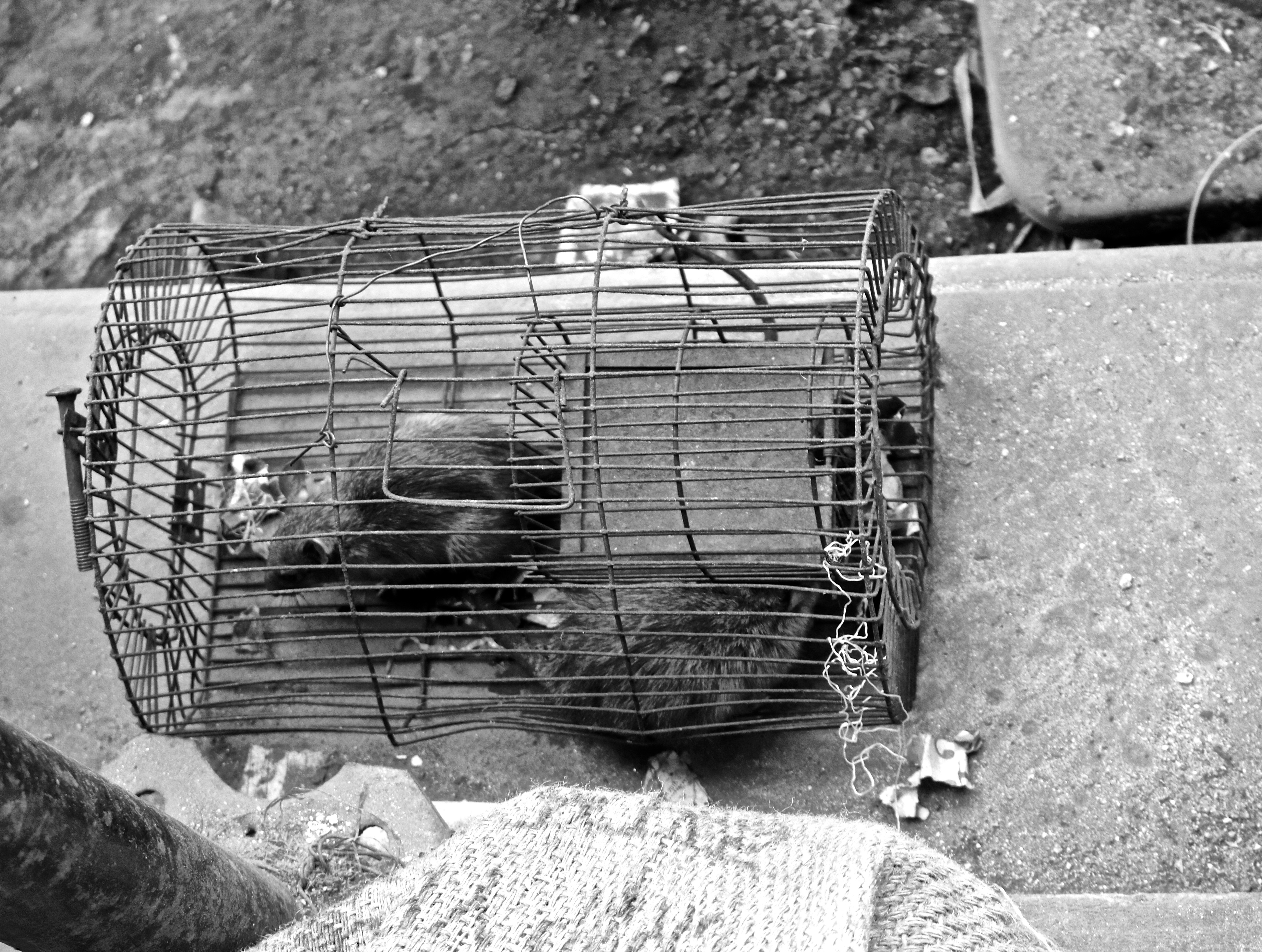
And watching this, with the shard now safely wrapped in a fold of his vest, it made him think how no one ever asked the right questions. It had been just the same when he was in the cage.

Picking away at the scab, he felt a certain amount of regret. Space was limited here and he had taken to marking his tiny locale with whatever was at hand. More often than not this involved hair (his own), or a chipped fingernail, and on one occasion a tooth unhooked by day after day of the cage gruel. But today he had noticed a scab building up on his forearm, and the urge to scratch the itch had proven too great to resist. The skin had not yet flaked, so his action drew blood and pus. He didn’t mind too much, though, as it made for a richer signature on the floor. He knew the other inmates would be looking at him as he pinched the skin, then released the gunk; knew as well that there would be no complaints, the memory still fresh of those other days when it was their teeth or blood that had lined the floor.

He sensed that his blood had been in some way corrupted by the surroundings. Now even the mosquitoes tended to avoid him on their night-time sorties. The moan and slap of the other wretches meant they were still being plagued by malarial torments, yet his nights were oddly peaceful. He would hold the gruel down and continue to build himself up with press-ups on his knuckles. And he would watch, and wait. The wretches would occasionally come to blows with one another, but even when this happened they were careful not to allow their dispute to spill over into the micro-fiefdom he had marked out for himself. His vest started to fill out with this taut system rigour, vein and fibre and barely concealed violence in those arms; the knuckles long since cured of the taste of floor, safeguarded as they were by an extra layering of skin. And though he was young, one of the youngest in fact in the cage, there was now a strong beard shielding that face.

And then one day the news he had been so desperate to hear. News he had waited so long for that there were times when his resolve had nearly crumbled, when he had imagined that this was what his life would always be. Yet when it finally came it was delivered without ceremony. A perfunctory ‘You!’ and the unlocking of bolts. Space, which he now knew to be the most precious of companions, was apparently needed for another kind of inmate, and with a final reminder that he was a lucky badmaash ringing in his ears, the system spat the thief back out into the dust and the tumult.

No one was there to meet him, and after the initial disappointment, which was barely even that, he felt nothing. Shielding his eyes from the harsh glare of late morning, he squinted at the first building that lay beyond the dirt track and at the thick plume of smoke that was rising from it.

“Bhaiyya,” implored a man, skeletal arms thrust outwards, that simple action evidently so draining that no more words would come.

He paused to look at the man, noting the distant saucers of eyes set back in hollow sockets. Instinctively he reached up to soothe the bridge of his own nose with thumb and forefinger; felt surprised when the fingers traced thick hair in the space just below his cheekbones; strode on purposefully towards the plume without looking back.

As he crossed the waste ground, his eyes picked out more stricken figures, little more than shapes really, only the occasional spasm indicating any life at all. Mostly, they were just covered in rags, though one or two were still sitting, as though meditating, in the clothes they must have been wearing when their lives were touched by fire or tragedy or whatever it was that had left them like this.

He could hardly bring himself to look at these figures, so implacable did they appear in their sadness. It was even worse with the ones who called out to him, begging for food, or, perhaps, just comfort.

“Dada. Bhaiyya. Amar ke kichu ekta ditte parben?”

“Dada. Amar khidda.”

Or sometimes, just “Dada.” Dada, though he was barely old enough to be considered anyone’s Dada. He looked at their arms, little more than flesh starved twigs really, and felt something surging up within him. At this stage, there was still no sign of his own brothers, whose Dada he actually was by virtue of being the eldest. Even so, he found himself studying the blank faces on display for any traces of recognition. Perhaps his brothers no longer looked the same? He had heard how beards were grown or heads sometimes shaved. He knew people had done what they could, had often had no choice but to hide in plain sight. There had been whispers in the cage, the most recent arrivals breathing terrible tales of riot and flame, cleaver and bone. And he had absorbed it all, shapeshifting imperceptibly from a thief to a warrior.

People change, he thought, even in a short space of time. He had seen that for himself in the cage. Right in front of him, big, strong men reduced to urchins, the fight drawn out of their faces with one savage beating. The unexpectedness of it, perhaps the shame, but either way all that swagger absorbed by the blows, repainted as something smaller, delivered in silence. Yet these figures around him now were of complete strangers, and in that sense should have exerted no more pull on his imagination than the boundary markers of detritus in the cage. So when he looked again, this time more closely, and saw that they were in fact not meditating but sitting on recently bandaged stumps, he was as surprised as anyone that the thing surging through him, up through his gut and into his throat, then out of his head, felt more primal than anything he had experienced behind bars.


Author’s Note

“Cagey” is a dark little tale of trial and tribe, set in the turbulent period leading up to the Partition of India, in 1947. The timing feels apt this year, which marks the 70th anniversary of those traumatic events, but also the inauguration of deep disquiet at political upheavals on both sides of the Atlantic. Given that we appear to be stuck in the early stages of “post-truth,” the most honest thing I can say about myself and my writing is lifted from the great Chinua Achebe: “I wouldn’t have wanted anyone to teach me how to write. I prefer to stumble on it … not to be told.” I hope some tiny element of that is present in my words. And yes, every fightback begins in the tales we tell ourselves and one another.


Koushik Banerjea is a London-based writer. His work is featured in Verbal magazine and darkmatter: in the ruins of imperial culture.

Photo credit: Caged Rats, Rajasthan by K-B Gressitt ©2016.

When Our Culture Is Los Angeles Instead of Joshua Tree, This Is How We Elect a President

By Peter Brown Hoffmeister 


Part I

Sunrise, the first day in Joshua Tree, a Purple-Bibbed Hummingbird
flits and dips into the late March blooms off my back patio, and a male House Finch,
head red as a carpet in Hollywood, chatters with his mate about
mosquito meals and black-fly-bacon for breakfast.
I turn and watch a jackrabbit facing west, somnolent on his haunches,
the dark tips of his ears catching the first warm rays angling across
the desert, when a raven plunges to him, dives to within a foot of his head,
catches the rabbit staring off, and the rabbit jumps, or—more accurately—
jigs, startles, his four jackrabbit feet spraddling in the air, straight
out to the sides, before he reconnects with the earth and bounds
into the Cliffrose and Saltbush.

At Macy’s, this week, in Los Angeles, fur coats are 30 % off.


Part II

First night in Joshua Tree, the stars shift counter-clockwise around Polaris—
Capella, Cassiopeia, and Ursa Major—but also
stars and clusters I haven’t yet learned, 3/4 hydrogen, 1/4 helium
thrown from God’s bag, 6000 visible above the Lost Horse Cabin on
any given night. But only 119 miles away
in Los Angeles, the burning wattage of the city pollutes a ground-up whitewash,
as if the people who worship concrete
have painted the sky as nothing.

I’ve heard aspiring actors, aspiring directors, and aspiring producers talk about what
they’ve gained by moving to Los Angeles.


Part III

Cap Rock, walking barefoot back to my car, Cholla spines in the sand and I shuffle
my feet to scuff the spines so they won’t stick.
A coyote yips in front of me, and I try to translate
his yawping whoops,
March Madness, the basketball experts say, would you take Kentucky or the field?
And I say this is the field, right?
Joshua Tree?
Open desert at 4000 feet through the Lost Horse Valley? The coyote
in front of me still, luring me further into the desert, to a pile
of stones I don’t recognize. I follow his yowls for a mile, but
he stays in front of me until
this moment,
now
when coming around a corner to a jamble of orange monzogranite, he’s
in front of me, sitting like a domesticated dog, and I say,
“What was your trick, Trickster?”
But he says, “With them, I didn’t have to. Not at all. People,
they just tricked themselves.”


Part IV

Finally, An Ode to the Red Carpet Itself:

How did you get this job, not a green or blue carpet. Purple
is a royal color and could be the carpet of choice for
stars to stumble across, bubbly and buzzing from limo shots, or
almost stars—the nearly famous—hoping for interviews, cameras, microphones,
anything to reflect their own silicon-enhanced images.
Our president is orange but he was once on that reality show where he always said, “You’re fired!” so emphatically that he must be able to
be a boss
win a game
lead a nation
which is synonymous with
starring in a movie?

If you want to catch a raccoon near a desert spring, drive three-inch nails, angled down,
into a two-pound coffee can, then place something shiny in the bottom:
a silver dollar
a bracelet
a small mirror.
The raccoon, masked and striped as if he’s dressed for a special occasion
will grasp the sparkling object in his small dark hand and he won’t let go, not even after
he discovers that he can’t remove his fist from the trap. Never will this raccoon relinquish the shiny piece of something that he is holding even if he realizes that he
has been caught out in the open, looking like a fool.


Peter Brown Hoffmeister is a poet and fiction writer, and a former Writer-In-Residence of Joshua Tree National Park. His most recent novels include This Is the Part Where You Laugh (Knopf, Random House) and Graphic the Valley (Tyrus Books, Simon & Schuster). His next novel, Too Shattered for Mending, will be released by Knopf in September 2017.

Photo credit: Steve Collis via a Creative Commons license.
Curry’s Common Ground

By Mary Petiet


The man behind the counter glances between the potent spice mixes and my ten-year-old son.

“You like this?” the man asks in a heavy Pakistani accent. He starts ringing up the sale, and cultures connect as my blond towhead grins widely and tells him he loves curry.

When I was ten years old, I had never tasted it. Curry had not yet arrived in our small Massachusetts town, although I had heard rumors of it from my English cousins. Until a few years ago, I had to go into Boston to shop for Indian food.

Now, masala, korma, Punjabi chana, and fish biryani; vibrant spice mixes neatly packed in small boxes stamped “Made in Pakistan”: I wonder at their journey to the new storefront on our town’s main street and marvel at how easily they create amazing Indian dinners. The man behind the counter asks if I know how to cook with them. I recall tasting my first curry as a college student in Scotland in a restaurant promising the cuisine of the Mughal emperors. It made my eyes water and my nose run and I loved every bite of it. Awash in the new spices and always a cook, I asked the waiters, “How do you make this?” “Madhur Jaffrey’s cookbook,” they replied unanimously.

In the store, I regard the man over a box of frozen samosas. The store smells of curry in the way of all Indian markets. As my son runs back for a jar of chutney, I tell the man it took me years to learn how to cook this stuff, starting with a recipe called Malaidar unday in a dog eared copy of Madhur Jaffrey’s Indian Cooking.

Malaidar unday is a simple curried egg recipe and as I cooked it I realized that at its base, Indian cooking has a balanced trinity of flavors: ginger, chili and onion. Over the years, I learned to grind spices and puree pastes, and to add yogurt slowly so it doesn’t curdle. I spent hours filling the kitchen with potent smells from far off places and piling our plates with the spicy stews my son has grown up eating.

The man takes the chutney from my son and tells us his favorite is butter chicken and that the butter chicken spice mix feeds a lot of people. My son says he loves that one, too. We share stories of big butter chicken meals, agreeing there can never be too much of it. The man shakes my son’s hand, we walk out the door, and the fresh air hits us as we leave the smells of Pakistan behind.

Out on the sunny sidewalk, I seize the moment to connect cultures. I ask my son if he has been hearing a lot of scary things about Muslims recently. He says he has: terrorism, the refugee crisis, a possible registry. Just as I have feared, the vitriol has not escaped my child, hate does not happen in a void.

“That man in the store is a Muslim,” I tell him. “He’s from Pakistan, and he likes a good curry just as much as we do. Think of how the different spices in the curry work together to form the coherent whole of the dish. People are like that. We can work together to form a successful whole. The Koran says: Do unto all men as you would wish to have done unto you. Jesus also says: Do to others what you want them to do to you. We have common ground, and we can’t vilify an entire people based on extremists—just as we can’t dismiss all curries as bad when we add too much of one spice to overwhelm one dish.”

When we get home, we break out the butter chicken. I imagine the chicken floating in the marinade as the continents floating in the ocean, and the spices as the people and the animals inhabiting the land and the sea. Later, while the mixture simmers, I watch as it all comes together in a vibrant, balanced, colorful mass, connecting us to each other as surely as it connects us to the greater global mosaic.


Mary Petiet is a reporter, writer and storyteller. Her book Minerva’s Owls is forthcoming from Homebound Publications in April 2017. Visit her website, www.marypetiet.com, and follow her on Facebook.

Editor’s note: Learn more about Madhur Jaffrey, “The Queen of Curries,” and try a few recipes found here.

Photo credit: Sara Marlowe via a Creative Commons license.
i’m sawing off my roots

By Cyrus Parker


watching the place

i had called home

for twenty-five years

turn red

for the first time

in twenty-four—

on a night that would determine

the future

of not only myself,

but so many other people,

many whose entire livelihoods

were on the line—

was the first time

i had ever been

ashamed

of where i’d come from.


Cyrus Parker is a New Jersey-based poet, originally from Michigan, where he spent four years actively wrestling on the local independent wrestling circuit. On a hiatus from the squared circle, Cyrus is taking the time to pursue his other passion—writing. A creative writing major at Brookdale Community College, Cyrus’ work has been published in the college’s annual literary magazine, Collage, and he is currently revising his first poetry collection, DROPKICKpoetry, which he hopes to release sometime in 2017. Follow Cyrus on Facebook and Twitter.

Miscarriage

By Heather Herrman


A month ago, I lost my daughter to a miscarriage. Science did not tell me she was a girl, but I knew it through every bone in my body. My great-grandmother, Wilhelmina Volk, came from Germany when she was sixteen to an arranged marriage with a drunk. The man gave her two children and then left her. Wilhelmina survived by telling fortunes in the streets of St. Louis. She told them with uncanny accuracy. She saw ghosts of people who’d died across the ocean before ever hearing the news. I claim her intuition as I claim the knowledge of my daughter. She existed. She is gone. This is a truth.

At the hospital, the nurse gave me a pill to expel my daughter’s body at home. We knew she was gone because we saw her body in black and blue tones on the sonogram—a little fish who did not move in the ocean of my womb. The tech was cold, ill-equipped to deliver the news.

“There’s no heartbeat,” she said, after minutes of silent prodding, her hand moving the wand inside of me to send the oh so still image onto the screen while my husband and I watched, breathless. “Let me go get someone,” she said.

And that was all. They walked us through the back hallways, so that no one could see us crying. I wasn’t crying. I was a farmer’s granddaughter. I understood life and death. Cycles. Giving and taking. I was strong.

Stupid.

The tears came later as I paced the house, the pills inserted inside of me to get rid of the dead flesh.

“Like a light period,” the nurse told me. “Maybe a little more cramping.”

It was a birth. It was labor. I know, I have done it before. I have a son who is alive and well.

I paced the house like a wild animal for four hours, unable to sit, the contractions coming and going, coming and going, the emotions swelling. When she passed, I could not catch her in time and she was gone. Swimming through the toilet and away. Better, maybe, but I would have liked to see her face, the small gumdrop of the unformed woman she might have become.

We do not talk of such things, women. We smile and grit our teeth to the bodily bits of birth. We make pink quilts and sing songs.

And—because we do not speak—it is defined for us by men who make decisions about protecting what is not theirs.

It is mine to give or take. To lose. To grieve or not. It is not yours.

I have deflated slowly, losing the hormones and pounds, letting them push a needle into my arm each and every week to see if my body has stopped its confusion, if it has figured out, finally, that it is not pregnant. It has not. Still, my breasts are tender, my heart is sore. I weep at things that don’t need tears. And even more for the things that do.

Around me, the world is falling apart.

And my body aches the ache of a mother.

We are broken, and I don’t know how to fix it.

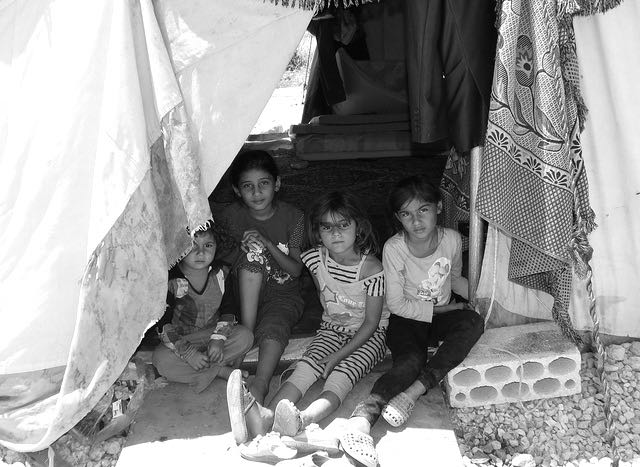
I post the correct posts on Facebook, I speak to relatives in hushed anger about why they must see what it means to let these refugees—these children—into our home, because we are all children. We all ache for a mother.

But I don’t know how to translate this white grief into action. I don’t know what to do or say that hasn’t been said before. I am a pessimist. I am always censoring the personal.

But I like to think my daughter would not. Does not. I like to think she opens her heart and mouth and flies, as Cixous commanded all her daughters to fly, above all this poison through a different language—the language of the body.

The grief of swollen nipples left unnursed, the spread of skin to make a room, left vacant. The body who wants to be made a house.

I do what I have been too scared to do.

I grieve.

My daughter taught me that.

Today, I do not post the protest links on any of the pages where, daily, I make my mask for the world.

Today, I speak from the body.

Today, I speak from the wound.

And with my daughter’s voice, which supersedes me, engulfs me, allows me this audacity to claim the universal womb—I beg my children to come home.


Heather Herrman‘s stories have appeared in journals including The Alaska Quarterly Review, Snake Nation Review, and The South Carolina Review. Her debut horror novel, Consumption, is out now from Random House imprint Hydra. Heather has taught writing classes at places such as New Mexico State University, Clemson University, and The Loft Literary Center. She also worked as a literacy advocate at two Minnesota nonprofits before moving to Omaha to birth her were-child and learn the trade of hunting, capturing, and skinning words alive to feed her pages. Visit her website at www.heatherherrman.com.

Photo credit: Trocaire via a Creative Commons license.
The Candidate

By Bebe Kern


Out of television into living daylight, like
the nightmare demon of my Southern girlhood,
the specter is everywhere: dirty ballcap man
in the pickup with a truck-size Rebel flag flying
over Mardi Gras; salesman with a leer;
frat boy drunk on Dewar’s and privilege
mocking a sissy, marking territory on the lawn
before he grows up to poison a town’s water;
accidental mom, defiantly obese, raptured
on the couch by a blue screen while children
drink sugar by the can and sing battle sounds;
tank gunner banker broker laying waste to marsh land;
old man in camo dreaming in Walmart
of creamy girls and automatic weapons;
grade school bully laughing at my simple shoes.


Bebe Kern lives in the North Carolina Piedmont region, drives a Ford truck, works a day job, and listens to poets and musicians including Donald Justice, Miroslav Holub, Jane Hirschfield, Charlie Smith, Tom Waits, Mary Gauthier, Drunken Prayer, The Handsome Family and Loretta Lynn. She had a poetry class at the University of Alabama under Hudson Strode, and studied at the University of South Alabama with Walter Darring and Stephen Mooney. Her poem, “Pray Mississippi,” was named a finalist by The Thomas Jefferson Center for the Protection of Free Expression. Novelist Julie Edelson reviewed Bebe’s original CD, No Twirling, saying, “Bebe Kern is a lunch pail sort of poet … her work is fresh, with a good strong bite.” 


The Invisible

By Jason Metz


You do not see us, so let me show you. I’ll start here, with a needle. First, there’s an antiseptic pad to sterilize the injection area, to the left of the belly button, just below a birthmark. The needle is more like a fat pen, a pre-filled syringe encased in plastic with a trigger button at the top. Stand in front of the mirror, shirtless, the needle pressed up against the stomach, hold your breath. Click. It hurts. Not a lot, but enough to know that it’s there. It will pass. Ten seconds goes by, a slight gurgling sound as the plunger reaches the end of the barrel, then wait a few seconds more and remember to breathe. Wipe away the droplets of blood. This happens twice a month, on Tuesdays.

The commercial for my medicine has all of the typical scenes you’ve come to expect from the pharmaceutical industry: people trying to get on with their daily lives. They’re packing suitcases and boarding planes. They’re sitting in an Adirondack chair by a lake. They’re enjoying romantic dinners. These things happen while a hushed voiceover lists the potential side effects: serious and sometimes fatal infections and cancers, such as lymphoma have happened, as have blood, liver, and nervous system problems, serious allergic reactions, and new or worsening heart failure. All the good stuff.

None of it phases me. I know what life is like without the medicine. I enjoy packing suitcases and boarding planes and sitting by a lake. The romantic dinners are a little harder to come by, but not for lack of trying. The medicine allows me to try.

What does phase me, is when the commercial airs during football games. Friends, beers, wings. Trying to pretend that the advertisement for my medicine is just another commercial, couched between fast food ads and movie previews. The actors in the commercial represent my reality. This worries me. That the commercial might expose me, that my friends might catch on, that they’ll know something is wrong with me. If a deflection is necessary, I’ll make a joke and mock the commercial, get a laugh out of the room. Besides, these commercials are unnecessarily cruel reminders. They air at times when I’m trying to forget. When I’m living, trying to enjoy myself, keeping hidden. Sundays are for football. Every other Tuesday is for the needle.

I was born with an auto-immune disorder. There is no cure. For the rest of my life, some form of treatment is necessary. Without it, my quality of life plummets. And aside from all those physical symptoms and side effects, here’s what almost nobody tells you: The mental effects can cripple you. They will follow you at every step for the rest of your life. You will not be able to outrun them.

What might happen when you’re sick and always will be, is a depression that weaves its way in and out of your life. Sometimes it’s just a touch, barely there, you might not even notice it. Other times, it will consume you. It will corrode your needs and values and desires. There will be days that you cannot leave the house. You’ll find excuses to not be with friends. You will have great difficulty with intimacy. Those things that seem to come so easily for others. And you might find yourself staring out of a third story window, looking down at the ground, and thinking how easy it could be. Gone.

These might be passing thoughts, not even a suggestion, just more of an option to look at plainly. The fact that these thoughts exist within you is frightening enough, but there they are, so maybe it’s best to acknowledge them. Hang on the best you can and let them pass through. Remind yourself, these thoughts are foolish. It’s not all that bad.

There are other thoughts, too. For example, someone might come into your life. You might let your guard down, let someone get close. The problem with that is, eventually, you might have to talk about what you want for the future. This is where, if you don’t want to lie, if you’re strong enough to give the other person the honesty they deserve, you tell them that you do not want children. This will be a deal breaker for many. You can tell them the reasons why, that children just aren’t for you or that you don’t need to create a life to fulfill your own. There is some truth to this, maybe. But here you are, lying to someone you promised you would not lie to. Here you are, lying to yourself. Here is what you will never tell others. Here is the truth: that you’re afraid of what you’re going to pass down, what’s embedded in your DNA. How could you lovingly create a child and knowingly pass on your pain? How could you bear to watch that? How could you ask someone else to do the same?

It’s in these passing moments that you realize that every single day, even in the smallest of ways, you deal in terms of life and death, always. You are afraid to create one. You are afraid of your own. It’s in these passing moments that you are grateful for the medicine that alleviates your symptoms. It may not make these thoughts go away. But it gives you some distance. You can’t outrun these thoughts, but you can stay ahead.

*   *   *

You do not see us. But we are very much at risk. The Affordable Healthcare Act provides protection for those of us with pre-existing conditions, whether we were born with them or not. And here we are, once again, about to find ourselves at the mercy of the insurance industry. An industry that does not care for us. Without protections in place, they have the power to simply deny us coverage, or charge us exorbitant premiums that we cannot afford. Many of us will be forced to go without coverage, without treatment.

This is how they see us: We are ID numbers in a database. We are a math formula. We are X amount of dollars in premiums. We cost Y amount of dollars in treatments. We never come out in the black. The variable in this formula? Being born. Our complicity? To continually exist. In existence? More than 50 million of us.

We don’t want you to see us, but if you must, see us for what we are: human.

Don’t see us as simple mathematics, as a financial burden, or a losing proposition. We are not disposable.

We are the invisible. We swallow pills and stick ourselves with needles. We are among you. We watch football games and laugh at ourselves on TV. You invite us to your weddings and baby showers and hug us at funerals. We try to be role models to your children. We’re your best friends and, like you, we are trying to get through another day. We might not ask you for help because we too often see help as an admission of weakness. We are stubborn. We work so hard for our invisibility.

But know this: We are in grave danger. Know that we are here, alongside you. Know that we need you, now more than ever.


Jason Metz earned an MFA in Creative Writing from the University of California, Riverside. He lives in Somerville, Massachusetts, on the third floor of a triple-decker, on a hill that overlooks the Boston skyline, where he writes at a small wooden desk, resisting.

Photo credit: Takeshi Hiro via a Creative Commons license.

Better Than Truth

[fusion_builder_container hundred_percent=”no” equal_height_columns=”no” hide_on_mobile=”small-visibility,medium-visibility,large-visibility” background_position=”center center” background_repeat=”no-repeat” fade=”no” background_parallax=”none” enable_mobile=”no” parallax_speed=”0.3″ video_aspect_ratio=”16:9″ video_loop=”yes” video_mute=”yes” overlay_opacity=”0.5″ border_style=”solid” padding_top=”20px” padding_bottom=”20px”][fusion_builder_row][fusion_builder_column type=”1_2″ layout=”1_2″ spacing=”” center_content=”no” hover_type=”none” link=”” min_height=”” hide_on_mobile=”small-visibility,medium-visibility,large-visibility” class=”” id=”” background_color=”” background_image=”” background_position=”left top” background_repeat=”no-repeat” border_size=”0″ border_color=”” border_style=”solid” border_position=”all” padding=”” dimension_margin=”” animation_type=”” animation_direction=”left” animation_speed=”0.3″ animation_offset=”” last=”no”][fusion_text]

By Jens Köhler


We had hoped
that truth
would set us free

We believed
“If you See Something, Say Something”
applied
to things deadlier
than misplaced luggage.
Things like:
the destruction of habitats,
human and other;
systems that punish
blackness and brownness and femaleness;
“alternative facts”.
We Saw, We Said.

We had hoped
that truth
would set us free

But in reality
that freedom
is hard to see

Wiser souls than ours
knew the truth
as they prophesied
the end of bees
the end of flowers
the pitiless hungers
of unchecked powers

Better men than me
knew the truth
of their humanity
while a noose
weighed a curse upon a tree

Our years and labors extracted
attentions redacted
we saw faintly
then with clarity
the denial
of our humanity

No
the truth
plain to see
did not
cannot
will not
set us free.

But,

better planning
better alliances
better training
better complaining
better whistleblowing
better faith
better BS-calling
better elections
better never, never, never, never, never, never, never stopping
better ball not-dropping
better logistics
better heuristics
better self care
better standards of care
better sex
better checks and balances
it’s a long list
and should be longer
with the stuff
that makes you you
and makes us stronger
better diction
better encryption
better privacy
better transparency
better leadership
better followership
better rituals
better victuals

[/fusion_text][/fusion_builder_column][fusion_builder_column type=”1_2″ layout=”1_2″ spacing=”” center_content=”no” hover_type=”none” link=”” min_height=”” hide_on_mobile=”small-visibility,medium-visibility,large-visibility” class=”” id=”” background_color=”” background_image=”” background_position=”left top” background_repeat=”no-repeat” border_size=”0″ border_color=”” border_style=”solid” border_position=”all” padding=”” dimension_margin=”” animation_type=”” animation_direction=”left” animation_speed=”0.3″ animation_offset=”” last=”no”][fusion_text]


better jokes
better pancakes
Come on,
what am I missing?
Fill in the blanks
better kissing
better music
better hospitality
better advocacy
better lobbying
better structural redundancy
better data
better stories
better questions
better showing up
better voting
better tricks
better mortgage lending
better garden tending
better humus
better HUMINT
better humor
better breath mints
better knitting
better maps
better lawyers
better coffee dates
you go out for coffee
come back
I’ll still be going
better investing
better endowment growing
better divesting
better boycotts
which are truly terrible weapons
against feudalism
named for a landowner’s agent named Charles Boycott
who couldn’t even get his mail delivered in the end
better genius
better plod
better art
better succession plans
better representations
better representation
better participation
better capital formation
better information
better fintech
better listening
better policy
better long term memory
better philanthropy
can we please
not use charity
to keep other people’s kids down?
better bets
better interview gets
better farming
better charming
better handshakes
better prepare for earthquakes
better French drains
better benchmarks
better supply chains
better first aid
better patience
better impatience
better exercise
better love letters
better manners
better resolve
better spirit
better aid
better comfort
better gumption
better getting back up

and

and

the truth

will set us free.

[/fusion_text][/fusion_builder_column][/fusion_builder_row][/fusion_builder_container][fusion_builder_container hundred_percent=”no” equal_height_columns=”no” hide_on_mobile=”small-visibility,medium-visibility,large-visibility” background_position=”center center” background_repeat=”no-repeat” fade=”no” background_parallax=”none” enable_mobile=”no” parallax_speed=”0.3″ video_aspect_ratio=”16:9″ video_loop=”yes” video_mute=”yes” overlay_opacity=”0.5″ border_style=”solid” padding_top=”20px” padding_bottom=”20px”][fusion_builder_row][fusion_builder_column type=”1_1″ layout=”1_1″ spacing=”” center_content=”no” hover_type=”none” link=”” min_height=”” hide_on_mobile=”small-visibility,medium-visibility,large-visibility” class=”” id=”” background_color=”” background_image=”” background_position=”left top” background_repeat=”no-repeat” border_size=”0″ border_color=”” border_style=”solid” border_position=”all” padding=”” dimension_margin=”” animation_type=”” animation_direction=”left” animation_speed=”0.3″ animation_offset=”” last=”no”][fusion_text]


I live in L.A., grew up in Toronto, and lived in NYC and Montreal. I am a dad to the most amazing, wonderful lads. I have always been an ideas guy. I get excited about the act of creation and organizing people around interesting ideas. My professional background includes writing, nonprofit management, performing and producing. It all feels like the same thing to me. (Well, no. Staying up late to finish a grant proposal does not feel the same as making an audience laugh. But I am always aware of the connection between the grant that raised the money that helped get the butt in the seat so the performer could try to get that laugh.

“Better Than Truth” was first published on the poet’s website, at jenskohler.com.

Photo credit: Jason Eppink via a Creative Commons license.

[/fusion_text][/fusion_builder_column][/fusion_builder_row][/fusion_builder_container]

No More Cream Puffs

By Darrell Petska


Can’t you feel it?
That chokehold on our throats—
write like this
say it like that
be dignified, calm, aloof—
Hell, today’s hands demand poems
hard as a brick.
Frilly little rhymes?
Maybe Sundays with tea.

Something afraid of us
wants our words meek, not defiant:
“Go ahead, throw your cream puffs.
Now aren’t you a rebel!”—
hoping we won’t throw bricks.
Don’t fall for that.
Now’s not the time for nice.
Something needs to learn
what pissed-off poems can do.


Darrell Petska‘s writing appears in Whirlwind, The Missing Slate, Mobius: The Journal of Social Change, Red Paint Hill, Right Hand Pointing, and numerous other print and online publications. Darrell worked for many years as engineering outreach editor, University of Wisconsin-Madison. He left the university to be the arbiter of his own words. He lives near Madison, Wisconsin.

Photo credit: Way Tru via a Creative Commons license.