
Takes the Cake

By Karen Greenbaum-Maya

“I was sitting at the table, we had finished dinner,” T***p told Fox Business host Maria Bartiromo. “We’re now having dessert—and we had the most beautiful piece of chocolate cake that you’ve ever seen—and President Xi was enjoying it.”

So many problems are being solved by chocolate cake. Beautiful cakes, perfect 10s, are being sent to NATO heads of state. The ones that came out kind of flat, the 6s and the 4s, are being used to bomb Syria. And Iraq, too, why not?  Now we are waging war with chocolate cake. Surplus wheat, butter, eggs, sugar, all so much cheaper than ordnance. Only the chocolate is imported. Cakes are raining down on Assad’s wasted cities, bringing comfort to displaced people everywhere. No blasted hospitals, no amputations. A little gut maybe, but hey. People everywhere are happy to see American planes releasing materiel. To be struck by a falling chocolate cake, no worse than getting slapped by flung custard pie. In Korea, chocolate is considered a medicine. Like the healing that chocoholics dream from Death by Chocolate. Cakes are being launched, pushing Kim Jong-Un’s nuclear buttons, showing how good it tastes to choose butter over guns. Let them eat cake.


Karen Greenbaum-Maya, retired clinical psychologist, German major, two-time Pushcart nominee and occasional photographer, no longer lives for Art but still thinks about it a lot. Her work has appeared in journals and anthologies including  B O D Y, Sow’s Ear Poetry Review, Comstock Poetry Review, Off the Coast, Otoliths, Naugatuck Poetry Review, and Measure. Kattywompus Press published her two chapbooks, Burrowing Song and Eggs Satori. Kelsay Books published her book-length collection, The Book of Knots and their Untying. She has been politically engaged since she was 12. She co-hosts Fourth Sundays, a poetry series in Claremont, California. For links to work online, go to: www.cloudslikemountains.blogspot.com/.

Image: Internet meme.

Tayaran

By Christa Miller


The first time Haitham flies he is trying to flee the gang of teenagers in the camp who think he has something worth stealing. He is running, running, and then there is a building before him, the kitchen where his mother works during the day. Before he knows what he is doing, he takes two steps up the concrete-block wall, grasps the edge of the roof, and hauls himself upwards. He scrambles to the top and there he stays while the boys bellow and whoop below. Eventually they get bored and go off, and that is when he takes flight. A few running steps along the shallow pitch and then launch, he soars into the air. But young boys do not have wings. As he falls he has just enough time to tuck himself into a ball so he can roll along the ground.

His shoulder is sore for four days afterward. But he has tasted the air, felt it cushioning his body. It is gritty with sand and tastes bitter like turmeric, he wants to taste and feel it again.

Haitham has wanted to fly ever since he and his mother first came to the camp. They crossed the border late at night on foot, knotted tightly together with other families for protection from the government forces. Then just five, he wanted to be a bird so he could swoop into the air to escape without his feet and legs aching, without his knees and shins bloodied and bruised from his numerous stumbles and falls in the rocky sand.

He is nine now. The next time he flies, it is not to escape, but to see what else he can do, how far he can go in this tent city of a refugee camp. He has seen other boys fly on YouTube, where he watches videos of something called “parkour.” While his friends play video games that allow them to capture the government flag with guns and bombs and flame, he sits in the corner of his tent with his phone, watching boys in faraway cities—Berlin, Paris, Toronto, even Essen where his uncle now lives—balance atop high rooftops and leap from one roof to the next.

He cannot jump from tent to tent, of course, but the caravans in camp have hard rooftop surfaces. He pretends he is back in his old apartment building in Homs. His movements are awkward, tentative, a boy simply jumping from caravan to caravan, not the light tiptoe touch-and-go of the run across them he has envisioned. He tells himself this is merely because he does not yet know the camp’s layout, that, like the birds, he will come to know where it is safe to land.

But after he lands hard on the fifth caravan, a woman comes out, her jilbab flapping in a way that makes Haitham think she has pulled it on hastily. He climbs down rather than leap and roll, and he makes his apologies to her, shame warming his cheeks because he has made her risk her covering in public.

She rails at him for disturbing other people’s homes, their quiet spaces, their private time. And then, unexpectedly, her face softens. She is not angry after all, just startled, and he realizes that he reminds her of someone as she holds out her arms to him. He accepts her hug. She is a young woman whose dark eyes are warm and sad, and she holds on to him for longer than he expects. When at last she lets him go, tears have tracked down the high bones of her cheeks. Before Haitham can speak, she spins and disappears inside her caravan.

After this he—they—makes a game of it. Around the same time every day, he lands hard on her roof; she comes out and scolds him, then offers him tea and some basic riz.  From her stove it tastes better than anyone else’s riz, including his mother’s. They sit in the baked shade of her caravan, and they talk. She is from Damascus, and she has never heard of parkour. Before the war she was a university student, she tells him, studying architecture, but after the men in her family were gone, she had to take a job cleaning the classrooms she once learned in. When he asks her who she came here with, her eyes grow faraway and sad, and she does not answer.

Still it is better conversation than Haitham can find with his own mother, who doesn’t seem to notice when Haitham slips away, who bursts into tears without warning, who mutters to herself about the things she left behind. It’s as if she has abandoned the family members who gave them to her, although the rest of them escaped to Germany long ago. If she only knew where her husband was, Haitham hears her tell the other women in the kitchen, she would rejoin him. She would rather be killed there than be trapped here.

Haitham flies to escape her tears, to escape the tiny space that is perhaps the size of one room of their old home, to escape the neighbors on either side who tell them they may have to live here for years yet, years before they can flee to Germany or Canada to start again. He flies to escape the knowledge that his mother’s dreams seem to hold no place for him.

His new friend, Amal, tells him she thinks he should attend school in the camp. Why spend his days running around, she asks, her face creased with worry, where the older boys can torment him? School is safe. In school he will give himself a better chance to make it wherever he ends up. How can he tell her that school is the last place that feels safe? Bad enough that the mortar fire, far away as it is, makes her entire caravan shake; how can he explain to her what it felt like, to have seen his old school building in crumpled ruins, to realize that, had the shelling happened just a few hours later, he would never have known what hit him?

He flies to escape the mortar shells.

Before long he realizes that he has achieved the ability to touch and go, to kiss the corrugated metal rooftops with just the tips of his toes before sprinting to the next. He balances carefully on beams in construction sites. He teaches himself to launch his body and climb up the cinder-block walls of shelters and kitchens like a spider; to tuck-and-roll, as he did that first day, when there is nothing but empty space to fly through. He can go anywhere, be anything. He hardly notices when the people on the ground point him out.

That is why it surprises him one evening, not far from the market, to come out of a roll only to hurtle into another human body. For a moment he thinks it is Amal, this is near where she lives, but there is too little fabric for a jilbab. He steps backward, gazes into the hard face of one of the teenagers he has been flying to avoid.

He doesn’t know if these are the same boys who have tried to rob him. He has nothing, he tells them, but they don’t care about that. They have seen him fly, and they want him to use his skills. For Allah, they tell him, al-Nusra has a plan for you. You could return to Homs, live as a man. Surely you can make use of your speed for His glory?

Haitham does not know how they know he is from Homs. Perhaps once they were neighbors. It doesn’t matter. If he were ever to return to Homs it would be to fight at his father’s side, not for al-Nusra. He feels afraid, deeply afraid in the very center of his core, for he knows these boys do not want him to rejoin his father, nor do they believe in Allah’s grace or mercy. He knows it is not money the boys want to rob him of, but his very life. He does not know how he manages to slip between the knot they have formed around him, but he does, and he hears them laugh like the striped hyenas who skulk around the edges of the camp in the night.

The next day he remains with his mother in their caravan. When his friend Sabir comes to the door and asks if he can play, he declines. But his mother invites Sabir inside, and for the remainder of the afternoon the two boys huddle on Haitham’s bedroll, playing video games on their phones.

Haitham avoids YouTube altogether.

After three days Haitham begins to feel the familiar twitch in his legs telling him it has been too long since he has flown, he must practice. Still he does not go outside. His mother, teary-eyed, asks him what is wrong, but he cannot tell her, he cannot give her one more thing to cry about. He says simply that he injured himself and needs rest. Sabir continues to come over. Their other friend Khalil stops by after school. Khalil talks about what he is learning, asks Haitham and Sabir to join him. Haitham asks if he can still feel the mortar shells shake that building. Khalil doesn’t answer.

On the sixth day, Haitham can no longer bear the hot stuffiness of his mother’s caravan, so on the morning of the seventh day, after his mother has gone to the kitchen, he crawls out of the caravan’s window and up onto the roof. He lies flat on his back so no one else can see him, and he breathes deeply as the camp begins to rise around him.

Before long he hears voices at the nearby kitchen. A woman is looking for someone, a lost child. Her voice is near tears but still she sounds familiar, a voice Haitham remembers, from Homs perhaps? He turns over onto his belly and spies.

He recognizes Amal’s black jilbab right away, because it stands out so in a land of white tents and the brightly colored jilbabs that his mother and other women wear as if to brighten drab days, or to stave off darkness. Amal is teary, and she is speaking with his own mother, and it takes him several moments to realize that it is he she asks about, not some younger brother or neighbor’s son she was responsible for. He scrambles down from his mother’s caravan and goes to the two women, his face cast down at the dusty ground, ashamed again for causing Amal such grief, and for embarrassing his mother, though he is not sure how.

Amal catches him up in a hug, holding him as if she will never let go. When she finally does free him, he expects a scolding, but instead she looks deep into his eyes as if searching his soul, and he cannot look away. Finally, she asks, if she can find a way to teach him how to buy and sell in the market, will he come with her?

Haitham glances up at his mother, whose eyes and mouth have formed round Os of surprise. He sees something else dawning in them as well: hope, the same hope he sees in Amal’s face and hears in her name. He cannot bear to disappoint either his mother or his friend, and so he says yes.

The next morning he wakes up with his mother, who fusses over him in a way he cannot recall her doing since before they left Homs. She makes him a good breakfast of pita and vegetables, and she tells him that if there is ever a hope of his leaving this camp, learning how to run a business is it.

Amal has found him a job cleaning a flower shop. He is to sweep the outside and the inside of cuttings and fallen petals and deadheads. In exchange, the shop owner, a man named Mohsin, will teach him how to set prices and haggle and make change.

In the beginning, the responsibility excites Haitham. He sweeps meticulously, inside and out, making sure the corners are free of dust and cuttings and insects, and he listens to Mohsin haggle with customers. Several times Mohsin calls him over to watch how he makes change. He is given a piece of fruit for lunch, and he eats it behind the shop so that he will not disturb the customers.

But after a few days the excitement wears off. Mohsin seems to forget that Haitham is there. He doesn’t praise his new young worker for a job well done, nor does he scold him when he finds Haitham underfoot. He even begins to forget to involve Haitham in the purchase and sale process. It is not, Haitham reflects, as if he is the man’s son or nephew, or the son or nephew of Amal, who herself seems to have disappeared. Mohsin doesn’t seem to care whether he shows up or not.

One morning, Haitham leaves the caravan as if he is going to work, but instead he spends the day flying.

It feels good to be on the rooftops and in the air once again. It has been too long. He is stiff, his movements less fluid, and neither the air nor the ground are very forgiving. By lunchtime, he is winded and a little bit sore, but he keeps going.

While he flies, he thinks. About his mother telling him that the only way out of the camp is to learn a trade. About the things she says to the other women at the kitchen, how her husband needs her more than her son does. About the al-Nusra fighters who want him to return to Homs.

If he joins them, he wonders, if he pretends to fight for them, could he eventually find his way back to his father?

He is so lost in his thoughts that he does not even notice Amal until she plucks him out of the air.

Actually, she swats his foot as he flies above her head. It isn’t enough for him to fall, but it’s enough to make him stop running, to halt on the roof he lands on, to make his way down to the ground carefully rather than in the tuck-and-roll he hasn’t done since the day the older boys encircled him.

She isn’t alone. She is with his mother. He braces himself for the scolding, though he feels no shame this time and does not hang his head. He stares defiantly at the two women.

His mother holds aloft a paper with writing on it. She is triumphant as she tells him that she has heard from her brother in Germany. He is traveling here to Jordan to take Haitham away, bring him to Essen. He will attend school with his cousins and perhaps work in his uncle’s shop.

When his mother is finished speaking she gestures to Amal, who regards Haitham with great sad eyes. Amal kneels, takes both his hands in hers. “Haitham,” she says softly. “Your name means ‘young eagle.’ I should have remembered, eagles cannot be caged—in shops or in schools.” Her dark eyes twinkle when she says this. Then they grow somber once more. “Nor in camps. Isn’t that so?”

Haitham doesn’t blink. He pulls his hands from hers. Over her shoulder the hyena-boys skulk. He tells her, tells his mother, that he wants to soar far away. To find his father, to fight for Syria, to recapture his home for his mother, for Amal, for everyone in the camp who cannot fly. His words hang in the air between them.

Finally his mother speaks. “No,” she tells him. “There is no life for you there. Only death.”

“But you speak about rejoining Abee,” he cries.

At this, his mother drops her gaze to the dust at her feet. “Yes, and I am wrong. I miss your father, but not enough to risk your life.”

“Al-Nusra is as much a cage as this camp,” Amal tells him.

“Cages are everywhere,” he spits back.

Even as he says it, though, he recalls the parkour videos filmed in Essen, in the other cities. Those boys must attend school and work in shops, too. What if he could become the one to post videos on YouTube, give hope to some other boy who yearns to escape the camp?

He meets Amal’s gaze, then his mother’s. He smiles. In Essen, the air will be lighter to fly through, not full of heat and sand, and it will taste as sweet as honey.


Too goody-two-shoes for the rebels and too rebellious for the good girls and boys, Christa Miller writes fiction, which, like herself, doesn’t quite fit in. A professional writer for more than fifteen years, Christa has written in a variety of genres ranging from crime fiction to horror to children’s, but her favorite stories to write—and read—are those that blend genres. Her work has been published in both Volumes 1 and 2 of the Running Wild Novella Anthology, a 2008 anthology called Northern Haunts, in Shroud Magazine, Out of the Gutter Magazine, Spinetingler Magazine, and in a handful of online zines. Her affinity for the dark, psychological, and somewhat bizarre doesn’t stop her from snuggling baby animals as a volunteer at a local wildlife rescue, adventuring with her two sons in rivers, swamps and salt marshes, or relaxing with a good book and a cold beverage in her hammock. Christa is based in Greenville, SC. You can find her at www.ChristaMMiller.com and on Goodreads, Instagram, Facebook, and Twitter.

Photo credit: Marco Gomez via a Creative Commons license.

24-Hour Relevance

By Larry D. Thacker

You’ve got twenty-four hours to wring out the story.
Maybe not that even. Something shinier could surface

out of that early morning Twitter abyss, from so deep
and lightless the thing might be unrecognizable

but for its stench of current interest, eyeless,
translucent hide capable of handling the depth pressures

that crush lesser beings, angler decoyed skin oddities
feeling into the murk as lures for the cycle hungry,

clueless creatures convinced they live to feed
the larger monsters, the leviathans never bothering

to ask such petty questions where no sound travels.


Larry D. Thacker’s poetry can be found in more than a hundred publications, including, Poets Reading the News, American Journal of Poetry, Poetry South, Spillway, Tower Poetry Society, Mad River Review, Mojave River Review, Town Creek Poetry, and Appalachian Heritage. His books include Mountain Mysteries: The Mystic Traditions of Appalachia and the poetry books, Voice Hunting, Memory Train, and Drifting in Awe. His MFA in poetry and fiction is earned from West Virginia Wesleyan College. Visit his website at www.larrydthacker.com.

Photo credit: Robert Couse-Baker via a Creative Commons license.

I Sing What I’ve Seen

By M.A. Durand    


I sing of chickens being eaten. Every. Single. One. In the rooms. Someone paid. The price high. The bodies cheap. I sob you do not want to be there. What I sing is what I have heard and seen. My eyes and ears are old they see and hear young Black bodies under shotgun guard in sugar cane fields. My eyes see young bodies of all colors on school room floors. In homes. In streets. And you don’t want to see, but you should see the bullets the blood the bodies. Slavery to AR-15.  Hear and See. Hear and See freedom ring.


M.A. Durand is an undergraduate student just three credits from earning a BA at Antioch University in Creative Writing with a Concentration in Literature. She lives in the Mojave Desert, in Barstow, California, has traveled overseas and lived in Cairo, Egypt, and began writing stories at age seven.

Photo credit: James Emery via a Creative Commons license.

Hysteria

By Daryl Sznyter

in the 1800s we were banned
from riding trains        because it was thought
our uteruses would fly            away
as though that should scare us
as though some           small    part of us
didn’t want that           all along
as though our wombs
weren’t tiny saucers                from the beginning
of time             sick of scientists
using the same breath
to call our names & warn the others
as if the others                         would listen
as if     curiosity          and lust
could be separated
& we wouldn’t respond
with the creation         of a more efficient
form of            transportation


Daryl Sznyter is a Pushcart Prize-nominated poet and content writer from Northeast Pennsylvania. She received her MFA in Poetry from The New School and is the author of the poetry collection Synonyms for (Other) Bodies (NYQ Books). Her work has appeared in Phoebe, Gravel, Cleaver Magazine, The American Journal of Poetry, Poet Lore, WomenArts Quarterly, and elsewhere. To learn more, please visit darylsznyter.com.

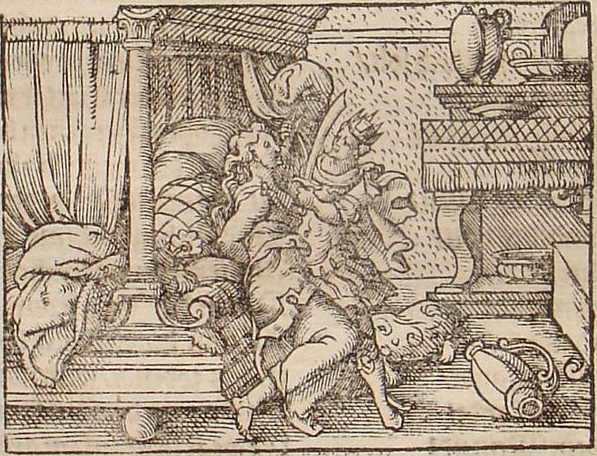
Image credit: an illustration from Dr. Hollick’s Complete Works: Diseases of Male and Female Generative Organs, Marriage Guide, The Matron’s Manual of Midwifery and Child Birth, and The Diseases of Women Familiarly Explained, published in 1902

Feeding the Fire of Winter Solstice

By Cate Gable

One stick one stick one match
one fist of newsprint
and the future is set
into flames. Passion and idiocy
are alight in the trees,
the possums are playing
dead, civil traditions
melt.

Our bones are reversing themselves
one flake at a time, and the temple
of our beloveds has long been
desecrated for pennies.
Our soul-mates the bears,
the deer, whales,
elephants, manatees
have withered

into oblivion. We watched
them go, everything
in slow-motion, so slow
we felt nothing, the needle
barely into our flesh
when the long-forgetting
began—our ancestors.
shadows on the wall,

never spoke,
or if they did, muttering
nonsense, we smote them
from the record. Words
were brands, random
tattoos on our arms,
over our hearts,
the smell of smoke
on our clothes.


Cate Gable has an MFA in poetry from Pacific Lutheran University; an MA from the University of WA; and a BA from University of Pennsylvania, graduating magna cum laude. Gable won first place in San Francisco’s Bay Guardian poetry contest; she has an award-winning chapbook, “Heart;” and a book of poetry and commentary on Stein/Toklas, entitled Chere Alice: Three Lives, (launched as part of the UC Berkeley, Bancroft Library, “A Place at the Table” exhibit). Her poem “Kilauea” was selected for Aloha Shorts Radio. Gable lives in Nahcotta, WA; Paris, France; and winters in Oracle, AZ.

Photo credit: Mendolus Shank via a Creative Commons license.

Heads on the Chopping Block

By Kit-Bacon Gressitt


Donald Trump, Brett Kavanaugh,

Mitch McConnell, Chuck Grassley,
Lindsey Graham and all other D.C. misogynists:

Beware.

You think Medusa was a monster?

Politics hath no fury

like a sexual assault survivor scorned

mocked, belittled, lied about,

ignored.

Our rage is beautiful and terrifying.

Our votes will turn you

not to stone

but to rubble.


A GOTV note from K-B: If you don’t like what’s happening in our country, let your voice be heard—at the polls. The midterm elections are Tuesday 06 November.

Your vote does count, particularly this year. It’s OK to be sorrowful, angry, frustrated, enraged, but don’t let that stop you from voting. Today, casting your vote is a dire responsibility.

If you’re not registered, or not sure, the deadline in some states is soon, but you can look up your state at this link (https://www.headcount.org/deadlines-dates/).

If you’re unsure of your polling place (they sometimes change election to election), you can look it up via this link (https://www.nass.org/can-i-vote/find-your-polling-place).

Whether online, by mail or in person, we must GET OUT THE VOTE.


Kit-Bacon Gressitt, publisher of Writers Resist and a co-founding editor, is an award-winning writer, an editor, and a Women’s Gender and Sexuality Studies lecturer. Her work can be found in Not My President: The Anthology of Dissent, Ducts, Trivia: Feminist Voices, The Missing Slate, Evening Street Review, Publisher’s Weekly, San Diego Poetry Annual, and Chiron Review, among others. A former feminist newspaper columnist in a conservative bastion, K-B has learned to duck swiftly. Her website is at www.kbgressitt.com.

This image is a satirical adaptation by artist Kim Kinman of sculptor Luciano Garbati’s “Medusa With Perseus’ Head.”


Breitmark News

By Mark Ozeroff


Breitmark News
1/24/17

President Trump has officially declared the day of his inauguration a national holiday, filing the paperwork on Monday. The proclamation read:

“Now, therefore, I, Donald J. Trump, president of the United States of America, by virtue of the authority vested in me by the Constitution and the laws of the United States, do hereby proclaim Jan. 20, 2017, as National Day of Patriotic Devotion, in order to strengthen our bonds to each other and to our country—and to renew the duties of government to the people.”

In the background, counselor Kellyanne Conway sang D, O, N  –  A, L, D  –  T, R, U, M, P to the tune of the Mickey Mouse Club, whilst simultaneously twirling two batons.

•     •     •

Breitmark News
12/13/17

Judge Roy Moore took the high road last night, conceding defeat like the gentleman he is. He noted: “That &*#! *!&}*! I told that ^*%#@ he couldn’t &*$!< his *%@ if his own &?@ was +$#%!”

•     •     •

Breitmark News
12/26/17

Almost a year into his presidency, Donald Trump has firmly established himself as the Fast Food President. He has no discernible taste, adds nothing nutritional to the political diet, and is mostly composed of fillers and strange colorings. He is The McDonald.

•     •     •

Breitmark News
4/30/18

The Nobel Committee today undertook an action it hasn’t performed since 1969, when the Economics Prize was added to the original five awards. In response to a Michigan campaign rally, where the president led calls to be short-listed for the Peace Prize, the Committee has created a seventh category. Thus far, Donald Trump is the only nominee for the Ignoble Piece Prize.

•     •     •

Breitmark News
5/10/18

News from the Mideast for President Trump is mixed today. On the plus side, the new U.S. Embassy will be open for business soon in Jerusalem. On the minus side, Jerusalem may no longer be standing.

Summary: At this point any Trump supporters left are, in actuality, athletic supporters.

•     •     •

Breitmark News
6/18/18

Some children are born with silver spoons in their mouths; others shiver beneath silver space blankets.

•     •     •

Breitmark News
7/10/18

Presidential advisor Stephen Miller recently picked up a large takeout order of sushi from a Washington restaurant. While departing, a bartender reportedly extended both his middle fingers. Miller “protested” by throwing the entire order into a trashcan.

Irony in life is rich and ever present: Witness a poisonous blowfish throwing away an order of poisonous blowfish. It even turns out that Miller’s middle name is Fugu … At least that’s what it sounded like the other protesters were yelling at him.

•     •     •

Breitmark News
7/12/18

Fox News political editor Chris Stirewalt yesterday predicted the course that Donald Trump’s upcoming NATO meeting would take. He claimed the president would “fly into Brussels like a seagull, defecate all over everything, then squawk and fly away.” Every now and again, the pressure builds up in Fox newscasters until the truth just explodes like a grenade.

•     •     •

Breitmark News
7/19/18

Well, it’s been quite a week for the president. First, he stirred NATO up like a hornet’s nest, before fleeing Brussels for a quiet visit in Britain. But the only silent object on the entire island was a balloon he preferred to avoid, so he took flight to Finland to visit an old, dear friend. By the time Trump touched down on American soil, even Republican senators were scowling and muttering under their collective breath. Welcome home, Benedict Donald.

•     •     •

Breitmark News
7/28/18

President Trump is considering the nomination of Thomas Tramaglini to replace the unpopular Betsy DeVos, as Secretary of Education in his cabinet. Tramaglini became famous in his last job as the Superintendent of Kenilworth, N.J.’s school system, when surveillance video caught him with his pants down, defecating on a high school track. The so-called “Pooperintendent”—who has filed a million dollar lawsuit for the staining of his reputation and invasion of privacy—recently relieved himself of his duties.

Trump was quick to take up his cause, tweeting: “I think we’ve all done something like this. Trumita…Tremijal…Tom will help us drain the swamp! MAGA!”


Mark Ozeroff holds an MBA and a Commercial pilot license. He is a ravenous reader, one who believes that fiction can sometimes tell a more profound truth than history. Mark may be the most undisciplined author since Jack Kerouac—he writes slower than a glacier descends a fjord, and his first drafts are rougher than forty-grit sandpaper. Mark’s debut novel earned a gold medal from the Military Writers Society of America, just in time for his first publisher to go belly-up. He relocated to California, to lick his wounds and write In the Weeds. Follow Mark on Facebook at www.facebook.com/mark.ozeroff.

Photo credit: Kit Niederer via a Creative Commons license.


If I Could Write a Political Poem, It Would Say

By J. David Cummings


Are we fast becoming Nazi Germany?
Tune in, not tomorrow, but later today.

Let me confess to you my naïveté:
I thought the good among us were many.

Now I fear we stumble, prayer-like, as if to our last breath:
O, Dark Angel, afflict him who is the Anti-Savior.

Everyone can smell the smell of rancid death.
Everyone seems stone. Where is the Warrior?

Friend, if that’s an honest question, then stare
Into the bathroom glass: there or nowhere.


David Cummings has a published collection of poems, Tancho, which was selected by Alicia Ostriker for the 2013 Richard Snyder Prize and published by The Ashland Poetry Press, Ashland University, Ohio. The poems are meditations on the atomic bombings of Hiroshima and Nagasaki. The book also won the 2015 Benjamin Franklin Award in Poetry/Literary Criticism from the Independent Book Publishers Association.

Image credit: jamesr12012 via a Creative Commons license.


Storm Front


By Judith Skillman


Artist Statement

In “Storm Front,” oil and cold wax on canvas,  12” x  12”, the artist used a rag in equal measure to paint and wax. A paint scraper was employed to etch out the trees at the bottom left. Nature provides solace during times of affliction, whether that affliction be physical or political. One can imagine that those who have been targets of fascism and racism—dreamers who deserve their amnesty, “illegal” Mexicans who perform heroic jobs American refuse to do, and the poor from whom government support has been taken and put into the pockets of the very rich—these people still and always remain citizens of the natural world.

Perhaps not surprisingly, given the German term Sturm and drang (transl. as storm and urge, or action and high emotionalism—in the German usage, however, against 18th century norms in literature and music)—a website by the same name, “Stormfront,” which had its domain name “seized for displaying bigotry, discrimination, or hatred,” has become a growing force for white nationalists and neo-Nazi’s. To call this site troubling would be euphemistic. Inherent in the attitudes of those who patronize this site lies a disturbing reality. Not only is the current administration bent on making the rich richer and the poor poorer, it is determined to sacrifice nature in the bargain.

Regulations of vehicle greenhouse gas emissions implemented under the Obama administration have been undone; FEMA has stricken the term “climate change” from its plan book and “climate change” websites have been likewise censored; the Trump admin has decreed that accidental bird deaths, in violation of the Migratory Bird Treaty Act (MBTA), are legal.

To date, the actions of this administration have broken with a tradition of environmental protection—the result of Rachel Carson’s Silent Spring (1962), and other like-minded literature that focuses on understanding the impact humans have had on the earth. The actions taken by Trump and his cronies undo measures to safeguard the only place we have to live. They are shocking; they fly in the face of science, spirituality, and God-given rights for plants, animals and humans.

“Storm Front,” then, can be seen as what has happened since the Trump administration came to power, and what is to come. Viewing the painting requires an admission that this is not the time to sit idly by. Both the natural and the human world require concrete forms of protest—resistance—in order to survive the onslaught of such a dangerous and powerful ignorance.


Judith Skillman is interested in feelings engendered by the natural world. Her medium is oil on canvas and oil on board; her works range from representational to abstract. Her art has appeared in Minerva Rising, Cirque, The Penn Review, The Remembered Arts, and elsewhere. She also writes poetry, and her new collection, Premise of Light, is published by and available from Tebot Bach. Judith has studied at the Pratt Fine Arts Center and the Seattle Artist’s League under the mentorship of Ruthie V. Shows include The Pratt, Galvanize, and The Pocket Theater, in Seattle. Visit jkpaintings.com.

Deaths of Canaries

By Katherine D. Perry


We were standing together, our fingers loosely grasping
each other’s hands, around the planet.
Here, in the good ole U.S. of A., we had been looking elsewhere
for pain:  we didn’t notice when we began
to choke from our own smoldering: arrogance
and first world privilege let us take our Zyrtec and Claritin
for months and months thinking we were overproducing
histamines instead of blaming our own toxic fumes.
We thought we would know better when the moment arrived.

The graffiti at the Krog Street bridge
told us that we needed to call our senators,
told us that we needed to march, to rise up,
told us, with bleeding letters, that the dangers were here and now.
The journals and anthologies filled with poems
about death marches and end of days.
But we went to work anyway, and let the men in Washington
roll over the few-and-far-between women.
We grocery shopped and wrote our outrage on social media
as one by one the artists dropped dead.
We mourned them on SNL and in tributes to the hurricane victims,
but we kept moving.
We forgot to notice the yellow feathers
littering the dying grasses.
We couldn’t be bothered to begin the arduous task:
putting people on elevators, sending them up.

When I looked down at my hand, now empty,
I wondered where my sisters’ fingers had gone.
Even as I dropped to my knees, unable to summon another line
for the next poem, the survival instinct whispered
that help would come.

We were the hope we asked for,
but we were also the fingers pulling the triggers.


Katherine D. Perry is an Associate Professor of English at Perimeter College of Georgia State University. Her first book of poetry, Long Alabama Summer, was released in December of 2017 from Finishing Line Press. Her poems have been published in Women’s Studies Quarterly, Writers Resist, The Dead Mule of Southern Literature, Poetry Quarterly, Melusine, Southern Women’s Review, Bloodroot, Borderlands, Women’s Studies, RiverSedge, Rio Grande Review, and 13th Moon. She is a co-founder of the Georgia State University Prison Education Project which works in Georgia prisons to bring literature and poetry to incarcerated students. She lives in Decatur, Georgia with her spouse and two children. Her website is www.katherinedperry.com.

Image credit: SJDStudio via a Creative Commons license.

The Traitor’s Flag

By Michael Begnal


Fluttering fields of red polyester
hang on aluminum poles

in dystopic yards cleared
from the forest,

posts erected next
to splotchy swing-sets and cracked

plastic pools of mosquito eggs
the South never lost

grab the Polaroid, and
quick rub the self-
developing snapshot:

the traitor’s flag
pickled in urine,
new-gen Piss Christ


Michael Begnal is the author of Future Blues (Salmon Poetry, 2012) and Ancestor Worship (Salmon Poetry, 2007), as well as the chapbook The Muddy Banks (Ghost City Press, 2016). His work has appeared in journals and anthologies such as Notre Dame Review, Poetry Ireland Review, Public Pool, Empty Mirror, The Poet’s Quest for God (Eyewear Publishing, 2016), Thinking Continental: Writing the Planet One Place at a Time (University of Nebraska Press, 2017), and he has been nominated for a Pushcart Prize. He has an MFA from North Carolina State University and teaches at Ball State University. Visit Michael’s website at mikebegnalblogspot.com.

Photo credit: Randy Heinitz via a Creative Commons license.

I Only Smile at Dogs

By Lizz Schumer


Femme is an act of war
Living in this body performance art
Like daring to walk down the street.

(Does my topknot offend you?)

Keeping men’s words out of my head
(Hey baby, smile for me)
To make room for my own.

Lipstick and lace body-armored
My skin is a weapon in your country.
It belonged to all of us until a hostile takeover
Long before any of us was born
Made it unsafe to live without a Y chromosome
In these streets.

What are you so afraid of?

My pheromones give you the wrong idea.
The chemicals I’m wearing in my too-sexy bloodstream
interact with your masculine fragility
And make it ok for you to rape me

Just like that.

I didn’t sign up for the 321,500th regiment
But here we are
An army of one in six
With only our closed legs to protect us.

And you say I’m angry
Like that’s my crime.
Not my thousand-year stare that still doesn’t see equality
Not my pencil legs or grapefruit tits or thigh gap or back fat or asking for it just by virtue of

Being
Here.

I apologize before I act, then after
Because headphones aren’t a barrier you respect

Like my skin
Like my lack of enthusiastic consent
Like my autonomy

Because I don’t exist to you except as a border to be breached
In a conflict my body drafted me into
As a prisoner before we began.


Lizz Schumer is a pansexual, disabled, cisgender white woman (pronouns: she/her) living and working in Astoria, NY. She writes primarily on the themes of living in a body in the world and how our physicality—including the way human brains process surroundings and society—affects experiences. She writes that “I Only Smile at Dogs” grapples with feeling unsafe as a cisgender femme in a patriarchal society. It examines the responsibility placed on female-identifying persons, to “protect” themselves against men, and the expectations society has them because of the bodies they inhabit. Her work has appeared or is forthcoming in The New York Times, Salon.com, Self.com, Greatist.com, Wordgathering, Breath & Shadow, Minerva Rising, Manifest-Station, and others. She can be found online at www.lizzschumer.com, facebook.com/authorlizzschumer, and on twitter @eschumer.

Photo credit: Gigi Ibrahim via a Creative Commons license.

Soup and Democracy

By Susan Swartz


I took a day off from the news and made soup. No NPR. No New York Times. No local paper. No TV. A lot of curry.

I took shelter from Syria and Parkland in my sunny kitchen. Had it not been for two teaspoons of neon orange turmeric I might have entirely dismissed thoughts of His Awfulness, too.

I made the soup for my book club. We call our club Foxfire, named for the title of one of our early choices, the story of a gang of teenage girls by Joyce Carol Oates. Sometimes in emails we address each other: Dear Foxies.

We take turns choosing a book and hosting each month. Tonight, we will be talking about Democracy, by Joan Didion. I expect since we are mostly of the same generation we will recall where and how young we were when we first discovered Didion. The writers in our group will say something about how we wish we could write like her. We will all likely praise Didion’s way with words and some will surely argue that Democracy, published in 1984, is not her best.

The title is ironic since no one in this novel really believes in democracy except as a way to sell American superiority to the rest of the world. Democracy is just the brand. The Americans in Democracy believe in power and money and other rich people. Didion doesn’t much care for any of them except she is somewhat sympathetic to the heroine, Inez. I doubt anyone in my book club will find any character they’d like to be friends with.

I’m pretty sure that no one in my book club would find Didion herself likeable. She’s the bony, brainy one with oversized sunglasses and unsmiling face on the back of her books. Joyce Carol Oates is also bony and brainy with big eyes. Both would be too intimidating and intellectual to invite into my living room. And Didion, who reportedly feeds largely on diet Coke and nuts, wouldn’t appreciate my soup.

My book club friends often make soup for winter meetings. Sometimes minestrone or butternut squash, last month leek and potato. Mine is lentil with curry and cardamom and cinnamon and cloves. Stir to release the fragrance says the recipe. In the crockpot it is already perfuming the house and putting the dog to sleep.

The soup has carrots and onions, winter vegetables with hard skins, tough outsides. I think of peasant women in wintry places digging into the frozen ground to find a carrot or an old potato to put into a pot to simmer all day, to fill bellies and calm the heart. Many of us had peasant ancestors and grandmothers who lived on farms and cooked what they had in the root cellar and what they had put up from the summer. Our mothers’ generation was liberated by soup in a can. They made the Campbells family billions.

The recipe says to sauté the carrots and onions in unsalted butter. I follow the recipe except for the French lentils. My grocery store has only the humble brown-green variety. There are no luxury ingredients except for maybe the coconut milk and organic chicken broth.

I’d hoped the grocery store would have had tulips to brighten the table. Imagine that, tulips in the winter. But all they had were stiff bouquets of tight-faced roses.

The news walks in with my husband. He’s storming over the man with the turmeric hair and says I need to read one of the columnists. Krugman or Brooks. I’ll read it tomorrow.

Democracy is about the geo-political military industrial corporate rulers of the world who are living the country club life in Hawaii while they orchestrate the destruction of Vietnam. Of course, the women are secondary. Bored, stuck, rich women who smoke and drink cocktails and make lousy mothers and let their servants make the soup. The women in my book club are one generation away from those in Democracy but we remember when a lot of mothers were bored and stuck.

On my refrigerator I have a newspaper photo of a string of refugees walking single file against an orange sky. It’s like Inez says in Democracy, being American does not exempt you from history.


Susan Swartz is an author, retired journalist and columnist in the Bay Area (Sebastopol, California). Her books include The Juicy Tomatoes Guide to Ripe Living After 50 (New Harbinger).

Photo credit: Steven Jackson via a Creative Commons license.

Tethered by Borders

By Sneha Subramanian Kanta

The space aboriginals find home is soon lost
thereafter; it never belonged to them. Their woe,
the dream of governments, the nightmare of politicians.

Press conferences quibble in placards of justice handed –
smudged in red ink over a white cardboard surface,
as though a widowed woman in India dare wear sindoor.

There are things one is denied by virtue of birth – those
that stick to their entire life, as an uncalled for birthmark.
I have seen militants draw a line of control, patrolling

during the wee hours of night: the owl hoots, insects
sleepily crawl over marshes of white chalk scribbling:
like teaching in silent sermons the value of borderless

spaces. Still, we’re taught to measure prosperity in other
quantum: the import and export in shared extra margins –
while an old woman lying in the corner cries in the cold.


Sneha Subramanian Kanta is a GREAT scholarship awardee and has earned a second postgraduate degree in literature in England. Her poem “At Dusk With the Gods” won the Alfaaz (Kalaage) prize. Her work has been published in Figroot Press, Dirty Paws Poetry Review, Longleaf Review and elsewhere. She is the founding editor of Parentheses Journal, a literary initiative that straddles hybrid genres across coasts and climes. She loves horses and autumn.

Photo credit: Ben Watts via a Creative Commons license.

This poem was first published in Rise Up Review.

Dead in the Water

By Dick Eiden

“German liners struggled heroically to emulate Wagnerian castles, English liners fell into the dark wood and leather habits of a London club.”

                        – Melvin Maddocks, The Great Liners,  (Alexandria, VA, 1978)


The bow went down first, while the stern stood tall, slowly
disappearing two and a half hours after the kissing stopped.
The iceberg ripped a hole, filling five “watertight” compartments.

I’m not conversant with hydraulics, but I’ve seen ships
sink on TV news and countless films. They come to a stop
dead in the water, and with a sense of basic physics I see
how they list — left or right, then sink slowly at first, so slow

         It’s hard to see what’s happening.

The size of the ship makes a difference, the nature
and shape of the rupture, where it is in relation to the keel,
bulkheads, engine room. Boats with one compartment can fill
and go down fast. Ocean liners take time as waters bubble up
in cabins, hallways, up stairs to the dance floor on deck four.

It’s too complex to fully understand, but we sense the rupture,
feel the list like an airplane banking into a slow turn. Playing cards
slide on the tray, objects start to roll, but we shuffle and deal,
pour another drink and hope for the best — nothing we can do.

Listen to the ship’s band?
Rearrange the deck chairs?
Make a list of doomed ships?


Dick Eiden is a retired lawyer and lifelong peace and civil rights activist (since 1965). He ran for the U.S. Congress as an independent in 2012. Paying the Rent, a memoir of his adventures as a traveling movement lawyer, will be published in 2018.

“Activism is the rent I pay for living on the planet.” – Alice Walker

Photo credit: Jevgenijs Slihto via a Creative Commons license.

They

By Kate Delany

“They burned their own houses and ran away,” Myanmar police forces said of the Rohingya minorities fleeing burning villages, leaving behind all possessions and their dead.

They burn their own villages.
They won’t learn proper English.
They choose the Mommy track.
They choose to live like that.
They lie. They steal. They rape.
They weep and rage, hormonal,
their finger on the button. They
destroy the projects we build
them. They show up late.
They drop out. They sell drugs.
They come illegally. Look
what they wore. Look how
they acted. Look how what
where they worship. They just want
pity.attention. a pass. Believe me,
they aren’t like us.


Kate Delany is the author of two books of poetry, Reading Darwin (Poets Corner Press) and Ditching (Aldrich Press). Her fiction and verse have appeared in magazines and journals, such as Art Times, Barrelhouse, Jabberwock Review, Room, and Poetry Quarterly. She holds an MA in English from Rutgers-Camden and a BA in English and in Art History from Chestnut Hill College. She lives in Collingswood, New Jersey, with her husband and two children. She blogs about parenting, herbs, gardening, and sustainability at https://tigerseyebotanicalsblog.wordpress.com.

Bad News

By Ellen Girardeau Kempler


In one stop-
action second
you
spin
in
slow
motion
over the sharp edge
of knowing.

There was then
& there is now.

No scrabbling back
up the cliff face.

No rewind button.

No cartoon-stopping
on the way down.

No spaceship
to beam you away.

No, the pressure
is in the here
& now.

Like the whole ocean
bearing down.

Like chloroform-cotton.

Like a pin
piercing you,
straight through
the thorax.


Called “a timely and powerful selection of climate poetics,” Ellen Girardeau Kempler’s first book, Thirty Views of a Changing World: Haiku + Photos, was published in December 2017 by Finishing Line Press. In 2016, she won Ireland’s Blackwater International Poetry Prize and received honorable mention in Winning Writers’ Tom Howard/Margaret Reid Poetry Contest. She posts a daily haiku and photo “anti-selfie” @placepoet on Instagram. Follow her on Twitter @goodnewsmuse or visit her website at gold-boat.com.

Photo credit: By Sam Shere (1905–1982) – Zeppelin-ramp de Hindenburg / Hindenburg zeppelin disaster, Public Domain.

The Sestina of Forbidden Words

By Mark J. Mitchell

                                                For Ruth Hulbert


In the dream you’re vulnerable—
small, twisted on yourself—a fetus
waiting for limbs to awake to their diversity,
still unsure of your transgender.
As yet, you have no sense of entitlement,
just a fear, unnamed, somehow science based.

It’s cold where you dream. Evidence is based
on fake mathematics—vulnerable
to logic, but it isn’t entitled
to the attention you give a fetus
(and you’re small—an embryo, ungendered
And stranded in a diverse city).

Your unshaped hands explore the diversity
of cold walls and flowers. Your science is based
only on touch. Not blindness but a trance. Gender
calls your name, telling you how vulnerable
you are—naked, unprotected as a fetus
in the cold, with no sense of entitlement.

Still, you remember books. You know what titles meant
and the cold splendor of word’s diversity.
You would explore the city but a fetus
has no mobility—no evidence to base
direction. Everything is vulnerable
to mistakes—empty eyes, small hands—gender

perhaps. Of course, you’re asleep. You’re transgendered,
fluid as snow about to melt. Your entitlement
runs downhill like water. It’s vulnerable
as a newborn—raw cells, fresh from the diversity
of division. You try to stand on a science base
but there is no footing for a frozen fetus.

Still, it’s your dream and your brave fetus
isn’t awake slipping between transgenders
to search a city for evidence to base
your journey. Your only defense—entitlement
to life and death and this cruel diversity
leaves you puzzled. Frightened. Vulnerable

You’re a poor fetus in a cold world, entitled
to be untransgendered, trapped in fake diversity.
You must stay faith-based—forever vulnerable.


Mark J. Mitchell’s latest novel, The Magic War, was published in 2017 by Loose Leaves Publishing. Having studied writing at UC Santa Cruz under Raymond Carver and George Hitchcock, Mark’s work has appeared in the several anthologies and hundreds of periodicals. He has also published three his chapbooks and a novel: Three VisitorsLent, 1999, and Artifacts and Relics, and Knight Prisoner. He lives with his wife, the activist Joan Juster, and makes a living pointing out pretty things in San Francisco. He has been active in politics all his life.

Photo credit: Joe Flood via a Creative Commons license.

Two poems by Ginny Lowe Connors

[fusion_builder_container hundred_percent=”no” hundred_percent_height=”no” hundred_percent_height_scroll=”no” hundred_percent_height_center_content=”yes” equal_height_columns=”no” menu_anchor=”” hide_on_mobile=”small-visibility,medium-visibility,large-visibility” class=”” id=”” background_color=”” background_image=”” background_position=”center center” background_repeat=”no-repeat” fade=”no” background_parallax=”none” enable_mobile=”no” parallax_speed=”0.3″ video_mp4=”” video_webm=”” video_ogv=”” video_url=”” video_aspect_ratio=”16:9″ video_loop=”yes” video_mute=”yes” video_preview_image=”” border_size=”” border_color=”” border_style=”solid” margin_top=”” margin_bottom=”” padding_top=”” padding_right=”” padding_bottom=”” padding_left=””][fusion_builder_row][fusion_builder_column type=”1_2″ layout=”1_2″ spacing=”” center_content=”no” link=”” target=”_self” min_height=”” hide_on_mobile=”small-visibility,medium-visibility,large-visibility” class=”” id=”” background_color=”” background_image=”” background_position=”left top” background_repeat=”no-repeat” hover_type=”none” border_size=”0″ border_color=”” border_style=”solid” border_position=”all” padding=”” dimension_margin=”” animation_type=”” animation_direction=”left” animation_speed=”0.3″ animation_offset=”” last=”no”][fusion_text]

Onslaught

It spins like a gyroscope,
Our planet. My head.
Wobbles like a promise
too difficult to keep
as the news comes crashing
this way—space stones
hurling toward us from beyond
or from that hidden place
we carry within—
a secret darkness,
unknowable, unthinkable.
O disaster with a tail of flame
you’re hurtling this way again
you’re cratering my brain
and all the pretty cities we have built.

[/fusion_text][/fusion_builder_column][fusion_builder_column type=”1_2″ layout=”1_2″ spacing=”” center_content=”no” link=”” target=”_self” min_height=”” hide_on_mobile=”small-visibility,medium-visibility,large-visibility” class=”” id=”” background_color=”” background_image=”” background_position=”left top” background_repeat=”no-repeat” hover_type=”none” border_size=”0″ border_color=”” border_style=”solid” border_position=”all” padding=”” dimension_margin=”” animation_type=”” animation_direction=”left” animation_speed=”0.3″ animation_offset=”” last=”no”][fusion_text]

Forget about It

Hit the snooze button, my fellow Americans,
hit the slot machines. Turn the page, switch

the channel, toss another steak on the barbeque.
Pay no attention to the plagues, the projectiles,

the flying limbs, or to the children who look
toward us, as if we could explain. Tell them our

electrons are all abuzz, they’re attracted, they’re
repelled by the golden glow beyond the power

plants, dust floating everywhere, fires we can’t
explain, flames that have replaced the eyes

of the last coyotes. No wonder we’re running
in circles, no wonder we’re all falling down.

Tell them the towers emit messages of evil
straight into our brains, bzzzt, zap, it makes

us a little crazy, ha ha, our heads floating off
like balloons. Our cell phones spy on us

as we sleep. We’ll turn away, we’ll wander
through the mall, what could be more

American, Big Mac ourselves to smithereens,
to oblivion. Our duty: to be oblivious, to be one

nation, under god, our father up in heaven—but he’s not
coming back, our family’s splintered, rearranged,

commandeered, forever changed, and we’re blind,
and we’re deaf but still yakking, yakking

all the time on the streets, in the vehicles we use
to slaughter our own beautiful hopped-up, zoned-out

young and we keep yakking in the ten million
aisles of merchandise because our family values

the plastic water, artificial turf, Barbie’s sharp
stiletto heels, size of fingernails, size of the astrodome,

home, sweet home, and no, you don’t need,
you’re American, you don’t need to explain

reality, it’s something we watch on TV. If
the desert’s erupting with blood, we’ll pump it with a derrick,

we’ll swill it like cheap wine. We’re chugging
Mai Lai cocktails, chowing down on hot wings straight

from Hiroshima, hot as hell, we’re spitting out the bones,
and if your appetite’s the kind that gnaws at you, gnaws

at you, gnaws, there’s Charlottesville stew a-simmering,
we’ve saved some just for you— we’re stuffing

ourselves silly, we’re tweeting, we’re plugging into iTunes,
it’s all the rage. All the rage. Children strut the streets

in tee-shirts sporting photos of their dead, shot,
stabbed, another one today, did you know him?

I heard his sister moan No, not him, while his best
boy insisted he was turnin’ his life around. His blood,

it soaked the ground as this old wound, our so-called
world, kept turning itself, turning itself around.

Don’t wait for the facts, let it all just spin itself out.
Let the ground turn itself over, let the trees splinter.

Let the hurricanes howl, let glaciers creep over us again
with their slow, cold, pale indifferent melt.

[/fusion_text][/fusion_builder_column][/fusion_builder_row][/fusion_builder_container][fusion_builder_container hundred_percent=”no” hundred_percent_height=”no” hundred_percent_height_scroll=”no” hundred_percent_height_center_content=”yes” equal_height_columns=”no” menu_anchor=”” hide_on_mobile=”small-visibility,medium-visibility,large-visibility” class=”” id=”” background_color=”” background_image=”” background_position=”center center” background_repeat=”no-repeat” fade=”no” background_parallax=”none” enable_mobile=”no” parallax_speed=”0.3″ video_mp4=”” video_webm=”” video_ogv=”” video_url=”” video_aspect_ratio=”16:9″ video_loop=”yes” video_mute=”yes” video_preview_image=”” border_size=”” border_color=”” border_style=”solid” margin_top=”” margin_bottom=”” padding_top=”” padding_right=”” padding_bottom=”” padding_left=””][fusion_builder_row][fusion_builder_column type=”1_1″ layout=”1_1″ spacing=”” center_content=”no” link=”” target=”_self” min_height=”” hide_on_mobile=”small-visibility,medium-visibility,large-visibility” class=”” id=”” background_color=”” background_image=”” background_position=”left top” background_repeat=”no-repeat” hover_type=”none” border_size=”0″ border_color=”” border_style=”solid” border_position=”all” padding=”” dimension_margin=”” animation_type=”” animation_direction=”left” animation_speed=”0.3″ animation_offset=”” last=”no”][fusion_text]


Ginny Lowe Connors is the author of several poetry collections, including Toward the Hanging Tree: Poems of Salem Village. Connors has also edited a number of poetry anthologies, including the recently published Forgotten Women: A Tribute in Poetry.  She is the editor of Connecticut River Review. Connors runs a small poetry press, Grayson Books. Visit her website at ginnyloweconnors.com.

Image credit: Trauma and Dissociation via a Creative Commons license.

[/fusion_text][/fusion_builder_column][/fusion_builder_row][/fusion_builder_container]