¡Despierta!

By Ada Ardére 


She lies rotting in saltwater that thrashes about white resorts
that in their time and in their place drown out her voice
as it would otherwise be heard begging, pleading, screaming
for the lives of her children as they sit in wards without power,
diabetic comas consuming the elderly and children equally
while Brooks Brothers suit clad Epstein socialite collaborators
avert their eyes from her teary visage in slave-maintained
golf clubs across the sea refusing to acknowledge her
in any way but kicks and spit upon the whore they sell,
upon the bloodied lips and cracked teeth of a mother of millions
without water or food or even the dignity of acknowledgement!

She is remembering for them all the counts and strikes upon their bodies
in the century since forced annexation where experiments
upon illiterate women gave rise to mainland women’s endless fucking and
the cessation of hormonal migraines and acne for little girls in elite schools
who would never see the effects of nuclear testing on her northern coasts,
oh she remembers for them, she refuses to let death or time erase
the millions of hours of modern indentured servitude that her
children were deceived into for the cost of a boat ride to a land
they were already citizens of but still not yet seen as anything
but the dark skinned/too pale inbetweeners of a failed negro kingdom
the lazy, laid-back rapists, thieves of virtue, papists thirsting for jobs!

She is listening to the century long echoed call and response of the tired
cry from Lares whose drone was cannons and drums from
the hearts of those who still remember the Taíno name, to those
as they roar the name of both tormentor and consoler, ¡Maria!,
to the silence of supposed compatriots in congressional halls
whose only gestures are public prayers for miracles they
could manifest themselves in otherwise forgettable acts
of mercy if only they did not reduce her and her people
to lesser than dogs, and she listens to the swelling response:
a beast cannot be made more beastly nor can its cry
be muted as it awakens to the only means that is left to it!


Ada Ardére is a Puerto Rican poet from New Orleans, who now lives in Kansas City. She studied philosophy of art and Plato, and loves beat poetry. Her poems have recently appeared in 34th Parallel Magazine and online in Wussy Mag.

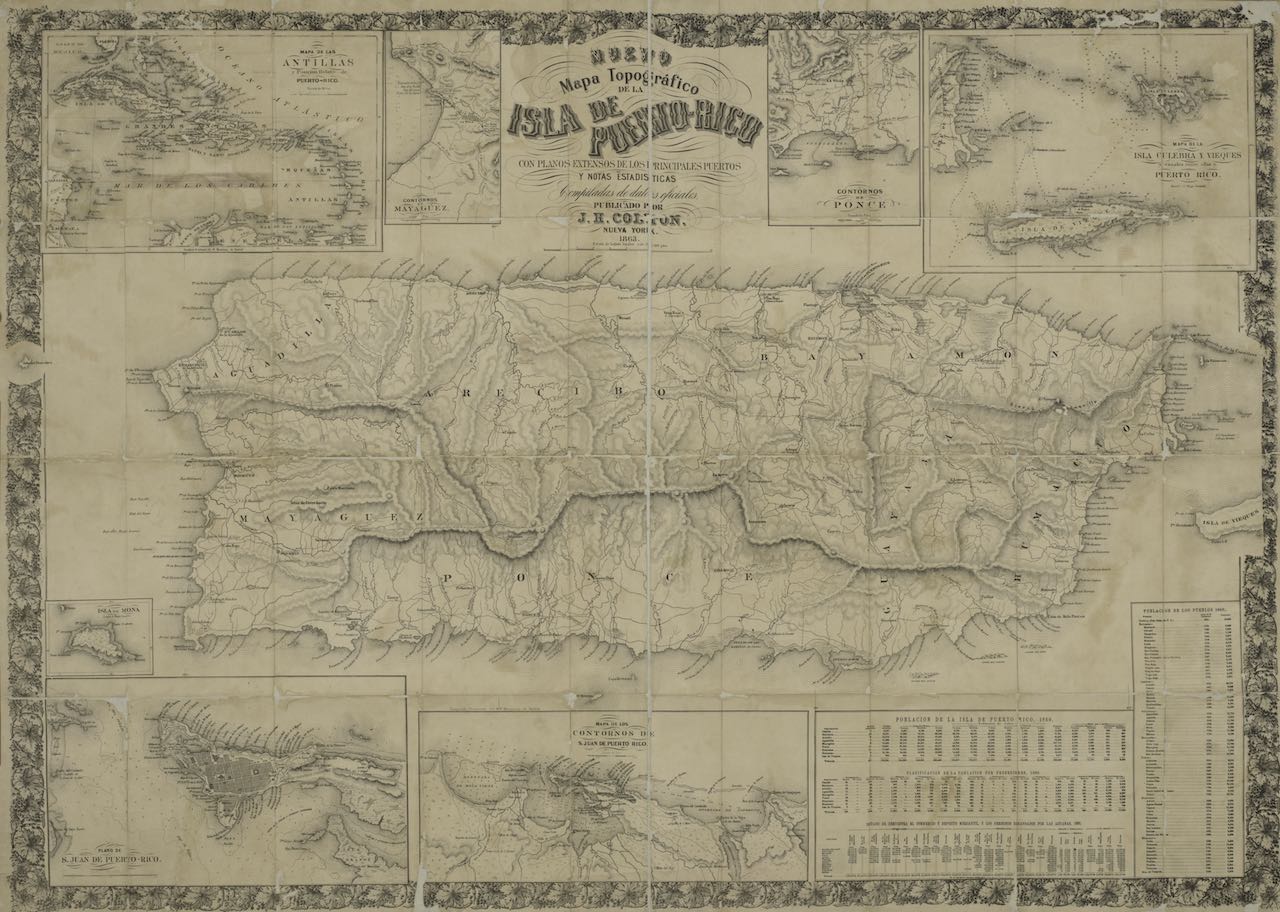
Map of 1863 Puerto Rico from New York Public Library.

75th Remembrance Poem

By Michel Steven Krug


Another night, so far beyond famished,
the stubby pencil rescued from gravel

sharpened by secret pebbles to
write about the ingredients of normalcy.

Ilona from Budapest narrates:

two cups of flour, 3/4 cup sugar,
an egg or two (depends on size),
a finger of baking powder,
touch of vanilla,
crushed sugar cubes,
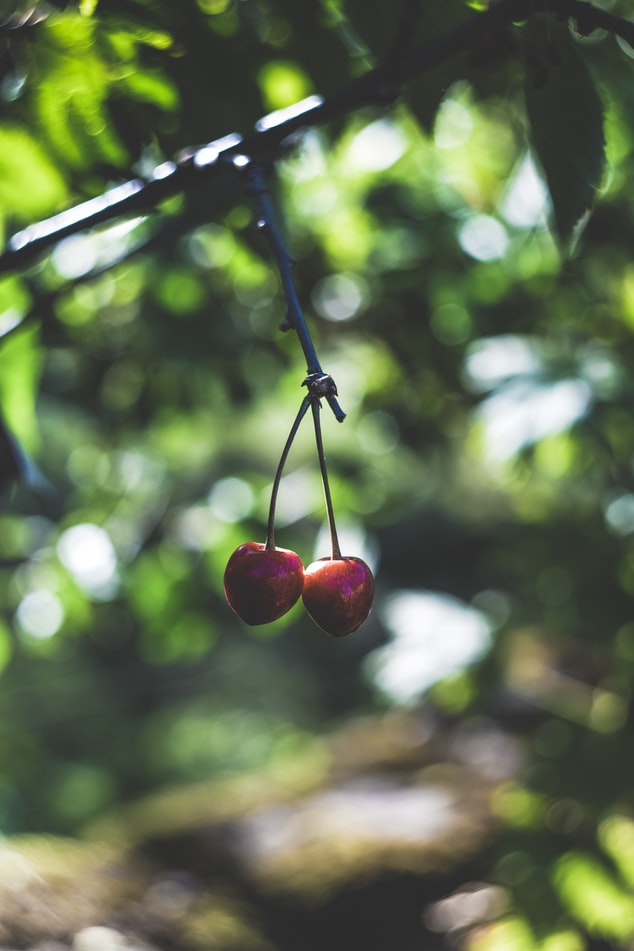
1/2 cup diced tart cherries.

The mind travels to a Shabbat dinner
leaving the nihilist barracks, taste of torts

and coffee displacing arid mouths
and acrid hope, imagination baking cakes of

liberation served at future tables
where the progeny is not just from two but of a

whole collection of souls deprived of morning.


A note from the poet: This 75th anniversary of the liberation of Auschwitz remembrance poem is inspired by uncountable sources, but most recently an article in the Minneapolis StarTribune.


I’m a Minneapolis poet, fiction writer, former print journalist, Johns Hopkins Writing Seminars graduate, and practicing lawyer. I’m also Senior Editor for Poets Reading the News (PRTN) literary magazine. My poems have appeared in Mizmor Anthology 2019, PRTN, Sheepshead, Ginosko, Door Is A Jar, Raven’s Perch, Tuck Magazine, Poetry24, 2 Elizabeths, Main Street Rag, the Brooklyn Review and others.

Photo by Markus Spiske on Unsplash.

my body, my choice

By Kitty Anarchy


jesus said?
jesus is dead.
jesus don’t
have what’s
between our legs

our cavities
ovaries
fallopian tubes
uterus
cervix

not just
vagina!

could you
even name
the parts
tucked deep
inside us?

jesus’
mary magdalene
history
erased

resurrected
in us
now who’s
two-faced

men
preach
and give mandates

not to have their
dicks altered
but to do things to us

because jesus said.
but jesus is dead.


Kitty Anarchy is an anarchafeminist, chicana womyn poet and short story writer. She has a background in social work, having earned her MSW from California State University, Long Beach, and listens to KPFK radio. She has seven cats, her favorite being ChiChi, and two dogs named Nibbit and Chato. She is published in Chiron Review, Rabid Oak Journal, Los Angeles Review, Ghost Town Literary Journal, and in anthologies through Arroyo Seco Press and Picture Show Press. Learn more at www.kittyanarchy.com.

“Maria Magdalene” by Jan van Scorel, 1530.

Eulogy for the Unfriended

By Jon Wesick


We gather to mourn the loss of
Alice stroking her brown-and-white Saint Bernard,
Barbara embracing her acoustic guitar,
Cheryl who tipsy on Chianti flirted with me
at Don’s going-away dinner,
Roberta who toured Chinese Zen temples,
Brad who worked nonviolence into his martial arts
when evicting drunks from a topless bar,
Jeff whose poems meander from sarcasm to irony and back,
Jerry the pot-smoking Vietnam vet always quick with a joke,
and Rob who volleyed batshit ideas with me on the improv stage.

Holding cognitive dissonance
in respect for nonconforming facts,
I’ve paused over the unfriend button for years but
what do I say to Harriet who wants me booted
out of the country for not praying to her god?

Scratch a profile picture. Get a noxious gas
of racist dog whistles and totalitarian sympathies –
praise for Joseph McCarthy’s blacklist, beating protestors,
and banning the press from exposing politicians’ deceit.

Skepticism turns on science and medicine
while leaving hype and spin unquestioned.
Deadly lies infiltrate like a puppy
with a suicide bomb. Measles and whooping cough
back in style. Bound feet, lead makeup, whalebone corsets.

Friendship wears a warning sign.
Trust, an electric fence.


Jon Wesick is a regional editor of the San Diego Poetry Annual. He’s published hundreds of poems and stories in journals such as the Atlanta Review, Berkeley Fiction Review, Metal Scratches, Pearl, Slipstream, Space and Time, Tales of the Talisman, and Zahir. The editors of Knot Magazine nominated his story “The Visitor” for a Pushcart Prize. His poem “Meditation Instruction” won the Editor’s Choice Award in the 2016 Spirit First Contest. Another poem “Bread and Circuses” won second place in the 2007 African American Writers and Artists Contest. “Richard Feynman’s Commute” shared third place in the 2017 Rhysling Award’s short poem category. Jon is the author of the poetry collection Words of Power, Dances of Freedom, several novels, and, most recently, the short-story collection The Alchemist’s Grandson Changes His Name. Learn more at http://jonwesick.com.


Playing Possum

By Phebe Jewell


Mama won’t let us leave the house, and MJ is furious.

After dinner we form a line at the kitchen sink, Mama on one end, up to her elbows in dishwater, MJ in the middle, rinsing each bowl and plate. I wait at the other end of the line, ready with a towel.

I’ve always been Mama’s favorite. I sit in the middle of the classroom and only speak when I’m called on. During parent-teacher conferences my teachers have nothing to say about me. Mama smiles at my neat homework, tells my teachers “Jackie’s my Mini-Me.”

MJ’s teachers complain about her asking too many questions and arguing with their answers. Whenever Mama and me watch America’s Got Talent we snuggle. “You’re my baby girl,” she says, smoothing loose hair from my forehead. She has no idea what goes on in my head.

MJ turns the faucet off. “Why can’t we go?”

Mama stops scrubbing, lifts her hands out of the water.

“How many times do I have to tell you,” she says in her you’re-on-my-last-nerve voice. “Don’t let anyone know your business. It’s not safe. Don’t let anyone know what you think. Or feel.”

She turns to face MJ, and continues, prodding her chest with one finger. “When you speak out of turn at school, on the bus, wherever, you’re playing with fire.”

MJ steps back, a wet spot dotting her tee shirt where Mama’s sharp nail poked her.

“But people are getting killed,” MJ whispers, like she’s asking a question.

“If nobody knows you’re there, they can’t get you.” Mama turns back to the sink, plunging her arms into the water.

MJ turns the water back on, rinses the silverware. She passes a handful of forks and knives to me, and I pretend to inspect the blade of a butter knife, raising an eyebrow. Our signal.

I dry the last pan and set it on the counter.

Mama presses my hand in hers. “You know what I mean, don’t you, Jackie? This is not the time to make waves.”

I nod because that’s what Mama wants. She’s sure I’ll go upstairs, wash my face and brush my teeth, say my prayers before slipping into bed.

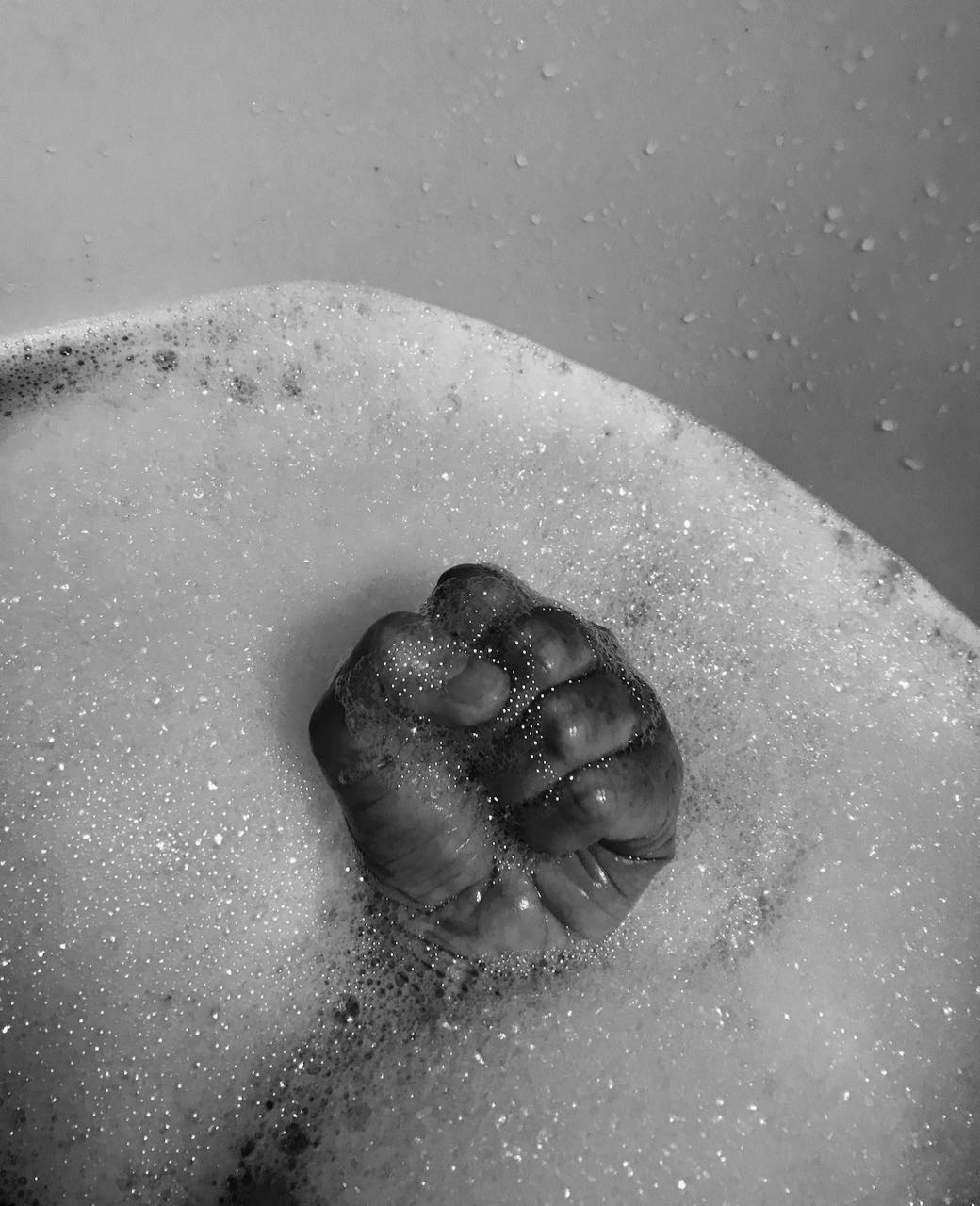
Later, when the house is dark and still, and MJ whispers, “It’s time,” I know Mama won’t be waiting to catch me sneaking out. She’d never dream I’d stand with MJ outside the police station, raising my fist.


Phebe Jewell’s recent flash appears or is forthcoming in XRAYLiterary HeistEllipsis ZineBad PonyCrack the Spine, and The Citron Review. A teacher at Seattle Central College, she also volunteers for the Freedom Education Project Puget Sound, a nonprofit providing college courses for women in prison. Read more of her work at PhebeJewellWrites.com.

Photo credit: Copyright © 2020 K-B Gressitt.

The Bean Peddlers

By Matthew Moniz

an ekphrasis of the Trumps’ Goya photos
after Gwendolyn Brooks

They count beans mostly, this vain green-eyed pair.
Ruling is a casual affair.
Stretched stares on stretched and creaking smiles,
Desks bare.

Two who are Mostly Vile.
Two who have wasted days,
But keep on wanting more
And wanting things their way.

And remembering…
Remembering, with hunger and hate,
As they pose over the beans in their white-
washed offices that
are full of iron collars and green pockets and
red hands,
red hats that say America was Great.


Matthew Moniz is a metaphysical anthropologist and incoming PhD student in poetry at the University of Southern Mississippi. Originally from the DC area, he holds a BA from Notre Dame and an MFA and MA from McNeese State University. Matt’s work has appeared in Crab Orchard Review and has been awarded the SCMLA Poetry Prize. He served as Poetry Editor of The McNeese Review’s 2020 issue and Poetry Panel Chair for SCMLA’s 2019 conference. He is left-handed, is allergic to cheese, and knows Adam West is the only good Batman.

Photo credit: Counse via a Creative Commons license.

Gurū Testimonial #1843

By Wendy Lee


“I hope you don’t make me regret finding you a job. Will is a good friend of mine,” Dad says.

“I’ll do the best I can,” I say.

“Are you still playing bass?”

“No, Mom threw it away.” Mom always said bass guitar was not ladylike. She didn’t like the thick, dark strings and the weight of it.

“Good. Your cover of ‘Stand by Me’ really sucked,” he says.

“It wasn’t my best work.”

“You really shouldn’t be thinking of anything but your job. Any pleasures or conceits you had before—gone. Don’t even try to relegate that to the five minutes you spend folding your towels. Understand?”

I nod.

“Are you sure? I don’t want to get any calls from Will about you. We go way back.”

I know that my father is right, but he is a hypocrite. He never folds any towels.

“You don’t need to worry. I’ll be the maven of estate planning. My modest sweater will shine as the noonday sun.”

“I’m glad to hear that. But for God’s sake, wear a jacket your first week. Will is an old-fashioned guy.”

I know I must seem sarcastic, but I really am grateful. I feel so lucky to have a job before I’ve even passed the bar exam. Will must have a lot of confidence in my dad.

•    •    •

What if I told you that you’re not the problem?

My eyes fill with tears, but not enough for Mom to notice.

“Skip the ad,” she growls.

“No!” I say.

It’s Roger Singh, the CEO of Gurū. He’s wearing a navy blazer and jeans and a sandalwood bead bracelet.

What if I told you that by reprogramming your subconscious and resonating with your ideal frequencies, you could say goodbye to loneliness, sexual repression, nostalgia, and lost productivity? In a recent study, Gurū was found to be more effective than medication at treating anxiety.

Mom yells at me in Korean, a language that I was taught to not understand. I pick up my laptop and carry it away, still watching.

Each day, we are surrounded by energy, from ourselves, from those around us, and our many handy devices. This can be a great thing, but it is also very confusing for our bodies. If you don’t have the right tools to ground yourself, you can easily get swept up in the chaos.

“That’s so true,” I say. “So many wavelengths, amplitudes.”

I started Gurū because I wanted to help people live up to their full potential. Gurū combines cutting-edge technology and exciting new breakthroughs in neuroscience to help you do just that.

It’s Jeanette from Tempe, Arizona. She has a golden retriever and works in an office.

Ever since I started using Gurū, I’ve been able to think so much clearer. For years, I thought, oh, I can’t afford to go back to school. I can’t pay off my house, I can’t do this, I can’t do that. But after a few weeks of wearing Gurū, working through the positive affirmations on the app, I ran the numbers again and realized I could do it. Now, I’m working part-time and studying to become a physical therapist. It’s always been my dream to help people achieve mobility, and now I’m right where I need to be.

“It’s always been my dream to help people too,” I say.

I look up the price of Gurū. It’s only $999.00. And it comes in three different colors.

•    •    •

“It’s always just one thing or another with you, isn’t it?”

Dad is super mad. My eyes fill, lungs ache and quake.

“I know I’ve been a failure. I know I have an unfortunate personality and an unremarkable GPA. I’m the blank sheet, the model minority misfire. But I can make all of that go away.”

“A shitty little pulsating headband is going to change the whole trajectory of your life?”

“The device only takes eight hours to sync.”

“Fucking millennials.”

“I’m Gen Z.”

“Makes no difference.”

“Just give me your credit card, and you’ll see. Tomorrow, I’ll be like the sun. Just the right amount of happy for ho hum.”

“Is she still bitching about Hulu?” asks Mom.

“It’s Gurū.”

“I think it’s a gimmick,” says Dad.

“You always spend your money on me just the way you like. But what if you’re wrong? Look, I told you I didn’t need golf lessons. I tried to tell you in a nice way that no one likes us because they think you’re just a couple nouveau riche assholes. And I was right! I didn’t need golf lessons.”

“She’s got a point there,” says Dad.

“If we get you this toy, will you be happy forever and try to look good with the new mid-century modern aesthetic around here?” asks Mom.

“Yes!”

“And make partner by twenty-six?” asks Dad.

“My very synapses shall echo with virtue and honor and praise,” I say.

“We should get her Hulu,” says Mom. “She is our daughter, after all.”.

•    •    •

I have read the Amazon reviews, and I believe I have a more sober (haha) view of things now. Gurū is not safe with certain medications. One reviewer reports that a glass of wine is fine, but you’ll hardly enjoy it because your brain chemistry will be so different. I already don’t like most things anymore, so maybe it’ll work out well for me.

One thing that makes me sad is the thought of Michael Stipe not visiting me in my dreams anymore. Maybe I’ll become so present and leaning in that I’ll never think of any of that ever again.

“I won’t let you be a humanoid-android. You can’t just stop being Jenny,” says Tyrell.

“Easy for you to say. Everybody loves Tyrell. No one loves Jenny. No one ever wants to play with Jenny.”

“I want to play with Jenny.”

I hold his hand, and he holds the shopping basket.

“So, it’s arriving tomorrow?” he asks.

“By eight a.m.”

“Shit.”

“You know, supermarkets make me anxious, but ethnic supermarkets, less so.”

“You’re cute when you’re cagey,” he says, meeting my gaze as we stroll through the rice aisle.

“Shut up and shop.”

“What’s this drink we’re looking for?”

“I’ll know it when I see it. It’s wanderlust in a plastic bottle.”

We linger at the refrigerated shelves.

“Here it is. The nectar of my fatherland,” I say.

He reads the label.

“Looks like some kind of persimmon juice.”

We take it to the car. I show Tyrell the super cool foreign packaging. The cap twists off in a slow, satisfying way. He takes a swig and makes a face.

“This isn’t right,” he says.

“You don’t like it?”

“This is no way to celebrate your last night as a real girl.”

“Well, that’s just it. That’s the point. I don’t know how it is that people handle these things. That’s where Gurū comes in.”

Tyrell sighs and gives me the Korean soft drink.

“I know you don’t understand. If I were you, I’d romanticize my disease too,” I say.

“You don’t have any disease.”

“How do you know? You don’t see what they see. I am the blank screen of fear. Behind the screen I’m dark, caving in, too yin. Upon me, they can project whatever they want.”

“They can go to hell.”

“It’s different with you, Tyrell. With you, I can eject. I don’t need to deflect.” How we did intersect.

I close my eyes to laugh, and when I open them, he’s not there anymore.

•    •    •

Today, I made a joke at work, and Will laughed. I said, “Well that’s another thing they don’t teach you in law school.” Gurū is really helping me discover my sense of humor in a healthy and work-safe way. I think my six-month review is going to bring to light a lot of things I can improve on. I am still only a human, after all.

I don’t think of Tyrell much anymore. We’re both very busy, and I know it’s better this way.

Sometimes, I like to walk outside, under a canopy of oak trees. I like the parable of the grape ivy. It just expands everywhere, takes in light and sucks up CO2. I suppose it does remind me of the album cover of Murmur, but I don’t have those dreams where I ask Michael Stipe questions anymore.

I do have to take Gurū off every few days to clean it. I also have to wash my hair without Gurū. They’re working on a water-proof model, but that won’t come out until Fall 2020.

“No one’s going to finance your bullshit, lingering over café au lait and Apple News like a bum.”

I know the voices aren’t real, and I try to breathe deeply. But they won’t stop.

“Did you ever have any childhood trauma related to carnivals?”

Michael Stipe looks at me like I’m a moron. I hear the water running and feel the cold of the tile running up my hands, but I can’t stand and can’t stop crying. Greg was rude to me today. Real abrasive when he said, “Maybe after lunch.” But I shouldn’t have bothered him because I knew he was preparing for the conference call. Dumb, inconsiderate bitch.

I want to scream. I want to scrape off all my zits. Withdraw my application from the California State Bar. I wish I could call Tyrell, but I deleted his number already.

I grab the little handle of the cabinet under my sink. There’s Clorox behind there. I can hardly see through the water and I know my face is folded up. I want to rip the nub off the cabinet. I want to rip myself apart, piece by piece.

Mom runs in.

“Come on. It’s not so bad. Stop crying, Jenny.” She has her arms around me. I have my arms around my dumbass ribs, squeezing my lungs out. She lets go and places the cool crown of plastic rationality on my head.

These incidents usually last about half an hour. We in the Gurū community affectionately call it “withdrawal.” It’s harmless, really. Some users report that they can significantly reduce the duration and intensity of these episodes by adjusting down “lucidity” under the Delta Dreams tab on the Gurū app. That’s not something that works for me personally, but I do take a little CBD oil before bathing.

I’m usually not one to review products, but I would totally do a testimonial for Gurū. I just want everyone to know that recovery is possible. I’ve been sober for two months now. I’m great at my job and my dad finally loves me. The pH of my urine is 7.3. My life is finally worthwhile, and it’s all thanks to Gurū.


Wendy Lee lives in San Diego, California. She is an attorney by trade, dabbles in  beading, and is an aspiring curator of clichés.

Photo by Maximalfocus on Unsplash.

Boilermaker

By Kari Gunter-Seymour


In January Australia caught on fire. Was that fire put out?
Who knows because America decided to play Russian roulette with Iran, then
Prince Harry & Megan flipped off the Royal Family shortly before 45’s
impeachment debacle, John Bolton trading his testimony for a book deal
& just as Corona Virus began to whisper its ugly name the U.K. stepped out
of the European Union. Somehow, in spite of himself & his sleezy
law team, Harvey Weinstein was found guilty & wonks & dweebs
started asking if Corona  beer was safe to drink & everyone on Facebook
became a flu expert or zealot.

In a shocking Hail Mary before Super Tuesday,
Buttigieg & Klobuchar decided to pass, then Warren accepted the inevitable
& Sanders did a jig, but the flip-flopper poles gave Bernie no choice
but to leave it to Biden, fence-straddling in his basement,
Viva la Revolución! via Zoom. Italy shut its whole self down & pandemic
became a scary word but not a motivator until the DOW took a dump
& then even the wealthy were washing their hands. NYC became Zombieland
just as it dawned on us there were no face masks, ventilators, or toilet paper,
then the Pentagon released videos of UFOs & has anyone seen Kim Jong-Un?

With predictions of murder hornets & millions of deaths,
we locked down & model citizens rebelled, middle fingers at full salute,
plus camo & AR-15s.  Sports events were cancelled & Koby Bryant flew
forever into the mountains & one sleepy, dusty, Minneapolis afternoon
a police officer kneeled a man to death, smug as any school yard bully,
yes, I said it & the new word was protest, all colors marching incognito
behind totally hip masks & the president made arrangements to gas
a peaceful gathering for a photo op.

Somewhere in the ruckus, a giant asteroid
narrowly missed earth & a troop of monkeys in India snatched Corona Virus
blood samples as if they were Bertie Botts Every Flavor Bean Candy & what
the hell with the trans hate J.K. Rowling? Suddenly not wearing masks
&/or protecting certain statues became a God-given right to the same clan
who think Gone With the Wind is fiction.

Meanwhile, the Congo’s worst-ever Ebola outbreak is over & I
personally am like, There was an Ebola outbreak? & a strange radio signal
is being broadcast from somewhere in the universe & I’m almost certain
James T. Kirk or Mr. Spock already took care of this back in December 1979.
To prove a point & wrack up points with the Prez, Florida was like, Hold my beer,
opened beaches & bars, made it all the way to number one on the virus hot spot map
& that self-same Prez picks the middle of a pandemic to urge the Supreme Court
to strike down Obama Care.

It’s only July & if this is not enough for you rough & rowdies,
a massive dust cloud came straight at us from the Sahara & Iran just issued an arrest
warrant for “Mr. Trump” & do you know, people in America can actually buy beer
that is purposely mixed with fruit-flavored seltzer? I will warn you straight up,
if you drop a shot glass full of whiskey into one of those carbonated beasts, you better
be ready for more than a boil-up.


Kari Gunter-Seymour’s current collection is titled A Place So Deep Inside America It Can’t Be Seen (Sheila-Na-Gig Editions 2020). Her poems appear in numerous journals and publications including Rattle, Crab Orchard Review, StillThe LA Times and on her website at www.karigunterseymourpoet.com. She is the founder and executive director of the Women of Appalachia Project, at www.womenofappalachia.com, and editor of the project’s anthology series, Women Speak, volumes 1-5. She is a retired instructor in the E.W. Scripps School of Journalism at Ohio University, the 2020 Ohio Poet of the Year, and Poet Laureate of Ohio.

Photo credit: Copyright © 2020 K-B Gressitt.

New Print Anthology: Yea or Nay?

Create your own user feedback survey

Tail of Masculinity

By Ben P. Effiòng


I was born into a society
Defined by fraternities
In a hospital ward decorated with partiality
My birth, celebrated like African obesity
This was the privilege attached to my sexuality
I was born a male, with the tail of masculinity

Birthed into this artificiality
Characteristic of ma/pa-triarchy
I sat on the throne of gender roles
Nodding to the rhythm of privilege carols
Sowing seeds of sexism without parole
While getting used by the “second sex” I tagged as whores

I was born into a fraternity
Malignant to femininity
Where being a “man” meant wearing the identity
And non-membership equated with docility
Where ability was defined by “controlling” your family
And the symbol of manhood entrenched in brutality

I was born into patriarchy
The shameless face of matriarchy
That demonizes “courtesy” as a weakness
And being unmarried by women a sickness

I was born a male, with the tail of masculinity
But, I’ll die a rebel, with tales of equality.


Ben P. Effiòng is a philosopher, award-winning poet, and a debater whose articles and poetry have been published in both national and international newspapers and anthologies. Ben believes in using the power of creative expression to create social change. Follow him on Twitter @Benblag.

Photo by Crawford Jolly on Unsplash.

woman king

By Emily Mardelle


I cut my hair off because my father would slide

his hands over my stomach and tell me how fat I was getting

and I

I think sometimes I want to make a woman king

so the moon can finally avenge the girls in the nighttime

imagine her thick hair long and her breasts full

and free


Emily Mardelle is an emerging writer whose essay “The Monster in My Corner” was published by the online magazine Sweatpants & Coffee in April 2019. She previously worked as a blogger for Arizona’s Superstition Review, where she was a liaison between national writers and the magazine. She graduated from Arizona State University in the spring of 2020 with a degree in English Literature and a minor in Sociology. Emily’s work draws from her experiences with PTSD, bisexuality, and womanhood. She currently resides in Phoenix, Arizona. Follow her on Instagram @emilymardelle and Twitter @emmardell.

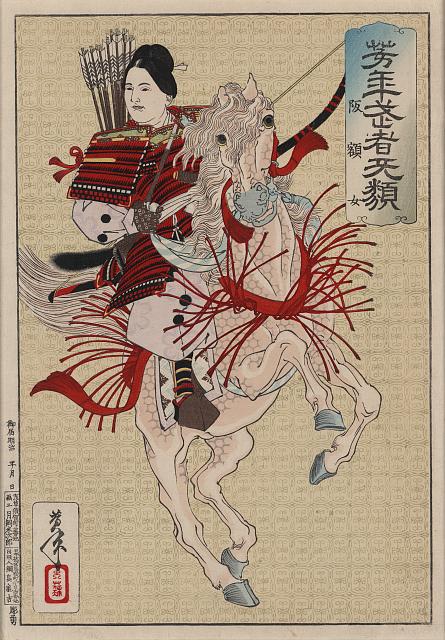
Hangakujo, female samurai, from the U.S. Library of Congress.

My Last Teacher Said My Thesis Doesn’t Have to Be a Sentence

By Yennie Cheung


Bullshit.

I call bullshit. It is bullshit that your last teacher ever said this, and bullshit that you think I’d ever believe that anyone who has ever assigned an essay in the history of essay-assigning would say that a thesis statement can be anything but a sentence. One sentence. Not a paragraph. Not a dependent clause. Not some miasma of an idea drifting in the negative space between words like participial fairy dust. It is a sentence—the single most important sentence of your entire paper.

I have said this to your class thirty-six times in the last two weeks.

So, of course, you chose to wait until half an hour before your paper is due, interrupting my sad sack of a sack lunch, to ask for help writing your introduction—an introduction you should’ve completed last Friday, when your paper was originally due. But instead of turning it in, you asked for an extension and went to an away game with the frosh football team. And you couldn’t even play. Because you forgot your uniform. In my classroom. Last Tuesday.

I think we can agree, Jimmy, that that is some bullshit.

And I know it’s blowing your mind that your English teacher just said the word “bullshit” to you. I’m not supposed to say things like that, which is weird because I’ve heard the football coach call you a crusty bitchzipper and make you do burpees until you puke, and everyone’s cool with that. But my calling you out on your bovine diarrhea means you’ll go whining to the principal, who will drag me into his office to mansplain the various ways I could’ve deescalated this situation so that he won’t have to hear your parents scream viler obscenities at him over the phone. This whole conversation will be brought up in my performance review, which will cost me my shot at tenure, and then I’ll be fired—all because you had the audacity to blame your previous teacher for your refusal to follow directions.

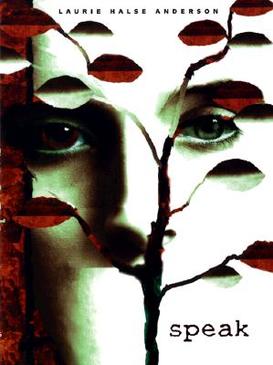
And do you know who’ll be extra happy to see me go? Richard Scroggins from the school board. See, last year Dick Scroggins tried to ban a book on the core curriculum about high school bullying and rape—a book so moving, it makes even frosh football players cry. Yes, Jimmy, I did see you wipe away tears when we finished the book two weeks ago. And no, you shouldn’t be embarrassed by that. It is dreadful, the way those students ostracize the main character. It’s unconscionable what that boy does to her when she’s alone and vulnerable.

So I know you’ll agree that Dick Scroggins was bat guano crazy when he claimed that the mention of rape in the book is tantamount to child pornography. That’s right: He called the book porn. Now imagine the exquisite shade of bruised plum he became when I suggested in front of the entire school board that he must be one kinky, depraved bastard to equate the assault of a teenage girl to sexual entertainment.

Jimmy, I know that you know better than that sanctimonious blowhard. You understand this beautiful, heartbreaking, not-at-all-pornographic book because, unlike Dick, you’ve read it. You’ve been changed by it. I see it in the way you look at your classmates now, wondering who else might be hurting. I see it in the way you glared at your teammate when he cracked that sexist joke in class, just hours before you “accidentally” clotheslined him during football practice.

But you can’t take them all down on the field. That’s why I assigned you an essay on the book. That’s why I’ve explained thirty-six times in the last two weeks how to form an argument with evidence and logic, not hearsay and excuses. This is why I’ve pushed you to put one solid, solitary thesis sentence in your introduction so people can easily locate your main idea and believe you when you tell them that being devastated for a fourteen-year-old rape victim is not sexually titillating. Because if I get fired, Jimmy, I’m not going to be here to defend the books you don’t yet know you love. I’ll need you to do it for me. I’ll need you to not be a goddamn Dick.


Yennie Cheung is the co-author of DTLA/37: Downtown Los Angeles in Thirty-seven Stories. She holds an MFA in Creative Writing from UC Riverside-Palm Desert, and her work has been published in such places as The Los Angeles Times, Word Riot, Angels Flight • Literary West, The Best Small Fictions 2015, and The Rattling Wall anthology Only Light Can Do That. She lives in Los Angeles.

Cover art of multiple award-winning novel Speak by Laurie Halse Anderson.

Lamar Speaks for Lots and Lots of Us

By Philip Styrt


We know that the President lied
As he tried to corrupt the election;
Still, we’ll “let the people decide.”1

Whether he should be disqualified;
But for now we’ll provide our protection.
We know that the President lied,

Though we think it should be classified,
And we’ll try to deny the connection:
Still, we’ll “let the people decide.”

If we don’t shove impeachment aside
We might risk loyal voters’ defection.
We know that the President lied

Now we choose to let lies be our guide,
Blaming others for his through projection:
Still, we’ll “let the people decide.”

Even though by the logic implied
His defense is a huge misdirection:
We know that the President lied;
Still, we’ll “let the people decide.”


Philip Styrt is an assistant professor of English at St. Ambrose University in Davenport, IA. His creative and critical work focuses on traditional forms of poetry and drama. You can find more of his work, primarily focused on sonnets, at 140syllables.blogspot.com.

[1] https://www.alexander.senate.gov/public/index.cfm/2020/1/alexander-statement-on-impeachment-witness-vote

Photo credit: Tom Hilton via a Creative Commons license.

No Vacancy

By Elizabeth Shack


The hermit crab outgrows his shell
and ranges across the ocean floor
searching for a better home
so he can grow a little more.

Imagine the crabby billionaire
hoarding the best and biggest shells
while other crabs roam, all exposed
without secure, protected cells.

One crab has an enormous home;
the less fortunate are easy prey.
With the rich crab’s extra shells,
will he build a wall to keep fish away?


Elizabeth Shack lives, writes, and follows the news in central Illinois. Her fiction has appeared in various magazines and anthologies. Visit her site at elizabethshack.com.

Photo by Paul Needham via Snopes.com.

Air Floyd: A Ritardando*

(AKA “It’s Gotta Be The Shoes…”)


By Hakim Bellamy


George Floyd.

The latest in a long
noose of names
to die in the street.

At the hands
and feet
of police.

Public asphyxiation
is nothing new,
but it has always drawn a crowd
even on Sundays down South.

However,
he still couldn’t get a witness,
just an autopsy,
“on the house.”

A hundred years later,
same result.

His last meal,
all asphalt
no air.

His last song,
the ritardando of his pulse.

The last thing he ever saw,
a montage of his 46 years on this planet,
feels just like a flash.

Including unequivocal evidence that when it plays,
it never starts at the beginning,
it always starts at the end

and plays backwards.

Why else would he cry for his mama
How else would we find him lifeless,
in a fetal position?

In these Black-ass streets,
wide berths built for a steady stream of hearses,
we have no choice but to keep it real,
because we aren’t afforded the privilege of rehearsals.

The stakes is high,
but for everyone else out here mistakes are fine.
And for the cops
mistakes are …

a fine.

It’s no place to die,
but if you drop to your knees.
Get on the ground.
Get in the ground.

Lay

face down, hands up,
chest to cement
and inhale,

you can still smell the wildest dreams
of little Black boys and their burnt rubber soles
begging Mom and Dad
for sneakers

that could fly.

And if you lie there      long enough
you can still hear their laughter

too.


*Ritardando (or rit.) in music, a gradual decrease in tempo.


Before being tapped by Albuquerque Mayor Keller to serve as the Deputy Director of the Cultural Services Department, Hakim Bellamy was the Inaugural Poet Laureate for the City of Albuquerque (2012-2014). Bellamy is a W. K. Kellogg Foundation Community Leadership Network Fellow, a Kennedy Center Citizen Artist Fellow, an Academy for the Love of Learning Leonard Bernstein Fellow, Western States Arts Alliance Launchpad Fellow, Santa Fe Arts Institute Food Justice Fellow, New Mexico Strategic Leadership Institute alum, and a Citizen University Civic Seminary Fellow. In 2012. he published his first collection of poetry, SWEAR (West End Press/University of New Mexico Press), and it landed him the Working Class Studies Tillie Olsen Award for Literature in 2012. With an M.A. in Communications from the University of New Mexico (UNM), Bellamy has held adjunct faculty positions at UNM and the Institute of American Indian Arts. Bellamy has shared his work in at least five countries and continues to use his art to change his communities.

Photo credit: Tiger500 via a Creative Commons license.

Winter of Needle and Thread

By Caroline Bock

Dedicated to Grace Cavalieri


Nana makes you learn needle and thread and you stick your fingers—and blood—“Don’t bleed on the cloth,” she says. In your hands is a scrap, an addition to the family’s patchwork quilt. “Stitch. Even stitches,” she insists. A bulb of red appears as you pull the needle through your skin, and more blood, and she hits you with her boot on the side of your head, and you bend and stitch. Blood drips on the ice-hard ground, and you stitch. The sliver of a needle slides in and out, next to your bone, and you flinch. She hits you with her boot, and you stitch. Lift the thread through the heterodox cloth. Thread it through your skin and bone. Stitch the batting and backing; sew, swiftly. The needle pricks the cloth as if connected to a machine, not your throbbing fingers. “Faster, snow is in the forecast,“ she says. She has plied this trade since coming to this country from Sicily. She survived because of the needle and thread, a seamstress since age thirteen. We sit outside on wrought-iron garden chairs because the razor-thin air is good for our lungs, hers being very old and yours being only ten years old. You have no able mother, and your Pop has given you to Nana’s care. Her breath is smoked with black licorice cough drops. Her teeth are false, ruined over the years (“Use a scissors, not your teeth, or you’ll find yourself as toothless as me, a strega too, a witch.”). Her hair, once the same chestnut as yours, now frizzes coarsely metallic. “Come, closer to me,” she says, picking at the cloth, “let me see.” The seams are straight and neat enough, though she gives a bitter smile of superiority; her stitches would be straighter and neater. She is making you learn because you insisted you would never learn. You will have no soup, no warmth, until you finish. Some people, you will discover, will think they know what it is you need to know. They will know nothing about you—only that they see themselves in you. “You were born to needle and thread like me,” she says, distracted by the crows cutting across the twilight, and you stitch. And stitch. Stitch. You sew her into the quilt, and then, to her outrage, snip yourself free of the thread with your pair of scissors. You skip over the fence and, transformed, you fly off into the wintery candor of moon and crows. The promised snow falls, frozen spikes, erratic needlework, and you look back: the ice sews a final lattice around her. The other crows pluck out her eyes. And after all, the story should be that you take up the needle and thread, but you never do. You never bend your head over handiwork again. You have left buttons dangling and hems too long. Birthrights are often forsaken, and the needle and thread is yours. No one knows you as well as you know yourself. She might have shouted at you to return, to rip out seams, to incant forgiveness, but you are long gone, soaring on the snow-crisp winds toward southern skies.


Caroline Bock’s debut short story collection, Carry Her Home, is the winner of the 2018 Fiction Award from the Washington Writers’ Publishing House. Bock is also the author of the young adult novels Lie and Before My Eyes, from St. Martin’s Press. In 2018, the Arts and Humanities Council of Montgomery County awarded her an Artists & Scholars grant for her novel-in-progress. She is a lecturer at Marymount University and leads creative writing workshops at the Writer’s Center in Bethesda and at Politics & Prose in Washington, DC. Learn more about Caroline at www.carolinebockauthor.com and follow her on Twitter @cabockwrites, Facebook @CarolineBockAuthor, and Instagram @CarolineBockAuthor.

Photo by Casey Horner on Unsplash.

Ghosts in the Eucalyptus Grove

By Julie Martin

Ending with a line from Brooke Jarvis


Footsteps churn
sassafras, mud, and fern leaves
into confetti in a continual cycle–
germinate, thrive, die, decay, give way to new life.

The hollowed log of a King Billy pine
garlanded with moss and mist serves as a lair
for the transverse stripes that radiate
in shadows.

Eyes gleam in the dark
on the threshold between dead and undead,
present and absent,
remembered and forgotten.

Every crack of a twig
is ripe with potential
for a glimpse
of Thylacine–

Amalgamation of a creature:
head of a wolf, hindquarters striped like a tiger,
long thick tail of a kangaroo,
the size of a Labrador retriever.

More commonly known as the Tasmanian Tiger.
The last known specimen
died in a zoo in 1936.
And yet of all the world’s officially extinct species,

Thylacine has the highest number of supposed
post-extinction sightings.
“Is it more foolish to chase a figment
or assume that our planet has no secrets left?”


A poet and a public school teacher, Julie Martin lives in Saint Paul, Minnesota with her husband, sons and dogs. Her poetry has appeared in several online journals, most recently Thimble Literary Magazine, Gravitas, Pasque Petals, Dreamers Creative Writing, Tiny Seed Journal and Tiger Moth Review. She was the 2018 first place winner of South Dakota State Poetry Contest, in the landscape division.

Photo credit: Young, male thylacine at Beaumaris Zoo, about 1936, National Museum of Australia.

the heart of the matter

By Yvonne G Patterson


eldritch energies twist and warp
the skin of space, bend time, weave
shields of plaited light, cloak the heart

bodies orbit, surfing unleashed power’s vortex
grasp at coloured baubles glittering
in furnaces fuelled by matter’s dying screams

dark theatres host phantasmic pageants
vast auroras writhe upon the stage
magicians’ spectral hands seduce

sensory feasts fuel ferocious appetites
chimera’s cosmic heroin addicts

gravitational force accelerates
the heart’s event horizon looms
Faustian bargains sink their teeth

conscience battles rage
locate the will to exit, or
satiate the lust for full immersion

through the looking glass where

life travels forever into stasis, embalmed
in adamantine quicksand, decaying time
endless iteration

a flaw interred inside a diamond
a breath exiled inside obsidian
glacial involution, a collapsing star

free falling in the heart of the black
the singularity where time hibernates

where even coldness hides
shuts its eyes, shudders
deep inside the caverns of that void

in the stasis of the heart

does self awareness flicker
feel the slightest flare of shame, contrition
seek absolution from the choice?

the choice

at the heart of the matter


Yvonne Patterson lives in Perth, WA, Australia, with her wife and has a career background in human services clinical psychology and state-wide human services policy in mental health, disability, community, and justice services. Her poetry reflects themes of social justice, equality, and environmental issues. She received a commendation in the Australian 2018 Tom Collins National Poetry Prize.

Photo credit: Andrea Della Adriano via a Creative Commons license.

Introducing a New Writers Resist Editor

We’re delighted to announce a new addition to our editorial team, Debbie Hall, who’ll be joining Ying Wu in reviewing poetry submissions.

Debbie is a psychologist and writer whose poetry has appeared in a number of literary journals and anthologies, including the San Diego Poetry Annual, Serving House Journal, Sixfold, Poets Reading the News, Poetry24, Bird’s Thumb, Califragile, Gyroscope Review, and Hawaii Pacific Review. Her essays have appeared on NPR’s This I Believe series, in USD Magazine, and in the San Diego Union Tribune. She completed her MFA in 2017 at Pacific University in Forest Grove, Oregon.
Debbie received an honorable mention in the 2016 Steve Kowit Poetry Prize and won second place in the 2018 Poetry Super Highway contest. She is the author of the poetry collection, What Light I Have (Main Street Rag Books, 2018), a finalist in the 2019 San Diego Book Awards, and an award-winning chapbook, Falling Into the River (The Poetry Box, 2020).

In addition to writing, Debbie’s passions include photography and world travel. She and her partner, both native Southern Californians, live in north San Diego County.

Enjoy this poem by Debbie. …

Against Doom

Corona I’m not going
to write about you
or read or think
about you
any longer today
I want a divorce
from you.
To not think about
you I will take a drive
to mail one small envelope
that is not urgent
not touching the mailbox
or getting out of my car
enjoying scenery
on the way and back
sights that are well known
to me and usually fairly
boring but suddenly
are bright and compelling.
For lunch a comfort
dose of peanut butter
seems necessary
and instead of thinking
about you I am
contemplating the wind
and orioles fighting
over grape jelly
in the feeder.
Then it is time
to brew tea—
Earl Grey with its
floral notes and
while I drink it
I do not consider
the loss of taste
and smell some people
infected by you
have reported.
Once I have written
this poem that is not
about you I will watch
the evening news
but avert my eyes
& mute the sound
when the topic
of you comes up
and sip my gin martini
with its delightful scent
of juniper berry.
When I go to sleep
tonight after
not thinking about
the vast unknown
hampering science
right now in its
fight against you
and your ilk
I will dream of sailing
far out to sea
where you are but
a faint apparition
on a distant shore—
soon to be disappeared
by the morning tide.


Oh, brother, where art thou?

By Kathleen Hellen

“You never really get the smell of burning flesh out of your nose entirely.”
J.D. Salinger

I’d thought that you’d do better than a sidekick, thought that you’d articulate—knowing,
as you must, about the stink they left behind, the helicopters lifting from the ruins in Saigon.

Of course, I smelled it as a kid—a whiff—when boys who lived in trailers—their fathers pulling double-shifts, drunk on sulfur stink, spoiling for a fight, raising fists—shouted Japgo back!
picked me up and threw me down a hill. They spit on my mother.

I smelled it when the mills laid off. Again, the odor. They murdered Vincent Chin.
Again the hint—like chlorine burning in the failed reactor:
ching chong ling long ting tong. It smelled like girls I knew in college.
A strange perfume, as if they’d lit the storefronts, piled up bodies (murders, exonerations).

And then I saw you in the clip, aiding and abetting. You turned your back on witness, like Frankl said. Only those most brutal, those who’d lost all scruples, were self-selected in the camps.
The well-fed, red-cheeked guards who ushered others to the crematoria.

I suppose that in this game of self-selection there are always those
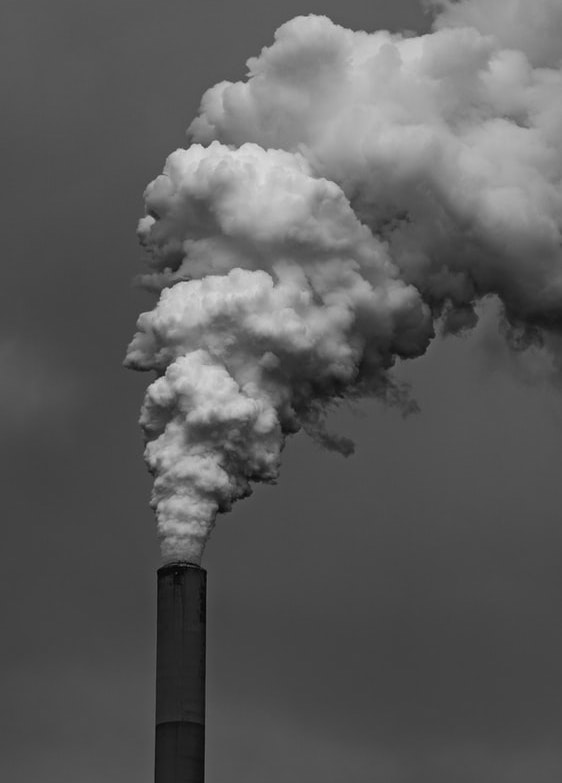
marched off to smokestacks, and those who choose instead to pinch their noses.


Kathleen Hellen is the author of The Only Country was the Color of My Skin, Umberto’s Night, winner of the Washington Writers’ Publishing House prize, and two chapbooks, The Girl Who Loved Mothra and Pentimento. Featured on Poetry Daily and Verse Daily, her work has won the Thomas Merton poetry prize and prizes from the H.O.W. Journal and Washington Square Review. Her poems have appeared in American Letters and Commentary, Barrow Street, Cimarron Review, Colorado Review, Diode Poetry Journal, jubilat, The Massachusetts Review, New American Writing, New Letters, North American Review, Poetry East, and West Branch, among others. For more on Kathleen, visit kathleenhellen.com.

Photo by Mike Marrah on Unsplash.