Author: Editor
Tail of Masculinity
By Ben P. Effiòng
I was born into a society
Defined by fraternities
In a hospital ward decorated with partiality
My birth, celebrated like African obesity
This was the privilege attached to my sexuality
I was born a male, with the tail of masculinity
Birthed into this artificiality
Characteristic of ma/pa-triarchy
I sat on the throne of gender roles
Nodding to the rhythm of privilege carols
Sowing seeds of sexism without parole
While getting used by the “second sex” I tagged as whores
I was born into a fraternity
Malignant to femininity
Where being a “man” meant wearing the identity
And non-membership equated with docility
Where ability was defined by “controlling” your family
And the symbol of manhood entrenched in brutality
I was born into patriarchy
The shameless face of matriarchy
That demonizes “courtesy” as a weakness
And being unmarried by women a sickness
I was born a male, with the tail of masculinity
But, I’ll die a rebel, with tales of equality.
Ben P. Effiòng is a philosopher, award-winning poet, and a debater whose articles and poetry have been published in both national and international newspapers and anthologies. Ben believes in using the power of creative expression to create social change. Follow him on Twitter @Benblag.
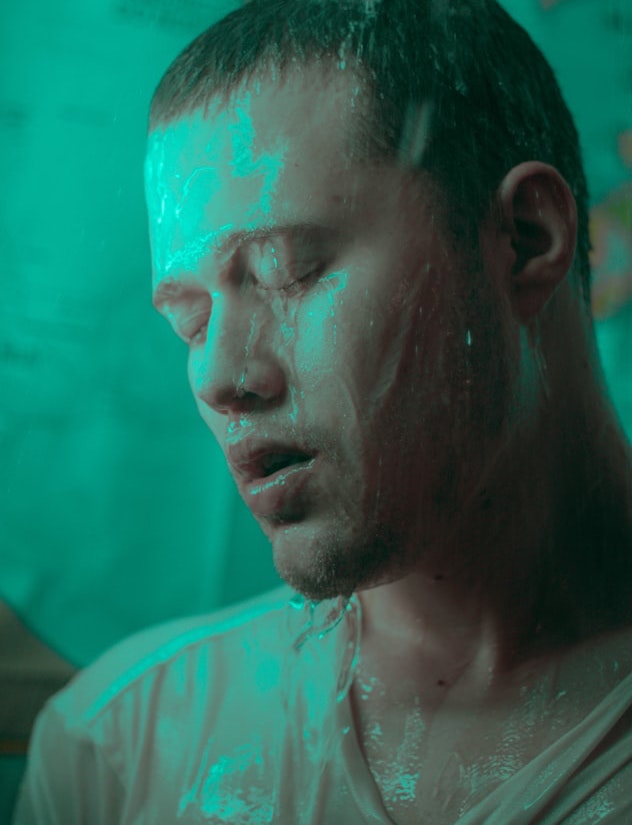
Photo by Crawford Jolly on Unsplash.
woman king
By Emily Mardelle
I cut my hair off because my father would slide
his hands over my stomach and tell me how fat I was getting
and I
I think sometimes I want to make a woman king
so the moon can finally avenge the girls in the nighttime
imagine her thick hair long and her breasts full
and free
Emily Mardelle is an emerging writer whose essay “The Monster in My Corner” was published by the online magazine Sweatpants & Coffee in April 2019. She previously worked as a blogger for Arizona’s Superstition Review, where she was a liaison between national writers and the magazine. She graduated from Arizona State University in the spring of 2020 with a degree in English Literature and a minor in Sociology. Emily’s work draws from her experiences with PTSD, bisexuality, and womanhood. She currently resides in Phoenix, Arizona. Follow her on Instagram @emilymardelle and Twitter @emmardell.
Hangakujo, female samurai, from the U.S. Library of Congress.
My Last Teacher Said My Thesis Doesn’t Have to Be a Sentence
By Yennie Cheung
Bullshit.
I call bullshit. It is bullshit that your last teacher ever said this, and bullshit that you think I’d ever believe that anyone who has ever assigned an essay in the history of essay-assigning would say that a thesis statement can be anything but a sentence. One sentence. Not a paragraph. Not a dependent clause. Not some miasma of an idea drifting in the negative space between words like participial fairy dust. It is a sentence—the single most important sentence of your entire paper.
I have said this to your class thirty-six times in the last two weeks.
So, of course, you chose to wait until half an hour before your paper is due, interrupting my sad sack of a sack lunch, to ask for help writing your introduction—an introduction you should’ve completed last Friday, when your paper was originally due. But instead of turning it in, you asked for an extension and went to an away game with the frosh football team. And you couldn’t even play. Because you forgot your uniform. In my classroom. Last Tuesday.
I think we can agree, Jimmy, that that is some bullshit.
And I know it’s blowing your mind that your English teacher just said the word “bullshit” to you. I’m not supposed to say things like that, which is weird because I’ve heard the football coach call you a crusty bitchzipper and make you do burpees until you puke, and everyone’s cool with that. But my calling you out on your bovine diarrhea means you’ll go whining to the principal, who will drag me into his office to mansplain the various ways I could’ve deescalated this situation so that he won’t have to hear your parents scream viler obscenities at him over the phone. This whole conversation will be brought up in my performance review, which will cost me my shot at tenure, and then I’ll be fired—all because you had the audacity to blame your previous teacher for your refusal to follow directions.
And do you know who’ll be extra happy to see me go? Richard Scroggins from the school board. See, last year Dick Scroggins tried to ban a book on the core curriculum about high school bullying and rape—a book so moving, it makes even frosh football players cry. Yes, Jimmy, I did see you wipe away tears when we finished the book two weeks ago. And no, you shouldn’t be embarrassed by that. It is dreadful, the way those students ostracize the main character. It’s unconscionable what that boy does to her when she’s alone and vulnerable.
So I know you’ll agree that Dick Scroggins was bat guano crazy when he claimed that the mention of rape in the book is tantamount to child pornography. That’s right: He called the book porn. Now imagine the exquisite shade of bruised plum he became when I suggested in front of the entire school board that he must be one kinky, depraved bastard to equate the assault of a teenage girl to sexual entertainment.
Jimmy, I know that you know better than that sanctimonious blowhard. You understand this beautiful, heartbreaking, not-at-all-pornographic book because, unlike Dick, you’ve read it. You’ve been changed by it. I see it in the way you look at your classmates now, wondering who else might be hurting. I see it in the way you glared at your teammate when he cracked that sexist joke in class, just hours before you “accidentally” clotheslined him during football practice.
But you can’t take them all down on the field. That’s why I assigned you an essay on the book. That’s why I’ve explained thirty-six times in the last two weeks how to form an argument with evidence and logic, not hearsay and excuses. This is why I’ve pushed you to put one solid, solitary thesis sentence in your introduction so people can easily locate your main idea and believe you when you tell them that being devastated for a fourteen-year-old rape victim is not sexually titillating. Because if I get fired, Jimmy, I’m not going to be here to defend the books you don’t yet know you love. I’ll need you to do it for me. I’ll need you to not be a goddamn Dick.
Yennie Cheung is the co-author of DTLA/37: Downtown Los Angeles in Thirty-seven Stories. She holds an MFA in Creative Writing from UC Riverside-Palm Desert, and her work has been published in such places as The Los Angeles Times, Word Riot, Angels Flight • Literary West, The Best Small Fictions 2015, and The Rattling Wall anthology Only Light Can Do That. She lives in Los Angeles.
Cover art of multiple award-winning novel Speak by Laurie Halse Anderson.
Lamar Speaks for Lots and Lots of Us
By Philip Styrt
We know that the President lied
As he tried to corrupt the election;
Still, we’ll “let the people decide.”1
Whether he should be disqualified;
But for now we’ll provide our protection.
We know that the President lied,
Though we think it should be classified,
And we’ll try to deny the connection:
Still, we’ll “let the people decide.”
If we don’t shove impeachment aside
We might risk loyal voters’ defection.
We know that the President lied
Now we choose to let lies be our guide,
Blaming others for his through projection:
Still, we’ll “let the people decide.”
Even though by the logic implied
His defense is a huge misdirection:
We know that the President lied;
Still, we’ll “let the people decide.”
Philip Styrt is an assistant professor of English at St. Ambrose University in Davenport, IA. His creative and critical work focuses on traditional forms of poetry and drama. You can find more of his work, primarily focused on sonnets, at 140syllables.blogspot.com.
[1] https://www.alexander.senate.gov/public/index.cfm/2020/1/alexander-statement-on-impeachment-witness-vote
Photo credit: Tom Hilton via a Creative Commons license.
No Vacancy
By Elizabeth Shack
The hermit crab outgrows his shell
and ranges across the ocean floor
searching for a better home
so he can grow a little more.
Imagine the crabby billionaire
hoarding the best and biggest shells
while other crabs roam, all exposed
without secure, protected cells.
One crab has an enormous home;
the less fortunate are easy prey.
With the rich crab’s extra shells,
will he build a wall to keep fish away?
Elizabeth Shack lives, writes, and follows the news in central Illinois. Her fiction has appeared in various magazines and anthologies. Visit her site at elizabethshack.com.
Photo by Paul Needham via Snopes.com.
Air Floyd: A Ritardando*
(AKA “It’s Gotta Be The Shoes…”)
By Hakim Bellamy
George Floyd.
The latest in a long
noose of names
to die in the street.
At the hands
and feet
of police.
Public asphyxiation
is nothing new,
but it has always drawn a crowd
even on Sundays down South.
However,
he still couldn’t get a witness,
just an autopsy,
“on the house.”
A hundred years later,
same result.
His last meal,
all asphalt
no air.
His last song,
the ritardando of his pulse.
The last thing he ever saw,
a montage of his 46 years on this planet,
feels just like a flash.
Including unequivocal evidence that when it plays,
it never starts at the beginning,
it always starts at the end
and plays backwards.
Why else would he cry for his mama
How else would we find him lifeless,
in a fetal position?
In these Black-ass streets,
wide berths built for a steady stream of hearses,
we have no choice but to keep it real,
because we aren’t afforded the privilege of rehearsals.
The stakes is high,
but for everyone else out here mistakes are fine.
And for the cops
mistakes are …
a fine.
It’s no place to die,
but if you drop to your knees.
Get on the ground.
Get in the ground.
Lay
face down, hands up,
chest to cement
and inhale,
you can still smell the wildest dreams
of little Black boys and their burnt rubber soles
begging Mom and Dad
for sneakers
that could fly.
And if you lie there long enough
you can still hear their laughter
too.
*Ritardando (or rit.) in music, a gradual decrease in tempo.
Before being tapped by Albuquerque Mayor Keller to serve as the Deputy Director of the Cultural Services Department, Hakim Bellamy was the Inaugural Poet Laureate for the City of Albuquerque (2012-2014). Bellamy is a W. K. Kellogg Foundation Community Leadership Network Fellow, a Kennedy Center Citizen Artist Fellow, an Academy for the Love of Learning Leonard Bernstein Fellow, Western States Arts Alliance Launchpad Fellow, Santa Fe Arts Institute Food Justice Fellow, New Mexico Strategic Leadership Institute alum, and a Citizen University Civic Seminary Fellow. In 2012. he published his first collection of poetry, SWEAR (West End Press/University of New Mexico Press), and it landed him the Working Class Studies Tillie Olsen Award for Literature in 2012. With an M.A. in Communications from the University of New Mexico (UNM), Bellamy has held adjunct faculty positions at UNM and the Institute of American Indian Arts. Bellamy has shared his work in at least five countries and continues to use his art to change his communities.
Photo credit: Tiger500 via a Creative Commons license.
Winter of Needle and Thread
By Caroline Bock
Dedicated to Grace Cavalieri
Nana makes you learn needle and thread and you stick your fingers—and blood—“Don’t bleed on the cloth,” she says. In your hands is a scrap, an addition to the family’s patchwork quilt. “Stitch. Even stitches,” she insists. A bulb of red appears as you pull the needle through your skin, and more blood, and she hits you with her boot on the side of your head, and you bend and stitch. Blood drips on the ice-hard ground, and you stitch. The sliver of a needle slides in and out, next to your bone, and you flinch. She hits you with her boot, and you stitch. Lift the thread through the heterodox cloth. Thread it through your skin and bone. Stitch the batting and backing; sew, swiftly. The needle pricks the cloth as if connected to a machine, not your throbbing fingers. “Faster, snow is in the forecast,“ she says. She has plied this trade since coming to this country from Sicily. She survived because of the needle and thread, a seamstress since age thirteen. We sit outside on wrought-iron garden chairs because the razor-thin air is good for our lungs, hers being very old and yours being only ten years old. You have no able mother, and your Pop has given you to Nana’s care. Her breath is smoked with black licorice cough drops. Her teeth are false, ruined over the years (“Use a scissors, not your teeth, or you’ll find yourself as toothless as me, a strega too, a witch.”). Her hair, once the same chestnut as yours, now frizzes coarsely metallic. “Come, closer to me,” she says, picking at the cloth, “let me see.” The seams are straight and neat enough, though she gives a bitter smile of superiority; her stitches would be straighter and neater. She is making you learn because you insisted you would never learn. You will have no soup, no warmth, until you finish. Some people, you will discover, will think they know what it is you need to know. They will know nothing about you—only that they see themselves in you. “You were born to needle and thread like me,” she says, distracted by the crows cutting across the twilight, and you stitch. And stitch. Stitch. You sew her into the quilt, and then, to her outrage, snip yourself free of the thread with your pair of scissors. You skip over the fence and, transformed, you fly off into the wintery candor of moon and crows. The promised snow falls, frozen spikes, erratic needlework, and you look back: the ice sews a final lattice around her. The other crows pluck out her eyes. And after all, the story should be that you take up the needle and thread, but you never do. You never bend your head over handiwork again. You have left buttons dangling and hems too long. Birthrights are often forsaken, and the needle and thread is yours. No one knows you as well as you know yourself. She might have shouted at you to return, to rip out seams, to incant forgiveness, but you are long gone, soaring on the snow-crisp winds toward southern skies.
Caroline Bock’s debut short story collection, Carry Her Home, is the winner of the 2018 Fiction Award from the Washington Writers’ Publishing House. Bock is also the author of the young adult novels Lie and Before My Eyes, from St. Martin’s Press. In 2018, the Arts and Humanities Council of Montgomery County awarded her an Artists & Scholars grant for her novel-in-progress. She is a lecturer at Marymount University and leads creative writing workshops at the Writer’s Center in Bethesda and at Politics & Prose in Washington, DC. Learn more about Caroline at www.carolinebockauthor.com and follow her on Twitter @cabockwrites, Facebook @CarolineBockAuthor, and Instagram @CarolineBockAuthor.
Photo by Casey Horner on Unsplash.
Ghosts in the Eucalyptus Grove
By Julie Martin
Ending with a line from Brooke Jarvis
Footsteps churn
sassafras, mud, and fern leaves
into confetti in a continual cycle–
germinate, thrive, die, decay, give way to new life.
The hollowed log of a King Billy pine
garlanded with moss and mist serves as a lair
for the transverse stripes that radiate
in shadows.
Eyes gleam in the dark
on the threshold between dead and undead,
present and absent,
remembered and forgotten.
Every crack of a twig
is ripe with potential
for a glimpse
of Thylacine–
Amalgamation of a creature:
head of a wolf, hindquarters striped like a tiger,
long thick tail of a kangaroo,
the size of a Labrador retriever.
More commonly known as the Tasmanian Tiger.
The last known specimen
died in a zoo in 1936.
And yet of all the world’s officially extinct species,
Thylacine has the highest number of supposed
post-extinction sightings.
“Is it more foolish to chase a figment
or assume that our planet has no secrets left?”
A poet and a public school teacher, Julie Martin lives in Saint Paul, Minnesota with her husband, sons and dogs. Her poetry has appeared in several online journals, most recently Thimble Literary Magazine, Gravitas, Pasque Petals, Dreamers Creative Writing, Tiny Seed Journal and Tiger Moth Review. She was the 2018 first place winner of South Dakota State Poetry Contest, in the landscape division.
Photo credit: Young, male thylacine at Beaumaris Zoo, about 1936, National Museum of Australia.
the heart of the matter
By Yvonne G Patterson
eldritch energies twist and warp
the skin of space, bend time, weave
shields of plaited light, cloak the heart
bodies orbit, surfing unleashed power’s vortex
grasp at coloured baubles glittering
in furnaces fuelled by matter’s dying screams
dark theatres host phantasmic pageants
vast auroras writhe upon the stage
magicians’ spectral hands seduce
sensory feasts fuel ferocious appetites
chimera’s cosmic heroin addicts
gravitational force accelerates
the heart’s event horizon looms
Faustian bargains sink their teeth
conscience battles rage
locate the will to exit, or
satiate the lust for full immersion
through the looking glass where
life travels forever into stasis, embalmed
in adamantine quicksand, decaying time
endless iteration
a flaw interred inside a diamond
a breath exiled inside obsidian
glacial involution, a collapsing star
free falling in the heart of the black
the singularity where time hibernates
where even coldness hides
shuts its eyes, shudders
deep inside the caverns of that void
in the stasis of the heart
does self awareness flicker
feel the slightest flare of shame, contrition
seek absolution from the choice?
the choice
at the heart of the matter
Yvonne Patterson lives in Perth, WA, Australia, with her wife and has a career background in human services clinical psychology and state-wide human services policy in mental health, disability, community, and justice services. Her poetry reflects themes of social justice, equality, and environmental issues. She received a commendation in the Australian 2018 Tom Collins National Poetry Prize.
Photo credit: Andrea Della Adriano via a Creative Commons license.
Introducing a New Writers Resist Editor
We’re delighted to announce a new addition to our editorial team, Debbie Hall, who’ll be joining Ying Wu in reviewing poetry submissions.
Debbie is a psychologist and writer whose poetry has appeared in a number of literary journals and anthologies, including the San Diego Poetry Annual, Serving House Journal, Sixfold, Poets Reading the News, Poetry24, Bird’s Thumb, Califragile, Gyroscope Review, and Hawaii Pacific Review. Her essays have appeared on NPR’s This I Believe series, in USD Magazine, and in the San Diego Union Tribune. She completed her MFA in 2017 at Pacific University in Forest Grove, Oregon.
Debbie received an honorable mention in the 2016 Steve Kowit Poetry Prize and won second place in the 2018 Poetry Super Highway contest. She is the author of the poetry collection, What Light I Have (Main Street Rag Books, 2018), a finalist in the 2019 San Diego Book Awards, and an award-winning chapbook, Falling Into the River (The Poetry Box, 2020).
In addition to writing, Debbie’s passions include photography and world travel. She and her partner, both native Southern Californians, live in north San Diego County.
Enjoy this poem by Debbie. …
Against Doom
Corona I’m not going
to write about you
or read or think
about you
any longer today
I want a divorce
from you.
To not think about
you I will take a drive
to mail one small envelope
that is not urgent
not touching the mailbox
or getting out of my car
enjoying scenery
on the way and back
sights that are well known
to me and usually fairly
boring but suddenly
are bright and compelling.
For lunch a comfort
dose of peanut butter
seems necessary
and instead of thinking
about you I am
contemplating the wind
and orioles fighting
over grape jelly
in the feeder.
Then it is time
to brew tea—
Earl Grey with its
floral notes and
while I drink it
I do not consider
the loss of taste
and smell some people
infected by you
have reported.
Once I have written
this poem that is not
about you I will watch
the evening news
but avert my eyes
& mute the sound
when the topic
of you comes up
and sip my gin martini
with its delightful scent
of juniper berry.
When I go to sleep
tonight after
not thinking about
the vast unknown
hampering science
right now in its
fight against you
and your ilk
I will dream of sailing
far out to sea
where you are but
a faint apparition
on a distant shore—
soon to be disappeared
by the morning tide.
Oh, brother, where art thou?
By Kathleen Hellen
“You never really get the smell of burning flesh out of your nose entirely.”
– J.D. Salinger
I’d thought that you’d do better than a sidekick, thought that you’d articulate—knowing,
as you must, about the stink they left behind, the helicopters lifting from the ruins in Saigon.
Of course, I smelled it as a kid—a whiff—when boys who lived in trailers—their fathers pulling double-shifts, drunk on sulfur stink, spoiling for a fight, raising fists—shouted Jap—go back!
picked me up and threw me down a hill. They spit on my mother.
I smelled it when the mills laid off. Again, the odor. They murdered Vincent Chin.
Again the hint—like chlorine burning in the failed reactor:
ching chong ling long ting tong. It smelled like girls I knew in college.
A strange perfume, as if they’d lit the storefronts, piled up bodies (murders, exonerations).
And then I saw you in the clip, aiding and abetting. You turned your back on witness, like Frankl said. Only those most brutal, those who’d lost all scruples, were self-selected in the camps.
The well-fed, red-cheeked guards who ushered others to the crematoria.
I suppose that in this game of self-selection there are always those
marched off to smokestacks, and those who choose instead to pinch their noses.
Kathleen Hellen is the author of The Only Country was the Color of My Skin, Umberto’s Night, winner of the Washington Writers’ Publishing House prize, and two chapbooks, The Girl Who Loved Mothra and Pentimento. Featured on Poetry Daily and Verse Daily, her work has won the Thomas Merton poetry prize and prizes from the H.O.W. Journal and Washington Square Review. Her poems have appeared in American Letters and Commentary, Barrow Street, Cimarron Review, Colorado Review, Diode Poetry Journal, jubilat, The Massachusetts Review, New American Writing, New Letters, North American Review, Poetry East, and West Branch, among others. For more on Kathleen, visit kathleenhellen.com.
Photo by Mike Marrah on Unsplash.
Man with a Knife
By Tara Stillions Whitehead
ENTER death as sound blackening an already shadowy scene—as a long, hard lament from the HORN of the failed getaway car. Then, as a YOUNG WOMAN. Everything is lost; everyone has lost. At this distance, death is an exquisite execution of convention. A triumph of method acting. Near-perfect cinema. It will be studied and taught and adapted and celebrated for its shape.
It is easy to rage over a newly motherless child.
*
It happened in broad daylight. It happened at night. It unmistakably happened. It was day. It was night. It was. (It still is.) He bent him over, he broke him in half, he bent him until he broke and couldn’t be put back together again. He told him this is a common occurrence. He used the word occurrence by mistake. This is how guys let off steam, he said. This is how you make friends in the business, he said. And this is how you get away with it. Over here, behind the condor, between the generator and the empty two-banger. It’s fast, he said. It’s hard. It hurts, he said. But that’s okay. That’s part of it, he said. That’s part of what makes it great. When you’re older, you’ll appreciate it, he said. The pain. You’ll see I’m right, he said, in a voice that was sure, in a body anticipating relief. And then he folded the boy hard into that posture that broke him. He demonstrated, the boy said in a documentary twenty years later, how to ruin a life.
*
ENTER deception as a WOMAN whom we have never seen but whose rumored infidelities keep the emotional plot moving, whose fatal intrigue is meant to distract the players from burgeoning political avarice. While the newspapers pay for pictures, big money for images of fucking or almost fucking someone else’s husband, someone desiccates the orange groves to the north, slakes penniless farmers with broken promises, and forges the names of the dead. The inland empire is ripe for annexing, the groomed child is ripe for killing.
ENTER a millionaire to execute both. It’s savage. It’s noir. It’s a captivating example of how to unravel humanity on a screen.
It’s easy to rage over pictures that hide the truth.
*
I’ve told the bloggers, she says. I’ve told the LA Times, she says. Didn’t you see my interview on The Talk? Read my sworn affidavit, she says. Read all three of them. Forget the Deadline Hollywood nonsense. It’s a hashtag epidemic. It’s total bologna. I know my husband. I know everything about him, more than his doctors. He sleeps in the fetal position—when he sleeps—and he only fucks women, okay? Vaginas. Tits. Never anal. Not even plugs. A wife knows, okay. Ask me anything. That beauty mark that made him a millionaire is a chicken pox scar. He didn’t grow up in Reseda. He’s from rural Pennsylvania. His mother was Mennonite and he didn’t learn to drive until he was twenty-fucking-three years old. His father died of sepsis after he severed his hand in a grain mill, and his sister Lucy committed suicide at ten. Ten. If that doesn’t fuck you—Look, E. worked his ass off to float to the top of this cesspool. He didn’t fuck that casting director’s kid in the back of his town car. He didn’t sodomize any child stars. It’s a hashtag epidemic. It’s social media. It’s a lot of angry women and crying faggots, okay? This isn’t just business these people are fucking with. It’s the whole entertainment industry. Thousands of people. It’s livelihood—yours, E.’s, and mine. Everyone’s. My husband doesn’t fuck kids, okay. A wife knows. Now put this bitch to bed so we can get back to production.
*
ENTER truth as obscenity, as a confession: She’s my sister. She’s my daughter. She’s my sister. She’s my daughter. She’s my sister and she’s my daughter. It is cunning and unexpected. It is one of the most spectacular scenes in all of film. Any film professor with a degree in cinema will assure us of it. The brutality, they say—
It is easy to rage over a fatherless daughter.
*
That’s great. You did great. Do you high five? Alright, high five! Okay, okay. So, next time we meet, it’ll be at my other office. Seventh floor of the Burbank building. The third office to the left. Be sure to wash up first, okay? You can’t be sticky during an audition. There’s a bathroom in the foyer off the elevator. It has good lighting. Take your time. Practice your lines for the new scene. Do whatever you gotta do to get warmed up, okay? Be sure to tell your mother to wait downstairs again. She’ll only distract you. Mothers are just distractions. Tell her to get a coffee and take a long walk through the studio store. Tell her she can buy anything she wants. You like Harry Potter? Avengers? The Flash? Of course you do. Tell her to give the cashier my name. It’s on me. Everything is on me. Isn’t that cool? It’s pretty cool, right? That’s what it’s like to be famous. You can buy anything you want. You can go anywhere you want. Do anything you want. It’s pretty cool. Hey, come here. A little closer. Yeah, right there. Perfect. Are you scared? Don’t be scared. It’s okay. I know what I’m doing. Trust me, okay? Can you trust me? Think about your mom and all the things you’ll be able to buy her. Think about how cool your house will be once you make it big. Don’t worry. I know what I’m doing, okay. There. See. That’s not so bad, right? It’s kind of good, isn’t it? Right. Right. Now, tell me … how would you like to be famous?
*
Top 10 Anticipated Series in Development: [3/27/2020]
.
.
.
4. Untitled #metoo Project | NC-17 | Action – Drama – Suspense | Announced
Attorney who “would never put herself in a position to be raped” represents network mogul slammed with allegations that he sexually assaulted children and young actresses.
8-episode mini-series| Director: M. Garcea | Starring: C. Beavers, M. Roberts
*
One of the broken boys died of addiction. But not really. He died of pneumonia. But not really. Can shame kill? Because the boy’s blood was infected with it. And whether it was the shame that caused the emptiness that caused the use that caused the addiction that caused the pneumonia that caused his death—he can never confirm. Dead boys can’t defend themselves or explain. They can’t talk at all, not like living boys, the unbroken ones anyway.
It is easy to rage over a boy who cannot speak.
*
85 EXT. – STONE CANYON RESERVOIR – DAY – MAGIC HOUR (Omitted) 85*
LOW ANGLE BEHIND the feet of two men standing on the gravel perimeter of the empty reservoir. DARK RINGS mark varying latitudes of higher water levels, times long gone. One of the men, M., 37, wears khaki shorts and a bulletproof vest over his button-down. The dark-suited man to M.’s right, K., 55, speaks in sharp monotone throughout, hands resigned to his pockets. As the SUN SETS, we STAY ON the men’s backs, sometimes catch a glimpse of them in profile.
M.
You’ve seen Chinatown, right?
K. nods.
M. (CONT’D)
The scene where Gittes gets his nose sliced. That
was shot right over there.
M. points off-screen.
M. (CONT’D)
Polanski played the attacker.
(pause)
He had a choice, you know. As the director. He
chose to be Man with a Knife. No name, just a man
and his weapon. He chose to play that role, to be the
one to say “kitty cat” instead of pussy. To be the
guy who disfigures Nicholson and tells him to stop
trying to uncover the truth. It was 1973. Polanski
had a thing for knives.
(turns to K.)
I’m not killing myself.
K.
No one really wants that.
M.
A lot of people sure sound like they do. Trolls, E.,
the media, lawyers—
(looks at K.)
Well, most of them.
K.
Hey, I’m here for you, buddy.
M.
These Twitter trolls. They’re stuck in a time warp.
I’m forty-two. I’m married and have two daughters.
But people see my name in their feeds and they
think time hasn’t passed. They think I’m still that
goofy kid they loved almost thirty years ago. How
could anything bad have ever happened to him, they
ask? He was so goofy and healthy, he never looked
hurt. But now they hate me. For nothing. For
nothing except telling the truth. People hate when
the truth gets in the way of what they believe, so if I
just disappear, if I’m not here to force them to
choose truth—
(stops himself)
Fuck.
The SUN lowers into frame, FLARES. The men become SILHOUETTES.
M. (CONT’D)
You know, Polanski experienced total brutality in
his life. He fled the Nazis. His mother died in
Auschwitz. He lost Sharon in the most horrific way.
His life is the culmination of catastrophic
circumstances. It’d be easy to forgive a person like
that, to say they were so fucked up as a kid, as a
young father-to-be, that they didn’t know how to do
things right.
(pauses)
Except that when you’ve been the victim, you know
what wrong is, and you know complicity. You
choose to do bad. Polanski had a choice. Those
kids—Sam Gailey, the girls in Gstaad—
(pauses)
They’ve heard it too. “You’re lying.” “Go kill
yourself.” “Give us back our brilliant Polanski.”
(pauses)
I’m not killing myself.
K.
You have a lot to live for, pal.
M.
People marvel at how Chinatown ends, how fucked
up it is. But they like it. They like that Gittes is too
powerless to save anyone. It makes their own
powerlessness okay. People thought it was real hard
to end a film that way given the circumstances of
Watergate, the paranoia and desire for transparency.
But then they saw their own powerlessness. And
they thought, well shit, here’s a movie that tells it
like it is.
(laughs)
Polanski knew his audience. He knew what he was
doing, what a film could really achieve.
(pauses)
You know, Gittes’s last line wasn’t in Townes’ final
draft. In the original ending, Gittes was livid,
berating the police, proselytizing justice while
Cross held his dead daughter, the one he fucked and
fathered another daughter with. In the original,
Gittes was real passionate about calling out
authority. He was angry and relatable. He was a
hopeful kind of fiction.
(pause)
But you’ve seen the movie. You know how it really ends.
(pause)
“As little as possible.” That’s the kicker right there.
That’s the tagline of this whole damn thing. That’s
the most real line I’ve ever heard in a film. Because
men can be broken. Gittes gets broken. The system
gets broken. And nobody cares enough to try to fix
it or the people it breaks. They just want their
money. They just want their stories.
It’s dark now. As we PULL BACK, as we RISE UP, REVEAL that trillion-dollar landscape built on stories: Bel Air, Pacific Palisades, Malibu, and Santa Monica; Hollywood, Pasadena, and Burbank, and the vast Pacific Ocean, which SCINTILLATES like broken glass, WINKING at us before it FADES beneath a blood-colored sky.
CUT TO:
*
BLACK and no credits. (No one will take credit.)
It is easy to rage over the inability to forget.
To do as little as possible.
I am a multi-genre writer and filmmaker who was assaulted off of the number one sitcom in the country and went on to pursue an MFA to unwrite and unteach the toxic Hollywood narratives. My work can be found in more than two dozen journals. Recent publications include cream city review, PRISM international, Monkeybicycle, The Rupture, and Pithead Chapel. I have received a Glimmer Train Award for New Writers, AWP Intro Journal Awards, and Pushcart Prize nominations. My first collection of stories, The Year of the Monster, is forthcoming from Unsolicited Press.
Late Afternoon in the Church of Our Lady of Guadalupe
By Joe Milosch
Sitting in the barrio church,
I look at the altar window.
It is a pale October evening,
but now its rainbow-colored shore
glows in the stained-glass.
Standing mast-like in a boat,
Christ looks toward land as he turns
red at sunset. He doesn’t look
like a carpenter’s son
any more than the men around him
look like fishermen;
any more than the man
I saw drinking from a bottle
looked like a refugee
as he rested near the south side
of the metal barrier on the border.
Wearing his Padres cap
slightly off center, he seemed
to study his shadow.
If someone from north of the border
shook the hand of this man,
their shadows would blend
and speak from the dust:
“We are the earth, mined, tilled,
and worked to exhaustion.”
Here, the gardener rinses
the stained-glass
and interrupts my thoughts
about men, land, and the sun.
Rubbing the cross of my rosary,
I kneel beside the aisle of marble tiles;
their broken pattern becomes
a landscape of farms
in my home state.
Looking up at the face of Christ,
I see watery traces
leading from his blue eyes to
the lead-bordered edge of his jaw,
and there, droplets fall unnoticed
among roses, stones, and soil.
Joe Milosch graduated from San Diego State University. His poetry has appeared in various magazines, including the California Quarterly. He has multiple nominations for the Pushcart Prize and he received the Hackney Award for Literature. He has two published books: The Lost Pilgrimage Poems and Landscape of a Hummingbird.
Photo by Barbara Zandoval on Unsplash.
Sonnet: Australia in 2020
By Chris Collins
‘graves from which a glorious Phantom may
Burst, to illumine our tempestuous day’
– P. B. Shelley, England in 1819
An orange light, pale, sickly, dying
Chokes the sky, while it anaesthetises.
Infected air, poisoned, thick and blinding,
But smoke can’t shroud our eyes from these fire’s sizes.
Our rulers neither see, nor feel nor know
But deny, scorn, politicise and peddle
As drought, hunger and extinction grow;
The stench of half a billion gone to the devil.
They make glib comments on cricket and ‘soul’
And our ‘resilient spirit’ that sucks the lie.
They warm their hands on lacquered coal
While their people sleep on beaches – and die.
Now even water, and breathing air aren’t free
Unless you’re on holiday in Hawaii.
Chris Collins writes poems and fairy fiction in between marking essays, narrowboating, Morris dancing, and folk singing. Her writing has previously been published by Animal Heart Press, Between These Shores Literary Annual, and several online presses and magazines, including Cephalopress and Mooky Chick.
Photo by Kym MacKinnon on Unsplash.
Fire Storm: Poem Beginning with a Line from Jane Kenyon
By Lynn Wagner
Into light all things must fall, glad at last to have fallen
while the crown fires burn and branches break, charred
and brittled to the tall trees’ bones. Fall down from the sky
fantails, so stumble purple swamphen along the shore.
And day is night and ash is all while pyrocumulonimbus
counterclockwise circle the globe.
Into light all things must fall, glad at last to have fallen.
Australian sharpshooters cull ten thousand thirsty camels
brought to their knees. To the east, their brothers in choppers
tip carrots and yam to wallabies. Call the Karajarri to pray
for rain. Call the prime minister back home. And all is ash,
is ash, so the children make a circle and sing a tune.
Into light all things must fall, glad at last to have fallen
like the very same rain from the sky, that gratefully
commingled with beads of hail. And the black earth
knows its sacrifice. And the beasts, vegetarians and sad
predators alike, their bodies baptized in death, yet koala
come, pockmarked, to puddles and drink, satisfied, at dawn.
Lynn Wagner is the author of No Blues This Raucous Song, which won the Slapering Hol Chapbook competition. She received an MFA from the University of Pittsburgh, where she won the Academy of American Poets prize. Her poems have appeared in Shenandoah, Subtropics, West Branch, Green Mountains Review, Cavewall, and other journals. See more at lynnwagner.com.
Photo by Joanne Francis on Unsplash.
Americans are rushing around stocking up on toilet paper
By Marcy Rae Henry
In Himalayan India we used leaves
buckets of water and our hands
Best-selling tampons have applicators
because Americans are afraid to touch themselves
In Himalayan India we didn’t have tampons
We used rags and pads
but didn’t touch each other’s hands to say hello
When wiping with leaves or plants you have to know
which ones are poisonous and that’s different
from knowing the price of toilet paper at Sam’s v. Costco
They want to install outhouses in rural India
where people have only used the forest
Don’t women have enough problems on buses
without feeling vulnerable trapped in a shitbox at night
We learned to cut off tops of water bottles and pee in plastic
during an unknown night
With the tops we made spoons and flimsy guitar picks
At crowded train stations or bus stops food was sold
on plates of leaves that were tossed from windows
to degrade sooner than bones that are outlived by plastic
In Himalayan India we didn’t have many choices
for shampoo toothpaste or hair ties
We got whatever someone carried up the mountain
The States is mad about choice
about opening bars and closing borders
Some see the lack of a mask as an act of rebellion
The Great American Rush on Toilet Paper
A virus that cannot space out everyone
And we are the perfect hosts when we don’t want to be
Marcy Rae Henry is a Latina born and raised in Mexican-America/The Borderlands. She is a resister and an interdisciplinary artist with no social media accounts. Her writing and visual art have appeared in national and international publications and the former has received a Chicago Community Arts Assistance Grant and an Illinois Arts Council Fellowship. Ms. M.R. Henry is working on a collection of poems and two novellas. She is an Associate Professor of Humanities and Fine Arts at Harold Washington College Chicago.
Photo credit: Copyright © 2020 K-B Gressitt.
Say Their Names
Writers Resist is honored to share some of the many and diverse creative writings recently inspired by Black Lives Matter, systemic racism, police brutality, U.S. protests, and the gorgeous, global chorus demanding equity and equality for all. This issue includes works by Kitty Anarchy, Despy Boutris, Schyler Butler, Marcy Rae Henry, Dana Kinsey, Christa Miller, Aaron Sandberg, Sarah Sheppeck, Jennifer Shneiderman, and Rebecca Tolin.
We’re grateful to be able to illustrate the writings with images of protests, labor that often puts photojournalists and lay photographers in police crosshairs.
Please join us in celebrating all these works by sharing them wherever you feel safe doing so and—more important—when it isn’t comfortable.
Silence is not an option; resistance is transformative.
We’ll be releasing one piece daily on social media for the next ten days. Follow us to share the posts on Facebook @WritersResist, Instagram @WritersResist, and Twitter @WritersResist.
And subscribe at writersresist.com. It’s free, and words do create change.
With love and persistence,
K-B, Debbie, Sara, and Ying
Writers Resist
Publishing the resistance since 2016
Photo credit: “Say Their Names” © 2020 K-B Gressitt.
Years that ask questions
By Marcy Rae Henry
Black like me said John Howard Griffin and the world listened
(Black like losing electricity)
Black like me said Rachel Dolezal and the world blistered
(Black like the plague)
Black lives matter (now) say my neighbors
(Black like squares on a checkerboard)
Black is beautiful said Bill Allen (maybe) and the world paused
(Black like hair before silver)
Doesn’t matter if you’re black (or white) said Michael
(Black like a birthmark)
And what did I mean by ‘black’? asked Coates
(Black like seeds)
I became black in America said Adichie
(Black like pepper)
Black Power is a cry of pain said MLK
(Black like blindness)
The Black Revolution is controlled only by God said Malcolm
(Black like Goth)
I’m a black ocean, leaping and wide
welling and swelling I bear in the tide wrote Maya
(Black like ink)
(Black like mud)
Education is indoctrination if you’re white—subjugation if you’re black argued Baldwin
(Black like leopard spots)
(Black like the unlucky cat)
(Black like guns)
Animals weren’t made for humans any more than black people were made for white
(or women for men) claimed Alice Walker
(Black like pupils)
(Black like funerals)
(Black like devil’s hooves)
(Black like beaches)
Las caras lindas de mi gente negra son un desfile de melaza en flor sang Susana Baca
(Black like asphalt)
(Black like all colors blended together)
(Negro como mina de lápiz)
(Black like the absorption of all colors of the spectrum)
(Black like film noir)
Black, brown, beautiful—viviremos para siempre Afro-Latinos hasta la muerte lyricized Elizabeth Acevedo
(Black like eyeliner)
(Black like beans)
(Black like a cocktail dress)
(Negro como el opuesto de blanco)
(Black like the depths of Langston’s Africa)
(Black like a red-beaked swan)
Who would have thought, when they came to the fight
that they’d witness a launchin’ of a black satellite said Ali
(Black like charcoal)
(Black like black holes)
(Black like coal)
(Black like Christ)
(Black like Olbers’ Paradox)
(Black like the anoxic Euxine Sea)
(Black like the eight ball)
I am black because I come from the earth’s inside answers Lorde to the question she posed
Marcy Rae Henry is a Latina born and raised in Mexican-America/The Borderlands. She is a resister and an interdisciplinary artist with no social media accounts. Her writing and visual art have appeared in national and international publications and the former has received a Chicago Community Arts Assistance Grant and an Illinois Arts Council Fellowship. Ms. M.R. Henry is working on a collection of poems and two novellas. She is an Associate Professor of Humanities and Fine Arts at Harold Washington College Chicago. Visit her website at marcyraehenry.com.
Each Day I Ask Nine Words
By Rebecca Tolin
Less than nine minutes is how long
it took to snuff
the life out of a man
a white officer with his knee
on the neck
of a black man in Minneapolis.
Necks are not meant for kneeling
mister officer.
Necks are meant for breathing
turning
linking head to the heart.
Before his lungs collapsed
like a balloon
deflated
George Floyd once
talked and danced and cooked
with his mother and brothers
washed clothes in the sink
dried them in the stove.
His cousin said when Big George
wrapped his arms around you
your problems vanished
for a while.
Nine days is how long
it took to be charged
with second-degree murder
for holding down
a man
as the last breath
slipped from his lips
as he begged for air
as he called for his mama
as he fell forever out of reach
of his five children
Gianna just six.
Nine words is how many
it takes to ask:
How may I make each day
a living reparation?
Rebecca Tolin is a writer and poet living in San Diego. She enjoys tree gazing, trail blazing, word playing, asking unanswerable questions and drifting into the silence that gives rise to it all. She previously worked as a broadcast journalist covering science and nature. Her essays and articles appear in places like Yoga Journal and Sierra Magazine. Rebecca’s poetry is featured in the anthology Song of Ourself: Voices in Unison and other journals including Perigee. You’ll find her, occasionally, on Facebook.
Photo credit: “George Floyd” © 2020 K-B Gressitt.