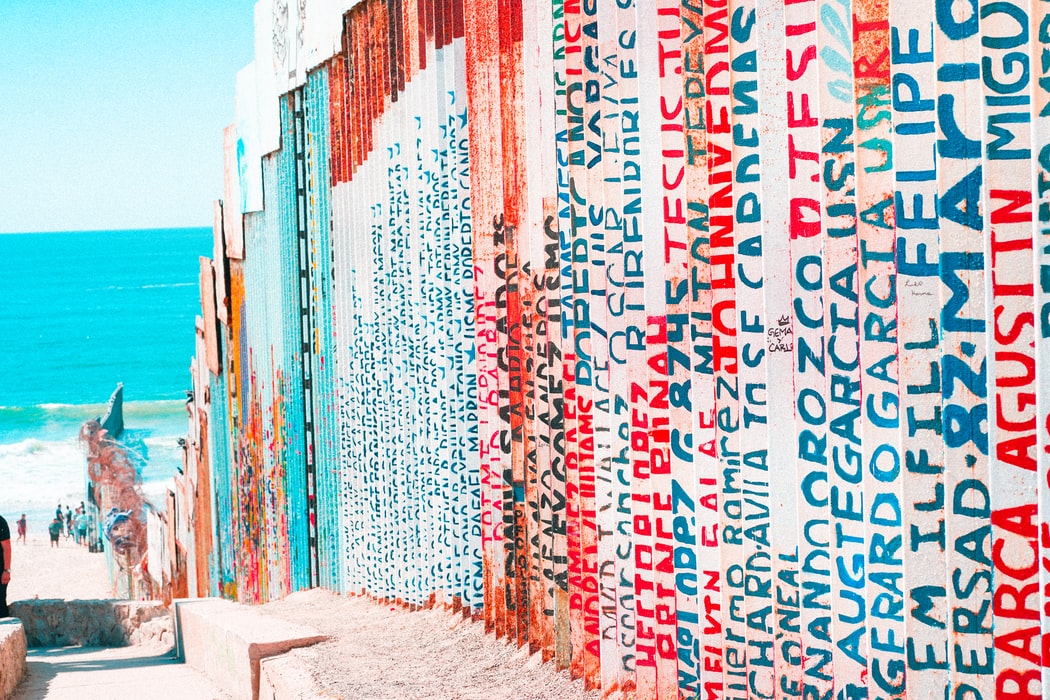

The Chain & The Screens & The Fire

By Jake Phillips

 — after Alexandrea Teague’s “’My Country, ‘Tis of Thee’ (arranged for Brazen Bull)”


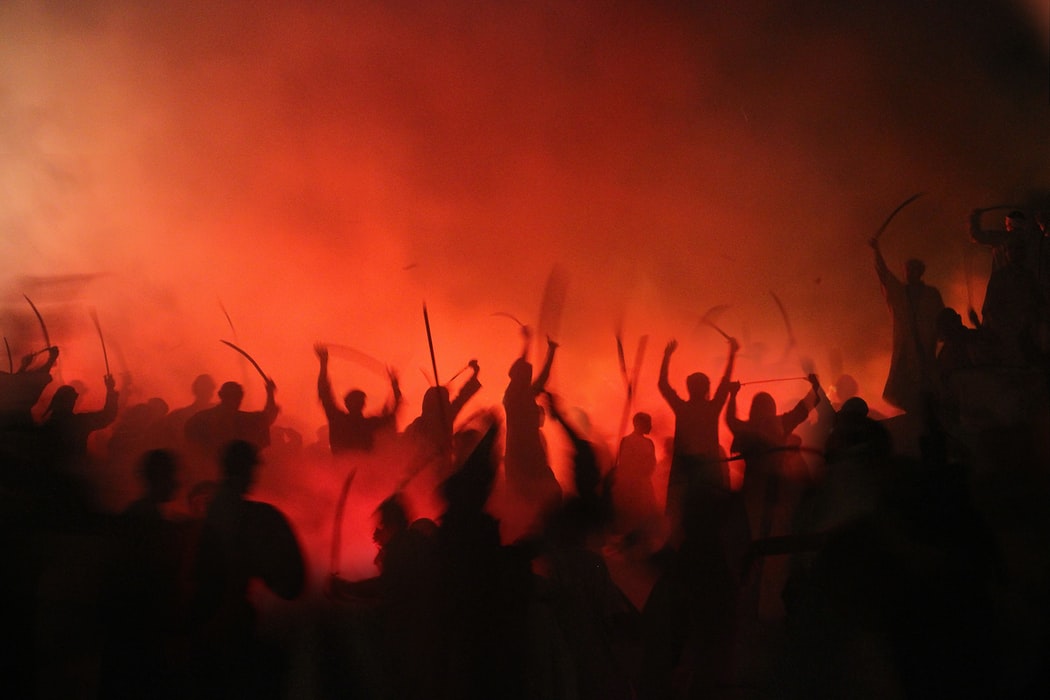
Bellows and bolts     and the king     and the king’s rage
at the price of freedom     the fire   the face like fire hot-orange
on your screen     first look at your phones   the fire given
to humankind     hot breath    fogging     hot    and he bellows
at the man in chains     as he has always done     the least racist
person that you’ve ever encountered    may the eagle peck
his liver     the lives chained     first look     look     the tweets may the eagle
peck     the deplorables on this rock     chained     a chain a storm
of characters     filthy language on fire     and you don’t want
to live with them either     the eagle feasts     on freedom
on many sides     on liver, regrowing     feast your eyes     feed    your phone
for the king     who has done more for African Americans     Americans
create their own violence     and the box was opened     all 140
characters and their hashtags     their own violence    released
unchained into the world     then they try to blame others   the violence
on many sides     the Titan the fire     the hero of culture
a really dumb guy     the liver always     and his rock     the disgusting, rat
and rodent infested mess     always returns     and the hope on the bottom
the hope     the birth certificate is a fraud     the faces
lit up with the fire     we hold our hands out     dangerous
for our country     let’s take a closer look     the chains tighten     the liver
returns     can you imagine the furor     the blaze     the pecking eternal
he watches    tweets from    Oval throne     never discriminated
the violence     a terrible thing     the mud of mankind    melting from the fire


Jake Phillips is a first-year poetry MFA candidate at the University of Massachusetts, Boston; a former teacher; and a former librarian. His writing has appeared in Z Poetry’s anthologies Massachusetts’ Best Emerging Poets and America’s Emerging Poets: Northeast Region. He currently works as a publishing assistant for Hanging Loose Press. Find him on Twitter @itsjustJp.

Photo credit: schizoform via a Creative Commons license.

Nothing Happened

By Jane Snyder


When I woke, Suzie was still asleep, lying on her stomach, her bottom a little raised. She looked cute, like a baby, and I tiptoed from our room with exaggerated care. If she teased me I’d use it against her. Suzie with her big butt in the air, I’d say.

I went downstairs, was in the kitchen before I realized my father was there, at the table, the papers he was grading spread in front of him. My mother stood at the sink looking out the window at our dog in the backyard.

My father eyed my baby doll pajamas. “You’ve been told not to leave your room until you’re dressed.”

“Her clothes are in the dryer.”

“She can make her own excuses; she’s good at it.”

My mother shrugged. “You ever notice how Finn looks over his shoulder when he poops?”

“That’s enough, Elaine.”

He turned to me. “Greg Duenow saw you walking Finn. He said it looked as if Finn was walking you.”

I didn’t know who Greg Duenow was, didn’t ask because it might be something I was expected to know. Another instructor at the college, maybe.

Finn was an Irish Setter, handsome, attracted notice. Usually he pranced beautifully, liking the style of it, but he outweighed me by twenty pounds and, when something caught his attention, he took off, dragging me behind.

“If you’d hold the leash right, the way I showed you, he’d obey you. Your sloppy ways are ruining all my hard work with that dog.”

He paused for an answer.

“The dryer just stopped,” my mother announced. “Get your tennis dress, honey. Suzie’s too.”

Little gingham dresses, hot to the touch, tight in the waist with full, short, skirts. Suzie’s was pink and mine was blue. My mother said the ruffled gingham panties we objected to were the same as shorts because we wore them over our actual underpants, just like real tennis players. We didn’t like sister dresses anymore because they emphasized that I was thin and Suzie was plump. Mutt and Jeff, an adult would be sure to say.

I went downstairs again when I heard my father leave. Sometimes my mother made me a dish she called a sweet omelet, and I hoped she’d do that today, sit and talk with me while I ate, but she was stretched out on the couch with her book, her coffee and cigarettes, Finn.

“Somebody’s looking mighty pretty today.” She didn’t look up from Giles Goat-Boy. “Why don’t you go out for a walk before it gets too hot?”

“I’m not taking Finn. Daddy doesn’t like the way I walk him.”

She was reading and didn’t answer.

I liked walking past the convent six blocks from our house. The nuns weren’t on view this time of day. I’d been fascinated by them when we got Finn last year and I’d started taking him with me. I’d loved the gleam of gold beads dangling against their long black skirts, but I didn’t care anymore; figured it was Finn they liked. The convent itself, a house, a mansion really, donated to the sisters, was the real attraction. Dark red brick, turrets, casement windows. I’d had experience with places being exciting on the outside, dull on the inside, so I imagined it as I liked. Old-timey, me in a soft white dress walking through the conservatory, orchids in riotous bloom, seating myself at a grand piano, accompanying myself as I sang an aria. At the sound of my voice, the servants would look up from their tasks, sigh with pleasure. I’d visit my mother in her boudoir. She’d wear a peignoir, like Eva Gabor’s on Green Acres, and she’d smile, say I brought the sunshine with me.

On my way home I planned the supper for my coming out ball, my debut. Chicken salad, I was thinking, chocolate cake, when the white sedan stopped beside me and the driver leaned over to open the door on the passenger side. “Sis,” he said, and I took a step toward him.

His thick face appeared discolored, gray. He was sweaty, a thin film of perspiration on his high forehead.

We looked at each other. I didn’t recognize him, couldn’t think of anybody who called me “Sis.” Not wanting a report of my being rude to an adult to get back to my father, I said hello.

“Well,” he said, looking at me steadily, “well.”

My daydreams fell away. Something important was happening. The man didn’t offer candy but I knew him at once for a stranger, the stranger they’d warned us about, the stranger who wanted you to get in his car.

“Your mom wants me to take you home.”

I walked away quickly. The car turned at the corner, away from me, and I saw this as evidence that I’d met the challenge successfully, recognized danger and acted decisively. Even the small, neat houses I passed on my way home seemed promising, reflecting the change in me.

I’d talk to my mother alone, I decided. No need to involve Suzie. My mother would be upset; I’d reassure her. I’m fine, I’d tell her. Nothing happened. Only we should call the police right away. Notify them.

I imagined telling my father. He’d sit beside me on the couch, listen solemnly, tell me I’d done well.

Suzie was dawdling over breakfast. My mother was peering into the refrigerator. “This isn’t enough ham for sandwiches. Don’t drink any more milk. Your father has the car.”

For a moment I hesitated. I’d have been more sure of myself if the man had been less bland, more frightening in appearance.

“Oh, for God’s sake,” she said when I asked to talk to her alone. “Just say it, whatever it is.”

She laughed when I told her, said she didn’t believe me.

I went upstairs, disappointed, lay back on my bed with a library book. After I’d finished a chapter I heard her talking on the phone.  She sounded amused. “I’m sure it’s nothing. She may have misunderstood. She’s got quite an imagination.” So that was no good. Everything would be the same.

She called up to me, telling me to wash my face; someone was coming to talk to me.

A lieutenant. I could tell from his bar. He was so tall that my mother, who stood on a level with my father, looked up to talk to him. Finn pushed his red head against the blue serge of the lieutenant’s trousers. The lieutenant ignored him, looked sourly at my mother when she told him she hadn’t wanted to call because she thought I was exaggerating.

“Where may I speak to your daughter privately?”

“Oh, but surely…” she remained amused, her manner implying too much fuss was being made.

“If that’s acceptable to you, Miss Sloper?”

He opened the door to the dining room for me, shutting it behind us, as if he were in his own house.

Back then, if a man wished to endear himself to a child, establish himself as a trustworthy figure, a pal, he’d offer you a stick of gum, address you as Sport or Princess. The lieutenant didn’t do this, didn’t smile, didn’t ask what I liked best at school, say recess, I’ll bet. He pulled out a chair for me, sat down, opened his notebook, asked for my full name and date of birth.

The location, the car. Did anyone else see? What color was the interior? Did I notice anything inside the car? Did he have scars? Did he wear a watch? A ring? Glasses? Did he sound like someone from around here? Was the car clean? On the inside as well? Did I think he’d get out of the car? What were my impressions of his height? Weight? Did he reach his hand toward me? The grayish tone to his skin I’d mentioned, was it five o’clock shadow?

I told him about the ashtray. My mother didn’t smoke in the car; my father said the stink would lower resale value, so the ashtray, open and overflowing with butts, stood out. They weren’t Pall Malls I knew, because my mother smoked those. Brown at the end, I told the lieutenant, with a thin blue stripe.

“Filters,” he said gravely. “Kents, perhaps. This is very helpful, Miss Sloper.”

My mother was at the door when we came out into the living room. “I hope she was good for you.”

He didn’t answer; nodded at me.

My mother laughed weakly after he’d gone. “My,” she said, “my.”

I became conscious of the expanse of thigh my tennis dress revealed. “I’m not going to wear this anymore.” I pulled at the gingham skirt. “It’s babyish.”

I expected my mother to say no, she did enough laundry without me changing clothes like a Barbie doll, but she didn’t answer and I went upstairs, took off the dress and panties, sending them sailing dangerously into the corner. I told myself I didn’t care and put on what I liked.

My father was standing at the foot of the stairs when I came down for lunch, smiling. “Here she is!” He reached up to swing me down, back up, then down again.

I knew, from his changed manner, that my mother had told him.

She set out a plate of bread, cheese, scrag ends of ham and beef, pickles, hard boiled eggs, said she’d cleaned the refrigerator out.

“Ah, a ploughman’s lunch,” my father said, determined to praise where he’d found fault before. He was charming to Suzie when she asked what a ploughman’s lunch was, speaking in a British accent about the cold collation you’d have in a pub, then cracked his egg against his forehead to make us laugh. “Are you sure you boiled this one, Elaine?”

Before he went back to work my father gave me four dimes. “You can take your sister to the pool this afternoon and get some ice cream on the way home.”

We hadn’t been to the pool all summer, because I was being punished, I can’t remember why. Suzie wouldn’t go without me. The money wasn’t enough for the pool and ice cream both.  My father took us so infrequently to the ice cream truck, money pit, he called it, he didn’t know the Good Humor man had raised his rates. We could get candy, I thought, reaching for the money.

“Don’t just keep going off the diving board,” my mother said when we left. I didn’t know how to dive but I liked the springy feeling when I jumped from the low board. “You can do it three times. That’s all.”

It was a nice afternoon, although Suzie was a pest, yanking my pigtails and yelling, “Ding dong, Avon calling.” She wouldn’t let me out of her sight that day or the rest of the summer.

I didn’t connect the police cars we saw outside the pool and the playground with what had happened, but the next day there was an article on the second page of the paper: “Red Hawk man charged with Indecent Liberties.” I was sorry my name wasn’t in the paper, but I knew it was me, the ten-year old girl he’d approached in the University District, an hour after he’d lured a seven-year-old playing in her yard on West Ninth into his car.

It didn’t seem so bad to me, what he’d done. A child who’d been made to lift her skirt and pull her pants down so her father could beat her with his belt, a child who’d heard the excitement in his throat when he spoke of bare bottom spankings, a spank sandwich, your bottom red as that apple, heat your own bath water for a week by the time I’m done with you—over and over—was not moved by the account of another child’s genital area being patted over her clothing, of a hand placed across her mouth.


Jane Snyder is a retired social worker. She lives in Spokane, Washington.

Photo credit: R. Nial Bradshaw via a Creative Commons license.

Ring-a-Round the Rosie 2019

By Heidi J. Lobecker


Ring-a-round the playground

A backpack full of bullets

Pop! Pop! Pop!

We all fall down.


Heidi J. Lobecker has lots of fun writing. If it‘s not fun, she finds something better to do, for example: reading, sailing, camping, and eating s’mores.

Photo credit: Edwin Rosskam, Chicago, Illinois, 1941, via the U.S. Library of Congress

Serpent Song

By Candice Kelsey

I

July. A man in Thousand Oaks confronted by wildlife authorities.
The case: Exotic Reptiles
illegally stockpiled.
Neighbors suspect this guy
may not have permits for all 40 venomous snakes.
Above 100 degree heat
kept in crowded conditions
activity level through the roof. More runs to Home Depot
14 hour day.
Curator of Reptiles and Amphibians rests his hand
on the shoulder of Senior Animal Keeper Chris.
Designer snakes bred for specific mutations
mostly albinism some leucism.
Crossbred / inbred /
Screwed up / blind / jumpy.
The zoo moved the gila monsters to make room
for two black-headed pythons and four indigo
snakes.

II

November. Detroit Police warehouse confronted by the Fair Justice Project.
The case: 11,341 unprocessed rape kits
sitting for years.
Authorities determined multiple rapes
could have been prevented with a CODIS match.
Gang rape of a homeless woman
kidnapping and rape of a young girl.
More backlog
kits from 2009 finally tested in 2015.
Wayne County Prosecutor points her finger
at Detroit Police Media Relations Director Mike.
551 page report by the National Institute of Justice
reveals minimal effort corners cut
vaginal wall / cervical / penile slide /
anal / perianal slide /
buccal swab.
Colposcopy for photos of genital injury
and rulers for measuring bruises or lacerations on
women.


Candice Kelsey’s debut book of poetry is Still I Am Pushing (Finishing Line Press, March 2020). Her first nonfiction book explored adolescent identity in the age of social media and was recognized as an Amazon.com Top Ten Parenting Book in 2007. Her poetry has appeared in many journals, including, Poet Lore, The Cortland Review, and North Dakota Quarterly, and she was a finalist for Poetry Quarterly‘s Rebecca Lard Award. Candice’s creative nonfiction was nominated for a 2019 Pushcart Prize. She is an educator of 20 years’ standing, devoted to working with young writers. An Ohio native, she now lives in Los Angeles with her husband and three children.

Image credit: “Eve and the Serpent” by John Dickson Batten, 1895.

Writers Resist: The Viral Resistance Issue

Hello, Dear Readers,

Welcome to our Viral Resistance Issue, a gift with something for as close to everyone as we can get—while maintaining proper social distancing.

This 107th issue of Writers Resist has fiction, poetry, and an essay, that offer satire and sorrow, fear and humor, and a good dose of introspection.

Now, go sit by yourselves and read—and stop touching your faces.

With love,
K-B, Sara, and Ying

P.S. And just in case, here’s a handy article from Rewire.News, “What Does ‘Safe Sex’ Look Like During the COVID-19 Pandemic? Here’s What You Need to Know.”


Pandemic

By Summer Awad

what does empire look like
in slow motion

what of nine-to-fives
stripped of their ticking clocks

shelves – aching
from stock and restock –
baring us their bones?

what do you make of
shuttered cafes

laptops and coffees
on the couch –
recalibrated reality

the comfortable uncomfortable
but immune – really –
to crisis?

how do you inoculate
a sick society

tell the boss to care
for his worker

the landlord to relieve
his tenant

the politician to protect
her people?

how do you jolt
men awake,

illumine the stepping
stones so precariously
placed?

what does it mean to
be without

insurance, yes
savings, yes
without the privilege
of cozy quarantine,
true

but isn’t it without as in
without the gates – as in
outside – as in without
the demarcations of
worthiness

isn’t it who we swallow
and who we cough up
and spit out?

what do borders look like
drawn around each other –
around ourselves

aren’t we only as good as
what’s inside our circle –
as the company
we’ve chosen to keep

and isn’t it keep as in
provide for the sustenance of –
as in guard and protect – as in
honor and fulfill – as in
keep the Sabbath?

what does this silence
conjure for us

what awakenings lie in wait

what meaning can we glean
from this indefinite and holy
Saturday?


Summer Awad is a poet and playwright from Knoxville, Tennessee. Summer’s poetry has appeared in Little Rose Magazine and Exposition Review. Her play, WALLS: A Play for Palestine, was produced at the 2016 New York International Fringe Festival. Summer is an award-winning, local spoken-word poet. Her work focuses on her Appalachian and Palestinian heritages, as well as feminism and politics.

Photo by Markus Spiske on Unsplash.

A Colossal Crisis

By Shawn Aveningo-Sanders

~ after Emma Lazarus, “The New Colossus”


When brazen towers fell, we wept in disbelief—
our great nation attacked upon her own shore.
We obeyed our leaders who hailed, “Shop More!
That’s how we’ll heal.” And we found some relief
in the stuff we hoarded, albeit the feeling brief.
We shop-till-we-drop, as credit card bills soar
so high, we can’t afford our child’s mortarboard.
Delusional and desperate, we elected the wrong chief—
unfit to save us from an enemy we can’t see.
Mr. Whipple whispers, “Secret stash on Aisle 3.”
The huddled masses, yearning to be free
of their germ-laden asses, in need of more TP,
racing toward wipes and the last shopping cart,
forgetting sage advice to stay six feet apart.


Shawn Aveningo-Sanders is the author of What She Was Wearing, an inspirational book of poetry/prose that reveals her #metoo secret—from survival to empowerment. Shawn’s poetry has appeared globally in over 150 literary journals and anthologies. She’s a Pushcart nominee, Best of the Net nominee, co-founder of The Poetry Box press, and managing editor for The Poeming Pigeon. Shawn is a proud mother of three and shares the creative life with her husband in Portland, Oregon.

Photo by Erik Mclean on Unsplash.

Diet Margarita

By Terry Sanville


Douglas climbed the outside stairs two at a time to his second-floor apartment over Tuck’s Liquor. He keyed the front door and slipped inside. Fugem dropped onto the carpet from her window perch and yowled, then purred when he filled her bowl with kibble.

Outside, the noise died back, only a few screams or cracks of small arms fire, but the grenade blasts continued. They seemed to come from beyond the cemetery near Linden Avenue.

“How’s my kitty?” Douglas cooed and scratched the calico behind the ears. The cat arched her back until what sounded like an RPG landed somewhere close. Fugem fled to the bedroom and hid under a dresser full of clothes and ammunition.

Douglas smiled, dumped his knapsack onto the sofa, and went into the kitchen. From a drawer he removed a slender knife, grabbed two limes, a lemon, and a small orange from the fridge and laid them on the cutting board. He’d spent half his salary already, mostly on booze, ammo and cat food.

He poured the freshly squeezed citrus juice into a tall glass, added a very healthy shot of cheap tequila, three packets of artificial sweetener, and topped the drink off with soda water and ice. He stirred the concoction with his finger and raised the glass to his lips, but his nose caught the faintest whiff of tear gas. He knew that smell from the troubles the previous year, when a crowd of embittered seniors tried taking over a Walmart during the COVID-42 scare.

He set his drink down and dashed across the room to the window that looked onto the street. He’d left it partway open to allow air for Fugem. Pulling it shut, he reached into a cabinet, grabbed a roll of duct tape, and sealed the space under its sash, then drew the curtains back.

East Flatbush spread out before him. From over the cemetery a white cloud drifted toward his apartment. He moved to the hall closet, grabbed his Vietnam-era gasmask and retrieved his margarita. Lowering himself onto the sofa, he found the remote and turned on CNN. A bearded commentator pointed to a map that showed territory occupied by the Geezer Liberation Army (GLA) and the inroads they’d made throughout New York City, with Flatbush being one of several hot spots. The harried newsman stared into the camera holding a microphone that looked like a president-sized dildo.

“This just in. Factions of the GLA have ransacked a New York National Guard Armory. Cases of AR-15s, RPGs, ammunition, and other explosive materials were taken.”

Douglas sniffed the air then took another gulp of his diet margarita, the tart liquid clearing his mouth and throat of any nasty germs. He changed channels until a soccer game between Botswana and Brazil filled the screen. The teams played to an empty stadium. He sipped his drink and decided to phone Sharon to have her come over to help him with his calculus homework.

“Hey Shar, whatcha doin?”

“Just got home from campus. Don’t know why I go there anymore.”

“Yeah, me either.”

“It got nasty on the subway. Half the seniors were packin heat.”

“Hey, they’ll be gone soon enough.”

“Yeah, including my Grandmother, you idiot. I love that old gal.”

“Whatever.”

“Have you been drinkin already?”

“Yeah. Don’t worry, I’ve saved some for you.”

“Can’t come over tonight. Streets are too weird, could get picked off.”

“Want me to come to your place?”

“No, stay put. We’ll see what it’s like tomorrow.”

“But that’s when my calculus assignment is due.”

“Ah, and I thought you cared about me.”

The signal died and Douglas groaned. He phoned Sharon back, but she didn’t pick up or respond to his texts or emails. He polished off his margarita and fixed another. The soccer game bored him so he returned to the 24/7 news channel, where the commentator droned on with old material.

“The violence started when the federal government announced it would no long support efforts to treat or eradicate the coronaviruses. According to Vice President Puntz, ‘The best way to protect Americans is to let the virus run its course and allow the populace to develop herd immunity.’ This policy has drawn fierce reactions from seniors and their advocacy groups since only relatively young and healthy people can achieve herd immunity. The violence increased after the president tweeted that the high cost of Medicare required cuts to—”

Douglas turned off the TV and slouched in his seat. He wondered how the GLA had organized so quickly. Maybe those longhaired Vietnam vets finally had enough and decided to stick it to the man. His own grandparents supported the president no matter what the idiot did.

A grenade blast sounded close, near the police station or maybe CVS Drug, and the pop-pop-pop of small arms fire forced Douglas out of his seat. He staggered into the kitchen, fixed another diet margarita, and headed to his bedroom. From a bottom drawer he retrieved his Glock and several full ammo magazines.

He edged toward his front window and stole a glance outside. A ragtag squad of armed men and women, some of them in wheelchairs, cut an erratic path down the avenue, firing at houses, businesses, and especially at anything publicly owned. They ransacked Tuck’s Liquor Store below him and continued to move on.

Douglas crept to the door and slipped onto the outside landing. His Glock raised, he braced an arm against the railing, and fired, emptying the magazine, then another, and another. The street went quiet.

Breathing hard, Douglas smiled and ducked inside, returning to his couch and his margarita. He collected his laptop, to see what other news services were reporting. Lifting his glass to his lips he noticed a red laser dot in the center of his chest. Where the hell did they get sniper–


Fugem scooted from underneath the dresser and trotted to Douglas’s lifeless body. She lapped at the tart liquid splashed across the coffee table. She’d have something other than kibble to eat for days to come.


Terry Sanville lives in San Luis Obispo, California, with his artist-poet wife (his in-house editor) and two plump cats (his in-house critics). He writes full time, producing short stories, essays, poems, and novels. His short stories have been accepted more than 370 times by commercial and academic journals, magazines, and anthologies, including, The Potomac Review, The Bryant Literary Review, and Shenandoah. He was nominated twice for Pushcart Prizes and once for inclusion in Best of the Net anthology. His stories have been listed among “The Most Popular Contemporary Fiction of 2017” by the Saturday Evening Post. Terry is a retired urban planner and an accomplished jazz and blues guitarist—he once played with a symphony orchestra backing up jazz legend George Shearing.

Photo by Erika on Unsplash.

Notes from an Epicenter

By John Linstrom

                Sixteen Oaks Grove, Queens, NY


Sixteen oaks in two rows planted
down an island in the street:

school is closed, kids transplanted,
benches here are empty, clean and neat.

Auto shops still rollicking with laughter,
a boy walks by, dribbles his ball alone.

A bird keeps trilling, and will after;
the traffic, steady still, has slowed.

Sixteen oaks in two rows standing—
walkers pause, and then they quickly go.


John Linstrom’s poems have recently appeared or are forthcoming in North American Review, The New Criterion, Atlanta Review, Vallum, and Cold Mountain Review. His nonfiction has recently appeared or is forthcoming in The Antioch Review and Newfound. He is series editor of The Liberty Hyde Bailey Library for Cornell University Press, making available the works of Progressive-Era environmental philosopher L. H. Bailey. He coedited The Liberty Hyde Bailey Gardener’s Companion: Essential Writings (Comstock-Cornell UP, 2019), and he prepared the centennial edition of Bailey’s ecospheric manifesto The Holy Earth (Counterpoint, 2015), featuring a new foreword by Wendell Berry. He currently lives with his wife and their joyful window garden in Queens, NY, where he is a doctoral candidate in English and American Literature at New York University. He also holds an MFA in Creative Writing and Environment from Iowa State University.

Photo by freestocks on Unsplash.

Dispatch from the Holding Tank

By Nancy Dunlop


It is my first day in—  what are they calling it? Self-quarantine? Social distancing? Shelter-in-place? I suppose, for me, it’s isolation.

But unlike many others my age, I’ve been in isolation for almost a decade, due to a disability. Today is really no different than any other day for me. Except that I sense other people are also in isolation. So, in some bizarre way I have company.

But when this virus is controlled, when “the curve flattens,” those who are newly self-isolating, and fortunate enough not to get infected, might return to a busy world. A world where people interact. Are productive. Are externally defined.

Another difference between me, an old hand at this isolation thing, and those who are brand, spanking new at it is that I’ve had a long time to deal with introspection. To look inside myself for answers. I had to re-define myself, by myself, from within. But I’m not particularly good at this. I am not good at loss: no more external validation or respect or job title or credentials or any sort of official auspices; no podium, microphone, cubicle, corner office, daily commutes, or jostling for a subway seat to distract me from any need to get quiet and go within.

If you saw my immediate surroundings, you might say, “How perfect for a writer!” The knotty pine cupboards and thick stone fireplace. Those birds racketing out the window. What the sun does to the afghans my grandmother crocheted for me, draped on the back of the love seat. If you could see what I see from my desk. My framed diploma. The photo of Stephen and me at the very moment we were pronounced husband and wife. My two gentle cats, Piper and Chloe. All the things that can bring comfort. Such a perfect retreat for a writer. A writer needs solitude, after all.

But not isolation.

It has taken almost a decade of being by myself to come to terms with being by myself. With my holding tank. So, to the young and healthy I say, “Welcome to the holding tank.”

I am following the news, social media, the stock market, the hoarding-of-toilet-paper and guns. I am following reports of people denying any problem or defying any precautions. And I get it. I know how difficult it is to go from 100 mph to zero. What it is like to hit a wall. To be told that you need to stop everything. That you’re not really essential. Oh, and by the way, nothing will ever be the same.

In the U.S., we’re told that we are a strong people. That we are the strongest people on Earth. We celebrate robustness. Vigor. Movement. Staying busy. Underneath all of that, though? I suspect fear. And anger. And a wicked need to blame. Or to scapegoat. But not a whole lot of anything more subtle or gradated. Like patience. Or acceptance. Or empathy. Not right away. Maybe not ever. Such things take work. Work that doesn’t necessarily look busy.

In addition to being strong, we are said to be ruggedly individualistic. We pull ourselves up by our bootstraps, gosh darn it, and are told to just go for it. Grab that brass ring. We are blasted with seemingly countless opportunities to be on the go.

I’ve noticed this all over social media, a well-meaning impulse to provide ways to stay exactly the way you were before you were isolated. How to work from home. Set up workstations. Put up with your family. Home-school. Learn to draw. Or knit. How to cultivate new interests, immediately. In general, how to stay cheerfully in the world when you are anything but. How to remain unchanging and robust in the midst of a situation demanding change and acknowledging we are not robust.

So, yes, I get it. I understand the sudden burgeoning of tricks and techniques and lists for how to do everything just as before. To do anything but deal with what comes with actual isolation. Like the opportunity—the actual human need—to feel vulnerable. To be soft. Or receptive. Or quiet. To practice not fearing fear. To be kind, despite.


Nancy Dunlop is a poet and essayist, who resides in Upstate New York. She received her Ph.D. at UAlbany, SUNY, specializing in Creative Writing and Poetics. She also taught at UAlbany for 20 years. Most recently, she has been curator of Wren, an international online forum for women in the arts. A finalist in the AWP Intro Journal Awards, she has been published in a number of print and digital journals, including Swank, Truck, The Little Magazine, Writing on the Edge, 13th Moon, Greenkill BroadSheet, and Writers Resist: The Anthology, 2018. Her work has also been heard on NPR.

Photo by Kelly Sikkema on Unsplash.

Heretic Hymn from the Pandemic

By D.A. Gray


One morning the cats who once
Crept up to our doors – stopped.
For a time the bird’s voices grew louder
Then they, too, disappeared.

We prayed on command. We were sure
The symbols would save us.
Leaving the church we made stops
At every store that promised
A cure – the backup spells of old
Superstition – just to be sure.

A man in our town has been chosen
To head the response task force.
Each day he offers a spot of wisdom.
‘The worst you can do,’ he says,
‘is panic.’ He bows before the camera.
His hair is bright white
Like a horseman from an old tale.

Most of us simply carried on.

When the least of these grew ill
We sang solemn hymns
This time to our neighbors, and the dead
We had never met. We were begging
Forgiveness for averting our eyes, away
From them and toward the sky.

I saw my parents begin to shrink, still thinking
Tragedy could be beaten with piety.
The louder they prayed the smaller
They grew. One day my father’s
Eyes jolted open. He was small enough now
He could see it coming.

Keep calm. Be civil. After the funeral we pulled
Out the box of aphorisms
Which was always here waiting our return
In case of emergency.

If we listen we can hear the sounds of hooves,
Really the sounds of breath rasping,
The remaining beastly sounds, bringing the end
Of the tale galloping closer
Like any metaphor – if you believe it too much.


D.A. Gray’s poetry collection, Contested Terrain, was recently released by FutureCycle Press. His previous collection, Overwatch, was published by Grey Sparrow Press in 2011. His work has appeared in The Sewanee Review, Appalachian Heritage, The Good Men Project, Writers Resist, and Literature and the Arts, among many other journals. Gray holds an MFA from The Sewanee School of Letters and an MS from Texas A&M-Central Texas. Retired soldier and veteran, the author writes and lives in Central Texas.

“Four Horsemen” by Julius Schnorr von Carolsfeld, 1860.

A Modern Fable

By David Laks


We’re all going to die. It’s just a question of when. That is my job—to figure out when you will die. Well, not you specifically, but you as a representative of you. The digital model of you. I am a data analyst at John Adams Life Insurance Company and my job is to program big databases to determine the life expectancy of people. What we like to call in the biz, the actuarial tables. John Adams was a pretty stogy old fashioned workplace when I first got there. We were still expected to wear a jacket and tie to work every day, sit down in our cramped cubicles and click and clack away at our keyboards extracting whatever data we could find from the U.S. Census. My claim to fame was to modernize the whole approach and bring John Adams into the 21st century. Here’s what I did.

One day, sitting at home in my Back-Bay condo, kicking back with a cold brew from the corner Starbucks, I was hacking into the Facebook database. Hey, some people watch Seinfeld reruns, I like to hack sinister social media giants for fun—don’t judge me. I was trying to see if I could search on vaping posts, and then correlate that to vaping shops in the area. That part was easy. It was a bit harder to burrow into the area hospital databases to see if we could find an increase in admissions for respiratory illnesses. Hard but not impossible. Now don’t get your privacy knickers all in a bunch. I was not looking at individual names; this was a big-data exercise. The Feds will take years and hundreds of millions of dollars to determine what I found out in my one elicit nocturnal journey: The rate of lung disease from vaping is the same as smoking cigarettes, and you can expect the same reduction in life expectancy. The next day, I showed my boss the data and told him that we need to change the insurance policy application to include vaping alongside smoking tobacco.

Let’s do the math—I love those four words—let’s do the math. It’s kind of like God saying, “Let there be light.” The world is in order, harmony. No messy indecisions, relationships, indeterminate feelings. Math is deterministic; it has structure, meaning, answers. I went through the numbers and showed that by changing our insurance policy to treat vaping like tobacco we would save $3.7B over 20 years. My career ascended. Literally. I was given an office on the 38th floor and asked to put together a crack team of software engineers that would drill down into every aspect of human behavior and genetics to quantify its impact on life expectancy. Our floor was like a tech start-up. Bring your dog to work. Free meals, beer and kombucha in the fridge. We revolutionized the insurance business. Customers filled out an application and our algorithms went through their social media footprint in an instant and calculated an insurance policy that was customized for each of them. Legal? Hmm, maybe. Read the T&Cs.

It was January 30, 2020 when I was taking an Uber from my new luxury condo at the Wharf and I read about the corona virus disease. The warnings were muted, with numbers coming out of China that had a 2% death rate. I felt a stir in my stomach but ignored it as my focus at the time was on correlating the racial changes due to Trump’s immigration policies and how that might impact our numbers. Racial profiling—that’s kinda what we do.

On February 15, I was reading that the number of virus cases was up to 67K. Now it caught my full attention. I decided to do a hack of the Wuhan, China, hospitals to see what numbers I could find. Holy shit. The death rate was not 2%, it was 50%. I did some mathematical simulations—this was a fucking disaster for us. I mean the deaths were disturbing and all, but the number of life insurance policies that would have to be paid due to the virus was staggering. I had to talk to my boss right away.

“You can go in now Mr. Little,” said Ms. Penny the admin for my boss Mr. Duck.

“Little, what can I do for you? You look kind of pale yellow. Are you OK?”

“Well, sir, I decided to do some investigation of this coronavirus, and I don’t know how to say this other than just come out and let you know that John Adams will be bankrupt by the end of the year.”

Mr. Duck staggered across his office and said, “Let’s get your whole staff to work on the numbers and see if they get the same numbers you do.”

So, I got the team all working on various simulations and each of them came to the same conclusion, that John Adams would cease to exist by the end of the year.

One of them said, “What are we to do?”

Another said, “If these windows could open, I would jump out.”

A third added, “My goose is cooked.”

And finally, I said, “The chickens have come home to roost. We have no choice but to let our CEO know.”

We all marched up to Ms. Fox’s office and demanded to see her immediately. She listened intently and asked if we had told anyone else? We said no, and then she said, “I want each and everyone of you to never speak of this again. If I find out that you have shared this crazy theory with anyone, I will fire you on the spot. Is that understood?”

•     •     •

Jan 18, 2021. Boston Globe

The stunning demise of one of Boston’s financial pillars, John Adams Insurance Company, was further complicated by the indictment of its longtime CEO, Loxanne Fox, derisively known as Foxy Loxy. It appears she knew of the negative financial impact the coronavirus was going to have on the company and secretly sold shares in a clear violation of insider trading law. It has been rumored that Fox left the country for a villa on a remote Pacific island. A former company employee said off the record, “I told her it was like the sky was falling. I guess she did listen to me after all.”


David Laks was an engineer and business leader during his 40-year career in high-tech electronics. He now is not.

Photo by Shane Rounce on Unsplash.

Six Feet Is All We Need

By Robert Knox  


Generally speaking, I’m pretty good
at keeping my distance
In fact, for days on end I’m practically
sheltering in place,
possibly even self-quarantining,
though I’m not sure where one of these nonce phrases
leaves off, and the other begins.

I did, however, break solitude to
stroll with my bestie
to the post office, where she may well have
violated her parole,
by engaging with a postal clerk
over required postage for an early draft
of our tax returns,
seeing that our customary live inquisition
was deferred
for all the appropriate public health protocols

And then, totally on my moral dime
for which I assume complete civic responsibility
we stopped at the nearly closed coffee shop,
all its tables lying sidewise against the wall,
where, in all probability,
I most infringed upon the magic circle,
pointing a blue surgically-gloved finger
at the blueberry scone
for which I felt a pounding need

transgressing that six-foot safety zone,
as if, after all these years,
once more
leaving room for the Holy Ghost
on the dance floor whose like I fear
never to know again.
to fox-trot with the pastry of my choice,
having discovered
by the bane, and boon, of enforced separation
from my fellow creatures,
that all we need in life is six feet
of safe and clean and healthy air

and at its end, those six feet under.


Robert Knox is a poet, fiction writer, and Boston Globe correspondent. As a contributing editor for the online poetry journal, Verse-Virtual, his poems appear regularly on that site. They have also appeared in journals such as The American Journal of Poetry, South Florida Poetry Journal, New Verse News, Unlikely Stories, and others. His poetry chapbook Gardeners Do It With Their Hands Dirty, published in 2017, was nominated for a Massachusetts Best Book award. He was recently named the winner of the 2019 Anita McAndrews Poetry Award.

Photo by Scott Nothwehr on Unsplash.

Grace in the Time of the Virus

By Melanie Bell        

Take this time
For yourself.
Everyone around you
Is doing the same,
Snatching the last eggs from air.
You start, you care
A little too much,
Don’t finish the chapter
You intended to write.
Everybody’s chapters
Are unfinished, now,
Some cut off mid-sentence,
The foot suspended midair,
The period still to come.

You are alive.
Remember, every breath,
Hold in the droplets
Lest they infect.
Act as if you are the virus.
It lives inside all of us now,
Eating our cereal, oatmeal,
That bread we were lucky to get.
So does grace.
Remember, it whispers,
Not to touch your face.
This is how best to avoid
A shelter in place.

Grace puppets your body
And motivates your limbs.
Grace closes restaurants and gyms.
Grace in the faces of loved ones on the screen,
Of tweets reaching out,
All those hearts behind the news, news, news,
All those people dancing in their kitchen
And smiling at you.


Melanie Bell holds an MA in Creative Writing from Concordia University and has written for various publications including Autostraddle, Cicada, The Fiddlehead, Every Day Fiction, and CV2. She’s the co-author of a nonfiction book, The Modern Enneagram (Althea Press, 2017). You can visit her website at InspireEnvisioning.com.

Photo by Wesley Tingey on Unsplash.

Whiteness in Bloom

[fusion_builder_container hundred_percent=”no” hundred_percent_height=”no” hundred_percent_height_scroll=”no” hundred_percent_height_center_content=”yes” equal_height_columns=”no” menu_anchor=”” hide_on_mobile=”small-visibility,medium-visibility,large-visibility” class=”” id=”” background_color=”” background_image=”” background_position=”center center” background_repeat=”no-repeat” fade=”no” background_parallax=”none” enable_mobile=”no” parallax_speed=”0.3″ video_mp4=”” video_webm=”” video_ogv=”” video_url=”” video_aspect_ratio=”16:9″ video_loop=”yes” video_mute=”yes” video_preview_image=”” border_size=”” border_color=”” border_style=”solid” margin_top=”” margin_bottom=”” padding_top=”” padding_right=”” padding_bottom=”” padding_left=””][fusion_builder_row][fusion_builder_column type=”1_1″ layout=”1_2″ spacing=”” center_content=”no” link=”” target=”_self” min_height=”” hide_on_mobile=”small-visibility,medium-visibility,large-visibility” class=”” id=”” background_color=”” background_image=”” background_position=”left top” background_repeat=”no-repeat” hover_type=”none” border_size=”0″ border_color=”” border_style=”solid” border_position=”all” padding=”” dimension_margin=”” animation_type=”” animation_direction=”left” animation_speed=”0.3″ animation_offset=”” last=”no”][fusion_text]

By Jill McDonough

Thinking about whiteness, what it is and what
it does, we go to the MFA to see Art
in Bloom. Groups of white suburban women,
garden clubs, look at art, arrange some flowers
to look like the art. Or something. Lilies scattered
over scaffolding: the Rape of the Sabine Women;
a column of callas: the Dead Body of Christ.
Older white women figuring out the flowers always
crack me up. One group looked at a boat of flowers
under a portrait of an Asian guy and was like huh?
So one of the ladies read the description, pointed to it,
said “You can read about him. He’s a tradesman
from China. So kinda. . . that’s a boat.”  I text that
to myself, say it again, delighted. This is the kind
of whiteness I’ve come to see. We go every year, think
it’s hilarious, like seeing parodies of our slightly
older selves, a little richer, continuing to come
here but without irony. There are phrases
from my southern youth about whiteness I remember:
Mightly white of you; Free, white, and 21.
Whiteness was aspirational. Sometimes I wanted more:
more whiteness like more money, the whitest kids
with ski passes from Vail on jacket zippers all winter long.
Invited to be a debutante, join a sorority, I said no,
explained I couldn’t join an all-white group. They have
their own groups, other white people told me, exasperated,
leaving me in confused tears. It’s embarrassing, talking
about whiteness. A hard job, imagining who you want
to be as an adult, barely knowing what it is
you don’t want to have ever done.

[/fusion_text][/fusion_builder_column][/fusion_builder_row][/fusion_builder_container][fusion_builder_container hundred_percent=”no” hundred_percent_height=”no” hundred_percent_height_scroll=”no” hundred_percent_height_center_content=”yes” equal_height_columns=”no” menu_anchor=”” hide_on_mobile=”small-visibility,medium-visibility,large-visibility” class=”” id=”” background_color=”” background_image=”” background_position=”center center” background_repeat=”no-repeat” fade=”no” background_parallax=”none” enable_mobile=”no” parallax_speed=”0.3″ video_mp4=”” video_webm=”” video_ogv=”” video_url=”” video_aspect_ratio=”16:9″ video_loop=”yes” video_mute=”yes” video_preview_image=”” border_size=”” border_color=”” border_style=”solid” margin_top=”” margin_bottom=”” padding_top=”” padding_right=”” padding_bottom=”” padding_left=””][fusion_builder_row][fusion_builder_column type=”1_1″ layout=”1_1″ spacing=”” center_content=”no” link=”” target=”_self” min_height=”” hide_on_mobile=”small-visibility,medium-visibility,large-visibility” class=”” id=”” background_color=”” background_image=”” background_position=”left top” background_repeat=”no-repeat” hover_type=”none” border_size=”0″ border_color=”” border_style=”solid” border_position=”all” padding=”” dimension_margin=”” animation_type=”” animation_direction=”left” animation_speed=”0.3″ animation_offset=”” last=”no”][fusion_text]


Jill McDonough is the author of Habeas Corpus (Salt, 2008), Oh, James! (Seven Kitchens, 2012), Where You Live (Salt, 2012), Reaper (Alice James, 2017), and Here All Night (Alice James, 2019). The recipient of three Pushcart prizes and fellowships from the Lannan Foundation, the National Endowment for the Arts, the Fine Arts Work Center, the New York Public Library, the Library of Congress, and Stanford’s Stegner program, she taught incarcerated college students through Boston University’s Prison Education Program for thirteen years. Her work has appeared in Poetry, Slate, The Nation, The Threepenny Review, and Best American Poetry. She teaches in the MFA program at UMass-Boston and offers College Reading and Writing at a Boston jail. Her website is jillmcdonough.com.

Image credit: Hand-colored photograph by Ogawa Kazumasa, 1896, via Public Domain Review.

[/fusion_text][/fusion_builder_column][/fusion_builder_row][/fusion_builder_container]

To Face Ourselves

By Claudia Wair


Most people keep their masks in a kitchen drawer or hang them up on a rack next to their keys. The masks are then easily accessible in case of visitors and when you’re on the way out of the house. My mother is different, though. She keeps hers in the top drawer of her bureau and wears it even in the house.

The law only requires that people don their masks at home when outsiders visit, not in front of the family circle. My mother, however, took hers off only for my father in the privacy of their bedroom. As a small child, I never questioned her habit, but as I grew older and understood more about the world outside, I was saddened and a little offended at my mother’s insistence on wearing her mask around us. Only once have I seen her face. That was the day her own mother died. I was nine. Her face was lovely—flawless brown skin, high cheekbones, full lips—and I remember thinking that it was wrong that she had to hide her face.

The next day, Mother’s mask was back. And that was also the day I began wearing my mask about the house. At first, I think it was in childish sympathy, a daughter’s desire to be like her mother. But now I wear it to remind me of what they’ve done to us. To keep me from thinking of the person I’d be without it. And because, if I take it off for more than sleep, I’m afraid I’d never put it on again.

We are taught to be ashamed of what’s underneath. Shame followed my mother into the house like smoke, coalescing into an unnatural shell that surrounded her, her true self shrinking within it.

Individuality is ugly. Conformity is beautiful. Uniformity is cleanliness. Creativity is the result of a bad upbringing.

My brother, always an impetuous boy, joined a militant group of bare-faced people. We see him seldom, and then only at night when he can spend a few hurried hours with us. Before the Law catches up with him. As family members who harbor a bare-faced relative, we are accessories to his crime. He’s never asked us for anything; he may be headstrong but he’s a good boy. He and his friends stage protests in front of public buildings; ripping off their masks or carrying pictures of bare-faced people. Whenever there is a press conference on the steps of the capitol, he and others like him crowd behind the politicians making sure they’re in view of the cameras. They wait for a particularly important moment in the speech, then they remove their masks. Sometimes they rip the masks off and shout their slogans of “Bare-faced and proud!” or “Back to the way we were born!” At other times, they slowly, quietly slip the masks off, so deliberately that it takes the cameramen from the State News Agency a long time to notice that bare-faced people have been filmed live; that good, honest, hard-working people have been subjected to such sordid exposure, and it’s too late to censor the broadcast. There is risk in every show of defiance, so the protesters run, separating to make it harder to capture them all. Escape routes are planned well in advance.

We worry that the police will knock on the door and tell us my brother’s been taken to one of the prison camps. We’d be lucky to ever see him again. The few political prisoners who are released come back with bodies and minds so broken that they need permanent care. The politicians say, “See? These criminals flout the law, and then live off the taxpayers’ hard-earned money!” And the taxpayers agree, even when it’s their own sons and daughters being hauled away.

To express doubt is to admit heresy. To propose change is sedition.

I’m most angry at the people who sit silent. They hold the keys to their own shackles, but have bought into the lie that their chains make them exceptional. They recite the approved litany without comprehending the meaning of the words; each utterance is confirmation of their enslavement.

This has to end. I want to join my brother and his freedom fighters. I have nothing of value to fear losing. There are sympathizers everywhere: the bare-faced, if not able to find shelter, are always sure of at least a meal from the compassionate who, like my mother, are too afraid to remove their own masks.

But when I see strangers’ true faces around me and am confronted with revealing mine, can I look into the empty eyes of my mask and run, leaving it to dry rot and dust?


 Claudia Wair is a Virginia-based writer and editor. Her short stories appear in anthologies including Dread Naught but Time, Fantasia Fairy Tales, and Winds of Despair, as well as in Fiction War magazine. Learn more at claudiawair.com, and follow her on Twitter, @CWTellsTales, Instagram, @CWTellsTales, and Facebook.

Photo by Ruslan Zaplatin on Unsplash.

Elongation

By Annette Januzzi Wick 


Liz Warren drops from orbit

Venus still lit but out of reach

Back to the old man in the moon

Hope doesn’t float when scorched


Annette Januzzi Wick is a writer, teacher and community connector. She makes her home in Cincinnati’s Over-the-Rhine, with her husband, who calls her the “worst introvert ever.” Visit annettejwick.com to learn more.

Image credit: NASA


Women’s Day

By Cooper Gillespie


Cooper Gillespie is a writer and musician. She was raised in the wettest parts of the Pacific Northwest but escaped to California as soon as she was able and was overjoyed to discover the sun actually exists. She plays bass and sings in LANDROID and is an MFA candidate at UC Riverside-Palm Desert. Presently, she resides in Landers, CA with her husband and their two enchanting hounds. Learn more at coopergillespie.com.

Photo by Victoria Strukovskaya on Unsplash.

This poem

By Rachel Norman


is a product
of our time.
It wakes up,
gasping
after
dreams
where it
drowned
in ice-melt.
It believes
we can still
change.
I saw it
yesterday,
running,
and asked
why it ran.
It had no
words to
answer with,
only a song
it wrote for
a child
who cried
last night.
It heard
and cried
back in
chorus
— like a wolf,
it said, only
sweeter.


Rachel Norman is a high school student. Currently living in Cambodia, she will be attending the University of Pennsylvania next fall. She has been published in Isacoustic and Falling Star Magazine. She is admittedly idealist, but hopes that eventually we will all take the time to listen to one another, to give each other space to speak, and to be willing to walk towards one another rather than away. Beyond that, she doesn’t know very much.

Photo by Annie Spratt on Unsplash.

Beating Wanderlust

By Mileva Anastasiadou


It’s not like you chose the destination. But you step onto the car, or the plane, or the ship, attempting to find a comfortable seat. You don’t choose the seat, they tell you, so you sit where indicated, not bothering with questions. And it all seems a miracle in the beginning. The landscape unfolds before your wondering eyes and for a minute or two you see magic out there. The world lies ahead, like uncharted territory for you to discover.

You have to learn, they say, for this trip is educational. So they start throwing information into your brain. Facts, dates, numbers. It’s important that you remember, they say, but you want only to watch the scenery through the window. You’re still eager to enjoy the journey. Perhaps I can learn more looking out the window, you think, yet you don’t dare speak. They detect your doubt as if they have been expecting it and show you people in other seats. You want to be like them and get a better seat, they explain. But you don’t mind your seat. Those better seats come with privileges, they add, only you don’t know the meaning of the word, and even though they explain, you still don’t get the point.

They finally convince you those better seats are worth fighting for. Or perhaps they don’t. So, you are now the kid in the front seat. Or you remain in the back seat.

Once or twice, you take a glimpse at those better seats. You either admit it or you may not, but it’s already in you; you imagine having a better seat, like when you’re really young and secretly believe older people are stupid, but also secretly envy them and want to enter their world to make it better.

You may or may not be able to memorize their facts. Some passengers are lucky enough to choose their teachers, but chances are you cannot. Either way, you already feel unsafe. You tell them, and they wink jokingly at you as if asking: Aren’t we all? The car may crash any minute now, the plane may fall, the ship may sink. You wish you knew from the start. Why did they bring you here? It’s the trip that counts, as long as it lasts, they promise. You trust them. As if you had a choice.

Either way, you’re now traumatized, so they send a therapist your way. You don’t enjoy the trip because of the trauma, he explains, and you nod, because therapists know better. So they tell you. You’ve been too stressed too soon. Your self-esteem came to depend on your performance. You take it all too seriously. You either admit it or you don’t, it doesn’t make a difference. That only shows traits of your personality, but is of no importance. You need unconditional love, he finally says. And that becomes your next goal. Before you know it, you create bonds. Some of the co-travelers are interesting, but most of them are boring. Some come sit next to you, only to leave the next second, for a better seat. Then you do that too. You think it’s normal, yet disappointing at the same time. You expect unconditional love after all. They say you deserve it, but it’s hard to find. So you demand it. You act crazy sometimes, but not on purpose. Not consciously. You only want to give them the chance to prove their unconditional love you deserve.

Co-travelers come and leave. You come and leave. You can’t settle down. You even forget to enjoy the view. You’ll have plenty of time later, you say to yourself. You suspect you may have commitment issues. So now you ask for the therapist, who says you need boundaries. You say that’s the opposite of unconditional love. Of course it is, he answers in a way that implies that he doesn’t have more time to waste on you. So you discover boundaries.

They ask for your ticket. If you’re lucky enough, you’ll find it in your pocket. Yet chances are you’re not that lucky. You search for the ticket and sometimes that takes your whole time. Meanwhile, you have to somehow pay for the trip. A stowaway, they yell before you know it, so you say you want to go out of the car, or the plane, or the ship, but they insist there’s no alternative. You yell and you scream you didn’t choose this trip, you didn’t choose this car, or plane, or ship, but nobody listens. You take a glimpse out of the window and you see the desert, or the sky, or the sea and you wonder where the magic’s gone and if you can survive, or fly, or swim. You may want to jump out sometimes, only to land onto a smaller car, or plane, or boat. Yet you cannot be sure. You may jump into nothingness instead and you fear nothingness. You never knew it existed. So you probably stay in and try to pretend you enjoy the experience. You remember the therapist’s advice; you shouldn’t take things too seriously.

The trip is expensive, they tell you. You somehow have to pay. If you belong to the majority who weren’t born with tickets, you must pay however you can. They ask for your qualifications. You tell them they should know, because they taught you. Oh well, unfortunately, you’ll have to do something else, they say most of the time. You complain for a while, but usually not for long. So you do what they tell you, which may be tiring and exhausting, but the alternative is even worse. So that’s why they’ve been trying to convince you trips are pleasant, you think. You’re supposed to like the experience. They’ve even created myths and songs about them. But you don’t. You only want to step out of the journey. You want to go home. Only you don’t have a home to go to.

Day after day, they ask more of you. And you remember boundaries. So you say no and they look disappointed, as if they knew you were useless all along. Once again, they insist you need therapy. You tell the therapist what you know about boundaries. Boundaries don’t work like that, he says. You ask why. You have to be flexible, he says. You have to be competitive to get the best seat. Get serious, he implies, only he doesn’t say it aloud and you feel like raising your hand to present your objections but you don’t. He rolls his eyes, like you’re stupid or lazy. At the moment, you think you are. Or this is a very confusing trip. It will make sense in the end, they promise. But you don’t believe anything they say. Not anymore. Or you do. For their voices are loud. So you bow your head and move on.

So you do as they say, and sooner or later, you find a seat that fits you. A seat you don’t want to leave, for there beside you sits a person you can have some fun with. At least in your free time. And you stick around. You don’t feel so trapped anymore. That trip has finally started being a little pleasant again. Or bearable at least. And you almost hear that old yearning from time to time, still beating inside, like a heartbeat, that longing to explore the world and keep moving ahead, enjoying the view.

Time flies. Before you know it, you’re post-everything. Post youth, post lovers, you’re almost post life. If you’re pre-something you’re only pre-death, but that doesn’t matter much, because you’ve been pre-death, since day one. This could have been a wonderful trip, you realize. If only it weren’t about those stupid seats. Who made it about those seats?

You’re still not post-love, you think, squeezing the hands of the passengers beside you, the ones you’ve chosen to travel with. One can never be post-love, until the very last minute. You take care of them with all your effort, which makes you the opposite of lazy, you realize.

If only it hadn’t been for those stupid seats, you’d have been able to care for all passengers. After all, you’re in the same car, or plane, or ship together, sharing the same destination, which none of you has chosen.


Mileva Anastasiadou is a neurologist. Her work can be found or is forthcoming in many journals, such as the Molotov Cocktail, Jellyfish Review, Asymmetry, the Sunlight Press (Best Small Fictions 2019 nominee), Ghost Parachute, Gone Lawn, Ellipsis Zine, Queen Mob’s Tea House, Bending Genres and others. Follow Mileva on Facebook and Twitter.

Photo by Reza Aulia on Unsplash.