Manure
By Robert Delilah
That morning, something jammed the automatic sweeper.
Every hour—on the hour—the sweeper pushed the cowshit that matriculated from the pens above to the waiting troughs just beneath the barn floor. Thanks to the sweeper, the sludge would be shunted off into the pit-like tank beneath it all, instead of rising through the grates as a massive, gut-churning lake. The pit was pumped clean by truck every other week or so; its contents processed, bagged, and sold off to hardware stores, flower shops and, of course, farms.
No one noticed the jam until well into the afternoon, so the troughs had very nearly begun to overflow. But instead of calling for a mechanic, Guillermo’s foreman, Ted, handed Guillermo a twelve-pound sledgehammer, one of those with most of its haft sawn off—the sort used by idiots and oilmen. Between clenched, meth-cooked teeth, Ted hissed two words:
“FIX. IT.”
Guillermo spoke English.
Rather well in fact, as he liked to brag to no one anymore.
But he also liked to pretend he could not. Ted had yet to discover this of course. And ever since Guillermo had been brought to the farm more than three years prior, the two of them had remained on a two-word basis—broken jaw or no. He’d gotten out of this sort of work before, but Guillermo clocked within Ted’s eyes a bloodshot, drug-wired mania and he knew, understanding or no, that this time Ted would broker no argument.
Two days ago, Julia was shipped off to a “facility.” One of the ones the other laborers fearfully murmured about, as if only by being overheard they might themselves be dragged there screaming.
They’d brought Julia to the farm some months back. She spoke little—one-word responses to most anything. Perhaps that was what drew Guillermo to her. But where Guillermo’s silence spoke of cold acceptance, Julia’s screamed of a smoldering rage only just held in check. She kept a buck knife in her pillow. Somehow neither the other laborers nor the foremen ever found out about it. Guillermo himself discovered it one morning when trying to wake her.
He’d lied and told the others he’d cut his hand on a bit of barbwire.
Guillermo and Julia shared meals from then on. And in the ensuing weeks the girl, barely thirteen, became somewhat of a de facto niece to him. He no longer had any family of his own, and if she did, she never spoke of them. Perhaps Guillermo was simply lonely; he suspected as much anyway.
One day, Julia was picking muddy green onions when, shrouded in the cool shadow of a domineering cloud, an uncalloused hand grabbed for her ass.
Guillermo, standing in the sun a field away, heard the subsequent pop of bird-bone knuckles cleaving jawbone. The sound reminded Guillermo of a framer he used to know in Ciudad who’d drive a five-inch nail into rough-sawn timber with just one swing. Ted awoke a while later, sporting a broken jaw and a freshly purple bruise which bled down into his neck.
ICE was there in the hour.
Guillermo felt Julia’s buck knife press against the inside of his left boot when he rounded the back of the cow pen where a line of grates led down into the machinery’s bowels. Crossing a rusted trapdoor complete with ancient, grime-coated padlock, he knelt and unfastened a cross-stitched aluminum panel, then shimmied into the crawlspace. Once inside, still stooped, he stepped from joist to joist, then back along the underpan’s entire length to find where the thing had jammed. The grate above dripped constantly. And every minute or so, a fresh cow pie would slither past him into the already overflowing troughs. There were several near-misses. And he heard little over the clang and clamor of hooves against concrete and steel just above his head. The smell within was dull and sulfurous, but a tang of metallic sweetness rested on the underside of his tongue. Guillermo had worked on this end of the farm since he’d arrived. After the first month, he’d stopped noticing the fetid reek that pervaded the place. Yet now, balancing above a veritable lake of shit, he was pressed once more to reckon with the stench. Grease-flecked and vile. Undeniable.
At last, after some tens of minutes, he located the problem: a rock—practically a small boulder—trapped in one of the tumblers. It was wedged within its teeth like a particularly stubborn seed.
Guillermo perched his foot on an angular joist to straddle the tumbler’s weighty servomechanism. The steel creaked as Guillermo felt the beam itself sag. He froze, loitering between heartbeats, waiting for the rig to inevitably snap apart and collapse.
Bracing his back against the damp ceiling, he readied the sledge, angling to dislodge the rock with one momentous blow.
WHAM.
Brittle flecks shot out as the impact marred the surface of what he realized then was a solid chunk of concrete. He shut his eyes as the spray of chips and dust flew into his face.
It was a slim, half-moment—a twitch within a hesitant spell—but that’s all it took.
Guillermo’s weight shifted, and a forgotten slick of grease leaking from the servo caused his left foot to slide, then slip out from under him. He pitched forward, dropping the sledge before extending his arms to try to catch onto the railing. But, gripping blindly, he missed. Guillermo’s chest slammed hard onto the wedged concrete. The air, forced from his lungs, came out his mouth in sputters. The ensuing impact of rib cage-to-stone was enough to unseat the chunk and Guillermo, flailing, tumbled downwards with it into the awaiting troughs.
He landed with a sickening squelch, and before Guillermo could grasp a sense of where he was or what had happened, a whirring sounded above him, and the rolling tumblers hummed once more to life. Shuffled along the top of the trough’s putrid surface, Guillermo was ferried down a waterfall and into an awaiting well of shit and cow piss. Guillermo feared he might drown and was sure he’d broken his neck. But he rose and wiped at his eyes. No matter how thoroughly he smeared away the refuse, he saw only dark.
In time, though, his eyes adjusted. He gleaned the vague profile of the pit’s sheet metal sides and figured a rough outline of its dimensions by the scant illumination shining through the gaps of the machinery overhead. Guillermo found himself strangely calm. So long as someone looked for him in the next several hours, that someone would find him.
But several hours did pass. Eventually, he started shouting, and then he began to scream.
Yet even these little desperations couldn’t carry past the grunts and the chuffs, the shuffling of hooves on steel, nor past the mechanical drone that shook his skull whenever the servos hummed again to motion. Every hour, the shoots opened and—for the briefest of moments—Guillermo saw dregs of bright sunlight peak through until another fresh load was swept into the pit to pile atop him. And each time Guillermo could do little but hug the far wall and pray.
It was when the sludge rose to his chest, when the subterranean chill had sunk fully into him, that he found himself thinking of the barn’s tin roof, roasting like the dangerous little hotplate he used to warm his coffee; he thought of tamales, cold beer and good sex. And, for reasons he couldn’t quite explain, the sun most of all.
Then he spotted it.
Corroded. As thin at parts as a coat hanger. A grimy, decaying service ladder stuck out of the wall.
Hope alighting within him, Guillermo swam to the opposite wall. Shaking with the effort, buoyed by liquid manure, he lifted himself up onto the bottom-most rung set seven feet from the floor. He climbed, rung by rung, shivering wildly with chill, as his limbs howled and begged him to stop. But Guillermo knew better than to listen. He’d been through worse. He survived the crossing. Survived the Coyotes, and the Cartel. And that bastard Ted. He promised himself he would survive more after this.
So he climbed—more than seventy, eighty feet—until he was under the trap door leading up and out to freedom. Hooking an elbow onto the top rung, Guillermo lifted a hand to the trap door and pushed hard.
CLUNK.
He felt the door catch, exposing a bare inch of warmth and daylight before stopping short on the rusted padlock he’d noticed earlier.
It was locked.
Manic tears dug deep trenches down his stained face as, without thinking, Guillermo seized Julia’s knife from his boot, holding the blade momentarily with his teeth to adjust his grip on the rail. The taste of steel and copper-tinged shit was irrelevant. With a shaking hand he lifted the knife and wrenched hard against the underside of the padlock.
The blade broke with a snap and only a jagged half of it remained.
Choking, sobbing, and with the very last of his strength leaving him, the trap door clattered back into place, casting Guillermo again into darkness. He hung onto the top rung, clutching the broken knife, and cried.
Thump THUMP.
Thump… THUMP THUMP.
Hooves, Guillermo thought. Or were they footsteps? Was he imagining it?
There was a jingling of keys, and a neat click from the padlock. Sunlight blinded Guillermo as the oubliette’s trapdoor was hurled open above him, revealing a crouched and sniggering figure.
Ted flashed crooked grey-and-yellow teeth. “Got a little stuck, eh?”
Guillermo stared, fumbling to extend a grime-laden hand, but the foreman made no motion.
“How’d you get your hands on that?” Ted asked, raising a finger towards the broken buck knife.
Guillermo didn’t answer. Switching his grip, he extended his free hand towards Ted.
Ted grinned, just out of reach, his eyes still transfixed on the thing in Guillermo’s hand.
Then there came a groan and a creak. One end of the rung onto which Guillermo had hooked himself snapped suddenly free. The corroded steel screamed as it bent and warped, while the rung on which Guillermo’s feet were set began to bow. Guillermo wobbled, trying in vain to balance himself in some way that would stop him from toppling backwards into the pit.
Ted made no motion.
Fury welled within Guillermo. Where before he was cold and paled by chill, he now felt his head grow hot, felt his ears burn red. Like candle wax, whoever he was, whoever he’d been before, melted away, leaving only the burnt wick of rage—and a sole impulse.
Guillermo leapt.
The rung broke clean from the wall as Guillermo, in one frenzied strike, stabbed Julia’s broken buck knife above Ted’s collarbone, hooking him like a fish caught by the gills. There was a spurt of scarlet spray as Ted, yellow eyes suddenly wide, pitched forward. With his other hand—firm and calloused—Guillermo seized Ted’s khaki-yellow collar and yanked down, hard.
They fell. Together. Ted struggled hopelessly in the air.
But in the moments before the two of them landed head-first into the pool of liquid refuse, without any prospect of survival or escape, the last vestige of Guillermo gave thought to Julia.
He hoped she was okay.
Robert Delilah is a writer and comedian based in San Diego, California. His written work focuses on the ridiculous, the unsettling and the uncanny. Previous credits include “The Numbers,” published in Black Sheep: Unique Tales of Terror and Wonder issue No. 17, and the comic short “Peel” as part of an upcoming horror anthology from The Panel Smiths comics collective.
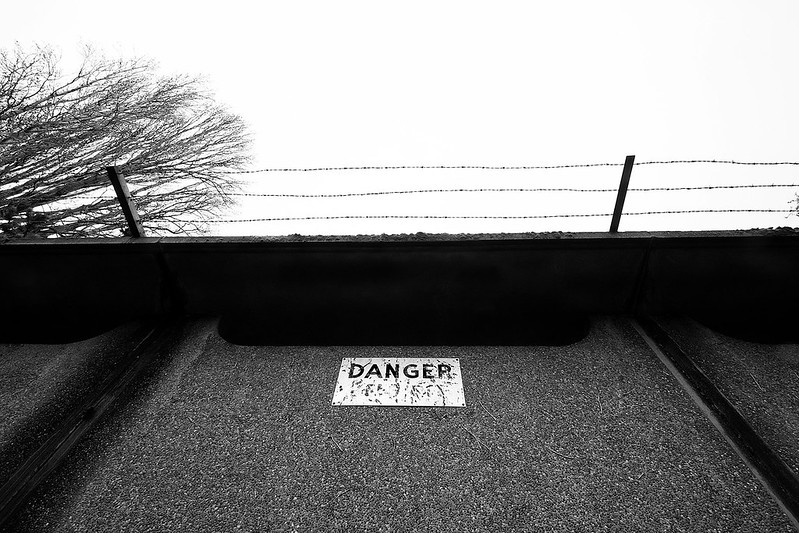
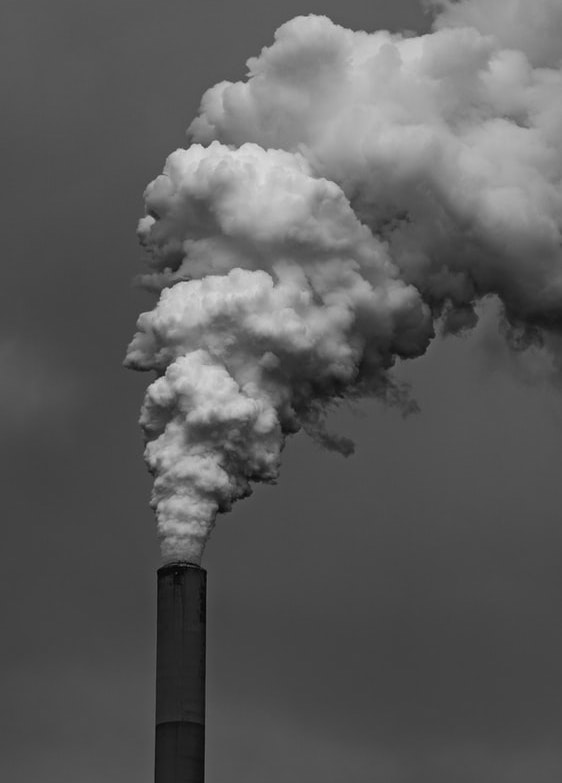
Photo credit: James Whatley via a Creative Commons license.
A note from Writers Resist
Thank you for reading! If you appreciate creative resistance and would like to support it, you can make a small, medium or large donation to Writers Resist from our Give a Sawbuck page.