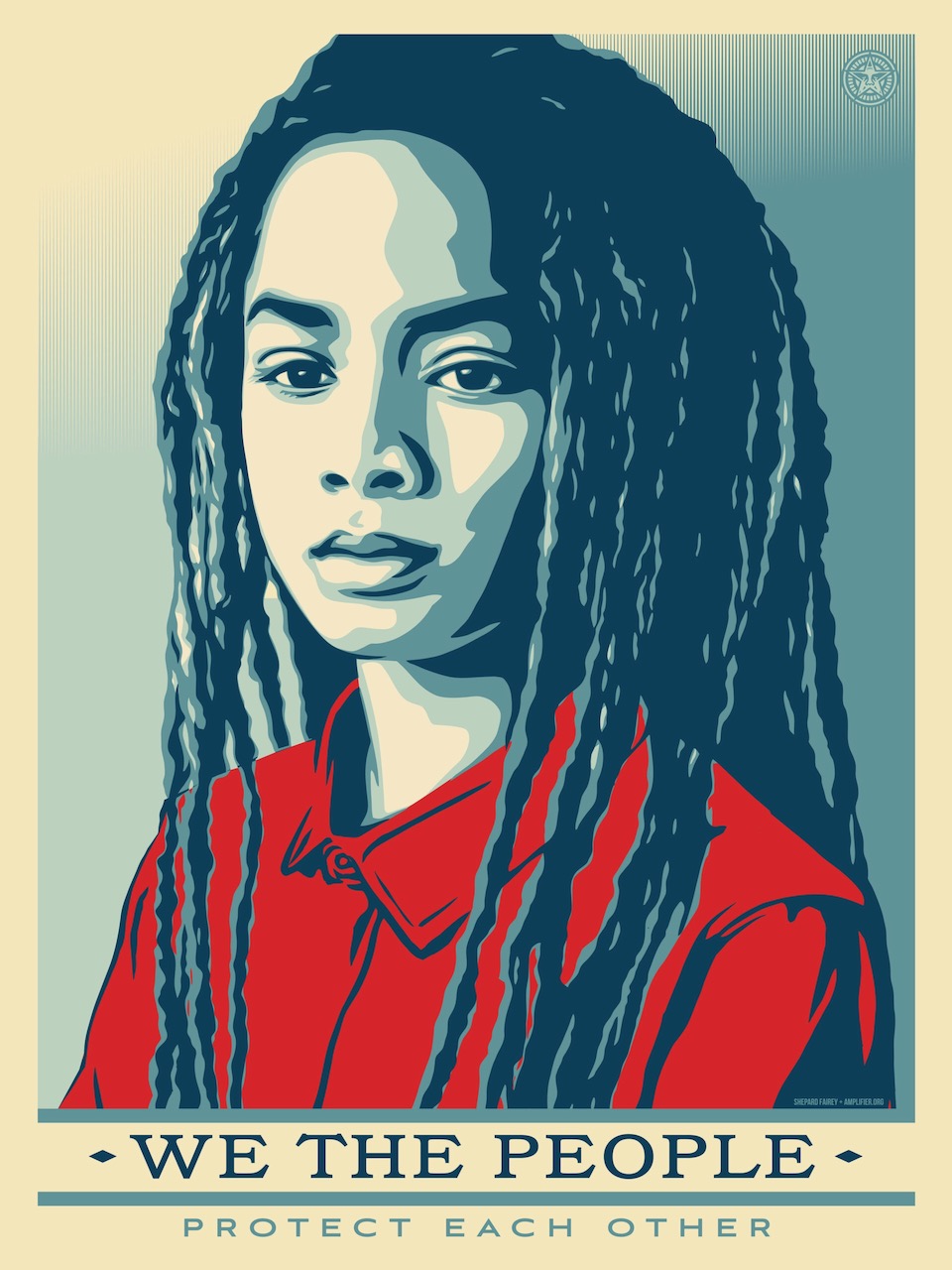
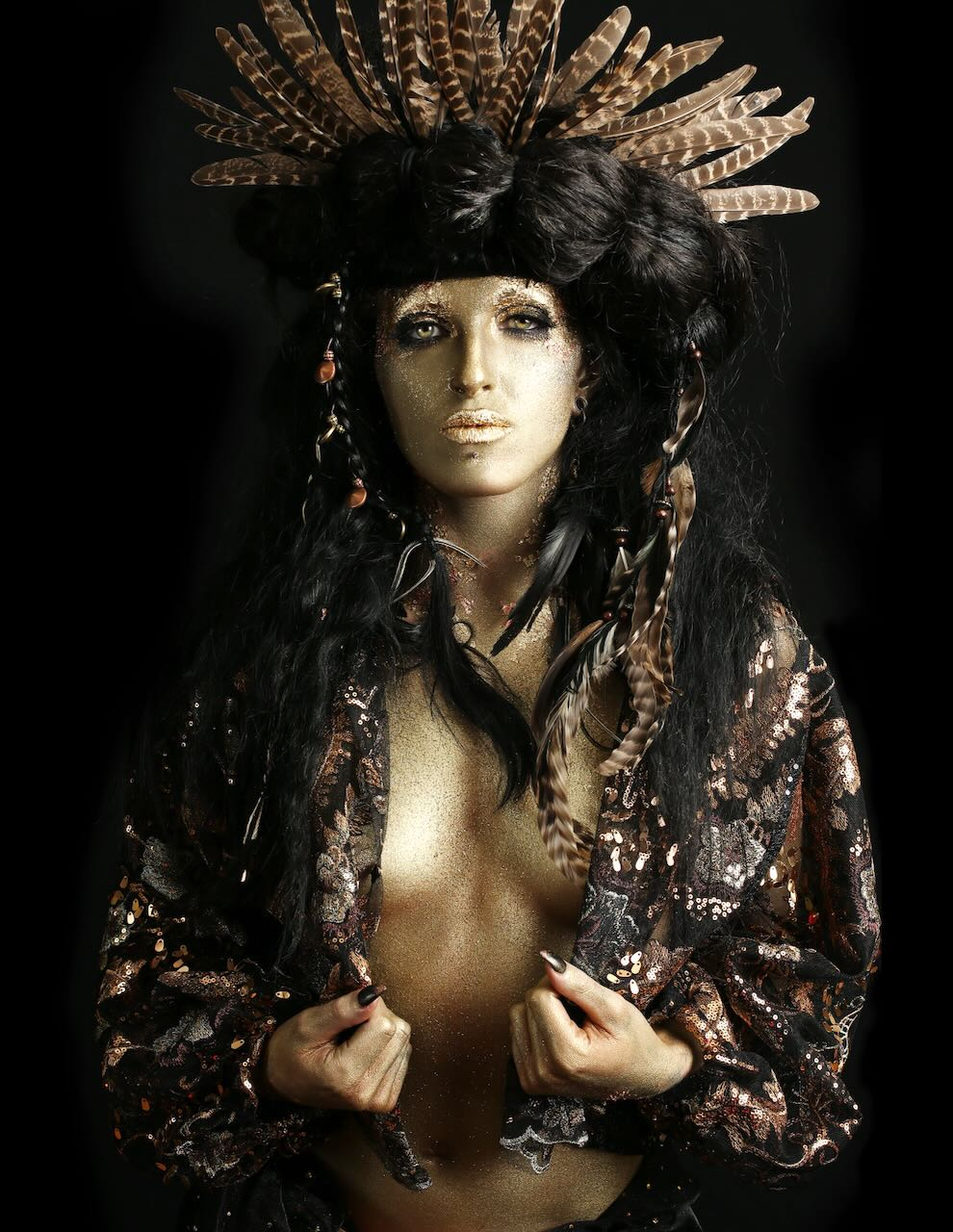
Photograph and Essay by Nina Pak

Resistance Wears Many Faces

By Nina Pak

Resistance wears many faces. Sometimes it marches in the streets, a cry against injustice that refuses to be ignored. Other times it is quiet, invisible. Nothing more than a refusal to yield, a single word withheld when obedience is demanded. Victory is never guaranteed. You may rise against tyranny and prevail, or fall beneath the weight of an abuser’s power. Yet even in defeat, there is a deeper triumph: the knowledge that you stood for yourself, that you did not abandon your own dignity. Too many women are denied even that. Too many are broken, again and again, until the will to resist is gone.

I know this intimately. Abuse has taken many shapes in my life. From childhood molestation, beatings, rape, and the suffocating grip of sociopathic relationships. I carry those scars as lessons. Resistance, for me, was not about becoming hard or meek. It was a long journey of discovery. I slipped from one cruel hand only to find another waiting; the patterns of harm run deep, and breaking free is not a single act but a process of unraveling.

Through it all, I learned to survive, and chose to serve. I have opened my doors and my heart to women who needed refuge. I have given what was never given to me, shelter, support, belief. I have tried to kindle confidence in those who doubted themselves, to mentor and nurture creativity in the young, and tend to the needs of the elderly. I treasure friendships across generations.

I believe this is our calling as women: to be each other’s salvation. No one else will rewrite the paradigm for us. We must protect one another, raise each other up, sometimes above ourselves. We must learn to step back when it allows another woman to step forward, not with envy, but in solidarity. For centuries, we were trained to support men’s lives, their dreams, their greatness. It is time we give that devotion to one another, without jealousy or regret.

My creative work in photography, art, and writing, have given me confidence and a sense of accomplishment. But my proudest moments are not public and not seen. It’s the way we choose to move through life that matters most. The relationships we build and nurture, the people we give our time and energy to, the small acts of kindness. The willingness to be there when needed.

So, if you ask who I am, who Nina Pak is, I will tell you this: I am the one who will step into crisis at my own risk. The one who will give her time and strength to women I believe in. I am the one who found her voice, was pushed down for it, but never lost the will to speak. Who had fear beaten out of her. Who finally had enough. Who learned against all odds to believe in herself. I am not loud, and I do not threaten. But I will not be silenced, and I will not endure mistreatment to myself or those I care about.

We don’t have to fight to make a difference, but we can’t be silent anymore. 


After studying painting and printmaking at Evergreen State College in Washington State, and then with a master jeweler in Settle, Nina Pak has since shifted through place and time, with creativity and courage, inspiration and service to the communities in which she’s dwelled. Today, she is a digital photographer, wardrobe stylist, set designer, and hair stylist. Her other projects are usually credited under the name Dreamloka. Explore more of her photography at ninapak.com and follow her on Instagram @ninapak.


A note from Writers Resist
Thank you for reading! If you appreciate creative resistance and would like to support it, you can make a small, medium or large donation to Writers Resist on our Give a Sawbuck page.

Secret Light

By Marianne Xenos

Sylvia stood at her worktable polishing a crystal diadem with a soft flannel cloth. The handcrafted headpiece was adorned with prisms and thrift-store rhinestones. Afternoon sun slanted through the large bay windows of her makeshift studio, the dining room of her late mother’s Victorian house. Sylvia smiled, remembering her mother with a twist of love and loss. “Who needs a dining room, anyway,” her mother had said a few months before her death, letting Sylvia create a refuge for her art.

The sun warmed the well-organized space, glimmering on Sylvia’s collection of art materials. Shelves held old television tubes, colored glass, and Kodachrome slides, and scattered boxes contained vintage jewelry, miniature mirrors, and antique teacups. Sylvia often made small sculptures, usually fantastical assemblages from found materials, but during the past year she’d begun experimenting with larger works involving prisms and projected light.

Sylvia’s brother Ash worked in the room directly over her head. She heard his guitar as he worked on a composition. They were both in their mid-forties and both currently single. They’d considered themselves too old to live with their mother, but after the political convulsion of the last few years, they needed affordable space, and their mother had needed in-home support before her death from the unnamed flu. Sylvia now had the only “day job,” not as a sculptor, but teaching art in the local high school. Ash found under-the-table gig work, because new restrictions from the Bureau for Biological Truth barred trans people from most jobs.

Sylvia held the diadem in a ray of sun, the crystals breaking the light into a rainbow. Natural light was called white, but a prism revealed light’s secret colors, which danced on the walls as Sylvia turned the object in her hands.

“Be careful. You could be arrested for that.” Ash stood in the doorway and smiled. There was no mistaking them as siblings. They had the same dark curly hair. Ash’s was cropped short and Sylvia tied hers back while she worked. They had their father’s brown eyes and olive complexion, and their mother’s strong nose and chin.

“I know. It’s crazy to spend so much time on work nobody will see.”

Ash nodded. They’d had this conversation many times. When President Andrew “Andy” Leblanc had created the Bureau for Biological Truth, he banned everything from rainbow flags to preferred pronouns. Not only that, over seventy percent of galleries had closed nationally, and those still open wanted only classical or representational work, avoiding anything experimental.

Ash held out an envelope. “Have you checked your mail lately? I got a weird letter today.”

“Just getting a letter is weird. I haven’t seen the mail carrier in weeks.”

Sylvia put the diadem on the table. She’d made five of them for the work-in-progress, an art installation she called “Secret Light.” Of course, the piece was just a fantasy at this point. In the current art scene, the work could never be exhibited.

Ash waved the letter in his hand. “Somebody is offering to fund one of my more experimental compositions. And it looks like you have a letter from the same return address.” He handed the unopened envelope to Sylvia. “And get this—they address me as Mr. Diaz-Malone. Mister.”

Sylvia looked up, surprised. “Well, there’s another thing that could get a person arrested.” Acknowledging transgender identity had been illegal for the past six months. She opened her own letter addressed to Ms. Sylvia Diaz-Malone.

“Huh. Somebody wants to fund my installation work, especially anything inspired by light.”

“Something weird is going on,” Ash said, as he walked over to the window, staring at the house across the street. Their neighbors, who recently found a swastika painted on their front door, were covering their multicolored Victorian house—a perfect three-story “painted lady”—with glossy white paint.

One of LeBlanc’s earliest executive orders mandated classical architecture, reminiscent of Greece and Rome, for government buildings. The order was for federal buildings, but as a symbol of patriotism, some began painting their homes stark white. Some even built pillars framing doorways on everything from McMansions to double-wide trailers.

Sylvia taught art history and knew the original Roman Colosseum had been painted with bright colors, as vivid and showy as the painted lady across the street. But Leblanc’s patriots embraced the misunderstanding of whiteness, even if the columns framing their doors were built from Styrofoam blocks.

“I guess the neighbors are finally giving in to pressure,” Sylvia said. “We at least used off-white paint when we painted ours.”

“Yeah, but we didn’t get a swastika on our front door. Or a drive-by bullet, like at Blaze’s place.” Ash turned from the window and glanced again at the letter in his hand. “Have you ever heard of the ‘Propaganda Assets Inventory’?”

“No, is this some new Leblanc thing?”

“No, it’s historical. Supposedly, after World War II, the CIA—believe it or not—helped fund abstract expressionism. They didn’t want France dominating the world art scene, so they secretly supported American artists.”

“That’s ridiculous. Most of those guys were radicals or at least skeptics. They’d never get cozy with the CIA.”

“Exactly, so the backing was top secret. Maybe this is the same thing. Somebody in the government wants to push against Leblanc’s policies.”

Sylvia scanned her own letter. “Or this could be a joke. And even worse, it could be a trick to bring us out into the open.”

“But what if somebody with influence wants to turn things around? Half the world is laughing at Leblanc. Maybe there’s an agency within an agency, somebody who wants a different kind of American exceptionalism.”

“I’m skeptical.” Sylvia took both letters and brought them out to the mail desk by the front door, with Ash following behind. “Let’s think about it. But today we need to rescue Blaze.”

Ash pulled out his phone. “Have you thought about what we offered? Any change of heart?”

“No, he should be here with us. Things are getting too dangerous.”

Despite the swastika across the street, their neighborhood was still safer than the one where their friend Blaze was camping on somebody’s couch. It was an area where whiteness was becoming a cult, and any whiff of color, such as their friend—a gay Black dancer with dyed purple locks—was a target.

Sylvia stood by while Ash facetimed their friend, and asked if he was ready to move in. Blaze hesitated for a moment, and Ash said, “Blaze, you know my mother loved you. She would want you here.” Blaze, looking relieved, agreed.

Ash asked, “Hey, have you received any letters about your artwork?”

“We don’t all live in a big house on Main Street, honey. I haven’t even seen junk mail in two years.”

“Good point,” Ash said, and told Blaze about the offers.

“You think somebody wants artists to stand up against President Andy Android? I’m convinced that guy is nothing but an AI projection.”

Sylvia leaned towards the phone. “What are you even talking about?”

“Well, has anyone ever seen him in public? Ever seen anything other than his torso above a desk?”

“Maybe he doesn’t want to catch an unnamed flu.”

“Or maybe they’ve created a president who can’t die of an unnamed flu.”

The last two presidents had died within a year of each other, each from “natural causes,” rumored to be a rogue virus, unstudied and unnamed. It was possibly the same unnamed flu that killed their mother. She was a former hippie and outspoken recovering alcoholic and loved slogans. Her favorite was, “You’re only as sick as your secrets,” and then she’d died of a secret illness.

Sylvia leaned towards the phone again. “Ash thinks the letters are from a clandestine government agency, trying to regain American exceptionalism in the arts.”

“Ha! And we’re the best they can work with?”

Ash laughed but said, “Maybe they’re looking for a new flavor of exceptionalism.”

“Too many conspiracy theories!” Sylvia said. “I just want to work—to make something beautiful! Or at least make something. Is that too much to ask?”

Blaze sighed and said, “Let’s look at your piece tonight, sweetie. We’ll just do it. Draw the blinds, set up your gear, and run it.”

“Do you have something white to wear? Maybe something sexy.”

“Sexy? You called the right number, girlfriend.”

“Okay,” she said. “We’re on our way.”

At the door, Sylvia paused to reread her letter, wrinkling her nose as though something smelled bad. Ash had put on his public disguise, a pair of tear-drop earrings, faux gold clip-ons from the bottom of their mother’s jewelry box. The earrings had been too boring for their hippie mother to wear, and maybe they’d been a gift from her kids when they were young enough to want an ordinary mom.

“The teardrops of invisibility,” Ash said, as he clipped them on. Sylvia kissed her brother on the cheek, and they went to pick up Blaze.

•   •   •

As they drove towards Blaze’s neighborhood, Sylvia said, “Wait! What’s going on over there?” On the street, a group of kids pushed a girl to the ground. Ash pulled the car over.

“They’re teenagers,” Sylvia said. “Let me take the lead on this.”

“It’s all yours,” Ash said, and they both rushed out of the car.

Sylvia had learned to fight in middle school, defending both herself and her queer sibling from bullies, and as an adult she’d learned to fight smarter rather than harder. She’d dated both women and men, so she wasn’t exactly straight, but she could pass unless she said what was on her mind. Sometimes, in a pinch, she used that privilege, and she put on her schoolteacher persona.

She took out her phone as she ran up to the group. A teenaged girl lay on the ground, and another girl with heavy boots was pulling back for a kick.

“Hey you! Stop it! I’m calling the cops now.”

“Call the Bio Cops, bitch. She’s a queer.”

“No, I’m calling the real cops. This is assault, and it’s illegal.”

The girl with the heavy boots paused and scowled at Sylvia. She didn’t even glance at Ash who stood behind her, and Sylvia hoped the earrings were doing their magic.

“Who the fuck are you? Another pervert?”

Sylvia used her phone to take a picture. “I’m Miss Diaz-Malone, and I work at the high school. Listen to me—after I call the cops I’m sending this picture to your principal. Do you want your parents to see it?”

“But she’s one of them! Look!” The girl with the boots held up a lavender scarf. “She belongs in Bio Camp.”

Sylvia snapped another picture. “You’re okay with the cops questioning you? Nothing illegal in your pockets? Nothing to hide? I’m ready to dial, but leave now, and I’ll let it go.”

The kids swore and grumbled, tossed the scarf back at the girl, but they left. Ash stepped forward to give the girl a hand. She looked rumpled, but no injuries. Something about her reminded Sylvia of herself at that age. Vulnerable, stubborn and always having to fight.

“I’m Sylvia,” she said, “And this is Ash. Are you okay? Do you need a ride someplace?”

“No, I’m almost home. But….” Sylvia raised an eyebrow in question. “My parents are going to be pissed.”

Ash said, “We live in the center of town. The off-white house on Main Street—number 237. If you ever have trouble, come and find us.”

Sylvia gestured to the lavender scarf. “Pretty scarf, but you better stash it until the craziness passes. Just to be safe.”

The girl stuffed it in her backpack. “Thanks,” she said. “My name is Ruthie.”

They got back in the car and watched the girl as she walked away.

Ash said, “Do you really think the craziness will pass?”

“We have to hope. What would Mom say?”

“Something wise and pithy about the thing with feathers or this too shall pass.”

“She quoted somebody once: ‘Hope doesn’t glimmer; it burns.'”

“That reminds me. Let’s go get Blaze.”

•   •   •

They found Blaze waiting on the front stoop of a five-story apartment building with peeling blue paint. His purple locks were gone, but he walked towards the car looking undiminished, tall and handsome in a black leather jacket. While Ash drove home, they chatted about the letters. Blaze had called his old roommate, who confirmed the post office had stopped delivery to that neighborhood a year ago. No mysterious letters had been slipped under the door.

•   •   •

Ash used the front parlor as a rehearsal space, and currently it was the home of Sylvia’s installation-in-progress. They’d pushed the sofa against one wall and collections of instruments stood in the corners. With a wink towards classical architecture, four white pedestals formed a large square in the center of the room, set about six feet apart. Each pedestal was four feet high, and each held a crystal diadem. Sylvia had mounted eight laser spotlights on the ceiling, and they beamed down like pillars of light.

Blaze had packed something sexy. He wore a white, vintage tuxedo, and was bare-chested underneath, except for a string of white pearls. He stood in the center of the room, arms outstretched, tipping his hand in and out of the bright beams.

“I know you’re a sculptor, honey, but this is just screaming for movement—for a dancer.”

“Well, it might just be screaming for you.”

Ash said, “If we ever do this for real, I could play some glass instruments. Like an armonica. Or there’s something called a chromatic aquarion.”

“Yes, that would be perfect. And I know I need to improve the lights—make the beams tighter and stronger—but for now let’s just try it.”

Sylvia turned off all the lamps, leaving only the eight beams of light, and Ash took his guitar to the sofa. Blaze stood in the center of the pedestals and put the most ornate diadem on his head. While Ash began to play, he and Blaze improvised, following one another’s cues. Blaze experimented with the headpiece, sweeping his head through a beam of light, tossing colors like confetti against the bare walls. He paused to adjust the diadem on his head, and took two more from the pedestals, one for each hand. He glanced at Sylvia for affirmation, and she nodded, making a mental note to create a more secure headpiece for a performer and to consider prismatic wands.

Blaze arched and swept the diadems through the pillars of light, matching his movement to the rhythm of the guitar. Twirling his head and hands, he dipped in and out of the beams, from darkness to light and back, color splashing like water against the drawn shades. Yes! Sylvia felt like shouting, but didn’t want to break the focus. The three of them were in sync, the piece coming together like a landscape. The structure of the installation like stones, music like water, and Blaze’s movement like sunlight flashing on the surface. The room held a fizz of energy, reminding Sylvia of the tang of ozone at the edge of a waterfall.

Sylvia thought, Yes, this is working….

A knock came from the front door, startling them all.

Her heart thumped, but she said, “Don’t move. I’ll see who’s there.”

Looking through the peephole, Sylvia saw Ruthie, the girl from the street. Slouched on the front stoop, hands stuffed in the pockets of her hoodie, the girl had a bulky backpack slung over one shoulder.

Sylvia opened the door and saw Ruthie’s swollen face with a new bruise just forming under her left eye.

“You said if I need anything.”

Sylvia looked up and down the street. “Did those kids do this?”

“No, my dad. He said I was drawing attention, putting everybody in danger. So, I left.”

Sylvia let her in and closed the door, turning all the locks.

“The light glimmering on the window shades was beautiful,” Ruthie said. Then her eyes widened as Blaze came out in his tuxedo and pearls.

Ash stood at the door to the parlor holding his guitar. “Ruthie, you’re welcome here no matter what, but I have to ask—what kind of trouble are we looking at? How old are you?”

“I’m seventeen. Hand to god, dude. I’m now legally old enough to converse with queer folks.”

Ash nodded, and Blaze said. “Okay, but here’s a more important question: Are you now or have you ever been a member of the CIA? Or the Propaganda Assets Inventory?”

Ruthie laughed and shook her head. “No, never.”

“Okay, girlfriend, you pass the test. Now help me put blankets over these windows and I’ll show you how the tiaras work.”

“They’re diadems,” Sylvia said as she picked up the two letters on the mail table, once again wrinkling her nose. Was it an opportunity or a trap? She’d been calm while they were working, a rare feeling of certainty, but now her anxiety had returned—anxiety about the world, the future, and the battered girl in her parlor.

Ash put his arm around her and whispered. “Sometimes hope glimmers before it burns, right? You’re the boss for the moment. Do you want to run it again? You might have just gained an intern.”

Sylvia held the letters over the wicker trash basket their mother always kept next to the mail table. “May I?” she asked. “Hand to god, dude, something stinks about this.”

Ash laughed and nodded. “I trust your instincts.”

Sylvia dropped the letters into the trash. Work would calm her panic. It always did.

“Yes, let’s run it again.”


Marianne Xenos is a writer and artist living in western Massachusetts in the United States. She creates stories about magic, history, and family secrets. Most of her characters occupy positions of “otherness”—some as immigrants, some as LBGTQ+, and some because of magical inclinations. Her stories have been published in magazines and anthologies including The Fantastic OtherThe Underdogs Rise, Writers of the Future #39, Orion’s Belt, and the game anthology, Winding Paths. She was a first-place winner of the Writers of the Future contest in 2022 and a finalist for the Speculative Literature Foundation’s Working Class Writers contest in 2024.

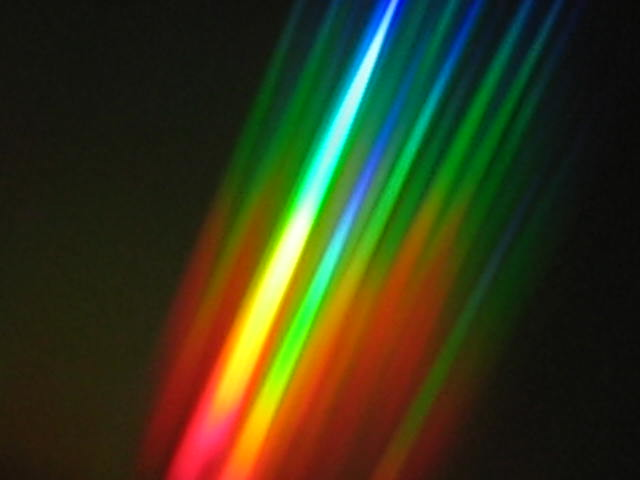
Photograph by sila via a Creative Commons license.

A note from Writers Resist
Thank you for reading! If you appreciate creative resistance and would like to support it, you can make a small, medium or large donation to Writers Resist on our Give a Sawbuck page.
They Tell Us

By Dawn Tasaka Steffler

I

Wait until buyer’s remorse sets in
Wait until it hurts the farmers
Until it hurts the veterans
Until the social security checks stop coming
Until they take away birthright citizenship
Until they take away freedom of speech
Until they take away the vote from women
Until another pandemic rears its head and hundreds of thousands die again

Whispers circulate
But what if we don’t want to wait?
Where are the protests?
What are we so afraid of?

Actually we are very afraid
We only act brave

II

They tell us we are the sleeping bear
And you know what they say
You don’t want to poke a sleeping bear

And one of us asks in a clear young voice
Why don’t we want to poke the bear?
If we wake the sleeping bear won’t the nightmare end?
Everyone nods their heads in agreement

They tell us
No, we’re going to roll over and play dead

Wait, are we a sleeping bear or a dead bear?

III

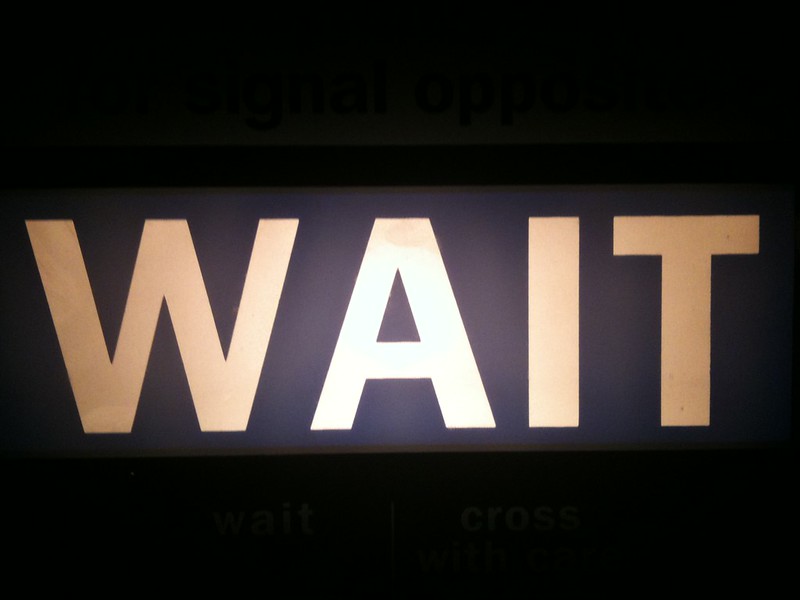
They tell us wait until the midterms
If they want to hang themselves give them plenty of rope
Don’t stand in the way of the process

Perplexed we look to our left and our right
to the person standing next to us

One of us whispers
I don’t think they know what they’re doing
This has never happened before

Ah- but it has
another one of us whispers
Just not here


Dawn Tasaka Steffler (she/her) is an Asian-American writer from Hawaii who lives in the San Francisco Bay Area. She was a Smokelong Quarterly Emerging Writer Fellow, winner of the Bath Flash Fiction Award, and was selected for both the 2024 Wigleaf Top 50 long list and 2025 Best Small Fictions. Her stories appear in Pithead Chapel, Fractured Lit, Moon City Review, The Forge, JMWW, and more. She is working on a novella-in-flash that explores the challenges and joys of parenting queer kids. Find her online at dawntasakasteffler.com and on X, BlueSky and Instagram @dawnsteffler.

Photo credit: Ged Carroll via a Creative Commons license.


A note from Writers Resist
Thank you for reading! If you appreciate creative resistance and would like to support it, you can make a small, medium or large donation to Writers Resist on our Give a Sawbuck page.
Now Your True Life Begins

By Claudia Wair                                                                                                              

It’s dark early morning when they take you out of your cell at the county jail. They lead you to a waiting bus, full of other prisoners. The detainees are all Black, like you. Everyone here has been charged with the same crime: taking a white man’s job.

The people on the bus are quiet. Some sleep, others stare with frightened eyes out the windows. Your destination is the State Re-education Camp.

At your trial, you argued that your job as a writer was unique. No white man could write the same words. But the judge laughed and said, Your words don’t matter. Then he banned your books, made you watch as they burned.

It’s late morning when you arrive at the camp and the sun is already hot on your skin. The guards separate the women from the men. You join the line of women and are led to a bunkhouse that smells of old sweat. When the guards leave, everyone introduces themselves: doctors, lawyers, college professors. You feel insignificant with your master’s degree in English literature. When it’s your turn, you say I’m a writer. They burned my books, scrubbed me from the internet. The women shake their heads, suck their teeth in sympathy.

Silence descends when your Instructor enters, a white woman with a cruel sneer. Forget your past lives, she says. Now, your true lives begin. The lives you should have always led.

You’re told that here you will learn to be subservient to white people. That you will learn to love serving them. You know this isn’t true.

During the months of your incarceration, you endure beatings, forced labor, sleep deprivation. You survive it all. Not everyone does.

They humiliate you. They try to make you believe you are less.

They fail.

One day, without explanation, they release you to a halfway house in a strange city. You vow to never lift a finger to serve them. This will lead to prison—or worse—so you run.

You pass yourself off as an Unemployable. You sleep in a hard-to-find corner of an abandoned building, get donations of food and supplies from church basements. You trade secondhand clothes for basic survival gear. You buy information with fresh fruit. Then you set off for the mountains.

You’re chasing whispers and rumors. You follow hand-drawn maps. You stop at secret safehouses, get help from unlikely sources.

By some miracle, you evade the Race Police and the Nazi militias. A Black truck driver stops along the highway and gives you a ride out of the state. You could both go to prison for this. He accepts the risk and muses about following you one day.

After weeks of hiking in the mountains alone, you find the Free People. Your joy at seeing healthy Black and brown faces nearly breaks you. After you recover from your journey, you join the others growing food on the community’s farm. You teach the children using banned literature and history books.

Soon, you are almost yourself again.

The Free People remember your writing. They give you pen and paper and ask you to tell your story. You tell your story. You tell all the stories. One day, you swear, the world will read them.

The community is growing. White allies bring supplies when they can. Clothes, tools, guns.

You learn how to defend your new home. Cradling your rifle, you scan the shadowy forest for intruders. You wonder how you’d acquit yourself if faced with the people who deny your humanity. The people who tried to break you. The people who took your old life away.  

A grim smile crosses your face. Because you know what you’ve lost. Because you know what the world has lost.

Your jaw tightens, your blood burns, and part of you aches for the chance to make someone pay. You are fueled by rage and sorrow and just enough hope to keep going. Enough to aim the rifle and pull the trigger.


Claudia Wair is a Black writer living in Virginia. Her fiction has been nominated for the Pushcart Prize, Best Microfiction, Best of the Net, and Best Small Fictions. Her work has appeared in Pithead Chapel, Astrolabe, Writers Resist, JMWW, and elsewhere. She can be found at claudiawair.com or on Bluesky @CWTellsTales.bsky.social

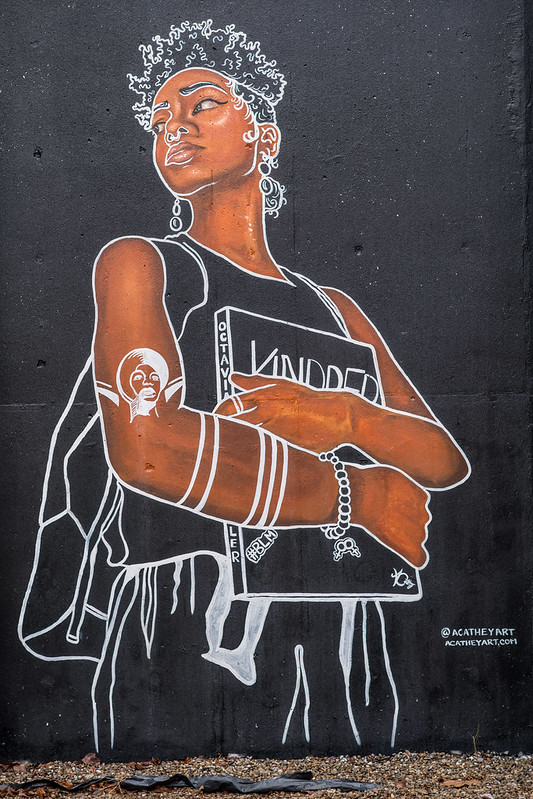
Mural by Ashley Cathey, at Hartford Hall, Jefferson Technical and Community College, Louisville, Kentucky.

Photo credit: Don Sniegowski via a Creative Commons license.


A note from Writers Resist
Thank you for reading! If you appreciate creative resistance and would like to support it, you can make a small, medium or large donation to Writers Resist on our Give a Sawbuck page.
Marked

By Fendy Satria Tulodo

I was twelve when I figured out the world had already decided what to call me. Not the name Ma whispered soft as a prayer when I was born. Not the one my teachers read off the roll sheet. Not even the one my little brother mumbled when he had bad dreams.

It was something else. Heavier. Something that wrapped itself around me like a second skin, tight and unshakable, no matter how carefully I moved, no matter how many times I tried to stand taller.

It started with a look.

Not the kind people give when they’re just curious, when they’re trying to remember if they’ve seen you before. No—this one stuck. Followed me. Slipped into rooms behind me. Hung around in places where I should’ve been invisible.

But I wasn’t.

The Store

The first time I knew I was marked, it was a Wednesday. Just another day. The air smelled like fried food and gasoline, thick and familiar near the station. I had a few bills in my pocket, enough for a drink. Maybe some candy if I picked right.

The shop was the kind with a rattling fan in the corner and shelves full of things that never seemed to sell. Dusty bottles of soy sauce. Batteries in faded packaging.

I walked in, hands in my pockets.

The man behind the counter looked up. His gaze landed on me—and stayed there.

At first, I ignored it. People stared. That was nothing new.

But then I took a step toward the fridge. And he stepped out from behind the counter.

“Need somethin’?” His voice was sharp, cutting the space between us.

I nodded. “Yeah.”

I reached for the door handle.

“Which one?”

I blinked. “What?”

“Which drink you want?”

I frowned. “I dunno yet.”

His jaw tightened. “Then hurry up.”

The way he said it—like I didn’t belong there, like I was some kind of problem just for existing—made my hands tighten at my sides.

I reached for the blue bottle, the same one I always picked. I already knew I was short on change. Didn’t matter.

The second my fingers brushed the glass, he shifted.

Not fast, not loud. But definite.

A shift in his stance. A glance toward the counter. A weight in his right hand.

I dropped the bottle.

Didn’t even hear it hit the tile.

“Out.”

He didn’t have to say it twice.

The Walk Home

The street felt different after that.

It wasn’t the first time I’d been told to leave a place. But it was the first time I felt like I wasn’t just leaving a store. I was leaving something bigger.

I walked fast. Past the laundromat where the old ladies sat with baskets full of stories. Past the barber shop where Mr. Joko always gave me a nod like I was somebody. Past the cracked sidewalk where my little brother liked to draw lopsided stars.

At home, Ma was folding clothes. The air smelled like detergent and warm fabric.

She didn’t look up when I walked in. “You get your drink?”

I shook my head.

“Why not?”

I swallowed. “Didn’t have enough.”

She kept folding. Her hands were steady, smoothing out wrinkles, tucking in sleeves.

She didn’t ask anything else.

But that night, when she thought I was asleep, I heard her on the phone.

Voice low.

Sharp.

Angry.

“How do I tell him this is just the start?”

The Return

The next day, I went back.

Not because I wanted to. Not because I was thirsty.

But because I had to.

I needed to know if it was real. If it was just that day, just that moment. Or if it was something deeper. Something permanent.

I stepped into the store.

The bell jingled.

The fan rattled.

And the man behind the counter looked up.

His eyes landed on me.

And just like that, I knew.

It wasn’t about the drink. It wasn’t about the coins in my pocket.

It was about me.

I walked slow. Let him see.

I stopped in front of the fridge.

Opened it.

Took my time.

The air from the fridge was cold against my face. My fingers curled around the same blue bottle.

I turned.

Met his eyes.

And I dared him to stop me.

The Line You Can’t See

The counter felt . . . off. Like it had backed away just a little. Maybe it was in my head. The bottle was wet, slipping slightly as I held on tighter. A thought whispered—leave it, just go, see if he even reacts. But I wasn’t a thief. I was doing nothing wrong.

I stepped closer.

His stare locked on me. He didn’t budge, but his fingers twitched, just barely. Like he was gearing up for something. Like he saw a line in front of me that I didn’t even know was there.

I set the bottle down. Shoved the money forward.

He didn’t take it.

His eyes flicked to the security cam, then back at me. No words. Didn’t need any. I got the message.

He was measuring me. Deciding.

The air between us was heavy.

Then, slowly, he reached for the money.

The register beeped. A drawer clicked open. A moment passed, then a crumpled note landed on the counter. Change.

I picked up my drink. Turned.

I made it halfway to the door before he spoke.

“Don’t linger.”

The words weren’t loud, but they hit like a slap.

I stepped outside.

The bell jingled behind me, sharp and final.

More Than a Store

I stood on the sidewalk, bottle gripped tight, the pavement burning through my soles. People moved past—some fast, some slow—but none of them noticed.

None of them saw the line I had just stepped over.

The world kept moving like nothing had happened.

Like I hadn’t just been marked.

But I knew.

I turned the bottle in my hands, watching droplets slip down the plastic, vanishing into nothing. Such a small thing. Simple. But the store didn’t feel small anymore.

It wasn’t just a place to buy a drink.

It was a gate.

A test.

A reminder.

You don’t belong here.

You can leave, but you’ll still be carrying this with you.

I opened the bottle, took a long sip, and let the cold settle in my chest.

It didn’t change anything.

But it was mine.

The Lesson Ma Knew

That night, Ma was quiet. Not in the way she usually was, when she was tired after work. This was different.

She was waiting.

She knew I had gone back.

I set the half-drunk bottle down on the kitchen counter.

She looked at it, quiet for a second, like the words were stuck somewhere before they finally came out.

“Did he say anything?”

I hesitated. “Just told me not to linger.”

Her fingers tightened around the dish towel she was holding.

Then she exhaled, slow.

“Good.”

I frowned. “Good?”

She turned to me, eyes steady. “Means you didn’t let him push you out.”

I wanted to tell her it didn’t feel like I’d won anything. That it still felt like I was standing outside that store, even now.

But she already knew that.

She patted my cheek, her fingers rough but warm. “Now you know.”

“Know what?”

Her smile was sad. “That this isn’t about you.”

I didn’t understand what she meant.

Not yet.

But I would.

Marked, But Moving

Days passed. Then weeks.

I walked past that store almost every day. Sometimes I went in. Sometimes I didn’t.

The man never said anything more than what was necessary.

But the look stayed.

That weight. That mark.

It never left.

And yet—

Neither did I.

I stepped into other places, other rooms, other streets where that same look followed me. And every time, I carried that first lesson with me.

This isn’t about you.

But it still touches you.

Still lingers on your skin, in your shadow.

I could let it push me down.

Or I could keep walking.

I knew which one Ma would want.

And so, I walked.

End.


Fendy, a writer, musician, and creative mind from Malang, Indonesia, explores fiction, nonfiction, and business theory. His works have found homes in literary magazines and academic circles, reflecting his diverse storytelling and analytical depth. When he’s not writing, he explores storytelling through music under the name “Nep Kid.”

Photo credit: Photo by Robinson Greig on Unsplash.


A note from Writers Resist
Thank you for reading! If you appreciate creative resistance and would like to
support it, you can make a small, medium or large donation to Writers Resist from our Give a Sawbuck page.

Judged

By Sheree Shatsky

Artist Statement

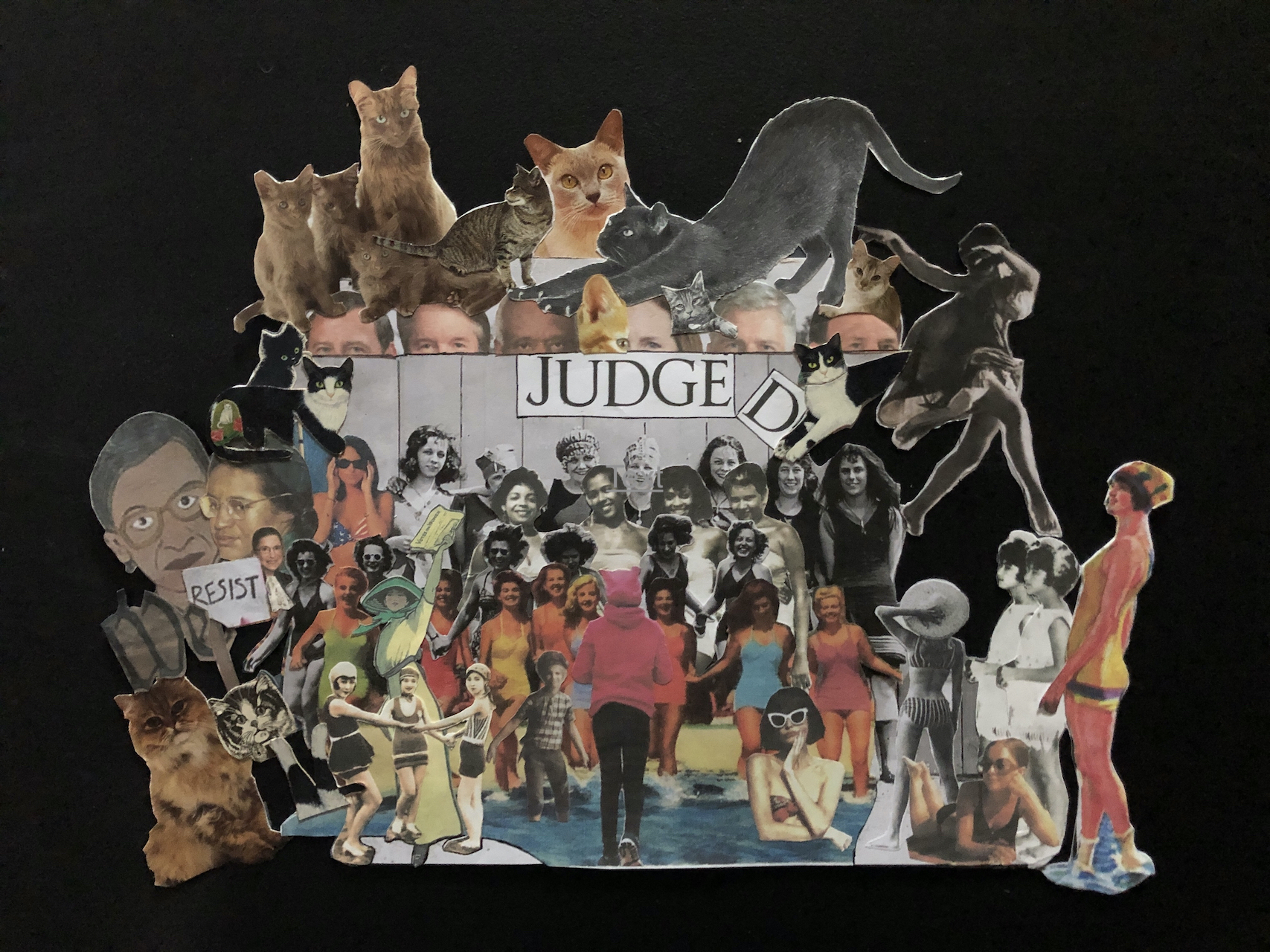
This collage reflects the connection of women past with women present and future, faced with the loss of civil rights fought for and won by previous generations. We must stand on the shoulders of those who came before, who struggled for the rights we have very much taken for granted and presently find under assault.

This hand-cut paper collage is assembled using images gathered and photocopied from the public domain, as well as photographs from the artist’s personal collection.


Sheree Shatsky is the author of the novella-in-flash Summer 1969 (Ad Hoc Fiction 2023). Her collage “Overturn Citizens United” is included in Maintenant 18: A Journal of Contemporary Dada Writing & Art PLUTOCRAZY (Three Rooms Press 2024). Find her website, Substack and other links at linktr.ee/shereeshatsky.


A note from Writers Resist

Thank you for reading! If you appreciate creative resistance and would like to support it, you can make a small, medium or large donation to Writers Resist from our Give a Sawbuck page.

Death Equals Silence

By Micaela Kaibni Raen

Artist statement

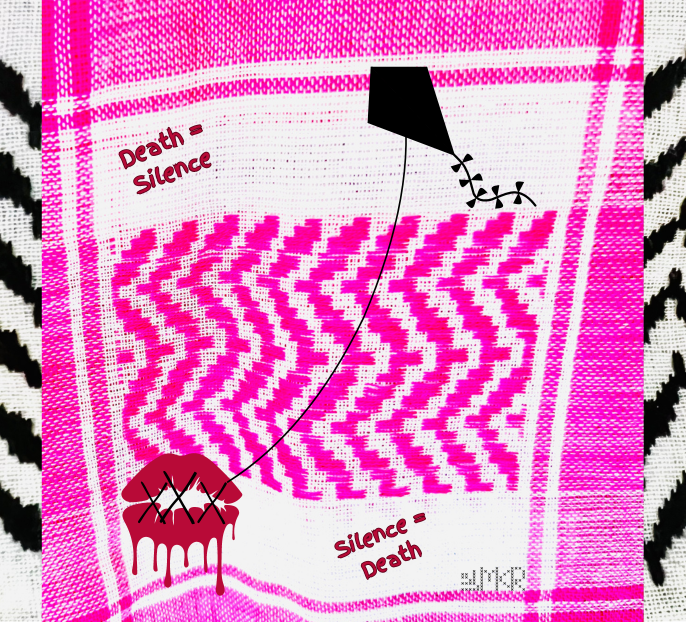
I am my grandmothers’ dream, and she is mine. We exist together through Tatreez, Indigenous Palestinian textiles and embroidery. We share cultural memory and wisdom traditionally handed down, Palestinian female to Palestinian female. As a Palestinian lesbian artist, I feel Tatreez patterns hold a deep connectivity to ancestral Indigenous femininities that can be accessed through creating art based on the patterns, repetitions, and mathematical matriarchal matrices inherent in Tatreez stitching sequences. My goal is to take these intuitive insights and formulaic computations to create a new visual artform, Queer Tatreez. A style of art focused on ancestral wisdom that embraces inclusivity, diversity, and the land that gives us life.

My mission, with this artwork, Death Equals Silence, is to educate others in order to bring an end to the military occupation, and ongoing Nakba, in Palestine. I am living in exile in North America, and my artwork strives to bring our sacred teachings, rooted in spirit and land, fully into the present moment. Two keffiyeh scarves are shown, one is black and white, while the other is pink and white. To me, the keffiyeh is a symbol of cultural identity and sumud/steadfastness. Two color variations are shown to represent both the Palestinian men and women killed since October 2024. The kite image symbolizes the children of Gaza who currently have the Guiness World Record for the most kites flying at once. With little documentation and no headstones, the black kite flies as our death marker, re/telling the stories of the thousands of children that have been targeted and killed during the current genocide.

The Aids Coalition to Unleash Power (ACT UP!) has used the slogan Silence = Death to mark many social justice movements from the HIV/AIDS pandemic, Queer and Trans human rights, the Palestinian genocide, and more. At the top, I have flipped the words to read, “Death = Silence.” This is not a general statement of truth. This is in direct reference to…whole families (and their genetic line of familial relatives) that were targeted and killed since October 2024. Especially targeted were teachers, leaders, doctors, activists, journalists, authors, humanitarian workers, social workers, etc. Statistics show that death disproportionately silences children and those working toward justice. The words in the artwork combined with the lips sewn together represent the current global climate of racism, ethnic-cultural-erasure, shadow-bans, and censorship of Palestinian voices.

For this artwork, I researched ancient and modern patterns of Palestinian embroidery and keffiyeh scarf patterns. I used two keffiyeh scarves to design textile/images through high resolution scans and graphic art. Through art layering, I placed the images onto a graphic art layer and then designed the text and other graphical elements. My work incorporates multimedia modalities and is an ever-evolving journey. Contemplating Tatreez patterns, and the act of Tatreez creation, become a bridge into deep space time where I sit with my grandmothers in a sacred Tatreez Circle, embraced, and listen.


Micaela Kaibni Raen is a Palestinian-American creator, cultural worker, queer femme-dyke, mother, and global Queer/Trans human rights activist. She is most known for Queer Tatreez, a style of visual art and visual poetics based on Indigenous Palestinian Tatreez embroidery. Her work appears in Mizna; Qafiyah Review; Rowayat; Yellow Medicine Review; The Poetry of Arab Women; and El Ghourabaa: A Queer and Trans Arab and Arabophone Anthology. For more information, visit her website and Instagram.


A note from Writers Resist

Thank you for reading! If you appreciate creative resistance and would like to support it, you can make a small, medium or large donation to Writers Resist from our Give a Sawbuck page.

Two Poems by Lonav Ojha

To Refaat Alareer,
who became a kite


Brother, you looked so loving,

holding very gently

that box of

strawberries, and behind

your home, not yet,

not again,

but incessantly

in ruins.


You were not a number,

you were,

an educator,

a cheerful poet,

settler’s boogeyman,


and now that you’re dead, English is also

a language for mourning.


A strike occurs in a medium

it does not

simply

………

….

fall.


And your words

hang in air

heavier than any

gravity bombs.¹


1. American

•          •          •          •          •          •          •          •          •          •       


A letter to a friend explaining the student movement


I have been listening

to more Bollywood these

days. I have been writing Press Statements

for the Press that does not state what

must be stated. I live in despair. And I

sometimes wish I didn’t have to, but hearing

love songs, Bollywood love songs, without

having anybody to love in a Bollywood sort of way,

means I’m hoping to learn a few things

about romancing myself.


A newly made friend

told me

during the protests that he’s serious about

killing himself, & he was writing

a letter, and another

said she’s cutting herself after many years.

The first person, we don’t talk anymore, because I have

nothing to say.


They’re still alive. I am also still alive.

I am listening to Bollywood songs. I am writing

Press Statements.

I am talking to L, and he says,

the Vice-Chancellor is planning something

HUGE!!

He’s been flying back and forth to Delhi. He,

is a bastard, and I’m listening

to Bollywood songs, and I’m doing alright.

And I’m trying to love my friends, the ones I can,

the ones who can love me.


Long live that look

on your face, and mine. I am

listening to Bollywood

songs, and I’m imagining someone

who would have me fully.

I suffer egregiously from the main character

syndrome. I suffer from having faith

in people. Long live the crane

behind the Magis block that spent a year

building what it will never occupy.

Long live the cats in the New Academic Block

that don’t give a shit. So I am

writing Press Statements. I’ve always

danced in my room,

when nobody’s watching,

when the world is burning,

and I haven’t stopped.


Lonav Ojha is a 22-year-old writer from India. His work has previously appeared on ASAP Art, Agents of Ishq, LiveWire, and The Open Dosa. He was also longlisted for the 2024 TOTO Awards for Creative Writing in English. He writes regularly on his personal blog, Stories Under My Bed, where he attempts to reimagine resistance from the praxis of joy and education. Since the 2014 national elections, his country has plunged into the depths of Hindutva fascism, crushing dissent in all its varied expressions and stifling whatever remained of academic freedom in public universities.

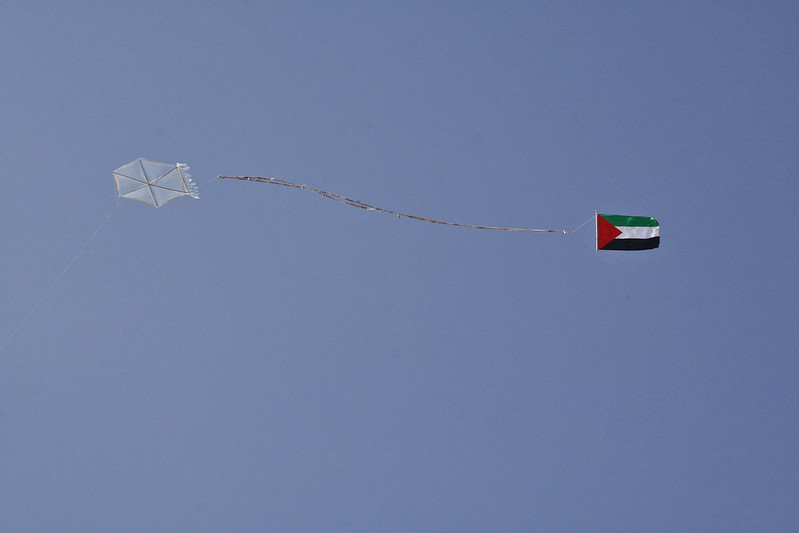
Photo credit: Magne Hagesæter via a Creative Commons license.


A note from Writers Resist

Thank you for reading! If you appreciate creative resistance and would like to support it, you can make a small, medium or large donation to Writers Resist from our Give a Sawbuck page.


Two Poems by Ron Dowell

We Are What We Shine

after J. Venters and M. Barajas


Bright as a jewel, we are what we shine.
A gang’s red-blue color-coded word clash
Compton’s graffitied not-so “Welcome” sign.

Compton Court obliterates the blue skyline,
Angeles Abbey minarets, brown grass,
like burnished silver, we are what we shine.

We suffer potholed streets silent decline
show taxes limit terms make thunder crash
Compton’s graffitied not so “Welcome” sign.

Change old habits & shade the asinine
who pour concrete slabs over weeping ash
as a begrimed city loses its shine.

Compton Creek crawdads, waters unwind
spawn Dr. Dre, Coste-Lewis, Niecy Nash.
Compton’s artists unveil the “Welcome” sign

Our shimmering gold—Venus, Kendrick’s rhymes
Venters, Barajas, their COVID backlash
bright as a jewel, we are what we shine.

Compton rolls out our “Welcome” sign.

 •     •     •    •     •     • 


Ebonics

My native tongue felt perfectly normal
until they labeled it Ebonics in the 70s.
School disparaged my native tongue

like jazz, denigrated and disrespected.
The principal paddled me with the holey oak.
The new whip burned my ass, lashing and tentacled.

He tried to beat out vernacular for sleeping
through American heroes like Jefferson Davis
Father Serra, Charles Lindbergh. For his doctorate

a man discovered the new Negro language.
Even today, I violate grammar rules, unconscious
even today, I slip forward, or back, into natural speech

even today, I sing coded enslaved spirituals
Wade in the water, cause God’s gonna trouble the water
hounds don’t follow when we wade in the water.

Ah ‘on know what homie be doin. He be runnin’
They say a child’s personality forms by age five
–knowing two languages, he knows two worlds.

I learned a new language, but the new world hides.
I’m burdened, weighted, an imposter in a world
that squeezes me like a piece of coal.

Under pressure, like a black diamond, I sparkle dark
and hard                                   I chew steel.


Ron L. Dowell holds two Master’s degrees from California State University Long Beach. In June 2017, he received the UCLA Certificate in Fiction Writing. His poetry resides in Penumbra, Writers Resist, Oyster Rivers Pages, The Wax Paper, Kallisto Gaia Press, The Penmen Review, Packingtown Review Journal, and The Poeming Pigeon. He’s a 2018 PEN America Emerging Voices Fellow. Visit his website at crookedoutofcompton.com.

Photograph, City of Compton.


A note from Writers Resist:

Thank you for reading! If you appreciate creative resistance and would like to support it, you can make a small, medium or large donation to Writers Resist from our Give a Sawbuck page.

We Must Resist

By Laura Martinez


Everything has changed

Nothing has changed

He is gone

Does that mean we no longer resist?

It “takes time” to undo what he has done

Does that mean we no longer resist?

As long as elected officials state “America is not a racist country”

We must resist

As long as there is voter suppression

We must resist

As long as my grandson lives in fear of driving while black

We must resist

As long as women and LGBTQ communities risk losing everything they have gained

We must resist

As long as those fleeing oppression and poverty are turned away at the Southern border

We must resist

As long as elected officials live in fear of he who is not really gone

We must resist.

As long as fear and conspiracy theories abound

We must resist.

No matter who is in the White House

WE MUST RESIST


Laura Martinez is a retired social worker. She has been involved in active resistance for more than fifty years and knows we must resist injustice no matter who is in the White House.