Our List

By Eric Lochridge


We are making a list of people who could hurt us.
Their names often are not easy to spell.

Could Al Sharkey, auto mechanic in Michigan,
be one of the al-Sharki clan of Yemen?

With no easy way to know, our list
will claim he is not one we can trust.

House to house, Arshad to Na’im to Zufar,
our list will compile the odd names,

dotting its I’s and crossing its T’s
uniformed men in the driveway,

pistol escorts prodding neighbors to trains
bound for a safe space—towers and spotlights,

mass showers and razor wire fence.
Our list will keep track of them like before,

tattoos down their wrists,
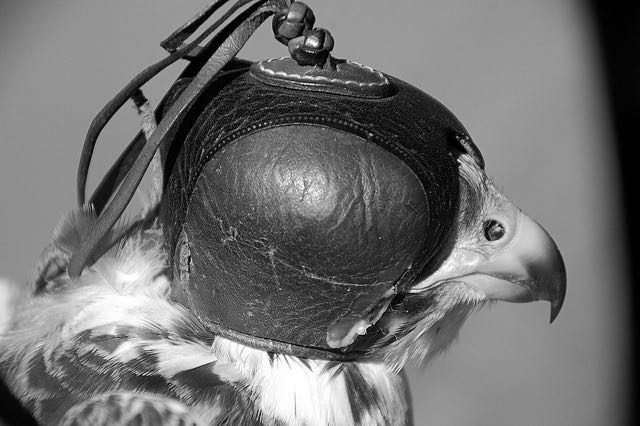
hoods to keep them calm as falcons.

Disinterested in true identities—blessed,
brave, honest—our list will ask questions

about alternate spellings and correct pronunciation.
If the answers do not satisfy, if the interrogations fail

to muster remorse, penitence, respect,
our list will feel obliged to enhance its techniques.

To hear the names it wants to hear, our list
will hurt those who have not hurt us.


Eric Lochridge is the author of Born-Again Death Wish (Finishing Line Press, 2015), Real Boy Blues (Finishing Line Press, 2013) and Father’s Curse (FootHills Publishing, 2007); and the editor of After Long Busyness: Interviews with Eight Heartland Poets (Smashwords, 2012). His poems have recently appeared in WA 129 and Hawaii Pacific Review. He lives in Bellingham, Washington.

EDITOR’S NOTE: If you like what you’re reading, please make a contribution to the cause. Give a sawbuck here.

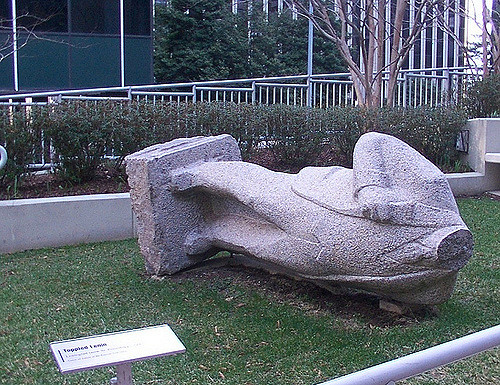
Photo credit: Stephanie Young Merzel via a Creative Commons license.

A love poem for my sister in revolution

By LJ Hardy


Your jaw
set fierce
in the shape of battle
clenched
against the storm
you face
by the weapons
of a life
I long for
when I’m lost here.

My feet grounded
precariously
in the roots of intention
integrities
inconsistencies
in the record of my birth.

Your name
unfamiliar to my lips
like the taste of sweet Lanzones
grown from an earth
where my history
has drawn the blood of yours.

Your eyes
traveling the grounds of sinew
landscapes of war.

My love
knows what I want
from you
to fill anemic spaces
market forces
American skin.

To draw
surplus from your bones
for stories
poems.

To build factories
fill emptiness
with crunch
Balut
baby ducks
in eggs
slivers of fish
for breakfast
dried.

Chants from jeepneys
passing cities
apples cost more than mangoes
you say
pointing out
an example I will draw on a thousand whiteboards
guiding students
smash imperialism
Imperyalismo Ibaksak!

Pristinely perfect rice
hungry bile
from long days and nights of protest
in sun
on floors
a bucket of glue.

Surplus capital
Me plus you.


LJ Hardy is an anthropologist engulfed in the world of academia where she researches and writes about health equity and social justice. After a life-threatening illness and the politics of 2017, she has gained the clarity to realize that it is time to write from the heart. She lives in the Arizona mountains with her daughter, 3 dogs, 14 chickens, and two ducks.

Photo credit: molybdena via a Creative Commons license.

Nabokov Shuffled

By Rony Nair


attention spans close in on revolving doors

where Russian roulette is doled out for free in carotid bands, in naked lunches that cavort in restless smiles—the buddha lay somnolent as a vegetable while you cut me off

and said you had to go. 3 seconds into somnolence where we take deep breaths and wade in

a second adolescence. selfish as always, selfless in doling out epithet and time.

clocks whose second hands circle left hands touching tumors on your spine.

lurching forward they cling to new buddhas of suburbia

revving in, all newness and culverts

raised in purple haze, long engagements entrapping only the parents of holy cows, anxious as ever

to sever their own triptych memories of surrender.


ripped up pieces of Piscean horror, innuendo

explodes across November rains and shattered plates, over mid-western skies fumigated with grass and marijuana spines. legalized in cavorting around.

our demise.


Rony Nair has been a worshipper at the altar of prose and poetry for almost as long as he could think. They have been the shadows of his life. He is a poet, photographer and a part-time columnist. His professional photography has been exhibited and been featured in several literary journals. His poetry and writings have been featured by Chiron Review, Sonic Boom, The Indian Express, Mindless Muse, Yellow Chair Review, New Asian Writing (NAW), The Foliate Oak Magazine, Open Road Magazine, Tipton Review, and the Voices Project, among other publications. He cites V.S. Naipaul, A.J. Cronin, Patrick Hamilton, Alan Sillitoe, John Braine and Nevil Shute in addition to F. Scott Fitzgerald as influences on his life; and Philip Larkin, Dom Moraes and Ted Hughes as his personal poetry idols. Larkin’s collected poems would be the one book he would like to die with. When the poems perish, as do the thoughts!

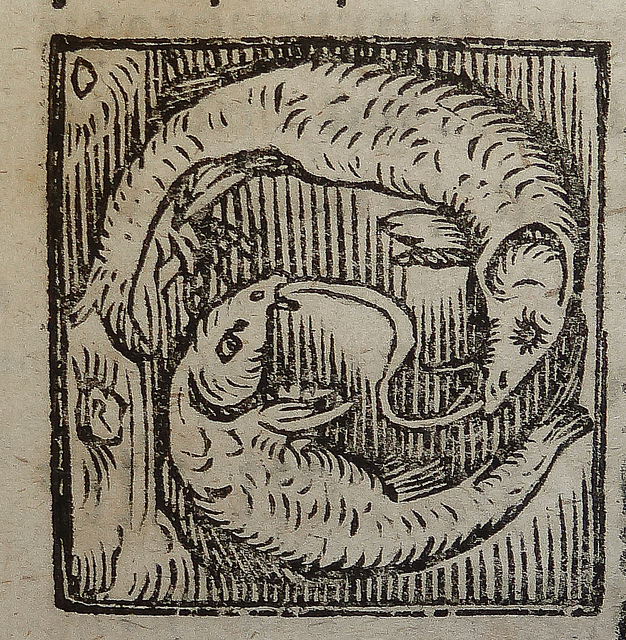
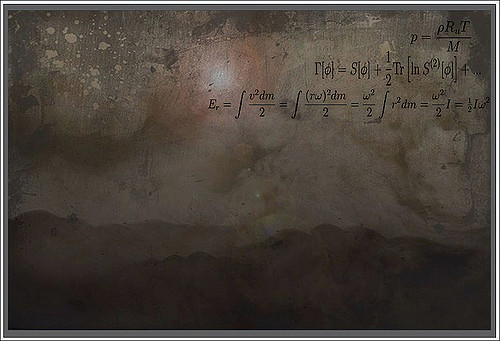
Photo credit: Woodcut illustration of the zodiac sign Pisces used by Alexander and Samuel Weissenhorn of Ingolstadt, from Provenance Online Project.

Two Poems by D. R. James

[fusion_builder_container hundred_percent=”no” hundred_percent_height=”no” hundred_percent_height_scroll=”no” hundred_percent_height_center_content=”yes” equal_height_columns=”no” menu_anchor=”” hide_on_mobile=”small-visibility,medium-visibility,large-visibility” class=”” id=”” background_color=”” background_image=”” background_position=”center center” background_repeat=”no-repeat” fade=”no” background_parallax=”none” enable_mobile=”no” parallax_speed=”0.3″ video_mp4=”” video_webm=”” video_ogv=”” video_url=”” video_aspect_ratio=”16:9″ video_loop=”yes” video_mute=”yes” video_preview_image=”” border_size=”” border_color=”” border_style=”solid” margin_top=”” margin_bottom=”” padding_top=”” padding_right=”” padding_bottom=”” padding_left=””][fusion_builder_row][fusion_builder_column type=”1_2″ layout=”1_2″ spacing=”” center_content=”no” link=”” target=”_self” min_height=”” hide_on_mobile=”small-visibility,medium-visibility,large-visibility” class=”” id=”” background_color=”” background_image=”” background_position=”left top” background_repeat=”no-repeat” hover_type=”none” border_size=”0″ border_color=”” border_style=”solid” border_position=”all” padding=”” dimension_margin=”” animation_type=”” animation_direction=”left” animation_speed=”0.3″ animation_offset=”” last=”no”][fusion_text]

Still

It all recurs for the maimed, how they remain,
or don’t, atop the plots of the buried. Those
who could do something table the question.
They relax in the rocker of their certainty,
a war, any war, an abstraction that walls off
the bursting specifics. A twenty-something friend
found he’d deployed to sort body parts. Arrayed,
they’d survive the fever sweeping a land we
could never know. Welcomed by the white-blue
atrium of a foreign sky, he’d prowl his perimeter
until his duty tapped him. Then the oven-sun
would relight his nightmare, the categories
of bone and flesh his production line. What
achievement could signal his success? What
dream in the meantime could relieve raw nerve?
The perfect tour would end when he was still
in one piece, a nation’s need ignoring the gore
behind the games, the horror nestling into
the still-living because still in one piece.

[/fusion_text][/fusion_builder_column][fusion_builder_column type=”1_2″ layout=”1_2″ spacing=”” center_content=”no” link=”” target=”_self” min_height=”” hide_on_mobile=”small-visibility,medium-visibility,large-visibility” class=”” id=”” background_color=”” background_image=”” background_position=”left top” background_repeat=”no-repeat” hover_type=”none” border_size=”0″ border_color=”” border_style=”solid” border_position=”all” padding=”” dimension_margin=”” animation_type=”” animation_direction=”left” animation_speed=”0.3″ animation_offset=”” last=”no”][fusion_text]

OK, Here’s What We Do: An Allegory

Well, we enlarge the grown-up table for
the far-flung fragments of our Family.
Here’s our current Winter spent in agony,
here’s our disrespected Sister, here is War
that mushrooms undiminished, glibly tears
our global Soul to slivers. And here We are;
and here’s a Brute beside us so bizarre
that nearly nothing else we’ve known compares—
as if we’d acceded to some greater Hell.
Ah, but here’s what’s left of human Dignity.
Seated here’s Resolve to trample Travesty.
But there’s our Greatest Fear that’s hard to quell. …
Hey, this isn’t fatalistic Falderal!
We must make sure the table’s set for All.

[/fusion_text][/fusion_builder_column][/fusion_builder_row][/fusion_builder_container][fusion_builder_container hundred_percent=”no” hundred_percent_height=”no” hundred_percent_height_scroll=”no” hundred_percent_height_center_content=”yes” equal_height_columns=”no” menu_anchor=”” hide_on_mobile=”small-visibility,medium-visibility,large-visibility” class=”” id=”” background_color=”” background_image=”” background_position=”center center” background_repeat=”no-repeat” fade=”no” background_parallax=”none” enable_mobile=”no” parallax_speed=”0.3″ video_mp4=”” video_webm=”” video_ogv=”” video_url=”” video_aspect_ratio=”16:9″ video_loop=”yes” video_mute=”yes” video_preview_image=”” border_size=”” border_color=”” border_style=”solid” margin_top=”” margin_bottom=”” padding_top=”” padding_right=”” padding_bottom=”” padding_left=””][fusion_builder_row][fusion_builder_column type=”1_1″ layout=”1_1″ spacing=”” center_content=”no” link=”” target=”_self” min_height=”” hide_on_mobile=”small-visibility,medium-visibility,large-visibility” class=”” id=”” background_color=”” background_image=”” background_position=”left top” background_repeat=”no-repeat” hover_type=”none” border_size=”0″ border_color=”” border_style=”solid” border_position=”all” padding=”” dimension_margin=”” animation_type=”” animation_direction=”left” animation_speed=”0.3″ animation_offset=”” last=”no”][fusion_text]


D. R. James’s six collections include Since Everything Is All I’ve Got, Why War, and Split-Level. Poems and prose have appeared in various journals, including, Coe Review, Dunes Review, Friends of William Stafford Newsletter, HEArt Online, Hotel Amerika, North Dakota Quarterly, Passager, Rattle, The Sow’s Ear Poetry Review, and Sycamore Review, and anthologies, including, Ritual to Read Together: Poems in Conversation with William Stafford and Poetry in Michigan / Michigan in Poetry. His new collection, If god were gentle, was published by Dos Madres Press in December 2017. James lives in Saugatuck, Michigan, and has been teaching writing, literature, and peace-making at Hope College for 33 years. Read more about James here.

“Still” first appeared in Tuck, September 14, 2017, and also appears in If god were gentle.

Photo credit: Brad Montgomery via a Creative Commons license.

[/fusion_text][/fusion_builder_column][/fusion_builder_row][/fusion_builder_container]

National Day of Atonement

By Marc Alan Di Martino


Scream at the empty mirror of the sky,
the waiting blue, the blinding cosmic eye,
until your pain lathes the Plutonian rim
of the Solar System.

Scream at the crystal ceiling of the sky
until it cracks up like an electoral map
of the United States, our jagged earthly cry
a collective bootstrap.


Marc Alan Di Martino is a poet, translator and teacher whose work has been published in Rattle, Verse-Virtual, The Ekphrastic Review, Poetry Salzburg Review, and the Journal of Italian Translation, among others. His interview with award-winning translator and poet Michael Palma was published in Faithful In My Fashion (Chelsea House, 2016).

He currently lives with his wife and daughter in Perugia, Italy, where he works as a teacher of the English language and is an avid skateboarder.


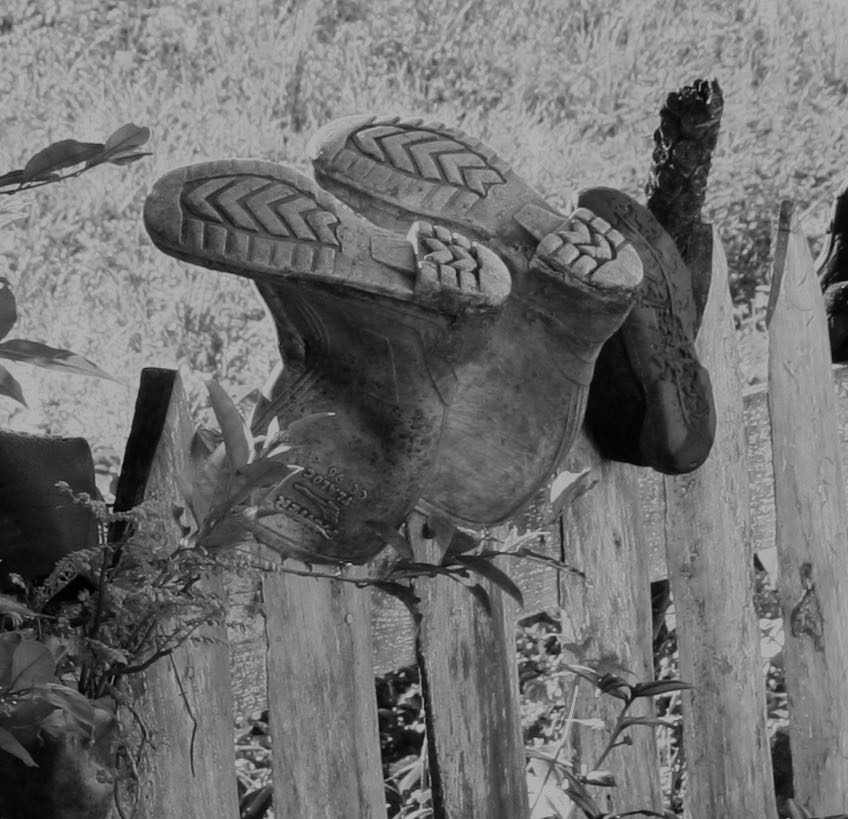
Photo credit: Kenneth J. Gill via a Creative Commons license.

Trophies and Ribbons

By Victoria Barnes


On a late November morning
toddlers and children drag
their parents’ silky purses
stuffed with glossy trophies and ribbons
to the sewing room.

They embroider golden
monograms,
add coats-of-arms in crewel,
tie silver coins
that dangle from purse seams.

Their parents nod.

By the rose evening
the children sing quietly
of imaginary gardens with lush fruit
and canary gingko trees,
their chores complete.

Suddenly a flash: electrified air
shatters their dreamy songs
and the children scuffle into
a protective circle
without armor or weapons,
holding hands, facing outward,
singing in fear.

Silver coins drop, tinkling.
Monograms sparkle and spark
to ash as the children drop
the purses, scattering
trophies across rocky asphalt,
their parents’ folly exposed
by the flaming wrath of decency.


Victoria Barnes is a diehard native Californian who has chopped lettuce, taught creative writing, owned a toy store, and specialized in Montessori education to earn a living. Her Ph.D. is in mythological studies and depth psychology, with research focusing on Rainer Maria Rilke’s Duino Elegies. Her home is in the redwoods of northernmost California where she writes poems and takes photographs. She sneaks out from behind the insulating Redwood Curtain to spend time with family in Philadelphia and Boulder, Colorado, as frequently as possible. Enjoy more of her work here.

Photo credit: Kit-Bacon Gressitt via a Creative Commons license.

Who Will Kneel for You: Artists Speak Out

From The Root

Anna Deavere Smith and a chorus of artists recite the poem “To Kneel,” by Kathy Engel, in support of 2018 NFL protests and the right to dissent, and against racist police violence.


Visit The Root – Black news, opinions, politics and culture

Cartoon credit:  Drew Sheneman, Newark Star-Ledger (Newark, N.J.), via a Creative Commons license.

Cop Sonnet

By Keith Welch

We’d like to think that all our cops are fearless

that their well-trained minds are sharp and quick

but certainly they’re worse than useless unless

they can tell a pistol from a stick

Or when a suicidal person’s begging

for an ending to their tortured grief

does a policeman’s duty include abetting

desire for a terminal relief?

The cops who will not see us as their equals

will never act as though our lives, too, matter

and so we’ll go on seeing violent sequels

where more of us will end up dead or battered

Of course the real problem: our society;

the driving force: our middle-class anxiety.


Keith Welch lives in Bloomington, Indiana, where he works at the IU Bloomington Herman B Wells Library. He poetry has been published in Writers Resist, Literary Orphans, and Dime Show Review. He is currently writing a series of poems about how much he hates the winter in Indiana. Read more of Keith’s work at librarymole.wixsite.com/keithwelchpoetry and follow him on Twitter @Outraged_Poet.

Photo Credit: You can’t barricade an idea by Dying Regime via a Creative Commons license.

Two Poems by Peggy Turnbull

[fusion_builder_container hundred_percent=”no” hundred_percent_height=”no” hundred_percent_height_scroll=”no” hundred_percent_height_center_content=”yes” equal_height_columns=”no” menu_anchor=”” hide_on_mobile=”small-visibility,medium-visibility,large-visibility” class=”” id=”” background_color=”” background_image=”” background_position=”center center” background_repeat=”no-repeat” fade=”no” background_parallax=”none” enable_mobile=”no” parallax_speed=”0.3″ video_mp4=”” video_webm=”” video_ogv=”” video_url=”” video_aspect_ratio=”16:9″ video_loop=”yes” video_mute=”yes” video_preview_image=”” border_size=”” border_color=”” border_style=”solid” margin_top=”” margin_bottom=”” padding_top=”” padding_right=”” padding_bottom=”” padding_left=””][fusion_builder_row][fusion_builder_column type=”1_2″ spacing=”” center_content=”no” link=”” target=”_self” min_height=”” hide_on_mobile=”small-visibility,medium-visibility,large-visibility” class=”” id=”” background_color=”” background_image=”” background_position=”left top” background_repeat=”no-repeat” hover_type=”none” border_size=”0″ border_color=”” border_style=”solid” border_position=”all” padding=”undefined” dimension_margin=”undefined” animation_type=”” animation_direction=”left” animation_speed=”0.3″ animation_offset=”” last=”no”][fusion_text]

Kristallnacht, Again

In Indiana, empty-headed cornstalks wave
at the interstate. Peeling wooden crosses
lurk among the goldenrod, forgotten.

Deployed decades ago with evangelical zeal,
they decorated Appalachian highways when
my friend Daniel still lived in West Virginia.

They unleashed his crystal nightmares of Vienna.
He knocked at our screen door, asked,
If they come again, will you hide me?

[/fusion_text][/fusion_builder_column][fusion_builder_column type=”1_2″ spacing=”” center_content=”no” link=”” target=”_self” min_height=”” hide_on_mobile=”small-visibility,medium-visibility,large-visibility” class=”” id=”” background_color=”” background_image=”” background_position=”left top” background_repeat=”no-repeat” hover_type=”none” border_size=”0″ border_color=”” border_style=”solid” border_position=”all” padding=”undefined” dimension_margin=”undefined” animation_type=”” animation_direction=”left” animation_speed=”0.3″ animation_offset=”” last=”no”][fusion_text]

July Evening, West Virginia

I gather stunted apples
from the garden
peel them, carve out
their bruised flesh
put them to simmer
with cinnamon

On the radio
a woman’s voice
recollects the death
of a famous poet
how his friends
sat on the floor for hours
attending the old Buddhist
as he slowly let go

I don’t have time to meditate
A child needs me
I stir the pan
certain he will love
whatever I find good

The poet at last surrendered
left his queer poems
to the living
for queer children
to someday find
and gain strength
from the joy of their holiness

We eat and go outside
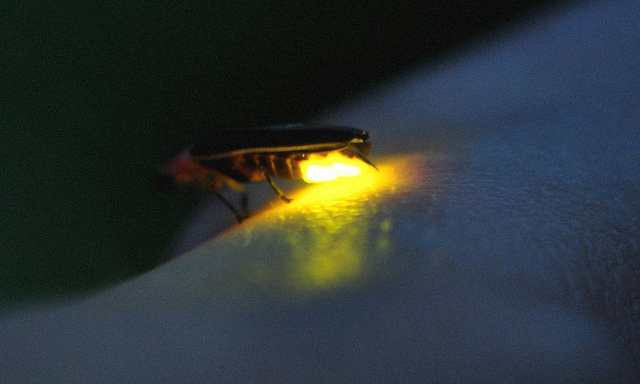
watch fireflies blink
as the darkness grows

[/fusion_text][/fusion_builder_column][/fusion_builder_row][/fusion_builder_container][fusion_builder_container hundred_percent=”no” hundred_percent_height=”no” hundred_percent_height_scroll=”no” hundred_percent_height_center_content=”yes” equal_height_columns=”no” menu_anchor=”” hide_on_mobile=”small-visibility,medium-visibility,large-visibility” class=”” id=”” background_color=”” background_image=”” background_position=”center center” background_repeat=”no-repeat” fade=”no” background_parallax=”none” enable_mobile=”no” parallax_speed=”0.3″ video_mp4=”” video_webm=”” video_ogv=”” video_url=”” video_aspect_ratio=”16:9″ video_loop=”yes” video_mute=”yes” video_preview_image=”” border_size=”” border_color=”” border_style=”solid” margin_top=”” margin_bottom=”” padding_top=”” padding_right=”” padding_bottom=”” padding_left=””][fusion_builder_row][fusion_builder_column type=”1_1″ spacing=”” center_content=”no” link=”” target=”_self” min_height=”” hide_on_mobile=”small-visibility,medium-visibility,large-visibility” class=”” id=”” background_color=”” background_image=”” background_position=”left top” background_repeat=”no-repeat” hover_type=”none” border_size=”0″ border_color=”” border_style=”solid” border_position=”all” padding=”undefined” dimension_margin=”undefined” animation_type=”” animation_direction=”left” animation_speed=”0.3″ animation_offset=”” last=”no”][fusion_text]


Peggy Turnbull is a poet and former academic librarian who has worked in public colleges and universities in Texas, West Virginia and Wisconsin. Read her recent poems in Postcard Poems and Prose, Mad Swirl, Nature Writing, and Three Line Poetry. She is a member of the Wisconsin Fellowship of Poets and blogs at peggyturnbull.blogspot.com.

Photo credit: Ashley Harrigan via a Creative Common license.

[/fusion_text][/fusion_builder_column][/fusion_builder_row][/fusion_builder_container]

Organic Gardening

By Maria Van Beuren


It’s a matter of pulling weeds

And laying them down where they can rot

And feed the plants you want.

When weeds are small,

They require you to claw in their dirt,

But then you learn to let them grow large

And fat on rain and sun—

They grow confident,

Their grip less desperate,

And they are easy to uproot.


Maria van Beuren is an indexer, editor, and poet who lives in New Hampshire, where she runs Toad Hall Poets’ and Artists’ retreats for writers, artists, and musicians. She also wrangles six dogs and five chickens in her “spare time.”

Photo credit: Beyond DC via a Creative Commons license.

Our Love Exists in Shadows

By David Hanlon

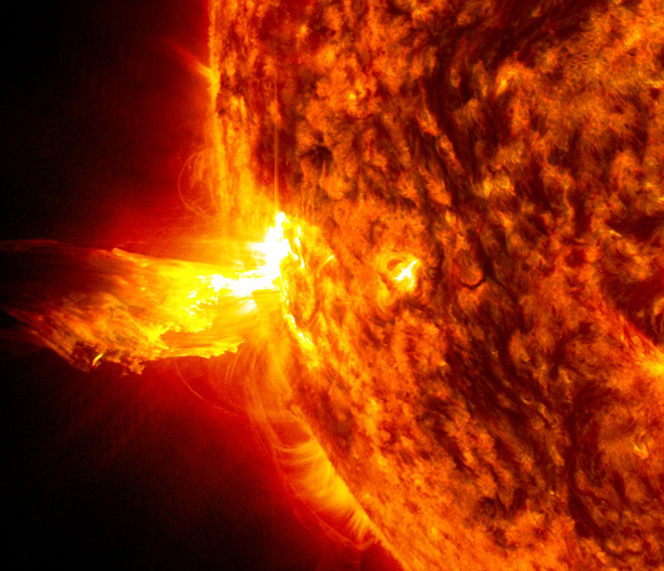
They are like the sun—
all-seeing, blazing
down on us
from unreachable heights.

We can’t look directly
at them, for, as tempers
flare, they will incinerate

our eyes, cast scalding
hot rays and finish off
our faces.

And where can we go?
Only the shadows
can offer us a home,
where we can be
comfortable,
affectionate;
where the holding of hands,
the caressing of fingers,
won’t go up in flames,
before,
simmering with anger
on the tip of your tongue
you can say,
with great conviction,
or try to—
I hope that made you feel good.

Our love exists in the shadows—
and if it must, I know
we’ll let love flourish
within these shaded boundaries:
create our own
light-source.

Now, when the sun people look down
at their shadows, on a bright
yet humid afternoon,
and watch how we dance
with unbridled joy,
how we animate
a perennial warmth,
they’ll suddenly feel,
even if for a short while,
a burning
loneliness.

And we,
we are light-keepers,
light-bearers,
predisposed
to love
in dark places.


David Hanlon is from Cardiff, Wales, and lives in Bristol, England. He has a BA in Film Studies and is training part-time as a counselor/psychotherapist. He has been writing poetry over the last two years, drawing mostly on his life experiences. You can find his work online at Ink, Sweat & Tears, Fourth & Sycamore, Eunoia Review, Amaryllis, Scarlet Leaf Review, One Sentence Poems, Anti-Heroin Chic, and Leaves of Ink, and it is forthcoming in Déraciné Magazine. You can follow David on Twitter @DavidHanlon13.

Photo credit: NASA.

Fireweed

By Karen Shepherd

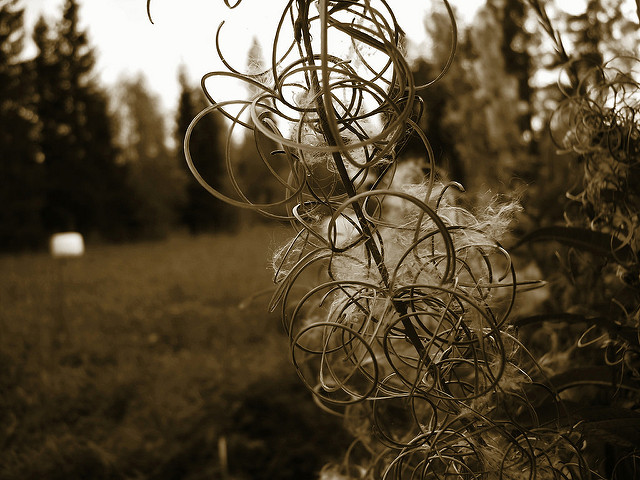
The fireweed flowers push back, clusters pink:

defiant color breaking through the grim

scorched landscape. Spikes of petals linked

to capsules bearing silky seeds that swim

through summer smoke, volcanic flow, the bomb’s

destruction. Wispy parachutes released

by wind, the fluffy strands transport with calm

the cells’ reminder that there might be peace.

She spreads her seeds to places dark and far

and colonizes meadows left to mourn.

Persistent despite the earth’s burning wars,

she always will find ways to be reborn.

A shadow’s cast in our national sky.

Small hopes she holds on stems that reach so high.


Karen Shepherd is a public school administrator who enjoys reading, writing and reflecting on the small moments in daily life. She lives with her husband and two teenagers in the Pacific Northwest, where she kayaks, walks in forests and listens to the rain. Her poems and fiction have been published in riverbabble, Literally Stories, CircleShow, Sediments Literary Art Journal, Dime Show Review, The Society of Classical Poets and Poets Reading the News.

Photo credit: Flaezk via a Creative Commons license.

Two Poems by Leslie McGrath

[fusion_builder_container hundred_percent=”no” hundred_percent_height=”no” hundred_percent_height_scroll=”no” hundred_percent_height_center_content=”yes” equal_height_columns=”no” menu_anchor=”” hide_on_mobile=”small-visibility,medium-visibility,large-visibility” class=”” id=”” background_color=”” background_image=”” background_position=”center center” background_repeat=”no-repeat” fade=”no” background_parallax=”none” enable_mobile=”no” parallax_speed=”0.3″ video_mp4=”” video_webm=”” video_ogv=”” video_url=”” video_aspect_ratio=”16:9″ video_loop=”yes” video_mute=”yes” video_preview_image=”” border_size=”” border_color=”” border_style=”solid” margin_top=”” margin_bottom=”” padding_top=”” padding_right=”” padding_bottom=”” padding_left=””][fusion_builder_row][fusion_builder_column type=”1_2″ layout=”1_2″ spacing=”” center_content=”no” link=”” target=”_self” min_height=”” hide_on_mobile=”small-visibility,medium-visibility,large-visibility” class=”” id=”” background_color=”” background_image=”” background_position=”left top” background_repeat=”no-repeat” hover_type=”none” border_size=”0″ border_color=”” border_style=”solid” border_position=”all” padding=”” dimension_margin=”” animation_type=”” animation_direction=”left” animation_speed=”0.3″ animation_offset=”” last=”no”][fusion_text]

Agnostic

She with
her sac
of eggs
strung between
curved wall
& clapper
doesn’t know
her world’s
a bell.

[/fusion_text][/fusion_builder_column][fusion_builder_column type=”1_2″ layout=”1_2″ spacing=”” center_content=”no” link=”” target=”_self” min_height=”” hide_on_mobile=”small-visibility,medium-visibility,large-visibility” class=”” id=”” background_color=”” background_image=”” background_position=”left top” background_repeat=”no-repeat” hover_type=”none” border_size=”0″ border_color=”” border_style=”solid” border_position=”all” padding=”” dimension_margin=”” animation_type=”” animation_direction=”left” animation_speed=”0.3″ animation_offset=”” last=”no”][fusion_text]

Estrangement

Ripped
at the seams

the garment
laid out
for viewing

is a garment no longer

Child from mother
from sister from brother

Each an ostracism
ultimately
of the self

No punishment’s
more intimate
than this

in which
she who suffers most
the absence, loses.

[/fusion_text][/fusion_builder_column][/fusion_builder_row][/fusion_builder_container][fusion_builder_container hundred_percent=”no” hundred_percent_height=”no” hundred_percent_height_scroll=”no” hundred_percent_height_center_content=”yes” equal_height_columns=”no” menu_anchor=”” hide_on_mobile=”small-visibility,medium-visibility,large-visibility” class=”” id=”” background_color=”” background_image=”” background_position=”center center” background_repeat=”no-repeat” fade=”no” background_parallax=”none” enable_mobile=”no” parallax_speed=”0.3″ video_mp4=”” video_webm=”” video_ogv=”” video_url=”” video_aspect_ratio=”16:9″ video_loop=”yes” video_mute=”yes” video_preview_image=”” border_size=”” border_color=”” border_style=”solid” margin_top=”” margin_bottom=”” padding_top=”” padding_right=”” padding_bottom=”” padding_left=””][fusion_builder_row][fusion_builder_column type=”1_1″ layout=”1_1″ spacing=”” center_content=”no” link=”” target=”_self” min_height=”” hide_on_mobile=”small-visibility,medium-visibility,large-visibility” class=”” id=”” background_color=”” background_image=”” background_position=”left top” background_repeat=”no-repeat” hover_type=”none” border_size=”0″ border_color=”” border_style=”solid” border_position=”all” padding=”” dimension_margin=”” animation_type=”” animation_direction=”left” animation_speed=”0.3″ animation_offset=”” last=”no”][fusion_text]


Leslie McGrath is the author of two full-length poetry collections, Opulent Hunger, Opulent Rage (2009) and Out from the Pleiades (2014), and two chapbooks. McGrath’s third collection, Feminists Are Passing from Our Lives, will be published in April 2018 by The Word Works. Winner of the Pablo Neruda Prize for Poetry (2004), she has been awarded residencies at Hedgebrook and the Vermont Studio Center, as well as funding from the CT Commission on the Arts and the Beatrice Fox Auerbach Foundation. Her poems and interviews have been published widely, including in Agni, Poetry magazine, The Academy of American Poets, The Writer’s Chronicle, and The Yale Review. McGrath teaches creative writing at Central CT State University and is series editor of The Tenth Gate, a poetry imprint of The Word Works Press.

Photo credit: Mon Oeil via a Creative Commons license.

[/fusion_text][/fusion_builder_column][/fusion_builder_row][/fusion_builder_container]
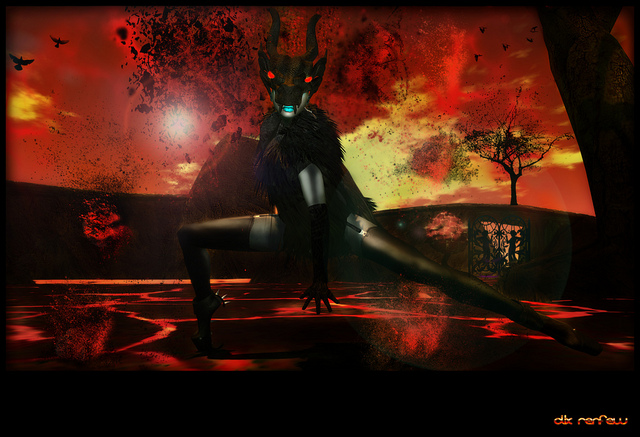
Dragoness

By Kayla Bashe


russet, maroon, and burgundy, darker even than flame

like roses; not the cloying petals, but the green heart of their living, sharp and fresh (call her a dream without a name)

lindworm, sigil hoard

narrowing into ultraviolet above abrasive glowing scales, daring the world to answer for its sins

polished like summer-thunderstorm air over the luminous, icemelt under the sun.

transformative anger. She is made of fire.


Kayla Bashe is a student at Sarah Lawrence College. Her fiction and poetry have appeared in Strange Horizons, Liminality Magazine, Mirror Dance, Ink and Locket’s Warriors anthology, Breath and Shadow, and Cicada magazine. She has also released several novellas. Find her on Twitter at @KaylaBashe.

Image credit: Clix Renfew via a Creative Commons license.

Plato says–

By Elisabeth Horan

Nothing in the affairs of men is worthy of great anxiety
&^%$$%*!
Ahem, the affairs of women, now let’s examine that

Breakups
Acne
Skinny
Not skinny
Fat as hell
Beauty Contests
Potlucks

Hurricane Sandys
Our Babies
Sandy Hooks
Our Chilluns
Fergusons
Nuestros Hijos/as
Border walls
Familias separadas
Harvey/Irma/Jose/Maria

Trumps/Putins/Pences/Fences
Congress/Senate/Selfish/Impasse
Health insurance/Obamacare/Medicaid/Medicare
Is Obama ok, where is he now?

Money
The 99%
The 1%

Polar Bears
Melty winters
Choices, choices, choices
Decisions, decisions, decisions
Cancer
Thyroid
Pills, pills, pills

Mother/Father
Alzheimer’s
Sons/Daughters
Bullies
Teasing
Eating Disorders
Driving permits
Hymens
Condoms
Abortion/adoption/PMS/infertility/fertility/C-section/menopause
Vaginas
Pussies

Senility
Lucidity
Addiction
Addiction
Addiction
Therapy

Death, death, death –
Losing
Winning
Knowing


Elisabeth Horan is a poet mother student lover of kind people and animals, homesteading in Vermont with her tolerant partner and two young sons. She hopes the earth can withstand us and that humans may learn to be more kind to each other and to Mother Nature. She was recently featured in Quail Bell Magazine and Dying Dahlia Review. She has work forthcoming at The Occulum, Alexander & Brook and at Switchgrass Review. Elisabeth is a 2018 MFA candidate at Lindenwood University and teaches at River Valley Community College in New Hampshire. Follow her on Twitter @ehoranpoet.

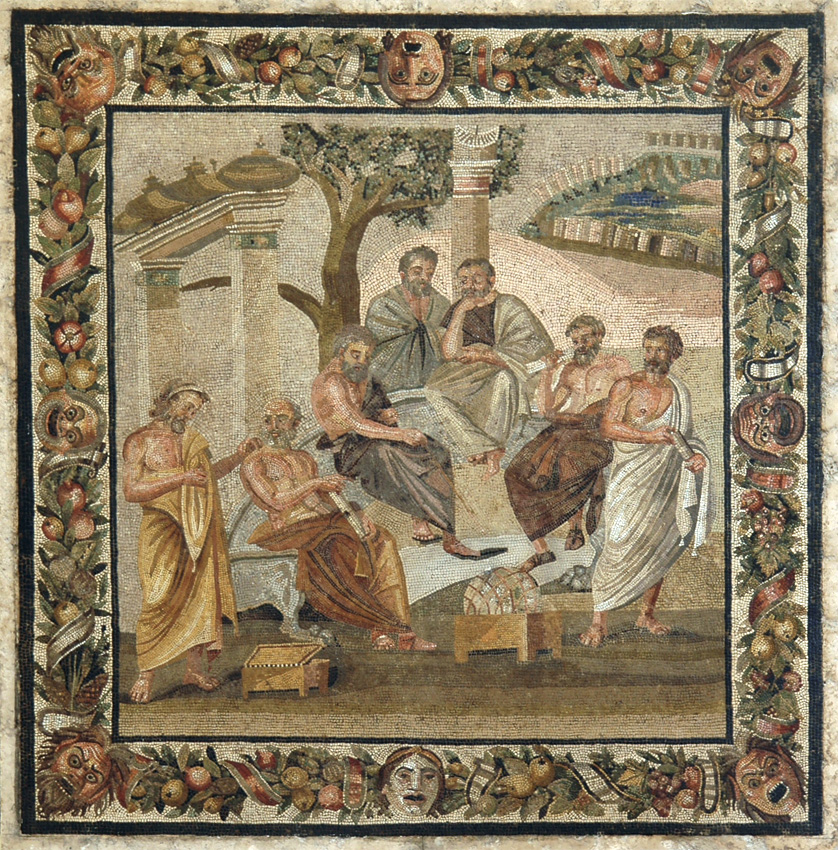
Image credit: Plato’s Academy. Mosaic from Pompeii (Villa of T. Siminius Stephanus). Second style. Early 1st century B.C. Inv. No. 124545. Naples, National Archaeological Museum.

In the Dark

By Sarah Sutro

how to survive
a long
disconnect,
a winter
of nationalist
intent,
a reduction
of feeling?

this morning the
green slate on
the window sill
glows blue,
under pots
of flowers and
bulbs
raw edges
like edges in a
gorge upstate,
shale-layered
rivers,
like pressed layers
of filo dough
in fine pastry

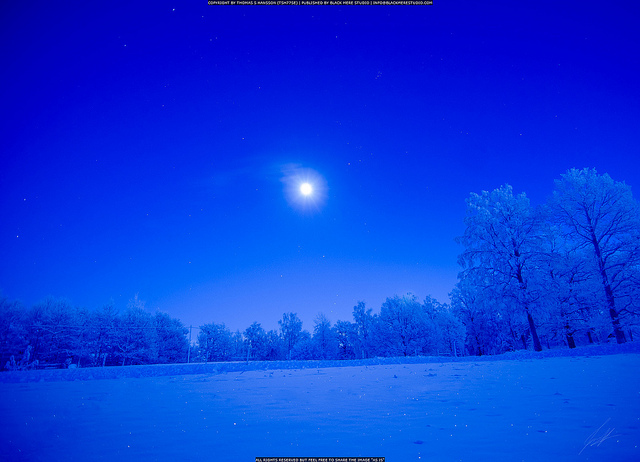
snow on
far buildings
also blue-
like early
moonlight –
more snow
expected
this afternoon

can you see
a flower in the dark –
huge bell-shaped
blossoms like
horns blaring
from the stem?

or make a cup
of tea
in the dark,
feel for bag of
wet leaves –
guess consistency,
how dark?
add milk. …

about our own future:

dark night already –
laws rescinded,
rights gone,
a strict new reality.
is there death of a
country as there is
of the body?
where does light
go
when there is
no lamp?

a multi-celled
being,
a large tree
or animal,
each cell
connected to the
other
so we can
speak,
breathe,
as one

we must be
the underlying
slate that
sits out
time until
running water
begins to
move the
rivers again


Sarah Sutro is a poet and painter. Her work is published in numerous magazines and books, including Amsterdam Quarterly, Panorama: Journal of the Intelligent Traveler, Rockhurst Review, The Big Chili, Greylock Independent, and in the anthologies Improv, From the Finger Lakes, Bangkok Blondes, Unbearable Uncertainty, Life Stories and Ithaca Women’s Anthology. Author of a poetry chapbook, Etudes, and a book of essays, COLORS: Passages through Art, Asia and Nature, she was a finalist for the Robert Frost Award, the Mass. Artists Foundation Poetry Grant, and won fellowships at MacDowell Colony, Millay Colony, Ossabaw Island Foundation, Blue Mountain Center, and the American Academy in Rome. She lives in the Berkshires, in Massachusetts, and you can see some of her artwork at Blue Mount Center.

Photo credit: Thomas S. Hansson via a Creative Commons license.


History

By Rachel Custer


There is only one story
a woman says and maybe
she is saying something about the truth, or maybe
not. The history of a place like this is the history
of those who leave it. It’s a great place to be from
they might say, and smile. Pretty men and pretty
women and their easy belief that they are moving
forward through the world. Their necks graceful
in their city clothes. There is only one story and
it is not this story, sweat and grease and the grace
of ritualized days. The pinch of repetition in the
joints. The world would be forgiven for believing
the best of this land is the dust that a hand knocks
from old boots. Maybe there is something of the
truth to what she says, like there is only one way
to live in a place one cannot leave, and that’s to
love it. Take the raw animal of its days by the
throat and throttle the one story from its jaws. Or
maybe not. There is only one way to live in a place
where everybody believes nobody lives. Like
there is only one way to be a fire and that is to burn.


Rachel Custer’s first full-length collection, The Temple She Became, is available from Five Oaks Press. Other work has previously been published or is forthcoming in Rattle, The American Journal of Poetry, B O D Y, [PANK], and DIALOGIST, among others. She is currently completing the Tupelo Press 30/30 Poetry Marathon fundraiser. “History” was previously published by Tupelo Press.

Visit Rachel’s website at www.rachelcuster.wordpress.com.

Photo credit: © 2014 K-B Gressitt.

Not a Strange Grammar

By Eduardo Escalante

nothing to raise Abel
or make a song and dance about

at the extreme of disorder
a hundred-year’s   flood   every   decade

stories   stir   shadows
over our   small   hours

there is no place
principle     or signal
right left center
where to live

no cause, no cause

at the extreme of disorder
the disorder
is the only place.


Eduardo Escalante is an author, writer, researcher, living in Valparaíso, Chile. He writes about happiness, love, social justice, and current events. Eduardo’s work appears in several Spanish publications and reviews, including signum Nous, Ariadna, Nagari, Espacio_Luke, and Lakuma Pusaki, and in Spillwords Press.

Photo credit: “Chaos Theory” by Patrick McConahay via a Creative Commons license.

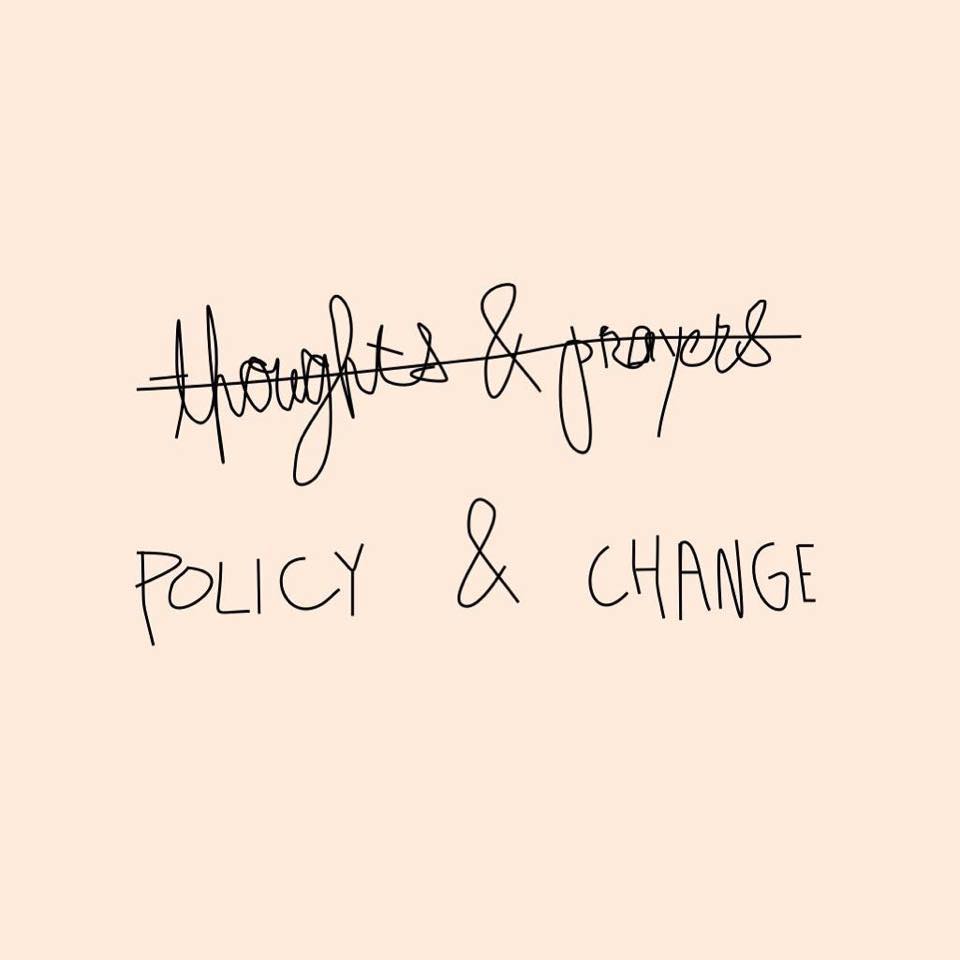
Thoughts & Prayers

By Jane Rosenberg LaForge


They are offered in rote
as if the supply is bottomless;
like abstractions, inaction
and aesthetics; they could
be meaningless or mean
anything, so long as they
are not so sustaining as
steak & lobster for the
impoverished; more like
succotash & wilted lettuce.

Maybe they’re a law firm
the kind advertised on television
with a jingle and 1-800 number
children can’t help learning
before their alphabet; so much so
they’ve become a part of the literacy process!
A tentative, baby step toward
discerning cliché from idiom
because language: it’s a young
person’s business now, if they can
survive being a soft target.

Or perhaps it’s becoming part
of the international ergot, like a traffic sign
or the symbol for “no,” or a name
we give to conglomerates selling
mattresses or men’s clothing:
instant recognition for the product
and everyone knows just where to go
to find the best discounts.

For this year, I was thinking
they might make a particularly
poignant salutation for the season,
what with the war on Christmas
always burgeoning, so coming to you
on a greeting card soon, from a raft
of similar partnerships: O.F. Mossberg
& Sons, Heckler & Koch,
and Clint Eastwood’s truly evergreen
friends, Smith & Wesson.

Or they might be best employed
as a broadcast sign-off;
not so much like Walter Cronkite’s
“& that’s the way it is,” if he were
working on a Wednesday, the 14th of February, 2018;
but as his successor attempted
for five days no one remembers
except for the derision and embarrassment:
“Courage,” was all he said
as if looking into the future,
because we’re going to need a lot more of it.


Jane Rosenberg LaForge is the author of Daphne and Her Discontents, a full-length collection of poems from Ravenna Press; and the forthcoming novel, The Hawkman: A Fairy Tale of the Great War, from Amberjack Publishing. For more information, visit jane-rosenberg-laforge.com. and follow her on Twitter, @JaneRLaForge.

Image credit: An anonymous internet find.

I Am Not a Person

By Jessie Atkin                                                                                             


I do not want children I decide, stretched out beneath the eyes of the late-night newsmen.                   My own eyes ache, but not as much as my ears, as my age, as my soul. Yet this ache, this loss without losing, without losing anything I have but the future stings less. It stings less because I choose, even if it is a choice of deprivation. But we have been deprived so long in this house, in this city, in this country. The face of this country is a man’s face, and the face of this family is a man’s, will be a man’s, in image and in name. Because my name is a man’s, given to me by my mother with only the question of ‘will you take his name,’ not ‘who’s name will you take?’                And they take and we give. They trade us names in exchange for babies so that we can give them more children to take more of their names. These are the names that will be carried into the future to represent them and not me.             But who would want to represent me? Who would want to represent something so secondary? So low? So inhuman? For I am inhuman. On the rug, beneath the TV that tells me so, I am not a person. I am not a whole person. Like my daddy, like my brother, like the walls of Wall Street. All have more rights than me.              Rights, or wrongs as my sister calls them. They have all the wrongs, she says. She says many things. Things to fill the silence and drown out the noise. But it is harder to drown something you feel, not just something you hear.                      I didn’t hear his hand on my back. I felt it. Felt it in stiff stock-still silence. Still, his hand moved beneath my shirt until it was beneath my waistband. The waistband of my jeans, which wasn’t so tight as my dad said because, if it were, no hand would have fit. But it would have fit no matter the size of my jeans. Jeans I was wearing, like everyone wears, all of them wearing and sitting, and oblivious because what was happening was normal. Normal, like what I was wearing.          Normal like what he was wanting, and what the newsmen said he could take. It’s what the movies said he could take. It’s what the law said he could take.      So I take my sister aside and tell her I’m not going to have children. I tell her they can have all the wrongs, but I won’t give them anything else to take from me. She tells me I don’t know, not now, how can I? How can you? You’re fourteen, you’re a baby, she says, as if sixteen is so much less of a baby. As if the babies aren’t the whole point anyway. And anyway, if I’m a baby I should matter more, according to Twitter, and television, and talk radio.                You only lose your personhood with your babyhood. Only when you have opinions and ovaries, boobs and babies of your own do you lose the other things you could have had too. You lose them to history and tradition written down by the very humans who don’t have the things they punish you for having. I can’t have babies, I say. And she says, I know that’s not true. It’s true I can’t have human babies, I correct. I am not a human. I am not a person.          Not a person? Is a woman not a person?         No, I say. I am no mere man with grief and woe connected to the letters. I am more. I am Athena, I am Artemis, I am an Amazon.     The Amazon is a river in Peru and the power of gods on earth is impossible, she replies. But I know impossible is where we already live.


Jessie Atkin received her MFA in creative writing from American University in 2015. She has had short work featured in the Young Adult Review Network, The Grief Diaries, Quantum Fairy Tales and The Rumpus. She has also had two plays honored and produced as staged readings through Rochester New York’s Geva Theater Regional Writers Showcase and the Washington University in St. Louis A.E. Hotchner Playwriting Competition and Festival. She published her YA novel, We Are Savages, in 2012. Visit her website at www.jessieatkin.com and follow her on Twitter @JessieA_7.

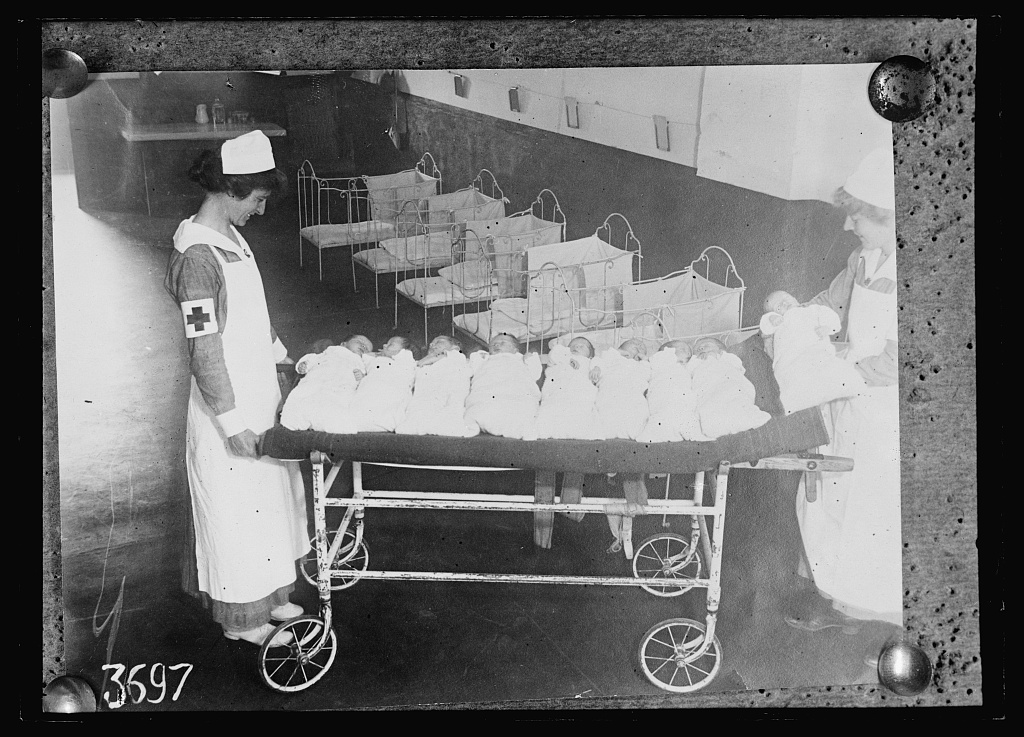
Photo credit: Maternity ward, 1918, U.S. Library of Congress.