Mr. Trump’s Sunday Morning Service

By Judith Skillman


Water-worn image of an eye
etched and lined, the tilted earth
no longer holds its metal.

*

Water worms the soil until
a hollow man comes to rule—
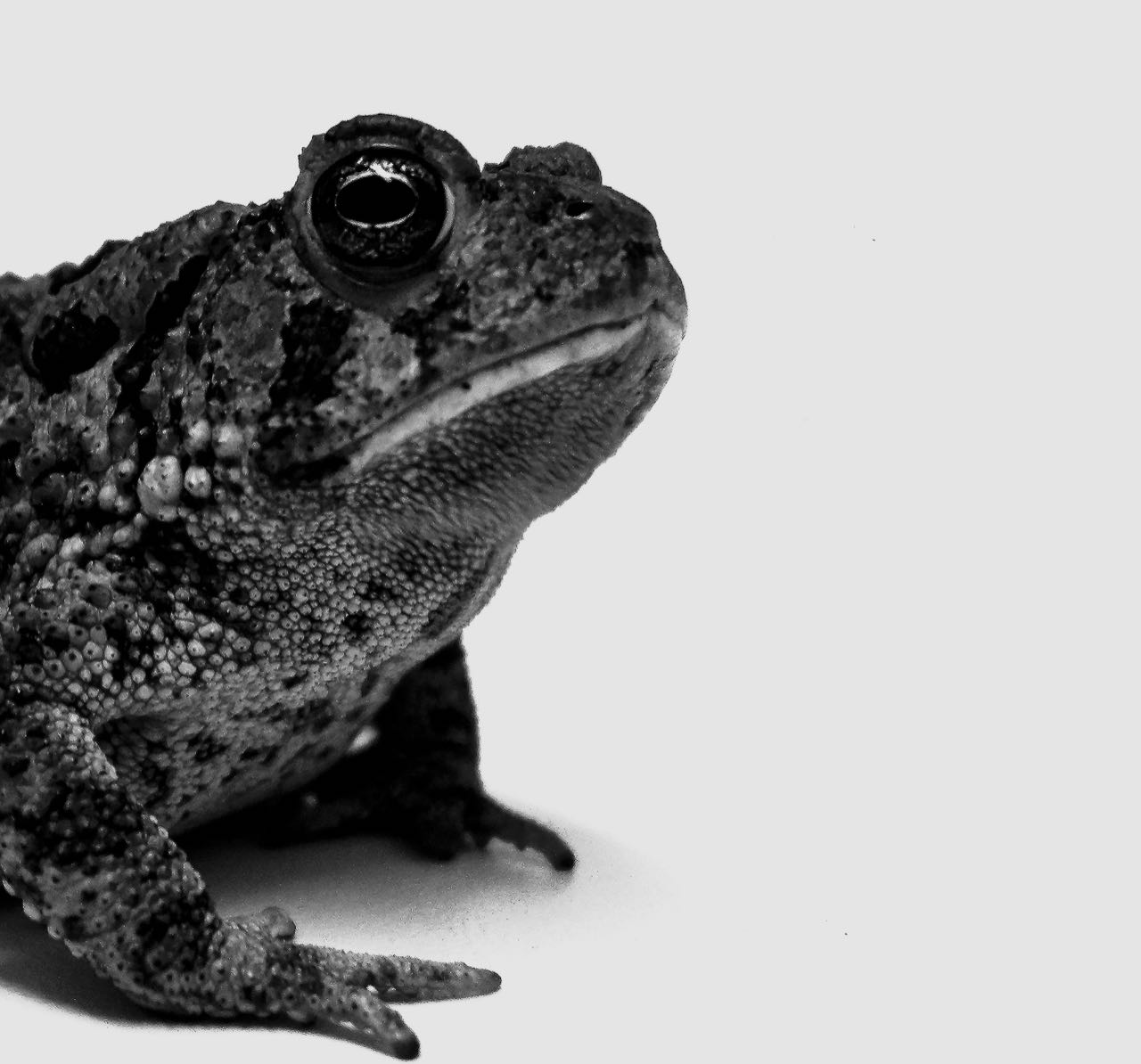
a toad gurgling ribbit ribbit.

*

Power over versus personal power
duel it out à la 21st
siècle psycho babble.

*

To whomever enforced laws,
the falling into and down,
implore: Is this my swan song?

*

St. Francis of Assisi drowns.
Pockets full of skunk, possum.
Belly up lies the large coon.

*

Catholic helpmates come to look
for one singing candled hymns—
find litany: foam, stone, fur.

*

In his bed the king began
to be poor and sick, Monsieur Macron.
The toad lips lies, the eye sees.


Judith Skillman’s recent books are Premise of Light, Tebot Bach; and Came Home to Winter, Deerbrook Editions. She is the recipient of grants from Artist Trust and from the Academy of American Poets. Her work has appeared in Shenandoah, Poetry, Cimarron Review, The Southern Review, and other journals. Visit www.judithskillman.com.

Photo by Matthew T Rader on Unsplash.

What Crosses

By Jane Rosenberg LaForge

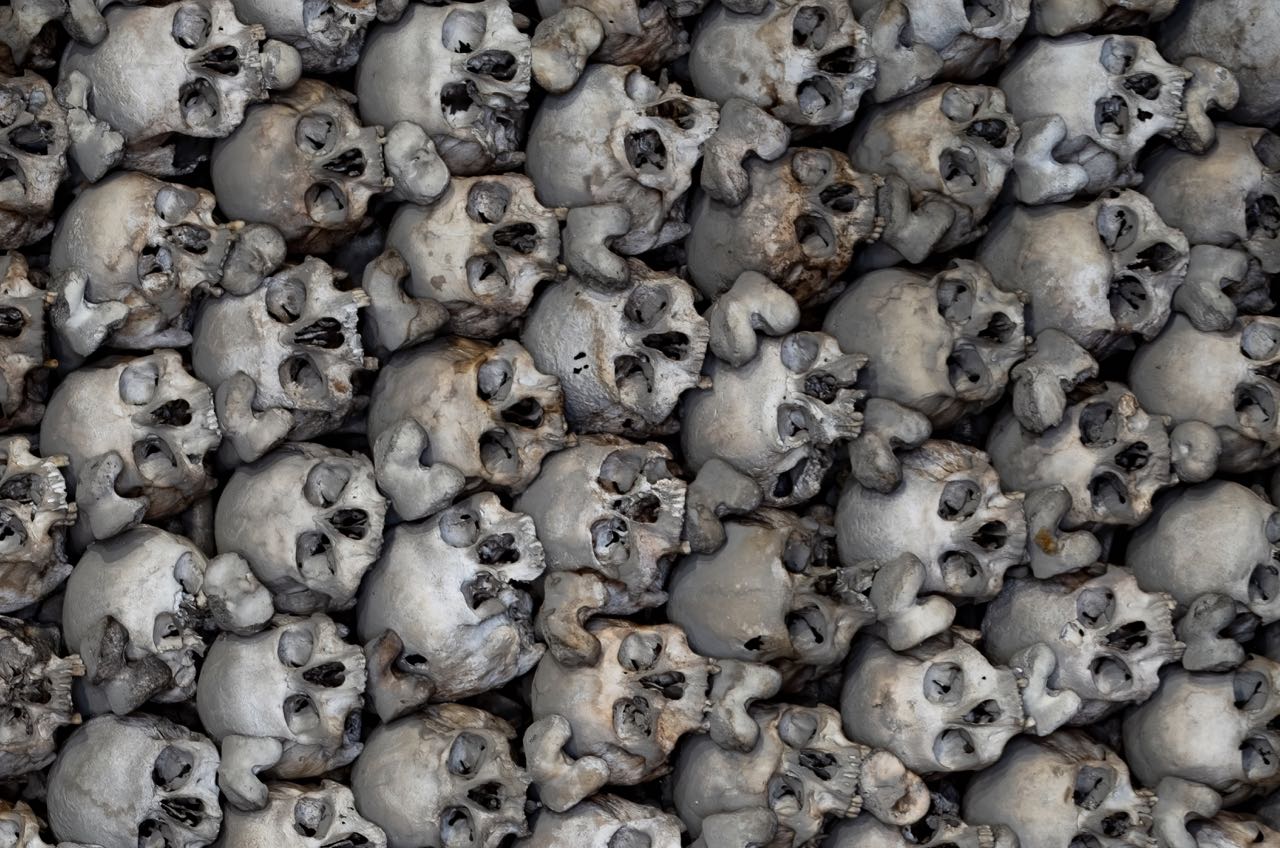
Teeth and rosaries:
the hard business of taking
a census, in this case
one of erasure, pound
for pound of marrow
and pith, the appropriation
of bone for bracelets,
tree bark for embracing
new belief systems.
Everything funneled into
flat equations, which should
come out even, if
the arithmetic is properly
executed. If not, we’ll just
have extra, and affect some

disappearances, Gaps
in history, with regularity
that goes into record-keeping
overseas, the circumstances
always desperate, now
with the watermarks and seals.
Wax is such weak material,
corruptible as religion.
Unlike the bottom facts
memorized or pinned
on the inside of jackets,
who was made criminal
by which accident, who
could not be ground down
into a spice or artifact,
or mortared into an atmosphere
of sacrifice and myths
hollowed out or smoothed
over as if a faux decoration
in a kitchen: where
the stories begin,
if migration ever ends.


Jane Rosenberg LaForge is the granddaughter of what are now called “illegal immigrants” who came to the US from the Ukraine and Rumania, via Canada. Her poem “Thoughts and Prayers” appeared on Writers Resist on February 22, 2018. She is also a novelist and memoirist. More information, visit jane-rosenberg-laforge.com.

Photo by Malcolm Lightbody on Unsplash.

Two Poems by Jeremy Nathan Marks

[fusion_builder_container hundred_percent=”no” hundred_percent_height=”no” hundred_percent_height_scroll=”no” hundred_percent_height_center_content=”yes” equal_height_columns=”no” menu_anchor=”” hide_on_mobile=”small-visibility,medium-visibility,large-visibility” class=”” id=”” background_color=”” background_image=”” background_position=”center center” background_repeat=”no-repeat” fade=”no” background_parallax=”none” enable_mobile=”no” parallax_speed=”0.3″ video_mp4=”” video_webm=”” video_ogv=”” video_url=”” video_aspect_ratio=”16:9″ video_loop=”yes” video_mute=”yes” video_preview_image=”” border_size=”” border_color=”” border_style=”solid” margin_top=”” margin_bottom=”” padding_top=”” padding_right=”” padding_bottom=”” padding_left=””][fusion_builder_row][fusion_builder_column type=”1_2″ layout=”1_2″ spacing=”” center_content=”no” link=”” target=”_self” min_height=”” hide_on_mobile=”small-visibility,medium-visibility,large-visibility” class=”” id=”” background_color=”” background_image=”” background_position=”left top” background_repeat=”no-repeat” hover_type=”none” border_size=”0″ border_color=”” border_style=”solid” border_position=”all” padding=”” dimension_margin=”” animation_type=”” animation_direction=”left” animation_speed=”0.3″ animation_offset=”” last=”no”][fusion_text]

Interiors

Everybody is into interiors in the time
of that commander-in-chief who shall not be named

I am into carcasses
though not the kind you eat
unless you are starving and hopefully
not even then

Tell me how you feel
and I will consult my price index
slide rule and the latest RAICES report

A pinch of snuff is what I need
take off the dust of a plain where all his trophies
lie

That is
before we give them
Anglo-Saxon names
hashtags
and Twitter handles.

[/fusion_text][/fusion_builder_column][fusion_builder_column type=”1_2″ layout=”1_2″ spacing=”” center_content=”no” link=”” target=”_self” min_height=”” hide_on_mobile=”small-visibility,medium-visibility,large-visibility” class=”” id=”” background_color=”” background_image=”” background_position=”left top” background_repeat=”no-repeat” hover_type=”none” border_size=”0″ border_color=”” border_style=”solid” border_position=”all” padding=”” dimension_margin=”” animation_type=”” animation_direction=”left” animation_speed=”0.3″ animation_offset=”” last=”no”][fusion_text]

Cotton Mather exchange

When the Red wall came
down in eighty-nine
pairs of blue jeans belting
delta blues toasted
the Ramones in chablis
glasses made of napalm
while storming Charlie’s
checkpoints
street poets busted
for drugs yelled from their
cells that a man named
Mumia was serving thought
crime status four thousand miles
west
of the Stasi
as German Army Jackets
sold surplus in outer
ring suburbs whose towns
of Leipzig and Berlin
twice underwent a name change
becoming southern English banks in
praise of the Cotton Mather exchange.

[/fusion_text][/fusion_builder_column][/fusion_builder_row][/fusion_builder_container][fusion_builder_container hundred_percent=”no” hundred_percent_height=”no” hundred_percent_height_scroll=”no” hundred_percent_height_center_content=”yes” equal_height_columns=”no” menu_anchor=”” hide_on_mobile=”small-visibility,medium-visibility,large-visibility” class=”” id=”” background_color=”” background_image=”” background_position=”center center” background_repeat=”no-repeat” fade=”no” background_parallax=”none” enable_mobile=”no” parallax_speed=”0.3″ video_mp4=”” video_webm=”” video_ogv=”” video_url=”” video_aspect_ratio=”16:9″ video_loop=”yes” video_mute=”yes” video_preview_image=”” border_size=”” border_color=”” border_style=”solid” margin_top=”” margin_bottom=”” padding_top=”” padding_right=”” padding_bottom=”” padding_left=””][fusion_builder_row][fusion_builder_column type=”1_1″ layout=”1_1″ spacing=”” center_content=”no” link=”” target=”_self” min_height=”” hide_on_mobile=”small-visibility,medium-visibility,large-visibility” class=”” id=”” background_color=”” background_image=”” background_position=”left top” background_repeat=”no-repeat” hover_type=”none” border_size=”0″ border_color=”” border_style=”solid” border_position=”all” padding=”” dimension_margin=”” animation_type=”” animation_direction=”left” animation_speed=”0.3″ animation_offset=”” last=”no”][fusion_text]


Jeremy Nathan Marks is an American living in London, Canada (no, Trump did not cause this as I already was here). He is a 2017 Pushcart nominee in poetry and recent work appears/is appearing in Chiron Review, NRM Magazine, Poets Reading The News, Cajun Mutt Press, Mojave River, Rat’s Ass, New Reader Magazine, The Blue Hour, The Blue Nib, The Wire’s Dream, Landlocked Lyres, The Wild Word, Credo Espoir, Unlikely Stories, Landlocked Lyres, OTV Magazine, Alien Pub, Bravearts, Runcible Spoon, and Poetry Pacific. Jeremy writes regular political/historical essays for The Black Lion magazine. His short story, “Detroit 2099,” will be published in The Nature of Cities Anthology in 2019. Jeremy’s educational/Socratic teaching website can be found here.

Image credit: Witches presenting wax dolls to the devil, featured in The History of Witches and Wizards (1720), Wellcome Library, courtesy of The Public Domain Review.

[/fusion_text][/fusion_builder_column][/fusion_builder_row][/fusion_builder_container]

what i imagine

By Kate McLaughlin


were it that easy, that words alone could save us.
sometimes i let myself imagine
grammatical rebels and daily syllables
of resistance with bold punctuated uprisings.

if words alone could save us,
i’d write all night. in my grammar book,
recruitment would be what hanging prepositions exist for.
hangin’ at all the cool spots, they’d get millennials
to sign up and join in.

dangling surreptitiously, irrefutable proof of
political corruption would be regularly gathered.
obtained by those sneaky participles, of course.

words of compassion and scientifically based research
would always talk louder than money—literally.

‘and justice for all,’ along with other empty phrases,
would be sent to a dictionary boot camp to ensure
they attain their true meaning.

females written in the passive voice would be archaic
grammar. the rule would be women directing action verbs,
issuing commands and making countless interjections.

i’d write similes that could fly like superman and they’d
reunite migrant families, break up nazi rallies and stop
speeding bullets.

and i’d create metaphors that could morph into their conjured
images, like, stories are a respite, words are an oasis,
providing a vacation to the over-pronounced, weary activists
and a livable picture of the world as it could be.

this is what i imagine,
during my nights of hyphenated sleep,
if words alone could save us,
if similes could fly like superman.


Kate McLaughlin lives and works in Portland, Maine, with her rescue dog Greta. She keeps her elected representatives on speed dial and is known to attend political rallies. She is fond of dogs, books, gardening and the occasional vodka martini. She is not fond of winter or Senator Susan Collins.

Photo by Ihor Malytskyi on Unsplash.

The man who killed me got out of prison this week

By Marissa Glover

I do not dream of winning
the Heisman Trophy, of going pro
after a standout junior year,
of one day being inducted
in the NFL Hall of Fame.

I do not dream of breaking records
or wearing rings or signing contracts
with Nike and Gatorade. I do not
dream of retiring to the ESPN booth
to offer commentary on Monday nights.

I do not dream of Hail Mary catches
of beating defenders, of dancing in the end
zone after a touchdown. I do not dream
of kneeling for the anthem or standing
for the flag or protesting the police.

I do not dream of justice—there is no justice
to be had. There is only earth and sky
and moms who raise their grandsons
and moms who die from four bullets
to the belly.

I do not dream of who my son will be
when he grows up, where he will go
to college, if he will play the game
his father loved. I do not dream.


Marissa Glover teaches and writes in the United States, where she spends most of her time sweating. Currently the Co-Editor for Orange Blossom Review and the Poetry Editor at Barren Press, Marissa was recently nominated for a Pushcart Prize by The Lascaux Review for her poem “Some Things Are Decided Before You Are Born.” Her poetry has also appeared in Stoneboat Literary JournalAfter the PauseGyroscope ReviewWar, Literature & the Arts, and New Verse News, among others. You can follow Marissa on Twitter @_MarissaGlover_.

Photo by eberhard grossgasteiger on Unsplash.

The Way You Talk About Love: A Found Poem Like What Is Discovered at Autopsy After a Massive Coronary Thrombosis

by stephanie roberts

            for Shay Stewart Bouley


At 1:51PM, on 02 July 2017, @blackgirlinmain said, To all the white
folks who are waking up, stop blocking and ignoring your racist peeps.
Talk to them, work with them. That’s your work.

The first comment was from self described Owner/Attorney, “Learning to
do right; seek justice. Defend the oppressed. Take up the cause of the
fatherless; plead the case of the widow. Isaiah 1:17.” Artesia, New
Mexico [population 72.25% white, 1.44% African American*]

That’s not my work, Owner/Attorney/Bible Quoter said, Nope, Thats
not my work any more than it’s your. They won’t listen & I’m not wasting my
breath on them.

Once termed, hang out to dry, when such quaint actions were more
common, now we say thrown under the bus, a strengthened idiom, with
its visual of mangled body inevitable result of washing one’s hands of
one’s responsibility. Pontius Pilate gleams evergreen.

What I’ll never understand about the way white people talk about love is
how it hurts so to hear it and what little energy it has to hold me free.
Love and hate are first cousins, not opposites, and thus shouldn’t marry.
White love bounces as de facto beach ball of indifference. Who doesn’t
enjoy beach ball? The Black and Latinx shuttled from school to prison
wish they could, while good people see having conversation over this
pipeline of tears as, wasting my breath.

At night, I pray love and hate hold hands and strangle indifference in his
bed. Bury the body in the graveyard of Bible Quotations. I am singing,
into a starry abyss, hoping hate outfits love with ice axe, ushering her
toward courage-free suburban ice castles, where love wreaks justice.


*Wikipedia


stephanie roberts is a 2018 Pushcart Prize nominee and a Silver Needle Press Poem of the Week Contest winner. Her work is featured or forthcoming in numerous periodicals and anthologies, including, Verse Daily, Atlanta Review, The Stockholm Review of Literature, L’Éphémère Review, and Crannóg Magazine. She was born in Central America, grew up in Brooklyn, NY, and is a longtime inhabitant of Québec, Canada. Follow her on the following: twitter: @ringtales, instagram: @ringtales, and soundcloud.

If you imagine less, less will be what you undoubtedly deserve. – Debbie Millman

Photo by Ricardo Gomez Angel on Unsplash.


Lazarus Force

By Jemshed Khan


That day over lunch, I was going to write about the Yemenites starving while the Saudis build five new palaces on the Red Sea. A poem might make a difference. But the sun was shining, 75 degrees in October, and the outdoor pool is heated, so I went for a swim instead. As I swam  laps, I felt joy and splash with each stroke: thankful for clients traveling to see me in their combustion driven vehicles and for cheap fuel that leverages each shiny day. For three laps I considered the convenience of gasoline and writerly leisure. Okay, yes, a Lockheed Martin missile incinerated another Yemeni school bus, but how could a lunchtime poem make amends for fifty dead school children or eight million starving?

Poetry of angel wings and metrical feet,
I thought you were the steed of change,
that with the right words
we would skywrite the nation’s conscience.
Now I see my words never had Lazarus force
and we are no match to the God of gasoline.

The cardiologist said my heart stopped. The apartment manager says I was pulled blue from the pool: resuscitated with CPR and defibrillator paddles across the chest. I survived the ambulance ride, heart stents, ICU, rehab. Today I put my head back in the game. Read an anthology of resistance poetry. Each work smoldered on the page until my chest burst into flame. I rose from the bed, grabbed my pen, began to write again.


Jemshed Khan has published about 30 poems in such magazines as Rigorous, NanoText, Unlikely Stories, and I-70Review, and he is working towards a book-length collection.

Photo by Matthew Henry on Unsplash.

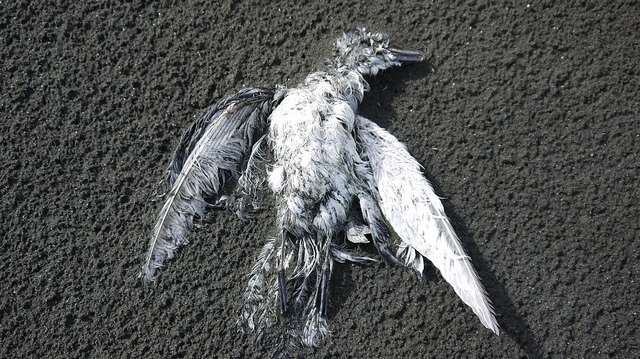
Birds of America

By Ellen Stone


Deep in the bright red
country of the sun,
the birds of America
raucous, wild, immigrant
gather, having flocked in bands
surged over borders as snow melts.
By July, they rise early to the party
in full bloom – voices piercing
our cottony night dreams –
having taken temporary residence
in tiny wooden boxes, old barns
or the cool, damp woods – for now –
for this uncertain summer
where they can dip & soar & glide
like the purest bit of floating fluff
off the cottonwood down by the river
or the drooping milkweed in the garden.

How odd, really, that we welcome them
with open arms – so unabashedly, like tourists
in our own hometown, peering through binoculars.
Build them sturdy homes, feed them
tasty morsels through all seasons, celebrate
their foreign dress, strange plumage. Mating
habits so unlike our own. Lament a young one
fallen from the nest. We are such humanitarians
to birds. It’s sad they cannot talk to us, thank us
for our gracious hospitality. Here, in America,
all traveling birds are welcome – the more
garish, bright & tropical, the better.


Ellen Stone teaches at Community High School in Ann Arbor, Michigan. Her poems have appeared recently in Passages North, The Collagist, The Citron Review, The Museum of Americana, and Fifth Wednesday. She is the author of The Solid Living World (Michigan Writers’ Cooperative Press, 2013). Ellen’s poetry has been nominated twice for a Pushcart prize and Best of the Net.

Photo by José Ignacio García Zajaczkowski on Unsplash.

The Wall

By Tim Philippart


what worries me is not

a great one in China.

a razed wall in Berlin,

one for holy wailing or,

the proposed between Mexico and the US but,

the barrier that dams the flow of

empathy, compassion and kindness

between you and me.


Tim Philippart: For three years, I have been writing pieces that are kind of frothy. I like to write about love and often end with a bit of humor. In these recent days, I think too much about a guy who said, “I will hire all the right people.” I then wonder why he ends up with hair like he has.

Photo by Masaaki Komori on Unsplash.

Getting Through

By Harry Youtt


Life goes on. Skies turn darker gray,
Lightning has been striking the trees awhile.
We expected the storm, but this hasn’t eased the burden.
Already thunder booms around us,

as we sit down, crouched again together
to another meal, thankful for the way
the fire in the grate keeps us warm enough
through the worst of the storm, and our minds away

from those places outside and down the road,
places we can’t do a thing about right now,
but maybe tomorrow. Definitely tomorrow!
We gaze into each other’s eyes

and understand we’ve been
thinking similar thoughts
as we try not to worry the thunder louder,
or fester the danger of avalanche.

Right now, the mountain is far enough away.
The curtains are drawn to lessen the lightning’s flash.
And we’re well-aware the landslide won’t hesitate
on our account or listen for our advice.

Tomorrow we’ll go outside to what will be new sunlight.
We’ll begin sweeping debris. Then we’ll go over
to check on how the mountain fared in the storm.
We’ll figure out what to do to make things right again.


Harry Youtt is a long-time creative writing instructor in the UCLA Extension Writers’ Program, where he teaches classes and workshops in memoir writing, narrative nonfiction, fiction, and occasionally, poetry. He has authored numerous poetry collections, including, most recently, Saint Finbarr Visits the Pacific, as well as Getting Through, Outbound for Elsewhere, and Elderverses. All of them are available via Amazon.com. The sentiment behind the title of his collection: Getting Through refers directly to our current ongoing predicament. He assembled the poems there as his effort to assist us to shelter in place and gather back collective wits for the conflicts that are to come. Harry coordinated the Los Angeles Poets Against the War event back in 2003, which, to him, seems like more than a hundred years ago.

Photo by Bethany Laird on Unsplash.

Why Poets Aren’t on TV

By Tori Cárdenas


Poets aren’t on TV because they cry when they are asked about their feelings.
Poets are messy.

Poets will tell it like it is. They will tweeze out the words you meant from an argument
& divinate the heart of you by casting your dry fingerbones.

Poets are easily distracted. They will not settle for limited omniscience
and will write a poem from the bottom of the ocean or a planet orbiting a distant star.

Poets are old deep wells with trolls still living in them.
Poets refuse to read from the teleprompter.

Poets will only read aloud with the dangling vocal chimes of generations before them,
the infected & murdered; the drugged, the persuaded, and the robbed.

Poets rewrite erased words.
Poets only own black clothing, and so are hard to fit into certain studio sets.

Poets will not sit through hair & makeup.
Poets are oblivious to commercial breaks. Their ribcages pulse with broken rhythms.

Poets are lie detectors. They unstarch anchors’ shirts with sex & politics & blood.
There is no script for poetry. Poets are still trying to translate it into the vernacular.

Poets aren’t on TV because they are hard roles to cast; they are mirrors.
Who would want to watch a blank screen?


Tori Cárdenas is a Tainx/Latinx poet from Northern New Mexico. She is currently working on her Masters of Fine Arts in Poetry at the University of New Mexico. Follow her on Twitter at @monsoonpoet and on Instagram at @toritillas, and visit her website.

Photo credit: Tina Rataj-Berard on Unsplash.

Judging Silence

By Sheila Ewers


Of course he covered her mouth.
Denying her voice,
he could write the story.

We girls learn early
that what remains unspoken
Remains Unreal.
How else could we survive?

And when she swallowed her scream
(as we all do)
it took the words with it
lodging them
into the very parts he
stuffed himself into.

They may have stayed there forever too

Had the scent of his smug victory
not wafted from every screen.

Had his name not been hissed into
her face every day

while he groped his
way under
Lady Justice’s skirt.

The stench
of him growing so ripe
in the spotlight of his glory
that finally
she had to vomit the truth back
to the world

and wait for dozens more of them
to press hands over
her mouth
and hand him
a gavel to cudgel
her sisters.


Sheila Ewers is the owner of two yoga studios, a teacher, and a writer living in Johns Creek, Georgia. Before opening the studios, she taught college writing and literature for years. She is intrigued by the intersection of yoga, literature, philosophy, and social responsibility and finds her voice growing louder as a result of the current political climate. Her hope is that in finally speaking her own rage and truth, other women will find their voices as well.

Photo credit: Vero Photoart on Unsplash.

PTSD Pantoum

By Jean Waggoner


Me and Apple were out on patrol….
Each story begins with a line like this,
the travesty of its grammar a buddy thing
for the philosopher-boy turned to grunt.

Each story begins with a line like this,
a breath-stopping return to war
for the philosopher-boy turned to grunt,
blank-out humping huge loads, splattered in guts.

A breath-stopping return to war,
newest research blames prior trauma;
blank-out humping huge loads, splattered in guts
(What a nice cost-savings for Veterans Affairs).

Our newest research blames prior trauma;
he saw a brakeman uncle’s three-day death;
(What a nice cost-savings for Veterans Affairs!)
a man’s train-severed leg and wailing from pain.

He saw a brakeman uncle’s three-day death,
not the buddy blown up in WW II:
a man’s pain-severed leg and wailing in pain,
or maimed Civil War vets in Depression soup lines.

Not the buddy blown up in WW II,
not the leap to the trench from your rest:
or maimed Civil War vets in Depression soup lines:
blame it on the screaming child at night.

Not the leap to the trench from your rest,
of your father’s or brothers’ war, or yours;
blame it on the screaming child at night.
Those without prior trauma don’t get PTSD.

Of your father’s or brothers’ war, or yours,
Afghanistan vets trump them all.
Those without prior trauma don’t get PTSD;
(Ah, so many recruits homeland-brutalized.)

Afghanistan vets trump them all.
Maybe our movies can shoulder some blame;
(Ah, so many recruits homeland-brutalized.)
Before “shell shock” and PTSD, the cowards were shot!

Maybe our movies can shoulder some blame
for extreme violence or magical thinking.
Before “shell shock” and PTSD, the cowards were shot!
Me and Apple were out on patrol….


Jean Waggoner has sporadically published poems, stories, articles and fine arts reviews and she co-authored The Freeway Flier and the Life of the Mind, a book about the Adjunct Faculty experience. “PTSD Pantoum” references a controversial 2007 Institute of Medicine and National Research Council PTSD analysis discussed in Sebastian Junger’s “The Bonds of Battle” in Vanity Fair, 2016. Jean has retired, no longer leads an Inlandia Institute creative writing workshop, and will soon update her website.

Photo credit: Elijah O’Donnell on Unsplash.

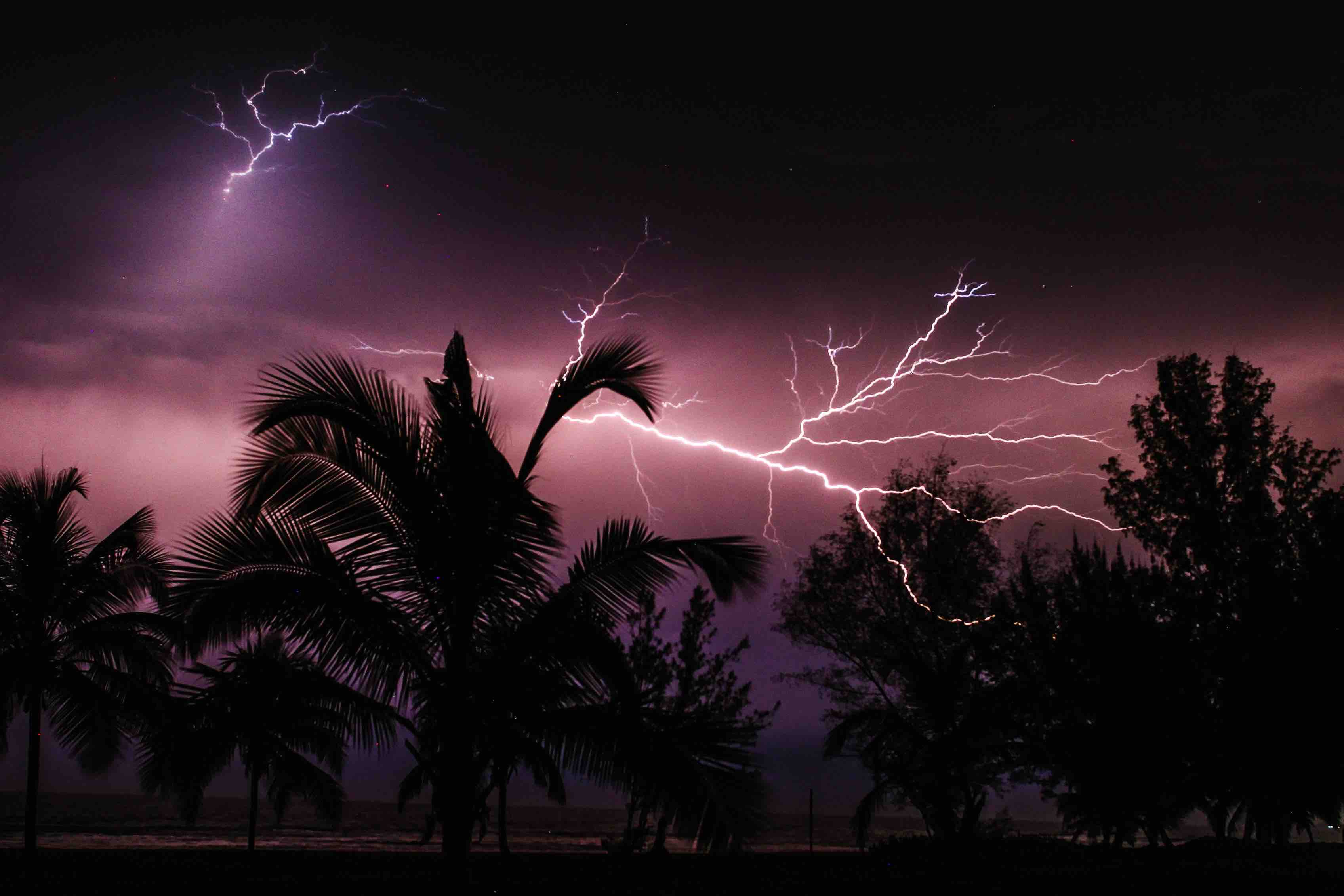
In the Time of Avian Politics

By Josh Nicolaisen


Attempting to influence opinions
and implement policies
through terse tweets,
it’s clear he sees
himself as the
great golden eagle of
social media,
and America.
Sure, bald would be
more appropriate and
more patriotic,
but don’t we know
appropriateness is
apart
from his concerns
and that the
narcissist would never
ignore gold, nor
allow himself to
be paired with a word
like bald
with such negative,
albeit alternative,
connotations?

Plus, we all already
saw how the
white-headed raptor
reacted to him
prior to his
inauguration.

After just a few months
of following his feeds
we’re sure he’s a predator
but no raptor at all.
Lacking the right skills,
he’s surrounded himself
with generals, and though
he wishes he were a hawk,
he’s more like a preposterously
self-indulged peacock
presumptuously poised
to strut its stuff for an
ever-attentive audience.
An immature and
inexperienced rooster
who can’t secure his flock-
staffers starting to run
from our cock-of-the-walk,
his racist agenda,
and his hate-filled talk.

A raven screaming
and squawking
with no end in sight,
set only on its own story;
adding shrill to silence
for its own sorry plight.

A vulture vociferously
pushing violence
and vending cheap hats,
while working to keep us
fighting each other and
scrounging for scraps.

No, he’s no eagle,
and no robin, wren,
or sparrow with some
sweet songs to sing.
We should now see he’s
a sort of scarlet ibis
or rotting albatross
hung round the neck of the nation,
a disgusting and daily reminder
of what we’ve done
and how far we still
have yet to come.


Josh Nicolaisen has taught English in both public and private schools for more than ten years. He spends summers as a caretaker on Squam Lake’s historic Chocorua (Church) Island and lives in New Hampshire with his wife, Sara, and their daughters, Grace and Azalea.  Josh has poems in Underground Writers Associations’ anthology The Poets of New England: Volume 1 and Indolent Books’ online project What Rough Beast.

Photo credit: Book Man Film via a Creative Commons license.

House of Worth

by dl mattila 


High-pitched brow, purse-proud

veneers: Harry Winston links,

filigreed graffiti, pelts,

cashmeres — your armature, your

lah-di-dahs, your house of worth.


dl mattila is a linguist and poet residing in the Greater Washington DC Metropolitan Area.

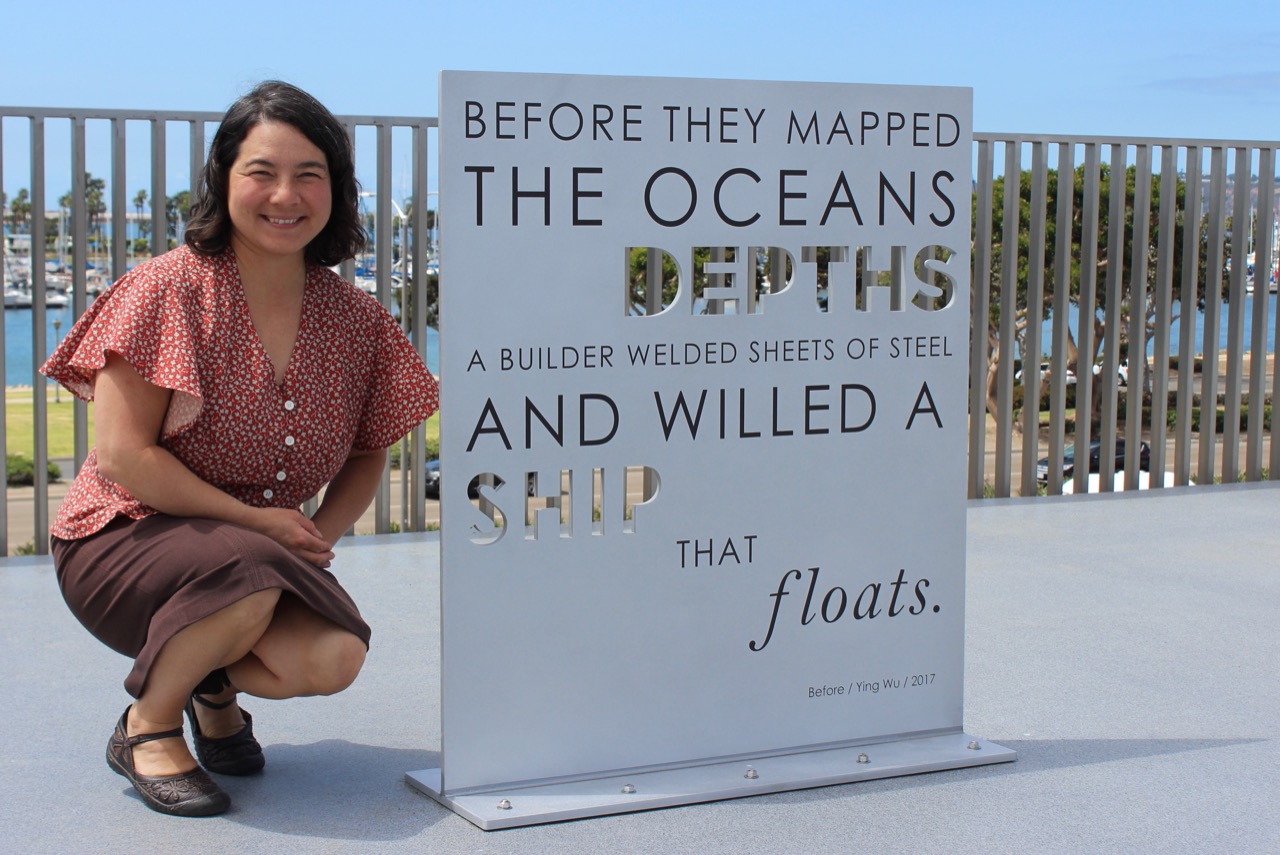
Welcome Ying Wu, poetry editor

Ying WuWe are delighted to introduce our new editor, Ying Wu, who is joining editor Laura Orem in the Writers Resist world of poetry.


Ying Wu is a poet and cognitive scientist, and host of the Gelato Poetry reading series in San Diego (meetup.com/BrokenAnchorPoetry). She is also a proud member of the editorial team of Kids! San Diego Poetry Annual. More examples of her work can be found online at Poetry and Art at the San Diego Art Institute (poetryandartsd.com), in the Serving House Journal (servinghousejournal.com), and in Writers Resist, as well as in the material world at the San Diego Airport and in print journals, such as the Clackamas Literary Review. Ying currently studies insight and problem solving (insight.ucsd.edu) at UC San Diego and lives with her husband and daughter on a sailboat in the San Diego Bay.

Please join us in welcoming Ying Wu and celebrating her poem— 

We

breathe the air

name stars

snap photographs

count minutes, kilometers
degrees, Ohms, inches
Herz, decibels, terrabytes
millivolts, microns, pounds

notice
when
the clouds
are turning pink

or thick
and smooth
like blankets

or high
and thin
in rippled wisps

believe
in heaven

speak in
metaphor

speak in
grammar

talk about
infinity

stretch our
hands wide.


Caged

By Edytta Anna Wojnar


The song of birds outside
pulls her

out of a nightmare
in which chicks hatch

from eggs submerged
in boiling water.

She hastily retrieves them
and not knowing what to do next,

she blankets them with foil
and places in a box.

Outside, the chirping
is gregarious.

A neighbor’s dog
starts a riot.

More birds migrate
to the yard behind her white house

where she fills
a feeder with seeds,

watches chicks with open beaks
hop behind their mothers.

The families nestle
together at night.

By the border,
mockingbirds cry.

Terror traps
children
under space blankets.


Edytta Anna Wojnar emigrated from Poland in 1986. Her poems have appeared in Paterson Literary Review, Shot Glass Journal, Adanna, and other journals. Finishing Line Press published her chapbooks Stories Her Hands Tell in 2013 and Here and There in 2014.

Photo credit: Marc Falardeau via a Creative Commons license.

Behind every shithole country

By RC Wilson


Behind every shithole country
Is an act of colonial rape
Behind every terrorist bomb
Is a smiling missionary or corporate agent

Back when Africa was being gang banged
By Leopold II, Stanley and Livingston,
The French Foreign Legion, Firestone Tire & Rubber,
All seven of the seven sister oil giant offspring
Of the titan Atlas, banging away
Back when Africa was being improved, educated, modernized
Tied to a bed and stripped of her diamonds
Stripped of her rubber, stripped of her ivory and ebony and gold
Stripped of her cobalt and uranium
Stripped of her children sent to mines
For the sake of our cell phones
Our tires, our necklaces and engagement rings
Stripped of her languages, the oldest on earth,
Stripped of her boys forced to soldier
Stripped of her girls forced to brothels

Back when Africa was being gang banged
By her own people, pitted against each other
By unseen powers, market forces, commodity traders,
Gang banged and forced to labor
With hands cut off and other mutilations

But that all stopped in 1907, or 1912, you say, or was it 1945, or 1963?
But that all stopped, you say
As African children work to death
Even as we speak
Poisoned while digging for the poisons we need

Back, way back in the dark heart of the past,
When Africa was being gangbanged by Europe
And America and China (sing)

And what are we doing here this time boys?
Is it terror we fight? Or terror we use?
She is there for the taking and
If we don’t do it
Somebody else will
So bang away, bang, and haul away home!

The stuffed animals
The ceremonial masks/ look at the detail!
Amazing what they did with such primitive tools
Not people like us, but clever in their own way
And yet, their countries are shitholes
So best they stay home, for the good of us all
For the good of us all
For the good of us all.


RC Wilson is a retired civil servant, living with his spouse and two cats in Kent, Ohio. He has written poetry since he was a teenager. His chap books include: A Street Guide to Gary Indiana; Sex, Drugs, Poetry, and Home Improvement; Down the Back Steps; and most recently, Side Angle Side. He is part of a group who read to each other monthly at Last Exit Books in downtown Kent. RC has been a frequent organizer of poetry readings in the Kent area.

Photo credit: Child miners in the Congo by Enough Project via a Creative Commons license.

I Knew.

By Michelle J. Fernandez

When we arrived we were four footsteps at a time:
his and mine.
Standing on the front steps of a government building
just like all the lovers before us
just to make it official.

There is something about signing on a dotted line
before god and country that somehow
makes it real.
On the morning of your birthday
you don’t feel any different,
it’s not until they start wishing you well
that the day becomes itself.
You walk a little taller,
finally grow into your ears,
start giving advice unasked,
become generous with your smile.
It’s like that.

I knew by the time his heels disappeared
behind the heavy door.
The way your mother knows you have a fever without feeling your forehead.
The way you know one more bite will make you throw up.
The way you know when someone is watching you from across the room.
The way you know in the wrist you fractured ten years ago that it’s about to rain.

I knew
and I stomped for two
and I yelled for two
and I danced for two
and they didn’t even bother to silence me because they didn’t have to.

And he, inside
a man, who like all men
could barely sit up in bed
while battling the common cold.
He, inside
in pieces.

I lived a thousand lives in those hours
walking toe toe heel heel
until they dragged me away
screaming twice as loud and kicking twice as hard.
I knew we’d be leaving as one
but I didn’t know how.
And I will forever be stepping for two.


Michelle J. Fernandez is a writer and public librarian from New York. Visit her at michellejfernandez.com and on Twitter, Facebook and Instagram at @meeshuggeneh.

Photo credit: Javier Morales via a Creative Commons license.

Frankenstein

By Christina Schmitt

It is 2018, the 200th anniversary of Mary Shelley’s novel,
Frankenstein.

It is 1818 and mad Chemist Victor Frankenstein steps back from the lab table,
Covered in blood that is not his own.
Instruments of life scattered all over the kitchen floor,
His apartment is a literary landscape of graveyard bodies, when
One of them starts breathing.
Heart being, he stares up from the ground where he lies at his creator’s feet.
Frankenstein decides to play God today.
Plays lab coat dress up
Breathes life into creation and
Abandons it

Frankenstein, the ghost of Mary Shelley’s literary challenge,
Teaches us what happens when
We abandon what we create.

It is 1945 and President Truman steps back from the situation room
Covered in blood that is not his own.
He paints landscapes of obituary innocence, is
Astounded at mad chemist’s ability to animate metal
leaves tools of destruction all over the kitchen floor.
America woke up and decided to play God today
Decides who gets to live today
Peers over the world map chess game
And checks Hiroshima like it is Sunday afternoon, like
We are Frankenstein, like
We don’t have to take responsibility for our creation.

It is 1962 and Rachel Carson slits Silent Springs from her wrists
Watches rivers of red seep into soil
Prays to god to hold America accountable.
When god does not, she does.
She calls America to trial for identity theft.
For playing God.
For abuse.
For using alternative facts
For saying rivers have always run synthetic pesticides
She calls Flint Michigan for an eyewitness account.

She calls America to trial for abandonment
For leaving earth bleeding
All over the kitchen floor
For forgetting what happened to Frankenstein, that
If you do not take responsibility for creation
It will kill you.

It is November 2016
And America steps back from the ballot box
Blood all over the voting booth.
It is January 2017
And poet puts America on trial
For abandonment
For neglect
For not wanting to talk about the mess all over the kitchen floor
For social media crux instead of showing up
When you do not show up
You die at the hands of your creation

It is March 2018 and
17 more students die at the hand of animated metal
Covered in blood that is their own

It is 1818
And Frankenstein cowers from the creature he created
Who killed everyone he loves.
Who will kill him.
Who thunders,
“You may be my creator, but I am your master”

Frankenstein learns the hard way.
That creation is not play-thing.
That playing God has consequences.
Frankenstein does not live to learn from his mistakes.

It is Halloween 2018 and there is a monster at my door.
He is painted green,
bolts protruding from his neck
Hair black and slicked back.
He calls himself Frankenstein.
Silly boy.
Frankenstein is not that monster.
Frankenstein plays lab coat dress up.
Calls himself God.
Is charged with abandonment by the abandoned.
Silly boy, this monster dies
at his hands of neglect
He is mess all over the kitchen floor
Always covered in the blood that is not his own.

It is 2018, the 200th anniversary of Frankenstein.
And what have we learned?


Christina Schmitt is a graduate student at Emory University studying Theology and Ethics. She writes around the intersection of theology, ethics, and feminism. She is previously published in Voices of Resistance: An Anthology by Sister City Connection.

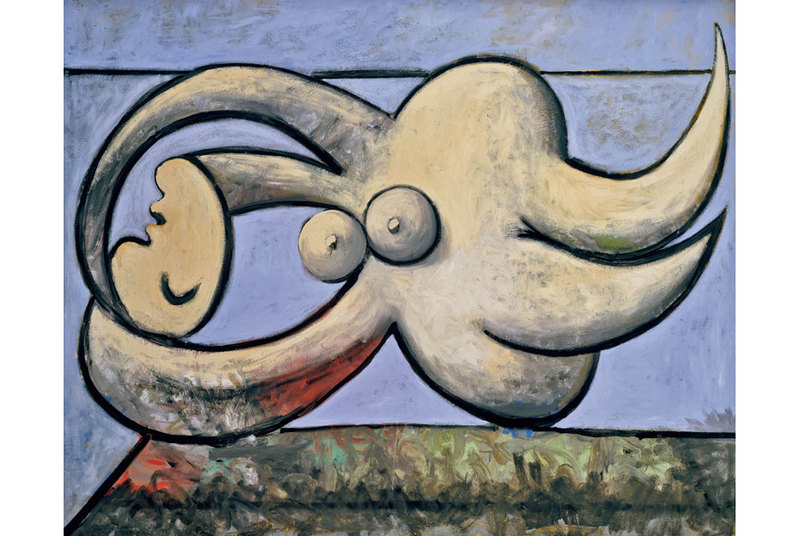
Monster image credit: Reclining Nude by Pablo Picasso, 1932.