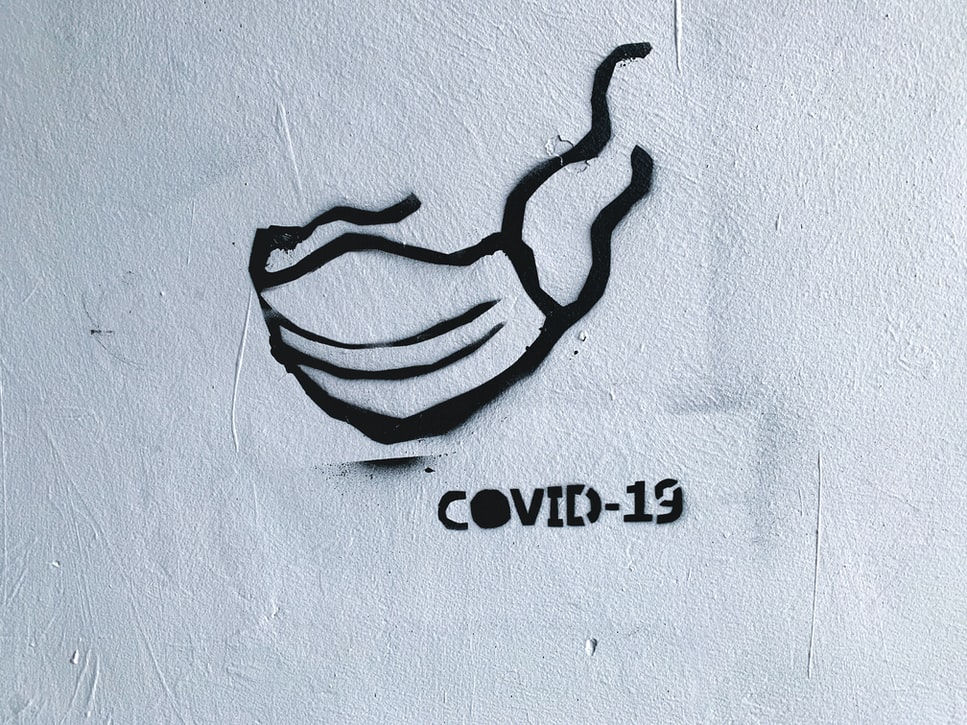
Americans are rushing around stocking up on toilet paper

By Marcy Rae Henry


In Himalayan India we used leaves

buckets of water and our hands


Best-selling tampons have applicators

because Americans are afraid to touch themselves


In Himalayan India we didn’t have tampons

We used rags and pads

but didn’t touch each other’s hands to say hello


When wiping with leaves or plants you have to know

which ones are poisonous and that’s different

from knowing the price of toilet paper at Sam’s v. Costco


They want to install outhouses in rural India

where people have only used the forest


Don’t women have enough problems on buses

without feeling vulnerable trapped in a shitbox at night


We learned to cut off tops of water bottles and pee in plastic

during an unknown night

With the tops we made spoons and flimsy guitar picks


At crowded train stations or bus stops food was sold

on plates of leaves that were tossed from windows

to degrade sooner than bones that are outlived by plastic


In Himalayan India we didn’t have many choices

for shampoo toothpaste or hair ties

We got whatever someone carried up the mountain


The States is mad about choice

about opening bars and closing borders

Some  see the lack of a mask as an act of rebellion


The Great American Rush on Toilet Paper

A virus that cannot space out everyone

And we are the perfect hosts when we don’t want to be


Marcy Rae Henry is a Latina born and raised in Mexican-America/The Borderlands.  She is a resister and an interdisciplinary artist with no social media accounts.  Her writing and visual art have appeared in national and international publications and the former has received a Chicago Community Arts Assistance Grant and an Illinois Arts Council Fellowship.  Ms. M.R. Henry is working on a collection of poems and two novellas.  She is an Associate Professor of Humanities and Fine Arts at Harold Washington College Chicago.

Photo credit: Copyright © 2020 K-B Gressitt.

Years that ask questions

By Marcy Rae Henry 


Black like me said John Howard Griffin and the world listened

(Black like losing electricity)

Black like me said Rachel Dolezal and the world blistered

(Black like the plague)

Black lives matter (now) say my neighbors

(Black like squares on a checkerboard)

Black is beautiful said Bill Allen (maybe) and the world paused

(Black like hair before silver)

Doesn’t matter if you’re black (or white) said Michael

(Black like a birthmark)

And what did I mean by ‘black’? asked Coates

(Black like seeds)

I became black in America said Adichie

(Black like pepper)

Black Power is a cry of pain said MLK

(Black like blindness)

The Black Revolution is controlled only by God said Malcolm

(Black like Goth)

I’m a black ocean, leaping and wide
welling and swelling I bear in the tide wrote Maya

(Black like ink)
(Black like mud)

Education is indoctrination if you’re white—subjugation if you’re black argued Baldwin

(Black like leopard spots)
(Black like the unlucky cat)
(Black like guns)

Animals weren’t made for humans any more than black people were made for white
(or women for men) claimed Alice Walker

(Black like pupils)
(Black like funerals)
(Black like devil’s hooves)
(Black like beaches)

Las caras lindas de mi gente negra son un desfile de melaza en flor sang Susana Baca

(Black like asphalt)
      (Black like all colors blended together)
(Negro como mina de lápiz)
(Black like the absorption of all colors of the spectrum)
(Black like film noir)

Black, brown, beautiful—viviremos para siempre Afro-Latinos hasta la muerte lyricized Elizabeth Acevedo

(Black like eyeliner)
(Black like beans)
(Black like a cocktail dress)
(Negro como el opuesto de blanco)
(Black like the depths of Langston’s Africa)
(Black like a red-beaked swan)

Who would have thought, when they came to the fight
that they’d witness a launchin’ of a black satellite
said Ali

(Black like charcoal)
(Black like black holes)
(Black like coal)
(Black like Christ)
(Black like Olbers’ Paradox)
(Black like the anoxic Euxine Sea)
(Black like the eight ball)

I am black because I come from the earth’s inside answers Lorde to the question she posed


Marcy Rae Henry is a Latina born and raised in Mexican-America/The Borderlands.  She is a resister and an interdisciplinary artist with no social media accounts.  Her writing and visual art have appeared in national and international publications and the former has received a Chicago Community Arts Assistance Grant and an Illinois Arts Council Fellowship.  Ms. M.R. Henry is working on a collection of poems and two novellas. She is an Associate Professor of Humanities and Fine Arts at Harold Washington College Chicago. Visit her website at marcyraehenry.com.

Each Day I Ask Nine Words

By Rebecca Tolin


Less than nine minutes is how long
it took to snuff
the life out of a man
a white officer with his knee
on the neck
of a black man in Minneapolis.
Necks are not meant for kneeling
mister officer.
Necks are meant for breathing
turning
linking head to the heart.
Before his lungs collapsed
like a balloon
deflated
George Floyd once
talked and danced and cooked
with his mother and brothers
washed clothes in the sink
dried them in the stove.
His cousin said when Big George
wrapped his arms around you
your problems vanished
for a while.
Nine days is how long
it took to be charged
with second-degree murder
for holding down
a man
as the last breath
slipped from his lips
as he begged for air
as he called for his mama
as he fell forever out of reach
of his five children
Gianna just six.
Nine words is how many
it takes to ask:
How may I make each day
a living reparation?


Rebecca Tolin is a writer and poet living in San Diego. She enjoys tree gazing, trail blazing, word playing, asking unanswerable questions and drifting into the silence that gives rise to it all. She previously worked as a broadcast journalist covering science and nature. Her essays and articles appear in places like Yoga Journal and Sierra Magazine. Rebecca’s poetry is featured in the anthology Song of Ourself: Voices in Unison and other journals including Perigee. You’ll find her, occasionally, on Facebook.

Photo credit: “George Floyd” © 2020 K-B Gressitt.

Dear Captain

By Jennifer Shneiderman

after Walt Whitman


O Captain! my Captain!
our fearful trip has just begun.
Exit the door of no return –
grim vessel of horror,
the treasure chest,
black gold, first wealth and power –
America cannot go back.

But O heart! heart! heart!
the bleeding does not stop.
Black men struck down – life seeping,
fallen cold and dead.
How many ways are there
to sink a heart.

O Captain! my Captain!
rise up and see what has become of us.
The bugle is trilling,
soul of the country.
Bouquets, wreaths fly in the wind
ashes and flames
burned out buildings
broken storefronts
looted dreams.

Here father! dear father!
swaying masses call out for relief
from wretched rudderless elect.
Lips of justice pale –
a standstill, a dead fall.
The anchor sinks,
voyage done, heads bowed.
Exult no shores.
The bells are still

You are betrayed, my captain.
We mourn what could have been,
complicit in silence,
eyes averted.
Time to pay for the passage.


Jennifer Shneiderman is a Licensed Clinical Social Worker and a writer living in Los Angeles. She writes poetry and short stories about health and mental health. Her work has been published in Indolent Book’s HIV Here and Now and her short story, “Housekeeping in the Time of COVID-19,” was in the most recent issue of The Rubbertop Review. Her poetry will be included in the anthology, Poetry in the Time of COVID-19,  Variant Literature, and the Bright Flash Literary Review. She is the recipient of a Wingless Dreamer flash poetry prize. Currently, her teenage son is in quarantine and her emergency room doctor husband is on the front lines of the pandemic.

Photo by munshots on Unsplash.

oppression Olympics

By Kitty Anarchy


you can’t even
say a problem

without someone
having a better
story than yours

suddenly they’re
the ones
telling theirs

yours out
the door

it’s the
oppression
Olympics
out here

but those
doing the
oppressing

aren’t even
playing
with us
down here

they watching
us fight
over crumbs
from up
in the
hills


Kitty Anarchy is an anarchafeminist, chicana womyn poet and short story writer. She has a background in social work, having earned her MSW from California State University, Long Beach, and she listens to KPFK radio. She has 7 cats, her favorite being ChiChi and 2 dogs, named Nibbit and Chato. She is published in Chiron Review, Rabid Oak Journal, Los Angeles Review, and Ghost Town Literary Journal, as well as in anthologies through Arroyo Seco Press and Picture Show Press. Visit Kitty’s website at www.kittyanarchy.com.

Photo by Donovan Valdivia on Unsplash.

The Gospel According to Saint Bryan

By Dana Kinsey


There was in Georgia a humble young man, jovial and curious,
who came upon two others who knew the law and the prophets.
Confined and detained, this man had no recourse but to run.
Hunted, he must have cried out to implore neighbors for help,
and sought shelter from bullets he knew were inscribed for him.

Fortunately, there was a Good Samaritan traveling the same road,
one whose benevolence forced him to stop and end the plight of
the innocent Georgian, offer him the help denied by the other men.
Sunday school lessons flooded back and he knew what he must do.
The victim was not of his race or religion, but he loved this neighbor
as he loved himself, and so reached in his pocket to offer a phone.

Gently, fearlessly, without flinching or uttering even a gasp, he
put the camera in video mode, took care to turn it horizontally
and filmed the man’s unfortunate ordeal, a sign of true mercy.
This Jesus, reincarnate, knew what a selfless gift he provided,
footage for the young man to show his grandchildren someday.

Roddie held steady to get the best quality video, kept his reactions
stifled so as to not mar the 28 seconds with any jolting or shock.
In time, all could see that his footage revealed God’s truth while
the other two men walked away appearing blameless in the town.
He thought of panning the area to show the 11 shotgun pellets
dead on the sidewalk, but he was expected in Samaria by sunset.


Dana Kinsey holds a BA in English and an MA in Theater from Villanova University. She is a poet, actor, freelance writer, and teacher at Lancaster Catholic High School in Pennsylvania. Her poetry has been published online in the Yellow Chair Review, The Broadkill Review, and Spillwords. Her work also appears in Fledgling Rag and Silver Needle Press. Dana’s screenplay, WaterRise, was filmed in Manhattan by Sagesse Productions. Visit Dana’s website at  www.wordsbyDK.com.

Photo credit: William “Roddie” Bryan mugshot courtesy of Glynn County Sheriff’s Office.

Response/Ability

By Schyler Butler


Share the photo of Keisha with tire marks cascading her back.
Remember the protest last night, the hungry eyes.
Ask the masses where were you.
Ask them taste blood in exchange for God.
After the ashes settle on the campus rooftops
and the downtown glass is swept,
pay for Speedway Marlboro’s.
Listen to birds chirp and avoid the eyes
of every child still young enough to grow.


Schyler Butler received her BA in English from the University of North Texas. A recipient of an Ohio Arts Council Individual Excellence Award for FY 2020 and a lead poetry editor for Human/Kind Journal, her work appears and is forthcoming in Duende, Superstition Review, Obsidian, Heavy Feather Review’s #NoMorePresidents, Kissing Dynamite, and elsewhere, sometimes under the pseudonym “Iyana Sky.” She lives in Columbus, Ohio.

Photo by Clay Banks on Unsplash.

Cicadas in Protest, 2020

By Aaron Sandberg


they emerge—
suddenly and briefly in large numbers—
symbols of immortality—prominent eyes—

active during the day with some calling at dawn or dusk—
modes of locomotion—walking and flight—
take to the wing to travel distances—

the structure is buckled by muscular action—
removing dirt in the process—
sometimes cause damage—
blunt spikes—
drumlike—

yet to be studied carefully—
many await formal description—
common names—red eye—black prince—
trees may be overwhelmed by the sheer numbers—

cicadas are preyed on—
making them drop to the ground—
variety of strategies to evade predators—
long lifecycles may have developed as a response—

the cicada-hunter—
mounts and carries them—
pushing with its hind legs—
sometimes over a distance—
until they can be shoved down—

a loud cicada song—
especially in chorus—
distinct distress call—
asserted to repel predators—
calls to maintain personal space—
emitted when seized or panicked—

resonating chamber—
sing in scattered groups—
an exceptionally loud song—
may use different heights and timing of calling—
loud enough to cause permanent hearing loss—
the pitch is nearly constant—the sound is continuous—
they construct an exit tunnel to the surface and emerge—

they emerge, all at once—


Poet’s Note:

Audre Lorde said, “Revolution is not a one time event.” With the reemergence of the cicadas this season and the uprising protests, I saw a point of positive comparison—gathering in large numbers, being viciously preyed upon, making a unified chorus of sound. This is a found poem—all the phrases here are taken in some form or another from the Cicada Wikipedia entry.


Aaron Sandberg resides in Illinois where he teaches. His recent poems have appeared or are forthcoming in Asimov’s Science Fiction, English Journal, Yes Poetry, One Sentence Poems, Vita Brevis Press, Literary Yard, and elsewhere. You might find him on Instagram @aarondsandberg.

Photo by Clay Banks on Unsplash.

This Morning, I Mistake the Sound of Thunder for Bombs

By Despy Boutris

for Brittny


which tells you something about the state
of this country. This morning, I open Instagram

and see Céline lying through its teeth.
I’d love to write about planting flowers

on my forearms, or my best friend’s collection
of wool coats, but the police pulled guns

on her husband standing in his own yard.
I want to love my country. I’d love to write

about the scent of honeysuckle,
but this city has gone up in flames. I learned

only yesterday that Charleston was the center
of the slave trade. A few miles from the port,

another white couple exchanges vows
at a plantation. I wish I could love my country.

Right now, I live a mile from where George Floyd
grew up, hear that Cartier and Dior

have boarded up their windows uptown.
That’s more than just a metaphor. I was twelve

when Oscar Grant was killed at the same BART station
where my mother debarks. She has blonde hair,

blue eyes, has never had to fear for her life.
At seventeen, in math class, someone said

I have major jungle fever, and I watched
as my friend stiffened, brown eyes unblinking.

I waited for her to say something
so I wouldn’t have to. I still think about that.

In college, every English professor but one
was white, and I’m from California,

which thinks itself superior. In college, I read
an Audre Lorde poem and my heart beat fast

as rubber bullets leaving the barrel,
which aren’t really rubber at all, I’ve learned,

and these are what the police keep firing
at the people I love. I want so badly to love

my country. Last July, I saw a man I knew
from college on Instagram: shirtless,

in a MAGA hat, the photo captioned, America
is fiyah! If that’s true, then let’s let it burn.


Despy Boutris’s work is published or forthcoming in American Poetry Review, American Literary Review, Southern Indiana Review, Copper Nickel, Colorado Review, The Adroit Journal, Prairie Schooner, Palette Poetry, Raleigh Review, and elsewhere. Currently, she teaches at the University of Houston, works as Assistant Poetry Editor for Gulf Coast, and serves as Editor-in-Chief of The West Review.

Photo by Donovan Valdivia on Unsplash.

War

By Linda E. Goodliffe


Stolen

sanity
childhood

classroom

teacher
hummus
art

photographs

home
garden
cow
goat
silver

Fire

skin

IED

arm

RPG

spine

grenade

leg

bunker buster
drone strike
mushroom cloud
burn pit

Rape

gang

woman
child

knife

vulva
vagina
cervix
uterus
bladder
breasts

Feasting

oligarch
cat
dog
vulture

on human carcass


Linda E. Goodliffe has both her bachelor’s degree in English/Creative Writing and her MFA in poetry from Queens University of Charlotte. She lives in Charlotte, North Carolina, with her family, which includes cocker spaniels. Linda is a veteran of the United States Navy. She believes the written word is a powerful force, and she hopes her work will contribute to the continued evolution of the human condition. You can find more of her work in the journal Leaping Clear and on her web site, lindaegoodliffe.com.

Photo by Hasan Almasi on Unsplash.

Two Poems by Gregory Wolff

[fusion_builder_container hundred_percent=”no” hundred_percent_height=”no” hundred_percent_height_scroll=”no” hundred_percent_height_center_content=”yes” equal_height_columns=”no” menu_anchor=”” hide_on_mobile=”small-visibility,medium-visibility,large-visibility” class=”” id=”” background_color=”” background_image=”” background_position=”center center” background_repeat=”no-repeat” fade=”no” background_parallax=”none” enable_mobile=”no” parallax_speed=”0.3″ video_mp4=”” video_webm=”” video_ogv=”” video_url=”” video_aspect_ratio=”16:9″ video_loop=”yes” video_mute=”yes” video_preview_image=”” border_size=”” border_color=”” border_style=”solid” margin_top=”” margin_bottom=”” padding_top=”” padding_right=”” padding_bottom=”” padding_left=””][fusion_builder_row][fusion_builder_column type=”1_1″ layout=”1_2″ spacing=”” center_content=”no” link=”” target=”_self” min_height=”” hide_on_mobile=”small-visibility,medium-visibility,large-visibility” class=”” id=”” background_color=”” background_image=”” background_position=”left top” background_repeat=”no-repeat” hover_type=”none” border_size=”0″ border_color=”” border_style=”solid” border_position=”all” padding=”” dimension_margin=”” animation_type=”” animation_direction=”left” animation_speed=”0.3″ animation_offset=”” last=”no”][fusion_text]

80 Percent

The human body is 80 percent freshwater,
and 80 percent of freshwater is suspended in glaciated forms at the southern pole,
where it’s rapidly melting.
80 percent of laborers in the United States of America
live paycheck to paycheck,
and 80 percent of college students engage in drunkorexia—
that’s starving oneself to increase the effects of intoxication
(for those who don’t know). 80 percent of women don’t orgasm
from penetrative sex, and 80 percent of animal species are as of yet undiscovered.
Sadly, that doesn’t make them much safer than the rest.
80 percent of earth’s forest has been destroyed,
and 80 percent of American kids have an online presence
by the age of two. 80 percent of the world population lives under skyglow
and 80 percent of Americans believe in the existence of angels.
80 percent of America’s food went uninspected in the shutdown of 2019,
and 80 percent of Central American women and girls are raped
on their way up to the US border. If they make it, and most don’t
they will meet thirty-three million registered Republicans,
80 percent of which trust Trump more than the media.
80 percent of forest fires are started by human action or negligence,
and 80 percent of smartphone users check their phones
before brushing their teeth in the morning.
Humans have killed over 80 percent of all wild mammals on earth,
and 80 percent of Americans aren’t content
with the brightness of their smile.

Drone Love

you take me whether or not
I am willing or able
you find me in the grey streets and persimmon groves
and flatten me with your persuasion
I know you watch me
with my shy child in the rusted park
and I know you will follow me
to the very ends of the earth
your commitment is unwavering
your determination bone cold
with steely hands
you pluck me from the wedding party
and the funeral procession like a dandelion
my roots limp and in utter disarray
your silence is uncanny
and your thoughts a coded mystery
nonetheless you persist and remain always devoted, always faithful
you, after all, have haunted my dreams
since I first saw your fiery passion
touch upon the ground in the lost courtyard
of my childhood
now I wonder, as you rive the unshorn sky
your eyeless head bulging where a mind ought to be
have you already decided that I’m the one
or are you just searching
for love at first sight?

[/fusion_text][/fusion_builder_column][/fusion_builder_row][/fusion_builder_container][fusion_builder_container hundred_percent=”no” hundred_percent_height=”no” hundred_percent_height_scroll=”no” hundred_percent_height_center_content=”yes” equal_height_columns=”no” menu_anchor=”” hide_on_mobile=”small-visibility,medium-visibility,large-visibility” class=”” id=”” background_color=”” background_image=”” background_position=”center center” background_repeat=”no-repeat” fade=”no” background_parallax=”none” enable_mobile=”no” parallax_speed=”0.3″ video_mp4=”” video_webm=”” video_ogv=”” video_url=”” video_aspect_ratio=”16:9″ video_loop=”yes” video_mute=”yes” video_preview_image=”” border_size=”” border_color=”” border_style=”solid” margin_top=”” margin_bottom=”” padding_top=”” padding_right=”” padding_bottom=”” padding_left=””][fusion_builder_row][fusion_builder_column type=”1_1″ layout=”1_1″ spacing=”” center_content=”no” link=”” target=”_self” min_height=”” hide_on_mobile=”small-visibility,medium-visibility,large-visibility” class=”” id=”” background_color=”” background_image=”” background_position=”left top” background_repeat=”no-repeat” hover_type=”none” border_size=”0″ border_color=”” border_style=”solid” border_position=”all” padding=”” dimension_margin=”” animation_type=”” animation_direction=”left” animation_speed=”0.3″ animation_offset=”” last=”no”][fusion_text]


I am an almost-PhD in philosophy turned organic farmer; writer of fiction, poetry, and children’s literature; and very proud father of two enchanted and half-wild children. I live with my family amidst the musical forests of the Saint Lawrence River Valley, just north of the Adirondack Range. My writing has appeared or is forthcoming in EVENT, Zone 3, Vassar Review, Blue River, Writers Resist, and Poets Reading the News. I am currently at work on a novel about an unlikely garden, a short story about life beneath ground, and a collection of my recent poetry. Visit my website at thewildernessofwords.com.

Photo by roya ann miller on Unsplash.

[/fusion_text][/fusion_builder_column][/fusion_builder_row][/fusion_builder_container]

Now More Than Ever

By Marissa Glover


You must pretend
this is the first
mask you’ve ever
worn—act like it
is the first time
you hid yourself
at home, away
from the unseen
thing that might
make you sick,
might kill you,
if too much gets in.

Now more than
ever, dream
of snakes walking
into the house
on legs, of teeth
cracking, collapsing
into your throat,
of flying—slowly
only two feet
above the ground.

Now more
than ever, be
calm when folks
call you coward,
cunt; let them
drink a punch—
this darker red
spreading heat
in their chests now.

More than ever
we’re alone,
together.
Everyone is
uncomfortable,
forced to pretend
this is the first
time no one
can see us,
know how
we really feel.


Marissa Glover teaches and writes in Florida, where she is co-editor of Orange Blossom Review and a senior editor at The Lascaux Review. Marissa’s work appears in Rust + MothSWWIM Every Day, and Okay Donkey, among other journals. Her debut poetry collection, Let Go of the Hands You Hold, is forthcoming from Mercer University Press in 2021. Follow Marissa on Twitter @_MarissaGlover_.

Photo credit: Kristin Schmit via a Creative Commons license.

Scrolling

By Laura Grace Weldon


Two penguin chicks are the only survivors
of a 40,000 bird Antarctic colony.
I imagine fuzzy hatchlings
chirping for food till silent,
scroll on to read
about a dog taught to talk
with an adaptive device. Stella,
a mixed breed, already uses 29 words
although her choices don’t include “why.”

All this bluster about GDP and NASDAQ,
about trends, ratings, followers,
about so-called political divisions
is just Oz shouting
Pay no attention
to that man behind the curtain
to keep us consuming, keep us distracted
keep us from the startling recognition

we are Stella tapping “want” “Jake” “come,”
then tapping “happy” when Jake indeed
comes home at the expected time.
We are the penguins, the ocean,
the plastic debris filling bird bellies.
Everywhere, curtains.


Laura Grace Weldon has published two poetry collections, Blackbird (Grayson 2019) and Tending (Aldrich 2013). She was named Ohio Poet of the Year for 2019. Laura works as a book editor and teaches community-based writing workshops. She lives with vast optimism on a small farm where she’d get more done if she didn’t spend so much time reading library books, cooking weird things, and singing to livestock. Connect with her at lauragraceweldon.com., on Facebook, and on Twitter @earnestdrollery.

Photo by Cassidy Mills on Unsplash.

White for Suffrage, Red for Riots

By Emily Knapp


Crack.

watch as we fracture.
shards of a broken union
used as weapons and
knives

(get out)
(we don’t want you)

heavy hearts as
women burn in India and
reds/yellows/greys
paint the streets of Paris.

We are all

fighting we are all

mad

stealing back our stars and
ripping our stripes

preservation

in the name of
democracy.

We are waiting for change.

For now,
we must navigate the slush.

And wait.


Emily Knapp is a native of the Chicagoland area, but fled West because she really likes seeing the sun in February. Her apartment currently resides in Denver, but you can find her in the mountains, writing, hiking, or skiing. This particular poem is in response to the New Yorker article titled, “The Impeachment Hearings and the Coming Storm.”

Photo credit: Jennifer Boyer via a Creative Commons license.

Bird Shit on Leaves

By Mark Grinyer


The white-speckled green
of bird-shit on leaves
painted through weeks
of days without rain
marks favored platforms
under canopies of trees
where hawks cannot spy them
but where they can see
the movements of voters
through wind-gusts and rain
that soak these havens
and wash shit away
fertilizing forests with
generations of sleaze
enduring the protection
of dissembling days
providing the illusion
of unfettered peace
as finches fight sparrows
for disappearing seeds
digesting rough diets,
attempting to breed
here where I’m watching
birds shit on leaves
avoiding the noise
of some politician’s screed.


Mark Grinyer spent most of his childhood and youth following his father, a U.S. Air Force officer, to many different stations in the United States and overseas, before settling in Riverside, California. Mark went to college at the University of California, Riverside, where he began writing and publishing poetry. After being drafted into the Army in 1969, he returned to the University for graduate school. and received a PhD in English and American Literature. He wrote his dissertation on the poetry of William Carlos William and developed a particular interest in the roles of poetry and poets in modern society, and in the use of scientific and natural scenes or images as vehicles for understanding our place in the modern world. He spent the next 25 years working as a technical editor and proposal specialist in the aerospace industry. After retiring in 2006, he returned to teaching for a few years at California State University, Fullerton, where he continued with his poetry.

Photo credit: Everjean via a Creative Commons license.

Group Home Rattle

By Andrés Castro

Dropped and broken,
over and over,
we were dropped broken here—
the labeled Spic and Nigger boys, said
from stupid mothers and ugly fathers, said
marked by wire gashes, gunshots, and sex toys,
waking to crying, screaming, lying, threats.
We were dropped broken here.

Who bothers to look inside the hand
that’s helping? In this cracked community,
in this grey wooden house, three administrators
glide through the rooms where we stay.

On Friday night
explosions take place when
broken heads race when
venting is play when
the shrinks stay away.

Would you listen? Could you listen
to nine broken heads screaming?
“I’m Boss!” “I’m Blade!” “I’m Cold!”
“I’m Lost!” “I’m Slick!” “I’m Blood”
“I’m Cross!” I’m Deep!” I’m Dreamin!”

No! No!
We’re drowning, not touching
bottom, drowning
in a vat of grease, blood, melting needles,
Haldol, Prolixin—
bodies inside out, twisted faces,
anatomical toys, boys
our broken heads split open,
emptying out into the street.

Please, will you tell somebody?
Notify next of kin.


Author’s note: The material for this poem came to me in a nightmare after I began working as a psychiatric group home counselor in 1995. I quit shortly after having to dispense powerful psychotropic drugs to the sweetest teenager who had returned a sedated shell after meeting with his abusive parents for Christmas and consequently having a breakdown and being hospitalized. Short-term therapy, including tranquilizing psychotropics, instead of empowering long-term language and learning based modalities, is still widely accepted, especially in poorer communities.


Andrés Castro, a PEN member, is listed in Poets & Writers Directory and regularly posts work on his personal blog, The Practicing Poet. He lives in Queens, NY.

Photo by Harlie Raethel on Unsplash.

I Was Ranting About

By Pedro Hoffmeister


the school district brought in a tech-expert,
an Apple educator, a dynamic speaker, paid a lot
of money to come speak to us, started by
asking us to name our favorite technologies,
audience members calling out new
apps and video games I’d never heard of.

I yelled, “The toilet” because it is my favorite technology.
I love excrement not sitting in a chamber pot under my bed until
I walk over and dump it out the window onto the street below.
Or – to be more precise – composting toilets are a miracle of
science, the smell of sawdust (and sawdust only)
in a sun-warmed outhouse?

But this speaker wasn’t interested in useful
[or what he called “basic”] technologies. He didn’t
understand the truth that he is actually somewhere
in the middle of all history, and that in only 200 years
this current time-period we’re living in will look cute,
or quaint, and humans will tell stories about all
the stupid things people said or believed
at the beginning of the 21st Century.

Along with an anecdote about light-switches coming
to New York hotels in 1926 (wrong by 40 years)
this tech educator told us that Gutenberg invented
the printing press, as if the printing press and moveable type
were a Western thing first, as if printing presses
hadn’t already existed for almost 600 years in China,
but this expert had no idea that all of his claims were so
American,
so simplified and sadly incorrect.

As people say, we are a nation of anti-intellectualism,
and this man is a product, who – in turn – pushes products.
We don’t teach our children contextual learning because
it takes too much time. So, I imagine this speaker as a child,
staring at his TV in wonder. Is it too harsh to say that we
consume and consume and consume until we die?

But there were Hitler-like speech quotes too,
with the requisite yelling at the end:

“We have evolved beautifully!!!”

“We are living with human efficiency that has never been equaled!!!”

“Most futurians see this as a golden age of change!!!”

I did like that last slant-rhyme he included. It made me think of
all the poems that our revered speaker had never read.

He said he wanted us to “accept the truth, and not think about ethics,”
The Blue Pill, bask in the illusion, to close our eyes
and enter the common room of the cultural cult.

Instead, I think of the Navajo Eusabio in Willa Cather’s
Death Comes for the Arch Bishop, Eusabio speaking
in the late 19th century, when arrogant men also thought
they were at the cutting edge of history. The Navajo replies:
“Men travel faster now, but I do not know if they go to better things.”

Or I think of this – my favorite Arabic proverb:
“When danger approaches, sing to it.”

So here

am I,

singing.


After publishing books with Penguin, Simon & Schuster, and Random House (most recently the novel Too Shattered For Mending), Pedro Hoffmeister just self-published a collection of essays titled Confessions of the Last Man on Earth Without a Cell Phone, so he could say anything he wanted to say: Strong personal opinions, satire, and humor. Basically, resistance. He is now completing a collection of poems.

Photo credit: Liz West via a Creative Commons license.

The Chain & The Screens & The Fire

By Jake Phillips

 — after Alexandrea Teague’s “’My Country, ‘Tis of Thee’ (arranged for Brazen Bull)”


Bellows and bolts     and the king     and the king’s rage
at the price of freedom     the fire   the face like fire hot-orange
on your screen     first look at your phones   the fire given
to humankind     hot breath    fogging     hot    and he bellows
at the man in chains     as he has always done     the least racist
person that you’ve ever encountered    may the eagle peck
his liver     the lives chained     first look     look     the tweets may the eagle
peck     the deplorables on this rock     chained     a chain a storm
of characters     filthy language on fire     and you don’t want
to live with them either     the eagle feasts     on freedom
on many sides     on liver, regrowing     feast your eyes     feed    your phone
for the king     who has done more for African Americans     Americans
create their own violence     and the box was opened     all 140
characters and their hashtags     their own violence    released
unchained into the world     then they try to blame others   the violence
on many sides     the Titan the fire     the hero of culture
a really dumb guy     the liver always     and his rock     the disgusting, rat
and rodent infested mess     always returns     and the hope on the bottom
the hope     the birth certificate is a fraud     the faces
lit up with the fire     we hold our hands out     dangerous
for our country     let’s take a closer look     the chains tighten     the liver
returns     can you imagine the furor     the blaze     the pecking eternal
he watches    tweets from    Oval throne     never discriminated
the violence     a terrible thing     the mud of mankind    melting from the fire


Jake Phillips is a first-year poetry MFA candidate at the University of Massachusetts, Boston; a former teacher; and a former librarian. His writing has appeared in Z Poetry’s anthologies Massachusetts’ Best Emerging Poets and America’s Emerging Poets: Northeast Region. He currently works as a publishing assistant for Hanging Loose Press. Find him on Twitter @itsjustJp.

Photo credit: schizoform via a Creative Commons license.

Ring-a-Round the Rosie 2019

By Heidi J. Lobecker


Ring-a-round the playground

A backpack full of bullets

Pop! Pop! Pop!

We all fall down.


Heidi J. Lobecker has lots of fun writing. If it‘s not fun, she finds something better to do, for example: reading, sailing, camping, and eating s’mores.

Photo credit: Edwin Rosskam, Chicago, Illinois, 1941, via the U.S. Library of Congress

Serpent Song

By Candice Kelsey

I

July. A man in Thousand Oaks confronted by wildlife authorities.
The case: Exotic Reptiles
illegally stockpiled.
Neighbors suspect this guy
may not have permits for all 40 venomous snakes.
Above 100 degree heat
kept in crowded conditions
activity level through the roof. More runs to Home Depot
14 hour day.
Curator of Reptiles and Amphibians rests his hand
on the shoulder of Senior Animal Keeper Chris.
Designer snakes bred for specific mutations
mostly albinism some leucism.
Crossbred / inbred /
Screwed up / blind / jumpy.
The zoo moved the gila monsters to make room
for two black-headed pythons and four indigo
snakes.

II

November. Detroit Police warehouse confronted by the Fair Justice Project.
The case: 11,341 unprocessed rape kits
sitting for years.
Authorities determined multiple rapes
could have been prevented with a CODIS match.
Gang rape of a homeless woman
kidnapping and rape of a young girl.
More backlog
kits from 2009 finally tested in 2015.
Wayne County Prosecutor points her finger
at Detroit Police Media Relations Director Mike.
551 page report by the National Institute of Justice
reveals minimal effort corners cut
vaginal wall / cervical / penile slide /
anal / perianal slide /
buccal swab.
Colposcopy for photos of genital injury
and rulers for measuring bruises or lacerations on
women.


Candice Kelsey’s debut book of poetry is Still I Am Pushing (Finishing Line Press, March 2020). Her first nonfiction book explored adolescent identity in the age of social media and was recognized as an Amazon.com Top Ten Parenting Book in 2007. Her poetry has appeared in many journals, including, Poet Lore, The Cortland Review, and North Dakota Quarterly, and she was a finalist for Poetry Quarterly‘s Rebecca Lard Award. Candice’s creative nonfiction was nominated for a 2019 Pushcart Prize. She is an educator of 20 years’ standing, devoted to working with young writers. An Ohio native, she now lives in Los Angeles with her husband and three children.

Image credit: “Eve and the Serpent” by John Dickson Batten, 1895.