

Skin

By Frances Koziar

Skin colour
does not dictate culture—

I could tell you all the ways
that this is true, speak of abandonments
and adoptions that sink deeper
than flesh, of homes and not-homes,
of the erratic mixing
of bloodlines; instead
I want to say that being white
but not White
puts you in a unique
kind of danger.

We are attacked
by our own and our allies, attacked
for expressing what we love
in the name of appropriating our own
cultures, our identities
disbelieved because all they can see
is the spiky shell of the lychee, not
the sweet fruit encased
inside.

I want to tell you that wearing
an amulet of protection draws crosshairs
of attention when all I want is to bare
my identity, to love a homeland
that is as much a part of me as the privilege
of my colour, to reveal some
of the tender sacred parts of myself that I yearn
to share as I reach out to others

But I also
understand—I too
have seen first-hand how some
beliefs are disagreed with, while others
are just laughed at. I

know the pain of mockery
for believing in animism or the magics
found across so many cultures,
have seen the glassy stares and the
this-is-a-joke-right? smiles
when my eyes are filled with feeling,
have felt the twisting in my gut when I
am silenced one way
or the other, watching
other whites wear what they want
without a second thought to having
their people ridiculed by those choices
or their ancestors
silenced.

            They are lions
who’ve never had to shave the precious
gold of their fur
for safety; have never watched
each beautiful strand fall like wishes
that will never come true, never
known how it feels to hide
the gifts of their identities like stolen
property lest they be mis-
understood, until the very ground
beneath them has become soft
with their lies.


FRANCES KOZIAR has published poetry in over 45 different literary magazines, including The New Quarterly, Acta Victoriana, and Vallum. She is a young (disabled) retiree, a painter, a gamer, and a social justice activist living in Kingston, Ontario, Canada. Visit her website.

Photo by Philbo 🇺🇦 on Unsplash.


A note from Writers Resist
Thank you for reading! If you appreciate creative resistance and would like to support it, you can make a small, medium or large donation to Writers Resist on our Give a Sawbuck page.
Louder than Silence

By Rabia Akhtar

I was raised in patriarchy.
Not an idea—
a weight.
It sat on my shoulders,
pressed into my lungs.
Silence was law.
Obedience—oxygen.

I cracked it open.
Spoke when I wasn’t meant to.
Walked where I wasn’t welcome.
Burned their script,
page by page.

Crossed borders,
thought the fight would end.
It didn’t.
It just got dressed up—
new clothes, better manners.

Racism at the table.
Sexism in a grin.
Bias wrapped in clean grammar.
Walls made of glass.
Chains you can’t see.

Intersectionality means this:
not one thing or another—
but the collision of all I am.
A name that signals faith I no longer claim,
a passport that shuts doors before I arrive,
brown skin at boardroom tables,
a woman’s voice in rooms built for men.

Each identity a thread,
woven tight,
patterns of exclusion
hidden in plain sight.
Carrying double the weight,
earning half the credit.
Always too much.
Never enough.

But listen.
I am not fragile.
Not a guest.
Not a mistake.

I am the crack in their system.
The fire they can’t contain.
The voice they wanted hushed—
still rising.
Still louder.
Louder than silence.


Rabia Akhtar is a human rights defender focusing on gender and identities in contexts of conflict and war, currently based in Singapore. Her poetry explores themes of identity, gender-based crimes, and resilience, drawing on her experiences as a woman of color navigating complex forms of belonging and exclusion while championing others’ rights. Her work seeks to give voice to stories often left untold.

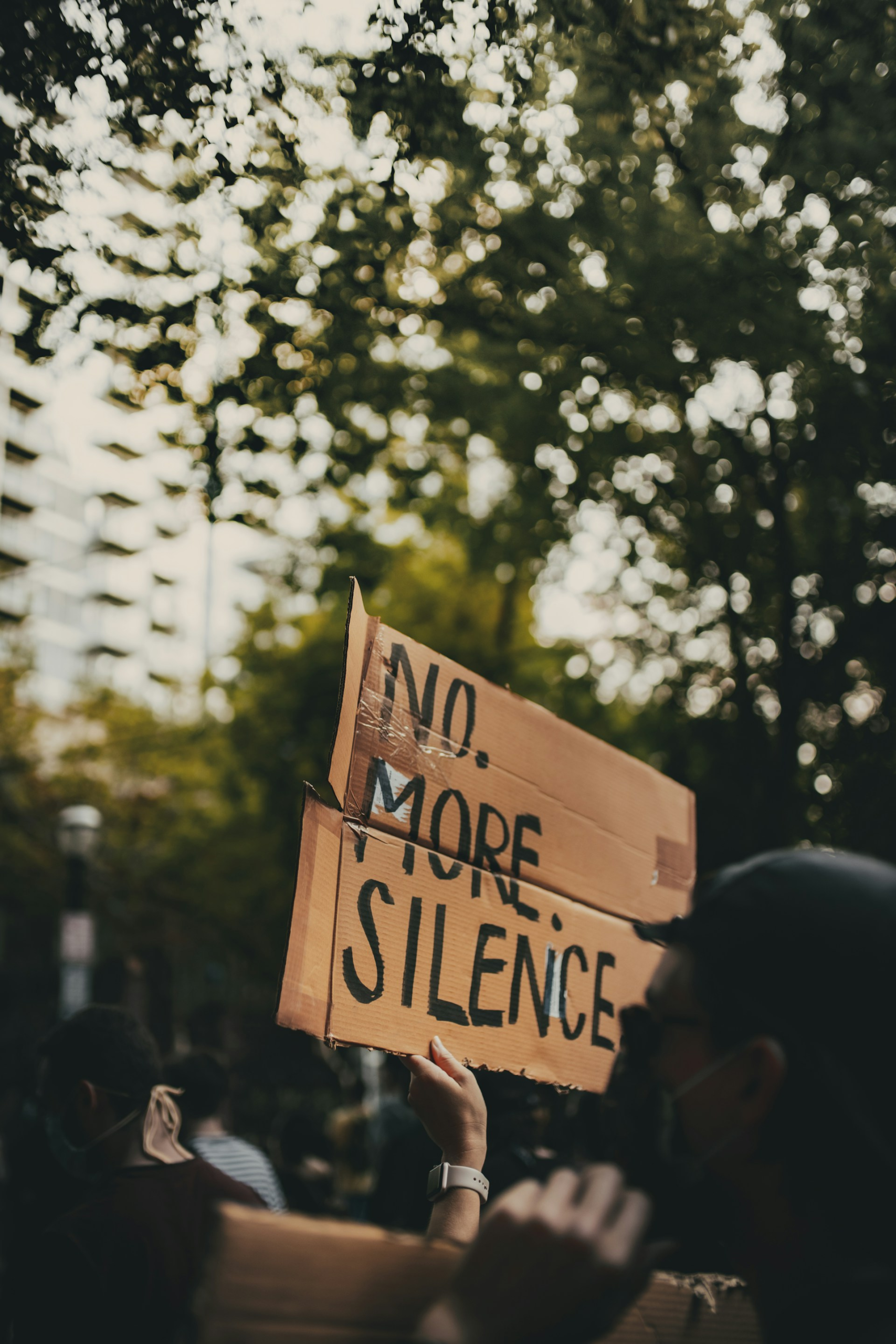
Photo by Joe Yates on Unsplash.


A note from Writers Resist
Thank you for reading! If you appreciate creative resistance and would like to support it, you can make a small, medium or large donation to Writers Resist on our Give a Sawbuck page.

Welcome to Writers Resist the Spring 2025 Issue

March is many things. It’s officially the bloom of Spring for some, Autumn for others. It’s Women’s History Month, days of madness for college basketball fans, a time to celebrate corndogs and trees, Benito Juarez and books. Beer, pigs, and Sigrblót, peasants and heroes and transgender awareness, and countless other things living, inanimate and conceptual.

For those dwelling in the United States or connected to it, particularly those inclined toward our pages, March hosts the seventh through tenth week of the nation’s new Christian nationalist regime, a white-male-cisgender supremacist onslaught that’s devastating in as many ways as there are official celebrations in the month of March.

In response, some of us write poetry and stories, the historians of our turmoil, if not our destruction, and this Spring issue is rich with such contributions. The overwhelmed hide in mindless TV or video games, while the outraged protest with signs and letters and phone calls to legislators. Some, the hopeful, write prayers, calls to action urging a resounding response.

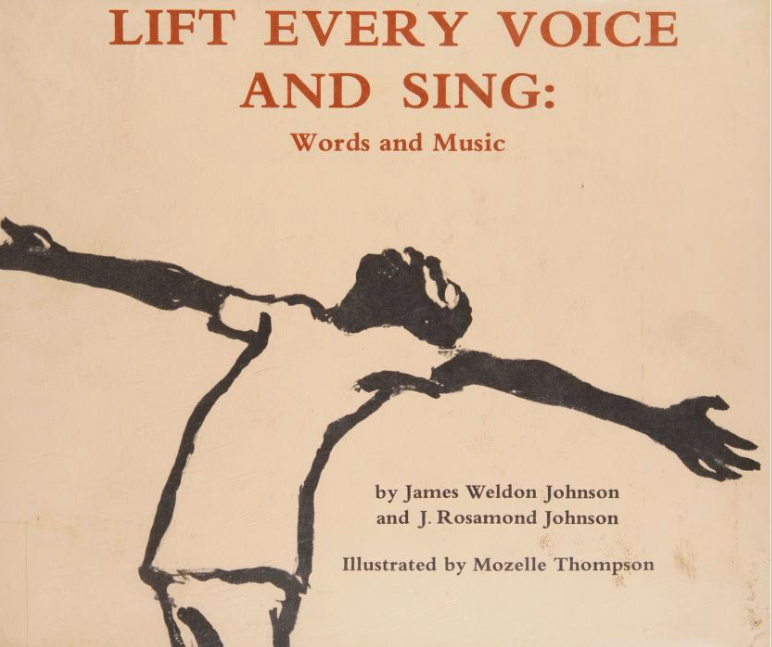
And when we acknowledge our power, the power of the people, we will respond as DW McKinney encourages us to in “The Sunday After.” We will unite to insist on freedom, equity, love and acceptance. We will unite to reject the cruel, the unconstitutional, the despotic. We will Lift Every Voice and Sing the revolution.

Sing with us by joining a progressive activist organization, whether your local Indivisible, NAACP, Dem Club, or any of the many groups advocating against the unfounded and brutal federal budget cuts, abductions and incarcerations, and supporting mainstream candidates in the 2026 midterm elections.

Uncertain how to get started? Read this Spring 2025 issue. Perhaps you’ll find some inspiration.

Alyssa Beatty “Enough

Annette L. Brown “Second Flags

Joanne Durham “Ode to America, November 6, 2024

Kelly Fordon “The Social Contract

Janan Golestané “Identity Theft

DW McKinney “The Sunday After

Caiti Quatmann “Finger Banging Slutty Young Woman

Ellen D.B. Riggle “Assigned at Birth

Susan Rukeyser “You Can Tell by Looking at Her

MM Schreier “She, I, You, We: Every Woman

Steph Sundermann-Zinger Two Poems

Ya-Ting Yu “Ya-Ting (Iris)

Banoo Zan “The Sea Gazelle

The Sunday After

By DW McKinney

the inauguration of the 47th President of the United States, we gather in the church sanctuary and sing the Black national anthem1. We mourn in unison. A week after the new president resumes his campaign of white (straight, male) supremacy, of “making America great,” of rolling back civil rights and liberties for marginalized people, we step backward in time with him. We borrow the strength of Buffalo Soldiers, Black infantrymen crooning the anthem as they fought on two fronts against fascists and discrimination in World War II. We borrow from our revolutionary leaders who belted the lyrics as they marched through segregated streets. We borrow from our greats and grands who sang for glory as they conducted sit-ins, and integrated schools, and lived and died and endured. Our lungs expel the words in the air around us, but we breathe them back into our souls again and again until our grief becomes a rallying cry.


DW McKinney is an award-winning writer and editor based in Las Vegas, Nevada. A 2024 TORCH Literary Arts Fellow, she is also the recipient of fellowships from PERIPLUS Collective, Writing By Writers, and The Writers’ Colony at Dairy Hollow. Her writing appears in Los Angeles Review of Books, Oxford American, Ecotone, and TriQuarterly. She serves as nonfiction editor at Shenandoah.

Photo credit: Cover of the Hawthorn Books 1970 edition of Lift Every Voice and Sing.


A note from Writers Resist

Thank you for reading! If you appreciate creative resistance and would like to support it, you can make a small, medium or large donation to Writers Resist from our Give a Sawbuck page.


  1. James Weldon Johnson, civil rights activist and a leader of the National Association for the Advancement of Colored People, originally wrote “Lift Every Voice and Sing” as a poem in 1900. It was later composed as a hymn, becoming a powerful refrain throughout the Civil Rights Movement. ↩︎