She, I, You, We: Every Woman

By MM Schreier

FIFTEEN

She’s afraid her skirt’s too short, but gives it a little hip-swish, anyway. People are watching. If she owns it, maybe they won’t give her the side eye. Wishing she wore leggings, she considers tugging the skirt’s hem down, as if the sparse fabric could magically cover more of her legs, but knows if she does, it will just give them something else to gossip about.

Instead, she shifts the heavy calculus book that’s tucked under her arm so the title shows. She ignores imagined whispers of thunder thighs and decides it’s better to appear clever. Still, there’s a fine line between chic-smart and nerdy-smart. Her stomach clenches, and she struggles to keep the hint of a coy smile on her lips. She flips the book over and hugs it to her chest. Maybe everyone doesn’t need to know she’s in advanced placement math. She shimmies her hips again and swallows a sigh.

A broad-shouldered jock in a letterman’s jacket gives her a wolf whistle. It cuts across the throng of students. An unnatural hush falls over the crowd as too many eyes focus on her to see how she’ll react. She tosses her hair, blows the boy a kiss, then ducks into the bathroom before anyone can see her cheeks flush crimson.

While she waits for the halls to clear, she touches up her makeup in the mirror. Eyeliner, mascara, powder. A spritz of perfume, a swipe of blush. She digs around in her purse to find the smokey cranberry gloss that turns her lips into a sultry pout. It’s all camouflage. No––war paint.

The bell rings, and she saunters to class wrapped in the armor of feigned confidence. She might feel like an imposter, but at least she looks fantastic. She tells herself it’s all that matters.

TWENTY-SIX

I wake up every morning in my dingy studio apartment, take a deep breath, and repeat my favorite mantra. Visualize, materialize. It’s my habit to bolster myself with a series of pithy motivational quotes. Today is going to be an amazing day. The best is yet to come. Focus on the positive.

Leaning over the rusted fire escape, I take a snapshot of the sunrise and crop out the dumpster. #earlybirdgetstheworm. It’s important to curate my socials with meticulous attention. I tell myself it’s not deception; it’s the highlights reel of the life I want to have.

At lunch, if I turn the plate around and add the right filter, no one can tell that the #perfectsalad is disappointingly wilted. I post selfies from the woods, fresh-faced and smiling like the #trailgoddess I want to be. No one needs to see the hot mess that returns to the car, covered in bug bites and blisters. When the light’s just right, I get a shot of my #newtome Jeep that doesn’t show the rust spots or bald tires. I promise myself the next time I buy a car I’ll be able to afford a nicer one.

There are a million little photo tricks to upsell my reality. I order a second drink when the first is only half gone. After a few sips on the new one, I pose the glasses side-by-side so the solo excursion to the brewery turns into #girlsnight on Instagram. Framing and angles and perspective can make a budget trip to Portsmouth look like the glamor of Cancún. Haircuts, makeovers, vintage thrift store clothes, and suddenly #Iseeyourguylooking. He could be.

It’s exhausting work to fill my feeds with all the right tags––#livingthedream, #singleandkillingit, #mybestlife. If I get enough likes, maybe I’ll believe it’s true.

THIRTY-EIGHT

You power walk everywhere. Not because you’re in a hurry, but so everyone knows you have somewhere important to be. Running would make you look late and scatterbrained. Strolling is for receptionists with nothing better to do than ordering paperclips and making coffee. Not that there’s anything wrong with that—honest work, you know. You’re just driven to prove yourself as a career woman, so you stride with purpose.

Kitten heels clack on the tiles, not too high to be slutty, but still feminine. You must balance both. It’s difficult to speed walk in a pencil skirt and still look graceful. You feel like a drunken calf, hobbled by a cage of carefully pressed pinstripe cotton.

It’s tough being the only woman on the Leadership Team, and it looks bad if you are the last to show up to the meeting as if you’re Greta Garbo making an entrance. Keeping up with the men in their comfortable trousers and loafers requires twice as many steps, twice as fast. Somehow you do it, though it tests your extra-strength antiperspirant. You hope you’re not glistening. Ladies never sweat.

You round the corner to find That Guy from sales blocking the doorway to the conference room. You’re moving too fast. The damned heels skitter on the polished marble as you try not to collide with him. Surely, he’ll step back and give you space. You bounce off his shoulder when he doesn’t move.

Everyone laughs when a man almost a decade your junior says, Whoa there, little lady. You paste on a faux smile and pretend it doesn’t bother you. It appears you’ve made an entrance after all.

FIFTY

We dye our hair an unladylike purple. When asked if we’ve changed our look, we reply, Thanks! Glad you like it. That’s not what they said, but we don’t care. Once, we might have hedged and said it wasn’t exactly what we asked the hairdresser for while secretly loving it. But we no longer have the energy to be ashamed of who we are. Liking ourselves is an act of resistance.

When it’s hot, we wear tank tops and shorts, cellulite and knobby knees hanging out. When it’s cold, we cozy up in leggings paired with oversized hoodies. We have no patience for clothes that bind and pinch and squeeze. Some days, we pull on a slinky dress that hugs our curves and do our hair up in flowing waves. But only if we want to. It’s all on our own terms now. Either way, we remind each other at every opportunity we are beautiful.

We have hobbies, and we don’t hide them. Sure, we do typical middle-aged “women’s” activities like gardening and reading. We also scuba dive and play video games and forge armor and raise newts. We’ve stopped power walking and actually enjoy hiking. It’s peaceful in the woods, and we take our time on the trails. If we post #optoutside it is photos of cool mushrooms or fat toads we find along the way. We can’t remember the last time we took a selfie, but we’re head over heels for the toads.

Shagging is still a good time. We’re fifty, not dead. But we no longer accept being sexualized without our consent. Young, thin, and pretty do not hold the same value as generous, kind, and loyal. We no longer sacrifice our sense of self for love, because we have found it within.

For the first time, we know we are powerful; we are strong. We never truly needed to pretend to be all these things. It was who we were all along. We only wish we had realized we were enough at fifteen. 

TOMORROW

She’ll tell her friend she’s more than just her clothes, her makeup, her hair. Her body is not for consumption. I’ll remind my niece that Internet people don’t care about her. She can stop fabricating an image and live beyond the lens. You’ll teach your daughter she has nothing to prove, freeing her to find success on her own terms. Together, we’ll forge a generation of women who know what they are worth, and that will be our legacy. 


MM Schreier, the author of two speculative collections—Monstrosity, Humanity and Bruised, Resilient, is a classically trained vocalist who took up writing as therapy for a midlife crisis. In addition to creative pursuits, Schreier is on Leadership for a robotics company and tutors maths and science to at-risk youth.

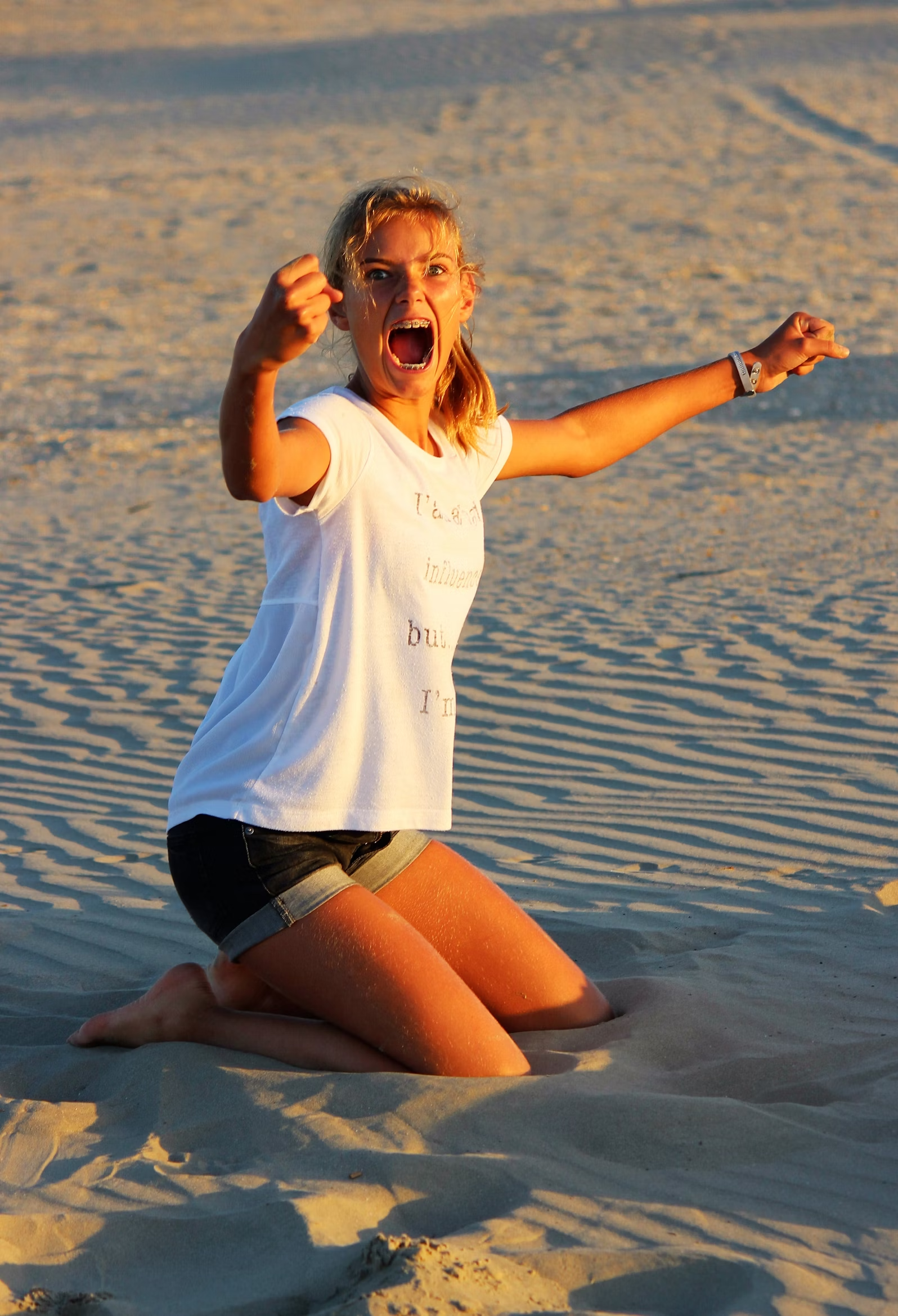
Photo credit: sandra lansue on Unsplash.


A note from Writers Resist
Thank you for reading! If you appreciate creative resistance and would like to support it, you can make a small, medium or large donation to Writers Resist from our Give a Sawbuck page.
The Social Contract

By Kelly Fordon

I’ve been thinking about Irish wakes—
what my aunt’s must have been like—
19—killed by her drunk boyfriend
who slammed into a light pole.
For years afterward, my grandfather
ran into the boy around town.
My grandparents believed he would pay—
if not in this lifetime, in the next.
But I heard it nearly drove
my grandfather mad to see his face.
Those were the days before we all decided
drinking and driving is dumb,
a collective decision after so much loss.
What we had tolerated before,
we could no longer abide.
Irish wakes always took place
in the deceased’s home.
Back in those days
they covered the mirrors
so the soul wouldn’t float off
into the nether world instead
of zooming straight up to heaven.
The vigil lasted all night.
The men lit their cigarettes
to ward off the evil spirits.
That’s another thing
we used to sanction—
several of my family members
went up in smoke.
It takes a village, they say.
What I happen to believe
matters little without you
on board. Otherwise, how
would we even set the speed limit?
I was working one day
behind the circulation desk
and a man walked in
with a Glock strapped to his chest.
Who he was,
what he intended to do,
we had no idea.
He was exercising
his rights, and it made me think
about my aunt flying through the windshield,
my uncle hacking up a lung,
bombed-out hospitals,
preemies huddled together
in shoe boxes,
kids who were just having fun
at a music festival,
my son cowering
in his MSU apartment,
a killer on the loose.
His grade school friend, who
didn’t make it through that night.
Back when I was in high school
we didn’t know boys were supposed
to stop when we said stop.
If we’d banded together,
if we’d called out the bystanders,
if we’d agreed that we deserved better,
that what was happening
was really, really shitty, maybe
we could have shut it down.
Maybe we could have changed
everything.


Kelly Fordon’s latest short story collection, I Have the Answer (Wayne State University Press, 2020), was chosen as a Midwest Book Award Finalist and an Eric Hoffer Finalist. Her 2016 Michigan Notable Book, Garden for the Blind (WSUP), was an INDIEFAB Finalist, a Midwest Book Award Finalist, an Eric Hoffer Finalist, and an IPPY Awards Bronze Medalist. Her first full-length poetry collection, Goodbye Toothless House (Kattywompus Press, 2019), was an Eyelands International Prize Finalist and an Eric Hoffer Finalist. It was later adapted into a play by Robin Martin and published in The Kenyon Review Online. Her new poetry collection, What Trammels the Heart, will be published by SFASUPress in 2025. She is the author of three award-winning poetry chapbooks and has received a Best of the Net Award and Pushcart Prize nominations in three different genres. She teaches at Springfed Arts in Detroit and online, where she runs a fiction podcast called “Let’s Deconstruct a Story.”

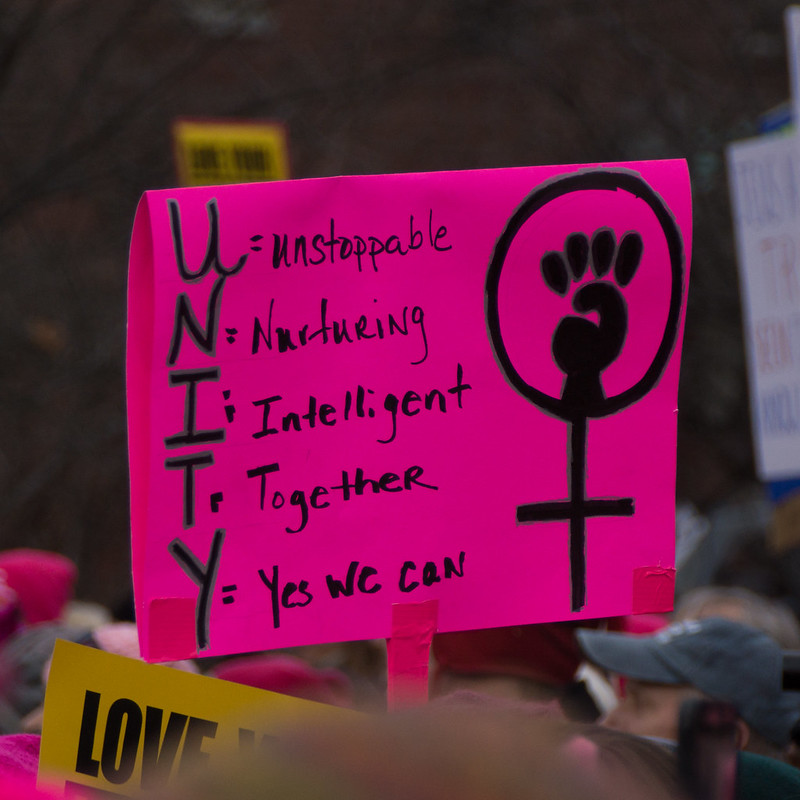
Photo credit: Marc Nozell via a Creative Commons license.


A note from Writers Resist
Thank you for reading! If you appreciate creative resistance and would like to support it, you can make a small, medium or large donation to Writers Resist from our Give a Sawbuck page.
You Can Tell by Looking at Her

By Susan Rukeyser

Purity stood behind the counter at Wildfyre Drug, ready to assist Billionaires in possession of a valid pharmacy card and a signed Terms of Agreement, swearing that none of their purchases would be shared with members of the Worker class.

Occasionally, customers recognized her from her beauty product testimonials, which ran on true crime podcasts. Her niche was aggressive anti-aging for Billionaire’s wives at midlife and beyond.

Here in what used to be Los Angeles, known as The Angels since 2039’s American Language Act, the freezing haze hung low and yellow. The heavily armed security guard at the entrance wore a parka but not a respirator, although most people wore both.

“Men don’t need respirators. Their lungs are stronger,” Purity had been informed by Dotsie, a frequent customer of Wildfyre Drug and also sort of a friend.

Purity was the third wife of Skip Jenssen, an acquaintance of Dotsie’s husband, Dick. Dick and Dotsie were Billionaire class.

Dotsie appeared at the store’s entrance. The security guard recognized her, despite her respirator. Once inside, Dotsie removed it carefully, so as not to disturb her hat, which appeared to be covered in bald eagle feathers, velvety brown and white, very on trend for Winter 2051. Dotsie paired it with a long cashmere dress and vintage down comforter, redesigned as an oversized wrap.

Another employee, a kid named Link, stood across the store by an endcap of two new drugs from Compliance, Inc.: Smile4Me and ChillZout. Link was a Billionaire’s kid working off his community service for rape.

He said, “May I—”

“No,” said Dotsie, heading straight for Purity.

As Dotsie approached, Purity realized the hat Dotsie wore was a live bald eagle, now waking prematurely from sedation. It was secured by loops of brown ribbon. It could not move much, but it tried.

“What do you think?” Dotsie asked.

“About your hat?”

“No, about my Mommy Makeover!” Dotsie spun to give Purity the 360 view, holding out her arms—all four of them. “I splurged,” said Dotsie. “Two eyes in the back of my head, extra set of arms, and of course the entire line of detachable tits. Dick likes when I put a set on my back, ha ha.”

“You look unbelievable,” Purity said.

Dotsie blushed, pleased with the compliment. “So tell me, what’s new, overpriced, and fabulous?” She squinted at the products displayed behind the counter.

“Microrobotic lip enhancement,” Purity said. “From a brand called Face Invaders.” She handed Dotsie a red foil packet. “It’s expensive, but—”

“Purity!” Dotsie scolded. “Don’t be dreary.”

“Sorry. Just hold the packet open near your mouth. The microrobots locate your lips and access them through tiny tears—it’s not that painful, I swear! Then they travel around inside your lips, dispersing a proprietary blend of plumping agents and fillers according to specifications you pre-select in the app. Then they dissolve.”

“Sold,” said Dotsie, plunking down a credit card. “I’ll take five.”

Purity wondered how long it would be before Dick and Dotsie learned that Skip had accused her of adultery? That she now slept on the couch in her sister’s one-room Worker housing? Would Dotsie let her explain that Skip was the cheater, and he projected his guilt? That when he was angry, the first insult he hurled at her was “Worker,” contempt always just beneath the surface of his love?  

Dotsie was a lot, but she was kind. She invited Purity to all her social functions, but some of Dotsie’s friends were sticklers about who qualified for inclusion. Some said, “You can tell by looking at her, Purity was not born Billionaire.”

“Is that one of those Traditional Values credit cards?” Purity asked.

“You are correct,” answered the card. “I am the Traditional Values card, Woman edition, crafted from a polished cross section of real human bone and carried by the wives of Billionaires of exceptional taste and worthwhile portfolio. I ensure the highest level of security for all transactions approved by her husband. When in use, I stream a live feed to both our monitoring station and her husband, offering the premier protection every Billionaire’s wife deserves.”

“Your credit card is a snitch,” Purity said.

“Proceed with the transaction,” said the card.

Purity scanned Dotsie’s human-bone card over glass, causing it to groan in a way Purity did not care for.

Before Dotsie replaced the card in her wallet, it said, “Dick says that’s enough shopping.”

Dotsie pressed her ear implant: “Hover sack, come.” A shopping bag appeared at the door and identified itself to the security guard. It flew to Dotsie’s side.

“Hungry,” it said.

Purity put the five red foil packets of Face Invaders into the bag, and it quieted down.

Dotsie put on her respirator and turned to leave. Then she turned back and said, “Purity, I’ve always known you were Worker class. It never bothered me. Skip told us what he did.”

“I understand this changes everything,” said Purity. “You don’t have to stop shopping here to avoid me. Link can help you.”

“Doubt it,” Link called.

“I don’t want to avoid you, Purity. I always thought Skip was a prick—don’t you dare tell anyone I said that. But listen: You are free. You have a job and you’re famous. You can do anything.”

“I’m not famous,” Purity said.

“You deserve better,” said Dotsie.

“Oh, please.”

“See, there’s your problem,” said Dotsie. “Mine too.”

Dotsie walked toward the door, her hover sack gliding beside her. The eyes in the back of her head stared up at the bald eagle, now wrestling free of its bonds, sending clumps of Dotsie’s hair flying. It let out a shriek.

“I hate this hat,” said Dotsie, but as usual, it looked like she felt nothing.

When she got outside, Dotsie untangled the ribbon and released the bird. It flopped to the sidewalk but swiftly recovered and flew off. Then Dotsie walked on and out of sight, her neatly pinned hair torn loose.


Susan Rukeyser writes and lives in Joshua Tree, CA. She publishes select titles as World Split Open Press and hosts the Desert Split Open to amplify literary work that is feminist, queer, and otherwise radical. Her second novel, The Worst Kind of Girl, is out now from Braddock Avenue Books. Find her here and there: susanrukeyser.com, IG @SusanRukeyser.

Photo credit: Birgith Roosipuu on Unsplash


A note from Writers Resist
Thank you for reading! If you appreciate creative resistance and would like to support it, you can make a small, medium or large donation to Writers Resist from our Give a Sawbuck page.
Welcome to Writers Resist the Winter 2025 Issue

Whether you’re still in recovery or planning your resistance against the incoming regime, there’s plenty of common ground in this the Winter 2025 issue of Writers Resist. Enjoy the art, poetry and prose and then join us for our virtual Writers Resist Reads, Saturday 15 February 2025, at 5:00 p.m. Pacific. Just email for the Zoom link: writersresist@gmail.com.

In this issue:

Mary Brancaccio “This little piece of heaven“

Salena Casha “In This Version, Cancer Is a Woman“

Karen Crawford “You Don’t Run“

Jennifer Freed “Upon Learning, in a Report on the Footage of a Sheriff’s Deputy Shooting Sonya Massey to Death in Her Kitchen, of Massey’s First Words to the Deputy“

Jennifer Karp “Postcards from the Valley of the Moon“

Flavian Mark Lupinetti “Trigger Warning“

M.R. Mandell “Gen X Girls Ghazal“

Melissa McEver Huckabay “Why I Fight for Texas Even Though Everyone Says We Should Move“

Livia Meneghin “What should be free“

Ria Raj “kaala; kala“

Ash Reynolds “Uprooted/Planted“

Sheree Shatsky “Judged“

Beulah Vega “About Those Census Checkboxes“

Laura Grace Weldon “Election Day Facebook Exchange“

Amritha York “mmiwg“


Photo by K-B Gressitt

Why I Fight for Texas Even Though Everyone Says We Should Move

By Melissa McEver Huckabay

Sapphire flowers on the roadside.
Mountain laurels that smell like grapes.
Yellow sulphurs that flit among blooms.
Breakfast tacos and tiny salsa cups.
Muddy bayous that swallow your feet.
Pine trees that touch the sun.
Whataburger lines circling the block.
Dr. Pepper. Shiner. Blue Bell.
Sticky shirt by 8 a.m. Sunburn by 10.
Summers hiding in air conditioning.
Wearing shorts on Halloween.
Orange-lighted towers and cowboy hats.
Ferris wheels in front of the livestock show.
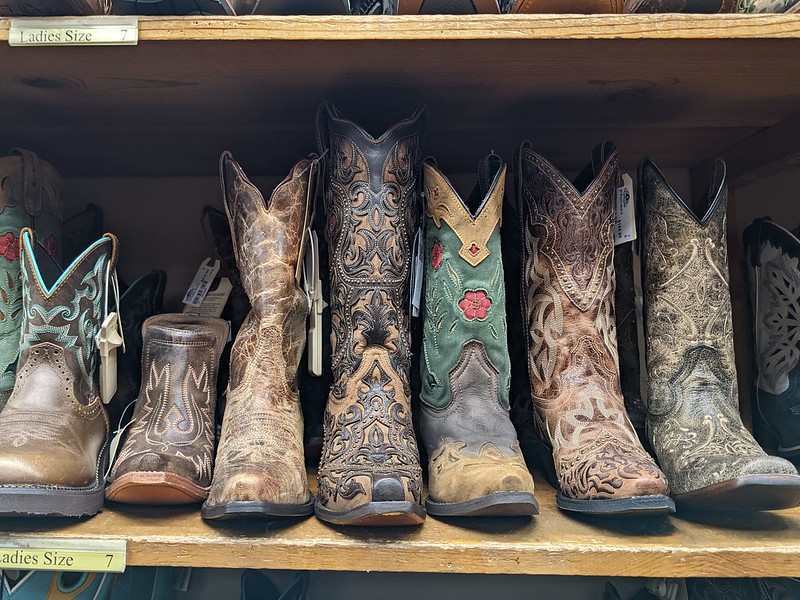
Two-stepping and scuffling boots.
Walks on Town Lake when it was Town Lake.
Oak-tree canopy on Rice Boulevard.
Peacocks squealing in Mayfield Park.
Coconut shrimp on South Padre Island.
Charro Days in Brownsville.
Marching bands and Friday night lights.
Stands selling strawberries, peaches.
Neighbors who took us for pony rides.
Picking dewberries on the side of the road.
My hometown before the Trump signs.
Believing hearts can change.
My mother, my grandfather,
my grandmother, my great-grandmother.
My father, even though he left.
My stepfather, who never left.
The blood that calls me here.                    Even though. Even though.


Melissa McEver Huckabay has an MFA in poetry from Texas State University and teaches writing at University of Houston-Downtown. Her poetry has appeared in SWWIM, Poetry South, Phoebe Journal, Thimble Literary Magazine, Sweet: A Literary Confection, and elsewhere, and is forthcoming in Minnesota Review. Her short fiction has won the Spider’s Web Flash Fiction Prize from Spider Road Press. She was a 2023 Contributor to the Bread Loaf Writers’ Conference and was recently nominated for a Pushcart Prize.

Photograph by RobinJP via a CreativeCommons license.


A note from Writers Resist

Thank you for reading! If you appreciate creative resistance and would like to support it, you can make a small, medium or large donation to Writers Resist from our Give a Sawbuck page.
You Don’t Run

By Karen Crawford

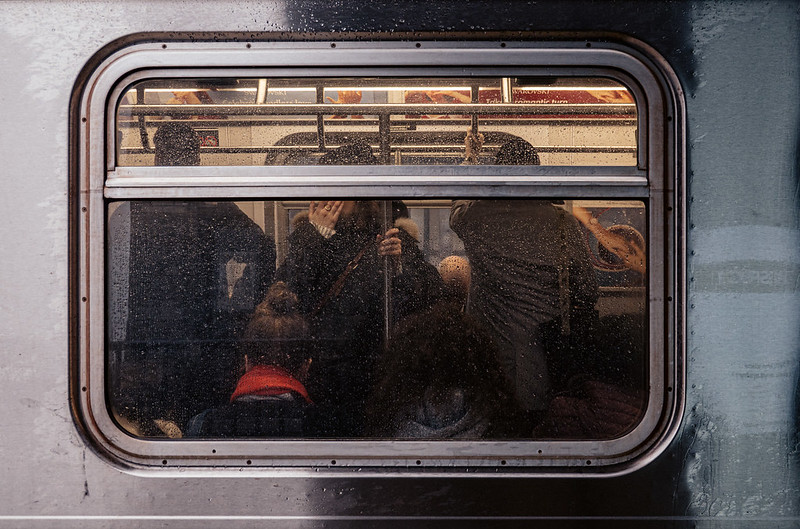
even though you’re late for class, you don’t run because in this neck of the woods running screams fear, so you walk briskly and with purpose, always acting like you know where you’re going even if you don’t and when you get to the subway, you never root around your bag for a token, you always, always have one in your pocket, because in this neck of the woods you keep your bag close, and when the train pulls into the 103rd street station you rush through the doors and grab a pole because the only seats available are next to a junkie nodding off and some homeless dude cursing at no one in particular, and you know to keep your eyes to yourself, because eye contact is a no-no, a WTF are you looking at kind of no-no, and in this neck of the woods someone’s always looking for a confrontation, and at the 86th street station a flurry of people pile in sandwiching you between 9 to 5ers heavy on AquaNet hairspray and Chaps cologne, and now you’re holding your bag, the pole and your breath when at 77th street you think you feel a man bumping behind you, and you think maybe it’s because the train is rattling down the tracks, and you think maybe it’s because he has nothing to hold onto, and you think maybe and maybe and maybe until somewhere past 68th street the train sputters to a stop, and the air conditioning fizzles out and the lights flicker off, and that’s when you feel him, like feel ‘it,’ feel him, and you’re hemmed in, frozen, shame pooling under your armpits even after the air comes back on and the train chugs into the 59th street station, and you inch forward as passengers get off and that’s when his hand cups your cheek and it’s not the one on your face, and it’s not a pinch but a full-on handful kind of GRAB, and you keep moving forward because you want nothing more than to rush off this train, but then your face flames and you think about that time when… and you think about that other time when… and you swing around and see an ivy league looking guy in a tailored blue suit with a gotcha smile and you don’t think—you just SHOVE, and he stumbles backwards with a what did you do that for?, and you scream next time keep your fucking hands to yourself, and in this neck of the woods, you’re glad that everyone is looking.


Karen Crawford is a writer, with Puerto Rican roots, who lives and writes in the City of Angels. Her work has been included in Tiny Sparks Everywhere: National Flash Fiction Day Anthology 2024, 100 Word Story, Okay Donkey, and Five South. You can find her on X @KarenCrawford_ and Bluesky @karenc.bsky.social.

Photograph by Several Seconds via a Creative Commons license.


A note from Writers Resist

Thank you for reading! If you appreciate creative resistance and would like to support it, you can make a small, medium or large donation to Writers Resist from our Give a Sawbuck page.
Trigger Warning

By Flavian Mark Lupinetti

Never before has my hospital seen
such dismembered torsos and pulverized brains,
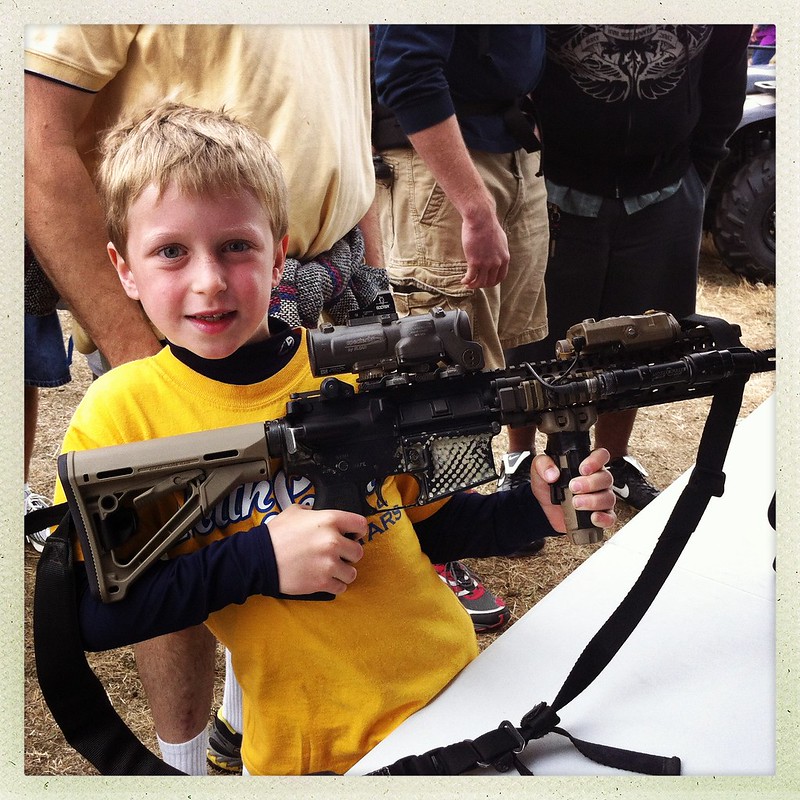
results of a shooting with an AR-15.

The speed of a bullet from an AR-15
creates cavitation through muscles and veins.
A shot to the shoulder can rupture the spleen.

All of our doctors and nurses convene,
yet it’s futile to treat what are really remains,
these gobbets of protoplasm rendered obscene.

It distresses us we cannot follow routine—
bring a halt to the hemorrhage, alleviate pains—
but to rush to the OR dishonest. I mean,

there’s nothing to save after seeing this scene.
Kids of a country where the gun owner reigns,
doomed never forever to reach age thirteen.

Of the lethalmost species of killing machine—
bazookas, gas, napalm, presidential campaigns—
accessorized with a 55-round magazine,
nothing compares to the AR-15.


Flavian Mark Lupinetti, a poet, fiction writer, and cardiac surgeon, received his MFA from the Vermont College of Fine Arts. His poems and stories have appeared in Bellevue Literary Review, Cutthroat, december, Redivider, and ZYZZYVA. Mark’s chapbook, The Pronunciation Part, will be published by The Poetry Box in 2025. Mark lives in New Mexico.

Photograph by clappstar via a Creative Commons license.


A note from Writers Resist

Thank you for reading! If you appreciate creative resistance and would like to support it, you can make a small, medium or large donation to Writers Resist from our Give a Sawbuck page.
Uprooted/Planted

By Ash Reynolds

Today I learned the word “ecocide”
murder of the environment
Intentional destruction of the soil, air
of olive trees, strawberry fields
Mourn for all that is lost
the homeless animals, the rootless trees
Don’t cry over spilled oil
or plastic crowding the ocean
Colonizers raping an open wound
hands stained copper-tongue carmine
Dear planet, look what they’ve done to you

Today I planted my garden
birth of nourishment
Intentional tending of green zebra tomatoes
of hot & spicy oregano, mini-me cucumbers
Celebrate all that is growing
the native flowers, the bumblebees
Don’t cry over dry soil
or squirrels snacking
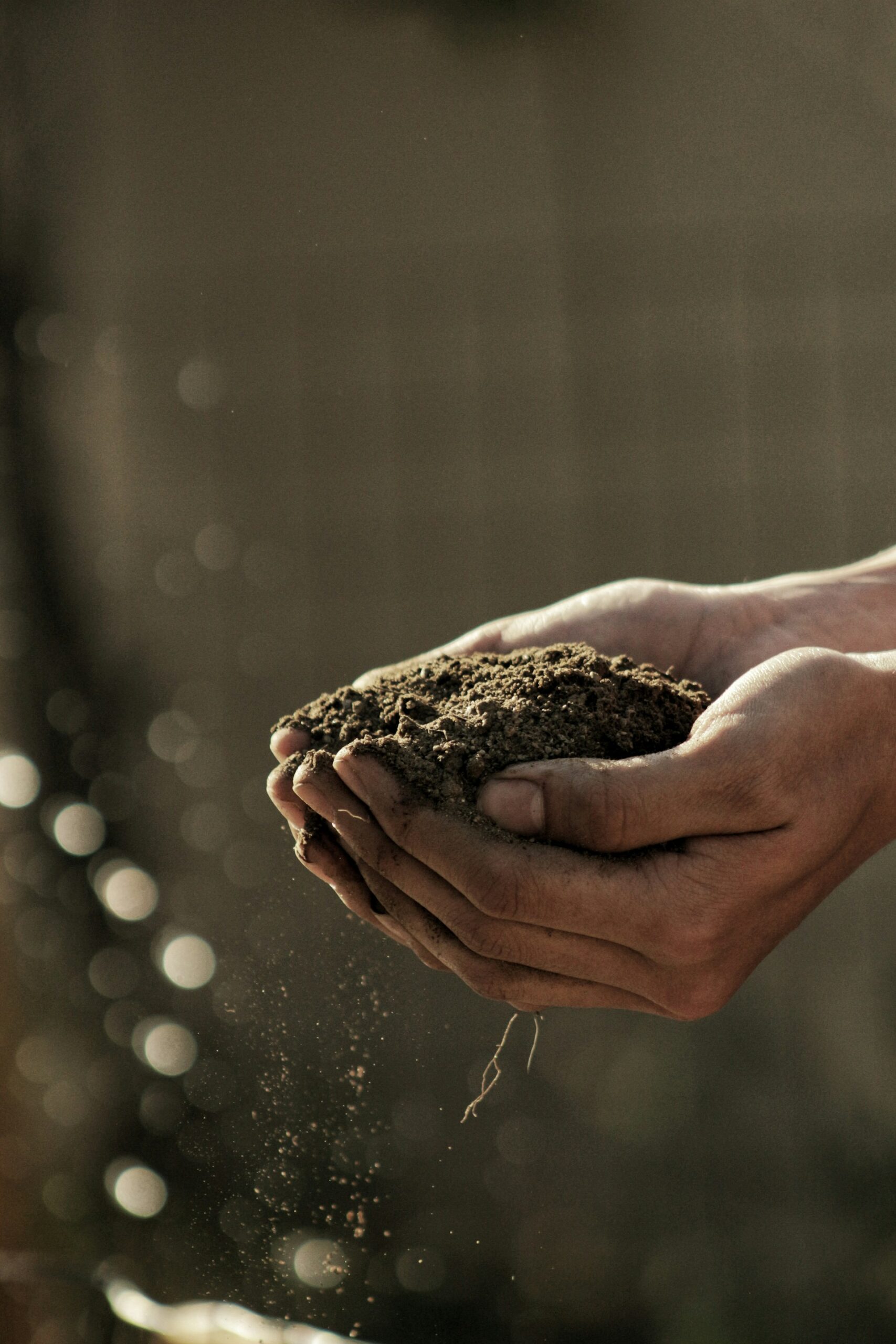
Tenderly dug holes in fecund earth
garden gloves stained abundant brown
Dear planet, look what you’ve given me


Ash Reynolds (they/them) is a nonbinary, queer, ace poet living in College Park, Maryland, USA, with their rescue dog and 41 houseplants. They are published in new words {press} and have a poem forthcoming in The Bitchin’ Kitsch.

Photograph by Gabriel Jimenez on Unsplash.


A note from Writers Resist

Thank you for reading! If you appreciate creative resistance and would like to support it, you can make a small, medium or large donation to Writers Resist from our Give a Sawbuck page.
About Those Census Checkboxes

By Beulah Vega

To those who do not look
she looks nothing like me
but we share that look

the slow ashen gaze that says I’m tired

of these forms that push messy spheres
into uniform squares.

She/ I/ we are tired. Tired
in the marrow of our bones
that share color and structure

but not marrow matches

tired of doctors blaming our blood
for illness.

I/we/she are tired. Tired
in lungs that share the same
air-poisoned and fear-filled

voices and pleas ignored

by pink hats who only really march
for pink skin.

We/she/I are tired. Tired
of learning two of every-
word. But never learning

one that means compassion.

Tired of monolingual and bilingual, both meaning
“outsider” “forastera.”

We/she/I/Half Caste/Mestizo/Indio
/Half breeds/Mulatto are all tired
of these boxes you’ve built

 to bury us in.


Beulah Vega (she/her) is a Latine writer, poet, and theatrical artist living and working in California’s Bay Area. Her poetry has been published in The Literary Nest, Sage Cigarettes, Walled Women, and Blood & Bourbon, among others. Her first book of poetry, A Saga for the Unrequited, was published in August of 2021 by Fae Corp Publishing. She is still amazed when people refer to her as a writer, every time. To follow her lunacy (artistic and otherwise) find her on Facebook @BFVegaauthor and Instagram/Twitter @Byronwhoknew.


A note from Writers Resist

Thank you for reading! If you appreciate creative resistance and would like to support it, you can make a small, medium or large donation to Writers Resist from our Give a Sawbuck page.

mmiwg

By Amritha York


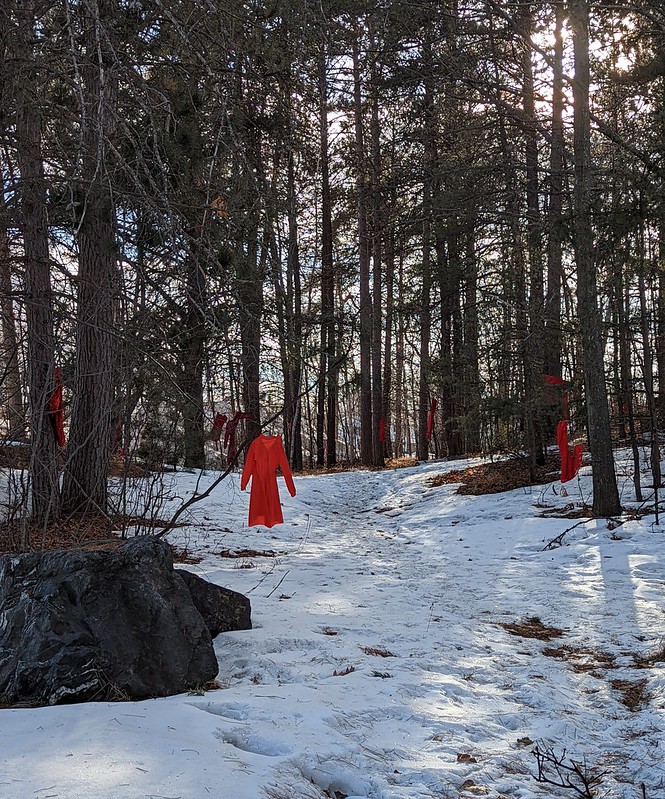
for now the red maple in the cloth flag remains the stain of a history attempting to come undone,
but

the other day i said bye to my friend and wasn’t sure if i’d ever see her again.
the other day, a waste management person told me they were scared of what they’d find at work.

red 
isn’t just a dress.
mmiwg isn’t just a hashtag. 

it’s a mother’s spirit spilling out her mouth every time she’s questioned, 
and flowing out when they stop asking. 
watching the red in the flag flapping in the wind, 
the red flapping in the empty dress that replaces her daughter. 
red in the rcmp uniform, 
red in the strawberry jello cake i made for canada day off the box.

never knowing who those red-dressed women were. 
$122, 728,283 spent over 54 years can’t replace 4000+ women. 
go back and find my girls, 
my women, 
that were born of this earth, 
that we hold in our hearts. 
every july, we road trip past unmarked graves and lost mothers’ souls.
red planted over with orange lilies and lady slippers stepping through our way.

keeping them company
until they find their way home.


Learn more about Missing and Murdered Indigenous Women and Girls at https://www.mmiwg-ffada.ca/  and https://www.humanrightsresearch.org/post/the-disappearance-of-native-american-women-in-the-u-s 


Amritha York (she/her/they/them) is a Torontonian queer, Indian, RN, new mother and gender-fluid woman. Amritha writes from her own life experiences of traumas, loss, poverty, and race and the resiliency in overcoming these. She hopes to push how we use storytelling out of stuffy exclusivity into generationally healing words of comfort. She has previously written for the Legion at a provincial and regional level and more recently participated in social action projects with Gardiner Ceramic Museum, for International Day of Violence Against Women, and part of a social action project for vulnerable and un-housed persons in Toronto, distributed by the YWCA.

Amritha hopes to make poetry and writing more accessible and digestible for BIPOC persons, and individuals who are in vulnerable spaces of mental health, addictions, trauma work and recovery. She has been published in Anti-Heroin Chic, Libre Lit, and Fruitslice, and you can find snippets of her work on Instagram @first.breath.release.

Photograph by yooperann via a creative commons license.


A note from Writers Resist

Thank you for reading! If you appreciate creative resistance and would like to support it, you can make a small, medium or large donation to Writers Resist from our Give a Sawbuck page.
Gen X Girls Ghazal

By M.R. Mandell

            after Patricia Smith

We woke ourselves up, brushed our own hair, cooked our own dinners, tucked
our sisters into bed. We were thirty at the age of thirteen. We needed nobody.

Vogued to Madonna. Leather jackets, tattooed midriffs, clove cigarettes slipping
off our lips, kissing girls under neon, electrifying every part of our bodies.

Boys drooled over our breasts, slid fingers up our lace miniskirts. Our curves made
them squirm. Our bodies owned their minds, but they said we owed them our bodies.

When we didn’t give in, they dropped roofies in our cups. Raped us, left us for dead,
blamed our bare skin and pulsing hips. We guilty bodies.

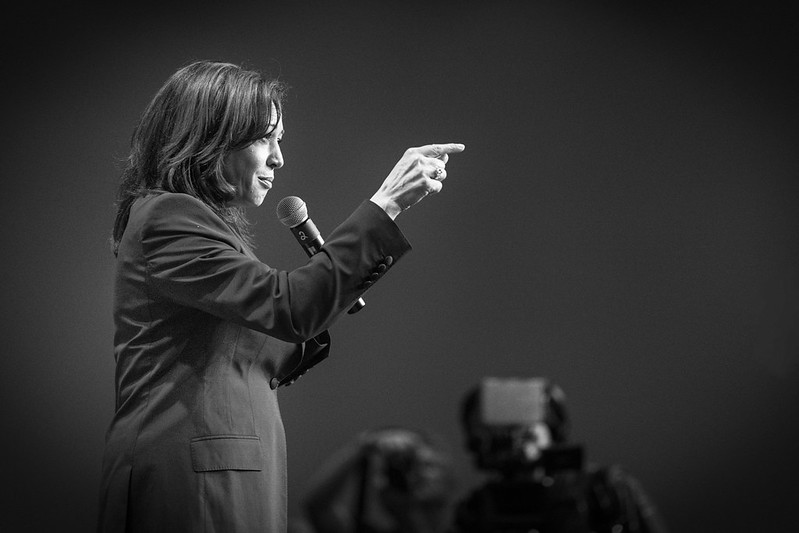
They’re old boys now, terrified of who we are, what we have become, what we have won. Governor of Michigan. Vice President of the United States. Badass brains. Badass bodies.

Oh, Rebecca, step down from your self-built pedestal. Stop talkin’ ‘bout the past.
Get off your ass. Gen X girls, this is our calling. We fight. We vote. Cue bodies!


M.R. Mandell (she/her) is a poet based in Los Angeles. You can find her words in The McNeese Review, Weekly Humorist, Maudlin House, Writers Resist, Stanchion, HAD, and others. She is the author of the chapbook, Don’t Worry About Me, (Bottlecap Press) and Lost Girls, forthcoming September 2025 (Finishing Line Press).

Photo credit: Lorie Shaull via a Creative Commons License.


A note from Writers Resist

Thank you for reading! If you appreciate creative resistance and would like to support it, you can make a small, medium or large donation to Writers Resist from our Give a Sawbuck page.
kaala; kala

By Ria Raj

my mother traces her fingers along my mahogany-skin
and calls me kaala,
hindi for black.

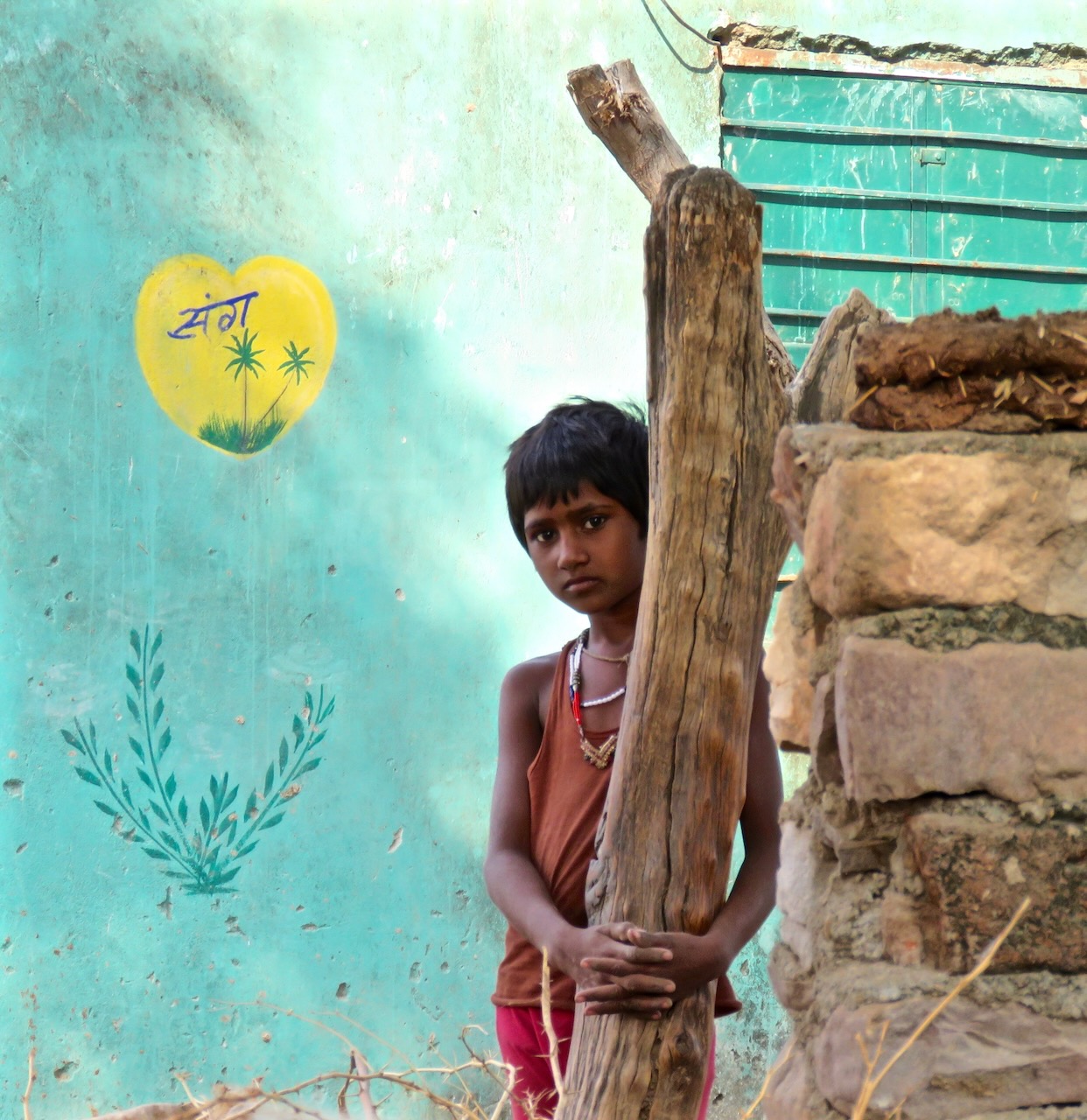
my mother traces her fingers along a film photograph of her homeland,
and calls it kala,
hindi for art.

i find it particularly lovely
that art
is intrinsic
to Blackness
in the hindi language

ka(a)la

the ubiquity of the
english language
is contingent


upon Black destruction

and as the
english language
continues to

dismember Black bodies,

i wonder if my hindi might illuminate a semblance of Blackness,
keeping it from

its premature death.


Ria Raj is a queer, South-Asian-American writer. She is deeply interested in the intersectional constructions of brownness, queerness, and womanhood in the literary archive, and how her work might fit into this constellation. She has upcoming publications in Eunoia Review, Moonbow Magazine, The Greyhound Journal, Zhagaram Literary Magazine, and Fleeting Daze Magazine.

Photo by Debbie Hall, poet, photographer and Writers Resist poetry editor.


A note from Writers Resist

Thank you for reading! If you appreciate creative resistance and would like to support it, you can make a small, medium or large donation to Writers Resist from our Give a Sawbuck page.
Upon Learning, in a Report on the Footage of a Sheriff’s Deputy Shooting Sonya Massey to Death in Her Kitchen, of Massey’s First Words to the Deputy

By Jennifer L. Freed

I, too, have felt myself to be prey.            
What woman has not?  

But I live
in a white body.

If ever I
dialed 911, afraid

of a man
prowling

around my home,
I would not need to say,

when the officers came
to my door—

no—let me rephrase: it would never
occur

to me
that my very first words

would be
Please don’t hurt me.


Jennifer L. Freed’s collection, When Light Shifts (2022 finalist, Sheila Margaret Motton Book Prize), explores the aftermath of her mother’s stroke and the altered relationships that emerge in a family health crisis. Her poems have been nominated for Best of the Net, The Pushcart Prize, and the Orison Anthology. Awards include the 2022 Frank O’Hara Prize, the 2020 Samuel Washington Allen Prize, and Honorable Mention for the 2022 Connecticut Poetry Award. She teaches adult education programs from Massachusetts, USA. Please visit jfreed.weebly.com.

Poet’s note: The news story that mentions Sonya Massey’s first words is here.

Photograph by Joe Piette via a Creative Commons license.


A note from Writers Resist

Thank you for reading! If you appreciate creative resistance and would like to support it, you can make a small, medium or large donation to Writers Resist from our Give a Sawbuck page.
In This Version, Cancer Is a Woman

By Salena Casha

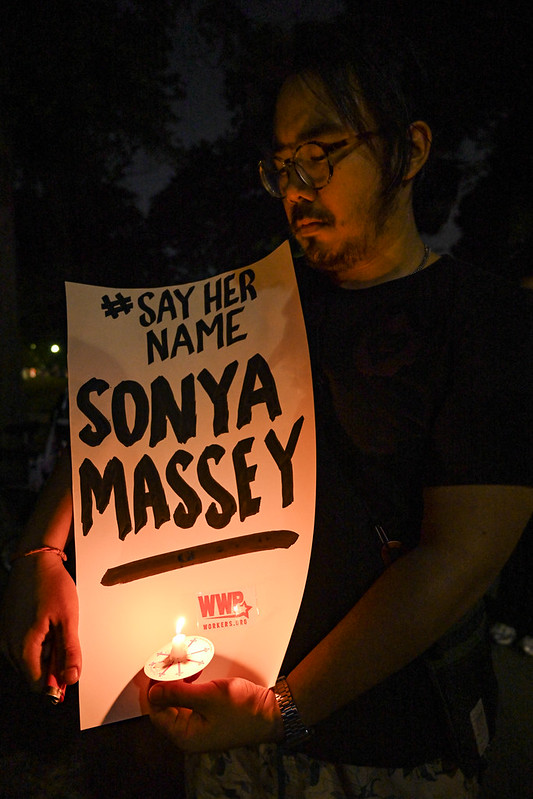
If we were really there for the battle of Hydra and Hercules, we’d remember the crab. Monstrous, the size of two buildings, difficult to miss with its burnt orange shell. As Hydra’s heads fell again and again to Hercules’ sword, the crab leapt from the murky water and wrapped herself around Hercules leg. Pinched as if Hades depended on it, sinking her claws into his striated calf. Hercules wouldn’t admit it, but if he’d been in a confessing mood, that bite hurt to Mount Olympus and back.

Maybe we don’t remember her because she was a crab first and a woman second, things history likes to forget. Maybe we don’t remember her because Hydra was a villainous female enough for the both of them: two were unneeded. But what if these ladies had just been minding their own business, eking out a living in a desolate swamp when a demi-god with daddy problems tried to make a name for himself? What if the victor told a different story?

What we do know is that they both died, Hydra and the Crab. They often do, these women who find themselves at the wrong end of a man’s pride. And of course, Hercules left, the remnants of a valiant heroine crushed into the grass beneath the weight of his golden club—the first sign that the environment was going to hell in a handbasket because of man. Once she was sure he was gone, Hera herself slid across the damp ground to cup the crab’s powdered exoskeleton in her palm. Bent her face close.

As she lifted her palm to the heavens to immortalize the crustacean in stars, she whispered,

We have not lost yet.

And somewhere to someone, it meant something.


Salena Casha’s work has appeared in over 100 publications in the last decade. Her most recent work can be found on HAD, Wrong Turn Lit and The Colored Lens. She survives New England winters on good beer and black coffee. Subscribe to her Substack at salenacasha.substack.com.

Illustration: Sidney Hall (1831) astronomical chart illustration of the zodiac Cancer. Original from Library of Congress. Digitally enhanced by rawpixel.


A note from Writers Resist

Thank you for reading! If you appreciate creative resistance and would like to support it, you can make a small, medium or large donation to Writers Resist from our Give a Sawbuck page.
Judged

By Sheree Shatsky

Artist Statement

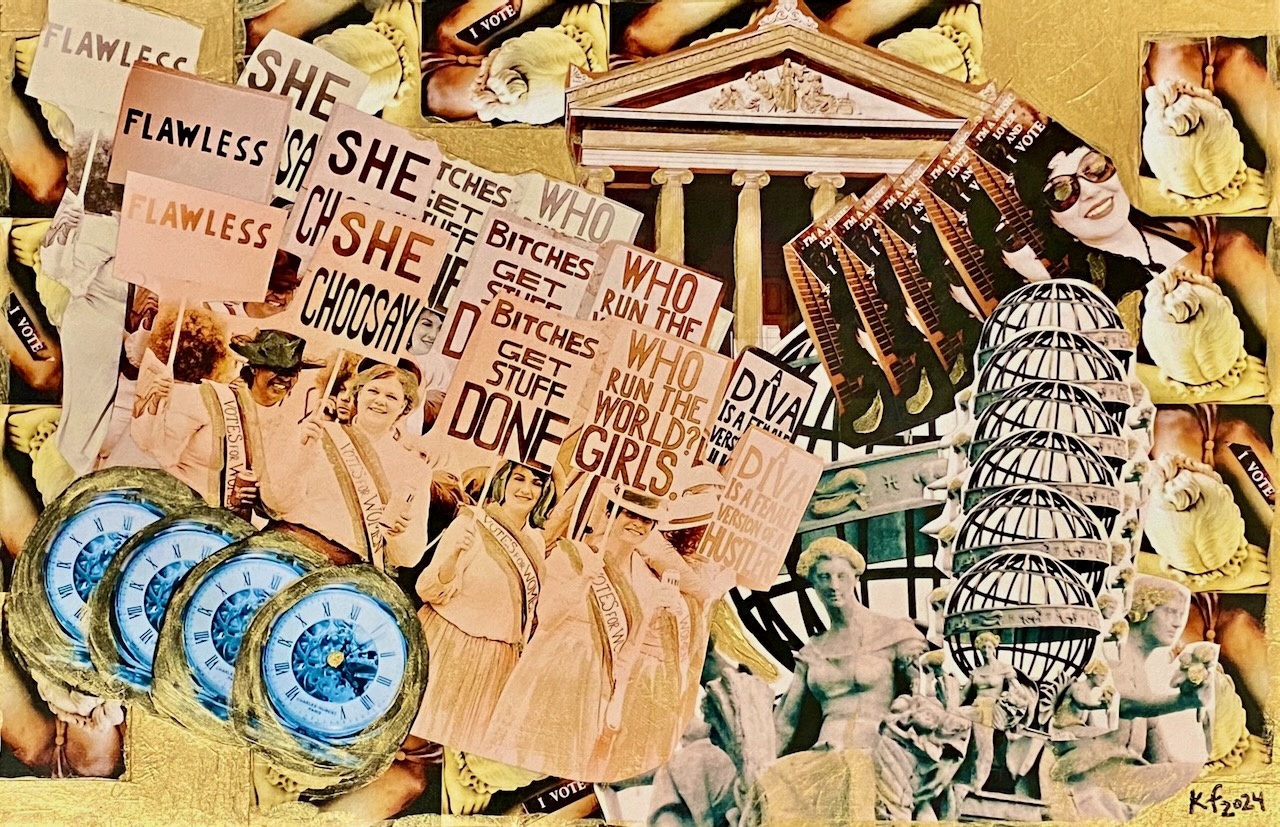
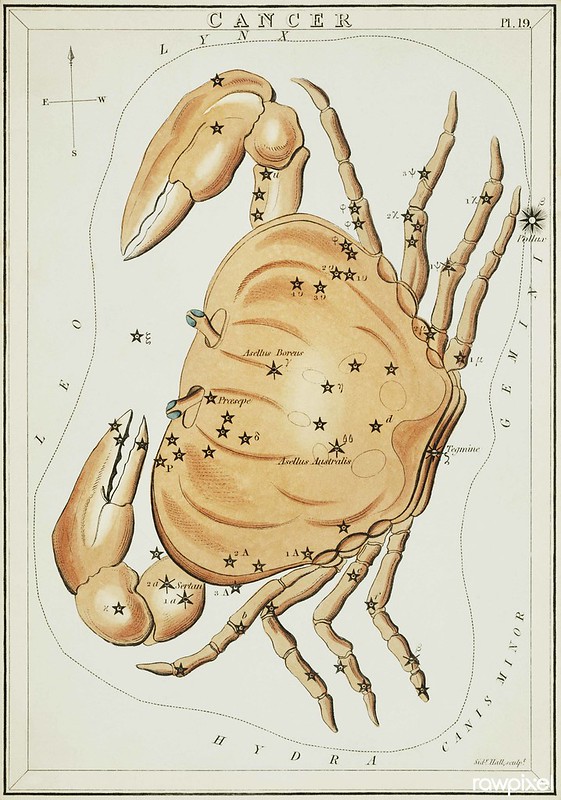
This collage reflects the connection of women past with women present and future, faced with the loss of civil rights fought for and won by previous generations. We must stand on the shoulders of those who came before, who struggled for the rights we have very much taken for granted and presently find under assault.

This hand-cut paper collage is assembled using images gathered and photocopied from the public domain, as well as photographs from the artist’s personal collection.


Sheree Shatsky is the author of the novella-in-flash Summer 1969 (Ad Hoc Fiction 2023). Her collage “Overturn Citizens United” is included in Maintenant 18: A Journal of Contemporary Dada Writing & Art PLUTOCRAZY (Three Rooms Press 2024). Find her website, Substack and other links at linktr.ee/shereeshatsky.


A note from Writers Resist

Thank you for reading! If you appreciate creative resistance and would like to support it, you can make a small, medium or large donation to Writers Resist from our Give a Sawbuck page.
Election Day Facebook Exchange 

By Laura Grace Weldon

I post a thank you to the four pound bag of garbanzo flour
which threw itself off a high shelf. It burst open in a spectacular
display of organic bean dust, coating my face and sweater.
I’d been festering with worries about which way
the vote might go, but explain that snort-laughing helps.

To whatever Facebook friends are awake at five-thirty a.m.—
those who are lunching in Finland, suppering in India,
going to bed in New Zealand—I suggest we invite 
silly mistakes to course-correct us back to good humor.
By the time I’ve cleaned the mess, friends are weighing in.

Kunzang says I’m thinking of adding snort laughter
to my tonglen practice and I affirm, That’s next level. 
Tamara says, Four pounds is a lot and I tell her
my husband insists benevolent kitchen gods
were saving him from meals made with it.

Joanne says I need a dose of bean dust, because I’m a wreck
and I offer to appear as Bean Dust Fairy. Wearing glittery wings,
I’d scatter flour over her worried head, but only after
she signed a disclaimer acknowledging no known magic
makes politicians work for the good of all. Kimerly says,

Winged garbanzo flour. What a magical sight. I thank her
for seeing the magic. Tell her it was, briefly, beautiful.
Donna reframes my mistake with, You know how
to make the most of amazing moments. Truth is,
I’m just uncoordinated, but she’s onto a larger truth.

I type back, Everything is, essentially, amazing.


Laura Grace Weldon lives in a township too tiny for traffic lights where she works as a book editor, teaches writing workshops, serves as Braided Way editor, and chronically maxes out her library card. Laura was Ohio’s 2019 Poet of the Year and is the author of four books.

Photography by David Becker on Unsplash.


A note from Writers Resist

Thank you for reading! If you appreciate creative resistance and would like to support it, you can make a small, medium or large donation to Writers Resist from our Give a Sawbuck page.
Postcards from the Valley of the Moon

By Jennifer Karp

The car shows 94 degrees after our dry desert hike. I write political postcards to Swing States while you drive. Dust in our boots, our clothes, the cracks around our eyes. They’re called crow’s feet, but you call them smile lines. I don’t know crows from blackbirds from ravens. Volcan Mountain, Iron Mountain, Cowles Mountain, everything is and has been open, you say. I’m not a fan of walking on sand—I do agree it’s cushioned and offers great resistance, but I’ll walk on rocks all day before sand. We pull off the highway to watch the Vice-Presidential debate again on YouTube. Dirt hangs in the air. This is becoming too big of a metaphor, you say. I’ve got a blister on my toe but I don’t tell you. We climb up a nearby boulder, you with ear pods, me with postcards and a black pen, hoping each line makes a difference.


Jennifer Karp began her love of writing at the age of eight. She earned recognition as a finalist in the 2023-24 Steve Kowit Poetry Prize and as a winner of the San Diego Reader Poetry Contest. Jennifer’s work appears in numerous journals, anthologies, and international magazines, touching hearts and minds around the world.

Photograph by Master Steve Rapport via a Creative Commons license.


A note from Writers Resist

Thank you for reading! If you appreciate creative resistance and would like to support it, you can make a small, medium or large donation to Writers Resist from our Give a Sawbuck page.
This little piece of heaven

By Mary Brancaccio

                        after William Stafford

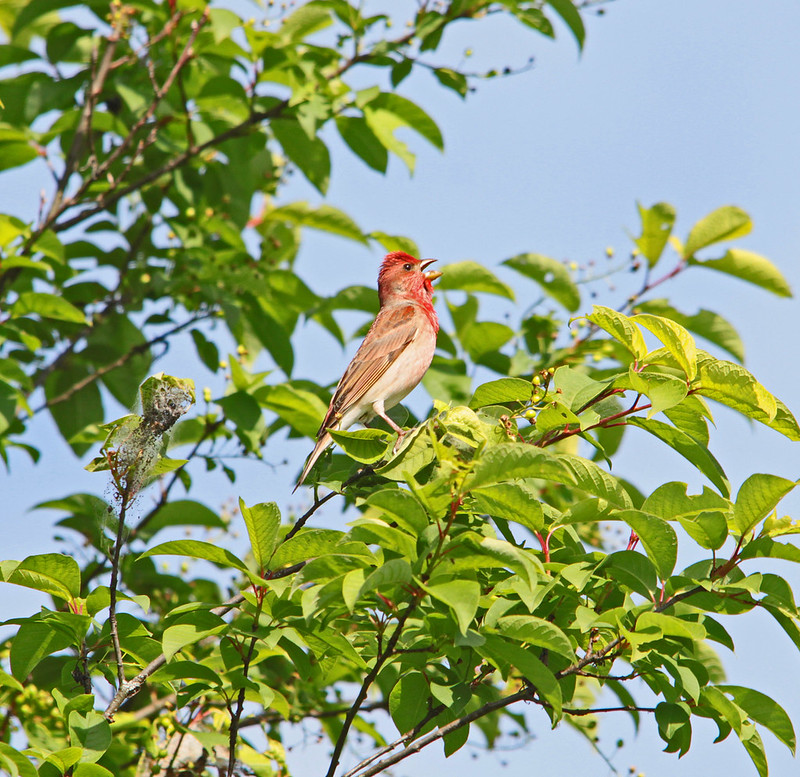
has flown from Himalayan heights
to breed in Bialowieza, one of the last
primeval forests in Europe. He perches,
high in the branches of a leafy maple
and chirps out his rosefinch song as if
everything in the world depends on it.
It does — Earth needs more melody,
more calls to joy and desire, calls for
lands fit for another clutch of hope —
more trust in the future, in serenity
to raise the young, in attentiveness
to life in all its fragility and resilience.
Ah, to be a rosefinch, crossing borders
without papers, without worry of
misunderstanding, trusting in
the meadow’s bounty, in the wind’s
gift, in the endless sky and its glorious
light. In everything that makes possible
mate, nest and egg. His song is prayer
of thanks, one beautiful, full-throated

hallelujah.


Mary Brancaccio’s first poetry collection, Fierce Geometry (Get Fresh Books Publishing, 2022),was recommended by the American Academy of Poets. Her work has appeared in Naugatuck River Review, Minerva Rising, Edison Literary Review, among others. She is included in several anthologies of poetry, including The Black River: Death Poems; Farewell to Nuclear, Welcome to Renewable Energy (a response to the Fukushima nuclear disaster) and Veils, Halos and Shackles: International Poetry on the Oppression and Empowerment of Women. Her website is ghostgirlpoet.com.

Photograph by vil.sandi via a Creative Commons license.


A note from Writers Resist

Thank you for reading! If you appreciate creative resistance and would like to support it, you can make a small, medium or large donation to Writers Resist from our Give a Sawbuck page.
What should be free

By Livia Meneghin

            
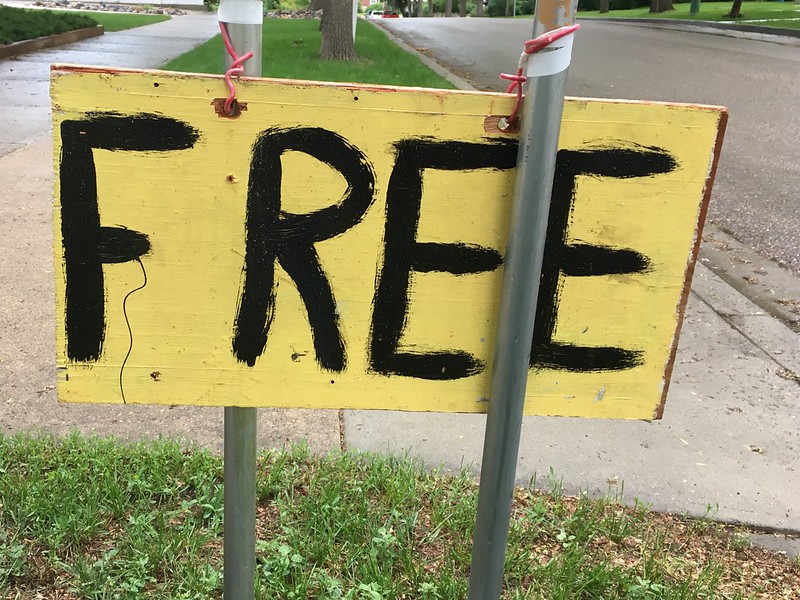
Archived recordings of Ainu, Aleut, Lushootseed, Quechua, Boon, Saami, Somray,
Warluwarra, and other critically endangered languages.
All traditional items stolen for foreign museums.
Water.
Parking at a hospital.
(Parking at) the university you attend.
To knock on your neighbor’s door asking for sugar or to borrow a drill or if they can
water your plants while you visit family out of state. And to offer freshly made raisin bread or
help stringing outdoor Christmas lights or first dibs on an outgrown crib before donating it.
Submitting to literary magazines.
Cheese, when you’re depressed.
You, from depressive thoughts.
You, to feel down at times because sadness is necessary.
Children under rubble. Children from famine.
Water.
Leg hair. Also, the choice to shave if your body feels better that way.
Women who want to be slutty.
Women who must take care of their parents and their children at the same time.
Anyone making below a livable wage.
Ants: including the over 12,000 named species, as well as the unnamed species, who
matter equally.
Bakery items at the end of the day from being thrown out.
Glaciers from stampedes of tourists warming their surfaces.
Cows and chickens and pigs from slaughter.
Sinuses from infections.
Water.
Salmon runs.
Wild grasses.


Livia Meneghin (she/her) is the Sundress Publications Reads Editor and author of chapbook, Honey in My Hair. She’s earned recognition and awards from the Academy of American Poets, the Writers’ Room of Boston, Breakwater Review‘s Peseroff Prize, the Room Poetry Contest. Her writing has found homes in Gasher, So to Speak, Thrush, Whale Road Review, and elsewhere.After earning her MFA in Boston, she now teaches writing and literature at the collegiate level. She is a cancer survivor.

Public Domain photograph by Alan Levine.


A note from Writers Resist

Thank you for reading! If you appreciate creative resistance and would like to support it, you can make a small, medium or large donation to Writers Resist from our Give a Sawbuck page.
Welcome to Writers Resist the Fall 2024 Issue

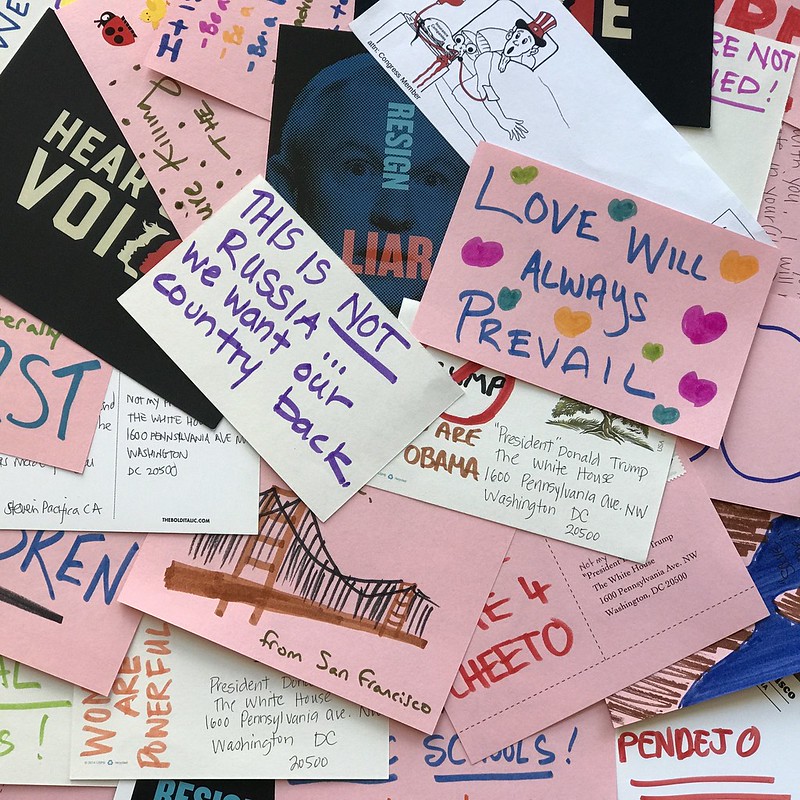
The collage by Kristin Fouquet is an apt introduction to this issue, launched in the final throes of the chaotic, often hateful presidential campaigning. How wonderful it would be if the joyful prospect of electing the first woman president of the United States could be just that.

Perhaps we can make it so by encouraging all our sisters and other beloveds to use our hard-won right to vote. As Kristin’s artwork warns us, “Suffrage or Suffer.”

But first, a very fond farewell to one of our founding editors, Sara Marchant, who has a few words to share:

In the last days of the late 1900s, I woke up underneath a beanbag chair on the bamboo floor of a thrashed house not my own, missing a shoe, cake-frosting in my hair, and with full awareness that hijinks had ensued. My first thought was: That was an excellent party.

Today, while reading this issue of Writers Resist, please picture me in my pajamas, bedhead resplendent, toasting you, dear readers, contributors and editors, with my second cup of coffee.

Writers Resist was born from worried dread about our future and righteous anger over our present reality, and there is still much work to be done, but I know I leave her in capable hands . . . and it has been an excellent party.

Now, this issue has a notable dose of dystopias, but—or because of that—you should find some kindred souls in the works of our contributing writers and artists—and if you’d like to join them for our virtual Writers Resist Reads, on Saturday 16 November at 5:00 p.m. PACIFIC, please request the Zoom link via WritersResist@gmail.com.

D. Arifah, “Watching Over the Horizon“

Linda Bamber, “Endless War“

Robyn Bashaw, “Beware the Homo Sapiens“

Cheryl Caesar, “Grass“

Chiara Di Lello, “Abecedarian for Billionaires“

Matthew Donovan, “I Believe Her“

Kristin Fouquet, “Suffrage or Suffer“

Ellen Girardeau Kempler, “Poem in Response to Mass Shooting Number 130 in the United States 2023“

Michael Henson, “The Dream Children of Addison Mitchell McConnell III“

Jacqueline Jules, “How I Feel About the 2024 Election“

Craig Kirchner, “The Coming“

Christian Hanz Lozada, “When I hear ‘migration,’ I think of ships“

Rasmenia Massoud, “Who We Are, More or Less“

Ryan Owen, “Breathe“

Kate Rogers, “Sisters“

Elizabeth Shack, “tree : forest :: ad : internet“

Angela Townsend, “French Kissed“

Rachel Turney, “Respect“

Diane Vogel Ferri, “Election Day“