About Those Census Checkboxes

By Beulah Vega

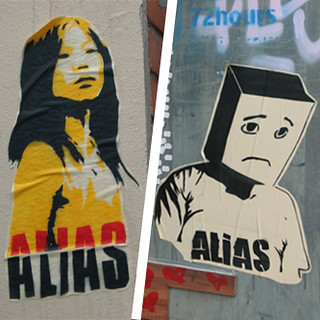
To those who do not look
she looks nothing like me
but we share that look

the slow ashen gaze that says I’m tired

of these forms that push messy spheres
into uniform squares.

She/ I/ we are tired. Tired
in the marrow of our bones
that share color and structure

but not marrow matches

tired of doctors blaming our blood
for illness.

I/we/she are tired. Tired
in lungs that share the same
air-poisoned and fear-filled

voices and pleas ignored

by pink hats who only really march
for pink skin.

We/she/I are tired. Tired
of learning two of every-
word. But never learning

one that means compassion.

Tired of monolingual and bilingual, both meaning
“outsider” “forastera.”

We/she/I/Half Caste/Mestizo/Indio
/Half breeds/Mulatto are all tired
of these boxes you’ve built

 to bury us in.


Beulah Vega (she/her) is a Latine writer, poet, and theatrical artist living and working in California’s Bay Area. Her poetry has been published in The Literary Nest, Sage Cigarettes, Walled Women, and Blood & Bourbon, among others. Her first book of poetry, A Saga for the Unrequited, was published in August of 2021 by Fae Corp Publishing. She is still amazed when people refer to her as a writer, every time. To follow her lunacy (artistic and otherwise) find her on Facebook @BFVegaauthor and Instagram/Twitter @Byronwhoknew.


A note from Writers Resist

Thank you for reading! If you appreciate creative resistance and would like to support it, you can make a small, medium or large donation to Writers Resist from our Give a Sawbuck page.

mmiwg

By Amritha York


for now the red maple in the cloth flag remains the stain of a history attempting to come undone,
but

the other day i said bye to my friend and wasn’t sure if i’d ever see her again.
the other day, a waste management person told me they were scared of what they’d find at work.

red 
isn’t just a dress.
mmiwg isn’t just a hashtag. 

it’s a mother’s spirit spilling out her mouth every time she’s questioned, 
and flowing out when they stop asking. 
watching the red in the flag flapping in the wind, 
the red flapping in the empty dress that replaces her daughter. 
red in the rcmp uniform, 
red in the strawberry jello cake i made for canada day off the box.

never knowing who those red-dressed women were. 
$122, 728,283 spent over 54 years can’t replace 4000+ women. 
go back and find my girls, 
my women, 
that were born of this earth, 
that we hold in our hearts. 
every july, we road trip past unmarked graves and lost mothers’ souls.
red planted over with orange lilies and lady slippers stepping through our way.

keeping them company
until they find their way home.


Learn more about Missing and Murdered Indigenous Women and Girls at https://www.mmiwg-ffada.ca/  and https://www.humanrightsresearch.org/post/the-disappearance-of-native-american-women-in-the-u-s 


Amritha York (she/her/they/them) is a Torontonian queer, Indian, RN, new mother and gender-fluid woman. Amritha writes from her own life experiences of traumas, loss, poverty, and race and the resiliency in overcoming these. She hopes to push how we use storytelling out of stuffy exclusivity into generationally healing words of comfort. She has previously written for the Legion at a provincial and regional level and more recently participated in social action projects with Gardiner Ceramic Museum, for International Day of Violence Against Women, and part of a social action project for vulnerable and un-housed persons in Toronto, distributed by the YWCA.

Amritha hopes to make poetry and writing more accessible and digestible for BIPOC persons, and individuals who are in vulnerable spaces of mental health, addictions, trauma work and recovery. She has been published in Anti-Heroin Chic, Libre Lit, and Fruitslice, and you can find snippets of her work on Instagram @first.breath.release.

Photograph by yooperann via a creative commons license.


A note from Writers Resist

Thank you for reading! If you appreciate creative resistance and would like to support it, you can make a small, medium or large donation to Writers Resist from our Give a Sawbuck page.
Gen X Girls Ghazal

By M.R. Mandell

            after Patricia Smith

We woke ourselves up, brushed our own hair, cooked our own dinners, tucked
our sisters into bed. We were thirty at the age of thirteen. We needed nobody.

Vogued to Madonna. Leather jackets, tattooed midriffs, clove cigarettes slipping
off our lips, kissing girls under neon, electrifying every part of our bodies.

Boys drooled over our breasts, slid fingers up our lace miniskirts. Our curves made
them squirm. Our bodies owned their minds, but they said we owed them our bodies.

When we didn’t give in, they dropped roofies in our cups. Raped us, left us for dead,
blamed our bare skin and pulsing hips. We guilty bodies.

They’re old boys now, terrified of who we are, what we have become, what we have won. Governor of Michigan. Vice President of the United States. Badass brains. Badass bodies.

Oh, Rebecca, step down from your self-built pedestal. Stop talkin’ ‘bout the past.
Get off your ass. Gen X girls, this is our calling. We fight. We vote. Cue bodies!


M.R. Mandell (she/her) is a poet based in Los Angeles. You can find her words in The McNeese Review, Weekly Humorist, Maudlin House, Writers Resist, Stanchion, HAD, and others. She is the author of the chapbook, Don’t Worry About Me, (Bottlecap Press) and Lost Girls, forthcoming September 2025 (Finishing Line Press).

Photo credit: Lorie Shaull via a Creative Commons License.


A note from Writers Resist

Thank you for reading! If you appreciate creative resistance and would like to support it, you can make a small, medium or large donation to Writers Resist from our Give a Sawbuck page.
kaala; kala

By Ria Raj

my mother traces her fingers along my mahogany-skin
and calls me kaala,
hindi for black.

my mother traces her fingers along a film photograph of her homeland,
and calls it kala,
hindi for art.

i find it particularly lovely
that art
is intrinsic
to Blackness
in the hindi language

ka(a)la

the ubiquity of the
english language
is contingent


upon Black destruction

and as the
english language
continues to

dismember Black bodies,

i wonder if my hindi might illuminate a semblance of Blackness,
keeping it from

its premature death.


Ria Raj is a queer, South-Asian-American writer. She is deeply interested in the intersectional constructions of brownness, queerness, and womanhood in the literary archive, and how her work might fit into this constellation. She has upcoming publications in Eunoia Review, Moonbow Magazine, The Greyhound Journal, Zhagaram Literary Magazine, and Fleeting Daze Magazine.

Photo by Debbie Hall, poet, photographer and Writers Resist poetry editor.


A note from Writers Resist

Thank you for reading! If you appreciate creative resistance and would like to support it, you can make a small, medium or large donation to Writers Resist from our Give a Sawbuck page.
Upon Learning, in a Report on the Footage of a Sheriff’s Deputy Shooting Sonya Massey to Death in Her Kitchen, of Massey’s First Words to the Deputy

By Jennifer L. Freed

I, too, have felt myself to be prey.            
What woman has not?  

But I live
in a white body.

If ever I
dialed 911, afraid

of a man
prowling

around my home,
I would not need to say,

when the officers came
to my door—

no—let me rephrase: it would never
occur

to me
that my very first words

would be
Please don’t hurt me.


Jennifer L. Freed’s collection, When Light Shifts (2022 finalist, Sheila Margaret Motton Book Prize), explores the aftermath of her mother’s stroke and the altered relationships that emerge in a family health crisis. Her poems have been nominated for Best of the Net, The Pushcart Prize, and the Orison Anthology. Awards include the 2022 Frank O’Hara Prize, the 2020 Samuel Washington Allen Prize, and Honorable Mention for the 2022 Connecticut Poetry Award. She teaches adult education programs from Massachusetts, USA. Please visit jfreed.weebly.com.

Poet’s note: The news story that mentions Sonya Massey’s first words is here.

Photograph by Joe Piette via a Creative Commons license.


A note from Writers Resist

Thank you for reading! If you appreciate creative resistance and would like to support it, you can make a small, medium or large donation to Writers Resist from our Give a Sawbuck page.
In This Version, Cancer Is a Woman

By Salena Casha

If we were really there for the battle of Hydra and Hercules, we’d remember the crab. Monstrous, the size of two buildings, difficult to miss with its burnt orange shell. As Hydra’s heads fell again and again to Hercules’ sword, the crab leapt from the murky water and wrapped herself around Hercules leg. Pinched as if Hades depended on it, sinking her claws into his striated calf. Hercules wouldn’t admit it, but if he’d been in a confessing mood, that bite hurt to Mount Olympus and back.

Maybe we don’t remember her because she was a crab first and a woman second, things history likes to forget. Maybe we don’t remember her because Hydra was a villainous female enough for the both of them: two were unneeded. But what if these ladies had just been minding their own business, eking out a living in a desolate swamp when a demi-god with daddy problems tried to make a name for himself? What if the victor told a different story?

What we do know is that they both died, Hydra and the Crab. They often do, these women who find themselves at the wrong end of a man’s pride. And of course, Hercules left, the remnants of a valiant heroine crushed into the grass beneath the weight of his golden club—the first sign that the environment was going to hell in a handbasket because of man. Once she was sure he was gone, Hera herself slid across the damp ground to cup the crab’s powdered exoskeleton in her palm. Bent her face close.

As she lifted her palm to the heavens to immortalize the crustacean in stars, she whispered,

We have not lost yet.

And somewhere to someone, it meant something.


Salena Casha’s work has appeared in over 100 publications in the last decade. Her most recent work can be found on HAD, Wrong Turn Lit and The Colored Lens. She survives New England winters on good beer and black coffee. Subscribe to her Substack at salenacasha.substack.com.

Illustration: Sidney Hall (1831) astronomical chart illustration of the zodiac Cancer. Original from Library of Congress. Digitally enhanced by rawpixel.


A note from Writers Resist

Thank you for reading! If you appreciate creative resistance and would like to support it, you can make a small, medium or large donation to Writers Resist from our Give a Sawbuck page.
Judged

By Sheree Shatsky

Artist Statement

This collage reflects the connection of women past with women present and future, faced with the loss of civil rights fought for and won by previous generations. We must stand on the shoulders of those who came before, who struggled for the rights we have very much taken for granted and presently find under assault.

This hand-cut paper collage is assembled using images gathered and photocopied from the public domain, as well as photographs from the artist’s personal collection.


Sheree Shatsky is the author of the novella-in-flash Summer 1969 (Ad Hoc Fiction 2023). Her collage “Overturn Citizens United” is included in Maintenant 18: A Journal of Contemporary Dada Writing & Art PLUTOCRAZY (Three Rooms Press 2024). Find her website, Substack and other links at linktr.ee/shereeshatsky.


A note from Writers Resist

Thank you for reading! If you appreciate creative resistance and would like to support it, you can make a small, medium or large donation to Writers Resist from our Give a Sawbuck page.
Election Day Facebook Exchange 

By Laura Grace Weldon

I post a thank you to the four pound bag of garbanzo flour
which threw itself off a high shelf. It burst open in a spectacular
display of organic bean dust, coating my face and sweater.
I’d been festering with worries about which way
the vote might go, but explain that snort-laughing helps.

To whatever Facebook friends are awake at five-thirty a.m.—
those who are lunching in Finland, suppering in India,
going to bed in New Zealand—I suggest we invite 
silly mistakes to course-correct us back to good humor.
By the time I’ve cleaned the mess, friends are weighing in.

Kunzang says I’m thinking of adding snort laughter
to my tonglen practice and I affirm, That’s next level
Tamara says, Four pounds is a lot and I tell her
my husband insists benevolent kitchen gods
were saving him from meals made with it.

Joanne says I need a dose of bean dust, because I’m a wreck
and I offer to appear as Bean Dust Fairy. Wearing glittery wings,
I’d scatter flour over her worried head, but only after
she signed a disclaimer acknowledging no known magic
makes politicians work for the good of all. Kimerly says,

Winged garbanzo flour. What a magical sight. I thank her
for seeing the magic. Tell her it was, briefly, beautiful.
Donna reframes my mistake with, You know how
to make the most of amazing moments. Truth is,
I’m just uncoordinated, but she’s onto a larger truth.

I type back, Everything is, essentially, amazing.


Laura Grace Weldon lives in a township too tiny for traffic lights where she works as a book editor, teaches writing workshops, serves as Braided Way editor, and chronically maxes out her library card. Laura was Ohio’s 2019 Poet of the Year and is the author of four books.

Photography by David Becker on Unsplash.


A note from Writers Resist

Thank you for reading! If you appreciate creative resistance and would like to support it, you can make a small, medium or large donation to Writers Resist from our Give a Sawbuck page.
Postcards from the Valley of the Moon

By Jennifer Karp

The car shows 94 degrees after our dry desert hike. I write political postcards to Swing States while you drive. Dust in our boots, our clothes, the cracks around our eyes. They’re called crow’s feet, but you call them smile lines. I don’t know crows from blackbirds from ravens. Volcan Mountain, Iron Mountain, Cowles Mountain, everything is and has been open, you say. I’m not a fan of walking on sand—I do agree it’s cushioned and offers great resistance, but I’ll walk on rocks all day before sand. We pull off the highway to watch the Vice-Presidential debate again on YouTube. Dirt hangs in the air. This is becoming too big of a metaphor, you say. I’ve got a blister on my toe but I don’t tell you. We climb up a nearby boulder, you with ear pods, me with postcards and a black pen, hoping each line makes a difference.


Jennifer Karp began her love of writing at the age of eight. She earned recognition as a finalist in the 2023-24 Steve Kowit Poetry Prize and as a winner of the San Diego Reader Poetry Contest. Jennifer’s work appears in numerous journals, anthologies, and international magazines, touching hearts and minds around the world.

Photograph by Master Steve Rapport via a Creative Commons license.


A note from Writers Resist

Thank you for reading! If you appreciate creative resistance and would like to support it, you can make a small, medium or large donation to Writers Resist from our Give a Sawbuck page.

This little piece of heaven

By Mary Brancaccio

                        after William Stafford

has flown from Himalayan heights
to breed in Bialowieza, one of the last
primeval forests in Europe. He perches,
high in the branches of a leafy maple
and chirps out his rosefinch song as if
everything in the world depends on it.
It does — Earth needs more melody,
more calls to joy and desire, calls for
lands fit for another clutch of hope —
more trust in the future, in serenity
to raise the young, in attentiveness
to life in all its fragility and resilience.
Ah, to be a rosefinch, crossing borders
without papers, without worry of
misunderstanding, trusting in
the meadow’s bounty, in the wind’s
gift, in the endless sky and its glorious
light. In everything that makes possible
mate, nest and egg. His song is prayer
of thanks, one beautiful, full-throated

hallelujah.


Mary Brancaccio’s first poetry collection, Fierce Geometry (Get Fresh Books Publishing, 2022),was recommended by the American Academy of Poets. Her work has appeared in Naugatuck River Review, Minerva Rising, Edison Literary Review, among others. She is included in several anthologies of poetry, including The Black River: Death Poems; Farewell to Nuclear, Welcome to Renewable Energy (a response to the Fukushima nuclear disaster) and Veils, Halos and Shackles: International Poetry on the Oppression and Empowerment of Women. Her website is ghostgirlpoet.com.

Photograph by vil.sandi via a Creative Commons license.


A note from Writers Resist

Thank you for reading! If you appreciate creative resistance and would like to support it, you can make a small, medium or large donation to Writers Resist from our Give a Sawbuck page.
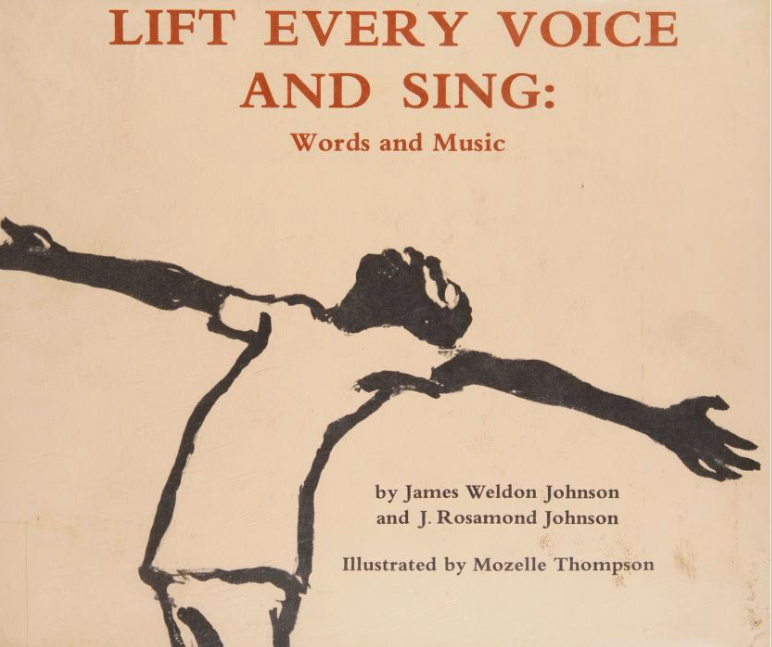
What should be free

By Livia Meneghin

            
Archived recordings of Ainu, Aleut, Lushootseed, Quechua, Boon, Saami, Somray,
Warluwarra, and other critically endangered languages.
All traditional items stolen for foreign museums.
Water.
Parking at a hospital.
(Parking at) the university you attend.
To knock on your neighbor’s door asking for sugar or to borrow a drill or if they can
water your plants while you visit family out of state. And to offer freshly made raisin bread or
help stringing outdoor Christmas lights or first dibs on an outgrown crib before donating it.
Submitting to literary magazines.
Cheese, when you’re depressed.
You, from depressive thoughts.
You, to feel down at times because sadness is necessary.
Children under rubble. Children from famine.
Water.
Leg hair. Also, the choice to shave if your body feels better that way.
Women who want to be slutty.
Women who must take care of their parents and their children at the same time.
Anyone making below a livable wage.
Ants: including the over 12,000 named species, as well as the unnamed species, who
matter equally.
Bakery items at the end of the day from being thrown out.
Glaciers from stampedes of tourists warming their surfaces.
Cows and chickens and pigs from slaughter.
Sinuses from infections.
Water.
Salmon runs.
Wild grasses.


Livia Meneghin (she/her) is the Sundress Publications Reads Editor and author of chapbook, Honey in My Hair. She’s earned recognition and awards from the Academy of American Poets, the Writers’ Room of Boston, Breakwater Review‘s Peseroff Prize, the Room Poetry Contest. Her writing has found homes in Gasher, So to Speak, Thrush, Whale Road Review, and elsewhere.After earning her MFA in Boston, she now teaches writing and literature at the collegiate level. She is a cancer survivor.

Public Domain photograph by Alan Levine.


A note from Writers Resist

Thank you for reading! If you appreciate creative resistance and would like to support it, you can make a small, medium or large donation to Writers Resist from our Give a Sawbuck page.
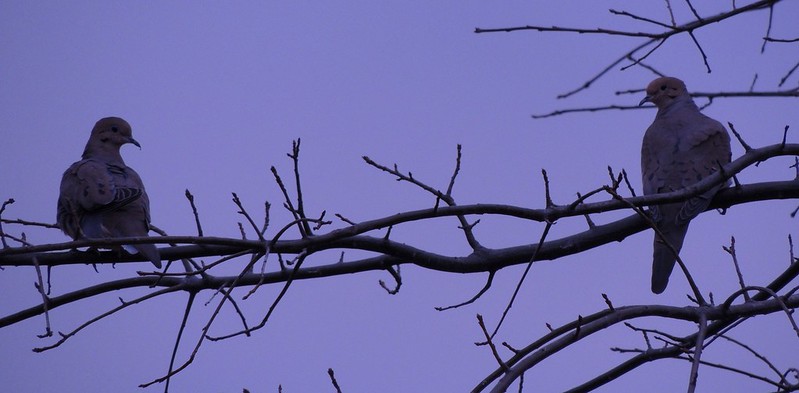
Welcome to Writers Resist the Fall 2024 Issue

The collage by Kristin Fouquet is an apt introduction to this issue, launched in the final throes of the chaotic, often hateful presidential campaigning. How wonderful it would be if the joyful prospect of electing the first woman president of the United States could be just that.

Perhaps we can make it so by encouraging all our sisters and other beloveds to use our hard-won right to vote. As Kristin’s artwork warns us, “Suffrage or Suffer.”

But first, a very fond farewell to one of our founding editors, Sara Marchant, who has a few words to share:

In the last days of the late 1900s, I woke up underneath a beanbag chair on the bamboo floor of a thrashed house not my own, missing a shoe, cake-frosting in my hair, and with full awareness that hijinks had ensued. My first thought was: That was an excellent party.

Today, while reading this issue of Writers Resist, please picture me in my pajamas, bedhead resplendent, toasting you, dear readers, contributors and editors, with my second cup of coffee.

Writers Resist was born from worried dread about our future and righteous anger over our present reality, and there is still much work to be done, but I know I leave her in capable hands . . . and it has been an excellent party.

Now, this issue has a notable dose of dystopias, but—or because of that—you should find some kindred souls in the works of our contributing writers and artists—and if you’d like to join them for our virtual Writers Resist Reads, on Saturday 16 November at 5:00 p.m. PACIFIC, please request the Zoom link via WritersResist@gmail.com.

D. Arifah, “Watching Over the Horizon

Linda Bamber, “Endless War

Robyn Bashaw, “Beware the Homo Sapiens

Cheryl Caesar, “Grass

Chiara Di Lello, “Abecedarian for Billionaires

Matthew Donovan, “I Believe Her

Kristin Fouquet, “Suffrage or Suffer

Ellen Girardeau Kempler, “Poem in Response to Mass Shooting Number 130 in the United States 2023

Michael Henson, “The Dream Children of Addison Mitchell McConnell III

Jacqueline Jules, “How I Feel About the 2024 Election

Craig Kirchner, “The Coming

Christian Hanz Lozada, “When I hear ‘migration,’ I think of ships

Rasmenia Massoud, “Who We Are, More or Less

Ryan Owen, “Breathe

Kate Rogers, “Sisters

Elizabeth Shack, “tree : forest :: ad : internet

Angela Townsend, “French Kissed

Rachel Turney, “Respect

Diane Vogel Ferri, “Election Day

How I Feel About the 2024 Election

By Jacqueline Jules

Woke this morning
with self-immolation on my mind,
not planning it, just incredulous
that anyone setting themselves on fire
would expect others to pay attention
in this world of “alternative facts”
where the size of an inauguration
can be disputed by the White House
along with whether or not men
scaling the walls of Congress
can be considered an insurrection.

It feels like everyone is burning
a flag these days, metaphorically
at least. If you’re wondering,
it’s not a constitutional crime,
and displaying the stars and stripes
on your underwear is okay, too.
Just check Amazon.

What will convince the voters
in Iowa that wildfires in California
threaten their climate, too,
before the smoke rises so high
it chokes us all?


Jacqueline Jules is the author of Manna in the Morning (Kelsay Books, 2021), Itzhak Perlman’s Broken String, winner of the 2016 Helen Kay Chapbook Prize from Evening Street Press, and Smoke at the Pentagon: Poems to Remember (Bushel & Peck, 2023). Her poetry has appeared in more than 100 publications. Visit her website at www.jacquelinejules.com.

Photo by Malachi Brooks on Unsplash.


A note from Writers Resist
Thank you for reading! If you appreciate creative resistance and would like to support it, you can make a small, medium or large donation to Writers Resist from our Give a Sawbuck page.
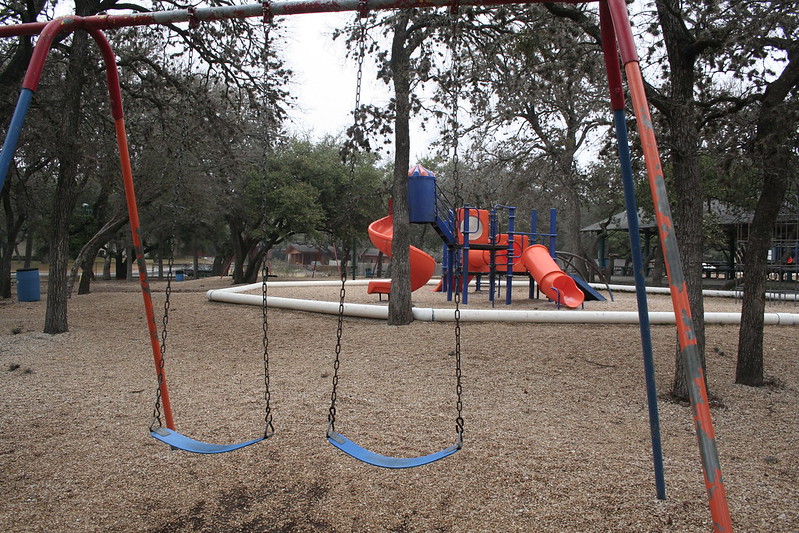
Abecedarian for Billionaires

By Chiara Di Lello

Amazing year for rich people says the headline announcing
billionaires like the latest bumper
crop. Congratulations to the proud capital
daddies drooling over their offspring, as liable to
eat their own in next year’s acquisitions as to
feed their cornflower blue-collared shaven throats.
Go on, clap for them while we dance like bears for
healthcare and an hourly fifteen.
I’m sure TSwift needs it more, and trickle down is
just a matter of time. If only we
knew how to trade stocks
like U.S. senators, beating the
market at every turn, a Congress of
net worths five times the median
of us average Joes
poor saps.
Question: Was it also a good year for
RSV? Pinkeye?
Strep? Malaria? Aren’t they also
tumors on society?
Unlikely. As we know,
viruses only breed themselves, til every other organism is
wiped out of their niche. How many of us will they
X out, come next year? Who knows. Maybe
zillions.


Chiara Di Lello is a writer and educator who loves coffee, art, and bees, and unequivocally supports the movement for Palestinian liberation. Her poems have appeared in Ninth Letter, Okay Donkey, Stanchion Zine, and more. Her works have been nominated for the Pushcart Prize and Best of the Net. Visit her website at necessarymess.wordpress.com and follow her on social media: X @thetinydynamo, Instagram @whereskiwi, and Bluesky @chiaradilello.bsky.social.

Photo credit: Richie Diesterheft via a Creative Commons license.


A note from Writers Resist
Thank you for reading! If you appreciate creative resistance and would like to support it, you can make a small, medium or large donation to Writers Resist from our Give a Sawbuck page.
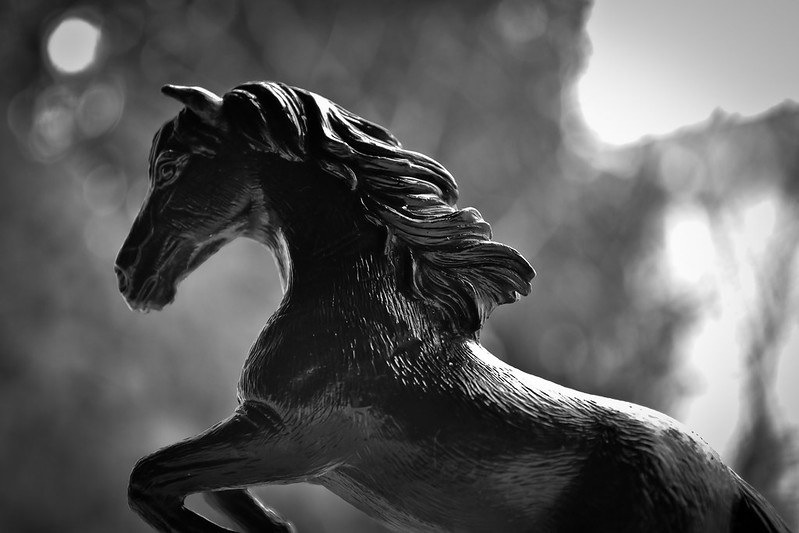
Grass

By Cheryl Caesar

“I don’t know—I don’t care. Somehow you will fail
Something will defeat you. Life will defeat you.’’
– Winston Smith, 1984

“I am the grass.
Let me work.”
– Carl Sandburg

And there he sits,
or tilts like an officious grasshopper
over the wooden podium.

Face sprayed orange to fake the sun.
Hair shellacked to cheat the wind.

Railing against Marxists and the Green New Deal.
And all the while his mutinous lungs,
refusing to hoard their molecular billions,

are taking in oxygen according to their needs,
and returning carbon dioxide to the best
of their ability, to every blade of grass:
golf course and garbage heap, indifferently.


Cheryl Caesar is a writer, teacher of writing, and a visual artist living in Lansing. She is an associate professor at Michigan State University, and does research and advocacy for culturally-responsive pedagogy. Her chapbook of protest poetry Flatman (Thurston Howl Publications) is available from Amazon. Her collage memoir Snakes and Stones is nearing completion and is looking for a publisher. Cheryl serves as president of the Michigan College English Association and secretary of the Lansing Poetry Club.

Photo by Bradley Feller on Unsplash.


A note from Writers Resist
Thank you for reading! If you appreciate creative resistance and would like to support it, you can make a small, medium or large donation to Writers Resist from our Give a Sawbuck page.
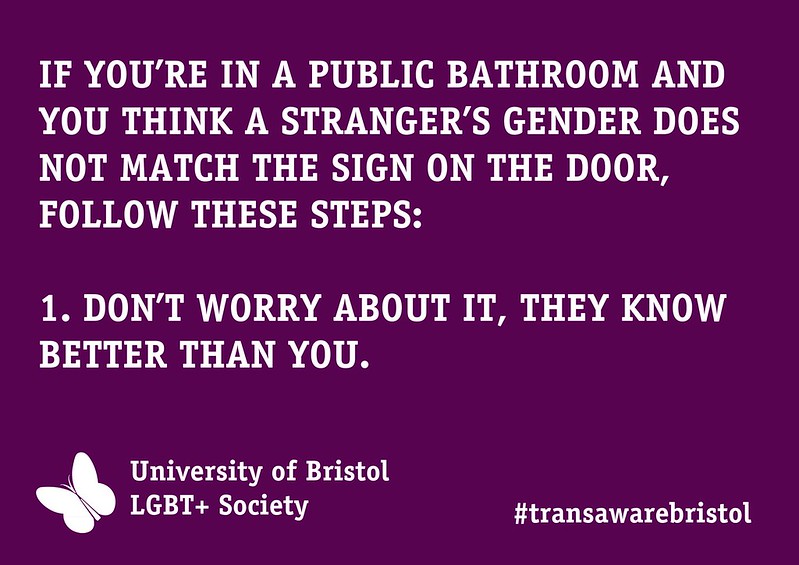
Who We Are, More or Less

By Rasmenia Massoud

There’s no telling how long his 15 minutes are gonna last.

His raincloud-gray eyes stare out from thumbnails and video clips in news feeds. They’re surrounded by white impact font, memeified versions of him coming in from the left and the right. There he is. The conservative news hero du jour. The vigilante. The patriot. The murderer. Eddie.

Fucking Eddie. His back ramrod straight, his nods stiff and rigid as though that shiny blue necktie is the only thing keeping his bald head attached to his thick neck. The chyron at the bottom of the screen below his grin says he’s Edward now. All grown up. All business. All American flag pin stabbed into his lapel.

Anyone who knows how to look can see the skinny kid with a mullet and weak attempt at a moustache cowering beneath the surface. Anyone who grew up in our little Idaho town that no one else ever heard of. Anyone who was drinking Mickey’s Big Mouth around a bonfire at the reservoir when our soundtrack flipped from Mötley Crüe to Alice in Chains.

Another moment that didn’t seem relevant until it was gone.

The news personality leans in to show sympathy for Edward’s harrowing ordeal. Not a hair out of place in her crispy platinum mane. The defender of his neighborhood, Edward talks about his pride in the Minneapolis suburb where he grew up. Except he didn’t. Well, Eddie didn’t anyway. There are brief flashes where he seems like a different person, but as I lean on the table to close the distance between my eyes and laptop screen, I see that there’s just more of him now. The added flesh around the neck and eyes, the meaty arms and torso. Life and time have added layers, pushing that kid I once knew farther down.

I rub the thick scar tissue on my chest, a habit I developed after the double mastectomy. A transparent reflection of my face is a ghost hovering over Edward’s on the laptop screen. My hair is cropped short, the warm blonde morphed to shimmering strands of silver. Edward’s been piling on protective layers, becoming more visible. Stacking them up until he fills a TV screen. Me, I’m shedding them, cutting things away, fading to colorless invisibility. Distilling down to the essence of a person.

The blonde woman behind the desk blinks her heavily painted eyes. False lashes fluttering and pencilled brows furrowing to show the audience how serious, how life-and-death Edward’s experience was. Edward recounts the series of events. He talks about his neighborhood, his family, his unwavering belief that America is still the best country in the world, despite how bad things have gotten.

What he doesn’t say is the name Marcelo Chavez. Neither Edward nor the sculpted on-air personality mention that Marcelo was only 15 years old. It never comes up, how the kid was walking home from a babysitting gig when he dropped his phone on the sidewalk, at the foot of a driveway. Edward’s driveway, where he parked his precious SUV. What Edward tells the woman, and the rest of the viewing audience, is that the boy appeared to be messing around with his vehicle. Maybe vandalizing, slashing tires, siphoning gas, or worse. Who can tell these days? When Edward stepped out of his house, aiming toward the trespasser, Marcelo made the mistake of raising his hands while holding his phone and having skin a shade too dark for that particular corner of the city.

Edward at fifteen had been as awkward and gangly as Marcelo Chavez. At sixteen and seventeen, he started to grow into himself, taller and thicker, a brush of brown-blond hair beginning to appear above his upper lip. No matter how deep I plunge into the murky depths of my memory, I can’t recall when he’d begun sticking to the edges of our friend group. He was a few years younger than me, not someone I paid much attention to. But Eddie made his presence known. Younger and goofy, sure, but he had more confidence than he’d had a right to.

The skunky smell of weed mingled with the pine smoke. A crackling bonfire, popping wood, whooping, and chattering from all the shaggy-haired kids clad in denim and threadbare band shirts. Strawberry blonde down to my waist, c-cups beneath my Guns n’ Roses Use Your Illusion t-shirt, dancing and singing along with Tesla about signs, signs, everywhere the signs with my bottle of Mickey’s when that kid hovering in my periphery was right in front of me. Right in my face.

“Dude. No. I have a boyfriend,” I said. My boyfriend, what’s his name, who was old enough to drive and buy beer. Also, old enough to hang out at strip bars while I drank cheap malt liquor with the rest of my underage friends at the reservoir.

Eddie stepped closer until we were nose to nose, smirking. “Yeah?” He looked around. “Where is he?”

That confidence was five sizes too big for Eddie, but he wore it like a second skin and that was enough. That’s all it took. A few days later, we’re rolling around naked and sweaty in a bedroom that belonged to neither one of us. That’s when his protective armor left him, when I saw beneath and looked into the eyes of an insecure young man who desperately did not want to be seen.

“Were you a virgin?”

He glared at me. “Of course not. Why? Was it not okay?”

“It was fine.”

“No really. If it wasn’t okay, tell me. I can take it.”

I knew better. He couldn’t take it.

“It was fine. Really,” I said.

“Just fine?”

Now, on my laptop screen, that insecure kid is in there somewhere. Like a matryoshka doll, the years of doubt, decisions and bad habits all wrapped around and around until Eddie is concealed forever.

Somewhere behind me, Lupita tells our son to brush his teeth before bed. I inhale the smell of dish soap and eucalyptus as she sits at the table next to me, leans in and turns my face to hers. She kisses the tip of my nose. Her big dark eyes glistening like they always do, hair tucked up in her silk scarf so that I can see her entire face. The dimple on her left cheek, and the freckles dotting her nose. Somehow, she glows brighter more and more with every passing year.

Then my wife closes the laptop.

“You need to stop watching this.”

“I know. But I’m stuck on the fact that we came from the same time. The same place.”

“He’s not the person you used to know. You’re not the person he knew. People change. It happens to all of us. That time and place is gone.”

I want to tell her people don’t change. They evolve and erode. They become more or less of who they are. I don’t say any of this. Instead, I push my chair away from the table and take her hand. “C’mon,” I say. “Let’s go tuck him in.”

A daily, mundane thing, the bedtime ritual of telling our son goodnight. A tiny thing that might not seem relevant until it’s gone.


Rasmenia Massoud is the author of three short story collections and several stories published in places like The Sunlight Press, XRAY Lit, and Reflex Press. Her work has been nominated for The Best of the Net, and her novella Circuits End, published by Running Wild Press, was nominated for a Pushcart Prize in 2019. A second novella, Tied Within, was published by One More Hour Publishing in 2020. You can visit her at www.rasmenia.com.

Photo credit: Joe Wolf via a Creative Commons license.


A note from Writers Resist
Thank you for reading! If you appreciate creative resistance and would like to support it, you can make a small, medium or large donation to Writers Resist from our Give a Sawbuck page.
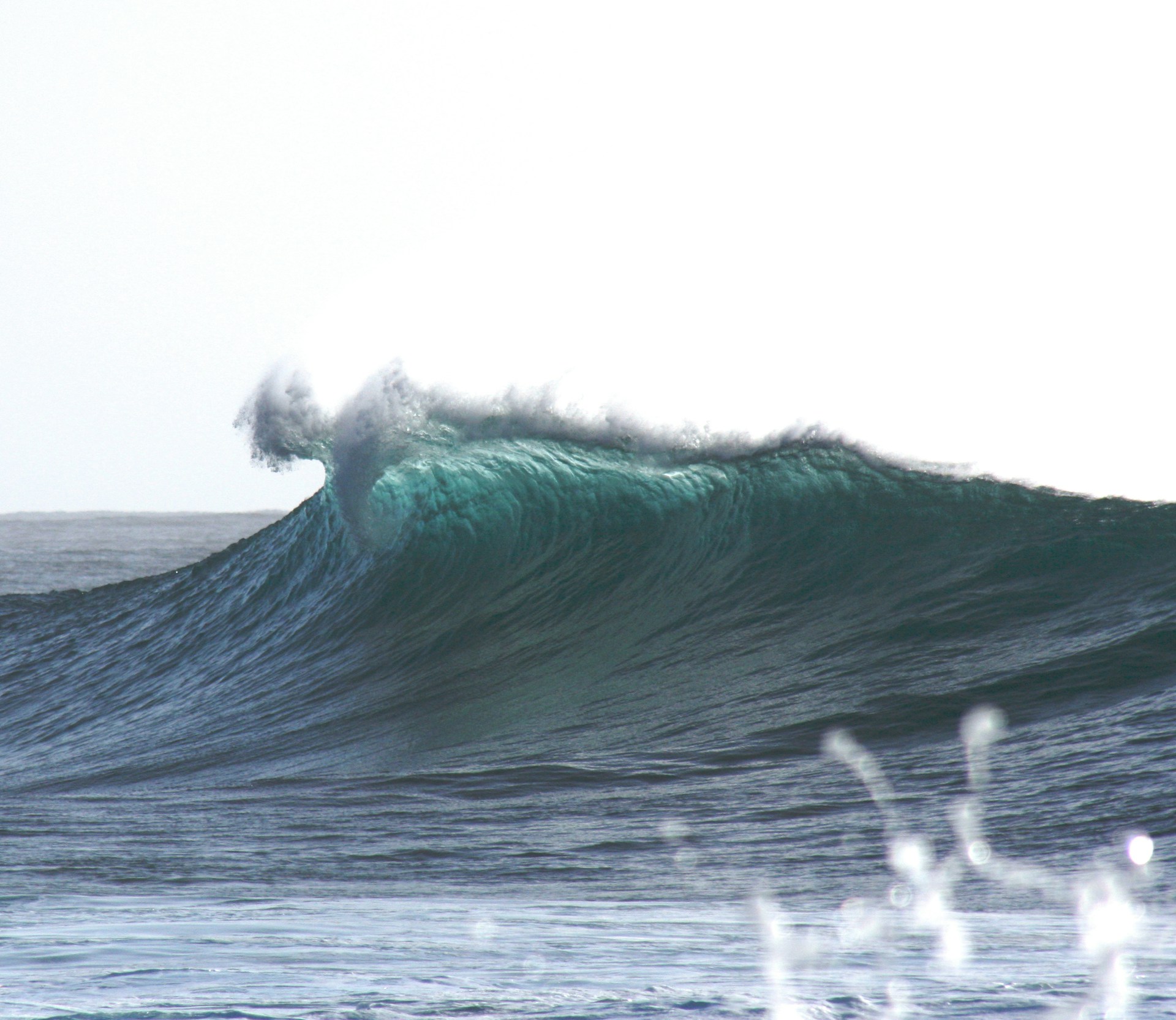
Watching Over the Horizon

By D. Arifah

D. Arifah is an aspiring photographer who is fascinated by the silent stories the world tells. Through her photography, she seeks to preserve these delicate narratives and share with others the depth of human experience and the quiet power of our interrelation with our environments. Much of her work is an invitation to pause, listen, and see the world around us a little more closely.


A note from Writers Resist
Thank you for reading! If you appreciate creative resistance and would like to support it, you can make a small, medium or large donation to Writers Resist from our Give a Sawbuck page.

tree : forest :: ad : internet

By Elizabeth Shack

This tiny house boasts sustainability:
energy-efficient electric appliances,
shaded southern windows for leafy sun,
a wood stove for cozy northern nights.

This tiny house is a Facebook ad,
a leaf in an AI-generated photo forest
where an algorithm squirrels seeds of my attention.

I’ve spent more time looking
for DIY backyard forests, urban orchards,
and how to help wild woods migrate north.
This tiny house algorithm ignores my searches.

Its data center used to be a forest.
The algorithm can only compute
trees as objects to build with or to burn.


Elizabeth Shack lives in Central Illinois with her spouse, cat, and an expanding collection of art supplies and gardening tools. Her poetry and fiction have appeared in Writers Resist, Daily Science Fiction, The MacGuffin, Drifting Sands, cattails, and other venues. She attended the Kenyon Review Writers Workshop in 2022 and 2023.

Image is from AI Image Generator under “Fair Use” for commentary.


A note from Writers Resist
Thank you for reading! If you appreciate creative resistance and would like to support it, you can make a small, medium or large donation to Writers Resist from our Give a Sawbuck page.

Election Day

By Diane Vogel Ferri

Election day is a carnival ride of hope
and despair, each taking their fluctuating

turns. In the back yard, birds and squirrels
continue coexisting, while we, the supposedly

more evolved, battle through every November
and false ad. The downy woodpecker hammers

away at the side of the house and I don’t care
because she’s committed to her life, she saves some

insects for others and thanks me with her beauty.
I cannot betray the consciousness I’ve worked so hard

for, so election day terror is like waking up in the dark
as a child and calling for help but making no sound.

All I have now is the sound of a pen making a circle
of black ink on a piece of paper and these words.


Diane Vogel Ferri’s full-length poetry book is Everything is Rising. Her latest novel is No Life But This: A Novel of Emily Warren Roebling. Her essays have been published in The Cleveland Plain Dealer, Scene Magazine, and Braided Way Journal among others. Her poems can be found in numerous journals. Her previous publications are Liquid Rubies (poetry), The Volume of Our Incongruity (poetry), and The Desire Path (novel). Diane’s forthcoming poetry book, The Slow Journey to Totality will be published in 2024. Her poem, For You, was nominated for a Pushcart Prize and a Best of the Net prize.

Photo credit: Ryan via a Creative Commons license.


A note from Writers Resist
Thank you for reading! If you appreciate creative resistance and would like to support it, you can make a small, medium or large donation to Writers Resist from our Give a Sawbuck page.
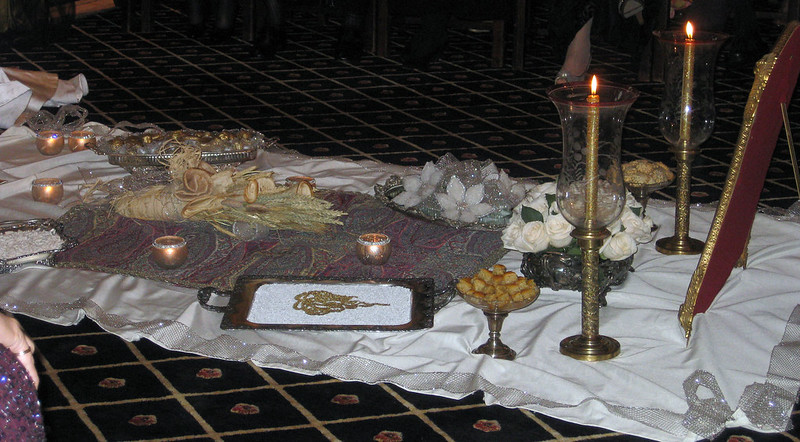
I Believe Her

By Matthew Donovan

I believe her because
her story gains her nothing.
Some of those she tells
say she’s seeking attention. 
They say she’s ruining
his reputation. 

I believe her because
it happens each day.
And because it’s in me 
to do what she says 
was done.

I believe her because she,
not I—lived it. Those that
cling to power deny it, or
say it’s forgivable
boys’ behavior.

I believe her because
we have it easy—crossing
alleyways and parking
garages; traveling alone
to the restroom. We cover
one another’s lies, even
as doing so ruins lives. 

I believe her because
the wolves inside me
are only sleeping. 


Matthew Donovan (he/him) is a retired, professional firefighter currently working for a local government. He was born and raised in the Bronx, and now lives in Connecticut with his wife Stephanie and their daughters. His poetry has been published in Permafrost, BarBar, Southern Quill, The Seraphic Review, and others.

Photo by Lucy Maude Ellis via a Creative Commons license.


A note from Writers Resist
Thank you for reading! If you appreciate creative resistance and would like to support it, you can make a small, medium or large donation to Writers Resist from our Give a Sawbuck page.