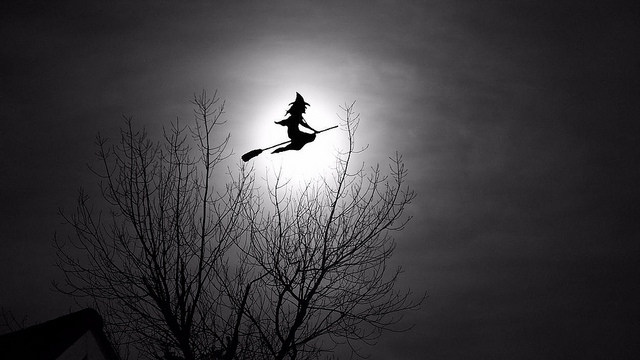
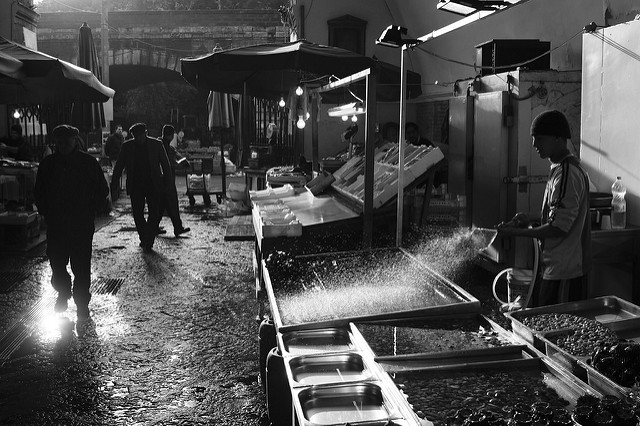
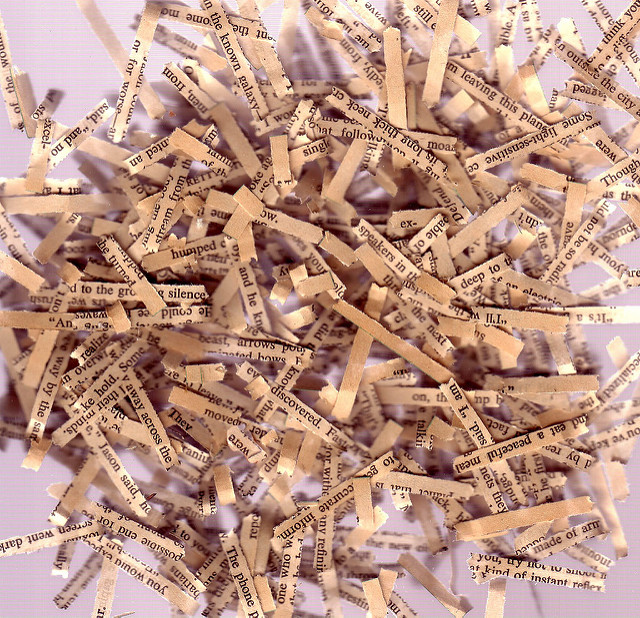
Clarion Reminder

By Laura Grace Weldon

The powerful provoke the powerless
to push against one another.
Their power grows by keeping us
in all kinds of prisons.

Yet we are not powerless.

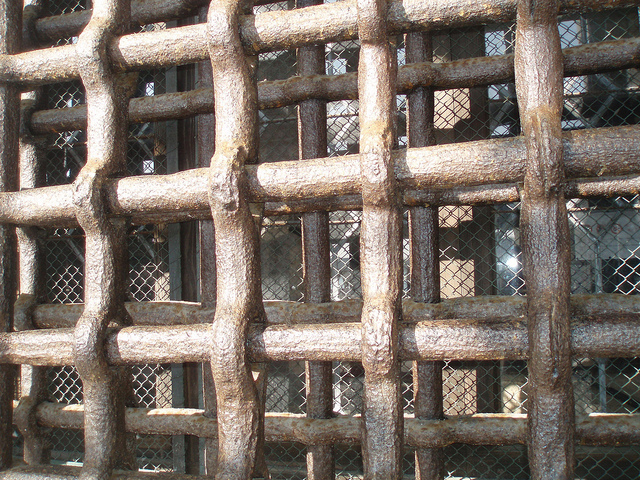
Remember the black bear
roaming Clarion County, Pennsylvania,
its head trapped a month or more
in a metal-ringed pail.

Remember those who chased it for hours,
grabbed it in a perilous embrace,
carefully sawed loose those tight bonds.
Imagine what they felt as the bear
ran free into the woods.
Imagine, too, the bear.


Laura Grace Weldon is the author of a poetry collection, Tending, and a handbook of alternative education, Free Range Learning. She has a collection of essays due out soon. Laura has written poetry with nursing home residents, used poetry to teach conflict resolution, and painted poems on beehives, although her work appears in more conventional places, such as J Journal, Penman Review, Literary Mama, Christian Science Monitor, Mom Egg Review, Dressing Room Poetry Journal, Shot Glass Journal, and others. Connect with her on FacebookTwitter or at her site, lauragraceweldon.com.

Photo credit: Tiffany Terry via a Creative Commons license.

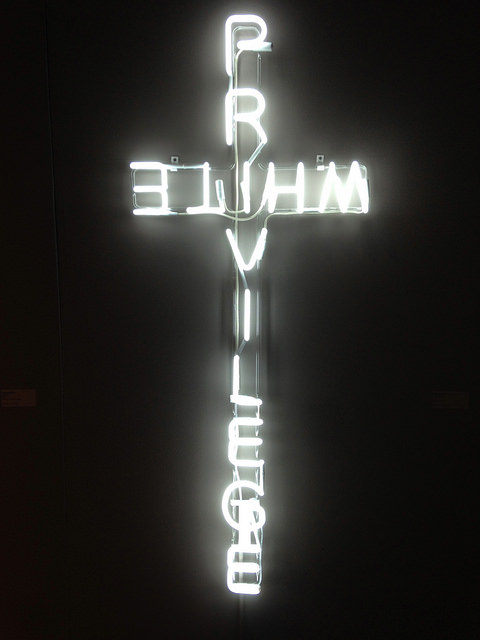
White Privilege

By Keith Welch


the U.S. Caucasian has
a marvelous power

invisible, noticed
only by its absence

subtle in action:

the lack of a shadow
following you through a 7-11

or utterly, terribly clear:

the lack of 19 bullet holes
piercing your body

on the news, you may notice
your senior photo
instead of a mug shot

in the city, the absence
of a cop’s hand
in your pockets

in your car, a warning
instead of dying
in a jail cell

there are those who will deny
the power’s very existence

it shouts its presence
to those outside its shield


Keith Welch lives in Bloomington, Indiana. He has had work published in Louisville’s Leo magazine, and online at Spilling Cocoa Over Martin Amis. Follow him on Twitter: @outraged_poet.

Photo credit: Image of Ti-Rock Moore‘s sculpture “Just Sayin” by Bart Everson via a Creative Commons license.

Hail and Farewell to Editors of Poetry

Writers Resist is delighted to welcome our new poetry editor, Ruth Nolan, MFA, University of California Riverside. Already a contributing writer, Ruth brings to the journal a deep understanding of the power of the written word.

Ruth said of poetry’s role in the resistance, “Poetry is at heart a political entity, one that is both personal and public. Poetry is the most specific and enduring heart-soul language. It crosses and connects cultures seamlessly, and compels us to not only look at—and oppose—what’s around us in difficult and oppressive times, but to act in the name of truth and justice to evoke living models for the continued sustainability of humanity.”

While we welcome Ruth, we’re sad to say farewell to Rae Rose, our founding poetry editor, but she is moving on to fabulous things. She’s now the editor of Kids! San Diego Poetry Annual, a new publication and poetry program from the San Diego Entertainment + Arts Guild. Rae is excited to pass the poetic torch to Ruth, whom she describes as “Amazing!” and for good reason.

Ruth is a professor of English and Creative Writing at College of the Desert in Palm Desert, California, and an author, lecturer and editor. She worked with the international, United Nations-sponsored literary program “Dialogue Through Poetry / Rattapallax Press,” from 2001 through 2004, and is now involved with many desert environment organizations as a writer and advocate for environmental justice. She’s the author of the poetry book Ruby Mountain (Finishing Line Press 2016). Her short story, “Palimpsest,” published in LA Fiction: Southland Writing by Southland Writers (Red Hen Press 2016), received an Honorable Mention in Sequestrum Magazine’s 2016 Editor’s Reprint contest and was also nominated for a 2016 PEN Robert J. Dau Short Story Prize for Emerging Writers. Ruth’s writing has also been published in James Franco Review; Angels Flight LA/Literary West; Rattling WallKCET/Artbound Los Angeles; Lumen; Desert Oracle; Women’s Studies Quarterly; News from Native California; Sierra Club Desert Report, Lumen; The Desert Sun/USA Today and Inlandia Literary Journeys. Connect with Ruth via Twitter @ruthnolan.

Best of all, Ruth comes bearing gifts—a poem for our readers. …

Dream Act

By Ruth Nolan

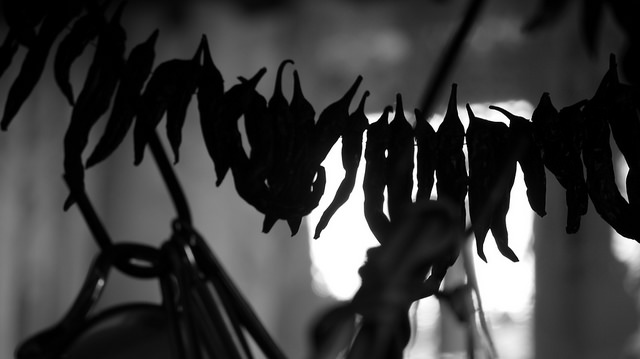
She rinses burnt skin away from green chilis,
her hands stinging from the burn of spicy seeds,
her hands singed from working in the desert sun
so close to where children cry for their parents.

She strips skin from hearts, muscle from stem,
and looks to the sky. Storm clouds, rising high
over Mexico. She slips families of chilis into
ziplock bags, packs them tight as contraband.

Tonight, mute dreams will ache skyward like
towering date palms, fruit sacs tightly bound.
Tonight, fat clouds the shape of sperm whales
will swim across the line with promises of rain.


Photo credit: “Strange Heat” by Georgie Dee via a Creative Commons license.

Oral History of the New Colossus

By Lea Grover

I come from a people of wandering,
of desert paths swept clean of footprints by thousand year gusts of wind,
of vanishing,
of villages abandoned as not only my great-grandmothers but I
carried what mattered across oceans and borders
and the ticking of latitude and longitude beneath tired feet,
soles hardened by lifetimes searching for security in silences.
Safety made only by pillars of hands reaching to pull each other up,
reaching for those left behind.
A Babel towering over each town
teetering, fear and suspicion pulling apart,
toppling,
leaving my people to wander,
wondering if our hands faltered
and what we might have lost.

I come from a people of wandering.
my ancestors’ feet carried traces of soil to Israel from Shushan by way of Palestine,
fleeing Portuguese diaspora and Gestapo,
to know always they tracked the same soil,
black against brown skin faded pale
from Persia to Prussia to Poland and Russia
to Bergen-Belsen
to oblivion.
I come from a people of otherness,
of isolation and exile and inquisition,
a people who carried, clutched to their chests,
hope and compassion,
the need to give, and to find, and to share.
I come from a line of translators and teachers,
scientists and novelists
physicists and activists,
magicians, philosophers, insurance sellers,
holy men and fortunetellers,
and they melded into my bones and my muscles the memories
of the things they carried and the eternal instructions—
“Never forget.”
They carried this call to a land built by slaves,
who picked cotton instead of building pyramids or Volkswagons,
awareness of what is lost when a people are torn from home and tongue,
Kunta Kinte refusing renaming reminded us of
identity replaced by tattoo.

I come from a people of kippot and mitpachat,
forbidden to own land or hold office
but permitted to touch money believed only slightly less filthy than they.
A people who took lemons grown from oppression and made bitter lemonade,
who thrived despite obstruction and accusation and assault.
Kippot and mitpachat could have been kefiyah and hijab,
words that are foreign
for clothing that is foreign
for people who are foreign
with religions that are foreign
when foreign means feared.
Banking could have been
picking tomatoes for pennies a pint,
speaking languages that are foreign
in customs that are foreign
with faces that are foreign
when foreign means abhorred
and hatred is directed toward any people who once explored after exile
and came in hordes to a beacon of welcome proclaiming,
“Give me your tired and your poor,”
any people of wandering.

I come from a people of wandering,
but I look into the shadows of their past and I see what I have,
a history,
my own Tower of Babel built of spaces between silences,
of the hands of immigrants and outsiders.
I see the path behind of violence and vengeance
condemning my descendants to the same fate of remembrance.
When I press into my daughters’ bones and muscles the memories of their mother’s people,
when I scar them with the words, “Never again,”
I speak not only for my grandmothers and their grandmothers and their grandmothers
but I,
for all our children,
with the same dirt on the soles of their feet
of deserts crossed and mountains scaled.
Skin brown or black or pale,
tempest tossed, torn and assailed,
souls yearning to breathe free,
however foreign or familiar,
still mishpachah,
still family.
Still we reach in the security of silence to pull each other up,
reaching for those left behind.
If only to lose no more.
Beside any golden door we must lift our lamps,
we wanderers of generations,
to mourn together in our teetering, tottering towers.
Drink the bitter lemonade of our ancestors.
We carried only what mattered,
the same dirt on our feet,
wandering the same path back and back and back again,
wondering if this time it has led us home.


Lea Grover is a writer and speaker in Chicago. She began studying prose when she was admitted to college at fourteen years of age, five years after her first poetry publication. Her writing can be found in many anthologies, and she contributes to Cosmopolitan, Marie Claire, and Bustle, among other magazines online and in print. Lea speaks about sex positivity parenting and on behalf of the RAINN Speakers Bureau. Her current projects include a memoir about the similarities between battling brain cancer and mental illness, and a series of children’s books.

Photo credit: Surian Soosay via a Creative Commons license.

The Which In Waiting

By R.W.W. Greene


Joanne’s television remote hit the wall hard, spawning batteries and bits of plastic that chose their own paths to the floor. She flicked the switch on the power strip that governed the media center and picked up the tarnished hourglass she’d readied before tuning into the ceremony.

Four years would likely be enough, but eight years would be safer. She fit the timepiece into the mechanical hourglass turner she’d ginned up from a junked dryer and set the counter to 70,080. The machine wub-wubbed competently, turning the hourglass end over end over end widdershins. The counter changed to 70,079, then 70,078, then 70,077. … The rig wasn’t pretty, but it beat turning the hourglass by hand.

Joanne stifled a yawn. She had time to kill before the spell gelled, and she used it to clean out her refrigerator and haul everything to the compost heap. The rose and blackberry bushes she’d planted around the house were growing fast. Thorns bristled every which way, and the stems were already thicker than a baby’s wrist.

Joanne locked her front gate and went back inside to send an email to her accountant.

“Democracy disappoints again, pal. Dropping out for a while,” she wrote. “Keep the bills paid, will you? – Jo.”

She didn’t wait for a response. Tasha Islam had been her accountant for more than a century, and she trusted her. She’d helped set Tasha up in business, after all, and was still her best source for exotic referrals.

Joanne unplugged all of her appliances and took a shower. She brushed her teeth and gargled with Listerine. She browsed Pinterest while waiting for the readout to blink zero, then moved the hourglass to her bedside table. The sand inside glowed like embers. Outside, the bushes finished their expansion, surrounding Joanne’s home with a dense wall of brambles and thorns. If that proved inadequate, she also had one of the local dragons on retainer. Joanne rolled a sleeping bag out on the bed and zipped herself inside. The spell took hold, and her pulse slowed. Her eyelids fluttered. Her heart stopped. Her last breath dissipated in the air above her bed, and the dust motes resumed their course.

Time passed.

In Cambridge, a scientist announced a cure for cancer and was murdered in his sleep, his research stolen. A passing meteor resulted in a near panic and the formation of three new doomsday cults. A calf was born with two heads, inspiring yet another doomsday cult. Prince’s estate released a new album, “1999 Had Nuthin’ on This Party.” David Bowie’s estate launched his entire catalog—including three never before heard albums—into deep space in search of extraterrestrial musicologists. The polar ice caps melted some more, but no one bothered to measure them. Russia laid claim to East Germany. NASA cancelled the Mars mission: “Too little, too late,” a spokeswoman said. A super storm flooded most of the East Coast. The “Fantastic Four” franchise got a fourth failed relaunch. A Cuban upstart claimed to be Fidel Castro in a cloned body and called for a new revolution.

The sand inside the hourglass faded to darkness. Joanne’s face screwed up, and she sneezed out eight years’ worth of drifting dust motes. Thanks to the Listerine, her mouth tasted fresh, but her body went all pins and needles as it slowly came back to life. When her ability to move returned, she scrubbed at her face with her hands and sat up in bed. Winter light dodged through the bramble wall and trickled through the filthy windows.

When her bedside light failed to switch on, Joanne crooked her fingers to summon a fire imp. The imp darted around the room joyfully, but Joanne halted it with a glare. It settled in the air near the ceiling, flickering sullenly. Joanne got out of bed and tottered on stiff legs to the wall switch. She flicked it up and down several times. Nothing. The imp bobbed, laughing at her. Joanne scowled. Ice on the lines, probably. A storm.

Joanne sent the imp into the fireplace. The dry wood lit with a whoosh, and Joanne fell into the chair beside it to warm her feet. She directed the imp into a lantern on the mantlepiece where it sipped oil and expanded to fill the small bedroom with a warm glow.

Joanne picked the dust boogers out of her nose and threw them on the fire. She’d warm up, eat something, and go back to bed until morning. Prepping the pause was easy enough, but stasis played hell with biological processes. She’d be constipated for a week or better. She rubbed her hands together and pushed them close to the fire. She pulled its warmth into her, using the energy to rejuvenate her groggy cells. She slipped out of the chair and ran through some simple yoga positions before heading into the kitchen for an MRE and a pitcher of water.

In the morning, the electricity was still out so Joanne dressed, grabbed her laptop bag, and went out the front door in hopes of finding an outlet. The brambles creaked away from the door at her touch.

“Hell’s bells!” she said. Her garage was gone, as was the car she’d parked inside it.

She turned to fetch her broom but stalled out when she spotted the ragged tents. There were three of them stomped into the snow in her front yard.

“Are you the witch?” said a young woman in a red winter cap, crawling out of her ratty shelter. She squinted at Joanne. “You don’t look like a witch.”

“I’m no one,” Joanne said. “What are you doing here?”

The woman in the red cap looked back at the other women emerging from their tents. “I’m pregnant. They say sleeping here for three days and nights will take away the baby.”

The other women nodded.

“That’s not true,” Joanne said.

“I know a girl wot done it!” said a teenager wearing a hunter-orange snowsuit and a scally cap. “Demon come in the night and took it clean away!”

Joanne sighed. The woman in the red hat was shivering. “Come inside where it’s warm at least.” She held the door open. “Stomp your feet clean.”

Joanne instructed the women from the tents to pile their coats and boots in the hallway and gather in the living room. She summoned another imp for the teapot and set the water to boil. “How far are you along?”

“Six weeks,” said Amanda, the woman formerly wearing a red hat.

“Seven fortnights,” the teenaged girl said.

“Two months,” the third woman said.

“What are your doctors telling you?”

The women looked at each other.

“I ain’t seen one, guvnor. Reckon how no one has!”

Amanda shook her head. “Seeing a doctor is a sure route to the breeding camps.”

Joanne nearly choked on her tea. “Breeding camps?”

“Aye,” the teenager said. “They keep you in chains so no ’arm will come to the baby, miss.”

“It’s not that bad,” Amanda said. “But they do lock you up and watch you for the duration. No smoking. No drinking. No processed food. If you’re married, you get to come back home with it. If not—.” She shook her head.

“If not what?” Joanne said.

“They take the babe away!” the teenager said. “Send ya home empty!”

“Is this some kind of a joke?” Joanne said. “Did Sonja put you up to this?”

“Sonja, miss?”

Joanne pointed at the teenager, who was warming her scuzzy feet in front of the fire. “Why does she talk like that?”

Downton Abby,” the third woman said. She was the oldest of the pregnant tenters, maybe twenty-five. “It’s all she’s been allowed to watch.”

“All I’ve known since I were a girl,” the teenager said. “Like family it is.”

“Enough!” Joanne closed her eyes. She extended her senses into the women’s bellies and verified the ages of the fetal tissue inside. “None of you want to be pregnant.”

The three women nodded.

“And Planned Parenthood doesn’t exist, either?”

“We don’t know what that is,” Amanda said.

“You’re all sure about this?”

The women looked at each other for support and nodded.

Joanne concentrated for a moment, whispered a spell, and turned off the fetal-tissues’ ability to replicate and grow. It was a simple variation of the spell she used for curing warts and shrinking tumors. “There. None of you are pregnant anymore. No backsies. Your bodies will reabsorb the tissue. There may be some spotting but—” Joanne dashed into her bedroom and pulled a box of condoms from her drawer. She handed them to Amanda. “Divide these among you. The expiration date has passed, but the stasis spell will have kept them all right.”

The teenager held a wrapped condom up to the light. “D’ya eat them?”

“Oh, hell!” Joanne held out her hand. “Give me one of those, and I’ll show you how to use it.”

“Oooh, blimey,” the teenager said after the demo, “I could never use one o’ them!”

The woman who was going by the name Amanda but whose aura clearly showed she was lying about it nodded. “It’s illegal. My sister had one once. Her husband slapped it right out of her hand.”

Joanne summoned another fire imp and took it to the kitchen where she pounded herbs and made up three baggies of loose tea. “This will keep you going for a couple of months. Drink a cup every morning. It’s not as effective, and it tastes terrible, but,” she shrugged, “it’s the best I can do. Come back when you need more.”

The women looked at the bags uncertainly.

“You know how to make tea?”

Amanda scoffed. “Of course we do. It’s just … we don’t have any money.”

Joanne opened her front door. “On the house. Once I get the garden going again we can plant enough for everyone.”

After the women had packed up their tents and gone home, Joanne headed out again in search of electricity and WiFi. Both were promised at a Dunkin Donuts she found near the highway.

“The sign’s not true,” the teenager behind the counter told Joanne as she walked in. “We’re not hiring.”

“I’m just here for coffee,” Joanne said. “Check my email.”

A pink man in a too-small polo shirt stepped out of the tiny backroom. He pulled the hem of his shirt over his gut. “Who’s here?” he said.

The counter girl snapped her gum. “I already told her we weren’t hiring.”

The man stopped behind the girl and put his hand on her shoulder. “I think you should let me decide that, Jennifer.” His smile faltered as he caught sight of Joanne. “I’m sorry.” He stammered. “We aren’t hiring.”

“Just coffee.” Joanne held up her laptop. “Maybe a couple of doughnuts and a place to sit for a few minutes. You have that, right?”

The pink man turned red. “Of course.” He stepped away from the counter girl. “Jenifer will take care of you.”

Joanne gave the blonde girl a friendly smile. ‘Small coffee. Black. And two of those chocolate frosteds.”

The girl put the doughnuts in the bag, slid the coffee across the counter, and drew her hand away from the $20 Joanne held out. She craned her neck to yell into the backroom. “Do we still take dollars?” she said.

The pink man leaned out of the door without leaving his chair. “What?”

“The old kind of money.”

“Sure.” He disappeared into the small room.

The blonde girl took the twenty and held it near the register. “How do I enter it?”

The pink man’s head appeared in the doorway again. “Convert it to Bitcoin and add four.”

The girl did some math. “That’s going to be $17.75.”

“For a coffee and two doughnuts?” Joanne said.

The girl popped her gum and shrugged.

Joanne took her food and change to a greasy table in the corner of the shop. The coffee was burned and, she soon realized, the doughnuts were stale. She was logging into the Modern Witch discussion board when two overfed cops walked in. Joanne glanced up in time to see the doughnut clerk point her out to them. The biggest one hitched up his belt and strolled over to tower beside her.

“Got a receipt for that computer?” he said.

“This?” She blinked. “It’s at least nine years old.”

“Where’d you get it?” The cop said. He tucked his thumbs in his belt, thick fingers trailing on the pepper spray looped there.

“Best Buy or something.”

The cop shrugged. “If you bought it there, you must have the papers.” He looked over his shoulders at the other cop. “They still give receipts out at Best Buy, Nick?”

The other cop nodded. “Last I checked.”

“I thought so,” the big cop said. “Stand up slow so we can get a good look at you.”

Joanne held her hands away from her body as she stood. She’d dealt with enough racist cops in the past to know what set them off. She held still while the big cop took her picture with his smart phone. “Give me a search,” he told the device. He watched the screen for a few seconds and grunted. “You aren’t even in the system, girly. Must be an Illegal. You just climb over the Wall or something?”

“I’ve lived in this country since before your parents were born,” Joanne said.

The cop laughed. “You hear that. Nick. She said—” The big man flopped bonelessly to the floor, followed quickly by his partner.

Joanne put the doughnut shop’s staff to sleep for good measure. She got back online, downloaded her messages, and filled a paper sack with stale doughnuts to feed her pixies. Her broom wasn’t comfortable for long distances, but it got her home in a couple of minutes. The teenaged girl was huddled on her doorstep.

“What are you doing here?” Joanna said.

The girl shrugged miserably. “Me dad threw me out, miss. Told him I’d lost the babe an’ he dragged me to the door.”

“I would think he’d be happy.”

The girl wiped her nose with her sleeve. “It were his best friend’s babe, miss. Gettin’ me up the tree like that were part of their marriage deal.”

Joanne’s jaw dropped. “Get inside. You are not going back to that house!”

She set the girl up in the spare bedroom.

Joanne returned to her spot in front of the living room fireplace and watched the pixies eat the doughnuts. They’d refilled the wood box while she’d been gone, and the fire roared merrily. Joanne opened her laptop and looked again at the email she’d downloaded. Tasha Islam, fled to Canada and working out of a brownstone in Montreal—she’d moved most of Joanne’s money to an offshore account. Sonja Gomez, her best friend in the witch community, deported without a hearing. Drones fighting World War III over what was left of the Middle East and Northern Africa. Martial law in Chicago, Philadelphia, and Detroit. Texas, starving in wake of its Referendum of Independence.

Joanne stared into the fire. Going back on pause would be the easiest thing for her, probably best for the girl, too. The 1920s were great and the 40s had shown a lot of potential, but Joanne had slept through the 30s and 50s without hesitation. It would be easy to do it again, turn the glass and skip the bad years in hopes of better.

The girl knocked shyly on the door and came in. “Do you have a TV, miss. Downton Abby is on in a few minutes and—”

“No TV, but there’s a full library in the next room.” She pointed.

The girl sighed. “I can’t read, miss. Guess I’ll just try to sleep.”

“Can’t read?”

The girl shook her head. “Never went to school. Me dad said it was for boys, no use for a girl like me.”

Joanne rubbed her forehead. “What’s your name?

“Zoey, miss.”

“Where does your father live, Zoey? Describe it to me carefully.”

Maybe this time, better years needed a little push. There were more witches out there, many of them likely on pause but many more just hidden away and riding it out. She would find them. Organize them. There were, no doubt, plenty of girls like Zoey, too. The witches could swell their ranks in a few years, sharing their arcane knowledge with a new generation of women.

Joanne listened to Zoey’s description of her father’s home and rehearsed her dragon-summoning spell.


R.W.W. Greene is a New Hampshire writer with an MFA that he exorcises/exercises regularly at local bars and coffee shops. He keeps bees, collects typewriters, and Tweets about it all @rwwgreene.

Photo credit: Tom Lee via a Creative Commons license.

 

On a Theme by Leonard Cohen

By Mark J. Mitchell


I’m guided by the beauty of our weapons.

            —”First We Take Manhattan”

I’m battered by the blindness of our weapons.
Boys stare at screens and tickle switches.

Death drops from the sky
onto archaic altars.

Isaac screams. Ishmael burns.
Rachel weeps for her children.

From the empty office, ritual words:
We sincerely regret collateral damage.


Mark J. Mitchell’s latest novel, The Magic War just appeared from Loose Leaves Publishing. He studied writing at UC Santa Cruz under Raymond Carver and George Hitchcock. His work has appeared in the several anthologies and hundreds of periodicals. Three of his chapbooks—Three Visitors, Lent, 1999 and Artifacts and Relics—and the novel, Knight Prisoner are available through Amazon and Barnes & Noble. He lives with his wife, the activist Joan Juster, and makes a living pointing out pretty things in San Francisco.

Photo credit: Doug Bowman via a Creative Commons license.

Judgment

By Dianne Olsen

Her name is the color of bright yellow sunflowers,
the scent of dusky sage.
Her intense black hair
absorbs the sun.
She stands close, her hand clutching mine,
Flora, my mother, my friend,
my accompaniment to life.
I am a bubble of laughter
from her lips
a note of joy tossed in the air one early morning.
I am a fish swimming
in her holy sea,
a bead on a string that has
no end.
She keeps one chamber in her heart
open just for me.

Today we stand on the Avenida de Colores,
across from the immigration courthouse.
We have walked a long way in the New Mexico sun.
We wait while our breathing settles.
Inside the court, a judge will decide whether we go or stay.
He will say what the law means,
but he cannot see
inside our hearts, our bones.
The judge has not heard our songs.

A thousand years ago,
mothers like mine knew this land.
The cactus flowers remember
our grandmothers.
The sand crystals
and the red rocks
keep our brothers’ secrets.

Our fathers spoke in a music that makes
our bones strong,
songs unknown on Highway 65.
Today we may be forbidden to
call this desert home.

In the courthouse,
the immigration judge will ask us
why we deserve to live here.

I hold tight to my mother’s hand.
She and I wear the sun-stained faces of
this desert.
Our songs, our names,
the dry gardens we created,
our brothers, fathers,
the very scent of the red stones:
These things we will tell him.
These things make this our home.


Dianne Olsen is a garden consultant and a freelance writer and poet living in the Berkshires of Massachusetts. She wrote “The Valley Gardener” column for the Poughkeepsie Journal for almost four years in the early 2000s. She recently retired from a 15-year career as environment and horticulture educator with Cornell Cooperative Extension in Putnam County, NY.

Photo credit: Scrubhiker via a Creative Commons license.

Land of the Free

By Sahar Fathi


You say
we are all equal
Give us your tired
your poor
your huddled freaking masses!
But not if
they are Muslim
brown
persecuted
by governments (we installed)
drug wars (we created)
I say
give them to me
I will pull the stars from the sky
to light their way
o’er the land of the free
and whisper to them
of the America we can be


Sahar Fathi is the Division Director for Leadership Development at the Department of Neighborhoods in the City of Seattle. Sahar graduated from the University of Washington Law School and is a member of the New York bar. She also earned a Masters in International Studies from the University of Washington, and graduated cum laude from the University of Southern California with a dual Bachelor of Arts in French and International Relations. Additionally, Sahar attended the Sorbonne Université in Paris, France from 2003-2004 and received a diploma in International and European Law from the Université Jean-Moulin in Lyon, France in 2008. Sahar has worked on immigrant and refugee issues for over 10 years, both internationally and nationally. She has served as adjunct faculty at both Seattle University and the University of Washington School of Law. Sahar has been published in the Seattle Journal for Social Justice, the Seattle Journal of Environmental Law, and the Gonzaga Law Review. Following President Trump’s Executive Orders banning travel from majority Muslim countries, Sahar volunteered at SeaTac airport to support impacted travelers. In her spare time, she enjoys exploring resistance through Iranian cooking. You can follow her on Instagram at @sfathis.

Photo credit: “America’s Most Famous Immigrant” by Manhhai via a Creative Commons license.

Uncle Sam Doesn’t Want You

By Tara Campbell


On June 29, to little fanfare, the State Department reinstated the approximately sixty Foreign Service job offers it had abruptly rescinded from Pickering and Rangel Fellows earlier in the month. The Pickering and Rangel programs seek to diversify the U.S. Foreign Service by providing undergraduate and graduate scholarships and Foreign Service jobs to women, minorities and low-income students.

For several of my seventeen years as a professional in international education and admissions, I had the pleasure of working with students and administrators of both of these programs. These fellows are some of the most sought-after applicants for an admissions officer, not only because they are intelligent and committed students, but because of the high level of academic and career support they receive from the fellowship programs before, during and after their degree programs. My admissions counterparts from other schools and I would compete for these students because we saw the good in diversifying both our universities and the Foreign Service.

State Department Secretary Rex Tillerson initially revoked the sixty positions offered to this year’s fellowship graduates based on the erroneous assumption that none of the Foreign Service positions had been guaranteed (the positions are in fact guaranteed—indeed, required—by the terms of the fellowship programs). The sixty job offers were reinstated after lobbying by the congressional and diplomatic communities.

Initially, I considered this a victory. But the more I think about it, the more troublesome this whole episode becomes. While the level of investment these students receive is considerable, it is a fraction of the total budget of the State Department. And yet, it was seen as low-hanging fruit in the current administration’s push to slash State’s budget.

I do not struggle to imagine why.

As I read the initial report of the offers being rescinded, I could almost hear the rumble of skeptical questions behind closed office doors.

“Why should they get special treatment?”

“Why shouldn’t they have to apply the same way as everyone else?”

“Why should we invest in these particular students more than others?”

I can easily imagine these questions because I heard similar grumblings about “reverse racism” in education when I was finishing high school in the late 1980s. A few of my fellow students were not pleased that some of the college scholarships I earned were for students of color, and they did not hesitate to share their opinions with me. No matter that I was graduating second in my class and scored in the 99th percentile in standardized testing; some white colleagues deemed certain investments in my education questionable because they were reserved for students of color.

How quickly we forget our history. But then, this essay isn’t about slavery, Jim Crow, redlining, racial gerrymandering, police brutality, inequity in prison sentencing, or any of those other historical means by which racial and socioeconomic elites have sought to retain their positions.

This is about Rex Tillerson’s counterproductive attempt to throw up a roadblock to the participants’ service after millions of dollars had already been invested in their education. If he or anyone on his staff had given the program an even cursory glance, they would have seen that the fellowships require students to accept employment as Foreign Service Officers after completing their education. Whether this program requirement was overlooked due to insufficient research, or it was intentionally disregarded, Secretary Tillerson’s attempt to renege on contractual obligations to these students is problematic. It is yet another example of how political victories are often sought on the backs of the most historically powerless members of society—women, minorities and the poor.

There could hardly be a more inauspicious message for a young person to hear at the beginning of their career representing the United States of America to the world: If you are a woman, a person of color, or poor, your country will only grudgingly keep its promises to you. Fortunately, these fellows had the benefit of other people with influence to agitate on their behalf. But what if they had had to scrape together the means to hire legal counsel? And what does this augur for the future of the program?

It is exactly because of situations like this that we are still not in a position to forget about slavery, Jim Crow, redlining, racial gerrymandering, police brutality, inequity in prison sentencing, or any of those other historical means by which racial and socioeconomic elites have sought to retain their positions. Indeed, because of the advances we have made, we must guard against the temptation to think that we no longer have to worry about structural inequity in society.

Under the guise of individual liberty through smaller government, the Tillersons of the world hold onto their positions of power by rolling back federally-supported opportunities for women, minorities and low-income citizens. Were it not for federal “interference” of passing and enforcing the 13th, 14th, 15th, 19th, 24th and 26th Amendments, political and economic power in this country would have remained solely in the hands of wealthy white men. The forms of exclusion are subtler today, but the urge of those in power to maintain power by halting progress remains the same.

So yes, the reinstatement of these sixty Foreign Service job offers is a victory, but not one we can rest on. Together we must defend the advances we’ve made and continue to fight for a more just, inclusive world. Some seek to preserve an America built by entrenched power on stolen land, to build a moat of wealth around their castles of privilege, and retain control over access to opportunity in this country. Without federal “interference,” their state government chambers, corner offices and boardrooms would be perennially white, perennially affluent, and perennially male. If anyone needs proof that we are not yet past this stage in history, look no further than the committee of thirteen wealthy white men chosen to hash out the ruinous Senate healthcare bill. The fact that this bill is now languishing at a 17% approval rate shows we as a country want a better, more humane society than any closed committee of elites can envision.

To the Tillersons of the world: you may try to keep us out of your castles of power, and tell us to build our own out of the scraps you leave behind. Let this case show that, while we build our own structures, you cannot keep the drawbridge closed forever. And as our realms of success overlap and blend with yours, we will continue to strive toward a future where your children and grandchildren see there is room for all of us here.


Tara Campbell is a Washington, DC-based writer, assistant fiction editor at Barrelhouse, and volunteer with children’s literacy organization 826DC. Prior to writing, she had a seventeen-year career in international education and admissions in Oregon, Austria and DC. Prior publication credits include Booth, SmokeLong Quarterly, McSweeney’s Internet Tendency, The Establishment, Barrelhouse, Masters Review, and Queen Mob’s Teahouse, among others. Her debut novel, TreeVolution, was released in November 2016, and her collection, Circe’s Bicycle, with be published in fall 2017. Visit her website at www.taracampbell.com.

Rex Tillerson caricature by DonkeyHotey via a Creative Commons license.

No rules to follow, no laws to break—we woke!

By Zigi Lowenberg


’scuse me
’scuse me, don’t know the rules here
but I butt in
across the room, I know
we were once from the same tribe
ancient threads pulling me towards you
float along the oceans that
fool the eye with their expanse

we are salt
we are sand
we are water

no rules to follow, no laws to break
for we have seen this before
raids and pogroms, a border a Wall
my refugee heart
treads across steppes bearing petrified trunks
rails clanging against Kindertransport of another kind,
cold-sweat defying dreams
throwing ICE on the rocks—

no rules to follow, no laws to break
for now we woke and won’t let go, we are the embrace
and to you, your generations I’m tethered
somos unidos
ale eyn mentshn

we are salt
we are sand
we are water,
we are one.


Zigi Lowenberg, performance poet and co-leader of the jazzpoetry ensemble UpSurge!, has appeared at music festivals, rallies, clubs, bookstores and universities from NYC to New Orleans to San Francisco. Zigi’s acting credits include The Lysistrata Project, the Stein-Toklas Project, and John Browns Truth. Zigi is a member of the National Writers Union and Radical Poets Collective. Her poetry has appeared in the poetry journal rabbit and rose. Her essay, “Support the Edge!” will be published in a book Creative Lives (spring 2017). Zigi and her husband, Raymond Nat Turner, are executive producers on UpSurge!’s two independent CD recordings, which have garnered critical acclaim. They live in Harlem and Oakland.

Also by Zigi Lowenberg: “Protest Poem in Two Acts.”

Photo credit: Lefteris Heretakis via a Creative Commons license.

A Roof Over Their Heads

By Brian Dunlap


                        I

Jorge has reached Mar Vista Park.
The bells attached to his
icebox on wheels announce
the popsicles and ice cream sandwiches,
enticing on a warm
Los Angeles summer day.

Older siblings and parents
chase children
whose giggles and squeals
permeate the jungle gym. Footprints
upon footprints imprinted in the sand.
Where Spanish mingles with
English and Mandarin. Sprinkled
with Arabic and Hindi.

Here, Jorge wanders, slight hunch
to his gate, silent. He only pauses
to state prices in broken English.
Smiles. Only talks to the parents
who speak his native tongue.
Who speak
Spanish.

                        II

Jorge sells ice cream for a simple
smile on a child’s face.
He does it to keep worry
and hunger from his sons’ eyes. For his sons
to stay children
a while longer.

As Jorge removes his Stetson
and wipes sweat from his brow
he thinks about tomorrow’s soccer match
between Mexico and Guatemala.
It’s at noon when children start to rush
and dollars finally accumulate in his palm.
But when a young boy runs up
with a soccer ball tucked beneath his arm,
Jorge sees his sons.
Sees them kick the ball
past the goalie’s
diving frame.

Standing beside his icebox
as his sons’ rec league game unfolds.

                        III

Tomorrow, if Jorge leaves early and departs
when the game ends
he can watch it with his sons
and still provide a place
where they can rest their eyes,
drift off
till light presents another morning.


Brian Dunlap is a native Angeleño who continues to live in Los Ángeles. He is passionate about capturing the L.A. stories that are hidden in plain sight. He holds an MFA in Creative Writing from Fresno State and a BA in Creative Writing from UC Riverside, both in fiction. His work has appeared in Angel City Review, CCM-Entropy, Muse, California Quarterly, Statement Magazine and Dryland. He runs the blog site www.losangelesliterature.wordpress.com, a resource to explore L.A.’s vast literary culture.

Photo credit: Matthew Rutledge via a Creative Commons license.
Market Value

By Yun Wei

Monday markets egg-dropped
in the summer camp race,
and somewhere a global circuit grid
slowed, blinked, shorted.
Where did the treasure go?
I know I could never read this map.

Now at my desk on a Monday night,
drinking from a sweating glass,
I think of summer camps, of gathering scrapes
and grass on knees, of my bike crumbling
on hills when I misplaced gravity,
of how as I grew longer,
the distances became dizzier,
the way the ground shrank from
the constant state of forward,
my body in straight lines
walking through a city without maps,
because falling means crumbling
means dismantling, look
how I’ve learned to mark
every step with vertigo.
No one tells you then
that there’s no such thing as going back.

Yes the Monday markets fell
into a Chinese puddle
of oil, of iron, of copper,
but the only markets I knew
were those of cabbage leaves
crushed under sole,
and sidewalk glue from fish guts
even after they rinsed the street
and closed the stands,
after the woman selling salt-boiled peanuts
shook her barefoot daughter awake
to walk home and I walk home
by my father’s hand:
the only map I knew to read.


Yun Wei received her MFA in Poetry from Brooklyn College and a Bachelor’s in International Relations from Georgetown University. Her writing awards include the Geneva Literary Prizes for Fiction and Poetry and the Himan Brown Poetry Fellowship. Her fiction and poetry have appeared in decomP Magazine, Roanoke Review, Apt Magazine, Word Riot, The Brooklyn Review and other journals. For the last few years, she had been working on global health in Switzerland, where she consistently failed at mountain sports. Visit her website at The Pomegranate Way.

Also by Yun Wei: “We the People Who March.”

Photo credit: Gianni Dominici via a Creative Commons license.
‘2017’: The Letter and The Review

By Miranda Outman


2017: The Letter, 1977

Tom,

Terrific to see you out at Montauk. A shame Helen couldn’t make it, but you managed to whip up a nice spread. Diane couldn’t stop talking about that fondue.

At any rate, Tom, I’m not going to beat around the bush. I’ve read through 2017. It’s different, it’s interesting as hell, it pushes the envelope right off the desk. But I can’t sell this one.

Now before I go on, Tom, you’ve got to know I think the world of your work. Hell, the day you stop writing, that’s the day Pan Am stops running those coast-to-coast flights. You’re the businessman’s traveling companion, and I couldn’t be prouder to be working with you.

But, you asked for my feedback, so I’ll tell it to you straight. With this new direction, your readers walk away. And when they walk, they don’t come back.

Thing is, the premise is solid. It’s a departure, sure, having the good ol’ boys in cahoots with the Russians and the longhairs up in arms. But you made it work, Tom, though I don’t know how you did it. The lady candidate, even the Black former president. I don’t know how you pulled it off, but you did. And the details—the toupee, the supermodels, that hulking Nazi with the gin blossoms—it’s a hell of a lot of fun, although I have to confess, I suspect you’ve been smoking something that’s not strictly on the up and up with the law. Not your average reader’s bag, of course, but he’ll forgive you for it.

It’s your president where you go out on a limb, Tom, and that’s where you lose your reader. What you’re saying, in the end, is America voted for this guy. This bloated, failed businessman with the runaway toupee. This fellow who, from your manuscript, wouldn’t know the end of a sentence if it bit him in the keister. Not that, not just America, Tom: You’re saying St. Louis voted for this guy; Phoenix and Raleigh and Dallas Fort Worth. Tom, where the heck do you think your books sell? It’s one thing to flip the script, make the Manchurian Candidate a red-blooded Republican. It’s another thing to lay the blame on the man who buys your books. And bad enough you make your guys the villains. But what you’re saying, and why I’m telling you this: You’re making your guys out to be rubes.

Now I sure hope you don’t just tear this up, Tom, because there’s a heck of a lot of potential in this thing. We’ve all got big ideas, and you know better than anyone, they’re the devil to carry out. So keep your premise, keep the architecture of the story, but give us a president who’s handsome. Give us a guy who knows how to talk, give us someone with taste. A villain we can believe in. How’s that for a slogan? So take a week or so, get a little R&R. If you’ll forgive my saying so, take it a little easy on the drink. Work up another draft and send it my way. Dinner’s on me this time. Sheila can get us a table at a terrific steakhouse uptown. Drop me a line, and we’ll talk.

Rick


2017: The Review, 1987

In the dark days of 1977, the story has it, a master of the American thriller, alcohol-sodden, reeling from a nasty divorce, dashed off a manuscript that “broke all the rules.” The thing proceeded to gather dust in his agent’s filing cabinet for the better part of a decade until Paramount Pictures, with money to burn and a reputation to squander, brought 2017 to a theater near you.

If you find that difficult to believe, well, you don’t have the credulity for five minutes of this thing.

The thing begins reasonably enough. America has elected a Black president, there’s a woman campaigning to succeed him. That the Republican is a Soviet stooge, even that comes off as credible enough. Really, the acting and directing aren’t bad, if you take your popcorn and flee for the exits after the first ten minutes or so.

Because it’s pretty much a spiral to the bowels of Las Vegas from there.

In 2017, by Paramount’s lights, America will elect a seething and bloated mass of real estate chicanery as the leader of the free world, a slovenly rambler with a scotch-taped tie, victim of a most aggressive tanning parlor, topped by a runaway toupee.

Want more? Paramount thinks you do. Enter a cavalcade of Nazis—as in, Nazis with swastikas, whispering sweet nothings in the President’s ear, running roughshod over the silver screen. Subtlety? So 1986.

The unfortunate thing is, the conceit is rather clever. America has won the Cold War (though Paramount never sees fit to let us know how—or, for that matter, to share the apparent cure for AIDS). But wait, the Russians have been manipulating the U.S. electoral system, so look who’s sitting pretty now. We thought we won the Second World War. But the Cabinet is thick with Nazis in 2017. Given the profusion of Confederate flags on set, the outcome of the Civil War, too, is very much in doubt. From the intimations of global warming and a crazed addiction to fossil fuels (yet another half-developed subplot), even the dinosaurs win in the end.

But all that is buried beneath a welter of gold leaf, skimpy dresses, an overdone soundtrack, and a never-ending series of high-speed car chases. 2017 gives us a future drowning in our own worst vices: gilt, powder, and greed. It’s an indictment, with a side of bathroom humor, of everything we’ve become, served hot, beneath a dark cloud of contempt for ordinary Americans and the votes they cast.

There’s still more, if your tastes run to leggy blonds and enough gold leaf to bury Vegas in the desert for once and for all. Stick around long enough, and there’s some genuine, terrifying suspense. By the time the president dismisses the head of the FBI and whispers sweet-nothing nuclear secrets in the Russian foreign minister’s ear, you’ll be on the edge of your seat—if you haven’t stormed away from said seat an hour before. There’s a warplane, there’s the nuclear football, there’s a park ranger turned Secret Service agent turned savior of the Western world, but do you really want to shell out $3.95 to see this thing?


Miranda Outman is a writer and editor in the Boston area.

Photo credit: Dave Bleasdale via a Creative Commons license.
Waste, Land

By Elizabeth Carmichael

Now is the time we find out what we’re made of.
We have felt oil in the air for months but
imagined once the weather turned
we could wash it out—

and so we learn what stains.
Now locked out of the lab we must experiment
on our own conclusions: follow orders,
pull the levers, look away

(or do we jump ourselves?).
What will we become, with no respite
our hearts may turn to Sisyphus,
breaking every day,

only to be repaired again with the same twine.
Now is the time we learn if we face into the wind
or circle around and make our backs
curve into a shell and stay inside.

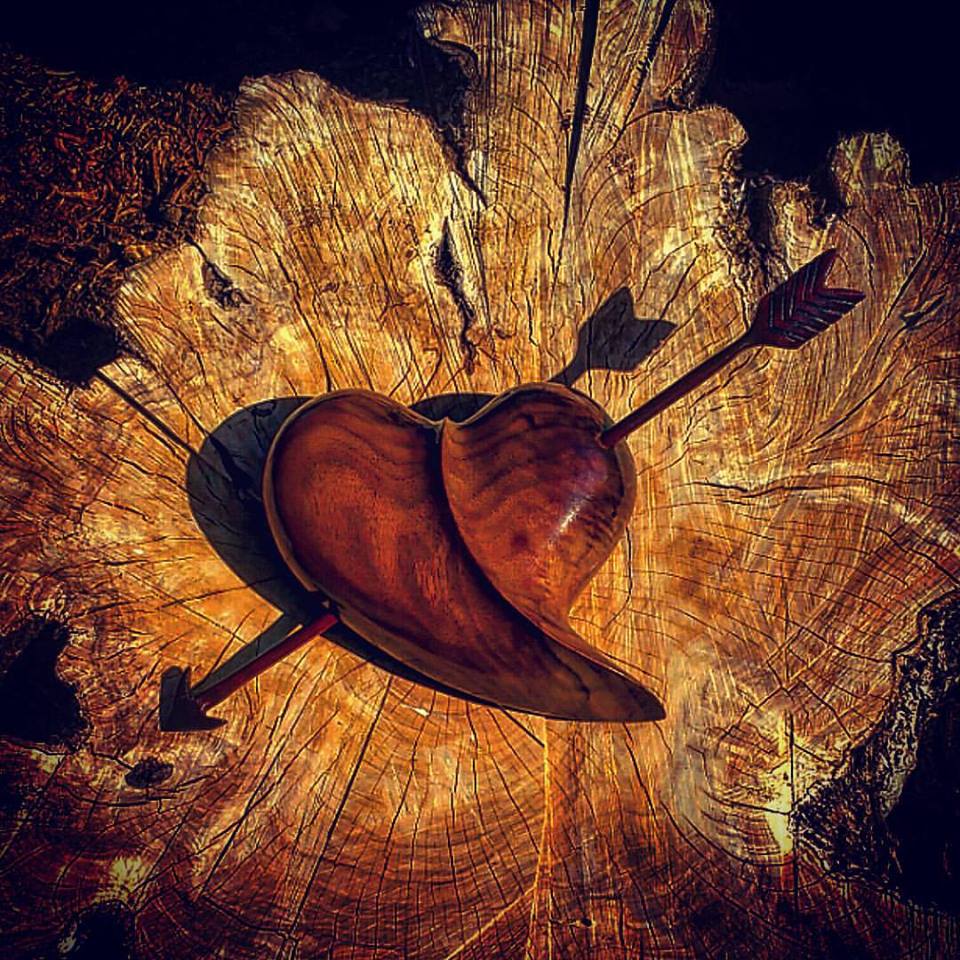
Stand tall, or disrupt the arrow’s trajectory?


Elizabeth Carmichael refutes biography as a form of identification. She is well-educated, well-read and well-travelled for an American. She was published, not recently, in The Cranbrook Review

“Heart and Arrow” by Scott Gressitt.

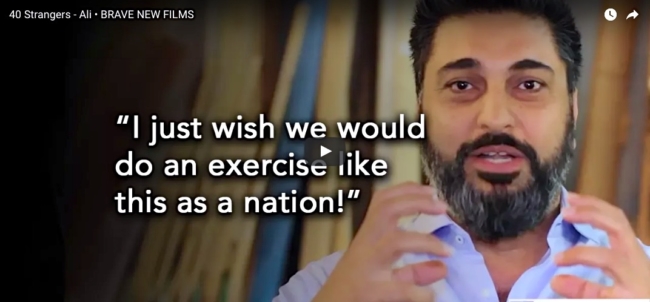
40 Strangers 50 Questions

From Brave New Films

On Wednesday, May 24 at 6:30 PM, 40 strangers entered a small photography studio near downtown Los Angeles. On the floor, they found strips of white tape laid out in large boxes. In a few moments, a member of the Brave New Films production team would stand in front of a blue wall facing the 40 strangers and what happened next really surprised us all.


Learn more about Brave New Films.

The Tao that Trump Won’t Hear

By H.L.M. Lee


When I take my younger daughter to school, I see the rush of her first grade friends running to hug each other and share head lice (much to the chagrin of every parent). My daughter’s BFF has a father from England and a mother from Maine. Another girl’s father is Muslim and her mother is— I don’t know. My own two daughters are Chinese-Italian. They have friends who are African-American and Hispanic. One neighborhood boy has a blended family with a mother and two fathers. I am seldom overwhelmed by emotion, but the morning drop-off often makes me choke up. To these children, unconcerned about the larger world around them, all that matters is the joy in shouting about their newest toy or the treat they have for snack time.

Lately, when I sit alone in my office and stare at the computer screen, I find myself choking up for a different reason. I imagine the death of Martin Luther King Jr.’s vision that the arc of the moral universe bends toward justice. In my more cynical moods, I give up and accept a world where, for my girls and girls everywhere, their gender is an insurmountable obstacle to reaching their potential. The sadness strikes me like the loss of a friend and I fight tears, because a man who couldn’t pass the vetting for babysitter has been elected president.

It takes a team of architects, carpenters, electricians, plumbers, decorators and more to build a house, but only one person with a match to burn it down. The Trump administration is making a shambles of democracy, damaging the environment, perverting our humanity and turning from knowledge. He has fired James Comey, Director of the FBI. Whatever you think of Comey, the action of firing the man investigating Trump and those around him should ring every fire alarm in the country.

In this dispiriting time, I have been reading the Tao Te Ching and keeping it on my nightstand. A classic Chinese text of 81 short chapters, it embodies a philosophy of Tao (pronounced “dow”), which has been described as Path or Way, referring to right conduct. This interpretation, however, is only a shadow of Tao’s many layers of meaning, which underlie all we are and all we perceive. The second word Te (pronounced “deh”) is often translated as Virtue, but virtue from following the Tao rather than transitory social rules.

Attributed to Lao-Tzu, who may or may not have been an actual person, and originating about 2,500 years ago, the Tao Te Ching is the basis of Taoism, one of Asia’s major religions, though it mentions no deity.

The Tao that can be told is not the eternal Tao.
The name that can be named is not the eternal name.

—Chapter 1

Tao itself is undefinable—even in the original Chinese as these first lines admit. Yet, the Tao Te Ching with its terse poetry and insight resonates for many across enormous differences in time and culture. For me it is now a needed source of perspective.

Lifted from their metaphysical context, lines from the Tao Te Ching sound like the epigram in a fortune cookie, but Lao Tzu’s advice to Chinese lords is as relevant in the age of Donald Trump as it was 2,500 years ago.

Oversharpen the blade, and the edge will soon blunt.
. . .
Claim wealth and titles, and disaster will follow.

—Chapter 9

Can there be a better summation of Trump’s path? All his life he has crowed about his wealth and status. But creditors repossessed his 281-foot yacht in 1991 and imminent ruin forced him to take a $916 million write-off in 1995. He would have been richer investing his money in the S&P 500 and leaving it alone, instead of developing businesses and buildings. Trump Airlines was a bust. Trump University was a sham. Trump Steaks were greasy and tasteless.

The way of nature is unchanging.
Knowing constancy is insight.
Not knowing constancy leads to disaster.

—Chapter 16

“No drama” Obama’s steadiness during eight years as president contrasts sharply with Trump’s contradictory statements—often in the same sentence. Trump says that unpredictability gives him the advantage in business. Maybe, but it would be catastrophic in governance and we are seeing its harrowing consequences in real time.

Those who boast achieve nothing.
Those who brag will not endure.

—Chapter 24

Trump has the “best words.” He called the Trump Taj Mahal casino the “Eighth Wonder of the World”—before it went bankrupt and cost him real estate, the yacht I have already mentioned, his private plane, and his helicopter. Can anyone trust a man who masqueraded as his own publicist to bray about affairs with celebrities? Unlike the “fine tuned machine” that Trump touted, his White House lurches like Boris Karloff’s Frankenstein from one self-inflicted crisis to another.

Easy promises            make for little trust.
Taking things lightly results in great difficulty.

—Chapter 63

Trump pandered to supporters by saying he could “make possible every dream you have ever dreamed.” That’s not a campaign promise, that’s a skeevy pickup line. “We’re going to have insurance for everybody… great healthcare,” he vowed, “It will be in a much-simplified form. Much less expensive and much better.” Now that Trumpcare has passed the House—promising, instead, to throw tens of millions off health insurance and eliminate protections for those with pre-existing conditions—will his supporters finally take off their beer goggles and see, by the cold light of morning, who they brought home?

Knowing ignorance is strength.
Ignoring knowledge is sickness.

—Chapter 71

Science begins by accepting ignorance then moves toward knowledge. That’s how we learned to launch rockets into space and harness electricity, how we developed the Big Bang theory and quantum mechanics, and why we cook pork. To curtail the study of climate change, Trump seeks to cut funding for NOAA weather satellites, which would hobble the ability to forecast tornadoes and hurricanes, and endanger lives in the process.

Why are the people starving?
Because the rulers eat up the money in taxes.
. . .
Why are the people rebellious?
Because the rulers interfere too much.

—Chapter 75

Superficially, these lines support conservative beliefs that people are taxed too much and government regulations are a burden. But the brevity of the Tao Te Ching requires delving beneath the surface. Two chapters later is a more expansive passage:

The Tao of heaven is to take from those who have too much and give
to those who do not have enough.
Ordinary people act differently.
They take from those who do not have enough to give to those who
already have too much.
Who has more than enough and gives it to the world?
Only the wise.

—Chapter 77

If people starve, it is from taxation in the broader sense, from the wealthy taking too much as they fight the minimum wage and the social safety net, leaving the 99 percent to work more and more for less and less.

If people rebel, it is from interference with women’s control of their bodies; interference with civil rights and the right to vote; interference with the right to live, love and worship freely. These were the cries from protesters on Boston Common the day after Trump’s inauguration. My family and I were there, shouting with them, an official estimate of 175,000. But a number can’t convey the visceral punch from seeing broad patches of pink, like flowers, spread across the Common. The patches were masses of pussy hats and each flower was a woman, man or child gathered on that brisk, sunny day. I stood in awe, seeing that crowd filling the grounds in common cause.

Every morning I wake at 5:30 and lie quietly, a mundane start but one that prepares me for the day. At breakfast, I listen to the news and steel myself against yet another assault on government and society. The list of what’s at stake is overwhelming, but I find the will to persist in these words, implicitly reminding me that water can wear away stone—if it flows and agitates:

Under heaven nothing is more soft and yielding than water.
Yet for attacking the solid and strong, nothing is better;
It has no equal.

—Chapter 78


H.L.M. Lee is an electronics engineer with a background in English literature. While owning and operating a small high-tech company, he also writes web content and marketing materials, and develops video scripts for a peer reviewed scientific journal. He has recently finished a novel, Bleeding in Babylon, about the Iraq War.

Author’s note: All passages from Tao Te Ching were translated by Gia-fu Feng and Jane English, with Toinette Lippe, Third Vintage Books edition, 2011.

Photo credit: Derek Gavey via a Creative Commons license.

Levels of Knowing and Existence

By Martin H. Levinson

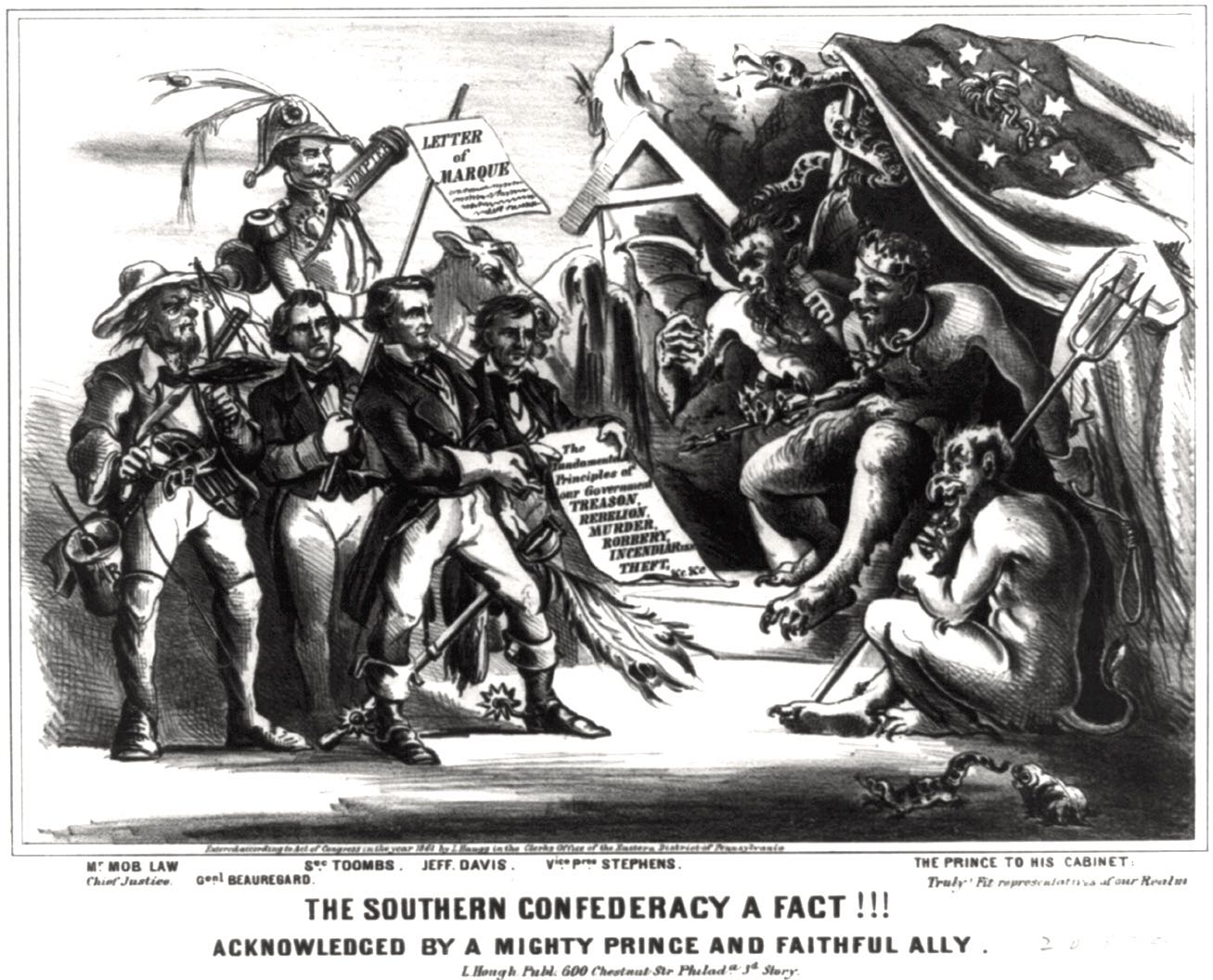
Truth is a liar Trump says,
a smokescreen invented by gay,
black environmentalists who
sneak spics across the border
when the border patrol has its
back turned because they are
busy at work keeping Muslims
out of the country and pledging
allegiance to the flag of the
Divided States of America, and
to the Republics for which it stands,
two nations under Smog, inexplicable,
with liberty and justice for misogynists,
racists and science-deniers who want
to make America great again like it was
before Obamacare, the EPA and the
North’s conquest of the South in
the War Between the States.


Martin H. Levinson is a member of the Authors Guild, National Book Critics Circle, PEN, and the book review editor for ETC: A Review of General Semantics. He has published nine books and numerous articles and poems in various publications. He holds a PhD from NYU and lives in Forest Hills, New York.

Image credit: U.S. Library of Congress.

Love Letter to Chicago

By Dein Sofley


Cook County Citizens, I’m writing this letter to you on behalf of my friend Dein. She loves you and wants you to love her.

I’ve never been to Chicago, but I’ve heard that it’s windy: a working class city with a heart of gold. Home to Gwendolyn Brooks, Studs Terkel, Muddy Waters, Kanye West, Richard Wright, Chief Keef, Li-Young Lee, Common, Chance the Rapper, Haki Madhubuti and America’s forty-fourth president.

Dein is sorry she left you. Heartbroken. Confused. It took her 2,104 miles—through winking lights and gasoline, by time’s appetite and dismembered memories—to figure out that it wasn’t you she was afraid of; it was her feelings. Lost to be found, she came back to you on Valentine’s Day, her wayward tongue thirsty for the taste of your wounds and the words she has yet to earn. The Centennial Fountain marks the shape of returns.

Her body needs you. The arresting rush of your winds, the roar of your trains, the screams of your ambulances, the murmurs of your lake, the slap of your gun shots, the impatient footfalls, the spasms of car horns, the scent of cumin and skulking lilacs find the humming in her ribs. She’ll abandon sleep to breathe you in. In your noise, a love-in-answer. But how will you hear her?

Her: the class clown, the orphan, the shape shifter, always moving, famished for meaning, looking for ways to be real. A foundling in your sanctuary, she wants to serve your storied, buttressed, scavenged, policed city. Soothe her unrequited ache for home, Chicago, please; put her back together again. You people: your misfit blocks of dark skinned cousins, bushy Slavic uncles, lining waving yentas, the vendors selling StreetWise, the paleta man at 63rd Street Beach, the kids rolling across the green at Foster, the Army of Moms patrolling Englewood, the polar bears who jump in the lake midwinter, daring death for vigor.

You lent her: Gina Frangello, Megan Steilstra, Kevin Coval, and Joe Meno.

She lent you: her daughter.

Your jazz scabbed streets of tribes: Mexican, Puerto Rican, Polish, Vietnamese, Palestinian, Indian, Pakistani, Swedish, Ukrainian, Israeli, that pull her out at night like an addict unable to name what she seeks through thrumming engines that collide with the babel of languages. Behind the sounds is another sound. And another.

Your long shouts of avenues: candy-colored storefronts, Beijing ducks roasting in windows, nail salons, tattoo parlors, dive bars, bathhouses, used goods, gold coasts, magnificent miles, dry cleaners and good burritos. All no-bullshit propositions that allow her to keep the criminal feeling of sovereignty.

The tavern sign says: “$2 Shot $4 Pints.” The grammar might be wrong, but she gets the message. This joint’s here for a shot and a beer and a six-pack to go because like her, you keep moving.

And you give: public parks, social policy, scholarships, cultural institutions.

And you take: seven hundred and forty-seven homicides last year.

If only she were bulletproof. When fear left and she said “I’ll make my home here.” She adopted a slew of stray cats, gathered her band of banshees, and stayed. She’ll fight for your honor. She’ll scrape away the narrative outliers made to her extinction. No sissies admitted.

Because in your winter mornings when she sees one neighbor shoveling another’s car out of the snow or a woman in hijab helping an old Russian man navigate the slippery sidewalk in route to the bus stop, mornings when the goodness of human beings shine, she feels herself triumphing.


Dein Sofley teaches Syrian refugees English at Albany Park Community Center. She earned her BA from Columbia College Chicago and is currently pursuing her MFA in fiction from UC Riverside’s low-residency program, where she also serves as nonfiction editor for The Coachella Review.

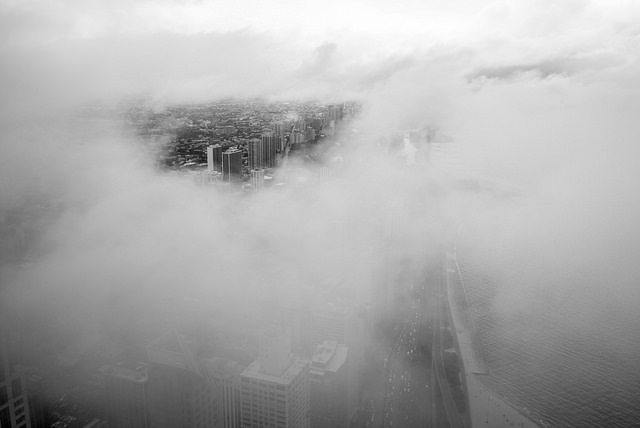
Photo credit: “Chicago Through a Cloud” by Roman Boed via a Creative Commons license.
November Ninth

By Mariana Llanos

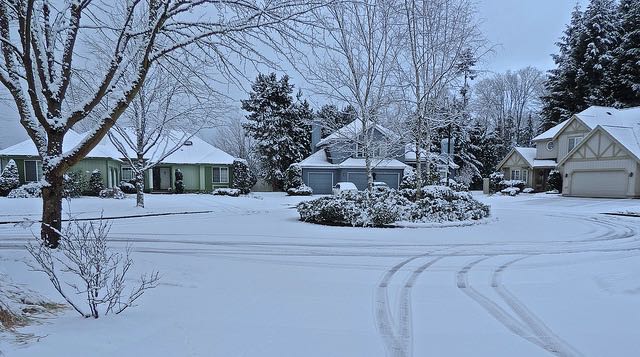
November ninth, two thousand sixteen—
deception slowly, painfully sinking in.
I open my white French blinds; I look around
the cul-de-sac, the well-kept middle class
homes bounding mine.
I imagine neighbors still sleeping in,
not caring, not concerned what would be next
for some of us.
I wonder if all those times we spoke—
me, in my dark skin and thick accent,
them, in their whiter than pearls whiteness—
they thought this is where I belonged
or if they saw me as a foreigner,
a stranger,
a taker.
“Paranoid, paranoid,” I tell myself.
No. I refuse to think the worst of people,
even in a one hundred percent red state.
My children run in, worried faces;
they can’t believe what happened the night before.
Fear blasts like fire from their eyes.
“You’ll be fine,” I say. “You’re citizens, you’ll be fine.”
“What about you?” asks the oldest.
I sigh. I don’t know the answer, but I tell him,
“I’ll be fine, too.”
When I’m alone,
tears flow, like a child’s, without control.
Confusion plunges deep in my brain.
Fear aches in my stomach. It is hard to breathe.
“I’ll be fine,” I say wiping my tears,
picking myself up from the floor,
like I’ve done so many times before.
But I can’t help thinking about the guy—
the guy in the business suit, years ago,
when I was a waitress at a fancy restaurant—
the guy who walked by my side and whispered,
“Go back to Mexico.”
No one heard, while I stood frozen.
I thought of this guy, and knew
that today, he had won.


Mariana Llanos is a Peruvian-born writer and poet. She has published eight children’s books. Her new work, Luca’s Bridge, is the story of a family who is deported to Mexico; it will be published in the Spring of 2018 by Penny Candy Books. Mariana studied Drama in her native Peru. She lives in Oklahoma with her three children and her husband. Find out more at www.marianallanos.com.

Also by Mariana Llanos: “Resiste / Resist,” a poem and translation.

Photo credit: Peter Stevens via a Creative Commons license.
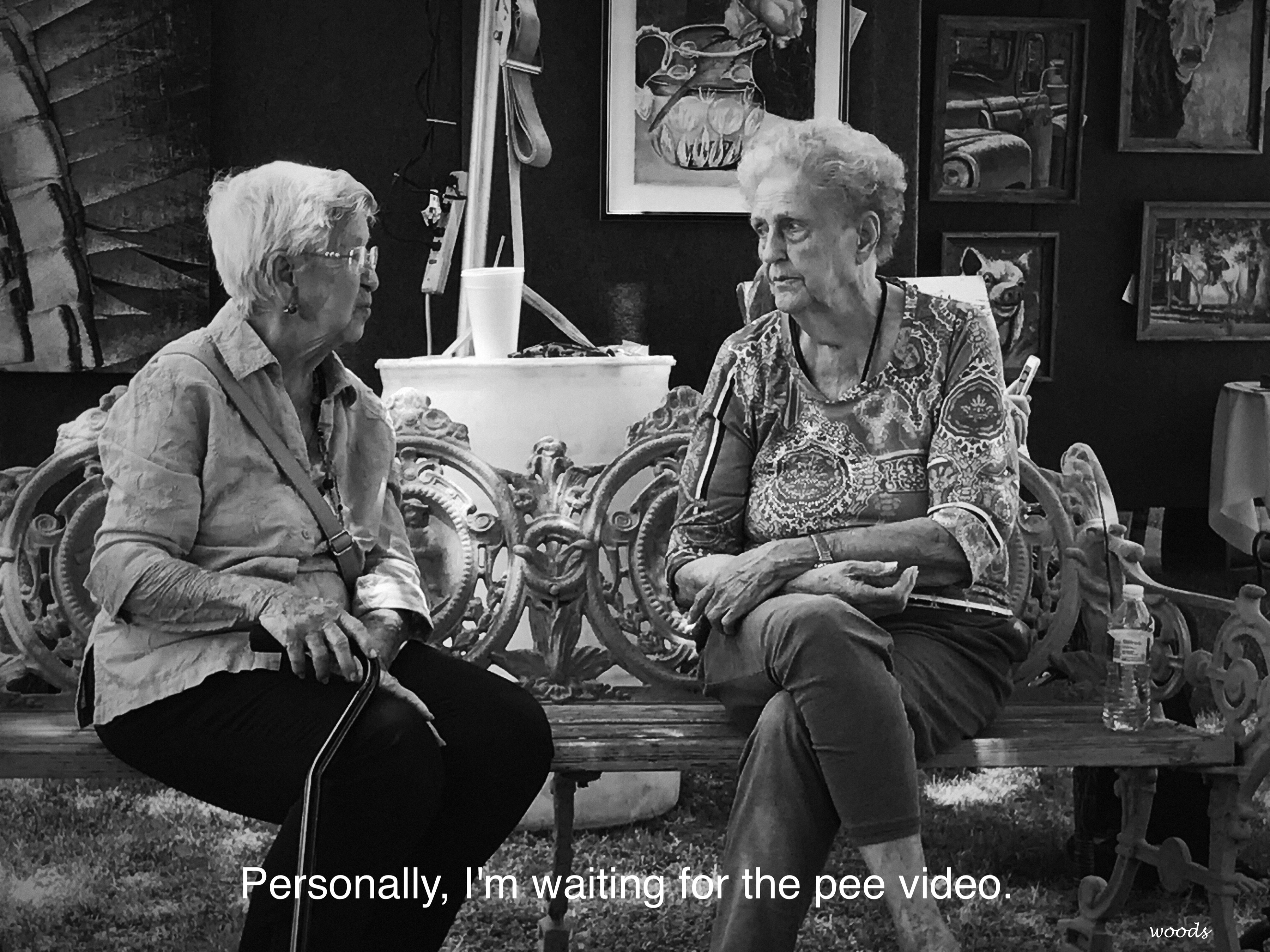
What She’s Waiting For

the pee tape


By Christopher Woods


Christopher Woods is a writer, teacher and photographer who lives in Texas. He has published a novel, The Dream Patch; a prose collection, Under a Riverbed Sky; and a book of stage monologues for actors, Heart Speak. His work has appeared in The Southern Review, New England Review, New Orleans Review, Columbia and Glimmer Train, among others. View his gallery at Christopher Woods.zenfolio.com.