The Wizard of Roz

By Marleen S. Barr


“I thought the Donald would evaporate in a poof of orange smoke, ending a supremely screwed-up period of history. But the loudest mouth is not shutting up. And Republicans continue to listen, clinging to the idea that the dinosaur is the future.”

– Maureen Dowd, New York Times, May 9, 2021


Professor Sondra Lear, suffering from pandemic induced claustrophobia, stepped out on her Manhattan apartment roof in the early evening to get fresh air. She looked up and noticed an unidentified flying object careening toward her. Upon closer inspection, she realized that she was viewing a flying, chartreuse 1960s Lincoln Continental complete with silver edged tail fins and whitewall tires. The Lincoln landed on her roof. The door opened. A bleach-blonde bouffanted woman in her forties, wearing an A-line, pink-and-purple paisley knee-length dress, a three-strand beaded necklace, and white tennis shoes, emerged from the flying car. Although a feminist science fiction scholar and used to extraterrestrials, Sondra was baffled as to why this particular alien was a dead ringer for her dead mother.

“Why are you appearing as a replica of my mother coming to visit me at my 1960s summer camp?” Sondra asked as she tried to remain calm. “Who and what are you?”

“I am Rozie6812, an emissary from the planet Roz. We are controlled by the big giant head, an omniscient, omnipresent computer named Roslyn. We call Roslyn the Great and Powerful Wizard of Roz. As a card carrying Rozie, I have to follow the computer’s orders—and she ordered me to find you. She admires your academic interest in science fiction written by women.”

“My mother’s name was Roslyn.”

“All of the billions of Roz inhabitants are versions of your mother. We are interested in accomplishing two things. First, we want to know if you are married. Despite our ability to find out everything, we want the answer to come directly from you.”

Sondra felt dizzy.

“Steady yourself. Just answer the question.”

“Yes,” said Sondra as a sky-blue rotary phone materialized and floated in front of the Rozie.

“Excuse me while I call home,” said Rozie6812 as she picked up the receiver. “Hello. Roslyn. Sondra said yes. She is married.” The Rozie then turned to Sondra and said, “Everyone on Roz is deliriously happy and giving you a standing ovation. Now, turning to my second directive, I have come to put an end to President Trump. No one who spends her professional life writing about feminist superheroes should be subjected to his misogyny.”

“You’re too late. Biden is the president. Trump is tweetless in Mar-a-Lago.”

“Too bad. Since I cannot accomplish my second objective, Roslyn will order me to return,” said Rozie6812 as she opened the Lincoln’s driver-side door.

“Wait. Stop. Trump is not nullified. He’s perpetuating the Big Lie that he won the election, proclaiming that he will be re-ensconced in the White House, and threatening to run for president in 2024. Someone smarter and, I shudder at the thought, worse than Trump could succeed Biden. Help!”

“Roz is a very bureaucratic planet. But I’ll see what I can do. Let me apprise Roslyn of the situation.” Rozie6812 spoke into the telephone.

“I am afraid to ask, but what did Roslyn say?”

“She says that because you are married. she will make an exception even though I arrived too late to carry out the original Trump removal mission. But, according to Roz regulations, changed mission objectives impose additional requirements. Roslyn will not allow me to assist you unless you bring me Donald Trump’s broom. Her decision stands. Resistance is futile.”

“In order to save America from the Big Lie, an eventual Trump second term, or an even worse political fate, I have no choice but to comply. I’m off to Trump Tower on a quest to bring back Trump’s broom.”

“Good decision. I’ll drive around the Milky Way while I wait for you. When you have Trump’s broom in hand, return to your roof, and I will tell Roslyn that your mission has been accomplished.

Sondra put on her face mask and walked up Fifth Avenue to Trump Tower. She sat against the wall near the entrance, dejected and trying to discern what to do. A piece of straw fell on the floor nearby. As a lifetime New Yorker who grew up with myriad anti-litter bug campaigns, Sondra picked up the offending material and placed it on the seat beside her. Something that resembled a lime-green sea horse appeared and hovered above the straw.

“Thank you for rescuing my nesting component,” said the flying entity.

“You’re welcome. I am sort of afraid to ask, because I already did this today, but who and what are you?”

“I’m a dragon.”

“Aren’t you a little small for a dragon?”

“Size doesn’t matter. Just as a hummingbird is as much an avian as a Great Blue Heron and a chihuahua is as much a canine as a Great Dane, I am a bona fide dragon. I was in the middle of building my nest in one of the atrium trees when this straw fell out of my claw. Thank you for retrieving it.”

“The atrium is devoid of trees.”

“It was supposed to contain several 40-foot trees. But Trump chopped them down because he didn’t like them. His disrespect for nature made me mad. I restored all the trees and ensconced them within an invisibility cloak. Believe me, although you can’t see them, the trees are here.”

“I believe you,” said Sondra in the middle of having a brainstorm. “Could I possibly have some more of your straw nesting material?”

“I am happy to share, but why do you need it?”

“It could help keep Trump from having the ability to destroy swaths of the American natural landscape.” The dragon flew away and quickly returned with a bunch of straw.

“Thank you,” Sondra said. “I have one more request. Please bring me an atrium tree branch and make it visible.” The branch appeared next to the straw pile. “It was nice to meet you. I wish you well with your nest building and I hope you successfully raise your offspring amid the invisible trees.”

Sondra gathered up the straw and used the original piece to tie the bunch around the branch. Because the broom was made from materials garnered from within Trump Tower, she was certain that Trump, by default, owned the broom. She was ecstatic.

Sondra returned to her building’s roof and said to Roz6812, “Here’s Trump’s broom.”

“If it looks like a broom, and it sweeps like a broom, and you say it is Trump’s broom, thus it is,” proclaimed Roz6812. The rotary phone reappeared. “Let me clear this with Roslyn.” She spoke into the phone. “Good news. Roslyn says because you have fulfilled the quest, I am cleared to nullify Trump. As I speak, the Mar-a-Lago resort is being turned into a roach motel. Trump is permanently checked in and he can never check out. A cheeseburger and a can of soda will appear whenever he gets hungry.”

“Great job!” Sondra said as Rozie6812 flew off.

Sondra returned to her apartment and found a baby lime-green mini dragon flying loop-the-loops above her sofa.


Marleen S. Barr is known for her pioneering work in feminist science fiction and teaches English at the City University of New York. She has won the Science Fiction Research Association Pilgrim Award for lifetime achievement in science fiction criticism. Barr is the author of Alien to Femininity: Speculative Fiction and Feminist Theory, Lost in Space: Probing Feminist Science Fiction and Beyond, Feminist Fabulation: Space/Postmodern Fiction, and Genre Fission: A New Discourse Practice for Cultural Studies. Barr has edited many anthologies and co-edited the science fiction issue of PMLA. She is the author of the novels Oy Pioneer! and Oy Feminist Planets: A Fake Memoir.  Her When Trump Changed: The Feminist Science Fiction Justice League Quashes the Orange Outrage Pussy Grabber is the first single authored Trump short story collection.

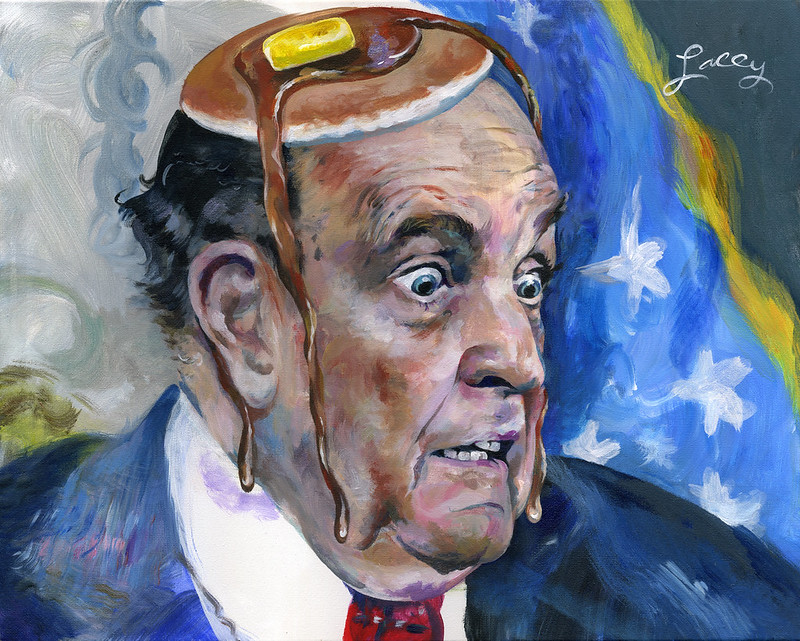
Photo credit: William Warby via a Creative Commons license.

Passing On Fire

By Joyce Frohn


My grandmother called herself a “tomboy.”
She bragged that she could chop wood and bale hay as fast
as the men.
And then they sat down and read the paper while she baked
fine biscuits and pie.
She loved hunting, motorcycles and gardening.
She raised four children in a boxcar,
teaching the boys to cook and the girls to love learning.
and that dairy farm sent four children to college.

Her daughters called themselves “new women” and “liberated.”
They marched in protests, fought discrimination on the job and
balanced motherhood and jobs.
They aimed for medical school and seminary.
They fought for their children,
you win some, you lose some.

I call myself a “feminist.”
College was assumed.
I love poetry, slime molds and frog cells.
I signed petitions as soon as I could write.
Some days old battles stay on and
sometimes new problems arise.

We’ve fought for so long.
What will my daughter call herself?
Will she be the one to say “woman”?
What battles will she fight?
Her great grandmother holds her small soft hand
in a stiff callused one and passes on the fire.


Joyce Frohn has been published in Nothing Ever Happens in Fox Hollow, Strange Stories, and Page & Spine, among other places. She is married with a teen-aged daughter. She also shares a house with two cats, a lizard and too many dust bunnies.

Election Day

By Elizabeth Edelglass


We stand in line beside our mothers’ stockinged legs, line snaking through the gymnasium, where yesterday we’d also snaked through same gymnasium, mouths agape for the healing cube, sugar our mothers said, but bitter, live virus, our parents had said, to save us from the deadly virus, their voices husky with fear, when they thought we couldn’t hear from our secret perch on the upstairs landing, aliens landed from our beds in the sky. Now our mothers lift us high with strong arms, purposeful fingers, click the levers, pull the arm, part the curtain, we the people whisper our secret choices. Then home to our fathers in their fatigues from the war, fathers who’d already voted, forsaking sleeping houses at sunup, as always, though no work today, so rake the leaves, let us jump the piles, crisp and sharp, then watch our fathers set the piles aflame, red and orange and crunchy brown, smoke soaring to the sky.

We stand in line in our fathers’ fatigues from the war, line snaking through the gymnasium, where yesterday we square-danced, dosido, allemande left, allemande right, line snaking, choose your partner, change your partner, kiss your partner behind the bleachers. Old enough now to snake on our bellies through Asian jungle, if we were boys, old enough to click the levers, pull the arm, part the curtain, assert our choice to save the boys we think we love from snaking through the jungle mud. Then home to huddle in those boys’ strong arms under percale piles, to scream and husky cry, election stolen by dirty tricks, as bombs keep crying from the sky, until at last those tricky fingers flash the famous V before boarding a chopper to fly out of sight, rotors roaring into the sky.

We stand in line with our kangaroo pouches, babies snuggled at our breasts, toddlers at our denimed legs, line snaking through the gymnasium, where yesterday we were chosen, or not chosen, for the team. Line snaking through the gymnasium where soon our babies will be chosen, or not chosen, we pray for them as we click the levers, pull the arm, part the curtain, affirm our choices, big and small, win or lose, year after year, school board, zoning board, firemen’s budget. Then home to rake the leaves, we let our children jump in the piles, when they think we cannot see, freely fly across grass and sky, then rake again, into bio-safe bags, saving the smoke, restoring the sky.

We stand in line in our pantsuits and pearls, behind our masks, line snaking outside the gymnasium, six-foot circles on grass as green as far-off jungle, leaves painting rainbow sky, sun shining as if God knows, line snaking one-by-one, dosido into the gymnasium, where tomorrow our grandchildren will all be chosen, everyone a winner now, though they know truths we think they don’t. Yesterday we helped our mothers, safe on Facetime, mark their ballots with brittle fingers, will they touch us once again before they soar to unknown sky? We’re determined to stand in line, though old enough to be at risk, we shout our choice to save the world from sneaky virus, snake-y words, both sharp with spikes that can kill. We mark our ballots with gloved fingers, slide into scanners, what happens next we do not know, missing the click of levers, the pull of arm, the reassuring slide of curtain. Then home to rake the leaves with bony fingers, aching arms, anything to avoid the blaring TV voices, we lift our eyes, imploring the sky.


Elizabeth Edelglass is a fiction writer and book reviewer who finds herself writing poetry in response to today’s world—personal, national, and global. Her first published poems recently appeared in Global Poemic and Trouvaille Review. Her story “An Implausibility of Wildebeests” appeared in Writers Resist in November 2020. Follow her on Facebook and Twitter.

Photo by Patrick Schöpflin on Unsplash.

Work

By Mary Leary


Please stop writing about nothing. The light from your
lawn chairs. Berries you savored or didn’t,
bodies massed for gatherings on back summer lawns. Nice usually means
smiling; at least pretending to listen. Maybe keeping it light.
No politics at New Year’s Day dinner, you say and I
wonder why I came
when we are in a process of
disintegration; the only news left to report, my lonely
heartbroken calling
for birds, sea creatures, coral
in the poems I don’t write
for people in straits too dire for them to notice silenced
chirps; scattered winds anxious
for the sounds they used to make through
trees, now downed and drowned.

The poems I won’t write, for people too busy
trying to pull women and children
from bloody, uncaring jaws;
people who never recovered from
the famine/flood/fire/murder; several hammers
to the head of New Orleans. Creatures/women/children/prisoners
who’ve stopped waiting for someone
to help them. I am much closer to the waves
of destruction than those who have time
to write about tea with the lonely cat,
reunions hinting at the last gasps of
something some called civilization. That’s the triumph,
you will say — capturing those
small moments in the lap of the relatively
or greatly sheltered classes. You are probably right.
Once we meet, I do
want to know about your life. For now
I need to bear witness to oily death rattles.
Last gasps.


Mary Leary has been writing since she was about eight. She would prefer to have been born a banker.

Photo credit: K-B Gressitt.

We Must Resist

By Laura Martinez


Everything has changed

Nothing has changed

He is gone

Does that mean we no longer resist?

It “takes time” to undo what he has done

Does that mean we no longer resist?

As long as elected officials state “America is not a racist country”

We must resist

As long as there is voter suppression

We must resist

As long as my grandson lives in fear of driving while black

We must resist

As long as women and LGBTQ communities risk losing everything they have gained

We must resist

As long as those fleeing oppression and poverty are turned away at the Southern border

We must resist

As long as elected officials live in fear of he who is not really gone

We must resist.

As long as fear and conspiracy theories abound

We must resist.

No matter who is in the White House

WE MUST RESIST


Laura Martinez is a retired social worker. She has been involved in active resistance for more than fifty years and knows we must resist injustice no matter who is in the White House.

REMINDER: Writers Resist Call for Submissions

Current Call for Submissions

We’ll be publishing a special Writers Resist issue on 19 June 2021 to acknowledge Juneteenth and the first 150 days of the Biden-Harris administration.

We all see things—politics, justice, history, the future, even flowers—differently. What are you seeing these days?

Send us your words, in poetry or prose, and your images, but read our submission guidelines first.


Writers Resist Call for Submissions

We’ll be publishing a special Writers Resist issue on 19 June 2021 to acknowledge Juneteenth and the first 150 days of the Biden-Harris administration—how’re we doing?

Send us your words, in poetry or prose, and your images, but read our submission guidelines first.

Submissions will be accepted through 15 May 2021.


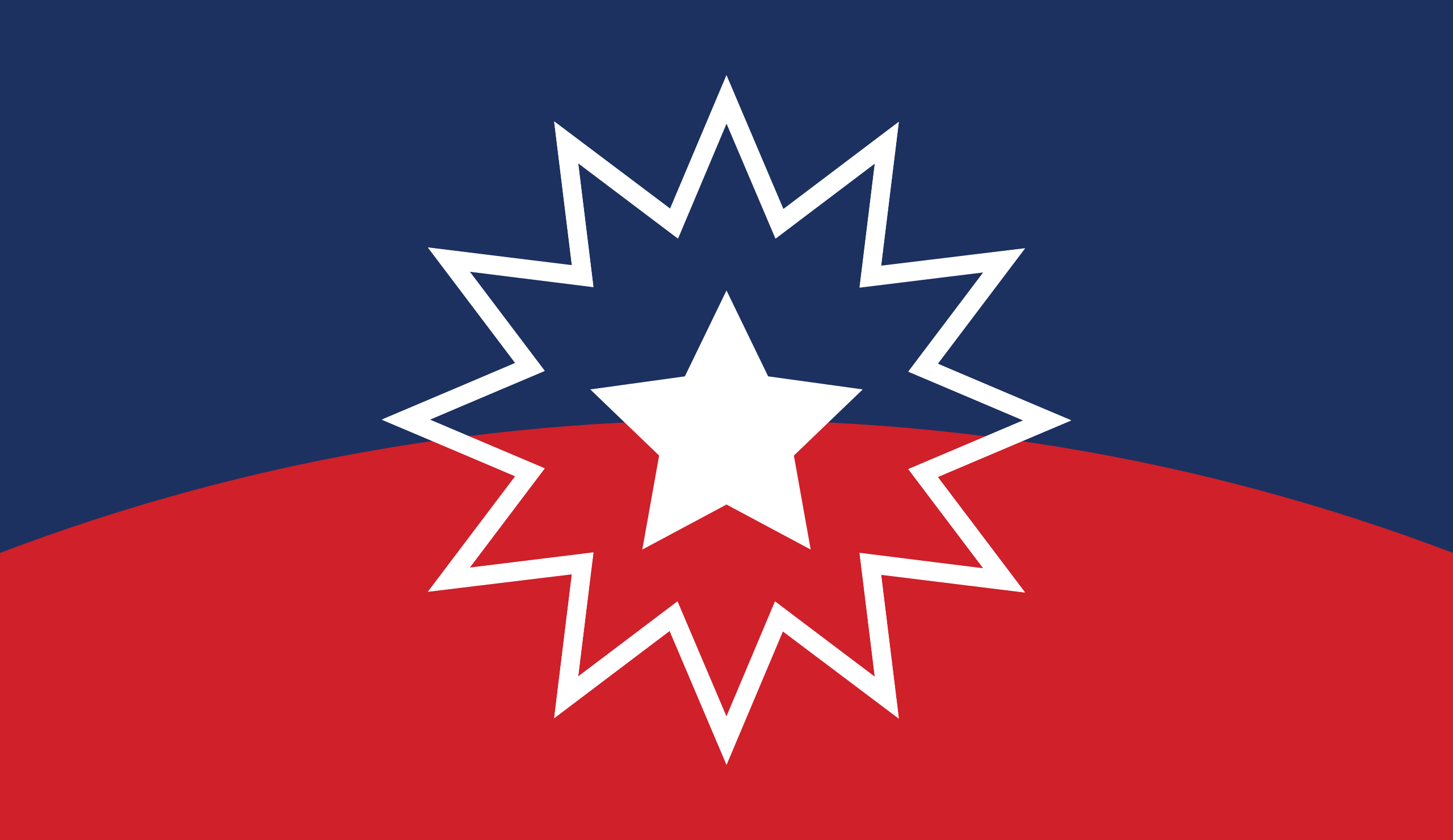
Image is the Juneteenth flag.

Join Writers Resist at Boca de Oro Festival

Writers Resist Readings at Boca de Oro Festival

March 5 and March 6, 2021

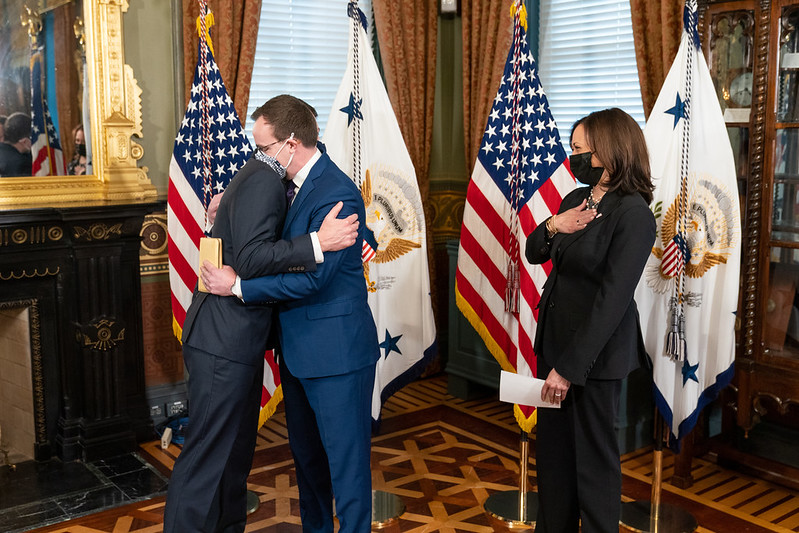
Keynote Speaker: Pete Souza, presidential photographer

Closing Speaker: Marc Bamuthi Joseph, poet and playwright

The festival of literary, visual, and performing arts presents two virtual WR readings

Writers Resist: Global Voices

Hosted by Kit-Bacon Gressitt and Sara Marchant.

Visit the Writers Resist events page for featured writers and other details.

The wicked Trump presidency is dead

Yo-ho!

Consequently, this is the final bi-weekly issue of Writers Resist.

Although we have other things in the works, we want to pause to thank the hundreds of writers, artists, donors, and volunteer editors, who have lived the last four years with us, raging and weeping and laughing—and hoping.

K-B, if she could, would also thank her dear-but-departed mother, Patricia Bacon Gressitt, whose estate remnants funded the journal’s development and infrastructure.

Now, looking forward, one of those things we have in the works is a couple of Writers Resist readings, hosted by the virtual Boca de Oro Literary Festival, 5 through 7 March 2021. The festival’s keynote speaker is presidential photographer Pete Souza, who has helped keep us sane, lo these painful years, and the closing speaker is poet and playwright Marc Bamuthi Joseph.

Drop by here occasionally for more details.

In the meantime, we know it’s been a long, long four years—many thanks to you all for surviving them with us.

Love,
K-B and Sara

Paean to All the Books I’m Reading in the Time of COVID

and Black Lives Matter


By Patricia Aya Williams


From the un-masked           and (turtled

nooks) of home        to the  socially      –      distanced

and     sanitized

patios

of coffeeshops,

I greet you.

The world spins

on an axis

    of livid proclaiming

     and

bulleted majesty

while    vultures                    circle               the      fetid    plain.

It is a summer of fires          and

burning,

convulsions of voices

from frac- tured streets.

Still     in quiet hours,

there is joy …

I invite you,

keepers of slow wisdom, speak –

your history,

your poetry,

your lives no longer but for ink and thought –

let us reckon together a truth

unshallowed

an air

that will let us all

breathe


Patricia Aya Williams is currently enrolled in the San Diego Writers, Ink Poetry Certificate Program. She is also an award-winning iPhone/iPad digital artist who takes great delight in her scarf collection. Her poems have been published in San Diego Poetry Annual and City Works Literary Journal.

Photo by Daniel Páscoa on Unsplash.

Five short stories by Amirah Al Wassif

Running away

My mouth is full of mice. I can’t talk or protest. I was born in the darkest spot of the world. My people hate the sun. They put the weight of the world on my tiny shoulders. When I was young, I was a great talker, but when I became 12 years old, they ordered me to shut my mouth up. My country is made of dust and sins. They don’t believe in girls’ voices. They say that when girls talk, the evil spirits spread.

I have to admit that I am not sure that my mouth is full of mice, but when my tribe circled around me like bees, they pointed to my mouth, shouting loudly: “Hide your ugly mice! Don’t speak! Don’t protest.”

Their anger showed me that I have to flush and run away for hiding. Instead of doing that. I made a hole in the wall and disappeared forever.


Hunger and satiety

At the same time when I was wondering, did my friend like my latest photo on the Instagram, a child died from hunger somewhere in the world.

We all bite our nails through watching the breaking news. We all recognize the fake ones. We all cry in front of war children posters. We all laugh at our mirrors.

My mother stands on a mountain of pillows for feeding my little brother. I am big enough to feed myself.

We have many delicious dishes. We are proud of our full plates. After finishing my own, I run in a hurry to bring another one, not because I feel hungry, but because we have a plenty of food. So it is a shame not to bring another one.

We never experienced hunger before. The first time we heard of it was when our neighbor’s daughter died. At her funeral, people said that she died because of hunger. Even when we all knew that, nobody cared.


Just a dream

Last night, I closed my eyes and I saw my mother and me sitting together in front of a brown oven, baking delicious bread in a clearing where some birds pecked our necks and backs.

My mother’s cheeks were colorful like a clown. I looked at her in a proud way. She was still beautiful, just like a young girl.

She had a dimple. A special one. One of those dimples that kiss the heart of the sun. You feel its warmth naturally, without trying so hard.

The dust that covered my mother’s eyelashes smelled of the ancient streets.

In the dream, there were grown mint leaves between my fingers. My mother grabbed one of them, trying her best to cut it off. I screamed. There was a lot of pain around my fingers.

We are farmers. We used to fill our pockets with laughs and stones, stumbling to the river to throw them. Our dearest friend, the river welcomes our greetings, competing with us to make the funniest jokes in the world. We are country people, so we and the river understand each other very well.

I have a music box within my chest. All my lifetime, I felt that I am the richest girl in the globe. We don’t have money, but we feel so wealthy. Our fortune is a mix of singing and giving. We sing for our folk. We used to give them. We used to plant for them, for us, for the whole world.

My mother kissed my right cheek in the dream. You are a winner, babe, she told me. You plant your land; don’t wait for the men to plant it for you.

I don’t have a father. My mother’s forever tale says that there is a toxic man, tricked her, married her and made her a pregnant child who suffered a lot because of this.

I don’t blame you for this, babe, my mother said to me. You are my blessed girl, I need you in my world, and we all here need your bravery.

The distant birds play hide and seek with my wishes. I pray for our land, I pray for getting stronger, I pray for the girls, for the poor mothers. I don’t pray for the abusive husbands.

Within my dream, the grace underneath my little feet, I am sinking in the arms of the universe, sipping the happiness water.

My mother’s milk isn’t enough now, I am trailing the buds with my fingers.

The sky breathes in and out through my hair.

I met you too, in my dream. You were smiling at me from your far land. I called you: “Lewis, don’t forget me, my love, don’t.”

You looked at me in your gentle way. Your eyes smelled of honey. I see a paradise lies inside them. “Don’t try to close them so much, my love.” I said to you, and you ran away behind the red sun’s reflection.

I understand how the sun was so jealous. I know that nature belongs to you.

I plant beans, tomatoes and flowers. You plant me like a poem inside your heart. How close we were in my dream! How far we are in the reality!

I still remember how many tears jammed in your eye, when I sighed and cried, telling you that I and my mother should leave this land. You still remember, don’t you? How I sobbed, how the sadness made a lake of salt in my heart.

That moment was the harshest moment in my lifetime, the words jumped in craziness from my mouth’s edge. You ate yourself in worry and pain.

In my dream, my mother advised me to stop crying. She told me that nobody deserves my tears. I pretended that I agreed with her, but in truth, I didn’t, because you deserve, my love, you aren’t them, you aren’t a toxic man like my father and like all those men who forced us to leave the land, who poisoned our plants, who stole our right to be women farmers.

In my dream, I shrugged. I felt like I lost my voice forever, but then, I woke up, half asleep, trying to hide my waterfall of tears.

I open my eyes wide: I am heading now to my mother’s graveyard, next to yours, where I am planning to plant a cactus, my love.


My dead husband’s secret

My dead husband plays hide and seek with me. I catch him every now and then playing guitar in front of our daughter’s framed photo. He also loves to act like a clown before our baby budgie birds. He believes they notice him.

I don’t say a word about that to my relatives. They won’t believe me. To be honest they will say that I am a crazy old woman who is looking desperately for a new man. I am not. I love my dead husband, and really, I see him wandering in our apartment all the time.

Every time I see him, I try my best to hurry, to follow him. I want to catch him. I am longing to kiss his cheeks. I dream of throwing myself into his arms.

But I can’t. As a disabled old woman who is sitting in her wheelchair, I can’t help it.

There is no one here to watch me. There is no one here to look after me. Only my dead husband shadow, dancing up there on the walls with the shadow of our dead daughter.


Injustice

I was born and raised in a box.

My body is a metaphor. I lost my voice when Adam planted a knife in my throat.

“Give up, Eve,” Adam said.

I pointed out to the Apple tree. I hopped from one corner to another inside the box. I was dying to shout. I wanted to announce my revolution. I was in trouble. A big one.

My voice is gone. I have no power, no words.

Adam was touching the apple curiously, tracing it with his fingers. The smile on his face. The sin on his hand.

He kept watching me from his place: I was moving in back and forth. He treated me like a monkey in a cage.

The last time I called Adam was a billion years ago, when he asked me what was the thing I see in my dreams that makes me feel good, although I’m imprisoned?

At that moment, I let him see the picture in my head. A magnificent photo of the apple tree, guiding me to the river of happiness.

When he saw the photo in my head, he sighed and smiled.

After a while, he sang and ran away to find the tree, and yes, Adam found it and owned it, before punishing me and cutting my tongue.


Amirah Al Wassif’s poems have appeared in several print and online publications including South Florida PoetryBirmingham Arts JournalHawaii ReviewThe MeniscusChiron ReviewThe HungerWriters ResistRight Now, and others. Amirah also has a poetry collection, For Those Who Don’t Know Chocolate (Poetic Justice Books & Arts, 2019), and a children’s book, The Cocoa Boy and Other Stories, published in February 2020.

Photo credit: Andrew Malone via a Creative Commons license.

I can’t breathe

By Mary F. Lenox


I can’t breathe
the words said
written on a waste container
near the sidewalk

I wondered what other
unheard voices say
I can’t breathe

Dying fish of the sea
echo
I can’t breathe
as they
navigate through
plastic and oil invaders

Birds
call out
through polluted air
I can’t breathe

Children playing
in urban streets
for lack of space elsewhere
I can’t breathe

Rivers and streams
full of sewage from earthlings
scream
I can’t breathe

Shouting voices of people of color
grieving for relief
from all the ways oppressors
have tried to kill, destroy, eliminate
I can’t breathe

Yet
young and old around the world march and proclaim
No more!

We will not stand silently by
hearing those words
I can’t breathe


Born in Chicago, Illinois, Mary F. Lenox is a poet, writer, speaker, and educator.  She was a professor at the University of Missouri-Columbia in the School of Library and Information Science where she served as dean for 12 years. She is the author of two books of poetry, Threads of Grace: Selected Poems (2015) and Riches of Life: Poems (2019). She resides in San Diego, California.

Photo credit: Tyler Merbler via a Creative Commons license.

Dead Man Votes in Wayne County, Michigan

By William Palmer


I found an old mask on the ground
and stood in line.

At a table I handed a woman a scrap
of paper with my name on it
and my old address. She scrunched
her face to check it while a big guy
behind her wearing a white mask
with red and blue firearms on it
told her to keep the line moving.
She looked at my old Ford Assembly Plant ID
and the guy told her again but louder.
She handed me a ballot.
I voted for Joe Biden.

I signed my name best I could
then walked out
before my legs caved to dust.


William Palmer’s poetry has appeared in J JournalPoetry East, and Salamander. He has published two chapbooks—A String of Blue Lights and Humble—and has been interviewed by Grace Cavalieri for The Poet and the Poem from the Library of Congress. He lives in northern Michigan.

Photo by Josh Carter on Unsplash.

My body belongs to me

By Claire Sexton


It’s an insight the menopause has gifted to me.
The knowledge that my body belongs
wholly to me.
At last I can own my own body.
At last I don’t need to parade for boys or girls.
I can walk around my flat freely.
I can look in the mirror without flinching.
I can accept that my body has ‘curves.’
Like duck eggs, or cat tails, or a funerary cartouche.
Yes. My body belongs to me. That is final.
My flesh has come into the fold.
Where it is warm and sheltered from neglect.
Its creases are unique and compiled by me.
There are scriptures upon its expanse.
It has become my family at last.


Claire Sexton is an autistic woman who writes poetry that deals with neurodiverse and other mental health issues. She lives and works in England and is a medical librarian. She has previously been published in magazines such as Amethyst Review, Ink, Sweat and Tears, Light: a journal of photography and poetry, and Anti Heroin Chic.

Photo by Aleksander Vlad on Unsplash.

The Woman in Elmina

By Nicole Tanquary


There is a coastal village called Elmina. An abandoned slave castle sits at the village’s highest point. The castle walls stand in stark white stone that burns in the sun, the paint achingly fresh—the castle is now a museum, and it has money to keep itself restored, more than can be said for the village spread out at its feet.

In Elmina lives an old woman. She dresses in traditional kente cloth her son bought for her long ago. On clear days she sits beneath a palm tree in the shadow of the castle, on a stretch of green lawn leading to the castle’s entrance, where the tourists tend to wander. A bowl carved from a coconut shell sits in front of her. She does not beg but rests with her eyes closed and her back against the palm tree. If you come up to her and speak, she will open her eyes and you will see cataracts, filmy as ocean clouds. Once, her son fed her, but he was a fisherman, and sometimes fishermen drown.

If you come up to her, she may nod to acknowledge you or she may not. If she does not, set some money, cedis or pesues, in her bowl. The clinking of the coins will bring her awake.

If you take out a bottle of palm wine and hand it to her, saying, “Madame, will you drink with me?” the numb will drain from her face and leave behind a thoughtfulness. She will take the bottle and uncork it with expert hands, pouring some onto the ground for the ancestors to drink. She will take a sip of it herself and then offer you the same. If you drink it, it will be tangy, not quite sweet but with a good, settling warmth in your belly.

She will make another offering to the ancestors, and the thirsty earth will drink it away. And then she will tell you a story.

“The castle guides … they tell lies.” A tiny headshake, the movement swaying in time with the palm leaves above. “They are Ashanti, the ones who sold the Ewe to the white men. The Ashanti are ashamed, they try to change history. But we remember. We listen.” She will look towards the castle, its white walls reflecting in her eyes. When she speaks again her voice will fall to a monotone.

“The white governors, they empty the women’s dungeon into the courtyard and pick through them, take who they want. Guides say that if the women have governors’ child, they be looked after.” The old woman will spit onto the ground. “Lies. If a governor pick you, you be washed up, sent to private room, and afterwards go back to dungeons—no treated special. If you a favorite, it not matter that you carry child. You still his slave. Always a slave.”

Her eyes will go wet, and she will take another long drink of palm wine to steady herself. You may want to ask her how she could know these things when they happened so long ago, but if you wish to hear the rest of the story—if you wish to see what it will call forth—do not interrupt.

“The Ewe people brought down from the north, they be scared, so scared. Never see white men before. Never see ocean. They not know how to swim. If they sick, they thrown off ship into water, and they not know how to swim.”

Then, in a quieter voice, one with a tremble to it, she will say, “You feel them if you go in castle—all the ghosts. I hear them come through the walls, chains still on they ankles, in one big line … no one see them. I not see them,” she will admit, “but oh, oh I do hear them.” The palm wine will shiver in its bottle as her hands tremble. “The worst be in the water. That is why I never go there,” she will say, nodding at the ocean. “That is why my son should never have gone there. So much anger.” Her voice might drop to a whisper, “It drag down.”

The palm wine might sour in your mouth. Keep drinking. Even as you see echoes of the ghosts over her shoulders, their sun-bleached bones picked clean of flesh, the slack jaws saying nothing but the eye sockets boring into you, boring deep. Keep drinking.  The woman will finish her story.

“Even when they no die … it is the same to us who stay. The Ewe who left on white men’s ships never came home. You,” and she might nod to you now, her eyes squinting to try to make out your face, “You, trying to find your history here, you the child of ghosts.”

Then she will start to smile, blearily. You will decide to leave her the bottle of palm wine because you think she will need it. Even when she does not tell you that she has dreams, terrible dreams of dead mothers and fathers and daughters and sons rotting together in the water … well, even if the ghosts have mostly left now with the end of the story, you can still see faint skeletal fingermarks, dug into the skin on her shoulders.

Before you leave the woman, stop long enough to pour your own offering of palm wine into the earth. Libations must be made to keep the ancestors at peace.

Especially the ones in the water.


Nicole Tanquary lives and works in upstate New York, although she will soon move to Pittsburgh, PA, to pursue a PhD degree in Rhetoric. She has over thirty speculative fiction short stories available from a variety of publications, some of the most recent being Crone Girls Press, Mithila Review, and The Society of Misfits Stories. When not writing or working, she likes to eat, sleep, follow mysterious trails into unknown woods, and play with her three adorable pet rats.

Photo credit: Stephen Johnson via Creative Commons license.

1962

By Ruth Hoberman


Memorial Day, we wore white gloves
to hold the flag. Songs fluttered in our lungs
like helium: we were pilgrim and witch,
Crockett and Quaker, the slave, the raft, the shore.

We were eleven, rich in Sousaphones and common wealth,
so sure of where the river went,
we’d beg our teachers to run our movies backwards,
hooting when the aphid spat back the eaten leaf

and the scientist, stripped of his white coat by the past,
hurried back to bed, the world unlearning itself.
Less funny now the Civil War’s unfought, and dinosaurs
return, and kids in cages bawl for their parents

while some guy in a uniform sends them back
and back and back. I was so sure America moved—
like tunnels, time, and rivers—toward the light.


Ruth Hoberman is a writer living in Chicago but residing in New Haven, Connecticut to be near her daughter and her family during the pandemic. Her poems have appeared in such journals as Smartish Pace, Rhino, Calyx, Adirondack Poetry Review, and Spoon River Poetry Review and her essays in Michigan Quarterly Review, Consequence, and The Examined Life. She is a professor emerita of English at Eastern Illinois University, where she taught for thirty years, specializing in modern British literature.

Photo credit: Khairil Zhafri via a Creative Commons license.

Anger Management in a Time of COVID-19 Pandemic and Riotous Grief

By Ron L. Dowell


I

First, understand what you call a riot
was the Watts rebellion ending our 1965
Little League season. No last inning strikeout,
but choking smoke, thick of burning rubber,
no walk-off homerun, but smoldering wood,
no game-winning catch, but chemicals scorching
our throats, chest, lungs, interrupting me & Gerald’s
sunrise to sundown baseball passion on Gopher
Hole Stadium, redlined with public dollars. No,

never a riot, senseless, though it shines so.
CHP/LAPD, Marquette Frye, blood-wild, illogical emotion.
But rebellions always protest convention,
give sound to silence, fires cold dark places,
matter to people ignored, who attend unlettered schools,
& suffer grinding inequity from skin-color separation.
Baseball galvanized & helped equalize the offsets.

Sequestered atop our diamond-patterned chainlink
backstop, the fire surrounding us moved quickly,
scattered pigeons, our world burned in a square
circle like bases around our public housing
perimeter, eyes red, local stores convulsing
fire; Country Farms, Sav-on, Shop Rite, Safeway.
An uprising? Maybe—but never a riot,
& shaking, we scrambled, gasping. We played catch.

II

Jurist acquit Stacy Koon & Laurence Powell
that spring 1992 for clubbing shitless
Rodney “Can we get along?” King. How bad do you
jack a neighborhood before the hood
says enough? Many times the bucket visits the well,
one day the bucket bottom falls out. No, no riot.
After mad men smash Reginald Denny’s skull with bricks,
& four Good Samaritans help his distress,
the Little League board postpones practice that day & forever.

Choking smoke, thick of burning rubber, chemicals
& smoldering wood seeps inside our tiny Watts
home searing throats, chest, lungs.
Why can’t we play, daddy?
my three children ask while watching on TV
their favorite Jack in the Box burn, an hysterical
newsman calling it a riot as if it’s reasonless,
Why do they burn their stores? Why?
says he, ducking under an Olde English 800 billboard,
behind him, a looter wheels from the drugstore’s ash
his shopping cart, Huggies, Seagrams overloaded.
A young boy helps his father loot the sporting goods,
them taking a thermos & two Thigh-Masters, the
scene shifts to an earlier footage, stores like Empire
Liquor, which murdered Latasha Harlins

over orange juice & Tom’s Liquor aflame, a woman,
plastic bags laden with canned food & toilet
paper. Club Reno, an auto parts store ablaze,
armed sheriff’s deputies hiss over peoples of
color prone on their bellies, hands hogtied behind
their backs, cartons of Marlboros cast about the

asphalt before them. My daughter’s hand sweeps
her forehead, ridding herself of sweat. She flinches
at the pop outdoors, her brother snuggles against
my bosom, the other one hides behind the door.
Sirens scream, helicopters swoop; we’ve no firewall.
Stiffly, we resign to our back yard & play catch.

III

My morning kitchen is cold. I use stove burners
to warm, recalling how my mother often left
them on, sometimes the oven door open. Now I
understand, in life’s sunset, that that was one-way
poor people warmed their apartments. Public housing
room heaters were inefficient. I never felt

cold in our flat-roofed two-bedroom fourplex rental.
It’s been nearly 30 years since the last Los Angeles
riot & those experiences are etched,
carved into my mind like the confederate bas
relief of Jefferson Davis, Robert E. Lee
& Stonewall Jackson on Georgia’s Stone Mountain

whose ghost’s lives in habits of white nativism,
over-policing, homelessness, immigrant camps, lives’
sidelined, precursors to when George Floyd can’t breathe,
calls his mother with his last breath &
once again, we’ll choke in smoke, thickened by burning
rubber, chemicals, smoldering wood, scorching our
throats, chests, lungs. Take me to the ballgame,
find someone to play catch with me.


Ron L. Dowell holds two Master’s degrees from California State University Long Beach. In June 2017, he received the UCLA Certificate in Fiction Writing. His short stories have appeared in Oyster Rivers Pages, Moon Magazine, Unlikely Stories, Smoky Blue Literary and Arts Magazine #11, Watermelanian Magazine, The Fear of Monkeys, Writers Resist, Baby Boomers Plus 2018, and The Bombay Review. His poetry resides in Penumbra and The Poeming Pigeon. He’s a 2018 PEN America Emerging Voices Fellow. For more about Ron, please visit his website: crookedoutofcompton.com.

Photo by Nathan Dumlao on Unsplash.

Duende and The Great Matter of Life-and-Death

By Karen Morris


Garcia Lorca called me last night (Before you get in a twist, he called you too.
You didn’t pick up.) He said, “Disappearance and Death are real.” I suggested he text
but, texting’s too flat for the poetics of death. “Sure,” you said to no one
out loud, ridding yourself of the bitter taste on your tongue.

I feel you quicken, slow drifting away. Turning the trail by checking the volume,
counting the likes, followers, following. Disappearance after disappearance. There’s no
way to count the air. You think you know death. The Day of the Dead is just
ink. Garcia Lorca called you last night. Your line was dead.

Playing at death in the House of Numb.
Ay! Valiant cruising Internet!
Ay! Needles nattering!

Garcia Lorca is calling from Portland. Pick up!
Pick up! You’ve disappeared again, strategized
a pretext. Blackout. Death

is instantaneous. Torture, endless. Hunger,
slow. Shit a scandal of humiliation. Torment
deeper than a half-life is long.

The afternoon is ordinary. You are about to take a next breath, to shoot
an email to your publisher that contains your manuscript, Daily Minutia. The server
is hungry for fresh insights. It drags your text into the nearest hog-
shaped cloud. You have no teeth to speak of.

You ponder atomic particle theory. Trying
to manifest reality,
bitch-slap the keyboard.

He called from the marshes of Satilla Shores where there’s no reception at all.

He called from Minneapolis through a busted windpipe to tell you of the mastermind.

He called from Louisville awakened by a battering ram.

He called from Portland choking out the names of vanished people.

He left you a message from Chicago about meeting up in Kansas City,

He said, blossoms fall on the Day of the Dead.
You are a dreaded weed about to be pulled.


Karen Morris received The Gradiva Award for Poetry (2015, NAAP) for her full-length collection CATACLYSM and Other Arrangements (Three Stones Press). Her poems have appeared in Chiron Review, Plainsongs, The Stillwater Review, Paterson Literary Review, SWWIM Everyday, and others. She is a psychoanalyst by profession and an Ambassador of Hope for Shared Hope International in the role of volunteer public educator concerning the impact of the commercial sex industry in the sex trafficking of children around the world. She is a cofounder of Two Rivers Zen Community in Narrowsburg, New York.

Image: David Alfaro Siqueiros Echo of a Scream, 1937, MOMA.

After the Splat

By Kate LaDew


In 1867, the first instance of a hero saving their sweetheart from an oncoming train after a dastardly villain tied them to the tracks debuted in the last scene of a New York stage play.

The hero’s sweetheart calls for help, while the hero, locked inside the train station, watches from a barred window, searching for a way out. The villain disappears, off to be dastardly somewhere else, and the whistle of a locomotive sounds, the sweetheart’s cries grow frantic.

The door shudders from a blow on the other side. The hinges creak, the wood splinters and the door swings open, lock dangling, as the hero appears, out of breath, axe in hand.

The sweetheart calls again, beginning to sob, as the hero rushes forward, tearing at the ropes crisscrossed over the tracks, and pulls the sweetheart to safety a split second before the train barrels past.

The woman drops the axe, the man shrugs off the remnants of the rope and they embrace, each declaring undying love. The sweetheart marvels that his hero is capable of such bravery, yet not allowed the right to vote.

In 1867, the first instance of a hero saving their sweetheart from an oncoming train after a dastardly villain tied them to the tracks features the woman as hero, the man as sweetheart.

A scene from Augustin Daly’s 1867 play, Under the Gaslight

Every moment since that night, men have waited while women, with incredible patience, undo the cruel, illogical and sometimes just plain stupid acts of other men. The good, waiting men all the while wondering why the world is so unfair and “Oh! if only something could be done, by somebody, somewhere, about it all.” But it can’t be them, The Good Men, because someone has tied them to a train track, and don’t you hear the whistle? and won’t somebody think about them? down here all alone with all the other Good Men, waiting for somebody, somewhere to do something about it all? Never mind how they got here, and never mind that the ropes aren’t secure because the knots have been tied by The Bad Men, who only know how to tie women’s wrists.

Those Brave Strong Women who really deserve more, more pay and medical rights and safety and equal access and equality in general and all those things they blabber on about. Someday maybe, somebody, but right now, let’s deal with the train situation.

All The Good Men who have daughters and wives and sisters and mothers and really get it, truly, no really, feminism and such, and hey, where are you going? don’t you hear?—can’t you see?—I would do something, I swear, it’s just, these ropes, you know and I mean, I don’t agree with all the bad men, and I’m only laughing to fit in, and I don’t really believe—and if it were up to me—and I would never—and the light in that tunnel’s pretty bright, and the tracks are really rumbling, aren’t they? and is it just me or is it getting hotter, and that whistle’s pretty close, and I think that might be the tr—

After the splat, the woman sitting in the train station she built from scratch, feet on the desk she designed herself, pauses in the middle of a sentence in the paragraph of a chapter of a book she wrote. Looking up at the blue cloudless sky, past the glass skylight she can open whenever she wants, the woman asks all the other women in the room, feet up on their own desks, reading their own self-authored books, Hey, did you hear something?


Kate LaDew is a graduate of the University of North Carolina at Greensboro with a BA in Studio Art. She resides in Graham, North Carolina, with her cats Charlie Chaplin and Janis Joplin.

Boris Badenov image: Fair use.

Train scene from Daly’s Under the Gaslight (1868).


Toads and Maidens

By Carol Casey


Don’t assume, because some creature rests in your
palm, that it is safe. It knows it’s not.
A toad, dry, rough, bumpy texture like braille—read the
message: I’m better free. My biochemical language
is telling you something vital in the only way
I have: I want to be free. I can make you sick,
just set me down and wash your hands,
don’t touch again.

I wish I could give our daughters this power
to telegraph toxins to unwanted touch, leers, jeers
innuendos that eat away at, soil on, make a burden
out of walking down the street. No simple way to say
I’m better free. The rage can be toxin, or the pivot
that burns the brush, clears the detritus, takes a stand,
leave me alone, wash your hands, unless invited,
don’t touch again.


Carol Casey lives in Blyth, Ontario, Canada. Her work has been nominated for the Pushcart Prize and has appeared in The Leaf, The Prairie Journal, Synaeresis, The Plum Tree Tavern, Bluepepper, Grand Little Things, Sublunary, Oyedrum and others, including a number of anthologies, most recently, Much Madness, Divinest Sense, Tending the Fire and i am what becomes of broken branch. Her recent publications can be viewed on Facebook, @ccaseypoetry; Twitter, @ccasey_carol; and on her web page, learnforlifepotential.com.

Photo credit: Gigi Ibrahim via a Creative Commons license.