Two Poems by Margaret Bleichman

A Fresh Take on Historic Integrity

Boone Hall Plantation and partnering architects
are proud to share that the Cotton Gin House

built in the 1850s for cotton processing

will keep its original brick exterior
to maintain its historic integrity

but will be completely renovated inside


The remodeled Cotton Gin House features
a new visitor center, gift shop, event space

a museum highlighting centuries of history
The finished product will add

to the continued history of Boone Hall

Boone Hall Historic Gin House
newly restored, a fresh take on history
provides any event a timeless backdrop

With views overlooking award-winning gardens

The Gin House, perfectly perched

in the center of the action of Boone Hall

Perfect for a party of 80 with sit down

up to 100 standing

We require an insurance policy

$1,000,000 worth of general liability

Take the Boone Hall experience to the next level

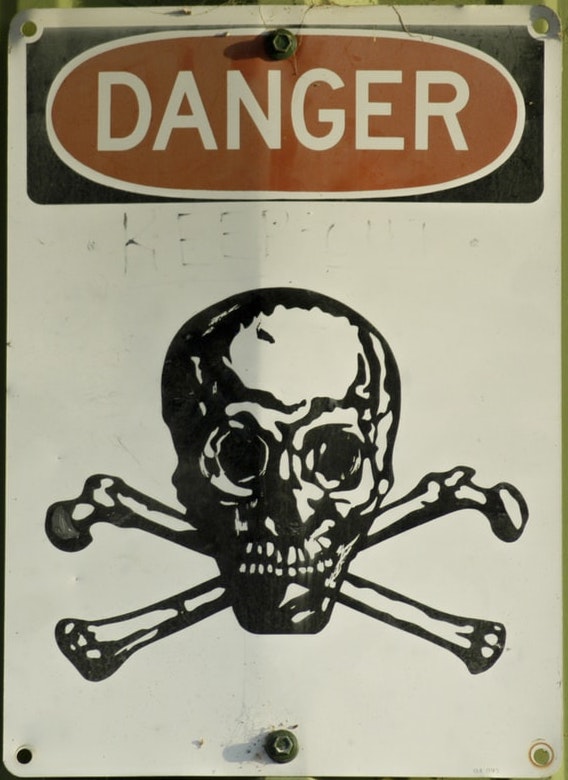
Or: How to White-Wash History

the corporate descendants of Boone Hall enslavers
where enslaved labor toiled to enrich Charleston County
with thousands of bricks made by unpaid enslaved hands
as we are the original experts of polite façade
according to our unassailable definition of integrity
we’ve removed inconvenient and unpleasant reminders

ghosts of kidnapped Africans and their children
to earn a generous profit on our “Lost Cause” mythology
designed for the comfort of the white visitor
daily and continuing violations to centuries of harm
and ensure the continued erasure of Black history

a house of deprivation, starvation and violence
as the actual history is too much of a downer
perfect for revisionist “Tara” fantasies

where barefoot children picked cotton dawn to dusk
like spiked iron collars placed upon enslaved shoulders
that was slapping, kicking, punching and whipping

on newly polished floors covering blood-stained ground
for a true fake experience, stand 14 hours without break
much as our forebears insured their human property
tho’ we accept no accountability for our past brutality
help us help you put as many levels as possible

between Boone Hall and its true history

Note: The left column contains direct quotes from local news and Boone Hall Plantation websites.


Etymology of the Erased

with deep respect to the Nipmuc Nation

Nipmuc: nippe– ‘fresh water’, amaug– ‘fish taken by the hook’   ̶  Algonquian
            Fresh water people flourish
            call Nippenet home for twelve thousand years
            cherish the lion, black birch and white pine

            thank Manitoo for abundant waters
            for largemouth bass and rainbow trout
            and pray for all living creatures

reservare: ‘to keep back’   ̶  Latin
            Wash ashores seep inland, ghostly,
            convert forest to property
            extinguish the lion

            convert Nipmuc people to Christian
            ‘Praying Indians’ (pray or die)
            then enslave or slaughter them, anyway

            and imprison the rest on Deer Island, Boston
            no water, no food, no shelter, in winter
            Few survive, some escape

Quaben: ‘place where many waters meet’   ̶  Nipmuc
            Snow-melt rivers tumble down
            a ring of mountainsides, sustain
            a fertile valley, fill a modest lake

            Boston dwellers thirst for more, claim the basin
            as their own, dam the rivers, flood and drown
            settler farms and four whole towns a hundred miles away

Qunnonoo: ‘mountain lion’  ̶  Nipmuc
            Fresh qunnonoo scat confirms
            Dakota lion’s eastward trek
            from Black Hills to the Quabbin rim

Waban: ‘the wind, the spirit’; a Nipmuc elder of the 1600’s; a suburb of Boston  ̶  Nipmuc
            Mystery figure glides long and low
            through Waban yards, and lopes
            past bikes and sand toys, sleek and muscled

            its three-foot black-tipped tail
            distinctive in the pre-dawn mist
            cub or prey dangling from its jaws


Margaret Bleichman is an emerging poet, queer activist and educator with writing in, or forthcoming in, Gyroscope Review, Poets Reading the News, Kitchen Table Quarterly, Fifth Wheel, Fauxmoir, The Dewdrop, and Between Us. Their poetry has won awards in two Joe Gouveia Outermost Poetry contests. A software engineer and professor, they helped establish LGBTQ+ health benefits and STEM programs to engage underrepresented students.

“Erased” by Rob Williams via a Creative Commons license.


A note from Writers Resist
Thank you for reading! If you appreciate creative resistance and would like to support it, you can make a small, medium or large donation to Writers Resist on our Give a Sawbuck page.
I’m Afraid There’s Something Wrong with Mr. Prescott

By Ron Burch

He started wearing 18th century clothing, donning a coat, waistcoat, and breeches. The breeches, with buttons down the side, went over his silk stockings. His shoes were rounded at the toes with low heels, the tongues fastened with large buckles. He had adopted a long riding duster that cut low past his knees, and around his shoulders sat a triple cape. Ruffles of lace appeared from under his coat at his wrists, along with a jabot on the front of his white shirt. Adorning his wrinkled head, for Mr. Prescott was in his 70s and bald, perched a powdered white wig, the back bound in a pigtail. On top of that, when he ventured out he wore a round-crown felt hat with a broad brim. In his right hand, he carried a heavy ornate cane, which he shook at people when he was annoyed.

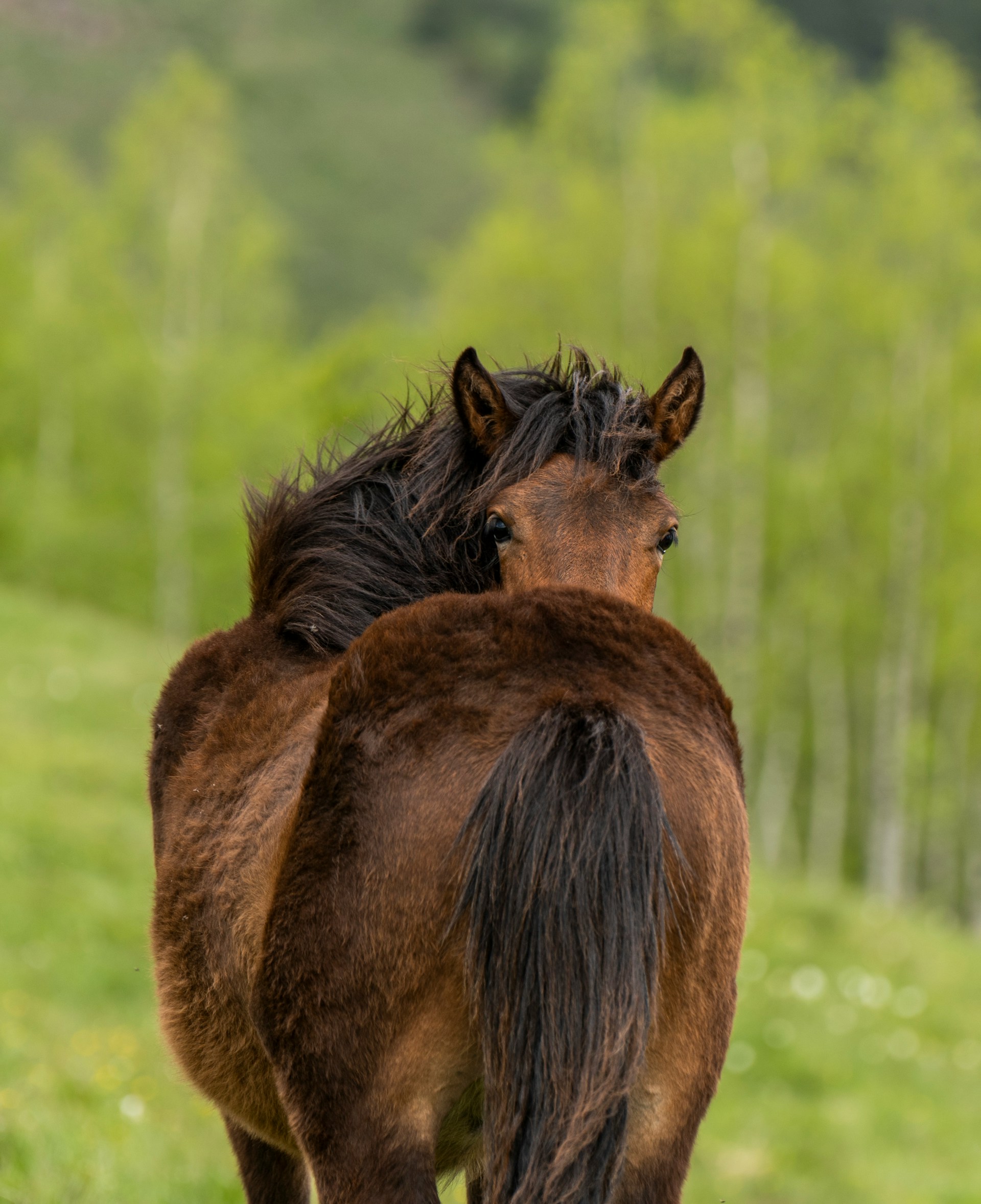
He also sold his car and purchased a large brown horse and saddle. He stabled the stallion in his garage against the HOA rules for our neighborhood, a suburb built in the 1960s, and his adjoining neighbor threatened to call the city and complain.

Mr. Prescott waved his cane at Gary, promising to thrash him.

Several of the neighbors were annoyed because his horse, which he named Privilege, had shit all over the streets where the kids usually played, and it was, honestly, everywhere.

Last Saturday, while our neighbor Dr. Lowry mowed his front yard, Mr. Prescott emerged from his house, wig intact but with no coat or waist coat, and demanded the doctor, a person of color, mow Prescott’s yard and repaint his house “as was his duty.”

Luckily, I was able to intercede before Dr. Lowry—beloved neighbor, well-known heart surgeon, and former college football line tackle—physically removed Mr. Prescott from his front yard. At the next HOA meeting, a petition signed by almost all the homeowners was submitted requesting that the Prescotts move out of our neighborhood due to the inappropriate behavior with Dr. Lowry. From the back of the room, Mr. Prescott stood, in full regalia, and accused the rest of us of “TYRANNY!” and ignorant of “the natural order of the world.”

After he stormed out—attempting to break a chair on the way, but being plastic, it only bounced—the HOA approached Dr. Doris Hinshaw, the therapist who lived the next block over, and offered to pay for her for a session with Mr. Prescott. Dr. Hinshaw declined saying that last week Prescott verbally assaulted her as a “whore and slattern” because she was not covering her head while at the grocery store and was not accompanied by a male guardian.

Mr. Prescott filed a lawsuit against our suburban community, Wind Hollows, claiming that since he was one of the original and still living purchasers of land in our neighborhood, the suburb belonged to him, “given his God-given right as a white male in our country.” His lawsuit also stated that the rest of us, his neighbors, were really his indentured servants who should be working the land at his behest, and he added two sheep to his garage barn.

The sheep took to wandering the neighborhood. They ate Mrs. Jenkins’s roses, and when she said she was going to sue him, Mr. Prescott threatened to have stocks built at the empty corner of Solace Street and Happy Drive to incarcerate her for public shame.

After Mr. Prescott rode Privilege to work (his office building is only a few blocks away where he is an accountant), my wife, Polly, visited Mrs. Prescott, who had been notably absent from the goings-on. She had been reduced to wearing a bodice and skirt with wooden clogs and her gray hair powdered white and covered by a cloth. Forced by her husband to give up her job—she had been the manager of our local library branch—she now gardened and fretting how poorly their plants were coming up. Even more worrisome, her husband expected her to turn their sheep into dinner courses.

Polly said Mrs. Prescott cried almost the entire visit, and my wife noticed that the tears washed away her white make-up, revealing a large bruise on her face, which she claimed an accident from walking into a door. She offered Polly some homemade jelly Mr. Prescott insisted she make from berries he’d found near their pool. When Mrs. Prescott could not name the type of berries, Polly politely passed and returned home.

Concerned about Mrs. Prescott’s safety, she called the police who came out but didn’t do anything, even after all the complaints, the threats Mr. Prescott had made, his wandering farm animals, and the concern that his mental faculties might be impaired. They said he was probably having a bad couple of weeks, and, even with Mrs. Prescott’s bruise, they declined to take any action.

Things were quiet for about a week. Mr. Prescott wasn’t seen riding Privilege to the office, and all the horse shit on the street was old. Then one night after supper, there was a tremendous crash outside, which brought out all the neighbors. Mr. Prescott’s horse had kicked his way out of the closed garage, breaking the door, freeing both him and the sheep. We discovered that the animals had no food or water as evidenced by the three of them simultaneously drinking out of Mrs. Jenkins’s birdbath. It was decided to try the authorities again, and the bodies of Mr. and Mrs. Prescott were discovered at their dining table, the remnants of Mrs. Prescott’s half-eaten berry jelly staining both their dinner plates and their stiff mouths.

The house sold to a nice family, after the Prescott’s kids removed everything except the historical clothing—put out front with the garbage.


Ron Burch’s fiction has been published in numerous literary journals including South Dakota Review, Fiction International, Mississippi Review, and New Flash Fiction, and it has been nominated for the Pushcart Prize and other awards. His last novel, JDP, was published by BlazeVOX Books. He earned his MFA from Antioch University Los Angeles.

Photo credit: Photo by Shahabudin Ibragimov on Unsplash.


A note from Writers Resist
Thank you for reading! If you appreciate creative resistance and would like to support it, you can make a small, medium or large donation to Writers Resist on our Give a Sawbuck page.
Two Poems by Renee McClellan

Black Listopia

I feel like an idiom that drips from Baldwin’s pen
“that” angry Black woman negotiating sin
I AM NOT YOUR NEGRO! A thing to be had
Thick lips, curvaceous hips, or a fashion fad
You can’t set me like diamonds
Or string me like pearls
Pick on my afro, then appropriate my curls

I AM A BLACK WOMAN
Black, Brown, and Yella, too
Why are you fucking with me? I don’t fuck with you.

I feel like a literary assault by Langston Hughes
An angry Black woman and her Weary Blues
I, TOO, SING AMERICA, a pejorative dream
Ghosts of my ancestors flow in my blood stream
That white picket fence and that sweet apple pie
That dream wasn’t mine, that nightmare’s a lie
Like a Raisin in the sun, do I fester, do I run
What happens to a dream Deferred, you’re looking at it
You haven’t heard?

I AM A BLACK WOMAN
Black, Brown, and Yella, too
Stop fucking with me and I won’t fuck with you

I feel like a mythical logophile, words linger & prod
Like Zora Neale Hurston
MY EYES ARE WATCHING GOD
Truth be told, Every tongue must Confess
Like Dust on the Road, I’m God’s perfect mess
Perfectly flawed and divinely conceived
All of Africa holds the mystery that is me
Ripped from my familiar, felt the soul of my seed
My daughters are raped and my sons can’t breathe
I’m a paradigm of potency, a leather-bound force,
An African fused American on a reparation course

I AM A BLACK WOMAN
Black, Brown, and Yella, too
I will NOT apologize for this trauma, FUCK YOU!

Angelou knew and her encouragement wise
Like a phoenix from its ashes – Still I rise
A PHENOMENAL WOMAN, phenomenally
I’m a Queen like Sheba with the bones of Lucy
With all that was taken on that infamous boat ride
My womb for stock and trade for my babies genocide
I should be angry, it’s justifiably so,
You auction the fruit of my womb then call me a ho
You ripped from mother African, the Proverbs of her son
And refused to Honor her for the work that she has done
Her children will RISE like the sun bathed in blue
Ebony warriors and the daughters of Shaka Zulu
I AM A BLACK WOMAN & I’m angry as fuck
But forgiveness in this moment, bitch, Good Luck!
I’m not the PEACE you seek, I wont lay down and die,
I wont turn the other cheek, I want an eye-for-a-mother-fucking-eye

I AM A BLACK WOMAN
This is the America I Sing
But you keep fucking with me,
HERE!
Hold my mother-fucking earrings!


That Tree

Strange fruit hanging from that tree
The crown shudders with each crosswind
Leaves of humanity blow like flecks of dust on the sea
Seeds sprinkled on top of soil
The roots spiral deep and strong,
The branches sway,
reaching for the sun limbs refusing to break
Spiny twigs like fingers closed around a tight fist
The trunk solid taking shape
Searching for a place to exist
Branches reaching toward the warmth of the sun
But meeting the coldness of too much shade
flailing in mercy

No sustenance to nurture its existence

Life dangles from that tree
Dangling shapeless
caught in the ambiguity of the whistling wind
the fruit falls from the tree
pulled to the ground by desire
thick tentacles of hope
Strange fruit growing on that tree


Renee McClellan, a Chicago native and writer of the EMMY award winning PSA, Pick Me! – Toy Loan, began her career performing with elite theater groups in Chicago. As a film and television actor, she performed in such productions as Brewster’s Place, Seinfield, and Deep Impact. She continued on to writing, directing and producing various film and television projects. A graduate of Chapman University with a BFA in Film Production, she also has an MFA in Screenwriting from The American Film Institute (AFI). A Long Beach resident, Renee has produced many award-winning productions often using Long Beach as the backdrop of her artistic expression. She is currently a professor at Pepperdine University, a best-selling author, and an award-winning filmmaker.

Photo credit: Lynne Hand via a Creative Commons license.


A note from Writers Resist

Thank you for reading! If you appreciate creative resistance and would like to support it, you can make a small, medium or large donation to Writers Resist from our Give a Sawbuck page.


Ode to My Reflection in the Mirror (on just one day)

By Kathy Kremins

“I sat with my anger long enough until she told me her real name was grief.”     – C.S. Lewis


We are better than this     No, we are this     Always have been

Columbus   mission schools   Tulsa Race Massacre   Charlottesville
La Operacion   children in cages   smallpox   pipelines   voter suppression

We are better than this

Michael Brown   Vieques   ICE   Indian Removal Act   fracking   Jim Crow
Breonna Taylor   Ponce Massacre   MAGA   Trail of Tears   lynching

No, we are this

16th St. Baptist Church bombing   Trayvon Martin   Hurricane Maria
Trump   California Gold Rush   slavery   Emmett Till   Elijah McClain

Always have been

Japanese internment camps   Proud Boys   Wounded Knee   Ku Klux Klan
Charleston church shooting   Tuskegee experiment   eugenics   Brett Kavanaugh

We are better than this     No, we have never been


Kathy Kremins (she/her) is a Newark, N.J., native of Irish-Catholic immigrant parents and a retired public school teacher and coach. Her poetry chapbook, Undressing the World, was published by Finishing Line Press (2022). Kathy’s recent work appears in Gallery Affero’s ongoing Poem Booth Project: Make Me Want to Holler, Drunk Monkeys, Digging Through the Fat, Limp Wrist Magazine, Platform Review, Paterson Literary Review, Soup Can Magazine, The Night Heron Barks, Stay Salty; Life in the Garden State Anthology, Stillwater Review, Lavender Review, and Divine Feminist: An Anthology of Poetry & Art By Womxn and Non-Binary Folx, and other publications.

Photo credit: Cathy Baird via a Creative Commons license.


A note from Writers Resist

Thank you for reading! If you appreciate creative resistance and would like to support it, you can make a small, medium or large donation to Writers Resist from our Give a Sawbuck page.


My Black Ass Is Resting

By Sarah Sheppeck


“I want to hear all of you.”

“Do I have to tell it in order?”

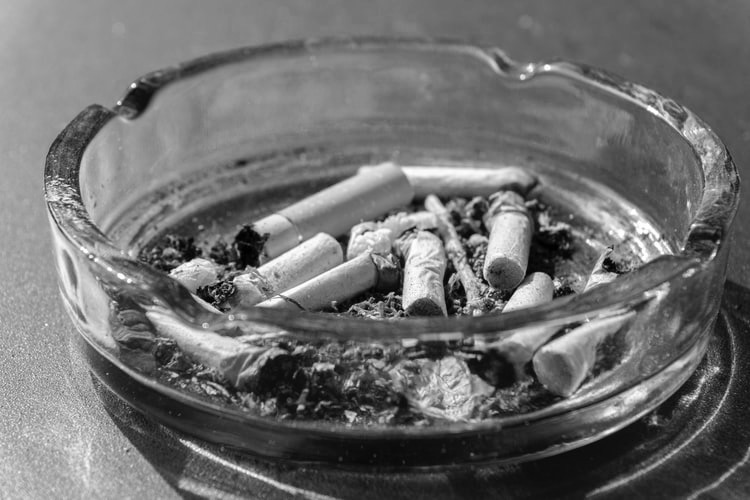
“However you’d like.” She takes a cigarette, lights it, hands me the pack. “The only condition is that you have to tell it all.”

“Okay.” I exhale a thick plume of smoke. “All right. Here goes.”

It’s Saturday, so I wash and oil my hair. It’s spiritual, sensual, the way the curls alternately clutch my fingers and yield to their touch. I exit the washroom a goddess, the very image of Oshun. The white woman who lives here points at my head and asks me what happened, says she’s never understood African hair.

“At least,” she says proudly, “I have never felt inclined to touch it.”

The white man to my left at the bar asks if I’ve ever been with a white man. I drink my wine. He continues, “I was raised not to see color. I just see a soul.” I sip. Another Black woman enters and sits three stool down. He takes the empty one beside her.

The white man to my right says he’s not usually attracted to Black girls, but I am beautiful. “What are you mixed with?” he asks.

“Blood and skin,” I say.

He laughs, but, “No, really,” he says, “you look good in black. Actual Black people don’t look good in Black.” He continues, “Your nose isn’t wide like Other Black People’s.”

My wine ends up in his face. The bar kicks me out.

My first love has left me. My replacement is small and thin and blonde and very, very white. I comb through his email, look for clues that he still loves me. He has written her that he will never date a Black woman again. She replied, “She’s not even Black. She’s almost as white as me.”

I do not check his email again.

After my first rape, I go back to work. I am writing for a white woman, a memoir for which she will receive all the credit. She says something that reminds me of It, and I begin to weep. She insists I tell her everything, so I do. She lays her hand on my hair and tells me I am well spoken even in distress.

When the memoir is published, my story is a part of it, but now it is hers. She is a star now. She does interviews and tells the story of her tumult, tells of the pride she feels in the help she has been able to provide other survivors. She is rich. I have stopped writing.

I stub out my cigarette. I stare at her, expectantly I suppose, though I couldn’t say what it is I’m expecting.

“So that’s it,” I say. I look for something for my hands to do. Always aware, always in tune, she takes them.

“Oh, baby,” she says, motheringly, “Never give a white woman anything you aren’t prepared for them to steal. That includes your trauma.”


Sarah Sheppeck is a graduate of U.C. Riverside’s Palm Desert Low-Residency MFA program in Creative Writing and Writing for the Performing Arts. She earned her B.A. from the University of Rochester and her Master’s in Secondary Education from the University of Nevada, Las Vegas. Born and raised in upstate New York with stints in Las Vegas, Los Angeles, and the woods of northern Maine, she is now kicking it in Brooklyn with her beloved nephew and her dog, Chloe. Find her on Twitter @EpicSheppeck if you like thirst traps and loud opinions.

Photo by Daniele Fotia on Unsplash.

Presidential Seal

By Jennifer Shneiderman


Slipping into Cadillac One
Gliding on lies and half-truths
Trump greets supporters
waving off warnings
and all that is humane.
He is the clear and present danger.

The SUV
a mobile panic room
used for political theatre
could be the Secret Service
Presidential seal of death.

The truth is a ghost
a shadow
an inconvenience
an artifact
dismissed out of hand.
Turn around and
White House portraits have been replaced
with funhouse mirrors.

Secret Service
doing their duty
following orders.
Only an enemy
would define them as expendable.
The devil is in their detail.

Before the fate is sealed
the future insular, fanatical
overrun by white supremacy
ruled by the stunningly irrational—
Vote like Jim Jones is standing over you
with a syringe.


Jennifer Shneiderman is a Licensed Clinical Social Worker living in Los Angeles. Her work has appeared, or is forthcoming, in Indolent Book’s HIV Here and Now, The Rubbertop Review, Writers Resist, the Poetry in the Time of COVID-19, Vol 2, anthology, Variant Literature, Bright Flash Literary Review, Wingless Dreamer, Trouvaille Review, Montana Mouthful, the Daily Drunk, Sybil Journal, Unique Poetry, Anti-Heroin Chic, Terror House, Thirteen Myna Birds, Potato Soup Journal, Awakened Voices, GreenPrints, and The Perch. She was the recipient of an Honorable Mention in the 2020 Laura Riding Jackson poetry competition.

Photo by Matthew T Rader on Unsplash.