Right to Life

By Remy Dambron

Imagine instead
if we incentivized our citizens

to stalk and spy on
to report and incriminate

those among us preparing
for an assault,

purchasing pistols
brandishing rifles and boasting bump stocks

customizing scopes and fastening silencers
loading up on boxes of bullets intended

to pierce our flesh
to break our bones

to end the beating
of the bleeding hearts

of our brethren.

I wonder then
how the conversation

about the sanctity of life
would go.


Remy is an activist whose work focuses on denouncing political corruption and advocating for social justice. His poetry has appeared in What Rough Beast, New Verse News, Poets Reading the News, Society of Classical Poets, and Writers Resist. He credits his wife, also his chief editor, for his growth and development as a Portland-based writer. Visit Remy’s website.

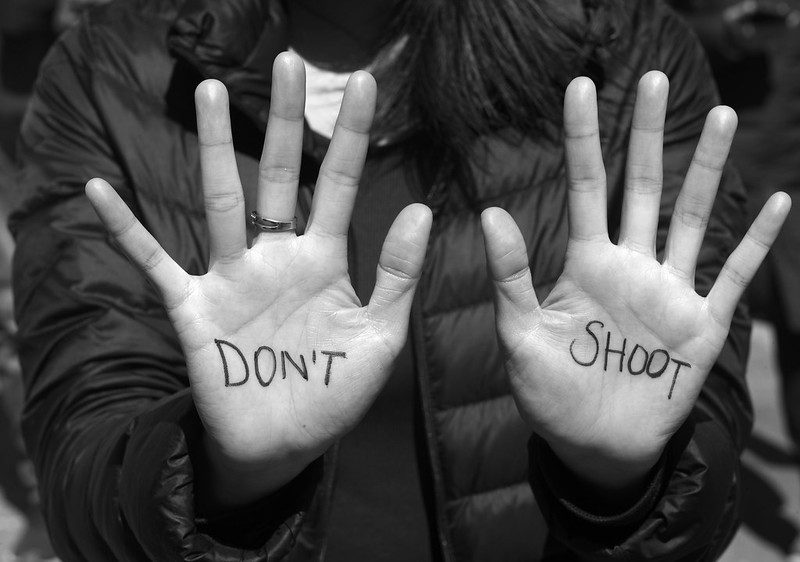
Illustration by Stephen Melkisethian via a Creative Commons license.


Note from Writers Resist: If you appreciate creative resistance and would like to support it, you can make a small, medium or large donation to Writers Resist from our Give a Sawbuck page.

Equity Begins at Home

By Katherine West

Equity is something that is dealt with in D.C. or not dealt with in those red states that still use the “n” word or in big cities with big crime . . . where is the white channel on this police radio? not in this small town in this blue state where the Apaches still dance not here where artists and tweakers share the park where beaters and hummers share the road where the governor is Hispanic and a woman and we were all vaccinated in a timely manner not in this small house where the one who cooks never does the dishes, no, equity is not an issue here, not in our bed where I cannot sleep at night too full of all the words I must not speak in the day, words that choke as well as any outlawed police hold so that from not being able to speak I arrive at not being able to breathe to think to dance with the Apaches, the Salsa band, R & B on the KKK station my feet only move the way the hanged man’s twitch even after he’s dead even though I’m not dead am I? in my blue state art town where the rainbow coalition picnics together at the same big table in the shade where I, wearing my silence and my pink apron, serve a meal I must not eat.


Katherine West lives in Southwest New Mexico. She has written four collections of poetry: The Bone Train, Scimitar Dreams, Riddle, and Raising the Sparks. Her poetry has also appeared in many journals, including Writing in a Woman’s Voice, Lalitamba, Bombay Gin, New Verse News, Tanka Journal, Splash!, Eucalypt, and Southwest Word Fiesta, as well as in art exhibitions at the Light Art Space gallery in Silver City, New Mexico, and at the Windsor Museum in Windsor, Colorado. Katherine has two published novels, under the pen name Kit West: Lion Tamer and When Night Comes, A Christmas Carol Revisited, the latter published by Breaking Rules Publishing (BRP), for whom she teaches creative writing workshops. A sequel to When Night ComesSlave, The Adventures of Huckleberry Finn Revisited—is pending publication by BRP. Follow Katherine on Facebook.

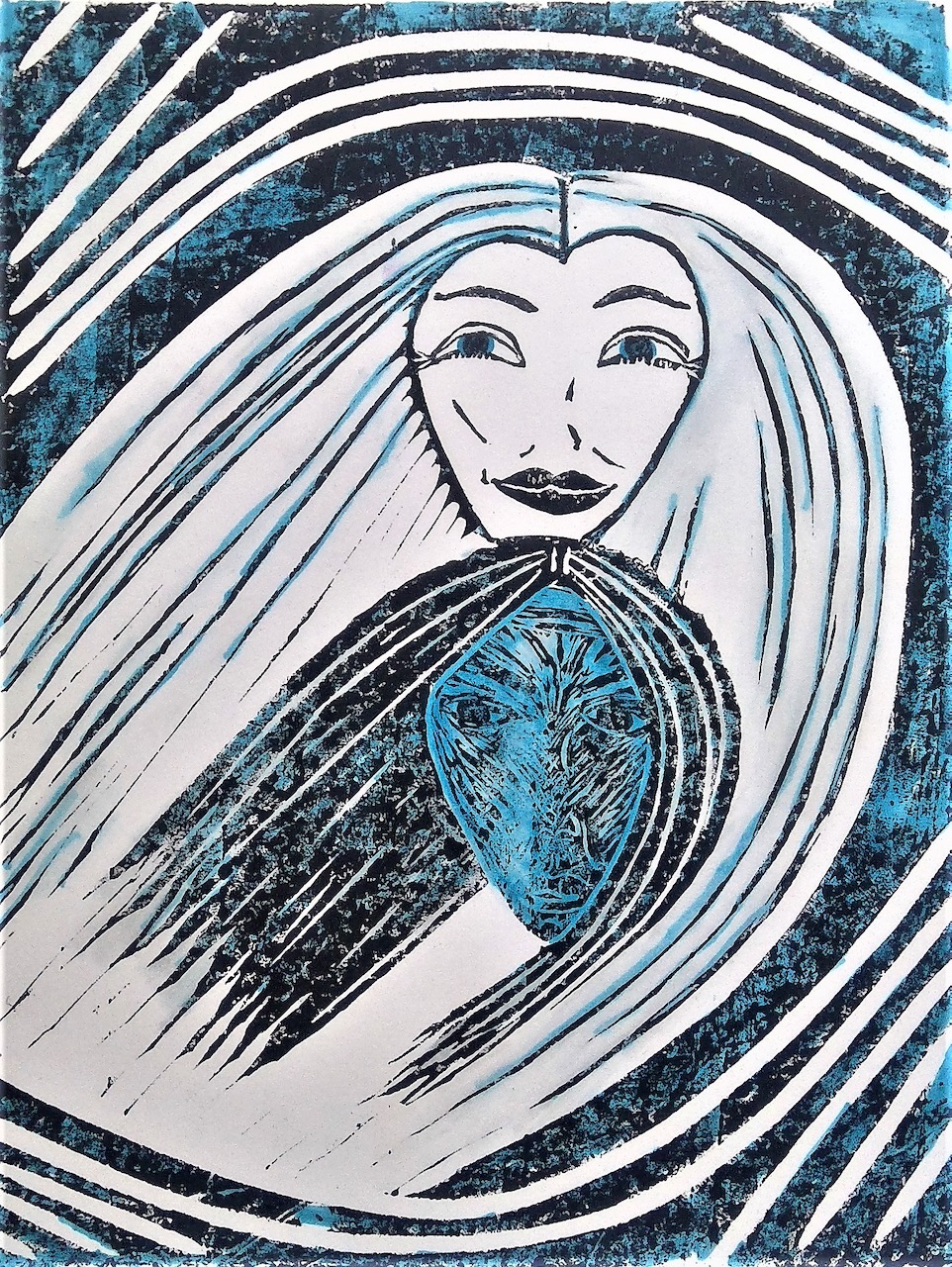
Illustration, “Twice Born Woman,” by Katherine (Kit) West. From Katherine:

My lino cuts are inspired by nature, spirituality, and social justice. They do not attempt perfection, rather, they aim to suggest the mystical moment of connection, either with an idea, a flower, or a sudden understanding of justice. At the center of my work is love. The true work of the human animal. Our only hope.

See more of her work on her Facebook artist page.


Note from Writers Resist: If you appreciate creative resistance and would like to support it, you can make a small, medium or large donation to Writers Resist from our Give a Sawbuck page.

26 Oct. 2020: A rap on Barrett’s confirmation to the U.S. Supreme Court

By Kathleen Minor

The dude who refused to denounce white supremacy,
tried to nuke a hurricane and our democracy,
puts kids in cages and promotes segregation.
That dude? Rewrote the Declaration.
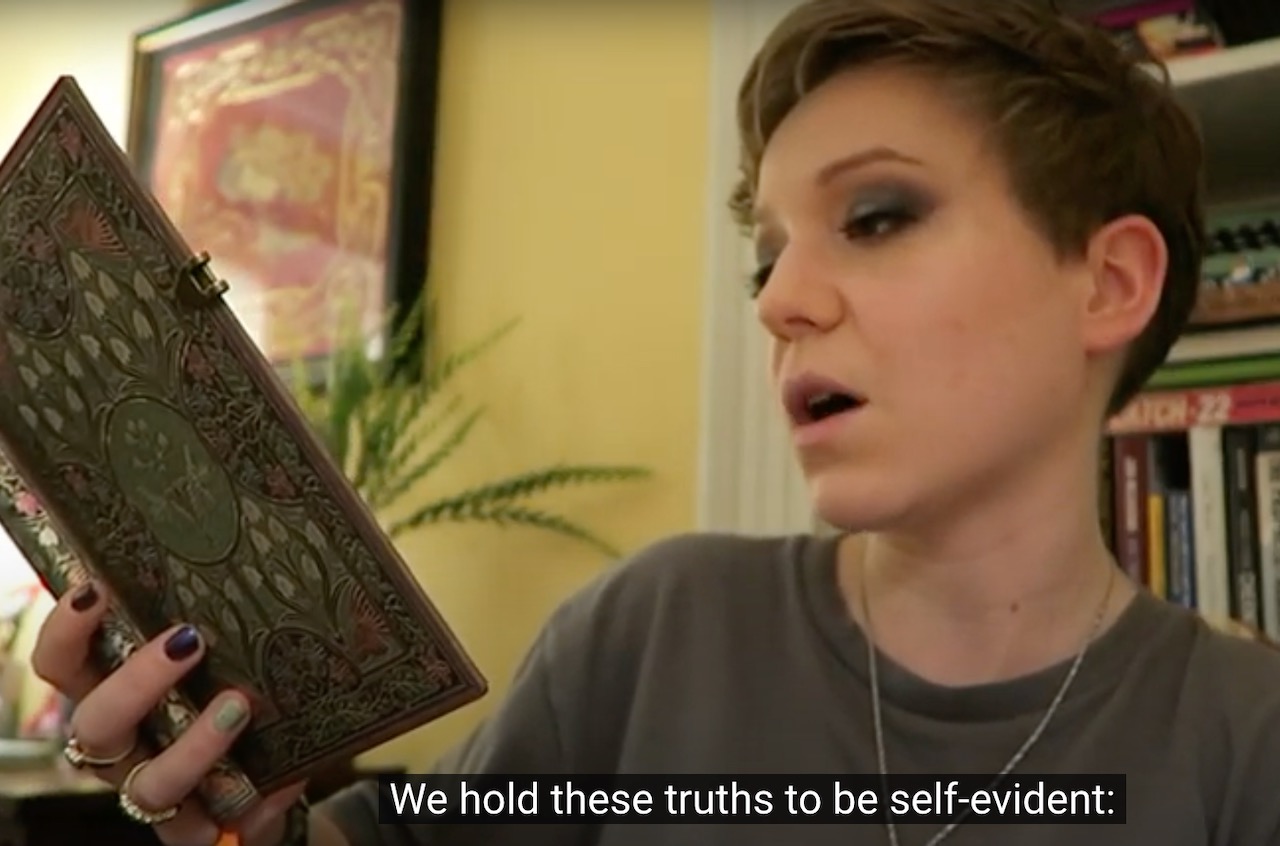
We hold these truths to be self-evident:
If you ain’t white, you must be irrelevant.

Listen.
There seems to be some confusion.
We’ve been called violent and angry and useless
and brainwashed, educated and clueless.
With RBG gone, we are Ruthless.

They want us defeated and silenced.
But we built this country to protest a tyrant.
We waged war, and wrote a Constitution
in order to form a more perfect union.
So God bless your trickle-down caste system, yo.
This is America.
The caste system votes.


Kathleen Minor graduated in May 2019 from Berry College with a B.A. in Creative Writing and now volunteers as an assistant coach for the Berry College speech and debate team and as a leader for the Democratic Party of Georgia. Her work has appeared in Ramifications Magazine, Riggwelter Press, and Terror House Magazine, and her poetry received the Academy of American Poets Award from Berry College. She currently lives in Dalton, Georgia. Follow her on Instagram: @thoughttrainderailed.


Note from Writers Resist: If you appreciate creative resistance and would like to support it, you can make a small, medium or large donation to Writers Resist from our Give a Sawbuck page.

A Letter for My Unborn Daughter

By Debasish Mishra


Dear daughter, this is a dark world

Light is a mere plaything
and if you were present here
it’d diffract through the window
and fall on your orange cheeks
like petals of the sun

But darkness is real

How do I define it?

Wherever you go, it’ll follow
in the stares of those shameless eyes
and those hands that grope
the genitals and laugh
and boast their bare brazenness,
seeking medals for their phalluses

You can’t stare back
No, you are not permitted to!
If you dare, you may be
stripped of your wings
or splashed with acid and acrimony

You can’t run to the cops too
Even their uniforms are stained
with sins and semen and blood

Who will help you, my love?
Who will shield you from
the stares and stabs,
the lust and locusts?

How long will I water your seed
with my tears and prayers and hopes?

Stay in the womb forever, I plead
That’s the safest place I know

Or wait till the world becomes an orchard
where you can hop and fly and kiss
the rainbow of your dreams someday


Debasish Mishra, a native of Bhawanipatna, Odisha, India, is the recipient of The Bharat Award for Literature in 2019 and The Reuel International Best Upcoming Poet Prize in 2017. His recent poems have appeared in North Dakota Quarterly, Penumbra, trampset, Star*Line, Enchanted Conversation, Spaceports & Spidersilk, and elsewhere. His poems are also forthcoming in The Headlight Review, Space & Time, Bez & Co and Quadrant. A former banker with United Bank of India, he is presently engaged as a Senior Research Fellow at National Institute of Science Education and Research, HBNI, Bhubaneswar, India.

Photo credit: “Father & Daughter” by Dean White via a Creative Commons license.


Note from Writers Resist: If you appreciate creative resistance and would like to support it, you can make a small, medium or large donation to Writers Resist from our Give a Sawbuck page.

⌘lzibongo for Black Women

By Kai Coggin

a praise poem, after JP Howard, for my Sisters


praise you Black Woman
because you never be praised enough
let me lift your collective name here
let me strip you of all your forced-on shame here
praise you for the stars that unfold when you smile
praise you for the way moons rise in your eyes
praise you for your tragic hope and sacrifice
life for you ain’t been no crystal stair
but you still keep climbin’ on
praise Langston’s mama
praise her wisdom and truth

praise you Black Woman
because you never be praised enough
praise be your laugh
let me say that again because it’s the song
that makes the planet spin
praise be your laugh
how it cackles and coos loud brassy beautiful
unafraid and unbroken
honey and fire

praise you Black Woman
because you never be praised enough
praise your natural hair and its curls
how whole galaxies swirl in the furls of you
praise your box braids and your twist outs
praise your locs and your bantu knots
praise how I got a Sister whose afro blocks out the sun
praise how I got another Sister whose afro is so tall
God uses it for a microphone
infuses her as gospel
Black Woman
praise your fingers braiding and trading beads
and weaving histories into wild glorious hair
the ceremony of pulling
praise your pulling
praise your pushing
pushing back on all that no longer makes room
for your crown
here Queen— here is your crown

praise the Motherland of your womb
how everything comes from you
and is stolen from you
and is returned to you again in glory
or entombed
I can’t begin to know your story but
praise you Black Mama
forgive us for what we have done
and all that we still do
how we don’t do right by your Black sons
how they are followed all their lives
by the shadows of guns
and how your Black daughters atlas the weight
of systemic cycles yet undone
and you still teach them to lift their faces to the sun
praise Breonna Taylor right here

praise you Black Woman
how you still raise continents of sons and daughters
despite their predisposition to being slaughtered
how the Atlantic ocean is still found in your transatlantic tears
the salt of you betrayed and splayed out
creating lands under your feet from all your centuries of grief
praise you as homeland
praise you as shore of a brighter world
praise the holy map of you
praise the North Star
that hangs from your earlobe like a pearl
praise you Black Mama
for how you hold the world
praise your swaddle and thick body
your warmth and your song
how you lullaby the night with a defiant hope
praise your hope
praise your dreams
praise the scripture of your face
praise the lines on your hands and crows-feet hymns
make an altar of my tongue
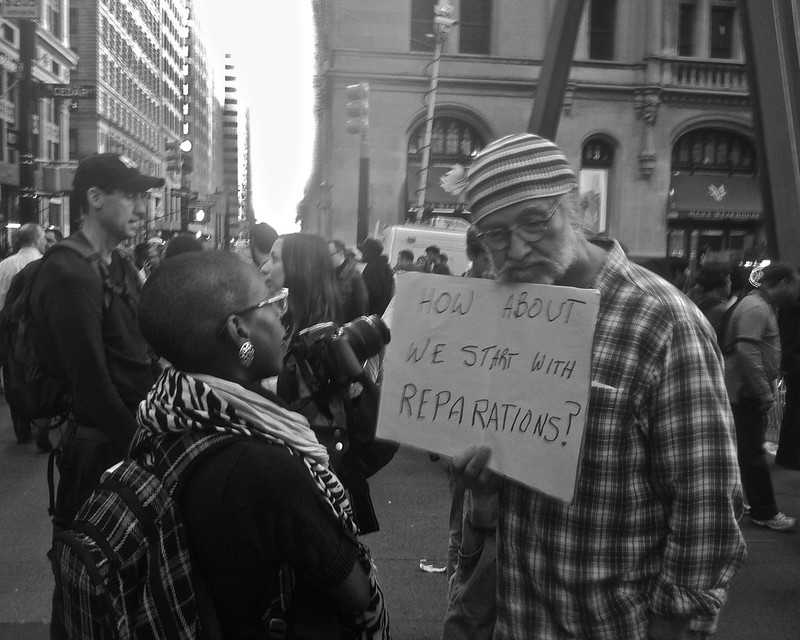
so that my words are poetic reparation
burn nag champa and sage in praise of your fire
praise be your fire
praise your persistence and your resistance
praise how you Harriet your children to a new freedom
praise how you Rosa until someone else offers you a seat at the table
praise how you Audre deliberate and afraid of nothing
praise how you Maya rising and phenomenal
praise how I got a Sister who named her daughter Revolution
Black Woman praise you
how your heroes and saints speak to you from the edge of the world
how your ancestors tell you the mountaintop is near
how every step toward freedom
is emblazoned into your DNA
encoded in your retaliations of Black Joy
praise your Black Joy

praise you Black Woman
because you never be praised enough
praise your hips
praise your thighs
praise your arms and your legs
praise your back and your heavy head
praise your neck and them tight-ass shoulders
praise your temples
and how your whole beautiful Black Woman body
is a Temple
praise you Black Temple
praise your knees and your elbows
your fingers and your toes
praise your perfect beautiful Black nose
and your perfect lips
praise your voice that sings and hums and hallelujahs
praise your voice that shouts for justice
that leads us all to shout beside you BLACK LIVES MATTER

Sister praise you
praise your heart for all that you bear
praise your ears for all that you hear
praise your eyes for all that you see
how your eyes and ears sometimes
bring you your biggest fears
and yet somehow somehow you soldier on
praise you Black Woman
I don’t know how you be so strong

this praise poem could just go on and on and on and on
because Sister—you never be praised enough


Kai Coggin (she/her) is the author of four poetry collections, most recently Mining for Stardust (FlowerSong Press 2021) and Incandescent (Sibling Rivalry Press 2019). She is: a queer woman of color who thinks Black Lives Matter, a teaching artist in poetry with the Arkansas Arts Council, and the host of the longest running consecutive weekly open mic series in the country—Wednesday Night Poetry. Recently awarded the 2021 Governor’s Arts Award and named “Best Poet in Arkansas” by the Arkansas Times, her fierce and powerful poetry has been nominated four times for The Pushcart Prize, as well as Bettering American Poetry 2015, and Best of the Net 2016 and 2018. Her poems have appeared or are forthcoming in POETRY, Cultural Weekly, SOLSTICE, Bellevue Literary Review, TAB, Entropy, SWWIM, Split This Rock, Lavender Review, Luna Luna, Blue Heron Review, Tupelo Press, West Trestle Review, and elsewhere. Coggin is Associate Editor at The Rise Up Review. She lives with her wife and their two adorable dogs in the valley of a small mountain in Hot Springs National Park, Arkansas.

Photo from the Smithsonian Institution Traveling Exhibit via a Creative Commons License.


Note from Writers Resist: If you appreciate creative resistance and would like to support it, you can make a small, medium or large donation to Writers Resist from our Give a Sawbuck page.

Cell Block Tango

By Avra Margariti


A lullaby—seductive, hypnopaedic—slinks
through the high security ward
of the women’s prison.
Morrigan, the phantom queen

whistling between sharp teeth her very own
Cell Block Tango, banshee call
to arms. The doors all open wide

locks broken, passwords hacked, guard
uniforms painted red with life, never to
be washed clean again.

The inmates run, rubber soles over steel
and concrete, spilling through the courtyard
under the watchful eye of priestess Crow.
High on moonlight, bacchanal

the inmates dance like willow boughs
in the midst of a tornado.
They’ll drink the prison van’s gas for wine,
poison shared between thirsty lips,
cinereous uniforms set

on fire.

They’ll wear ferns for clothes,
or their skins
for clothes, or their bones—

their bones they will at last set free.


Avra Margariti is a queer author, Greek sea monster, and Pushcart-nominated poet with a fondness for the dark and the darling. Avra’s work haunts publications such as Vastarien, Asimov’s, Liminality, Arsenika, The Future Fire, Space and Time, Eye to the Telescope, and GlittershipThe Saint of Witches, Avra’s debut collection of horror poetry, is forthcoming from Weasel Press. You can find Avra on twitter @avramargariti.

Photo by Chris via a Creative Commons license.


Note from Writers Resist: If you appreciate creative resistance and would like to support it, you can make a small, medium or large donation to Writers Resist from our Give a Sawbuck page.

Gender Neutral

By Jane Muschenetz

To Skyler and the Diversionary Theatre, who stand proud and help all of us stand together.


They’re studying the effects of gendering on language
and cultural norms —
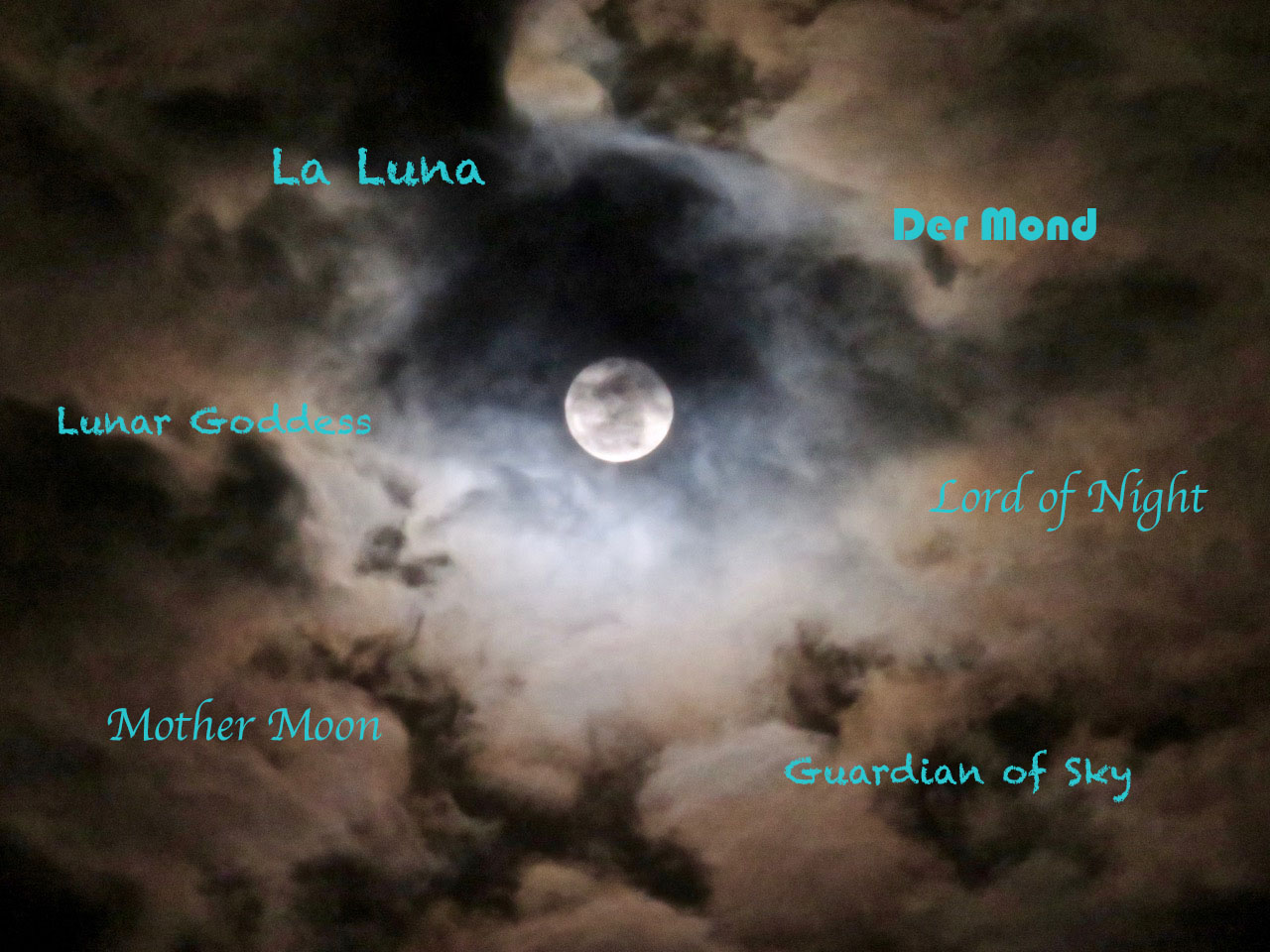
how the moon is feminine in Spanish and Russian,
but masculine in German
how this alters
our perception of its qualifications —
whether we believe it to be
beautiful, changeable (f) or
stoic, abrupt (m) —
over 1000 Google links discuss in length

how the moon is the moon.

Some promote doing away with sex, but I —
having learned gender from my Mother Tongue
and feeling its lack like a missing limb when I try bending English —
am fascinated, mouth hungry
to embrace each understanding of our world —
uncomfortable and broken as it is.
Learning to speak again and again,
there is something revealing
about seeing the moon
through every lexiconic, scientific, and artistic notion —
and still not having enough
words to fill the sky.


Emerging writer and fully grown MIT nerd, Jane (Yevgenia!) Muschenetz (Veitzman!) came to the US as a Jewish refugee from Ukraine at 10 years of age. She is now mother to two very American kids. Identity and cultural displacement strongly influence her writing. Creator of PalmFrondZoo.com, Jane’s work also appears or is forthcoming in Mom Egg Review, The San Diego Poetry Annual, and The Detour-Ahead Exhibit.

Photo by Debbie Hall.


Note from Writers Resist: If you appreciate creative resistance and would like to support it, you can make a small, medium or large donation to Writers Resist from our Give a Sawbuck page.

Rudy Springs a Leak

By Suzanne O’Connell


This morning I found a meatloaf in a basket.
When you look, there are always things to find.
The only time you can find a fraudulent ballot
for example, is when you look.
We have statisticians willing to testify
that there is a big coordinated Thing.
It lurks in every city.
It’s chained to the rack of your public library
in the ‘F’ section, ‘F’ for fraud.
It sits on your front porch next to the Ficus.
It’s taken over Silicon Valley and CNN.
It’s a scientific fact.
Even Tanzania has rules about inspectors.
Everyone knows the smell of rotten meat, right?
How did the meatloaf get in there?
It’s logical to ask.
Voters could have been dead,
or voted 30 times, or for Mickey Mouse.
An extraordinary number of brave,
patriotic Americans came forward to witness.
Extraordinary!
I don’t have time to read you their affidavits,
I need to grab some lunch.
And I seem to have sprung a leak.
I thought I was waterproof.
My suit is starting to feel greasy,
like prison stew.
My ducts might also be full
as my oil gauge is blinking.
Anyway, trust me, the pattern repeats itself.
It’s only logical.


Poet’s note: This is a found poem from Rudy Giuliani’s speech at the Four Seasons Landscaping Store.


Suzanne O’Connell’s recently published work can be found in North American Review, Poet Lore, Paterson Literary Review, The Summerset Review, Good Works Review and Pudding Magazine. O’Connell was awarded second place in the Poetry Super Highway poetry contest, 2019. She was nominated twice for the Pushcart Prize. She received Honorable Mention in the Steve Kowit Poetry Prize, 2019. Her two poetry collections, A Prayer for Torn Stockings and What Luck, were published by Garden Oak Press.

Rudy Giuliani portrait and photograph by Dan Lacey, via a Creative Commons license. Purchase his art on Etsy.

Note from Writers Resist: If you appreciate creative resistance and would like to support it, you can make a small, medium or large donation to Writers Resist from our Give a Sawbuck page.

Farmers Market, Eastern Shore of Maryland

Summer 2021

By Erin Murphy

Everything is free, it seems: parking, treats for dogs
whose owners browse free-range brown

eggs. Last month scores of documents
were found in a nearby attic,

dry rotted and tattered. One offered
30 dollars for the capture of

a Negro man named Amos

with coarse trousers, a tolerable good
felt hat, buckled shoes, and scars

beneath both eyes. It’s not enough
that this street is now emblazoned

with the words Black Lives Matter.


Erin Murphy’s eighth book, Human Resources, is forthcoming from Salmon Poetry. Her work has appeared or is forthcoming in The Normal School, Diode, Southern Poetry Review, The Georgia Review, Women’s Studies Quarterly, and elsewhere. Her awards include the Dorothy Sargent Rosenberg Poetry Prize, The Normal School Poetry Prize, and a Best of the Net award. She is poetry editor of The Summerset Review and Professor of English at Penn State Altoona. Visit website at www.erin-murphy.com.

Photo credit: Fibonacci Blue via a Creative Commons license.

Note from Writers Resist: If you appreciate creative resistance and would like to support it, you can make a small, medium or large donation to Writers Resist from our Give a Sawbuck page.

New Deal, No Mule

By Julie A Dickson


Cotton familiarity, certainly,
reparation absent, disparity
of races, apparent then, in lack
of mule plus 40 acres promised,
disconcerted, hired workers
of color, tried to transcend past
inequity, berated frequently,
repeatedly as subservient, un-
respected and mostly suspected
crime, intrusion, caucasian
collusion to diminish pride, worth
taken from generations passed,
freed at last, initial celebration,
only to face abrasive resentful
looks; reduced to history books,
lacking accurate depiction;
emancipation but cost high,
standing by fields, fruitful cotton
yield, in actuality, little more
than poverty revealed after 150
years freed, more than 50 since
King; other than fortunate few,
in contrast, bring home a living
inadequate, still cast in ill light;
not much has changed, reality
skewed, not equal exactly –
time to review, renew deal.


Julie A. Dickson is a poet and young adult fiction writer who addresses issues of environment, human and animal rights, and nature. Her work appears in journals including Ekphrastic Review, Sledgehammer, Open Word and Avocet. Dickson advocates for captive zoo and circus elephants and shares her home with two rescued feral cats, Cam and Claire. She is a Push Cart Prize nominee and serves on the board of the Poetry Society of New Hampshire. Her full length works are available on Amazon.

Photo credit: Tyler Merbler via a Creative Commons license.

Note from Writers Resist: If you appreciate creative resistance and would like to support it, you can make a small, medium or large donation to Writers Resist from our Give a Sawbuck page.

GAZA

By Kiran Masroor

Gaza did not destruct for us to watch.
The way the word Gaza stays in the back of the throat.
I didn’t know I loved Gaza until it became so small.
Small as a word in a sentence. We fit such enormous things
into our mouths and expect that the meaning still comes through.
You cannot say a country’s name over and over until it is
reduced to the last bitter syllable. You cannot condense a million lives
and strain them and slice them and dice them and season them.
You cannot fit every angle into the words you say.
You cannot hold the beating love story of every citizen
and move the camera to their feet and catch
the smirk when they turn the alleyway onto the main road.
You cannot capture the slap of their soles
or the bend of their ankles as they run. If you could grab
a pitcher full of water but the pitcher was as big and impossible
as the moon and you poured it all onto the page until
the water became an ocean and the faces of every
loved thing resurfaced, maybe then
you could approach the entirety of things—
the young boy splashing his face with water,
standing beside the others as prayer begins,
thinking about the girl he loves,
and the girl in the waiting room of a clinic
tapping her foot against the floor,
and the wind outside, rearranging dust,
carrying footprints to sea.


Kiran Masroor is a rising junior at Yale University where she studies Neuroscience and Evolutionary Biology under the pre-medical track. On campus, she is involved in TEETH Slam Poetry, Timmy Global Health, and Yalies for Pakistan. Her poetry appears in such publications such as the New York Quarterly, the Connecticut Literary Anthology, and the Yale Global Health Review.

Photo credit: Peter Tkac via a Creative Commons license.

Note from Writers Resist: If you appreciate creative resistance and would like to support it, you can make a small, medium or large donation to Writers Resist from our Give a Sawbuck page.

Oath: n. curse, vow, promise.

By Lea Page


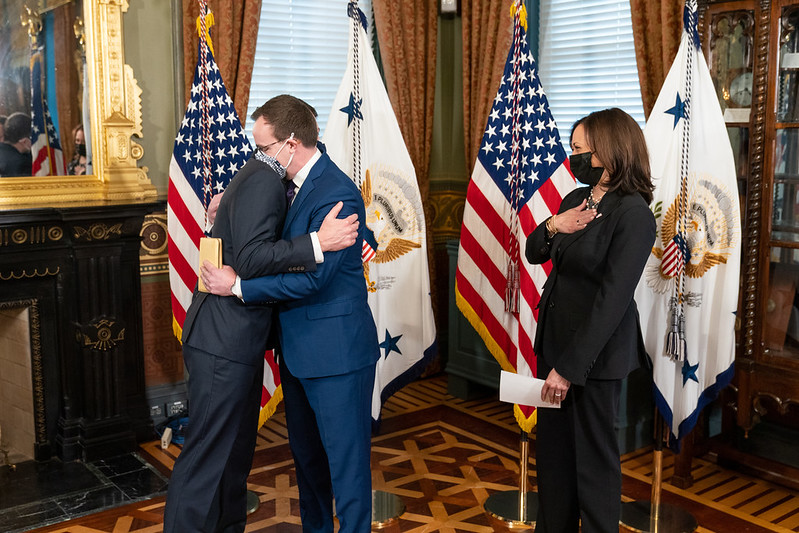
The photograph: Vice-President Kamala Harris (let’s just say that one more time: Vice-President Kamala Harris)—a woman, a brown woman, a black woman, an Asian-American woman, a woman born of immigrants, a powerful woman, a fierce woman, a joyful woman—swears in a man whose husband—partner, third-gentleman (?), the love of the man’s life, his staunchest supporter and best friend—holds the Bible on which he places his left hand before taking his oath of office. The book is small with a yellowed cover. Its pages appear tattered, maybe dog-eared, and all I can think is: That looks like my old Roget’s Thesaurus. I know the man is devoutly Christian in the old-time love-your-neighbor way, so I believe the book is an actual Bible (turns out, it’s his mother’s), but I wonder what it would mean to swear on a thesaurus, on a religion devoted to all the possibilities, to an expansion of definition, to inclusion and nuance. Think of paging through that holy book for a synonym for vice-president and finding: woman, brown woman, black woman, anyone, everyone, you, you, you.


Lea Page’s work has appeared or is forthcoming in The Washington Post, The Rumpus, Pinch, Stonecoast Journal, Pithead Chapel, High Desert Journal and Slipstream. She is also the author of Parenting in the Here and Now (Floris Books, 2015). She lives in rural Montana with her husband and a small circus of semi-domesticated animals.

Photo credit: The White House Flickr account.

Two Poems by Alice Rothchild

[fusion_builder_container hundred_percent=”no” hundred_percent_height=”no” hundred_percent_height_scroll=”no” hundred_percent_height_center_content=”yes” equal_height_columns=”no” menu_anchor=”” hide_on_mobile=”small-visibility,medium-visibility,large-visibility” class=”” id=”” background_color=”” background_image=”” background_position=”center center” background_repeat=”no-repeat” fade=”no” background_parallax=”none” enable_mobile=”no” parallax_speed=”0.3″ video_mp4=”” video_webm=”” video_ogv=”” video_url=”” video_aspect_ratio=”16:9″ video_loop=”yes” video_mute=”yes” video_preview_image=”” border_size=”” border_color=”” border_style=”solid” margin_top=”” margin_bottom=”” padding_top=”” padding_right=”” padding_bottom=”” padding_left=””][fusion_builder_row][fusion_builder_column type=”1_1″ layout=”1_1″ spacing=”” center_content=”no” link=”” target=”_self” min_height=”” hide_on_mobile=”small-visibility,medium-visibility,large-visibility” class=”” id=”” background_color=”” background_image=”” background_position=”left top” background_repeat=”no-repeat” hover_type=”none” border_size=”0″ border_color=”” border_style=”solid” border_position=”all” padding=”” dimension_margin=”” animation_type=”” animation_direction=”left” animation_speed=”0.3″ animation_offset=”” last=”no”][fusion_text]

Thoughts on walking by rippling grey water under a darkened sky

In the days before stretch marks,
second husbands,
morning stiffness,
encore careers.
In the days when we couldn’t imagine
finding weed and condoms
secreted under our teenagers’ beds.
Or knowing the location of
every hidden bathroom in innumerable coffee shops,
Whole Foods,
Farmers’ Markets.

In the days when we wore clunky platform heels and
mini-skirts,
tossed a lion’s mane of crazy hair,
never worried about bunions,
hammer toes,
aching knees.

In those days,
poetry spilled from our guts,
orgasms came easy.
The spirit songs rooted
in our less encumbered selves,
wended their ways to our melodious, defiant tongues,
buoyed by a million women marching,
bearded men burning draft cards,
the fervent possibilities of youth.

Now, even in our graying successes,
we are weighted by the stones
of our disappointed mothers,
of bruises and torn ligaments accumulated
by stumbling through life.

Now, the future has creeping limits.
We’re stalked by the next mammogram,
unrelenting cough,
crushing brick on the chest.
Now, we have silver haired urgency
nipping at our toes.

This is an old fashioned
Call to action!
Take heart.
Wear purple.
Poke amongst old embers.
Your sisterhood will hold you.

When you are drowning,
we will throw you a life raft.
When you are gardening,
hand you a hoe.
If you fall into a hole,
we will haul down a ladder,
bad backs and all.

But when you are singing,
we will dance

Within reason.


The Right to Choose

December 30, 1994
Brookline, Massachusetts 

On December 29,
twenty-two-year-old John Salvi,
thick black hair,
a wisp of a mustache,
eyebrows that knitted together
over the bridge of his nose,
drove to a hunting range
to practice his aim.

The following day,
less than two miles
from my home,
on a crisp, subzero morning,
forty pregnant girls and women,
partners, friends, mothers,
anxious, sad, frightened, resolved,
waited in a Planned Parenthood Clinic
for their turn.

Salvi strode into the clinic
carrying a black duffle bag.
If anyone had been watching,
they would have heard the quiet buzz
as he opened the zipper,
removed a modified .22 caliber Ruger 10/22 semi-automatic rifle.

He hit the medical assistant, Arjana Agrawal,
in the abdomen,
killed the receptionist, Shannon Lowney,
with a shot to her neck.

Screaming, blood,
a scramble for safety.
a shower of bullets,
five wounded.

He took his gun,
sprinted to his Audi,
drove west on Beacon Street
to Preterm Health Services,
two miles away.

Salvi strode into the clinic,
asked the receptionist, Lee Ann Nichols,
“Is this Preterm?”
Shot her point blank with a hunting rifle.
A security guard, Richard Seron,
returned fire.

Salvi dropped the duffle bag
containing receipts from a gun dealer
in Hampton, New Hampshire,
plus seven hundred rounds of ammunition and a gun.
He fled south to Norfolk, Virginia,
was captured after firing over a dozen bullets
into the Hillcrest Clinic.

The police arrived at Preterm
five minutes too late.

I trained before abortion was legal,
cared for women,
traumatized, mangled, infected,
by back-alley procedures.

I was an abortion provider
at the Women’s Community Health Center
and Beth Israel Hospital,
ten minutes from Planned Parenthood.

The next morning,
my eleven-year-old daughter
asked me, as I left for work,

“Mommy, are you going to die today?”


Alice Rothchild is a retired ob-gyn, author, and filmmaker who is writing a memoir in verse for young adults exploring her childhood in the 1950s and 60s and her development as a feminist physician and activist. Her poetry appeared in a collection of poems and essays titled Extraordinary Rendition: (American) Writers on Palestine. Her other published nonfiction books and contributions to anthologies, blogs, and webzines are listed on her website: alicerothchild.com. She is inspired by the unheard and the forgotten, the awakening of women’s voices and truth telling in the twenty-first century.

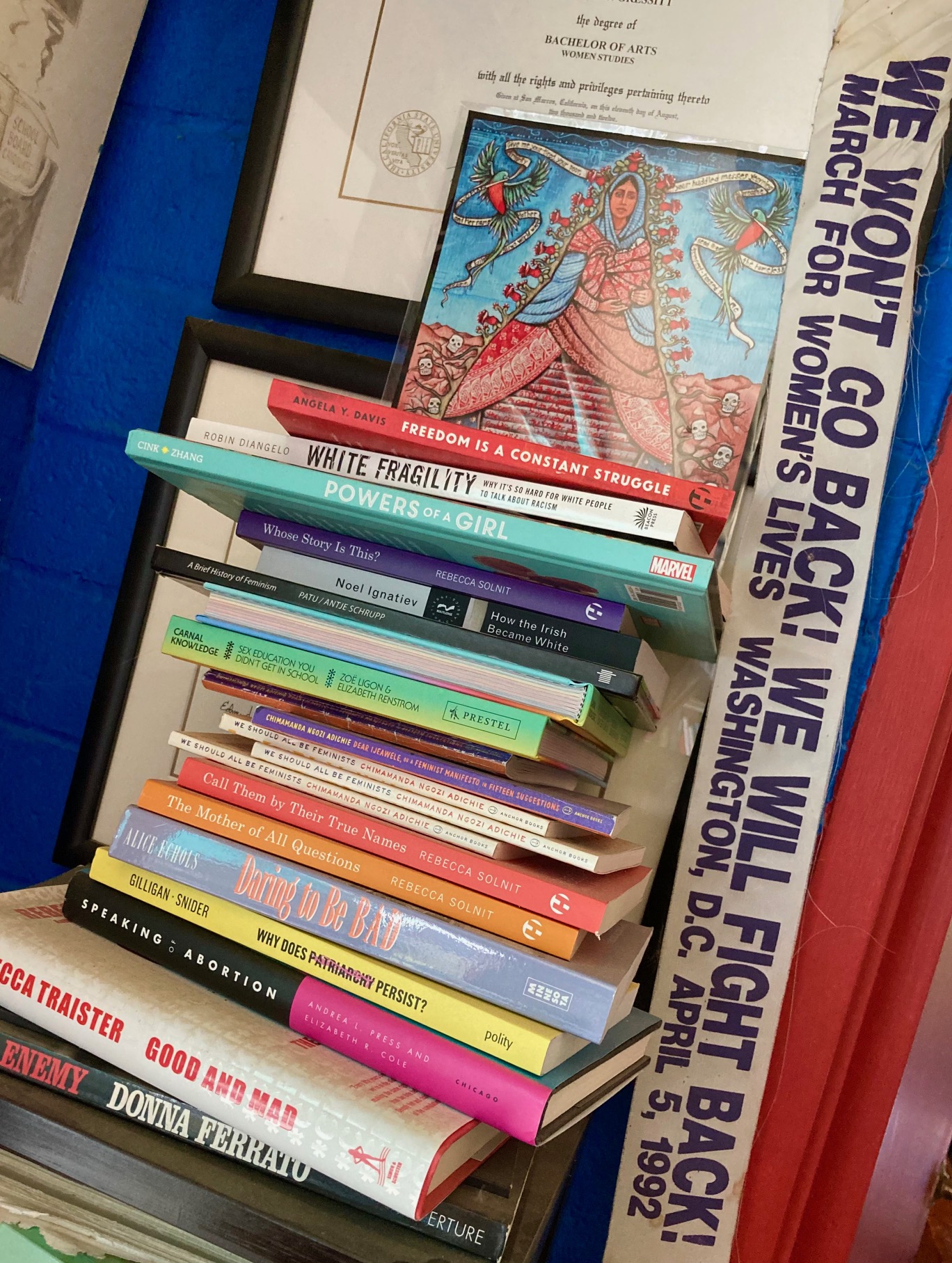
Photo credit: K-B Gressitt.

[/fusion_text][/fusion_builder_column][/fusion_builder_row][/fusion_builder_container]

Sip-In: 1966

By Jesse Mavro Diamond


For LGBT Rights Activist Dick Leitsch


Carpenters, bankers, bricklayers, undertakers.
Why gay bars?
Because we could only be gay
In gay bars.

The N.Y. State Liquor Authority CEO:
no discrimination in bars. Why?
because bars had the right to refuse customers
not acting suitably. Therefore, disorderly.

Bankers, bricklayers, undertakers, carpenters.
And Dick, a former Tiffany salesman
all risking entrapment because
wasn’t flirtation with a cute, undercover cop
worth the risk?

At the West Village bar,
John, Dick, Craig and Randy
dropped the “H” word bomb.
We are homosexuals and we want a drink.
Dick, Craig, John and Randy
I can’t serve you!
You’re not suitable! Therefore disorderly!

It’s true:
when a carpenter has sex with a banker
or a bricklayer has sex with an undertaker
or a John has sex with a Craig
or a Randy has sex with a Rick

being orderly is simply not suitable.


Jesse Mavro Diamonds latest book of poetry, American Queers, will be published in 2022 by Cervena Barva Press. Her poetry has been published in many journals in The U.S. and Ireland. Her awards include first place in Eidos magazine’s international poetry competition for “A Very Sober Story,” the Tennessee Williams Literary Festival’s One of Ten Best Poems in the U.S. for “Swimming The Hellespont,” and “Chetwynd Morning,” chosen by Lascaux Review for its prize anthology. “An Elegy for Devron,” was musically scored by composer Mu Xuan Lu and premiered at Jordan Hall, Boston, in 2008. For many years, Mavro Diamond taught writing courses in Boston area colleges and high schools. She initiated and taught the first creative writing course Boston Latin School ever offered in its 386-year history.

Photo credit: USC Doheny Memorial Library.

My Black Ass Is Resting

By Sarah Sheppeck


“I want to hear all of you.”

“Do I have to tell it in order?”

“However you’d like.” She takes a cigarette, lights it, hands me the pack. “The only condition is that you have to tell it all.”

“Okay.” I exhale a thick plume of smoke. “All right. Here goes.”

It’s Saturday, so I wash and oil my hair. It’s spiritual, sensual, the way the curls alternately clutch my fingers and yield to their touch. I exit the washroom a goddess, the very image of Oshun. The white woman who lives here points at my head and asks me what happened, says she’s never understood African hair.

“At least,” she says proudly, “I have never felt inclined to touch it.”

The white man to my left at the bar asks if I’ve ever been with a white man. I drink my wine. He continues, “I was raised not to see color. I just see a soul.” I sip. Another Black woman enters and sits three stool down. He takes the empty one beside her.

The white man to my right says he’s not usually attracted to Black girls, but I am beautiful. “What are you mixed with?” he asks.

“Blood and skin,” I say.

He laughs, but, “No, really,” he says, “you look good in black. Actual Black people don’t look good in Black.” He continues, “Your nose isn’t wide like Other Black People’s.”

My wine ends up in his face. The bar kicks me out.

My first love has left me. My replacement is small and thin and blonde and very, very white. I comb through his email, look for clues that he still loves me. He has written her that he will never date a Black woman again. She replied, “She’s not even Black. She’s almost as white as me.”

I do not check his email again.

After my first rape, I go back to work. I am writing for a white woman, a memoir for which she will receive all the credit. She says something that reminds me of It, and I begin to weep. She insists I tell her everything, so I do. She lays her hand on my hair and tells me I am well spoken even in distress.

When the memoir is published, my story is a part of it, but now it is hers. She is a star now. She does interviews and tells the story of her tumult, tells of the pride she feels in the help she has been able to provide other survivors. She is rich. I have stopped writing.

I stub out my cigarette. I stare at her, expectantly I suppose, though I couldn’t say what it is I’m expecting.

“So that’s it,” I say. I look for something for my hands to do. Always aware, always in tune, she takes them.

“Oh, baby,” she says, motheringly, “Never give a white woman anything you aren’t prepared for them to steal. That includes your trauma.”


Sarah Sheppeck is a graduate of U.C. Riverside’s Palm Desert Low-Residency MFA program in Creative Writing and Writing for the Performing Arts. She earned her B.A. from the University of Rochester and her Master’s in Secondary Education from the University of Nevada, Las Vegas. Born and raised in upstate New York with stints in Las Vegas, Los Angeles, and the woods of northern Maine, she is now kicking it in Brooklyn with her beloved nephew and her dog, Chloe. Find her on Twitter @EpicSheppeck if you like thirst traps and loud opinions.

Photo by Daniele Fotia on Unsplash.

January 6th

By Sherry Stuart Berman


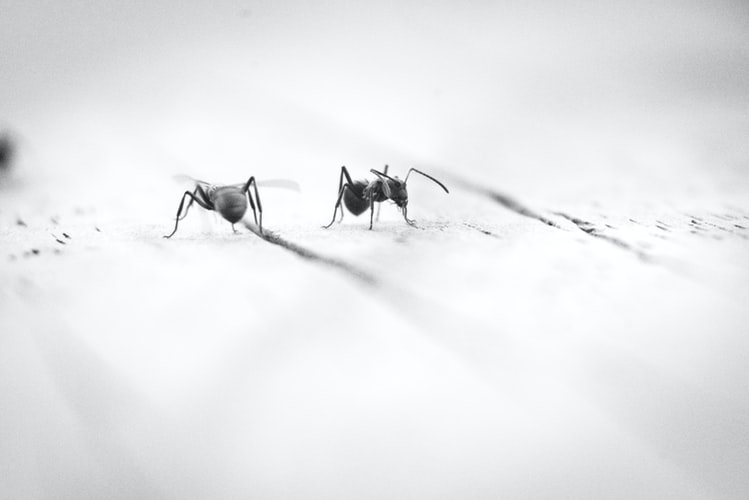
when they are ants
world is colony is home
is superorganism

single-file, no ears
they feel vibrations
with their feet
rely on scent
for instruction

they are trash-handlers,
excavators, swarm
when called to

and when their king
corrupts their wings
and rots the wood
and steals their eggs
they carry him
(they are very fine)

how grateful are they
world is colony is home is white


Sherry Stuart Berman’s poems have appeared in Paterson Literary Review, Guesthouse, 2 Horatio, The Night Heron Barks, Atticus Review, Rise Up Review, and in the anthologies Malala: Poems for Malala Yousafzai and Drawn to Marvel: Poems from the Comic Books. She is a psychotherapist in private practice and lives in Staten Island, NY, with her husband and son.

Photo by Thomas Kinto on Unsplash.

In Praise of Boredom

By Suzanne O’Connell


The past four years have been like
having a dad who sells all the furniture
while I sleep,
breaks the windows over the sink,
throws out my stuffed bunny and lava lamp,
then promises to take me to the Ferris wheel.
He’s so loveable,
until he isn’t.
Like when he shoves me, yelling.
“Don’t bother me, wash those tears off your face.”

Later he bought me the gold lamé purse
that had tiny cells, making it collapse
like a golden puddle in my hands.
It had a handkerchief inside, lace
around the edges, ‘Thursday’
embroidered in pink on the front.

Thursday is the day the nice grownup
took the other one’s place,
stood with his hand on the Bible,
said, “My whole soul is in this.”
The grownup man has never lied to me
or sold our furniture
or broken my toys.
Not even one time.


Suzanne O’Connell’s recently published work can be found in North American Review, Poet Lore, Paterson Literary Review, The Summerset Review, Good Works Review and Pudding Magazine. O’Connell was awarded second place in the Poetry Super Highway poetry contest, 2019. She was nominated twice for the Pushcart Prize. She received Honorable Mention in the Steve Kowit Poetry Prize, 2019. Her two poetry collections, A Prayer for Torn Stockings and What Luck, were published by Garden Oak Press.

Photo by Agnieszka Kowalczyk on Unsplash .

the arrogance of illusion

by conney d. williams


the hope of this people,
like tectonics, quake
under the abusive weight
of impostors sitting
upon its collective breath
still engulfed in protest
dissenting to comply
with its own extinction
and these impostors
or parasites
would pillage
even the safety from victims
even as they
disintegrated in obscurity
human waste
inside foreign landfills
there is no mention
of memory
or ancestors
because super predators
eat the bone
suck the marrow
claiming copyright & discovery
over souls still starved
like refugees excommunicated
from access and accomplishment
this is the way of colonizers
and disease
never ask for introduction
infect every cell
with their own freedom
their own salvation
antidote and recovery
are not options
only the arrogance of illusion


Conney D. Williams is a poet, actor, community activist and performance artist with two collections of poetry. Leaves of Spilled Spirit from an Untamed Poet (2002) and Blues Red Soul Falsetto (2012); two critically acclaimed poetry CDs, River&Moan and Unsettled Water. His new collection, the distance of observation, will be released August 21, 2021 by World Stage Press.

Photo by Randy Jacob on Unsplash .

The Hold

By Pat Andrus

For Sandra Bland, Breonna Taylor, Michael Brown, George Floyd, seven-year-old Aiyana Mo’Nay Stanley-Jones, Eric Garner, Dante Parker, Atatiana Jefferson, ninety-two-year-old Kathryn Johnston . . .


A broken baton
a dead rat
5 jailers with guns.
How the life loses its state
of pure being.
How a bone breaks
and one rose falls.

I live in my own isolation
chosen, without blood
smeared on my dreams.
And the color of weak
is a white picket fence,
a story painted with
craven words
and a rule
of division and
unequal equations.
Can the body
find its healing laws?
Can a language
bandage the sores
of a society’s broken moons?

The colors of red
and brown
and yellow
make possible for mended wounds
if the dam finally breaks
and washers clean
the bottoms of
twisted stories and
fallen guns,
of cracked memories
trying to bandage
a lie in
the histories of the burning white suns.


Pat Andrus, having just completed her third work of poetry Fragments of the Universe (but right prior to the pandemic), has fully settled into her new home, San Diego, California. An instructor for several years at Bellevue College outside Seattle, Andrus also served two years as an artist-in-residence for the state of Washington. She also was fortunate to study modern dance with Seattle-based choreographers and with choreographer Debra Hay for a four-month residency. Today you can find Pat co-coordinating two monthly Poetic Legacy Workshops with Christophver R, sharing her works with San Diego State University MFAers at the Wine Lovers monthly, singing with her spiritual center’s choir, and giving support when financially possible to Voices of our City and Border Angels.

Photo by Oscar Helgstrand on Unsplash .

Stop Light

By D.A. Gray

“Embrace diversity.
Unite —
Or be divided,
robbed,
ruled,
killed
By those that see you as prey.
Embrace diversity
or be destroyed.”
― Octavia E. Butler, Parable of the Sower


The light works for now.

We’re stopped at an intersection
beside the Walgreens and its half-full
parking lot, safely in our lanes,
east – west traffic moving steadily
across our path.  The barber shop
across the street, quiet,
its door opening once in this minute
of stillness.  No walls coming down
to separate us, just a belief in order
that’s still holding this moment
on the smooth black-topped road,
and the smooth skin of our cars
stays smooth because we believe
for now, that’s the way they should.

A shock jock is screaming over
the radio waves about givers and takers.

A truck races through a yellow light
with a confederate flag streaming.

So many would destroy this rather
than see it shared.  I’ve deployed
to third world countries, aware
of how long it took to build this.
I’ve guarded voting lines, aware
of how hard to make sure
everyone knows this matters,

and guarded trucks so the road
crews could lay the asphalt.

I’ve come back knowing what we have
to lose – and it’s not enough when
we’re electing people who rise
to power just to watch it burn.

The light changes.  We may move
forward, only if everyone on this road
notices the light and knows it means forward.


D.A. Gray is the author of Contested Terrain (FutureCycle Press, 2017) and Overwatch (Grey Sparrow Press, 2011). His poems have appeared in The Sewanee Review, Grey Sparrow Journal, Appalachian Review, Writers Resist, Comstock Review, Still: The Journal and Wrath-Bearing Tree among others. He holds Masters Degrees from The Sewanee School of Letters and Texas A&M-Central Texas. A veteran, Gray now teaches, writes, and lives in Central Texas.

Photo by wu yi on Unsplash.