When Ruby Falls

By Marjorie Gowdy


“Have you been targeted by the President of the United States?”
Lady Ruby Freeman in chalkboard-white suit, crimson hat,
asks The Man.

Swept aside like yesterday’s ashes, Our Lady.
Stalwart Georgia pine,
poll counter, valiant, precise.

Slandered on screen by a middling mayor-madman.
Chased like a fox by hungry hounds, rushed to ground,
Ruby gave her girl a ginger mint.

See Ruby Falls, the highway signs say. Spectacular scenes
of cascading magenta and pearl, cavern’s secrets
cry on the face of beaten rock.

Can you believe them? Slicked-haired, pop-eyed pols
pointing wrinkled fingers at the screen?
No, don’t.

Listen instead to Lady Ruby, underground, reputation splayed.
Like the Falls, secreted to a cool haven.
Wrapped in red robes, singing truth.

Stone-hardened men connived Ruby’s fall. Slapped her heart.
Yet our bounteous bronze goddess stands to burst their lies.
She is Lady Ruby, and Ruby will rise.


Marjorie Gowdy has pursued careers that fed her writing. Recent poems are included in Valley Voices, Indolent Books, Clinch River Review, Artemis, the summer and fall/winter 2022 editions of Anthology of the Writers’ Guild of Virginia, The Centennial Anthology of the Poetry Society of Virginia, the book Poetry Ink 2022 by Moonstone Press, and the 2022 book Quilted Poems. Her chapbook, Inflorescence, was released in March 2023. Also an illustrator, Gowdy lives and writes in the Blue Ridge Mountains.

Photo credit: Raymond Clark Images via a Creative Commons license.


A note from Writers Resist

Thank you for reading! If you appreciate creative resistance and would like to support it, you can make a small, medium or large donation to Writers Resist from our Give a Sawbuck page.

Twin Pandemics, Twin Cities

By AJ Donley


They warn you about the dangers
that you’ll be feverish
that your throat will hurt
that it’s contagious
that you won’t be able to breathe

they try to scare you away from action
with the risk of symptoms
that have always been there

because COVID is new
but racism is not

I wear a mask to protect my loved ones
from the pandemic that affects them
my white friends and family
worry about what goes into their lungs
when people of color are breathing in
the soot from communities we’ve burned
to the ground then blamed on riots
we doused them in gasoline and got mad
when they lit a match to keep warm
no wonder they can’t breathe

Now I’m feverishly marching
my throat hurts from screaming
anger is contagious—but so is justice—
let it infect you
lest it kills you


AJ graduated from the University of Minnesota, Morris with a BA in psychology and English. She also has her MA in forensic psychology from the University of North Dakota. Currently working in the sexual violence field, she seeks to explore the human psyche and illustrates what she sees with poetry. AJ plays with form, language, and imagery in an attempt to interpret what she experiences. She seeks decadence and authenticity and piercing honesty. Poetry is a practice and is never complete; just as the mind is subjective and dynamic, so too is her writing.

Photo credit: Dominic Dominic Jacques-Bernard via a Creative Commons license.


A note from Writers Resist

Thank you for reading! If you appreciate creative resistance and would like to support it, you can make a small, medium or large donation to Writers Resist from our Give a Sawbuck page.
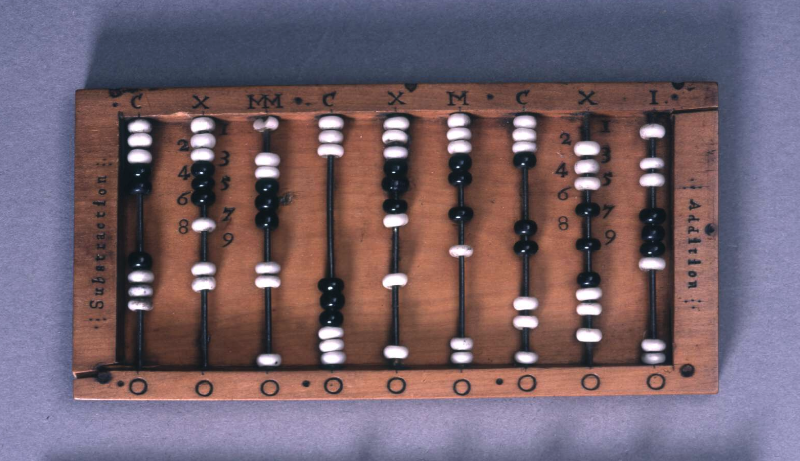
Questions/Answers (for Black U.S. citizens applying to register to vote in Selma, Alabama, in 1963—based on actual exams)

By Ellen Girardeau Kempler


After you pay your poll tax, Boy, I’ll ask you

how many jellybeans are in the big jar
I keep on my Registrar’s desk?

How many bubbles are in this bar
of soap?

How many seeds are in a watermelon,
any watermelon? (An answer you should
naturally know.)

How many drops of water are in the Alabama River
running faster than you could ever march, under the bridge
named for the KKK’s Grand Dragon, the bridge you’ll have to cross
before the correct answers to my questions even begin to become clear,
before, out of the tear gas fog, you feel the shock of electric cattle prods,
the whack of lead pipes raised to concuss you past thought, only then
will you understand that NO is the answer to ALL of my questions.

Because I am your judge, jury and executioner.
Because NO is the only way we can keep you chained
caged buried burned drowned beaten hanging
in the place where we first brought you,
intended you to stay.


Ellen Girardeau Kempler’s poems have appeared in the 2022 Mindful Poetry Anthology, Narrative Northeast, Writers Resist, Phoenix Rising Review, Gold Man Review, Orbis International Poetry Quarterly and many other small presses and anthologies. In 2016, she won Ireland’s Blackwater International Poetry Prize and honorable mention in Winning Writers’ Tom Howard/Margaret Reid Poetry Contest. Called “a timely and powerful selection of climate poetics,” her chapbook, Thirty Views of a Changing World: Haiku + Photos, was published in December 2017 by Finishing Line Press. Learn more at www.ellengirardeaukempler.com and follow her on Instagram @placepoet and Twitter @goodnewsmuse.

Image credit: Courtesy of the poet, an image from the Birmingham Civil Rights Institute.


A note from Writers Resist

Thank you for reading! If you appreciate creative resistance and would like to support it, you can make a small, medium or large donation to Writers Resist from our Give a Sawbuck page.

Bipolar

By Angel T. Dionne


“But you don’t look bipolar,”
as if bipolar
is screaming at cars from the sidewalk
as if bipolar
is hopping up on tables
to proclaim that I’m the Messiah
as if bipolar
is no career
and no relationships.

“But you don’t look bipolar,”
as if being happily married
means I can’t struggle
as if an academic career
means that the ups and downs
hurt any less
than they would
if I were jobless
as if leading a normal life
invalidates my illness.

“But you don’t look bipolar,”
meaning that they think bipolar type II
should be easier to deal with
than type I
meaning that they don’t see five days up
and two weeks down
as a medical struggle
meaning they can’t see that although the symptoms are different,
they’re nonetheless painful
meaning they don’t see why it’s necessary
for me to take two little pink pills
one little white one
meaning they view my psychiatric medication
as a crutch
a weakness
meaning that they view my cycles as romantic
creative
eccentric.


Angel Dionne is an English professor at the University of Moncton Edmundston campus. She finished her PhD in creative writing at the University of Pretoria in 2020, and she is the author of a chapbook of strange flash fiction entitled Inanimate Objects (Bottlecap Press) as well as co-editor of an anthology entitled Rape Culture 101: Programming Change (Demeter Press). Her work has appeared in Chicken Soup for the Soul, JAKE, Sein Und Werden, The Molotov Cocktail, The Missing Slate, The Peculiar Mormyrid, Crack the Spine Anthology, Everyday Fiction, Narrow Doors in Wide Green Fields, Surrealists and Outsiders, Good Morning Magazine, Garfield Lake Review, and Litbreak Magazine. She currently lives in Canada with her wife and cats. Learn more at angeldionne4.weebly.com.

Photo credit: “State Normal School” in the public domain via Salem State Archives.


A note from Writers Resist

Thank you for reading! If you appreciate creative resistance and would like to support it, you can make a small, medium or large donation to Writers Resist from our Give a Sawbuck page.

The Crucible

By Christie M. Buchovecky


An old friend messaged today.
Told me “Got a funny story
if ya have time . . .” and sent a clip:
riding by an old Colonial I recognized,
despite a view obscured by rain
and the barred windows
he’d had to film behind.

“Nothing like riding
down your old street
in the back of a police car”

I made time. Clawed it back
from meetings, spreadsheets, VIPs.
You must for someone who
made a kinder home of your heart.

Our bond was forged twenty years ago,
tempered in apparent contradiction.
Honors Student / Future Tradesman,
Class President / Class Clown,
Teachers’ pet / Boy given detention
just for walking down the hall
with a traffic cone
on his head.

“Was in town for a job;
stopped by to thank our science teacher.
Her class made me a better welder.
Hoped to tell her that now
I teach students like me – make them see
how working with your hands
doesn’t mean you are stupid.”

I always knew he was smart. He knew
I wished being smart didn’t matter
as much as being kind.

“She wasn’t there, but that admin guy
who used to file my detention slips?
Yeah . . . he’s principal now. Lectured me
for not knowing to sign in, then
had me arrested for trespass.”

Funny, how some things never change.

The last time I went back,
administration offered me cake.


A geneticist in New York City, Christie M Buchovecky devotes her days to finding answers for families caught in the diagnostic odyssey. In the evenings, she can be found either enjoying excellent food and ridiculous games with friends or curled up on the couch with her husband and cats (notebook in hand). Ever curious about the world and our place in it, Christie turns to poetry to examine truths we hold within ourselves. Previous work can be found in Humana Obscura and on Instagram @cm.buchovecky.

Photo credit: Fabrice Florin via a Creative Commons license.


A note from Writers Resist

Thank you for reading! If you appreciate creative resistance and would like to support it, you can make a small, medium or large donation to Writers Resist from our Give a Sawbuck page.
Out-of-Pockets to Pick

By David Icenogle


They tell me
the copay for my medication is only
a hundred and fifty dollars.
The best way to measure privilege
is the way people use the word “only.”
They tell me
I should be relieved
because without insurance it would’ve been eight-hundred.
Why not make it a million?
They tell me
never, never, never
stop taking your psychiatric medications abruptly
unless you can’t afford them apparently.
I’m already buying off-brand food
just to pay for the off-brand, generic prescriptions,
maybe I could afford the one-fifty
but what I can’t afford is the uncertainty
because last month it was one-twenty.
Spare me
the carpet-bombing of jargon that you think
will bully away my questions.
“It’s complicated” ain’t an answer
especially when it’s on purpose.
Here’s something not complicated,
people die without insulin
so don’t intimate that this is negotiable,
don’t intimidate and call it consensual,
and don’t boast about what insurance has saved me
when it’s all Monopoly money.
I’ve spent way too many lunch breaks on hold
just to be told
I should’ve had an ailment that’s in-network.
My patience has met my out-of-pocket.
I just want it to make sense.
If an apple-a-day keeps the doctor away
then this system is an orchard
rotten to the core.
It has the bedside manner of a buzzsaw.
And no
I can’t tell you how to fix it
but that doesn’t make me or it less broke,
so if ya’ll keep blowing smoke
I’m going to keep pulling fire alarms
until the insulin runs out.


David Icenogle is a writer and mental health advocate from the Midwest. He has written nonfiction work for the University of Nebraska-Omaha and the National Alliance on Mental Illness, as well as poetry for Asylum Magazine, A Tether to this World, Main Street Rag, From Whispers and Roars, and others. He also produces a YouTube channel focused on addiction and mental health called “No Chaser with David Icenogle.”

Photo credit: Sy Clark via a Creative Commons license.


A note from Writers Resist

Thank you for reading! If you appreciate creative resistance and would like to support it, you can make a small, medium or large donation to Writers Resist from our Give a Sawbuck page.
Emma Thompson Full Frontal at 62

By Angelica Whitehorne

(found poem from Emma’s interviews for the film Good Luck to You, Leo Grande)

It’s challenging to be nude
at 62. The age that I am.
Nothing has changed.
Can’t stand
in front of a mirror, always pulling
something, judging it.

The neural pathways
of eight-year-olds going,
“I hate my thighs.”

I was 14, hating my body.
Everything that surrounds us
reminds us how imperfect we are,
everything is wrong with us.

In acting, it’s challenging to
see untreated bodies on the screen.
We aren’t used to women in the real-world.
We aren’t used to seeing time.

This thing is the same as it ever was.

The dreadful demands,
carved into my soul.
I didn’t think I could’ve done it.
And yet.

I can’t just stand there.
So, I stood there, nude at 62.

This is your vessel,
it’s your house,
it’s where you live.

I have lived in it.
I have experienced pleasure in it.


Angelica is a writer living in Durham, N.C., with published work in Westwind Poetry, Mantis, Air/Light Magazine and The Laurel Review, among others. She is the author of the chapbook, The World Is Ending, Say Something That Will Last (Bottle Cap Press, 2022). Besides being a devastated poet, Angelica is a marketing content writer for a green energy loan company and volunteers with Autumn House Press. Learn more at angelicawhitehorne.myportfolio.com.

Image credit: “Three Girls in front of a Mirror” (“Drei Madchen vor dem Speigel”) by Otto Müller, c. 1922, via the U.S. National Gallery of Art.


A note from Writers Resist

Thank you for reading! If you appreciate creative resistance and would like to support it, you can make a small, medium or large donation to Writers Resist from our Give a Sawbuck page.
WWJD

By Maureen Fielding


“KOREAN WOMEN STRIPPED,
TORTURED BY JAPANESE.
Oriental brutality at Seoul…
American missionaries take no part.”

So reads the 70-year-old headline
of a Los Angeles Daily Times cutting,
yellowing, displayed behind glass
in the Museum of Korean Contemporary History.

My question is this:
Did the missionaries take no part in
the stripping,
the torturing,
or the defending?

Did those godly folks
book first class passage on the SS Korea,
travel thousands of miles
across Pacific Ocean swells and surges,
battered by typhoons,
seasick in their cabins,
just to watch young women tied together,
struck with swords and butts of guns,
dragged off by policemen and soldiers?

To deliver Jesus?
To save the pagan souls?
To witness brutality?
To watch torment and humiliation
but to take no part?

We learned in school of the martyred missionaries,
the Jesuit priests in Canada,
Franciscans in Japan,
Daughters of Charity in China.
These were the missionaries of my childhood,
missionaries who could inspire a 10-year-old girl to
build a shrine of dandelions and violets,
to pray to plastic statues and pictures on the wall,
and weep at their sufferings.

But who were these missionaries who took no part?
The words pain me as if a sword had struck
some precious spot, excising
some last fragment of faith.


Maureen Fielding is an associate professor of English and Women’s Studies at Penn State Brandywine. Her work has appeared in Westview, Black Fox Literary Magazine, Marathon Literary Review, and other journals. She has taught English in South Korea, and she has been teaching about Japanese Militarized Sexual Slavery in Women’s Studies classes for 20 years. She is working on a chapbook based on research conducted in South Korea before the pandemic began. She has also written a novel inspired by her experiences as a Russian intercept operator in West Berlin during the Cold War.

The photo is provided by Maureen Fielding. The 1919 Los Angeles Daily Times article that inspired this poem is on display at the National Museum of Korean Contemporary History, in Seoul, South Korea.


A note from Writers Resist

Thank you for reading! If you appreciate creative resistance and would like to support it, you can make a small, medium or large donation to Writers Resist from our Give a Sawbuck page.
“Don’t give kids any gifts tied to reading”

By Joanne Durham 

One on a list of restrictions from the Sarasota County School District,
in response to Florida HB1467, posted on Twitter


Go then, pack away Honey I Love, unfit title
for eight-year-olds. Hide Can I Touch Your Hair?
braided with so much empathy it must be banned. Destroy
A Caribbean Dozen, the book Robert finds first thing
each morning, which sometimes gets him through the day
without stabbing a classmate with his pencil. “I practiced
the poem from Haiti,” he tells me. Remove Good Books,
Good Times (the editor was gay). Search Daryl before
he goes home, be sure there’s no Pocketful of Poems
he’s hidden to read with a flashlight under his covers. Snatch
Out of Wonder out of Eddie’s hands as he and Dora share
the rocking chair, puzzling over “chasing justice”
and “smile like moon.” She teaches him the hard words,
he shows her the funny part about alphabet soup –
choosing their favorite books, they give each other
gifts they must unlearn to give. Sanitize the empty
poetry shelf just in case some trace of joy remains.


Joanne Durham is the author of To Drink from a Wider Bowl, winner of the Sinclair Poetry Prize (Evening Street Press 2022) and the forthcoming On Shifting Shoals (Kelsay Books). Her poetry appears in Poetry East, CALYX, Chautauqua, Wordpeace, Rise-Up Review and many other journals and anthologies. She lives on the North Carolina Coast, with the ocean as her backyard and muse. Visist her website at joannedurham.com.


Editor’s note: You can help stop book banning by opposing book challenges at your library’s and schools. Find information and support from the following “freedom to read” organizations.

American Library Association

#FReadom Fighters

PEN America

Unite Against Book Bans


A note from Writers Resist

Thank you for reading! If you appreciate creative resistance and would like to support it, you can make a small, medium or large donation to Writers Resist from our Give a Sawbuck page.
Arby’s Pilot Casino

By T. Dallas Saylor


Blessed are the poor in spirit, says

Gordon McKernan, big truck lawyer,

on one of his dozens of billboards lining

the Louisiana stretch of I-10, mixed in

with ads for boudin and cracklin’s,

the Coushatta Casino, the Tiger Truck Stop

which—after Our Tiger Lived Longer,

than whom I’m not sure, now features

a live camel—and Gordon’s rival

Morris Bart—One Call, Y’All.


I pull off for gas at one of these holy

trinity complexes featuring fuel plus fast

food plus casino: the door’s cartoon miner

pans for gold, swears that in the time I idle

guzzling a dozen gallons into my tank

or choosing between Combo 3 and Combo 5

I could be striking it so rich I’ll blow bills

out my tail pipe as I rocket right out

of this state, & why stop there, out of

the country, off the surface of the planet.


In the bathroom as I wash up at the sink,

adjust my skinny-ass jeans over my small frame,

straighten my N95 & fluff my long curls

in the mirror, a man walks in & stops,

apologizes, pokes his head out the door

& double-checks the sign. Why do I feel like

I’ve won this one, gotten away with something

forbidden—delicious, like the extra-large fry,

like one last quarter slipped in the slit

of the slot machine, & at last the crank comes up


three 7’s: I’m biblically blessed, birthmarked,

not a man in the desert but the desert

in a man, a camel stuck in a truck stop,

or three cherries, meaning the rib is ready

to rip, burst forth from my chest, compete

with a Coke & knowledge of good & evil,

so bless my poor queer spirit, God, because I’m

blowing this joint, I’m using my one call, y’all,

blasting off this nationwide runway straight

to the stars on a full stomach & full tank.


T. Dallas Saylor (he/they) is a PhD candidate in poetry at Florida State University, and he holds an MFA from the University of Houston. His work meditates on the body—especially gender and sexuality—against physical, spiritual, and digital landscapes. His poetry has been featured in Prairie Schooner, Poetry Northwest, Colorado Review, Christianity & Literature, PRISM international, and elsewhere. He currently lives in Houston, TX. He is on Twitter: @dallas_saylor.

Photo credit: “Lucky 7” by John Wardell via a Creative Commons license.


A note from Writers Resist

Thank you for reading! If you appreciate creative resistance and would like to support it, you can make a small, medium or large donation to Writers Resist from our Give a Sawbuck page.
after a school shooting: the cleanup crew

By Sister Lou Ella Hickman


the bodies are gone
so
today
i write
about the cleanup crew
those who see what we do not
and perhaps never will:
the desks
the white boards
the closets
o yes   and the floors
how do they feel
when they kneel down
to pick up
the spattered   scattered books
lunch boxes
artwork
finally
the dried chaos of blood
they must mop up
what do they feel
when they go home
when they open the door
when they sit in their easy chair
and drink their first stiff drink


Sister Lou Ella has a master’s in theology from St. Mary’s University in San Antonio and is a former teacher and librarian. She is a certified spiritual director as well as a poet and writer.  Her poems have appeared in numerous magazines such as America, US Catholic, Commonweal, The Christian Century, Presence, Prism, and several anthologies.  She was a Pushcart nominee in 2017 and 2020. Her first book of poetry entitled she: robed and wordless was published by Press 53 in 2015. Five of the poems were set to music and performed at 92Y in New York City on May 11, 2021.

Photo credit: “Mopping Up” by Steven Usher via a Creative Common license.


A note from Writers Resist

Thank you for reading! If you appreciate creative resistance and would like to support it, you can make a small, medium or large donation to Writers Resist from our Give a Sawbuck page.
When You Swim Out into the Ocean

By Claudia Wair


You float on your back, your face barely above water. There’s nothing but the silence of the ocean in your ears. In the saltwater’s embrace, you drift, weightless. You stare at the clouds above, trying to empty your mind. You’re away from the beach. Not so far that the lifeguard blows her whistle, just far enough from the splashers and the screamers.

The ocean is peace.

Here, you’re a gently bobbing body, not a stupid nigger, like the man on the boardwalk said when he bumped into you. The water doesn’t care that your skin is dark brown or that your hair curls tight. You’re a small human in a vast ocean.

The rage subsides to a dull ache. Your muscles finally relax. You roll over and swim back to shore. Stroke, stroke, breathe. Stroke, stroke, breathe. Then you feel gravity again, feel the sand, feel the breeze. You find your white friends and sit on your towel. No one asks how you are.

And you pretend you are fine.


Claudia Wair is a writer and editor from Virginia. Her work has appeared in JMWW, The Wondrous Real Magazine, Typehouse Literary Magazine, Corvid Queen, and elsewhere. You can read more at claudiawair.com, or find her on Twitter @CWTellsTales.

Photo credit: “At Sunset” by Giuseppe Milo via a Creative Commons license.


A note from Writers Resist

Thank you for reading! If you appreciate creative resistance and would like to support it, you can make a small, medium or large donation to Writers Resist from our Give a Sawbuck page.
Vile Affections

By Soon Jones


I grow up in a Florida church being warned about
god-hating bull dykes and sissy fairy fags
leaving the natural use of the woman,
which is sex, because
all a woman is good for
is sex and tempting men.

Yet when a woman tempts another woman
somehow that is not about sex,
though I’m pretty sure it is:
I want Crystal instead of Stephen,
the hottest boy in youth group,
apparently.

At a sleepover with church girls
I panic when they throw
down a copy of J-14 magazine
with *NSync on the cover,
and interrogate me on who
I want to marry.
This is a trap:
there have been rumors about me
and they’re all true.

I pick Lance Bass for his friendly face.
This is not the wrong answer,
but it is still not the right answer.
I should have said Justin Timberlake or JC Chasez,
apparently, but I’ve made my bed

so now I have to buy Lance Bass stickers
and say how hot Lance Bass is at youth group
and now everything I own is covered
in Lance Bass. I even write about him
in my diary, in case someone reads it.

I doodle in my Lance Bass notebook
while my pastor rants about an “it”
with “hips of a woman, but a face like a man”
who served him coffee in some roadside diner.
He shares his fantasy of renting a room
in a Miami hotel close to the gay bars
on Memorial Day weekend, and how,

God willing,

he would hide in the air ducts
and descend on the bull dykes and sissy fags
with an AK-47 and a Bowie knife, for
they which commit such things
are worthy of death.
He throws his head back in ecstasy,
licks his lips at the thought
of all those queers he would sacrifice
on the altar before the Lord.

I hold Lance Bass to my chest
as the men shout “Amen!”
tossing hymnals at the pulpit
like panties.


Soon Jones is a Korean lesbian poet from the rural countryside of the American South. Their work has been published in Juke Joint, Westerly, beestung, and Moon City Review, among others. They can be found at soonjones.com, on Twitter, and on Instagram.

Poet’s note: Passages in italics are taken from Romans 1:27 and 1:32.

Photo Credit: “Ungodly Hate” by K-B Gressitt.


A note from Writers Resist

Thank you for reading! If you appreciate creative resistance and would like to support it, you can make a small, medium or large donation to Writers Resist from our Give a Sawbuck page.
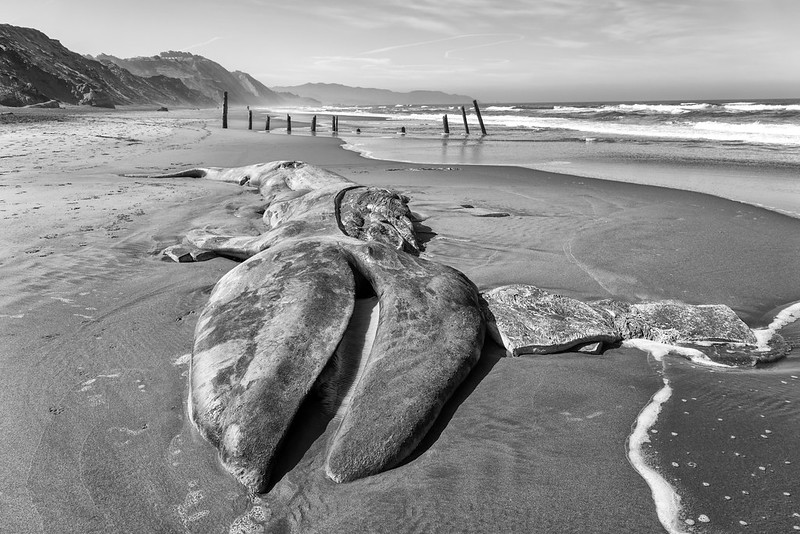
Feeding Stray Cats in Ukraine

By Rebecca K. Leet


As molecules of steel madness
concussed the air
and no next breath was sure

a vibration in his unbowed soul
prompted Sasha to step outside
and feed a posse of stray cats.

The offering –
from one displaced in the world
to others also beggared –
cost Sasha his right foot.

War presents, at times,
a tableau for tenderness –
often anonymous, usually unseen.

It always presents
a canvas for cruelty – unfathomable

yet undaunting
to the merciful who step outside
to succor the world.


Rebecca K. Leet has spent a lifetime across the Potomac River from Washington, DC, seeing the best of times and the worst. Writing poetry keeps her sane.

Photo credit: Yael Beeri via a Creative Commons license.

Editor’s note: Paws of War is helping to care for abandoned pets in Ukraine. The nonprofit has received a 4 of 4 stars rating on Charity Navigator, so it’s safe to assume your contribution will be well-spent.

Displacement

By Antony Owen


I am
the fox-flame in the wood
jumping through snow an ember
chased to extinction by lesser beasts.

I am
permanent as the moth in amber
its patterns decided by the white sun
its fate decided by the earthlings.

I am
the glass-blower’s lips’ creation
to consume whatever is put in me
if I break, I become injurious to touch.

I am
the exhausted bee in the shying rose
the heartbeat bass of my distant hive
preferring my own cruel natures.

I am
insignificant as a cloudy starlit night
yet everything is still revealed just hidden
like Greek Gods who move us to sea.


Antony Owen is a writer of conflict translated in English, Japanese and German. His work has been recognised internationally, including, a full bilingual collection translated in 2021 by Thelem Press and an award in the British Army Poetry Competition in 2018. His work has also been shortlisted for The Ted Hughes Award for new work in poetry.

Photo credit: “Glassblower” by Kairon Gnothi via a Creative Commons license.


A note from Writers Resist

Thank you for reading! If you appreciate creative resistance and would like to support it, you can make a small, medium or large donation to Writers Resist from our Give a Sawbuck page.
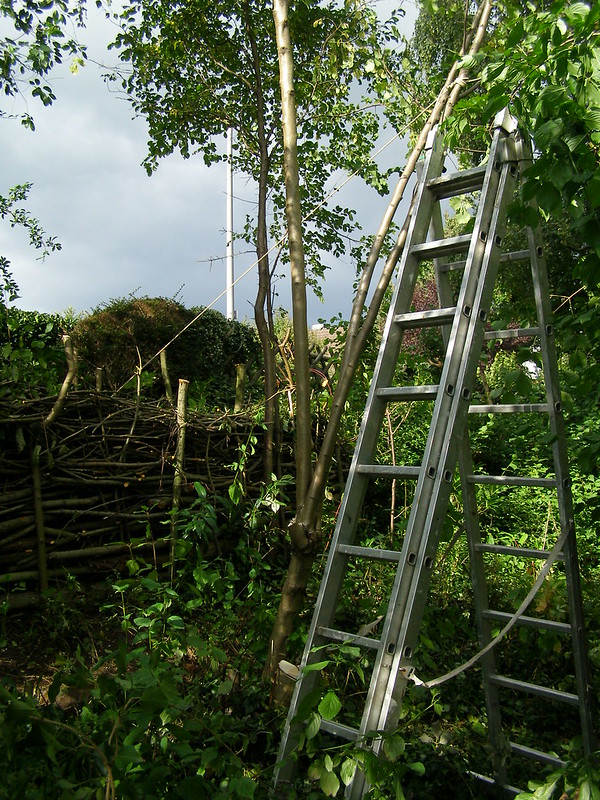
“I can experience joy alone”

By Tristan Richards


I meditate on this line while hiking
away from the waterfall, and a doe
pokes her head out of the snow,
watching me, her eyes black and beady,
her body sandy, the color of spring
gravel turned mud. She is beautiful.
I freeze, my heart in my throat.
I become too aware of the ice
surrounding me, melting but still
cold enough to take me down.
She tracks me as I walk, alert
but faking confidence, toward
the parking lot. I think about how
strange it is to be so close to nature
and also surrounded by cars.
It is wild to set natural growth next
to what comes at you so quickly.
When I pass, she stands on top of
the hill and I see her full body,
white stripe running from her throat
down her belly, somehow calm and
ready to bolt at the same time.
I think each of us scared the other.
It is hard to exist in this world
as a woman and not be afraid.


Tristan Richards (she/her) is a poet and student affairs professional from Minnesota. She is the author of two self-published chapbooks: Not All Challenges Are For Us (2022) and The Year Was Done Right (2019). Her poems have been published in Preposition: The Undercurrent Anthology, on the Mankato Poetry Walk & Ride, and in Firethorne. In 2022, Tristan facilitated daily poetry writing workshops throughout the month of April for National Poetry Writing Month. She holds an MA in Leadership in Student Affairs from the University of St. Thomas and a BA in Communication Studies from Gustavus Adolphus College. You can find her on Instagram @tristanwritespoems or at tristanwritespoems.weebly.com.

Photo credit: “Doe in the Snow” by Richard Carter via a Creative Commons license.


A note from Writers Resist

Thank you for reading! If you appreciate creative resistance and would like to support it, you can make a small, medium or large donation to Writers Resist from our Give a Sawbuck page.
What Is Truth?

By Wells Burgess


Deep in the South, men gather.
First among equals, the Kingfish,
upstage, and it is only he
whose face you see; his minions –
that includes me, Markie –
have their backs to you. The Boss
plays solitaire; the cards slap
the table. “Markie,” he says,
where we gon’ put that road?”
“DeVreaux and the boys got
them all whupped up in Jasmine,”
I say. “Chairman talkin’ like
it’s yesterday. Folks
so starved for traffic, they’ll
walk ten miles on crutches
to vote for you.” Kingfish
looks me in the eye. “Markie,”
he says, “I  got a debt to pay.
Judge in Bayou goin’ on and on
bout how we are ‘destroyin
rural culture’ with the highway
projects. Owns a big tract. We
gon’ run that road right thoo
it so he hears them big eight wheelers
when he lays him down to rest.”
“Boss,” I says, “we got a rally
in Jasmine, big parade and all.
Tenth-grader singin a song he made up
about the highway they’re gettin.
Shall I call it off?” “Hell, no,”
says the Boss. He looks me right
in the eye. “Markie,” he says,
“Do you trust me?” And I say
back, “I do.”
The scene goes dark; another lights:
Jasmine Parish: scrub country,
hard-bitten faces, an old dirt road,
a boy, a wheel, a stick, Kingfish
on the stump. “We gonna’
put my big new highway right
thoo this ol’ Parish,” he says.
“Hire your boys to build it. Only
ramp for 60 miles go right to
this town. You folks gonna
be eatin the fat o’ the land.
Ain’t that right, Markie,”
he says to me. “Amen,” I say.
The scene goes dark. Another lights:
the Kingfish’s election headquarters,
a victory celebration. “I want a
Parish by Parish count,”
the Kingfish yells. When it comes
to Jasmine, DeVreaux shouts
“Eighty percent!” So I ask
the Boss, “So we gon’ give em
their road?” “Hell no,” he says.
“Goin’ thoo Bayou. Plans drawn,
press release tomorrow.” “What
we gon’ tell em down in Jasmine?”
The Kingfish looks me right in
the eye. “Tell em I lied,” he says.
DeVreaux won’t do it, so I make
the trip myself. Press release
come out, Chairman calls
a meetin’ of the Parish Council.
I show up. “Wha’ happened?”
Chairman asks. “He bout
guarantee us that road.” I
step right up. “Boss told me
to tell you he lied,” I say.
Folks bustin out cryin
and cursin, bout half of em
run on out the hall. Chairman
and others, DeVreaux’s people,
they stay quiet, and pretty soon
Chairman starts to chuckle.
“That’s the Kingfish for ya,”
he says. “Thoo and thoo.
Our turn will come.
He gon’ see to it.”


Wells Burgess began writing poetry late in life. His work has appeared in The Lyric, Measure, The Beltway Quarterly, Light, Think, Passager,, The Federal Poet, and Better Than Starbucks. In retirement, he teaches poetry at Encore Learning in Arlington, Virginia.

Photo credit: “I Win” by Kevin Labianco via a Creative Commons license.


A note from Writers Resist

Thank you for reading! If you appreciate creative resistance and would like to support it, you can make a small, medium or large donation to Writers Resist from our Give a Sawbuck page.

September Together

By Elizabeth Shack


Last September, we hiked the forest
beside the fog-drenched sea.
Followed a swift stream
bridged with salmon spawning,
returning from gray Pacific homes.
Switchbacked beside a waterfall
sparkling down steep granite.

Emerged into sunlight with a view
of lichen-painted rock
and the blue-white ice
that once sculpted this verdant valley.

Is still sculpting:
Just as moss and fern carpeted bare rock,
as alder and spruce sprouted,
as forest appeared where glacier receded,

today melting ice reshapes coasts,
forests flame to ash,
grasslands wither to desert,
rivers run to dust.

This September, whales still sing in the sea.

Will you fight with me
for this vibrant,
dying world?


Elizabeth Shack lives in central Illinois with her spouse, cat, and an expanding collection of art supplies and fitness equipment. Her poetry and fiction have appeared in The MacGuffin, Writers Resist, Daily Science Fiction, and other magazines and anthologies. She attended the Kenyon Review Writers Workshop for poetry in 2022. For more of Elizabeth’s work, visit her website.

Photo credit: “Humpback Whale” by J. Maughn via a Creative Commons license.


A note from Writers Resist

Thank you for reading! If you appreciate creative resistance and would like to support it, you can make a small, medium or large donation to Writers Resist from our Give a Sawbuck page.
Scylla

By Bex Hainsworth


A nymph unburdened by beauty is a nightmare.

My barnacle flesh scratches against stone
as I curl up in my cave, full of octopus cunning;
folding many limbs around myself, cruel, content.

This was Circe’s gift: to make me a monster,
a maneater. The distant roar of Charybdis
rocks me to an easy sleep each night.

I know they will take the dangerous road,
right to my mountain door. The men,
the soldiers, the heroes. The semi-divine.

They taste of revenge, of justice
for the ripped dresses, for the temple maids
who lost the chase, the dryads who couldn’t
get away, and the goddesses who never escaped.
For Leda, and Persephone, and Helen. For Hera.

This is for my own golden bruises.

I hold vigil. My teeth are tapers, glinting in the dark,
for all my sacrificial sisters. No offerings
are made in my name, no altars, no prayers.
No matter. The sea provides settlement.

You should hear them scream for me.
I rip the last words from their throats
with claws like scythes.

Afterwards, wiggling a thigh bone free
with the stick of a ship’s mast,
I recite my affirmations:

let them know how it felt beneath their bodies,
let their hearts freeze at the thought of me,
let them know what it is to be truly afraid.

A nymph unburdened by beauty is their nightmare.


Bex Hainsworth (she/her) is a bisexual poet and teacher based in Leicester, UK. She won the Collection HQ Prize as part of the East Riding Festival of Words and her work has appeared or is forthcoming in Heavy Feather Review, Ethel Zine, Atrium, Okay Donkey, trampset, and bath magg. Find her on Twitter @PoetBex.

Illustration of “Pesce Donna” from Giovanni Antonio Cavazzi’s Istorica descrizione de’ tre’ regni Congo, Matamba, et Angola, 1687, via Public Domain Review.


A note from Writers Resist

Thank you for reading! If you appreciate creative resistance and would like to support it, you can make a small, medium or large donation to Writers Resist from our Give a Sawbuck page.

Islands of No Nation

By Ada Ardére


We give them our children to fight in jungles and deserts,
we give them our taxes to pave their roads,
we give them our land to build their businesses,
we give them our coasts to moor their battleships,
we give them our waters to test nuclear weapons,
and we have received nothing.

Hurricanes and earthquakes ravage us
and only deafened ears sit on the mainland
as we watch the light go out in our hospitals
as we hear of emergency rations withheld at ports.

Where is the medicine needed in San Juan?
Where is the common courtesy owed the Virgin Islands?
Where are the passports for the people of Guam?
Where are the houses for Samoa?
Where are the services for our veterans?
Where are the schools for our children?

They respond.

They call us niggers, spics, and pretenders,
subconsciously lumping us into one group
they whisper: inbetweener.

They refuse to meet us on our shores,
removing us from public memory
they ask us who we even are.

They call us savage and uncivilized,
speaking slowly and loudly
they consider us for zoos.

They see us pouring into recruiting stations,
greedily licking their lips and growling
they see guerrilla soldiers signing up.

They use us hard and fast.
Emptying VA hospital funds,
they kick us to the streets.

They think us incapable of thought or reason.
While building a third theater in their child’s school,
they accuse us of overbreeding.

Until we are held in common,
until the law is not chain and whip,
until our shores are ours to have,
until our pain is paid for,
until we have a future as ourselves,
until we too are free

We can answer to no one,
no duty to higher powers,
nothing owed to foreign chambers.
We hold neither oaths nor allegiance.
We are islands of no nation.


Ada Ardére is a Puerto Rican poet from New Orleans who now lives in Kansas City. She studied philosophy of art and Plato, and loves beat poetry. Her works have appeared in 34th Parallel Magazine, Wussy Mag, and The New Southern Fugitives.


Image of Donald Trump, throwing papers towels at a press event in Puerto Rico after Hurricane Maria in 2017, used for purposes of commentary and education under section 107 of the Copyright Act of 1976 allowing for “fair use.”


A note from Writers Resist

Thank you for reading! If you appreciate creative resistance and would like to support it, you can make a small, medium or large donation to Writers Resist from our Give a Sawbuck page.