Digital Dust

By Pattie Palmer-Baker

The agent sifts digital dust,
not like stardust sprinkled
on profound black,
instead gray-brown specks
leaking out of ATM machines,
trickling from laptops,
dribbling out of phones.

He shapes the particles
into a digital fingerprint,
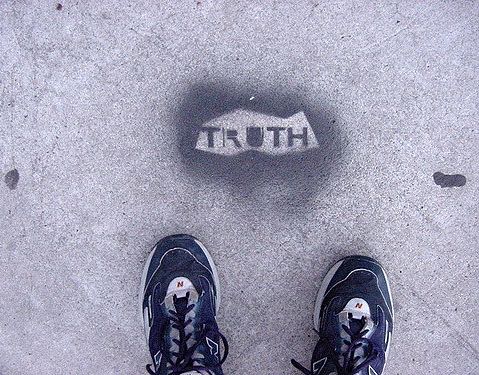
blots out truth messy with color,
paints the grooves black and white.

When the wind blows
through a Sitka Spruce,
he hears the whisper As-salam alaykum.
He whips the gun
from the back of his waistband
and shoots the words.
He doesn’t know they mean
peace be upon you.


Pattie Palmer-Baker is a Portland, Oregon artist and poet. Over the years of exhibiting her artwork—a combination of paste paper collages with her poems in calligraphic form—she discovered that most people, despite what they may believe, do like poetry; in fact many liked the poems better than the visual art. She now concentrates on writing, both poetry and personal essays. Visit her website.

Reading recommendation: Kohl & Chalk: poems by Shadab Zeest Hashmi

Kindred, a poem by Dave Parsons

Blindness will only make him see better. Broken bones will sharpen his wit.

–Karl Shapiro

On 9-11, we were 1st stunned into numb dazes—I remember the same—in the early sixties and there are the many other days … personal to each of us … that stick like bad cooking to our dead-pan minds, they are the memories that scurry about like ants kicked from the order of their hilly homes. I remember the day that Larry Williams’s photo appeared in the Austin Statesman obituaries with the same confident expression I had seen countless times caged under a baseball Catcher’s mask. There he was—set jaw—Green Beret announcing to his known world that he was finished with games, with this life and his name would become the source of rubbings on a long black wall in Washington. Larry had witnessed the same numbness in the dazed moiré moon faces of a kindred people trapped in their country’s anguish while an Army clerk in Saigon and at his homecoming party, he said to me in a whisper, like a prayer, he had to go back, and this time, he had to be in the thick of it … he must be part of an answer, action, not awe—Whitman’s body electric, to Hell with the angst, the numbness … embrace the pain … fire the spirit—eyes wide open to it all—the same wide and kindred eyes that sent Alison, William, Sandra, Jeffery with a throng of students to the Kent State quad in 1970—demonstrating their outrage over their country, the very home that had seeded them with knowledge and the pride of being raised in a land of gallant freedom fighters, a peopled history of grand idealism that somehow had mutated: it was as if there had been a stock take over—war became a corporate boardroom game; where, moves to erase thousands players was taken in the cool air conditioned minds of executives and politicians thousands of miles from the heat and stench of the jungle factory, changing from a war of rescue to a daily body count. So the students did what they could and the pointing of their single fingers were no match for the rifles; but here’s another legacy for us, the pointed single finger even in its fall, still fired the flame that is the inherent instinct burning like a star in the craw of this nation, where ever we single souls abide, we are steeped in the parables found in our many sacred stories; our monumental buildings may fall to the warped logic of our enemies; and this cornucopia of a planet we so treasure, may turn on us, like some old jaded lover, bringing on us all matter of apocalyptic weathering pain rivaling Old Testament curses —We the People—do not sit long sanguine on the comfort of our couches before the gnashing media poor-sayers or dig head-holes of rationale to bury our worst fears in—We the People—are on the march, on the move from our every beach, plain, forest, hill, or cove, on the phone with our support, in the mail with our personal treasures, we are on the many roads and byways with our pyrotechnic presences, in the hot stink of it with our time and boundless talents—brilliant spirits burning white hot— igniting truth deep in our brethren’s breast—We the People—are truly omnipotent—


Dave Parsons, 2011 Texas State Poet Laureate, is a recipient of an NEH Dante Fellowship to SUNY, the French-American Legation Poetry Prize, the Baskerville Publisher’s Prize (TCU). He was inducted into The Texas Institute of Letters in 2009. Parsons has published seven poetry collections. His latest are Reaching For Longer Water (2015) and Far Out Poems of the ’60s (2016), co-edited with Wendy Barker. He has taught Creative Writing at Lone Star College since 1992. Parsons has four grown children and lives with wife Nancy, an award winning artist and graphic designer in Conroe, Texas. The title and many lines of this poem were taken from a poem that first appeared in his collection, Color of Mourning (Texas Review Press/Texas A&M University Press Consortium, 2007), edited for the Writers Resist movement.

Visit his website at www.daveparsonspoetry.com.

Reading recommendation: Color of Mourning by Dave Parsons

Resiste / Resist, a poem and translation by Mariana Llanos

[fusion_builder_container hundred_percent=”no” equal_height_columns=”no” hide_on_mobile=”small-visibility,medium-visibility,large-visibility” background_position=”center center” background_repeat=”no-repeat” fade=”no” background_parallax=”none” enable_mobile=”no” parallax_speed=”0.3″ video_aspect_ratio=”16:9″ video_loop=”yes” video_mute=”yes” overlay_opacity=”0.5″ border_style=”solid” padding_top=”20px” padding_bottom=”20px” admin_toggled=”no”][fusion_builder_row][fusion_builder_column type=”1_2″ layout=”1_2″ spacing=”” center_content=”no” hover_type=”none” link=”” min_height=”” hide_on_mobile=”small-visibility,medium-visibility,large-visibility” class=”” id=”” background_color=”” background_image=”” background_position=”left top” background_repeat=”no-repeat” border_size=”0″ border_color=”” border_style=”solid” border_position=”all” padding=”” dimension_margin=”” animation_type=”” animation_direction=”left” animation_speed=”0.3″ animation_offset=”” last=”no”][fusion_title hide_on_mobile=”small-visibility,medium-visibility,large-visibility” size=”1″ content_align=”left” style_type=”default”]

Resiste

[/fusion_title][fusion_text]

Resiste, hermana, resiste.
Levanta el puño y resiste.
Resiste, hermana, resiste.
Sube la voz y resiste.
Resiste, hermana, resiste.
Eleva la frente y resiste.
Resiste, hermana, resiste.
Hincha el pecho y resiste.
Resiste, hermana, resiste.
Planta los pies y resiste.
Resiste hermana, resiste.
Entrelaza los brazos y resiste.
Resiste, hermana, resiste
Avanza tu cuerpo y resiste.
Resiste, hermana, resiste.
Con puño, con voz, con frente, con pecho,
Con brazos, con pies, con todo tu cuerpo,
resiste.
Resiste hermana, resiste,
Aunque corra tu sangre
Aunque tiemblen tus huesos
Aunque sangre tu alma.
¡Resiste!
Hasta tu último aliento
Hasta tu último paso
Hasta tu último beso.
Hasta que tu sudor se mezcle en el agua.
Hasta que tu puño brille en el cielo.
Hasta que tu grito se oiga en el viento.
Resiste, hermana, ¡resiste!

[/fusion_text][/fusion_builder_column][fusion_builder_column type=”1_2″ layout=”1_2″ spacing=”” center_content=”no” hover_type=”none” link=”” min_height=”” hide_on_mobile=”small-visibility,medium-visibility,large-visibility” class=”” id=”” background_color=”” background_image=”” background_position=”left top” background_repeat=”no-repeat” border_size=”0″ border_color=”” border_style=”solid” border_position=”all” padding=”” dimension_margin=”” animation_type=”” animation_direction=”left” animation_speed=”0.3″ animation_offset=”” last=”no”][fusion_title hide_on_mobile=”small-visibility,medium-visibility,large-visibility” size=”1″ content_align=”left” style_type=”default”]

Resist

[/fusion_title][fusion_text]

Resist, sister, resist.
Thrust your fist in the air and resist.
Resist, sister, resist.
Raise your voice and resist.
Resist, sister, resist.
Lift your forehead and resist.
Resist, sister, resist.
Bloat your chest and resist.
Resist, sister, resist.
Stomp your feet and resist.
Resist, sister, resist.
Intertwine your arms and resist.
Resist, sister, resist.
Push forward your body and resist.
Resist, sister, resist
With fist, with voice, with forehead, with chest,
with feet, with arms, with all your body,
resist.
Resist, sister, resist.
Even if your blood runs,
Even if your bones tremble,
Even if your soul bleeds.
¡Resist!
Till your last breath,
Till your last step,
Till your last kiss.
Until your sweat blends with the water,
Until your fist shines in the sky,
Until your scream is heard in the wind.
Resist, sister, ¡Resist!

[/fusion_text][/fusion_builder_column][/fusion_builder_row][/fusion_builder_container][fusion_builder_container hundred_percent=”no” equal_height_columns=”no” hide_on_mobile=”small-visibility,medium-visibility,large-visibility” background_position=”center center” background_repeat=”no-repeat” fade=”no” background_parallax=”none” enable_mobile=”no” parallax_speed=”0.3″ video_aspect_ratio=”16:9″ video_loop=”yes” video_mute=”yes” overlay_opacity=”0.5″ border_style=”solid” padding_top=”20px” padding_bottom=”20px”][fusion_builder_row][fusion_builder_column type=”1_1″ layout=”1_1″ spacing=”” center_content=”no” hover_type=”none” link=”” min_height=”” hide_on_mobile=”small-visibility,medium-visibility,large-visibility” class=”” id=”” background_color=”” background_image=”” background_position=”left top” background_repeat=”no-repeat” border_size=”0″ border_color=”” border_style=”solid” border_position=”all” padding=”” dimension_margin=”” animation_type=”” animation_direction=”left” animation_speed=”0.3″ animation_offset=”” last=”no”][fusion_text]


Mariana Llanos is a Peruvian writer, author of seven award-winning children’s books in English and in Spanish. Her first book, Tristan Wolf, was published in 2013. Her newest book, Poesía Alada (poetry in Spanish for young people) will be available in April 2017. She studied Drama in her native Lima. After moving to Oklahoma, she worked as a preschool teacher, standing out for her creativity and passion for arts education. Mariana visits schools around the world through virtual technology to encourage students to read and to spark their love for writing, while building bridges of understanding. Visit her website at www.marianallanos.com.

Reading recommendation: Como Cambiar el Mundo Sin Perdernos /How to Change the World Without Losing Ourselves by Virginia Vargas (1992).

[/fusion_text][/fusion_builder_column][/fusion_builder_row][/fusion_builder_container]

No Time to Lose

By Sergio A. Ortiz

It’s cold here.
Its color, a ninja turtle orange,
and only 1 day left
for el Presidente Electo
to inaugurate his burned hair,
his head de mal parío,
his enano politician tweets.
People say it’s worth the trip
to his Swearing In,
that this kind of shit makes you grow.
The thing is my body
cannot stand another Jetblue seat,
another Greyhound cafe.
Besides, winter hurts.
Its whiteness rusts the snow.
Its racism confuses me,
makes me feel small,
like a very distant echo.
Fuck it, if I go back to D.C.
It’ll be because I want to visit
the Smithsonian’s
African American Collection.
Where merchant ships loaded
with slaves are still shipwrecked
in my memory.


Sergio A. Ortiz is a gay Puerto Rican poet and the founding editor of Undertow Tanka Review. He is a two-time Pushcart nominee, a four time Best of the Web nominee, and a 2016 Best of the Net nominee. He is currently working on his first full length collection of poems, Elephant Graveyard.

Reading recommendation: The Slave Ship: A Human History by Marcus Rediker.


Sad Homage to Whitman

By Mark J. Mitchell

Fatigued and down-hearted I read the result of the vote.
Wind has been stolen from my sails.
Fellow travelers jump, one by one, off the plank.
over the low gunwale of the ship of state.

Allons!

November 9, 2016


Mark J. Mitchell studied writing at UC Santa Cruz under Raymond Carver and George Hitchcock. His work has appeared in various periodicals over the last thirty-five years, as well as the anthologies Good Poems, American Places, Hunger Enough, Retail Woes and Line Drives. His poems have also been nominated for both Pushcart Prizes and The Best of the Net. Three of his collections and chapbooks—Three Visitors, Lent 1999, and Artifacts and Relics—and a novel, Knight Prisoner, are available through Amazon and Barnes and Noble. He resides in San Francisco with his wife, the documentarian and filmmaker Joan Juster. Visit his Facebook page.

Reading Recommendation: Artifacts & Relics by Mark J. Mitchell.

Reasons to post a photo of a dead child from Aleppo

By Sergio A. Ortiz

Omran was a Syrian boy: Our son defeated in front of the sea after chasing the dawn, our little brother cleft by the blows of the crab that was death, nothingness, emptiness, a thick river of icy water. Our child like all other innocent children whom they bombed in Aleppo and are no longer: I want nothing more from this world. Everything I dreamed of disappeared. I need to bury my children and sit next to them until I die. Omran survived hunger, thirst and despair, but not the Syrian government, not the world who did not know, or care, how to save him.


Sergio A. Ortiz is a gay Puerto Rican poet and the founding editor of Undertow Tanka Review. He is a two-time Pushcart nominee, a four time Best of the Web nominee, and a 2016 Best of the Net nominee. He is currently working on his first full length collection of poems, Elephant Graveyard.

Reading recommendation: Elle va nue la liberté (Freedom, She Comes Naked) by Syrian poet Maram Al-Masri.

3 a.m. November 11, 2016 Turtle Cove Cottage Po’ipu, Kaua’i

By Chris Cummings and David Cummings


*    *    *    *    *    *    *    *    *    *    *    *    *    *    *    *    *    *
D:
Drain the swamp     he brays   the president-elect     from his gold leaf
bedroom     in his gold leaf tower    Drain it he inveighs

*    *    *    *    *    *    *    *    *    *    *    *    *    *    *    *    *    *
C:
Horror-clown they called him     that German newspaper     the Germans
who know from horror-clowns alright

*    *    *    *    *    *    *    *    *    *    *    *    *    *    *    *    *    *
D:
They’ll come first for Dems    border-crossers next     then lives that matter
and those who pray five times a day     then neighbors     then you    then me
C:
They’ll unbury and burn all the oil   behead the Appalachians for coal
eeeeeeeeeeeeeee tunnel the earth    frack out the natural gas
All that and us    pyred and lit    rapacious fire    The black air we’ll breathe
D:
                              A fear governs them, unappeasable
I mean the ones he owns    his bottom-dwellers     murk-blind   uprooting
eeeeeeeeeeeeeee cypress     black gum     red maple              decay miasmal
eeeeeeeee That’s a swamp must smell sweet to him

*    *    *    *    *    *    *    *    *    *    *    *    *    *    *    *    *    *
C:
But a swamp, my love, is an ecosystem: life-giving, life-sustaining, densely
fecund        A place where dinner swims by and all you have to do is make a net
to catch it     Or if you haven’t got a net your strong bare hands will do

*    *    *    *    *    *    *    *    *    *    *    *    *    *    *    *    *    *
D:
Saddam Hussein finished off the Mesopotamian swamps in the mid-nineties
draining them    and thereby killed the livelihood and culture of an ancient
people     and killed the ancient wetland     A long misery
C:
humans     animals     plants     birds of many kinds, all lost     flamingos
pelicans     herons  sacred ibis     Basra reed-warbler     African darter
Mesopotamian crow… Those murders    his atrocity   It must be spoken of

A vulture perches on my heart this night and tears off pieces   Does that
mean I am dying     already dead   or am I hoping for death   now?

*    *    *    *    *    *    *    *    *    *    *    *    *    *    *    *    *    *
C:
Now I sit alone at a table on the lanai of this cottage in the 3 a.m. darkness
ceiling fan turning slowly    almost noiseless     The fan light is dim but
there’s light enough for writing     and I can hear the ocean a block away
The waves    how they break    a ceaseless sound   bound to the moon
But the moon too is leaving us     inches each year     moving forever     away

*    *    *    *    *    *    *    *    *    *    *    *    *    *    *    *    *    *
D:
And she will be so far from us    waves no longer rise and crash     and seas
are drained of vigor     the world’s ocean beaches tame as inland shores
C:

no tides
no tide pools
no clams
no clambakes

just a quiet almost lifeless lapping at our feet

*    *    *    *    *    *    *    *    *    *    *    *    *    *    *    *    *    *
C:
I mourn for you tonight my mother-father earth        But I think in the end
you will survive us     if the miniature suns we’ve so meticulously    construed
so faithfully sheltered    in buried silos like precious grain     if they’re never
lit          their poisons I think would be more   than even you    could repair

*    *    *    *    *    *    *    *    *    *    *    *    *    *    *    *    *    *
D:
But our own species?   Maybe this descent to madness is       you      thinning
our herd      returning us    to the ancient cave     damp and sooty and full
of shadows     Then you could start over   the Wild drained of us     build a
new offspring      if that’s your longing    more merciful than our kind
C:
One able to feel for the souls of all your children       the furred     the
feathered     the scaly ones too              Who will look out again on the stars
reflect on their mystery and be reflected    if     if I could believe     but the
night vulture has not lifted from my breast       has not yet had its fill


Christine and David Cummings live and write together in Menlo Park, California. They’ve both had some poems published here and there, and David’s collection, Tancho, was published by Ashland Poetry Press in 2014. “3 a.m. November 11, 2016” came from a journal entry Chris wrote right after the election, while they were in Hawaii celebrating their 10th anniversary, feeling the opposite of celebratory. They keep working on the poem; this is the most recent version, edited for length. A slightly longer version lives on their blog, which you can read here.

Reading recommendationTancho by David Cummings.

When the New Cabinet Exercises

By Tricia Knoll


They will be back where the snow falls
on camp tents, cookfires and legends
of stars so cold you know they froze
in the middle of a myth of creation
where someone blue lifted up the egg
and old women sang the birth song.

They will be back when snow is so deep
painted horses frost over, their eyelids closed
on the shoulder of a neighbor. When wan sun
cresting over the hill turns pony hoof prints
into iced omegas and they move so slow, nosing
winter grass, that you might not see them move.

They will be back saying the freezing
blizzard is why they hack open the belly
of the earth, mow down mountain ridges,
loose the black snake on the iced river,
and that valley fog that smells of smoke?
It warms the babies, they say when really,
it’s the masks they must wear.

They will be back to promote a white-out
of words that deletes drought, wild land fires,
and whirlwinds clogging the record books,
pages they throw like coal on a bonfire
of lies, ashy remains of picture books
they read to their grandchildren,
that illustrated scorched earth series.


Tricia Knoll is an Oregon poet who has done a great deal of resisting over a long period of time. She is deeply concerned about what will happen soon to the people protecting the water at the DAPL pipeline site. Visit her website.

Reading recommendation: The Manchurian Candidate by Richard Condon, 1959.

A Prose Poem by Alina Stefanescu

When You Send an Email Asking for Money to Support That Mission Bringing Jesus to Romania

I was born in a land wiped clean from the maps, a place you associate with AIDS-stricken orphans, tucked into Balkans, needing your bibles. Idiots needing salvation. Peasants needing administrations of missionary impulse. Come clear-cut this culture. Plant a flag. Mail a postcard. How you would have loved Ceausescu, his staunch anti-abortion policies. The workplace vaginal exams required by law. To check women for babies. To save baby lives while denying a mother’s. Illegal abortions, automated jail time. Birth control punished as contraband traffick, a violation of the national body. Borders decided the line between import and crime. Only Party members were permitted the honor of empty wombs. Only the Party ensured flesh against fetus. Pro-life is this boot on the neck of a lesser human, a blade you sanctify with statecraft.

I was born in a place where parents listened to shadows inching over concrete. Shadows don’t speak unless you count subtraction—the sound sucked away from nearby objects. A woman’s body is a mine, a natural resource. What’s natural is owned by men. You with bonafide smiles and big ole blessings. You with holy-roller heads & empty hearts. You hear nothing. Count the silence articulated in the portrait’s airbrush to taste the melody of what is missing. A math you cannot imagine. You who are blind. You who don’t see foreshortened folk ambling sidewalks. Take refuge beneath a roof slant. Seek the refuge you won’t grant refugees. You are busy bearing bibles. You are bringing the bible to the people of Romania. You are coming, eager to selfie. Tell the world what you’ve done for Romania. Tell what you’ve done.

I was born in a land that stopped naming its children Nicolae. The dictator’s name curses any child it touches. I am in love with the vacant wist of the local executioner, his grizzled voice, mourning the retirement of Alabama’s Yellow Mama. A mother who kills is a native Kali. An electric chair is the proper American matriarch, penultimate sizzle. Baptists forge petitions to bring Yellow Mama back. My mongrel womb won’t bear your life. I sew lips shut, vagina muzzled, verbs safe inside. My body is forbidden samizdat. Paul Celan is my answer. Please keep your American Jesus at home. Muffle his face with flags. Stars and bars you brand across his back.


From Alina

“[I] wrote it last week after re-reading Svetlana Alexievich and thinking how much the Russian desire for the “strong man” resembles America’s. And how sad.”

Alina Stefanescu was born in Romania, raised in Alabama, and reared by various friendly ghosts. She won the 2015 Ryan R. Gibbs Flash Fiction Award and was a finalist for the 2015 Robert Dana Poetry Award. Her poetry and prose can be found in PoemMemoirStory, Shadowgraph Quarterly, Parcel, Noble Gas Quarterly, Minola Review, and others. Objects In Vases, a poetry chapbook, was published by Anchor & Plume in March 2016. A poem from this chapbook, “Oscar Dees, No Apologetics Please,” has been nominated for a 2016 Pushcart Prize. Alina currently lives in Tuscaloosa with her partner and four friendly mammals. More online at www.alinastefanescu.com or @aliner.

From Alina: “Wrote it last week after re-reading Svetlana Alexievich and thinking how much the Russian desire for the “strong man” resembles America’s. And how sad.”

Reading Recommendation: Objects In Vases by Alina Stefanescu.

Gentle Bones

By Suzanne O’Connell

I.

Darkness is upon us all.
The old tree kneels
like always
to sip from the water.

Poison pen letters
were returned
for insufficient postage.
Girls wear safety pins
and march in the street.

The house is dark.
The dachshund-shaped lamp,
is steadfast,
sitting in its halo of light.

II.

Darkness is upon us.
Search for the tiny miracles
close enough to touch.
Your ears for example,
those workaday wings.

Hello gentle bones,
hello flexible trumpets
made for listening.
You can touch the silken skin,
move them as in flight.
Their perfect rims
are crimped like pies
for our tarnished Thanksgiving.


Suzanne O’Connell is a poet and clinical social worker living in Los Angeles. Her recently published work can be found in Poet Lore, Forge, Atlanta Review, Juked, Existere, Crack The Spine, The Louisville Review, and Found Poetry Review. O’Connell was nominated for the Pushcart Prize 2015 and 2016. Her first poetry collection, A Prayer for Torn Stockings, was published by Garden Oak Press. Visit Suzanne’s website.

Reading recommendation: A Prayer for Torn Stockings by Suzanne O’Connell.

First Snow Following the Election

By Shawn Aveningo

There’s a hush—a stillness—

that muffles the groundswell,

as flurries flutter and whiteness

blankets our sleep. We weep

for truth, its heartbreaking loss

akin to a missing dog from our youth.

Our boots etch fractals in fresh powder

and we search our neighbor’s eyes

for a sign—hoping we are still

on the same side.


Shawn Aveningo is a globally published, award-winning poet who can’t stand the taste of coconut, eats pistachios daily and loves shoes … especially red ones! Shawn’s work has appeared in over 100 literary journals and anthologies. She’s a Pushcart nominee, co-founder of The Poetry Box, managing editor for The Poeming Pigeon and journal designer for VoiceCatcher: a journal of women’s voices and visions. Shawn is a proud mother of three and shares the creative life with her husband in the suburbs of Portland, Oregon. Visit her website.

Reading recommendationThis Connection of Everyone with Lungs by Juliana Spahr.


A Poem by Lisa DeSiro

Pride Party

the Aging Bisexual insists his ass is still tight and invites everyone to touch it
the Military Gentleman takes off his shirt and explains his tattoo and weeps
the Lesbian Artist describes the found objects used for her installations
the Fabulous Host kisses guests both male and female on the lips
the Funny Guy imitates his mother’s Boston Irish brogue
the Drag Queen hands out cocktails and condoms
the Straight Girl mingles and listens and thinks
no one can tame these lions roaring
laughter spilling drinks filling
bodies dancing music
playing loud and
proud


Lisa DeSiro is a writer and a pianist. Her poems have been set to music by several composers, and have appeared in various print and digital publications. Her chapbook Grief Dreams is forthcoming from White Knuckle Press (June 2017). Along with an MFA in Creative Writing from Lesley University, she has degrees from Binghamton University, Boston Conservatory, and Longy School of Music. She lives in Cambridge, Massachusetts, where she is employed as Production & Editorial Assistant for C.P.E. Bach: The Complete Works. Visit Lisa’s website.

Reading recommendation: Running for Trap Doors by Joanna Hoffman.


To Gerry Mckinley

By Mark A. Murphy

If poetry is not social then it ceases to have a function beyond perfume.

–André Gide

A life time ago in a rage

of mourning, my mind bent on self-doubt

and self-loathing, drudging up

the many injustices of a social system

hell bent on the destruction of life,

         I read a poem

about a child in Soweto

who had been beaten with such malice

his heart gave up, his bare feet still dirty from playing

on a mound of clay after school.


These words were not written

for an astounded world to wrestle with,

nor yet for the rich to sniff at

by that wise poet, Mazisi Kunene,

         but by my old friend, Gerry Mckinley,

an obstinate Irish rebel, a man not unlike Kunene,

a man accustomed to madness,

who dared to tell the truth, imposing on our solitude

forbidden words and abounding optimism—

though a million hearts might break.


Mark A. Murphy’s first full-length collection, Night-watch Man & Muse was published in 2013 by Salmon Poetry (Eire). His poems have appeared in over 160 magazines worldwide. Lit Fest Press in America will publish his latest manuscript, The Ontological Constant, in early 2018.

Reading recommendationNight-watch Man & Muse by Mark A. Murphy.

“To Gerry Mckinley” was previously published by Dead Drunk Dublin.

Breakfast

By Amanda Gomez

The couple next to me is finishing their breakfast.
Between a bite of grits and eggs, the woman asks:
how do they let in trash like that these days? staring

at the television screen, where clips of protestors
gathered at the Trump Tower flash across.
The news anchor covering the story chuckles

nervously, as an interviewee raises the topic of race.
She blushes as if it’s inappropriate. Maybe
I shouldn’t be talking about politics the lady beside me

continues. When her husband makes no response,
she turns towards me. I keep my mouth shut; put myself
in her place. I wonder what would make her America

great again. I think of my mother, my grandmother
and her sisters: where they were when they realized
they were uninvited guests. As for me,

I was in line for recess. A boy called me spic
in the third grade. I didn’t know what it meant.
If I did I would have called him caulkie* back.

Let him have it; ensure he never used that word
with me again. It’s moments like this still happening,
happening right now, which is why I refuse to respond

when she wants me to engage.
It’s simple: I want her to know
that what she’s searching for, she can’t have.


Amanda Gomez is an MFA candidate in poetry at Old Dominion University. Her work has been published by Eunoia ReviewEkphrastic ReviewManchester ReviewExpound Magazine, San Pedro River Review, and Avalon Literary Review.

Viewing recommendation: Zoot Suit, starring Daniel Valdez and Edward James Olmos; written and directed by Luis Valdez, 1981.

*Caulkie refers to a person so white, they resemble caulk.

Turns Out

By Sam Sax

all the holocaust books we read
in grade school weren’t enough.
the class outraged, youth shouting
never again. in the texts i became

brave, resistance child, stalking
the night’s antique shadows, disproving
a devil’s arithmetic, lettering every star.
easy to be righteous in the face

of tyranny so dead, the terror’s just
an old rope of letters, a photograph
developed in a darkroom, the tattoo
on a family member’s leathered arm

but even he smiles as you dance
around like the goofy animal you are.
what then when the terror lives?
when the cabinet’s filled with poison bread?

when they come for my friends,
when they come to my bed, when
they come, they come. come stars
to guide our meat across the night’s

opera of skulls. come letters brave
enough to harvest joy from the coming
darkness. come art sharp as a knife
tearing the blood from the white

in our flag. you can say there is no road
map for the red mattress, for the police
—bag forced over a chanting head. but look
to any history & there’s the path

an outraged flood, a million bodies
in the street, a fence between blood & money,
a government shaking. for our lives & our love
we must do all we can before we’re forced

back below the floorboards.

…………………………………………………………..

Sam Sax is the Texas-based author of Madness (Penguin, 2017), winner of the 2016 National Poetry Series, Bury It (Wesleyan University Press, 2018), and four chap books: All The Rage (Sibling Rivalry Press, 2016) Straight (Winner of the Diode Editions Chapbook Prize, 2016) Sad Boy / Detective (Winner of The Black Lawrence Chapbook Prize, 2015), and A Guide to Undressing Your Monsters (Button Poetry, 2014). Sam has received fellowships from the National Endowment for the Arts, Lambda Literary, and The Michener Center for Writers, where he served as the Editor-in-chief of Bat City Review. He has poems published or forthcoming in Agni, American Poetry Review, Boston Review, Ploughshares, Guernica, Poetry Magazine, and other journals. Visit his website.

Reading recommendationMaus by Art Spiegelman

“Turns Out” was first published by The Awl.

Peace Dreams

By Pattie Palmer-Baker

Teacher:

Stop hissing orders.
Streamline your body into a fish shape,
float with your students in a sound-stilled ocean,
flash love notes with your sequined eyes.

Stockbroker:

See the half-dressed man crumpled
on the trash-littered sidewalk?
Brake your black Mercedes, carry him to your car,
rest him on the leather backseat beneath a cashmere blanket.

Biker:

Push away the tequila shot,
speed across town to the crumbling care center.
Listen all day, into the night
to you father’s war stories
until you both fall asleep, heads touching.

President:

Lie down on half-mown grass
with all the ISIS leaders of the world.
Take turns guessing the shapes of the clouds.
Push ivory feathers out of your pores

longer than the shine of the moon.

………………………………………….

Pattie Palmer-Baker is a Portland OR artist and poet. Over the years of exhibiting her artwork—a combination of paste paper collages with her poems in calligraphic form—she discovered that most people, despite what they may believe, do like poetry; in fact many liked the poems better than the visual art. She now concentrates on writing poetry and personal essays.

Reading recommendation: Shattering the Stereotypes: Muslim Women Speak Out, edited by Fawzia Afzal-Khan.

Tornado

By Eve Lyons

This is me:
protected but trapped
while the industry twists around me.
This is a factory:
churning out medications and patients
on assembly lines
but leaving them scattered like
a devastated trailer park,
they must conform to a list of behavioral criteria
in the DSM-V and they must
have problems that can be solved in
twenty-four sessions or less.
This is me:
Sitting in my office, my degree,
my world of art and poetry and music
that do not fit
into this system.

Tell me how a fifteen-year-old Black girl
who has been bounced from family member
to family member, who has lost her hearing
without knowing how, who believes that
meeting with a therapist means she is stupid,
tell me how she fits into this system.
Tell me what kind of drugs could best
solve her problems.
Tell me how this system can help the
eighteen-year-old boy who just came out,
only to find himself raped by two men
who were supposed to be friends?

Isolation of affect: The ability to talk about trauma
without any emotional expression.

It is a survival skill in this system
that re-traumatizes us
every day we live in it.
There are days when I feel useless
against the tornado
which sends my paycheck every month.
Twisters are deceptive,
I learned that in Texas,
which has the most tornadoes,
and deadlier ones.
You could watch one
wipe out your neighbors.
You never know
if it will destroy you
till it already has.

………………………………………………………………….

Eve Lyons is a poet and fiction writer living in the Boston area. Her work has appeared in Lilith, New Vilna Review, Word Riot, Literary Mama, Hip Mama, Mutha magazine, and several anthologies.

Reading recommendation: Ten Days in a Mad-House by Nellie Bly.

Flimflam and Uncle Sam

By Neil Ellman

Don’t try me, no condescension. please,
no more, it’s over, kaput.
there is no certainty in this life:
neither truth nor validity:
the blue jay isn’t blue
except for a certain trick of light
nor is the earth as seen from space
a shade of verdant green
but bluer than a turquoise ring
and Pluto just a piece of rock.

I’ve had it with so-called miracles:
a granite statue bleeding from its eyes
the face of the Savior in a piece of toast
or the billionth birth of a child
as a miracle, of miracles, its parents say,
while it happens every day.

I huddled in my bombproof shelter
when the Russians were coming
prepared for my computer to crash on Y2K
ate only figs to fight hoof-and-mouth disease
and waited for the Messiah’s arrival
in April, then May, then June
and every month and year since then.

I’ve learned that full employment means
thirty million people out of work
that the One Percent runs everything
except the movements of my bowels
that a tweet is bigger than a thought
and a thought is nowhere to be found
in any politician’s head.

I’ve had it, I quit, I’ll go to my cave
or even my grave
one of many who have been fooled
bamboozled, flimflammed
and deceived by the powers that be
but never, never again.

……………………………

Neil Ellman is a poet from New Jersey. He has published numerous poems in print and online journals, anthologies and chapbooks throughout the world. He has been nominated twice for the Pushcart Prize and twice for Best of the Net.

Viewing recommendation: Network, starring Faye Dunaway, William Holden, Peter Finch and Robert Duvall; screenplay by Paddy Chayefsky, who wrote, “Television is democracy at its ugliest”; and directed by Sidney Lumet, 1976.

Flood, Fire, Mountain

By Liz Kellebrew

Flood

That morning I climbed out of bed and watched my neighbors. They rowed away in a boat launched from their porch. When I went downstairs, water bubbled under the carpet like boils. My Christmas tree lay on its side. No one bothered to knock on my door.

Fire

“Don’t shoot,” he said. They shot anyway. After he died, the fires burned all over Ferguson. And they spread, the country a furnace of protest. No one bothered to listen.

Mountain

The next winter, I drove through snow banks six feet high under green-blue alpine spruce. A miniature avalanche rolled down before me and I stopped. Because, red fox slender paws golden eyes! Crossing unafraid.

Flood

I sacrificed my precious books to save my one and only couch. Goodbye Tolkien, goodbye Gibran. The waters rose, gaining depth and current. Outside, someone had tied a goat to the bumper of a Land Rover. It wouldn’t stop bleating.

Fire

The weekend before Christmas, protestors shut down the mall. Seattle Times, sad children and frowning grandmothers: “Isn’t there a better way to get their message across?”

No, no there isn’t. This country loves money more than freedom. It won’t listen to anything else.

It won’t stop the bleeding.

Mountain

In the spring I hiked alone, Sunrise Trail. Wildflowers poked out of mist: Indian paintbrush, foxglove, mountain gentian. When I turned back, surprise! A female elk, my shadow companion.

She walked away, stately, a queen in leather.

Flood

At the Red Cross I stood alone, waiting in line. Families in tents, in sleeping bags, piled in every corner indoors and out. Instant Homeless: Just Add Water. They gave me a debit card to buy food and boxes.

FEMA was clueless. They came four weeks late and wanted to give me a TV to replace the one I never owned.

Fire

The Reverend Jesse Jackson came by my work. I only heard about it afterwards.

The socialist newsletter I subscribe to invited me to a protest.

More children were shot, more unarmed men killed by police.

A week later, there was a bomb threat at work. I only heard about it four hours later, after the SWAT team announced there was no bomb.

Mountain

I put my fingers in the stream, but I did not drink. Clear ice melt washing emerald-gold moss and pebbles in a hundred shades of earth.

The salmon don’t spawn here. But sun-yellow butterflies light on the banks with feathery feet, long tongues curling.

Flood

When the water went back to the river where it belonged, blonde shocks of hay hung from power lines like the dried up scalps of Norse giants. Guess we showed them.

Fire

“All lives matter,” they yelled. And by “they” I mean the people whose children weren’t murdered in cold blood by a standing army. Occupation Domestication. No Voice Without Retribution. No More Constitution.

Silent, it smolders.

Mountain

Granite shoulders like a Picasso portrait, Blue Period. Cloaked with snow, capped with a swoff of cloud, trees at her ankles a golden froth of maple sugar, and that silence— broken! Because groaning glaciers, calving into babbling streams, tumbling into gurgling rivers and crashing into roaring oceans and this whole shouting planet of grasshoppers chirping and elk lowing and coyotes yip-yip-yowling and the fishermen coaxing their mermaids into rainbow nets of desire, because the starlings singing to children in the city and the oaks in Fremont cracking open those sidewalks with their wide black roots bursting out of every confining concrete wall and spilling over to fill the empty spaces left behind—!

………………………………………..

Liz Kellebrew lives in Seattle and writes fiction, poetry, literary essays, and creative nonfiction. Her work has appeared in The Coachella Review, Elohi Gadugi, The Conium Review, Mount Island, Section 8, The Pitkin Review, and Vine Leaves Literary Journal. She holds an MFA in Creative Writing from Goddard College.

Reading recommendation: Citizen: An American Lyric by Claudia Rankine.

Floating

By Penny Perry


Mother couldn’t have known what to do.
She was only twenty-five,
drove her big sister, Leona, six weeks pregnant,
to the doctor’s in LA.

Leona squinted at California bungalows,
backyards with orange trees.
She thought about her husband home worrying,
her baby daughter waiting for her.

She told my mother about her screenplay,
a murder in the Braille room of the public library.
Then, she sat silent, her long fingers tangled like kelp.

The doctor glanced at his medical license
framed on the wall behind him,

said he was afraid to use ether.
Leona jutted her famous Heyert jaw:
“My friend Ruth told me to insist.
With ether I’ll float above the pain.”

It was hot that June morning, 1941.
No air conditioning. My mother
in the waiting room thumbed through magazines.
Big-eyed Loretta Young on the cover of Life.

It happened fast. Ether, a busy housewife,
pulled down the shades.

The doctor waved my mother in.
White face, head back, Leona was no longer breathing.
The ribbon in her dark hair floated in the breeze of a fan.

………………………………………………………

Penny Perry is a five time Pushcart Prize nominee. Her first poetry collection, Santa Monica Disposal & Salvage, was published in 2012 by Garden Oak Press. Her new collection, Father Seahorse, will be published by Garden Oak Press in 2017.

Reading recommendationSanta Monica Disposal & Salvage by Penny Perry.