Nevertheless, She Persisted

By Carolyn Norr

I followed her to the sea,
she placed ripe pineapples
in the frothing waves that had swallowed
her ancestors and were still swallowing.

The river led to the sea and was laced
with mine tailings
that silenced the frogs and swelled
her son’s bones till he burst.
I followed her to the courthouse to tell.

We knew what was going to happen.
I winced before the bullet hit.
It was her daughter who dragged her
to a quieter place and tended the wound,
chanting under her breath, mami, mami
her brow wet and salty.

I followed her through the broken streets
of the city, walking not fast, not slow
because she held also the hand of her nephew
and the scarves we wrapped around our faces
didn’t quite keep the sting of the gas out
so when tears dripped to the corners of our mouths
we swallowed them.

I followed her through the desert,
hung on her back and tried
not to be too heavy. You are not
too heavy.  She told me. But
I could smell her sweat.

I sat with her in the patch of garden
she tended, along the side of the painted apartments
below the orange pine the bark beetles feasted on
the long hot winter. She brought buckets of water
to the seeds, and the seeds, after all
opened. She sighed.

I held her with a cord finer than a hair,
held her lightly in my womb
almost not touching.
I told her what was going to happen.
I warned her. I gave her a choice.
Nevertheless, she persisted.


Carolyn Norr is a mother and youth worker in Oakland, CA. In chewing over the recent accusation of persistence, she thought of the many women in her neighborhood and around the world who persist in seeking life. She also thought of her own children.

Photo credit: Neville Wootton Photography via Visualhunt / Creative Commons license

Vandals Desecrate Jewish Cemetery

By Laura Budofsky Wisniewski

Not that it’s such a fancy graveyard,
just a hill, a mess,
stones leaning on each other
like the fathers of the bride and groom
after the wedding.
Our names are almost gone,
covered by a weeping moss.
I begged my son before I went, just burn me.
Do they listen?
Under all this dirt, tattooed numbers glow
like fireflies.
My Yacob used to say:
They’re never done with us.
And I would think, so dark an eye
in such a handsome man?
Now his headstone’s cracked like an egg.
Desecration?
Let’s face it.
Small animals and even bears
have squatted on our sacred ruins.
That’s not what drags my bones
here, as if fear were a wolf’s tooth.
No, it’s that I let myself believe
the world was getting better.


Laura Budofsky Wisniewski writes and teaches yoga in a small town in Vermont. Her work has appeared or is forthcoming in Calyx, Minerva Rising, Hunger Mountain, Pilgrimage and other journals. Her grandparents were immigrants fleeing persecution.

Photo credit: Chany Crystal via a Creative Commons license.
Something There Is That Doesn’t Love

By Olga Livshin

…people like me. Does not like our sweatshirts,
pilled, our backpacks, full of bric-a-brac,
us, detained, on the floor, airport animals.
Something has claimed that my adopted
country’s autobiography of openness
is finished. Something opens the mouths
of my Jewish immigrant family to mutter:
good for those terrorists to wait,
hope their turn doesn’t come.
So thank you to all of you,
who sprang to protest when something
forbade people who are like me. Thank you
for translating your memory of Babcia, of
Abuelita, into this mom, traveling home.
Your act of translation climbs over walls,
a prankster with tired eyes. It helps us
know each other. Gently it joins our hands
with Mr. Frost’s, asking, just one more time:
why would anyone help? What
doesn’t love a wall? And the cheeky poet
goes on hinting: “It is not elves, exactly…”


Olga Livshin is a poet, essayist and literary translator. Her work is forthcoming from The Kenyon Review and The International Poetry Review, and it has appeared in Jacket, Blue Lyra Review, Mad Hatters’ Review, and other journals. Livshin is commended by CALYX journal’s Lois Cranston Memorial Poetry Prize, Cambridge Sidewalk Poetry Project, Poets & Patrons Chicagoland Poetry Competition, and the Robert Fitzgerald Translation Prize (twice). She is the founder of White Oak Workshop, a collective that teaches creative Top of FormBottom of Form writing through responses to literature outside the Anglo-American canon. She lives in Bryn Mawr, Pennsylvania with her family. Visit her website at www.olga-livshin.com.

Photo credit: K-B Gressitt © 2017

Some Poems

By Nancy Dunlop

                  Brutal Things Must Be Said  –James Baldwin


Some poems reside
in oven mitts, opening
the stove and reaching
for the pan with the leavened
bread flowing over its edges,
the mitts pull it out, piping
hot. A safe and soothing thing.
We are okay.

Some poems are like an arrow
in a bow, pulled taut, held
with great control, and then
released, the point
searing the air, straight
to the bull’s eye. Such poems
can be hard to watch without
flinching. You
avert your gaze before
the moment of puncture.

But what is the Poem to do? Not
hit its mark? Not speak?

Some poems wait
to be written on
the Reporter’s notepad, upon
arrival at the scene of
an accident. Yes,
it can be that acute
and chaotic and hard
to get the words to dribble
down the page, what with the
flashing lights, the mix
of bloodied coats, limbs
akimbo, sharp spikes of metal
and glinting glass. Just
getting through the barrier
of Yellow Tape surrounding
this type of poem can be
daunting.

But some poems
demand that much of you.

Some poems are loaded
guns, standing
in the corner of a Lady’s
bedroom. You will look
away from these poems,
unless they are tucked
in an anthology, padded by other,
softer Literature. The Professor
turns to this Emily
of a poem, asks
the class, What
does the gun represent? The students
come up with flailing
answers, or they don’t. Every
semester is different. The bell
rings, and it’s on to Psych 101.

Some poems contain
a knife blade, a bottle, a needle, a taser.
some poems rush their sick children
to the ER. Again. Some poems
are raped and constantly
interrupted. With flashback. Flashback. Flashback.

Such poems make it minute
to minute, if
they are lucky. They do not
have the luxury
to protest a Pipeline a trillion
miles away. Or, for others,
a Pipeline is the only thing they have
in front of them, getting
closer, bulldozers trenching
through their land. Tell me,
what is coming through
your front door?

Poems are like people. Each one
has a story, a dark thing they
carry.

You’ll see these poems lying in Hospice beds
when the Chemo stops working.
They use walkers, because their limbs
are dying. They are propped up in institutions,
alone and waiting for some nurse,
to bring a meal, so they can say hello
to someone today. Some poems
have distended bellies and parasites
crawling on them. Some crouch
on sidewalks, covered in cardboard.
Some poems are soldiers
home from combat, never finding
their words, never trusting anything, anybody
ever again. Some poems have survived
concentration camps and are branded
into the skin.

Some poems are typed
on Brown paper, Black paper,
fearing for their safety. Some
poems love other poems,
but are told they shouldn’t.

Such poems expect silence when they appear. Or
brutality. Never sure
of which. They have always
known that they will be
pushed to the margins,
until they fall off the edge
of the page on which they cling.

Some poems are called Nigger,
Cunt, Pocahantas, Fag, Irrelevant,
Wrong, No room
at the Inn.

But some poems can be found
in oven mitts, reaching
into a stove, pulling out
the finished loaf. Your family’s
favorite. You sit around the table,
and break bread, newly
nourished. You bless the world
inside and out your kitchen window,
a hum and patter of words draped
on the counter behind you,
in the oven mitts still warm, still
holding the memory of the shiver
and pop of the yeast, the stretch and
rip of the leavening
that makes way for the release,
the Rising. The final fruition.


Nancy Dunlop is a poet and essayist who resides in Upstate New York, where she has taught at the University at Albany. A finalist in the AWP Intro Journal Awards, she has been published in print journals including The Little Magazine, Writing on the Edge, 13th Moon: A Feminist Literary Magazine, Works and Days and Nadir, as well as in online publications such as Swank Writing, RI\FT, alterra, Miss Stein’s Drawing Room and Truck. She has forthcoming work in Free State Review and the anthology, Emergence, published by Kind of a Hurricane Press. Her work has also been heard on NPR.

Photo credit: Guru Sno Studios via a Creative Commons license.
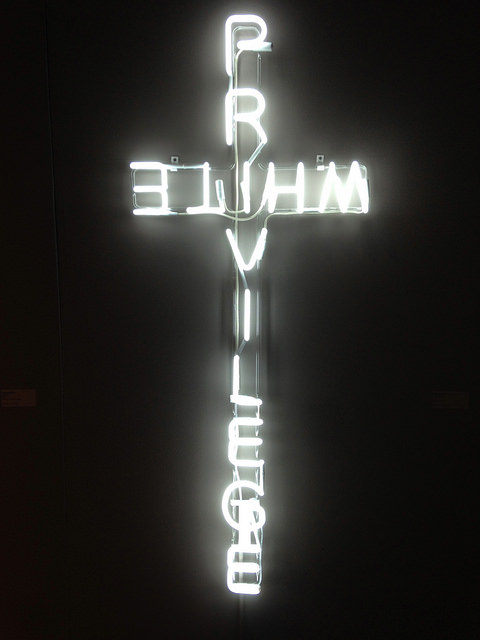
First 100 Days: Recipe for Disaster

By Kelsey Maki


In a mixing bowl, combine three cups of intolerance with two cups of ignorance. Add one cup of charged rhetoric and two tablespoons of alternative facts. Stir until smooth. Pour into a bulletproof, non-stick pan.

Topping: In a separate bowl, combine one cup of self-satisfied sugar (GMO) and three cups of concern for corporate America. Add two tablespoons of coal slurry and a pinch of fracking wastewater.

Bake while you watch Hannity.
Let cool for ten minutes before serving.
Eat at your own risk.


Kelsey Maki writes travel articles, literary fiction, and magical realism. She is an English instructor at Brookdale Community College in New Jersey. Her fiction has appeared in Mosaics: A Collection of Independent Women—Volume I. Visit her website at kelseymaki.wix.com/Kelsey and check out her blog Syntax Surfing: A Sentence-Lover’s Blog about Books, at kmakiblog.wordpress.com/.

First 100 Days: We the People Who March

By Yun Wei

We walk because that is all to be done
all our bodies can do
when so much has been done to us.

We walk because it’s not done: the work
of hands pressed against stone
and monuments, the work that hands must do

when there are no more parts
to assemble, just an endless sorting
of hows and whys, punctuation marks

that can’t contain the content,
as if brackets could stand for windows,
as if a parenthesis could pronounce justice,

inclusive, resistance – all the words
we need in stone. (No need to pull down
the monuments: these were already written)

We walk because gravity is sliding past,
because backwards is not a road,
and when the pavement slides too,

and the lampposts and stop lights,
the freeways and ways to freedom,
we will find a rise in morning light

that casts lines as wide as roads
because rising is all our bodies can do
when there is so much to be done,

so much to make bright.


Yun Wei received her MFA in Poetry from Brooklyn College and a Bachelor’s in International Relations from Georgetown University. Her writing awards include the Geneva Literary Prizes for Fiction and Poetry and the Himan Brown Poetry Fellowship. Her fiction and poetry have appeared in decomP Magazine, Roanoke Review, Apt Magazine, Word Riot, The Brooklyn Review and other journals. For the last few years, she was working on global health in Switzerland, where she consistently failed at mountain sports.

First 100 Days: Protest Poem in Two Acts

By Zigi Lowenberg


I.

saturday, january 21, 2017

she’s got the whole world…
holding Mom’s hand, their fists raised in West Palm breeze
while her stepdaughter and grandsons march in Hawai’i
her cousins throng Fifth Avenue
as her Oakland tribe rings Lake Merritt.

only later she learns,
another big lie floats, his number bloats
for Langley his facts are phooey
he signals, he gloats.

II.

street alchemy

making poems with her hopeful feet
gutter balls of fire, the heat—the heat
burning railing throats, running sore
we’re chanting sparks that bite and fuel
crowdsourcing for that asphalt elixir “Justice!”
surely it must come
on our hot sweaty insistent heels
of THIS. 


 Zigi Lowenberg, performance poet and co-leader of the jazzpoetry ensemble UpSurge!, has appeared at music festivals, rallies, clubs, bookstores and universities from NYC to New Orleans to San Francisco. Zigi’s acting credits include The Lysistrata Project, the Stein-Toklas Project, and John Browns Truth, Zigi is a member of the National Writers Union, and Radical Poets Collective. Her poetry has appeared in the poetry journal rabbit and rose. Her essay, “Support the Edge!” will be published in a book Creative Lives (spring 2017). Zigi and her husband, Raymond Nat Turner, are executive producers on UpSurge!’s two independent CD recordings, which have garnered critical acclaim. They live in Harlem and Oakland.

Photo credit: Dennis Hill via a Creative Commons license.
First 100 Days: Sanctuary

By Jennifer Hernandez

Border fence
divides
barbs catch
rip
prevent
free range
prevent
migration
of wildlife
of many lives
gaps
allow glimpses
of el otro lado
amber waves
blue blue skies
gauzy clouds
floating elusive
storms brew
on the horizon


Jennifer Hernandez lives in Minnesota, where she works with immigrant youth and writes poetry, flash, and creative nonfiction. Much of her recent writing has been colored by her distress at the dangerous nonsense that appears in her daily news feed. She is marching with her pen. Recent work appears in Anti-Heroin Chic, Dying Dahlia, New Verse News and Yellow Chair Review, as well as Bird Float, Tree Song (Silverton Books) and Write Like You’re Alive (Zoetic Press).


First 100 Days: Power by Adrienne Rich

By Tarra Stevenson

Living in a white fog of patriarchy/phallocentrism/misogyny

Today a class of teenage girls
radiant
discussed the power
of Marie Curie
her sacrifice to birth knowledge
even in the face of her own death. A radio-
active superwoman.

Today a vice-president eliminated
possibility
potential
denying their rights
denying her fights

and the teenage girls understand this
toxicity.

But they are tired
of sacrificing,
of seeing
(ElizabethWarrenMaxineWatersHillaryClintonHenriettaLacksZeldaFitzgeraldMarinaAbramovicMothersSistersDaughtersJaneDoeUnnamed)
themselves
Sacrificed.

They refuse this half-life.


Tarra Stevenson teaches at an all-girls school, where she is an agitator, educator and feminist. She has fiction in Shirley Magazine and poetry in Vinyl Poetry and Prose. She earned her BA from UC Davis, her MA from Loyola Marymount University, and is currently pursuing her MFA in fiction from UC Riverside’s low-residency program.

Photo credit: Loran via a Creative Commons license.

First 100 Days: Wiretap Tweets—Defined

By Charles W. Brice


Terrible (tĕr′ə-bəl): n. A salutation. Syn.: dear, my dear, hi, hello

Just (jŭst): n. & v. A statement of absolute truth. Ex: Just found out that Obama had my “wires tapped.”

Found Out (found out): tr.v. To receive an incontrovertible revelation of indisputable fact from a minor entertainment personage on Fox News.

Wire (wīr): n. A force aimed at crushing narcissism.

Tap also Tapp (tăp): n. A euphemism for the shattered fantasies of a tyrant.

Lawyer  (loi′yər): n. Someone who will teach everyone a lesson.

Sacred (sā′krĭd): adj. A term used to depict something as being religious when one is wholly ignorant of religion or spirituality. Ex: sacred toothpicks, sacred cornflakes, “sacred election process.”

“Wiretap” (wīr′tăp′): tr.v. To watch, surveil, or look at. Ex: “Wiretap that girl, Billy, and pass me a Tic Tac.”

Bad  (băd): adj. A dyspeptic global emotion experienced upon waking in the early hours and relieved only through tweeting before breakfast or by experiencing a huge, laxative induced, bowel movement.

Sick Guy (sĭk gī): n. Any member of the entire world who disagrees with the tyrant.

Sad (săd): adj. 1. Whatever inhibits grandiosity. 2. n. The present state of affairs in the United States of America.


Charlie Brice a retired psychoanalyst living in Pittsburgh. His full length poetry collection, Flashcuts Out of Chaos, is published by WordTech Editions (2016) and his second collection, Mnemosyne’s Hand (WordTech Editions), will appear in 2018. His poetry has been nominated for a Pushcart Prize and has appeared in The Atlanta ReviewHawaii ReviewChiron ReviewThe Dunes Review, SLAB, Fifth Wednesday Journal, and elsewhere. Read about Charlie’s collection Flashcuts Out of Chaos at The Borfski Press.

Note: Wiretap Tweets-Defined was previously published in Tuck Magazine.

Going Limp

By Ruth Nolan

It was your favorite story, the one you most loved
to tell me, from the days when you were the star
of your high school football team, MVP, you’d say:

It’s important to go limp after throwing a pass
because you know you’re going to get hit
and that way you’re less likely to get hurt

It was the story you loved to share, long before
I’d left the game. We’d drink beer after beer after
a day on the fire crew, over and over you’d tell

the winning story that became the best advice
I’ve ever heard, although I turned it around
to work for me, it became the rules for how to

receive the pass when you threw the ball, hard.
It became more and more important, each time
that you slugged me and cracked open my lip,

when you snuck up behind me and put me in a
chokehold, just to see how I would react, when
you threw me against a wall, our baby in my arms.

I got so good at going limp that for all these years,
I just knew I would deliver that ball all the way to
touchdown, never getting hurt, never going down.


Ruth Nolan, a former wildland firefighter in the Western U.S., is a writer and professor based in Palm Springs, CA. She’s the author of the poetry book Ruby Mountain (Finishing Line Press 2016). Her short story, “Palimpsest,” published in LA Fiction: Southland Writing by Southland Writers (Red Hen Press 2016), received an Honorable Mention in Sequestrum Magazine’s 2016 Editor’s Reprint contest and was also nominated for a 2016 PEN Robert J. Dau Short Story Prize for Emerging Writers. Ruth’s writing has also been published in James Franco Review; Angels Flight LA/Literary West; Rattling WallKCET/Artbound Los Angeles; Lumen; Desert Oracle; Women’s Studies Quarterly; News from Native California; Sierra Club Desert Report, Lumen; The Desert Sun/USA Today and Inlandia Literary Journeys. Ruth holds her M.F.A. in Creative Writing and Writing for the Performing Arts from the University of California, Riverside. She may be reached at ruthnolan13@gmail.com and via Twitter @ruthnolan.

Photo credit: Foxcroft Academy via a Creative Commons license.
Uprising

By Janey Skinner


Pink pointed ears popped up everywhere. Skeins in pocket, women knit as they marched, constructing together the greatest pussy hat of all, its oval opening frilled in coral, cinnamon and crimson yarns, too soft and too strong to tear.

Some say the Golem emerged from that hat, a bud of damp clay and fury that shot to full size in a flash, but I suspect it had long slept among us.

Was it us it pulled in its wake, or we who propelled it? Trouncing toward Washington with the pussy hat on its head, a confection of our relentless resistance.


Janey Skinner is a writer, teacher and activist in the San Francisco Bay Area. Her story “Carnivores” appeared in Best Small Fictions 2016, edited by Stuart Dybek and Tara Masih. She is at work on a novel about resistance to the war in Colombia, when she isn’t fighting for public education or fuming about encroaching fascism. Check her out at writer.janeyskinner.com.

Der Golem movie poster, 1920, in the public domain.

American Signs

By R.M. Engelhardt

Dead crow in the middle of the road,
Black as death and dark

In the cold November air
When all the trees all sigh

“Remember”

Where there is a change in the scenery
Something different
Like God has suddenly left
The building

A winter without snow
Where a part of your soul

Has departed
From the light


R.M. Engelhardt is a author, poet and writer whose work over the years has appeared in many journals and magazines in print and online, including, Rusty Truck, Thunder Sandwich, The Boston Literary Review, Full of Crow, Fashion For Collapse, Dryland Lit, The Outlaw Poetry Network, and many others. He currently lives in Upstate NY and is the creator of such groups as The Troy Poetry Mission and Poets And Writers Stand Against Trump. Visit the poet’s website.

Photo credit: “Fallen” by Rob Nunn via a Creative Commons license.

Porn Government

By Eliza Mimski

One

He undressed the country and grabbed it in his sweaty palms. As the zipper came down, the country split in two. He inserted his finger into the wrath. He inserted his finger into his following but they didn’t notice. He peeled open the law and banged it into the first half. He abraded the tissue. He promised beautiful garments to the second half. He sweet-talked. The country grew grotesque. It took on an absurd shape. It bulged in strange places. His jack-o-lantern smile assured all that everything was just as it was supposed to be.

Two

A cabinet of little boys who hate women.
They dropped my rights down a well.
Men talking about my body. A frat club making rules about my eggs.
He’s an orange glow – radioactive – and I don’t like him.
A long flight of stairs leads to the past you thought you left behind

Three

The men are nails.
They hold locks in their hands.
They are telling us to go to sleep.
But we are awake.
We rise up.
We are healthier than them.


Eliza Mimski is a retired teacher who lives in San Francisco and writes poetry to help her deal with the election. Right now, it’s her sanity. Her work has appeared in Quiet Lightning’s Sparkle and Blink, Fiction 365, Enclave, Anti-Heroin Chic, Poets Reading the News, New Verse News, and other publications. Visit her website at ElizaMimski.wordpress.com.

Photo credit: “Radioactive Geranium” by Garry Knight via a Creative Commons license.
Scent of Mock Orange

A cento by Marcia Meier


The serpent, that mocker, woke up and pressed against me

In the west the falling light still glows

but here on earth we’ve got a fair supply of everything

If you tasted it, it would first taste bitter

crooning black lullabies in the kitchen,

And now, it is easy to forget

At night, the murmuring calls of chuck-will’s-widows

The moon is a sow

comes home; like he is the Last Emperor

with him in flying collar slim-jim orange

but cops blow him away

Again, brutish necessity wipes its hands

It is like what we imagine knowledge to be:

This loaf’s big with its yeasty rising.

I have reached no conclusions, have erected no boundaries

men drawing lines in the dust.

He called her good and girl. Then she was dead,

I hate them

And the scent of mock orange


(“From the Death of the Fathers” Anne Sexton; “Why is this Age Worse…?” Anna Akhmatova; “Here” Wislawa Szymborska; “At the Fishhouses” Elizabeth Bishop; “Meridian” Amy Clampitt; “Diving into the Wreck” Adrienne Rich; “The Odyssey” Rick Bass; “Song for Ishtar” Denise Levertov; “Spoon River Sadie Louise” Anne Lamott; “The Reception” June Jordan; “DeLiza Spend the Day in the City” June Jordan; “A Far Cry from Africa” Derek Walcott; “At the Fishhouses” Elizabeth Bishop; “Metaphors” Sylvia Plath; “Corsons Inlet” A.R. Ammons; “Tu Do Street” Yusef Yomunyakaa; “Clearances” Seamus Heaney; “Mock Orange” Louise Gluck; “Mock Orange” Louise Gluck)


Marcia Meier is an award-winning writer, developmental book editor and writing coach. Her books include Heart on a Fence (Weeping Willow Books, 2016); Navigating the Rough Waters of Today’s Publishing World, Critical Advice for Writers from Industry Insiders (Quill Driver Books, 2010); and Santa Barbara, Paradise on the Pacific (Longstreet Press, 1996). Her memoir, Face, is forthcoming, as is an anthology, Unmasked, Women Write About Sex and Intimacy After Fifty, co-edited with Kathleen Barry. She is also at work on another book of poetry and photography, titled Ireland, Place Out of Time. Marcia is a member of the Author’s Guild and the Association of Writers and Writing Programs. Visit Marcia’s website at MarciaMeier.com.

A Brief History

A sonnet by I.E. Sommsin

Into the toilet endlessly flushing

leap the great state and vast empire,

fat and swollen, on schedule to expire,

onward toward oblivion rushing.

They got the loud proud words that prove them strong,

and the firm resolve that works on teevee

and the raw courage made for a moovee—

if you look tough enough, you can’t be wrong!

So fade the golden years of aggression,

as all glory molders to regression.

Led by old children—mean, demanding, shrill,

prone to stumble and forget and to kill—

they never know how they are afflicted

by deep and bloody wounds self-inflicted.


I.E. Sommsin, a writer and artist from Kentucky, lives in San Francisco. He describes this piece as a “hard-hitting sonnet,” written some time ago, “whilst in the grip of a creative fit that turned out to be prophetic.” Indeed.

Photo Credit: Golden toilet image by La Ira Graffx via a Creative Commons license.
The Big Top Comes Down: A Consciousness Poem

By Deborah Kahan Kolb


once the elephants left the crowds stopped coming to the circus but look do my eyes deceive me the elephants are back they are blustering along on Capitol Hill with old white-man creases leathering their skin leaving yuge piles of shit in their wake for the humane rights activists to shovel and yes the crowds are back to see the gilded circus with their very own eyes especially the trumpeting elephants imported from Russia but the parks department submits based on alternative facts that it’s not truly a crowd it’s really fake news it’s a scattered gathering of empty bleachers lining the parade mall of the grand old circus the greatest show on earth headlined by the triumphant return of the elephants their legendary memories faulty somehow remember last year how they snorted and swore and yet oh my god here’s the winning new ringleader just promoted and he’s tripping over the ludicrous length of his tie he used to be an ordinary clown y’know all he did was comb-over the orange wig and shift his makeup from white to perma-tan but some clowns are scary and this one likes water for his next trick he wants to pour gallons of it down Ahmed’s gagging gullet oh yes he’s a self-styled high inquisitor turned into a meme this big league circus ringleader oh look there he’s cracking his golden pen now to tame the donkeys braying out of control in an obstinate corner of the congressional ring ladies and gentlemen hell is empty and all the losers are here the circus is not shuttered it’s terrific it’s tremendous just look at those asses their portfolios prancing ringing round the oval kicking up their heels amidst piles of rubles they imagine they’re stallions able to vault a fantastic wall and see up there the amazing gymnastics of the aerialist acrobats wow they can twist themselves into anything huh the people on the pavement ooh and aah and scratch their heads as they witness hope and change swing upside down from filmy vows of lightweight silk and in the center of the platform can you see the monkeys tilting at that crumbling Mexican windmill or maybe it’s Syrian who really knows and guess what my friend the great cats are back the pink pussyhats no more jumping through hoops or performance on demand hear those fierce felines roar they’re swarming the parade route and chasing this circus act right out of town watch the ringleader ex-clown snatch a bellicose bow amid the hue and cry believe it or not a Ripley themed spectacle is playing itself out on the splendid stage of our nation’s capital


Deborah Kahan Kolb was born and raised in Brooklyn, NY and currently lives in the Bronx. Much of her poetry reflects the unique experiences and challenges of growing up in, and ultimately leaving, the insular world of Hasidic Judaism. Her work has appeared or is forthcoming in Poetica, Voices Israel, Veils, Halos & Shackles, New Verse News, Tuck, Literary Mama, 3Elements Review, and Rise Up Review, and her work has been selected as a finalist for the Anna Davidson Rosenberg Poetry Award. Her debut collection, Windows and a Looking Glass, is forthcoming in April 2017 from Finishing Line Press, as a finalist for their 2016 New Women’s Voices Chapbook Competition. You can read more of the author’s work at www.deborahkahankolb.com.

Photo credit: “Circus elephants and performers parade on the grounds of the U.S. Capitol,” U.S. Library of Congress.

Previously published by Poets Reading the News.

Typing Class

By Susan Elliott Brown

A black, rectangular shield covers the keyboard and my hands
like a censor hides nipples on TV. I type sample sentences,
hundreds more words to go before the bell. When will
the auditor perform the city audit? The fox and the bear
jumped over the logs. The mayor mailed a letter to his aunt
in Pennsylvania. The TV kicks on at a quarter till and a girl
named Tangela sits in front of a makeshift studio, red
high-school letters emblazoned behind her head. She reads
in a monotone, President Bush and war on terror and a sea
of keyboard clicks swallows it up. The clumsy cow stepped
into the chicken coop. Iraq. Baghdad. Saddam. The state
auditor will return on Tuesday. I look to the keyboard
for a sense of place and the black box stops me. Eyes on
the screen. We think they have weapons of mass destruction.
People still wear “I Heart NY” shirts to school. I think
Tangela said we are at war. War with terror. The crafty
attorneys requested a long recess. The black box hides
the delete key. The quick sprinter—no—the quiet sprinkler.
Delete. When will the judge be back in the building?
Planned, authorized, committed, or aided. In order to
prevent any future acts. All necessary and appropriate force.


Susan Elliott Brown is the author of the chapbook The Singing Is My Favorite Part. Her poetry appears in The Best American Poetry blog, Measure: A Review of Formal Poetry, and Reunion: The Dallas Review, among others. She received her PhD in Creative Writing from the University of Southern Mississippi, and she lives in Birmingham, Ala. and works in advertising.

Photo credit: Typists in training at the War Production Board, 1942, U.S. Library of Congress

When the Clock Was Smashed

By Julia Stein

Color Juarez White

I was twenty, alone in Juarez and afraid
in a white-walled clinic wearing a white paper gown.
The illegal abortionist took from the drawer
his metal rods, metal knife, metal spoon.
I laid back on the hard, white table.
The gas mask was put over my head.

It was over. They wanted me. To stand up. Walk.
I wanted to fall asleep on the floor.
Stood up. Walked. Got into the taxi.
Collapsed against the taxi’s back seat.
White street lights. The taxi stopped.
The driver’s voice, “Walk across the street
and catch another taxi back to El Paso.”
At the corner, the other side
looked miles away.
I wanted to fall down.
One foot off the curb.
Both feet.
White headlights.
Cars screeched.
I walked slowly,
step by step.
At the corner
I stood
alone in Juarez.

Hemorrhaging

You’re OK,” the doctor said
in the Los Angeles office.
Three days later I bled out blood clots.
Pain exploded in my stomach.
I called the doctor.
“I don’t remember you,” he said.
I was a boat cracking down the middle.
“Take pills,” he said.
All day, the pain, the pills.
I was a boat going down, down, down
in a storm.

The next morning I woke up
to waves of pain,
one after another after another.
I dragged myself to the phone.
I didn’t understand.
The doctor said I was fine.
“Meet me in the hospital,” he said.
My boyfriend drove me down the freeway.
I moaned, “My stomach hurts.”

At the hospital I’m torn away from him
to lie on a table where I float adrift
in a sea-white room.

The doctor loomed overhead,
“You’re twenty.
We need your parents’ consent.
Money down.”
Later he told my mother
I was running out of blood.

The Hall of Mirrors

Eleven years I have carried that summer on my back
and lived like a cripple, curling in on my myself.
I always wanted to take a chalk eraser,
wipe off the whole summer when time stopped,
the clock smashed, the hands wrenched apart.

Down the years I run through
an endless Hall of Mirrors.
I look for my boyfriend down one tunnel,
up another. I never find him.
All I see in the mirrors is the doctors.
Blood is on the floor.
My dress is smeared with blood.


Julia Stein has published five books of poetry and has also edited two, Walking Through a River of Fire: 100 Years of Triangle Factory Fire Poetry and Every Day Is an Act of Resistance: Selected Poems of Carol Tarlen. Stein’s poetry ranges from love lyrics to explorations of war, peace, women’s lives, and work. She is also co-author of the prose work Shooting Women: Behind the Camera, Around the World (Intellect Press, 2015), and she has been an arts journalist and literary critic for years.

This is sections III, IV, and V of Stein’s poem, “When the Clock Was Smashed,” from her first collection, Under the Ladder to Heaven (1984).

Photo credit: Craig Leontowicz via a Creative Commons license.

Just a Short Note to Say Something You Already Know

By Lawrence Matsuda  

For Donald’s Daughter, Ivanka Trump


Ivanka, in a different time and place,
you and your children are squeezed into
cattle cars destined for Nazi death camps.
Stars pinned to your coats
and numbers tattooed on your arm.
Religion is your crime, something like
the 120,000 Japanese Americans whose race
incarcerates them during World War II.

If you dodge head shaving,
and starvation, maybe a country
would welcome you.

Angel of death is difficult to slip,
unfortunates are turned away,
chased by verbal brickbats and pitchforks.
You smell freedom’s scent
but only glimpse porthole views
of Lady Liberty’s tantalizing torch.

Doors slam and hands
of kindness withdraw.
You are not among privileged
huddled masses.

Today, as a 1% American demographic,
you are safe by an accident of birth.
Others less fortunate, however,
stand on precipices knowing,
“History does not repeat
itself but it rhymes.”*

When Donald promises
a magnificent Great Wall
and spews religious
hatred to cheering crowds,
you must feel a guilty twinge,
knowing if this were 1943 Germany,
a chorus of incendiary voices
would echo and push innocents
off slippery cliffs into eternal darkness.
Black hole so forbidding victims
would never see their children again,
while self-serving politicians levitate
on bandwagons swerving on and off
a broken highway of eight million bones.


* Quote attributed to Mark Twain.


Lawrence Matsuda was born in the Minidoka War Relocation Center, a concentration camp for Japanese and Japanese Americans during WWII. He is a regional Emmy Award-winning writer and an author of two books of poetry, A Cold Wind from Idaho and Glimpses of a Forever Foreigner. Recently, he and Tess Gallagher collaborated on a book of poetry entitled Boogie-Woogie Crisscross, and chapter one of his graphic novel, Fighting for America: Nisei Soldiers, was animated and won a 2016 regional Emmy.

This poem was previously published in Raven Chronicles.

Photo credit: United States Holocaust Memorial Museum.