How the first strangers met the coast guard

By Arturo Desimone


The maritime guards stopped the half-naked,
very tall animal-headed strangers
on their boats
Asked them “Show your papers, please”
“All we have
are these roses.
Yellow and red
given to us, a gift,
they were once showered upon us from the earth
shot from the first catapults, made to launch pure prayer,
to the clouds fecund,
seeds hit us in our faces, wounding our sleep
The throwers expected our thanks.
Flowers were carried to our mouths in our sleep
by the bearers, hoping
flowers of inedible gold would not descend back
that the shadows of the roots
would end in us.”

The guards brandished their weapons, lifting them from the hilt
guns shone like their aerodynamo-sunglasses,
shaven human heads dulled,
touch-screens of their phones bright, all iridescences worn
by opaqued minds of gendarmerie.

“It could be done without any weapon, muscle of titanium tin ton and iron,
muscle of love-borne waxwing-wind
without any of you enacting vapid designs
or tinkering, in defiance of us
and our plans for your present
and future omni-mud” the gods went on

”Remove the animal masks please” asked the police academy justice officers,
interrupting, calling in the higher-ranking managerial levels
of divisional security
and other devils that trample the waves and extolled winds.
They phoned them in
on their pink plastic hand-held radios.

the gods answered—But these are our faces.
Only angels tear off their own heads
Every morning, when it is cool they do it down by the lake


Arturo Desimone, Arubian-Argentinian writer and visual artist, was born in 1984 on the island of Aruba. At the age of 22, he emigrated to the Netherlands, then relocated to Argentina while working on a long fiction project about childhoods, diasporas, islands and religion. Desimone’s articles, poetry and fiction have previously appeared in CounterPunchCírculo de Poesía (Spanish) Acentos ReviewNew Orleans Review, and in the Latin American views section of OpenDemocracy. He writes a blog about Latin American poetry  for the Drunken Boat poetry review.

Photo credit: Helder Mira via a Creative Commons license.

Landowner

By Andrea Ciannavei


I am not financially literate.
My chaos with money leads me to behave desperately.
Always borrowing.
Always paying back.
A text message came through on Saturday.
A marshal had taken possession of the apartment I kept in New York.
I had been withholding rent. I’m broke.
Eviction proceedings went forward and no one told me.
I’m going to pay. I always do.
Making amends for past wrongs done to others is easier than the ones I am supposed to make to myself.
I am a debtor.
You don’t get more American than me.
The only asset I have is a jeep. No home. No condo. Credit cards maxed.
A renter.
The idea of owning a home makes my mind collapse in on itself.
A hysterical blindness arrives.
Homes and families are not pleasant things. They are heartache and secrets.
They are snake pits full of hissing monotonous gossip.
Choppy sentences. Nimble sidesteps.
The other problem with homes is they have doors.
Nothing good happens behind them when they are closed.

I do own one other thing – I almost forgot:
When I was 16, my mother told me she bought a plot for me at the St.
Francis Cemetery.
Her subconscious is very proactive.
It’s because of her husband. My father.
And her father before him.
Possibly my great-grandfather too but we will never know.
It’s because I was fat and embarrassing. Lane Bryant was the only place we could buy clothes to fit me in the 80s.
She once said to someone after a successful diet I had just completed, that my weight loss was the happiest time in her life.
I am, down to my organs, dropforged by generational sickness and inarticulate rage.
Musty porn magazines in trash bags in the corner of garages.
And now here comes:
Me too. Me too. Me too.
Even more than rapists, molesters, assaulters and the incestuous:
I hate the people who are shocked.
There is a special place in hell for these innocent liars.
What world have they been living in all this time?
And when do I get my one-way ticket there?
Everyone wants to have empathy now.
That’s very nice. But it’s like finally getting the back rent.
Now I know how my New York landlord feels.
All this empathy has finally arrived but it’s 32 years late –
I’ve already cleaned up most of the damage.
Now that everyone wants to listen, I don’t want to tell.
No one gets to hear the details of my incest, or sexual assault when I was 15.
Or being kicked out of an all-girls Catholic school because I made the mistake of telling a girl what happened to me which made her parents mad.
Or the casual harassments on NYC street corners.
Fat asses are low hanging fruit.
No one will hear those details.
None of your business, you know.
Besides, they’re rusted and tangled and thrown willy-nilly
in the little plot of land I own in the St. Francis Cemetery.
My mother wants me buried with the family
but this is all she’s getting:
My jagged metal scrap heap.
I made my friends promise:
Should I die before my parents,
I am to be cremated and tossed into the Pacific Ocean.
No ceremony. No speeches.
Just get rid of the evidence.


Andrea Ciannavei is a Los Angeles-based TV writer and playwright. TV: The Path (Hulu), American Odyssey (NBC Universal), Season 2 of Copper (BBC America), Seasons 1 – 3 of Borgia (Tom Fontana, Executive Producer, Atlantique Creations SASU). Plays include Pretty Chin Up produced at LAByrinth Theater Company (Artistic Directors: Philip Seymour Hoffman and John Ortiz) at The Public Theater. She also traveled on behalf of Pulitzer Prize winner Marsha Norman to Thailand, India, South Africa, Kenya, Congo, Rwanda, Burundi, Egypt, Haiti and Ecuador, to conduct interviews and research on human trafficking, sex slavery, gender violence and socio-political and economic issues that impact women. She is a graduate of NYU’s Tisch School of the Arts’ Dramatic Writing Program and Juilliard’s Lila Acheson Playwriting Fellowship 2008-2010. She is a proud member and occupies a seat on the council of WGAE. Visit her website at www.andreaciannavei.com.

Photo credit: Tim Green via a Creative Commons license.

How I Am Not Like Hillary Clinton

By Rachel Custer


The woods call to me, too, from across this road,
from away from here, from the opposite
of houses filled with tired people,

from the constant grasping of small hands
that might as well own me. Who wouldn’t be calmed
by a path through the grabbing branches? Still

I don’t go to the woods, trusting more
in the noisy hate of the known world than in
the cold, true silence of a mirror. Here, in the dark

undergrowth of the mob, I am still afraid, but I am
not alone. Here I can weigh a stone in my throwing hand.
Here I can know the stone won’t be thrown

at me. Fear keeps me from the woods into which
you wade, eyes forward, again and again,
because the woods is silent

as it circles me. Here, with the tired people, I can
say to myself I am only tired, that the stone
in my hand can’t be wrong

if we’re all holding stones.


Rachel Custer’s first full-length collection, The Temple She Became, is available from Five Oaks Press. Other work has previously been published or is forthcoming in Rattle, The American Journal of Poetry, B O D Y, [PANK], and DIALOGIST, among others. She is currently completing the Tupelo Press 30/30 Poetry Marathon fundraiser. Visit her website at www.rachelcuster.wordpress.com.

Photo credit: .waldec via a Creative Commons license.

The Freedom of Mothers Must Come

By Mbizo Chirasha


Pain scribbled signatures in these mothers’ buttocks,
War tied ropes of struggle around these mothers’ necks.
Songs of suffering are sung and unheard
in the congregations of townships and mountains
searching for freedoms’ seeds.
The seeds of these mothers’ wombs yearn for a freedom
too far away to be harvested, but not forgotten.

These mothers’ bodies speak of truth.
These mothers’ bodies carry scars.
These mothers’ dimples are resilient,
These mothers’ smiles and laughter offer hope.
These mothers’ thighs are graffitied with bullet bruises,
the valleys of their backs reek
with the blood of their sons,
sons long buried in barrels of violence
their lives stolen in their greenness.

These mothers’ hands trust the red clay soil,
even during cloudless seasons.
These mothers’ wombs give birth to rays of dawn.
These mothers scribble memories on prison walls with rainbows
These mothers’ shoulders carry the weight of journeys
and hope, which rises ripens dies
and rises again with each new day.

Mothers, how many times can you cough up sorrow?
For how many seasons can you sneeze with hunger?
You have eaten enough poverty
and licked the rough hand of a war long unforgotten
for too many dawns.

These mothers unburden propaganda from their shoulders
delete the baggage of political slogans from their breasts
abort the luggage of war from their wombs
These mothers turn to the hope of reaching pastures
where they can reap the fruits of freedom.


Mbizo Chirasha is an internationally acclaimed performance poet, writer, creative and literary projects specialist, and an advocate of Girl Child Voices and Literacy Development. He is the founder and projects curator of a multiple community, literary, and grassroots projects, including Girl Child Creativity Project, Girl Child Voices Fiesta, Urban Colleges Writers Prize, and Young Writers Caravan. He is widely published in journals, magazines, and anthologies around the world. He co-edited Silent Voices Tribute to Achebe Poetry Anthology, Nigeria, and the Breaking Silence Poetry anthology, Ghana. His poetry collections include Good Morning President, Diaspora Publishers, 2011; and United Kingdom and Whispering Woes of Ganges and Zambezi, Cyberwit Press, India, 2010. He was the Poet-in-Residence from 2001 to 2004 for the Iranian Embassy/UN Dialogue among Civilizations Project; Focal Poet for the United Nations Information Centre from 2001 to 2008; convener/event consultant for This Africa Poetry Night 2004 to 2006; official performance poet Zimbabwe International Travel Expo in 2007; Poet in Residence of the International Conference of African Culture and Development 2009; and official poet SADC Poetry Festival, Namibia 2009. In 2010, Chirasha was invited as an Official Poet in Residence of ISOLA Conference in Kenya. In 2003, Chirasha was a Special Young Literary Arts Delegate of Zimbabwe International Book Fair to the Goteborg International Book Fair in Sweden. He performed at Sida/African Pavilion, Nordic African Institute and Swedish Writers Union. In 2006, he was invited to be the only Poet /Artist in Residence at Atelier Art School in Alexandra Egypt. In 2009, he was a special participating delegate representing Zebra Publishing House at the UNESCO Photo-Novel Writing Project in Tanzania. Visit his website at mbizotheblackpoet.wordpress.com.

Photo credit: James Jordan via a Creative Commons license.

I Promise I’ll Pick Up

By Elisabeth Horan

I’ve been left out

They had a baby shower without me
I’m not pregnant right now but I can still be pretty fun sometimes

They’re constructing a pipeline,
Under rivers of bones and shale
Through the homes of the earthworms

Didn’t ask the worms if that was ok
Didn’t ask me either

They are dissecting my insurance – My taxes My womb, my WIC, my Medicaid, my Safety Net
I am a poor poet you see But I still need some food and my meds
You don’t want to see me without my meds, Senators
And support and maybe even a little respect

I paid taxes, I sure did –
For 20 years as a secretary
First in an otolaryngology clinic, then in an estate planning law firm
They could call me, I would talk

I would tell them:
He’s out at lunch right now, would you like his voice mail?
You can come in to sign your wills at 1:15 Yes Sir, they will be ready

Also: Have a heart
Also: Don’t touch my body

Invite me to be your friend, I promise I can be fun still
Even if I’m not pregnant and happy like you
Even if I’m not in power like you
I’m always here
On my couch
Ready to talk
Waiting for the phone to ring –
I’ll check the caller ID –
But if it’s you,
I promise I’ll pick up.


Elisabeth Horan is a poet mother student lover of kind people and animals, homesteading in Vermont with her tolerant partner and two young sons. She hopes the earth can withstand us and that humans may learn to be more kind to each other and to Mother Nature. She has recently been featured in Quail Bell Magazine and Dying Dahlia Review. She has work forthcoming at The Occulum, Alexander & Brook and at Switchgrass Review. Elisabeth is a 2018 MFA candidate at Lindenwood University and teaches at River Valley Community College in New Hampshire. Follow her @ehoranpoet.

Photo credit: Sarah Laval via a Creative Commons license.

A Drill Song from the Turkish Resistance

[fusion_builder_container hundred_percent=”no” equal_height_columns=”no” menu_anchor=”” hide_on_mobile=”small-visibility,medium-visibility,large-visibility” class=”” id=”” background_color=”” background_image=”” background_position=”center center” background_repeat=”no-repeat” fade=”no” background_parallax=”none” enable_mobile=”no” parallax_speed=”0.3″ video_mp4=”” video_webm=”” video_ogv=”” video_url=”” video_aspect_ratio=”16:9″ video_loop=”yes” video_mute=”yes” video_preview_image=”” border_size=”” border_color=”” border_style=”solid” margin_top=”” margin_bottom=”” padding_top=”” padding_right=”” padding_bottom=”” padding_left=””][fusion_builder_row][fusion_builder_column type=”1_1″ layout=”1_1″ spacing=”” center_content=”no” hover_type=”none” link=”” min_height=”” hide_on_mobile=”small-visibility,medium-visibility,large-visibility” class=”” id=”” background_color=”” background_image=”” background_position=”left top” background_repeat=”no-repeat” border_size=”0″ border_color=”” border_style=”solid” border_position=”all” padding=”” dimension_margin=”” animation_type=”” animation_direction=”left” animation_speed=”0.3″ animation_offset=”” last=”no”][fusion_text]

Translation by Süleyman Soydemir and the Turkish Youth

From an anonymous variant of a military drill song, “Gündoğdu Marşı,” or “The Sunrise Anthem,” was a symbol of the anti-fascist Turkish resistance in the 1960s and 70s.

Today, it serves as a symbol of hope in the face of an increasingly authoritarian regime.

[/fusion_text][/fusion_builder_column][/fusion_builder_row][/fusion_builder_container][fusion_builder_container hundred_percent=”no” equal_height_columns=”no” menu_anchor=”” hide_on_mobile=”small-visibility,medium-visibility,large-visibility” class=”” id=”” background_color=”” background_image=”” background_position=”center center” background_repeat=”no-repeat” fade=”no” background_parallax=”none” enable_mobile=”no” parallax_speed=”0.3″ video_mp4=”” video_webm=”” video_ogv=”” video_url=”” video_aspect_ratio=”16:9″ video_loop=”yes” video_mute=”yes” video_preview_image=”” border_size=”” border_color=”” border_style=”solid” margin_top=”” margin_bottom=”” padding_top=”” padding_right=”” padding_bottom=”” padding_left=””][fusion_builder_row][fusion_builder_column type=”1_2″ layout=”1_2″ spacing=”” center_content=”no” hover_type=”none” link=”” min_height=”” hide_on_mobile=”small-visibility,medium-visibility,large-visibility” class=”” id=”” background_color=”” background_image=”” background_position=”left top” background_repeat=”no-repeat” border_size=”0″ border_color=”” border_style=”solid” border_position=”all” padding=”” dimension_margin=”” animation_type=”” animation_direction=”left” animation_speed=”0.3″ animation_offset=”” last=”no”][fusion_text]

Gündoğdu Marşı

Gün doğdu, hep uyandık
Siperlere dayandık
Bağımsızlık uğruna da
Al kanlara boyandık

Yolumuz devrim yolu
Gelin kardaşlar gelin
Yurdumuz da faşist dolmuş
Vurun kardaşlar vurun

Yurdumuz da faşist dolmuş
Vurun kardaşlar vurun!

[/fusion_text][/fusion_builder_column][fusion_builder_column type=”1_2″ layout=”1_2″ spacing=”” center_content=”no” hover_type=”none” link=”” min_height=”” hide_on_mobile=”small-visibility,medium-visibility,large-visibility” class=”” id=”” background_color=”” background_image=”” background_position=”left top” background_repeat=”no-repeat” border_size=”0″ border_color=”” border_style=”solid” border_position=”all” padding=”” dimension_margin=”” animation_type=”” animation_direction=”left” animation_speed=”0.3″ animation_offset=”” last=”no”][fusion_text]

The Sunrise Anthem

At Sunrise, we all wake up
Trenches bracing our shoulders
For our freedom we stand against
Blood-red shrapnel showers

Our path leads to revolution
March on brothers and sisters
Against this fascist infestation
Strike on brothers and sisters

Against this fascist infestation
Strike on brothers and sisters!

[/fusion_text][/fusion_builder_column][/fusion_builder_row][/fusion_builder_container][fusion_builder_container hundred_percent=”no” equal_height_columns=”no” menu_anchor=”” hide_on_mobile=”small-visibility,medium-visibility,large-visibility” class=”” id=”” background_color=”” background_image=”” background_position=”center center” background_repeat=”no-repeat” fade=”no” background_parallax=”none” enable_mobile=”no” parallax_speed=”0.3″ video_mp4=”” video_webm=”” video_ogv=”” video_url=”” video_aspect_ratio=”16:9″ video_loop=”yes” video_mute=”yes” video_preview_image=”” border_size=”” border_color=”” border_style=”solid” margin_top=”” margin_bottom=”” padding_top=”” padding_right=”” padding_bottom=”” padding_left=””][fusion_builder_row][fusion_builder_column type=”1_1″ layout=”1_1″ spacing=”” center_content=”no” hover_type=”none” link=”” min_height=”” hide_on_mobile=”small-visibility,medium-visibility,large-visibility” class=”” id=”” background_color=”” background_image=”” background_position=”left top” background_repeat=”no-repeat” border_size=”0″ border_color=”” border_style=”solid” border_position=”all” padding=”” dimension_margin=”” animation_type=”” animation_direction=”left” animation_speed=”0.3″ animation_offset=”” last=”no” element_content=””][fusion_text]


Listen to the sung form here, since, as Mr. Soydemir wrote, “Let’s face it, poetry is almost always more inspiring when sung aloud.”


Süleyman Soydemir is a believer in the supposedly antiquated chants of Liberty, Equality and Fraternity and a student of Anatolian Folk Traditions and Culture. His current—and perhaps ultimate—purpose in life is to tell the stories of resistance against tyrants, thieves and internet trolls.

Notes on the translation from Süleyman Soydemir:

The translated version is about 1.5 times the length of the original in terms of word count. However, this is largely irrelevant, since Turkish poetry uses syllables rather than words in determining length, and the translation has almost the same metric value as the original. Another reason for the length discrepancy is because of Turkish phonetics, which allows for almost all words to be split wherever you want and for most vowel lengths to be changed as needed. As I wanted to keep the translation more or less sing-able, words such as “trenches” have to be placed strategically. While these might be important considerations to make in metric and/or folk poetry, translators of free-meter poetry tend to value the emotional effectiveness of the end product and its ability to carry over the intended meaning.

I have translated some verses rather liberally, especially concerning the “shrapnel showers” and “fascist infestation.” This is because most of the verbs and some of the nouns used in the original do not carry the same power and colloquial meaning they have in Turkish, prompting me to strengthen the translation using different methods. It is the translator’s job to strike a balance between the two ends and decide on where to draw the lines. Finally, as the word “sibling” is seldom used colloquially in English, the Turkish equivalent, “kardaş,” was translated as “brothers and sisters.”

Photo credit: Marco Verch via a Creative Commons license.

[/fusion_text][/fusion_builder_column][/fusion_builder_row][/fusion_builder_container]

Hitler Speaks

Charlottesville, Virginia, August 12, 2017

By Kathi Wolfe

You said
I was a has-been —
my day was done.
You wish!
I’ve been undercover,
before your unseeing
eyes.

I shaved my
moustache, changed
my accent, Tweeted — ordered
lattes at Starbucks. In khakis
and polo shirts, I was the boy
next door. My torches
were kept in the closet,
I only drew swastikas in the dark.

Now I can stop living
a double life. I’ll goose step
in the Easter Parade. Swastikas
will be the new Boy Scout badges —
I’ll model my torch on the next Vogue cover.
Welcome to my comeback tour!


Kathi Wolfe is a poet and writer. Her most recent collection, The Uppity Blind Girl Poems, was published in 2015 by BrickHouse Books and won the 2014 Stonewall Chapbook Competition. She is a contributor to the anthologies QDA: A Queer Disability Anthology and Beauty Is a Verb: The New Poetry of Disability. Wolfe was a 2008 Lambda Literary Foundation Emerging Writer Fellow. She is a contributor to The Washington Blade, the acclaimed LGBTQ paper.

Photo credit: Dmitry Dzhus via a Creative Commons license.


A Prayer

By Jackleen Holton Hookway

This world is just a little place, just the red in the sky, before the sun rises, so let us keep fast hold of hands, that when the birds begin, none of us be missing. –Emily Dickinson

A sapling shakes, and a gust
of new red-crested finches are launched
into a sky already thick with song. Since sun-up,
the ruby-throated hummingbirds
at the neighbor’s feeder have been at it;
the thrum of their wings, their tiny
voices rapt in happy bird-gossip.

Yes, the glaciers are melting, irreversibly now.
And the other day, my friend, walking
in his neighborhood of rainbow flags
and prayer flags, saw three swastikas blackly
shadowing the wall of the community theatre.
But the birds don’t know any of this—or if they do,
they’ve known it all along.

So let us now keep a vigilant eye
on the horizon, always seeking out the red
in the sky, its teacup of sun rising above
the morning fog. Let us look in on our neighbor
from time to time. And let us be kind to each other,
kinder now than we have ever been.
Amen.


Jackleen Holton Hookway’s poems have appeared in American Literary Review, Bellingham Review, Mobius: The Journal of Social Change, North American Review, Poet Lore, Rattle, Rise Up Review, and are forthcoming in the anthology Not My President (Thoughtcrime Press).

Photo credit: Kate Ter Haar via a Creative Commons license.

For Kepler 138b (the beautiful)

By mica woods

if you took a telescope to the sky
200 lightyears away

happened to point it down on
this country, would you see the slaughter

and the selling by those men
we carry memories of in our pockets

or would you not notice the labor
in the fields as different from

the digging crews of the Eerie Canal
can you measure the mass

of suffering from your red dwarf
by detecting the wobble

in Mars as we pass nearby
or the light we block from the sun

could you see what freedom
has meant in its scabbed-over cloth

how we could set a scale and weigh
a heart / or body / i’m sorry

you had to see us on our birthday
with sweat and lashes and mounds

of scars, burning villages / massacres
200 years ago but if you could

see us now—no cover-up no / blush
would you say we look

like an old lover
and we haven’t aged a day


mica woods used to live with a family of raccoons in Missouri, but currently they edit the Columbia Poetry Review and teach at Columbia College Chicago as an MFA candidate. In 2015, they received the Merrill Moore Prize for Poetry from Vanderbilt University. Other recent poems can be found in Pretty Owl PoetryThe New Territory, Hollow Literary Journal, and Heavy Feather Review.

Image credit: Danielle Futselaar via a Creative Commons license.

Jump

By Yazmin Navarro

There was always an ache.
A pain that filled the inside of my belly.
A pain that engulfed me.
Of missing something.
Of missing someone.
Of missing my mother.

It was the times.
It was the need.
It was seeing the hunger in her children’s eyes.
It was the fear of watching her children die.
She pried my hand from hers.
She looked away.
She feared my wounded face.
She didn’t look back.
She feared my face more than she feared the abyss.

She didn’t know how.
She didn’t know when.
She didn’t know where.
But she knew the answers lay ahead.
In a foreign land.
With a foreign tongue.
She could feed her children from there.
She could sustain her children from there.

She lost her children.
And I lost my mother.
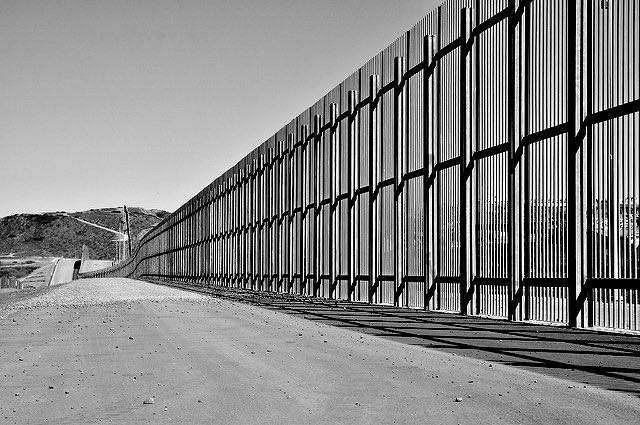
Fuck you fence.
Jump.
No one wins.


Yazmin Navarro holds a BA in English and a Masters in Public Administration. She was born in Northern Mexico and immigrated to the United States as a 7-year-old. In her spare time, she writes about growing up as an undocumented immigrant—the hardships faced as a child brought to a country she didn’t know and her difficult path to authorized status—and she’s currently working on a children’s book. Yazmin has been a Marine Corps spouse for the past twelve years, has a daughter and two dogs, and resides in Southern California.

Photo credit: Jonathan McIntosh via a Creative Commons license.


The Salt March

By Howard Richard Debs

“We are entering upon a life and death struggle” —Mahatma Gandhi


The oldest, Gandhi himself, then 61
the youngest among those at
the start, 18. There were but 80 in all
to begin. It took 24 days, 240 miles
on foot to reach the coast.

2500 would next march on the Dharasana saltworks,
60,000 were in jail by year’s end.
Salt is basic to life they implored, do not keep us
from our needs. The salt laws are not just.

Gandhi claimed
the salt of the sea on
the shore of Dandi. He said “With this
I am shaking the foundations …”


Author’s note: When I saw video and photos of protesters in wheel chairs being dragged from the halls of the U.S. Congress I was at first enraged. Then I read Alan Catlin’s poem, “Mixed Message: A History Lesson 2017.” I felt the need to provide a complementing piece, “The Salt March” is my contribution to the colloquy. You can read Catlin’s poem here.

Howard Richard Debs is a recipient of a finalist award in the 28th Annual 2015 Anna Davidson Rosenberg Poetry Awards. His work appears internationally in numerous publications such as Yellow Chair Review, Silver Birch Press, The Galway Review, New Verse News, Cleaver Magazine, and his essay, “The Poetry of Bearing Witness,” is published by On Being. His photography can be found in select publications, including in Rattle online as “Ekphrastic Challenge” artist and guest editor. His full length work, Gallery: A Collection of Pictures and Words (Scarlet Leaf Publishing), is forthcoming in latter-2017. Read more about him in the Directory of American Poets & Writers.

Photo credit: Will Power via a Creative Commons license.

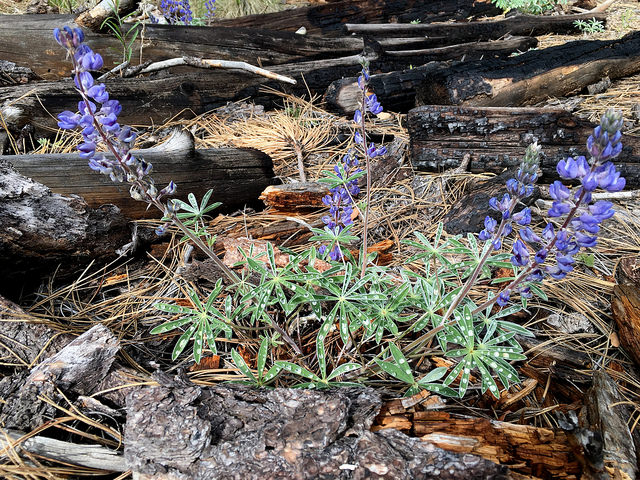
Season of American Lupine

By Lucille Ausman


he is out extinguishing wild fires
lost in the smoke
digging lines in the ground trying to trap her behind the wall before she can reach him
suffocating in her fury
he’s strong and brave and all American
I guess
but she doesn’t want protecting
she doesn’t want to cool down and calm down
the report reads
0% containment
try to break out the fire hoses and hold her back
but you can’t
her power and heat cover the landscape
filling it with blackness
and everything changes
life as it was
is destroyed

only weeks later
the color purple
emerges
once again
beautiful delicate and full of new life
out of the flames
grow the roots of hope.


Lucille Ausman recently graduated from Smith College where she studied Anthropology and Government and where her interest in activism and social justice took root. She has spent the summer living in the Gifford Pinchot National Forest in the Pacific Northwest and working with the Forest Service during one of the most dangerous fire seasons on record, in part due to climate change. She dedicates this poem to the activists whose own flames cannot be contained by our current political climate.

Photo credit: Alan Levine via a Creative Commons license.


Washing Instructions

By Brenda Birenbaum


You raise your hands to hush the crowd, you raise your hands america america, you raise your hands palms out to hush the crowd to give it voice, translate primordial hoots and jeers and lewd youtubes—flip off the camera, yeah, thrust that pelvis forward, yeah—the gun swells in your pants and you kick out ’em riffraff that ain’t starched n’ proper ironed, that air the laundry in public and trespass on us united bleachables coast to coast and I forget …….. like totally being mute being wrung out in the spin cycle being all ears in dark alleys as I raise your garbage (can after reeking can) above my tired shoulders, shaking the thang, cajoling the ejaculate, over the side of the dumpster. I don’t peer in when I bring it back down to check for leftover crap—my eyes are shot no kidding all I see are plastic shadows and streetlight glare splintering off patches of greasy film on the asphalt. I raise my hands america america always the man, palms out, gold face slathered in foundation, raise ’em hands, fake face, pink smile, maw full of porcelain no kidding full of chowed-down kill, fake longing to rewind to the spot embracing the same kinda shit as empty words (swallowtails had left their cocoons) ready set hit play

It’s love, I think, picking off tears of joy from the stubble above my neck tats, blowing murky soap bubbles into the rowdy dusk. Laundry instructions say not to mix the colors with whites, throw ’em black brown n’ yellow in the wash (red, too), get ’em all proper hot n’ agitated, and fuck it like it is, they still mud after rinse and repeat, not a jury of my peers no kidding no joe sixpack, the one that obeys, that cashes his pathetic paycheck at the end of the week to help with the economy to help drown his sorrow in suds, fess up to the barman how he ain’t got insurance to fix his kid, worse, dough for his clunker, which means he’s gonna lose his job as my fingers twirl ever so lightly over the handgun laying next to his brew to soak up the warmth and the glory, ain’t that just swell, chin tilted up bloodshot eyes reflecting the cool from the wall-mounted TV that gives its all in red white and blue, amerika amerika, and I just love ya for telling it like it—it like it—it like it—is, I could lick the podium under your feet wrap my arms around your legs tickle your nipples gobble your golden dick as you suck the loaded mic, all together now, take it all in take your balls into my hands follow your lead a rampage of rape ’em all bitches and the earth the west coast is burning (they had it coming those godless faggots) and I forget …… like totally the heat rising from the inferno, fire n’ brimstone, skyhigh flames leaping across ridges on the tube, place’s going down the tube, you gotta show those dipshit bleeding hearts that love ’em brown migrants and green trees more than me, ’em that say we can’t stay unextinct without water and bees, you tell ’em, yeah, you tell ’em, my gun is bigger than yours, my territory spans the words over and believe me, I’m telling it like it is, I’ll make your cock great again and it ain’t gonna be internet spam

Hold on to the railing as you stumble down the dark stairwell, the elevator is down (what’s going on, ask clueless neighbors evacuating their east coast cocoons), uniformed technicians stringing detonation wires across the sleepy neighborhood, trucks waiting out on the street to take us away no kidding it’s not men with guns, just police to serve and protect black lives matter like road kill as-seen-on-cop-shows-on-TV, surely that ain’t us. Don’t listen to that nonsense kiddo, no way they had internment camps in america, nah, genocide never happened in america, nah, and water boarding I believe is a laundering technique from a bygone era when women with big behinds in heavy canvas garments were folded over a stream banging the bedding in pristine water free and clear of pharmaceuticals neonicotinoids PCBs fluoride nuclear waste before my tastebuds turned metallic. I’m all thin and diluted and depleted and I really please would like to keep my in-unit washer and drier and I forget …….. like totally that I got the 3 strikes, I’m the bitch I’m the queer and the nigga jew like whoa obsolete stuff that didn’t receive the upgrade to muslim and mexican and hate two-point-o, and in the rising heat I’m the vanished butterfly and the hollow tree, my eyes dim out, I’m like one of ’em pathetic souls that can’t read the fine print in the manual, I apologize in advance on my knees on the wind swept asphalt, random trash slapping my face as it blows past, and I’m pleading and sobbing america america I’m sorry, I’m sorry, I’m really really sorry, I’m with y’all in the hot arena, cheering and shrieking proper until the huge screens shatter and the blood that was up to my ankles a minute ago is lapping at my face and keeps rising steady in the dark, washing in red the great unwashed—that kinda stain never comes out—until it bursts the walls, dumping a mangled sopping mess of guns and banners and body parts and bits of screens and platforms and POVs in the pitch-black street where the lights are photoshopped out and I no longer see shit


Brenda Birenbaum’s short fiction has appeared or is forthcoming in The Vignette Review, Random Sample Review, Low Light Magazine, and elsewhere. She is an editor for Unbroken Journal and can be followed on Twitter at @brbirenbaum.

Photo credit: Rod Brazier via a Creative Commons license.

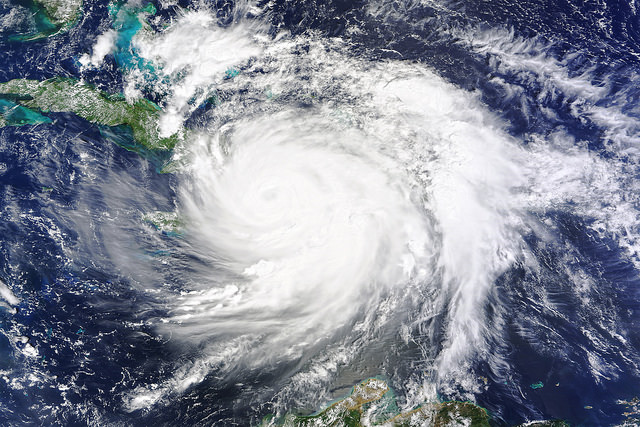
Our Lady of the Hurricane

By Jackleen Holton Hookway


wears knifepoint stilettos

that she fashioned

from the skin of water

moccasins that slide

underneath the dark slip

of brackish floodwater

when she takes them off

and wades in up to her neck

as the twin snakes slither ahead

guiding her through

a maze of underwater suburbs

where she shatters windows

frees entire families

from waterlogged houses

gathers dogs and cats

in a Hermès alligator bag

slung over one sculpted arm

as the reptiles slide onto her feet again

and she springs to the surface

a crowd gathering to bear witness

she steps ashore

the floodplain her runway

a mother and baby in tow

yes she’s come to float us

out of this misery

of biblical proportions

to deliver us to a new riverbank

the arms of our grateful children

our saved neighbors

encircling us


Jackleen Holton Hookway’s poems have appeared in American Literary Review, Bellingham Review, Mobius: The Journal of Social Change, North American Review, Poet Lore, Rattle, Rise Up Review, and are forthcoming in the anthology Not My President: The Anthology of Dissent (Thoughtcrime Press).

Photo credit: NASA Goddard Space Flight Center via a Creative Commons license.


Costumes

By Stephanie Williams


I didn’t shave all month
Quiet, itchy rebellion.

A silent wind-chime
Should at least look the part.

They marched
I had prior commitments.

I connected my daughter’s brows
Put flowers in her hair.

I posted pictures
They asked if we’re Mexican.

This year she’ll be a princess
$40 on a pink tulle dress.


Stephanie Williams writes from Harrisburg, Pennsylvania where she lives with her husband and daughter.

Photo credit: Nina A. J. G. vis a Creative Commons license.

Silk Purse I: An Erasure

from Donald Trump’s Speech to AIPAC 3/21/16


By Douglas Wood


The bomb clock
doesn’t require a number
but zero,
No matter,
The wiped face
of the earth

What kind of minds write
in twisted missiles
and the swirling terms
imposed by disaster—
disaster repeated
in the hope
it didn’t happen?

But it’s precisely
the opposite population
that will rise
and move the eternal,
knowing the unbreakable
will forever exist

It could be happening now


Douglas Wood’s work has been published in Narrative MagazineThe Rattling Wall, Rise Up Review, Coachella and TheEeel (formerly Newer York) among othersHe received his MFA in creative writing from University of California, Riverside/Palm Desert and also workshopped with renowned editor Tom Jenks. As a playwright, lyricist, or composer, he’s had twelve plays produced in Chicago, Los Angeles, New York and elsewhere, including the Expense of Spirit which was selected for presentation in New York for the Gay Games IV. A child of the Midwest, Douglas lives in Los Angeles, and, while he does not miss the change of seasons, he does miss gluten.

Photo credit: The Meat Case via a Creative Commons license.

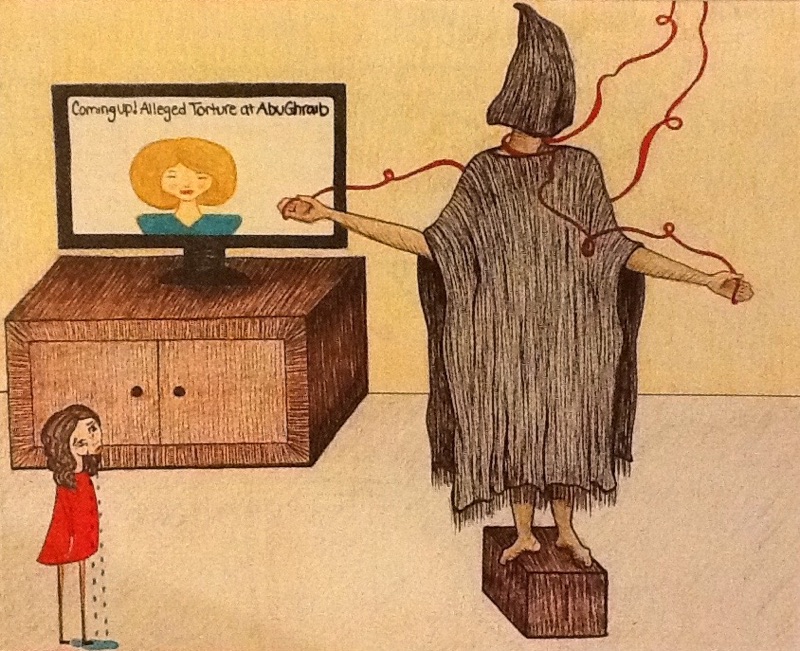
The Night Journey

By Jonathan May

A found poem from: FBI Guantanamo Bay Inquiry // The Night Journey, Sura 17, The Koran //
Department of Defense Human Resource Exploitation Training Manual – 1983


The purpose of all coercive techniques is to induce psychological regression in the subject by bringing a superior outside force to bear on his will to resist.

on several occasions, witness (“W”) saw detainees (“ds”) in interrogation rooms chained hand and foot in fetal position to floor w/no chair/food/water; most urinated or defecated on selves, and were left there 18, 24 hrs or more.

Invite men to the way of the Lord, by wisdom, and mild exhortation; and dispute with them in the most condescending manner: For your Lord knows well him who strays from the path, and He knows well those who are rightly directed.

d was kept in darkened cell in Naval Brig at GTMO, then transferred to Camp Delta where he gave no info. Then taken to Camp X-Ray and put in plywood hut. Interrogators yelled and screamed at him. One interrogator squatted over the Koran.

If you take vengeance on any, take a vengeance proportional to the wrong which has been done you; but if you suffer wrong patiently, this will be better for your soul.

As the subject regresses, his learned personality traits fall away in reverse chronological order. He begins to lose the capacity to carry out the highest creative activities, to deal with complex situations, to cope with stressful interpersonal relationships, or to cope with repeated frustrations.

civilian contractor asked W to come see something. There was an unknown bearded longhaired d gagged w/duct tape that covered much of his head. W asked if he had spit at interrogators, and the contractor laughingly replied that d had been chanting the Koran nonstop. No answer to how they planned to remove the duct tape

Wherefore bear opposition with patience; but your patience shall not be practicable, unless with God’s assistance.

The use of most coercive techniques is improper and violates laws.

W observed sleep deprivation interviews w/strobe lights and loud music. Interrogator said it would take 4 days to break someone doing an interrogation 16 hrs w/lights and music on and 4 hrs off.

And be not aggrieved on account of the unbelievers; neither be troubled for that which they subtly devise;

W heard previously that a female military personnel would wet her hands and touch the d’s face as part of their psych-ops to make them feel unclean and upset them. W heard that in an effort to disrupt ds who were praying during interrogation, female intelligence personnel would do this

for God is with those who fear Him, and are upright. Whosoever chooses this transitory life, We will bestow on him beforehand that which We please; on him, namely, whom We please:

The torture situation is an external conflict, a contest between the subject and his tormentor. The pain which is being inflicted upon him from outside himself may actually intensify his will to resist. On the other hand, pain which he feels he is inflicting upon himself is more likely to sap his resistance.

occasionally ds complained of inappropriate behavior i.e., incident in which d alleged female guard removed her blouse and, while pressing her body against a shackled and restrained d from behind, handled his genitalia and wiped menstrual blood on his head and face as punishment for lack of cooperation

Afterwards We will appoint him Hell for his abode; he shall be thrown in to be scorched, covered with ignominy, and utterly rejected from mercy.

As soon as possible, the “questioner” should provide the subject with the rationalization that he needs for giving in and cooperating. This rationalization is likely to be elementary, an adult version of a childhood excuse such as:

  1. “They made you do it.”
  2. “All the other boys are doing it.”
  3. “You’re really a good boy at heart.”

But whosoever chooses the life to come, and directs his endeavor towards the same, being also a true believer;

loud music and strobe lights

the endeavor of these shall be acceptable unto God.


Jonathan May grew up in Zimbabwe as the child of missionaries. He lives and teaches in Memphis, Tennessee, where he recently served as the inaugural Artist in Residence at the Memphis Brooks Museum of Art. In addition, May teaches writing as therapy at a residential facility for women with eating disorders. Read more of Jonathan’s work at his website, memphisjon.wordpress.com.

Abu Ghraib drawing by Katie Gressitt-Diaz.

The poem was previously published at Heavy Feather Review.

Black Birds

By Jennifer Stein

Black birds the size I dream dinosaurs would be
Cloud-cutting straight flying unflapping arms
Like if you asked a kid to draw a bird
Who never saw a bird, and threw his bulky crayoned visions to the clouds
and here they are in soundless flight.
Black birds, black and ominous as octopus ink made blacker still
By the coral colored brushstroke sky at sundown
This is the way it happens, of course it is, because man’s nature is reactionary
And our worlds are often governed by boys whose diplomacy
is playing chicken on the jungle gym while teachers scream “Timeout, Don”
but they are beyond policing, now.
In the air space above a country I live in are laws
That say no birds but ours can soar here–
should never crowd the sky
But here they are, with the flash they said they’d bring.
No trumpets trump-trump-eting, no angels heralding, no hero’s good-bye
Only mute fury, flash-bang, I didn’t even have a chance
to close my eyes


Jennifer Stein is an aspiring writer, which means right now it’s a hobby she’s trying to accelerate into a habit. She’s lived in a major swing state for the past four presidential elections and after this last one, she is happy to add her voice to the resistance.

Photo credit: Jon Bunting via a Creative Commons license.

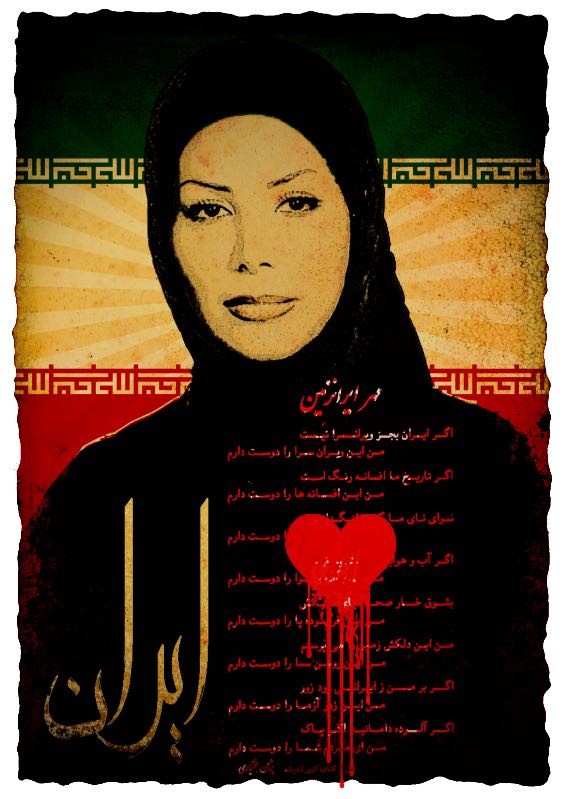
On a Side Street in Tehran a Woman Watches the Protest of Neda’s Death

By Penny Perry

“Make up should be for your
husband only,” my mother
says in my head. In real life,
she is home in her apartment,
blowing cool air on her second
cup of tea, filling out her grocery list.

“You don’t need a clock,
you can tell time by the tasks
she performs,” my father always half-
grumbles, half praises.

From the secret pocket of my hooded
black coat, I pluck
a small tube, too big for a bullet,
too small for a gun. I daub color
on dry lips.
Half a block away, a few women,
some young, some my age, shout slogans,
wave posters of Neda.

I promised my mother I wouldn’t
come anywhere near here. I tell myself
I will stay on this street. Spoiled olives
drop like bruises from the tree
on the sidewalk.

In this ten o’clock Saturday sun
the lipstick is the tentative pink
of a small smudge in a white
apple blossom.
Before Western books were banned
I bought Brontes and Austen from the book
store with the faded awning.

Those days, I walked to work
in heels, tilted my painted face
like a flower to the sun.

No policeman here to copy
my license plate, shatter
my windshield. I could climb
back in my car, drive by
the protestors, honk my horn,
wave two fingers in a victory V,

and speed home to my husband
and son. I pocket my lipstick, walk
toward the women,
one of them in a tight coat,
nervous streaks of eyeliner
like winding streets on her lids.

Two Basijis so young,
and not wearing their helmets,
stroll around the corner.
They are laughing, sipping sherbet.
Their truncheons loose in their hands.
They are like my cousin Isar
who believes women deserve
cut faces, split bones.

I should turn back. On this warm
day my head is hot under the hood
of my coat. I think of the night
my son was born, my prayer
of thanks that he was not a girl.

One of the men tosses the last
of his sherbet on a poster of Neda
abandoned on the sidewalk. I slide
behind a tree. I hope the Basijis
will rush past.

In my secret pocket, my phone rings.
Rubinstein’s sweet piano playing Chopin.
My mother’s Saturday call.
It is eleven o’clock.


Author’s note: When I was working on the poem I wasn’t thinking of myself as a white woman writing about an event from an Iranian woman’s first person point of view. I was caught up in Neda’s bravery and the bravery of the women protesting Neda’s death. Only now, looking back at the poem, I see there is a question in the poem that is personal to me. How brave would I, an American, middle-class white woman, be if protesting and marching meant not just the threat of arrest, but the possibility of dying and leaving a child motherless. That’s a question that I haven’t had to face and maybe that is one of the reasons I admire the Iranian women protestors so much.


Penny Perry is a six-time Pushcart Prize nominee in poetry and fiction. Her work has appeared in California Quarterly, Lilith, Redbook, Earth’s Daughter, the Paterson Literary Review and the San Diego Poetry Annual. Her first collection of poems, Santa Monica Disposal & Salvage (Garden Oak Press, 2012) earned praise from Marge Piercy, Steve Kowit, Diane Wakoski and Maria Mazziotti Gillan. She writes under two names, Penny Perry and Kate Harding.

Photo credit: Anonymous.

Paul Ryan in Effigy

By Gigi Wagg

You, Paul Ryan, who imagine yourself an emerging monarch,
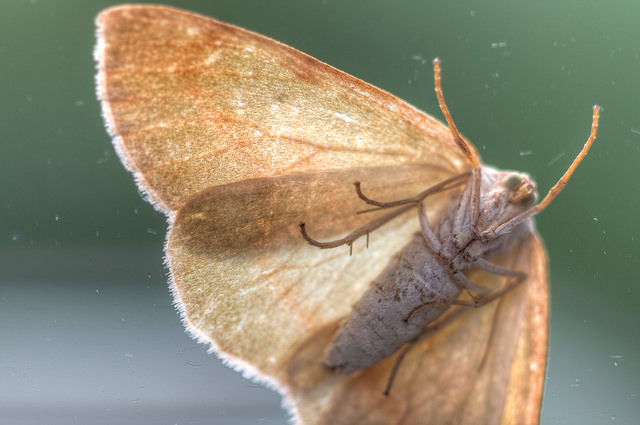
are really a moth—bat food, with the base, serviceable body
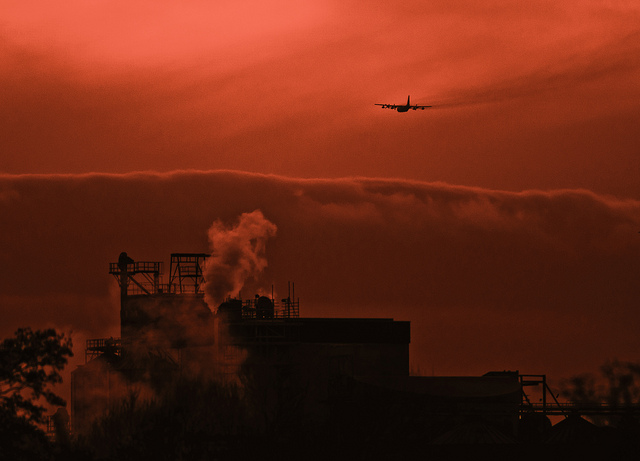
of a military cargo plane: dusty, dull and fueled by heavy diesel.
You circle the towers of Trump power, crashing your dumb head
into pane after pane of trash-TV limelight, dutifully peddling
disaster for poor countrymen you disdain as crawling ants.

This paean is not about sticking pins, Voodoo-like, into a doll,
but it serves up the sheer joy of swatting you in moth-body effigy,
giving metaphorical relief to the opposition. How will it go for you,
Mr. Fake-Christian Politician? Swat after swat, your frenzied orbit
will be turned into breeze-buffeted free-fall, those terrible dark wings
tilted and torn, finally unable to raise the useless weight of your torso
and guts to anything but erratic grasshopper leaps, you, too earthbound
to escape the final swat. Then, “Whap!” will go the pink plastic tool and
“Squish!” the picnic napkin on what remains of you, ugly lepidopteran!

Alternatively, you could be left hanging on the glass, your greasy guts
spilled, a sticky residue just enough to hold the shell of carcass
and denuded wings in full view of both power-crazed luminescence
and climbing, scourging ants—a suitable effigy, in nomine Domine

Better yet, your maimed and flailing body could be left, still pulsed
by your beating heart, as steak tartar for the ants (bats would be too
quick)—and yes, you’ll be on your back. Go ahead and flip your frantic
Altar Boy wings (or Dumbo ears) all you can, but you will only prolong
the pain. This is mete (so meat!) and justice for the pain you inflict upon
the least among us, Herr Bat!

May you feel the myriad bites of your crooked social justice
and various hypocrisies as the ants dismantle you, limb by limb
and clot by clot of slowly drying blood. No anesthetic, no mercy,
no P.A.S., just the excruciating chomp-chomping of ant masses and
the belching of curses from survivors of your death-care plan.

Sparing cemeteries the dump of your greasy guts, let Formicidae
clean up crews feast until there is no gore left, then carry off
your Dumbo wings, cleaned to their skeletal lightness. They’ll glide
as if on a parade float, with now and then a triumphal dip, a pause to
proclaim, “Ha-ha! We have won full bellies and a fan for the den!”

Imagine this scene as the hunters carrying home the dead wolf, to a
familiar sound track by Prokofiev … only the creature’s hide is so small
this time that nobody remembers why the beast seemed frightening, once.


Gigi Wagg is a pen name of an adjunct faculty writer and activist who claims, in solidarity with the California Part-Time Faculty Association founders’ jingle, “I’ve taught everywhere!” The 2016 election cycle derailed Gigi’s other writing projects in the interest of resistance to the neocon agenda and ultimately, the neocon-cum-fascist con of the Donald Trump Presidency. The submitted poem compares Paul Ryan, the Conservative antagonist of human rights and healthcare for all Americans, to a moth, a greasy, ugly, pest that is infesting the body politic—and, yes, Gigi swatted hundreds of moths in a real infestation.

Photo credit: Ervins Strauhmanis via a Creative Commons license.