Complications

By Michael Peck


there were too many complications
too many forms of behavior expected
nice right angles meant to shape
your life and opinions
nobody else seemed to mind
or maybe the shaping process
had worked more effectively on them
having started earlier
before the individual character
had formed roots
freedom and independence were valued
as slogans on posters
and in speeches
but not valued in the individual
not in daily life
unless you had the money
to remove yourself
from the working-class reality
which demanded a much more
tight-fitting social uniform
and mindset
schools were to train a workforce
not educate a thinking population
people who think are dangerous
acting independently of the expected norm
only a few very wealthy individuals
were allowed into that room


I am a gregarious loner who lives in the desert in the Utah Four Corners area. I love getting up early in the morning and drinking coffee and writing poetry. I call it a coffee meditation. Writing helps to distill all the local and national political problems that are fermenting in my mind into a usable and drinkable spirit.

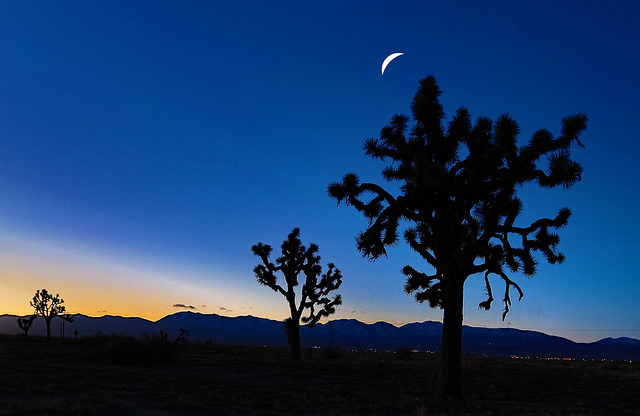
Photo credit: Ian Cook via a Creative Commons license.

Simone de Beauvoir Sends Trump a Sext

By Sandra L. Faulkner


“A man is in the right in being a man.”

I’m going to pull you by the power tie
and drag you through the rooms of my mind
like a man        beg me            for the boot in your face
my foot imprint eye-black smudged on your cheeks

“and man defines woman not in herself but as relative to him.”

Then, I will top you    like a cork-stopper
screw the cap on tight   tighter than your golf grip
small balls streaming past a wet bunker
scoring high    on the way      to your hole in one

“And she is simply what man decrees; thus she is called ‘the sex.’”

I will   be the bottom of your form
sign my name in permanent blood
as you like it    and should like it
my stain          a sheet of satin in your drawer

“For him she is sex—absolute sex, no less.”

Let me talk you all night
grab your         midnight part
until we      see the wee           hour sparks
and glisten       in the TV light

“He is the Subject, he is the Absolute—she is the Other.”

I’m going to    punt and peel   the layers
push my fingers          into your dough
the middle of us like a big-bigger pie
my box            of plums tucked inside my pants


Sandra L. Faulkner is Professor of Communication and Director of Women’s, Gender, and Sexuality Studies at Bowling Green State University. Her poetry has appeared in Literary MamaIthaca LitGulf Streamdamselfly and elsewhere. She knits, runs, and writes poetry about her feminist, middle-aged rage in NW Ohio with her partner, their warrior girl, and two rescue mutts. Read more at https://bgsu.academia.edu/SandraFaulkner.

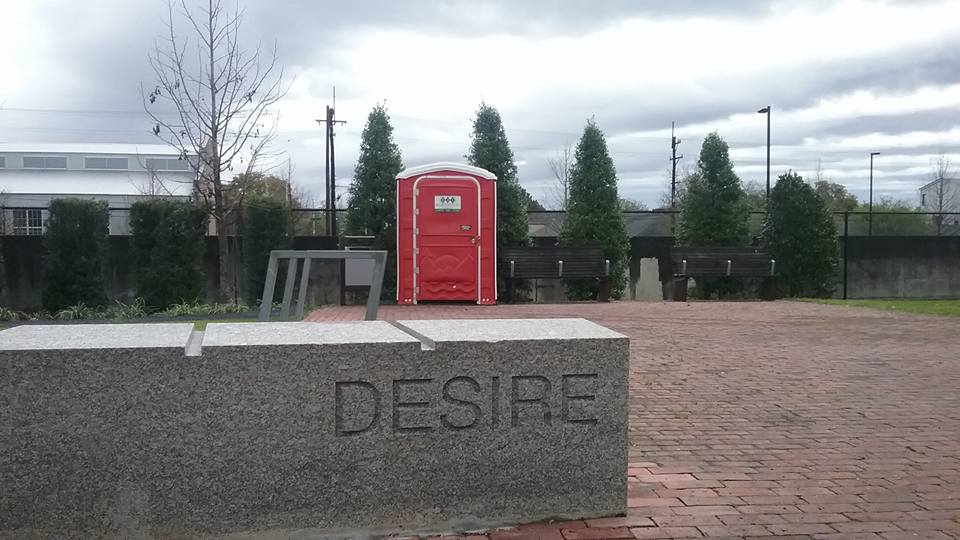
Photo credit: “Desire” by Sandra L. Faulkner ©2018

Black Lives Matter

By Joel Fisher


The black pain explodes
Where he dropped
Disintegrating to flowers

And in that moment
Shot and shot and shown
The heavy-gauged

Is a mourning of
Its blue-grey trigger
The reality that

On this pavement
Stained just as red
We hold, self-evident

Black Lives Matter


Joel Fisher is currently an undergraduate reading Creative Writing at Canterbury Christ Church University.

Photo credit: “Taking a Stand in Baton Rouge” by Jonathan Bachman for Reuters.

Human Profiling

By IE Sommsin


To spot a fascist requires no great skill.

Note the curl of the lip, the smirk, the sneer,

the glint in the eye, the stare and the leer,

the look of contempt that aspires to kill.

Something in their faces, odd, off and wrong,

something missing under the skin and bone,

and in their voices a metallic tone

that makes a tuneless and relentless song.

Then how is it so many seem puzzled?

Why is the obvious that hard to name, when

the cruel children piss on the flame and

the mind of a nation is muzzled?

People have little need for eye or ear,

if they will not see and refuse to hear.


IE Sommsin, a writer and artist from Kentucky, lives in San Francisco and has a fondness for sonnets.

Image credit: DonkeyHotey via a Creative Commons license.

Basta!

A ghazal by Andrea Fry


Is there a common measure of enough?
And which increment morphs into “enough?”

A subjective voice must name the limit—
masochist signals when his pain’s enough,

The politician who keeps on smiling—
What’s his tipping point? When’s he heard enough?

I’m so confounded by all the excess,
yet the clamor says I don’t have enough.

Get more stocks, sex, friends, technology.
Worry that I’m not fit or thin enough!

Then lift my jowls into emoticons.
Despair that I’m no longer young enough.

The crooks in office sold their souls en masse.
The scale of their enrichment not enough.

Drill the oceans. Shaft the poor. Go for more!
Get more guns, never tragedy enough.

Do I need to list the suffering? Is
violence to children not vile enough?

And now a crude, corrupt and greedy thug,
marbled lobbies, bikinis—not enough—

tweets rage, misogyny, intolerance.
His world’s not white and masculine enough.

While I can’t find refuge from his squalor,
for him the spotlight can’t be big enough.

I swear now is that elusive frontier.
That universal measure of “enough.”

Perhaps it’s got nothing to do with man,
and what we think is or is not enough.

Global warming, germs, the San Andreas…
Instead, might the earth say to us?—Enough!


Andrea Fry was born in Dallas, raised mainly in New York City and the Catskill Mountains, and educated at Union College and Columbia University. She published her first collection of poems, The Bottle Diggers, in May 2017 (Turning Point Press). She was nominated for a Pushcart Prize for her poem “Murder,” which was published by J Journal.  She was a finalist in Georgia College’s Arts & Letters Prize 2010 contest, a semi-finalist in the 2010 Gulf Coast Prize in Poetry, and a semi-finalist in River Styx 2010 International Poetry Contest. Her poems have appeared in journals such as Alaska Quarterly Review, Ars Medica (University of Toronto Press), Barrow Street, Cimarron Review, The Comstock Review, Graham House Review, Reed Magazine, Stanford Literary Review, St. Petersburg Review, and the chapbook Still Against War, Poems for Marie Ponsot. Andrea is also a nurse practitioner at NYU Langone Medical Center. She lives in Manhattan with her husband and two formerly feral felines. Visit her website at www.andrealfry.com.

Photo credit: Thibaud Saintin via a Creative Commons license.

Why He Said It

By Don Krieger

He knew what he was getting into
                 — US President during a bereavement phone call


Telling a dead soldier: You knew what you were getting into
is simply saying: Don’t blame me.
It’s cowardly, which is why our president said it.

Telling the soldier’s family: He knew what he was getting into
is more nuanced.
It still says: Don’t blame me,
a coward’s statement
which is why our president said it.

It also says: Blame your son for your sorrow,
a brutal statement
which is why our president said it.

It also says: Though this is a bereavement call,
I offer you my excuse from responsibility as your son’s Commander in Chief
and a brutal sentiment to add to your grief,
an incompetent and vicious statement
which is why our president said it.


Don’s  poetry has appeared in Tuck Magazine and Uppagus, VerseWrights, Neurology, and in English and Farsi in Persian Sugar in English Tea.

Image credit: Morning Calm Weekly Newspaper via a Creative Commons license.

“Why He Said it” previously appeared in Tuck Magazine.

Not Dear Mr

By Elisabeth Horan

Let’s get something straight.
This pussy is not for you.
Pussy is for me and my sisters.
Pussy is something I eat for breakfast lunch and dinner.
You might eat vaginas.
Poor those vaginas.

Pussy is something that sits on my lap and purrs and is
soft and sweet and hunts mice for me.
I suppose you could have a cat.
I hardly bet you would stroke it though and
it might scratch you too like us sisters would do to you.

Pussy is nice.
Pussy is mine.
But I am not a pussy.
There is a pussy in my pants but it’s only for my sisters.

You may not grab me or my sisters by the
pussy or vagina or cunt or beaver or cootch.

You may not.
You have no access.

“Cunt” is what I get to say when I stub my toe.
You may say, “Gosh darn it!”

Beavers are in my pond slapping their big wide tails and
eating trees with their sisters.

Cootch – is for cootchie-cootchie coo – I see you!

A pussy-bow, well I just don’t know.
Let’s rename it penis-testicle tie.
More apt for its inverted upside-down shape and the ridiculousness of it all.

We don’t want you.
Us sisters and all our pussies together, are stronger than you.
And our pussies will sneak up behind you and
ask you if you want to go furniture shopping and then eat you alive.

Sincerely not yours:
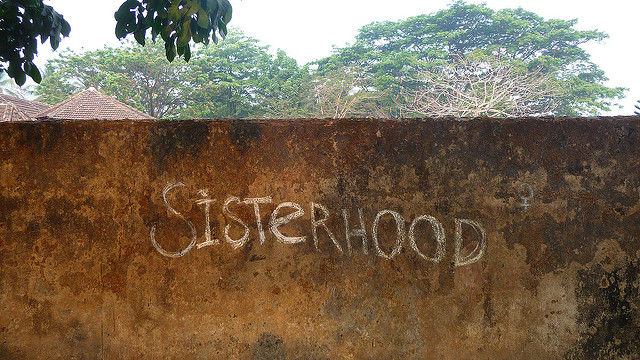
The pussy, cunt, beaver, cootch, vagina, et al. Sisterhood.


Elisabeth Horan is an imperfect creature from Vermont advocating for animals, children and those suffering alone and in pain—especially those ostracized by disability and mental illness. She has two sons. She is trying very hard. She teaches ESL and community college liberal arts. Elisabeth is at Moonchild & Occulum & Burning House & Milk & Beans & Blanket Sea and other pro feminist places. Her chapbook Pensacola Girls (with Kristin Garth) was published by Bone & Ink Press, October 2018. She cries a lot, but is learning to smile 🙂  She loves being a poet and a mom. Follow her on Twitter at @ehoranpoet and visit her website: ehoranpoet.com.

Photo credit: Cosimo Roams via a Creative Commons license.

Six Bells

By Carron Little 

            for Judie Anderson


Life started with a brush,
Caressing pigments over fibres
Joined in hands, two became four,
Horns grew life through walls.
Sacred milk became six,
Six pairs of hands became eight
The light keeps pouring,
Milk over water, water over stone

Six shifts, Six pairs of golden horns
Six plates at Six am
The bell rings
Stamping the pigment
The sound rings like a marching band
Printing the daily news
Each letter a historic imprint
The headline “Printers Quit!”
Replaced by the blue ghost

The digital machine moves in to take hold
A hydroponic change brings in a new age
Stacking the cairns in geo formation
Learning quark and illustrator
Library halls become digital walls
The marching band of the newsroom
Loses its song
Between black ink and micro-chips
The Newsroom quits!
The battle of industry and monopoly play
While the last song of the marching band fades

The bell rings at Six am
Six horns, Six stones and Six hands
The mighty Sioux stands over history
The walk begins
A slow march
As the tectonic plates shift again
The design world appears in a blue screen,
Microchips become flies,
Silently watching, silently listening
Stamping the stories into history

Six stones, Six bells, Six golden horns


Based in Chicago, Carron Little grew up in Britain receiving a BA First Class Honors from Goldsmiths College and an MFA from the School of the Art Institute of Chicago, where she has been teaching in Performance since 2014. Little starts her practice by interviewing people and that becomes the starting point for poetry and performance. She has exhibited, performed and screened films of her work locally and internationally. She is currently working on the public engagement project Spare Rib Revisited that she developed in Lucerne, Switzerland (2016) and Liverpool U.K. (2017). This year she has performed her poetry at Burren College of Art, Ireland; Sarajevo Winter Festival, Bosnia; Grand Rapids; Berlin Performing Arts Fesitval, Germany; and Loge Theater, Lucerne, Switzerland. Follow her on Facebook at https://www.facebook.com/carron.little.5 and visit her website: carronlittle.com.

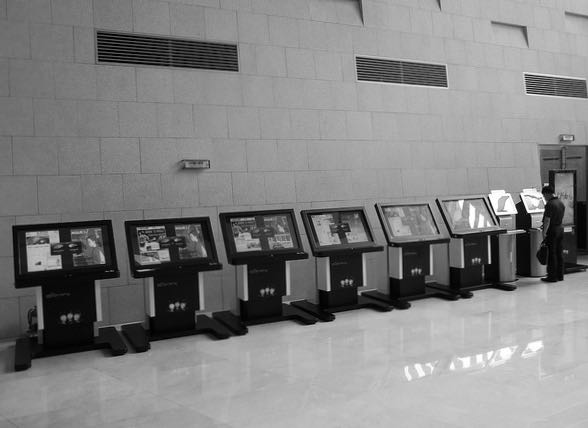
Digital newspaper stands image courtesy of Mosman Library, Australia.


Where the dem things were

By Cheryl Caesar


The day Don wore his Shutdown Mantle
and made mischief of one kind

and another

the Washington Post called him “BOTTOMLESS PINOCCHIO!”
and Don said, “I’LL SHUT DOWN THE GOVERNMENT!”
so he went off to bed with 2 Big Macs and Fox and Friends.

That very night in a junk food and Adderall crash
some green turf grew

and grew

and grew until his room became the Bedminster golf course
with undocumented workers standing all around

and a golf cart puttered by just for Don
and he puttered off through night and day

and in and out of weeks
and almost, dear God, two years
to where the dem things were.

And when he came to the place where the dem things were
they roared their terrible facts and gnashed their terrible stats

and showed their terrible logic and literacy skills

till Don said, “NANCY CAN’T TALK SHE’S A GIRL!”

and tried to tame them with his magic trick

of stamping and sulking and shouting over them

but they weren’t frightened of him and Chuck laughed at him instead of ganging up, boys against girls. NOT FAIR!

“And now,” cried Don, “let the Tall Wall be built!”

“Oh, stop,” said Chuck and Nancy, laughing.

“You’re acting like a clown!” “I don’t care!”
“We can’t shut the country down!” “I don’t care!”
“Don’t hunch sulking in your chair!” “I don’t care!”
“Is that syrup in your hair?” “I don’t care!”
“I would think that you could see – “I don’t care!”
“your ass is where your head should be.” “I don’t care!”

So the dem things left him there.
They wouldn’t build walls anywhere.*

And Don stomped into the antechamber and threw his magic blank papers on the floor and had a wild rumpus all by himself.

But Don the King of the Tall Wall, Tariff Man, was lonely and wanted to be where everyone shouted “Lock her up!” “ICE!” and “Build the wall!”

Then all around from far away across the world
he smelled Big Macs and KFC
so he gave up trying to be king of where the dem things were.

And the dem things cried, “Oh, won’t you go—
we’ll vote you out – we loathe you so!”
And Don said, “No!”

The dem things went out and talked to reporters
and laughed with their terrible facts and terrible stats
and terrible logic and literacy skills and new names for Don
but Don stepped into his private golf cart,
muttering, “I’ll be back,”

and puttered back over two (endless) years
and in and out of weeks
and through a day

and into the night of his own room
where he found his Big Macs waiting for him

and they were still hot.

Fox and Friends were starting to cool down, though.


*Sorry, wrong Sendak.


Cheryl Caesar lived in Paris, Tuscany and Sligo for twenty-five years; she earned her doctorate in comparative literature at the Sorbonne and taught literature and phonetics. She now teaches writing at Michigan State University. She has published her poetry and translations of Jean Tardieu’s in Blackberry, The Coe Review, Labyris, The Wayside Quarterly, Stand and The Dialogue of Nations.

My Illiterate Mother

By Fabiyas M V


A software to read and write is not installed
in my mom’s system.
We download pages of ignorance. Sometimes,
her monitor is blank.

Our neighbors wake up hearing the divine songs
from a rural temple,
when I jump up listening to the metal words
rattling in the kitchen.

She pours calumnies into the ear-buckets nearby
from her vast tank.
There are pores on her palms, and her liquid money
always leaks through.

My dad is often tossed on her tongue. Today
the sea is serene.
I hear the roar of some unnamed anxieties
from her white shell.

I grew up on her barren lap. My tap-root
went down so deep.
I resisted the droughts. Thanks, Mom. I owe you for
all my burning blooms.


Fabiyas M V is a writer from Orumanayur village in Kerala, India. He is the author of Kanoli Kaleidoscope, published by Punkswritepoemspress, USA; Eternal Fragments, published by erbacce-press, UK; and Moonlight And Solitude, published by Raspberry Books, India. His fiction and poetry have appeared in several anthologies, magazines and journals. His publishers include Western Australian University, British Council, Rosemont College, Forward Poetry, Off the Coast, Silver Blade, Pear Tree Press, Zimbell House Publishing LLC, Shooter, Nous, Structo, Encircle Publications, and Anima Poetry. He has won many international accolades, including, Merseyside at War Poetry Award from Liverpool University; Poetry Soup International Award, and Animal Poetry Prize 2012 from Royal Society for Prevention of Cruelties against Animals. He was the finalist for Global Poetry Prize 2015 by the United Poets Laureate Internationa. His poems have been broadcast on the All India Radio. He has an MA in English literature from University of Calicut, and a B Ed from Mahatma Gandhi University.

This poem was previous published in Westerly Magazine by Western Australian University.

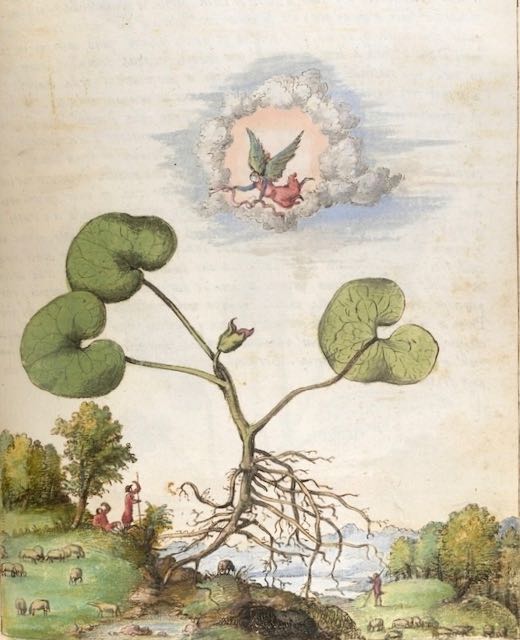
Image credit: Asarum europaeum from a 16th-century edition of Pedanius Dioscorides’s work on herbal medicine, De Materia Medica, via PublicDomainReview.org.

Autoimmune

By Sadell Costello


trigger happy t-cells
mistake the good guys for the bad guys

carrying myself like a weapon
a product of too many enemies
or an excess of victims

Stephon Clark was, as they say, gunned down
in his grandparents’ backyard
Syria’s children asphyxiated with sarin gas
when i open the news, Fox says:
“Woman’s Armless, Legless Body Found in NYC park”

pow pow pow

the assaults of the long exhalation of traffic
from the freeway i use as a walking path
biota from my cubicle colonize me
i eat plastic-wrapped wads of salt and fat prepared by others
even the men who love me need to be told to be gentle

all passive phrases on purposes
evil is amorphous
you can’t tell who’s behind the blood
more than one of the hydra’s heads looks like mine

the pagans say i am an excess of trapped heat
the doctors order drugs for breakfast and dinner
Fox says, “It was not immediately clear whether the woman was the victim of foul play”
meet your dreams slick with steroids

swipe, scroll, click
disappeared into a tiny room that extends forever
i fumble – stupid – with my time and responsibilities

my leukocytes are blurry eyed
but damn, man, they tried to shoot back
the cop, russia, whoever cuts off a woman’s limbs and leaves her in a park

drop bombs in damascus in the dark
of course they missed, but give them a  break
i’m as see-through as glass
i shake my fist at first light towards the sky

they are fighters
forget my peacenik parents
and the psychology cultivated in the garden
this is warfare on the skin

take shelter
and dab with oatmeal


Sadell Costello writes and publishes under various pseudonyms. She can be reached at sadellcostello@gmail.com.

“Autoimmune” was previously published in Tuck Magazine.

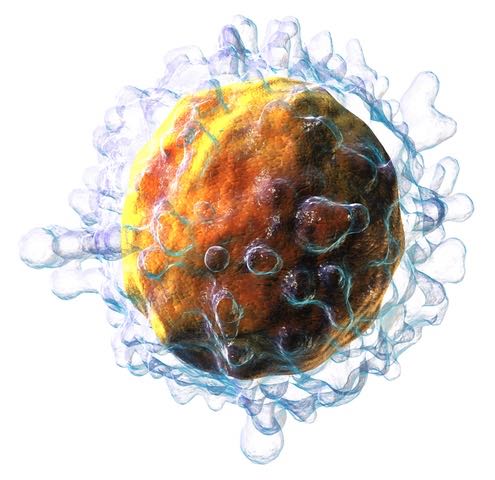
Image credit: By Blausen Medical – BruceBlaus, medical gallery of Blausen Medical 2014.


On the Mesa

By Frederick Pollack


The young went north
or joined, indifferently,
the cartel or the police;
all were brutalized, as one must be
either to be excluded or to belong.
Now only dogs are left,
and an old woman tending
the last cabbages and chickens.
She would like to make confession
in the nearest functioning town,
but the bus has stopped, and who would guard
the chickens? She rehearses past sins,
invents (alarmingly) others;
the silhouette she imagines
on the far side of a grille
is kindly, attractive, has all eternity
to listen. She anticipates penance.
Eventually she’s responsible for everything.

At feeding-time, the dogs circle
the wire, but leave it alone.
In any case, rodents
have reclaimed the stony fields
beyond the village; the dogs eat, though not well.
The old woman stands, in their minds,
for masters, though the latter
for most were always a myth.
There must be a master. Their scarred pitbull
leader (pain makes him fierce) is,
like them, like the burrowers
they eat, a half-being; he can be challenged.
What joy they feel when an SUV
hurtles past on cartel business!
Perhaps they’re still thinking of that,
thirsty and cold, silent
or squabbling as the moon comes out,
regretfully becoming wolves.


Frederick Pollack is the author of two book-length narrative poems, The Adventure and Happiness, both published by Story Line Press. Has appeared in Hudson Review, Salmagundi, Poetry Salzburg Review, Die Gazette (Munich), The Fish Anthology (Ireland), Representations, Magma (UK), Bateau, Chiron Review, and others. Online, poems have appeared in Big Bridge, Hamilton Stone Review, Diagram, BlazeVox, The New Hampshire Review, Mudlark, Occupoetry, Faircloth Review, Camel Saloon, Kalkion, Gap Toothed Madness, and Nine Muses Poetry. He is an adjunct professor of creative writing George Washington University.

Photo credit: Rennett Stowe via a Creative Commons license.

Four Lights

By D.A. Gray

The focus on the yellow sign, dwarfing its black
letters, allows us to move on – to return
to our regularly programmed night of silence.

For a day the gold box burns in the mind,
the darker letters WAFFLE HOUSE hang
like ash. A tragedy happened, someone says,

then turns the channel. The focus on a shooter’s
mental health lets us grieve for the sorry
state of things. We can’t even say it – murderer.

We let the rain soaked streets of Nashville
carry the grief down, leaving us our silence.
Gather enough silence and we, whose angst

drowns the mother, the father weeping
on the screen, can cover ourselves. Gather enough
silence and a city can bleach itself great again.

No one wants to see the faces and each alone
in silence find an image, a gold sign whose black
letters have cooled. Still something burned once.

It’s the eyes that interrupt the silence
cherished more than the heaving chest
witnessed with the sound turned down.

We who’ve never felt the rush of air
through a hole in our sides, stand quietly
beneath the fanned leaves of a maple tree

relishing the fact it holds back the rain.
It is the silence of a lone wolf hiding, quieter
than the star, the worker, the athlete, the artist.

We belong to the silence that keeps prejudice
hidden in the darkness of letters, behind a gilded
sign, hiding from the imagination

in a place, someone might say, terror lives.


D.A. Gray’s poetry collection, Contested Terrain, was recently released by FutureCycle Press. His previous collection, Overwatch, was published by Grey Sparrow Press in 2011. His work has appeared in The Sewanee Review, Appalachian Heritage, The Good Men Project, Writers Resist, and Literature and the Arts, among many other journals. Gray holds an MFA from The Sewanee School of Letters and an MS from Texas A&M-Central Texas. Retired soldier and veteran, the author writes and lives in Central Texas.

Photo credit: bradhoc via a Creative Commons license.

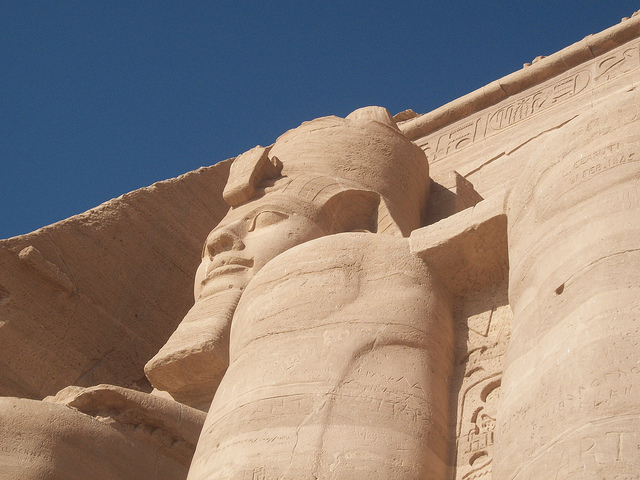
The Great

By Alex Penland

He had a reason for his name: “The Great”
Now buried in the Valley of the Kings—
Statues and treasures, all of which abate
Behind the wheel of fate that spins and sings
And has four thousand years beneath it now!
Yet Ozymandias somehow persists—
Face on our screens, obscuring ancient snow,
We laugh, despair, continue to resist.
We plebeians, outside the formal walls
Marble temples, or gold as they see fit—
Endure as empires rise, stagnate, and fall.
And forget King Ramses when we see it.
Four thousand years have passed and still we stand
On broken stone, our visage in the sand.


Alex Penland was a museum kid. The child of a photographer and a Scuba diver, she spent her teenage years in the field: Penland has worked with Smithsonian archaeologists, NASA software engineers, volcanologists and photographers. She has been bitten by a shark, she watched the final shuttle launch from the fire escape outside Launch Control, and she has been a certified diver since age twelve. She likes dogs, long walks on the beach, and socialized medicine. Also books. She is one of two directors of The Writers’ Rooms in Iowa, an editor for hire, an amateur linguist and a Taurus. Her work has received many accolades, including an Honorable Mention for The Great in the Writer’s Digest Annual Contest 2017. You can follow Penland on Twitter @AlexPenname or visit her website at www.AlexandraPenn.com.

Photo credit: Institute for the Study of the Ancient World, NYU, via a Creative Commons license.

If You Have to Ask, the Answer Is ‘Yes’

By Marvin Lurie

It sensitizes certain nerve endings.
You can see and hear what many can’t.
Your training begins young,
the neighbor who won’t let her daughter play with you,
taunts and shoves in the playground.
You are woven an invisible garment
act by act, word by word.
to wear for life.
It has a star on it
that can be made visible by those who hate you.
If you forget for a while,
you will discover gangs of haters
dedicated to reminding you.
You may find comfort with others like you
in your own holy place,
only to find it too is threatened.

A new Pharaoh arises.
He is attractive to those who hate you,
who believe they are now empowered
to say “America First.
This is a white Christian country.”
He continues to hint approval
while weakly denying it.

Now you understand
why your ancestors
slept with their shoes under their pillows,
sewed coins in the hems of their coats.


Marvin Lurie is retired from a career as a trade press editor, president of an association management and consulting firm, and senior executive in an international trade association. He began writing poetry as an undergraduate at the University of Illinois. He and his wife moved from the Chicago area to Portland, Oregon in 2003 where he has been an active member of the local poetry community including service on the board of directors of the Oregon Poetry Association for two terms, as an almost perpetual poetry student at the Attic Institute of Arts and Letters in Portland and as a participant in several critique groups. Visit his website at marvlurie.com.

Photo credit: Wikimedia Commons, courtesy of Faigl.ladislav.

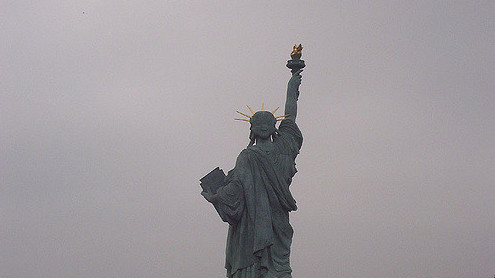
Liberty Turns Her Back

A ghazal by Shawn Aveningo Sanders


Step on a crack; you’ll break your mother’s back.
Cross the border at midnight; they call you wetback.

Pick the apples, the nuts, the oranges from trees,
up down up down up down—such a strong back!

Share stories by the fire in your native tongue,
how it stirs such hatred, such ire—Go back

to your shithole country! they chant, they scream.
Your children can no longer dream; we take back

our promises. After all, it’s what Americans do best,
like taking from the Natives, and never giving back.

This behavior trickles straight down from the top,
learned from our leaders as they hoard their greenbacks.

Now, show us your papers or we’ll send you back.
No empty seats for Jesus. Not even in the back.


Shawn Aveningo Sanders started out as show-me girl from Missouri and after a bit of globetrotting finally landed in Portland, Oregon. She is a widely published poet whose work has appeared in more than 130 literary journals and anthologies. She’s a Pushcart nominee (2015), Best of the Net nominee (2017), co-founder of The Poetry Box, and managing editor for The Poeming Pigeon. A proud mother of three, Shawn shares the creative life with her husband in the suburbs of Portland.

Photo credit: William Marnoch via a Creative Commons license.

Sudan

By Carolyn Welch


The last white male rhino is dying. What
among us is meek?  The largest?

The trophy sized slow moving giants
whose downfall is simply a matter of

being trophy sized and slow?
Scientist ready to rush in with swabs and

test tubes to save cells, hair, semen.
The stock market, however, is fine,

our precious blinders intact and well.
Tonight we build a fire, not

because we need fire or heat or light.
We watch flames struggle, nurse them

against the odds, until they devour
our wooden offerings.  A bit of heat.

A little light. The rhinoceros quieting
half a world away.


Sudan, the last male white rhinoceros, died at the Dvur Kralove Zoo in Czech Republic March 19, 2018. Extinction attributed entirely to human activity.


Carolyn Welch worked for many years as a pediatric intensive care nurse and currently works as a family nurse practitioner. Carolyn’s poetry and fiction have appeared in Gulf Coast, Poet Lore, Sundog, Tar River Poetry, Conduit, Connecticut River Review, High Desert Journal, The Southeast Review, Zone 3, The Minnesota Review, American Journal of Nursing and other literary journals.  Her poem “Rain Run” was nominated for a Pushcart Prize. Her poetry collection, The Garden of Fragile Beings, was published October 2018 by Finishing Line Press. She has an MFA from the Bennington Writing Seminars, and lives in Tennessee with her husband, children and three spoiled rescue dogs.

Photo credit: Laura Bernhardt via a Creative Commons license.

Shot Three Times

By Karly Noelle White


I think often of the musician,
I forget his name,
who drove home from a gig one night,

his elderly van coughed up smoke,
was braked to the shoulder,
he called for a ride and he waited.

Just standing by the side of the road,
humming a worship tune he had led
that past Sunday; God is great, God is good.

The flashing red and blue;
police pulling up with grim faces.
“Help is on the way,” he told them.
But they took one look and agreed

this guy fit the profile––they turned over his gear,
disassembled the drum kit,
but found no stash or secrets.

His hands were flat against his legs,
he knew the drill. He complied and complied.
But their body cams went dark.
He died.
Shot three times.

Another man; with the same slender build,
sang the same sort of songs,
drove to the same sort of gigs
in the same sort of van,

And then of course, there’s his skin:
the color, my husband refers to as mocha,
warm and inviting,
a sharp contrast to my cream.

I burrow into my husband’s arms,
he assures me that he is not afraid.
But I can’t stop hearing the bullets fly,
the musician’s widow’s cries.


Karly Noelle White is an author, copywriter, and editor. Her work has been featured in the award-winning anthologies Lines of Velocity, Untangled, Nothing Held Back and Pieces of Me, all by WriteGirl Publications. She is a proud wife and mother and nurses a tea addiction. She earned her degree in English Literature at Biola University and cares a lot about faith, justice, literature, equality, education and Batman. She can be found online at Mrs. White in the Library and on Facebook.

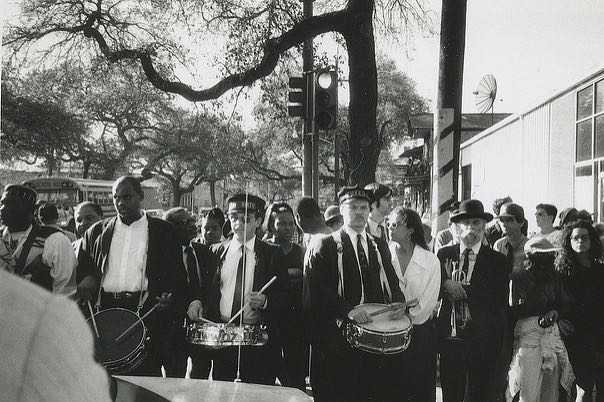
Photo credit: Infrogmation of New Orleans via a Creative Commons license.

Philomela in the Rooms (2017)

By Michelle M. Tokarczyk


Where we listen.
Each day is a hand opening possibilities.
Each story is a nugget of success, or
a remnant of lost days and broken bonds.
Reminding us the straight and narrow
is wide enough to support us.
Hold us firm against the cravings
that still salivate in our mouths.

Where we listen.
Until a woman’s voice cracks
the way that truth cracks secrets and lies
and all the walls that still, we build.
“_____   ____   ____ raped me.”

We listen. Picture
the man holding more
power than we can picture. Look
at the woman I do not know but know
she is trying to recover. Staring
at the space here her words hang. Powerless.

And we, women, listen, crossing our arms
across our chests as if we’re afraid
they’ll crack open and our own hearts
will spill out.

We will listen, but not speak.
We are powerless. We can do nothing.
Not now.
Not yet.
We will never forget.


Michelle M. Tokarczyk has published two books of poetry Bronx Migrations and The House I’m Running From; as well as work in numerous journals and anthologies including the minnesota review, The Literary Review, Slant and For a Living: The Poetry of Work. A professor of English at Goucher College, she divides her time between Baltimore and New York City, and spends as much time as possible in resistance work.

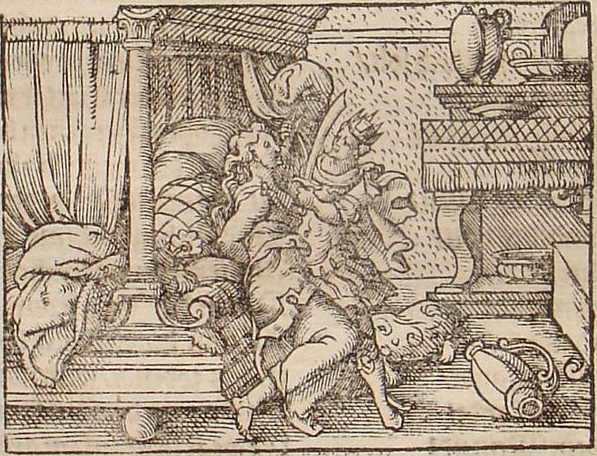
Image: Tereus Severing Philomela’s Tongue, Virgil Solis 1562

Some Facts for This Moment

By Shana Ross


1.

Not only is man far from the only animal to use tools, some birds have even been observed making and using prosthetics—mostly artificial legs, after losing them to predators, sometimes in botched attempts to save a nest and fledglings, but one ostrich was observed replacing its wing even though it could obviously not fly.

2.

Pluto is highly unstable and will likely fracture itself in a geologically near future. This, of course, is one of the main reasons its planetary status was revoked, even though scientists deny any such bias based on unpredictability and fragility.

3.

Despite popular mythology having Joan of Arc cropping her hair short like a boy’s, she actually invented the French twist, later popularized by Grace Kelly, whose marriage into the Monaco monarchy gained her ownership of the castle where Joan’s mortal remains were interred. Some of them.

4.

Squirrels only hide nuts in caches of odd numbers. They feel great about their prospects for the winter, but many will die before spring.

5.

One of the great pyramids is sinking, slowly but surely, and it is illegal under Egyptian law to photograph the now obvious difference. Older images hid the discrepancy with perspective and unusual angles.

6.

In upper Scandinavia, where the sun sets for a fortnight over solstice, reindeer faint at first light each year. One myth casts this as relief that the sun has returned, but scientific study finds that the endocrinology is identical to that of the beasts’ reaction to very large bears and repeated sonic booms, so they are certain it is pure fear.

7.

Debussy was colorblind. Ironically, he tends to be a favorite of synesthetes, particularly his nocturnes. I have been known to cry, seeing what he fumbled into.


Shana Ross is a poet and playwright with an MBA. She lives in Connecticut and works globally as a consultant and leadership expert. This decade, her work has been published in Anapest Journal.

Image credit: Carl Glover via a Creative Commons license.

This poem was previously published by SHANTIH Journal.