Pompeii

By Jennifer Hernandez


When the water finally
breaches the dam,
long after empty hollows,
long after parched ground,
even after all is well,
the deluge doesn’t stop,

becomes a train,
careens through the station,
passengers left behind
on platforms, watching,

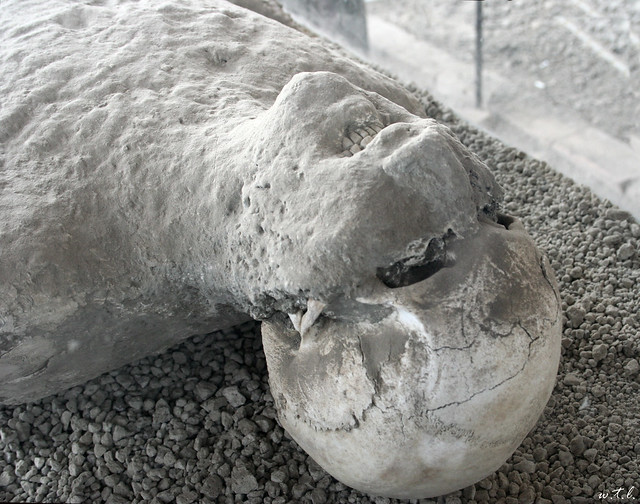
like the citizens of Pompeii
as ash rains down
from the mountain,
peaceful exterior
having hidden
the burbling stew
inside her belly.

When she blew,
it seemed so sudden,
like the breached dam,
the runaway train.

In retrospect,
there are always signs.


Jennifer Hernandez lives in Minnesota where she teaches immigrant youth and writes poetry, flash, and creative nonfiction. Much of her recent writing has been colored by her distress at what she reads in her daily news feed. Work can be found in such publications as New Verse NewsRadical Teacher, Rise Up Review, and Writers Resist. She is working on a chapbook of hybrid writing about teaching as a political act.

Photo credit: Dr. Wendy Longo via a Creative Commons license.

Farewell and Welcome!

Laura Orem is retiring after almost two years as one of our dedicated volunteer poetry editors. Farewell, Laura!

While we’ll miss Laura—and her sense of humor—we’re delighted to welcome our newest poetry editor, Tori Cárdenas.

Tori is a queer Tainx/Latinx poet from Northern New Mexico. In 2014, she graduated from the University of New Mexico with a dual Bachelor of Arts degree in History and English, with a concentration in Poetry. She returned to UNM in Fall 2017 to earn her Master’s of Fine Arts in Fiction. She served as Blue Mesa Review’s 2018-2019 Poetry Editor, and serves currently as the 2019-2020 Editor-in-Chief.

Tori’s work has appeared in Conceptions Southwest, VICE, Pantheon Magazine, Writers Resist online journal, and Writers Resist: The Anthology 2018, and it has been nominated for the Best of the Net anthology and a Pushcart Prize. Her works have also been featured as finalists in the 2018 and 2019 Rabbit Catastrophe Press Really Good Poem Prize contests.

Tori lives with her dog Sophie in Albuquerque, New Mexico. Please join us in welcoming Tori—and celebrating her poem. …

White

upon buying a new car for visibility, practicality, and functionality,

the car and insurance salesmen convince me white is the best color—

it’s functional, keeping it clean is as easy as keeping the dust off of it.

at night, you will be easy to see, less likely to get pulled over or questioned,

folks will stop to help you with flats on the shoulder. on long road trips,

bugs splatter every color across your grille, red and brown and yellow—

won’t it be pretty


Manifesto

By John C. Mannone


We are desperate for life
to be found outside our
comfortable homes here
on this planet. We send
messengers to the outer
reaches of our solar system
—robots with test tube eyes
see 200 atom-heavy molecules
on Saturn’s Enceladus
geysering from a subsurface
ocean, icy plumes feathered
with biochemistry—life
essential molecules speaking
no words, only facts.
Our conjecture is at least
as clear as political banter.
We are experts at posturing—
made of many chemicals
much bigger than those
and laddered with the right
codes for human engagement,
though some links are missing.

We search for simple life
elsewhere, yet we cannot
coexist among ourselves
without destroying everything
we have.


Author’s Note: Inspired by the June 27, 2018 breaking news, “Complex Organic Molecules Discovered on Enceladus For The First Time: It has everything needed to host alien life!” by Michelle Starr. The original work is cited in Nature, “Macromolecular organic compounds from the depths of Enceladus,” volume 558, pages 564–568 (2018).

John C. Mannone has poems in Artemis Journal, Poetry SouthBlue Fifth Review, Peacock Journal, Baltimore Review, Pedestal, New England Journal of Medicine, Intima, Annals of Internal Medicine and others. He’s a Jean Ritchie Fellowship winner in Appalachian literature (2017) and served as Celebrity Judge for the National Federation of State Poetry Societies (2018). He has three poetry collections and has been nominated for Pushcart, Rhysling, Dwarf Stars and Best of the Net awards. He edits poetry for Abyss & ApexSilver Blade, and Liquid Imagination. He’s a professor of physics near Knoxville, TN. Follow him on Facebook and at The Art of Poetry.

Observation After Watching a National Geographic Documentary

By Joanne Sharp


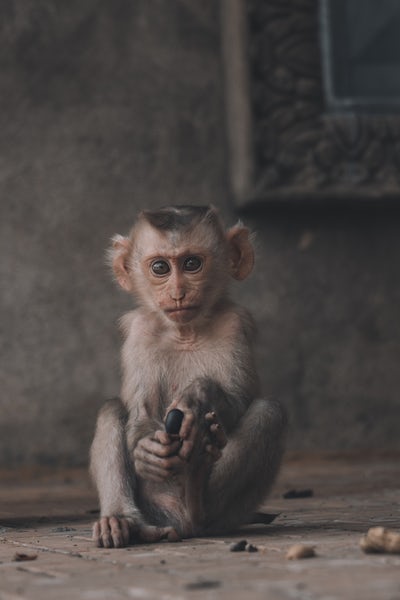
Some monkeys have learned
that a rock can break open
a nut.

Other monkeys are learning
that a nut can break open
their world.


Joanne Sharp, Southern California native, graduated from UCLA with a B.A. in Art. Lifelong interests in arts practice, music, and literature led to her to poetry writing late in life. She has been published in the San Diego Poetry Annual and California Quarterly. Joanne and her family live in Del Mar. This poem appeared in Joanne’s self-published book Big World Little World.

Photo by Quinten de Graaf on Unsplash.

He Went to the City of Bridges

By Jack Ridl

For all the victims of the Tree of Life Synagogue killings


He went to the city of bridges.
He stood in front of the synagogue,
dared shake the hand of the Rabbi. He

said what his daughter and son-in-law
told him to say. He went to the city
of bridges. He went to the city

of neighborhoods. He did not climb
the stairs of the Cathedral of Learning.
He did not look in the eyes of those sitting shiva.

He said he never saw anyone standing in lines
with their signs: “YOU are not welcome here”
in the city of bridges. He went to the city

of bridges to meet the Carnegies, to see where
the steel barons sat, hundreds now standing
at the church where Fred Rogers had knelt.

He stopped by on his way to his rally.
There was also a rally in the city of bridges,
a rally for HIAS, for peace, health, and love.

He went to the city of bridges built
by the iches, the icis, the ids, and the O’s.
And I’m pretty damn sure that he crossed

the irregular streets where my immigrant
Bohemian hunky great-grandfather drove
the horses that pulled a wagon with barrels

of beer in the city where his hunky son, only
sixteen, said he was 20 and for 49 years
day after day stood on the monotonous line

doing the irrelevant, replaceable job.
At the end of that line was what lined
the twill pockets of those at their desks

He stood there day after day so his family
could eat, own a car, house, and radio. I, born
a hunky, could now be an illegal immigrant kid.

He went to the city of bridges. Then on
to his welcoming “base” to proclaim
he was loved. Loved . . . Not by the dead,

not by the trodden, the poor, the betrayed.
Unforgivable for the sorrow-filled veils.
Not loved at the border where the hope-draped

will hand over their photos, their wallets,
their backpacks, toothpaste, and children.
The crowd at the rally, that base congregation,

will roar yet again, “Lock her up!” They
will cheer at the blasphemy “Great.” They
will hate. And somewhere someone’s making

a plan and a bomb, plotting a shooting,
shrieking on Gab while the bereaved sit
in shiva, while we wonder where next.

He went to the city of bridges.


Jack Ridl’s Practicing to Walk Like a Heron (Wayne State University Press) received the ForeWords Review Gold Medal for the finest collection of poems published by a university or small press. Broken Symmetry (WSU Press) was named the year’s best book of poetry by The Society of Midland Authors. Losing Season (CavanKerry Press) was recognized by the Institute for International Sport as the year’s best sports-related book. Poet Laureate at the time, Billy Collins, selected Ridl’s Against Elegies for the chapbook award from The NYC Center for Book Arts. Ridl is co-author with Peter Schakel of Approaching Literature (Bedford/St. Martin’s). His Saint Peter and the Goldfinch was published in April, again by WSU Press. Ridl served as Honorary Chancellor of the Poetry Society of Michigan, and the Carnegie Foundation (CASE) named him Michigan’s Professor of the Year. Ridl responded to the 2016 Presidential Election by launching “In Time Project,” sharing poetry and commentary with subscribers from every continent. For more information, visit Jack’s website at www.ridl.com.

Photo by Vidar Nordli-Mathisen on Unsplash.

When Women Drink We Love

By Julia Tagliere


Why is it that when women drink we love
We melt at your gentle insistence
and praise your strong hands
We shed our full-body armor
and open our honeyed limbs
We forget
When women drink we love
We do not, generally, shove bottles into your rectums
or try to force your flaccid penises inside of us
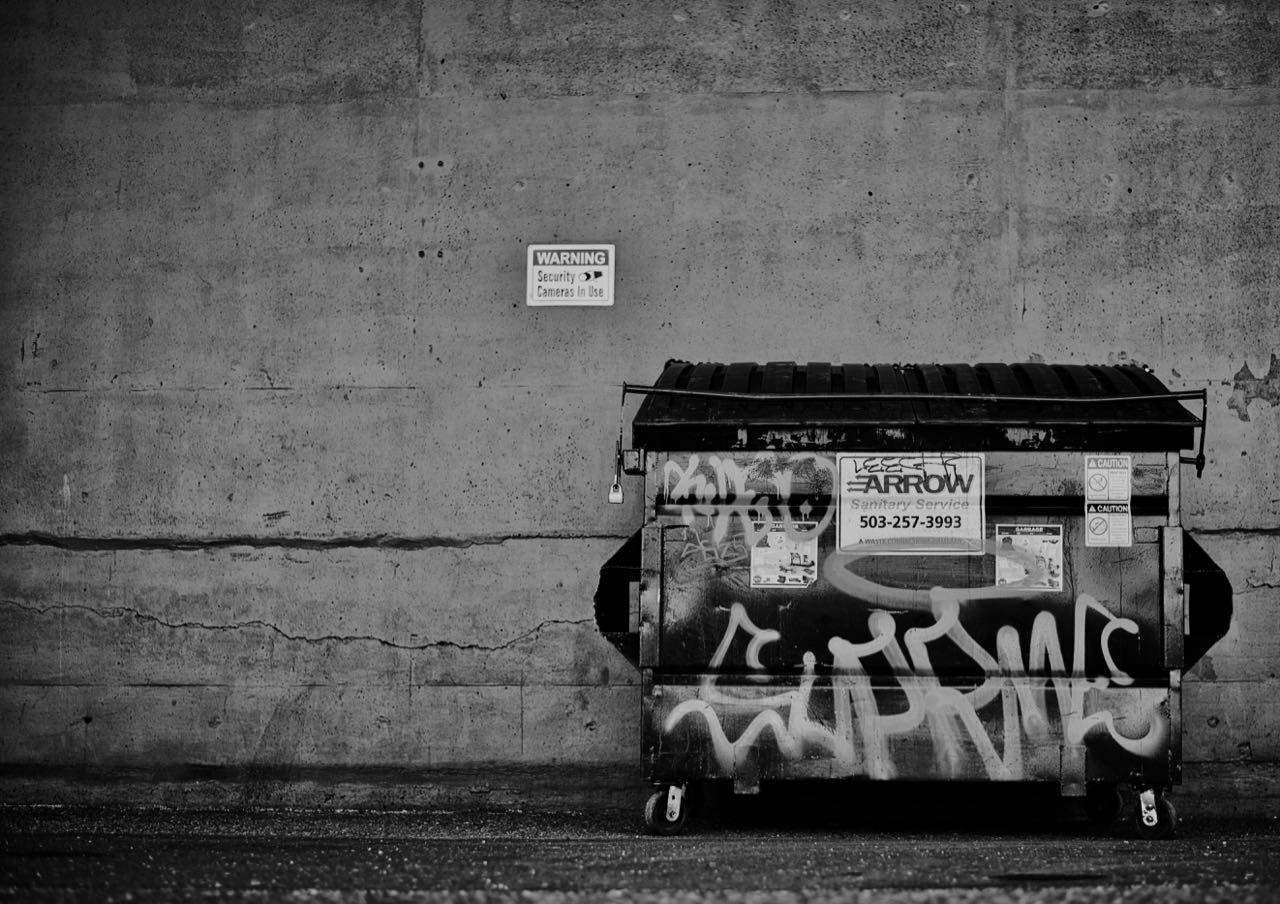
as you lie on the asphalt beside a dumpster
When we drink
we do not, normally, bloody your boxer briefs
or spray our sticky souvenirs into your hair
as your mouths scream against our hands
When we drink
we do not, usually, invite friends to watch, join in, and Snap
or laugh while our bladders empty onto your faces
as you curl into the tiniest balls of garbage human beings can become
When women drink we love
When women drink we forget
And how that forgotten fear fails us
when your insistence becomes force
when your hands become fists
when your love becomes hate
When women drink, we love
and are somehow condemned
When you drink, you hate
and are somehow pardoned
Why is that
Why is that


Julia Tagliere’s work has appeared or is forthcoming in The Writer, The Bookends Review, Potomac Review, Gargoyle Magazine, Washington Independent Review of Books, SmokeLong Quarterly, various anthologies, and the juried photography and prose collection, Love + Lust. Winner of the 2015 William Faulkner Literary Competition for Best Short Story and the 2017 Writers Center Undiscovered Voices Fellowship, Julia recently completed her M.A. in Writing at Johns Hopkins University. She serves as an editor with The Baltimore Review and is currently working on her next novel, The Day the Music Didn’t Die. Follow her at justscribbling.com.

Photo by Kevin Butz on Unsplash.

with risk to inhabit that whole

By Grover Wehman-Brown


when asked to bring
my ancestors into the room
alongside those they would
want to harm the answer
is surely no. and i must.

over the years my attempts to bring
an orb of collectivity glowing into the rubble,
or a lantern to the wounded cave
has been met with dank pessimism.

turning “i will give up no one” into
i will not give up myself
is a slippery kind of magic
that lends itself to selfishness
and also to liberation.

the collective accounting of rape
has risen through inferno this week.
we each pitch in a stick, a log to the pile.
our molten bodies are turned
to each other now
versed in cautious solidarity.

last night the back of my body
grew dragon wings that were made
from the fire of ancestors screaming
from beyond and within two thousand years
of coercive christianity. of bodies picked apart.
the women of my people are terrified. the women
of my people scream through me and I am the
most recent one to catch fire.

at first afraid, i gathered Leslie Feinberg’s shadow into me.
a butch working with the goddess
asked me to step back into the unknown.
dry heaving next to a toilet in manhattan. a profoundly
stone. butch. blues.
what is it
about grief that makes us brave Leslie?

the risk of accounting for ancestral harm.
ancestral trauma. ancestral ambivalence.
a full body incineration. a legacy
to inhabit that whole.


Grover Wehman-Brown is a transmasculine butch poet and essayist. This poem is part of a larger collection of work engaging lesbian, queer, and transgender ancestry via the work of foundational lesbian-feminist essays. You can find Grover on twitter @gwehmanbrown and learn more at this website.

Poet’s note: This title (and poem) is derived from words within a passage by Dorothy Allison: “I am certain that none of us wants to live with the fear, the sense of loss, betrayal, and risk that I worry at all the time. I know that many of us want what Barbara Smith described in her short story—the ability to love without fear of betrayal, the confidence that we can expose our most hidden selves and not have the women we love literally disappear from our lives. I know, too, that we cannot inhabit that safe ground easily. If we are not to sacrifice some part of ourselves or our community, we will have to go through that grief, the fear of exposure, and struggle, with only a thin layer of trust that we will emerge whole and unbroken. I know of no other way to do this than to start by saying, I will give up nothing. I will give up no one.”

“Public Silence, Private Terror.” Skin: Talking about Sex, Class & Literature. Firebrand, Ithica. p. 119

Photo by Jonathan Bean on Unsplash.

This poem was first published at Medium.


One Nation, Indivisible

By Laura Grace Weldon


Our daily walk is a simple
necessary practice,
especially now
when each day’s news
spirals us into tighter circles.
Beyond birdsong and breezes we hear
jeering laughter, see teens
jumping on an elderly neighbor’s hay bales,
hooting as their weight breaks
his farm’s winter food into uselessness.
They grew up on this street.
They’ve seen the old man walk the pasture
handpicking weeds wrong for cows
before letting his 30 or so Jerseys,
Guernseys, and Holsteins out to graze.
Seen his falling down house, his rotting fenceposts,
his shoulders bent like a question mark
curving ever closer to the ground.
My husband calls to them,
his voice lost to the wind,
advances toward them, calls again.
Only when he holds up his phone,
yells “dialing the sheriff”
do they angrily leave,
first dumping cans of Coke
on a bale still standing.
All the way home my eyes water in the wind,
streaming as if scratched
by hayseed tossed in the air.
So much already crumbling into chaff.


Laura Grace Weldon is the author of the poetry collections Blackbird  and Tending as well as a handbook of alternative education titled Free Range Learning. She works as an editor and leads workshops on memoir, poetry, and creative thinking. Her poetry appears in Verse Daily, J Journal, One: Jacar Press, Neurology, Penman Review, Mom Egg Review, and others. She lives on a small farm in a conservative community, but has strange sculptures in her gardens and peace flags on her porch.

Photo by Art Wave on Unsplash.

Metamorphosis Points

By Yuan Changming


I would paint my skin

Into a colorless color, & I would dye my hair

Wear two blue contacts, & I would even

Go for plastic surgery, but if I really do

I assure you, I will not remove my native village

Accent while speaking this foreign tongue (I began

To imitate like a frog at age nineteen); nor will I

Completely internalize the English syntax &

Aristotelian logic. No, I assure you that I’ll not give up

Watching movies or TV series, reading books

Listening to songs, each in Chinese though I hate them

For being too low & vulgar. I was born to eat dumplings

Doufu, & thus fated to always prefer to speak Mandarin

Though I write in English. I assure you that even if I am

Newly baptized in the currents of science, democracy &

Human rights, I will keep in line with my father’s

Haplogroup just as my sons do. No matter how

We identify ourselves or are identified by others, this is

What I assure you: I will never convert my proto selfhood

Into white Dataism, no, not

In the yellowish muscle of my heart


Yuan Changming published monographs on translation before leaving China. Currently, Yuan lives in Vancouver, where he edits Poetry Pacific with Allen Qing Yuan. Credits include ten Pushcart nominations, the 2018 Naji Naaman’s Literary Prize, Best of the Best Canadian Poetry, BestNewPoemsOnline and  1,489 others worldwide.

Photo by Rishi Deep on Unsplash.

What I Learned When I Visited Adelanto

By Lisa Eve Cheby


the high desert stretches     hours west of airbnbs and selfie backdrops    here Joshua Trees weep
their ancient heads                                   droop in sorrow                          warning

warning: injustice ahead         Adelanto means progress          the land of unlimited promises
promises can be a curse      a trick              like a traffic ticket that makes a father disappear

like a detention center             a euphemism for eradication                           of brown bodies,
not-so-temporarily                 uniformed in blue or orange or red             coded by threat level

AC blasts    windowless rooms     109 degrees     water sucked from skin    I must remember
we could not bring in paper, pen, phone           Ximena denied entry:  “no leggings allowed”

or was it no brown skin friends?          Refugio’s in bright orange       talks slowly,
as if to his 3-yr-old daughter       Martha and I            listen          struggle to understand:

9 months            no patrocinador           patrocinador      no     patro         cin           ador
sponsor    the man in blue at the next trio of chairs        pauses his visit             interprets

asked   no sponsor    asked    no response    asked    no attorney   asked asked   savings    no
access     a fiancée       no crime       a cousin        no letters      no calls    no visits   no rights

                                    Espero una oportunidad  /  I want a chance

English sneaks into Refugio’s story – appliance, Best Buy, Sears – and I understand:  he is a man
who knows how to use straps and triceps to contort stoves over the counters into tight spaces,

like the cirque du soleil show in my kitchen by men wearing tan costumes streaked in grease
of course it was not him in my home        was not my stove on his route         now he cleans

for an extra plateo    a phone call to his daughter     who struggles to understand, too      we leave
money through the kiosk outside       even our cash kindness is suspect      subject to surveillance:

name    birthday     address      phone number      & a $4 transaction fee         unlimited profits
will I get a receipt?    “We withhold any guarantee of a disruption to our system, GEO & ICE”


Lisa Eve Cheby’s poems, articles, and reviews have appeared in various journals including The Rumpus, Entropy, Knowledge Quest, The Citron Review, Tidal Basin Review, A cappella Zoo, and TAB: Journal of Poetry and Poetics, which nominated her poem for a 2015 Pushcart Prize. Lisa’s poems are also found in the anthologies Drawn to Marvel, The Burden of Light, and Coiled Serpent. Her chapbook, Love Lessons from Buffy the Vampire Slayer (Dancing Girl Press) was featured in The Wardrobe’s Best Dressed Series. Lisa holds an MFA from Antioch and an MLIS from SJSU. You can follow Lisa on Twitter and on Facebook.

Photo credit: Tony Webster via a Creative Commons license.

Make a Difference

By D.R. James

—a villanelle to commencement speakers everywhere


Tonight, fatigue’s grim flower unfurls,
but Gandhi, gunned down, had this to say:
“Be the change you wish to see in the world.”

Oh? Even when casting before swine my pearls,
every action seems absurd, and all the day—
and tonight—fatigue’s grim flower unfurls?

Even though, in my disgust, I’d hurl
the grenades myself, I should, anyway,
be the change I wish to see in the world?

What about how resolve just sways and swirls?
What about colleagues countering, “Let’s pray”?
Especially then fatigue’s grim flower unfurls,

failure feels relentless, all fervor whirls.
But still I’m to spin—on these feet of clay—
this Be the change you wish to see in the world?

The global Bottom Line confirms I’m the churl
and binds me with a twist to the old cliché:
tonight, fatigue’s grim flower’s unfurled
by the change I’d wished to see in the world.


D. R. James has been teaching writing, literature, and peace-making at Hope College in Holland, Michigan, for 33 years and lives in the woods outside of Saugatuck. Poetry and prose have appeared in a variety of journals and anthologies, and his newest of seven poetry collections are If god were gentle (Dos Madres Press, 2017) and the chapbooks Split-Level and Why War (both Finishing Line Press, 2017 and 2014).

Photo by Annie Spratt on Unsplash.

Solstice

By Dotty LeMieux


It’s delivery day at St. Vincent’s Dining Room
men unloading trucks with bread, canned goods, day-old
everything for the homeless
and the not-yet homeless
hanging on by the skin of their teeth,
the ones who have teeth
and the ones who only have the skin

Scruffy off-white hair,
long brown coat like a cape
swirling around bony shoulders,
gap-toothed smile, a man
picks bagels one, two, three
from a giant plastic bag open on the sidewalk

The sidewalk not crowded yet,
the bagel bag still fairly full,
the man in the brown cape-like garment
has his pick, takes his time choosing
plain, seeded, onion,
maybe a spicy cinnamon one
to summon the spirit of the Season

Face lit up with his choices, clutched
in his two hands as he starts across the street,
hair blowing around his face,
cape billowing out behind his slender frame,
he is transformed into a Romantic poet,

reciting odes
in a proper British accent,
to adoring listeners
gathered in the glittering firelight
of the local pub,
his hands gesturing freely,
accentuating the high points
of his lyricism

Back on B St., he strides in front of my car,
stopped now to let him pass, to watch
his coattails fly in his wake,
like autumn’s last leaves
swooshing around us, into the street, launched
by winter’s first insistent breath.


I live and work in California as a writer, lawyer and campaign consultant. Previously I worked as a journalist in Cambridge Massachusetts and was part of the Second Wave feminist movement before moving to California and attending law school.

My three chapbooks are Let Us not Blame Foolish Women, Tombouctou Books; The Land, Smithereens Press; Five Angels, Five Trees Press. My work has appeared in Painted Bride, Rise Up Review, Tuck, Hanging Loose, Fredericksburg Literary and Art Review (FLAR), and other journals. In the 1980s I edited The Turkey Buzzard Review in Bolinas, California.

In 2016, I served as a Bernie Sanders Delegate to the Democratic National Convention. I have studied with poets Edith Jenkins, Joanne Kyger and Thomas Centolella and at the New College of California Poetics Program. My own website of advice and sometimes recipes for aspiring candidates for office, is www.thecampaigncookbook.blogspot.com.

Photo by Matt Collamer on Unsplash.

Cyber War Won

By Jim Hanson


Attention Americans!
War is now Peace.
Connectivity is Security.

The First World Cyber War
to have the final virus
and end all wars is won.

As you read this news:

You are selected for cyber security
as a digitalized node on the Internet
and consumer of infinite data clouds.

You are protected from spyware and malware
by having passwords to authorized websites
and to assure access and guarantee privacy.

You are excepted from the foreign viruses
as bears and dragons are deleted and dumped
in recycled bins with the click of a key.

You are elected as the privileged user
of the world-wide cyber feedback system
made secure by Prism program surveillance.

You are connected – no need to get off line.
Everything is on line, every user included.
Nothing exists outside the digital text.

You are

channeled to
<www.wifi.com>

figured in
0’s and 1’s

reduced to
bits and bites

exiled to
infinite clouds.

Sleep well with Orwell.

You are being

Looked after.


Jim Hanson is a retired Senior Researcher at Southern Illinois University-Carbondale, where he worked and taught in community development. He resides in the St. Louis area. He has a doctorate degree in sociology and is a lay-ordinated Zen Buddhist. In past years, he has published two books through Greenwood Publishing Group and numerous articles in the social sciences. He is a member of the St. Louis Poetry Center, participating in workshops and reading at Poetry at the Pointe. His current interest is writing poems about death and justice.

Photo by Camille / Kmile on Unsplash.

I’m at the End of My Rope

By Wilda Morris

(or This Vocabulary Is to Die For)


When push comes to shove, I have to admit,
we spend a lot of time shooting the breeze, kicking around ideas,
pointing out the ones that—in our judgment—bombed,
We want to give it a shot, take a stab at impressing
everyone. We want folks to be blown away so we go in
with guns blazing, try to rally the troops to our view.

We carry on like Nazis, leading the charge against the neighbor
next door who always disagrees with us.
We go ballistic, say she’s a pistol, but she’s shooting blanks.
We tell her to bite the bullet and read the resources we give her;
we’ll even drive her to the library for more ammunition
so she can join the battle for truth as we see it.

We’ll give her a killer smile but keep shooting holes in her arguments.
Still hoping she’s a pushover, we’ll repeat all our bullet points.
To be brutally honest, it’s overkill. Someday,
if she doesn’t hit the road, she’ll quit rolling
with the punches, give us a kick in the pants,
bring out the big guns. Everything will blow up in our faces.


Wilda Morris is workshop chair of Poets and Patrons and a former president of the Illinois State Poetry Society. For three years she was the chair of the Stevens Poetry Manuscript Competition of the National Federation of State Poetry Societies. Her poems have found homes in numerous anthologies, webzines, and print publications, including Califragile, The Ocotillo Review, and Journal of Modern Poetry. She has won awards for formal poetry, free verse and haiku. Her first poetry book was Szechwan Shrimp and Fortune Cookies: Poems from a Chinese Restaurant. Pequod Poems: Gamming with Moby-Dick, celebrating the 200th anniversary of Herman Melville, was publish in February 2019 by Kelsay Books. Her poetry blog at wildamorris.blogspot.com provides a monthly contest for other poets.

Photo by Mitya Ivanov on Unsplash.


Not Again

By Michael Rubin


Vote for her, rally for him, believe in them, who said what again?
March for this, assemble for that, stand for what, elections again?
Unemployment up, attention span down, un-follow them, swipe left again.

Subpoena her, grand jury him, depose them, who did what again?
Shooting in Florida, murder in Texas, sexual assault in Washington, not this again?
GoFund this, Kickstart that, pray for them, make it great again.


Michael Rubin is born and raised in Los Angeles, CA. He graduated from UC Davis in 2012 with a bachelor’s degree in political science, and currently works in the cyber-security industry. He first fell in love with poetry when he was eight years old after presenting “The Edge of the World” by Shel Silverstein to his entire elementary school. Michael pursues poetry as an escape from the hustle and bustle of life in the city.

Photo by Brian Wertheim on Unsplash.


Life Is Glass

By Phyllis Klein


“There are so many fragile things, after all. People break so easily,
and so do dreams and hearts.”      – Neil Gaiman, Fragile Things


Breaking: Buzz of a bone fractured, burst of a bowl hitting the floor,
boom of a heart splitting. Please like me. A dream as it shatters.
Please think I’m good. Whistle of a word as it severs from itself into the air.
Of a scream demolished.

Moments of breaking: Hand over the mouth, gagging, pushed into a room, door locked from
the inside. Parties, drinking. Why did I do that? The seconds it takes to get
lost. Smash of consciousness as it disappears. Disillusion’s waking
croak. Where are my clothes? Fragmentation into terror.

How it happens: Remembering, forgetting. Was I drugged?
After school, at a party, pungency of impact, taste without
permission. No proof. In the sacristy, in a back seat, a hotel
or a bedroom, did it happen?

Breaking: Dust of collision, whiff of dreams burning, nightmares strike,
cymbals snarl in the brain. I’m repulsive. Floating above it
all in a disappeared body.

Why she didn’t tell: Pretend. It didn’t happen.
No one will swallow it. He threatened, laughed, was stronger, bigger.
It’s my fault. They won’t believe me. Pretend. Have to see him sneer.
Hide it.

What happens next: Cracks. Panic, a plane taking off in the gut.
Armor, as involuntary as neurons saying run, but all there is is a
wall. Looking ok, nobody knows. Get over it. What is PTSD? The thing
that won’t leave, the image, the smell, the taste that’s a plague.

The crush of shame. Lack of sleep. When is it over?
Feeling it, numbing it. Not understanding yet that greatness
comes from damage.


Phyllis Klein’s work has appeared or is forthcoming in numerous journals and anthologies, including, Crosswinds Poetry Journal, Chiron Review, Portside, Sweet: A Literary Confection, 3Elements, The Poetry Hotel, I-70, and the Minnesota Review. She was a finalist in the Sweet Poetry Contest, 2017, the Carolyn Forche Humanitarian Poetry Contest, 2019, and the Fischer Prize, 2019. She was nominated for a Pushcart prize in 2018. Living in the San Francisco Bay Area for over 30 years, she sees writing poetry as artistic dialogue—an intimate relationship-building process that fosters healing on many levels.

Photo by Viktor Forgacs on Unsplash.


You Don’t Get My Obedience

By Max Mundan


You’ve got it now-
-the title, the office, the power-
-your filthy, greedy, tiny hands
in our pockets, in our coffers,
on our pussies, on the button.
You’re on the top of the world
and have the means today
to satisfy every sad, perverse desire
but you don’t get my obedience.

You’ve got it all-
-the reins, the whip, the chains-
-your greasy, pudgy fingers
holding both the carrot
and the stick—your foot,
stepping down upon our necks.
You can silence the press
and make us all criminals
for demanding the country we love
but you don’t get my obedience.

I will dog you and expose you
as the charlatan you are,
I will scream, I will blaspheme you.
I will take your silly name in vain.
I will block your path
and call your bluff
and correct your spelling
when you tweet out
that you hate me-
-that you hate us-
-that you hate
everything we stand for.

Me, and millions like me,
will pour into the streets-
-to demand democracy-
-demand accountability-
-to demand decency-
even though we realize
that you have no idea
what these words mean.

You’ve got them all-
-your toadies, your scumbags, your villains-
-your ass-licking sycophants
and your blood-sucking leeches,
ready and willing
to tear to the ground
all the good that we’ve built.
You can have this momentary victory
but you don’t get my obedience.


Max Mundan is a freelance writer and a poet. He is the author of four published poetry collections, including Junkies Die Alone (Thought Catalog Books, 2014) and Five Words That Can Cripple a Man (Underground Voices, 2016). Max’s work has been featured in the Los Angeles Times, Dressing Room Poetry, Eunoia Review, Wilderness House Literary Journal, Type House Magazine, Avalon Literary Review Review, Los Angeles Review of Los Angeles, and Agave among others. He can be found resisting fascism at maxmundan.net and @maxmundan on Twitter.

Photo by Paul Sableman via a Creative Commons license.

June Cleaver Roasts a Fucking Turkey

By Sarah Ito


Thanksgiving day dawns chilly and bright
With a touch of sparkly frost
Spiking the pumpkin,
On Turkey Day
In Amerika
Or Murica
Or the Estados Unidos,
Depending upon where
You crossed the border
And how.

Football game’s today.
The Big Game
After that epic meal
Of donated Tom Turkey, canned cranberries,
Aunt Ginny’s perpetual string-bean casserole…
And maybe some eggnog from the food pantry
Down at the Salvation Army
If, by chance, an expired case or two was donated
By Mr. and Mrs. Patel, who own the corner convenience store.

The family’s all here, almost…
Wally had a dirty urine; couldn’t get a pass from rehab.
Yusef, he’s driving for Uber all day…
And Manuel’s bussing tables at the club.
But Keisha’s on her way, with five of her kids,
And two sweet potato pies, made from scratch,
And sweetened condensed milk.
Her man, the Beaver, might drop by later…
But maybe not.
You never know, with that sketchy Beaver.

June retrieves a lacy tablecloth from the cupboard,
An heirloom handed down from her mother’s side
Of the famalama.
It graces the wobbly dinette table,
Making it look like Thanksgiving
In the Cleaver’s doublewide.
June fiddles with her necklace of plastic pearls, hoping
That her anxiety meds
Will kick in.
Elevating the unbearable
To the normal.
Then she remembers
There was no Xanax to take this morning, bottle’s empty.
Prescription benefit cancelled
Like her charge card down
At the IGA.
June reaches for a can of Old Milwaukee instead, a tall one, and pops the ring,
Drizzling frosty suds down the peter-pan collar
Of her freshly pressed shirtwaist.

Life’s not so bad, she thinks.
Cable didn’t get cut off yet, we can still catch the Big Game…
Aunt Ginny appears, wearing her festive apron
Adorned with dancing Pilgrim hats and laughing turkeys.
How are you holding up, June, she asks.
It’s strange, first Thanksgiving without Ward here to carve the turkey.
Aunt Ginny doesn’t really care that much…
She smells the hops and barley of June’s
Tall cold one, and an old familiar longing
Stirs within,
Like the clink clink clink of a shaken jigger
Full of orange juice and poison.

June downs another slug of suds.
She wants to scream, she wants to cry.
She wants to crawl back into bed,
Warm and alone.
But she can’t.
A rusty Toyota has squealed to a halt
Leaving an inky contrail of motor oil,
A salutation leaked in Valvoline
Across the driveway.

Keisha’s here! June announces, her enthusiasm stale
Like the tray of Parker House rolls
Sitting on the counter
Awaiting a reheating in the microwave.
Aunt Ginny lights up as a bevy of grandchildren burst through the door…
Catherine, Mary, Brad, and the twins, Tyrese and Tyrone.
Welcome, Keisha, June says, Welcome, Children.

Happy Thanksgiving, Gramma June.
Happy Thanksgiving, Auntie Ginny!
The children call out as one unit,
Excited and hungry.
We watched the parade on TV, they chatter.
We saw Big Bird and the Black Panther!
We saw the cops taze a drunk guy in a Santa suit!

Well, that’s nice. children, June says, dabbing her eyes
With a tea towel.
Blotched mascara
Ringing the bags beneath her eyes
Like the masque of some insane raccoon.

What’s wrong, Gramma June, the children ask…
Nothing, children, it’s just the onions, June lies.
There are no onions in the Cleaver doublewide.
There was no money left over in the budget for a sack of Vidalias.
The tears are on the house.
Come, let’s eat, and we’ll have some of your mother’s sweet potato pie and watch the Big Game.
Aunt Ginny offers up grace, thanking her Higher Power
For ten years sober…
For the meal they are about to enjoy, and the blessings
Of family, and the roof over their heads
On this cold November day.
June says a few words in remembrance of Ward,
Whose heart gave out while waiting in line
At the DMV.
A consequence of outstanding parking tickets
And a municipal office lacking
An AED.
Keisha curses out the absent Beaver,
And the fathers of all her children
And all men, everywhere.

The children dig in
Their hunger godless and prayerless
As turkey and fixings appear on the dinette
And the chatter rises to the level
Of a junior high school cafeteria
High on soda pop.
June says Keisha, Guess who bought the old house! You’ll never guess.
June knows who bought the old house. Aunt Ginny informed her weeks ago.
The Montoyas. The Montoyas bought it.
Keisha spoons more stuffing onto her plate.
They’re the family that owns the taco truck.
“Tacos Without Borders” they call it.
I know, says June, They park it over by the Social Services office. I’ve had their fish tacos.

Aunt Ginny puts up two paper plates for the cousins,
Manuel and Yusef,
To enjoy much later, when their workday of serving
Others
Finally ends
And they return home to their own slice of turkey
And Stovetop stuffing
Microwaved to perfection.
The Big Game is on now, and
The children gather ‘round the television
As the players drop to one knee
While Lady Gaga renders the National Anthem to the roar of the crowd.
Aunt Ginny takes exception.
It’s so disrespectful, she opines, Our veterans deserve better.
June polishes off her cold one. Our anthem deserves better than Gaga, she thinks.
Aloud, she says, Better think about the twins. What if they were on the receiving end of, well,
you know…

That’s right, Keisha says, a smudge of marshmallowy sweet potatoes lingering
At the corners of her lips. We got to think about the twins
The Big Game kicks off. Wish Lumpy and Eddie were here with us today, June thinks.
I hope they’re enjoying their honeymoon in Belize.
Where exactly is Belize, anyway?
Is that where those caravan people come from?
Do they have turkey dinner in Belize?

 June joins the others on the sofa, the entire family butt cheek to butt cheek in front of the big television.
The flickering light from the screen warms the gloom
June says to everyone and no one, Ward served in the Army so the twins can be safe. So we all can be safe and say and do what we want. We should be grateful for that.
And grateful that we have one another.

We are grateful, say Keisha and Aunt Ginny.
Can we have more sweet potato pie? ask Tyrese and Tyrone.
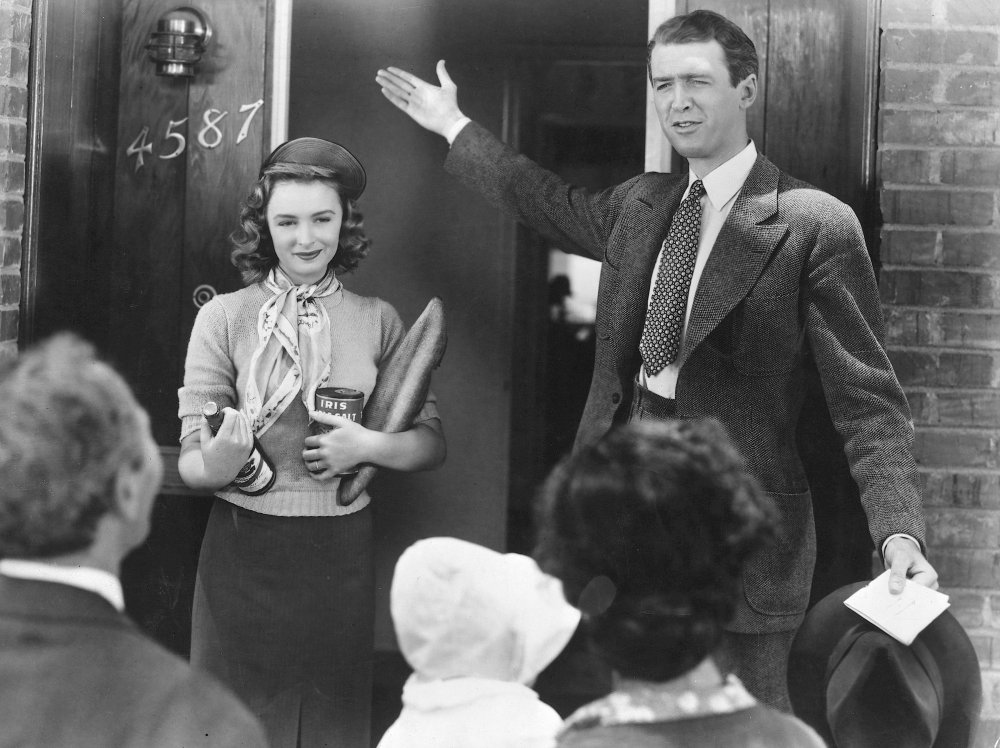
Let’s watch a movie later, say Catherine, Mary and Brad. It’s a Wonderful Life! That one! 

June fiddles with her pearls again.
The string snaps. Plastic beads rain down everywhere and bounce on the bare floor.
The family laughs.
Maybe Santa will bring you new pearls for Christmas, says Tyrese.
June smiles.
Maybe.
June would settle for a new prescription plan,
Or the cash to pay her lot rent
With a little left over
For a case of Old Milwaukee.
But pearls would be nice,
Too…

Thanksgiving day ends chilly and dark
With a touch of sparkling frost
Spiking the pumpkin,
On Turkey Day
In Amerika
or Murica
Or the Estados Unidos,
Depending upon where
You crossed the border
And how.


Sarah Ito is a published novelist, essayist, poet and sometimes actor, and an Army veteran.

EDITOR’S NOTE: Sarah Ito is one of the actors in the wonderful video on our homepage, “Eating Twinkies with God.” Enjoy watching it.

 

A Walk in the Sun

By Milton P. Ehrlich

Shooting at each other—
more exciting than sex.
Blood tastes better
than vintage wine.

One of our ladies-man guys
howls in pain trying to piss.
Sergeant bellows: Ain’t you
ever had the clap before?

If I was not ordered
to carry the BAR—slung
over my weary shoulder
with a torn rotator cuff,

I might have enjoyed
the camaraderie
of a walk in the sun—until
an ambush tourniquets my breath.

A burst of my machine gun
hops them up and down
with still-open eyes and red-hot toes.
Their legs scatter high in the air
like the high kick-ready Rockettes.

We are all outsiders
who used to be human.
The quicksand of hate
sucks the love out of us,

and the elixir of violence
promises a rush until we see
what we have wasted.

We step into silence.


Milton P. Ehrlich, Ph.D., is an 87-year-old psychologist. He is also a Korean War veteran who has published many poems in periodicals such as the Wisconsin Review, Descant, Toronto Quarterly Review, London Grip, Vox Poetica, Taj Mahal Review, Red Wheelbarrow, Christian Science Monitor, Huffington Post, and the New York Times.

Photo by Holly Mindrup on Unsplash.

After

By Calida Osti


You can’t cover it in snow. It will seep through and turn into muddy slush and
slide into your neighbors’
third story windows
right past the new
drapes they ordered from amazon.com.

You can’t redecorate it or rename it and think that will work new
names are old names.

It isn’t new.
It can’t be washed
away and drained
in a claw-
footed tub even if you dose the tub in kerosene after.

It isn’t okay
to watch and say nothing as long as you are not
the one
slurring  touching  burning.

It isn’t ignorance. You can’t get rid of
it by reading any books          they say
maybe Harry Potter, but what if
the reader burns the book after?

It isn’t heritage. You can’t
shoot it through the back of a black boy and then pick it up and wave it around. Should it be
burned                                                                                       after?


Calida Osti is currently enrolled in Lindenwood University’s creative writing M.F.A. program.  She lives in West Lafayette, IN, with her fiancée, Kaylah. You can check her out on Instagram or Twitter at @rawr_lida or by visiting www.calidaosti.com.

Photo credit: Jc Olivera via a Creative Commons license.