With great haste, but still too late

By Laura Mazza-Dixon


Evidence accumulates
as one by one, those who suffered
while the truth was silenced
begin to find the courage to speak.

Congress tells us that all will be done
with care, new revelations investigated,
whistleblowers protected.

On another channel, others deny
all wrongdoing, again and again,
mounting their defense
in louder and louder voices.

You can choose to believe
those on one side or the other.
There is no middle ground.

In between the news reports,
the advertisements for the latest
cars and medications run nonstop.

We cook, listen to the news, eat dinner,
and wash the dishes, wondering
how and if we are responsible,

knowing that even if we all agreed
about what is true, and even if
we acted with great haste,

it would be too late to save the people
driven from their homes in Syria yesterday,
today, tonight and tomorrow,

too late for the people swept
off the islands of the Bahamas,
too late to retrieve the glaciers
dissolving into the sea,

too late for the child
drowned in her father’s arms
in the river between danger
and the promised land.


A Pushcart Prize nominee, Laura Mazza-Dixon has been featured in both the Hartford Courant Poet’s Corner and the Simsbury Community Television’s Speaking of Poetry Series. Her poetry collection, Forged by Joy, was published in January of 2017. More information on it is available on the Antrim House website (www.antrimhousebooks.com/mazza-dixon.html). Mazza-Dixon lives in Granby, CT where she directs the Windy Hill Guitar Studio. She is co-artistic director of The Bruce Porter Memorial Music Series and has performed on classical guitar and viola da gamba across New England. She also organizes the Poetry at the Cossitt series at the F. H. Cossitt Library in North Granby, CT, and has organized two poetry workshops titled “Words That Matter: Courageous Conversations on Race” for the UCC churches in Granby.

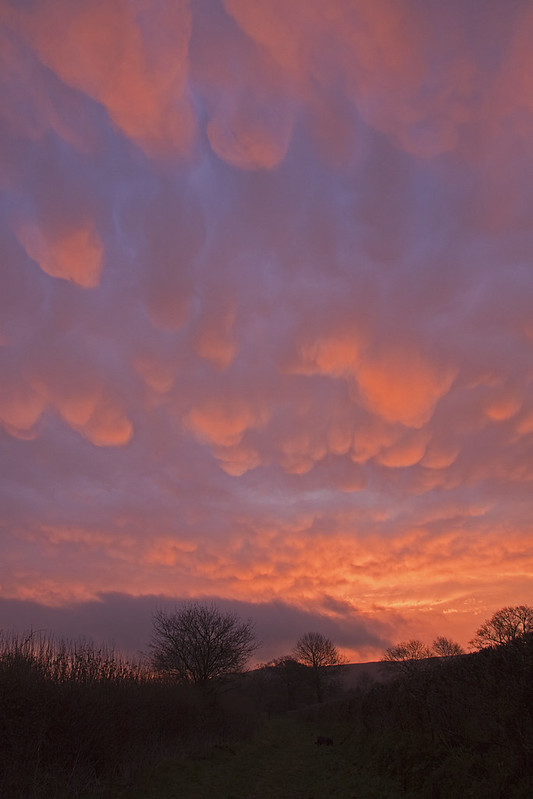
Photo by Heather Zabriskie on Unsplash.
 

Honduran Refugees in My Classroom 2

By Alexander P. Garza

Editor’s warning: assault, violence against women


“Mira a mi tia.” Look at my aunt.
“La mataron.” They killed her.

She shows me a photo on her phone:
a black honduran woman, motionless,

face down, half-naked, ass exposed,
top torn. The girl tells me her aunt’s just been

raped and murdered, left dead.
She got the photo via text from a family friend.

The image forever ingrained in my brain
during our history class, right then.

“Another one down,” she says in Spanish.
“Glad we got out,” she says.


Alexander P. Garza is a writer, actor, and educator from Houston, TX. His work can be seen in Veil: Journal of Darker Musings, Thirteen Myna Birds, Black Poppy Review, and others. He was awarded the 2019 Dark Poetry Scholarship Award by the Horror Writers Association, was commissioned by the Museum of Fine Arts Houston and Tintero Projects for work inspired by their Latin American Exhibit: Play and Grief, and he has worked on and offstage at the Alley Theatre, Houston Grand Opera, Main Street Theater, and Mildred’s Umbrella Theatre Company. Visit him on Instagram/Twitter, @alexanderpgarza, and on his website http://www.alexanderpgarza.com.

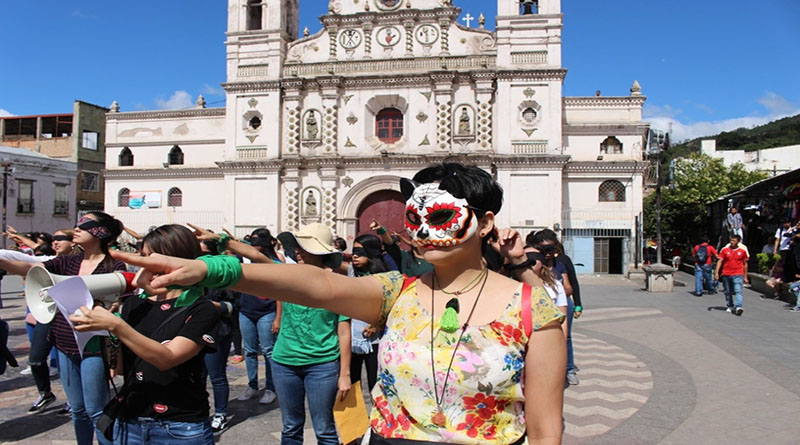
Photo credit: LasTesis performs the feminist anthem “Un violador en tu camino” (“A rapist in your way”), in Tegucigalpa, Honduras, from Honduras Tierra Libre.

Lynched

By Julie Weiss

Editor’s warning: violence, racism


For Robert Fuller


There’s a body hanging from a branch
outside City Hall & nobody is talking.

The sky cowers under its predawn cloak.
The tree holds its breath.

This is not a Discovery Channel documentary
set in the Antebellum South

or an antique postcard from the 1920s,
sold as a souvenir to grinning spectators.

Did they jostle each other for a spot
at the front, inches from the man

being hoisted to his death?
There’s a body hanging from a branch

in a 21st century California suburb.
The tree is full, leaves glistening,

much like the one we lean against
while picnicking with our children,

white & unafraid, oblivious
to the nooses that have squeezed

the breath out of Black families
for centuries.

Whoever claimed time marches onwards
lied. Decades struck backwards

under the lash of the past
as the morning newscast fades

to black & white.
Suicide, they’ll say. A coincidence:

all these unbalanced, pandemic-stricken
Black men hanging themselves

in the thick of a revolution.
His body, now slumped on the ground,

blazes in the colors of sunrise
& nobody is talking.


Julie Weiss found her way back to poetry in 2018 after slipping into a nearly two-decade creative void. In 2019, she was a Best of the Net nominee. In 2020, she was a finalist in Alexandria Quarterly´s first line poetry contest series and a finalist for The Magnolia Review´s Ink Award. Recent work appears in Praxis Magazine, Anti-Heroin Chic, Kissing Dynamite Poetry, and others, and she has poems in a handful of anthologies, as well. Originally from California, she teaches English in Spain, where she lives with her wife and two young children. You can find her on Twitter @colourofpoetry or on her website at julieweiss2001.wordpress.com.

Photo credit: Marilyn Peddle via a Creative Commons license.

Encomium for the First Truly Epic Poem

By M. J. Lewis


This is the best poem you have ever read.
Everybody is saying it. Everyone.
Other poems have tried to be as wonderful,
tried to be honored with the best aesthetics,
struggled to be as tremendous as this
and to get away with things like that—believe me—
but they don’t know how. They’re weak and small;
they whine and fumble and lose all the time,
lose to limericks and haiku, senryu and lays.

But not this poem.

This poem spawns only success, has nothing but victories,
knows nothing of loss or the literature of losing,
can’t keep itself from winning, always, bigly.

There has never been a poem like this one.
Elegies and epithalamiums, idylls and odes,
Sestinas and sonnets and carpe diem canzones—
all have tried and failed to be as terrific as this,
the greatest poem, in the greatest journal,
in the greatest country, in the greatest universe on Earth.

This poem is freedom.
This poem doesn’t hide behind walls: it builds them.
This poem is a leader, a champion of meter,
of measures that beat the best out of everyone.
This poem is faith, the flag, a founding father:
a loaded gun in a good man’s hand.
This poem is the voice of America—the groin
in the bridge to a better tomorrow.

Literature, everywhere, is broken—lies in ruins.
But not this poem. Never.
No one had ever heard of Ozymandias—of might or despair.
But this poem had—and only it has the answers, has a plan.
Only this poem is doing something about the wreckage,
the crumbling rubble that sad, little phonies have left us with.
Only the feet of this poem can stand in the swamp,
Only its passages can get us back on the course.

This poem takes risks (like zeugma) but not you for a fool.
Very fine people know this poem puts them first.
But this poem loves the others too, even critics, even readers.
Some of this poem’s best friends are readers.

This poem is going very well, don’t you think?
It really is amazing. Incredible.
It has all the best words.
It’s already shown you some very important stanzas.
Very important stanzas.
This poem alone knows how welcome you are.

There is just nothing like this poem. Nothing.
And only this epic—really something very special—
can make things better and the better the best.
By simply gazing on such greatness,
you can feel yourself begin
to slide past goodness.
By surveilling and scanning but never quite reading, you
can already feel yourself tired of winning,
can already feel yourselves safer, more similar,
can already feel this poem, like nothing before in history,
through huge epizeuxis and classy anaphora,
making us great again great again great again.

Making us more like this poem.


M.J. Lewis is a critic, cartoonist at www.gapintheatlas.com, and creative writer. He is currently an assistant professor of literature at Al-Quds Bard College in Abu Dis, Palestine.

Photo credot: Internet meme.

in memory of the coptic bus martyrs

who were murdered on their way to

st. samuel the confessor monastery

may 26, 2017


By Sister Lou Ella Hickman                                                       


the wheels of the buses that went round and round came to a stop
who was the first one to descend
stepping into the hot sand
then signed the most ancient of signs
the cross
on a forehead and chest
did the fingers linger on the lips with the silent blessing
i go to God
who would be the last to collapse in death
having watched the sun-blazed terror of bullets
consume even children


Sister Lou Ella Hickman’s poems and articles have appeared in numerous magazines and journals as well as four anthologies. She was nominated for the Pushcart Prize in 2017. Her first book of poetry, she: robed and wordless, was published in 2015 (Press 53).

Image credit: “The icon of Saint Samuel the Confessor at the entrance of His monastery, Egypt,” from st-takla.org.

Coming Home

By Nathan Porceng


Another thing romanticized
by media and movies,
no banners,
no kisses,
no parades,
and frankly I’m
thankful for that.

What I’m NOT
thankful for
is this 12 hour
overnight layover
in the barren
Oakland airport.

Air Force pains
to foot the bill
to fly its “brothers”
home,
so we go civilian.
Better planes,
shittier schedules,
gotta go
lowest fare,

so the yeomen
booked us here,
stranded in Oakland.

Airport closed
before arrival.
No one warned us.
Would have picked up
snacks back in Hawaii
if they had.
Unable to afford
hotel money or time,
Ellie and I
hunker down behind
a customer service
counter.

Ellie has a pillow
and an airline blanket
saved from the days
they gave them out.
Beset by fatigue
five months in the making
Ellie fast falls
asleep.

I envy her.
Caught where rest
is impossible,
I recline my head
against my backpack,
still reeking of amine,
and torpedoman flatulence.

It’s 1 AM.
The airport is deserted
save for sleeping Ellie,
two cross-terminal shipmates,
and the cleaning staff
prepping for tomorrow.

A worker,
wizened
and bag-eyed,
approaches.
I expect him
to tell us
we can’t be here,
to fuck on out
of his airport.
Instead he asks
if I’ve seen
his ring.

We spend the next hour
looking together.
His name is Larry
and his wife
is going to kill him.


Nathan Porceng is a Washington based poet, songwriter, and submariner. As part of the band Bridge Out, he won first place at the 2014 Northeastern Songwriter Festival in Brookfield, CT. He enjoys the works of The Clash and Adrienne Rich.

Photo credit: Jim Epler via a Creative Commons license.

I Turn 39 During the Pandemic and My Husband Asks Me to Buy a Gun

By Brianna Pike

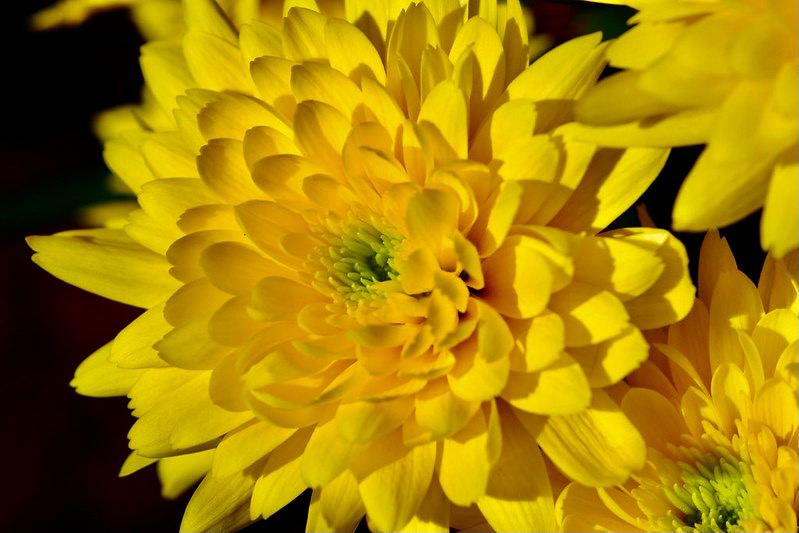
while we sit in our kitchen, our son asleep upstairs. Earlier, I sat on our back deck, the sunlight beating bold over the lawn as my son streaked across the newly green grass, falling over & over into its softness. It is my birthday & I did not expect this gift of green yellow and birdsong but I am grateful as my husband comes through the gate carrying tulips & iris & pussy willows bundled in plastic. He went to the store to buy flowers. He went to the store to buy chocolate cake. He went because I asked him to. I didn’t think it a burden, this simple request of cake and flowers to celebrate my body on the brink of a new decade. The only corona I considered were the nodding yellow centers of my daffodils. When I spoke to my therapist later that afternoon, after my husband returned, after I put the flowers in water & the cake in the fridge, I told her I was fine in quarantine. I told her I was fine working from home. I told her I was fine. I am thinking of my therapist & nodding yellow coronas & chocolate cake as my husband braces both hands on the kitchen island & looks to where I sit at the kitchen table in a chair my mother painted, the seat covered in a bright yellow chrysanthemum. Yellow flowers, yellow sun, yellow kitchen cabinets, yellow, yellow everywhere when my husband says: I want a shotgun. I am immediately red, immediately forgetful of flowers & cake & birthdays, but he keeps talking:  first line of defense, it is your choice & I am scared. He repeats consider, consider, consider as if I will not. As if I will not imagine, for days, the shiny barrel of a gun hidden in a box beneath our bed or in our closet. As if I will not imagine someone smashing in our picture window, the window I stood in front of for an entire summer the year our son was born. As if I will not hear feet on the stairs or the rattle of a door knob each night as I try to fall asleep. As if I do not already see this new world every time I open my eyes. As if I do not understand, that it is already here.


Brianna Pike is an Associate Professor of English at Ivy Tech Community College. Her poems and essays have appeared in So to SpeakConnotation PressHeron TreeMemoirs & MixtapesWhale Road Review, Utterance & Juxtaprose. She currently serves as an Editorial Assistant for the Indianapolis Review and lives in Indy with her husband and son.

She blogs at briannajaepike.wordpress.com. Find her on Instagram @Bri33081.

Photo credit: Andrew Fogg via a Creative Commons license.

Responsibility

By James Scruton


If they don’t treat me right, then I don’t call.
Maybe Pence or someone else will do it.
I don’t take responsibility at all.

These governors want me to take the fall.
But I show them who’s boss, tweet after tweet.
If they won’t treat me right, I just won’t call.

We have a billion tests. They’re beautiful,
Like me. But I don’t know what’s in each kit.
I don’t take responsibility at all.

Who says the virus would’ve leaped my Wall?
That’s just Fake News, Obama, and the Deep State
Talking. They don’t treat me right. They don’t. I call

Them any names I want. Because the ball
Is in my court. A powerful ball. Very tremendous court.
But I don’t take responsibility at all.

Over the governors, my Constitutional
Authority is perfect. It’s absolute.
But will they treat me right? Not my call.
They know I’m not responsible at all.


James Scruton’s most recent collection is The Rules (Green Linden Press, 2019).

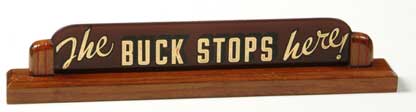
Photo credit: Harry S. Truman’s desk sign from the Truman Library.

Post-Election Meltdown

By Marcella Remund


I am 60 years old. In my lifetime,

my mother’s lifetime, and all the
lifetimes that came before,
no woman has been president.

Don’t tell me to get over it

I have TRAINED blonde footballers
for jobs I couldn’t get without a penis,
jobs that paid ten times my single-mom
salary. After 40 years, I still must work

harder, longer, sweeter to make less.
I have been the “chick in the band.”

I am afraid to go out alone at night.
To walk alone, eat alone, travel alone.
I have been targeted as a child, nine
months’ pregnant, wrinkled and old.
Pedophiles picked me out at 7, at 13.

Don’t tell me to let it go.

I have worked since I was 14.
So has my mother, who worked
two and sometimes three jobs
until she was 70, so had my
grandmother, both of them always,
always, still expected to keep a clean
house, put dinner on the table, pay
bills, keep four kids quiet.

Don’t tell me to move on.

I have daughters, daughters-in-law,
granddaughters, nieces, girl cousins,
sisters-in-law. Their world will go on
just like before, unequal, unsafe, unjust,
until those men are gone—you know
who they are—and worse:

they will inherit a tanking economy
for all but billionaires, greed and profit
our national anthem, international
isolation in our buffoonery, and worse:

open, ignored, sanctioned hatred
and humiliation aimed at my non-male,
non-white, non-Christian, non-straight,
othered friends & family (and yours,
because you have them too).
The list of damages goes on and on.

Don’t tell me we have other work to do.

I have earned this anger.

 DO YOU HEAR ME?

Don’t tell me not to feel this grief,
this disbelief, this loss of faith.
I will open my heart and my home
to those who are terrified, paralyzed,
hopeless. And I will move on,
get over it, let it go when I’m
goddam ready. Until that moment,
I will keep screaming

NO.


Marcella Remund is a native of Omaha, Nebraska, and a South Dakota transplant, where she teaches English at the University of South Dakota in Vermillion. Her poems have appeared in numerous journals. Her chapbook, The Sea is My Ugly Twin, was published in 2018 by Finishing Line Press, and her first full-length collection, The Book of Crooked Prayer, is forthcoming from Finishing Line in 2020.

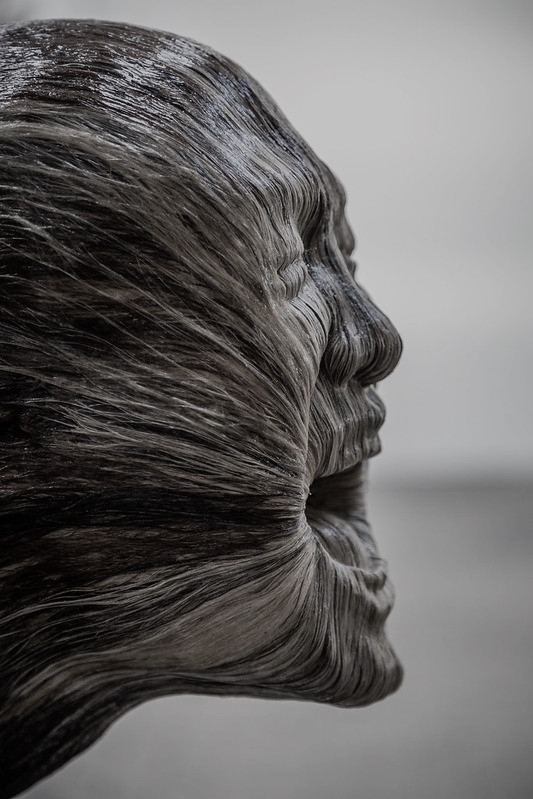
Photo credit: The sculpture, “Innovation,” is by artist Badral Bold, made with horse tail. It is photographed by Frank Lindecke via a Creative Commons license.

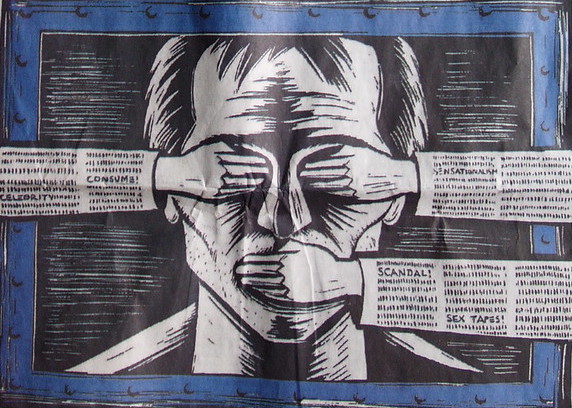
A Friability Test

By Kimutai Allan

You can try
muzzling the press
and stifling healthy discourse.
They are actions, easy.
It’s a different tale
down in our hearts.
You can’t break us.
We aren’t as friable as
your petty thoughts deem.


Kimutai Allan is an emerging Kenyan writer. His works have been published previously by The Active Muse, The Writer’s Space Africa, the Kalahari Review and the Naluubale Review. He is currently working on a collection of poems.

Photo credit: The image of “Censor” by Eric Drooker was shot by Luciano, via a Creative Commons license.

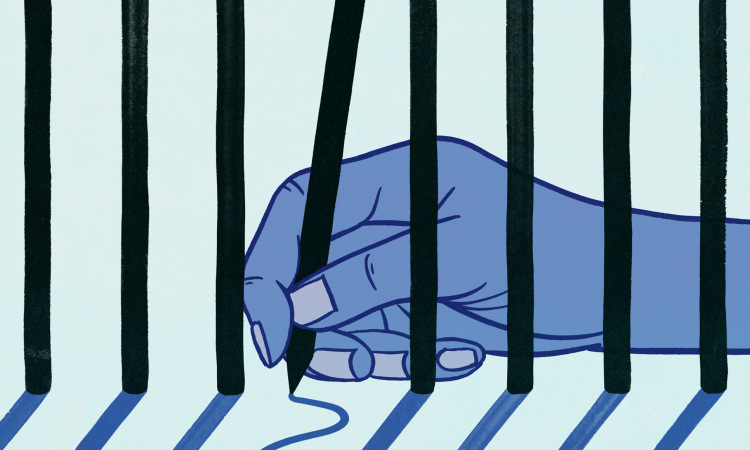
Reading Aloud in Kidjail

By Jill McDonough


The boys in my local juvie want to work one
on one, write stories, poems, mark up the stuff
I give them. More than one kid at a time’s less fun:
more fussing, more holding back to show how tough
they are. When one of them writes on the other’s paper
the germophobic one loses his shit; I get it, sit
between them while they write their poems. Later
I read them aloud so they can hear how good they are; it’s
like a magic trick, their words in my grown-up voice.
They still and listen, hear themselves, lean in on me
like children, because they are children. Two boys,
one on either side, a slow relax from anger in to breathe.
Their warm weights, cool of classroom, fresh pencils, stacks
of paper. Me feeling them thinking That sounds pretty good. Dag.


Jill McDonough is the author of Here All Night (Alice James, 2019), Reaper (Alice James, 2017), Where You Live (Salt, 2012), Oh, James! (Seven Kitchens, 2012), and Habeas Corpus (Salt, 2008). The recipient of three Pushcart prizes and fellowships from the Lannan Foundation, the National Endowment for the Arts, the Fine Arts Work Center, the New York Public Library, the Library of Congress, and Stanford’s Stegner program, she taught incarcerated college students through Boston University’s Prison Education Program for thirteen years. Her work has appeared in PoetrySlateThe Nation, The Threepenny Review, and Best American Poetry.  She teaches in the MFA program at UMass-Boston and started a program offering College Reading and Writing in Boston jails. Her website is jillmcdonough.com.

Image from Ideas.TED.com.

The Notorious

By Alex Penland     


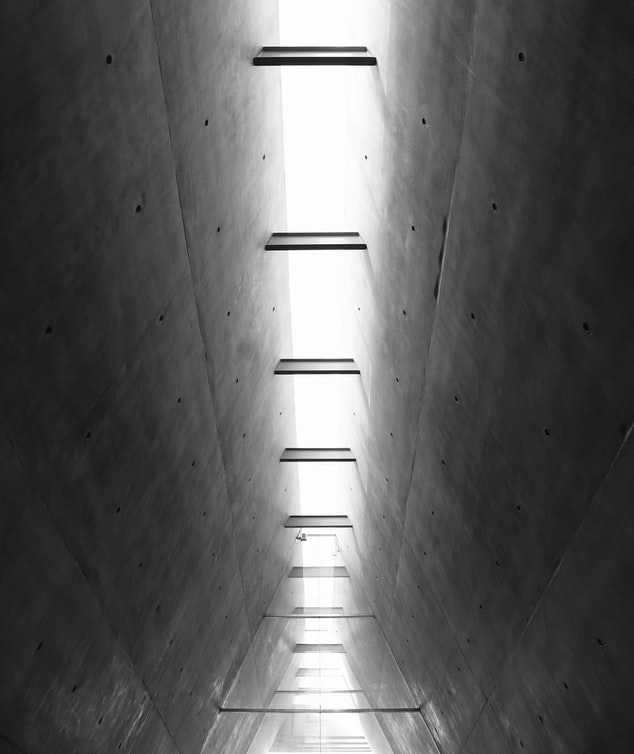
Do you remember Yad Vashem? How
the path that leads you through the
exhibit is chronological and single
lined, each point presented on a hair
pin turn of events: here is where a new
legislation was passed, here is where
some diplomat died, here is where the
people thought oh, one more degree
in this pot won’t make the water
boil yet. But then you cross the river
gap to the next section of the exhibit
and are suddenly granted a perception
of time as a whole, not a part, and when
you reach the section where it gets so
bad that you think you must be near the
end you look down the line at all the
bridges and no. You’re half through.
Half through the voices saying we
thought they wouldn’t dare, thought
people were better than they were or
human goodness was more ubiquitous
than it is or some protection was more
sturdy than the flimsy social contract
it turned out to be and things get so
much worse, and the hope of it becomes
less a light in the tunnel and more a
light in the eyes blinding us from the
things that live in the darkness. She
was one of those protections, I think
now, a stone wall painted on paper,
and through the fire it’s amazing she
held the line as long as she did, but
that greasy burning and a squealing
that is not pigs is coming closer now,
and for the moment I am on the safe
side of the shower door, but I can’t
help but look down the crack in the
exhibit hall and think we aren’t even
close yet, we’re not even close to the light.


Alex Penland was a museum kid: a childhood of running rampant through the Smithsonian kicked off a lifelong inspiration for science fiction, poetry, and science-inspired fantasy. Their work has been internationally published in The Midwest ReviewStory Cities, and the upcoming Strange Lands anthology by Flame Tree Press. Their poetry has been awarded by Writers’ Digest and previously appeared in the December 2018 issue of Writers Resist.  They currently live in Scotland studying for a PhD in Creative Writing. You can follow Alex on Twitter @AlexPenname or visit their website at www.AlexandraPenn.com.

Yad Vashem photo by Anders Jacobsen on Unsplash.

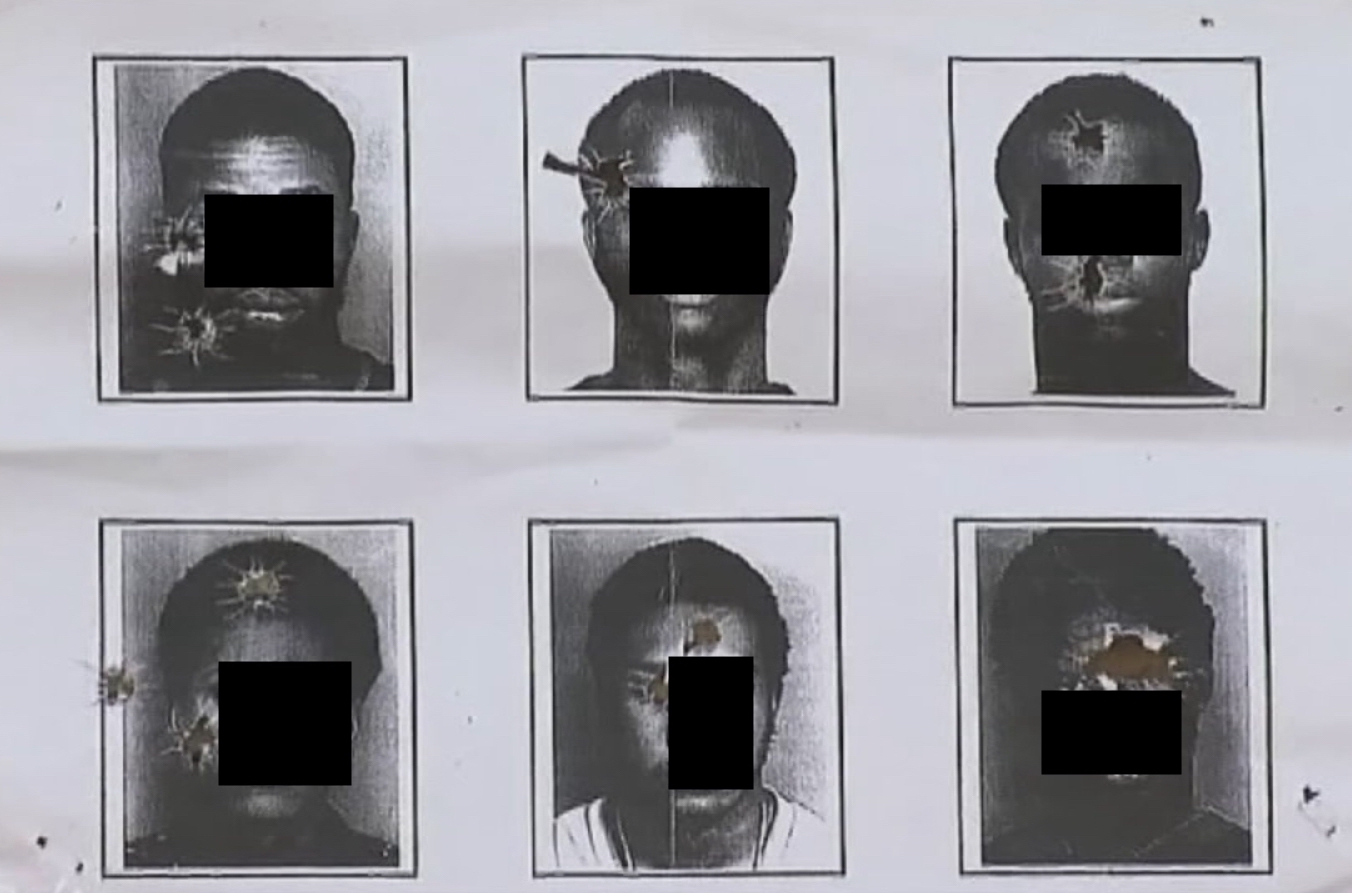
Target Practice

By Geoffrey Philp

After Jericho Brown


I ride around this city feeling as if I’m always a target,
like the one at a gun range where cops used mug shots
of African-American men to improve the shots
of their snipers—photos of black men who weren’t dead,
but whose images would be useful to kill the soon-to-be-dead,
on the way back from the library, a party or even a drag race.
For although I don’t trust the spokesperson who said that race
had nothing to do with the department’s choice of pictures,
I believe him when he said they would be adding pictures
from the database of suspects that they’ve arrested,
so when I’m pulled over, I know I’m going to be arrested.
I ride around this city feeling as if I’m always a target.


Born in Jamaica, Geoffrey Philp is the author of five books of poetry, two novels, two collections of short stories, and three children’s books. A recipient of the Luminary Award from the Consulate of Jamaica (2015) and a chair for the 2019 OCM Bocas Prize for Poetry, Philp’s work is featured on The Poetry Rail at The Betsy in an homage to twelve writers who shaped Miami culture. Through DNA testing, Philp recently discovered his Jewish ancestry and his poem, “Flying African,” has been accepted for publication in New Voices: Contemporary Writers Confronting the Holocaust. He is currently working on a collection of poems, Distant Cousins.

Image: North Miami Beach Police. Masking added to protect the victims.

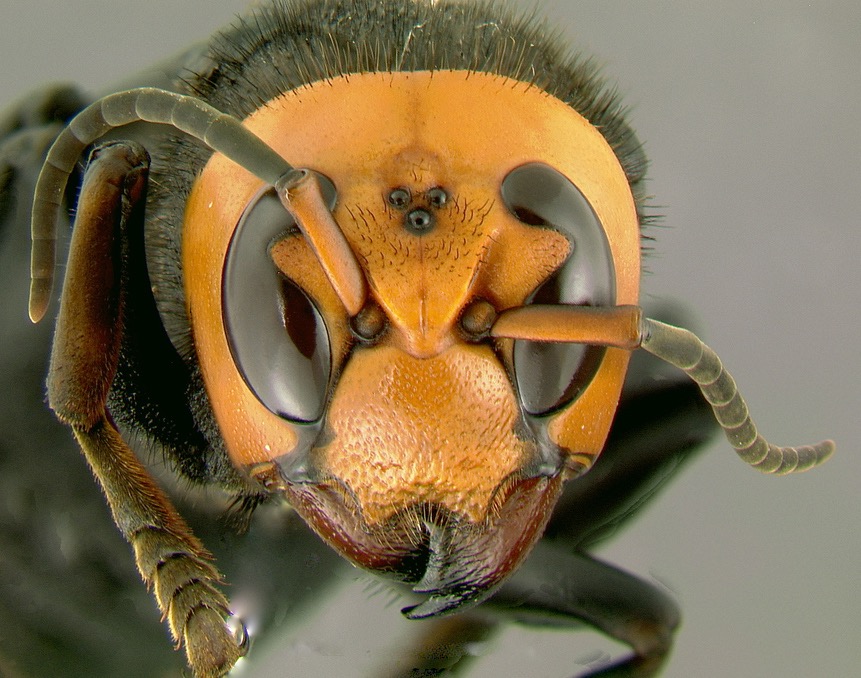
I Manage My Dread of the Election by Reading About the Eradication of Murder Hornets

By Debbie Hall

In November we inched closer to the ledge over which one only falls once.
Mary Jo Bang


One definition of dread (noun): great fear in view of impending evil.
As a verb, it can mean to be in shrinking apprehension of.

Derived terms include: dreadable, dreadly, and dreadworthy, as in:
the specter of four more years of Trump is dreadworthy indeed.

It may seem counterintuitive to read about murder hornets
as an anti-anxiety strategy, but re-reading Poems for Political Disaster
only reinforced my terror of the possible.

When the first murder hornets were spotted, U.S. scientists warned
they could decimate honeybee populations and establish such a deep presence
in our country that all hope for eradication could be lost.

In May, the onslaught on just one colony: thousands and thousands
of bees, heads torn from their bodies, hives plundered, the remains of bees to be
harvested as food to sustain and grow more murder hornets. Dreadworthy.

But yesterday a reason for hope: Crews located and vacuumed out
a basketball-sized nest of murder hornets in Washington State.

Imagine watching this mass of orange-faced invaders, still spitting venom
as they are overthrown and dispatched to the netherworld—

Oh honeybees, oh Earth, oh people—imagine the sweetness of that moment!


Debbie Hall, a poetry editor at Writers Resist, is the author of the poetry collection, What Light I Have (2018, Main Street Rag Books) and award-winning chapbook, Falling into the River (2020, The Poetry Box). She received an honorable mention in the 2016 Kowit Poetry Prize and won second place in the 2018 Poetry Super Highway Contest.

Photo used via a Creative Commons license.

These Poems Don’t Come Out Right

By Bunkong Tuon


The virus breathes like fire over city streets
and farmland, across oceans and mountains,
over YouTube, Instagram, and Twitter.

The president suggests injecting the body
with disinfectant to kill it. Maybe
he could go first; it’s his idea after all.

I’ve become a hack, ranting as if the world
will heed my words and stop spreading
violence through fear, hate, and ignorance.

Mix misinformation with racism, greed, and ego,
and you get 2020, a reality show you didn’t know
you were a part of until it is too late. Oh,

These poems don’t come out right and
my poor wife is asleep, hands clutching
the crib where the baby was fussy all night.

I cut slices of cucumbers and strawberries,
spread apple wedges on a plate for my daughter.
Our beautiful baby is crying again.

I fetch my coffee and a baby bottle,
run up the stairs, cradle our newborn in my arms,
watching his desperate eyes look up at me for comfort.

But I have no words for him, and this ending
is not right, but I don’t know what is anymore.


Bunkong Tuon is a Cambodian-American writer and critic. He is the author of Gruel and And So I Was Blessed (both published by NYQ Books), The Doctor Will Fix It (Shabda Press), and Dead Tongue (a chapbook with Joanna C. Valente, Yes Poetry). He teaches at Union College, in Schenectady, New York. He tweets @BunkongTuon.

Photo credit: m anmia via a Creative Commons license.

Voting in the Time of Climate Change

By Ying Wu


The tide swallows most of the beach these days.
Sunbathers take refuge in the reeds.
And children wade in the new lagoons
that stretch across the soft, loose sand.
Our poles are melting.
The bay spills over the sidewalk sometimes
and breaches the steps of private homes.

Today, in Texas, voters spill down the sidewalk too.
Six-hour lines in Georgia.
Our world is changing.
Queues before dawn in Tennessee.
Crumbling ice shelves in Antarctica.
Thwaites Glacier has destabilized.
Voters defy the rain in Philadelphia.
Lines in Ohio reach the interstate.
Voters a quarter mile deep form a double wrap in Brooklyn.
The sea is rising.
We are the People.
Our tide is sweeping in.


Ying Wu, a poetry editor at Writers Resist, is a poet and cognitive scientist, and host of the Gelato Poetry reading series in San Diego (meetup.com/BrokenAnchorPoetry). She is also a proud member of the editorial team of Kids! San Diego Poetry Annual. More examples of her work can be found online at Poetry and Art at the San Diego Art Institute (poetryandartsd.com), in the Serving House Journal, and in Writers Resist, as well as in the material world at the San Diego Airport and in print journals, such as the Clackamas Literary Review.

Photo by Kelly Sikkema on Unsplash.

Closet Rules

By Avra Margariti


The first rule of sex doll club is,
you get used to getting used.
The second rule is,
you will be forgotten by your human
before your super-realistic, horsehair-eyelash, colored-glass eyes
can blink.

And blink we did. Here in the storage closet:
slumped, folded, no longer expected to perform.
The darkness a reminder of the factory we once lived in,
the ship that ferried us in foam-stuffed crates
laid side-by-side, coffin-shaped twin beds for me and you.
Air runs out, yet our decorative lungs breathe at last.
Here, dust and lavender—a safe smell, don’t you think?

The coats and furs overhead don’t carry his scent
(small mercies, small mercies)
but that of a woman long gone.
Did he make us in her likeness, I wonder, face, hair, body selected
from a never-ending online catalogue?
Were her eyes the blue of our eyes,
her skin the cream of our skin, our bodies incapable of bruises
whereas hers would have bloomed black and blue
with how roughly it was handled?
We are silicon smoothness, us.
We are cornsilk hair and peach lips cracked open by bare hands.
Everything or nothing like her;
no matter the answer, now we, too, are forgotten.
(The second rule of sex doll club—
yes, yes, we remember.)

He used to arrange us across the coffee table
bed kitchen island carpet hanging from the chandelier, once.
Were you ever envious of the attention he was pouring
on me, and not on you?
You can tell me, I won’t ever judge you for it.
Did you ever feel like peeling your skin
right off your lightweight, hollow bones?
In the dusk of his bedroom where we flanked him in sleep,
two curled apostrophes facing each other over the bulk of him,
did you ever feel love drifting in the still air?
It was me.
I was trying to learn how to love myself
and accidentally encompassed you in the process.

This is no accident now, in the soothing bluedark,
no product of etiquette or factory settings,
a different function than the one we were made for.
We were never a she or he or singular they
but a possessive his, a sibilant hiss.
So I say, and forgive me if I’m being too forward,
why don’t we call ourselves an I, an each other’s?
Here, you can lean on my shoulder if you’d like,
stretch a bit until your precious head slots against my collarbone.
You can move fast or slow, or stay as you are.

It’s easy to forget sometimes
(believe me, I know)
but the only rule of the storage closet
is agency, is choice.


Avra Margariti is a queer Social Work undergrad from Greece. She enjoys storytelling in all its forms and writes about diverse identities and experiences. Her work has appeared or is forthcoming in SmokeLong Quarterly, The Forge Literary, Longleaf Review, The Journal of Compressed Creative Arts, and other venues. Avra won the 2019 Bacopa Literary Review prize for fiction. You can find her on twitter @avramargariti.

Photo by Daniel Clay on Unsplash.

Mother’s Letter to Her Best Friend

By Penny Perry

June 5, 1942

Dear Isabel,

I drove my sister to the doctor’s
in Los Angeles. It all happened
so quickly. I promised to bring her
a chocolate phosphate when
it was over.

She joked with the nurses.
Told them if she puked
from ether she would buy
each of them a pair of nylon
stockings.

She insisted on ether because
her friend Hannah had told her
an abortion would be too
painful without it.

In the waiting room, I picked
up a movie magazine.
During the next ten minutes
I heard a harsh breathing
as though she were gasping.
I told myself she would breathe
differently under ether.

A nurse rushed to the telephone
to call emergency.
My knees collapsed.
I remember the sounds of sirens
on the street, footsteps on the stairs,
the horrible hissing sounds
of the oxygen tent.

I remember words like
“her pulse rate is low.”
“She has a seven-month-old baby
at home.” “Isn’t it a pity?”

Finally, the doctor came out
and said “Your sister is dead.”
The bastard didn’t even have
the sense to shut the door.
I could see her head thrown back
on the table.
He told me to stop screaming.


Penny Perry has received six Pushcart nominations. Garden Oak Press published her first novel, Selling Pencils and Charlie, and a collection of her poetry, Santa Monica Disposal and Salvage. New poems are forthcoming in Earth’s Daughters, Lips, the Paterson Literary Review, and the San Diego Poetry Annual. She is the fiction/nonfiction editor of Knot Literary Journal online.

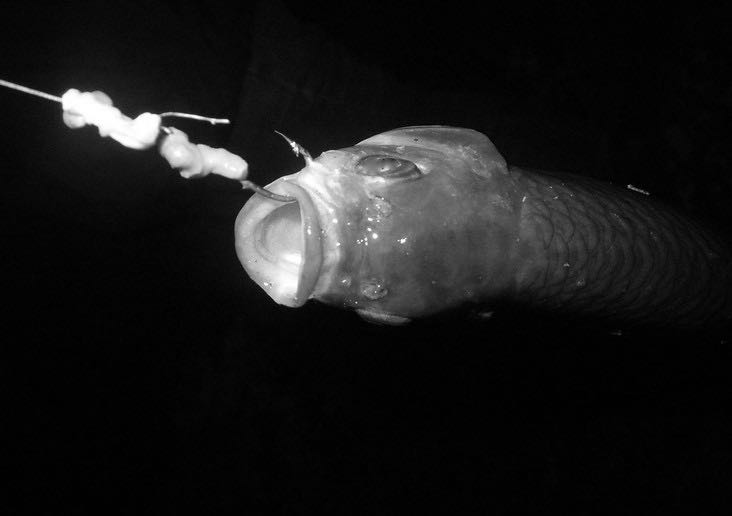
Stringing Them

By William Palmer


He catches them each day,
stringing them through their gills,

his trumpeteers
trailing in dark water,

mouths drawn open,
eyes puckered shut.


William Palmer’s poetry has appeared in J JournalPoetry East, and Salamander. He has published two chapbooks—A String of Blue Lights and Humble—and has been interviewed by Grace Cavalieri for The Poet and the Poem from the Library of Congress. Recently he published an op-ed in the Orlando Sentinel on the need for political candidates to embody a life-giving core. He lives in northern Michigan.

Photo credit: Helen Penjam via a Creative Commons license.

Unknowns

By Robin Q. Malin


There’s a lot of things I don’t know.

I don’t know what I believe.
I don’t know who I love.
All I know right now is that
when I look into her eyes
I long to trace her cheekbones,
to touch her lips,
to stroke her cherry colored hair
under the stars.
I know that she is beautiful,
that I am not supposed
to want what I think I might want.

I want to write to my father’s god,
to tell him that
I just want to dance with her,
to ask him why the sound
of his silence is so deafening.

I’m sorry.
This poem was supposed
to be about Ruth Bader Ginsburg.
That’s where I started,
because I remembered
the soft sighs, the dissenting
voices of my parents
on the day when marriage
became a fuller and more
encompassing word,
and I don’t remember their
words but I remember
that they felt heavy
and red and broken
and I didn’t know why.

I remember a debate,
a debate that should not
have needed to be a debate
about if because
my name is Woman
it is also Meek, it is also
Equal (But In A Different
And Lower Way).
I remember that Ruth
said let there be nine,
there’s been nine men,
and I wonder if the disciples
were all women,
would scripture be called
blasphemy?
I don’t know.

So now I will tell you what I do know.

I know that the divinity I know
is there in the flickers
of light that shine on her hair,
in the sunset heavy clouds,
in the weight of words
that deny hatred a place
of power.

I know that if there is a heaven,
I want to weave a crown of flowers
and send them up to Ruth,
and ask her how she knew
that life was worth the tears
it took to make it worth living.


Photo credit: Miss Ayumaii Kawaii via a Creative Commons license.