Welcome to Writers Resist Winter 2025-26 Issue

It’s been, hmm . . . a year.

Enough said. Let’s read some creative resistance instead. To get you all started, we’re excited to announce publications by two of our editors.

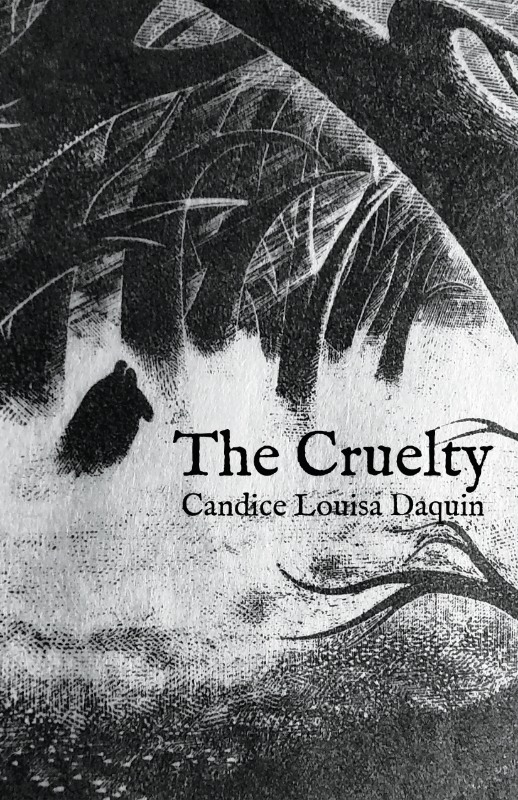
Poetry Editor Candice Louisa Daquin’s novel, The Cruelty, was released by Flowersong Press in November 2025.

Cover The Cruelty

The Cruelty focuses on the legacy of abuse. What learned behaviors from extreme abuse and mental illness can set individuals up to be controlled and manipulated to unimaginable levels. Daquin’s debut novel highlights connections between sexual abuse, sadism, extreme pornography and domestic violence. This fictional story posits the question: What if you lost everything and someone controlled your entire existence, how would you survive?

Available from the publisher, Bookshop.org, your independent bookseller, and the evil one.

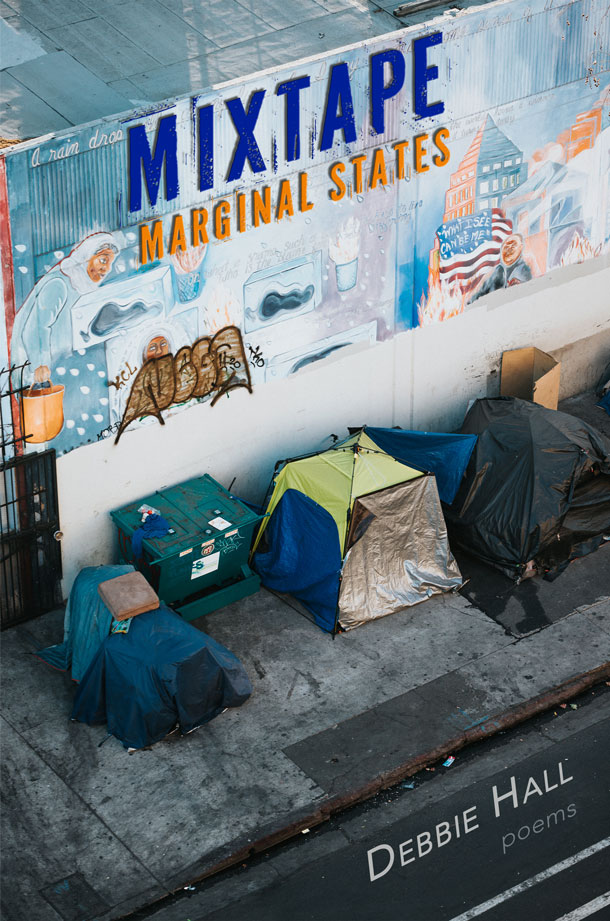
Poetry Editor Debbie Hall’s collection of poems, Mixtape: Marginal State, was released by The Poetry Box in December 2025.

Cover art of Mixtape: Marginal States

The poems in Mixtape: Marginal States bear witness to members of our human family who exist just outside the mainstream of society. In these portrayals, we see individuals struggling with homelessness, those uprooted from their native countries, asylum seekers, and others dealing with altered or challenging psychological states—states that anyone of us might occupy at some time in our lives. The hope of bearing witness is to foster compassion and inclusion, human needs shared by all.

Available from the publisher, Bookshop.org, your independent bookseller, and the evil one.


Now, we are delighted to present the following writers and artists’ representations of resistance—join them for a virtual reading of this issue on Saturday 31 January 2026 at 5:00 pm PACIFIC. Email WritersResist@gmail.com for the link.

Self-Congratulation by M. M. Adjarian

A One-Way Correspondence with Fruit by Christine Strickland

Two Poems by Nnadi Samuel

Anarchists Unite by Kirsty Nottage

Skin by Frances Koziar

Bone China by Robert L. Reece

Graffiti Artists by Andrea L. Fry

Photograph and essay by Nina Pak

I visited Gaza in my sleep by Sophia Carroll

What Did You Wish For? by Myna Chang

Secret Light by Marianne Xenos

I’m Not Happy, the Therapy Client Says by Suzanne O’Connell

Don’t Talk About It by J.L. Scott

Incubator by Bethany Bruno

The Price of Standing Still by Melissa Moschitto

Louder then Silence by Rabia Akhtar

Burn This Book by Odette Kelada


Photograph by K-B Gressitt ©2025


Anarchists Unite

By Kirsty Nottage

Sandwiched between middle-aged, middle-class people in suits, I feel like a clown. The costume doesn’t help, but it’s more than that.

I know, I know, it’s my own fault. Why would I stand for election as an anarchist? 

“Let’s protest the system,” Matt had suggested. “It’s elitist, corrupt and outdated!”

I’d jumped on the idea. “We can stand for election. Call ourselves Anarchists Unite. Get a bit of publicity. It will be perfect!”

It was supposed to be a stunt. We wanted people to think about what politics stands for—or doesn’t—and to show alternatives. I just didn’t expect it to catch on. 

We started our pre-campaigns in clown costumes. We pied the right-wingers, to make them sweeter. We squirted the lefties with water, to toughen them up. And we tripped up the centrists—to see which side they fell on. 

In a sea of TikTok videos, our antics rode the algorithmic wave. Traffic to our website exploded, and suddenly we were a credible option.The day I set fire to a rose—Labour’s beloved symbol—in front of their leader, cemented us as the alternative vote. Suddenly we had candidates nationwide. So, with no policy except “burn it down and start again,” we began our campaign.

“We need a meeting,” I suggested. “We have to organise, if we’re going to pull this off.”

“Call yourself an anarchist?” Matt laughed. But he came round, organising a non-traditional exchange of ideas, although it was still a meeting to me. 

As the members assembled, I immediately regretted the costumes. The oversized shoes squeaked against the floor, and someone popped a balloon just sitting down. Then came the chair-picking ritual. Trying to avoid hierarchical seats took longer than the meeting itself and only enhanced the feeling we were in a circus. Once we finally got started, things didn’t improve.

“We should turn prisons into escape rooms.” 

I tried not to roll my eyes. “I don’t really think—” 

“Or we can get children to run their own schools.” 

I rubbed my forehead, smudging white makeup over my hands. “That’s not really—”

“Ban all money?” Matt chimed in, unable to hide his grin. He always knew how to wind me up.

“And marriage!” 

“And the police!”

I took a breath, wanting to take control, but without seeming like a bad anarchist—Matt’s previous words still haunted me. “I think we’re proposing too much. If we throw all of this out there, it’ll confuse people. We need to focus on the big picture: our broken political system. Sure, the police need reform, but saying we’ll just get rid of them? That frightens people.”

“People should be frightened,” Matt shouted gleefully.

“But not of us!” 

“That seems unlikely,” he replied, squeezing his nose, making a honking noise. 

Despite our haphazard approach, people loved us. The balloons to demonstrate inflation and whoopee cushions for politicians’ empty promises went viral. Requests for interviews poured in, but I was in over my head. 

When we were invited on breakfast TV, I knew things had gone too far. But I felt powerless to stop the momentum we’d created—and I didn’t want to let Matt down. 

“So, what do you think of the previous government’s approach to immigration?” Leanne Christy asked, her eyebrows furrowed sincerely.

“Well,” Matt said, pulling out his whoopee cushion and sitting on it slowly.

She laughed despite herself before continuing. “But really, how would you do it differently?”

“It shouldn’t be up to us and a handful of MPs to decide.” I pointed at her, “What do you think?”

Leanne blushed, uncharacteristically flustered. 

“See? Everyone has an opinion, even if they think they shouldn’t.”

She gave me a sharp look. “Even if I did, it’s not for me to say.”

“Of course it is,” I said, rolling my eyes. “Our parliamentary system was invented when communities were isolated and needed one person to represent everyone. That’s not the case anymore. We know more about people’s opinions than ever. Why not listen?”

A round of applause rippled through the audience. 

“And why the silly attire,” Leanne asked, gesturing at our costumes.

“In a world where politicians behave like clowns,” Matt said, smiling, “we thought we’d show the truth.”

“A few tweets have come in suggesting you should lead the county!” Leanne said to me with a smile.

I balked. “I don’t want to be in charge—that’s the point. I don’t believe anyone should have that much power.”

The applause got louder.

“That’s exactly why they want you,” Leanne whispered as we went off air. Matt looked thrilled but my stomach sank. I hoped she was wrong. 

Now I’m onstage, sweating under bright lights and layers of face paint. If there’s one lesson to take from this, it’s don’t use elections to make a point. It might not go the way you intended.

“The candidate for Labour received 23,000 votes,” the announcer drones. “The Conservatives received 17,000, Anarchists Unite received 25,000, Liberal Democrats received 10,000…”

I stop listening. I’m not supposed to win. I’m just here to make a statement about politicians—not become one.

As I’m beckoned to the podium, the crowd surges forward, their cheers blending into a cacophony of laughter and chants. Someone tosses confetti while a man in the back blows a kazoo. It’s like I’ve stepped into a surreal nightmare.

I misjudge my steps in the oversized shoes and trip. The crowd roars with laughter, assuming it’s part of the show. I play along, of course. That’s what I’m here for.

I give a quick thank-you speech and tell everybody that this is a huge mandate that we take seriously. Then I burn my notes and laugh.

“What’s next?” a journalist shouts from the sidelines. 

My stomach churns. What is next? The truth is, I have no idea. But admitting that feels worse than this ridiculous costume. 

So instead, I squirt him with water and shout, “Chaos!” As the crowd roars with laughter, I wonder if this joke has really been on me.


Kirsty is a writer passionate about challenging perspectives and reshaping how we perceive the world. With a knack for creating thought-provoking stories, she explores exaggerated versions of reality through satire and dystopian fiction. Her story Reset recently earned her the Elegant Literature award for new writers. When she’s not crafting imaginative worlds, Kirsty enjoys the company of her two literary-inspired dogs, Dickens and Hardy, who are always by her side as she envisions new futures and reimagines the past. Read more about Kirsty at her website, www.kirstynottage.com and on Facebook.

Photo by Peter Riou via a Creative Commons license.


A note from Writers Resist
Thank you for reading! If you appreciate creative resistance and would like to support it, you can make a small, medium or large donation to Writers Resist on our Give a Sawbuck page.

Bone China

By Robert L. Reece

She saw him coming. She always saw them coming.

As he trudged through the musty swamp to the small shack in the distance, he began to realize why no one had bothered to interview this woman before, and he was beginning to wonder if the meager check was worth the effort. Maybe the stories of these ex-slave Negros were worth collecting, but surely his bosses didn’t expect him to be standing knee deep in alligator piss.

“This better be worth my time,” he whispered to himself as he raised his knapsack above his head to prevent his papers from getting wet. But the air was almost thick as the water.

When he reached the door, he pondered at the dusty white door knocker. He’d never seen anything like it. It was vaguely “s” shaped, not “u” shaped like a typical knocker. He touched it and recoiled at the unfamiliar texture. It felt grainy but smooth. Steeling his nerves with a deep breath, he shuddered as he reached out again and rubbed his fingers along the length of the piece, lost in the unfamiliarity of it.

He didn’t notice the small woman sidle up next to him.

“I made it myself,” she said, in a voice that sounded like course sandpaper, testifying to her many years on this Earth.

He snatched his hand back and his middle finger caught the knocker, pulling it from its perch on the door. It shattered against the wood frame, revealing porous insides.

“Don’t worry,” she said, “I can make more. Come in.”

He followed the woman inside but wondered why she seemed so permissive with a strange white man. Typically, he offered a lengthy explanation of who he was and why he was there. Negros were typically skeptical of white folks showing up at their houses, but this woman skipped the brash “Who are you’s” of braver Negros and the timid “Can I help you’s” of the more fearful.

The inside of the shack was sparsely furnished, sporting only a few rickety chairs. No table.

“Sit, sit.” She pointed him at what seemed to be the sturdiest chair.

He sat down to take in his surroundings as she busied herself preparing him a drink across the room.

This wasn’t his first life history interview, and he’d learned that he could glean important information from looking around. Dusty photographs could lead to questions about family. A worn Bible could prompt questions about literacy. A well-maintained rifle might mean military service. A haphazardly placed child’s toy may speak of children gone too soon.

But here, there was none of that, just these chairs.

At first, he thought they were spruce, maybe withered and weathered but spruce. The wood was light, almost white. Damaged, cracked in spots but smooth in others. Not very straight, a bit curved. And none of the same length; even his own chair wobbled. It wobbled, but it was sturdy; he didn’t fear it would collapse under his weight.

Again lost in the strangeness of this woman, he didn’t notice the old woman cross the room until she was close enough that the steam from hot tea warmed his face. He instinctively took the mug she offered him and took a sip as slight scent of almonds tickled his nose.

“So, you’re here for my stories,” she half-asked, half-confirmed, as she sat across from him.

Silence.

“You’re here for my stories, sir?”

“Oh! Yes!” he blurted. “I am from a government program—”

“You want to hear about the slavery days?”

He nodded.

“Slavery was bad. Real bad. Worse than you can imagine.” She stood. “Them white men. They would beat us until the ground was soaked red with our blood.”

“Then what?” he whispered.

“Then they beat us some more. They beat us until we fell asleep. They beat us until we forgot we were being beat, and we saw the light of God shining on us!”

The mug shattered.

“Their friends gathered ’round. They looked on. They cheered. We begged for help. We begged for mercy, but none would come. No help, no mercy would come from their hands. One man owned us, but we had many masters.”

He collapsed out of his chair. His chest heaved as he clutched at his heart. He looked as if he was trying to gulp the air around him.

She produced a long knife from underneath her apron and wiped the blade on her dress as she kneeled next to his reddening face.

She rolled up her sleeves, revealing strong arms blanketed in scars, and put her face so close to his that she seemed to suck the oxygen directly from his lungs.

“And they say that anything a slave does to her master is self-defense. Sir, I have done a lot of self-defense in my day.”


Robert L. Reece is an associate professor of sociology at The University of Texas at Austin, where his research examines colorism, slavery, race, and body size discrimination. He left his home in Leland, Mississippi to obtain his PhD in sociology from Duke University. His first book, The Shades of Black Folk: Colorism Past, Present, and Future is scheduled for release on February 8, 2026.

Photo by *jarr* via a Creative Commons license.


A note from Writers Resist
Thank you for reading! If you appreciate creative resistance and would like to support it, you can make a small, medium or large donation to Writers Resist on our Give a Sawbuck page.

What Did You Wish For?

By Myna Chang

Maria peered at the items locked inside Trillion Mart’s display case. The packet of birthday candles cost only $25, but the environmental tax was 300 carbits. That would put her way over her monthly carbon footprint allotment.

She sighed and leaned against the cool surface of the display. She’d hoped to give little Gabi a special birthday, like the ones she remembered from her own childhood. Her mom had always made her a pretty cake with fluffy frosting. Friends from school sang the birthday song, then her mom lit the candles, saying “make a wish, sweetheart!”

Maria recalled puffing out her cheeks and blowing as hard as she could, but it often took two tries to extinguish all the candles.

“What did you wish for?” her friends always asked in giggly little-girl voices. Maria knew not to tell, otherwise her wish wouldn’t come true. Sometimes, though, she couldn’t help letting slip her wish for a pink pony or neon markers.

An alarm shrilled, yanking her out of her daydream. The display case launched an anti-theft video—she’d maintained physical contact with it for more than 2.5 seconds without buying anything. She jerked away, but screens flanking the aisle had already erupted with the trillionaire’s face, amplified in all his high-def smarm.

“Now, now,” his recorded message scolded. He wagged a finger. “We wouldn’t take more than our fair share, would we?”

Maria noticed the footprint-shaped logo emblazoned on his crisp white shirt. Her own hand-me-down blouse had been patched and re-patched to avoid the exorbitant carbit tax of new clothing. She smoothed a loose thread as the store attendant approached. He wore the pressed green uniform of all the trillionaire’s minions.

After confirming she hadn’t stolen anything, he pointed at the door. “If you’re not buying, you have to go. Can’t have freeloaders in here, breathing Trillion’s reconditioned air.”

“Sorry,” Maria murmured.

She secured her filtration mask and stepped outside, into the brown haze that had hung in the air ever since the trillionaire took power. Maria secretly thought the pollution had only grown worse with the introduction of his complicated carbon footprint scheme.

His doughy face leered down from electronic billboards lining the street, with his current catch phrase rotating above his head in blocky letters: Engineering A Cleaner Future!

The camera angle zoomed out, showing ten shiny sports cars parked in front of a mansion—all environmentally neutral, as defined by his personalized carbon-offset calculations. The image shifted to a close-up of ten seedling pine trees, and then the camera tilted up to focus on a crystal blue sky.

Maria hadn’t seen a blue sky in ages. The atmosphere had been brown and thick with soot since long before her daughter was born.

The thought of Gabi filled her with warmth. Such a smart little girl. She didn’t ask for silly pink ponies for her birthday. No, Gabi wanted a science kit. She was still innocent enough to think she could save the world when she grew up, that she could be an even better engineer than the rich man in charge.

Maria coughed, particulate matter irritating her throat with each breath. Her Trillion Air Mask was on the fritz again.

She glanced at the time. Gabi’s school didn’t get out for several hours. Maybe Maria couldn’t give her child a perfect blue-sky birthday, but at least she could scrape together the ingredients for a proper cake.

• • •

Maria paused behind a dumpster, trying to calm her nerves. She’d never been to the underground market and was unsure which grimy doorway was the entrance. She scanned the alley ahead, and then she spotted it. Her heart thumped in anticipation—and fear. What if she got caught?

She shook the thought away. Lots of people visited the underground market, especially since the carbon allowance had been cut again. Most folks couldn’t make ends meet if they didn’t cheat a little.

The neighborhood had been crowned with lush cherry trees, once upon a time. Now, electronic billboards sprouted in their place. A new video burst to life with a buzz that set Maria’s teeth on edge. This time, the trillionaire juggled weird-shaped balls. No, not balls. They were . . . feet? The image shifted and Maria realized they were his logo—little plastic footprints, each emblazoned with a source of pollution: fossil fuels, beef, luxury goods.

He explained how each person’s carbon footprint was calculated, including the rate of carbit taxation, and how this was tied to shareholder value and population malleability and the amount of greenhouse gas people emitted when they exhaled.

Maria didn’t understand any of it.

A group of teenagers across the street started throwing rocks at the nearest billboard. They chanted, “No more carbits,” while continuing to hurl stones and pieces of trash from the gutter. Maria had never dared anything so brazen, but she couldn’t help smiling when a crack split the screen.

The damage didn’t stop the video, though; the trillionaire kept juggling and laughing.

Maria’s apprehension washed away, replaced by a wave of disgust at his oily voice and his legion of carbon-neutral billboards. No amount of fancy math could justify those monstrosities.

She squared her shoulders and marched into the underground market.

• • •

The market filled an abandoned neighborhood library. Maria remembered visiting as a child to watch puppet hour and look at picture books. The space was now packed with vendors selling everything from homemade baskets to decades-old music chips.

Maria gaped at a table stacked with vintage exercise shoes; all that plastic and rubber in one place. The shoes looked comfortable, but she remembered how much pollution spewed into the atmosphere when petroleum was refined into plastic and rubber. The lesson had been drilled into her head when she was in school. She trailed a finger along a pair of neon pink and purple sneakers, then walked on.

She finally found a table with cooking supplies. Selection was slim. An older woman with widely spaced teeth smiled warmly at Maria and helped her find most of the ingredients for the cake. Altogether, it cost less than even one item would cost at a Trillion Mart, so she splurged and bought a whole cup of sugar.

“What about the tax?” Maria asked. “You don’t charge carbits?”

The gap-toothed woman shook her head. “No, dear. We don’t play that man’s scam here.”

Maria smiled. She still had a little money left. “Do you have any candles?”

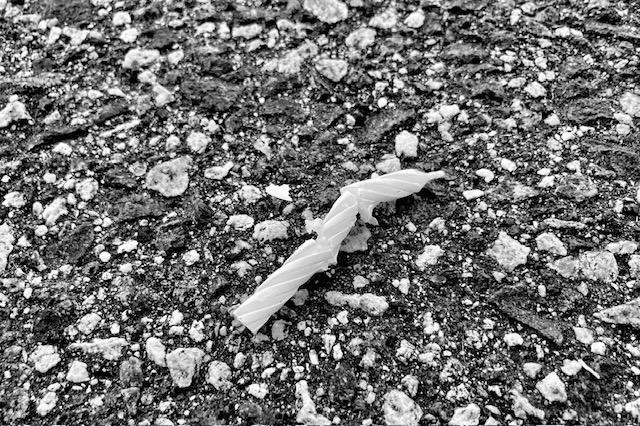
The woman scratched her chin. “I don’t get many requests for combustibles.” She rummaged through a tattered box. “Ah, here we go.” She held up a single birthday candle; pink and white wax braided into a tiny pillar of childhood whimsy.

“Oh,” Maria whispered. The sweet swirl of colors conjured images of her mother, of birthday parties past. She still remembered the sugar-ache of that first bite of cake, and the way her mom beamed when the girls said how they loved her frosting.

Grinning, she reached for the contraband candle. “How much?”

The woman winked. “It’s on the house. I hope your kid’s wish comes true.”

“Thank you,” Maria breathed. The unexpected kindness caught her off-guard. She blinked as she tucked the candle into her bag with the other items. “Thank you,” she repeated softly.

A loud boom shook the walls and screams erupted near the front of the building. Maria staggered, gripping the edge of the table. “What’s happening?”

Tables of goods overturned as panicked people stampeded toward the exits.

“Hurry,” the woman yelled, motioning Maria out a hidden door. “It’s a raid!”

Pulse racing, Maria followed her down a short flight of concrete stairs, through a dilapidated fire door, into an unfamiliar side street.

The sudden miasma of acrid air and billboard buzz hit her like a truck. She paused, disoriented. Which way to go? The old woman had already disappeared. Sirens wailed somewhere on her left, so Maria turned right and sprinted as fast as she could, securing her mask mid-stride.

Two blocks later, she had to stop. Each breath burned her throat, searing into her lungs. The filtration mask was useless. She pulled it off to check the connections and found the filter mechanism loose. Etched into its plastic housing was the green footprint logo, with another product slogan: Trillion Air! From your favorite trillionaire!

Maria slammed the mask on the ground and kicked it away from her.

Ahead, tires squealed on pavement. Hardly anyone drove cars anymore, so Maria knew it must be the trillionaire’s raiders.

She bolted toward a different alley, but a pair of soldiers emerged. They wore body armor with the green footprint logo emblazoned on their chest plates. Each one had a long-barreled gun slung around his shoulder.

“Stop!” one of them yelled.

Frantic, Maria spun, seeking somewhere to hide. A huge green SUV careened down the street and jumped the curb, heading directly at her. She lurched behind the dumpster, tripping over the stupid mask she’d just discarded. She hit the pavement hard, knocking the wind out of her and skinning the heels of her hands.

Stunned and gasping, all she could see was her bag, its contents spilling across the cracked asphalt. Hundreds of tiny sugar crystals bounced, the pure beauty of each grain sparkling for an instant, before melting into the gray sludge ringing the dumpster.

“No,” Maria rasped. She wanted to rise, take her things and run back home. She wanted to hold little Gabi and rock her to sleep, to sink backward, into a better time, where her own mother called her sweetheart and she still believed the world’s problems could be cured with a secret birthday wish.

A green boot slammed down, inches from her face. She flinched away from the thick rubber sole, curling into a ball. “Please,” she whimpered, “I didn’t do anything wrong.”

“Oh, yeah?” the soldier’s voice boomed. “Trading contraband goods at an illegal market isn’t wrong?”

He grabbed her by the arm and hauled her up. Something inside her shoulder joint crackled and she cried out. Vomit rose in her throat. She retched, emptying her stomach onto the ground.

It splashed his boots and he cursed. He shoved her toward a second soldier, who caught her and held her upright, pulling her hands behind her back. She gasped at the jagged bolts of agony that radiated from her shoulder down the length of her arm.

The first man opened her bag. Only a few items remained: her ID and carbit card—and the candle. He sneered at her.

“A black-market combustible, purchased without the required carbit tax,” he said. “This is a Class One offense.”

“But it’s just a little birthday candle,” Maria stammered.

The man stood tall, jutting out his chin. He locked eyes with her and grinned, mashing the candle into his chest plate. It left a pink smear. He flicked what was left of it at Maria. She winced when the ruined wax struck her cheek.

“Wax is a petro product, you dumb bitch. And it makes nasty shit when it burns.”

The soldier holding her arms pulled a zip tie around her wrists, launching fresh waves of pain from her shoulder. White spots filled her vision and her knees buckled.

“Guess what the sentence is for cheating the carbit tax?” He yanked her upright with a tight grip on the back of her neck. “You’re going to carbon re-education camp, sweetheart.”

“No!” she cried. She’d heard rumors of people disappearing into these work camps, but she’d never believed it was true. “I have a daughter! I have to get home to my little girl!”

“Should have thought of your kid before you went on this crime spree.” He laughed and turned to his partner. “Think they’ll let her make wax at the refinery?”

The man with the vomit-stained boots grunted. “I hope they send her to the rubber factory.”

He stomped his feet, dislodging some of the vomit. In her dazed state, she noticed that the soldier’s boots left prints in the same shape as the trillionaire’s logo. All this time she’d believed his carbon footprint referred to the environment. Now, too late, she understood its true meaning.

The soldiers dragged her to a large open-backed cargo truck and shoved her to a seat between two other prisoners. They loosened her zip tie, freeing one hand and securing the other to an overhead rail. She moaned, twisting to relieve the pressure on her tortured shoulder.

Several additional trucks and SUVs were parked near the underground market. She recognized one of the teenagers who had been throwing rocks earlier, as well as vendors she’d encountered inside the market. The kindly old cooking vendor slumped next to her, barely conscious. Grime in the shape of a boot tread was imprinted on the side of her face.

A small vid screen in the cargo area played a message on loop: “Get ready for carbon re-education camp, where you’ll work off your debt to society! All while helping me engineer a cleaner future!” The video glitched and froze, stuck on a close-up of the trillionaire’s face.

Maria realized she was crying. Through blurred vision, she made out the footprint logo on the truck’s metal floorboard. She spat a glob of bloody phlegm at it and wiped her face with her free hand. Mingled with tears and crusted vomit, she found a fleck of pink wax. It must have stuck when the soldier threw it at her.

She squeezed the happy-birthday wax in her fist and closed her eyes, wishing she’d never gone to the market, that she was on her way to Gabi’s school right now. What would happen to her little girl, alone and waiting for a mother who wouldn’t be there? A raw sob tore from Maria’s throat. The candle shard dug into her palm, and she wished she could erase this day, stomp out the brutal raiders, sweep away the trillionaire’s bloated footprints.

More than anything, she wished she could do more than wish.

Outside the truck, a raider banged his hand against the cab. “Take ’em to the smokestacks!” The engine backfired as the truck rocked into motion. Maria’s gaze filled with thick smoke; the whole sky blackened with it.


Myna Chang (she/her) is the author of The Potential of Radio and Rain (CutBank Books). Her writing has been selected for the Locus Recommended Reading List, Best Microfiction, Best Small Fictions, and WW Norton’s Flash Fiction America. Find her at MynaChang.com or on Bluesky at @MynaChang.

Photo by K-B Gressitt 2025


A note from Writers Resist
Thank you for reading! If you appreciate creative resistance and would like to support it, you can make a small, medium or large donation to Writers Resist on our Give a Sawbuck page.

Secret Light

By Marianne Xenos

Sylvia stood at her worktable polishing a crystal diadem with a soft flannel cloth. The handcrafted headpiece was adorned with prisms and thrift-store rhinestones. Afternoon sun slanted through the large bay windows of her makeshift studio, the dining room of her late mother’s Victorian house. Sylvia smiled, remembering her mother with a twist of love and loss. “Who needs a dining room, anyway,” her mother had said a few months before her death, letting Sylvia create a refuge for her art.

The sun warmed the well-organized space, glimmering on Sylvia’s collection of art materials. Shelves held old television tubes, colored glass, and Kodachrome slides, and scattered boxes contained vintage jewelry, miniature mirrors, and antique teacups. Sylvia often made small sculptures, usually fantastical assemblages from found materials, but during the past year she’d begun experimenting with larger works involving prisms and projected light.

Sylvia’s brother Ash worked in the room directly over her head. She heard his guitar as he worked on a composition. They were both in their mid-forties and both currently single. They’d considered themselves too old to live with their mother, but after the political convulsion of the last few years, they needed affordable space, and their mother had needed in-home support before her death from the unnamed flu. Sylvia now had the only “day job,” not as a sculptor, but teaching art in the local high school. Ash found under-the-table gig work, because new restrictions from the Bureau for Biological Truth barred trans people from most jobs.

Sylvia held the diadem in a ray of sun, the crystals breaking the light into a rainbow. Natural light was called white, but a prism revealed light’s secret colors, which danced on the walls as Sylvia turned the object in her hands.

“Be careful. You could be arrested for that.” Ash stood in the doorway and smiled. There was no mistaking them as siblings. They had the same dark curly hair. Ash’s was cropped short and Sylvia tied hers back while she worked. They had their father’s brown eyes and olive complexion, and their mother’s strong nose and chin.

“I know. It’s crazy to spend so much time on work nobody will see.”

Ash nodded. They’d had this conversation many times. When President Andrew “Andy” Leblanc had created the Bureau for Biological Truth, he banned everything from rainbow flags to preferred pronouns. Not only that, over seventy percent of galleries had closed nationally, and those still open wanted only classical or representational work, avoiding anything experimental.

Ash held out an envelope. “Have you checked your mail lately? I got a weird letter today.”

“Just getting a letter is weird. I haven’t seen the mail carrier in weeks.”

Sylvia put the diadem on the table. She’d made five of them for the work-in-progress, an art installation she called “Secret Light.” Of course, the piece was just a fantasy at this point. In the current art scene, the work could never be exhibited.

Ash waved the letter in his hand. “Somebody is offering to fund one of my more experimental compositions. And it looks like you have a letter from the same return address.” He handed the unopened envelope to Sylvia. “And get this—they address me as Mr. Diaz-Malone. Mister.”

Sylvia looked up, surprised. “Well, there’s another thing that could get a person arrested.” Acknowledging transgender identity had been illegal for the past six months. She opened her own letter addressed to Ms. Sylvia Diaz-Malone.

“Huh. Somebody wants to fund my installation work, especially anything inspired by light.”

“Something weird is going on,” Ash said, as he walked over to the window, staring at the house across the street. Their neighbors, who recently found a swastika painted on their front door, were covering their multicolored Victorian house—a perfect three-story “painted lady”—with glossy white paint.

One of LeBlanc’s earliest executive orders mandated classical architecture, reminiscent of Greece and Rome, for government buildings. The order was for federal buildings, but as a symbol of patriotism, some began painting their homes stark white. Some even built pillars framing doorways on everything from McMansions to double-wide trailers.

Sylvia taught art history and knew the original Roman Colosseum had been painted with bright colors, as vivid and showy as the painted lady across the street. But Leblanc’s patriots embraced the misunderstanding of whiteness, even if the columns framing their doors were built from Styrofoam blocks.

“I guess the neighbors are finally giving in to pressure,” Sylvia said. “We at least used off-white paint when we painted ours.”

“Yeah, but we didn’t get a swastika on our front door. Or a drive-by bullet, like at Blaze’s place.” Ash turned from the window and glanced again at the letter in his hand. “Have you ever heard of the ‘Propaganda Assets Inventory’?”

“No, is this some new Leblanc thing?”

“No, it’s historical. Supposedly, after World War II, the CIA—believe it or not—helped fund abstract expressionism. They didn’t want France dominating the world art scene, so they secretly supported American artists.”

“That’s ridiculous. Most of those guys were radicals or at least skeptics. They’d never get cozy with the CIA.”

“Exactly, so the backing was top secret. Maybe this is the same thing. Somebody in the government wants to push against Leblanc’s policies.”

Sylvia scanned her own letter. “Or this could be a joke. And even worse, it could be a trick to bring us out into the open.”

“But what if somebody with influence wants to turn things around? Half the world is laughing at Leblanc. Maybe there’s an agency within an agency, somebody who wants a different kind of American exceptionalism.”

“I’m skeptical.” Sylvia took both letters and brought them out to the mail desk by the front door, with Ash following behind. “Let’s think about it. But today we need to rescue Blaze.”

Ash pulled out his phone. “Have you thought about what we offered? Any change of heart?”

“No, he should be here with us. Things are getting too dangerous.”

Despite the swastika across the street, their neighborhood was still safer than the one where their friend Blaze was camping on somebody’s couch. It was an area where whiteness was becoming a cult, and any whiff of color, such as their friend—a gay Black dancer with dyed purple locks—was a target.

Sylvia stood by while Ash facetimed their friend, and asked if he was ready to move in. Blaze hesitated for a moment, and Ash said, “Blaze, you know my mother loved you. She would want you here.” Blaze, looking relieved, agreed.

Ash asked, “Hey, have you received any letters about your artwork?”

“We don’t all live in a big house on Main Street, honey. I haven’t even seen junk mail in two years.”

“Good point,” Ash said, and told Blaze about the offers.

“You think somebody wants artists to stand up against President Andy Android? I’m convinced that guy is nothing but an AI projection.”

Sylvia leaned towards the phone. “What are you even talking about?”

“Well, has anyone ever seen him in public? Ever seen anything other than his torso above a desk?”

“Maybe he doesn’t want to catch an unnamed flu.”

“Or maybe they’ve created a president who can’t die of an unnamed flu.”

The last two presidents had died within a year of each other, each from “natural causes,” rumored to be a rogue virus, unstudied and unnamed. It was possibly the same unnamed flu that killed their mother. She was a former hippie and outspoken recovering alcoholic and loved slogans. Her favorite was, “You’re only as sick as your secrets,” and then she’d died of a secret illness.

Sylvia leaned towards the phone again. “Ash thinks the letters are from a clandestine government agency, trying to regain American exceptionalism in the arts.”

“Ha! And we’re the best they can work with?”

Ash laughed but said, “Maybe they’re looking for a new flavor of exceptionalism.”

“Too many conspiracy theories!” Sylvia said. “I just want to work—to make something beautiful! Or at least make something. Is that too much to ask?”

Blaze sighed and said, “Let’s look at your piece tonight, sweetie. We’ll just do it. Draw the blinds, set up your gear, and run it.”

“Do you have something white to wear? Maybe something sexy.”

“Sexy? You called the right number, girlfriend.”

“Okay,” she said. “We’re on our way.”

At the door, Sylvia paused to reread her letter, wrinkling her nose as though something smelled bad. Ash had put on his public disguise, a pair of tear-drop earrings, faux gold clip-ons from the bottom of their mother’s jewelry box. The earrings had been too boring for their hippie mother to wear, and maybe they’d been a gift from her kids when they were young enough to want an ordinary mom.

“The teardrops of invisibility,” Ash said, as he clipped them on. Sylvia kissed her brother on the cheek, and they went to pick up Blaze.

•   •   •

As they drove towards Blaze’s neighborhood, Sylvia said, “Wait! What’s going on over there?” On the street, a group of kids pushed a girl to the ground. Ash pulled the car over.

“They’re teenagers,” Sylvia said. “Let me take the lead on this.”

“It’s all yours,” Ash said, and they both rushed out of the car.

Sylvia had learned to fight in middle school, defending both herself and her queer sibling from bullies, and as an adult she’d learned to fight smarter rather than harder. She’d dated both women and men, so she wasn’t exactly straight, but she could pass unless she said what was on her mind. Sometimes, in a pinch, she used that privilege, and she put on her schoolteacher persona.

She took out her phone as she ran up to the group. A teenaged girl lay on the ground, and another girl with heavy boots was pulling back for a kick.

“Hey you! Stop it! I’m calling the cops now.”

“Call the Bio Cops, bitch. She’s a queer.”

“No, I’m calling the real cops. This is assault, and it’s illegal.”

The girl with the heavy boots paused and scowled at Sylvia. She didn’t even glance at Ash who stood behind her, and Sylvia hoped the earrings were doing their magic.

“Who the fuck are you? Another pervert?”

Sylvia used her phone to take a picture. “I’m Miss Diaz-Malone, and I work at the high school. Listen to me—after I call the cops I’m sending this picture to your principal. Do you want your parents to see it?”

“But she’s one of them! Look!” The girl with the boots held up a lavender scarf. “She belongs in Bio Camp.”

Sylvia snapped another picture. “You’re okay with the cops questioning you? Nothing illegal in your pockets? Nothing to hide? I’m ready to dial, but leave now, and I’ll let it go.”

The kids swore and grumbled, tossed the scarf back at the girl, but they left. Ash stepped forward to give the girl a hand. She looked rumpled, but no injuries. Something about her reminded Sylvia of herself at that age. Vulnerable, stubborn and always having to fight.

“I’m Sylvia,” she said, “And this is Ash. Are you okay? Do you need a ride someplace?”

“No, I’m almost home. But….” Sylvia raised an eyebrow in question. “My parents are going to be pissed.”

Ash said, “We live in the center of town. The off-white house on Main Street—number 237. If you ever have trouble, come and find us.”

Sylvia gestured to the lavender scarf. “Pretty scarf, but you better stash it until the craziness passes. Just to be safe.”

The girl stuffed it in her backpack. “Thanks,” she said. “My name is Ruthie.”

They got back in the car and watched the girl as she walked away.

Ash said, “Do you really think the craziness will pass?”

“We have to hope. What would Mom say?”

“Something wise and pithy about the thing with feathers or this too shall pass.”

“She quoted somebody once: ‘Hope doesn’t glimmer; it burns.'”

“That reminds me. Let’s go get Blaze.”

•   •   •

They found Blaze waiting on the front stoop of a five-story apartment building with peeling blue paint. His purple locks were gone, but he walked towards the car looking undiminished, tall and handsome in a black leather jacket. While Ash drove home, they chatted about the letters. Blaze had called his old roommate, who confirmed the post office had stopped delivery to that neighborhood a year ago. No mysterious letters had been slipped under the door.

•   •   •

Ash used the front parlor as a rehearsal space, and currently it was the home of Sylvia’s installation-in-progress. They’d pushed the sofa against one wall and collections of instruments stood in the corners. With a wink towards classical architecture, four white pedestals formed a large square in the center of the room, set about six feet apart. Each pedestal was four feet high, and each held a crystal diadem. Sylvia had mounted eight laser spotlights on the ceiling, and they beamed down like pillars of light.

Blaze had packed something sexy. He wore a white, vintage tuxedo, and was bare-chested underneath, except for a string of white pearls. He stood in the center of the room, arms outstretched, tipping his hand in and out of the bright beams.

“I know you’re a sculptor, honey, but this is just screaming for movement—for a dancer.”

“Well, it might just be screaming for you.”

Ash said, “If we ever do this for real, I could play some glass instruments. Like an armonica. Or there’s something called a chromatic aquarion.”

“Yes, that would be perfect. And I know I need to improve the lights—make the beams tighter and stronger—but for now let’s just try it.”

Sylvia turned off all the lamps, leaving only the eight beams of light, and Ash took his guitar to the sofa. Blaze stood in the center of the pedestals and put the most ornate diadem on his head. While Ash began to play, he and Blaze improvised, following one another’s cues. Blaze experimented with the headpiece, sweeping his head through a beam of light, tossing colors like confetti against the bare walls. He paused to adjust the diadem on his head, and took two more from the pedestals, one for each hand. He glanced at Sylvia for affirmation, and she nodded, making a mental note to create a more secure headpiece for a performer and to consider prismatic wands.

Blaze arched and swept the diadems through the pillars of light, matching his movement to the rhythm of the guitar. Twirling his head and hands, he dipped in and out of the beams, from darkness to light and back, color splashing like water against the drawn shades. Yes! Sylvia felt like shouting, but didn’t want to break the focus. The three of them were in sync, the piece coming together like a landscape. The structure of the installation like stones, music like water, and Blaze’s movement like sunlight flashing on the surface. The room held a fizz of energy, reminding Sylvia of the tang of ozone at the edge of a waterfall.

Sylvia thought, Yes, this is working….

A knock came from the front door, startling them all.

Her heart thumped, but she said, “Don’t move. I’ll see who’s there.”

Looking through the peephole, Sylvia saw Ruthie, the girl from the street. Slouched on the front stoop, hands stuffed in the pockets of her hoodie, the girl had a bulky backpack slung over one shoulder.

Sylvia opened the door and saw Ruthie’s swollen face with a new bruise just forming under her left eye.

“You said if I need anything.”

Sylvia looked up and down the street. “Did those kids do this?”

“No, my dad. He said I was drawing attention, putting everybody in danger. So, I left.”

Sylvia let her in and closed the door, turning all the locks.

“The light glimmering on the window shades was beautiful,” Ruthie said. Then her eyes widened as Blaze came out in his tuxedo and pearls.

Ash stood at the door to the parlor holding his guitar. “Ruthie, you’re welcome here no matter what, but I have to ask—what kind of trouble are we looking at? How old are you?”

“I’m seventeen. Hand to god, dude. I’m now legally old enough to converse with queer folks.”

Ash nodded, and Blaze said. “Okay, but here’s a more important question: Are you now or have you ever been a member of the CIA? Or the Propaganda Assets Inventory?”

Ruthie laughed and shook her head. “No, never.”

“Okay, girlfriend, you pass the test. Now help me put blankets over these windows and I’ll show you how the tiaras work.”

“They’re diadems,” Sylvia said as she picked up the two letters on the mail table, once again wrinkling her nose. Was it an opportunity or a trap? She’d been calm while they were working, a rare feeling of certainty, but now her anxiety had returned—anxiety about the world, the future, and the battered girl in her parlor.

Ash put his arm around her and whispered. “Sometimes hope glimmers before it burns, right? You’re the boss for the moment. Do you want to run it again? You might have just gained an intern.”

Sylvia held the letters over the wicker trash basket their mother always kept next to the mail table. “May I?” she asked. “Hand to god, dude, something stinks about this.”

Ash laughed and nodded. “I trust your instincts.”

Sylvia dropped the letters into the trash. Work would calm her panic. It always did.

“Yes, let’s run it again.”


Marianne Xenos is a writer and artist living in western Massachusetts in the United States. She creates stories about magic, history, and family secrets. Most of her characters occupy positions of “otherness”—some as immigrants, some as LBGTQ+, and some because of magical inclinations. Her stories have been published in magazines and anthologies including The Fantastic OtherThe Underdogs Rise, Writers of the Future #39, Orion’s Belt, and the game anthology, Winding Paths. She was a first-place winner of the Writers of the Future contest in 2022 and a finalist for the Speculative Literature Foundation’s Working Class Writers contest in 2024.

Photograph by sila via a Creative Commons license.

A note from Writers Resist
Thank you for reading! If you appreciate creative resistance and would like to support it, you can make a small, medium or large donation to Writers Resist on our Give a Sawbuck page.

Don’t Talk About It   

By J.L. Scott

John Jacob tried to keep his eyelids from falling over his eyes, his chin resting in his left palm. The 7th-graders had to report to school at 7 a.m. now, which meant a bus pickup time of 6:15 and a wake up at 5:30. His mother grumbled about it nearly every morning, about how they didn’t have to be to school until 8 back in her day, and how they got out at 3. Three pm!! With a release time of 5 p.m., John Jacob could barely imagine what it would be like to be released from school so early in the afternoon. He blinked and held back a yawn, completely tuning out Mr. Benson in his attempt to stay awake.

Mr. Benson wasn’t a bad teacher. In fact, he was about the best kind of teacher you could expect at public school these days. He had a real college degree, not just a teaching certificate. He volunteered as the boys’ basketball coach, and none of the girls had a secret code about him. Not that John Jacob knew of anyway. He wasn’t really friends with any girls, but he knew what the codes meant and tried to make sure they never made one up for him.

Mr. Benson taught social sciences, which was a lot about how governments worked and what an economy was. They also learned about stuff like propaganda, and John Jacob was supposed to be working on a project with Emmerson Klank making a commercial for the upcoming election. John Jacob wanted to use the “bandwagon” approach, but Emmerson wanted to use the “glittering generalities” approach and get an AI generator to make a video with that actress Piper Rubio in a bathing suit, so they hadn’t done anything for the project yet.

Today, Mr. Benson was going over ways propaganda had been used in the past and John Jacob found it intensely boring. His best friend, Omari, was out sick with covid, so there was no one to distract him with joke-notes or silly faces. He’d tried looking out the window, but there wasn’t much to see but the blacktop under parked cars and the chain-link fence. The sleepy feeling had started in last period, Mrs. Meyer’s language arts class. Mr. Benson’s room was warm, the sun pouring through the curtained windows, and John Jacob had stuffed a protein bar down his gullet in the hall as he walked the three doors down, so now his stomach was full, too. He felt his mouth start to gape as his resistance finally failed and sleep began to steal over him.

BANG!

John Jacob startled awake hard enough to make his desk squeal against the floor tiles. His mind screamed “shooter!” and his heart answered by thudding hard enough to make his chest hurt. His eyes darted around while his brain registered that the other students seemed calm, though everyone’s attention had snapped to the classroom door.

The door was always locked once class began, inside and out, and only the teacher and the principal had the pass key to open it, so John Jacob wasn’t surprised to see Mr. Culver and his bushy mustache under his tiny button nose. It was surprising, though, to see the three police officers behind him. John Jacob sat up a bit straighter, the sleepiness banished. He could already see from the corner of his eye that a dozen students were livestreaming from their ER watches, and he reached under his desk to activate his own as well. His was only basic, with a tracker, camera, and 911 button, but his mother had sprung for the grey and blue band he’d asked for instead of the red that came standard. All of them could livestream once enough of the watches were activated so that people outside could Witness.

There clearly wasn’t an active shooter, but the livestreaming had kicked on. His mom’s phone, wherever she was at this moment, would be displaying Mr. Benson getting more and more aggravated with Mr. Culver’s whispering, the officers crowding in closer and closer behind him.

“Seriously, Phil?” Mr. Benson finally cried loud enough to startle the students, throwing his hands in the air. “Is this the state of education this country has come to? We can’t discuss confirmed facts anymore? We dare not attempt to prepare our students for their future because it isn’t part of our current understanding?”

Mr. Benson was red in the face. John Jacob was surprised. He’d never seen Mr. Benson angry before, never heard him raise his voice except at basketball games, trying to be heard over the squeaking shoes and thudding of the ball. The outburst seemed to be all the police officers had been waiting for because they shoved Mr. Culver to the side and practically barreled into Mr. Benson. One officer shoved the teacher into the white board, crushing Mr. Benson’s face into the lesson he’d been teaching, the dry erase marker smearing from the wetness of his breath and sweat. While the second officer pulled his arms behind him to cuff him, the third officer delivered a punch to Mr. Benson’s side that had the whole class gasping, including John Jacob. He’d seen plenty of people beat up by the police on the news, but somehow, that single low blow seemed like the most violent thing he’d ever Witnessed.

“Now, c’mon, that isn’t necessary!” Mr. Culver cried, but he didn’t move from the wall he’d been pushed up against.

“Suspect is resisting arrest,” one of the officers declared from behind his plastic mask. “Actions of officer are warranted.”

“What resisting?” Keisha Jefferson said from behind him, and John Jacob nearly turned to give her an impressed smile, but the police were staring the class down as they crushed Mr. Benson into the white board.

After a pause that seemed to stretch into long, long minutes (but that John Jacob’s watch clocked at only four seconds), the officers began hustling Mr. Benson through the door. The sounds of their boots reverberating down the hallway was cut off as the door slammed shut. Quiet returned to the classroom.

Mr. Culver adjusted his tie as he stepped up to the white board and attempted a nervous smile. “All right, now, the . . . event is over. No need to worry your parents any further. You can put those watches away. An announcement will be made by the school board later today.”

•   •   •

John Jacob yawned over his plate of soggy vegetables. The frozen chicken strips and tater tots had disappeared down his throat before they’d even warmed the plate, but the vegetables his mother insisted he eat (asparagus today) sat on the plate until they’d gone cold. It was already 7:30 and if he didn’t shower and get into bed soon, he wouldn’t get a full eight hours. No sports or activities for John Jacob. His mother insisted that sleep was more important.

“There’s no time, J.J.!” his mother would sigh each Fall when he asked again. He was never quite sure if she really meant there was no time or if it was that there was no money. Sports were expensive, he knew. Perhaps it amounted to the same thing.

On the TV behind them, the news channel was showing clips of the livestream from social studies class. From across the room, John Jacob watched again as Mr. Benson and Mr. Culver spoke quietly, and then as Mr. Benson threw his hands in the air and the cops cuffed him. It took so much less time on the video than it had seemed in class.

“Mr. Benson will likely be charged with exposing minors to harmful materials, a charge that falls under child abuse and carries a $500,000 fine or up to ten years in prison,” the reporter said, her blonde hair bobbing just a bit as she spoke. John Jacob frowned.

“Ten years for telling kids something they could’ve seen or heard on any screen or radio outside of school,” his mother exclaimed, tossing her fork down on her plate, her own soggy asparagus abandoned. John Jacob quickly laid his fork across his plate and pushed it away.

“I was kind of confused about what he did that was so bad,” he confessed. He was glad the look of disgust and anger on his mother’s face was not directed at him. He was familiar with that look, the one that meant she was going to Do Something.

“They’re mad about that day y’all talked about what kind of government or religion or economy The Aliens might have.”

“Why?” John Jacob felt his nose and mouth and eyebrows try to scrunch all together. “That lesson was actually fun. Even Emmett Smith talked, and you know how he is.”

“I know,” his mother said, both to his point and to the bit about Emmett Smith. “Didn’t y’all do that economy project because of that?” John Jacob sat up a bit straighter on his stool. It had been the best assignment they’d had all school year. He and Tommy Kennard had spent days researching money systems from all over the world and even in ancient times and then had designed a system they thought The Aliens might use.

“Peanuts, huh?” Mr. Benson had chuckled when they’d done their presentation. Most of the other kids had used a system based on lithium or gold, things that are rare and valuable.

“Well, yeah,” John Jacob had explained. “Cause you said something rare and valuable. But if The Aliens have spaceships, they can find all those metals and stuff in any old asteroid. But they definitely won’t have peanuts.” Mr. Benson had chuckled and told them to sit down.

“We got an A on that assignment,” John Jacob reminded his mother, who was nodding.

“I remember!” It wasn’t hard to remember, probably, because John Jacob didn’t get very many As. It wasn’t that he got bad grades, but they were usually Bs and Cs.

“That was a good assignment,” she went on. “Real-world stuff, got y’all actually engaged.”

“So why are they mad about it?” John Jacob asked. He scooted his stool away from the island and went to the fridge. He wasn’t allowed to drink real soda, like his friends. Too much sugar, his mother said. But she bought him the Olipops, the pro-bio something drinks that came in a can and at least looked like an off-brand Coke. He pulled one out and cracked it open. His mother was snorting in rage again.

“They’re trying to say that The Aliens are part of a belief system and ya ain’t supposed to talk about belief systems at school.” John Jacob let his eyebrows raise as he swigged his drink.

“They don’t believe in The Aliens?”

“Some people don’t.” His mother rolled her eyes. “They think it’s a hoax, a deep fake.”

“Is it?”

His mother stopped and regarded him for a moment, an expression on her face that John Jacob didn’t know. It was . . . thoughtful, maybe? He sipped his soda, waiting for her to say something. She took a deep breath and relaxed her shoulders. A softness entered her eyes like it did sometimes when she came to check if he was asleep and she’d smile and brush her hand across his forehead.

“Nothing is ever for certain until you see it with your own eyes, J.J.” she said calmly. “But I believe the scientists at NASA and SETI are telling the truth. I believe the images they released of satellites circling an Earth-like planet from the Hawking telescope are real. Now, the light being captured is old, I know. Those satellites and the people who made them could be long gone, so it doesn’t mean we’re going to meet them. But it does mean humans aren’t the only species in the Universe to be smart enough to make satellites, and there are a lot of people who don’t wanna believe that.”

John Jacob took a big gulp of his soda to hide his confusion. He could tell his mother was waiting for him to say something, but he wasn’t sure what. For a second, he tried to think of something good, something that would impress Mr. Benson. But the 15-hour day caught up to him in the quiet and his body sagged.

“That’s dumb,” he said. “You can’t just not believe the Truth.” He chugged the last of his soda and chucked the can into the recycle bin.

“Anyway, I’m gonna go take a shower now. Love you, Mom.”

His mother smiled at him, the softness still in her eyes. “Love you, too, J.J.”

He had to go to his room to grab his shower stuff, and an image on his open laptop caught his eye. He dropped his clean pajamas on the floor beside his chair and clicked into the article about what the images from the Alien planet could really mean. That led to a video interview with a set of astronomers and physicists, and that rabbit holed down a long path of articles and videos. John Jacob started sharing on TikTok, which Omari (who was bored at home and jealous of having missed the excitement at school) started reposting with comments linking back to more information he’d hunted down. Soon, their whole class was trading what they’d found about The Aliens.

Three hours later, John Jacob had abandoned the idea of a shower or bed. He stayed on his computer until his mother came in and slapped the screen down. The familiar sleepiness took over instantly when his head burrowed into the pillow, images of small dots of light circling a far off green-and-blue marble playing across the inside of his eyelids.


J.L. Scott writes poetry and fiction from rural Ohio where she teaches composition for the Ashland University Correctional Education program using her two textbooks, First Things First: Foundational Skills for Collegiate Writing and Reading for College. She also teaches creative writing classes for Literary Cleveland, is a Team Leader for Pen Parentis (a non-profit out of NYC for parent-writers), and is an editor at Mom Egg Review. Her poetry and fiction can be found in places like the Black Fork Review, Moonflake Press, and Rising Phoenix Review. She can be found on BlueSky @jscottroller or on her website.

Photo by


A note from Writers Resist
Thank you for reading! If you appreciate creative resistance and would like to support it, you can make a small, medium or large donation to Writers Resist on our Give a Sawbuck page.

Ancient Alien Tour

By Wendy Vidlak 

The tour guide wears a freshly starched uniform of a popular blue zhongshan. She quickly assembles the group and starts the presentation from outside the building.

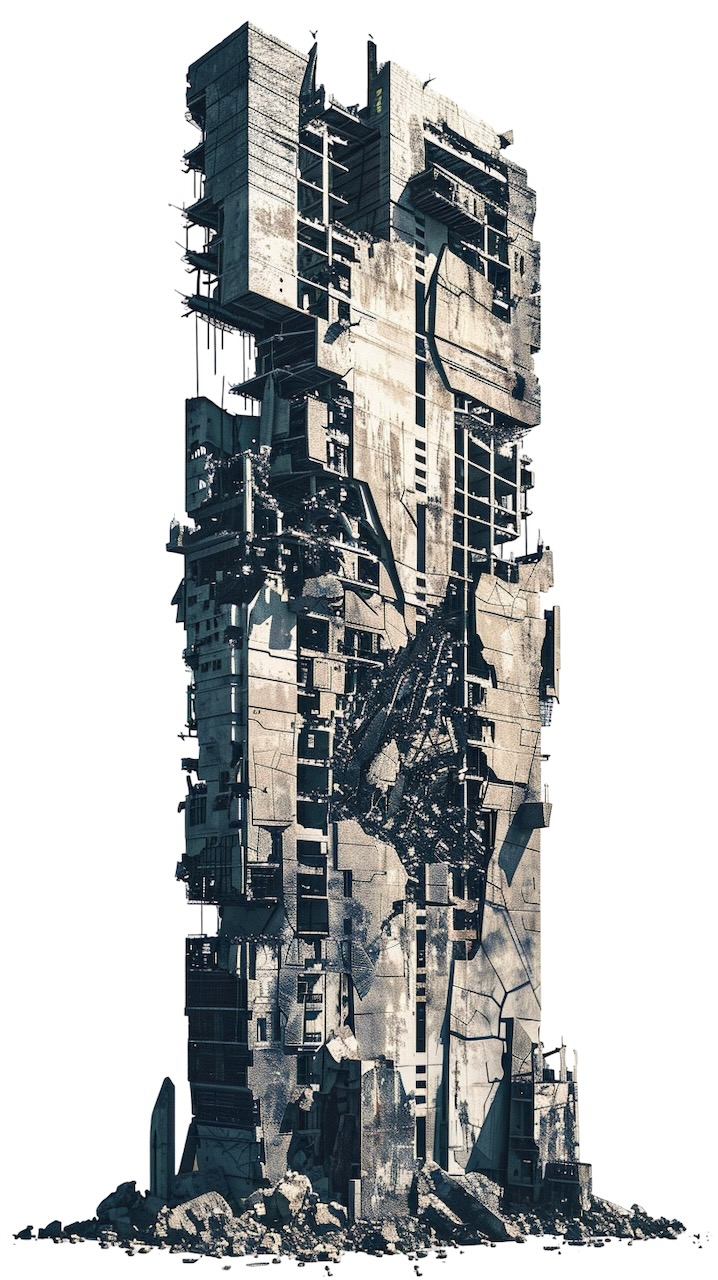
“The 10th wonder of the ancient world is a 663-foot tower made of windows and a gold-colored metal. At one time, a giant sign with the name ‘Trump’ sat on top of the building. Found in what used to be the East Coast of the North American continent, is now in the country known as 那些被貪婪征服的人.[1]

“Trump, once known as a god to his people, led with complete authority and deconstructed the government at the time with another fabled archangel named Musk. Together they sought to build a nation separated from the world at large, led by the corporate elite.”

A man in the group shuffles then raises his hand.

“Yes, you have a question?”

A well-dressed man in his late forties asks, “What do you mean by a corporation?”

“Excellent question. In ancient times, instead of robots and computers that do most of the work for us as a community, they had an organization made up of senior officials and many working slaves. There were many corporations that focused on certain areas of development. For example, one type of corporation made food out of chemicals. We have since outlawed many of the items they used to put in food because unfortunately many were carcinogenic. Chemicals combined with the aggressiveness of the humans of the time, led to very short lifespans found around the continent.”

The tourists looked askance at each other not believing what they just heard.

“In this glass case, you will find an ancient pin artifact. The remains of the red, white and blue enamel wore off with time. However, next to the artifact is a replica picture of what we believe it used to look like. Frequently found in the burials from that time, we believe they used to worship this symbol as a physical representation of their god. Providing it in the burial coffin allowed them to seek heaven in the afterlife. They believed in an afterlife where only the chosen few found the reward of monetary riches beyond their dreams.”

A young girl wearing a tradition qipao with amazing embroidery of flowers raises her hand.

“Yes, young lady?”

“What is ‘monetary’?”

 “Ah yes, relating to money. Money was an ancient system based on metal and paper that they would trade for goods. You can find some good replicas down the hall to the left.”

“You mean they had to trade for things? The robots did not give you what you need when you need it?”

“There were only very primitive robots with the most advanced being used by the military for war. The helpful robots we depend on every day were only getting a start at the end of the United States era.”

The tour guide leads the group to a spot on the far wall.

“Over here is a gold encased body. We believe this is the ancient ruler named Trump. We think he wanted to live forever in the afterlife. The myth at the time said covering your body in gold was the easiest way to make it to heaven. There were many others at the time that followed suit. From the ancient texts we have recovered, this religion believed gold was the ultimate resource, followed closely by an artificial contrivance by the name of cryptocurrency. We are not sure what cryptocurrency was, but it occurs a lot in ancient texts surrounding this period. We know some people used it to purchase goods and others simply reacted to it when it went up and down in value. Apparently, it was a tool the supposed god of Trump used to keep people in line and control emotional states.”

The guide points to the wall above the golden body.

“Up above the gold body, you can see a tile mural of the orange man the people worshiped. According to ancient alien theorists, he was not really a god, but an alien. Sent from another planet to infiltrate humanity. Unfortunately, the aliens, being color blind, got his coloring a bit off. The primitive people at the time accepted him as an actual human sent by god, regardless of his skin color. We believe they felt orange was the very best color possible. There were hierarchies based on skin color at the time and people’s place in society was based on that color. Now many conventional archaeologists disagree with this assertion and thought it was just a case of weird cosmetics that were popular back then. I will let you guys decide who was right.”

The young girl pipes up, “How could they not understand skin color of all kinds is beautiful? It makes the world an interesting place to live.”

“They were a primitive people. They viewed oppression as progress.”


[1] Those who are conquered by greed


Wendy Vidlak is a writer from the land of lakes who enjoys exploring the great outdoors and hopes to continue to breathe outside as long as possible. She has previously published in the White Bear Press and has an upcoming short story in the Galactic Mindsea Empire Anthology.

Illustration created by AI.


A note from Writers Resist
Thank you for reading! If you appreciate creative resistance and would like to support it, you can make a small, medium or large donation to Writers Resist on our Give a Sawbuck page.


I’m Afraid There’s Something Wrong with Mr. Prescott

By Ron Burch

He started wearing 18th century clothing, donning a coat, waistcoat, and breeches. The breeches, with buttons down the side, went over his silk stockings. His shoes were rounded at the toes with low heels, the tongues fastened with large buckles. He had adopted a long riding duster that cut low past his knees, and around his shoulders sat a triple cape. Ruffles of lace appeared from under his coat at his wrists, along with a jabot on the front of his white shirt. Adorning his wrinkled head, for Mr. Prescott was in his 70s and bald, perched a powdered white wig, the back bound in a pigtail. On top of that, when he ventured out he wore a round-crown felt hat with a broad brim. In his right hand, he carried a heavy ornate cane, which he shook at people when he was annoyed.

He also sold his car and purchased a large brown horse and saddle. He stabled the stallion in his garage against the HOA rules for our neighborhood, a suburb built in the 1960s, and his adjoining neighbor threatened to call the city and complain.

Mr. Prescott waved his cane at Gary, promising to thrash him.

Several of the neighbors were annoyed because his horse, which he named Privilege, had shit all over the streets where the kids usually played, and it was, honestly, everywhere.

Last Saturday, while our neighbor Dr. Lowry mowed his front yard, Mr. Prescott emerged from his house, wig intact but with no coat or waist coat, and demanded the doctor, a person of color, mow Prescott’s yard and repaint his house “as was his duty.”

Luckily, I was able to intercede before Dr. Lowry—beloved neighbor, well-known heart surgeon, and former college football line tackle—physically removed Mr. Prescott from his front yard. At the next HOA meeting, a petition signed by almost all the homeowners was submitted requesting that the Prescotts move out of our neighborhood due to the inappropriate behavior with Dr. Lowry. From the back of the room, Mr. Prescott stood, in full regalia, and accused the rest of us of “TYRANNY!” and ignorant of “the natural order of the world.”

After he stormed out—attempting to break a chair on the way, but being plastic, it only bounced—the HOA approached Dr. Doris Hinshaw, the therapist who lived the next block over, and offered to pay for her for a session with Mr. Prescott. Dr. Hinshaw declined saying that last week Prescott verbally assaulted her as a “whore and slattern” because she was not covering her head while at the grocery store and was not accompanied by a male guardian.

Mr. Prescott filed a lawsuit against our suburban community, Wind Hollows, claiming that since he was one of the original and still living purchasers of land in our neighborhood, the suburb belonged to him, “given his God-given right as a white male in our country.” His lawsuit also stated that the rest of us, his neighbors, were really his indentured servants who should be working the land at his behest, and he added two sheep to his garage barn.

The sheep took to wandering the neighborhood. They ate Mrs. Jenkins’s roses, and when she said she was going to sue him, Mr. Prescott threatened to have stocks built at the empty corner of Solace Street and Happy Drive to incarcerate her for public shame.

After Mr. Prescott rode Privilege to work (his office building is only a few blocks away where he is an accountant), my wife, Polly, visited Mrs. Prescott, who had been notably absent from the goings-on. She had been reduced to wearing a bodice and skirt with wooden clogs and her gray hair powdered white and covered by a cloth. Forced by her husband to give up her job—she had been the manager of our local library branch—she now gardened and fretting how poorly their plants were coming up. Even more worrisome, her husband expected her to turn their sheep into dinner courses.

Polly said Mrs. Prescott cried almost the entire visit, and my wife noticed that the tears washed away her white make-up, revealing a large bruise on her face, which she claimed an accident from walking into a door. She offered Polly some homemade jelly Mr. Prescott insisted she make from berries he’d found near their pool. When Mrs. Prescott could not name the type of berries, Polly politely passed and returned home.

Concerned about Mrs. Prescott’s safety, she called the police who came out but didn’t do anything, even after all the complaints, the threats Mr. Prescott had made, his wandering farm animals, and the concern that his mental faculties might be impaired. They said he was probably having a bad couple of weeks, and, even with Mrs. Prescott’s bruise, they declined to take any action.

Things were quiet for about a week. Mr. Prescott wasn’t seen riding Privilege to the office, and all the horse shit on the street was old. Then one night after supper, there was a tremendous crash outside, which brought out all the neighbors. Mr. Prescott’s horse had kicked his way out of the closed garage, breaking the door, freeing both him and the sheep. We discovered that the animals had no food or water as evidenced by the three of them simultaneously drinking out of Mrs. Jenkins’s birdbath. It was decided to try the authorities again, and the bodies of Mr. and Mrs. Prescott were discovered at their dining table, the remnants of Mrs. Prescott’s half-eaten berry jelly staining both their dinner plates and their stiff mouths.

The house sold to a nice family, after the Prescott’s kids removed everything except the historical clothing—put out front with the garbage.


Ron Burch’s fiction has been published in numerous literary journals including South Dakota Review, Fiction International, Mississippi Review, and New Flash Fiction, and it has been nominated for the Pushcart Prize and other awards. His last novel, JDP, was published by BlazeVOX Books. He earned his MFA from Antioch University Los Angeles.

Photo credit: Photo by Shahabudin Ibragimov on Unsplash.


A note from Writers Resist
Thank you for reading! If you appreciate creative resistance and would like to support it, you can make a small, medium or large donation to Writers Resist on our Give a Sawbuck page.
Now Your True Life Begins

By Claudia Wair                                                                                                              

It’s dark early morning when they take you out of your cell at the county jail. They lead you to a waiting bus, full of other prisoners. The detainees are all Black, like you. Everyone here has been charged with the same crime: taking a white man’s job.

The people on the bus are quiet. Some sleep, others stare with frightened eyes out the windows. Your destination is the State Re-education Camp.

At your trial, you argued that your job as a writer was unique. No white man could write the same words. But the judge laughed and said, Your words don’t matter. Then he banned your books, made you watch as they burned.

It’s late morning when you arrive at the camp and the sun is already hot on your skin. The guards separate the women from the men. You join the line of women and are led to a bunkhouse that smells of old sweat. When the guards leave, everyone introduces themselves: doctors, lawyers, college professors. You feel insignificant with your master’s degree in English literature. When it’s your turn, you say I’m a writer. They burned my books, scrubbed me from the internet. The women shake their heads, suck their teeth in sympathy.

Silence descends when your Instructor enters, a white woman with a cruel sneer. Forget your past lives, she says. Now, your true lives begin. The lives you should have always led.

You’re told that here you will learn to be subservient to white people. That you will learn to love serving them. You know this isn’t true.

During the months of your incarceration, you endure beatings, forced labor, sleep deprivation. You survive it all. Not everyone does.

They humiliate you. They try to make you believe you are less.

They fail.

One day, without explanation, they release you to a halfway house in a strange city. You vow to never lift a finger to serve them. This will lead to prison—or worse—so you run.

You pass yourself off as an Unemployable. You sleep in a hard-to-find corner of an abandoned building, get donations of food and supplies from church basements. You trade secondhand clothes for basic survival gear. You buy information with fresh fruit. Then you set off for the mountains.

You’re chasing whispers and rumors. You follow hand-drawn maps. You stop at secret safehouses, get help from unlikely sources.

By some miracle, you evade the Race Police and the Nazi militias. A Black truck driver stops along the highway and gives you a ride out of the state. You could both go to prison for this. He accepts the risk and muses about following you one day.

After weeks of hiking in the mountains alone, you find the Free People. Your joy at seeing healthy Black and brown faces nearly breaks you. After you recover from your journey, you join the others growing food on the community’s farm. You teach the children using banned literature and history books.

Soon, you are almost yourself again.

The Free People remember your writing. They give you pen and paper and ask you to tell your story. You tell your story. You tell all the stories. One day, you swear, the world will read them.

The community is growing. White allies bring supplies when they can. Clothes, tools, guns.

You learn how to defend your new home. Cradling your rifle, you scan the shadowy forest for intruders. You wonder how you’d acquit yourself if faced with the people who deny your humanity. The people who tried to break you. The people who took your old life away.  

A grim smile crosses your face. Because you know what you’ve lost. Because you know what the world has lost.

Your jaw tightens, your blood burns, and part of you aches for the chance to make someone pay. You are fueled by rage and sorrow and just enough hope to keep going. Enough to aim the rifle and pull the trigger.


Claudia Wair is a Black writer living in Virginia. Her fiction has been nominated for the Pushcart Prize, Best Microfiction, Best of the Net, and Best Small Fictions. Her work has appeared in Pithead Chapel, Astrolabe, Writers Resist, JMWW, and elsewhere. She can be found at claudiawair.com or on Bluesky @CWTellsTales.bsky.social

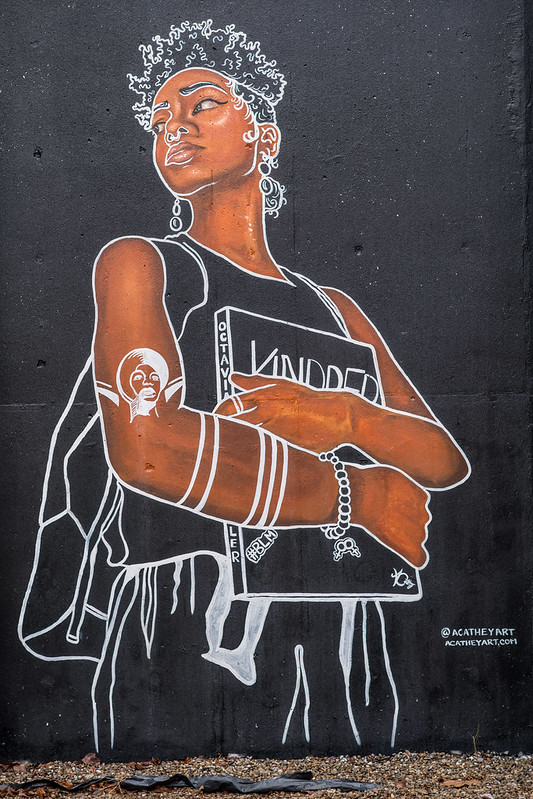
Mural by Ashley Cathey, at Hartford Hall, Jefferson Technical and Community College, Louisville, Kentucky.

Photo credit: Don Sniegowski via a Creative Commons license.


A note from Writers Resist
Thank you for reading! If you appreciate creative resistance and would like to support it, you can make a small, medium or large donation to Writers Resist on our Give a Sawbuck page.

The Heron

By Sam Rafferty

Sunset was approaching when the birdwatcher kayaked deep into the swamp. She hid behind shrubs, which offered a full view of the cypress trees where several herons would soon arrive to roost for the night. The trees reminded the birdwatcher of the uncomfortable debutante balls of her youth. Their roots spread into the water like bell-shaped skirts, and Spanish moss hung from their branches like ringlets of aerosol-laden hair. Her skin still itched at the thought of the crinoline brushing her thighs while she paraded around the ballroom with a flock of other young girls, all whirring in white satin, watched by middle-aged men.

When the breeze blew past her, the birdwatcher shivered and reached for the jacket at her feet. She put it over her shoulders, marveling at how the thick flannel still smelled like her ex-husband, a mix of cheap shampoo and hand-rolled cigarettes. She remembered with a pang that today was Thanksgiving, and he was probably smoking those same cigarettes on the porch of his new home. His new wife was likely inside making a sweet potato casserole they would consider a vegetable despite the marshmallow crust on top. His new kids were probably running around the house, throwing a football that should have made its way outside.

Before the divorce, the birdwatcher and her husband had endured quiet holidays with no children playing and no extended family nearby. Their only guest was the specter of unspoken tension over the question of offspring. Like a heron exchanging sticks with his chosen mate, he had gone through elaborate courtship rituals, preparing to pass on his genetic material through the fertile body of the female before him, only to find that her body was not so fertile, and worse still, that her will was not so bent toward the development of progeny. He had seethed in his disappointment, accusing her of “giving up.” What the birdwatcher had done, however, was notice that she felt no longing to share the high-pitched “sweet-sweet” of the warbler with a child at her heels. She had no desire to hover over a squawking brood in a perfectly crafted nest. Her desires bent instead toward a quiet solitude that motherhood could never provide.

The sun sank lower, leaving an orange haze over the canopy. The birdwatcher sat still in the kayak, breathless, waiting for the loud, shrill cry of a heron. A large group of squawking ibis flew overhead, chaotic white feathers clouding the sky. The birdwatcher held some disdain toward ibis for the way they constantly congregated, digging in the mud with their downturned bills. Ibis held no great love for silence, stillness, or solitude. Herons, on the other hand, were solitary visual hunters, waiting patiently, watching, then striking their prey at the most opportune moment.

Soon, the herons began to fly overhead, coming slowly, one at a time. Their wide wings spread over her, temporarily blocking out what was left of the day’s sunlight. They settled in the branches, grouped in pairs, spread out among the trees. The birdwatcher noticed one heron set apart from the others. It was relatively small, likely a female. She seemed agitated, head turning side to side as if watching for a predator to emerge. The birdwatcher wondered if the heron had been hurt in some way. Though they were once endangered, reduced to hat feathers by opportunistic hunters, herons were protected from humans now, at least in theory. She fixed her binoculars on the bird’s yellow eyes, and it seemed to stare back at her. The birdwatcher saw her own isolation and her fierce desire for freedom reflected in the heron’s gaze. There they stayed, two solitary beings contemplating one another while dusk fell over the swamp.

Darkness thickened, and the birdwatcher felt a need to get back to the warmth and safety of her car. Putting on a headlamp, she began to paddle. Occasionally, she would see alligator eyes peering out of the water at her, shining like the headlights of beastly cars that hid beneath the surface of the black water. The sounds of night assailed her ears: croaking frogs, the hooting “Who cooks for you?” of the barred owl, raccoons scampering over leaves on the banks, the wingbeats of bats overhead.

The birdwatcher’s body warmed as she paddled, or maybe, she thought, this was another flash of heat announcing her imminent transition to crone. When she paused to remove her flannel coat, she felt an eerie sense of being watched, eyes taking in the shape of her shoulders, the curve of her neck, the movement of her hands.

Gazing around, she could not see anything unusual within the radius of her headlamp’s glow. She continued paddling, faster, but taking care not to become frantic. After a few interminable minutes, the birdwatcher was nearly at the dock, which was only a short hike through the woods away from her car. She heard a loud screech as wide wings deepened the darkness over her head. She jumped at the sound, and the paddle slipped from her hands.

Instinctively, she reached for the handle as it sank into the black water, barely grasping the end before it drifted away. She began to paddle again, then shuddered, realizing how foolish she had been to reach her arm into the water where so many predators lay waiting to sink their teeth into vulnerable flesh.

The birdwatcher felt relieved when she pulled up to the dock. Stepping on the warped wooden boards, she leaned over to hoist the kayak up. Then she heard another paddle slapping the water. She peered out, straining her eyes to take in the surroundings illuminated by her headlamp. She could see no one, so she rationalized her fear as the anxiety of a woman alone and continued with her task, beginning the slow process of carting the kayak down the trail to her car.

The trail was overgrown even in winter. Palmettos filled the underbrush beneath towering pines and sprawling oaks, the latter of which had left their leaves to become a carpet of damp brown littering the sandy soil. Hairy tendrils of poison ivy vines circled the trunks and exposed roots of the trees. The birdwatcher made her way down the little worn path, scanning the ground for anything that might impede her: fallen limbs, large rocks, an armadillo making its way through the forest.

When she looked up to see what progress she had made toward the car, her heart leaped in her chest, and she dropped the kayak. Inches in front of her was a man standing stock still on the path. Black hair hung in tangles around his shoulders. The patches of the skin on his face that were not covered by his unkempt beard were translucent. He wore thick layers of camouflage with a rifle slung across his hunched shoulders. An unsheathed machete hung from a belt around his narrow waist. The birdwatcher froze in his presence.

“What’s a girl like you doin’ alone in the woods at night?” he asked, his voice a thick, slow drawl.

“I’m just going home,” was all she could sputter as a reply. It was as though, by calling her a girl, he had suddenly reduced her to a child in ribbon-laden pigtails, murmuring a compulsorily polite, “Yes, sir.”

“Well, let me help you then,” he crooned, crossing close to her as he went to pick up the kayak.

The birdwatcher hesitated. Should she walk with this stranger? Was he a threat? She could take off, running through the trees, but could she outpace him if she did? Though he looked slightly older than her, the birdwatcher took note of the sinewy frame of the stranger as he effortlessly pulled the boat.

She walked silently beside him down the path, hoping against instinct that he was simply showing kindness, though the moonlight reflecting off his machete kept her from feeling at ease.

“So, you never answered my question. What were you doin’ out here?” the stranger pressed.

“Birdwatching.”

“Birdwatching! Well, I’ll be damned. I guess you could call me a bit of a birdwatcher, too. Watch ’em to hunt ’em, at least.” He let out a loud, breathy laugh.

Now was not the time to lecture on the fact that this was a wildlife refuge where hunting was strictly prohibited, so she nervously laughed instead. The birdwatcher’s mind went back to the solitary heron she had seen earlier that evening, remembering her agitation. Had this man been hunting her?

“That’s why I’ve got this knife here. Cuts right through the neck of a bird.” While he spoke, the stranger pulled the machete out of his belt, holding it up as he turned toward her. He stared into her eyes, holding his gaze for an uncomfortably long moment.

The birdwatcher shivered, ready to take her flight, but he slowly put the weapon away. She continued to walk with the stranger, listening to the sound of leaves crunching underfoot, until, after what seemed like an eternity, her feet began to tread over the gravel of the parking lot.

He helped her tie the kayak to the top of the car. Quickly, she thanked him and reached for the door handle, but his rough hands grabbed her arm.

“Drop the keys,” he demanded. She felt the cold steel of the machete hit the back of her neck. Even as her stomach dropped in terror, she felt a sense of vindication. She had known this snake for what he was and had sensed his predatory nature, even if she had fallen into his inevitable trap.

He twisted her arm painfully, repeating, “Drop the keys.” She did as she was told. He turned her around forcefully, and she saw that all the false kindness had vanished from his face. He gripped her tightly, the knife against her throat.

 “I’ve been watching you, just like you watch them birds.” He laughed. “You got no husband. No family. No friends. No one to come looking—”

His words were drowned out by a loud shriek overhead. The noise caused the man to flinch just enough to lose his grip on the birdwatcher’s arm. She jerked away, running back toward the woods.

She ran from the man wielding the machete behind her.

But she also ran from the uncle she had been forced to hug at Christmas, though her skin crawled when he placed his hand on her thighs.

She ran from the high school boyfriend who had begged her so often for a blow job that she finally gave in, the taste of his semen like ashes in her mouth.

She ran from the employer who “jokingly” insinuated that sleeping with him could lead to a promotion.

She ran from the disbelieving look on her husband’s face when she told him she would not pursue another round of IVF.

She ran from a lifetime of being stripped of her autonomy and shunned when she tried to reclaim it.

She ran until those rough hands grabbed her once again. She felt her hope collapse as she fell to her knees.

Then, suddenly, she saw it. Gray-blue feathers spanning six feet, neck bent into a taut S-curve. Even in the dim light, the birdwatcher could make out a vision of the solitary female heron she had seen before. She saw a gleam of recognition in the bird’s yellow eyes as it let out a great shriek, diving down toward her assailant. The heron swooped onto his back, knocking him sideways and freeing the birdwatcher. She saw the bird dive its long bill into the man’s eye. His screams echoed through the trees, setting off a chorus of howling coyotes. Warm blood sprayed onto the birdwatcher’s arm, lifting her from her momentary despair. She felt as though she could finally flee all that threatened her solitude.

Grabbing the machete the attacker had dropped in his moment of pain, the birdwatcher ran back through the woods to the parking lot. She dropped down next to her vehicle, her hands moving over the gravel, searching for the keys. Her heart beat violently when she finally grasped them and scrambled to her feet, lurching the door open and slamming it shut. As she cranked the ignition, she could see the man, blood streaming down his face, marching blindly out of the woods toward her, rifle in hand. Then the heron flew past him once more, causing him to stumble backward. The birdwatcher took one last look at the great, terrifying creature and drove off into the night.


Sam Rafferty (she/her) is a Georgia native whose writing often explores the experiences of women in the South. Her other stories are published or forthcoming in Avalon Literary Review, The Sunlight Press, and The Dead Mule School of Southern Literature. You can follow her writing in Instagram at @samraffertywrites.

Photo by Debbie Hall, Writers Resist Poetry Editor. Follow her photographic work on Instagram at @debbie.hall.poet.photog.


A note from Writers Resist
Thank you for reading! If you appreciate creative resistance and would like to support it, you can make a small, medium or large donation to Writers Resist on our Give a Sawbuck page.

Welcome to Writers Resist the 2025 Summer of Resistance Issue

Wouldn’t it be dandy if this season were a 21st century version of the Summer of Love, but more inclined toward the civil rights movement? An uprising of all ages—of every identity!—leading a powerful return to our generations-long quest for liberty and justice for all; for diversity, equity and inclusion; for a moral commitment to our three branches of government, our pursuit of a true democracy, our vision of what we might be?

Yes, that would be dandy.

This issue launches after the 14 June protests, and we saw you all were on streets across the nation, with oh-so-clever signage, lots of peace and love, and being absolutely dandy.

Thank you—don’t stop!

But first, we’ll take a moment to offer our fondest farewell to René Marzuk, editor extraordinaire and exceptional human being. We’ve been grateful for his presence on the Writers Resist team. We will miss him sorely and lovingly.

A note from René—

In August of 2022 (more than two and a half years ago!), the editors of Writers Resist welcomed me as one of their own. Since then, I’ve had the privilege of reading and considering (mostly) poetry submissions from all over the world. Working closely with Debbie, I read pieces carefully and consistently, trying to find expressions of resistance that took full advantage of the resources available to poetry. As I get ready to step down from my role, I look back with joy to all of the instances in which I found not only what I thought I was looking for, but much, much more.

Early on, I learned that Writers Resist offers a platform for resistance and community that is in turn supported by the generosity and love of those who keep it running. Thank you so much for creating and maintaining this space, K-B, and thank you all for allowing me to be one of you during the last couple of years.

Keep writing the resistance, friends!

Saludos,
René

And now, in between protests, please enjoy the rich contents of our Summer 2025 issue—and join us for Writers Resist Reads, a virtual celebration of this issue, on Saturday 16 August, at 5:00 p.m. PACIFIC. Email WritersResist@gmail.com for the Zoom link.

CONTENTS

Work Trip by Alyssa Curcio

Manure by Robert Delilah

The Neighbor’s Goldfish by Ashley Dryden

Freedom Calls (Commemorating Harriett Tubman’s Promotion to Brigadier General in the State of Maryland) by Ellen Girardeau Kempler

s k i n by Rebecca Havens

Awaiting Harris’ Concession Speech November 6, 2024 by Dotty LeMieux

Standard Safety Recommendations: Revised, 2025 by Ryan McCarty

Stars and Stripes: Registering Voters in the Travis County Jail by Lauren Oertel

Inauguration Day by Linda Parsons

The Age of Unreason by Matthew Sam Prendergast

The Bishop by Lao Rubert

Marked by Fendy Satria Tulodo

Saved by Phyllis Wax

you’re all for autism awareness ’til by Lauren Withrow


Photo credit: K-B Gressitt, taken at Greenwood Rising, a Tulsa, Oklahoma, museum that will “educate Oklahomans and Americans about the [1921] Race Massacre and its impact on the state and Nation, remember its victims and survivors, and create an environment conducive to fostering sustainable entrepreneurship and heritage tourism within the Greenwood District specifically, and North Tulsa generally.”

Manure

By Robert Delilah

That morning, something jammed the automatic sweeper.

Every hour—on the hour—the sweeper pushed the cowshit that matriculated from the pens above to the waiting troughs just beneath the barn floor. Thanks to the sweeper, the sludge would be shunted off into the pit-like tank beneath it all, instead of rising through the grates as a massive, gut-churning lake. The pit was pumped clean by truck every other week or so; its contents processed, bagged, and sold off to hardware stores, flower shops and, of course, farms.

No one noticed the jam until well into the afternoon, so the troughs had very nearly begun to overflow. But instead of calling for a mechanic, Guillermo’s foreman, Ted, handed Guillermo a twelve-pound sledgehammer, one of those with most of its haft sawn off—the sort used by idiots and oilmen. Between clenched, meth-cooked teeth, Ted hissed two words:

“FIX. IT.”

Guillermo spoke English.

Rather well in fact, as he liked to brag to no one anymore.

But he also liked to pretend he could not. Ted had yet to discover this of course. And ever since Guillermo had been brought to the farm more than three years prior, the two of them had remained on a two-word basis—broken jaw or no. He’d gotten out of this sort of work before, but Guillermo clocked within Ted’s eyes a bloodshot, drug-wired mania and he knew, understanding or no, that this time Ted would broker no argument.

Two days ago, Julia was shipped off to a “facility.” One of the ones the other laborers fearfully murmured about, as if only by being overheard they might themselves be dragged there screaming.

They’d brought Julia to the farm some months back. She spoke little—one-word responses to most anything. Perhaps that was what drew Guillermo to her. But where Guillermo’s silence spoke of cold acceptance, Julia’s screamed of a smoldering rage only just held in check. She kept a buck knife in her pillow. Somehow neither the other laborers nor the foremen ever found out about it. Guillermo himself discovered it one morning when trying to wake her.

He’d lied and told the others he’d cut his hand on a bit of barbwire.

Guillermo and Julia shared meals from then on. And in the ensuing weeks the girl, barely thirteen, became somewhat of a de facto niece to him. He no longer had any family of his own, and if she did, she never spoke of them. Perhaps Guillermo was simply lonely; he suspected as much anyway.

One day, Julia was picking muddy green onions when, shrouded in the cool shadow of a domineering cloud, an uncalloused hand grabbed for her ass.

Guillermo, standing in the sun a field away, heard the subsequent pop of bird-bone knuckles cleaving jawbone. The sound reminded Guillermo of a framer he used to know in Ciudad who’d drive a five-inch nail into rough-sawn timber with just one swing. Ted awoke a while later, sporting a broken jaw and a freshly purple bruise which bled down into his neck.

ICE was there in the hour.

Guillermo felt Julia’s buck knife press against the inside of his left boot when he rounded the back of the cow pen where a line of grates led down into the machinery’s bowels. Crossing a rusted trapdoor complete with ancient, grime-coated padlock, he knelt and unfastened a cross-stitched aluminum panel, then shimmied into the crawlspace. Once inside, still stooped, he stepped from joist to joist, then back along the underpan’s entire length to find where the thing had jammed. The grate above dripped constantly. And every minute or so, a fresh cow pie would slither past him into the already overflowing troughs. There were several near-misses. And he heard little over the clang and clamor of hooves against concrete and steel just above his head. The smell within was dull and sulfurous, but a tang of metallic sweetness rested on the underside of his tongue. Guillermo had worked on this end of the farm since he’d arrived. After the first month, he’d stopped noticing the fetid reek that pervaded the place. Yet now, balancing above a veritable lake of shit, he was pressed once more to reckon with the stench. Grease-flecked and vile. Undeniable.

At last, after some tens of minutes, he located the problem: a rock—practically a small boulder—trapped in one of the tumblers. It was wedged within its teeth like a particularly stubborn seed.

Guillermo perched his foot on an angular joist to straddle the tumbler’s weighty servomechanism. The steel creaked as Guillermo felt the beam itself sag. He froze, loitering between heartbeats, waiting for the rig to inevitably snap apart and collapse.

Bracing his back against the damp ceiling, he readied the sledge, angling to dislodge the rock with one momentous blow.

WHAM.

Brittle flecks shot out as the impact marred the surface of what he realized then was a solid chunk of concrete. He shut his eyes as the spray of chips and dust flew into his face.

It was a slim, half-moment—a twitch within a hesitant spell—but that’s all it took.

Guillermo’s weight shifted, and a forgotten slick of grease leaking from the servo caused his left foot to slide, then slip out from under him. He pitched forward, dropping the sledge before extending his arms to try to catch onto the railing. But, gripping blindly, he missed. Guillermo’s chest slammed hard onto the wedged concrete. The air, forced from his lungs, came out his mouth in sputters. The ensuing impact of rib cage-to-stone was enough to unseat the chunk and Guillermo, flailing, tumbled downwards with it into the awaiting troughs.

He landed with a sickening squelch, and before Guillermo could grasp a sense of where he was or what had happened, a whirring sounded above him, and the rolling tumblers hummed once more to life. Shuffled along the top of the trough’s putrid surface, Guillermo was ferried down a waterfall and into an awaiting well of shit and cow piss. Guillermo feared he might drown and was sure he’d broken his neck. But he rose and wiped at his eyes. No matter how thoroughly he smeared away the refuse, he saw only dark.

In time, though, his eyes adjusted. He gleaned the vague profile of the pit’s sheet metal sides and figured a rough outline of its dimensions by the scant illumination shining through the gaps of the machinery overhead. Guillermo found himself strangely calm. So long as someone looked for him in the next several hours, that someone would find him.

But several hours did pass. Eventually, he started shouting, and then he began to scream.

Yet even these little desperations couldn’t carry past the grunts and the chuffs, the shuffling of hooves on steel, nor past the mechanical drone that shook his skull whenever the servos hummed again to motion. Every hour, the shoots opened and—for the briefest of moments—Guillermo saw dregs of bright sunlight peak through until another fresh load was swept into the pit to pile atop him. And each time Guillermo could do little but hug the far wall and pray.

It was when the sludge rose to his chest, when the subterranean chill had sunk fully into him, that he found himself thinking of the barn’s tin roof, roasting like the dangerous little hotplate he used to warm his coffee; he thought of tamales, cold beer and good sex. And, for reasons he couldn’t quite explain, the sun most of all.

Then he spotted it.

Corroded. As thin at parts as a coat hanger. A grimy, decaying service ladder stuck out of the wall.

Hope alighting within him, Guillermo swam to the opposite wall. Shaking with the effort, buoyed by liquid manure, he lifted himself up onto the bottom-most rung set seven feet from the floor. He climbed, rung by rung, shivering wildly with chill, as his limbs howled and begged him to stop. But Guillermo knew better than to listen. He’d been through worse. He survived the crossing. Survived the Coyotes, and the Cartel. And that bastard Ted. He promised himself he would survive more after this.

So he climbed—more than seventy, eighty feet—until he was under the trap door leading up and out to freedom. Hooking an elbow onto the top rung, Guillermo lifted a hand to the trap door and pushed hard.

CLUNK.

He felt the door catch, exposing a bare inch of warmth and daylight before stopping short on the rusted padlock he’d noticed earlier.

It was locked.

Manic tears dug deep trenches down his stained face as, without thinking, Guillermo seized Julia’s knife from his boot, holding the blade momentarily with his teeth to adjust his grip on the rail. The taste of steel and copper-tinged shit was irrelevant. With a shaking hand he lifted the knife and wrenched hard against the underside of the padlock.

The blade broke with a snap and only a jagged half of it remained.

Choking, sobbing, and with the very last of his strength leaving him, the trap door clattered back into place, casting Guillermo again into darkness. He hung onto the top rung, clutching the broken knife, and cried.

Thump THUMP.

Thump… THUMP THUMP.

Hooves, Guillermo thought. Or were they footsteps? Was he imagining it?

There was a jingling of keys, and a neat click from the padlock. Sunlight blinded Guillermo as the oubliette’s trapdoor was hurled open above him, revealing a crouched and sniggering figure.

Ted flashed crooked grey-and-yellow teeth. “Got a little stuck, eh?”

Guillermo stared, fumbling to extend a grime-laden hand, but the foreman made no motion.

“How’d you get your hands on that?” Ted asked, raising a finger towards the broken buck knife.

Guillermo didn’t answer. Switching his grip, he extended his free hand towards Ted.

Ted grinned, just out of reach, his eyes still transfixed on the thing in Guillermo’s hand.

Then there came a groan and a creak. One end of the rung onto which Guillermo had hooked himself snapped suddenly free. The corroded steel screamed as it bent and warped, while the rung on which Guillermo’s feet were set began to bow. Guillermo wobbled, trying in vain to balance himself in some way that would stop him from toppling backwards into the pit.

Ted made no motion.

Fury welled within Guillermo. Where before he was cold and paled by chill, he now felt his head grow hot, felt his ears burn red. Like candle wax, whoever he was, whoever he’d been before, melted away, leaving only the burnt wick of rage—and a sole impulse.

Guillermo leapt.

The rung broke clean from the wall as Guillermo, in one frenzied strike, stabbed Julia’s broken buck knife above Ted’s collarbone, hooking him like a fish caught by the gills. There was a spurt of scarlet spray as Ted, yellow eyes suddenly wide, pitched forward. With his other hand—firm and calloused—Guillermo seized Ted’s khaki-yellow collar and yanked down, hard.

They fell. Together. Ted struggled hopelessly in the air.

But in the moments before the two of them landed head-first into the pool of liquid refuse, without any prospect of survival or escape, the last vestige of Guillermo gave thought to Julia.

He hoped she was okay.


Robert Delilah is a writer and comedian based in San Diego, California. His written work focuses on the ridiculous, the unsettling and the uncanny. Previous credits include “The Numbers,” published in Black Sheep: Unique Tales of Terror and Wonder issue No. 17, and the comic short “Peel” as part of an upcoming horror anthology from The Panel Smiths comics collective.

Photo credit: James Whatley via a Creative Commons license.


A note from Writers Resist
Thank you for reading! If you appreciate creative resistance and would like to support it, you can make a small, medium or large donation to Writers Resist from our Give a Sawbuck page.

The Neighbor’s Goldfish

By Ashley Dryden

I saw her today, the next-door neighbor’s goldfish.

They keep her in a shabby, old pond in their backyard where the lawn meets the patio. I watch her swim around the lily pads from my second-floor bedroom window, every splash of her tail makes ripples along the surface of the water.

The neighbors like the attention she brings. They’re a cheerful, young couple who love to show her off, always having parties in the backyard. And when the other neighbors learn about the pond, they learn about the goldfish too. I was never invited but the noise they make keeps me up late. The only thing that’s quiet in the neighbor’s yard is the coin jar they keep in the center of their patio table.

The wife loves to go on and on about the goldfish. She spends hours chatting about how the fish is a fancy breed and how fancy breeds often get sick and require higher maintenance. It’s the only thing she ever talks about with anyone. The husband is just happy to be there. He isn’t afraid to mention that the goldfish belongs to his wife, not him. He’s fine with it and often mentions how the wife had the goldfish for many years before she met him. Sometimes he posts photos on social media of him standing next to the goldfish.

.     .     .

It was a few weeks ago that I noticed something. Through my binoculars, the shimmering orange goldfish was struggling on its side when she tried to roll herself upright. Her scales had begun to flake, and the delicate fins were rotten and torn. In the murky water, I could hardly see her. The thick punch of cloudiness had caused the lily pads to wither. It took effort to see the goldfish under the smoky water, and for a moment, I wondered if she was even there.

I wasn’t sure if I should say anything at first. I didn’t know anything about goldfish. But the neighbors claimed they did. The wife was glad when someone brought her up at a party after seeing the goldfish tilting to the right.

The wife insisted it was due to the breed and that it came with health problems. She wasn’t silent for the rest of the party, laughing and smiling away. Neither was the coin jar.

The goldfish, though, kept declining and the community began to fear the worst. I remember when the cops were called to the neighbor’s house. The wife was screaming and kicking her feet as the officer took the goldfish away. The goldfish was given to the old lady at the end of the cul-de-sac. She posted pictures of herself standing next to the goldfish playfully swishing around in a clean tank. Nobody attended the wife’s parties anymore. The coin jar was empty.

But a few days later, binoculars in hand, I saw the goldfish swimming in the pond again, her scales shining in the moonlight. The wife stood on the patio looking over the pond. She had a pair of scissors in one hand and a bottle of gunk in the other. I couldn’t make out what type of gunk it was, but it sloshed around the nose of the bottle while she poured it into the pond. Then she took the goldfish out of the pond by its tail and beat it against the side of the house. She smacked it hard, the scales popped off like sparks from fireworks and blood splashed onto the patio. At the end of the thrashing, the wife took the scissors and cut up her fins before throwing her back into the pond.

.     .     .

It’s not long before the neighbors start attending the wife’s parties again. Nobody mentions “the incident,” and those who bring up the old lady in front of the wife are kicked out. Every so often I look over at the pond and see the goldfish, her fins shorter, her speed slower.

One day, after the neighbors leave the house, I sneak into the yard to see the goldfish. When her head comes to the surface, I show her my bucket and tell her I can get her out of this place. I promise I will take her somewhere safe where she will never be beaten again.

“You don’t know what you’re talking about,” the fish says. “The people in this house love me. I’m not going to let anyone take me away ever again. And the coin jar needs to be fed so my people are fed.”

I beg her to listen, but she bites my finger and swims under a lily pad. I go back home.

.     .     .

So, yes, I saw her today, the neighbor’s goldfish. The police found her body on the patio this morning.

.     .     .


I’m a writer and a college graduate who has always been a fan of symbolism and horror. I’m into writing, video game making, and photography. I have two dogs at home, and I love my parents.

Photo credit: Güldem Üstün via a creative Commons license.


A note from Writers Resist
Thank you for reading! If you appreciate creative resistance and would like to support it, you can make a small, medium or large donation to Writers Resist from our Give a Sawbuck page.
s k i n

By Rebecca Havens

She is dancing by the entrance. Graceful, slow-then-fast; even Helen can neither compete nor look away.

Drinking in the shadows, I imagine all the shapes violence comes in, collectively stomping her meat into the pavement. I am one with the darkness—but I swear, I can see each layer of skin even through this candlelight, even from across the room, even with her flitting about this place, hip bones on full display. I will painstakingly peel, layer by layer like an onion, to form small arrays of flesh, penetrable by the light.

I will hang them up to create monotone papel picado. Sheet by sheet spread onto my windowpane until it consumes the sunlight that tries to come through the door to disturb this dark romance. How is there so much skin unraveled? How is there so much skin still on her? Spread as thin as a whisper across mountaintops, I could cover the vast seafloor with her remnants. A declaration of some sort. Man makes meaning out of fluff; so I will construct meaning out of this pastime as well.

Dermis, thicker. Slowly, would-be tenderly, unearthing filthy filmy sacrifices to a god I do not believe in. Lung tas claiming stake to this apartment, to these long plank floors and its dust-catching corners, just as I am claiming stake to her.

To love is a craft—but so is it to hate.

Tissue, fat, muscle, that fleshy softness and her blood. Spreading, spreading, I cover my desk, my best coffee mugs, my trash can and the sink in the vacant parts.

I Sweeney Todd her innards, mixing her meat with other meats to create a bouquet of unmatched delicacy. Potluck indeed.

And a heart. I want to pour resin over this heart, I want to taxidermy it and keep it close. I want to whittle wood into its likeness. I want to create an altar to this grim offering.

Next time you tell me “boys will be boys,” I will smile my mischievous smile, drop my head, and nod to acknowledge this sin.


Rebecca Havens is a happy person. They work in the political space. They mostly write fiction and poetry, but adore everything.

Photo credit: Christian y Sergio Velasco via a Creative Commons license.


A note from Writers Resist
Thank you for reading! If you appreciate creative resistance and would like to support it, you can make a small, medium or large donation to Writers Resist from our Give a Sawbuck page.
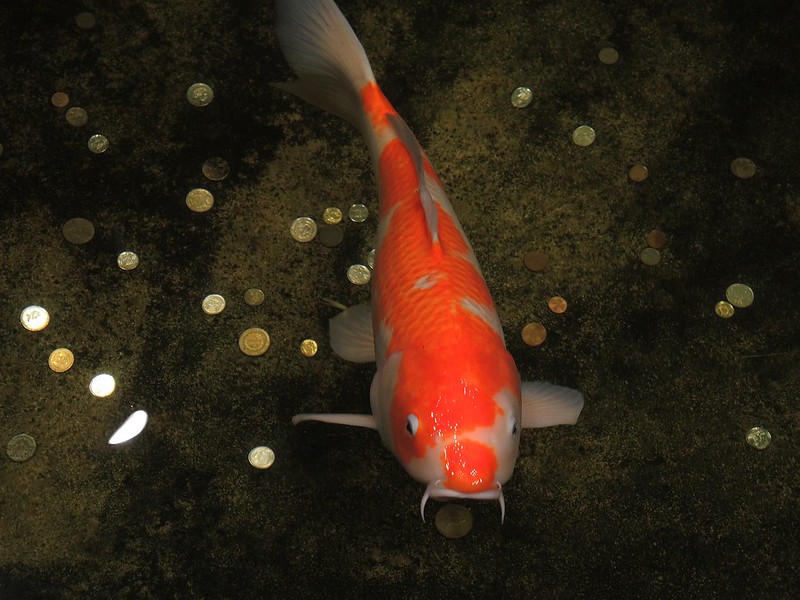
Enough

By Alyssa Beatty

I add another rowan branch to the fire underneath the brazier and test the water with my pinky. Almost hot enough. A quick count of the bundles of herbs on the kitchen counter to make sure I have everything I need. Rose-tinted sunset streams in through my back door, propped open with a cinder block. It’s a signal to anyone who needs me.

First in is Mr. Murphy, who needs a tea for his arthritis. I decant a measure of hot water into an old glass Coke bottle, sprinkle in the herbs, and seal the top with wax.

“Let it steep until you get home. Drink it all. It’ll taste like ass, but it will help,” I tell him.

He ducks his head in thanks, holding out a loaf of fresh baked bread from his wife. He’s never said a word to me, but he’s also never missed a visit.

When he’s shuffled out the back door, I sit at the kitchen table, waiting. I should turn the radio on, for the illusion of company. But it seems like too much effort to get up again.

I turn the little mustang figurine toward the door, letting him see the sky. He’s my reminder, for days like today when I’m feeling worn out, of why I’m here. Mustangs were brought to a place they didn’t really belong and made it their own so completely that they became synonymous with their adopted landscape. I don’t belong here either. I’m a city girl at heart, more at home with concrete and steel than the endless flat plains that surround this speck of a town.

Some people think witches shouldn’t live in cities; that they need to have their feet on bare earth, see the sky and hear the wind in the trees. But those people have never harvested the energy of a crowd at a street fair or bathed naked in the moonlight reflected off a skyscraper.

Before I start to feel too sorry for myself, Martha Sperry knocks on the door. I’ve told her a million times if the door is open, she doesn’t need to knock, but small-town politeness is ingrained in her.

“Come on in, Martha. Need a refill?” I rise from the table, trying to disguise my weariness.

“Yes, please, ma’am.”

Martha’s son suffers from the worst case of cystic acne I’ve ever seen. Poor kid’s face looks like a map of the moon. He’d never agree to treating it with what I’m pretty sure Martha’s husband calls “devil’s brews,” but my tea works wonders for skin conditions. Martha’s been slipping it into her son’s dessert every night, and he’s come so far out of his shell he asked a girl to homecoming. Small victories.

I stir the herbs into the hot water, carefully pouring the brew into a yellow Tupperware bowl. As far as her husband knows Martha and I have been swapping soup in this bowl for the last three months. She takes it carefully and pulls out a hand crocheted rose and gold shawl, the exact colors of the sky outside. She’s really talented. I can’t help but picture her at an artisan market in the city, selling her wares for a hundred bucks a pop.

I need to stop thinking about the city. I’m here now. I stroke my finger along the mustang’s side. I picked him up at a swap meet on the trip here. He’s inexpertly cast, the metal lumpy and undefined on one side. But some magic leaked into his legs; they flow, capturing the joy of motion. He looks free.

It’s almost time. I dim the lantern on the table. The next client won’t want me to see her face or know her name. I wish I could concoct a tea that would take her shame and lay it squarely onto the man who should bear it. Lay it so squarely it puts him in the ground. I close my eyes and take deep calming breaths, visualizing my mustang, hooves thundering on the earth.

She slips in so quietly, trying to make herself small. My heart aches. Even in the dim light I can see the bruise blooming on her jaw. There are other bruises, too, I know, hidden under her loose sweatpants and oversized hoodie. On her wrists. Her thighs. She can’t be more than sixteen.

“Are you the lady they told me about? The one who helps . . . girls in trouble?’

“I am. Sit down. I’ll get started.”

“I don’t have money. The clinic . . . it used to be free.”

The clinic has been scorched rubble for two years now.

“I don’t take money.”

I scoop the water from the brazier with a jade cup, for peace.

“Will it hurt?” she whispers, as she watches me mix the herbs.

“Yes.” No use lying to her. “You’ll feel nauseated. You might throw up. And you’ll bleed. A lot. Drink ginger ale, real stuff, not Canada Dry, and rest as much as you can, until it’s over.”

“What will I tell my dad?”

There’s a lot of things I want to say to her father, none of them pleasant.

“Tell him you have the flu. The symptoms aren’t too far off. Burn or bury your pads, if you can.”

She nods, eyes downcast. Tears glimmer in the lanternlight.

“It’s not your fault, you know,” I murmur, filling the Coke bottle, melting the wax.

She clears her throat, taps her finger on the mustang’s nose.

“I like this. The way it looks like he’s running. Where’d you get it?”

“Someplace between here and San Francisco.”

“I’d like to go there, someday. Or anywhere, really.”

There’s no potion I can brew that will get her out of this town.

I offer her the bottle, and she slips it into her hoodie pocket. Just before she disappears into the night she whirls and hugs me, stick-thin arms around my waist.

“Thanks.”

I turn the lantern off. Starlight streams in; my mustang runs in their shimmer. I picture the girl running too, long legs skimming prairie grass, leaving this place behind. I picture it as hard as I can. Maybe it will be enough.


Alyssa Beatty lives and writes in Brooklyn, NY. Her work has appeared in Luna Station Quarterly, Flash Fiction Magazine, and Spread: Tales of Deadly Flora. Find her at alyssabeattywrites.com.

Photo credit: Madhu Madhavan via a Creative Commons license.


A note from Writers Resist
Thank you for reading! If you appreciate creative resistance and would like to support it, you can make a small, medium or large donation to Writers Resist from our Give a Sawbuck page.
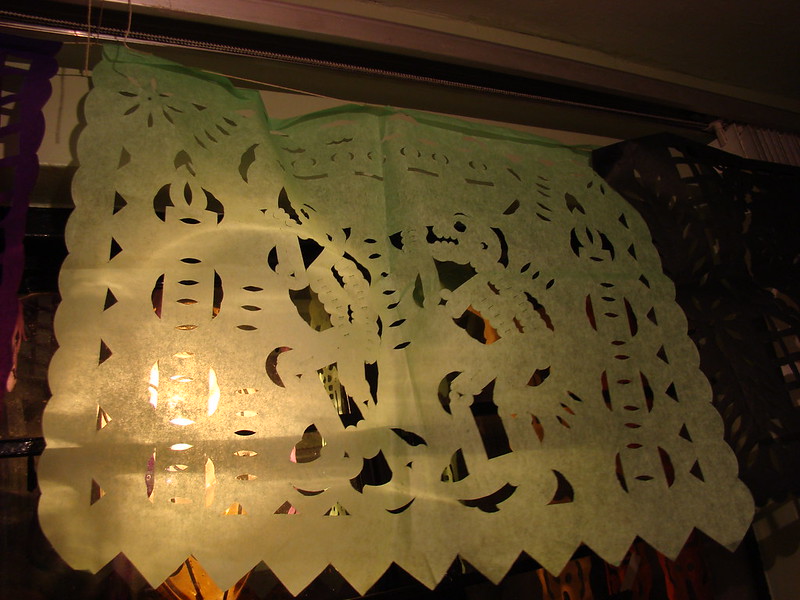
She, I, You, We: Every Woman

By MM Schreier

FIFTEEN

She’s afraid her skirt’s too short, but gives it a little hip-swish, anyway. People are watching. If she owns it, maybe they won’t give her the side eye. Wishing she wore leggings, she considers tugging the skirt’s hem down, as if the sparse fabric could magically cover more of her legs, but knows if she does, it will just give them something else to gossip about.

Instead, she shifts the heavy calculus book that’s tucked under her arm so the title shows. She ignores imagined whispers of thunder thighs and decides it’s better to appear clever. Still, there’s a fine line between chic-smart and nerdy-smart. Her stomach clenches, and she struggles to keep the hint of a coy smile on her lips. She flips the book over and hugs it to her chest. Maybe everyone doesn’t need to know she’s in advanced placement math. She shimmies her hips again and swallows a sigh.

A broad-shouldered jock in a letterman’s jacket gives her a wolf whistle. It cuts across the throng of students. An unnatural hush falls over the crowd as too many eyes focus on her to see how she’ll react. She tosses her hair, blows the boy a kiss, then ducks into the bathroom before anyone can see her cheeks flush crimson.

While she waits for the halls to clear, she touches up her makeup in the mirror. Eyeliner, mascara, powder. A spritz of perfume, a swipe of blush. She digs around in her purse to find the smokey cranberry gloss that turns her lips into a sultry pout. It’s all camouflage. No––war paint.

The bell rings, and she saunters to class wrapped in the armor of feigned confidence. She might feel like an imposter, but at least she looks fantastic. She tells herself it’s all that matters.

TWENTY-SIX

I wake up every morning in my dingy studio apartment, take a deep breath, and repeat my favorite mantra. Visualize, materialize. It’s my habit to bolster myself with a series of pithy motivational quotes. Today is going to be an amazing day. The best is yet to come. Focus on the positive.

Leaning over the rusted fire escape, I take a snapshot of the sunrise and crop out the dumpster. #earlybirdgetstheworm. It’s important to curate my socials with meticulous attention. I tell myself it’s not deception; it’s the highlights reel of the life I want to have.

At lunch, if I turn the plate around and add the right filter, no one can tell that the #perfectsalad is disappointingly wilted. I post selfies from the woods, fresh-faced and smiling like the #trailgoddess I want to be. No one needs to see the hot mess that returns to the car, covered in bug bites and blisters. When the light’s just right, I get a shot of my #newtome Jeep that doesn’t show the rust spots or bald tires. I promise myself the next time I buy a car I’ll be able to afford a nicer one.

There are a million little photo tricks to upsell my reality. I order a second drink when the first is only half gone. After a few sips on the new one, I pose the glasses side-by-side so the solo excursion to the brewery turns into #girlsnight on Instagram. Framing and angles and perspective can make a budget trip to Portsmouth look like the glamor of Cancún. Haircuts, makeovers, vintage thrift store clothes, and suddenly #Iseeyourguylooking. He could be.

It’s exhausting work to fill my feeds with all the right tags––#livingthedream, #singleandkillingit, #mybestlife. If I get enough likes, maybe I’ll believe it’s true.

THIRTY-EIGHT

You power walk everywhere. Not because you’re in a hurry, but so everyone knows you have somewhere important to be. Running would make you look late and scatterbrained. Strolling is for receptionists with nothing better to do than ordering paperclips and making coffee. Not that there’s anything wrong with that—honest work, you know. You’re just driven to prove yourself as a career woman, so you stride with purpose.

Kitten heels clack on the tiles, not too high to be slutty, but still feminine. You must balance both. It’s difficult to speed walk in a pencil skirt and still look graceful. You feel like a drunken calf, hobbled by a cage of carefully pressed pinstripe cotton.

It’s tough being the only woman on the Leadership Team, and it looks bad if you are the last to show up to the meeting as if you’re Greta Garbo making an entrance. Keeping up with the men in their comfortable trousers and loafers requires twice as many steps, twice as fast. Somehow you do it, though it tests your extra-strength antiperspirant. You hope you’re not glistening. Ladies never sweat.

You round the corner to find That Guy from sales blocking the doorway to the conference room. You’re moving too fast. The damned heels skitter on the polished marble as you try not to collide with him. Surely, he’ll step back and give you space. You bounce off his shoulder when he doesn’t move.

Everyone laughs when a man almost a decade your junior says, Whoa there, little lady. You paste on a faux smile and pretend it doesn’t bother you. It appears you’ve made an entrance after all.

FIFTY

We dye our hair an unladylike purple. When asked if we’ve changed our look, we reply, Thanks! Glad you like it. That’s not what they said, but we don’t care. Once, we might have hedged and said it wasn’t exactly what we asked the hairdresser for while secretly loving it. But we no longer have the energy to be ashamed of who we are. Liking ourselves is an act of resistance.

When it’s hot, we wear tank tops and shorts, cellulite and knobby knees hanging out. When it’s cold, we cozy up in leggings paired with oversized hoodies. We have no patience for clothes that bind and pinch and squeeze. Some days, we pull on a slinky dress that hugs our curves and do our hair up in flowing waves. But only if we want to. It’s all on our own terms now. Either way, we remind each other at every opportunity we are beautiful.

We have hobbies, and we don’t hide them. Sure, we do typical middle-aged “women’s” activities like gardening and reading. We also scuba dive and play video games and forge armor and raise newts. We’ve stopped power walking and actually enjoy hiking. It’s peaceful in the woods, and we take our time on the trails. If we post #optoutside it is photos of cool mushrooms or fat toads we find along the way. We can’t remember the last time we took a selfie, but we’re head over heels for the toads.

Shagging is still a good time. We’re fifty, not dead. But we no longer accept being sexualized without our consent. Young, thin, and pretty do not hold the same value as generous, kind, and loyal. We no longer sacrifice our sense of self for love, because we have found it within.

For the first time, we know we are powerful; we are strong. We never truly needed to pretend to be all these things. It was who we were all along. We only wish we had realized we were enough at fifteen. 

TOMORROW

She’ll tell her friend she’s more than just her clothes, her makeup, her hair. Her body is not for consumption. I’ll remind my niece that Internet people don’t care about her. She can stop fabricating an image and live beyond the lens. You’ll teach your daughter she has nothing to prove, freeing her to find success on her own terms. Together, we’ll forge a generation of women who know what they are worth, and that will be our legacy. 


MM Schreier, the author of two speculative collections—Monstrosity, Humanity and Bruised, Resilient, is a classically trained vocalist who took up writing as therapy for a midlife crisis. In addition to creative pursuits, Schreier is on Leadership for a robotics company and tutors maths and science to at-risk youth.

Photo credit: sandra lansue on Unsplash.


A note from Writers Resist
Thank you for reading! If you appreciate creative resistance and would like to support it, you can make a small, medium or large donation to Writers Resist from our Give a Sawbuck page.
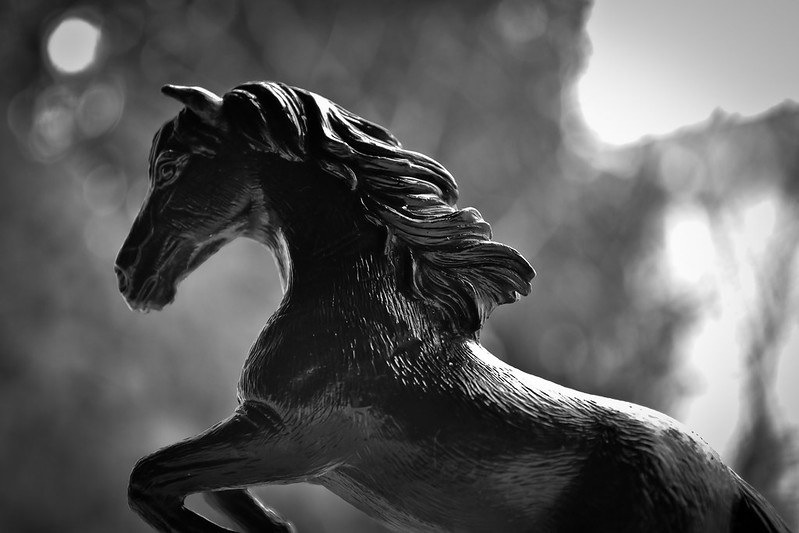
You Can Tell by Looking at Her

By Susan Rukeyser

Purity stood behind the counter at Wildfyre Drug, ready to assist Billionaires in possession of a valid pharmacy card and a signed Terms of Agreement, swearing that none of their purchases would be shared with members of the Worker class.

Occasionally, customers recognized her from her beauty product testimonials, which ran on true crime podcasts. Her niche was aggressive anti-aging for Billionaire’s wives at midlife and beyond.

Here in what used to be Los Angeles, known as The Angels since 2039’s American Language Act, the freezing haze hung low and yellow. The heavily armed security guard at the entrance wore a parka but not a respirator, although most people wore both.

“Men don’t need respirators. Their lungs are stronger,” Purity had been informed by Dotsie, a frequent customer of Wildfyre Drug and also sort of a friend.

Purity was the third wife of Skip Jenssen, an acquaintance of Dotsie’s husband, Dick. Dick and Dotsie were Billionaire class.

Dotsie appeared at the store’s entrance. The security guard recognized her, despite her respirator. Once inside, Dotsie removed it carefully, so as not to disturb her hat, which appeared to be covered in bald eagle feathers, velvety brown and white, very on trend for Winter 2051. Dotsie paired it with a long cashmere dress and vintage down comforter, redesigned as an oversized wrap.

Another employee, a kid named Link, stood across the store by an endcap of two new drugs from Compliance, Inc.: Smile4Me and ChillZout. Link was a Billionaire’s kid working off his community service for rape.

He said, “May I—”

“No,” said Dotsie, heading straight for Purity.

As Dotsie approached, Purity realized the hat Dotsie wore was a live bald eagle, now waking prematurely from sedation. It was secured by loops of brown ribbon. It could not move much, but it tried.

“What do you think?” Dotsie asked.

“About your hat?”

“No, about my Mommy Makeover!” Dotsie spun to give Purity the 360 view, holding out her arms—all four of them. “I splurged,” said Dotsie. “Two eyes in the back of my head, extra set of arms, and of course the entire line of detachable tits. Dick likes when I put a set on my back, ha ha.”

“You look unbelievable,” Purity said.

Dotsie blushed, pleased with the compliment. “So tell me, what’s new, overpriced, and fabulous?” She squinted at the products displayed behind the counter.

“Microrobotic lip enhancement,” Purity said. “From a brand called Face Invaders.” She handed Dotsie a red foil packet. “It’s expensive, but—”

“Purity!” Dotsie scolded. “Don’t be dreary.”

“Sorry. Just hold the packet open near your mouth. The microrobots locate your lips and access them through tiny tears—it’s not that painful, I swear! Then they travel around inside your lips, dispersing a proprietary blend of plumping agents and fillers according to specifications you pre-select in the app. Then they dissolve.”

“Sold,” said Dotsie, plunking down a credit card. “I’ll take five.”

Purity wondered how long it would be before Dick and Dotsie learned that Skip had accused her of adultery? That she now slept on the couch in her sister’s one-room Worker housing? Would Dotsie let her explain that Skip was the cheater, and he projected his guilt? That when he was angry, the first insult he hurled at her was “Worker,” contempt always just beneath the surface of his love?  

Dotsie was a lot, but she was kind. She invited Purity to all her social functions, but some of Dotsie’s friends were sticklers about who qualified for inclusion. Some said, “You can tell by looking at her, Purity was not born Billionaire.”

“Is that one of those Traditional Values credit cards?” Purity asked.

“You are correct,” answered the card. “I am the Traditional Values card, Woman edition, crafted from a polished cross section of real human bone and carried by the wives of Billionaires of exceptional taste and worthwhile portfolio. I ensure the highest level of security for all transactions approved by her husband. When in use, I stream a live feed to both our monitoring station and her husband, offering the premier protection every Billionaire’s wife deserves.”

“Your credit card is a snitch,” Purity said.

“Proceed with the transaction,” said the card.

Purity scanned Dotsie’s human-bone card over glass, causing it to groan in a way Purity did not care for.

Before Dotsie replaced the card in her wallet, it said, “Dick says that’s enough shopping.”

Dotsie pressed her ear implant: “Hover sack, come.” A shopping bag appeared at the door and identified itself to the security guard. It flew to Dotsie’s side.

“Hungry,” it said.

Purity put the five red foil packets of Face Invaders into the bag, and it quieted down.

Dotsie put on her respirator and turned to leave. Then she turned back and said, “Purity, I’ve always known you were Worker class. It never bothered me. Skip told us what he did.”

“I understand this changes everything,” said Purity. “You don’t have to stop shopping here to avoid me. Link can help you.”

“Doubt it,” Link called.

“I don’t want to avoid you, Purity. I always thought Skip was a prick—don’t you dare tell anyone I said that. But listen: You are free. You have a job and you’re famous. You can do anything.”

“I’m not famous,” Purity said.

“You deserve better,” said Dotsie.

“Oh, please.”

“See, there’s your problem,” said Dotsie. “Mine too.”

Dotsie walked toward the door, her hover sack gliding beside her. The eyes in the back of her head stared up at the bald eagle, now wrestling free of its bonds, sending clumps of Dotsie’s hair flying. It let out a shriek.

“I hate this hat,” said Dotsie, but as usual, it looked like she felt nothing.

When she got outside, Dotsie untangled the ribbon and released the bird. It flopped to the sidewalk but swiftly recovered and flew off. Then Dotsie walked on and out of sight, her neatly pinned hair torn loose.


Susan Rukeyser writes and lives in Joshua Tree, CA. She publishes select titles as World Split Open Press and hosts the Desert Split Open to amplify literary work that is feminist, queer, and otherwise radical. Her second novel, The Worst Kind of Girl, is out now from Braddock Avenue Books. Find her here and there: susanrukeyser.com, IG @SusanRukeyser.

Photo credit: Birgith Roosipuu on Unsplash


A note from Writers Resist
Thank you for reading! If you appreciate creative resistance and would like to support it, you can make a small, medium or large donation to Writers Resist from our Give a Sawbuck page.
Welcome to Writers Resist the Winter 2025 Issue

Whether you’re still in recovery or planning your resistance against the incoming regime, there’s plenty of common ground in this the Winter 2025 issue of Writers Resist. Enjoy the art, poetry and prose and then join us for our virtual Writers Resist Reads, Saturday 15 February 2025, at 5:00 p.m. Pacific. Just email for the Zoom link: writersresist@gmail.com.

In this issue:

Mary Brancaccio “This little piece of heaven

Salena Casha “In This Version, Cancer Is a Woman

Karen Crawford “You Don’t Run

Jennifer Freed “Upon Learning, in a Report on the Footage of a Sheriff’s Deputy Shooting Sonya Massey to Death in Her Kitchen, of Massey’s First Words to the Deputy

Jennifer Karp “Postcards from the Valley of the Moon

Flavian Mark Lupinetti “Trigger Warning

M.R. Mandell “Gen X Girls Ghazal

Melissa McEver Huckabay “Why I Fight for Texas Even Though Everyone Says We Should Move

Livia Meneghin “What should be free

Ria Raj “kaala; kala

Ash Reynolds “Uprooted/Planted

Sheree Shatsky “Judged

Beulah Vega “About Those Census Checkboxes

Laura Grace Weldon “Election Day Facebook Exchange

Amritha York “mmiwg


Photo by K-B Gressitt

In This Version, Cancer Is a Woman

By Salena Casha

If we were really there for the battle of Hydra and Hercules, we’d remember the crab. Monstrous, the size of two buildings, difficult to miss with its burnt orange shell. As Hydra’s heads fell again and again to Hercules’ sword, the crab leapt from the murky water and wrapped herself around Hercules leg. Pinched as if Hades depended on it, sinking her claws into his striated calf. Hercules wouldn’t admit it, but if he’d been in a confessing mood, that bite hurt to Mount Olympus and back.

Maybe we don’t remember her because she was a crab first and a woman second, things history likes to forget. Maybe we don’t remember her because Hydra was a villainous female enough for the both of them: two were unneeded. But what if these ladies had just been minding their own business, eking out a living in a desolate swamp when a demi-god with daddy problems tried to make a name for himself? What if the victor told a different story?

What we do know is that they both died, Hydra and the Crab. They often do, these women who find themselves at the wrong end of a man’s pride. And of course, Hercules left, the remnants of a valiant heroine crushed into the grass beneath the weight of his golden club—the first sign that the environment was going to hell in a handbasket because of man. Once she was sure he was gone, Hera herself slid across the damp ground to cup the crab’s powdered exoskeleton in her palm. Bent her face close.

As she lifted her palm to the heavens to immortalize the crustacean in stars, she whispered,

We have not lost yet.

And somewhere to someone, it meant something.


Salena Casha’s work has appeared in over 100 publications in the last decade. Her most recent work can be found on HAD, Wrong Turn Lit and The Colored Lens. She survives New England winters on good beer and black coffee. Subscribe to her Substack at salenacasha.substack.com.

Illustration: Sidney Hall (1831) astronomical chart illustration of the zodiac Cancer. Original from Library of Congress. Digitally enhanced by rawpixel.


A note from Writers Resist

Thank you for reading! If you appreciate creative resistance and would like to support it, you can make a small, medium or large donation to Writers Resist from our Give a Sawbuck page.
Welcome to Writers Resist the Fall 2024 Issue

The collage by Kristin Fouquet is an apt introduction to this issue, launched in the final throes of the chaotic, often hateful presidential campaigning. How wonderful it would be if the joyful prospect of electing the first woman president of the United States could be just that.

Perhaps we can make it so by encouraging all our sisters and other beloveds to use our hard-won right to vote. As Kristin’s artwork warns us, “Suffrage or Suffer.”

But first, a very fond farewell to one of our founding editors, Sara Marchant, who has a few words to share:

In the last days of the late 1900s, I woke up underneath a beanbag chair on the bamboo floor of a thrashed house not my own, missing a shoe, cake-frosting in my hair, and with full awareness that hijinks had ensued. My first thought was: That was an excellent party.

Today, while reading this issue of Writers Resist, please picture me in my pajamas, bedhead resplendent, toasting you, dear readers, contributors and editors, with my second cup of coffee.

Writers Resist was born from worried dread about our future and righteous anger over our present reality, and there is still much work to be done, but I know I leave her in capable hands . . . and it has been an excellent party.

Now, this issue has a notable dose of dystopias, but—or because of that—you should find some kindred souls in the works of our contributing writers and artists—and if you’d like to join them for our virtual Writers Resist Reads, on Saturday 16 November at 5:00 p.m. PACIFIC, please request the Zoom link via WritersResist@gmail.com.

D. Arifah, “Watching Over the Horizon

Linda Bamber, “Endless War

Robyn Bashaw, “Beware the Homo Sapiens

Cheryl Caesar, “Grass

Chiara Di Lello, “Abecedarian for Billionaires

Matthew Donovan, “I Believe Her

Kristin Fouquet, “Suffrage or Suffer

Ellen Girardeau Kempler, “Poem in Response to Mass Shooting Number 130 in the United States 2023

Michael Henson, “The Dream Children of Addison Mitchell McConnell III

Jacqueline Jules, “How I Feel About the 2024 Election

Craig Kirchner, “The Coming

Christian Hanz Lozada, “When I hear ‘migration,’ I think of ships

Rasmenia Massoud, “Who We Are, More or Less

Ryan Owen, “Breathe

Kate Rogers, “Sisters

Elizabeth Shack, “tree : forest :: ad : internet

Angela Townsend, “French Kissed

Rachel Turney, “Respect

Diane Vogel Ferri, “Election Day