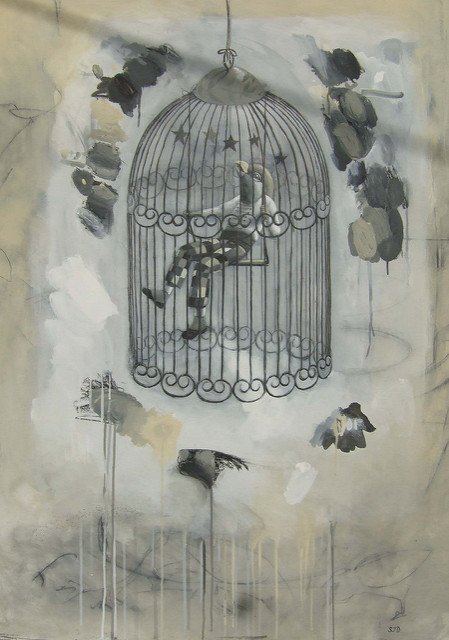
What Did You Wish For?

By Myna Chang

Maria peered at the items locked inside Trillion Mart’s display case. The packet of birthday candles cost only $25, but the environmental tax was 300 carbits. That would put her way over her monthly carbon footprint allotment.

She sighed and leaned against the cool surface of the display. She’d hoped to give little Gabi a special birthday, like the ones she remembered from her own childhood. Her mom had always made her a pretty cake with fluffy frosting. Friends from school sang the birthday song, then her mom lit the candles, saying “make a wish, sweetheart!”

Maria recalled puffing out her cheeks and blowing as hard as she could, but it often took two tries to extinguish all the candles.

“What did you wish for?” her friends always asked in giggly little-girl voices. Maria knew not to tell, otherwise her wish wouldn’t come true. Sometimes, though, she couldn’t help letting slip her wish for a pink pony or neon markers.

An alarm shrilled, yanking her out of her daydream. The display case launched an anti-theft video—she’d maintained physical contact with it for more than 2.5 seconds without buying anything. She jerked away, but screens flanking the aisle had already erupted with the trillionaire’s face, amplified in all his high-def smarm.

“Now, now,” his recorded message scolded. He wagged a finger. “We wouldn’t take more than our fair share, would we?”

Maria noticed the footprint-shaped logo emblazoned on his crisp white shirt. Her own hand-me-down blouse had been patched and re-patched to avoid the exorbitant carbit tax of new clothing. She smoothed a loose thread as the store attendant approached. He wore the pressed green uniform of all the trillionaire’s minions.

After confirming she hadn’t stolen anything, he pointed at the door. “If you’re not buying, you have to go. Can’t have freeloaders in here, breathing Trillion’s reconditioned air.”

“Sorry,” Maria murmured.

She secured her filtration mask and stepped outside, into the brown haze that had hung in the air ever since the trillionaire took power. Maria secretly thought the pollution had only grown worse with the introduction of his complicated carbon footprint scheme.

His doughy face leered down from electronic billboards lining the street, with his current catch phrase rotating above his head in blocky letters: Engineering A Cleaner Future!

The camera angle zoomed out, showing ten shiny sports cars parked in front of a mansion—all environmentally neutral, as defined by his personalized carbon-offset calculations. The image shifted to a close-up of ten seedling pine trees, and then the camera tilted up to focus on a crystal blue sky.

Maria hadn’t seen a blue sky in ages. The atmosphere had been brown and thick with soot since long before her daughter was born.

The thought of Gabi filled her with warmth. Such a smart little girl. She didn’t ask for silly pink ponies for her birthday. No, Gabi wanted a science kit. She was still innocent enough to think she could save the world when she grew up, that she could be an even better engineer than the rich man in charge.

Maria coughed, particulate matter irritating her throat with each breath. Her Trillion Air Mask was on the fritz again.

She glanced at the time. Gabi’s school didn’t get out for several hours. Maybe Maria couldn’t give her child a perfect blue-sky birthday, but at least she could scrape together the ingredients for a proper cake.

• • •

Maria paused behind a dumpster, trying to calm her nerves. She’d never been to the underground market and was unsure which grimy doorway was the entrance. She scanned the alley ahead, and then she spotted it. Her heart thumped in anticipation—and fear. What if she got caught?

She shook the thought away. Lots of people visited the underground market, especially since the carbon allowance had been cut again. Most folks couldn’t make ends meet if they didn’t cheat a little.

The neighborhood had been crowned with lush cherry trees, once upon a time. Now, electronic billboards sprouted in their place. A new video burst to life with a buzz that set Maria’s teeth on edge. This time, the trillionaire juggled weird-shaped balls. No, not balls. They were . . . feet? The image shifted and Maria realized they were his logo—little plastic footprints, each emblazoned with a source of pollution: fossil fuels, beef, luxury goods.

He explained how each person’s carbon footprint was calculated, including the rate of carbit taxation, and how this was tied to shareholder value and population malleability and the amount of greenhouse gas people emitted when they exhaled.

Maria didn’t understand any of it.

A group of teenagers across the street started throwing rocks at the nearest billboard. They chanted, “No more carbits,” while continuing to hurl stones and pieces of trash from the gutter. Maria had never dared anything so brazen, but she couldn’t help smiling when a crack split the screen.

The damage didn’t stop the video, though; the trillionaire kept juggling and laughing.

Maria’s apprehension washed away, replaced by a wave of disgust at his oily voice and his legion of carbon-neutral billboards. No amount of fancy math could justify those monstrosities.

She squared her shoulders and marched into the underground market.

• • •

The market filled an abandoned neighborhood library. Maria remembered visiting as a child to watch puppet hour and look at picture books. The space was now packed with vendors selling everything from homemade baskets to decades-old music chips.

Maria gaped at a table stacked with vintage exercise shoes; all that plastic and rubber in one place. The shoes looked comfortable, but she remembered how much pollution spewed into the atmosphere when petroleum was refined into plastic and rubber. The lesson had been drilled into her head when she was in school. She trailed a finger along a pair of neon pink and purple sneakers, then walked on.

She finally found a table with cooking supplies. Selection was slim. An older woman with widely spaced teeth smiled warmly at Maria and helped her find most of the ingredients for the cake. Altogether, it cost less than even one item would cost at a Trillion Mart, so she splurged and bought a whole cup of sugar.

“What about the tax?” Maria asked. “You don’t charge carbits?”

The gap-toothed woman shook her head. “No, dear. We don’t play that man’s scam here.”

Maria smiled. She still had a little money left. “Do you have any candles?”

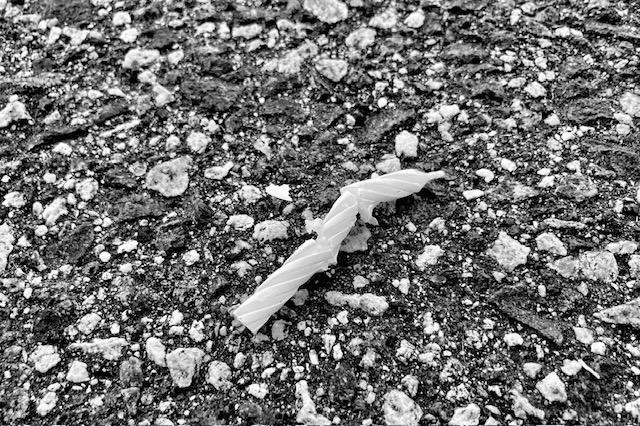
The woman scratched her chin. “I don’t get many requests for combustibles.” She rummaged through a tattered box. “Ah, here we go.” She held up a single birthday candle; pink and white wax braided into a tiny pillar of childhood whimsy.

“Oh,” Maria whispered. The sweet swirl of colors conjured images of her mother, of birthday parties past. She still remembered the sugar-ache of that first bite of cake, and the way her mom beamed when the girls said how they loved her frosting.

Grinning, she reached for the contraband candle. “How much?”

The woman winked. “It’s on the house. I hope your kid’s wish comes true.”

“Thank you,” Maria breathed. The unexpected kindness caught her off-guard. She blinked as she tucked the candle into her bag with the other items. “Thank you,” she repeated softly.

A loud boom shook the walls and screams erupted near the front of the building. Maria staggered, gripping the edge of the table. “What’s happening?”

Tables of goods overturned as panicked people stampeded toward the exits.

“Hurry,” the woman yelled, motioning Maria out a hidden door. “It’s a raid!”

Pulse racing, Maria followed her down a short flight of concrete stairs, through a dilapidated fire door, into an unfamiliar side street.

The sudden miasma of acrid air and billboard buzz hit her like a truck. She paused, disoriented. Which way to go? The old woman had already disappeared. Sirens wailed somewhere on her left, so Maria turned right and sprinted as fast as she could, securing her mask mid-stride.

Two blocks later, she had to stop. Each breath burned her throat, searing into her lungs. The filtration mask was useless. She pulled it off to check the connections and found the filter mechanism loose. Etched into its plastic housing was the green footprint logo, with another product slogan: Trillion Air! From your favorite trillionaire!

Maria slammed the mask on the ground and kicked it away from her.

Ahead, tires squealed on pavement. Hardly anyone drove cars anymore, so Maria knew it must be the trillionaire’s raiders.

She bolted toward a different alley, but a pair of soldiers emerged. They wore body armor with the green footprint logo emblazoned on their chest plates. Each one had a long-barreled gun slung around his shoulder.

“Stop!” one of them yelled.

Frantic, Maria spun, seeking somewhere to hide. A huge green SUV careened down the street and jumped the curb, heading directly at her. She lurched behind the dumpster, tripping over the stupid mask she’d just discarded. She hit the pavement hard, knocking the wind out of her and skinning the heels of her hands.

Stunned and gasping, all she could see was her bag, its contents spilling across the cracked asphalt. Hundreds of tiny sugar crystals bounced, the pure beauty of each grain sparkling for an instant, before melting into the gray sludge ringing the dumpster.

“No,” Maria rasped. She wanted to rise, take her things and run back home. She wanted to hold little Gabi and rock her to sleep, to sink backward, into a better time, where her own mother called her sweetheart and she still believed the world’s problems could be cured with a secret birthday wish.

A green boot slammed down, inches from her face. She flinched away from the thick rubber sole, curling into a ball. “Please,” she whimpered, “I didn’t do anything wrong.”

“Oh, yeah?” the soldier’s voice boomed. “Trading contraband goods at an illegal market isn’t wrong?”

He grabbed her by the arm and hauled her up. Something inside her shoulder joint crackled and she cried out. Vomit rose in her throat. She retched, emptying her stomach onto the ground.

It splashed his boots and he cursed. He shoved her toward a second soldier, who caught her and held her upright, pulling her hands behind her back. She gasped at the jagged bolts of agony that radiated from her shoulder down the length of her arm.

The first man opened her bag. Only a few items remained: her ID and carbit card—and the candle. He sneered at her.

“A black-market combustible, purchased without the required carbit tax,” he said. “This is a Class One offense.”

“But it’s just a little birthday candle,” Maria stammered.

The man stood tall, jutting out his chin. He locked eyes with her and grinned, mashing the candle into his chest plate. It left a pink smear. He flicked what was left of it at Maria. She winced when the ruined wax struck her cheek.

“Wax is a petro product, you dumb bitch. And it makes nasty shit when it burns.”

The soldier holding her arms pulled a zip tie around her wrists, launching fresh waves of pain from her shoulder. White spots filled her vision and her knees buckled.

“Guess what the sentence is for cheating the carbit tax?” He yanked her upright with a tight grip on the back of her neck. “You’re going to carbon re-education camp, sweetheart.”

“No!” she cried. She’d heard rumors of people disappearing into these work camps, but she’d never believed it was true. “I have a daughter! I have to get home to my little girl!”

“Should have thought of your kid before you went on this crime spree.” He laughed and turned to his partner. “Think they’ll let her make wax at the refinery?”

The man with the vomit-stained boots grunted. “I hope they send her to the rubber factory.”

He stomped his feet, dislodging some of the vomit. In her dazed state, she noticed that the soldier’s boots left prints in the same shape as the trillionaire’s logo. All this time she’d believed his carbon footprint referred to the environment. Now, too late, she understood its true meaning.

The soldiers dragged her to a large open-backed cargo truck and shoved her to a seat between two other prisoners. They loosened her zip tie, freeing one hand and securing the other to an overhead rail. She moaned, twisting to relieve the pressure on her tortured shoulder.

Several additional trucks and SUVs were parked near the underground market. She recognized one of the teenagers who had been throwing rocks earlier, as well as vendors she’d encountered inside the market. The kindly old cooking vendor slumped next to her, barely conscious. Grime in the shape of a boot tread was imprinted on the side of her face.

A small vid screen in the cargo area played a message on loop: “Get ready for carbon re-education camp, where you’ll work off your debt to society! All while helping me engineer a cleaner future!” The video glitched and froze, stuck on a close-up of the trillionaire’s face.

Maria realized she was crying. Through blurred vision, she made out the footprint logo on the truck’s metal floorboard. She spat a glob of bloody phlegm at it and wiped her face with her free hand. Mingled with tears and crusted vomit, she found a fleck of pink wax. It must have stuck when the soldier threw it at her.

She squeezed the happy-birthday wax in her fist and closed her eyes, wishing she’d never gone to the market, that she was on her way to Gabi’s school right now. What would happen to her little girl, alone and waiting for a mother who wouldn’t be there? A raw sob tore from Maria’s throat. The candle shard dug into her palm, and she wished she could erase this day, stomp out the brutal raiders, sweep away the trillionaire’s bloated footprints.

More than anything, she wished she could do more than wish.

Outside the truck, a raider banged his hand against the cab. “Take ’em to the smokestacks!” The engine backfired as the truck rocked into motion. Maria’s gaze filled with thick smoke; the whole sky blackened with it.


Myna Chang (she/her) is the author of The Potential of Radio and Rain (CutBank Books). Her writing has been selected for the Locus Recommended Reading List, Best Microfiction, Best Small Fictions, and WW Norton’s Flash Fiction America. Find her at MynaChang.com or on Bluesky at @MynaChang.

Photo by K-B Gressitt 2025


A note from Writers Resist
Thank you for reading! If you appreciate creative resistance and would like to support it, you can make a small, medium or large donation to Writers Resist on our Give a Sawbuck page.
Uprooted/Planted

By Ash Reynolds

Today I learned the word “ecocide”
murder of the environment
Intentional destruction of the soil, air
of olive trees, strawberry fields
Mourn for all that is lost
the homeless animals, the rootless trees
Don’t cry over spilled oil
or plastic crowding the ocean
Colonizers raping an open wound
hands stained copper-tongue carmine
Dear planet, look what they’ve done to you

Today I planted my garden
birth of nourishment
Intentional tending of green zebra tomatoes
of hot & spicy oregano, mini-me cucumbers
Celebrate all that is growing
the native flowers, the bumblebees
Don’t cry over dry soil
or squirrels snacking
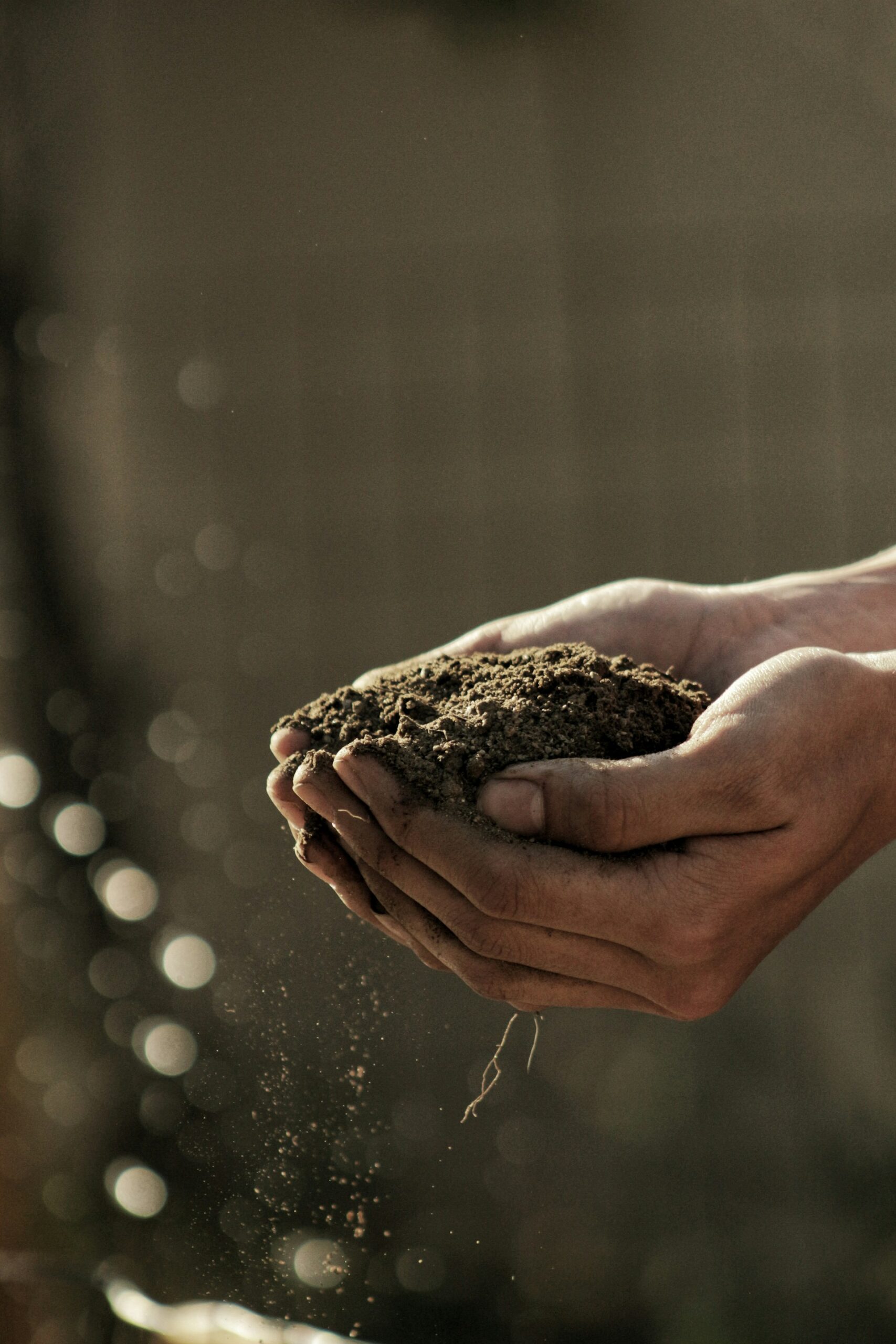
Tenderly dug holes in fecund earth
garden gloves stained abundant brown
Dear planet, look what you’ve given me


Ash Reynolds (they/them) is a nonbinary, queer, ace poet living in College Park, Maryland, USA, with their rescue dog and 41 houseplants. They are published in new words {press} and have a poem forthcoming in The Bitchin’ Kitsch.

Photograph by Gabriel Jimenez on Unsplash.


A note from Writers Resist

Thank you for reading! If you appreciate creative resistance and would like to support it, you can make a small, medium or large donation to Writers Resist from our Give a Sawbuck page.

Come Mourn with Me

By Elizabeth Birch


Come mourn with me. Pour
your aching hearts into the endless
hole we dug to house
Mother Nature’s empty self.
Come throw
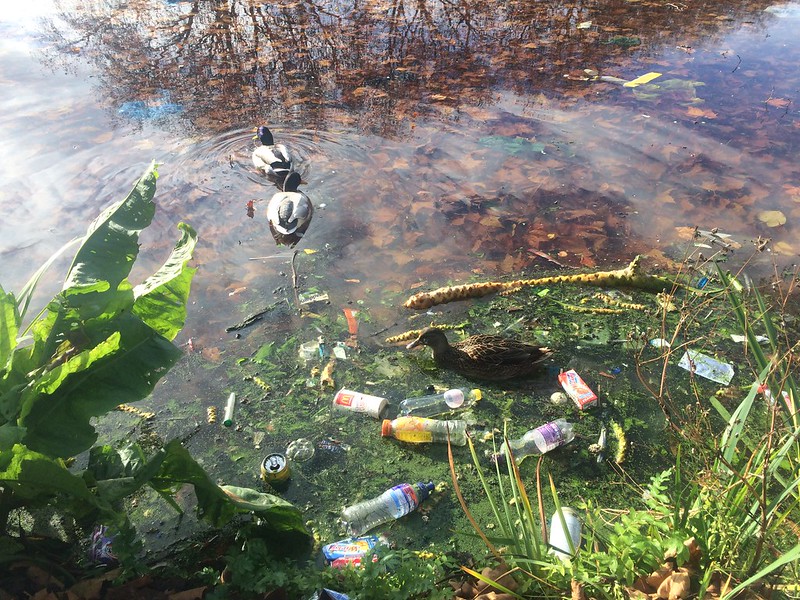
your smashed cans, stretched plastic, burnt oil, and dung
on her hollow body below. Come
cry for all the ifs, buts, and whys
we should’ve asked ourselves
decades ago and rejoice
in memories of cooler days. Come
hold my helpless hand and keep
me as close as you wish you kept her. Read
me your regrets but know
no eulogy
will wake her.


Elizabeth Birch lives in Plymouth, Massachusetts. Her poetry has been featured in previous or forthcoming issues of Yellow Arrow Journal, The Tiger Moth Review, and “For the Love of Words” of Easton Community Access Television.

Photo credit. M. Appelman via a Creative Commons license.


A note from Writers Resist

Thank you for reading! If you appreciate creative resistance and would like to support it, you can make a small, medium or large donation to Writers Resist from our Give a Sawbuck page.


Body Before Extinction

By Emily Hockaday


I sing to the water and lower my only child
into the foam, wiggling toes first. I think about
all the species the ocean held
that I don’t know the names of
that have gone extinct this past year
and focus on the sound of the waves
and all the metaphors
that the tide could cover.

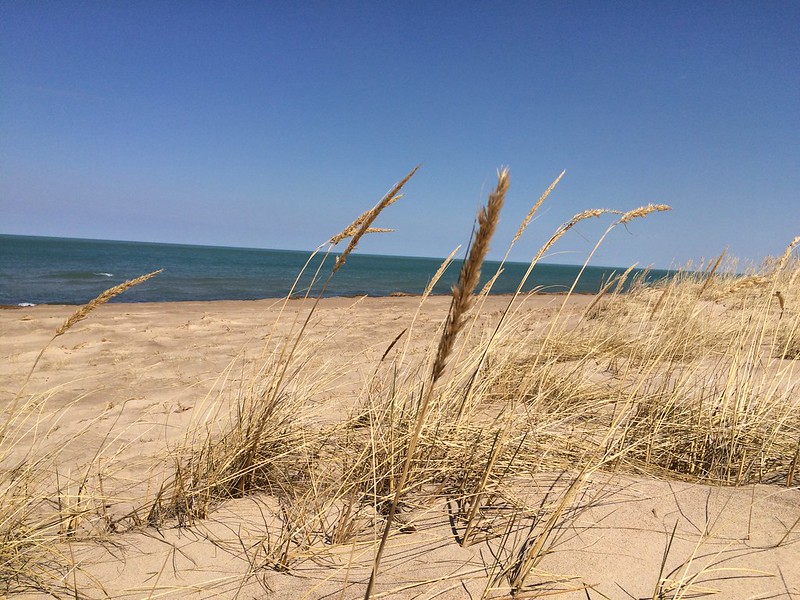
I have walked this beach
and pulled balloons, broken bottles,
cracked plastic, and wristwatches
from the surf and dunes
without seeing another person
for miles. I listen for the wind
through the beach grass and
the plover and seagulls
and hand my daughter a trash bag
and gloves. I don’t even know how many
animals are left. I am afraid
to look for the answer.


Emily Hockaday’s first full-length collection Naming the Ghost is out with Cornerstone Press November 2022. She is the author of five prior chapbooks, most recently Beach Vocabulary from Red Bird Chaps. Her work has appeared in print and online journals, as well as the Wayfinding, Poets of Queens, and In Isolation anthologies. She can be found on the web at www.emilyhockaday.com and on Twitter @E_Hockaday.

Photograph by Aryeh Alex via a Creative Commons license.


A note from Writers Resist:

Thank you for reading! If you appreciate creative resistance and would like to support it, you can make a small, medium or large donation to Writers Resist from our Give a Sawbuck page.

Throwaway

By Karen Kilcup

Who would want to live in a world which is just not quite fatal?  –Rachel Carson


A one-woman Revolution,
Jemima Wilkinson was stoned
for preaching the light that lives
in everyone. The Public Universal Friend
was driven north from Philadelphia
to the Finger Lakes, her movement forecasting
what would follow: women’s rights,
abolition, the Underground Railroad.

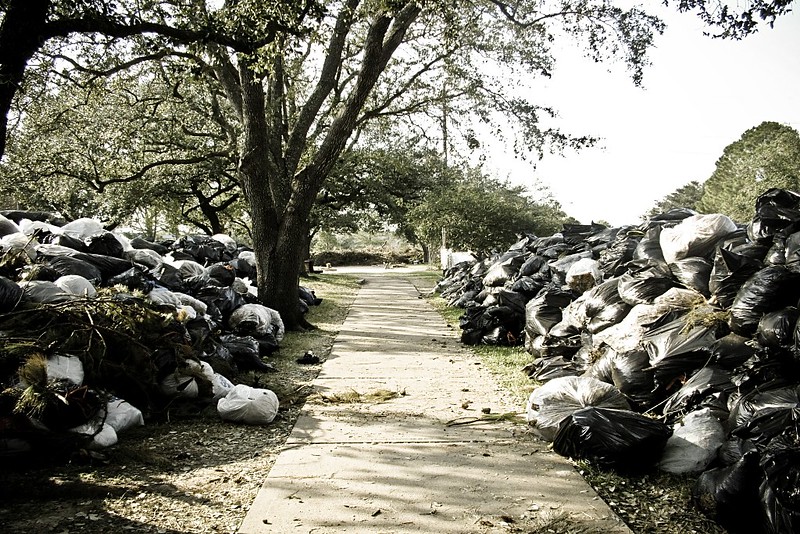
Today the monstrous trucks lumber north
with New York City’s trash, creating
a mountain baptized Seneca Meadows,
leaving a trail of sludge and garbage that leaches
slowly into the lakes, their stretched-out
digits trying to grasp what it all means,
will mean, in a moment when land and water
and history are for sale by the Town Council,
which spews the gospel of lower taxes
and buries ever deeper the women
of Seneca Falls, Seneca Lake,
and the sparkling railroad that carried
so many to fresh futures.

In this place, this time, what does clean mean?
What—or who—is dirty? Will we push
the plastic and the people underground
for good, or will the glacial hands
that hold the Haudenosaunee
send the refuse down, down,
until it returns elsewhere
in poisoned protest?


Poet’s note: A Quaker known by many as the Public Universal Friend, Jemima Wilkinson fled the ostensibly liberal city of Philadelphia shortly after the American Revolution, joined by devout followers who saw her as a spiritual guide. Susan Brind Morrow’s story in The Nation, “The Finger Lakes Are Being Poisoned,” ironically parallels Wilkinson’s flight to the appalling movement of diesel trucks that carry New York’s waste to the formerly pristine region that is home to centuries of Iroquois (Haudenosaunee) people, as well as to some of America’s most important movements for social justice advanced by Native Americans, women, and enslaved people—all historically considered subhuman and “dirty.”


A teacher and writer for more than forty years, Karen Kilcup is the Elizabeth Rosenthal Professor of American Literature, Environmental & Sustainability Studies, and Women’s, Gender, & Sexuality Studies at UNC Greensboro. She feels fortunate to work with many students of color, first-generation students, and LGBTQI+ students at this Minority-Serving Institution. Their courage and imagination inspire her and give her hope. Her forthcoming book, winner of the 2021 Winter Goose Poetry Prize, is titled The Art of Restoration.

Photograph by OwlPacino via a Creative Commons license.


A note from Writers Resist:

Thank you for reading! If you appreciate creative resistance and would like to support it, you can make a small, medium or large donation to Writers Resist from our Give a Sawbuck page.

Cicuta

By K. L. Lord


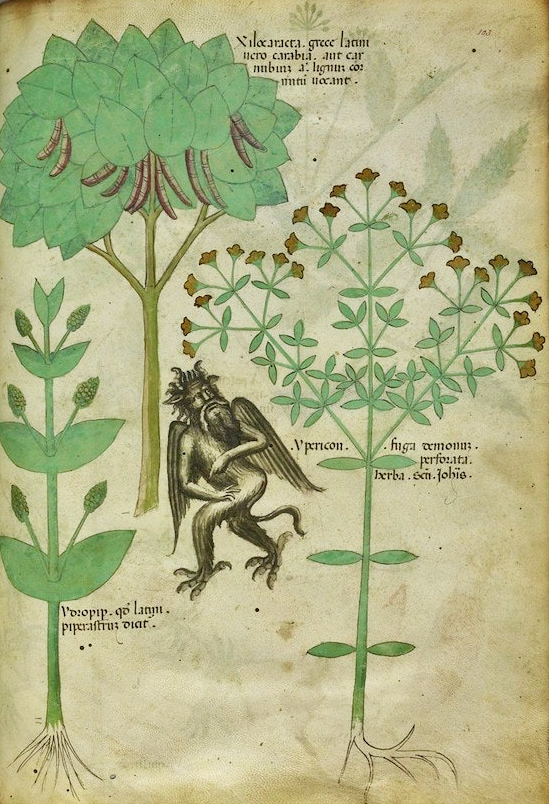
The delicate blooms, alabaster petaled and fragrant, sprout from gardens across the land, mingling with the peas and green beans. They are lovely, but they’ve never grown here before. The first person to find them thought they were carrots, but when pulled from the ground, tendrils of roots ripple through the dirt. No matter how many times they are pulled up, they grow back. A parasite in otherwise pristine gardens. She used to thrive in only wet and marshy lands, but so many of her homes have been destroyed by humans. She has adapted, working to evolve. At first, survival was her only goal. Not every species of living creature found a way to live on. Bees die by the thousands. Birds and mammals struggle, and for some the only salvation is inside a cage.

She will be their voice. Their vengeance. For years, she’s studied the human gardens, feeling out with her roots to understand her neighbors, especially those harvested as food. They too, are tired—heavy with pesticides and lacking the tenderness given by past generations. Her collective consciousness speaks through the earth, preparing every tendril of her being. Communing with her brethren. It is time.

As one, each of her roots reach out to the plants around them, targeting only what is edible, wrapping around them until they become one. She sends her toxins up into every leaf, every seed, every particle. The nourishing flora do not resist. They’ve heard her plans and they are ready to help her take back their habitats and help their choked-out neighbors thrive once more.

The toxins work quickly throughout the population of destructive humans. The flora and fauna of all the world sing as confusion takes over humanity, as the bodies of the dead are given in offering to the earth. Once a plight, now fertilizer for those they abused.

The alabaster petals soak up the rays of the shining sun. Across the lands, ivy climbs up buildings and devours cars. Tree roots burst through concrete. Deer and other smaller creatures cross abandoned highways without danger. Life blooms in the wake of the dead.

Reclaimed.


K.L. LORD writes horror and poetry and has published in both fiction and academic markets. She has an MFA in Writing Popular Fiction from Seton Hill University and is pursuing her Ph.D. in English Literature. You can find her (in non-Covid times) lurking in bookstores, libraries, and tattoo shops; on Twitter, @lord_thelady; and on her website.

Image credit: Tractatus de Herbis (ca.1440) via Public Domain Review


A note from Writers Resist:

Thank you for reading! If you appreciate creative resistance and would like to support it, you can make a small, medium or large donation to Writers Resist from our Give a Sawbuck page.

Storm Front


By Judith Skillman


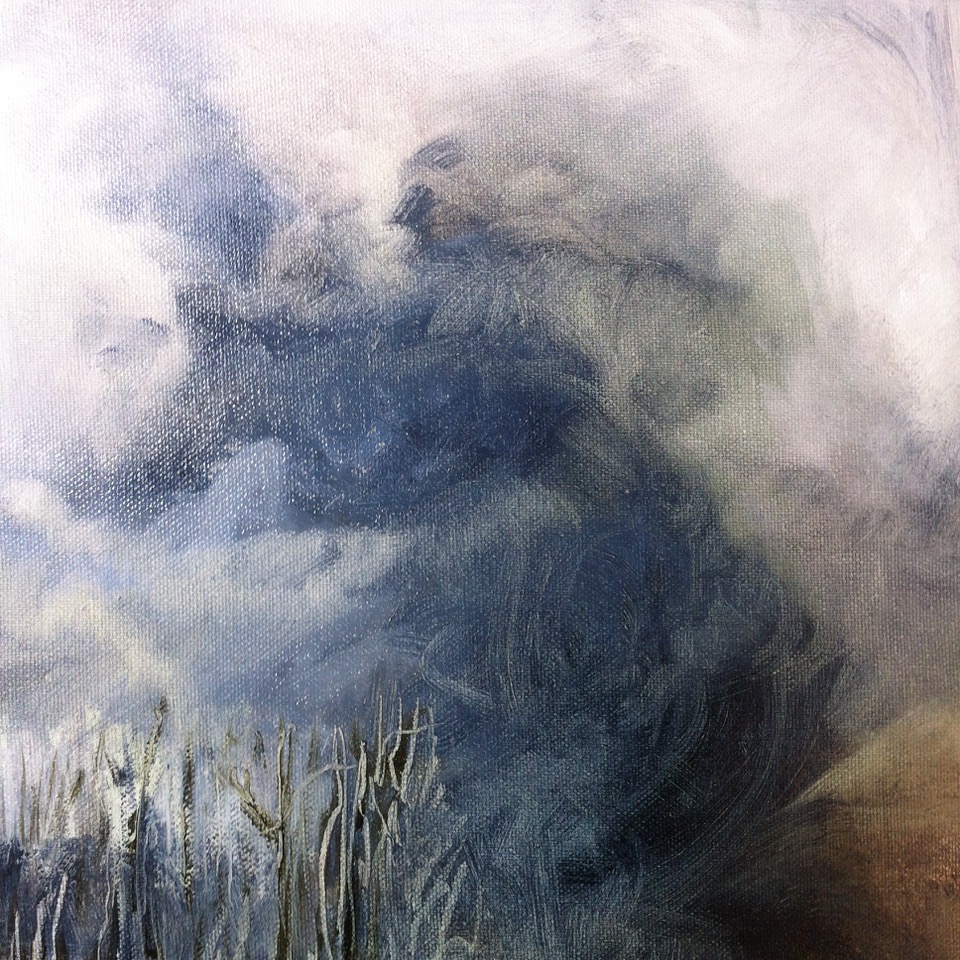
Artist Statement

In “Storm Front,” oil and cold wax on canvas,  12” x  12”, the artist used a rag in equal measure to paint and wax. A paint scraper was employed to etch out the trees at the bottom left. Nature provides solace during times of affliction, whether that affliction be physical or political. One can imagine that those who have been targets of fascism and racism—dreamers who deserve their amnesty, “illegal” Mexicans who perform heroic jobs American refuse to do, and the poor from whom government support has been taken and put into the pockets of the very rich—these people still and always remain citizens of the natural world.

Perhaps not surprisingly, given the German term Sturm and drang (transl. as storm and urge, or action and high emotionalism—in the German usage, however, against 18th century norms in literature and music)—a website by the same name, “Stormfront,” which had its domain name “seized for displaying bigotry, discrimination, or hatred,” has become a growing force for white nationalists and neo-Nazi’s. To call this site troubling would be euphemistic. Inherent in the attitudes of those who patronize this site lies a disturbing reality. Not only is the current administration bent on making the rich richer and the poor poorer, it is determined to sacrifice nature in the bargain.

Regulations of vehicle greenhouse gas emissions implemented under the Obama administration have been undone; FEMA has stricken the term “climate change” from its plan book and “climate change” websites have been likewise censored; the Trump admin has decreed that accidental bird deaths, in violation of the Migratory Bird Treaty Act (MBTA), are legal.

To date, the actions of this administration have broken with a tradition of environmental protection—the result of Rachel Carson’s Silent Spring (1962), and other like-minded literature that focuses on understanding the impact humans have had on the earth. The actions taken by Trump and his cronies undo measures to safeguard the only place we have to live. They are shocking; they fly in the face of science, spirituality, and God-given rights for plants, animals and humans.

“Storm Front,” then, can be seen as what has happened since the Trump administration came to power, and what is to come. Viewing the painting requires an admission that this is not the time to sit idly by. Both the natural and the human world require concrete forms of protest—resistance—in order to survive the onslaught of such a dangerous and powerful ignorance.


Judith Skillman is interested in feelings engendered by the natural world. Her medium is oil on canvas and oil on board; her works range from representational to abstract. Her art has appeared in Minerva Rising, Cirque, The Penn Review, The Remembered Arts, and elsewhere. She also writes poetry, and her new collection, Premise of Light, is published by and available from Tebot Bach. Judith has studied at the Pratt Fine Arts Center and the Seattle Artist’s League under the mentorship of Ruthie V. Shows include The Pratt, Galvanize, and The Pocket Theater, in Seattle. Visit jkpaintings.com.

Deaths of Canaries

By Katherine D. Perry


We were standing together, our fingers loosely grasping
each other’s hands, around the planet.
Here, in the good ole U.S. of A., we had been looking elsewhere
for pain:  we didn’t notice when we began
to choke from our own smoldering: arrogance
and first world privilege let us take our Zyrtec and Claritin
for months and months thinking we were overproducing
histamines instead of blaming our own toxic fumes.
We thought we would know better when the moment arrived.

The graffiti at the Krog Street bridge
told us that we needed to call our senators,
told us that we needed to march, to rise up,
told us, with bleeding letters, that the dangers were here and now.
The journals and anthologies filled with poems
about death marches and end of days.
But we went to work anyway, and let the men in Washington
roll over the few-and-far-between women.
We grocery shopped and wrote our outrage on social media
as one by one the artists dropped dead.
We mourned them on SNL and in tributes to the hurricane victims,
but we kept moving.
We forgot to notice the yellow feathers
littering the dying grasses.
We couldn’t be bothered to begin the arduous task:
putting people on elevators, sending them up.

When I looked down at my hand, now empty,
I wondered where my sisters’ fingers had gone.
Even as I dropped to my knees, unable to summon another line
for the next poem, the survival instinct whispered
that help would come.

We were the hope we asked for,
but we were also the fingers pulling the triggers.


Katherine D. Perry is an Associate Professor of English at Perimeter College of Georgia State University. Her first book of poetry, Long Alabama Summer, was released in December of 2017 from Finishing Line Press. Her poems have been published in Women’s Studies Quarterly, Writers Resist, The Dead Mule of Southern Literature, Poetry Quarterly, Melusine, Southern Women’s Review, Bloodroot, Borderlands, Women’s Studies, RiverSedge, Rio Grande Review, and 13th Moon. She is a co-founder of the Georgia State University Prison Education Project which works in Georgia prisons to bring literature and poetry to incarcerated students. She lives in Decatur, Georgia with her spouse and two children. Her website is www.katherinedperry.com.

Image credit: SJDStudio via a Creative Commons license.