
Don’t Talk About It   

By J.L. Scott

John Jacob tried to keep his eyelids from falling over his eyes, his chin resting in his left palm. The 7th-graders had to report to school at 7 a.m. now, which meant a bus pickup time of 6:15 and a wake up at 5:30. His mother grumbled about it nearly every morning, about how they didn’t have to be to school until 8 back in her day, and how they got out at 3. Three pm!! With a release time of 5 p.m., John Jacob could barely imagine what it would be like to be released from school so early in the afternoon. He blinked and held back a yawn, completely tuning out Mr. Benson in his attempt to stay awake.

Mr. Benson wasn’t a bad teacher. In fact, he was about the best kind of teacher you could expect at public school these days. He had a real college degree, not just a teaching certificate. He volunteered as the boys’ basketball coach, and none of the girls had a secret code about him. Not that John Jacob knew of anyway. He wasn’t really friends with any girls, but he knew what the codes meant and tried to make sure they never made one up for him.

Mr. Benson taught social sciences, which was a lot about how governments worked and what an economy was. They also learned about stuff like propaganda, and John Jacob was supposed to be working on a project with Emmerson Klank making a commercial for the upcoming election. John Jacob wanted to use the “bandwagon” approach, but Emmerson wanted to use the “glittering generalities” approach and get an AI generator to make a video with that actress Piper Rubio in a bathing suit, so they hadn’t done anything for the project yet.

Today, Mr. Benson was going over ways propaganda had been used in the past and John Jacob found it intensely boring. His best friend, Omari, was out sick with covid, so there was no one to distract him with joke-notes or silly faces. He’d tried looking out the window, but there wasn’t much to see but the blacktop under parked cars and the chain-link fence. The sleepy feeling had started in last period, Mrs. Meyer’s language arts class. Mr. Benson’s room was warm, the sun pouring through the curtained windows, and John Jacob had stuffed a protein bar down his gullet in the hall as he walked the three doors down, so now his stomach was full, too. He felt his mouth start to gape as his resistance finally failed and sleep began to steal over him.

BANG!

John Jacob startled awake hard enough to make his desk squeal against the floor tiles. His mind screamed “shooter!” and his heart answered by thudding hard enough to make his chest hurt. His eyes darted around while his brain registered that the other students seemed calm, though everyone’s attention had snapped to the classroom door.

The door was always locked once class began, inside and out, and only the teacher and the principal had the pass key to open it, so John Jacob wasn’t surprised to see Mr. Culver and his bushy mustache under his tiny button nose. It was surprising, though, to see the three police officers behind him. John Jacob sat up a bit straighter, the sleepiness banished. He could already see from the corner of his eye that a dozen students were livestreaming from their ER watches, and he reached under his desk to activate his own as well. His was only basic, with a tracker, camera, and 911 button, but his mother had sprung for the grey and blue band he’d asked for instead of the red that came standard. All of them could livestream once enough of the watches were activated so that people outside could Witness.

There clearly wasn’t an active shooter, but the livestreaming had kicked on. His mom’s phone, wherever she was at this moment, would be displaying Mr. Benson getting more and more aggravated with Mr. Culver’s whispering, the officers crowding in closer and closer behind him.

“Seriously, Phil?” Mr. Benson finally cried loud enough to startle the students, throwing his hands in the air. “Is this the state of education this country has come to? We can’t discuss confirmed facts anymore? We dare not attempt to prepare our students for their future because it isn’t part of our current understanding?”

Mr. Benson was red in the face. John Jacob was surprised. He’d never seen Mr. Benson angry before, never heard him raise his voice except at basketball games, trying to be heard over the squeaking shoes and thudding of the ball. The outburst seemed to be all the police officers had been waiting for because they shoved Mr. Culver to the side and practically barreled into Mr. Benson. One officer shoved the teacher into the white board, crushing Mr. Benson’s face into the lesson he’d been teaching, the dry erase marker smearing from the wetness of his breath and sweat. While the second officer pulled his arms behind him to cuff him, the third officer delivered a punch to Mr. Benson’s side that had the whole class gasping, including John Jacob. He’d seen plenty of people beat up by the police on the news, but somehow, that single low blow seemed like the most violent thing he’d ever Witnessed.

“Now, c’mon, that isn’t necessary!” Mr. Culver cried, but he didn’t move from the wall he’d been pushed up against.

“Suspect is resisting arrest,” one of the officers declared from behind his plastic mask. “Actions of officer are warranted.”

“What resisting?” Keisha Jefferson said from behind him, and John Jacob nearly turned to give her an impressed smile, but the police were staring the class down as they crushed Mr. Benson into the white board.

After a pause that seemed to stretch into long, long minutes (but that John Jacob’s watch clocked at only four seconds), the officers began hustling Mr. Benson through the door. The sounds of their boots reverberating down the hallway was cut off as the door slammed shut. Quiet returned to the classroom.

Mr. Culver adjusted his tie as he stepped up to the white board and attempted a nervous smile. “All right, now, the . . . event is over. No need to worry your parents any further. You can put those watches away. An announcement will be made by the school board later today.”

•   •   •

John Jacob yawned over his plate of soggy vegetables. The frozen chicken strips and tater tots had disappeared down his throat before they’d even warmed the plate, but the vegetables his mother insisted he eat (asparagus today) sat on the plate until they’d gone cold. It was already 7:30 and if he didn’t shower and get into bed soon, he wouldn’t get a full eight hours. No sports or activities for John Jacob. His mother insisted that sleep was more important.

“There’s no time, J.J.!” his mother would sigh each Fall when he asked again. He was never quite sure if she really meant there was no time or if it was that there was no money. Sports were expensive, he knew. Perhaps it amounted to the same thing.

On the TV behind them, the news channel was showing clips of the livestream from social studies class. From across the room, John Jacob watched again as Mr. Benson and Mr. Culver spoke quietly, and then as Mr. Benson threw his hands in the air and the cops cuffed him. It took so much less time on the video than it had seemed in class.

“Mr. Benson will likely be charged with exposing minors to harmful materials, a charge that falls under child abuse and carries a $500,000 fine or up to ten years in prison,” the reporter said, her blonde hair bobbing just a bit as she spoke. John Jacob frowned.

“Ten years for telling kids something they could’ve seen or heard on any screen or radio outside of school,” his mother exclaimed, tossing her fork down on her plate, her own soggy asparagus abandoned. John Jacob quickly laid his fork across his plate and pushed it away.

“I was kind of confused about what he did that was so bad,” he confessed. He was glad the look of disgust and anger on his mother’s face was not directed at him. He was familiar with that look, the one that meant she was going to Do Something.

“They’re mad about that day y’all talked about what kind of government or religion or economy The Aliens might have.”

“Why?” John Jacob felt his nose and mouth and eyebrows try to scrunch all together. “That lesson was actually fun. Even Emmett Smith talked, and you know how he is.”

“I know,” his mother said, both to his point and to the bit about Emmett Smith. “Didn’t y’all do that economy project because of that?” John Jacob sat up a bit straighter on his stool. It had been the best assignment they’d had all school year. He and Tommy Kennard had spent days researching money systems from all over the world and even in ancient times and then had designed a system they thought The Aliens might use.

“Peanuts, huh?” Mr. Benson had chuckled when they’d done their presentation. Most of the other kids had used a system based on lithium or gold, things that are rare and valuable.

“Well, yeah,” John Jacob had explained. “Cause you said something rare and valuable. But if The Aliens have spaceships, they can find all those metals and stuff in any old asteroid. But they definitely won’t have peanuts.” Mr. Benson had chuckled and told them to sit down.

“We got an A on that assignment,” John Jacob reminded his mother, who was nodding.

“I remember!” It wasn’t hard to remember, probably, because John Jacob didn’t get very many As. It wasn’t that he got bad grades, but they were usually Bs and Cs.

“That was a good assignment,” she went on. “Real-world stuff, got y’all actually engaged.”

“So why are they mad about it?” John Jacob asked. He scooted his stool away from the island and went to the fridge. He wasn’t allowed to drink real soda, like his friends. Too much sugar, his mother said. But she bought him the Olipops, the pro-bio something drinks that came in a can and at least looked like an off-brand Coke. He pulled one out and cracked it open. His mother was snorting in rage again.

“They’re trying to say that The Aliens are part of a belief system and ya ain’t supposed to talk about belief systems at school.” John Jacob let his eyebrows raise as he swigged his drink.

“They don’t believe in The Aliens?”

“Some people don’t.” His mother rolled her eyes. “They think it’s a hoax, a deep fake.”

“Is it?”

His mother stopped and regarded him for a moment, an expression on her face that John Jacob didn’t know. It was . . . thoughtful, maybe? He sipped his soda, waiting for her to say something. She took a deep breath and relaxed her shoulders. A softness entered her eyes like it did sometimes when she came to check if he was asleep and she’d smile and brush her hand across his forehead.

“Nothing is ever for certain until you see it with your own eyes, J.J.” she said calmly. “But I believe the scientists at NASA and SETI are telling the truth. I believe the images they released of satellites circling an Earth-like planet from the Hawking telescope are real. Now, the light being captured is old, I know. Those satellites and the people who made them could be long gone, so it doesn’t mean we’re going to meet them. But it does mean humans aren’t the only species in the Universe to be smart enough to make satellites, and there are a lot of people who don’t wanna believe that.”

John Jacob took a big gulp of his soda to hide his confusion. He could tell his mother was waiting for him to say something, but he wasn’t sure what. For a second, he tried to think of something good, something that would impress Mr. Benson. But the 15-hour day caught up to him in the quiet and his body sagged.

“That’s dumb,” he said. “You can’t just not believe the Truth.” He chugged the last of his soda and chucked the can into the recycle bin.

“Anyway, I’m gonna go take a shower now. Love you, Mom.”

His mother smiled at him, the softness still in her eyes. “Love you, too, J.J.”

He had to go to his room to grab his shower stuff, and an image on his open laptop caught his eye. He dropped his clean pajamas on the floor beside his chair and clicked into the article about what the images from the Alien planet could really mean. That led to a video interview with a set of astronomers and physicists, and that rabbit holed down a long path of articles and videos. John Jacob started sharing on TikTok, which Omari (who was bored at home and jealous of having missed the excitement at school) started reposting with comments linking back to more information he’d hunted down. Soon, their whole class was trading what they’d found about The Aliens.

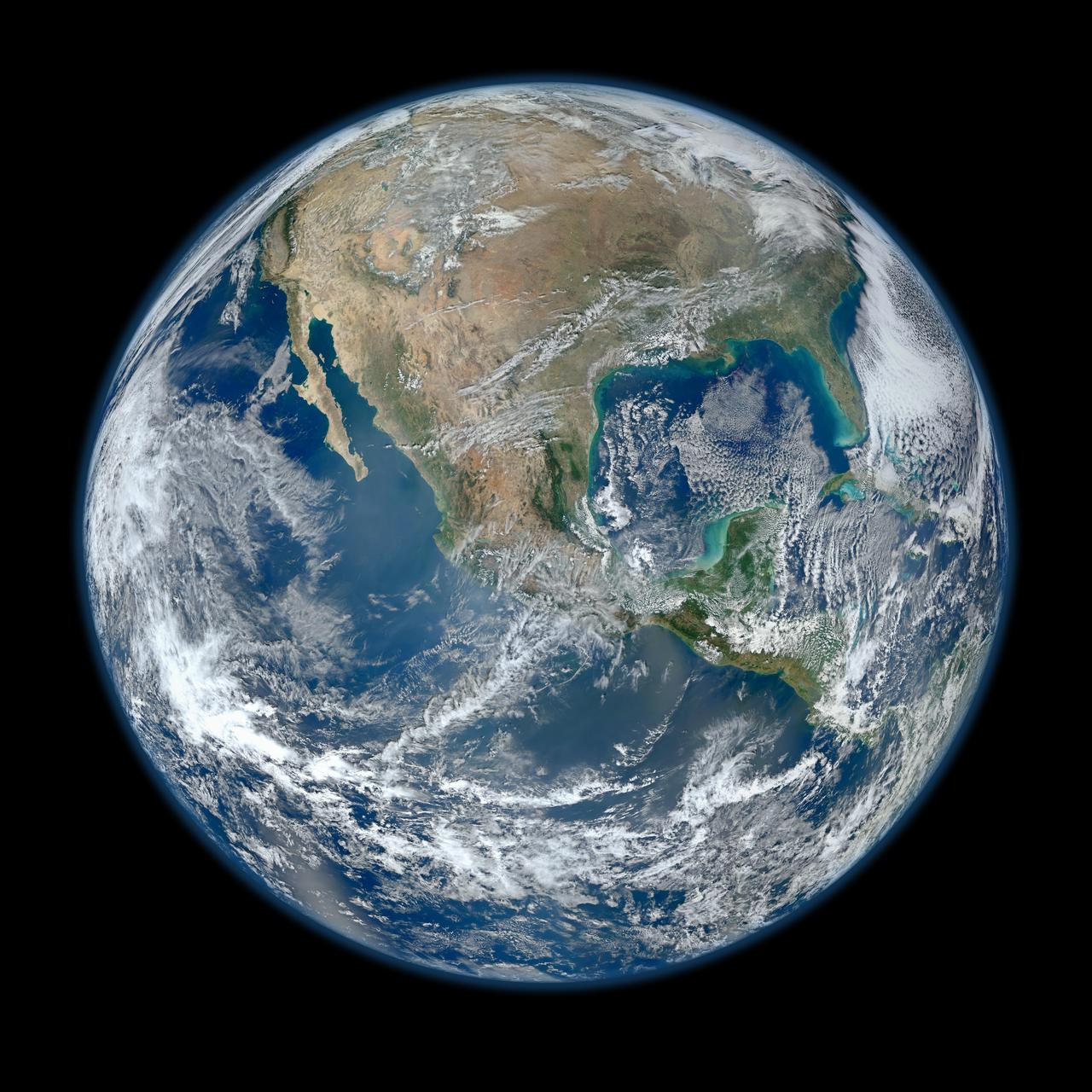
Three hours later, John Jacob had abandoned the idea of a shower or bed. He stayed on his computer until his mother came in and slapped the screen down. The familiar sleepiness took over instantly when his head burrowed into the pillow, images of small dots of light circling a far off green-and-blue marble playing across the inside of his eyelids.


J.L. Scott writes poetry and fiction from rural Ohio where she teaches composition for the Ashland University Correctional Education program using her two textbooks, First Things First: Foundational Skills for Collegiate Writing and Reading for College. She also teaches creative writing classes for Literary Cleveland, is a Team Leader for Pen Parentis (a non-profit out of NYC for parent-writers), and is an editor at Mom Egg Review. Her poetry and fiction can be found in places like the Black Fork Review, Moonflake Press, and Rising Phoenix Review. She can be found on BlueSky @jscottroller or on her website.

Photo by


A note from Writers Resist
Thank you for reading! If you appreciate creative resistance and would like to support it, you can make a small, medium or large donation to Writers Resist on our Give a Sawbuck page.
Burn This Book

By Odette Kelada

When I first saw them outside our little suburban library, I thought it must be a festival or civic event. There was noise, movement, and chanting. It was only when they came closer to the windows, and I saw their faces. A man with a cap too small for his large forehead, eyes cramped under a high furrowed brow. Spittle came out of the stretched mouth of a woman next to him. The morphing of their expressions as they came into focus had the quality of a dream state. Slowly realising something is ugly. Not a festival after all.

A child was standing beneath the woman’s flailing fists, trying to avoid being knocked by the knees of the crowd. Knee height is vulnerable for kids in careless crowds of this kind. Despite all the care for children. This kid wore a navy striped dress and had the most blank expression I had seen on someone so young. She appeared totally detached, even from the woman who was likely her mother if one was to surmise from the shape of their chins and matching blonde razor cut bangs. Then I saw the child gaze through the glass, and I was sure she was looking straight at me. But there were so many books on the shelves that it was unlikely she would single me out. She was likely taking in the reflection of the flags and fury mirrored in the windows. Or perhaps, was watching somewhere else entirely. She looked a little familiar, perhaps one of those romping around the beanbags in the costume of a wood elf? That might be it.

The crowd bloated with more bodies as it travelled the path to our doors.  We were locked today for some reason but that did not appear to stop them. They had almost come to the steps, and it dawned on me that locked doors might not stop them after all.

A short compact woman cut across the lawn and spliced in front of the crowd. She walked up the steps and stood facing out. Blocking the pathway to our library entrance, she adjusted her silver framed glasses and put her faux leather handbag down at her shoes. It appeared she was prepared to stay a while. To be honest, I had not noticed her much before this day. She tended to blend in her shades of grey and olive. A wall flower as they would dismissively describe such a woman. I suspect she usually made an art out of disappearing. An invisibility cloak of a sort, this ability to camouflage, ensuring eyes skim through and over one’s body. A handy trick. I did not expect this part-time librarian to be the one to stand up to much of anything. But here she was. One small boned and cardigan wrapped protector.

The crowd seemed bemused. This singular person was unexpected. To those that had bothered to notice her existence, she was a shy unassuming sort. They waited for her to speak. She said nothing while clearly obstructing their path. The abuse began. It started mildly enough.

“What do you think you’re doing Mzzz Parks?” Long drawn out hissing of MS to make the point she was an unmarried woman. Alone in this world. Unwanted apparently. Undefended.

“How much do we pay you to corrupt our children?”

“Filth and trash, that’s what you teach them now days.”

“No shame, no shame have you?”

“Who gave you the right. I’m their parent. I tell them what to think.”

As she stayed silent, the tone degraded with remarks on her character, to insulting her intelligence and then her figure. Soon she went from librarian to sinful whore. That slippery slope never takes much time to descend when cursing a woman. Highly unoriginal. Her calm was uncanny, no flinching, no wavering of her steady gaze through the thin lens of her spectacles.

It was infuriating to the crowd, the temerity—a taunt, a tease, a traitor.

In truth, they could have pushed past her with ease. She was hardly an obstacle of any significance. It was odd how they didn’t. How something in the way she stood, her complete ease and stillness so concrete and somehow infinite, stopped them.

As I began to fear for her safety, one by one the children came out from the crowd. The first was the navy striped girl. No longer detached but looking up at the librarian.

“Hello, Ms Parks.” As she came forward, her mother gasped and reached to grab her child’s elbow. Navy stripe slipped out of her grasp, elegant as an eel. Practiced in avoiding adults.

Then a boy with flushed cheeks, no older than ten squeezed out from the nest of knees to join them.

“Johnny, you come back here.” A hand grabbed air as Johnny weaved his way through the flanks.

And one by one, more children started to wriggle free. Not all succeeded, some were clamped shut under a sweaty palm on their heads. Others didn’t attempt to move but watched on like miniature mirrors of the righteous bigger version of themselves at their side.

“We’ll get you fired Parks,” Navy’s mother spat out. “Look what you’ve done to our kids.”

 Chants of ‘shame’ began but soon died away. Something had shifted. Legs shuffled and they started to avert their eyes from the steady gaze of Ms Parks. To have their own offspring turn on them. Who predicted it had gone so far? It was a surprise manoeuvre they did not foresee. Now they knew without doubt, she had poisoned their tiny sacred minds.

“We’ll be back tomorrow.” Man with the small cap pointed his finger at Ms Parks. “And we’re bringing the school board.”

He had no child with him but that didn’t appear to dampen his fervour to save the children. “Tomorrow.”

Navy was at last caught by her mother who gave Ms Parks one final spray of invective. Humiliated as she was by her own flesh’n blood.

            •

I had survived today but the future was grim if counting on the School Board. Strategic, hostile takeovers had left them stacked with Mothers for God, National Patriots and Friends of Freedom. Such beautiful names they had, stuffed with warmth and comfort.

As the crowd backed away from the steps and dissolved into the streets and chamomile lawns, the librarian picked up her handbag. She unlocked the library door, adjusted the “Everyone is Welcome Here” sign hanging directly facing the entrance, and walked across to the reading area festooned with rainbow posters. She sat for a long while, letting the colours wash over her.

            •

The next day they returned.  There was a meeting called in the school auditorium. The Board of Mothers, Patriots and Friends were a tight sorority, adept at killing dissent with their newly tweeted policies. The innocence of Johnnys and Navy Stripes gave licence to those searching for their god in an age of godlessness. They stalked one by one in front of the lectern as if their fantasies of life as an apex predator were now realised. Their time to shine.

            •

Who knows who lit the fire? It was not an official book burning as one might imagine. No masses lobbing us into the flames. It was a discreet act of arson, as befitted this nice neighbourhood. But even as fire alarms screamed from the ceilings pockmarked with tape from the torn down rainbows, no one appeared to rush to our rescue. No fast response time. All I saw through the smoke was that small-boned figure. Witness to our banning and burning. A middle-aged part-time librarian. She was by nature a highly organised creature. After the crowd had left the day before, the printer churned out lists of our names and makers. Before her staff card was declined, she had combed our shelves and made sure every one of us was noted. Promising us in that quiet voice of a library, we were not so easy to destroy.

            •

Now the heat simmers around me and the smell of wet smoking wood is getting stronger. Not much time left. Soon it will reach me and given how combustible I am, it will be over very quickly. What does it take to burn a book? What does a book have to do to get burned? How many people have I offended simply by existing?

The times when we books are the culprits are the times to fear the most. That is what books tell you. If you read us to learn something that is. But fear is not much into reading. Though fear does love a good tale to tell. And each time the tale gets taller. Libraries, the refuge for loners and introverts, are now the loci of evil. I had thought if I was innocuous enough, perhaps I might stay out of harm’s way. Eventually though, as the saying goes, they would come for me.

Would you want to hand me to your child? Well, that all depends on what you want your child to know and whose child we are talking about. And as happens in these moments, it becomes all about the children. Even from people who never gave a thought to a child, who can’t stand a child screaming in a café or blocking the isles in an epic tantrum as you reach for your multigrain seven seeds. Nothing fires up a conversation or a war like talking about the babies. If there is doubt or dissent, just repeat again and again the homespun recipe. Nothing so sweet, vulnerable and in need as our children. Not theirs so much. But definitely ours.

It is telling what makes humans scared. Anything that might transform and change. The alchemy of curiosity is the target. Anything that can open the mind into new spaces. This is the first time I personally have faced an angry mob. But as I have full access to the archives (as all books do), I know how many of us have burned before. The scenes cut into our collective memories. We float across language and time. We are far more powerful than even those who might love us realise. That is why even as I linger now on the line between paper and ashes, there is still a little hope. The stories of those that survived and fought, do not die silently. Our pile of burning letters is loud.

Southeast Elementary Inferno. Who would have thought this library would be so interesting? Usually, there are huddles on bean bags for story time. Sometimes with puppets. No cake though. No crumbs in the library. But there are board games, puzzles and crosswords. For those, too young or too tired for anything like literature. The choose your own adventures are having a resurgence. The current batch of kids like options. And having some agency in the stories they are told. Perhaps that is where this library went a little too far. Reading marathons and glittering gatherings to dress up as whatever character you might want to be. Windows of possibility. So much colour. A little too much colour…

This town was a neat town. Wide tree lined streets. Statues to great white men who conquered the place towering over our public spaces. Water fountains at handy distances. Considerate. Even drinking bowls for dogs placed outside wholefood cafes. I had travelled through a few libraries, and this was the most ordered and clipped lawn place I had seen. Maybe that should have been the clue that this was a place with so much to defend and protect. Nice places made for a certain kind of comfort are the ones to watch. The families swinging on the orange plastic recycled swings in the park, the ‘save the greyhounds’ stalls at the local farmers market, the lord’s prayer hung in a banner across the town hall. These are the signs to note when assessing what is real and what is buried in any place. This calm had that oceanic impermanence to it. Carefully curated and resting on so many bones. Polite society at its most fearsome. These are the thoughts that came up in the days before the fires began. Sweet scents of magnolia and star jasmine as the humid spring made everything steam. Floral tones to the smoke and cinder falling through the air.

I did not expect that in this age of internet, we would still be seen as having such importance. For a long time, I heard books are dead. It is the end of our era. Time over. But here we are. As dangerous as ever. Even as the heat starts to creep up my spine, there is a surprising satisfaction that we still apparently matter so much. So much human energy. Attention.


Author’s Note: This short fiction is inspired by the rising numbers of book bannings including a children’s story of Rosa Parks’ life, marginalised voices telling truths on critical facts such as race history, colonisation, and LGBTQI+ voices. A documentary, “The ABC’s of Book Banning,” in which children share their perspectives on these book bannings, and the censure of a teacher who refused to take down an “Everyone is Welcome Here” poster were also sources of inspiration. Emulating the U.S, this is now happening in Australia. We are infected by divisive politics, seeing riots at book shops and protests at schools and libraries, and storytelling events closing down, silencing those that have only recently been able to have a voice.

Dr. Odette Kelada is a Lecturer in Creative Writing and also teaches in Race Studies at the University of Melbourne. She has a PhD in literature on researching the lives of Australian women writers and the politics of nationhood. She facilitates racial literacy workshops for community and government organisations and has hosted numerous panels and presented conference papers on themes of feminism, the racial imaginary and creative activism. Her research and writing focuses on marginalised voices, gender and anti-racism, and has appeared in numerous publications including Overland, The Australian Cultural History Journal, Outskirts feminism journal, Postcolonial Studies, Hecate, Intercultural Studies and the Journal of the Association for the Study of Australian Literature. Her novel, Drawing Sybylla: the real and imagined lives of Australian women writers, won the Dorothy Hewett Award in 2017. It spans a century and imagines women fighting oppressive forces to have their voices heard.

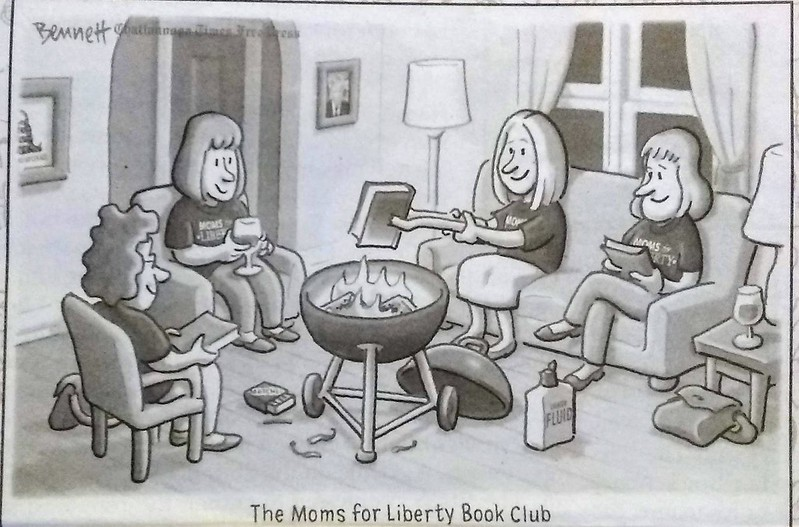
Photo by Phil Venditti, via a Creative Commons license, of a political cartoon by Clay Bennet


A note from Writers Resist
Thank you for reading! If you appreciate creative resistance and would like to support it, you can make a small, medium or large donation to Writers Resist on our Give a Sawbuck page.