
I’m Afraid There’s Something Wrong with Mr. Prescott
By Ron Burch
He started wearing 18th century clothing, donning a coat, waistcoat, and breeches. The breeches, with buttons down the side, went over his silk stockings. His shoes were rounded at the toes with low heels, the tongues fastened with large buckles. He had adopted a long riding duster that cut low past his knees, and around his shoulders sat a triple cape. Ruffles of lace appeared from under his coat at his wrists, along with a jabot on the front of his white shirt. Adorning his wrinkled head, for Mr. Prescott was in his 70s and bald, perched a powdered white wig, the back bound in a pigtail. On top of that, when he ventured out he wore a round-crown felt hat with a broad brim. In his right hand, he carried a heavy ornate cane, which he shook at people when he was annoyed.
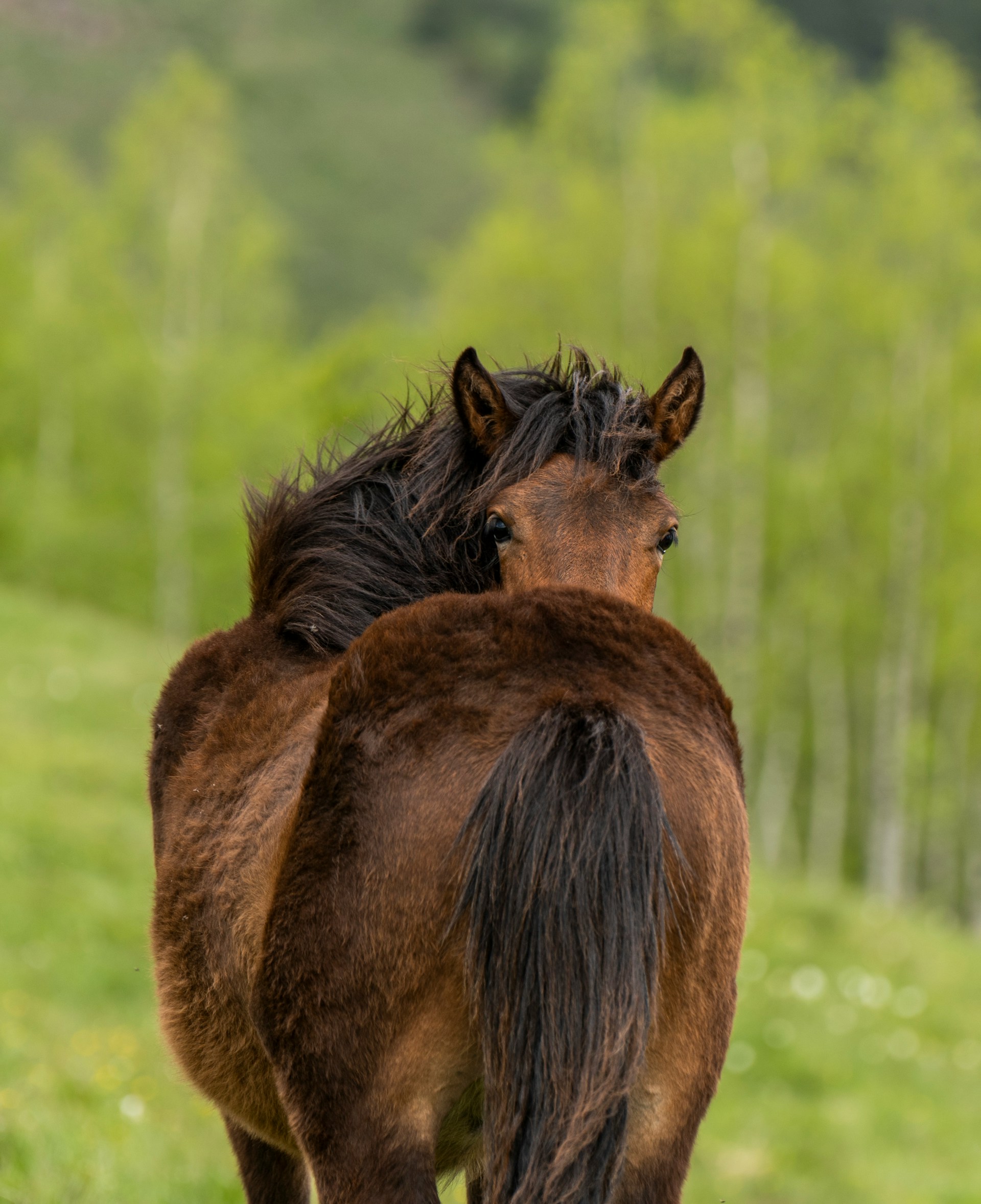
He also sold his car and purchased a large brown horse and saddle. He stabled the stallion in his garage against the HOA rules for our neighborhood, a suburb built in the 1960s, and his adjoining neighbor threatened to call the city and complain.
Mr. Prescott waved his cane at Gary, promising to thrash him.
Several of the neighbors were annoyed because his horse, which he named Privilege, had shit all over the streets where the kids usually played, and it was, honestly, everywhere.
Last Saturday, while our neighbor Dr. Lowry mowed his front yard, Mr. Prescott emerged from his house, wig intact but with no coat or waist coat, and demanded the doctor, a person of color, mow Prescott’s yard and repaint his house “as was his duty.”
Luckily, I was able to intercede before Dr. Lowry—beloved neighbor, well-known heart surgeon, and former college football line tackle—physically removed Mr. Prescott from his front yard. At the next HOA meeting, a petition signed by almost all the homeowners was submitted requesting that the Prescotts move out of our neighborhood due to the inappropriate behavior with Dr. Lowry. From the back of the room, Mr. Prescott stood, in full regalia, and accused the rest of us of “TYRANNY!” and ignorant of “the natural order of the world.”
After he stormed out—attempting to break a chair on the way, but being plastic, it only bounced—the HOA approached Dr. Doris Hinshaw, the therapist who lived the next block over, and offered to pay for her for a session with Mr. Prescott. Dr. Hinshaw declined saying that last week Prescott verbally assaulted her as a “whore and slattern” because she was not covering her head while at the grocery store and was not accompanied by a male guardian.
Mr. Prescott filed a lawsuit against our suburban community, Wind Hollows, claiming that since he was one of the original and still living purchasers of land in our neighborhood, the suburb belonged to him, “given his God-given right as a white male in our country.” His lawsuit also stated that the rest of us, his neighbors, were really his indentured servants who should be working the land at his behest, and he added two sheep to his garage barn.
The sheep took to wandering the neighborhood. They ate Mrs. Jenkins’s roses, and when she said she was going to sue him, Mr. Prescott threatened to have stocks built at the empty corner of Solace Street and Happy Drive to incarcerate her for public shame.
After Mr. Prescott rode Privilege to work (his office building is only a few blocks away where he is an accountant), my wife, Polly, visited Mrs. Prescott, who had been notably absent from the goings-on. She had been reduced to wearing a bodice and skirt with wooden clogs and her gray hair powdered white and covered by a cloth. Forced by her husband to give up her job—she had been the manager of our local library branch—she now gardened and fretting how poorly their plants were coming up. Even more worrisome, her husband expected her to turn their sheep into dinner courses.
Polly said Mrs. Prescott cried almost the entire visit, and my wife noticed that the tears washed away her white make-up, revealing a large bruise on her face, which she claimed an accident from walking into a door. She offered Polly some homemade jelly Mr. Prescott insisted she make from berries he’d found near their pool. When Mrs. Prescott could not name the type of berries, Polly politely passed and returned home.
Concerned about Mrs. Prescott’s safety, she called the police who came out but didn’t do anything, even after all the complaints, the threats Mr. Prescott had made, his wandering farm animals, and the concern that his mental faculties might be impaired. They said he was probably having a bad couple of weeks, and, even with Mrs. Prescott’s bruise, they declined to take any action.
Things were quiet for about a week. Mr. Prescott wasn’t seen riding Privilege to the office, and all the horse shit on the street was old. Then one night after supper, there was a tremendous crash outside, which brought out all the neighbors. Mr. Prescott’s horse had kicked his way out of the closed garage, breaking the door, freeing both him and the sheep. We discovered that the animals had no food or water as evidenced by the three of them simultaneously drinking out of Mrs. Jenkins’s birdbath. It was decided to try the authorities again, and the bodies of Mr. and Mrs. Prescott were discovered at their dining table, the remnants of Mrs. Prescott’s half-eaten berry jelly staining both their dinner plates and their stiff mouths.
The house sold to a nice family, after the Prescott’s kids removed everything except the historical clothing—put out front with the garbage.
Ron Burch’s fiction has been published in numerous literary journals including South Dakota Review, Fiction International, Mississippi Review, and New Flash Fiction, and it has been nominated for the Pushcart Prize and other awards. His last novel, JDP, was published by BlazeVOX Books. He earned his MFA from Antioch University Los Angeles.
Photo credit: Photo by Shahabudin Ibragimov on Unsplash.
A note from Writers Resist
Thank you for reading! If you appreciate creative resistance and would like to support it, you can make a small, medium or large donation to Writers Resist on our Give a Sawbuck page.
Shades of Roald Dahl but with a message.