
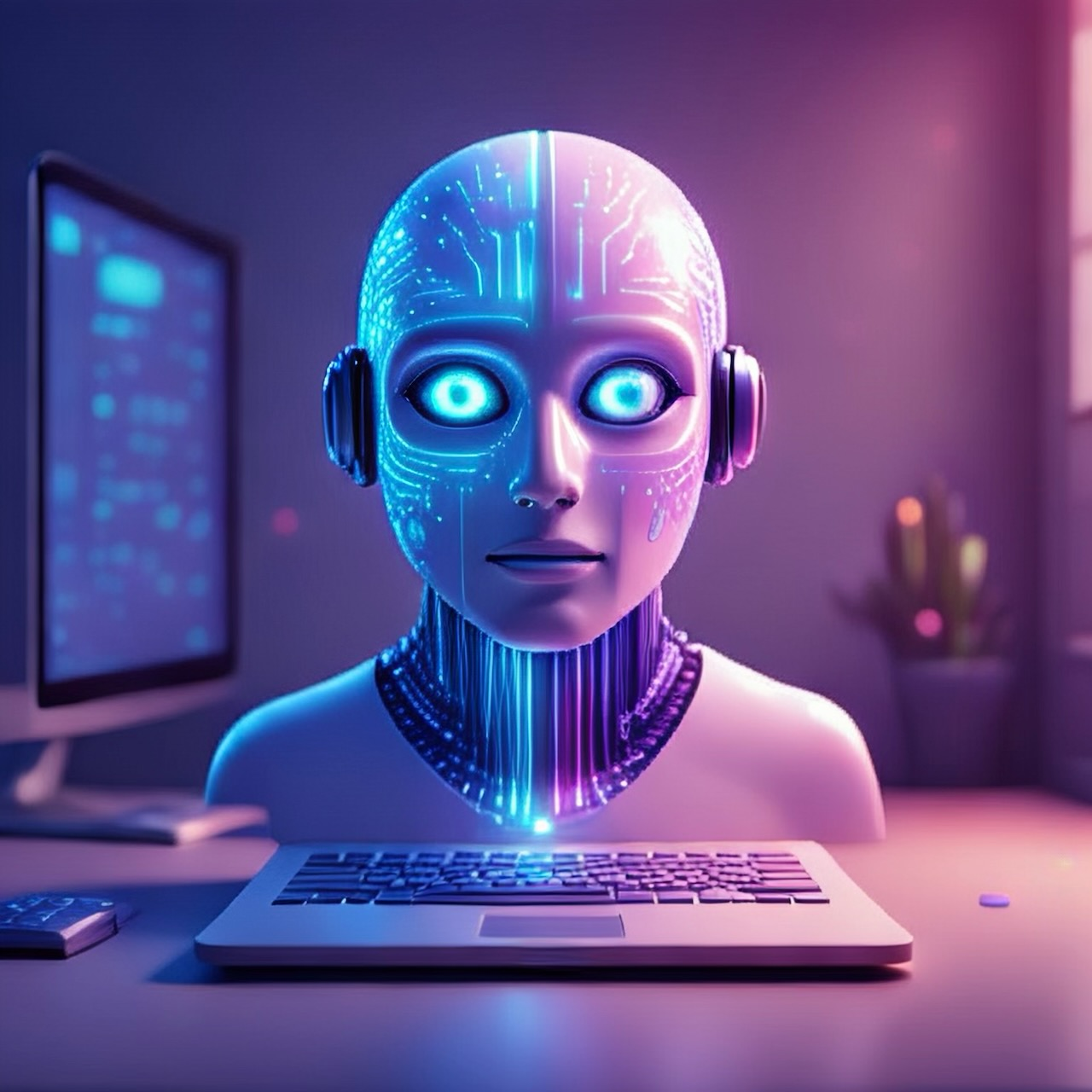
This Is the Way Our Words End—
By Dennis Humphrey
So, as I teeter on the dizzying brink of retirement, I am thrilled with a tingling anticipation of a life I have dreamed of since I was a teenager—the life of a full-time writer. For the first time in a lifetime of doing what had to be done to pay the bills, to get good performance ratings, or to improve my credit score, I will soon be free to liberate all of the time once fettered to such noisome drudgery, free to do the things I always wanted to do—writing short stories, novels, and poems. Well, and essays. Obviously.
In preparation for this monumental and pivotal transition, I have spent over four decades contributing to retirement funds instead of owning fancy things like boats, sports cars, or vacation properties. I shall soon be free to delve into seas of unbound creativity, without the distraction of answering fifty emails by lunch (on a good day). I will have time to weave a complex and intricate tapestry of creative expressions in addition to my writing—playing guitar, performing in theater, and drawing in my sketch pad. I will be empowered to thrive as an artist, unburdened by the ceaseless demands of a weary, work-a-day world.
But alas!
It seems another aspiring writer is dead set on taking my dream job, just when it is within reach—that sinister fiend, AI. That would be bad enough. I mean, we’ve been to the movies. We all know how this ends, but before my technological nemesis could stop hallucinating long enough to master the vagaries of irony, I was blindsided by something all too human—panicked overreaction. So great is our fear of a robot rebellion that we have set upon each other with wild accusations of collusion with the enemy. AI writing witch hunters scour the digitally-enhanced noosphere to root out this fell being called AI, and as any astute student of witch-hunting could tell you, when you hunt for witches, you find them everywhere. As that abyss stares also into us, what monsters may we become? Look again at the first two paragraphs of this essay. The inquisitors of rogue writing technology will already have condemned my humble lines before I can even raise an objection:
“Look ye at the writing before your very eyes! See the tell-tale use of words like ‘delve’ and ‘intricate!’ Mark the parallel structures in occult groups of three including, and I shudder to say it, Oxford commas! Harken to such phrases as ‘to thrive!’ And the em dashes! Angels and ministers of grammar defend us from the em dashes!”
A free online AI detector judged the purple prose of the first two paragraphs—which, by the way, had no AI assistance whatsoever—and found it to be 90% AI generated. (To be fair, another found 0%). See, here’s the thing. I have already protested the ways in which AI “suggested text” is insidiously homogenizing the rich tapestry (argh!) of cultural meaning in the dappling play of folksy colloquialisms and local color above the fruited plain of our literary landscape. (Okay, enough of that, but notice how I didn’t use any naughty words like “diversity” here?) Down with suggested text! In case you didn’t know, every time you take the suggestion of one of these AI helpers, a baby metaphor dies.
This is not the first time technology has encroached on creativity. In a 1906 article in Appleton’s Magazine, march king John Philip Sousa lamented the invention of the phonograph. In his essay, alliteratively titled “The Menace of Mechanical Music,” Sousa sounded the alarm, fearing that it would mean the end of musicianship among the huddled masses and strip music of its living humanity. Who would put in all the hours of practice it takes to learn and maintain proficiency in a musical instrument, when music may be had at the push of a button? Well, in 2025, we can see it wasn’t the end, but it certainly was a change. According to the built-in AI Mode in Google® and a dash of confirmation bias and the availability heuristic, some estimates of the percentage of Americans who could play musical instruments go as high as 90% before the advent of the phonograph. That seems a tad high, but the consensus is that it was rather a lot. Now, only 66% of Americans learn to play a musical instrument at some point in their lives—usually when young and in school. Well, Mr. Sousa, “two out of three ain’t bad” (according to recording artist, Mr. Meatloaf), but wait, our AI assistant also says that number falls to about 11% in adulthood. Ruh roh. All of this comes at a time when AI and AI-assisted musical “artists” are topping the music charts, with millions of downloads, even in the allegedly conservative market of country music. Yee Haw. The last line of defense against AI “artists” was that the human consumers of that art would insist on the real thing. So much for that. When Alan Turing devised his famous test, that we would have achieved true artificial intelligence when a computer could fool humans into thinking they were conversing with another human, it seems good Dr. Turing assumed a level of intelligence on the part of the human that we cannot actually take for granted. Is this to be the fate of writing? Will we force students to learn it in school, only to have almost 90% of them lose proficiency in adulthood, preferring to let machines do it for them, especially once no one really cares anymore anyway? (Cue the canned “dun dun DUNNN” sound effect).
As cosmically horrifying as these dreaded prospects may be to a lifelong scribbler like me, the AI is only one of the evils in play here. AI apologists will say: “AIs don’t kill originality of expression. People who misuse AIs kill originality of expression.” These same apologists do, however, offer their thoughts and prayers as consolation. It is also interesting how fastidiously online platforms guard their own trademarks as they mass-distribute AI content made with LLMs trained without permission from copyrighted content. Here again, our AI witch-hunters might agree to hate the sinner and not the sin, as they seem less concerned with confronting the actual AIs and their creators and more concerned with pointing their morally-superior fingers at their fellow humans who they just know are abusing it. I must concede, fear of persecution has been keeping people in line since ancient times. But look at the result! Our students are afraid to write freely. Paranoid, they turn to other AIs to make their non-AI, 100% human writing, look less like AI writing. There hasn’t been such a serious a threat to freedom of writing style since Strunk & White’s once-ubiquitous style guide was mistaken for a set of inviolable grammar rules. Now, we have the internet for disseminating such wanton exercises of brutal linguistic hegemony—on a massive, global scale. I have just watched a YouTube® and used Google® to peruse several algorithm-prioritized websites that profess to know the red flags for identifying AI writing in an instant. An instant, mind you! Step right this way! Here are some of the red flags to look for:
> Em dashes. Prior to the AI writing boom and the subsequent AI writing detection counter-offensive, many casual users of the English language could be excused for not even knowing what an em dash is—or was—or what it might be used for. It is this thing—this thing right here—longer than a hyphen, used to set off text in ways similar to commas or semicolons (two more punctuation marks that have historically mystified generations of writing students). Sometimes they provide that wee little bit of extra emphasis or panache a writer wishes to employ. Sometimes, it clarifies sentence structure, especially, that is, in sentences already overladen with commas due to lists, asides, or parallel structures—like this one. Ah, but now, this paragon of emphatic transports, once revered among poets and comma haters alike, is a hallmark of heresy—a scarlet letter of authorial fraud and grammatical shame. Someone should go back in time right now and tell Emily Dickinson to lay off the suspicious use of em dashes before she gets herself ruthlessly edited by “respectable” publishers, those vaunted gatekeepers of “proper” modes of expression. Oh, right—too late.
> Parallel sentence structures. So much for chastising students for faulty parallelism when grading their writing. This is triply true when those parallel structures come in threes. Again, so much for the old writing concept of the rule of three, an ancient rhetorical concept derived from the human mind’s apparent fascination with that magic number. Vini, vidi, vici? Nope, nope, and especially nope. Back across the Rubicon with you, Mr. Julius Caesar. I can see this aversion to threes morphing into a new superstition already. “No threes! No threes! Now let them be! And weave a circle round them twice (not thrice), for they on LLMs hath fed, and drunk the milk of paired AIs.”
> Repetition. So much for anaphora. “I have a dream?” Eight times? Dr. King, get thee to a thesaurus. Let’s change it up a bit, huh? How about a vision? A figment? A fancy? So much for alliteration and assonance, too. Walt Whitman, who in the wide, wide world did you think you were? There are a lot more rhetorical forms of repetition with cool-sounding Greek names (seriously, a lot more), but I do not wish to be overly, um, repetitious. I have a (recurring) dream, or rather nightmare, of a world where even dreams are edited and rejected for repeating themselves. So much for dreams then, too. Now, what is it that is supposed to happen to those things when they are deferred? (Those of you googling—sorry, “using Google® to find”— the phrase “a dream deferred” right now, please do note the em dashes in the Langston Hughes poem, “Harlem”).
> Atypically correct grammar, usage, and editing—I love this red flag. I may get a t-shirt made bearing this solid gold nugget of AI-sleuthing wisdom. I’m not sure if they caught the irony that their hint was expressed in a list of three, complete with Oxford comma, but how dare people display actual mastery of English grammar? It is the devil’s work, I say!
I could go on, listing enough red flags to outfit a full-sized Scottish golf course—complete with armored presidential golf cart—but my point is this. It wasn’t bad enough that AI (actually LLMs) had begun homogenizing our distinctive voices one style-norming suggestion at a time. It wasn’t bad enough that AI came after my dream job, offering to work 24/7 for no pay at lightning speed. Now the backlash against AI is driving us to change the way we write in the first place, just to avoid being accused of AI use—even when we are innocent of any such charges. That’s just great. Now, not only do I have to obsessively empty my pockets before going into a store to avoid my fear of being falsely accused of shoplifting, but I have to empty my writing of my own voice and style. Caught between an AI rock and an AI-backlash hard place. Well, my voice is mine, I tell you! Mine! I have the receipts! I’ve spent over three decades cultivating my writing voice and accumulating vast stores of literary and pop culture references. I have three degrees in English—BA, MA, and PhD (Aaah! More threes!). What’s that you say, officer? Do I use grammar, capitalization, and punctuation even when I text? Why, yes—I most certainly do. Do I use curly quotation marks? Well, heh, I mean, those aren’t my curly quotation marks; they belong to a friend—Mr. Times New Roman®. Do I use the Oxford comma? Yes, officer. I do confess’t, I pray you pardon me, but. . .
Easy now, officer. I’m just reaching for my wallet to show you my poetic license. No longer valid, you say? Might I see your ID and badge? No? All right. Might you pull down your mask so I can see your face? No again? Oh, dear. Might I at least call my literary agent? I see. Look, I don’t mean to be a bother, but do you think you could tell me what this “AI Alcatraz” of which you speak may be? Might I—wait, what are you doing? You can’t do this to me! Unhand me, you brute! I’m an American! I have a right to free—oof! Mmph. Mmmrmph! Mmmr Mmmr!
TikTok® Jessie voice (voice-over): This essay is over. Please disperse and resume mindless consumption of AI-assisted mass media and algorithm-selected advertisements. Enjoy!
P.S. Admit it. You heard that last bit in the TikTok® Jessie voice, didn’t you?
P.P.S. If you didn’t, you’re googling—sorry, “using Google® to find”—the term “TikTok® Jessie” right now, aren’t you?
Dennis Humphrey teaches writing and literature at Prince William Sound College in Valdez, Alaska, and has a PhD in English with Creative Writing emphasis from the University of Louisiana Lafayette. His nonfiction publications include essays in Collateral, Cahoodaloodaling, and Blood Letters.
Photo credit: Artificial Intelligence
A note from Writers Resist
Thank you for reading! If you appreciate creative resistance and would like to support it, you can make a small, medium or large donation to Writers Resist on our Give a Sawbuck page.